
Fine line sun motifs dominate saved boards, but what wears well on a moving canvas like the thigh is not always what photographs best. Fabric rub, skin stretch, and the way the limb sits change how rays and tiny dots hold up. These 27 subtle sun ideas focus on choices that preserve readable linework and quiet presence, with real consultation notes so your artist starts and finishes with the same plan.
1. Minimal Single-Line Sun on Upper Outer Thigh
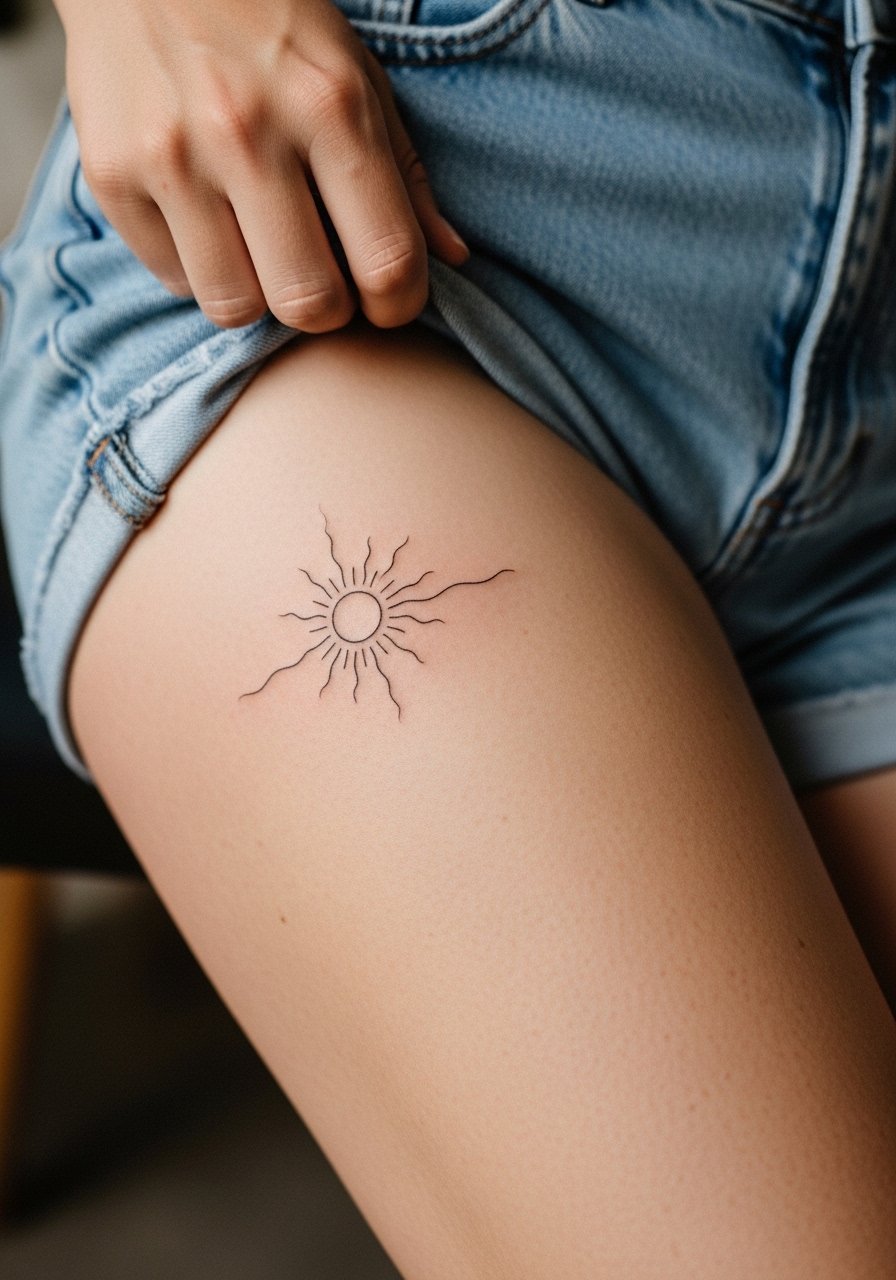
Start with a personal observation: tiny single-line suns read best when the line weight is slightly heavier than they look in reference photos. Tell your artist you want the rays at a 0.5 to 0.7 mm visible weight so they age into a clear silhouette. Fair warning about blowout risk if lines are too thin on active skin. Session time is short, usually under an hour, and pain is low to moderate. Common mistake is asking for ultra-thin lines and then wondering why the design needed a touch-up at year two. For showing it off, tuck this under a wrap skirt or high-cut shorts that lift to reveal the motif.
2. Tiny Dotwork Solar Cluster on Inner Thigh
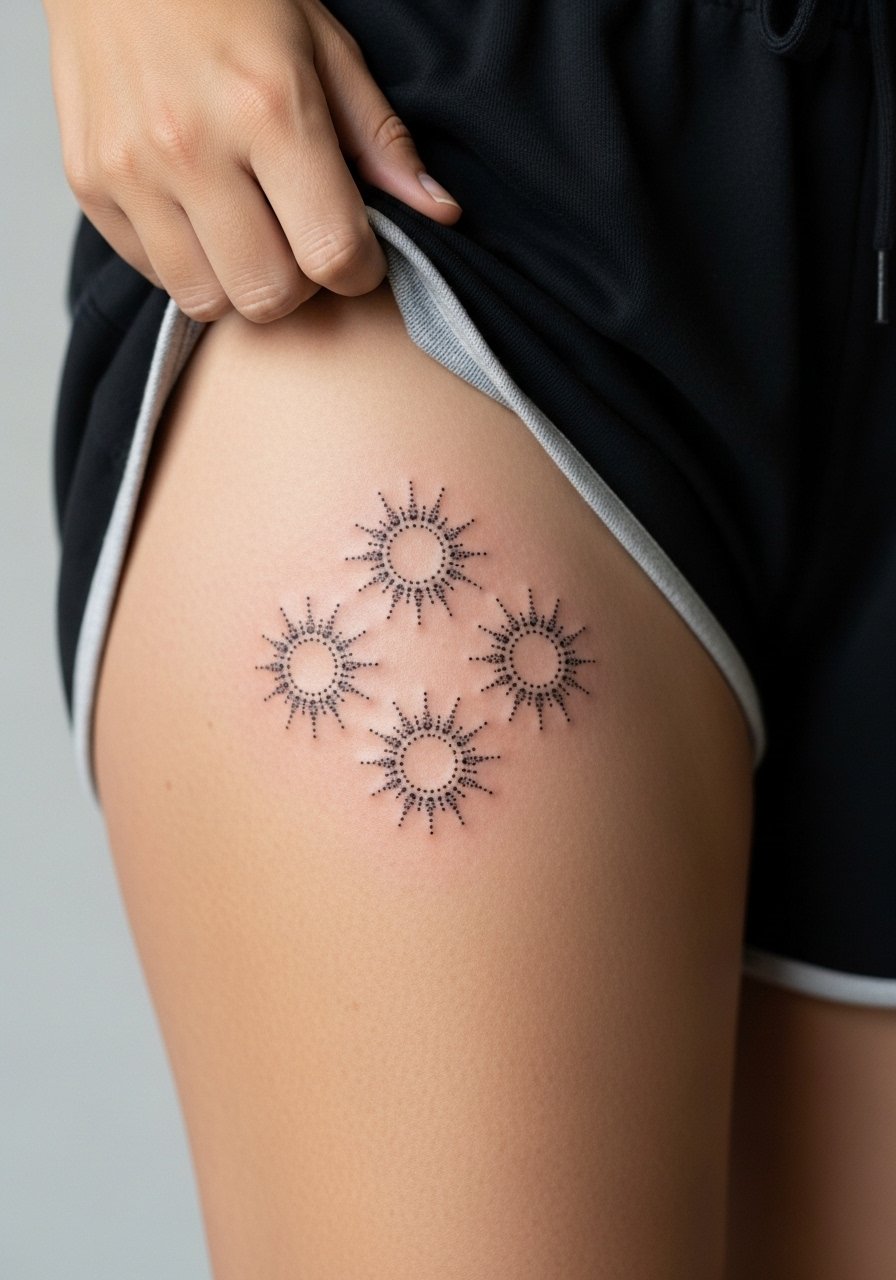
Aging and movement matter here. Inner thigh skin moves against itself and clothing, so stipple shading needs spacing to avoid merging in two years. In consultation ask for more negative space between dots and a softer gradient so the darkest area does not sit too dense. Pain is higher on the inner thigh than outer areas, expect a 90-minute session if you want a few suns grouped. Common mistake is requesting heavy stippling for immediate contrast and then facing early blurring. For the appointment, wear loose shorts so the artist can expose the inner thigh without the fabric pressing on fresh ink.
3. Micro Sun Portrait with Shadowed Rays on Upper Thigh
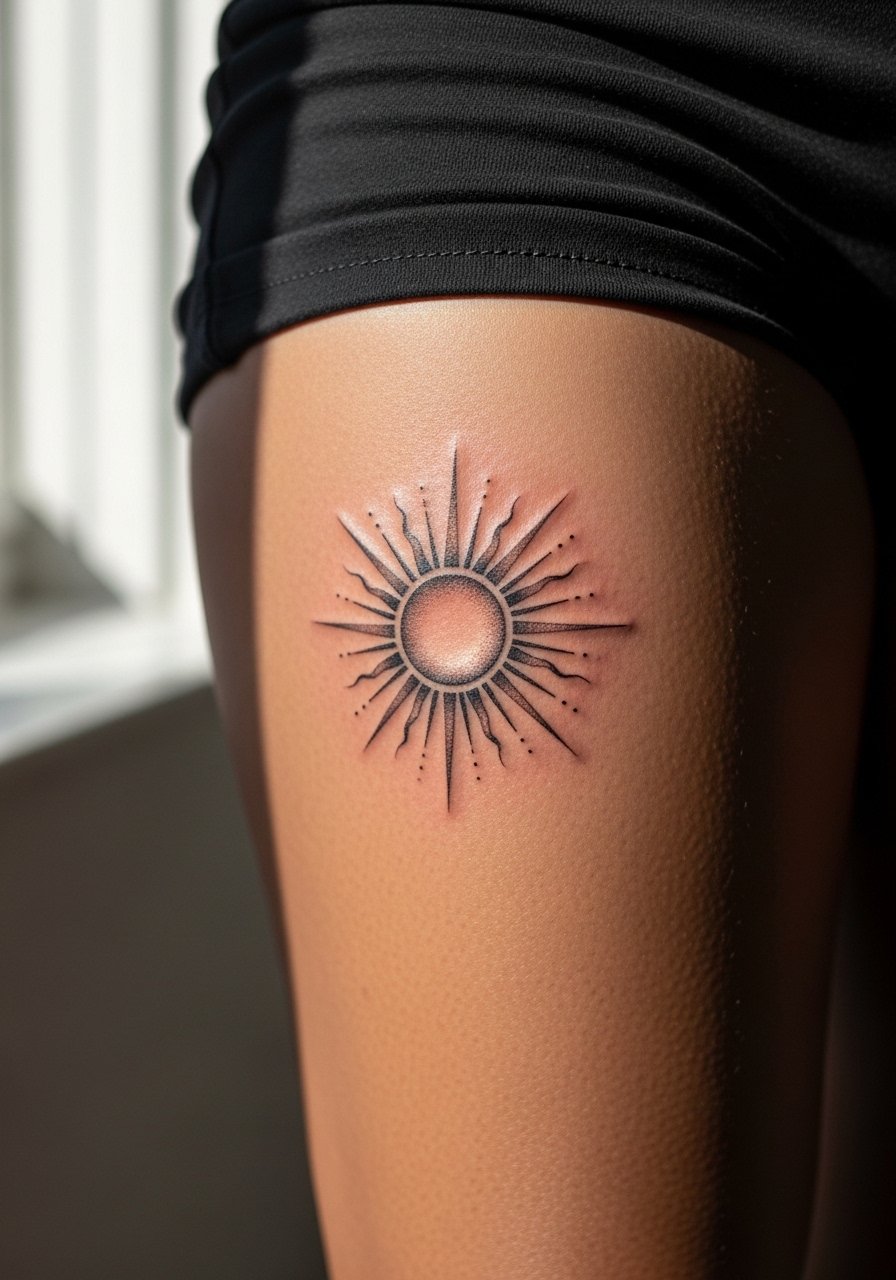
Visual impact lead works here. Micro realism on the thigh reads as a jewel when the shadowed rays have soft saturation and a clear outer line. Tell the artist you want layered micro shading and a crisp outer contour to protect against early feathering. Most clients see the best balance if the artist spaces shaded areas from the outer line. Session time runs longer than a simple line piece, often two hours for a tiny portrait. Touch-ups are common at year three if the shading sits too shallow initially. Pair this with a slip dress with a thigh slit for evenings when you want the sun to peek out.
4. Geometric Sun Mandala Nestled on the Side Thigh
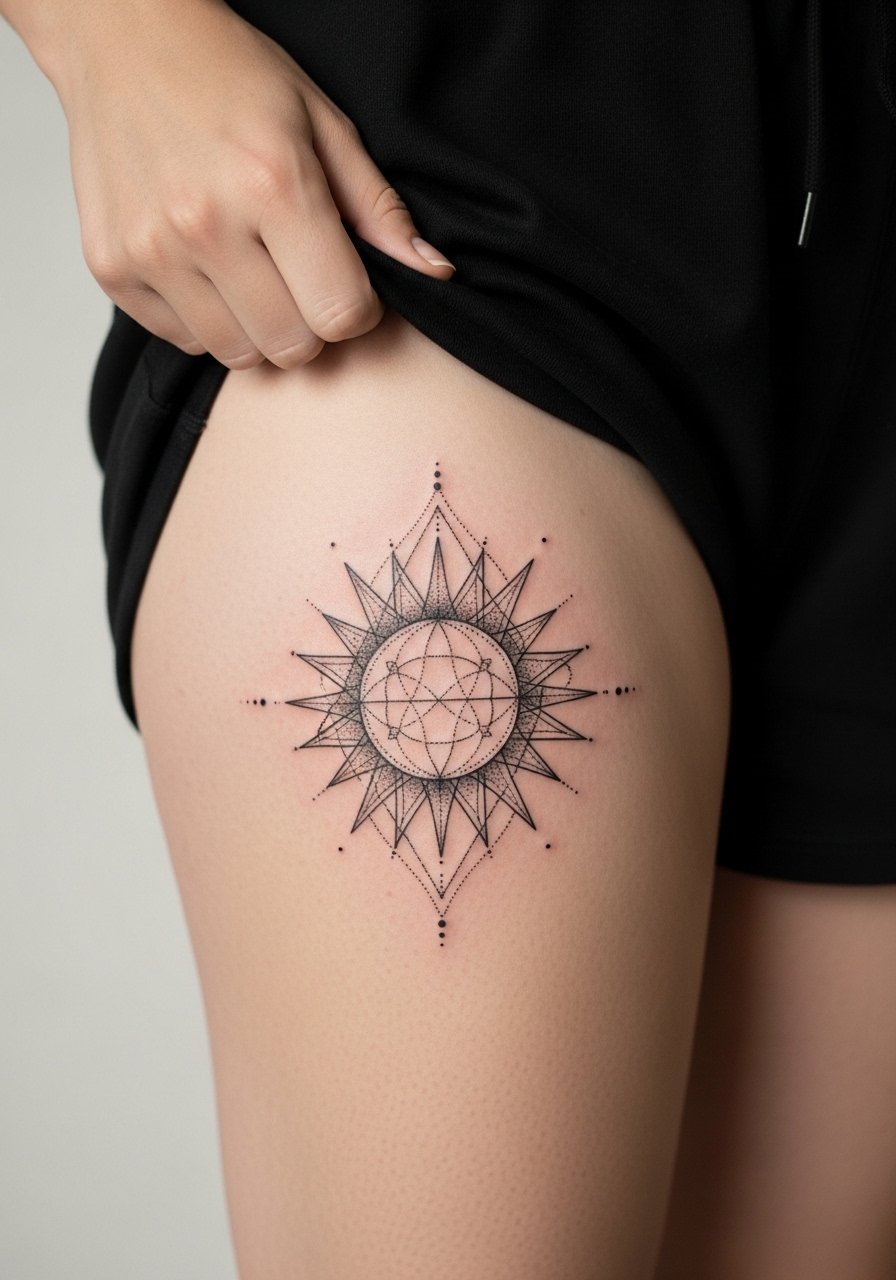
Mistake lead: the biggest mistake with mandala suns is cramming too many concentric rays into a small radius. The lines need breathing room on the thigh or the dense areas will merge after a few years. Ask for simplified inner rings and stronger primary rays so the design keeps its geometry. Expect a two-hour session for a small mandala and moderate pain where the muscle flexes. Blowout risk increases near seams of jeans, so placement a few centimeters away from where fabric rides helps. For showing it off, a high-cut swimsuit bottom frames the side thigh without crowding the pattern.
5. Negative-Space Crescent Sun Over Upper Thigh
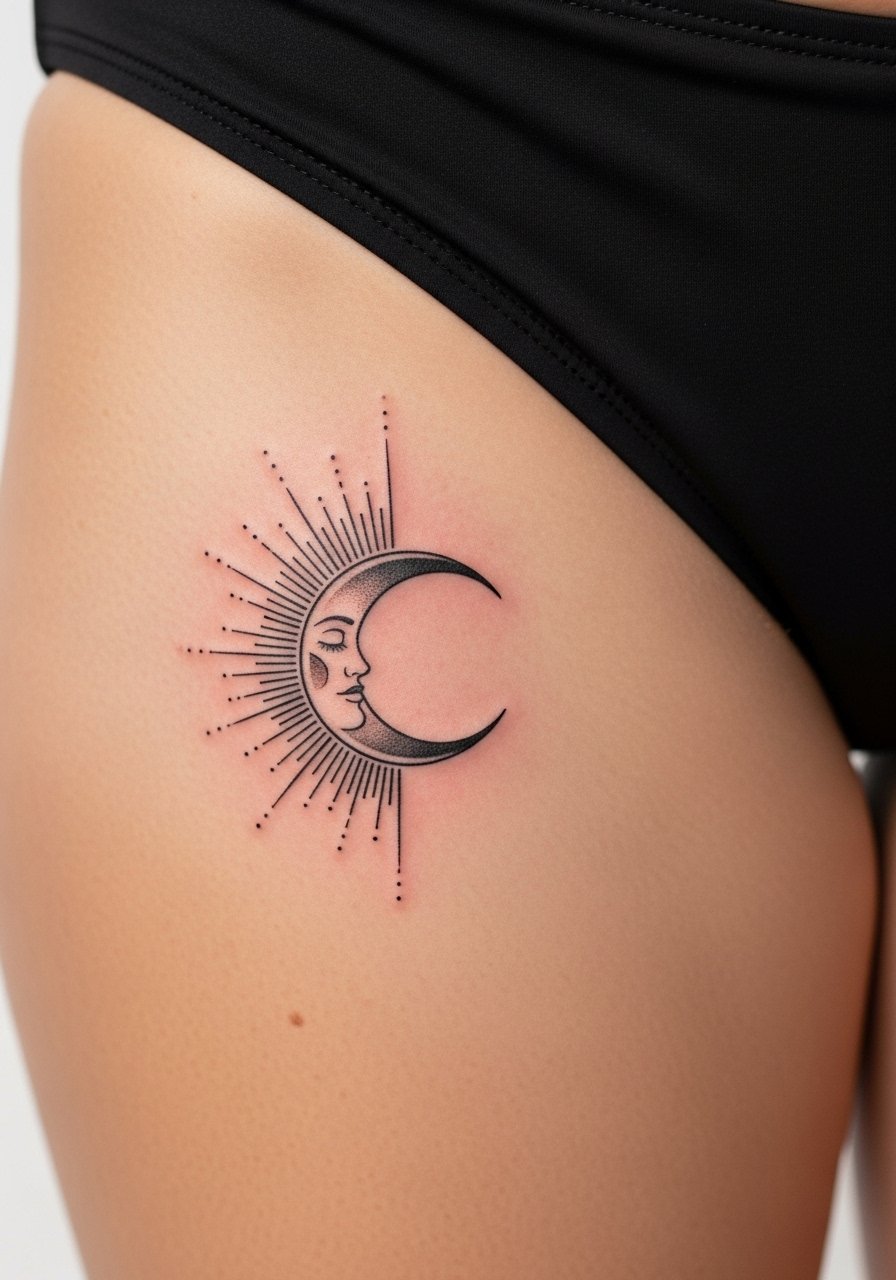
Consultation lead: when you sit down with your artist for a negative-space sun, bring clear photos showing the skin left untouched as much as the inked parts. The trick to longevity is leaving slightly more skin between rays than you think you need. Pain is mild where the needle mostly outlines, and session time is typically under 90 minutes. Commonly requested versions that age poorly pack the rays too tightly. For session wear, a bikini bottom or high-waist brief that can be shifted slightly keeps the area accessible without full exposure.
6. Tiny Sun Glyph Along the Thigh Band
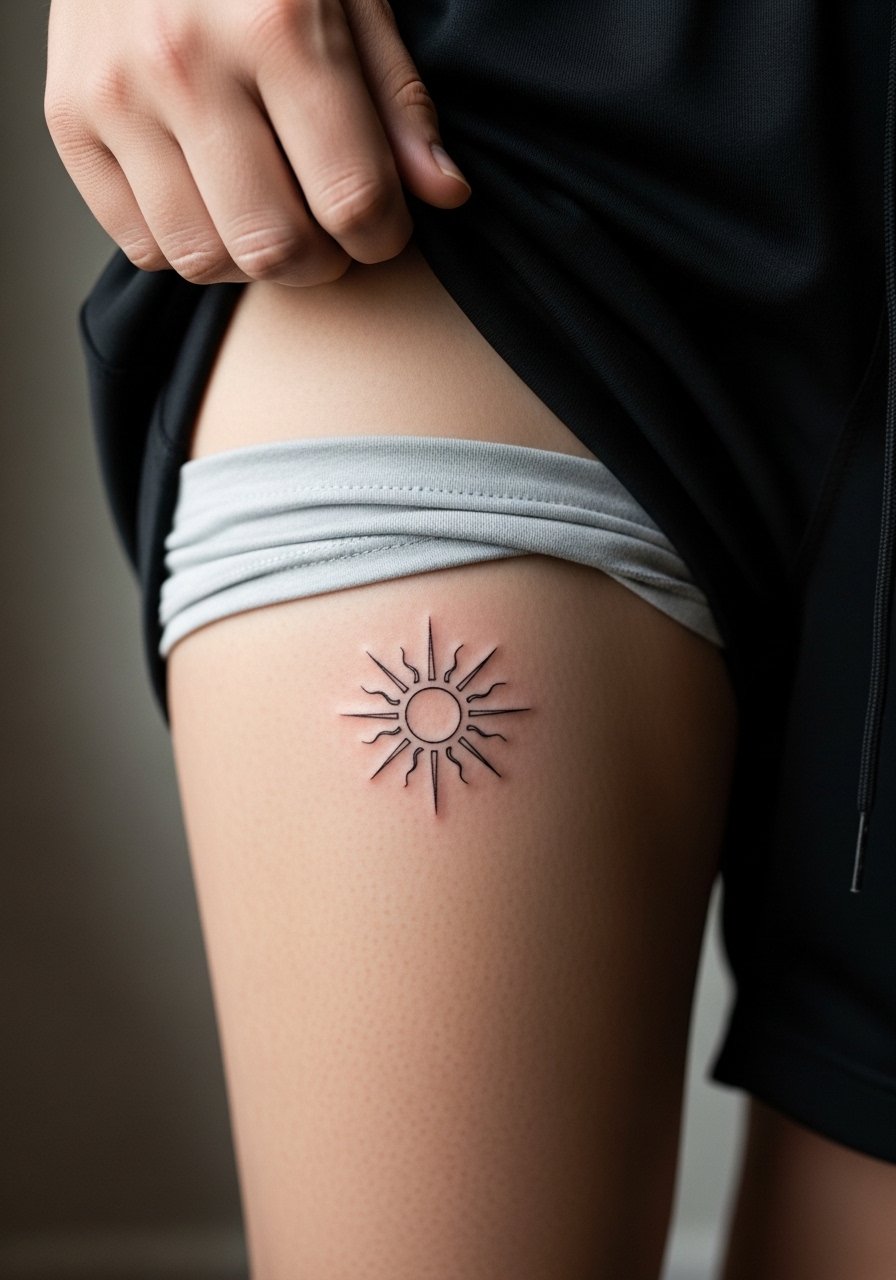
Pain warning lead: the upper thigh band sits over soft tissue so pain is lower but you will feel vibration from the machine. The glyph idea is a short session, often under 45 minutes, and best for someone who wants subtle symbolism rather than decorative flourish. A common mistake is requesting a glyph designed for another placement and shrinking it too much, which causes loss of detail. Over time the thin rays need slight touch-ups at around year three if you go too fine. Pair this with thigh-length athletic shorts for casual days when you want the band to peek out.
Pack Smart
That upper-thigh and inner-thigh work above needs different dressing and prep than mid-thigh or hip pieces, so a few compact items make the chair day cleaner and the first week easier.
- Stencil transfer paper kit. Useful if you and your artist want to test placement on skin before finalizing, especially for asymmetric thigh bands.
- Topical numbing cream. Apply as directed before inner-thigh sessions to ease sensitivity without changing the artist's depth work.
- Thin protective film roll. Keeps high-friction areas like the inner thigh shielded from fabric during the first two days.
- Fragrance-free body wash. Gentle cleansing prevents irritation where fine line detail matters.
- Aquaphor healing ointment. Thin layers help lock in moisture on delicate linework during the earliest healing window.
7. Stipple Halo Sun Above the Hip
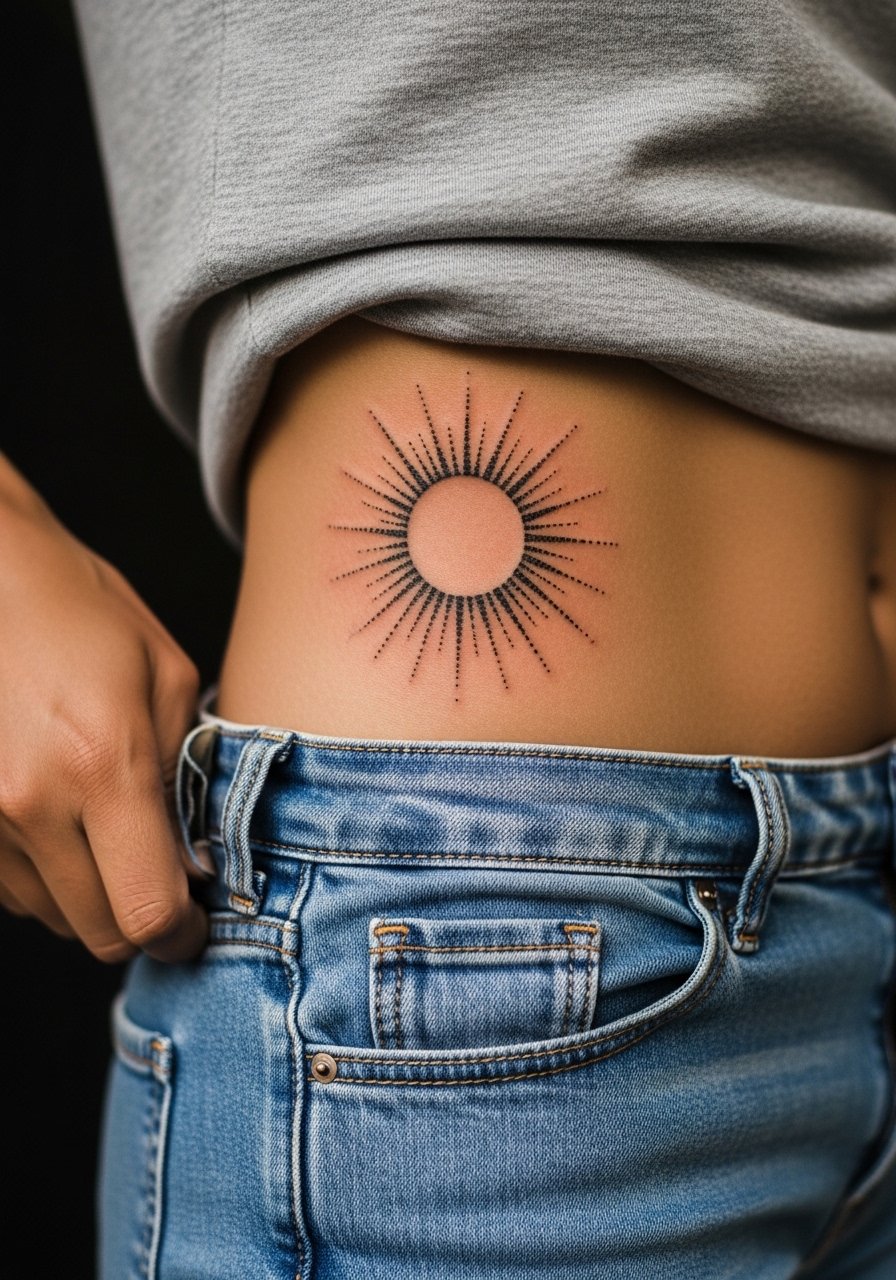
Styling lead: this placement looks deliberate with low-rise or high-cut bottoms that let the halo appear above the waistline. Tell the artist you want a soft stipple gradient and a stronger outer ring to keep the halo readable when clothes rub. Session runs around 90 minutes and pain is moderate where tissue sits over bone. A real mistake is asking for a dense stipple center that flattens into a patch over time. For show-off pairing try a high-waisted jean with the waistband slightly lowered at the hip.
8. Micro Ornamental Sun Framed by Lace Lines
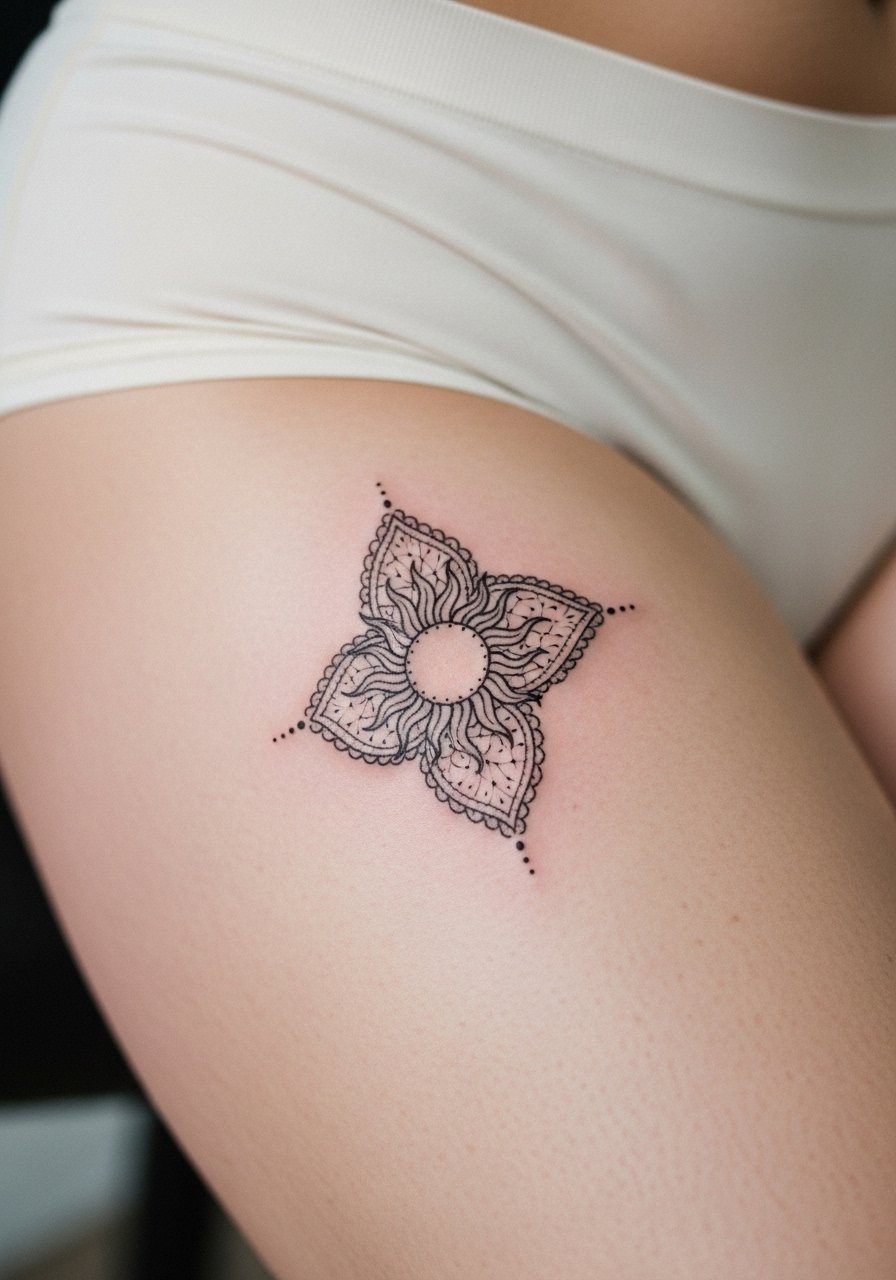
Aging/healing lead: ornamental linework survives best when the negative space in lace motifs is generous. Ask for slightly thicker primary outlines and airy inner filigree. Sessions are detail-focused and can take up to two hours for a tiny piece. The most common error is demanding ultra-intricate filigree at tiny scale. Career-minded clients sometimes prefer placing such pieces where they can be covered easily. For session wear, a seamless high-cut brief makes access simple without sharp fabric edges pressing the area.
9. Thin Ray Sun with Dot Halo on Back Thigh
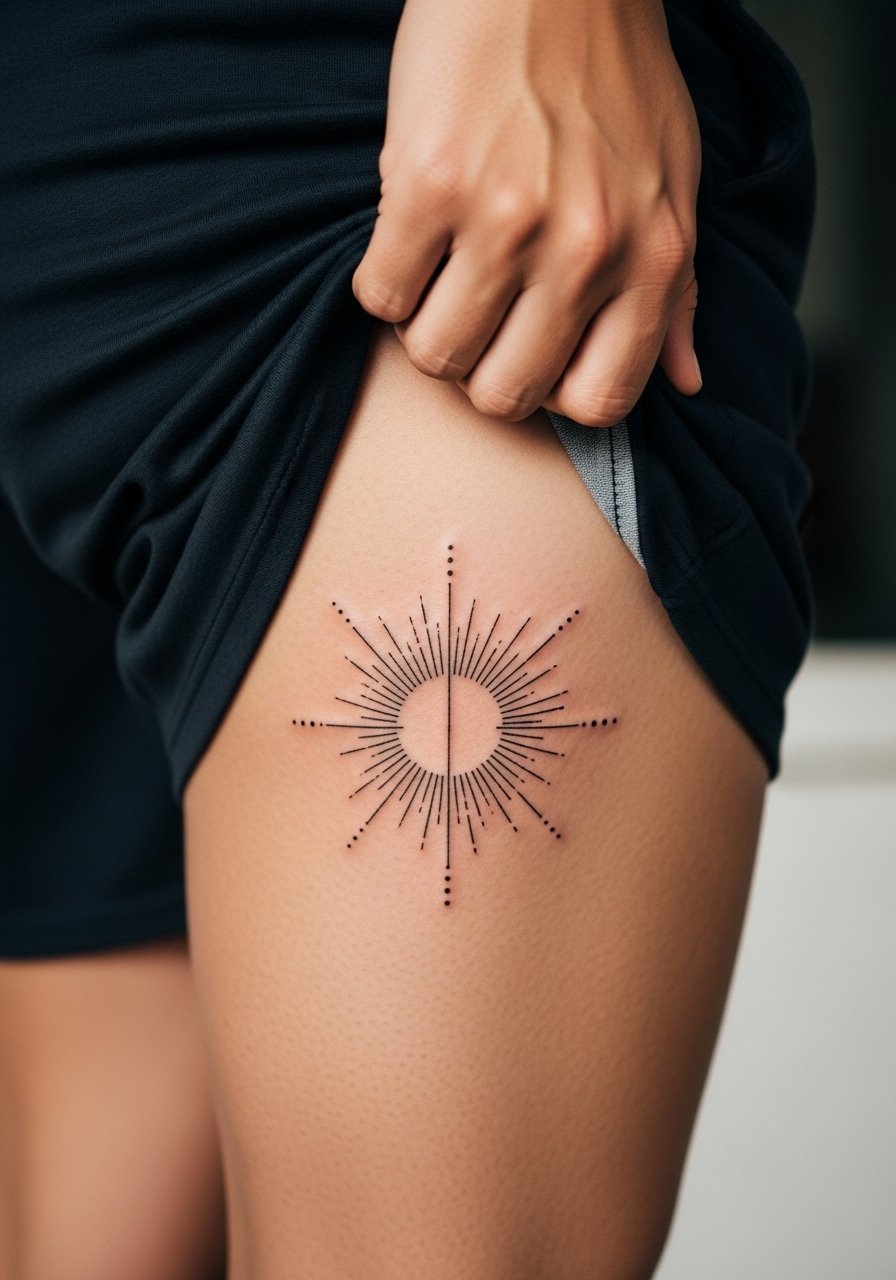
Personal observation lead: I see thin-ray suns on the back thigh hold up better when the artist spaces the halo dots wider than reference images suggest. Tell them to pull the halo outward so the dots do not end up in a tight ring that blurs. Pain is moderate to low, session time about an hour. The common mistake is mirroring a front-thigh design exactly and ignoring how the back thigh wears with sitting and fabric friction. For casual outfits, a biker short that rides slightly can let the sun peek at the hemline.
10. Crescent Sun Embedded in Thigh Band Tattoo
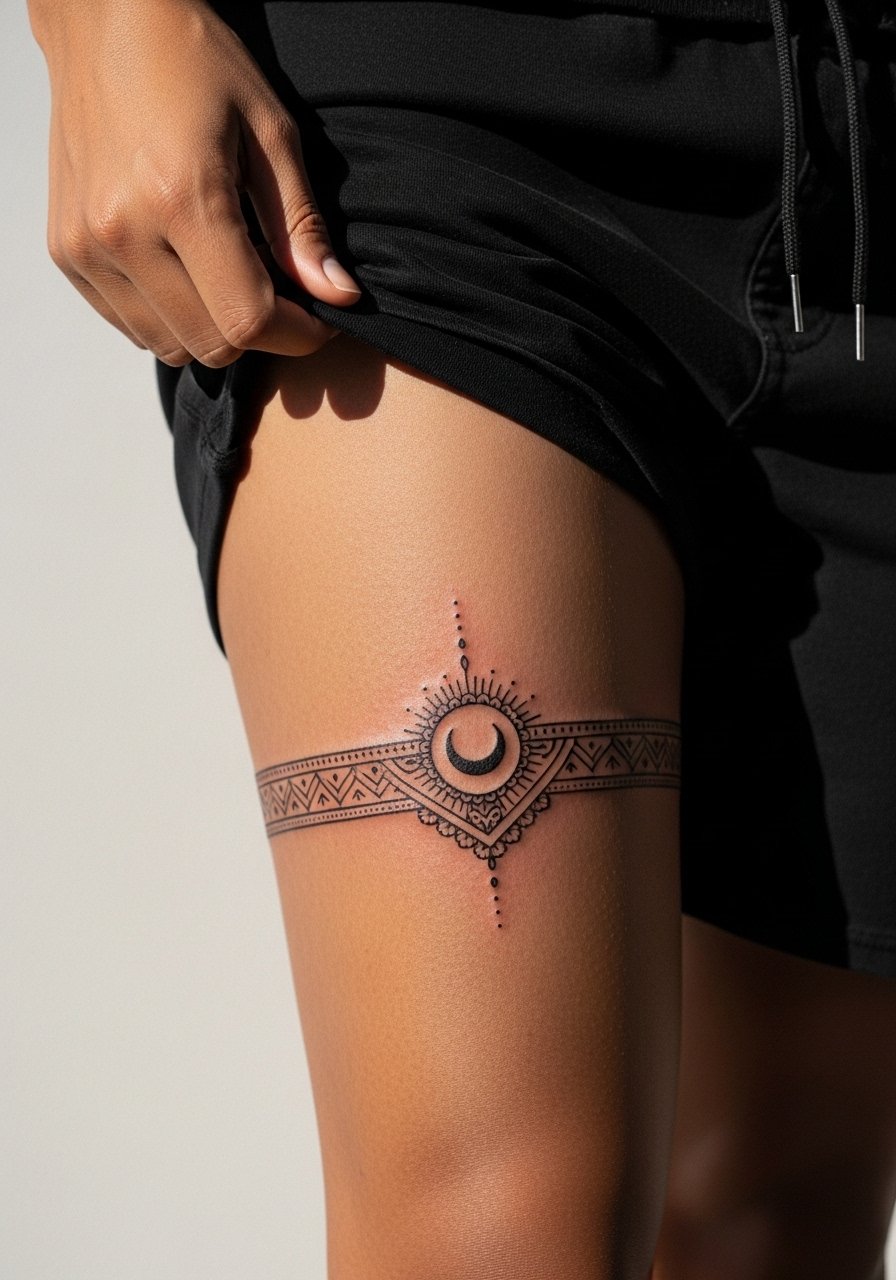
Consultation lead: when combining a sun glyph into a band, bring measurements so the band sits evenly around your leg without twisting when you move. The session can take one to two hours based on wrap precision, and pain is mild for soft tissue. A frequent mistake is not considering thigh circumference changes when sitting. Ask the artist to stencil and have you stand and sit to confirm band alignment before ink. Pair this band with a flowy midi skirt that lifts on movement.
11. Tiny Solar Glyph Near the Inner Thigh Crease
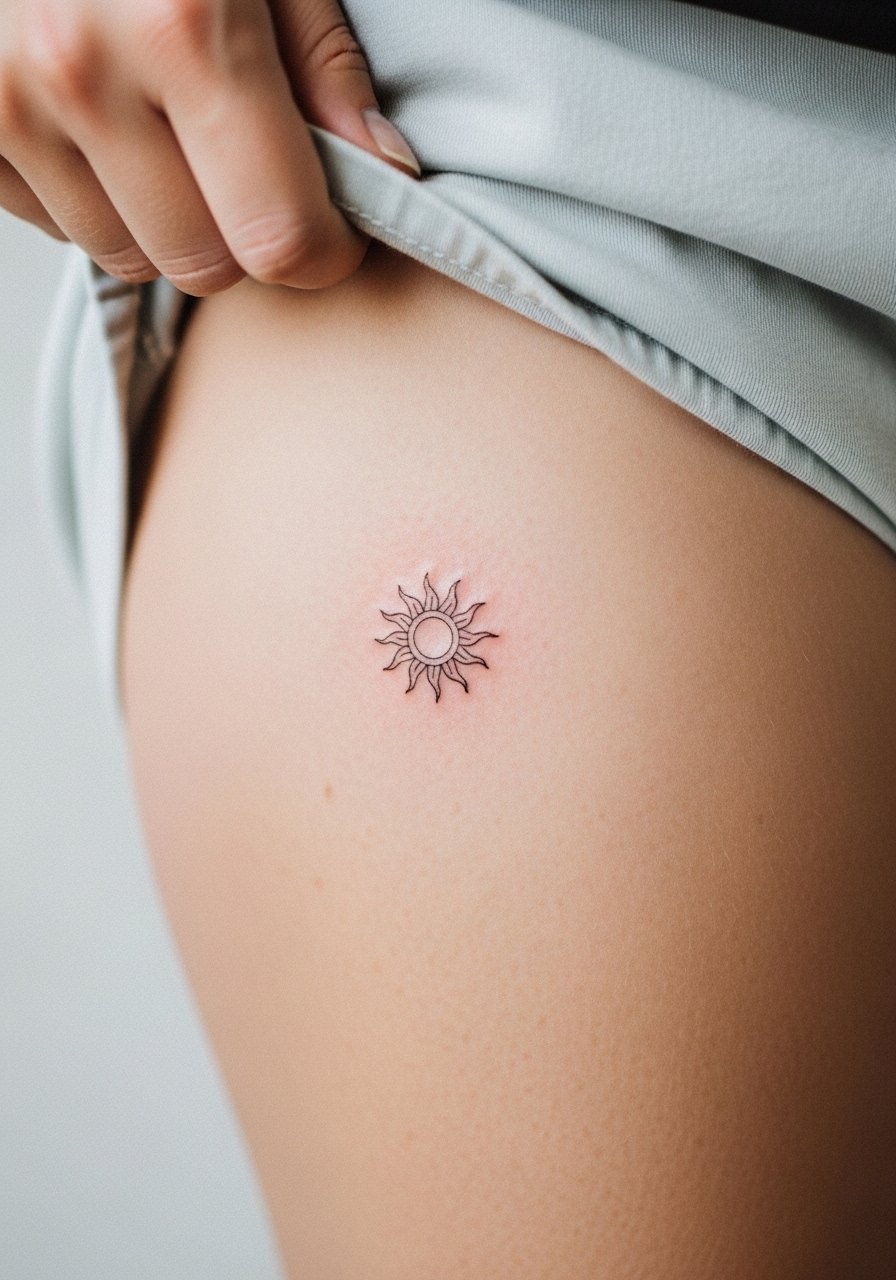
Mistake lead: the inner thigh crease is a high-friction zone and tiny designs there risk early fading. Recommend a slightly bolder contour and more space between rays. Session time is short but expect higher sensitivity when the needle hits the crease. Artists often split on this placement; one camp warns that daily movement will blur the finest lines, while the other camp says careful depth and spacing makes it viable. Name both camps during consultation and ask which approach the artist uses. For the session, a longline sports bra and loose shorts keeps things accessible.
12. Sun and Moon Microcombo on Outer Thigh
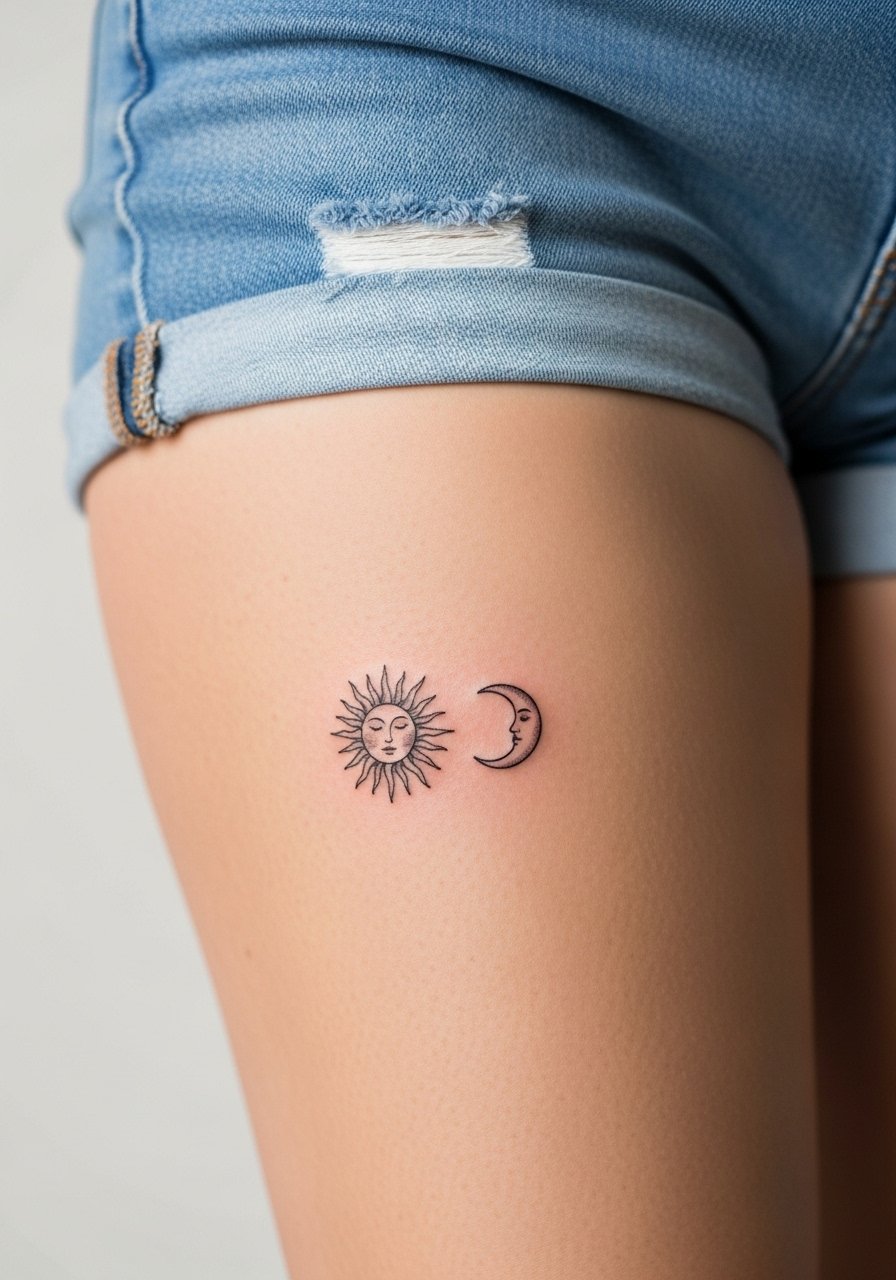
Visual impact lead: pairing a sun and moon keeps the thigh design compact while adding narrative. Tell the artist you want the moon slightly darker so the sun's negative space reads. Expect a 60- to 90-minute session and low to moderate pain. A typical mistake is making both symbols identical in weight which flattens the contrast. For evening wear, a wrap dress with a thigh slit lets the symbols catch light without full exposure.
13. Stippled Solar Disc Over the Upper Thigh Plane
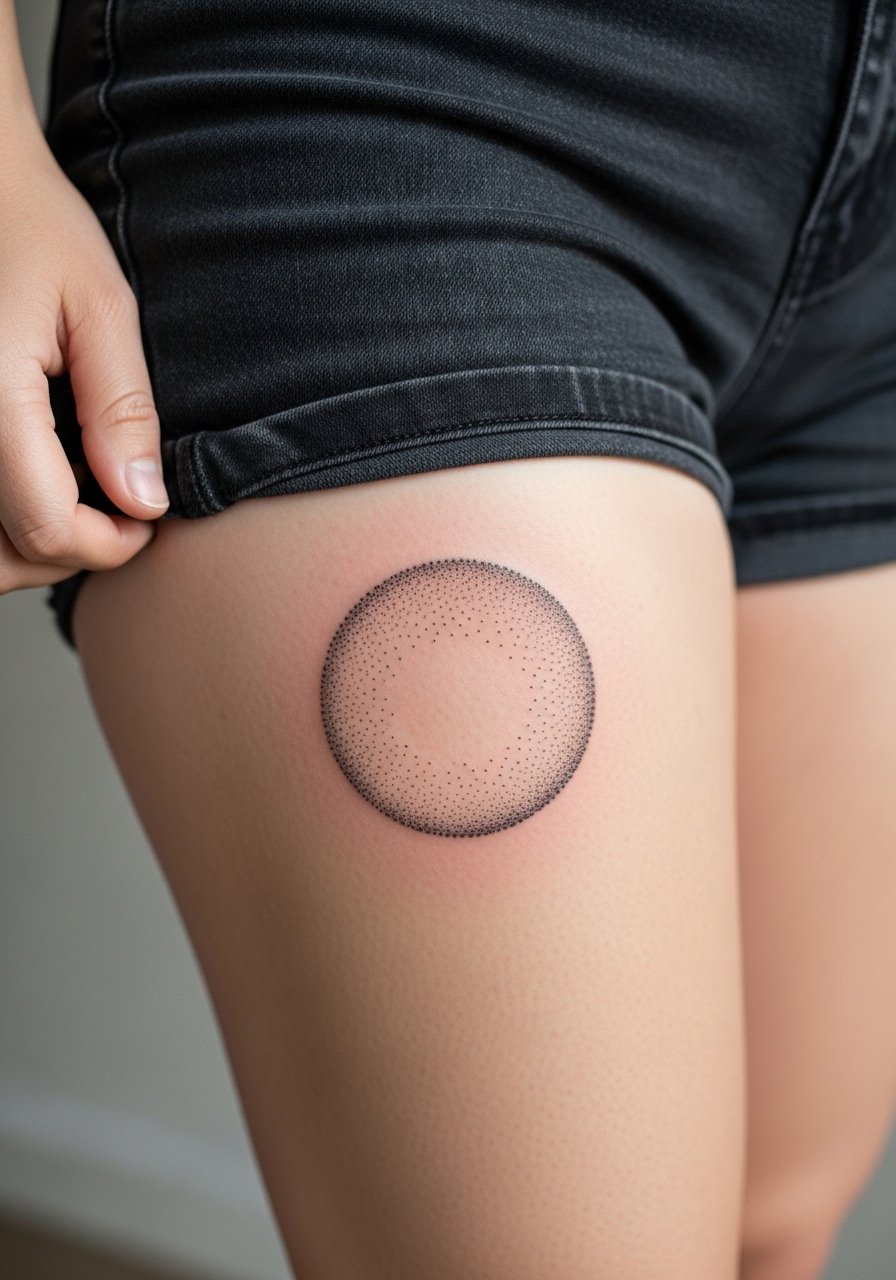
Aging/healing lead: a dense stippled disc needs intentional spacing so dark areas do not become a single blot after two years. Ask for a graduated stipple with a lighter outer ring and a defined outer edge. Sessions vary from one to two hours depending on size. Common mistake is asking for photographic density at tiny scale. For showing off, pair with shorts that have a high waistband that reveals the disc when you lift or sit.
14. Sunburst with Negative Ray Lines on Inner Upper Thigh
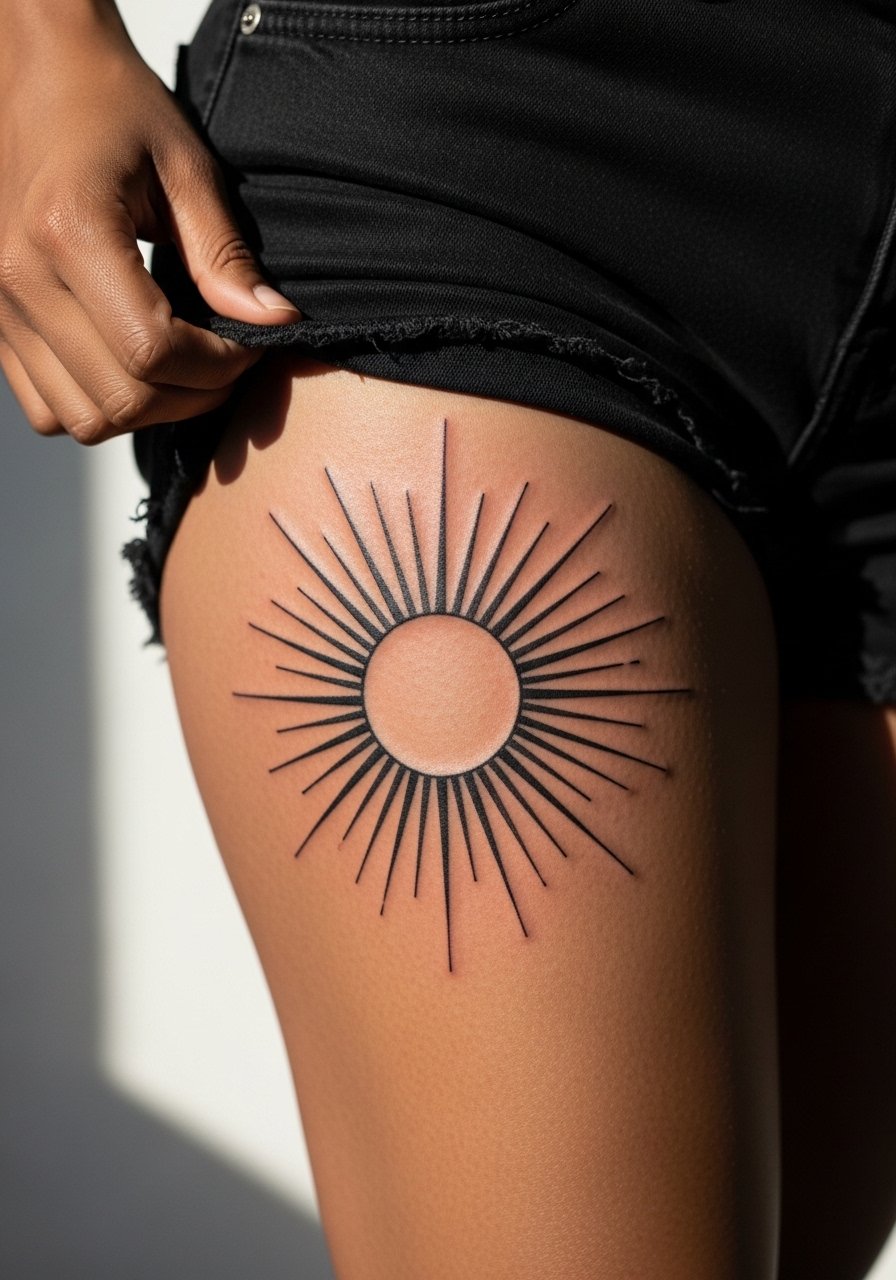
Personal observation lead: negative-space rays survive friction better if the artist keeps the surrounding strokes bold enough to define the gaps over time. Tell them you want the negative lines at least 1.5 mm apart from inked strokes. Session time around 90 minutes with moderate pain on the inner side. A common error is trusting thin negative slits to hold when fabric rubs nightly. Consider wearing a loose wrap skirt the day after so seams do not immediately press the area.
15. Linear Sun Strip Along the Thigh Length
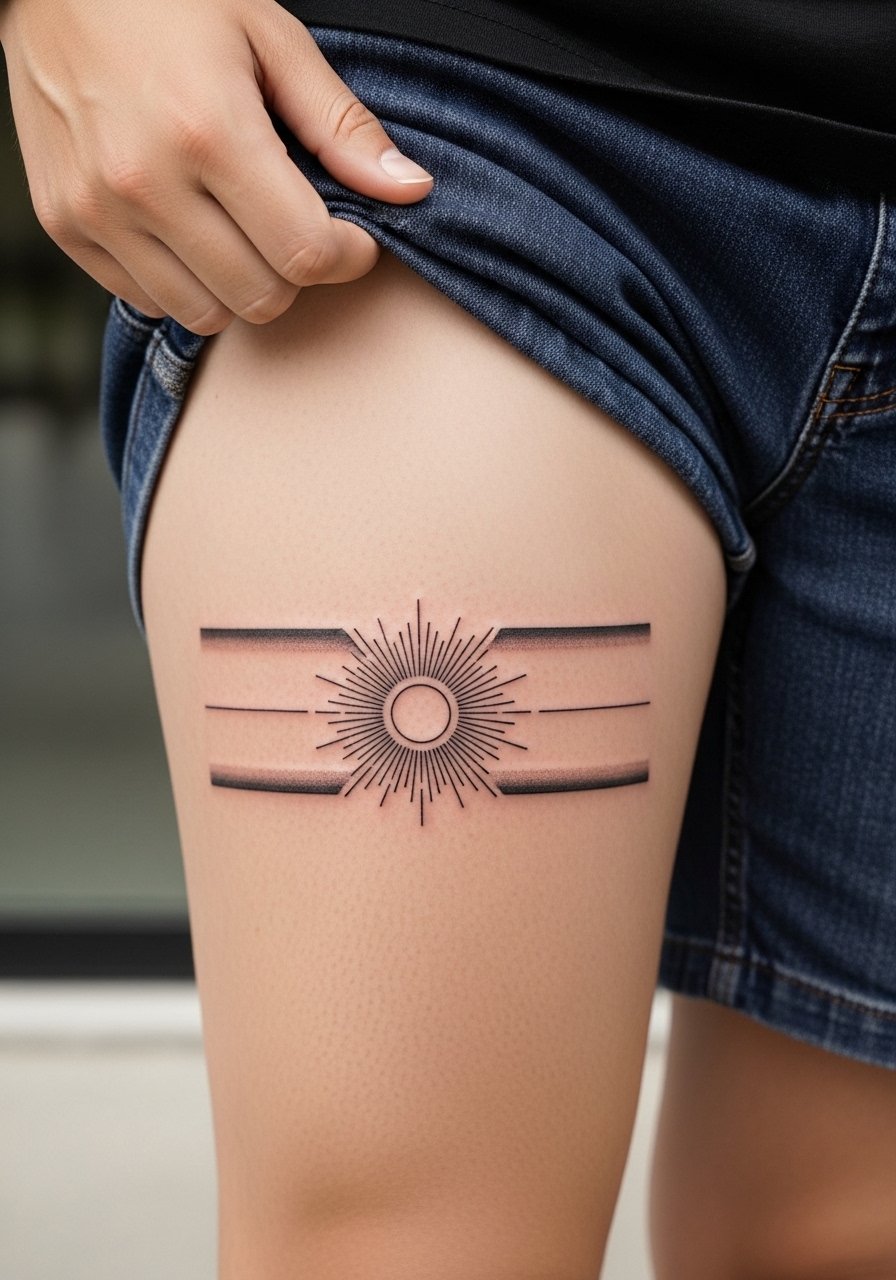
Pain warning lead: a lengthwise strip can cross muscle and soft tissue, so expect variable sensation across the session. Tell your artist you want primary rays slightly thicker at the edges to keep silhouettes intact. Session time depends on length, typically 90 to 150 minutes for a longer strip. A mistake is asking for uniform micro lines that a few years later merge in the middle where skin stretches. For day-of comfort, a loose drawstring linen pant makes it easy to roll up without pinching.
16. Tiny Solar Glyph with Fine Dot Ring Near the Hip
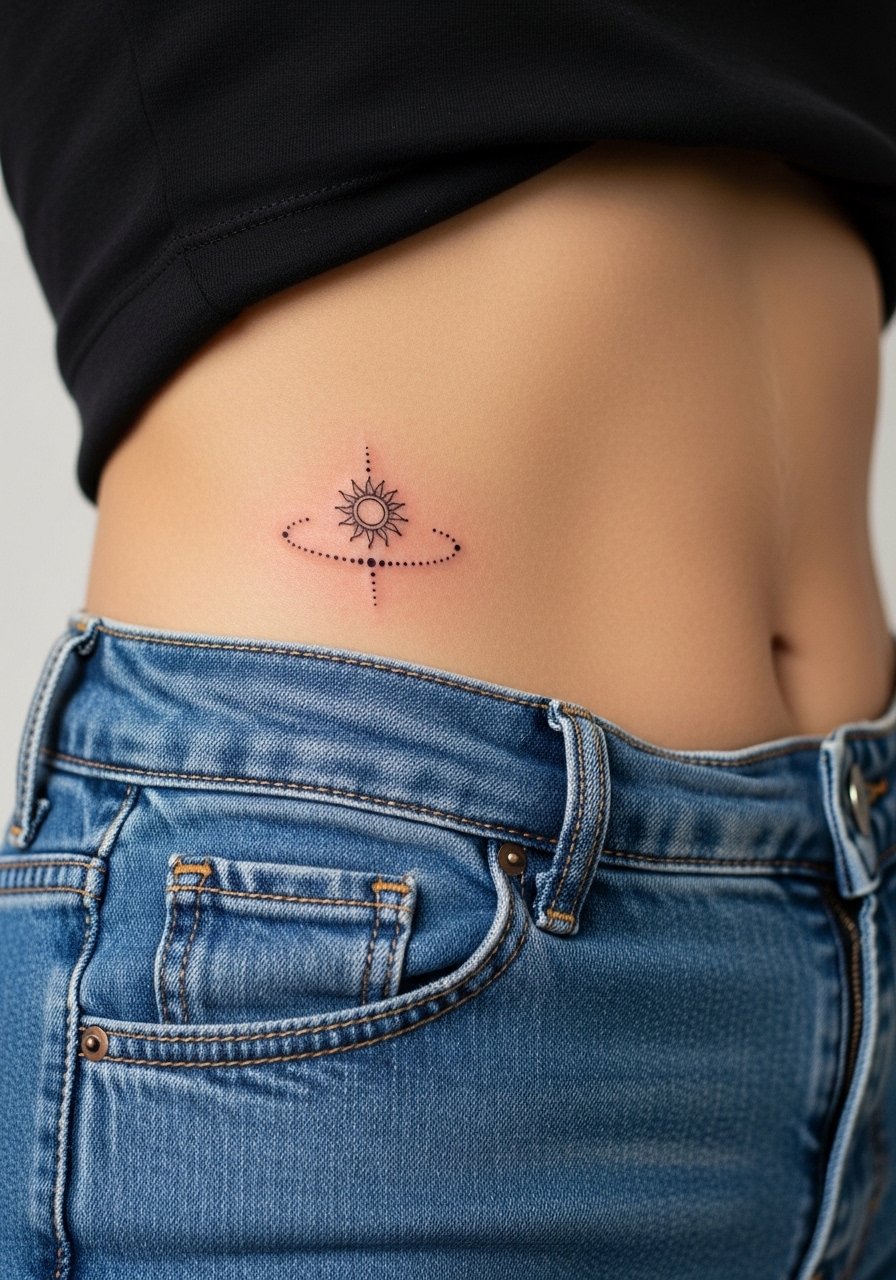
Consultation lead: hips shift with everyday motion and sitting, so confirm the stencil while standing and seated. Ask for dots spaced slightly wider and a stronger outer contour. Sessions are quick, often under an hour, and pain is mild. A common mistake is replicating a tiny design from a forearm to the hip without scaling it for movement. A high-waisted skirt with a slightly lowered waistband makes the glyph visible without full exposure.
17. Sun Icon Framed by Fine Cross-Hatching on Mid Thigh
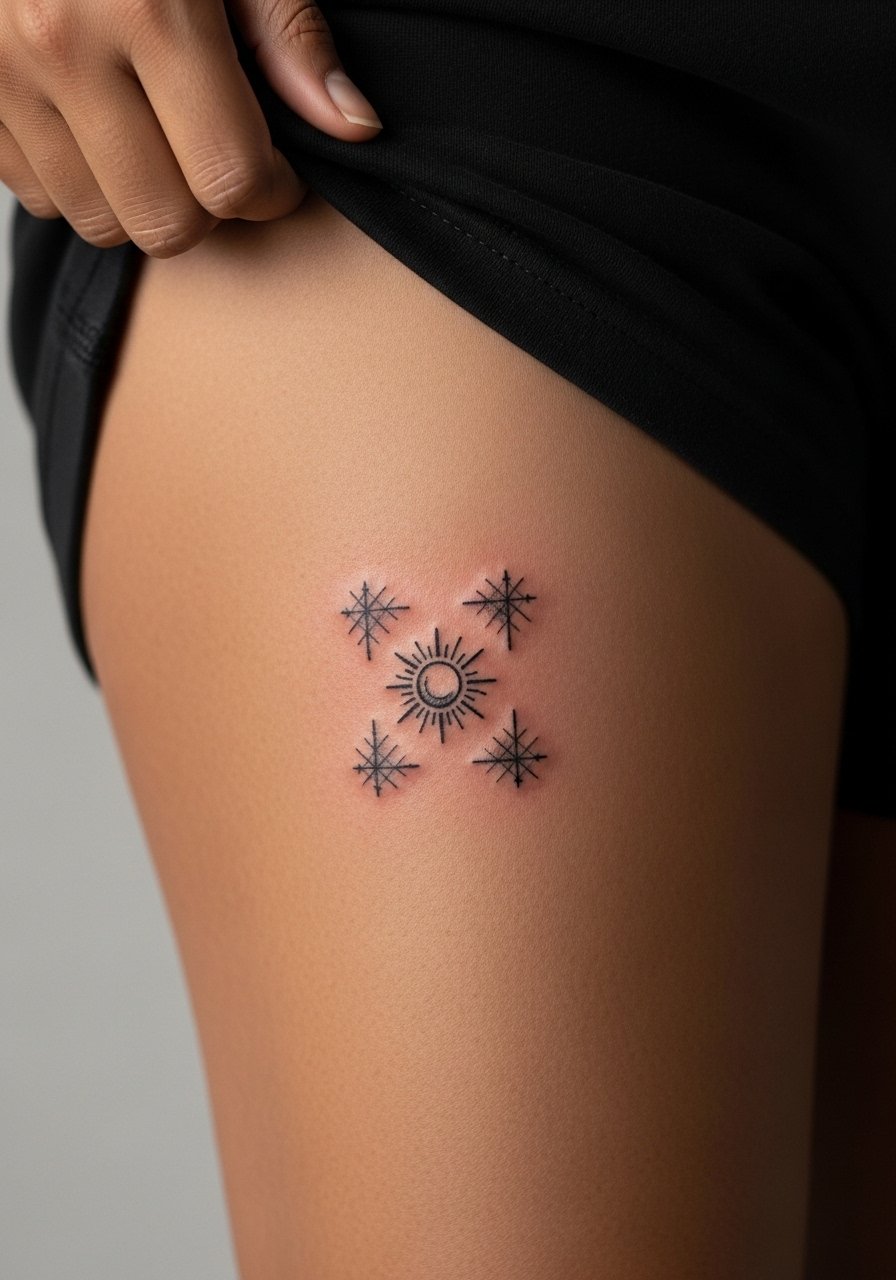
Visual impact lead: cross-hatch gives texture but needs deliberate breaks to avoid turning into a shaded patch. Tell the artist to leave micro gaps in cross lines so the pattern reads at a distance. Session time is often one and a half hours and discomfort is low to moderate. The common mistake is asking for tight cross-hatching that looks dense after healing. For outfits, a thigh-length slip or longline underwear keeps the pattern from constant seam abrasion.
18. Sun Motif Paired with Minimal Script on Upper Thigh
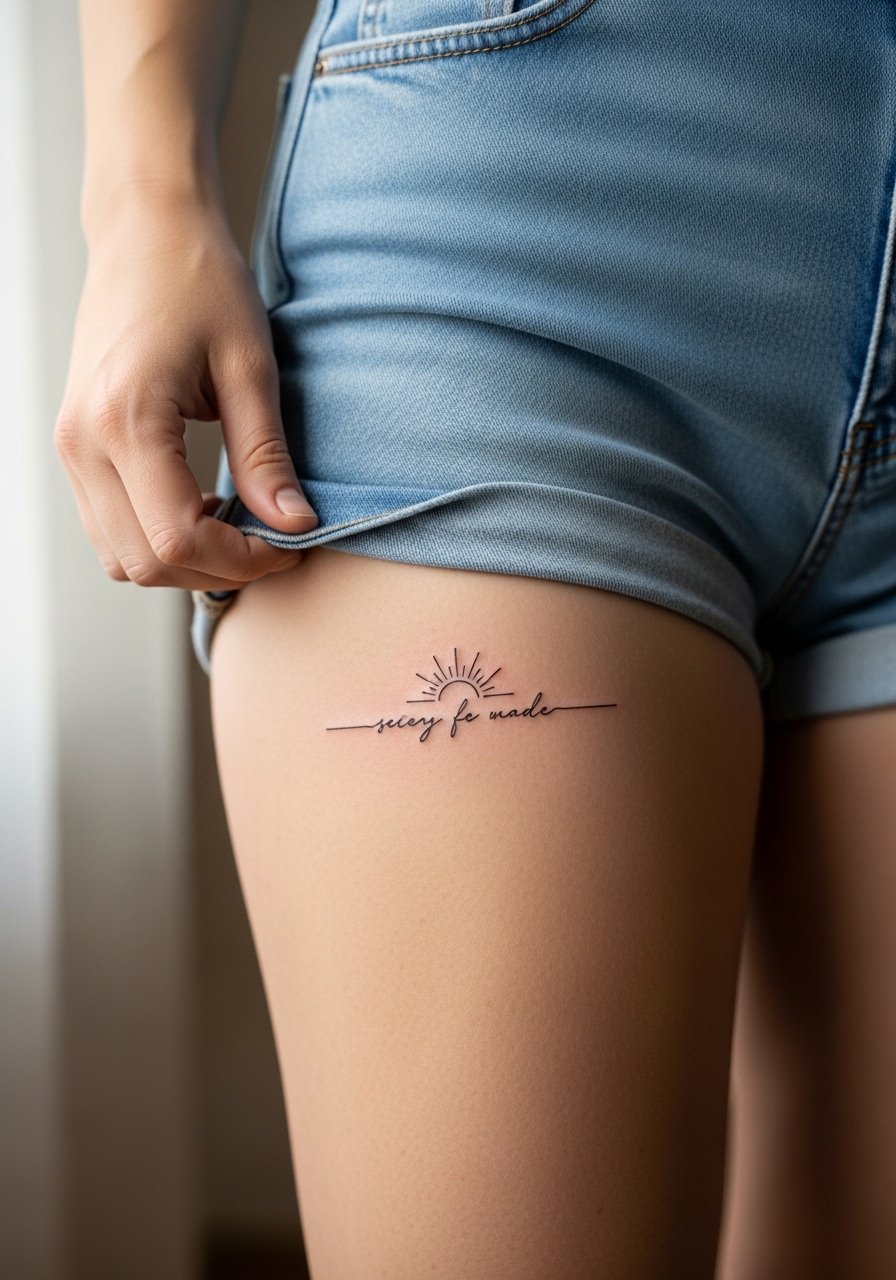
Mistake lead: tiny script next to delicate suns often competes if the lettering is too small. Ask the artist to increase letter spacing and choose a readable weight so the sun does not overpower the text. Sessions can be under an hour and pain is mild. Expect a touch-up for letters at year two if they were done too feather-light. Pair the combo with a high-cut swimsuit bottom for pool days where the script aligns with the sun.
19. Blackwork Solar Seal on Upper Outer Thigh
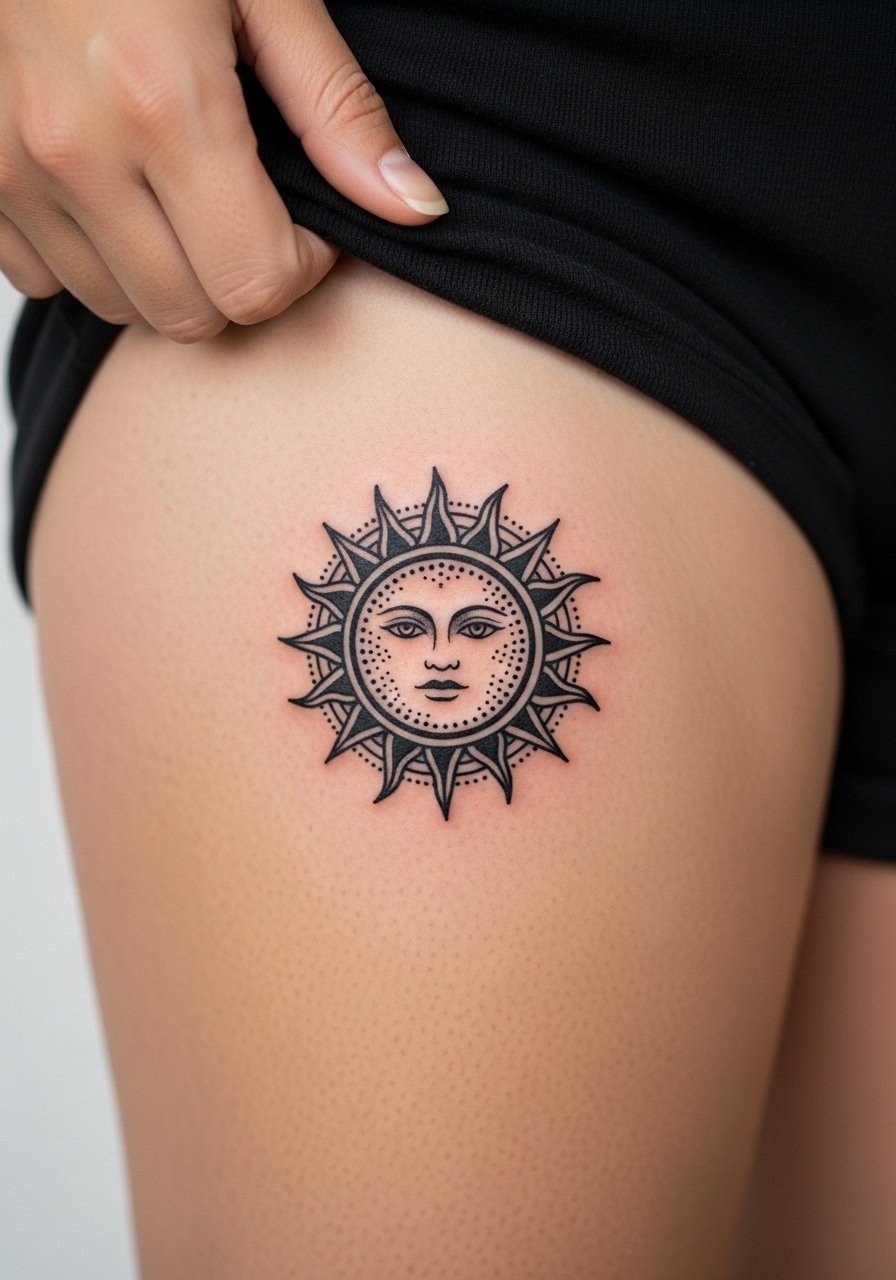
Aging/healing lead: blackwork saturates into a bold silhouette and often ages more predictably than micro lines on the thigh. Tell the artist you want even saturation and clean outer edges to reduce uneven fading. Sessions for a medium blackwork seal run one to two hours and pain varies with area depth. The mistake is mixing ultra-fine rays into a solid block without transition. For night looks, a silk slip or high-slit skirt reveals the seal without clutter.
20. Sun with Stacked Dot Rows Along Thigh Curve
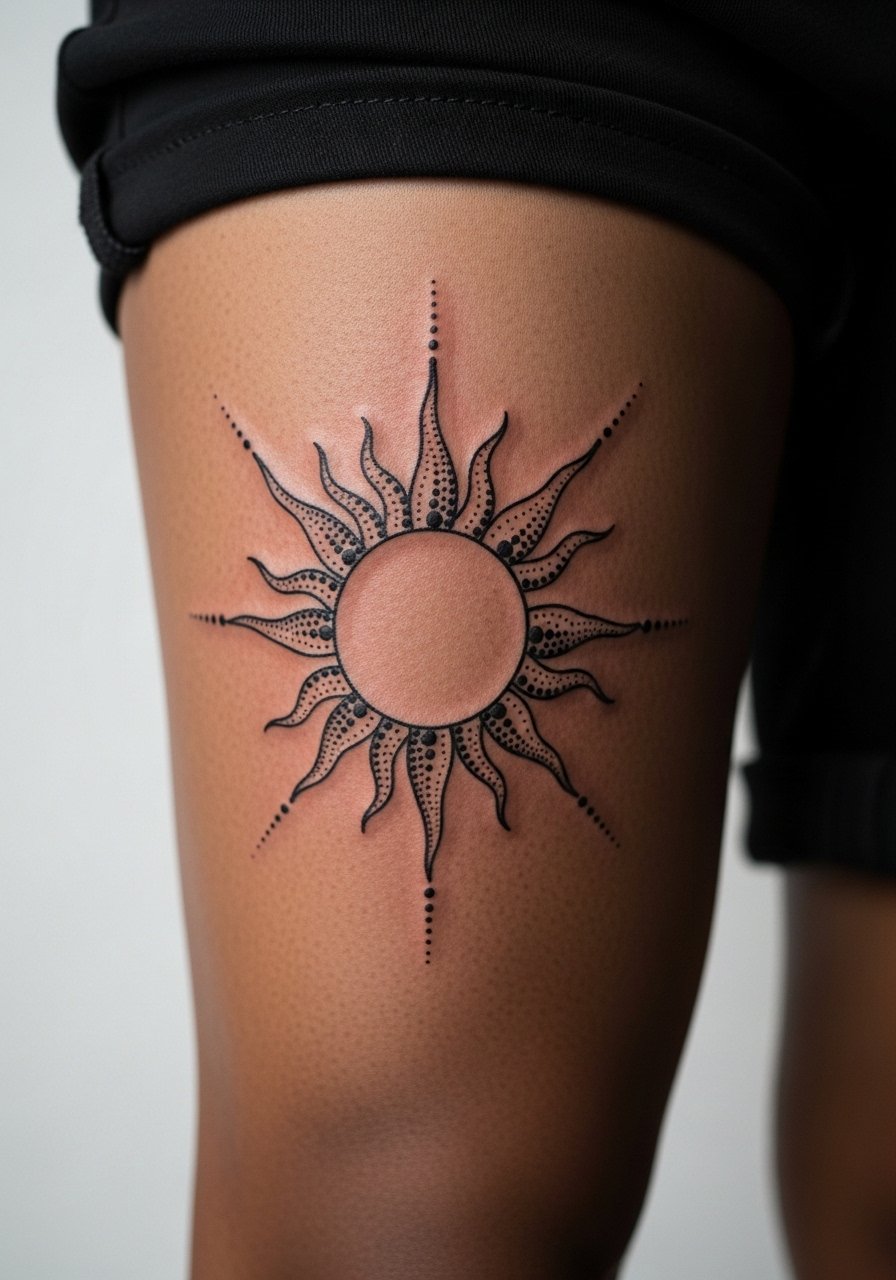
Personal observation lead: rows of dots that follow the thigh curve fare better when dot density decreases toward the outer edges. Request a tapered dot density pattern to prevent a bold patch forming later. Sessions may take up to 90 minutes and pain is moderate along the curve. A common misstep is packing uniform density that creates an unintended solid patch. For styling, a slit midi skirt shows the curve elegantly.
21. Minimal Solar Dot Above the Knee on the Thigh
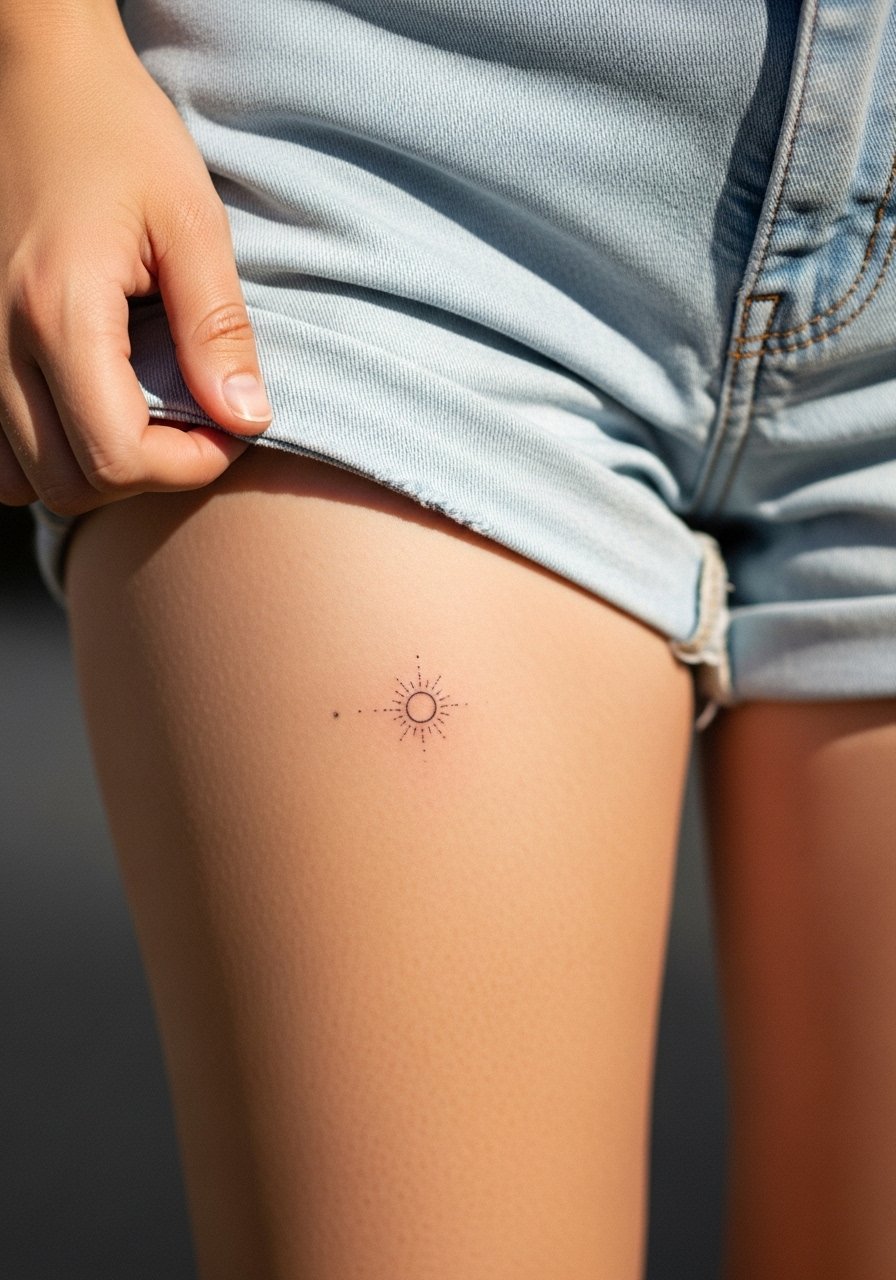
Pain warning lead: just above the knee has thinner tissue and you will feel more vibration, though the piece is small and session time is brief. Ask for slightly bolder outline so the dot holds against movement and seasonal swelling. Common mistake is treating it like a forearm placement and keeping the dot too small. Expect touch-ups sooner if the initial dot was ultra-minimal. For casual showing, a pair of rolled-up jeans frames the spot without full exposure.
22. Sun Icon with Thin Rays Near the Hip Bone
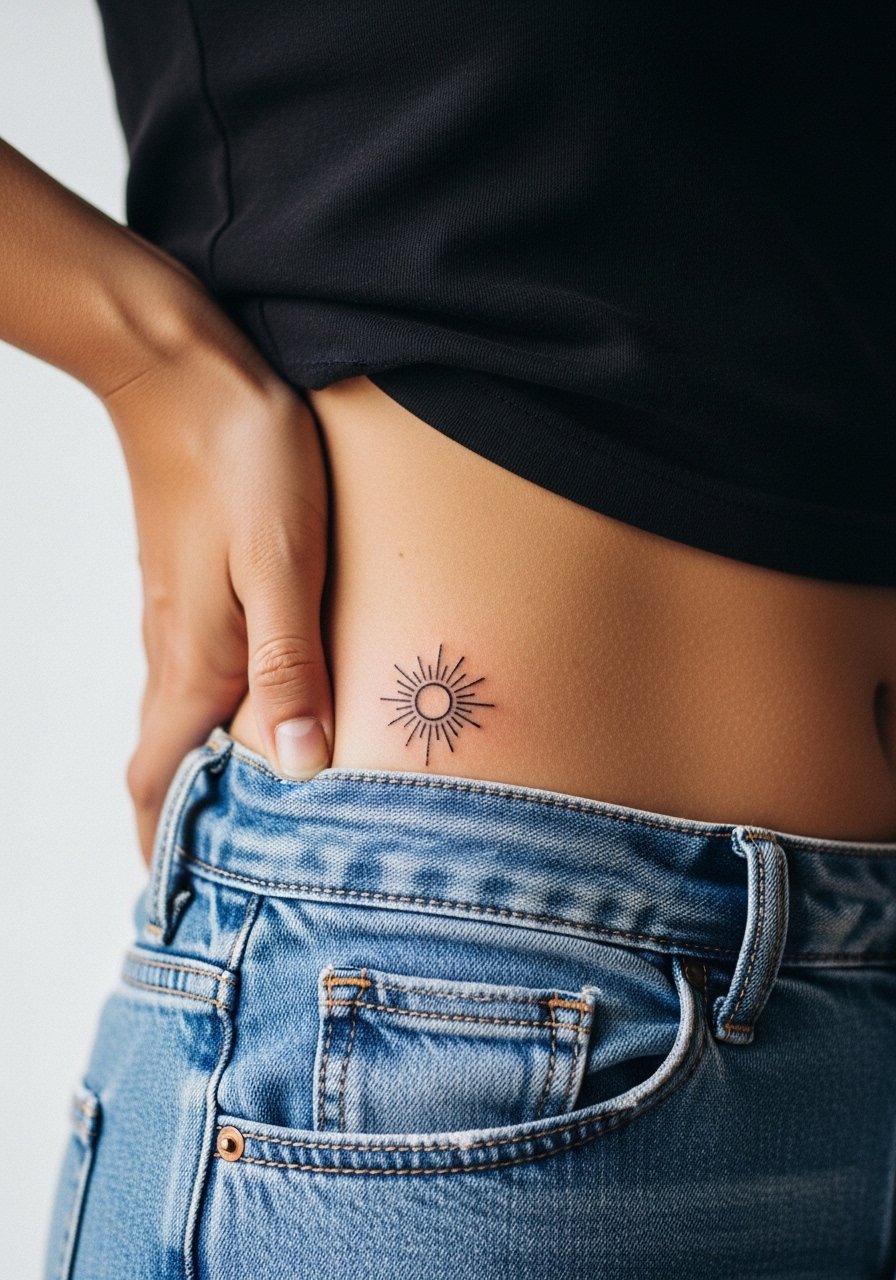
Consultation lead: placement near the hip bone sits where jeans often press, so tell your artist you want the primary rays slightly thicker to resist the constant abrasion. Session time is short and pain is low to moderate since it rests over soft tissue. A mistake I see is copying a collarbone sun and placing it at the hip without adjusting weight. For outfits, a low-rise jean creates a deliberate peek.
23. Sun with Fine Whip Shading on Outer Thigh
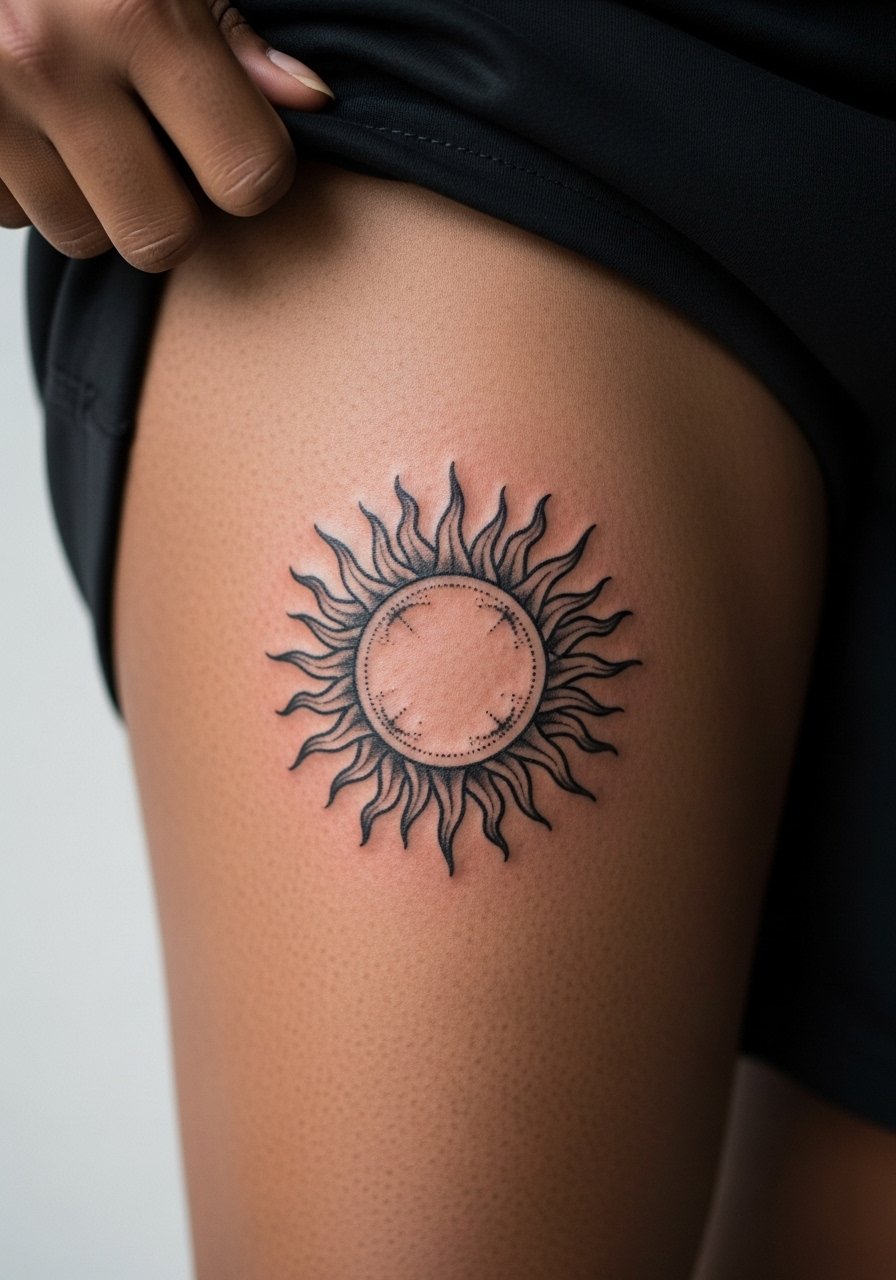
Visual impact lead: whip shading gives motion to a sun motif but needs soft exits so shading does not concentrate into a muddy patch. Ask the artist for long, feathered strokes that taper into skin. Sessions usually last around 90 minutes and pain is mild. A common mistake is asking for short, dense whip strokes that age into patches. Pair with a tank dress with a thigh slit when you want the shading to be visible.
24. Micro-Radiant Sun Near Upper Thigh Crease
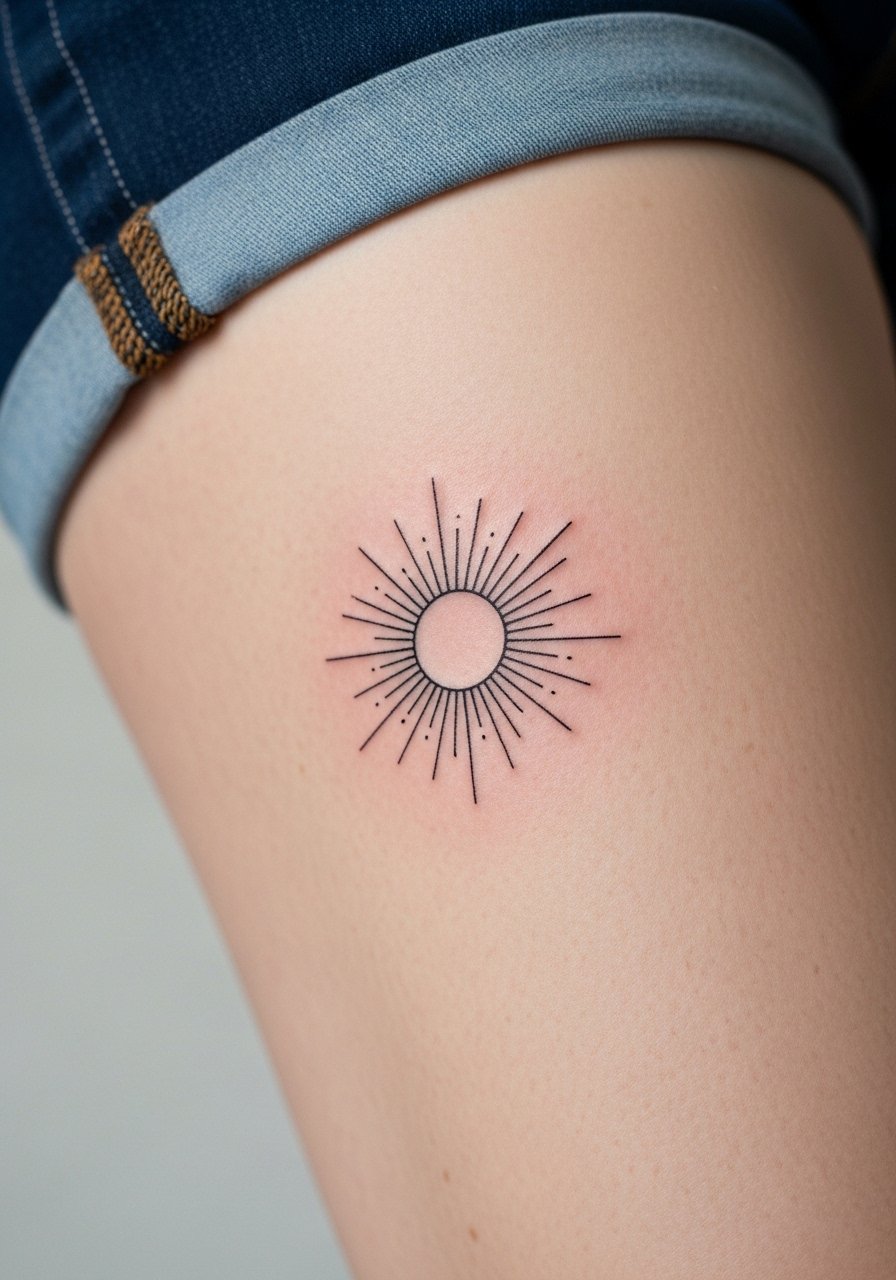
Mistake lead: placing radiant suns directly on high-crease zones without adjusting spacing leads to early line merging. Request that the artist increase spacing between rays and test the stencil while you move so it remains readable. Session time is short and pain can spike where the skin folds. Artists split into two camps on crease work. One camp warns the fold will blur the finest lines in under two years. The other camp believes careful placement and depth produce a stable result. Ask the artist which camp their portfolio supports. For comfort, wear a loose drawstring short for the appointment.
25. Tiny Solar Emblem with Negative Space Rays on Inner Thigh
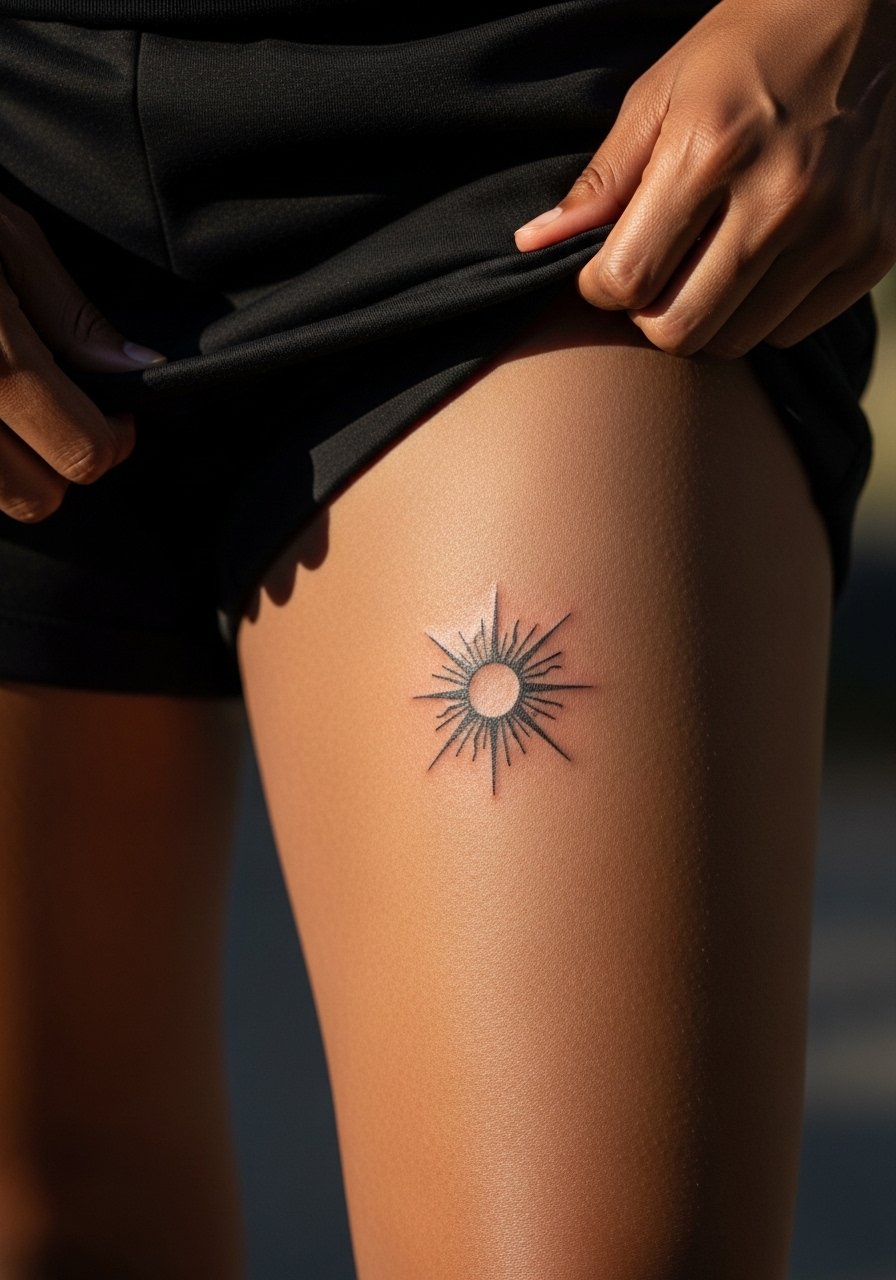
Consultation lead: inner thigh negative-space work needs particular attention to spacing and depth so the skin between rays recovers cleanly. Expect higher sensitivity during the session and a short to mid-length appointment. The common mistake is requesting extreme thinness for negative rays which then lose definition. For session wear, a loose cotton short lets your artist expose the area without tight seams affecting the fresh ink.
26. Sunburst Encircled by Tiny Stars on the Thigh Side
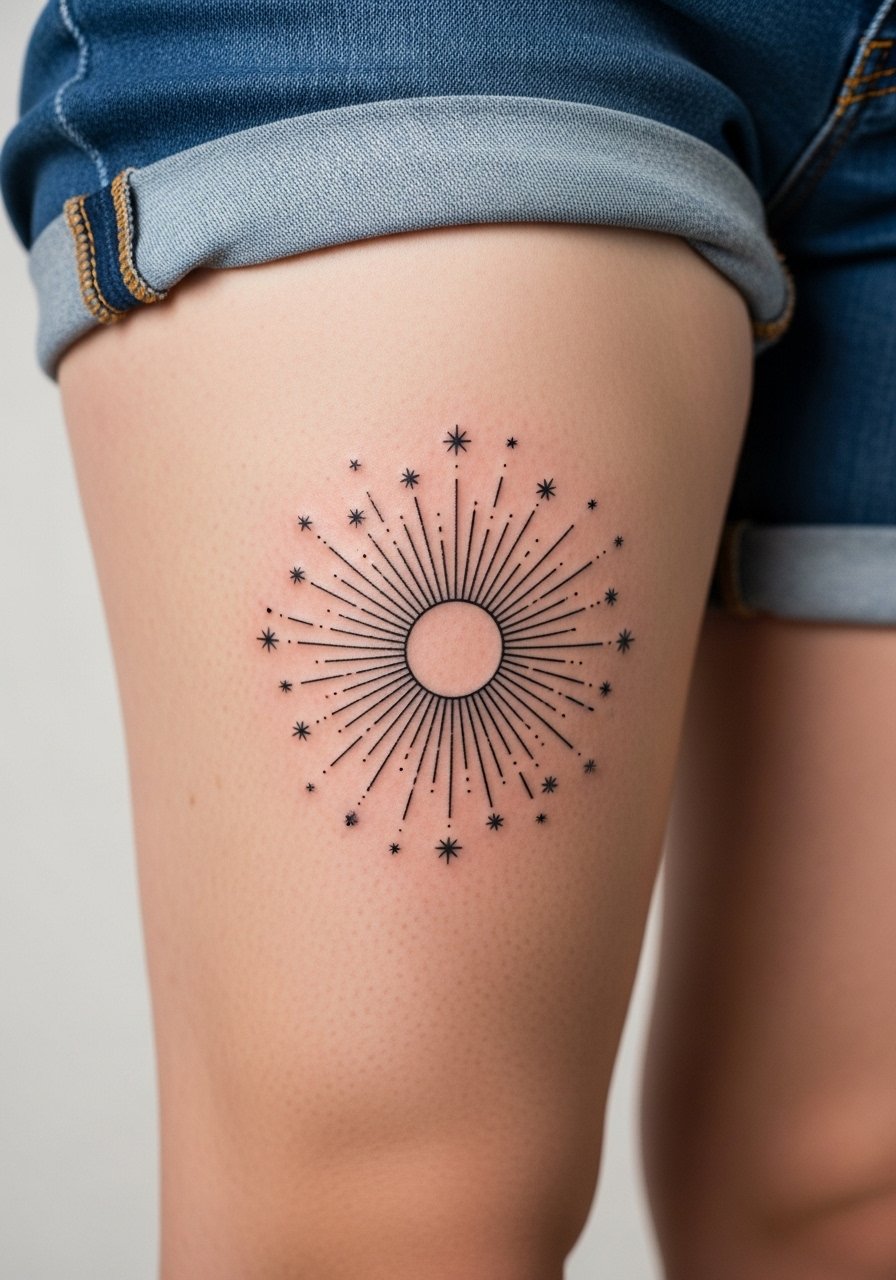
Personal observation lead: surrounding a sunburst with micro stars balances composition while distributing detail so any single area is less dense. Ask for varied star sizes to prevent equal-weight dots from merging into a ring. Sessions can be under two hours and pain is mild. A common error is allocating equal density to every element which makes the group read crowded after healing. A wrap skirt with a side slit shows the arrangement without constant rubbing.
27. Micro-Lace Sun That Echoes Thigh Lingerie Lines
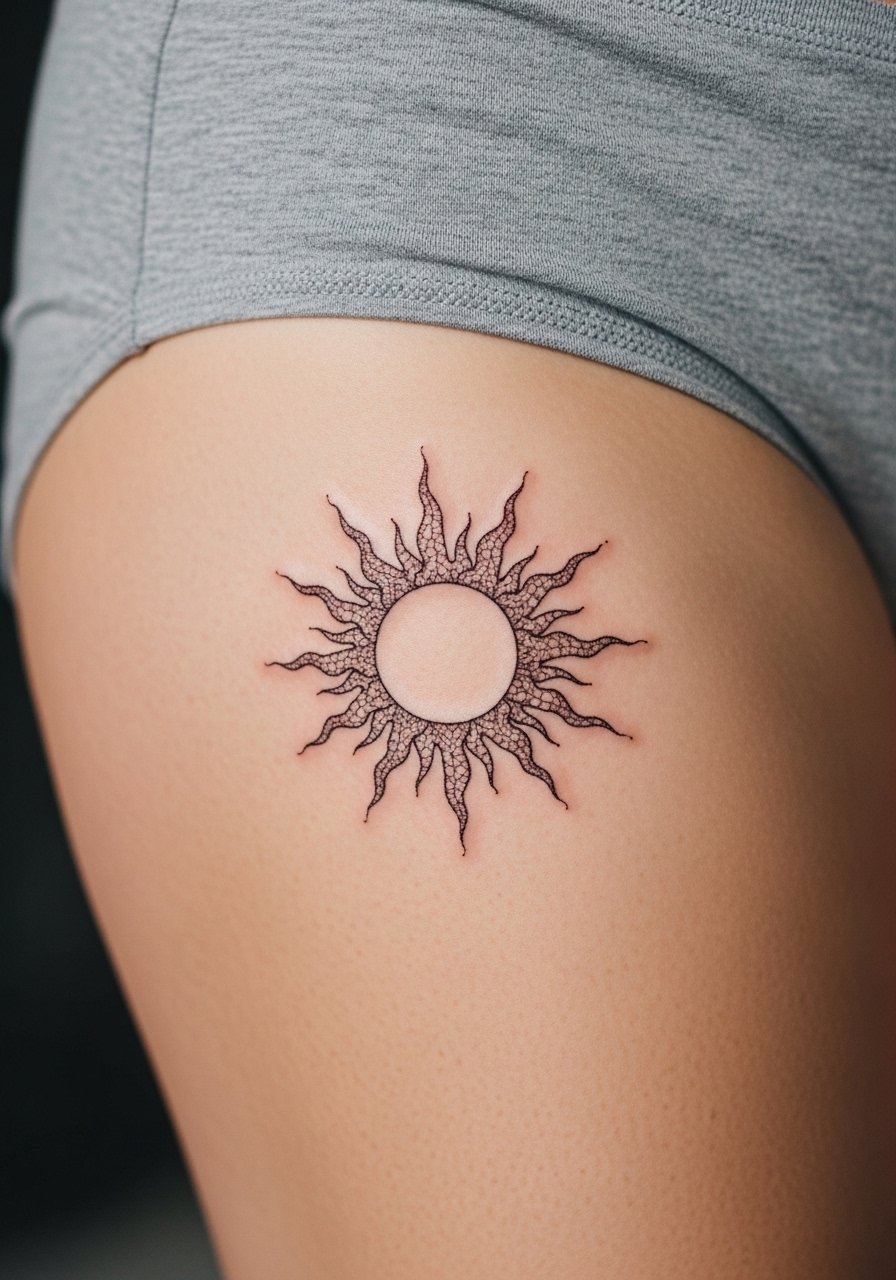
Styling lead to close the list: a lace-echo sun reads intimate and deliberate when it follows existing lingerie lines. Tell the artist you want soft filigree and a bold outer ring so the lace elements do not disappear. Sessions are detail-oriented and can take up to two hours for tiny filigree. The most common mistake is asking for embroidered detail at a size that cannot hold once healed. This placement benefits from a seamless high-cut brief during the session so the area can be exposed without tight elastic pressing the fresh work.
Frequently Asked Questions
Q: How long will a subtle fine-line sun on the thigh stay crisp before a touch-up is likely?
A: It depends on line weight and placement, but from what I've seen thinner rays often need touch-ups around year three. If you and your artist choose slightly heavier primary lines and give negative space room, you can push that timeline out. Outer thigh blackwork often holds longer than ultra-fine motifs near creases.
Q: Are there design choices that help a sun tattoo survive fabric friction from jeans and shorts?
A: Yes. Wider spacing between rays, stronger outer contours, and avoiding dense stippling right where seams sit are practical choices. Also consider session-day clothing like a loose drawstring pant so the area does not rub the minute it is bandaged.
Q: Is blackwork safer than fine line for longevity on the thigh?
A: Blackwork usually ages more predictably because saturation creates a clear silhouette. Fine line can look airy at first and then soften into less definition. The trade-off is appearance versus longevity, so match your tolerance for touch-ups with the visual you want.
Q: Can inner-thigh sun tattoos affect my job prospects or social situations?
A: Placement matters. Inner-thigh and hip-adjacent pieces are easy to cover and rarely visible in professional settings. Hand and neck placements carry more social and professional visibility, which some people consider. Think about how often the piece will show in your day-to-day clothing choices.
Q: How should I bring references to my consultation so the artist understands scale for the thigh?
A: Bring images showing the tattoo on a body with similar thigh proportion, and request a live stencil while standing and sitting. If you use saved images, point out the exact line weight and spacing you like. Mention discovery pathways you used, such as shop portfolios, concisely so the artist can reference similar healed work.