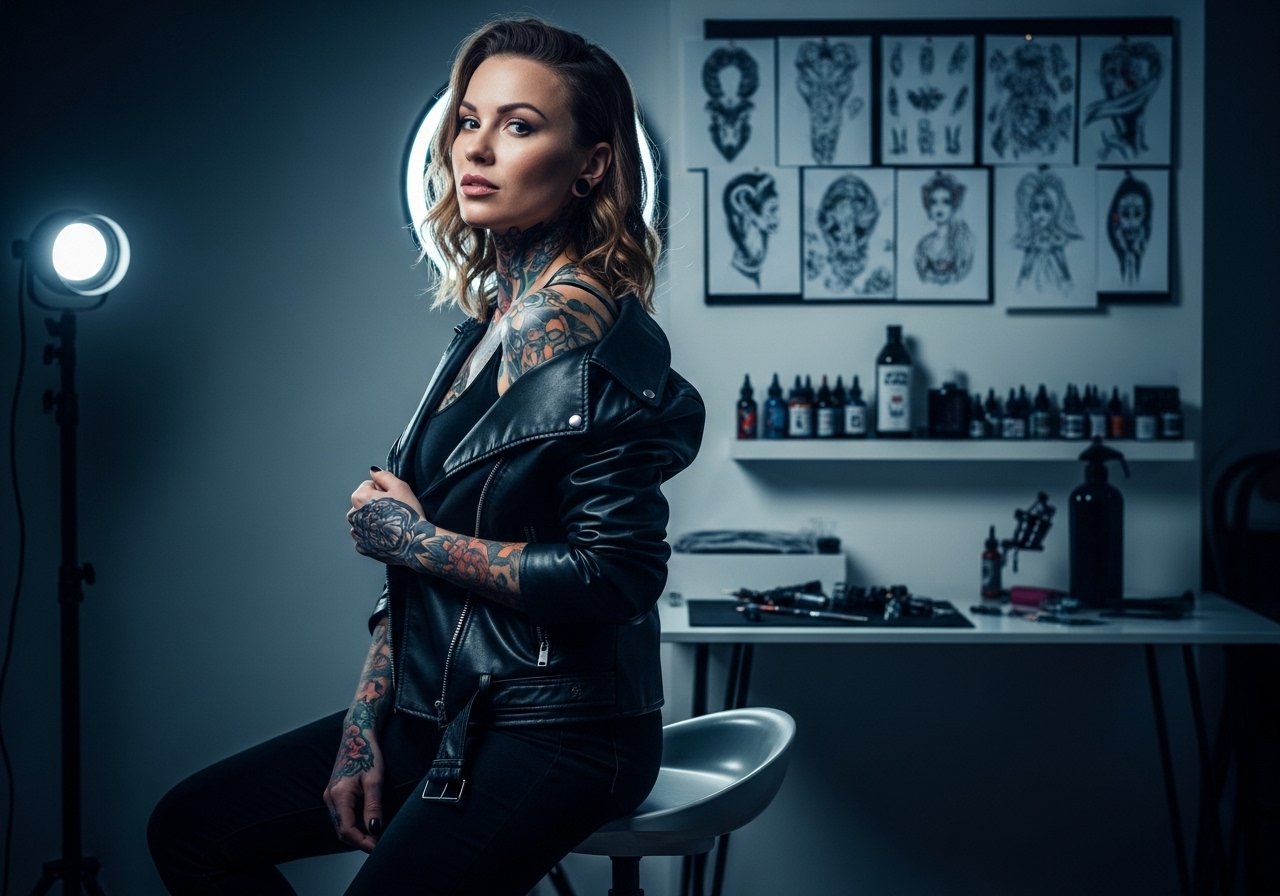
Sitting in the chair with the stencil tracing the curve of the ribs is when most people realize how different rib tattoos feel in real life. The spot moves with breath and clothing, and the skin there can make delicate linework soften faster than expected. I put together options that consider pain, movement, and how each treatment ages so you can pick a butterfly design that holds up and still reads like you meant it.
1. Fine Line Monarch Nestled on Lower Ribs
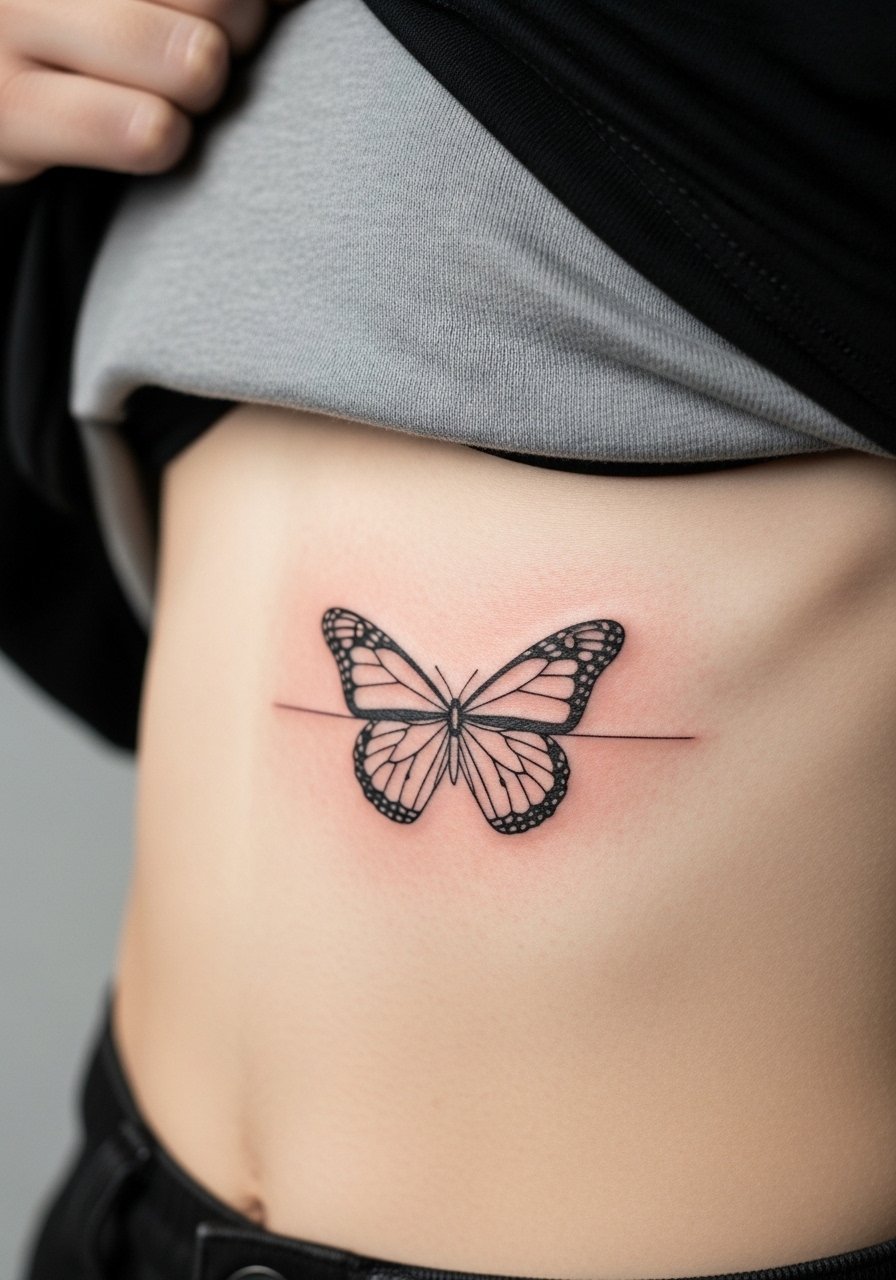
Fair warning, the ribs are a sensitive canvas, usually a 7 to 9 on pain scales. Fine line works here when you scale the wings up enough so the veins and antennae have room to breathe. Tell your artist you want single-needle linework with slightly increased spacing and ask for reference shots that show spacing on curved skin. Most mistakes come from requesting tiny details that merge within two years. Expect a touch-up window around year two to three depending on sun exposure. For the session wear, bring a cropped tank top you can lift without shifting the whole shirt.
2. Bold Blackwork Butterfly with Solid Wings
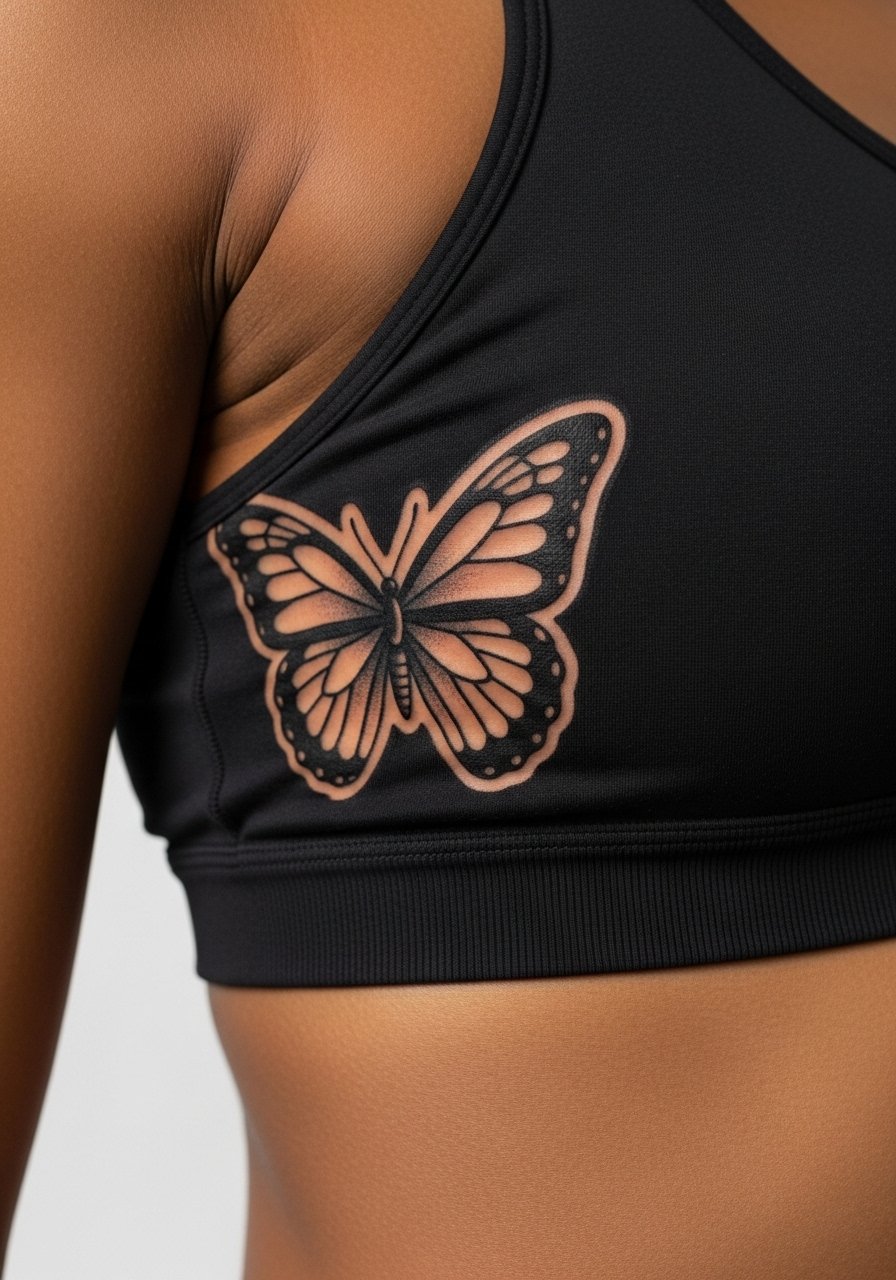
This version leans into saturation instead of fine detail, which helps the design age predictably on ribs. In my experience, solid black fills resist blur more than tiny lines in this placement. The session feels longer because the artist needs to pack saturation consistently across curved planes. A common mistake is asking for a tiny black wing that ends up patchy. Plan for a single longer session rather than several short ones. Pair this look with open-back tops or a slip dress with side cutouts when you want to show the shape without revealing too much.
3. Watercolor Wash Butterfly That Flows with Ribs
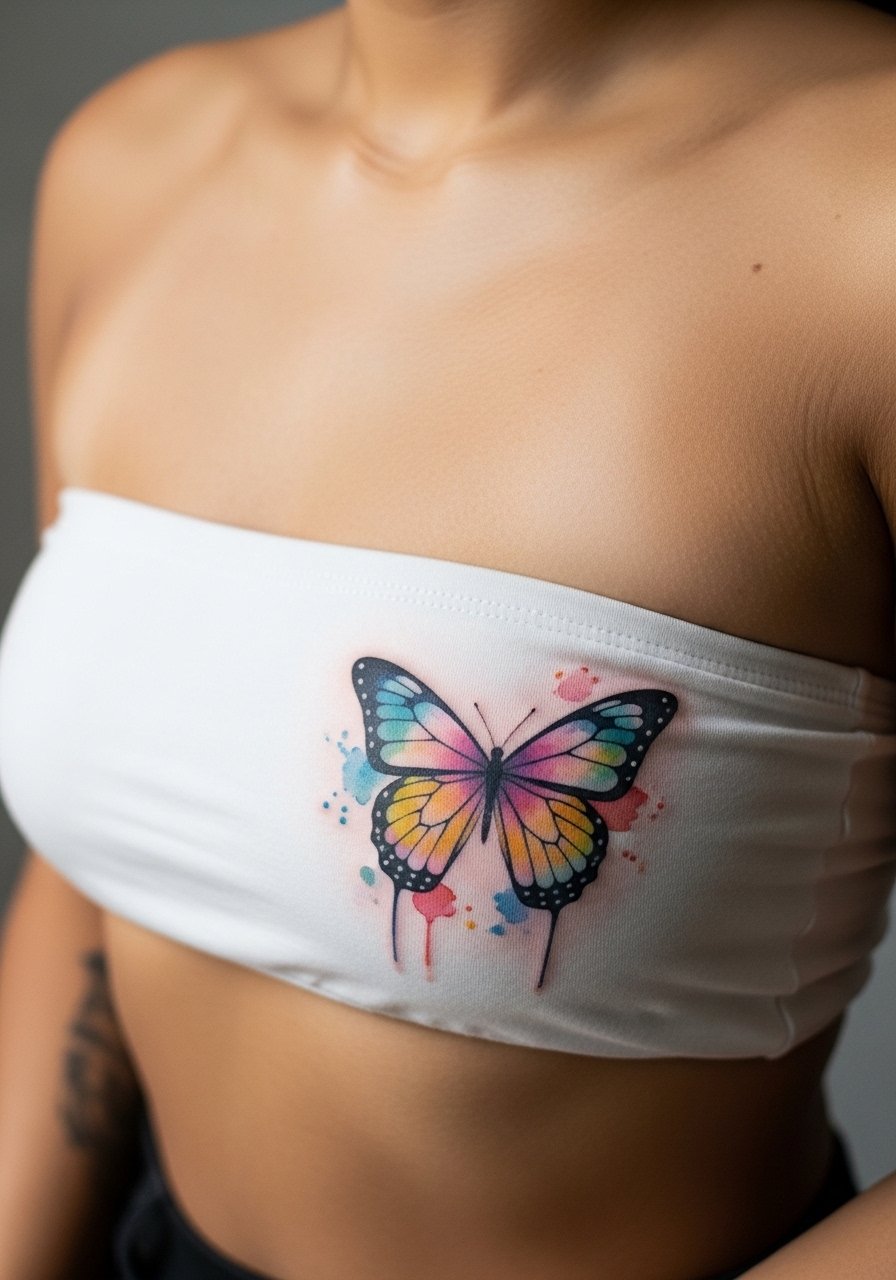
Watercolor on ribs creates a painterly effect, but it ages differently. Colors like blues and purples fade faster on high-motion areas, so ask your artist to anchor washes with subtle linework or soft stipple shading. Expect the first year to show the brightest saturation, then gradual softening by year two. The biggest mistake is asking for full-spectrum bright tones without plan for touch-up. For the appointment, wear a bandeau or sports bra so the artist can work without bunching fabric over the side.
4. micro-Realism Single Wing That Curves with the Ribcage
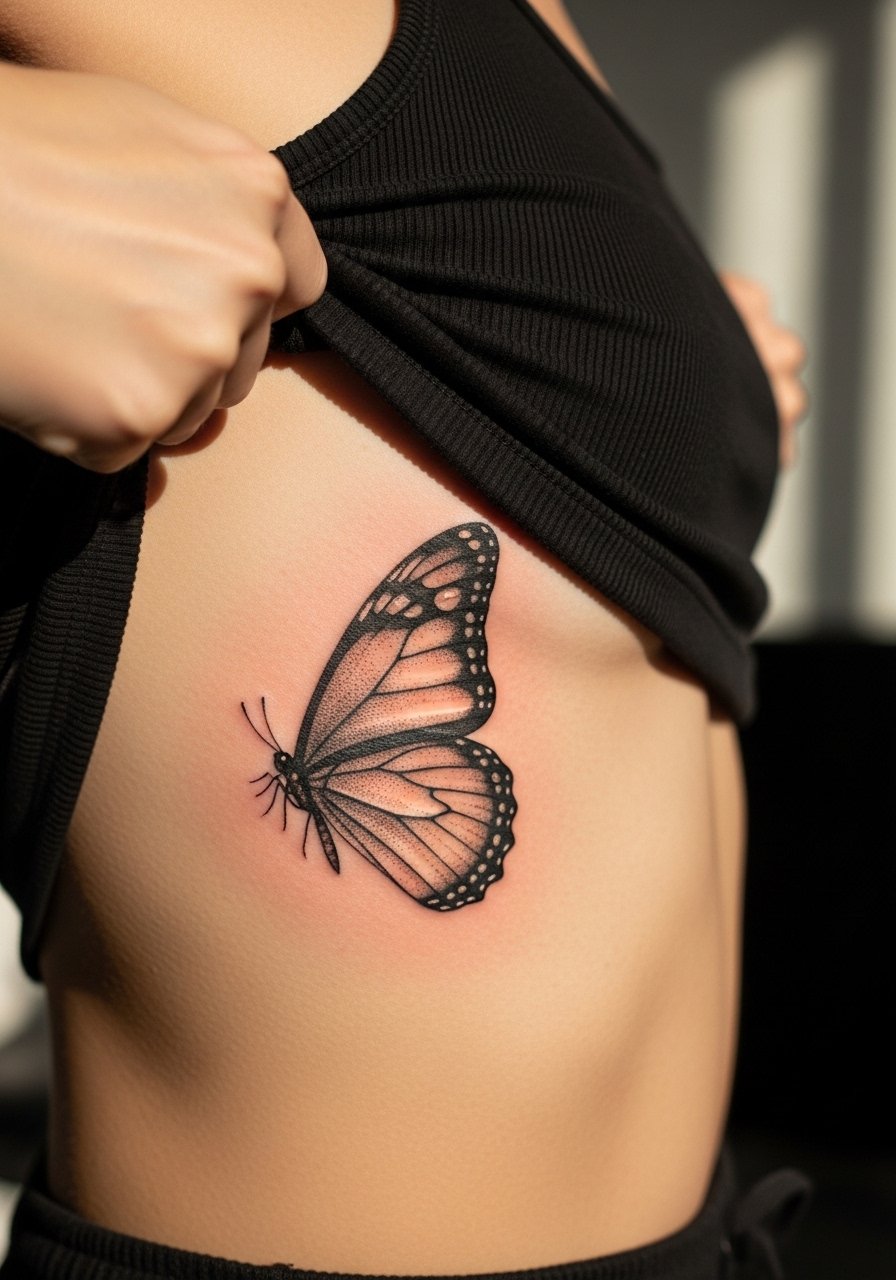
A single-wing, micro-realism piece reads like a fragment of movement across the ribs. It is a detailed approach that benefits from slightly larger scale here to avoid early blurring. During consultation, request reference photos showing the same curvature on skin rather than flat paper. A common aging issue is tiny veins in the wing merging into a gray patch. Expect one touch-up in the first two years. For showing it off, a racerback tank frames one side neatly without competing with the silhouette.
5. Geometric Butterfly with Dot Work Accents
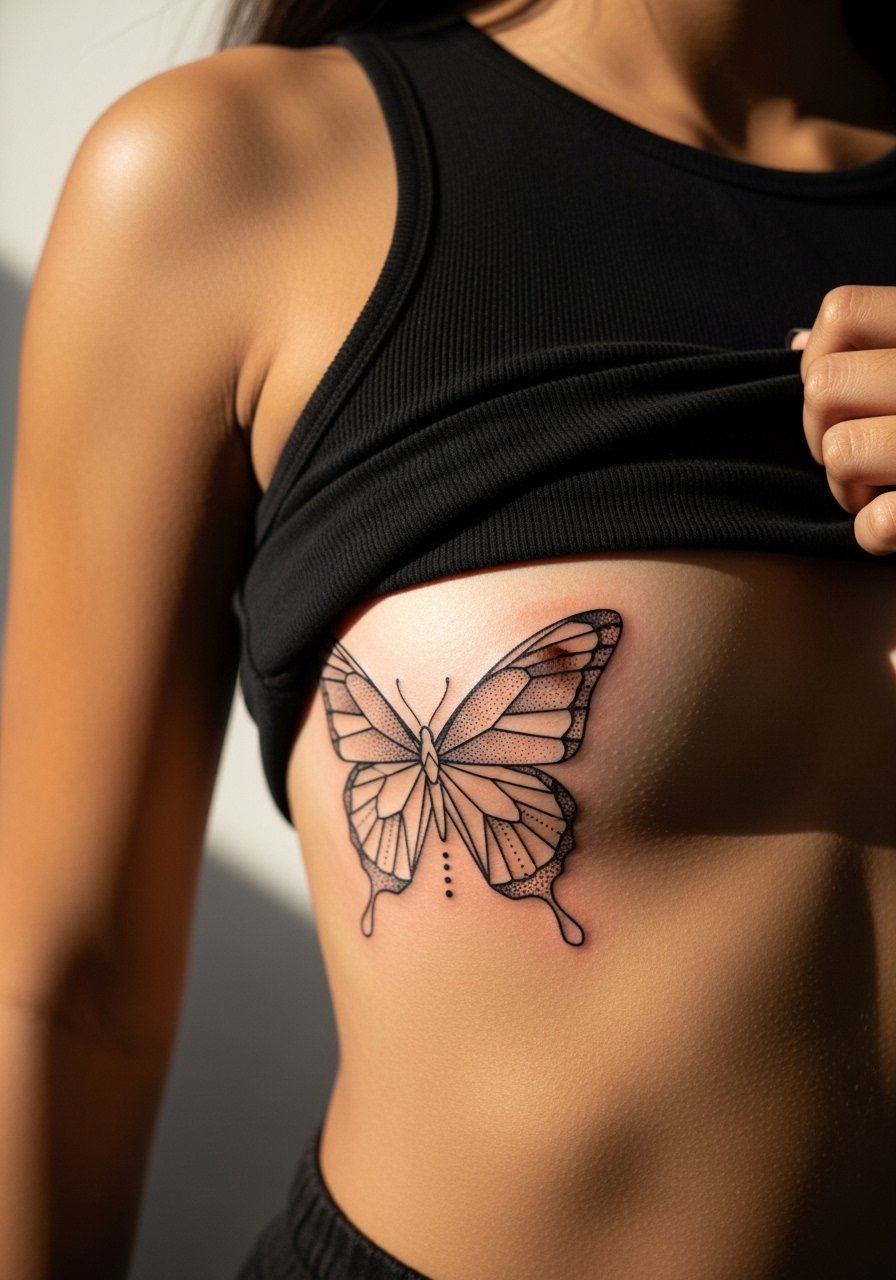
Pairing geometry with a butterfly gives the piece structure that stands up to movement. Dot work and stipple shading age well on ribs because they avoid long continuous lines that can blur. Tell your artist you want spacing in the geometry so the negative space still reads at six months. A common error is overcomplicating the geometry in a small area. The session feels methodical more than painful because dot work is rhythmic. For nights out, an open-back top highlights the angular contrast without exposing everything.
6. Minimalist Single-Line Butterfly Along the Rib Arch
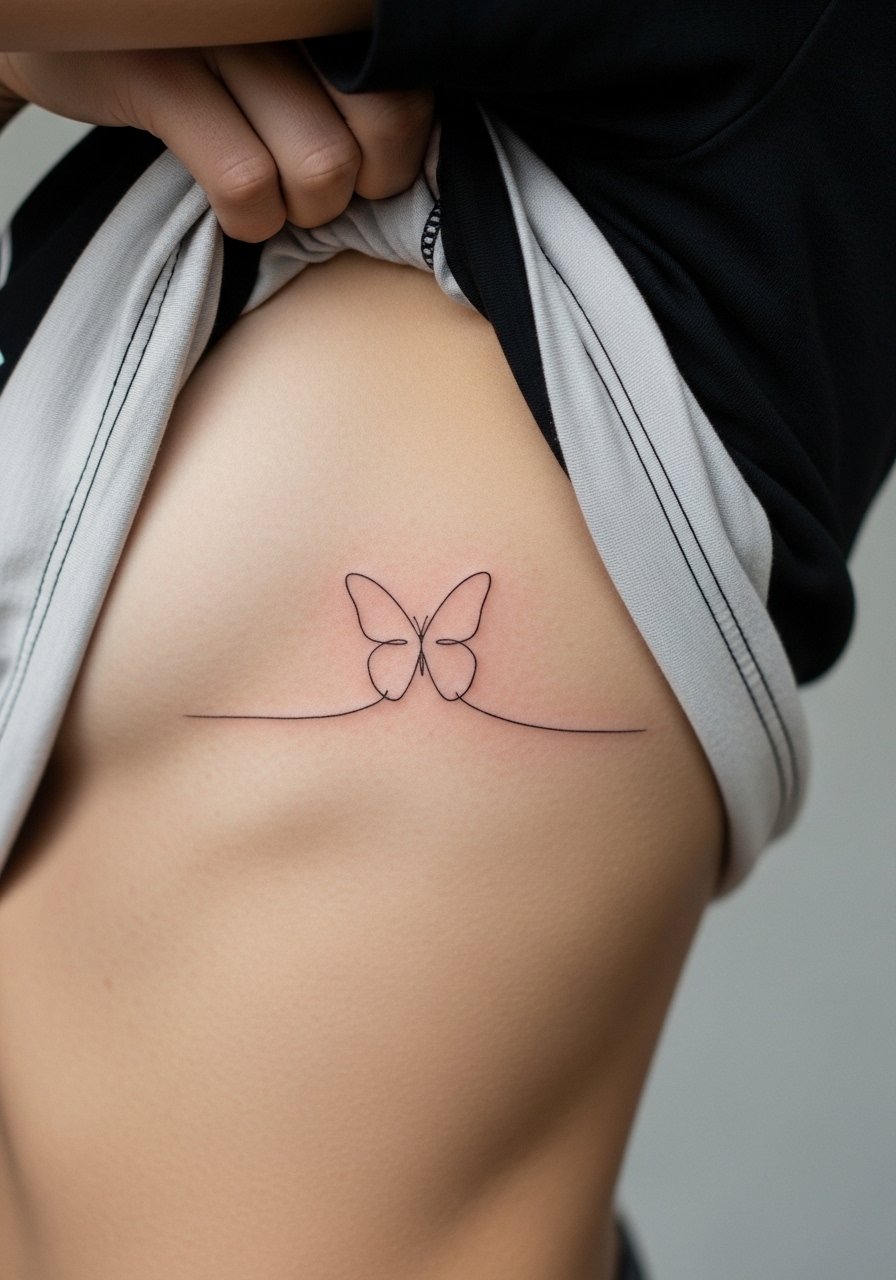
Minimal single-line pieces read fresh but can be high maintenance on ribs. Artists split on whether continuous single-line work holds here. One camp says the stretch and motion cause merging within two years. The other camp says precise depth and slight line thickness prevent early blur. Ask your artist to thicken the line just enough so it stays crisp after healing. The usual mistake is insisting on a super-fine continuous stroke. For the session, wear a loose button-down shirt you can pull aside without fidgeting.
Studio Day Picks
The rib designs above demand different prep from wrist or shoulder pieces, and a few targeted items make the session and first week easier.
-
Stencil transfer paper kit. Lets you preview the placement on your ribs before the needle touches skin so you avoid awkward curves.
-
Topical numbing cream. Applied about 45 minutes before helps with rib sensitivity without harming the artist's linework.
-
Thin protective film roll. Keeps clothing from sticking to fresh ink on the side while you move around after the session.
-
Fragrance-free gentle body wash. Cleans the healing area during showers without irritating delicate linework on curved skin.
-
Aquaphor healing ointment. A thin layer in the first days helps lock in moisture without over-suffocating fine needle channels.
7. Traditional Neo-Classic Butterfly with Banner
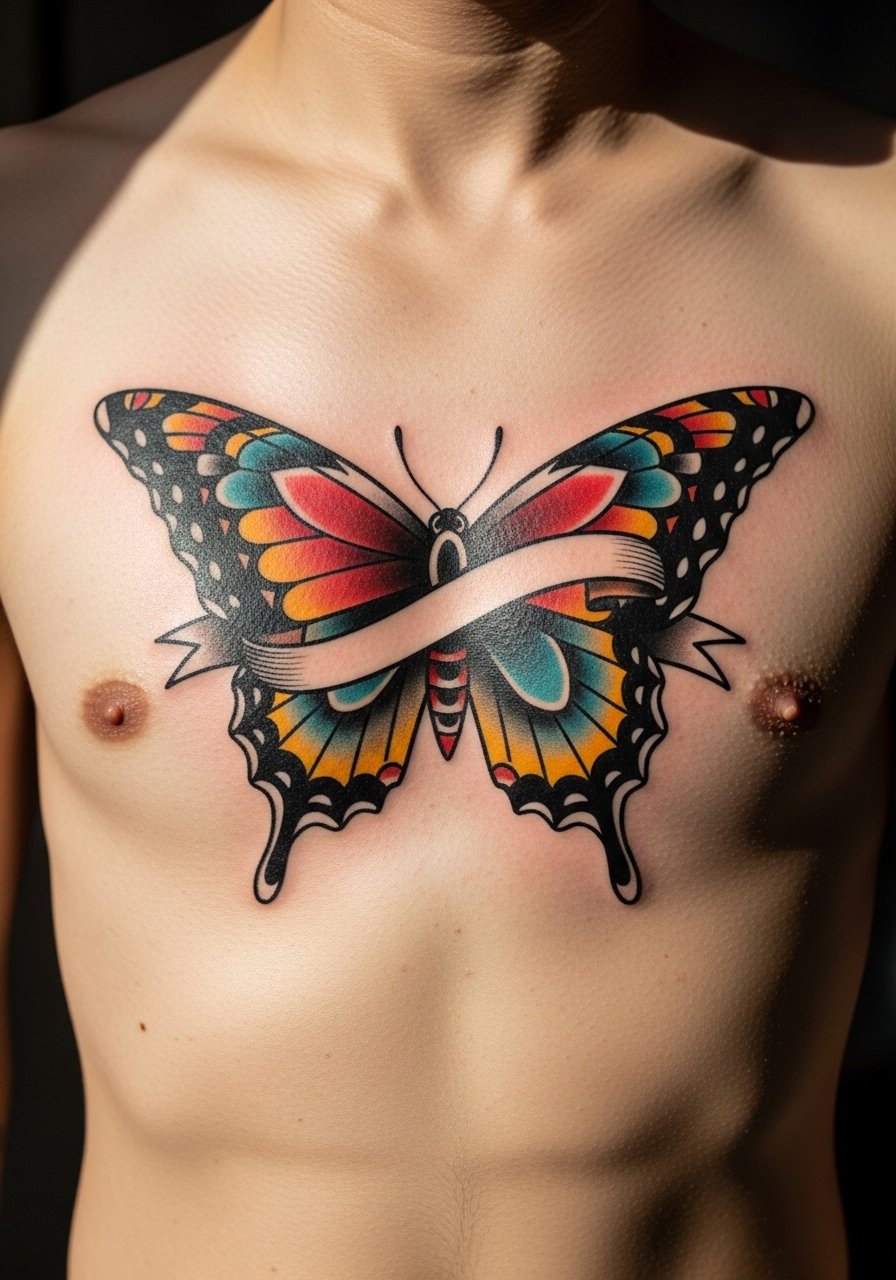
Neo-traditional pieces use bold linework and saturated flats that stand up to rib movement better than micro detail. The banner or script should be broad enough to avoid blurring. In consultations, ask for thicker line weight around the banner and a touch of whip shading for depth. A common mistake is tiny lettering inside a banner. The session time is moderate to long, depending on color saturation. Show it with a button-front crop top when you want the design to peek out sideways.
8. Lace-Pattern Butterfly That Mimics Clothing Texture
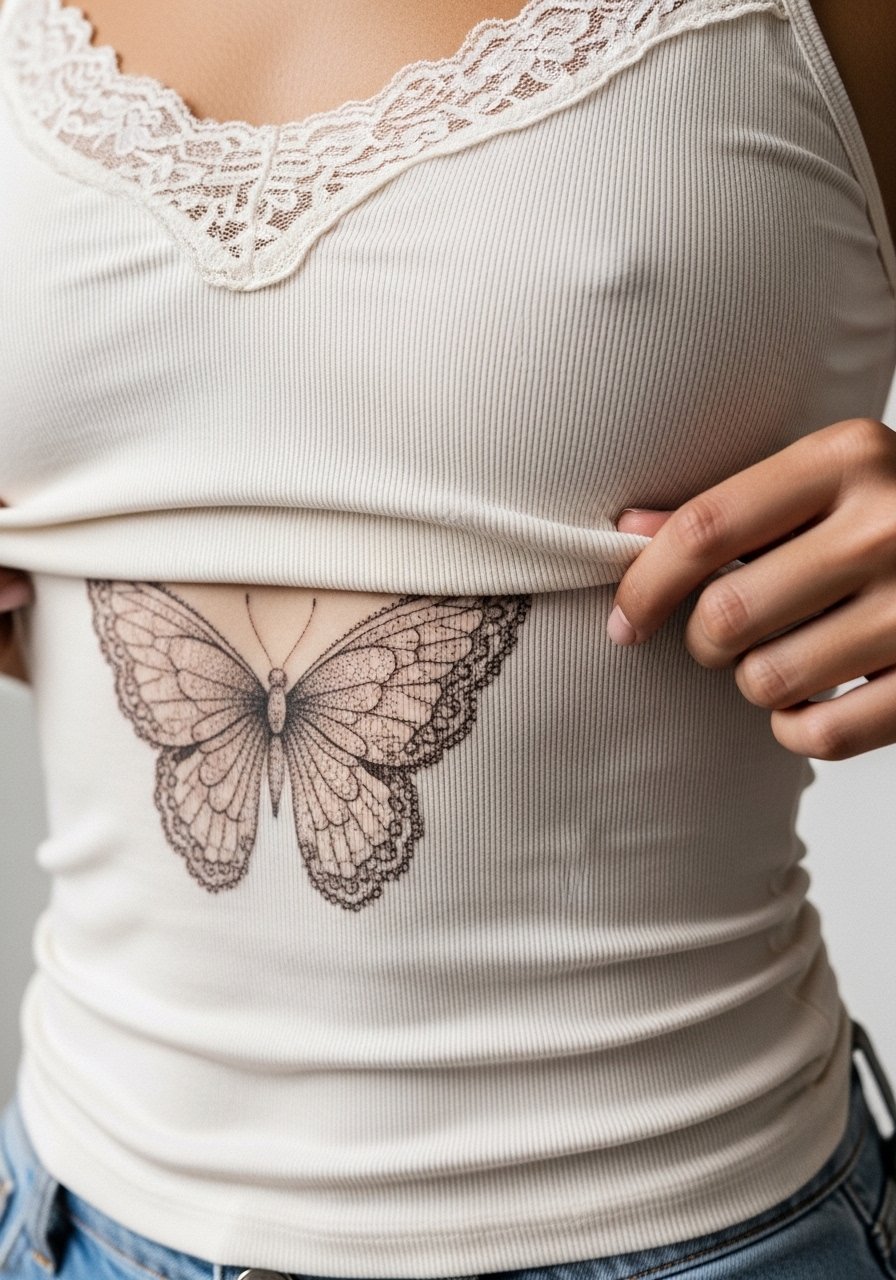
This design borrows textile motifs so the butterfly reads like an extension of your clothing. Lace-like negative space helps the piece age by relying less on continuous edges. Tell your artist you want stipple shading to mimic fabric density. The error I see is asking for micro lace without scaling, which blurs on curved skin. For the session wear, a fitted camisole you can lift slightly is ideal.
9. Abstract Ink-Splash Butterfly That Moves with Breath
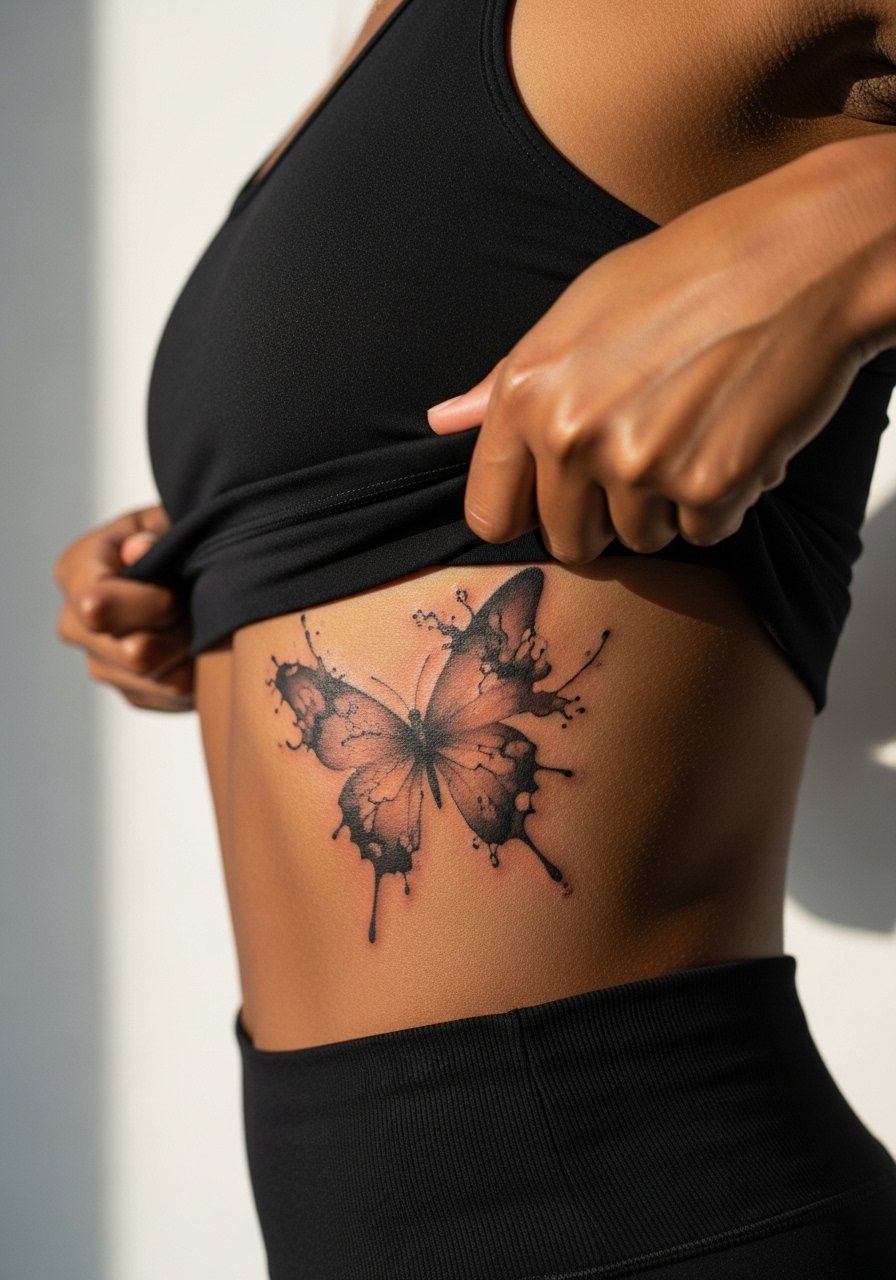
Abstract splashes hide minor blur by design, so they are forgiving on the ribs. Ask your artist to anchor a few darker points of saturation to maintain structure at year three. A common mistake is expecting fine details to hold in the washes. The session feels like painting more than linework because of sweepy motions. For showing the piece, pair it with high-waisted bottoms and a cropped blouse that reveals a controlled strip of skin.
10. Botanical Butterfly with Vine Integration
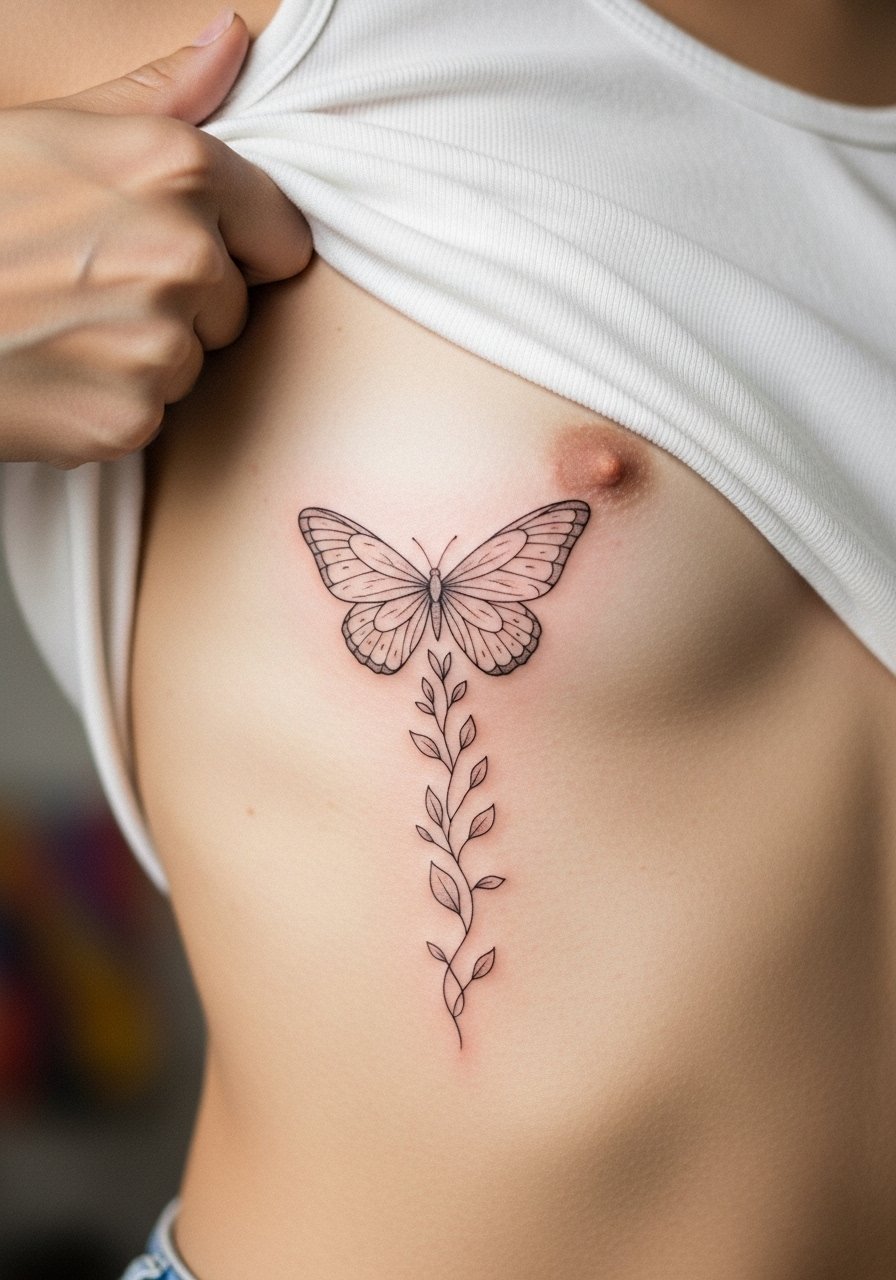
Pairing butterfly wings with vines uses organic flow to follow the rib curve, which helps the image settle naturally with movement. Request slightly heavier linework for the vines so they retain shape over time. The big mistake is giving every leaf micro detail. Expect touch-up on fine leaves sooner than the main motif. For evenings, this pairs nicely with an open-side dress that frames the vine without exposing more than intended.
11. Blackout Negative-Space Butterfly
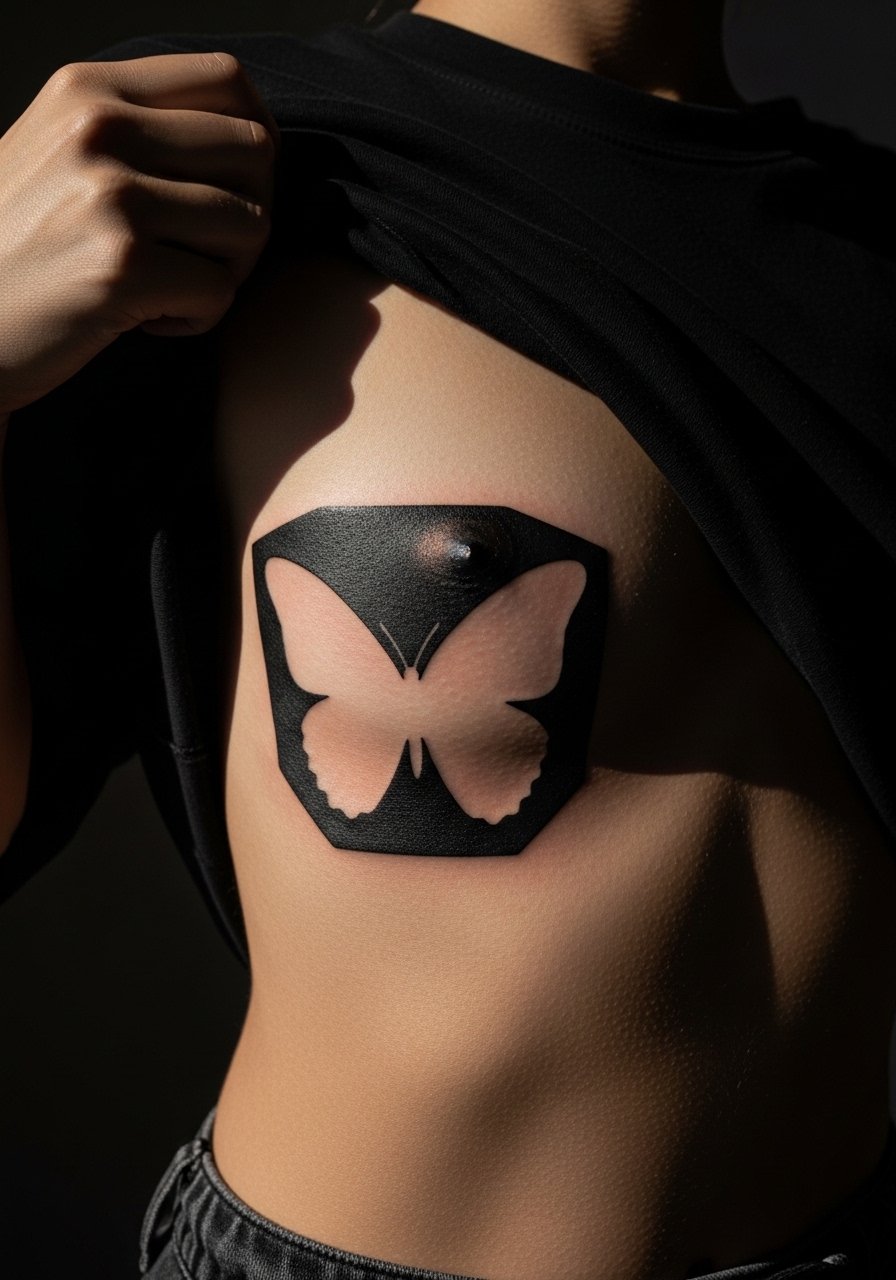
Blackout pieces reverse the usual approach by filling large shapes and leaving the butterfly silhouette as skin. This ages consistently because the large saturated areas are stable. The main downside is commitment. Covering or adjusting later is complex. During consult, discuss future plans and how the negative space will age with tanning. For the session, wear a wide-neck shirt you can slide down enough to give clean access.
12. Script-Accented Butterfly with Date or Word
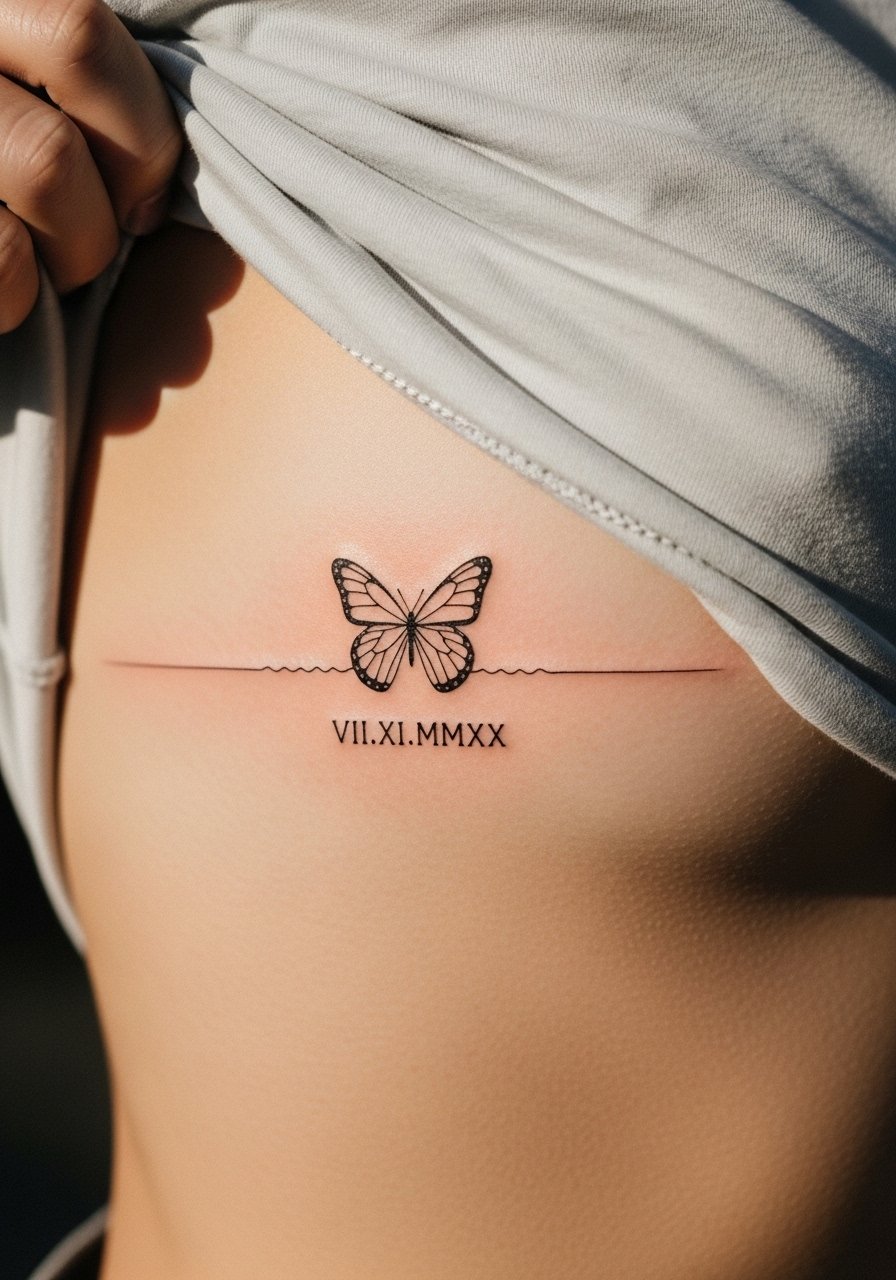
When adding text near a butterfly, keep the lettering bold enough to survive movement. Text on ribs often blurs if it is too small. Specify the exact text or date with your artist and ask to see stencil placement curved to skin. A common mistake is tiny script tucked under a wing. For showing it off, layer with a thin chain pendant necklace that sits above the line without crowding the area.
13. Mirror-Image Pair Spanning Both Sides
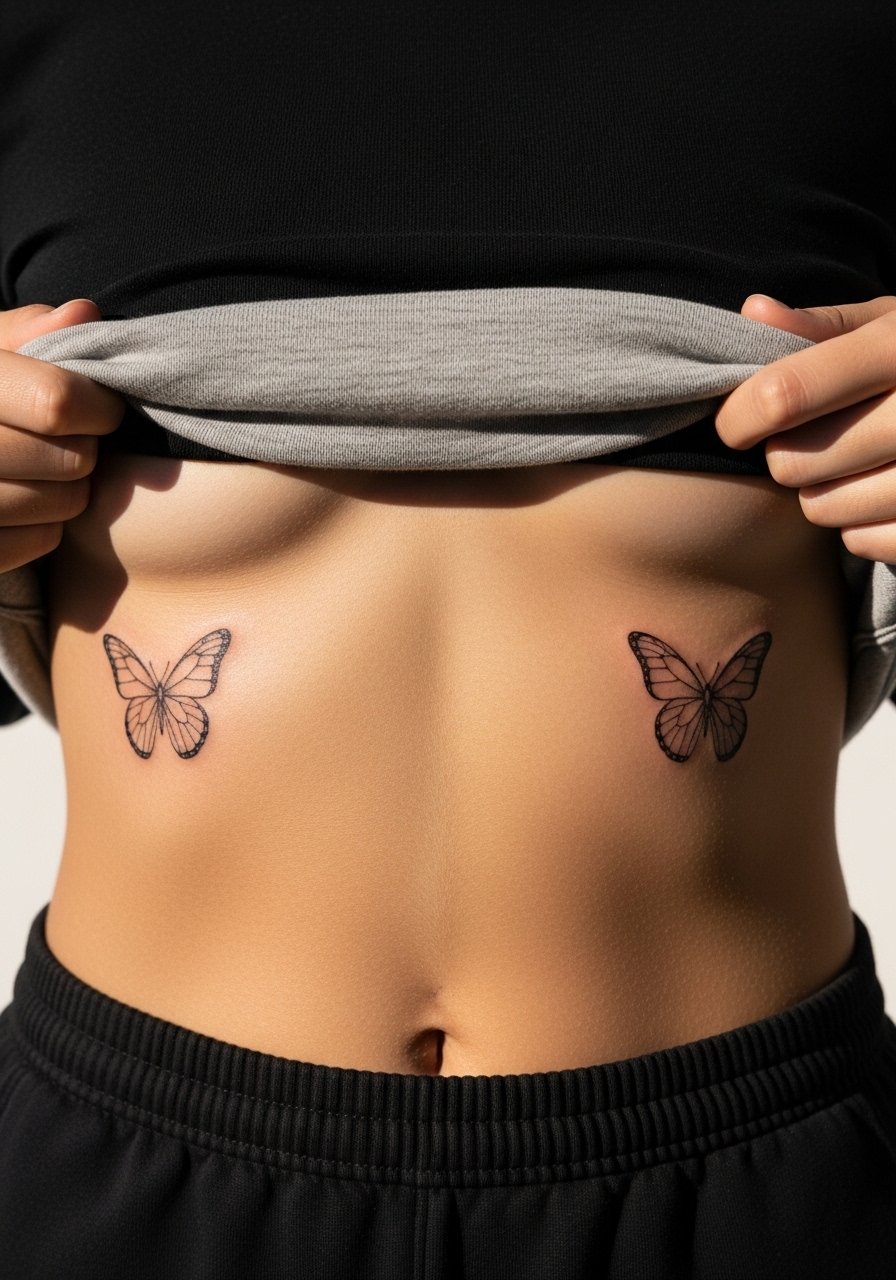
Mirrored pieces across both rib sides look intentional and balance movement. The trick is symmetry on a shifting surface. Bring photos of both sides and ask for mirrored stencils. Mistakes arise when one side sits higher due to breathing during stencil placement. Sessions can be split across two appointments to allow symmetry corrections. For outfits, an open-back top with side exposure keeps the symmetry visible.
14. Mandala Wing Butterfly with Radial Detail
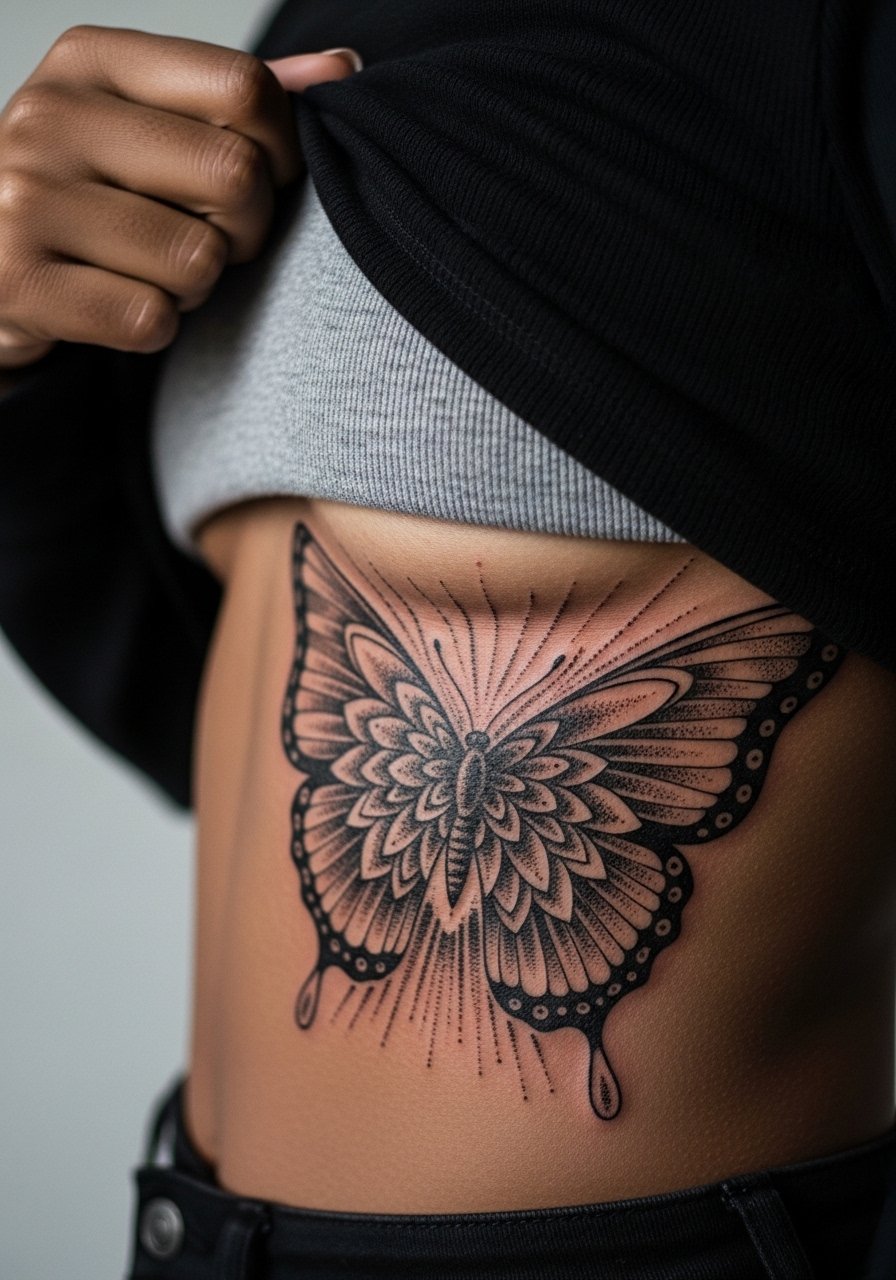
Mandala elements give structural repetition that helps the design age gracefully on ribs. Artists sometimes debate cultural origin and respect. One sentence on origin is enough to say some people adapt patterns rather than replicate sacred motifs. Ask for subtle variation if cultural sensitivity matters to you. The common mistake is cramming too many radial lines into a small wing. Expect a longer session for the detailed radial work. A flowy kimono-style top frames the symmetry without hiding it.
15. Etching-Style Butterfly with Crosshatching
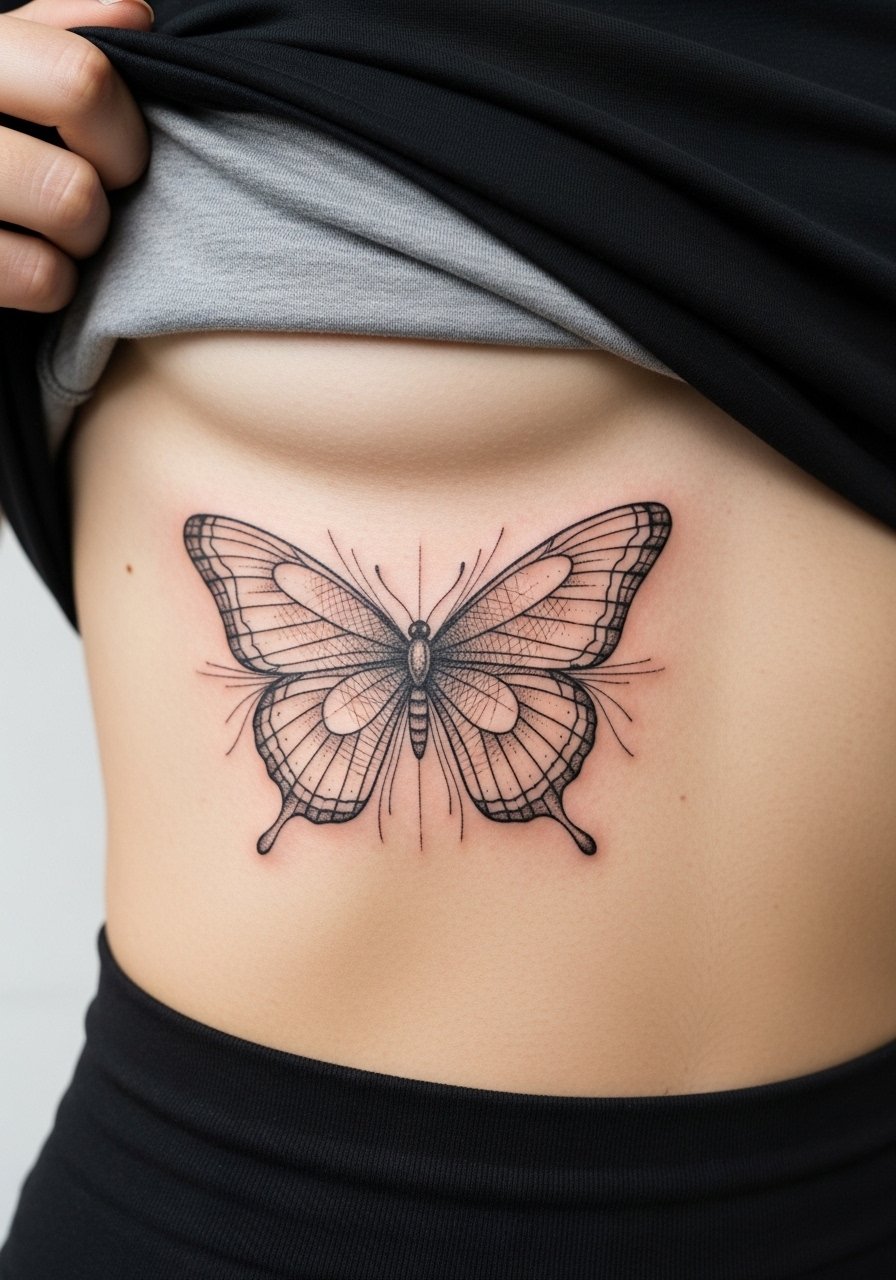
Etching or engraving techniques rely on tiny parallel lines that can soften on high-motion placements. Ask your artist to space crosshatching slightly wider than studio flash images to avoid blurring. The mistake is copying a tiny print directly to skin with no scaling. Expect touch-up to maintain crisp texture at year three. For the session, wear a loose drawstring pant if you need comfort during longer sittings on the side.
16. Color-Blocked Butterfly with Edge Linework
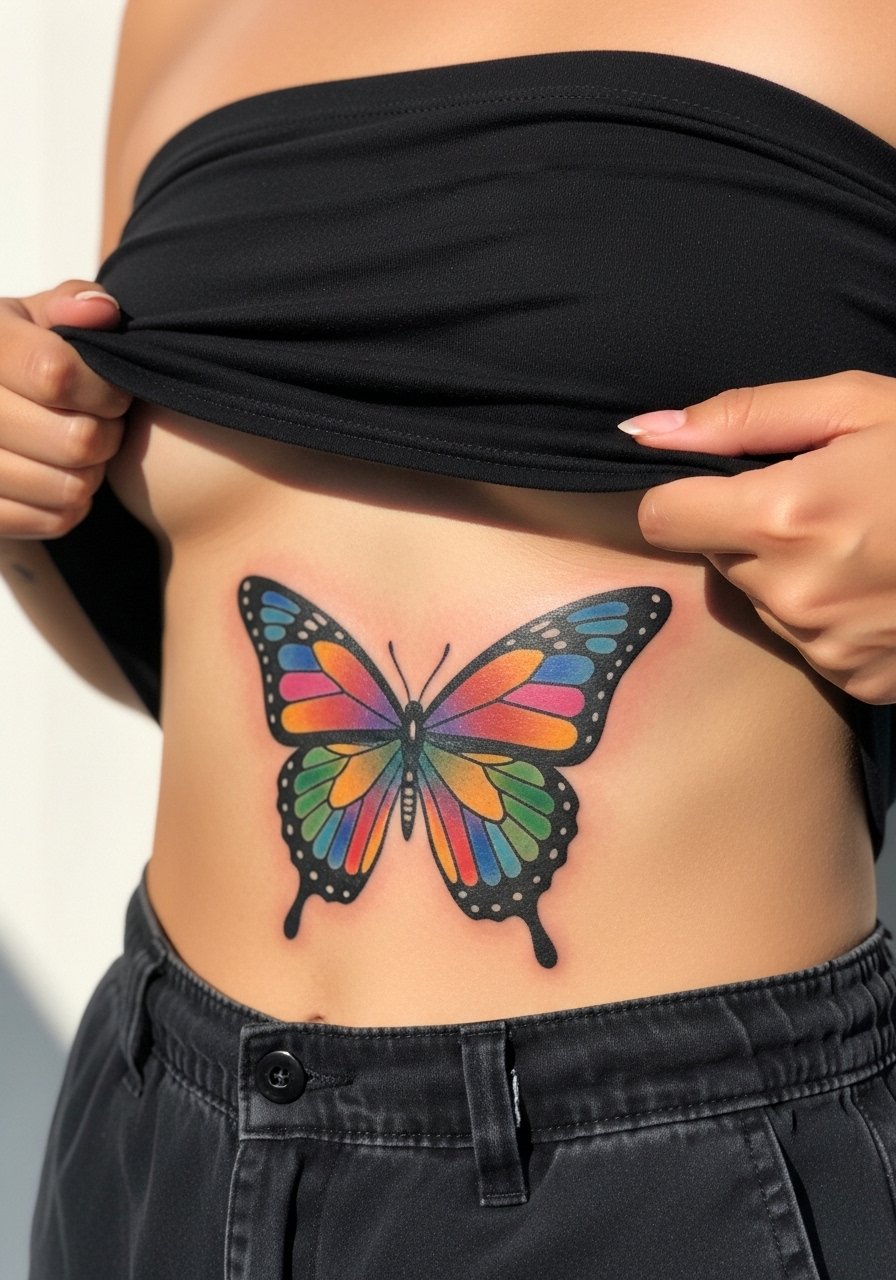
Color-blocking adds modern graphic energy and helps maintain shape as details soften. The edge linework is important here, so ask for consistent contour thickness. A mistake is soft color edges without a defined border. Sessions are moderate and often single-visit for small to medium sizes. Pair with a bandeau or strapless top to reveal color without fussing with straps.
17. Tiny Dot-Work Butterfly tucked under the Rib Curve
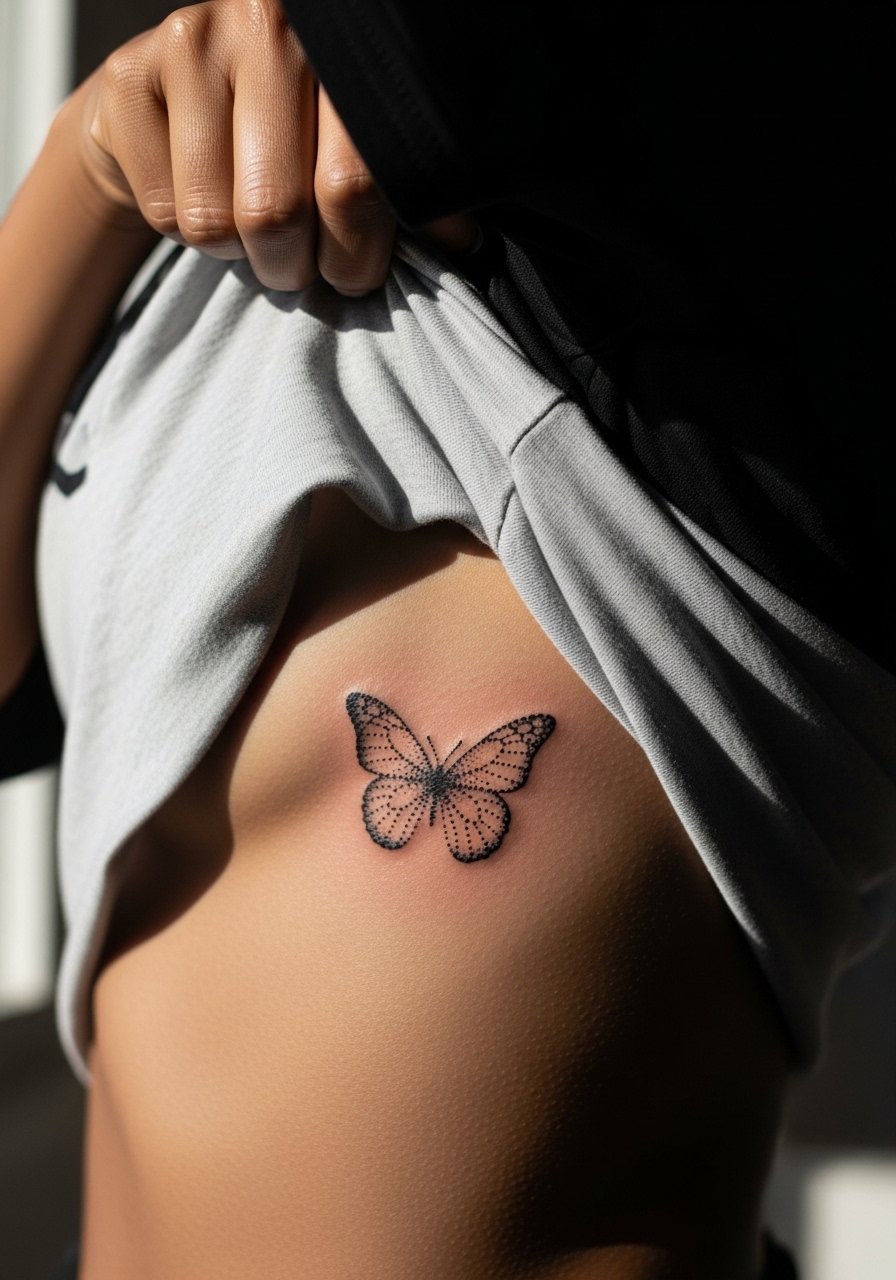
Small dot-work pieces can be charming but are risky on ribs because dots can merge with motion. If you want a tiny version, plan for conservative density and expect earlier touch-ups. The mistake is asking for ultra-mini detail that reads well on flat skin photos. The session itself is short but intense. For the appointment, a strapless top that you can shift without moving a lot of fabric helps keep the stencil steady.
18. Surrealist Butterfly with Fragmented Wings
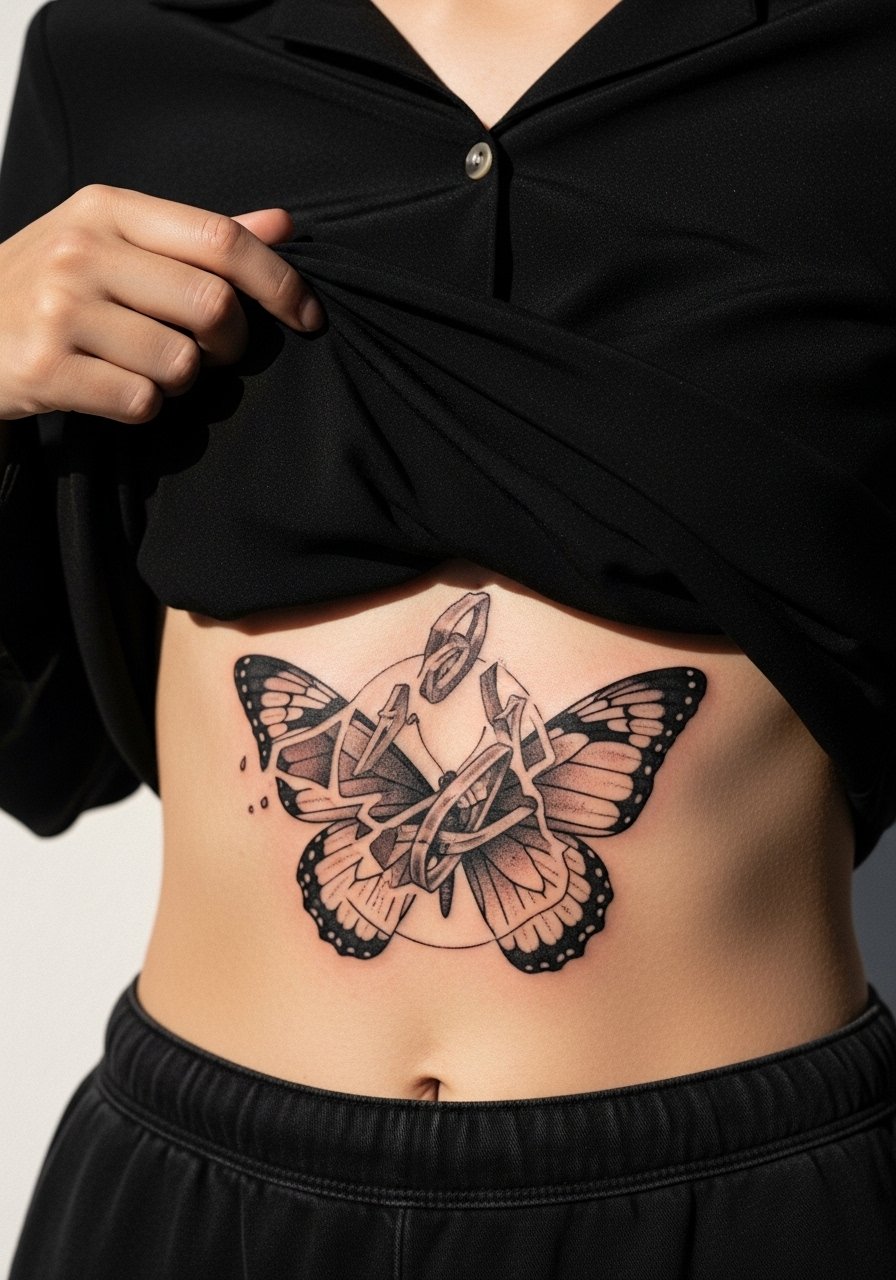
Fragmented or deconstructed wings play well on curved ribs because the gaps distract from minor merging over time. Ask your artist how the fragments will sit when you breathe. A common error is too many tiny floating pieces that look disjointed once healed. Sessions may be broken into mapping time plus fill time. For nights out, a cropped blouse shows off negative space intentionally.
19. Ornamental Butterfly with Gem Accents
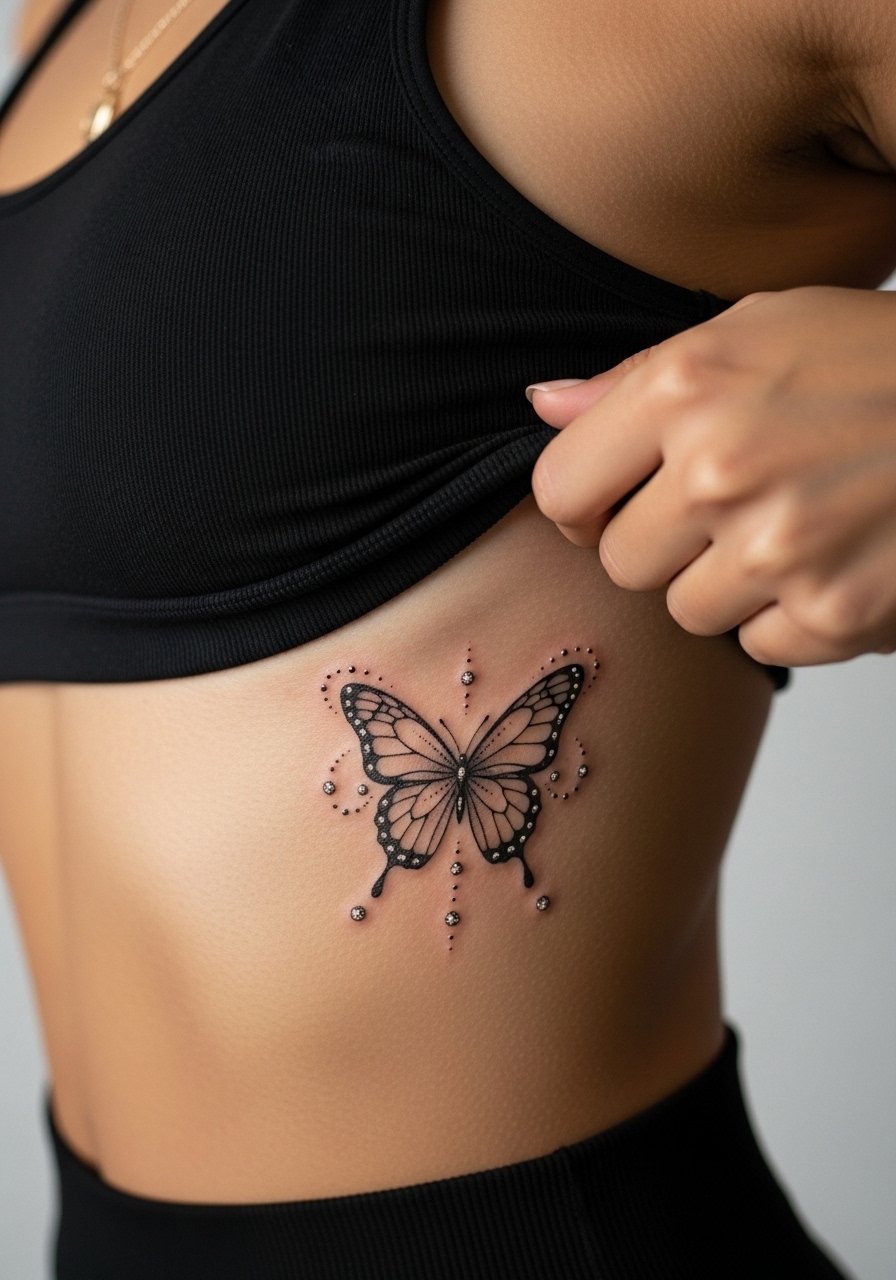
Small gem accents add focal points that break up potential blur. Tell your artist you want each dot to be a touch larger than the design photo so the highlights hold. The mistake is relying on tiny white ink highlights that fade quickly. Expect one touch-up to reintroduce crisp dots if you want them permanent. Pair the design with layered necklaces or a thin chain pendant that sits above the wing without competing.
20. Surreal Shadow Butterfly That Uses Grayscale
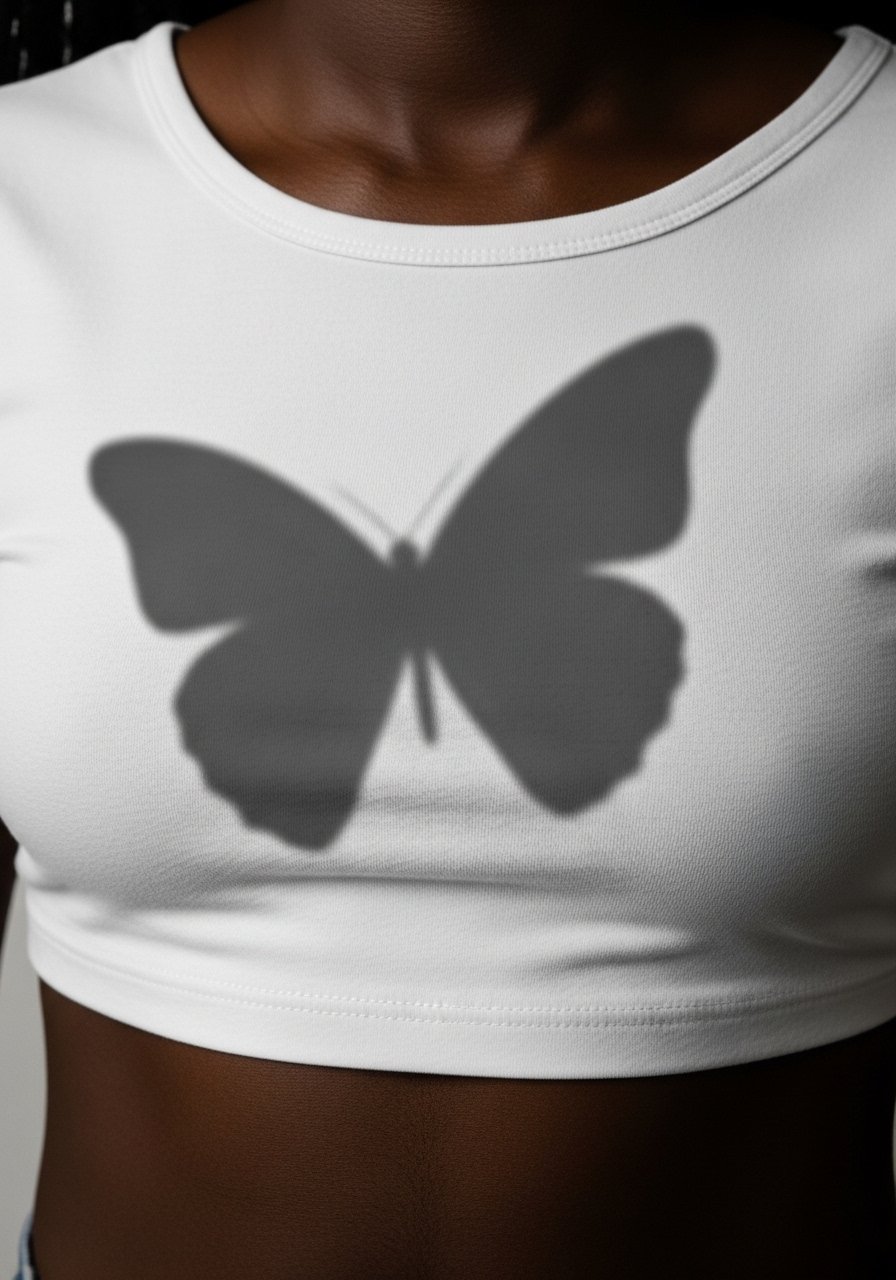
Shadow pieces use blended grayscale to suggest form and work well on motion-prone ribs. Ask for subtle contrast rather than deep blacks in tiny zones. The common mistake is too much contrast in small areas which ages into hard edges. Sessions are focused on smooth whip shading. For showing the piece, try a wide-neck sweater that lets just enough skin show.
21. Celestial Butterfly with Star and Moon Motifs
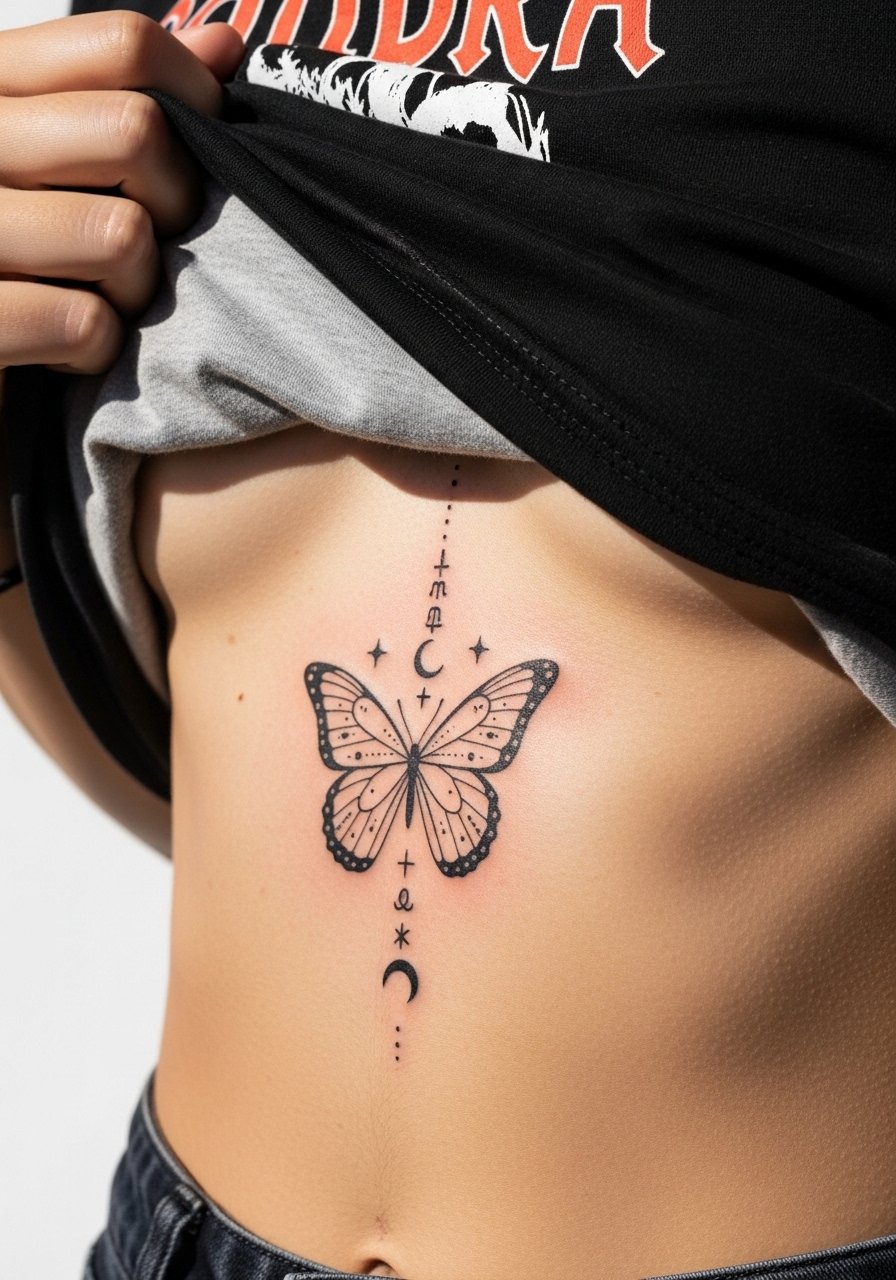
Adding celestial symbols gives narrative anchors that remain readable even as fine details soften. Ask the artist to slightly enlarge stars and moons compared to photos so they stay legible after healing. A frequent error is placing very small constellations that blur into a smudge. The session time depends on symbol count. For a subtle reveal, wear a wrap top that shows a sliver of the side.
22. Abstract Linework Butterfly That Follows Rib Anatomy
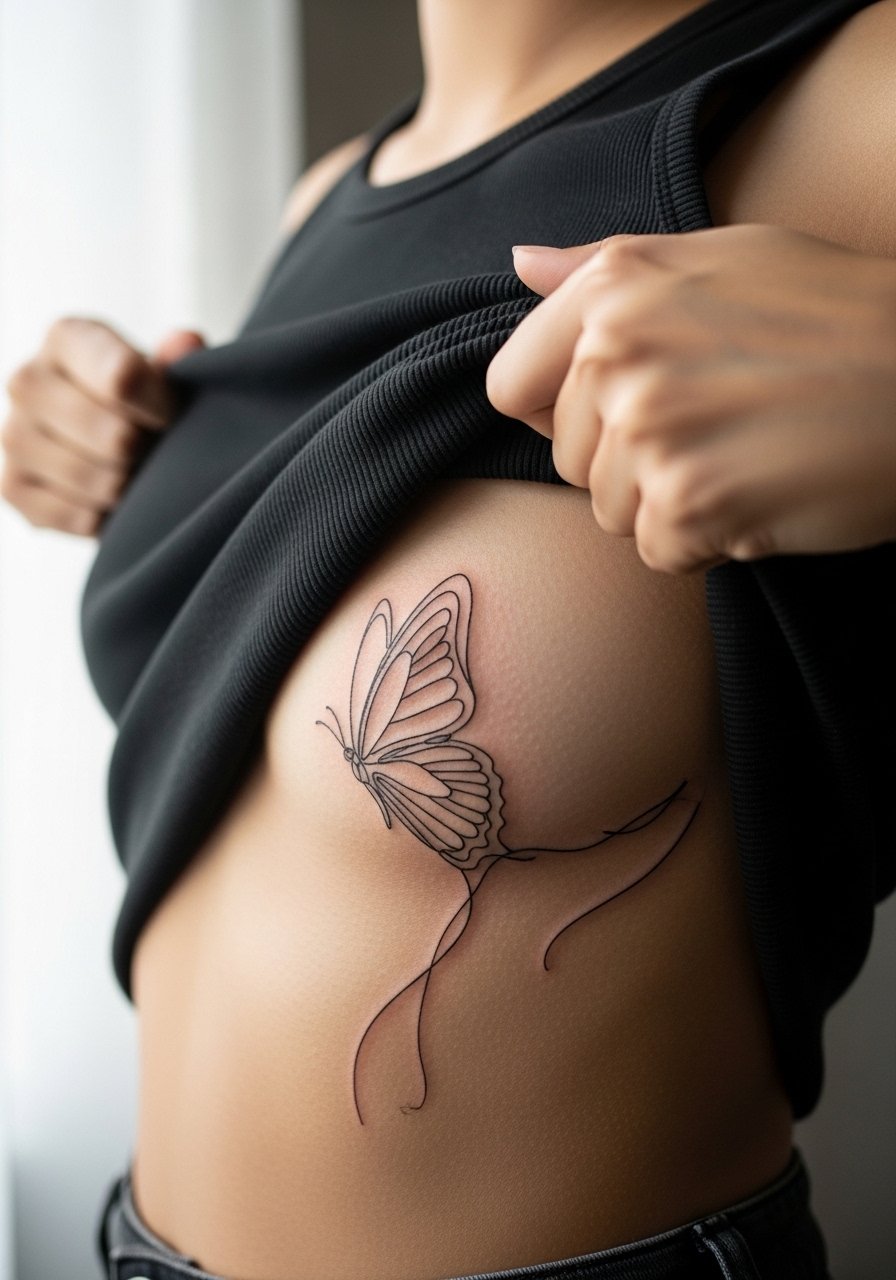
When linework follows anatomical curves it reads more natural as you move. The risk is asking for a single ultra-thin stroke. The two camps disagree on single-line longevity on ribs. One camp says motion causes early blur. The other says controlled thickness and depth make it last. The safe route is a slightly varied line thickness across the curve. Expect a touch-up for the thinnest sections. For the session, a loose tank top you can shift easily is best.
23. Tape-Overlay Butterfly That Mimics a Bandage Shape
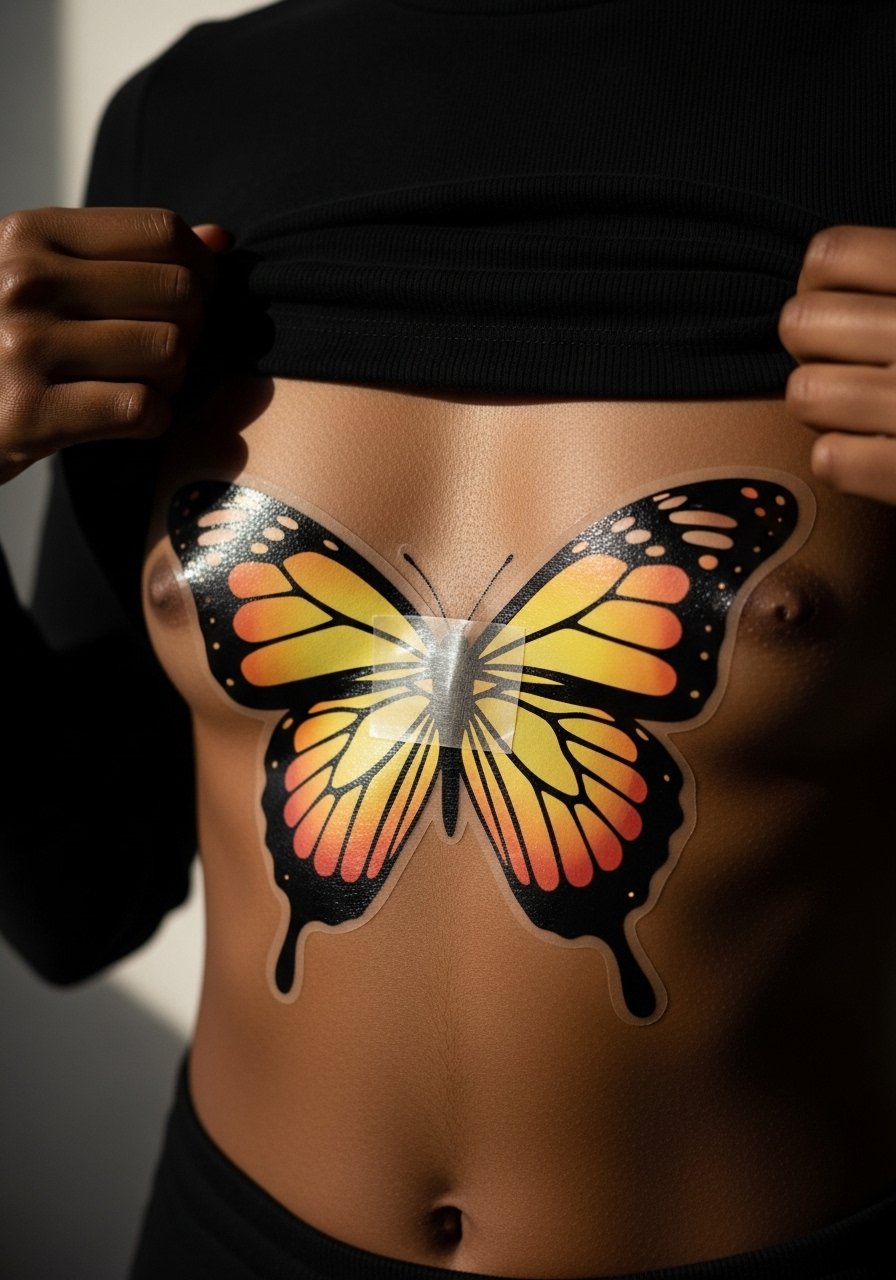
This graphic approach reads modern and keeps composition simple. The bandage-like shape hides minor irregularities that can appear from movement. The common mistake is making the overlay too thin. Discuss how it will look when you bend or twist. Sessions are straightforward with defined borders. Pair it with a cropped jacket for a peekaboo effect.
24. Faded-Vintage Butterfly with Soft Distressing
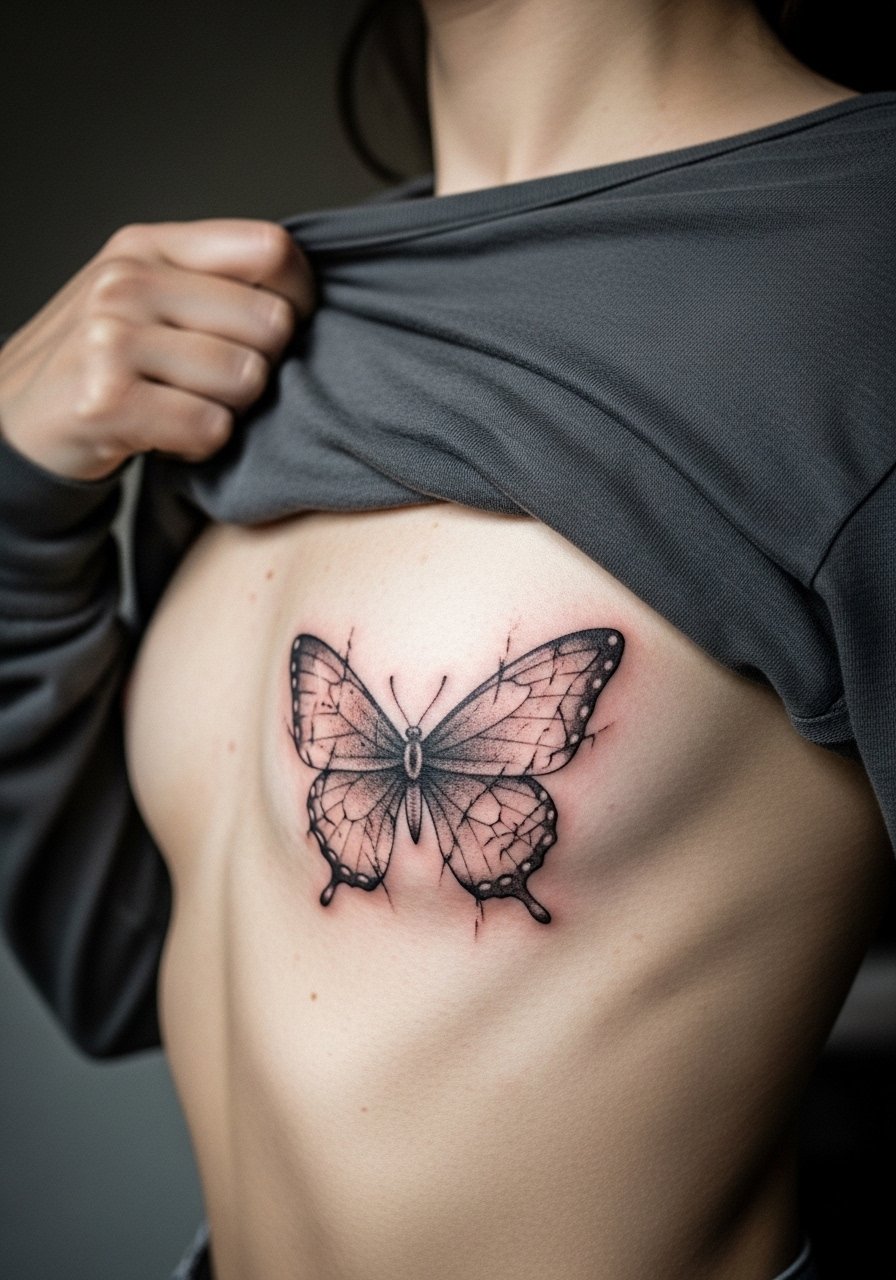
A purposely distressed finish can be forgiving, because the piece is meant to soften. Be clear you want intentional fading so the artist uses softer contrast. A mistake is asking for a distressed look but expecting crisp lines later. Sessions can be shorter because the shading is soft. For styling, an oversized tee with a side knot shows the vintage edge casually.
25. Butterfly with Lace Collar Flowing from Rib to Waist
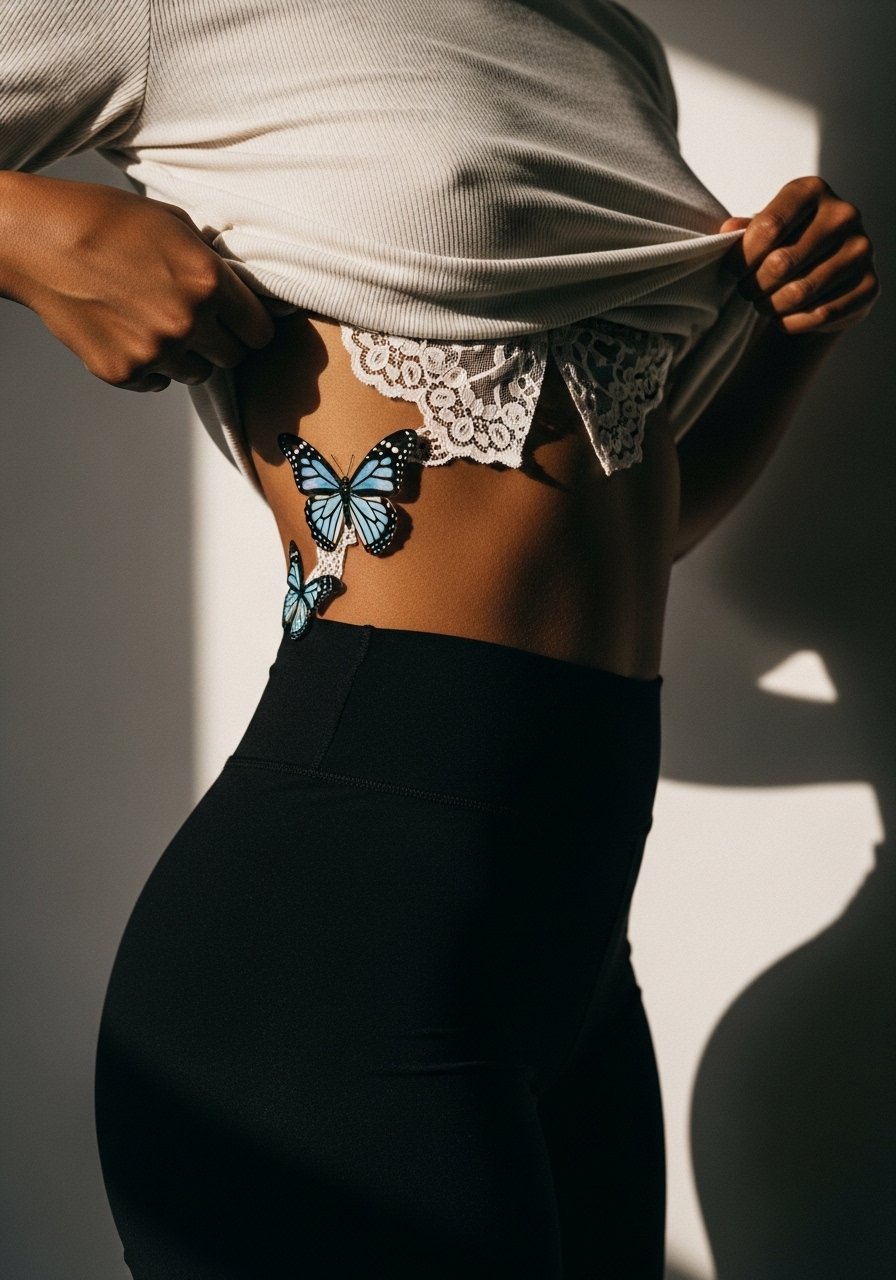
Longer compositions that extend toward the waist distribute motion across more skin, which can help longevity of detail. Ask for mapped flow lines so the design aligns with your natural waist curve. People often forget how clothing waistlines will align with the tattoo when seated. Sessions are longer but the result is cohesive. Wear high-waisted pieces or try a high-waisted skirt to show the extended line.
26. Broken-Glass Butterfly with Angular Shards
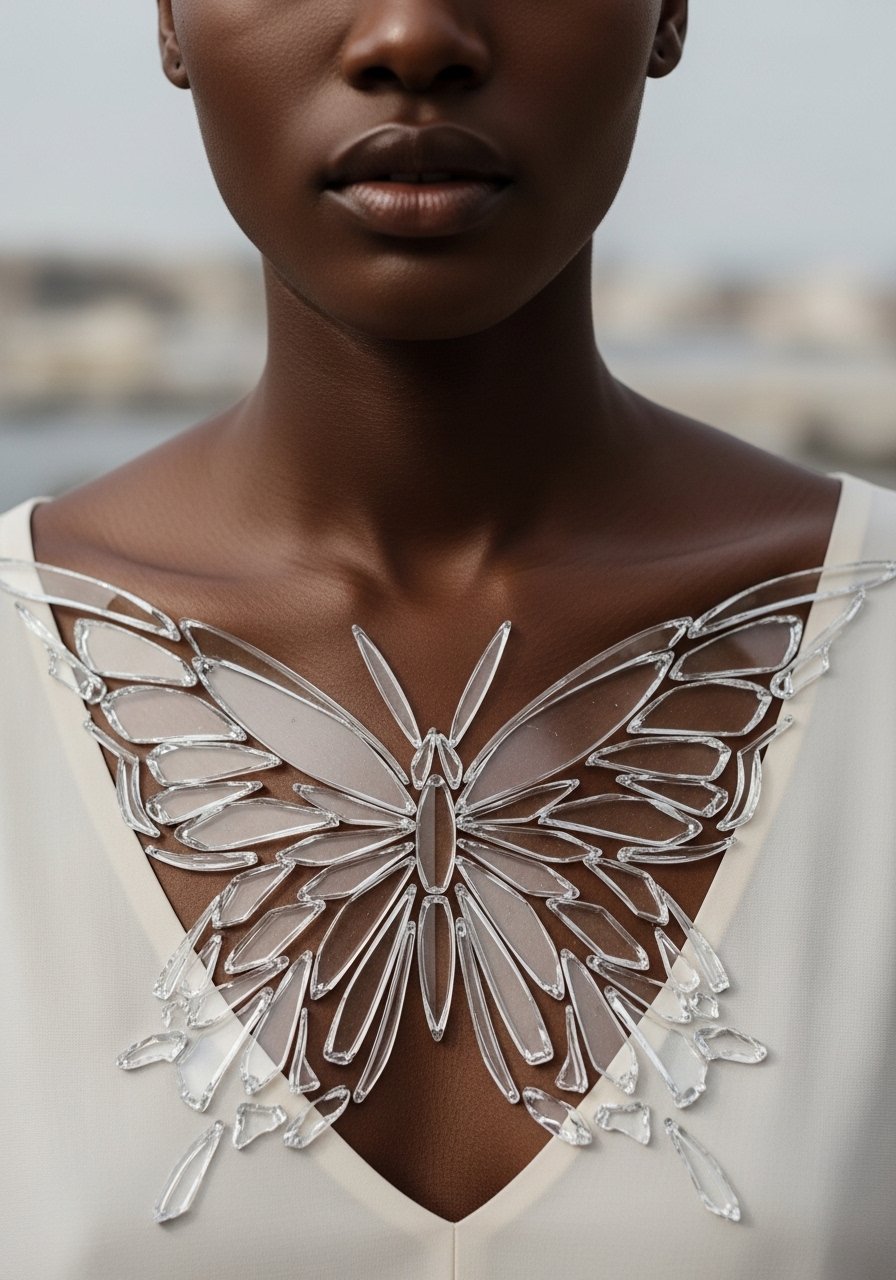
Angular shards create defined planes that remain legible as tiny features soften. Emphasize contrast at shard edges to keep separation. The common mistake is tiny shard segments that blur together. Sessions require careful stencil placement to match rib curvature. For the reveal, pair with layered rings and a strapless top that draws attention upward.
27. Large-Scale Realistic Butterfly Spanning Multiple Ribs
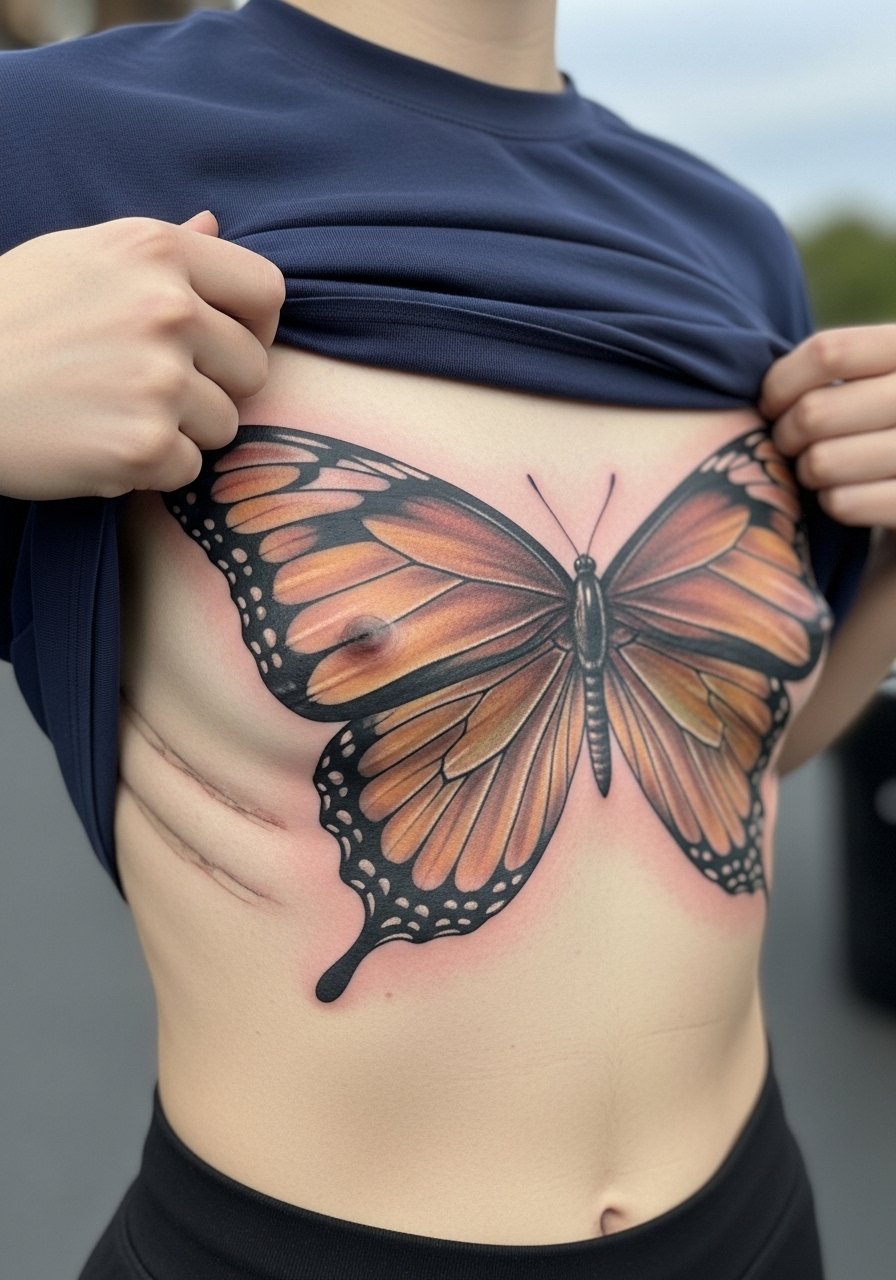
Large realistic butterflies across several ribs take advantage of scale to protect tiny details. The trade-off is longer sessions and higher pain tolerance. Tell your artist you want preserved texture but with a plan for future touch-ups in high-motion zones. A frequent error is compressing a photographic reference into too small a space. Expect staged sessions with healing intervals. For showing the full scale, a halter top or bikini with side exposure frames the wings without full baring.
Frequently Asked Questions
Q: How much does a rib butterfly typically hurt compared to other placements?
A: Ribs are commonly reported as more painful than fleshy areas because the needle sits over bone and thin tissue. Pain varies with your threshold, session length, and whether the artist takes breaks. Shorter sessions with precise breaks help manage discomfort.
Q: Will fine line butterfly tattoos blur faster on the ribs than bold blackwork?
A: From what I have seen, very fine single-needle work has a higher chance of softening sooner on ribs. Bold blackwork or designs that use negative space and dot work tend to age more predictably. Ask your artist which approach they recommend for your skin type.
Q: Can I get a large rib tattoo in one session or should I split it?
A: Large, realistic pieces across multiple ribs often work better split into two or more sessions. Splitting allows for consistent saturation and gives your body time to recover, which improves healed results.
Q: How should I dress for a rib tattoo appointment?
A: Wear something you can lift or shift without pulling, like a bandeau or cropped tank. Comfort and easy access matter more than style during the session. Avoid tight waistbands that press on the area right after.
Q: Do certain butterfly styles require special artists or techniques?
A: Yes. Micro-realism, fine stipple, and color realism demand artists experienced with those techniques on curved surfaces. Use discovery pathways like portfolio searches on directories, convention pages, and community forums to find someone who shows healed rib work rather than only fresh photos.
Q: How often should I expect touch-ups for rib tattoos?
A: Touch-up frequency depends on style, color, and sun exposure. Fine line and pastel watercolor variants commonly need touch-ups around year two to three. Bold black or well-spaced geometric work can go longer before any refresh is needed.