
Fine line name tattoos are everywhere online, but what looks flawless on a phone screen can wear very differently on skin. Expect some pain on ribs and hands, plan for fading on high-friction spots, and factor in realistic touch-ups. These 21 geometric kids name tattoo ideas balance clean geometry with placement choices that mothers actually wear long term, with notes on how each one will age and what to ask your artist.
1. Linear Name Bar on Inner Forearm
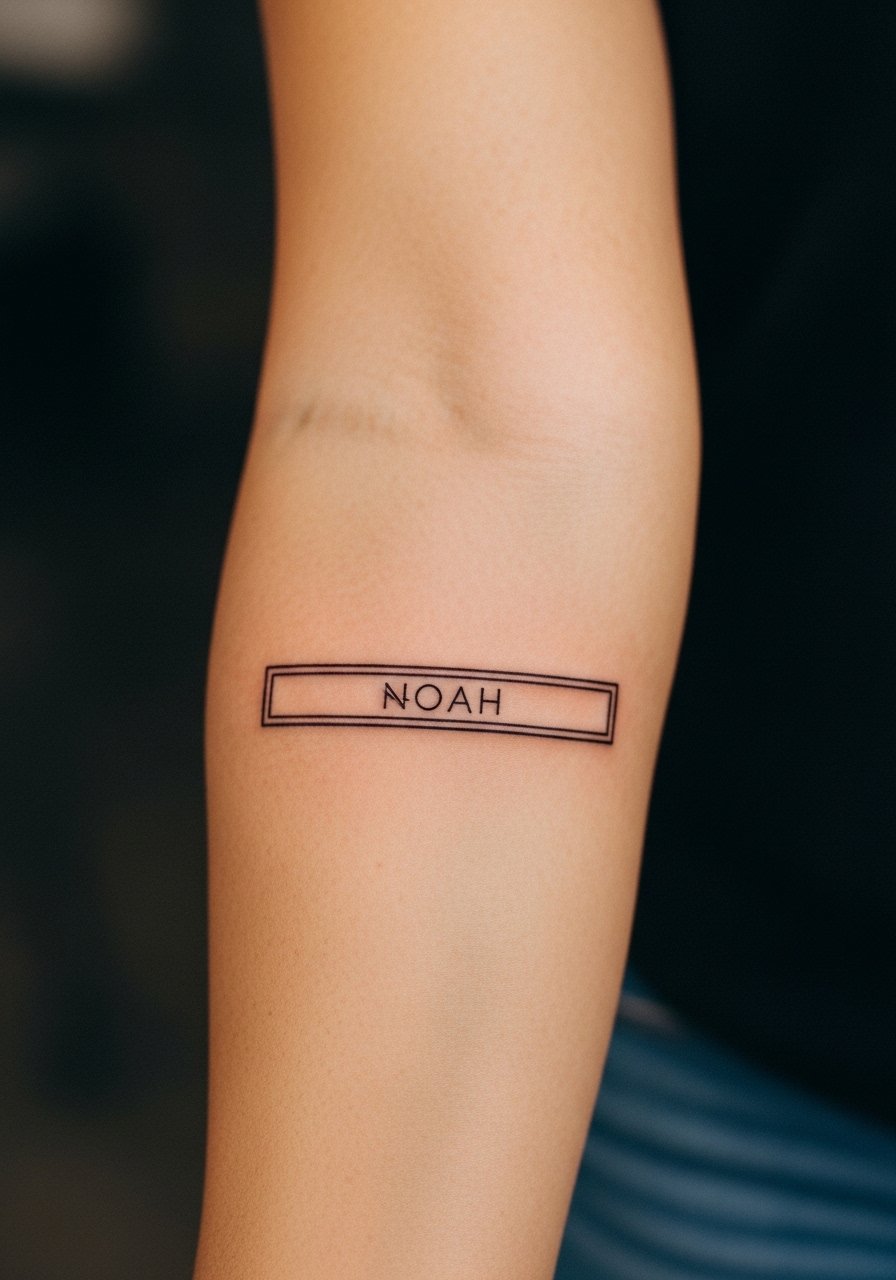
This is a clean option for moms who want readability and restraint. I recommend a slightly heavier lineweight than the thinnest fine line, because the inner forearm moves and stretches. Tell your artist you want a strong single-line frame around the name rather than micro script inside an intricate pattern. Expect moderate discomfort from the forearm, and a one-session tattoo that often needs a small touch-up at year two for crisp letter edges. Common mistake is compressing letters into too-narrow spacing, which leads to blurring. For showing it off, roll up sleeves and pair the piece with a rolled linen shirt that keeps attention on the forearm while staying casual.
2. Geometric Name Compass on Outer Wrist
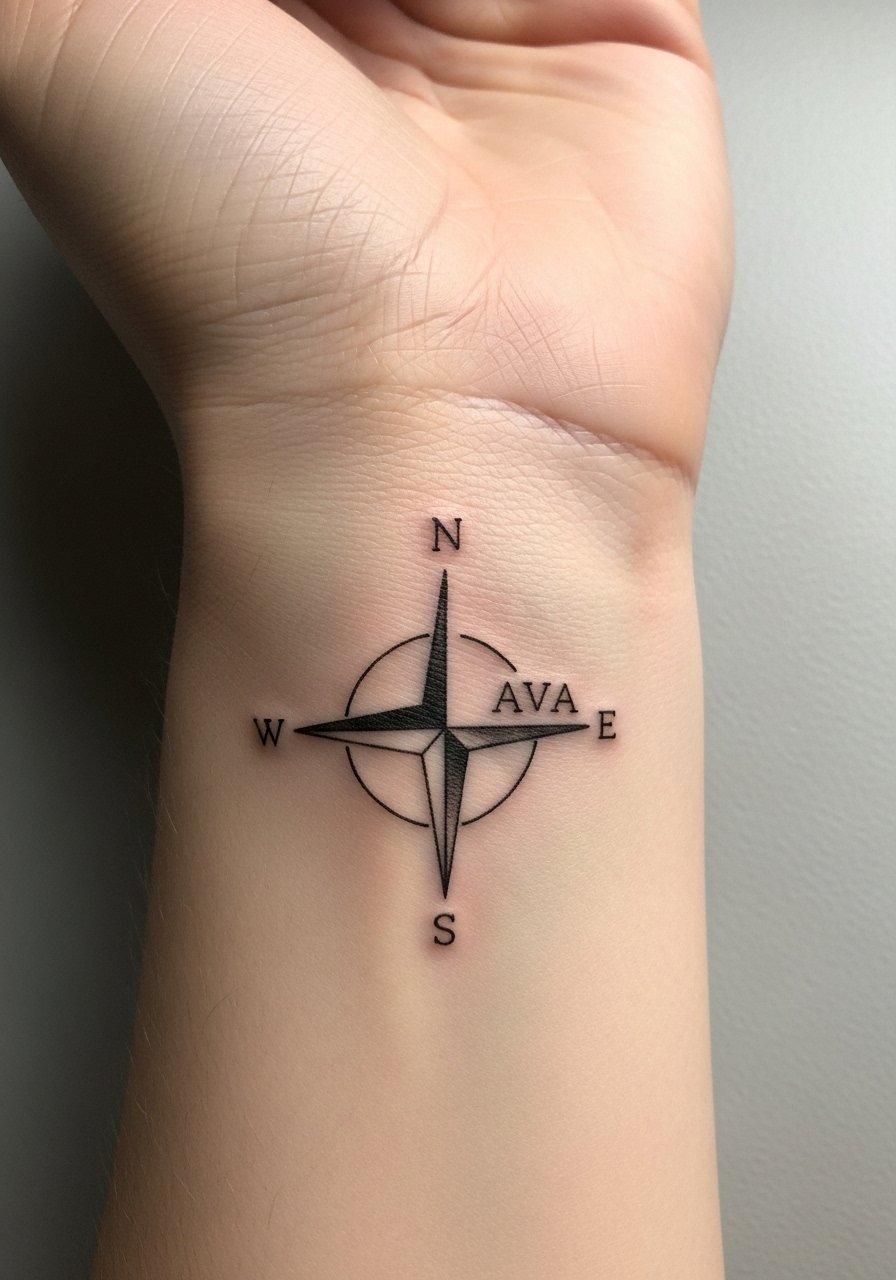
Fair warning: wrist pieces take a beating from washing and bracelets. This compass-style name pairs a small geometric icon with a name arc, which gives the letters space to breathe and reduces blowout risk. Ask your artist for slightly bolder primary lines and for the name to sit within negative space rather than over dense shading. The session is brief, often under an hour, but the wrist can be tender. Expect the need for a touch-up around year two if you wear bracelets frequently. For show-off outfits, a minimalist watch or thin stacked bracelets works well if worn loosely so metal does not rub the fresh ink.
3. Stacked Triangle Name Block on Upper Arm
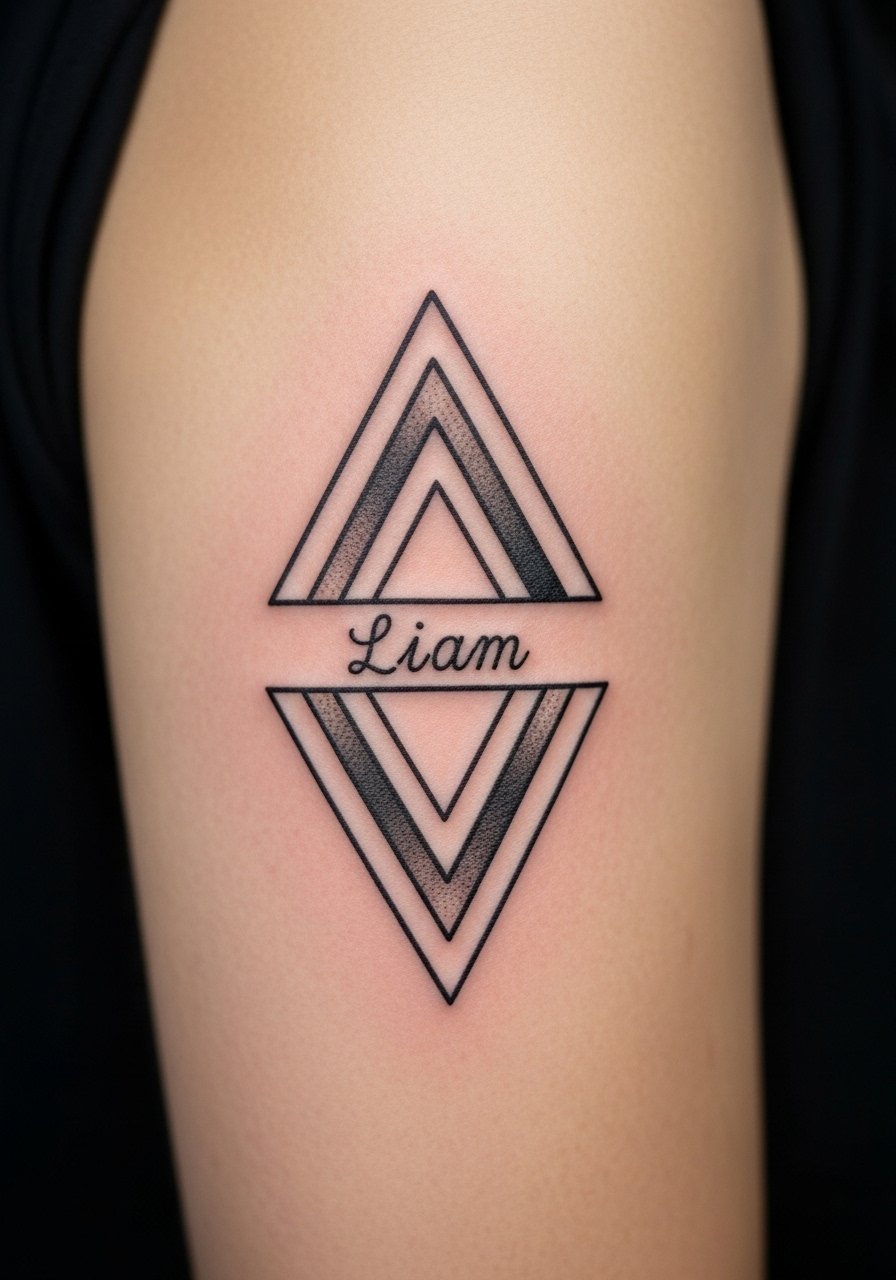
There is something about stacked shapes that holds up visually with age because the design relies on contrast rather than tiny lettering. This is a good call for moms who like a bold geometric look but still want the name readable. In consultation, ask for letter spacing that matches the triangles and for the name to sit in negative space. Upper arm sessions are low to moderate pain and usually finish in 45 to 90 minutes. A common mistake is choosing script too thin to read at a distance. Pair this with rolled sleeves or a short-sleeve linen tee to let the geometry show without crowding the arm.
4. Constellation Name Cluster on Ankle
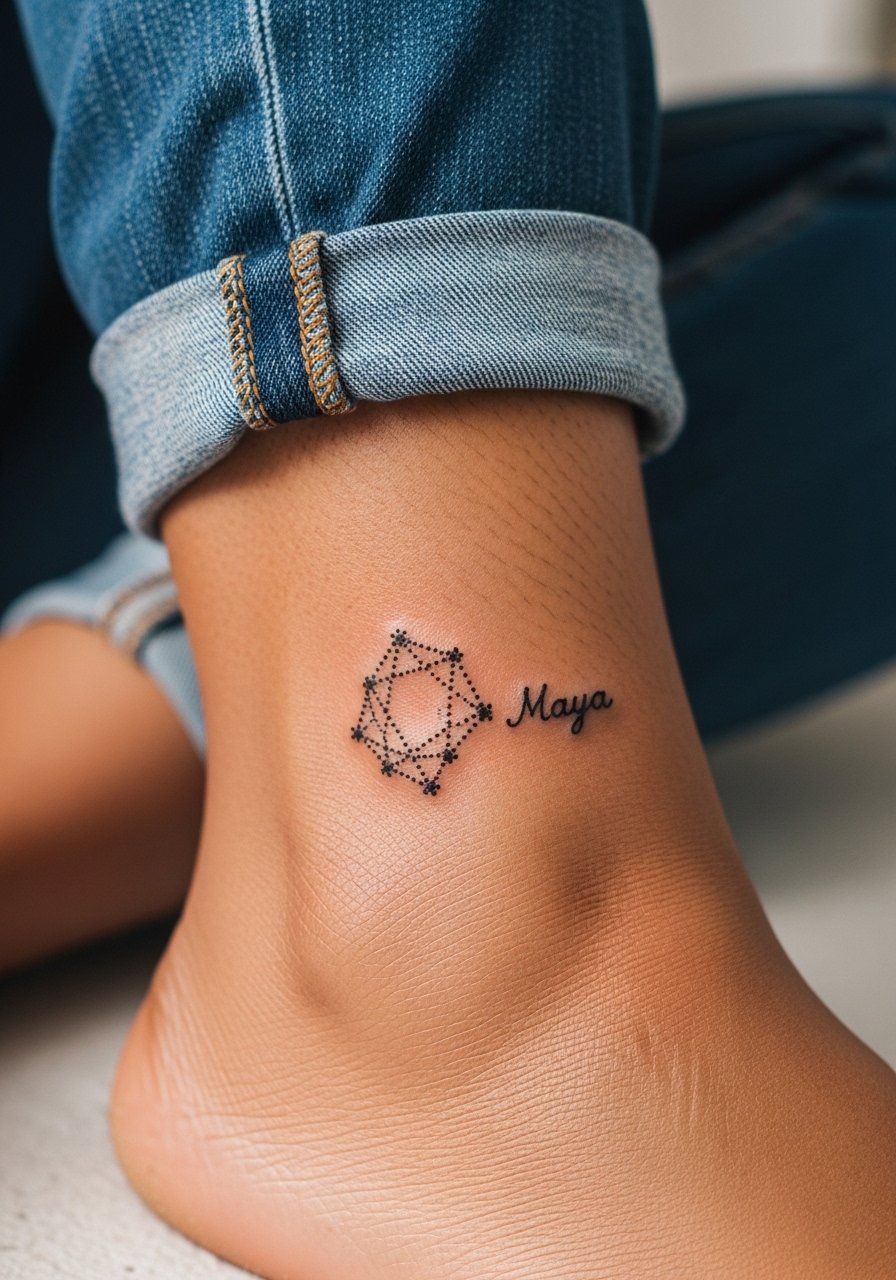
Ankle tattoos face friction from socks and shoes during the first two weeks, so the biggest risk is scabbing disruption. This constellation cluster uses dots and short lines to form a geometric frame for a short name, which reduces the need for heavy script. For the session, wear pants you can roll up comfortably and ask your artist to reinforce the letters with slightly more saturation than the dots. Pain is moderate on the ankle bone area. Expect slower fading if you wear tight footwear. For showing it off, pair with sandals or cropped jeans so the tattoo reads cleanly.
5. Name in a Hexagon on the Back of the Shoulder
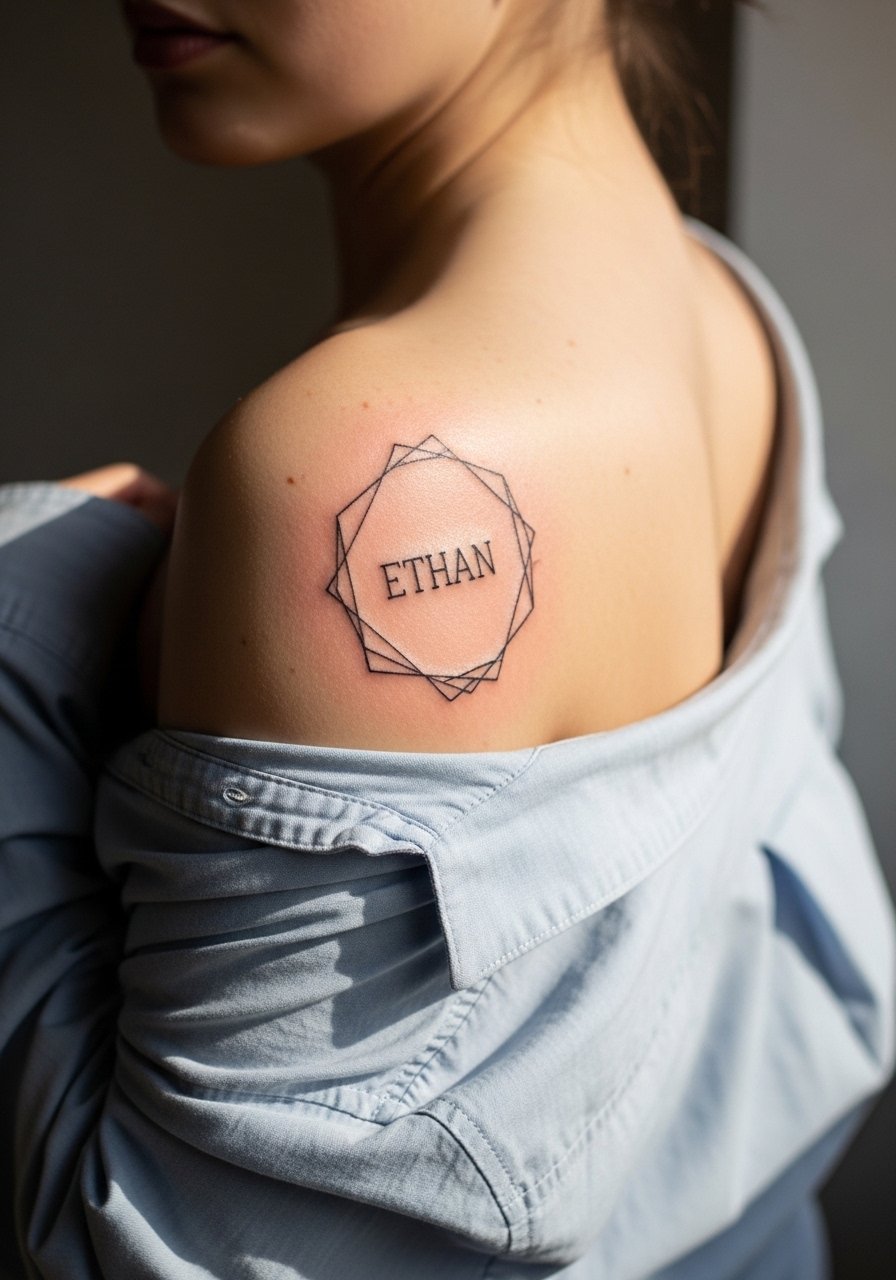
The back of shoulder gives a flat canvas that keeps geometric symmetry intact, which helps names stay legible longer. Tell your artist you want the hexagon edges crisp and the name centered with consistent kerning. Sessions here are low to moderate pain and usually finish in under two hours for a small piece. A frequent mistake is making the hexagon too small for the letter height, which ages into unreadable text. For the session, throw on a loose button-down shirt you can pull aside for access without rubbing the area afterward.
6. Interlocking Circles Around a Script Name
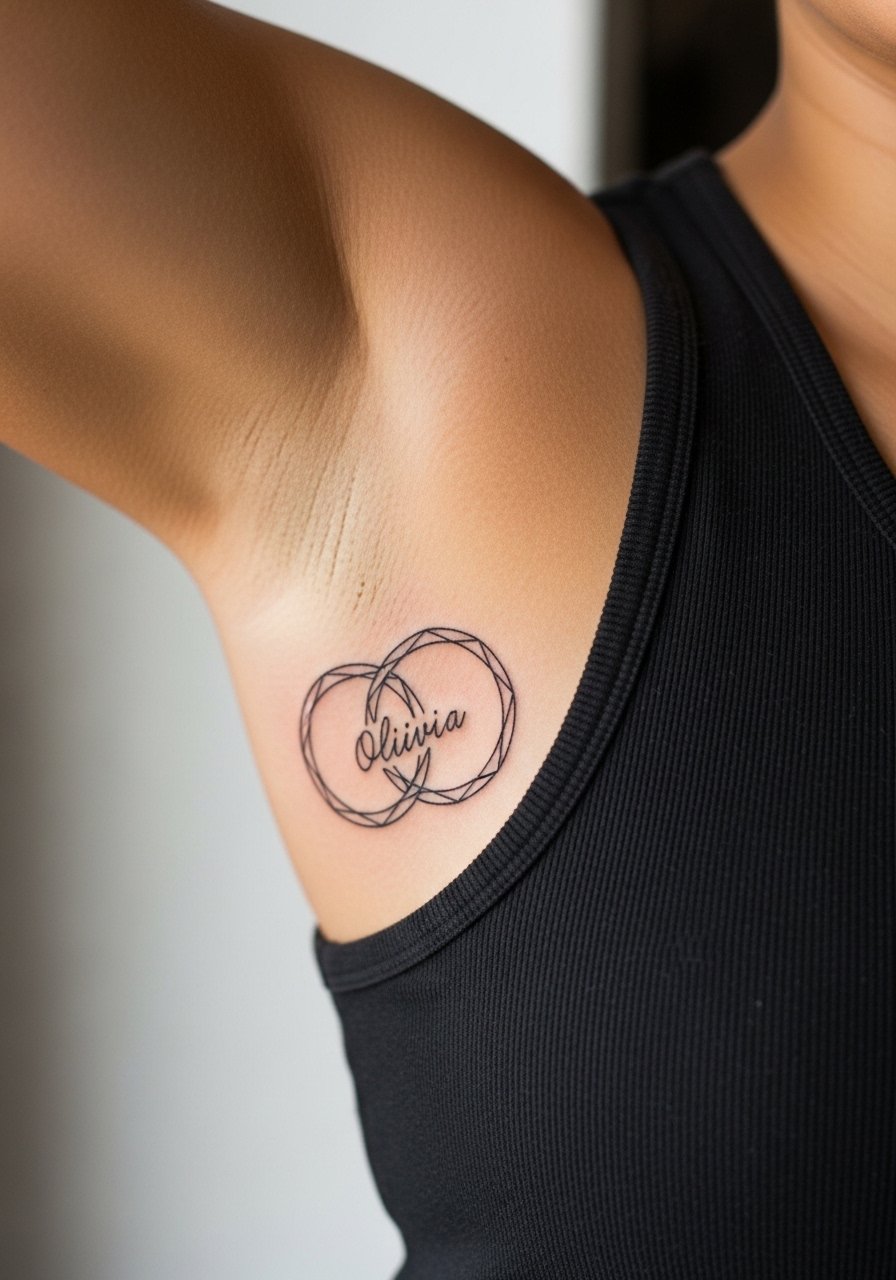
This placement reads intimate and sits where the skin is softer, so artists debate technique for clean fine line here. One camp warns that inner bicep skin shifts and can blur very thin script. The other camp says with proper depth and slight spacing the script settles fine. I recommend slightly increased letter weight and open spacing. The session can be more uncomfortable because of sensitivity, and touch-ups at year two are common for delicate scripts. Wear a tank top for the appointment so the artist has clear access and you avoid movement that stresses the area afterward.
Studio Day Picks
The pieces above span wrist, inner arm, ankle, shoulder, and collarbone, so these items smooth the session day and early healing for those placements.
-
Silicone stencil transfer sheets. Lets you preview how the name will sit against the geometric frame before the needle hits, which matters for symmetry on shoulders and forearms.
-
Thin protective film roll. Keeps wrist and ankle pieces protected from friction during the first few days while you move and wash.
-
Fragrance-free gentle body wash. Cleanses healing areas without stripping ink, helpful for wrist and shoulder spots covered during showers.
-
Topical numbing cream. Useful for ankle or inner bicep sessions where sensitivity can spike and extend session time.
-
Aquaphor healing ointment. Thin layers in the first 48 hours lock in moisture for fine name work without clogging needle channels, which helps maintain crisp letter edges.
7. Angular Name Ribbon on the Side Rib
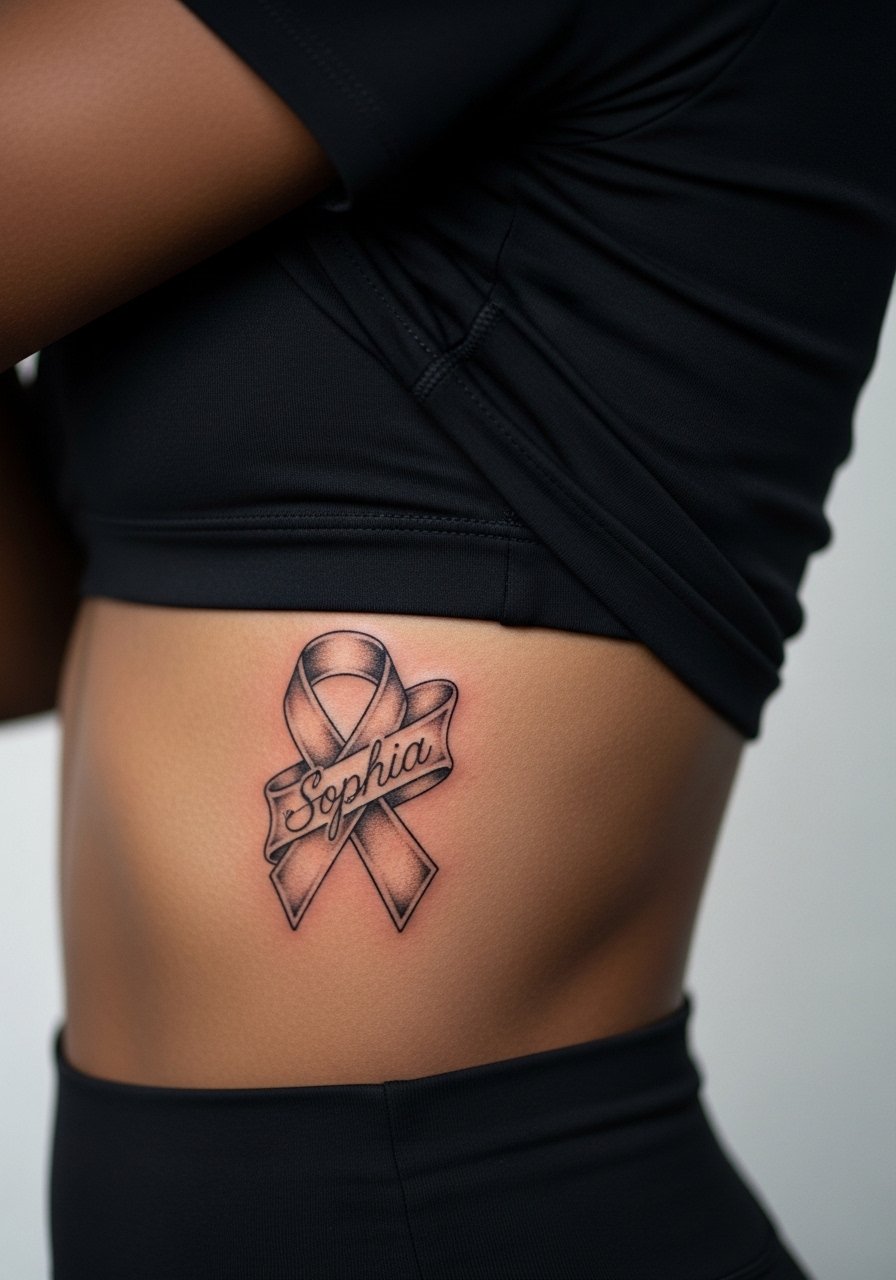
Fair warning: ribs are one of the highest pain zones, and they also move a lot with breathing, which affects how fine script heals. If you want a rib name, I advise a slightly bolder ribbon and for the artist to give each letter extra spacing. One camp argues fine line on ribs blurs quickly. The other camp says spacing and depth fix most issues. Expect a multi-pass session and a touch-up around year two to re-crisp delicate letters. A common error is shrinking the design to fit, which makes aging problems worse. For the session wear a fitted sports bra so the artist has access and you can avoid tugging at fabric afterward.
8. Minimalist Name Bar on the Side of a Finger
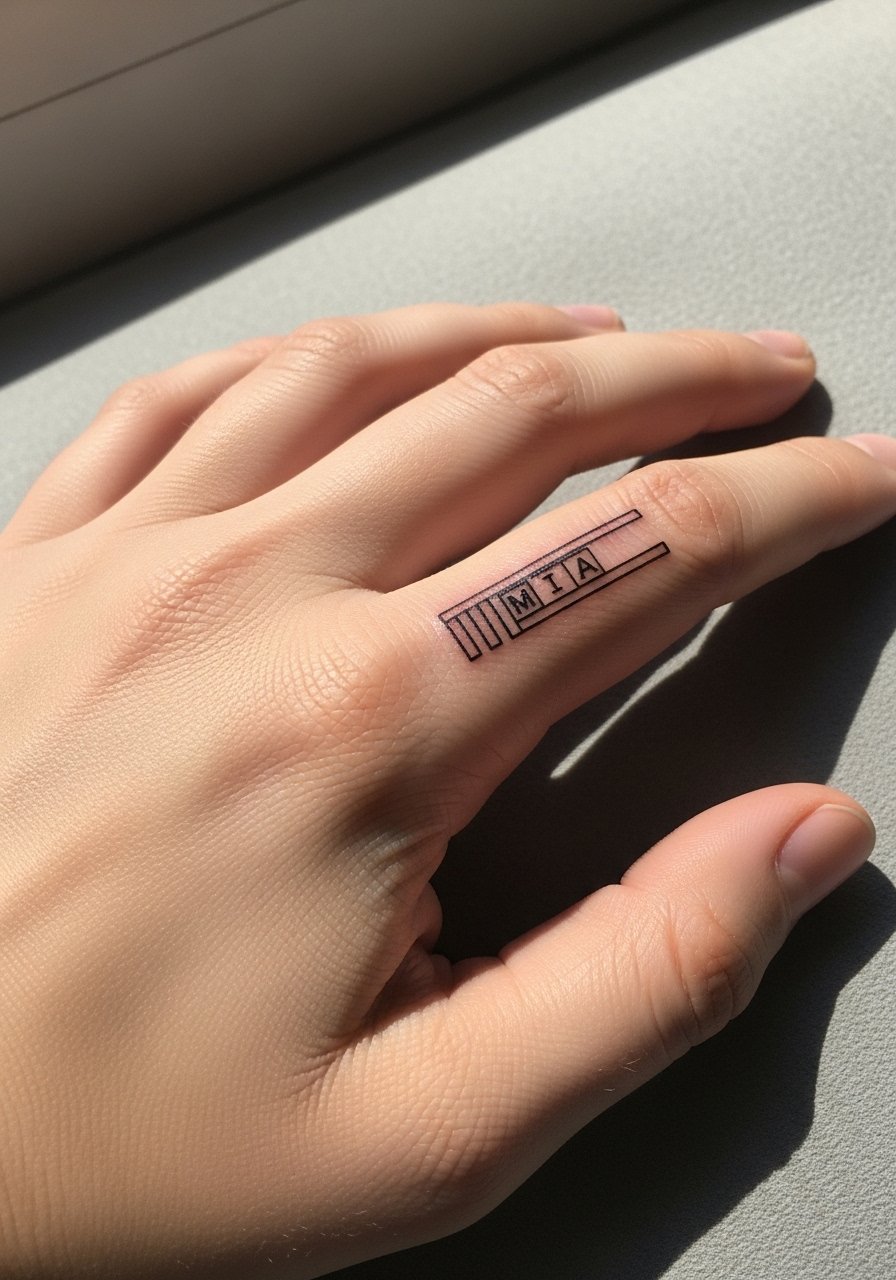
Finger tattoos are notorious for faster fading due to constant washing and skin renewal. A short name in block letters inside a geometric bar reduces smear because the letters sit inside a defined negative space. Tell your artist you accept the likelihood of touch-ups and want deeper initial saturation. Sessions are quick but painful. The most common mistake is choosing delicate script on fingers. For wearing, avoid tight rings during healing and consider a thin ring guard if you normally stack jewelry, to reduce direct friction while the area heals.
9. Name in a Framed Diamond on the Calf
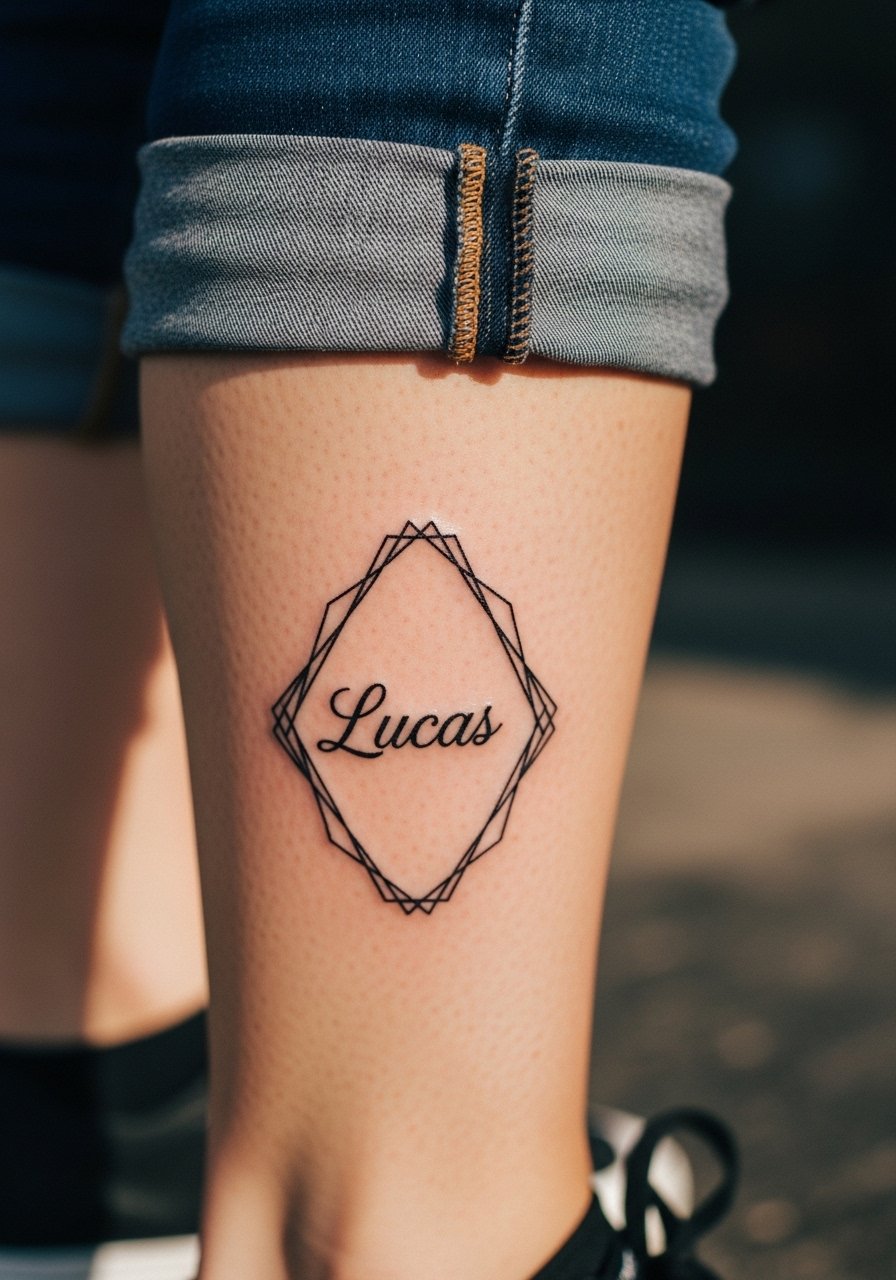
The calf is forgiving on both pain and aging. A diamond frame keeps the name protected visually and reduces the risk of blowout because the skin is thicker. Ask your artist for a crisp outer frame and for the letters to be proportionate to the diamond's negative space. Sessions are usually comfortable and finish in under two hours for a small name. Common mistake is overcrowding the diamond with extra motifs that distract from leg movement patterns. Pair with mid-calf boots or cropped pants to show the piece off without constant abrasion.
10. Origami Fold Name on the Sternum
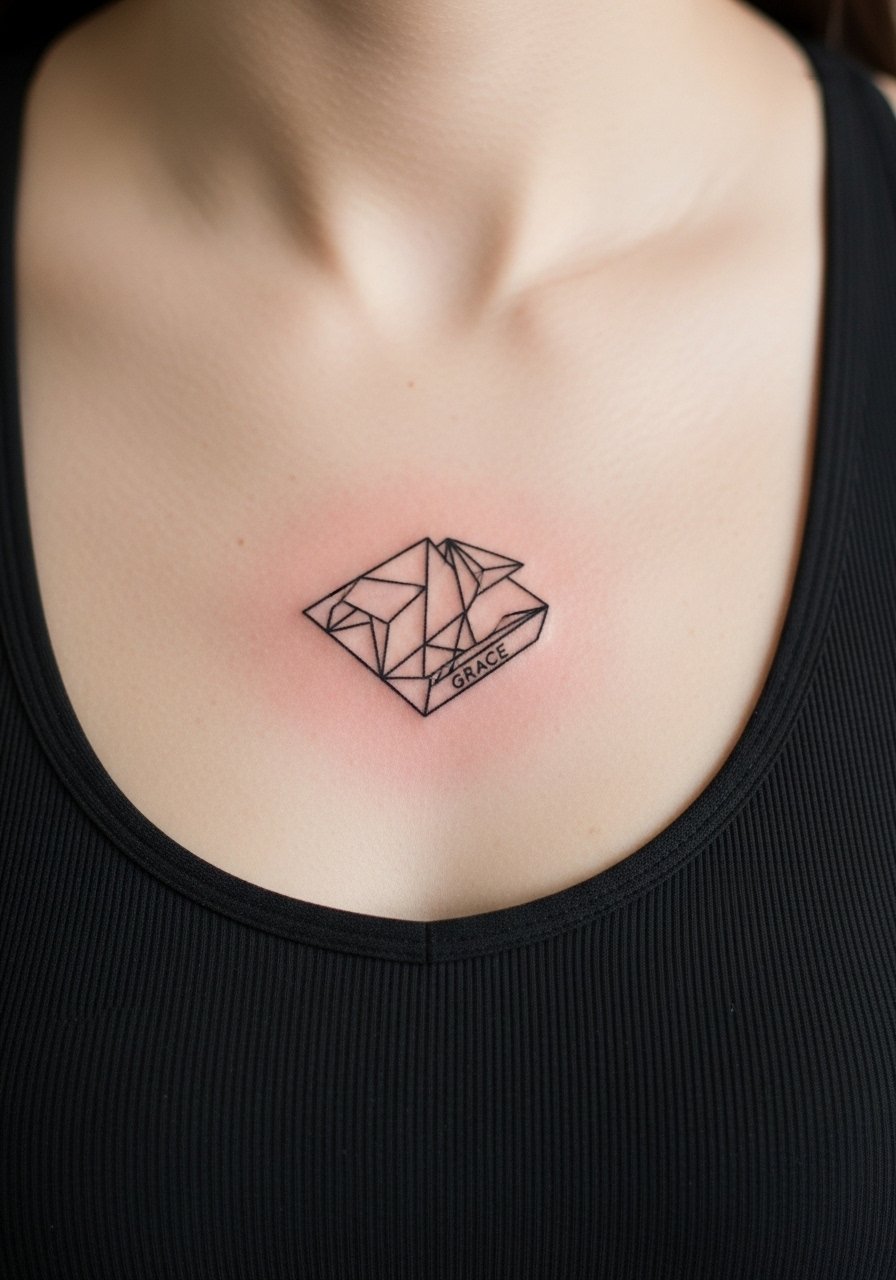
Sternum placements are intimate and require specialized experience because the curvature of the chest changes line tension. One practical note for mothers is to pick a short name or initial that fits the natural centerline. The session can be more painful than a flat arm piece and often takes breaks. A mistake I see is choosing overly dense stippling right above the sternum, which can blur into the central band. For appointments, wear a fitted sports bra so the artist can work without exposing the rest of the torso.
11. Name Constellation Along the Spine
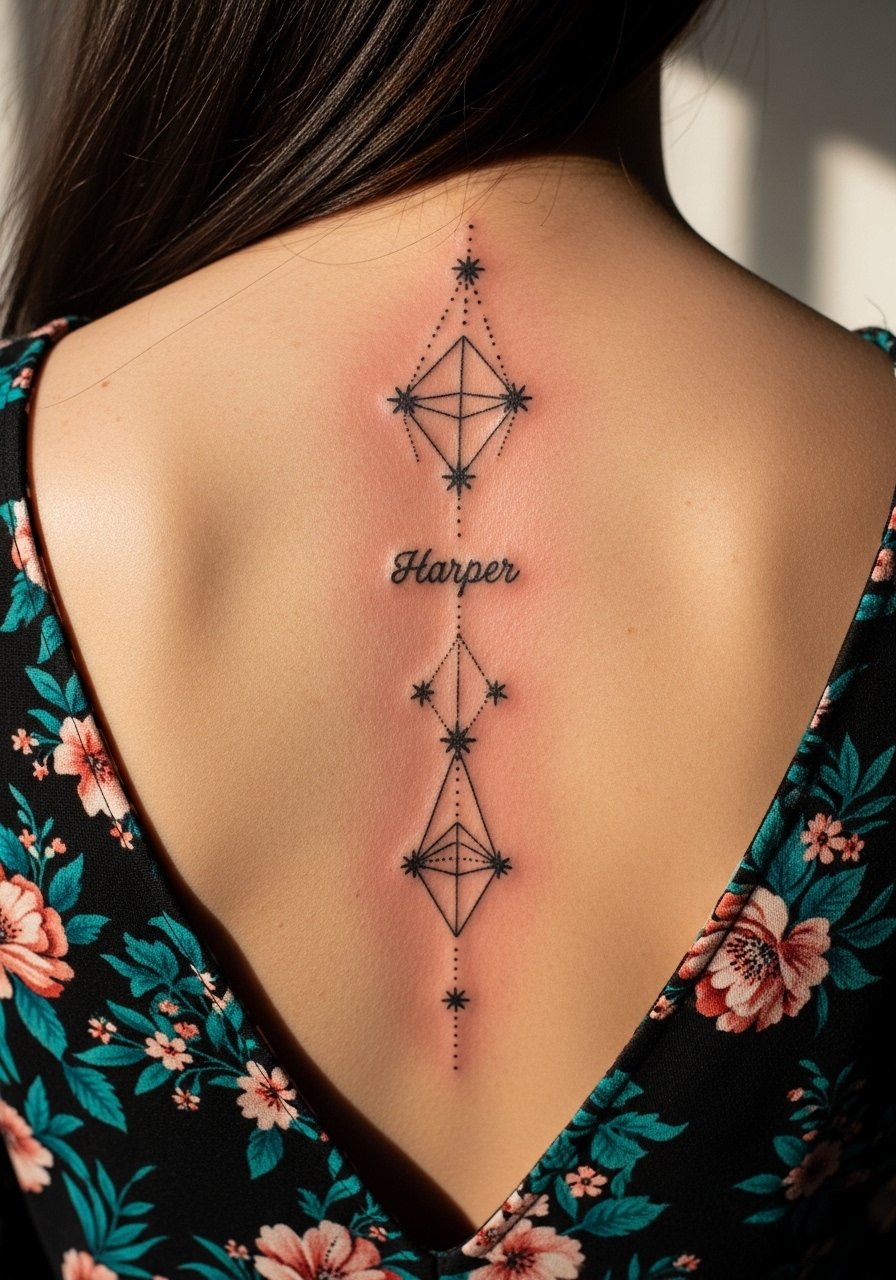
Spine work reads striking when framed by open-back clothing, but it also experiences stretching with posture changes. Ask the artist to map letters so they follow the spine line without compressing at vertebrae points. Sessions on the spine can be intense depending on proximity to bone. Expect touch-ups in two to three years for thin script. A common mistake is demanding ultra-thin script on a curved plane. For evenings out, pair this with open-back dresses that reveal the geometry without overstretching the area.
12. Polygonal Baby Footprint with Name on Upper Thigh
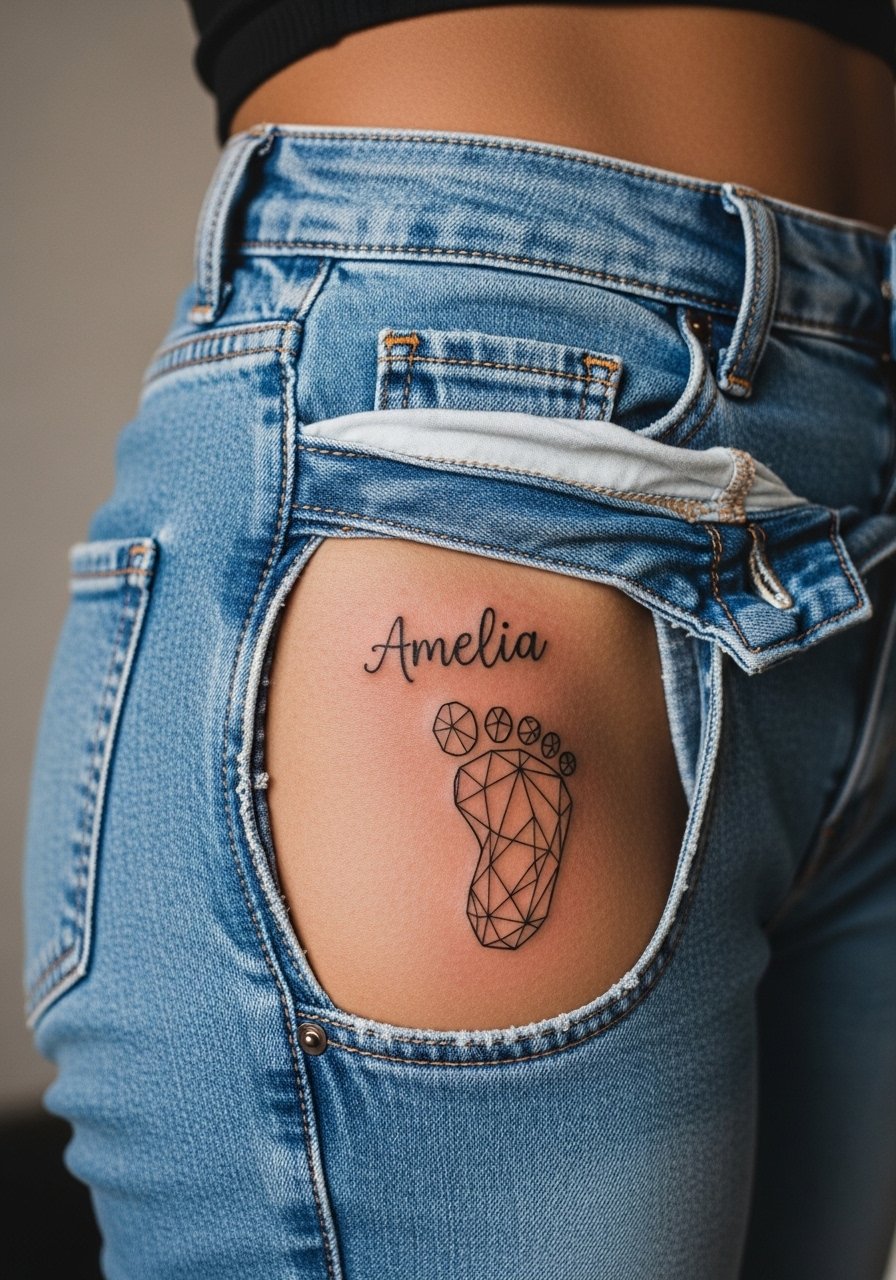
Upper thigh has thicker skin and less daily abrasion, which helps keep name details legible. This design pairs a symbolic footprint in geometric facets with the name above, making the composition age more like an emblem than script alone. Tell the artist you want clear negative space between the footprint and the letters. Sessions are typically low to moderate pain and allow for longer single sittings. If you want to wear it during summer, a high-waisted bikini bottom that does not rub the area is a good wardrobe choice while it heals.
13. Signed Name with Geometric Underline on Collarbone
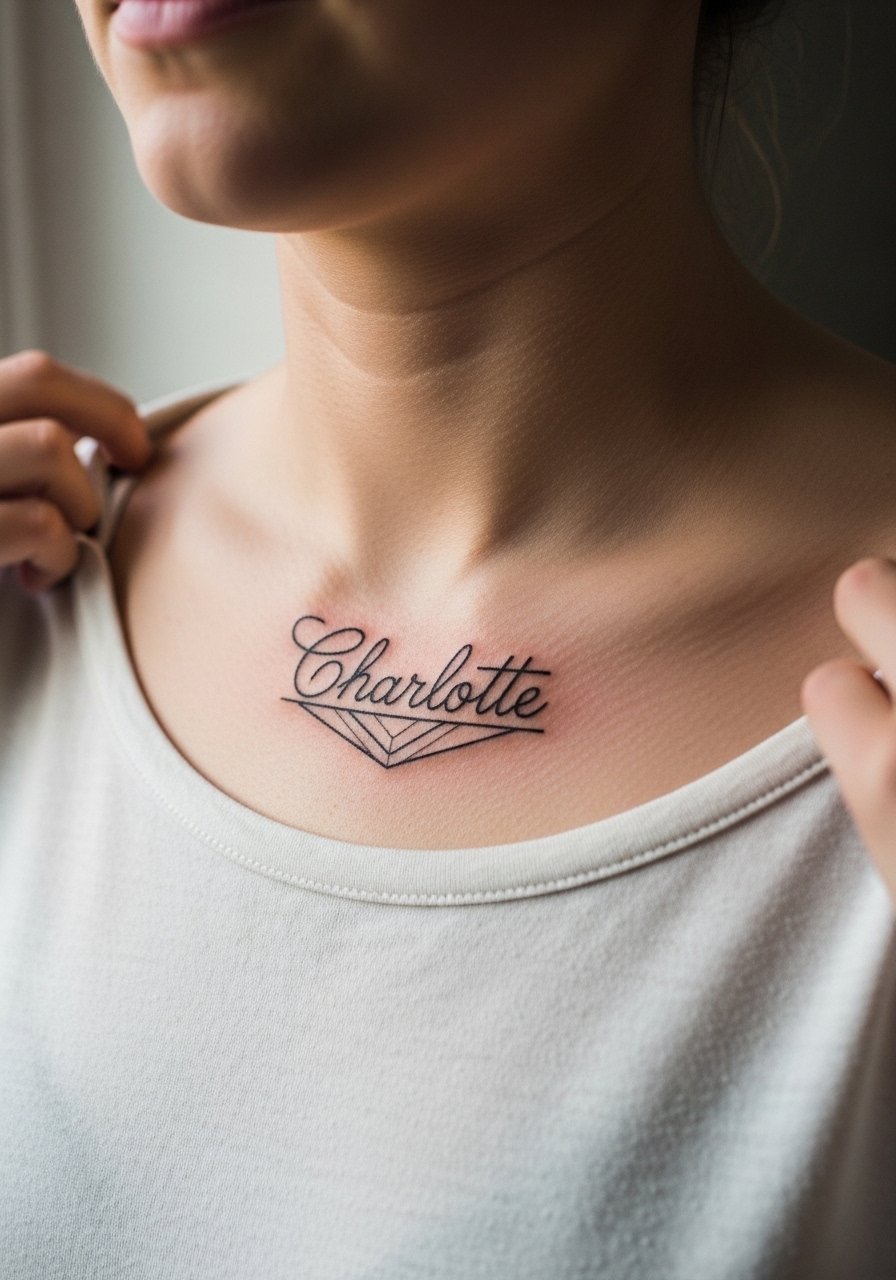
Collarbone placements are popular because they photograph well and stay visible in casual tops. The combination of a familiar signed name with a geometric underline adds structure and helps protect the script visually. Tell the artist to match the underline thickness to the signature so the two elements age together. Sessions here are moderate in sensitivity and usually short. A frequent error is placing script too close to the bone which can sting and cause uneven healing. For outfits, try a thin chain pendant necklace that sits above the script without competing.
14. Geometric Tree Ring with Name on Lower Back
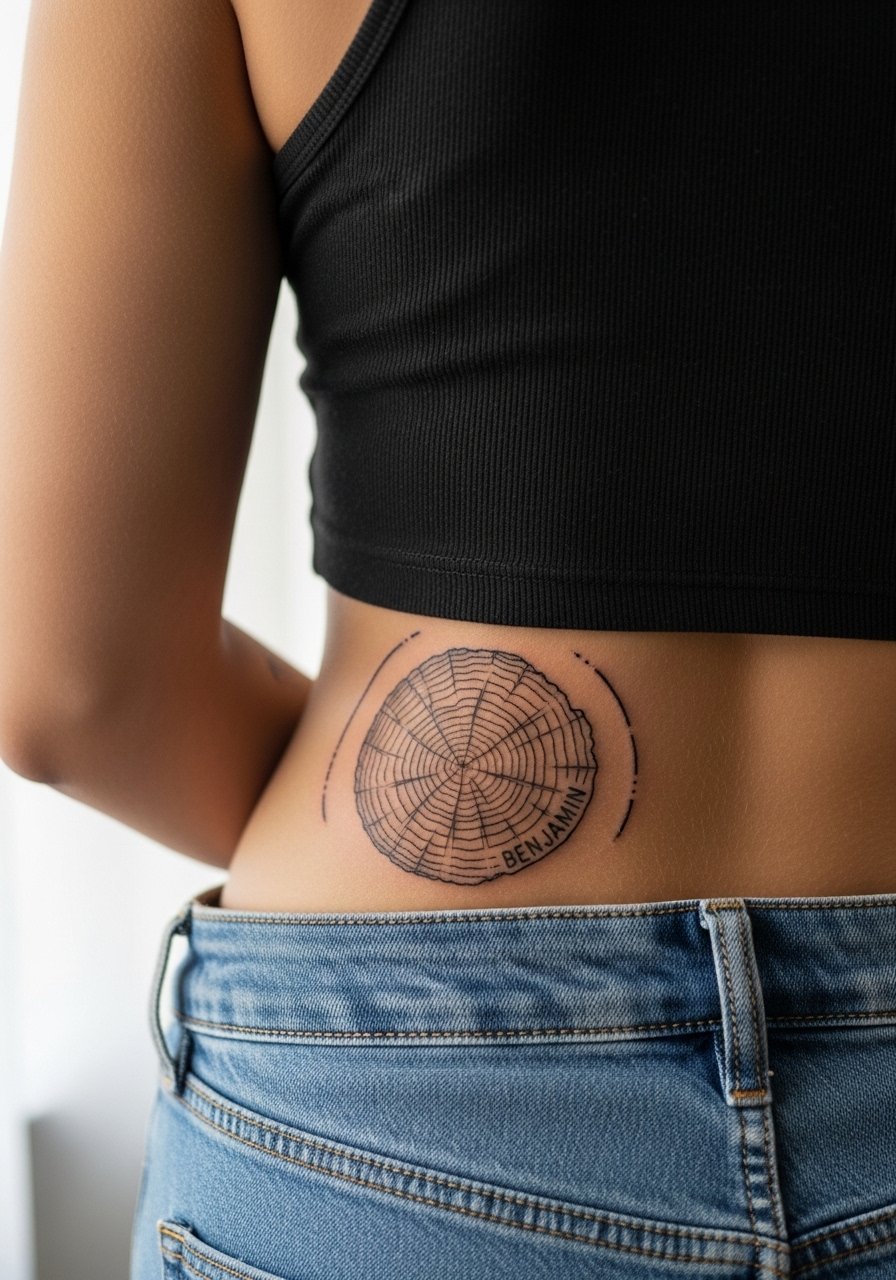
Lower back pieces can be hidden or shown depending on clothing, which many parents appreciate. The tree-ring geometry frames the name in a way that retains legibility because the rings provide contrast. Ask for enough spacing between rings and letters to avoid merging over time. Sessions on the lower back are generally low pain but can be tricky if you need to lie in certain positions. For showing it off, wear a crop top and high-waisted jeans combo that keeps the tattoo visible without constant friction.
15. Tiny Name in a Geometric Heart on the Wrist
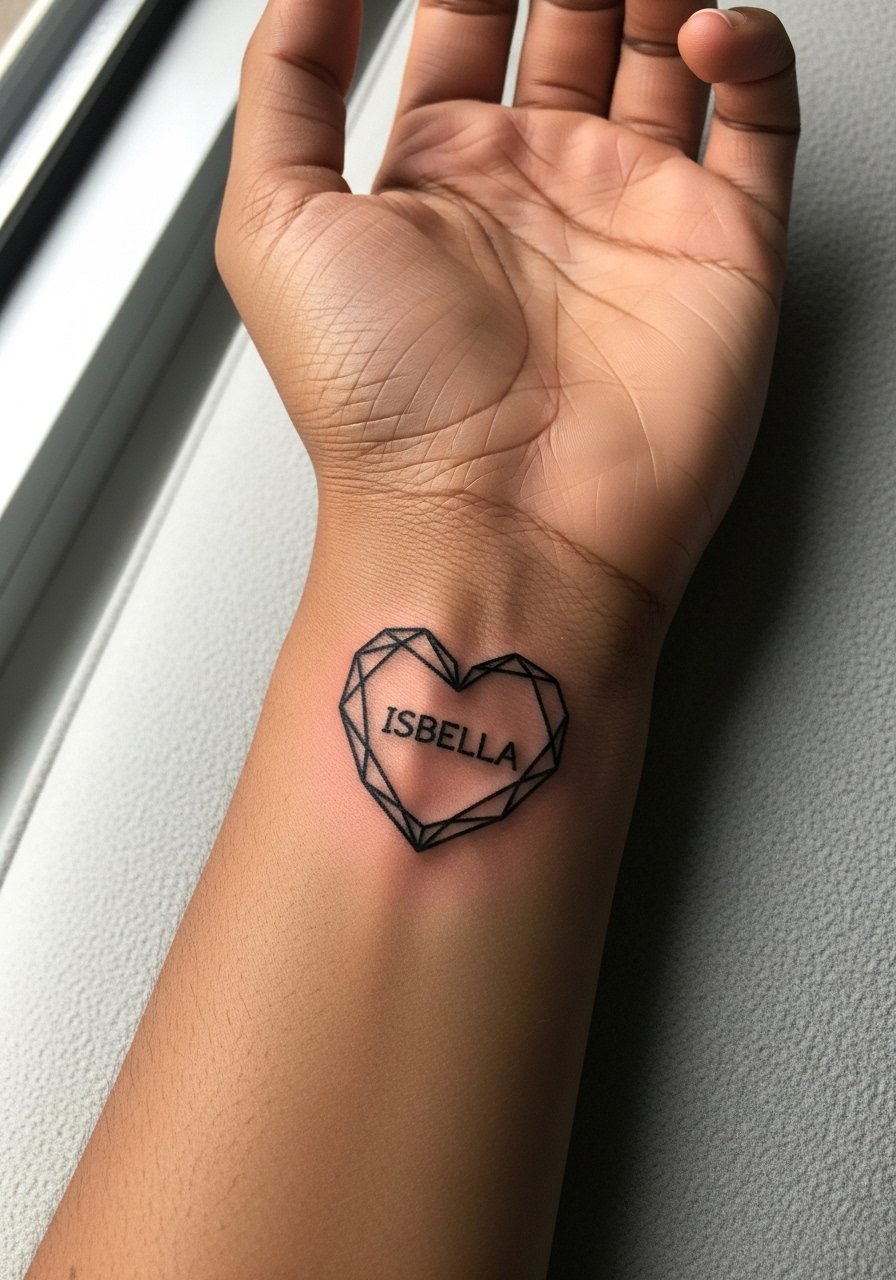
Wrist placements make names instantly accessible to you and others, so durability is the key consideration. A tiny name inside a geometric heart keeps the letters protected and reduces the amount of exposed script. Ask for the heart to have a thin but confident outline and for the letters to sit slightly away from the border. The session is short but the wrist is sensitive. Common mistake is using overly decorative script that loses clarity. For styling, a loose-fitting braided bracelet worn slightly above the piece can frame it visually without pressing on the fresh ink.
16. Name in Negative Space within a Fractal Pattern on the Thigh
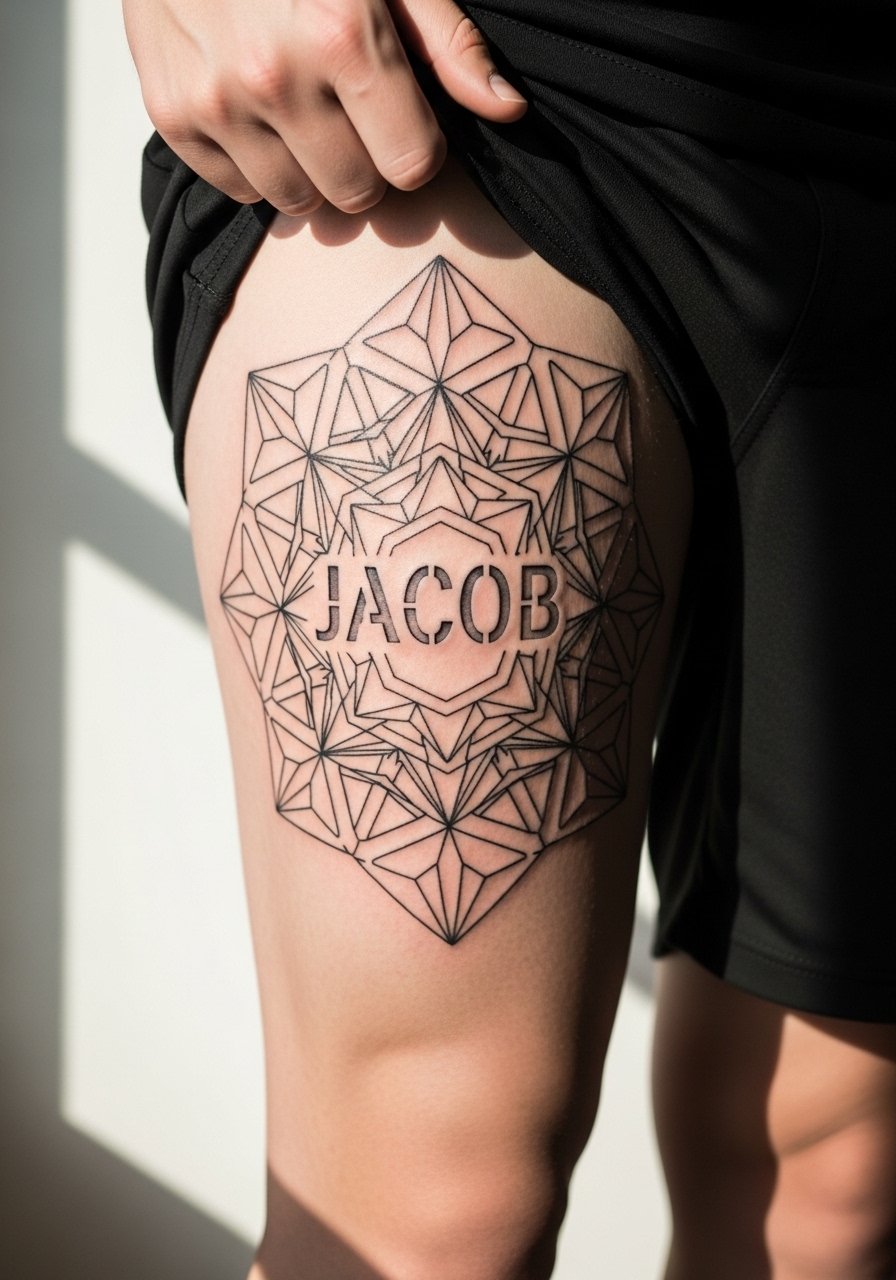
Negative-space lettering inside a busier pattern is a smart way to preserve readability because the letters are defined by contrast. The thigh offers a forgiving surface that keeps patterns from distorting. Tell your artist to map out the negative space clearly and to avoid too-small letterforms. Sessions can be longer but comfortable. The main mistake is packing too many small details around the name which makes the negative cutout ambiguous later. For show-off looks, wear loose drawstring shorts that do not rub the area while it heals.
17. Geometric Arrow with Name on the Side Hip
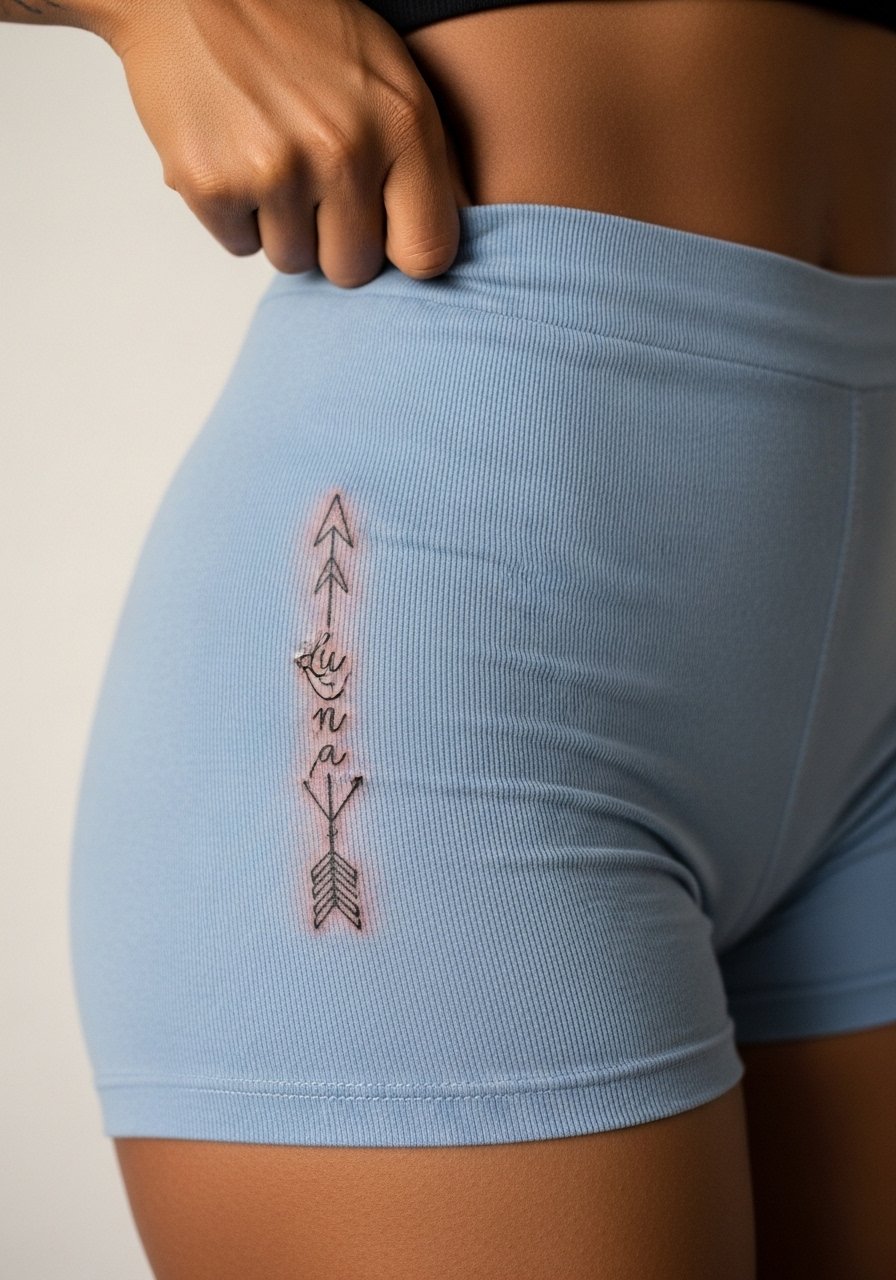
Hip placements are intimate and shift with body movement, which affects long-term clarity of script. An arrow provides movement and direction while keeping the name linear. For this placement, ask your artist to slightly increase letter spacing and to anchor the arrow with clear geometric endpoints. Sessions can be moderately uncomfortable. A mistake is choosing a long name on a narrow hip canvas. For the appointment and healing, a high-waisted brief or shorts that do not press the fresh tattoo are a sensible choice.
18. Name in a Cube on the Back of the Hand
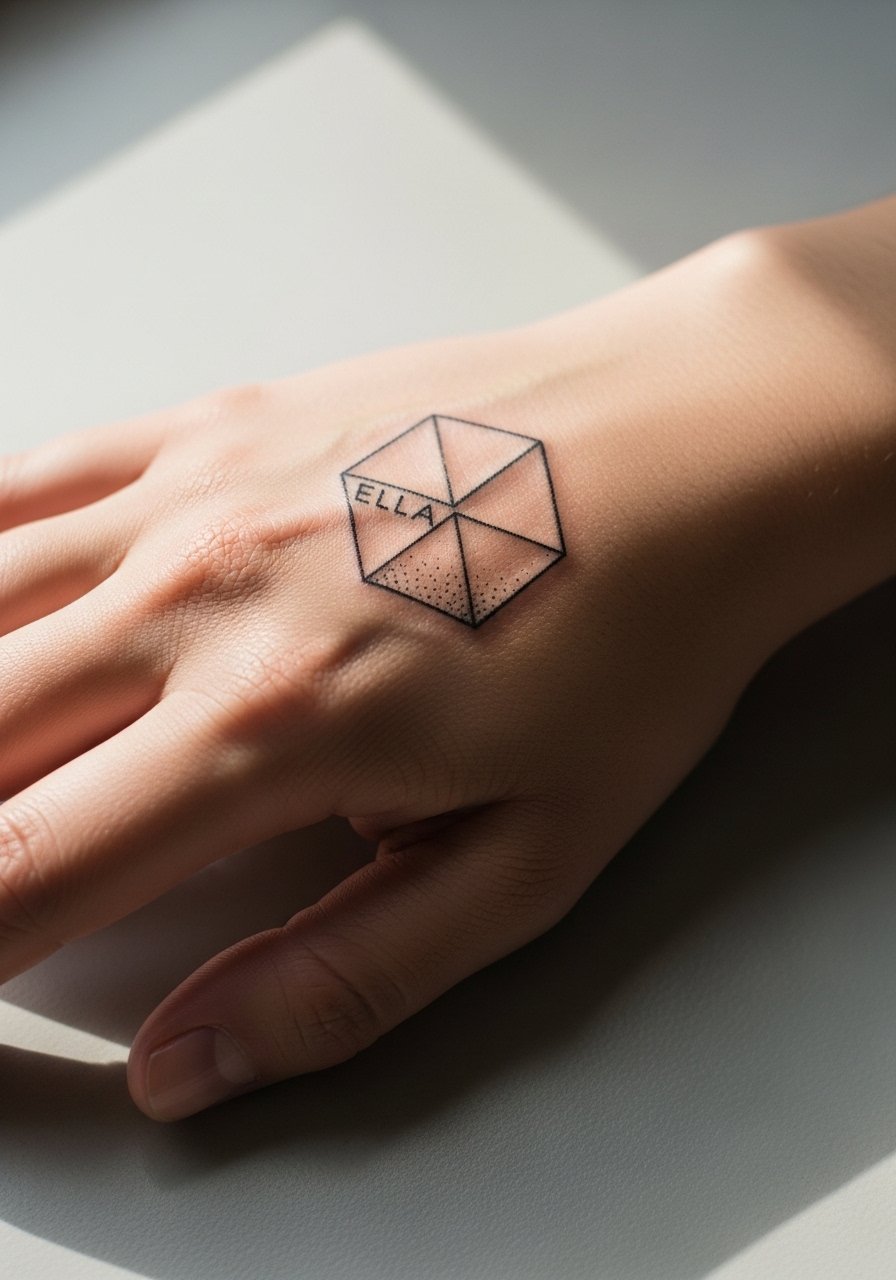
Hand tattoos are controversial for visibility and employment considerations. One camp says hands are a bold commitment with higher fade and touch-up needs. The other camp treats hand ink as personal expression worth the maintenance. If you choose this zone, go for compact block letters inside a geometric cube to minimize smear. The session can be painful and the piece will likely require touch-ups every 1 to 3 years. Think about job environments before placing the name on the hand.
19. Interlaced Polygons Surrounding an Initial on the Chest
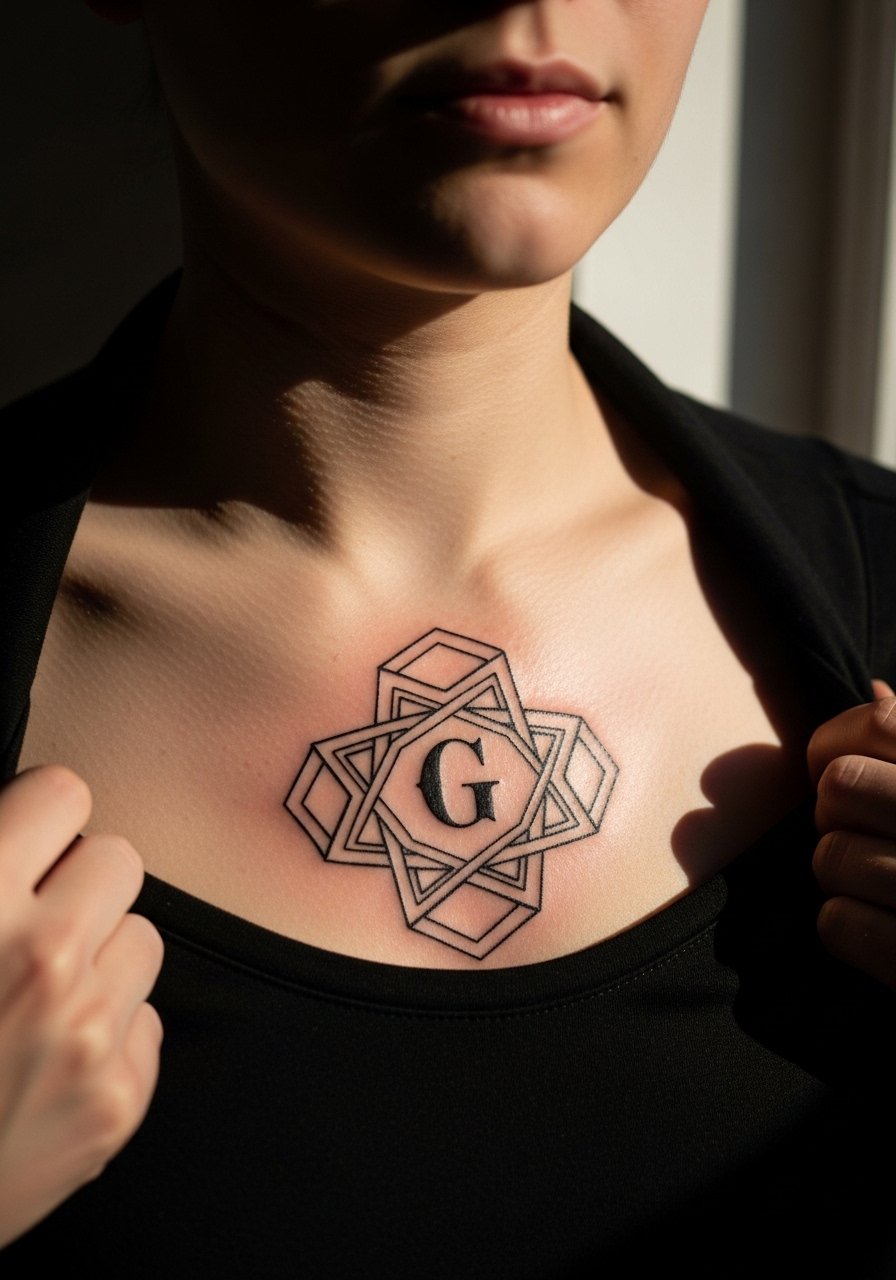
Chest placements let initials breathe and they pair well with structured geometry that ages consistently. Tell the artist you want the initial slightly heavier so it holds up against the polygon lines. Sessions here can be sensitive over the sternum and collarbone. A common error is mixing ultra-fine initial strokes with bold polygons that overpower the letter over time. For comfort on the day, wear a wide-neck shirt you can pull aside that still keeps the chest mostly covered.
20. Name in a Mandala Petal on the Back of the Neck
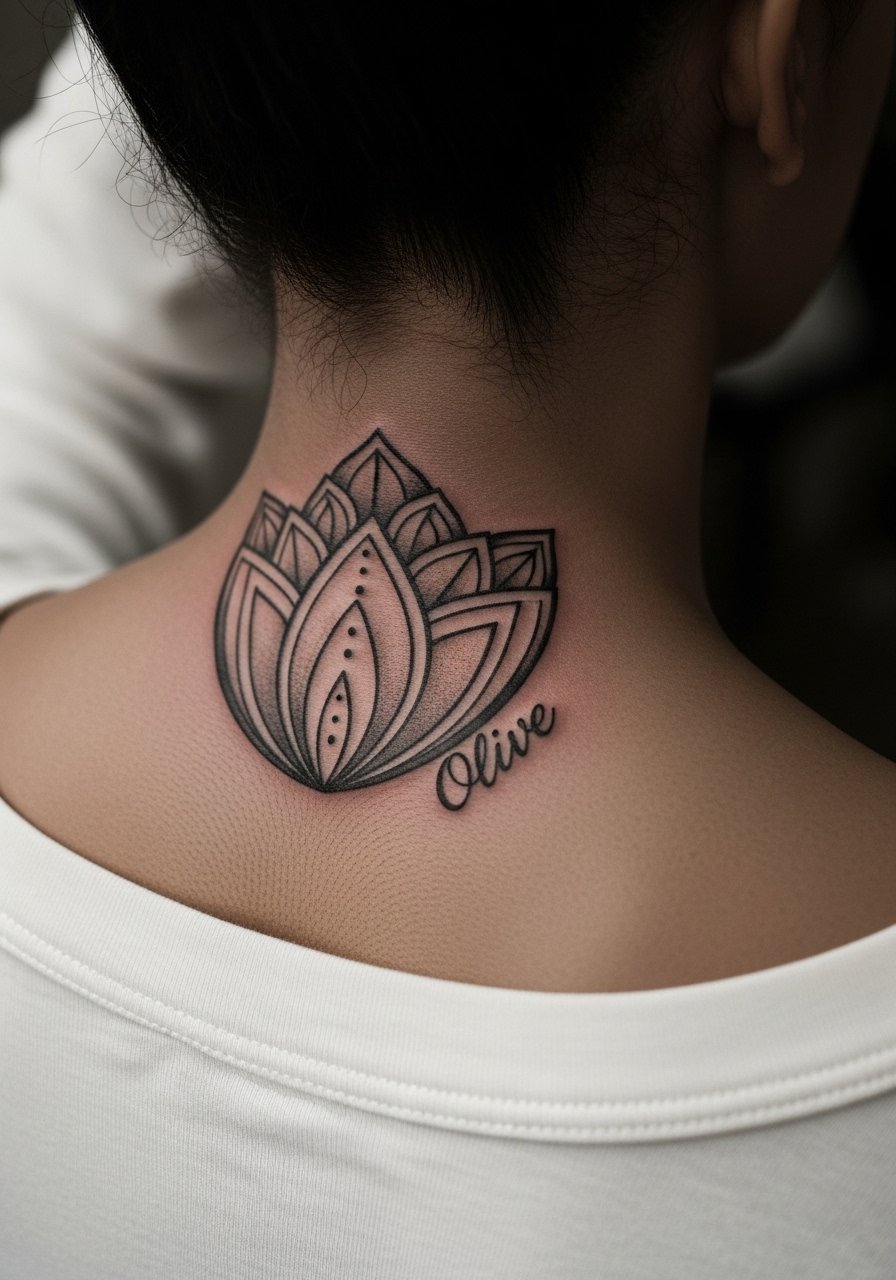
Neck work is visible and presents a durability trade-off because of sun exposure and movement. The mandala petal acts as a frame that preserves the name by using bold negative space. When you consult, ask for slightly deeper punch on the letterforms and a matte finish in shading to reduce contrast loss. Sessions can be brisk but sensitive. A frequent mistake is placing very thin script too close to hairline friction. For the appointment, a wide-neck shirt keeps the rest of your neck covered while the artist works.
21. Modular Grid Name Panel on the Forearm
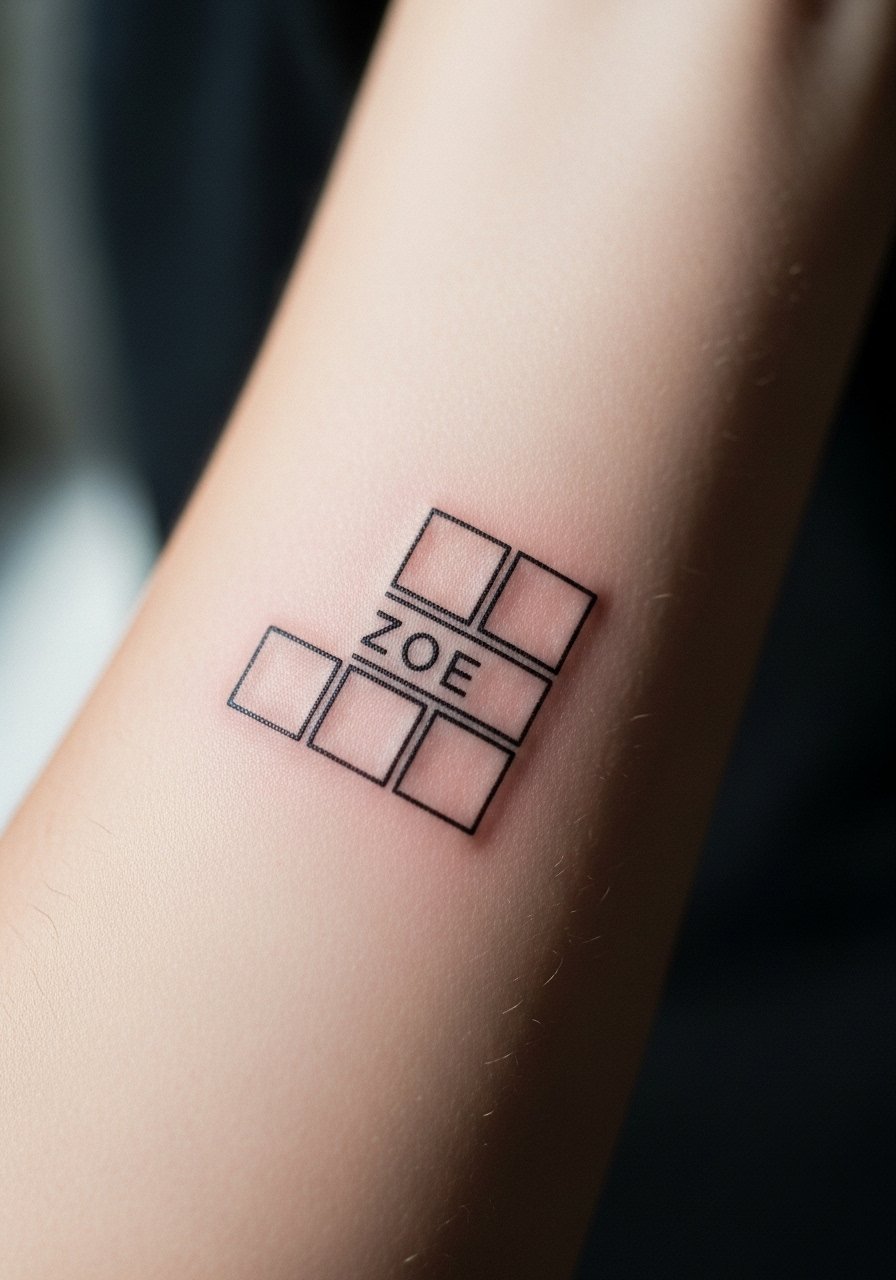
A grid panel is functional because the modular boxes give letters consistent boundaries, which reduces the chance of letters bleeding into each other. This is a good choice for a name that might be short and benefits from spacing. Tell the artist to keep each square equal and the letters centered within their boxes. Forearm sessions are moderate and usually quick. The common mistake is shrinking the boxes too small for readable type. For showing it off, a rolled sleeve shirt frames the grid and keeps the design crisp in photos.
Frequently Asked Questions
Q: Will a fine line geometric name fade faster on high-friction areas like fingers and wrists?
A: Yes, from what I've seen those zones lose crispness sooner. Fingers and wrists see constant washing, rubbing, and sunlight exposure. Expect more frequent touch-ups and ask your artist for slightly heavier initial saturation if you choose those spots.
Q: How should I prepare for a sternum or ribcage name session to reduce pain and movement?
A: Plan for breaks, go well rested, and wear a fitted sports bra or cropped top so the artist has access without exposing more than necessary. Breathing can shift stencil placement, so steady breathing and light pauses during shading help keep lines straight.
Q: Are geometric name designs respectful when they borrow motifs like mandalas?
A: Geometric shapes are widely used, but some motifs trace to specific cultural or spiritual traditions. If a pattern has obvious cultural meaning, consider a variation rather than a direct replication and mention cultural respect to your artist during the consultation.
Q: Can I combine a name with a larger sleeve design later without losing the name's legibility?
A: It can work if the name is framed in clear negative space or in a geometric panel. Tell the sleeve artist up front you want the name preserved, and plan surrounding elements to avoid crowding. Keep the name lines stronger than decorative filler that might soften with age.
Q: How do I find an artist who understands geometric lettering without using specific Instagram handles?
A: Search local shop directories and use focused hashtags like #geometrictattoo and #finelinetattoo within a city tag. Visit conventions or shops and ask to see healed portfolios in person. Many artists will show healed shots during consultations so you can assess how their geometry holds over time.