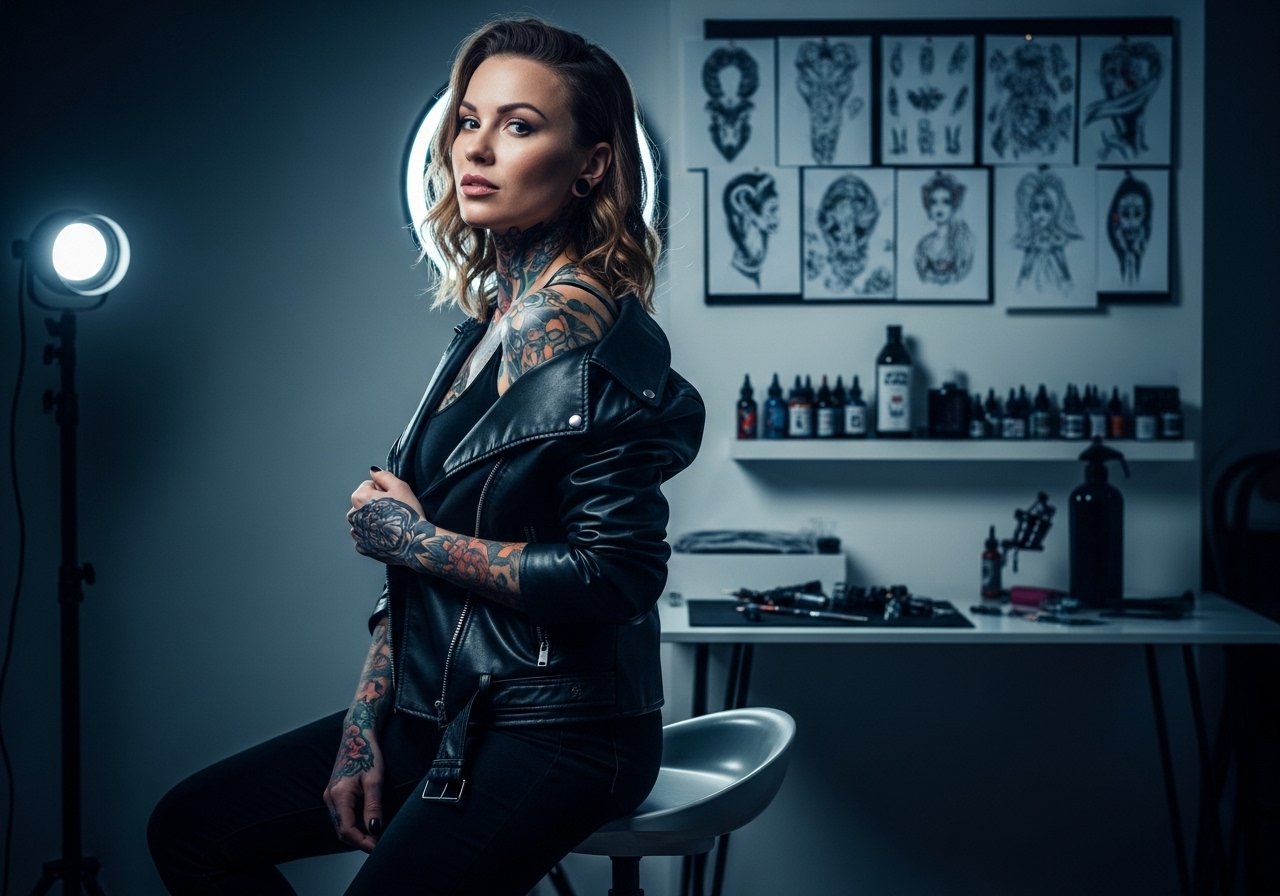
The tattoos that still read clean at year ten are rarely the flashiest on day one. Forearm runes that warped after a 10-pound change, fine-line pieces that vanished on darker skin, and people left waiting after a deposit all point to one truth. Choose styles and placements that consider aging, skin tone, and studio policies, and bring a checklist to your consult so the final stencil actually matches what you pictured.
1. Fine Line Rune Circle on Inner Forearm

I have seen this micro 2-inch rune circle look like a precise nod to lore for months, then soften into a whisper if done too small. Ask your artist for slightly heavier linework than a single-needle flash, and request spacing between runes so the negative space survives stretch and touch-ups. Expect a low-to-moderate pain level and a single short session. The common mistake is treating this as a tiny decorative piece instead of a micro design that needs room to breathe. For showing it off, roll up a sleeve and pair it with a rolled cuff chambray shirt and a thin leather bracelet so the rune sits framed, not crowded.
2. Neo-Traditional Tarnished Knight on Shoulder
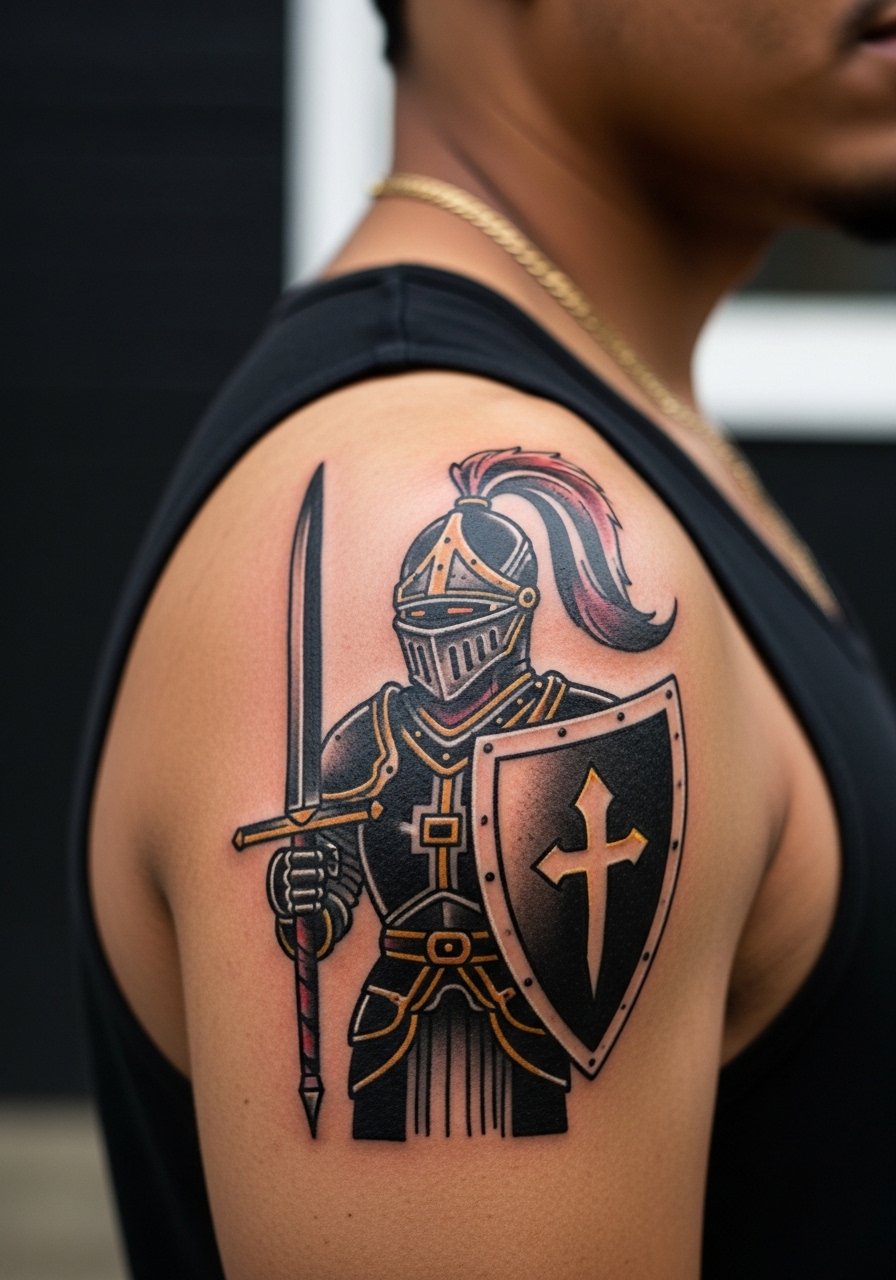
When you want character without microscopic detail, neo-traditional lines and controlled saturation make a shoulder piece age well. Tell your artist you want exaggerated armor shapes with flat color patches and bold outlines, not micro texture that will blur across curved muscle. Shoulder work is forgiving during weight shifts, but the mistake is packing too much tiny shading into a rounded area. Sessions run medium length and feel like steady buzzing with occasional pressure. For the session, wear a sleeveless muscle tank you can pull aside, and for styling post-heal an off-shoulder tee in olive will let the silhouette read without competing.
3. Black and Gray Erdtree on Upper Arm
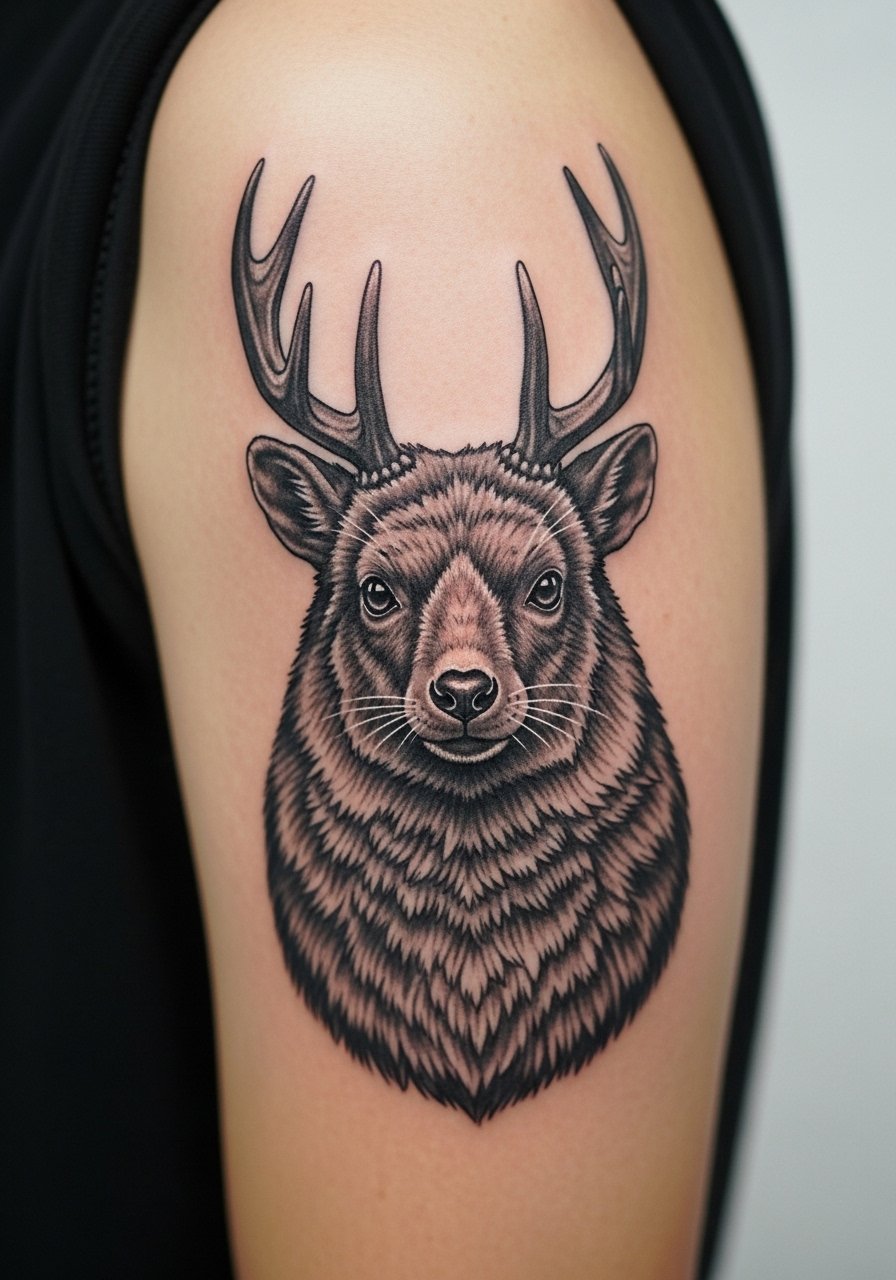
This realism Erdtree reads as resilience when done in solid black and gray. Go for a 3-4 inch composition on the upper arm so the tree canopy and root details have space. Ask for single-session shading depth rather than patchy color washes, and specify stipple shading in delicate areas so contrast survives time. Watch out for the common version that crams tiny leaves into a small circle. At six months it will look crisp. At two years expect softening in the finest branches. Touch-ups at year three keep the silhouette strong. For appointment comfort wear a loose fit tank top so the artist can rotate your arm without fabric tugging.
4. Blackwork Malenia Blade Armband on Upper Arm

Armband blackwork survives visibility and sweat better than watercolor for heavy-use zones. This four-inch band needs solid fills to prevent patchy fade. Tell your artist you want clean negative-space edges and consistent saturation in the fills so the blade reads like a silhouette from a distance. Expect a 1-2 session job and a moderate pain level as they work around the muscle. A frequent error is skipping a single-session saturation pass, which causes midline patchiness after a year. For showing it off, roll sleeves and wear a thin leather wrap bracelet on the opposite arm so the armband keeps focus without clashing.
5. Micro-Realism Ranni Portrait at the Collarbone

Micro-realism on the collarbone can be hauntingly precise if you accept the pain tradeoff. Collarbone work sits high on the sensitivity chart. Expect punctuated sharpness and a few breaks for repositioning. During consult, agree on the exact shaded range you want so the face holds without overpacking tiny facial lines that blur early. A common mistake is asking for ultra-detailed eyes in a two-inch space. At six months the portrait should retain form. At two years small highlights may need a touch-up. For the session, wear a v neck tank top or strapless bralette style so the artist has clear access.
6. Ornamental Golden Order Knot on Outer Thigh
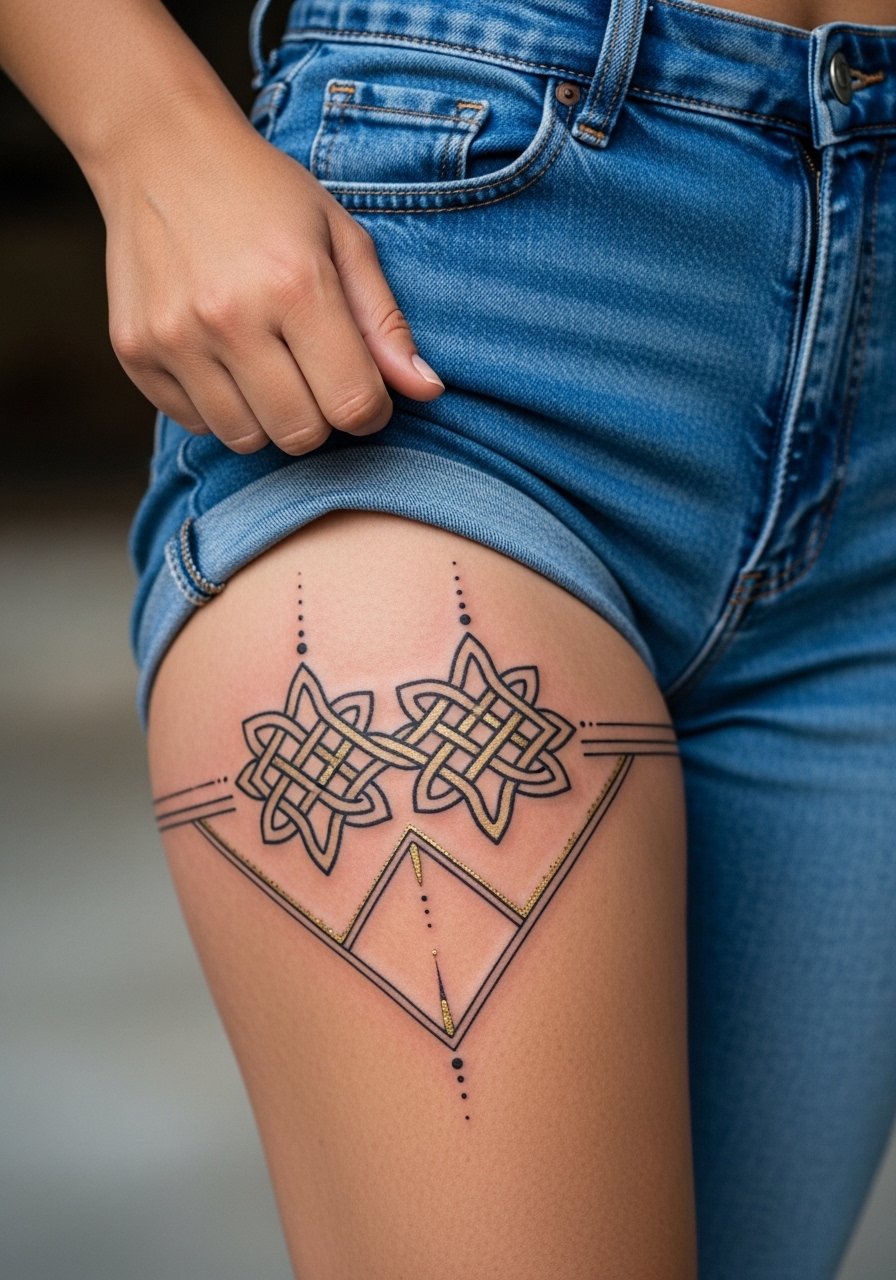
Thighs are ideal for larger ornamental pieces that expand into sleeves later. Ask for repeatable knot units that can tile for future sleeve work. Insist on a slightly bolder outline for gold-accented pieces so the metallic ink sits on top of dark lines without bleeding into each loop. The main mistake is compressing knot repeats too tight, which merges with time and movement. Sessions are moderate and usually done over two visits. During the appointment wear loose gym shorts or high-waisted denim you can shift, and for summers out pair the piece with high waisted denim shorts to show the motif.
Pre-Session Essentials
Those first six ideas include delicate wrist and collarbone work, dense black fills, and thigh pieces that sweat in summer. A few targeted items will make the session and the first week of healing easier.
-
CeraVe Healing Ointment tube. A thinner option artists on forums recommend over heavy greases for dark skin blackwork and for avoiding clogged pores on dense fills.
-
Ink-Ich Ban balm. Gentle and non-greasy, it helps calm itch on neo-traditional color without the slick residue that can soften edges.
-
Lush Charity Pot small. Breathable moisturizer some artists like for watercolor fades, useful when a soft palette needs a light aftercare option.
-
Hada Labo Gokujyun lotion. Lightweight hydration for fine-line runes on ankles and wrists that need moisture without residue.
-
Hustle Butter Deluxe tub. A widely used option for larger realism pieces to prevent greasiness while maintaining color over saturation passes.
7. Ignorant-Style Radagon Icon on Outer Forearm
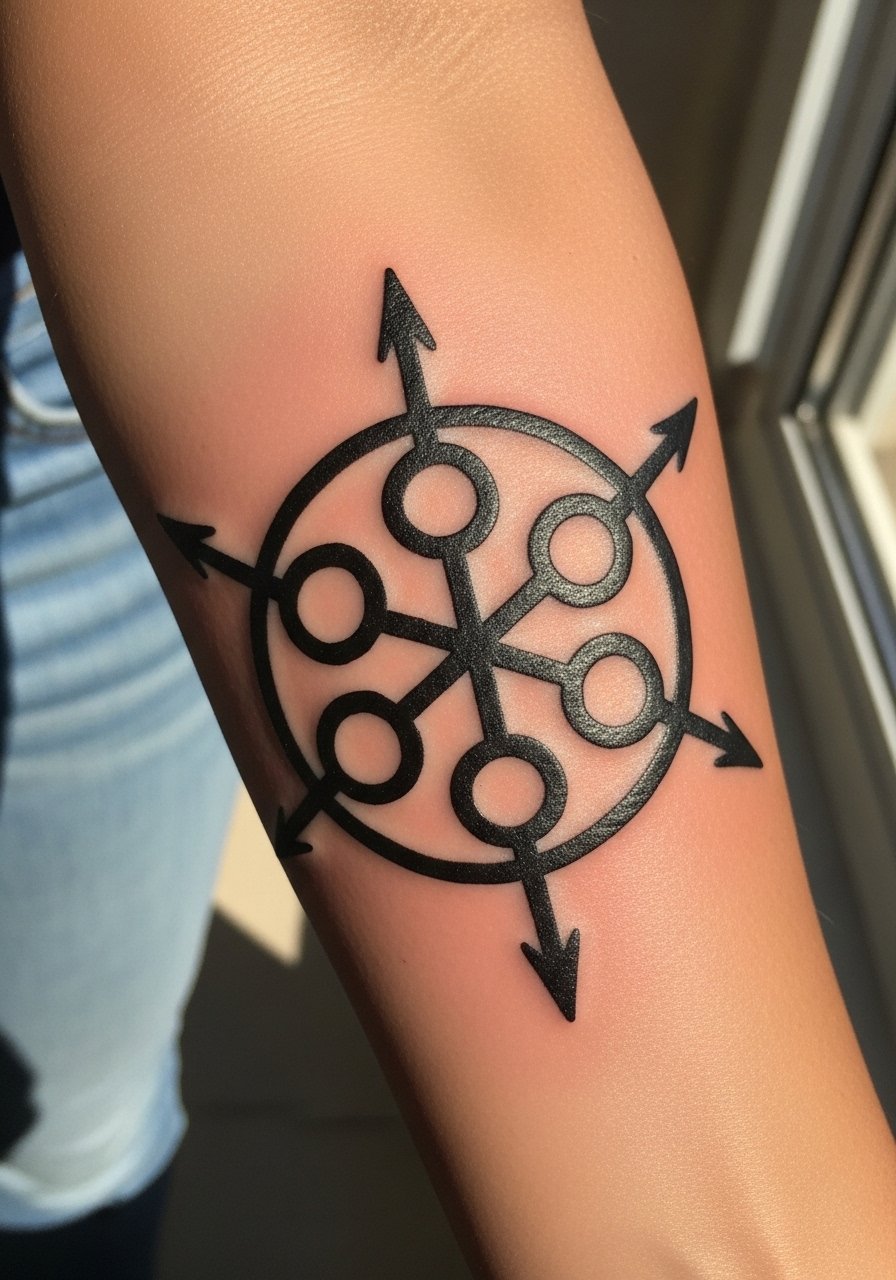
Ignorant style gives a retro video-game charm by favoring naive, chunky lines over micro texture. This is a cost-effective approach that often holds up because the lack of tiny detail stops blur from showing. When booking, show high-contrast 8-bit references rather than soft sketches so the artist understands the aesthetic. It is low-moderate pain and usually one session. The common trap is asking for tiny ignorant lines that undermine the style. At one year the bold naive lines usually still read clean. If you want to nod to pixel trailers, mention the 8-bit grid and ask for deliberate line weight so it does not look rushed after healing.
8. Watercolor Godrick Graft on Inner Bicep

Watercolor suits grotesque, painterly elements, but it ages differently than blackwork. The inner bicep holds color fairly well but can be affected by friction and sweat. Ask your artist to anchor watercolor washes with thin black edging in key areas so the form survives time. Sessions can take longer and feel sensitive as the skin is softer there. A common regret is picking too many pastel tones that wash out in summer. For color longevity expect touch-ups sooner than with black and gray realism. Plan around conventions and summer heat if you pick a large inner bicep piece.
9. Traditional Elden Beast Mandala on Upper Back
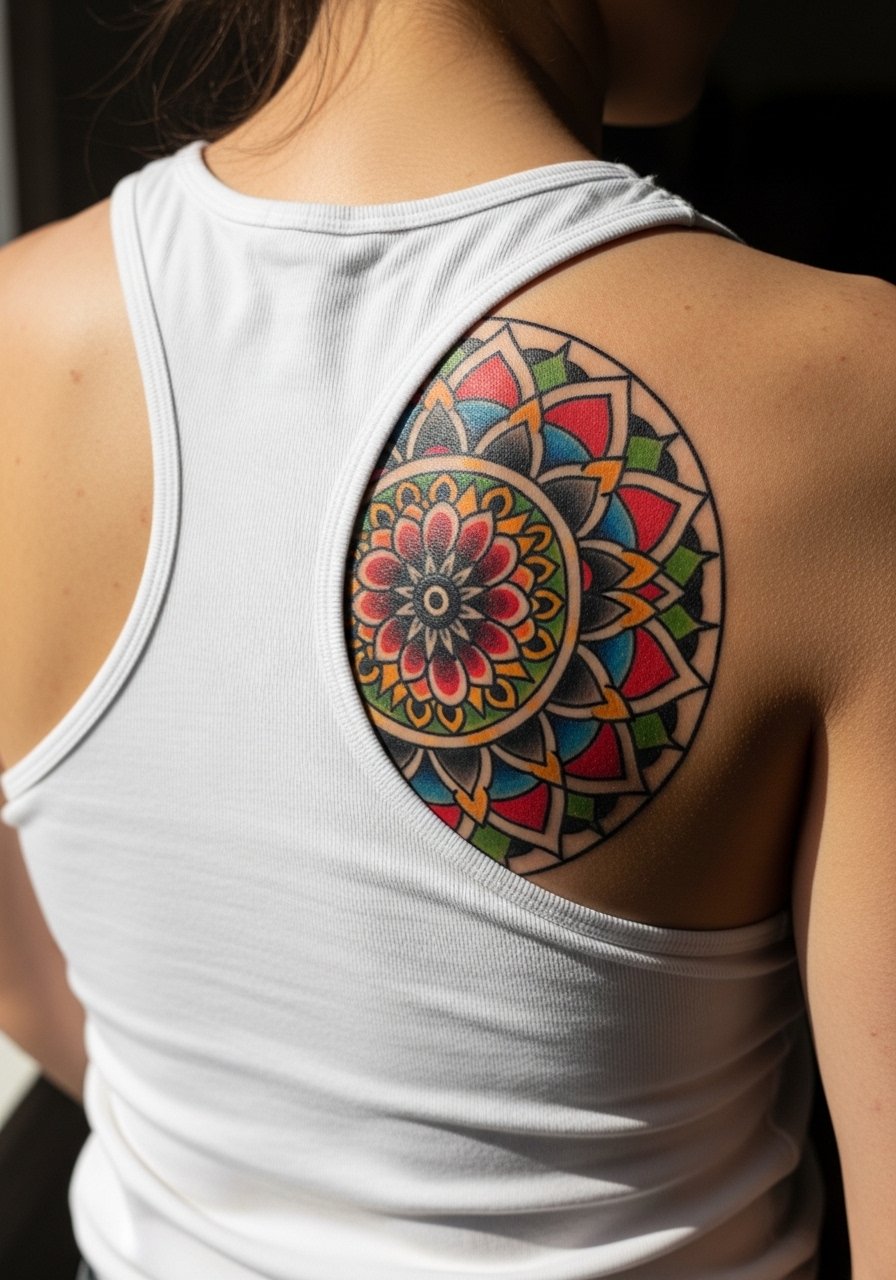
A circular American traditional mandala harnesses strong outlines to hold up over time, especially across the upper back where skin moves less. Ask for saturated flat color fields with deep black outlines and simple shading, not micro texture. Big pieces on the back often require two sessions and a relaxed, prone position that can make the session feel long but steady. The common mistake is over-committing to tiny ornamental fills that blur into a muddle. For wardrobe pair a racerback tank to display the circle on warm days and to give the artist easy access during the session.
10. Minimalist Sites of Grace on the Ankle

Tiny ankle pieces look discreet and charming but face a lot of foot friction. Ask for compact dotwork rather than hairline strokes, and plan for a touch-up at the year mark if you wear boots or socks often. Pain at the ankle is a 6 to 7 for many people. The common error is taking a wrist-sized design and shrinking it for the ankle without adjusting line weight. For showing this one off, roll your jeans or pick cropped joggers and a pair of cropped jogger pants so the symbol reads without getting lost in footwear.
11. Neo-Traditional Marika's Hammer on the Calf
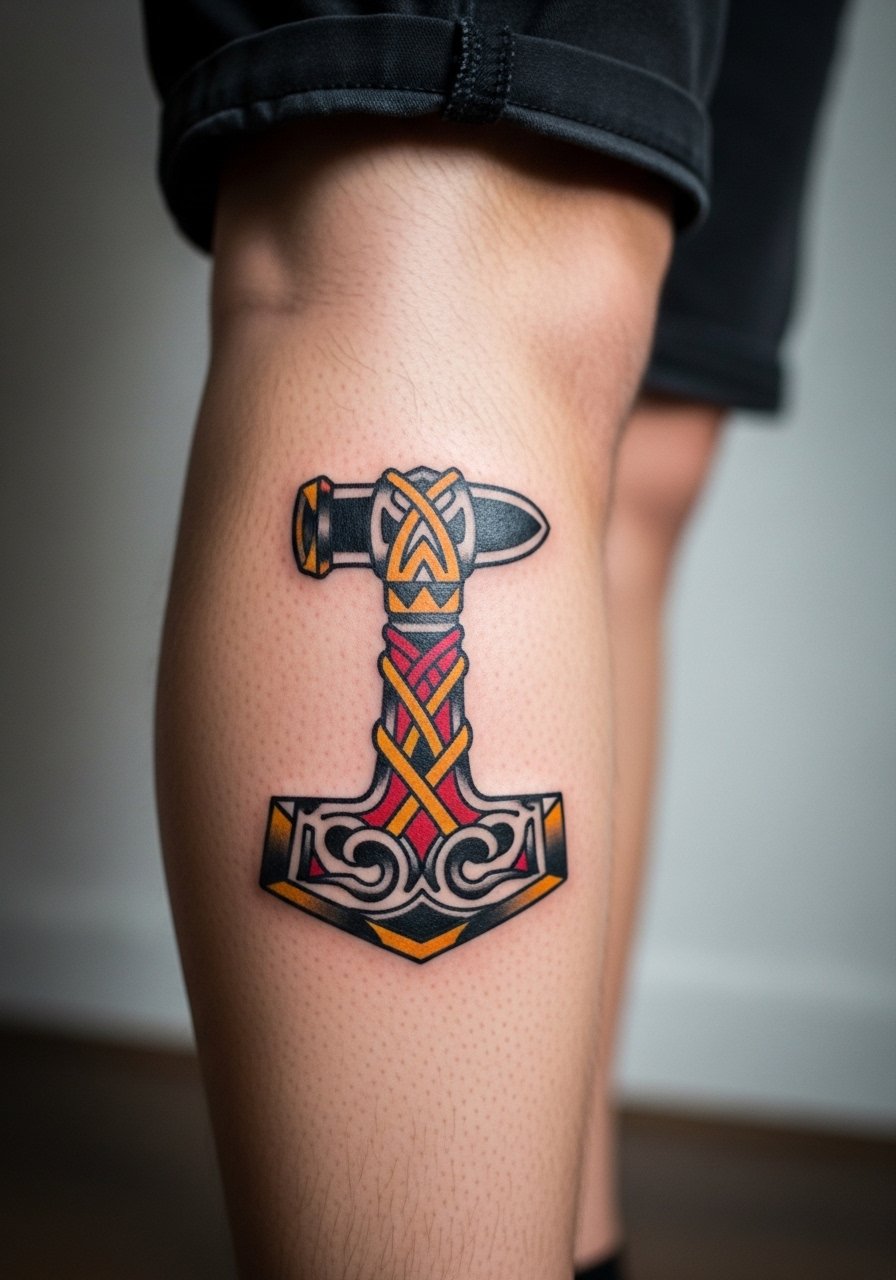
Calf placement is forgiving for larger neo-traditional pieces that need vertical mass. Request defined color patches and a contrasting outline so the hammer silhouette reads when you wear shorts. The session feels moderately intense but not brutal, and the muscle there helps the pigment take. A common mistake is compressing too much detail vertically. For display pair cropped pants or sockless boots, and style with ankle boot no sock looks when you want the hammer visible.
12. Fine Line Astel Starscape Sleeve Starter on Inner Arm

Inner-arm fine line works as a sleeve starter but triggers the fine-line longevity debate. One camp says fine line blurs faster on inner arm because of daily friction and sweat. The other camp insists that increased spacing and slightly heavier single-needle depth will keep lines readable. Ask your artist where they land, and if they favor dot work and spaced constellations over dense single lines. Expect multiple sessions and touch-ups at 6 to 12 months if you pick very thin strokes. The safe route is design expansion with breathing room between stars so the piece grows without merging.
13. Black and Gray Mimic Tear Duo on Thigh
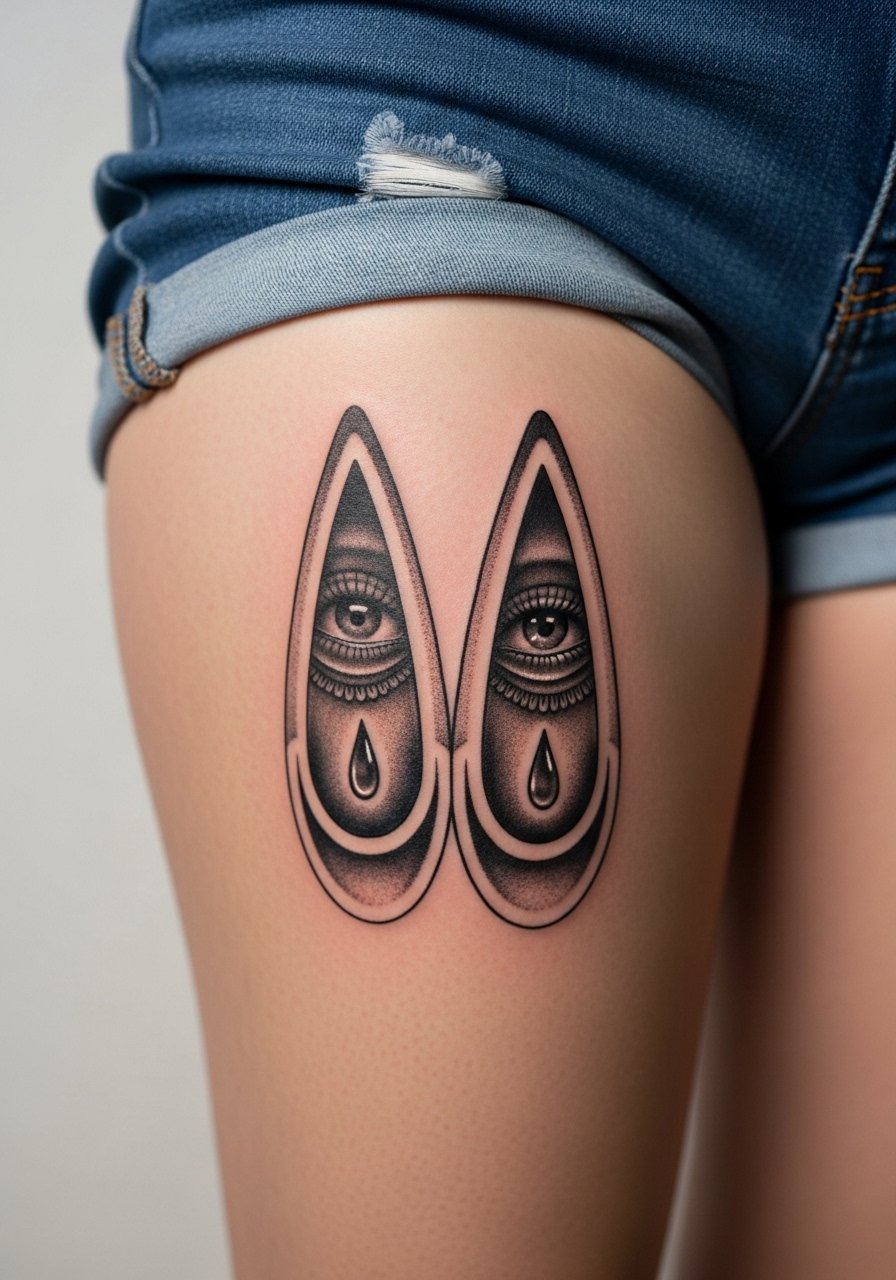
Paired mimic tears on the thigh let you tell a duality story with shading work that ages well on thicker skin. Thigh placement fares better through weight fluctuation than forearm runes, but the summer sweat factor can blur edges in humid months. Ask for layered shading and stipple texture in shadow zones so contrast remains. Sessions are moderate to long and usually done over several sittings. A common mistake is placing the duo too close together so the negative space merges after a weight change. For summer styling pick high-waisted shorts or a skirt and show the piece with high waisted denim shorts.
14. 8-Bit Pixel Radagon on Outer Forearm
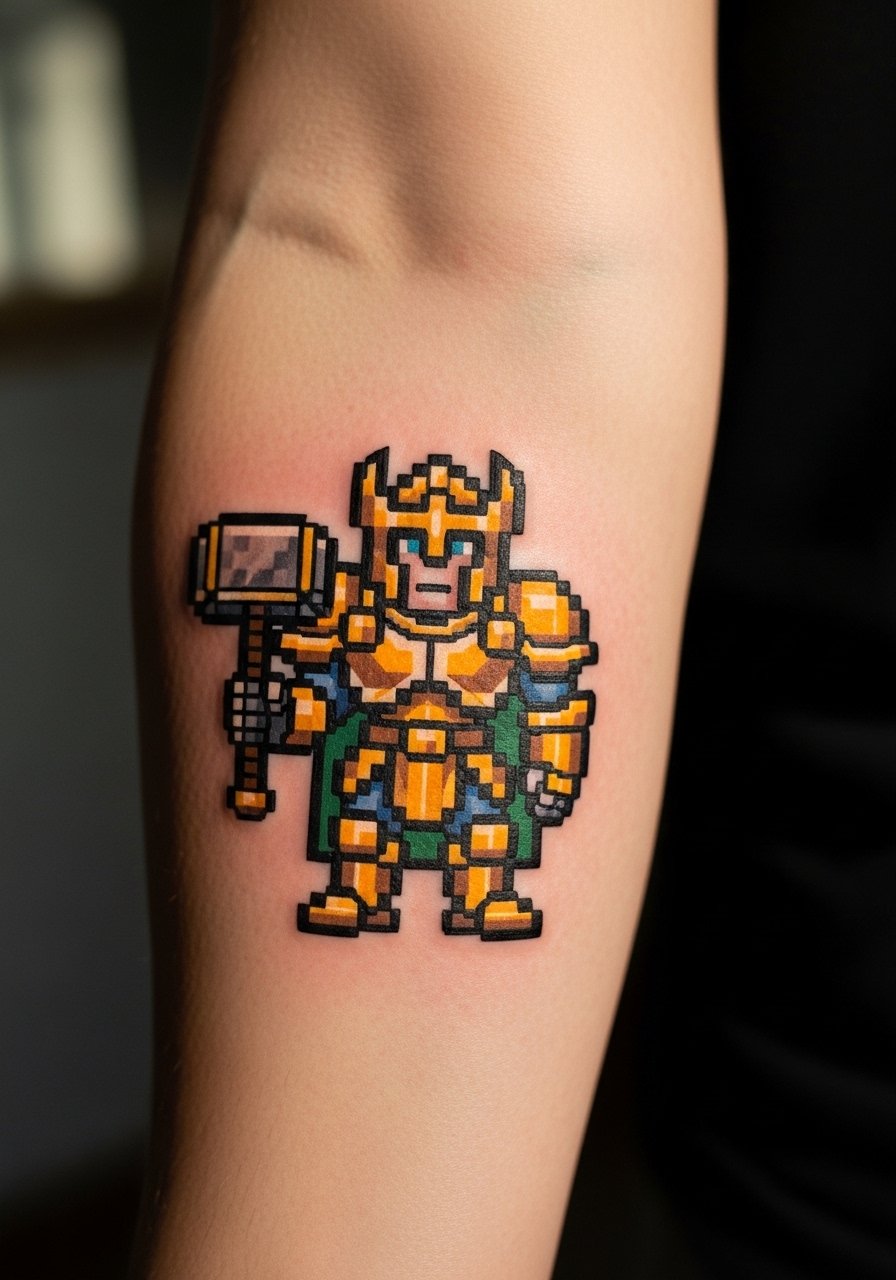
Retro pixel art is a niche that competitors miss and retro fans love. The style's blocky pixels are forgiving since large squares do not blur the same way tiny lines do. When booking, bring a pixel-grid reference and request strict square proportions so the image does not skew when wrapped around the arm. It is quick, low-cost, and usually one session. The common error is asking for half-pixels or micro shading that defeats the 8-bit look. If you want this to read for years, keep the pixel size consistent and at least 3 to 4 millimeters per square.
15. Knuckle Tarnished Rings on the Knuckles

Knuckle tattoos are high-visibility and face heavy wear from washing and contact, so pick bold negative shapes rather than hairline scripts. Have your artist map each ring to finger curvature and emphasize simple silhouettes so rings remain readable. Pain and touch-up frequency are both higher for knuckles. A common regret is trying to include micro detail across four small canvases. Expect yearly touch-ups and plan for workplace considerations if that matters to you.
16. Hybrid Ignorant + Ornamental Sites of Grace on Wrist
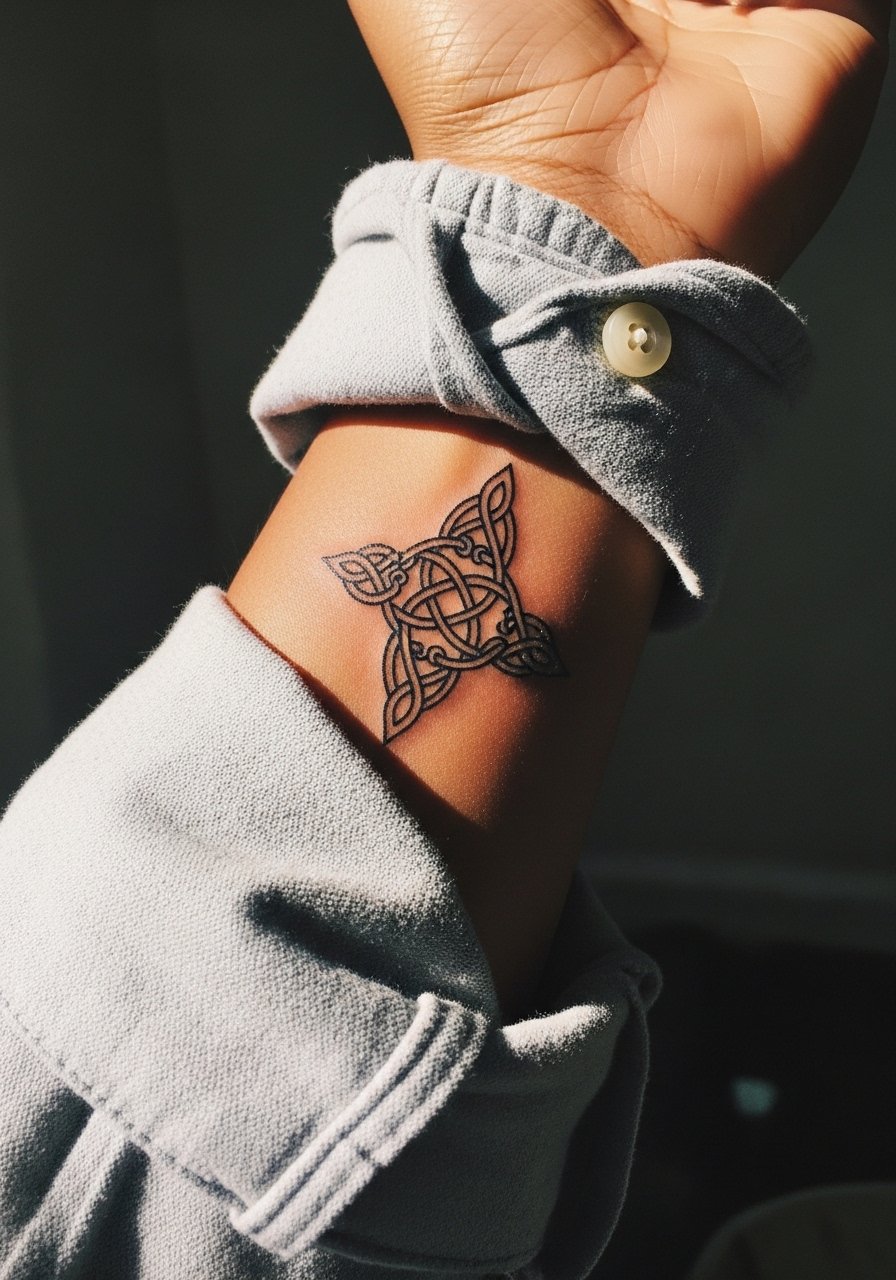
Combining naive outlines with knotwork gives a playful yet expandable wrist piece that nods to lore while remaining adaptable. For the consult ask for a simple central icon framed by stylized knot loops so future sleeves can tie in seamlessly. Wrist skin moves and experiences friction, so weigh single-needle detail against heavier outline accents. The biggest mistake is packing too many loops into the wrist's narrow space. For the session wear a loose button-down shirt you can pull aside and for evenings the piece pairs well with a slim leather cuff.
17. Dark Skin Friendly Erdtree Blackwork with White Highlights

On darker skin tones, heavy blackwork often reads strongest. A common adaptation is adding tiny white-ink highlights on top of saturated fills to suggest glints in leaves or root tips. Discuss pigment contrast with your artist and ask for a test patch or healed photos on similar tones. Fine line work often fades faster on darker skin, so opt for heavier line weight or blackwork for longevity. Expect standard forearm pain and a single or two sessions depending on size. Avoid asking for pastel color blends that will likely lose vibrancy quickly.
Frequently Asked Questions
Q: Will fine line runes on my forearm stretch if I gain weight later?
A: It depends on where you place them. Runes across the inner forearm normally handle moderate changes better than the outer forearm when muscle expands. If you expect weight fluctuation, request slightly larger spacing and heavier line weight so the runes keep their negative space. Plan for a touch-up if you change size significantly.
Q: Is blackwork really better than watercolor for dark skin tones?
A: From what I have seen, bold blackwork maintains contrast more reliably on darker skin, while watercolor and pastel tones can soften quickly. That does not mean color is impossible. Ask for photo examples of healed work on similar skin tones and consider selective white highlights rather than pale fills.
Q: How do I avoid being ghosted after paying a deposit for a custom Elden Ring piece?
A: Get a written booking policy and a clear reschedule window. Use verified booking platforms and confirm whether deposits are transferable or refundable. If travel is involved, book local consultations first and use conventions or guest spots only when cancellation policies are explicit.
Q: Do fine line Astel sleeves need touch-ups more often than blackwork sleeves?
A: Yes, fine line generally needs touch-ups sooner because the thin strokes merge under skin movement. Expect a touch-up between six months and two years depending on placement. If you want to minimize touch-ups, ask for slightly increased spacing and occasional stipple shading to retain texture.
Q: Where can I find artists who specialize in Elden Ring motifs without naming them directly?
A: Search hashtags like #VintageEldenRingTattoo and #EldenRingBlackwork on Instagram, filter TikTok for "Elden ring tattoo healed" plus your city, and check the Tattoodo app for style filters. Also browse r/tattoos and r/Eldenring for healed photos and peer recs.
Q: What should I wear to a collarbone portrait session to keep the area accessible?
A: A wide-neck shirt or a v neck tank top pulled slightly aside gives the artist clean access and keeps the rest of you covered. Loose clothing also helps you relax during longer sessions.
Q: Is Saniderm better than dry healing for large back realism pieces?
A: Artists and healers split into two camps. One camp prefers protective film for clean, fast heals. The other camp favors dry healing to avoid trapped moisture and the risk of pigment lift. For big back pieces, discuss both options with the artist and pick the method they have documented healed photos for.