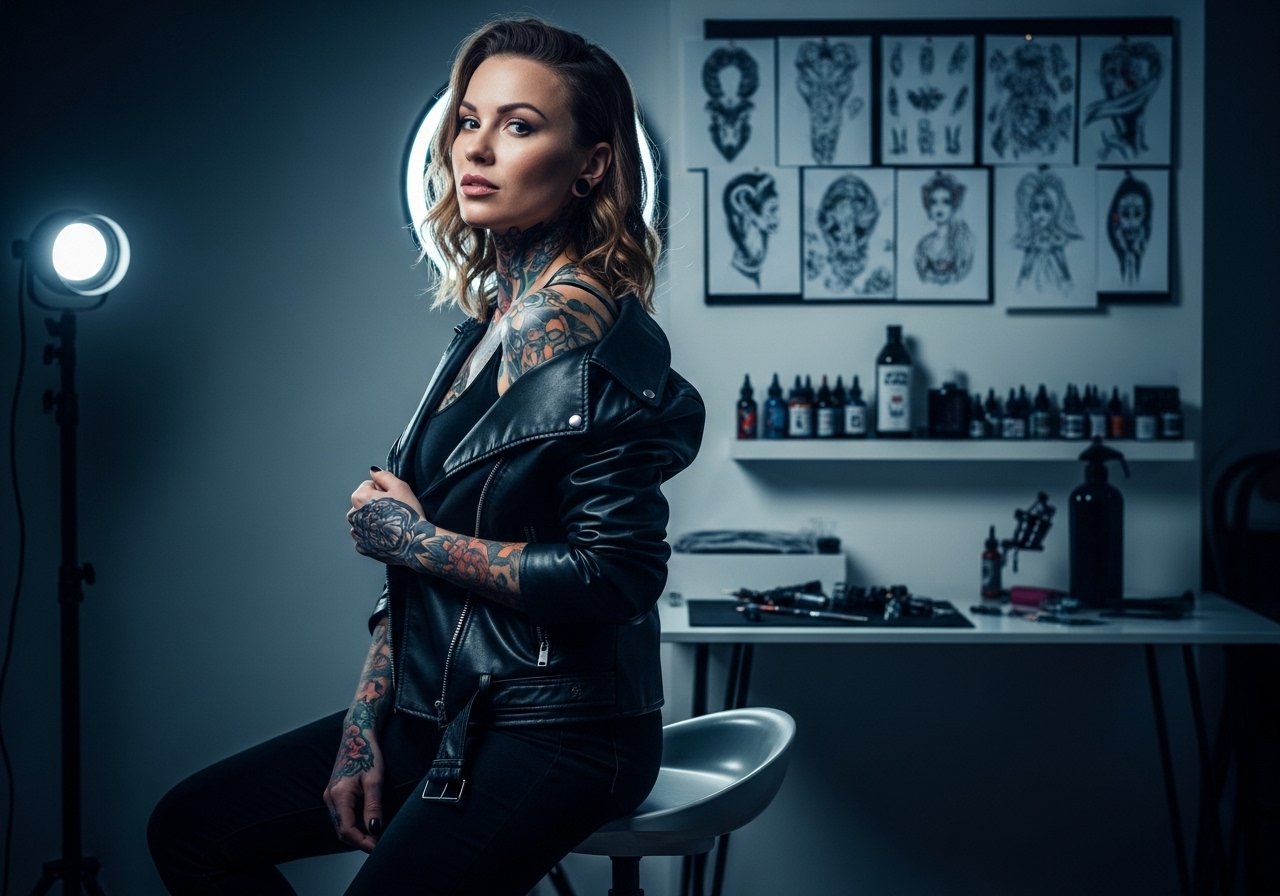
The pieces that still look deliberate a decade later are almost never the same ones that blew up on social feeds when fresh. Narrow, whisper-thin wings and tiny script get the most likes on day one, but bold outlines and considered spacing usually read better after years of sun, movement, and touch-ups. If you want a vintage butterfly that holds meaning and still reads as art in five years, start by choosing the right lineweight for your skin and the placement that will age with you. The first idea below shows a subtle wrist option that proves the point.
1. Fine Line Vintage Butterfly Silhouette on Inner Wrist

I've seen this tiny silhouette on wrists that read as delicate jewelry from across a room. Fair warning, fine line on the wrist needs slightly bolder linework than artists usually show online if you want it to read at year three. Tell your artist you want defined contour with single-needle feel but a touch more depth so the wing veins do not blur. Pain here is low to moderate and most sessions finish in under an hour. For the appointment, remove rings and slip on a sleeveless tank so the artist has clear access.
2. Vintage American Traditional Butterfly with Banner on Forearm

There is something about bold linework and saturated color that reads decades-old without needing any faux aging. Forearm placement shows off the banner text and keeps the piece visible. When you sit with the artist, bring a precise banner script and ask for slightly thicker outer lines around the wings so saturation holds on medium skin tones. A common mistake is shrinking the banner too small to read after healing. Expect a one to two hour session and a touch-up at year two if you wear the forearm to the sun. For showing it off, pair the piece with a rolled-sleeve chambray shirt.
3. Vintage Outline Butterfly with Dots and Swirls on Ankle

The ankle is great for outline work that reads like classic flash but stays subtle. Because the ankle sees shoe friction and socks, ask your artist to keep the outlines steady and the dot work slightly spaced so the dots do not bleed together as the years pass. This is a single-session piece that is quick but can look thin after heavy sun exposure. Pain is moderate thanks to thin skin over bone. To show it off, cuff slim jeans or wear strappy flat sandals in summer.
4. Neo-Traditional Butterfly with Floral Garland on Shoulder Blade

The shoulder blade is forgiving for mid-sized neo-traditional pieces that mix flowing petals with vintage wing shapes. Tell your artist you want softened shading inside the wings and clear separation from the garland so both elements age independently. A common mistake is packing too many tiny petals next to dense wing color, which can merge after two years. Sessions run one to two hours and touch-ups are common at year three if you spend weeks in the sun. For show-off looks, try an off shoulder top in cream or black.
5. Old School Butterfly with Heart Motif on Upper Arm

Upper-arm placements wear well because they avoid constant friction and sun. This old school heart motif reads retro without needing extra ornamentation. Ask your artist to keep the red saturated and the black outlines a touch heavier than typical to protect against fading. People sometimes request too many small accents around the heart, which makes the central motif compete. Expect a one-session piece with low blowout risk here. Pair with short sleeves and a leather cuff on the opposite arm for vintage balance.
6. Vintage Ornamental Butterfly with Geometric Wings on Shoulder
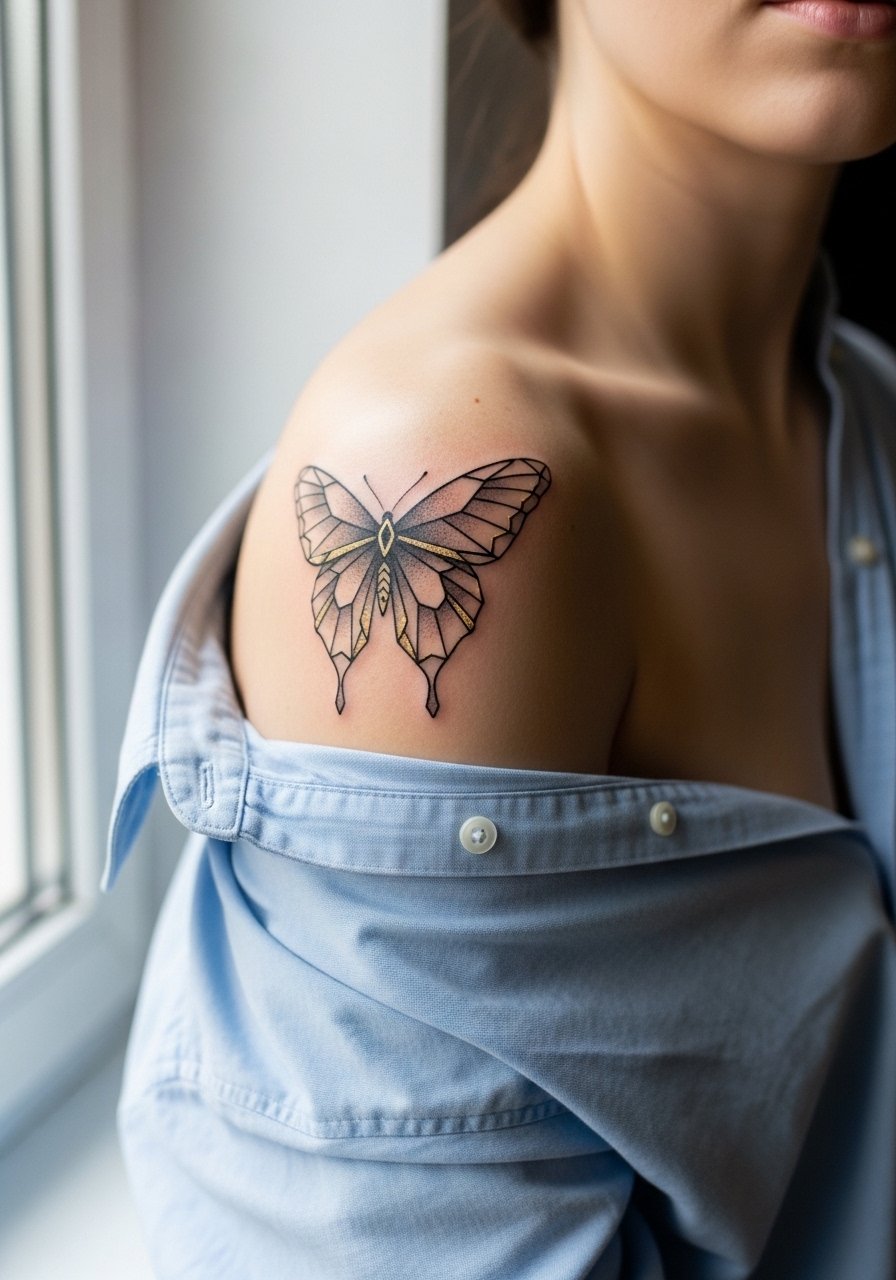
Ornamental pieces on the shoulder let you combine jewelry-like detail with stronger anchor lines. The trick is to keep geometric panels open and avoid overly tight filigree that will soften over time. Tell the artist which lines you want crisp and which you want stippled to age into texture. Sessions run two to three hours depending on detail. For showing off, pair with an off shoulder cotton top.
Studio Day Picks
The shoulder, upper arm, and forearm pieces above benefit from the same prep items that keep session day efficient and the first week manageable.
-
Stencil transfer paper kit. Lets you preview placement and scale on the forearm and shoulder before the needle hits skin.
-
Topical numbing cream. Useful for ankle or ribcage appointments when the sensitivity spikes, applied according to the artist's guidance.
-
Thin protective film roll. Helps protect small wrist and finger tattoos from excess friction during the first week.
-
Fragrance-free body wash. Gentle cleansing matters for shoulder blade and upper arm pieces as scabs form and heal.
-
Aquaphor healing ointment. A thin layer during the initial days keeps delicate fine line work from drying into hard scabs.
7. Fine Line Vintage Butterfly with Stipple Shading on Collarbone

Collarbone watercolor and fine line work need intentional spacing to avoid the "bruise" effect later. Most watercolor fades on chest zones if pigment is laid too shallow. Ask for slightly deeper dot work and mark how far you want the shading to spread. Pain on the collarbone can feel sharp during shading, so plan for a two-part session if adding color. For evenings out, a V-neck linen blouse shows the piece without revealing more than you want.
8. Watercolor Vintage Butterfly with Faded Edges on Ribcage

Fair warning, ribcage is one of the higher pain zones, often a seven out of ten. Watercolor there can look painterly at first but may blur if ink is too diffuse. Artists split into two camps on fine watercolor in this area. One camp says the skin stretch and movement make fine watercolor fade into a bruise within two years. The other camp argues that with correct pigment depth and spacing the effect can last. Ask your artist which camp they sit in and see healed photos of similar placements. Wear a cropped top or lift a shirt for session access.
9. Blackwork Vintage Butterfly with Scrollwork on Outer Thigh

Outer thigh is forgiving when it comes to stretching and weight fluctuations, which makes it ideal for bold blackwork. This style benefits from deep saturation and clear negative space that reads as contrast on darker clothing. Tell the artist you want large blocks of black with selective negative cutouts so the scrollwork stays distinct. Sessions can be multiple hours and may need staged appointments. For wearability, high-waisted shorts or slit skirts highlight the area.
10. Micro Vintage Butterfly with Dots Behind the Ear

Behind-the-ear micro work is ultra-subtle and excellent for first-timers who want a secret vintage feel. Keep it extremely small, avoid dense shading, and expect the hairline and movement to hide details over time. A real mistake is asking for too much internal detail in a 1 cm piece. Pain is low but placement requires an artist used to tiny, high-precision work. After the session, let hair cover it naturally while it heals.
11. Traditional Butterfly with Anchor Accent on Calf

Calf placements suit slightly larger old-school designs that read well at a distance. The anchor gives nautical vintage energy without overcrowding the wings. Ask for reinforced outer contours and ask the artist to avoid tight internal lines that will blur with muscle movement. This area is moderate on pain and sessions usually finish in one sitting. For casual show-off, high-waisted shorts or a midi skirt with a side slit work well.
12. Watercolor Collarbone Butterfly with Pastel Wings
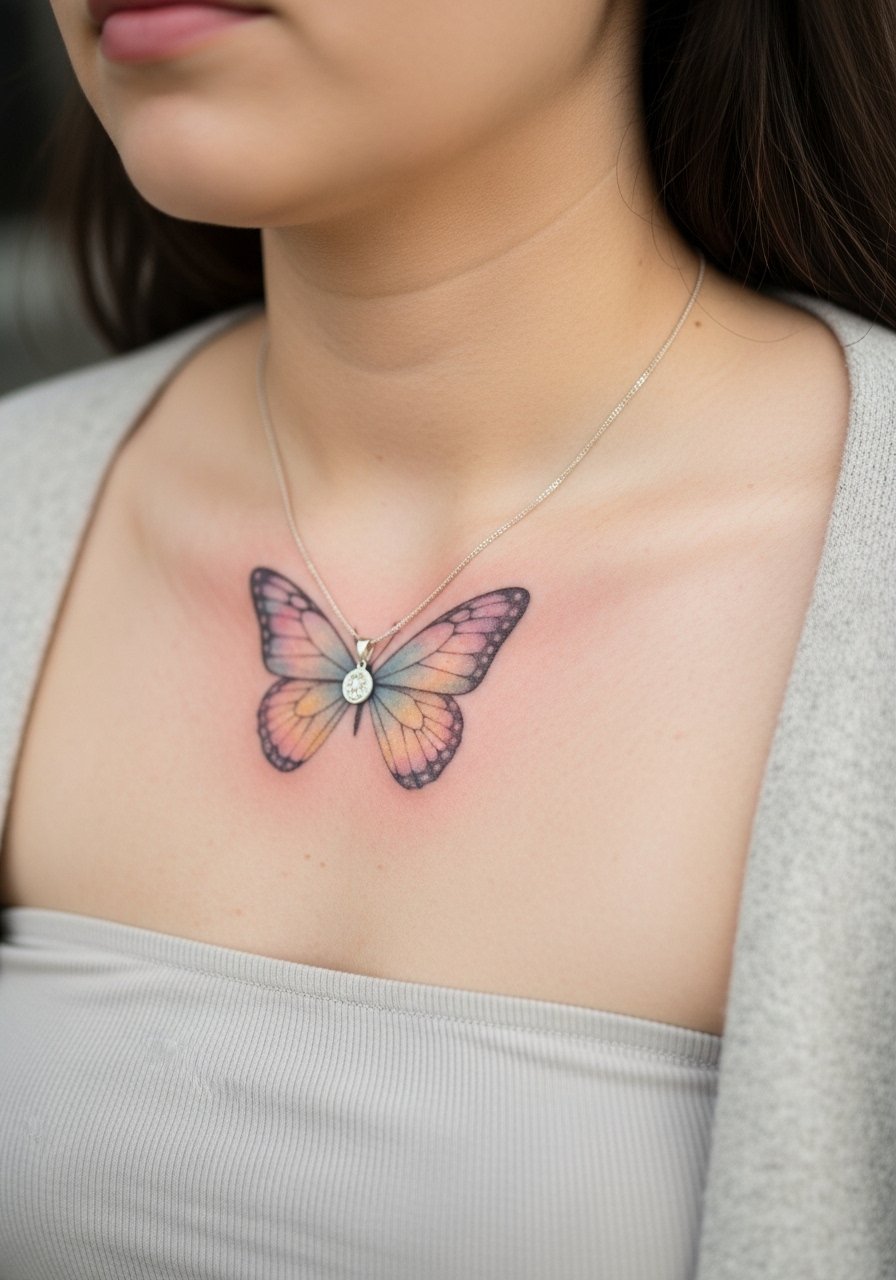
Watercolor on the collarbone reads romantic but needs conservative saturation to avoid muddying on lighter skin. Explain you want soft, diffuse edges with a clear boundary line where the wings meet skin. The session can be brisk but expect at least one follow-up touch-up for color density. Pair the finished piece with a delicate pendant necklace that sits just above the ink to frame the area.
13. Ornamental Butterfly Brooch Style on Shoulder Blade

Treating a butterfly as an heirloom brooch works especially well on the shoulder blade where the skin moves less. Ask for jewel-like centerpieces and clear separation between metalwork and wing texture. A common error is adding tiny stones and micro-etching that age into a blur. This piece ages gracefully when the artist uses bold separators between motifs. For session wear, a loose tank gives the necessary access.
14. Cartoon-Style Vintage Butterfly on Thigh

Injecting a cartoon attitude into vintage butterfly flash keeps the mood light and wearable. The thigh gives breathing room for exaggerated wings and simplified shading. When you consult, show the exact vintage illustration you like so the artist can adapt line weight for leg movement. This is a low-blowout zone but heals slower due to friction from clothing. For display, try high-waisted shorts or a skirt.
15. Vintage Butterfly Flash Adapted from Antique Illustration on Forearm

If you love antique illustrations, ask for a scanned-flash adaptation that preserves the aged engraving details while beefing up key outlines for longevity. The big mistake is copying tiny etching lines at the same scale as the original print. Tell the artist which lines are essential and which can be simplified. Sessions vary by complexity. For appointments, a loose button-down shirt you can pull aside keeps the area clean.
16. Blackwork Gothic Retro Butterfly on Outer Bicep

Outer bicep blackwork reads dramatic and holds shape with minimal touch-ups. Negative-space wings create contrast that works on darker outfits. When you ask for blackwork, specify which zones should be solid and which should be textured so the overall silhouette stays crisp. Session can be long depending on fill. For show-off looks, pair with sleeveless shirts or a leather jacket.
17. Micro-Realism Butterfly on Finger
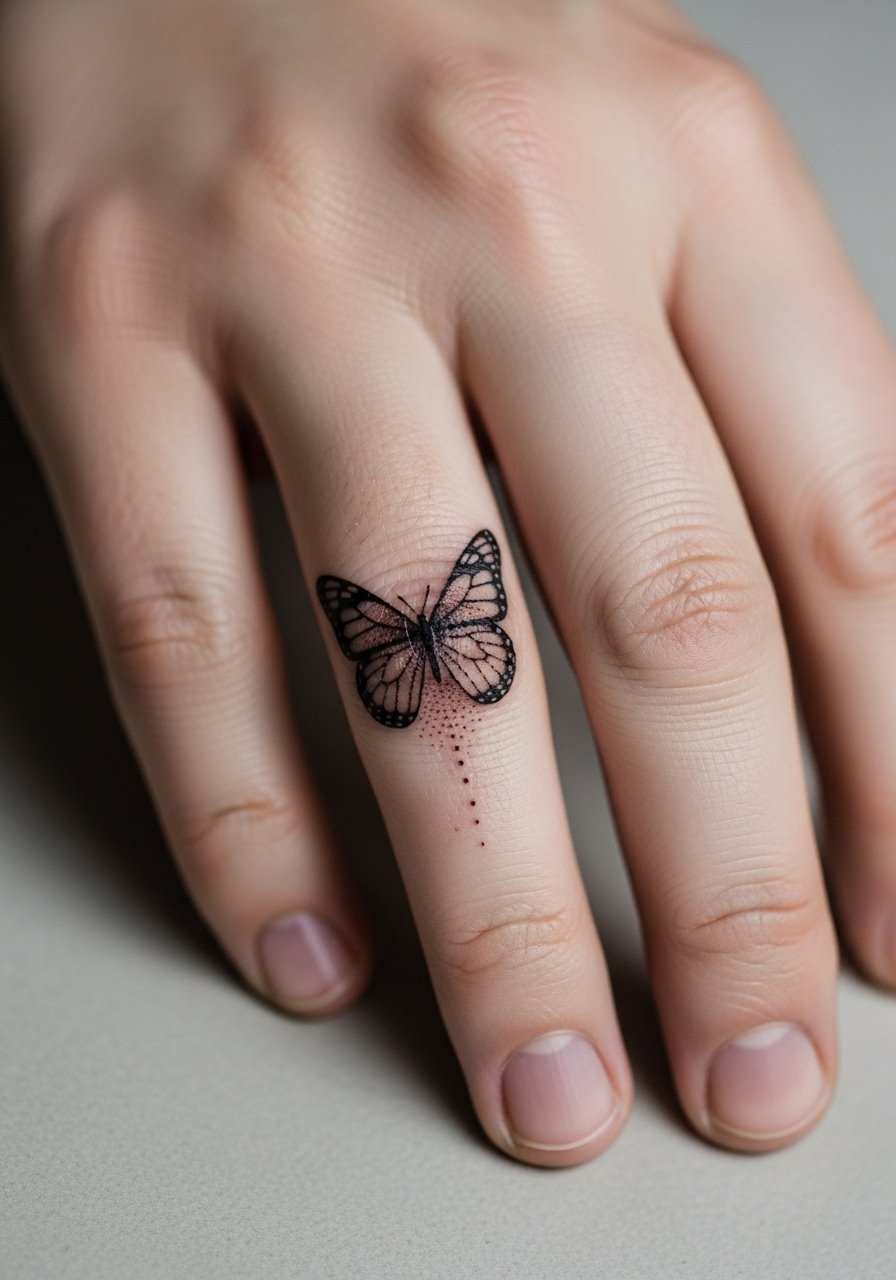
Finger tattoos are trend-forward but high-maintenance due to constant washing and surface friction. The micro-realism approach needs simple silhouettes and avoidance of dense shading. Expect touch-ups more frequently than elsewhere. The real mistake is asking for texture that a 1 cm finger piece cannot hold over time. Keep expectations realistic and consider placing on the side of the finger rather than the pad for longevity.
18. Retro Script Banner with Butterfly on Inner Forearm

Inner-forearm banners age well when lettering size is readable after healing. Ask your artist to stencil the text at 100 percent scale and wear it on your arm for a day to check sizing. A common mistake is shrinking text to fit an image on-screen. Sessions are moderate in discomfort and often finish in under two hours. For a clean reveal, roll up a short-sleeve button-up.
19. Stipple-Shaded Butterfly with Dot Work on Inner Bicep

Inner bicep work can be intimate and tender during the session, with moderate to high sensitivity. Stipple shading looks antique and textured when the dots are spaced intentionally. The mistake is packing dots too tightly in a move to impress on day one. Ask for larger spacing so the texture remains visible at year two. For the appointment wear a tank top and raise your arm slightly during placement.
20. Traditional Butterfly with Anchor and Rope on Calf

Combining nautical motifs with butterflies gives a clear vintage language that reads as story. Calf placement keeps the narrative readable and reduces daily wear. Ask for clean rope lines and heavy outline around the anchor to keep the symbol readable after years. Sessions typically finish in one sitting. For comfort during the appointment wear loose bottoms you can slide down without pressure on the area.
21. Vintage Butterfly with Geometric Wing Panels on Shoulder
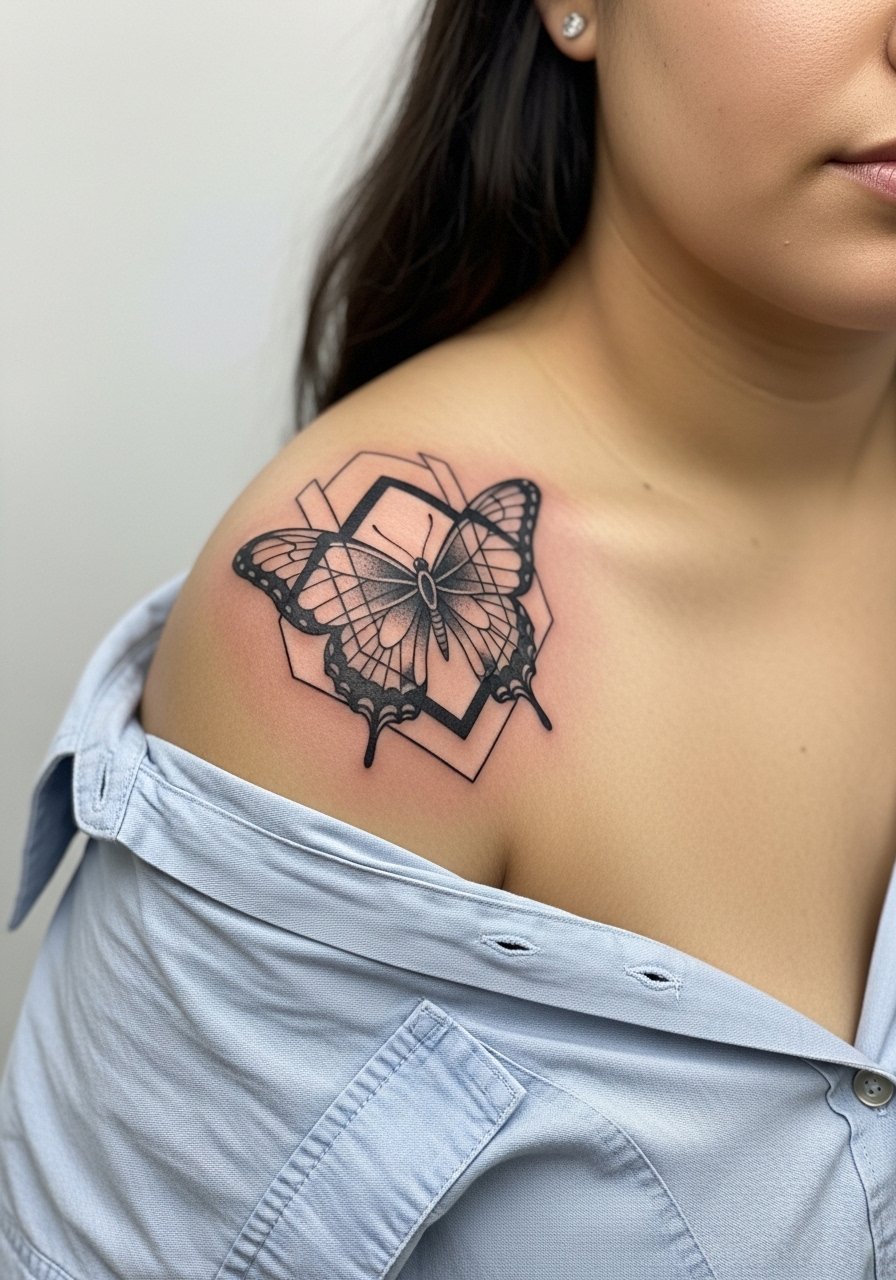
Geometric wings add modern structure to vintage shapes and play nicely on rounded shoulder anatomy. The trick is to leave spacing between geometric elements so they do not merge with time. Tell the artist which lines must remain negative and which are allowed to be filled. Sessions are moderate and often require precise stenciling. For the session, a loose button-down shirt is helpful.
22. Tiny Vintage Winglet Behind the Ear

Behind-the-ear tattoos are discreet and behave like accessories. Keep scale tiny and avoid dense shading. The area heals quickly but movement from hair and collars can irritate scabs. A common error is asking for too much internal detail in a 1 cm space. Pain is low and a single short session usually covers it. Let your hair fall over the spot while it heals.
23. Blackwork Vintage Butterfly with Scroll Filigree on Back of Shoulder

Back-of-shoulder placements take well to bold blackwork that reads from a distance. Ask the artist to anchor the filigree with clear negative spaces so the pattern does not turn into a dark mass. Sessions can be long if filigree is dense. For session access, wear a wide-neck shirt you can pull to one side.
24. Antique-Style Butterfly Flash on Sternum

Sternum placements are sensitive and deserve a confident artist who has healed photos to show. The antique flash approach works if you keep symmetry and avoid overfilling the midline. Artists argue about fine line on the sternum, with one side warning of blur from chest motion and the other saying correct depth keeps it crisp. Ask which side the artist is on. Expect higher discomfort and plan a session that allows breaks. Wear a fitted sports bra for access.
25. Delicate Vintage Butterfly Anklet on Ankle

An anklet-style butterfly wraps look feminine and wearable, but the skin here experiences constant motion and footwear friction. The smart call is to keep lines open and anchor points slightly bolder. A common mistake is requesting dense shading around the ankle bones which blurs quickly. For the session, roll pants and wear sandals or slip-ons so the artist can work without fabric rubbing.
26. Decorative Blackwork Butterfly on Upper Thigh

Upper-thigh placements let artists go large and ornamental while staying private. This is forgiving for weight changes and the piece will age well if you leave breathing room between elements. The common misstep is over-detailing in small panels that get lost when the skin stretches. Sessions can be longer with multiple passes. For the appointment, loose shorts or a skirt make access easy.
27. Playful Retro Butterfly Pin-Up on Upper Arm

A pin-up approach brings mid-century personality to a butterfly motif and works well on the upper arm where scale reads clearly. Ask for anchored outlines around the main shapes and simplified secondary details so the character remains readable after years. Sessions are comfortable and usually take one sitting. For showing it off, short sleeves and vintage-inspired bangles reinforce the look.
Frequently Asked Questions
Q: Will fine line vintage butterflies blur faster than traditional bold ones?
A: From what I've seen, fine line pieces do tend to blur sooner, especially on high-movement or high-friction spots like wrists and ribs. The fix is simple in conversation with your artist. Ask for slightly stronger outer linework and clearer spacing inside the wings so the design retains structure as it heals.
Q: How should I plan for a ribcage watercolor butterfly given the pain and longevity concerns?
A: Expect a higher pain threshold on the ribs and a two-part session if color is involved. Artists split on whether watercolor holds there. Ask to see healed examples from your artist and decide based on their stance. If you proceed, plan for sun protection during healing and a likely touch-up at year two.
Q: I have darker skin. Which vintage butterfly styles age best for my tone?
A: Bold outlines and solid blackwork tend to hold contrast best on darker skin tones. Fine line and very pale watercolor can fade into low-contrast marks. Tell your artist you want stronger contour and ask to see healed photos on similar skin tones before booking.
Q: Small finger or anklet butterflies seem cheap to get but need touch-ups. How often should I expect maintenance?
A: Fingers and ankles see a lot of washing and friction. Plan on touch-ups more often than for an arm piece, possibly every one to three years depending on exposure. Budget for that and consider slightly bolder contours at the start to extend the interval between touch-ups.
Q: What should I wear to a shoulder or collarbone session to make the appointment easy?
A: A loose tank or a wide-neck shirt that you can pull aside is ideal for shoulder and collarbone access. For collarbone watercolor, a strapless bralette or open-front cardigan keeps the area accessible without shifting fabric over the fresh ink.
Q: Are there discovery paths to find vintage-friendly artists without naming specific people?
A: Yes. Search hashtags like #VintageTattoo or #TraditionalButterfly on Instagram, look for reels on TikTok labeled "vintage butterfly tattoo tutorial," and pin inspiration on Pinterest. For local bookings, search "vintage traditional tattoo [city]" or filter Tattoodo and Booksy by "traditional" style.