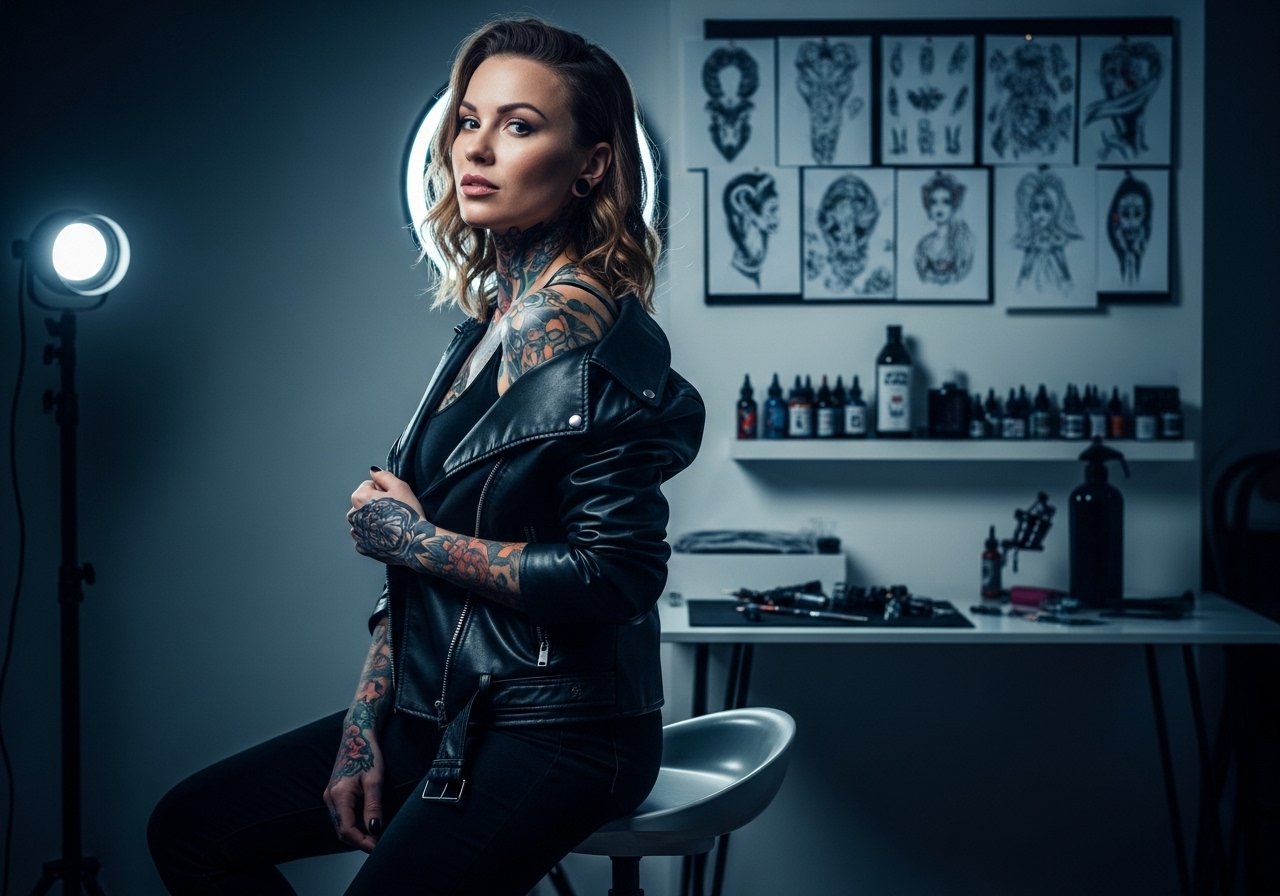
Fine line full moons photograph beautifully when they have room to breathe. Trend photos push tiny, intricate moons onto wrists and fingers, and those same placements demand aggressive spacing to avoid blurring over time. Pick a clear focal edge and a slightly bolder contour than you think you need, and the piece still reads clean at year three. Below are designs that take that reality into account and show how to wear them.
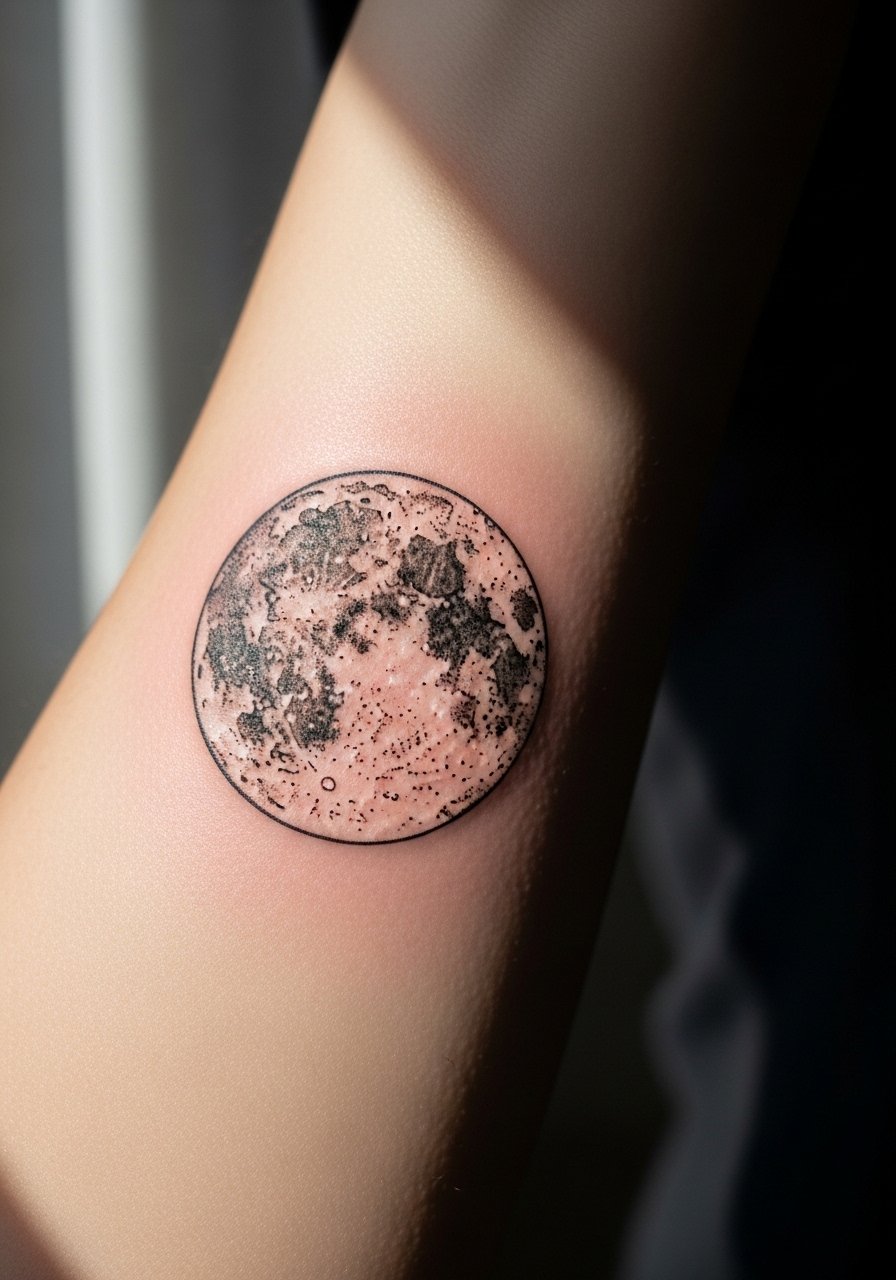
1. Fine Line Full Moon on Inner Forearm
This is the go-to for anyone who wants a discreet but readable lunar motif. Ask your artist for slightly heavier outer linework with delicate stipple shading inside so the negative space reads at arm length. Expect the session to feel like steady vibration and moderate discomfort, and plan for a touch-up at year three if you live in a sunny climate. A common mistake is asking for the dot work too tight. Give the dots breathing room and the piece keeps its structure. For showing it off, roll sleeves and pair with a thin chain bracelet that sits just below the moon.
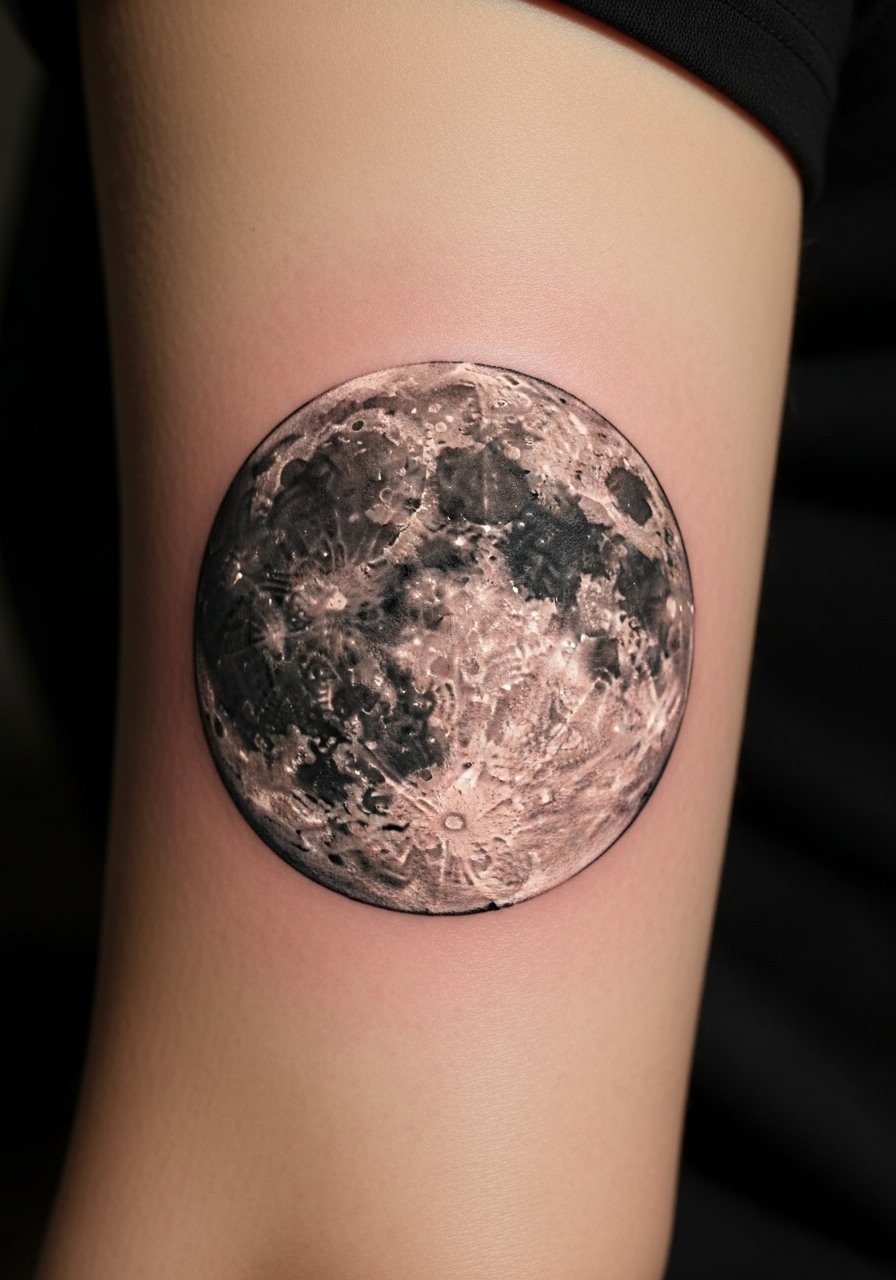
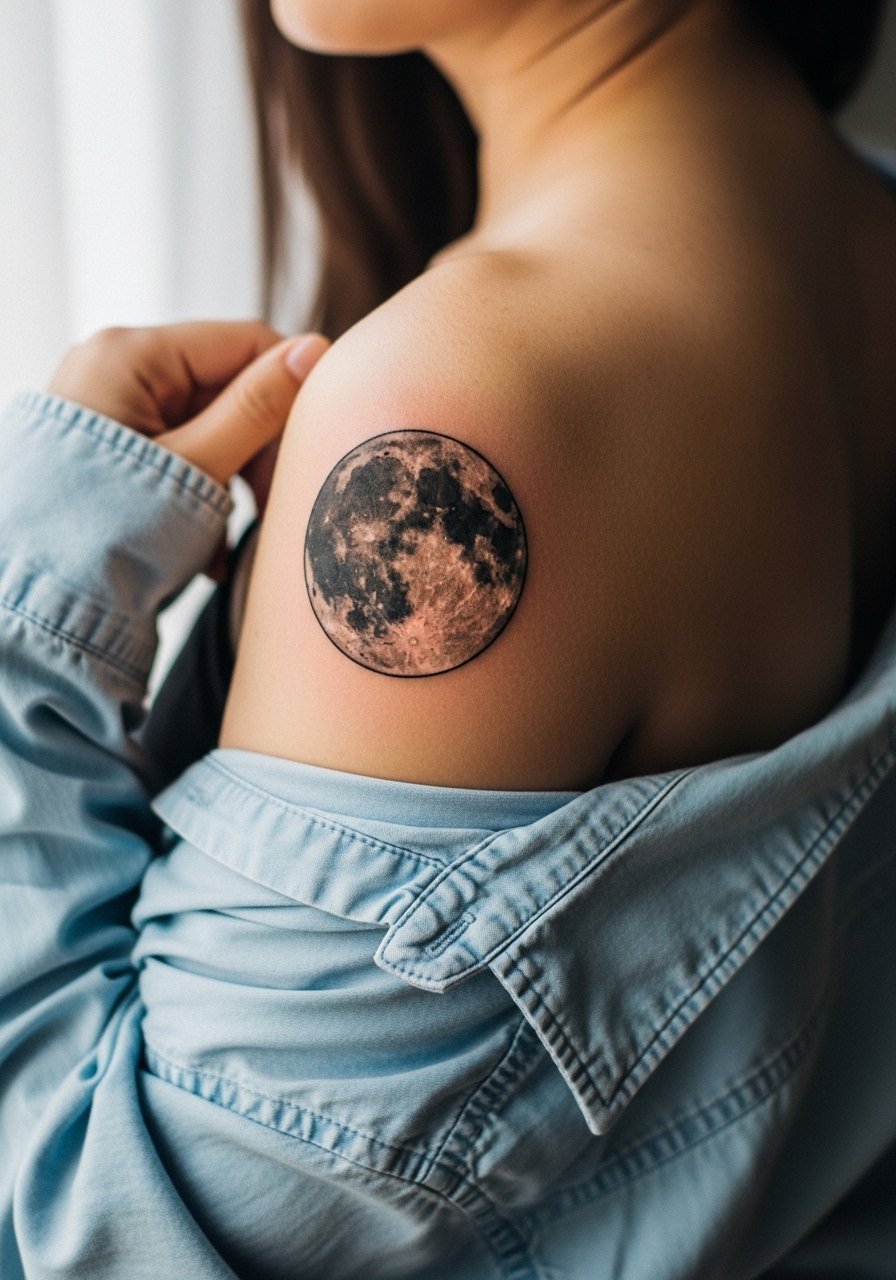
2. Micro-Realism Lunar Portrait on Upper Outer Arm
Tiny craters, subtle gradients, and a hint of texture make this feel like a photograph on skin. Tell your artist you want micro-realism and show clear up-close references of crater detail. This placement is forgiving because the arm does not stretch as much as the ribs, and most people report moderate pain. The mistake is asking for pure realism at too small a scale. Scale up the moon by 25 percent from your reference and it holds its tonal transitions longer. Over time the fine grays may soften, but the piece keeps its photographic vibe when healed properly.
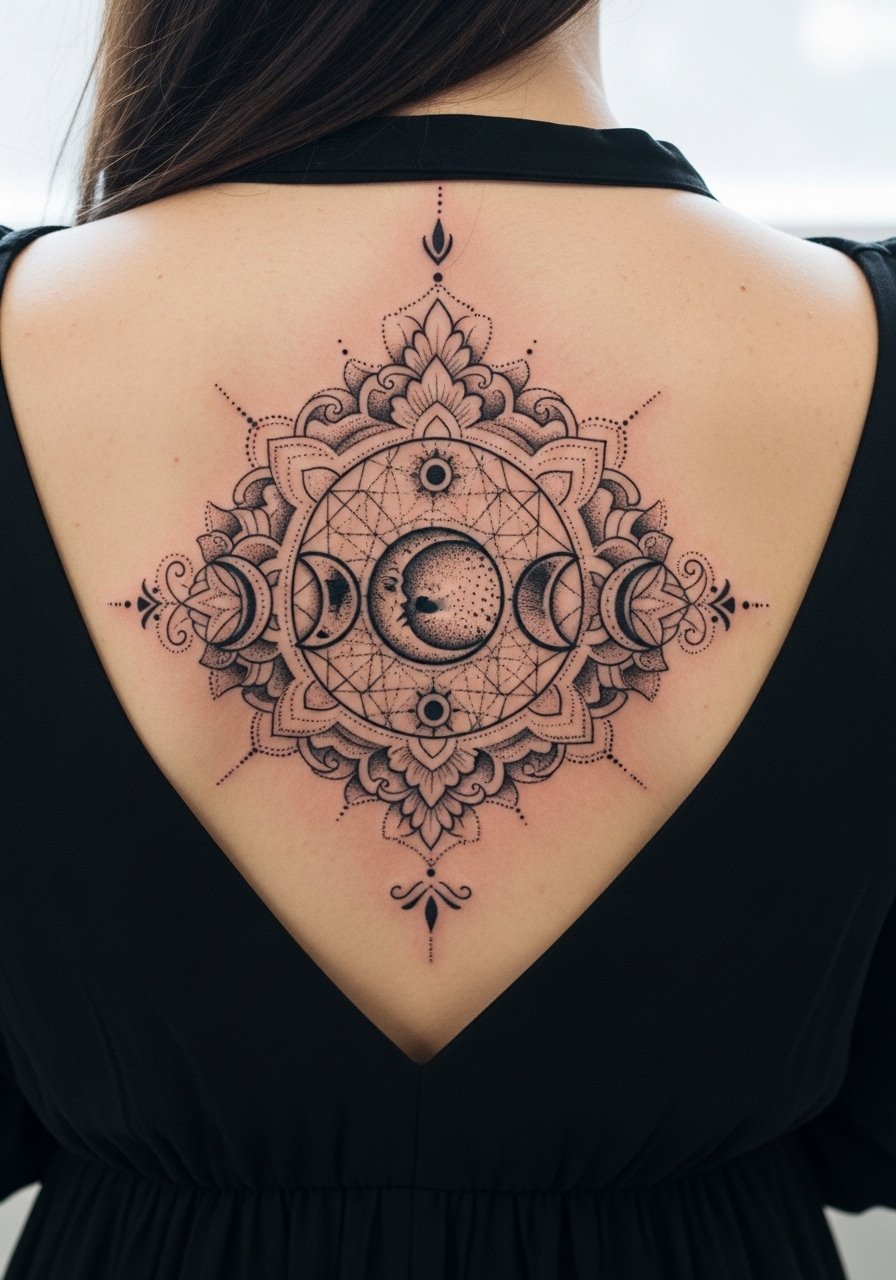
3. Dotwork Moon Mandala at the Center Back
A full moon nested inside a mandala reads like a single statement when centered on the back. Ask for stipple gradients that build outward from the lunar disk, and request larger spacing near the outer mandala petals to avoid line merging. The session can run longer because of the area size and the stipple technique. For evenings out, this placement pairs well with open-back dresses that let the mandala sit at the center of an outfit. The key mistake is overloading the mandala with tiny details; give symmetry simple, broad elements for longevity.
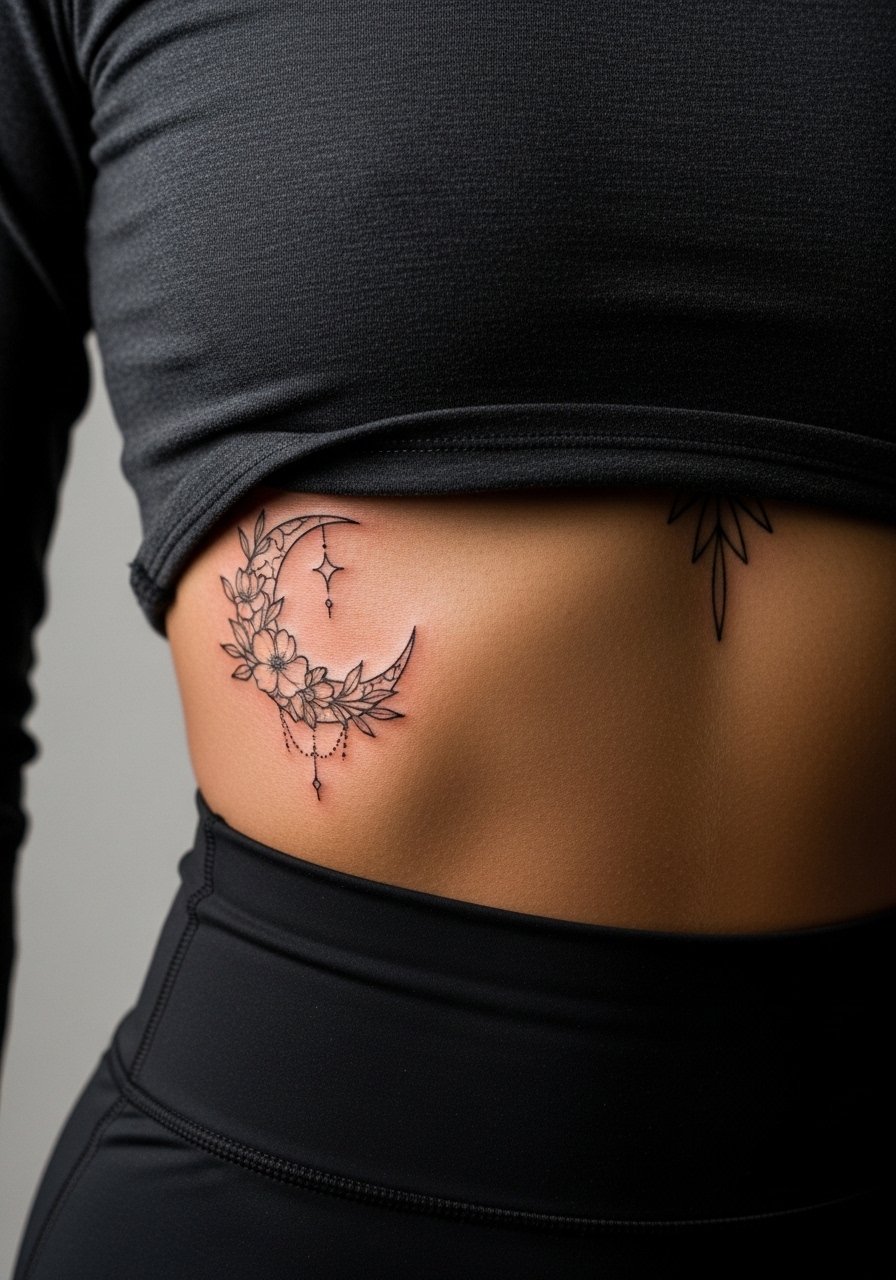
4. Fine Line Moon and Florals on the Ribcage
Fine line on ribs splits artists into two camps. One camp says the skin stretch and movement blur the lines within two years. The other camp argues that with proper needle depth and spacing, fine line settles fine on the ribs. Name the debate in your consult and ask the artist which camp they follow. For this piece, add slightly thicker outer contours on the moon and place florals with room between petals and lunar edge to avoid future merging. Rib sessions are higher on the pain scale, and wear a cropped top you can lift slightly to give access.
5. Watercolor Full Moon on the Upper Thigh
A watercolor moon uses soft washes and bleeding color for an ethereal feel. Ask for water-like edges that still keep a defined lunar core so it reads after healing. The thigh is forgiving on healing and handles saturated color well, and session discomfort is moderate. The common version that ages poorly uses too many small color dots near the edge. Request larger blended washes and a thin protective band of skin between color and the outer edge. For the session, wear loose drawstring shorts so the artist can expose the area without tension.

6. Bold Blackwork Full Moon on Shoulder Blade
Blackwork makes the moon a graphic anchor, with saturated fill and crisp negative shapes. It helps with longevity because saturation often reads strong even as small touch-up needs arise. Shoulder blades take mid-range pain and heal well if you sleep on your back carefully the first week. Avoid requests for tiny internal textures that look busy; simplified crater shapes read from a distance and still give depth. Pair it with a loose button-down shirt you can pull aside during the session.
Pack Smart
The pieces above include wrists, ribs, shoulders, and thighs, and each placement asks for different prep and first-week protection.
- Stencil transfer paper kit. Lets you preview how the moon will sit on curved surfaces like the ribcage or thigh before ink touches the skin.
- Topical numbing cream. Applied per instructions 45 minutes before can make shoulder blade and rib sessions more manageable.
- Thin protective film roll. Useful for wrist and finger pieces that face constant friction during the first week.
- Fragrance-free gentle body wash. Cleans without irritating the delicate linework on inner forearm and sternum pieces.
- Aquaphor healing ointment. A thin application in the first days locks in moisture for fine line and micro-realism work.
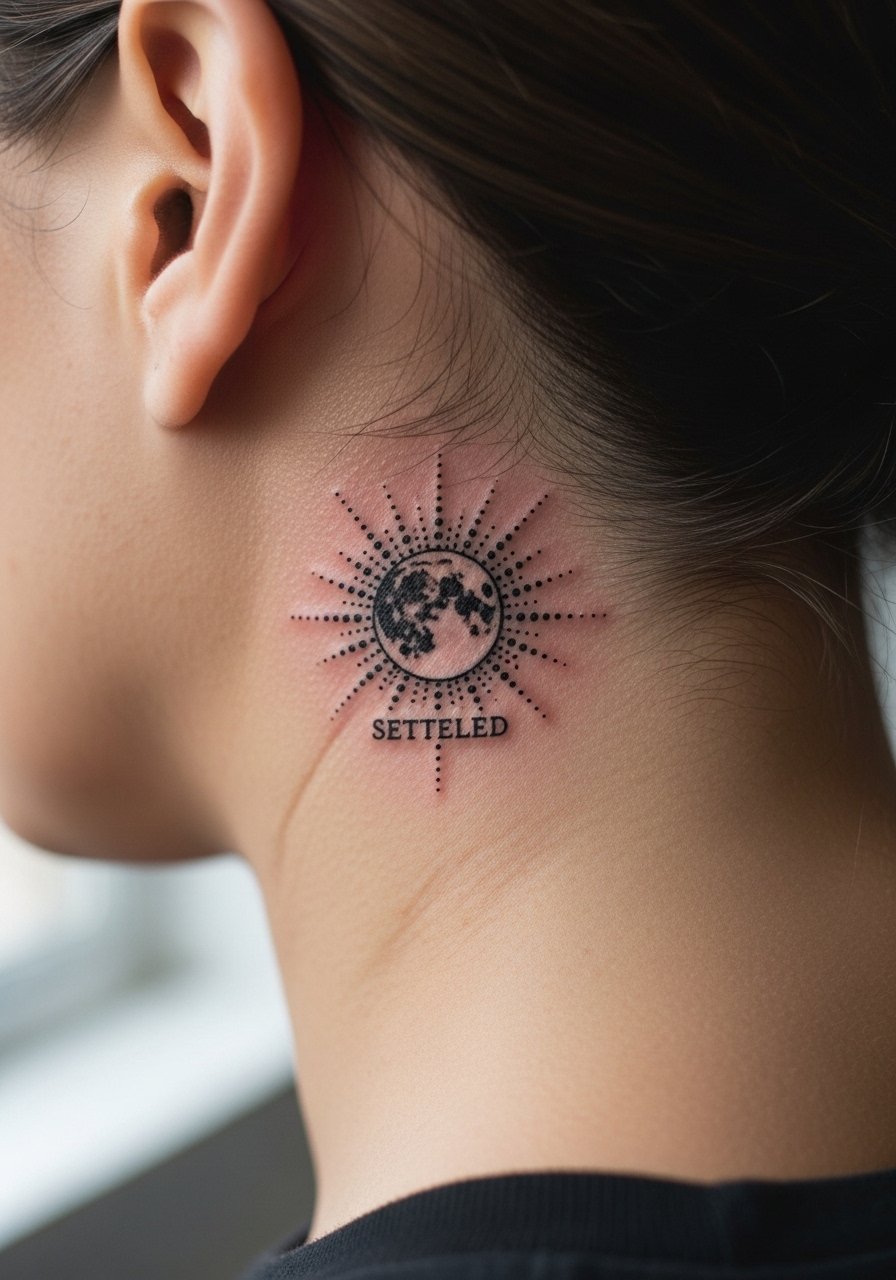
7. Micro Dot Halo Moon Behind the Ear
A halo of micro dots framing a small lunar disk reads intimate and refined behind the ear. For safety and modesty, this image is taken with the hair tucked back and shows the skin below the hairline. Ask for slightly spaced dots near the jawline so the pattern does not bleed with movement. The session is quick and lower in pain, but scabbing needs careful aftercare because the area sees hair oils. This placement pairs with simple studs or a small hoop when visible.
8. Negative-Space Lunar Disk on the Collarbone
Negative-space moons use the skin as the brightest part of the design. On the collarbone have the tattooed background filled with texture so the lunar negative shape reads crisp. Collarbone sessions are low to moderate pain and show well with open necklines. For showing the piece off, an open-back top or wide-neck sweater frames the area without covering the moon. The common mistake is making the negative shape too thin. Keep the moon's diameter distinct from busy background fill.

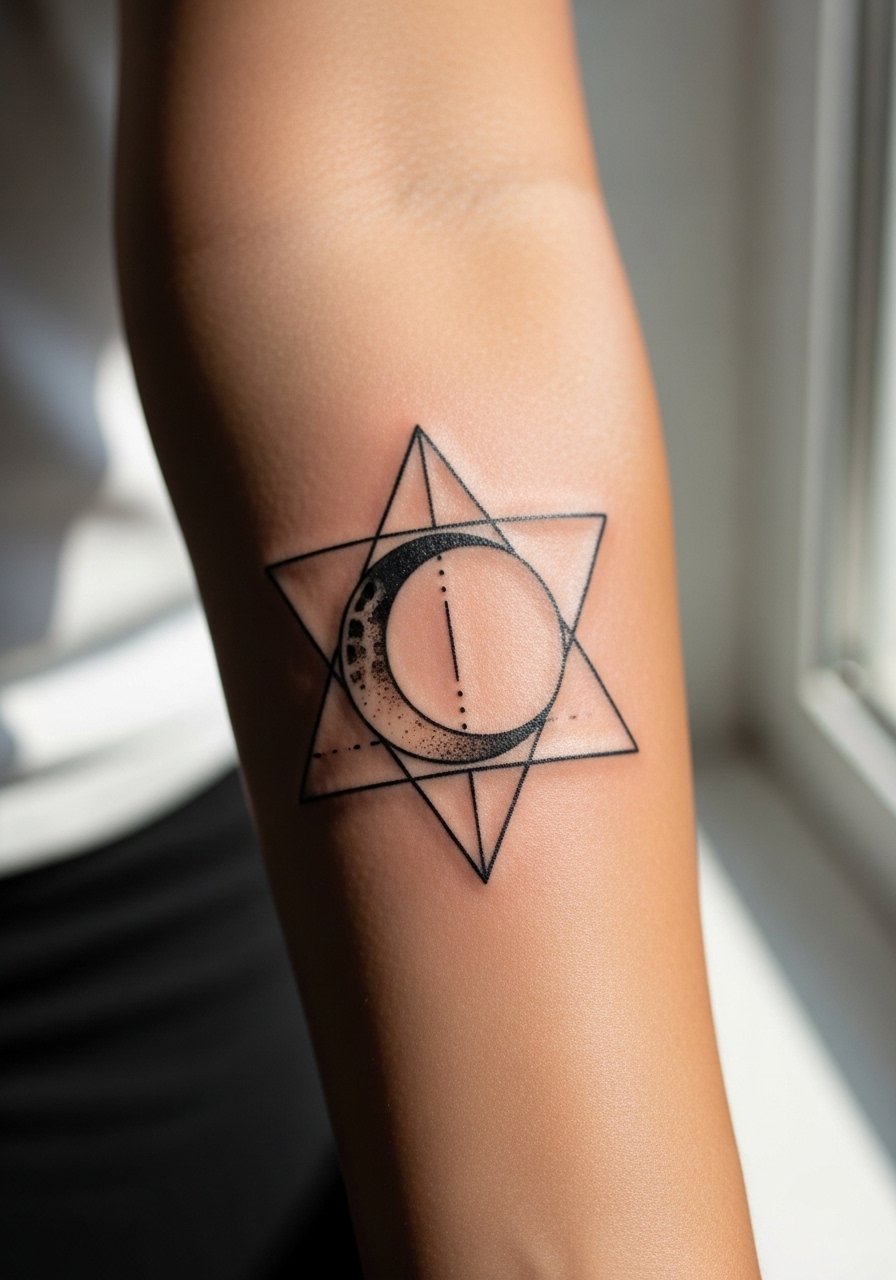
9. Geometric Moon in a Triangle on the Forearm
Geometric framing gives a modern edge to a classic lunar image. Request that the triangle and lunar circle have slightly separated lines so the intersection does not create a muddled look as the ink settles. Forearm placement is great for visibility and tends to have moderate discomfort. Avoid asking for every geometric line to be hairline thin. A touch of weight on the primary lines preserves crispness at year three. Roll sleeves or wear a racerback tank to show the forearm detail.
10. Moon Phase Band Around the Wrist
A small band of the full moon and its phases wraps the wrist like a bracelet. Use slightly larger phase gaps than you think to reduce line merging, and pick fewer, bolder dots to anchor the negatives. Wrist work is high friction and the thin skin needs careful protection the first week. For session comfort and access, wear a loose button-down shirt you can pull back. During wear, minimal stacking with a thin chain bracelet complements the band without crowding it.

11. Watercolor Moon with Landscape Infill on the Calf
A moon containing a tiny mountain or ocean scene reads like a pocket landscape. On the calf you get more vertical real estate, so scale the internal scene so people can register the horizon line. Calf sessions are moderate in pain and heal well if you avoid tight socks and shoes that rub. A frequent mistake is compressing the landscape into a too-narrow disk. Let the horizon breathe and the scene reads longer. For showing it off wear cropped trousers or sandals that let the calf be visible.

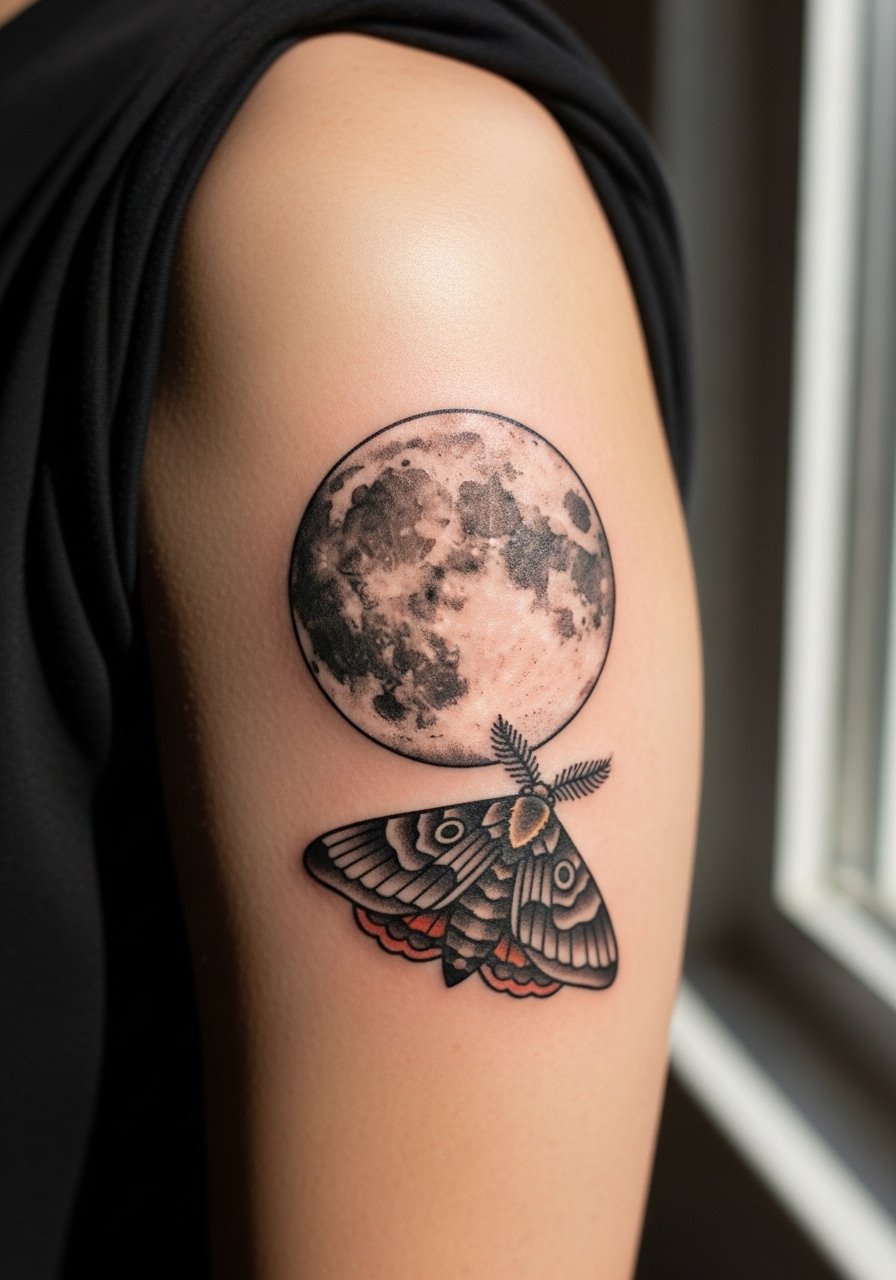
12. Neo-Traditional Moon with Moth on the Upper Arm
Neo-traditional takes bold outlines and decorative shading and adds a lunar focal point. Place the moth so its wings frame the moon and avoid tiny internal linework inside the wings. Upper-arm placement covers and uncovers easily, and most people find it moderate pain. A common mistake is requesting intense micro texture inside the wings that blurs over time. For session access wear a loose tank top so the artist can rotate your arm and keep consistent linework.
13. Minimalist Crescent-Encased Full Moon on the Sternum
Sternum work needs careful layout because of the curvature and breathing motion. For a minimal approach add a slightly thicker outer crescent to ground the central disk. The session is tense and the area is sensitive. Wear a fitted sports bra or bandeau that the artist can shift so only the sternum is revealed. The mistake is placing too many tiny adjacent marks. Keep spacing generous and the piece will settle more predictably.

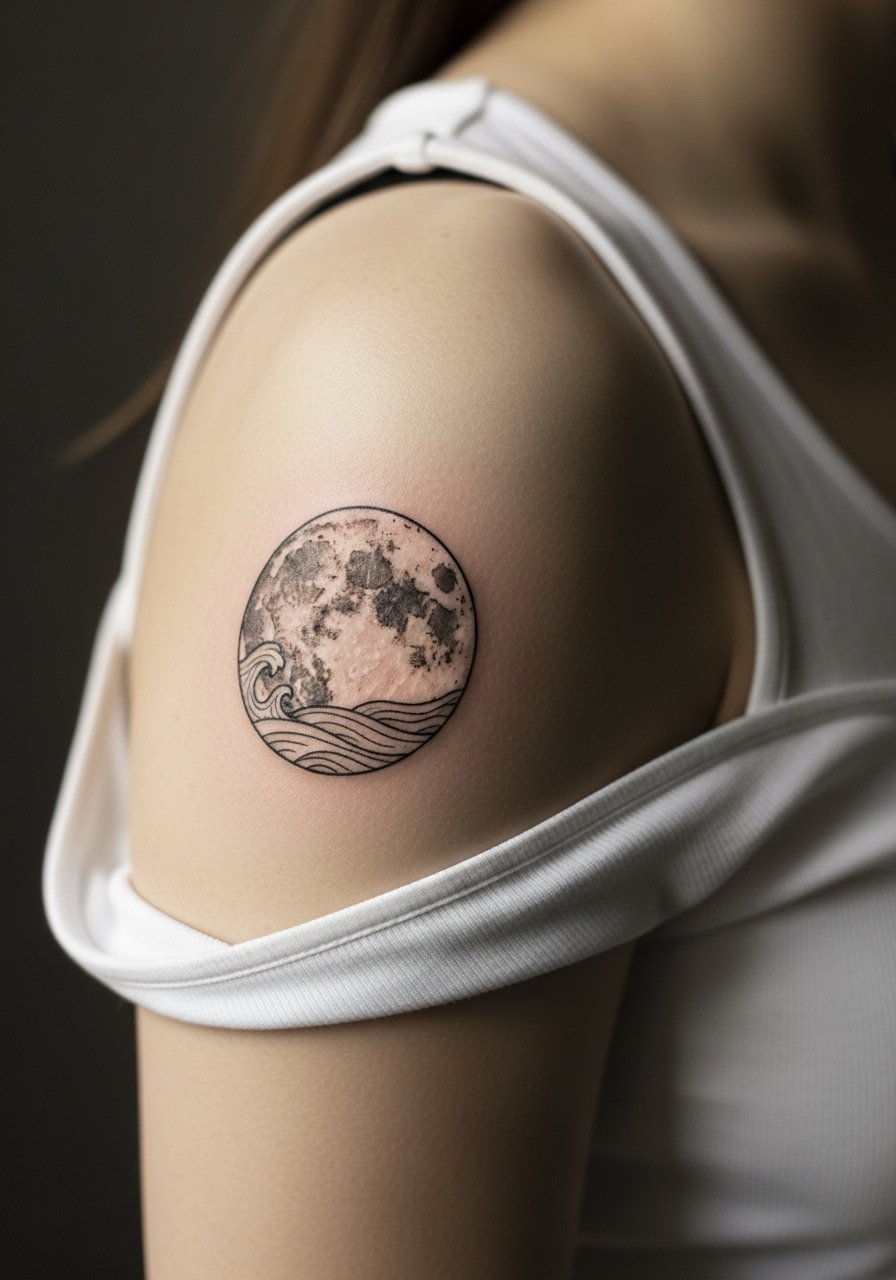
14. Full Moon with Wave Motif Across the Shoulder Cap
Ocean lines inside a lunar disk pair well with shoulder cap placement. Ask for directional wave linework that follows shoulder curvature to avoid distortion when you move. Shoulders bruise and swell less than ribs, and sessions are typically manageable. A common error is asking for mirrored tiny wave lines that become noisy after healing. Keep the waves bold enough to read from a short distance. For showing off, a loose tank top works well.
15. Lunar Compass on the Upper Back Near the Spine
A moon combined with a compass makes a directional statement. Place the compass points outward and keep the moon's disk slightly offset to prevent central detail from crowding. Upper back sessions can take a few hours and might be sore afterward. A misstep is cramming minute lettering into the compass; larger type or Roman numerals hold up better. For nights out choose an open-back dress to frame the piece without covering it.

16. Micro Full Moon Sleeve Accent on the Outer Forearm
Tiny moons spaced down the forearm create a subtle sleeve accent without committing to full coverage. Ask for consistent spacing and slightly varying line weight so each moon reads on its own. Forearm sleeves offer visibility and moderate discomfort. The mistake is making each moon too close or identical, which creates visual merging. For casual showing, roll sleeves and add a minimalist watch that sits above the moons.

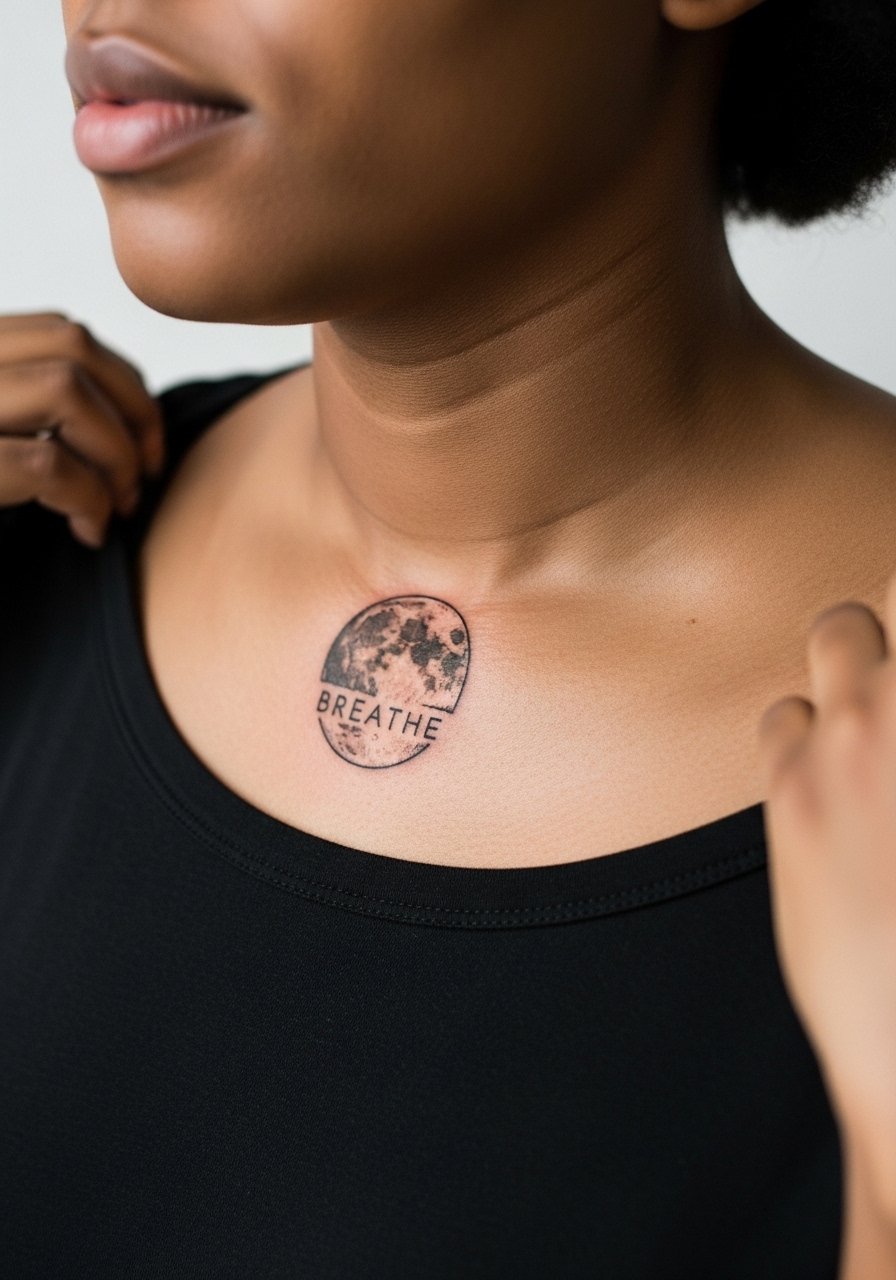
17. Full Moon with Script Underneath on the Collarbone Curve
Adding a single word or short date beneath a lunar disk on the collarbone requires exact lettering choices. Provide the exact text to the artist, and choose a font with some weight so letters do not blur into collarbone contours. Collarbone skin is thin and sessions are mildly sensitive. Wear a wide-neck shirt to give access. Small text mistakes are the main regret. Pick characters that keep legibility at small scale.
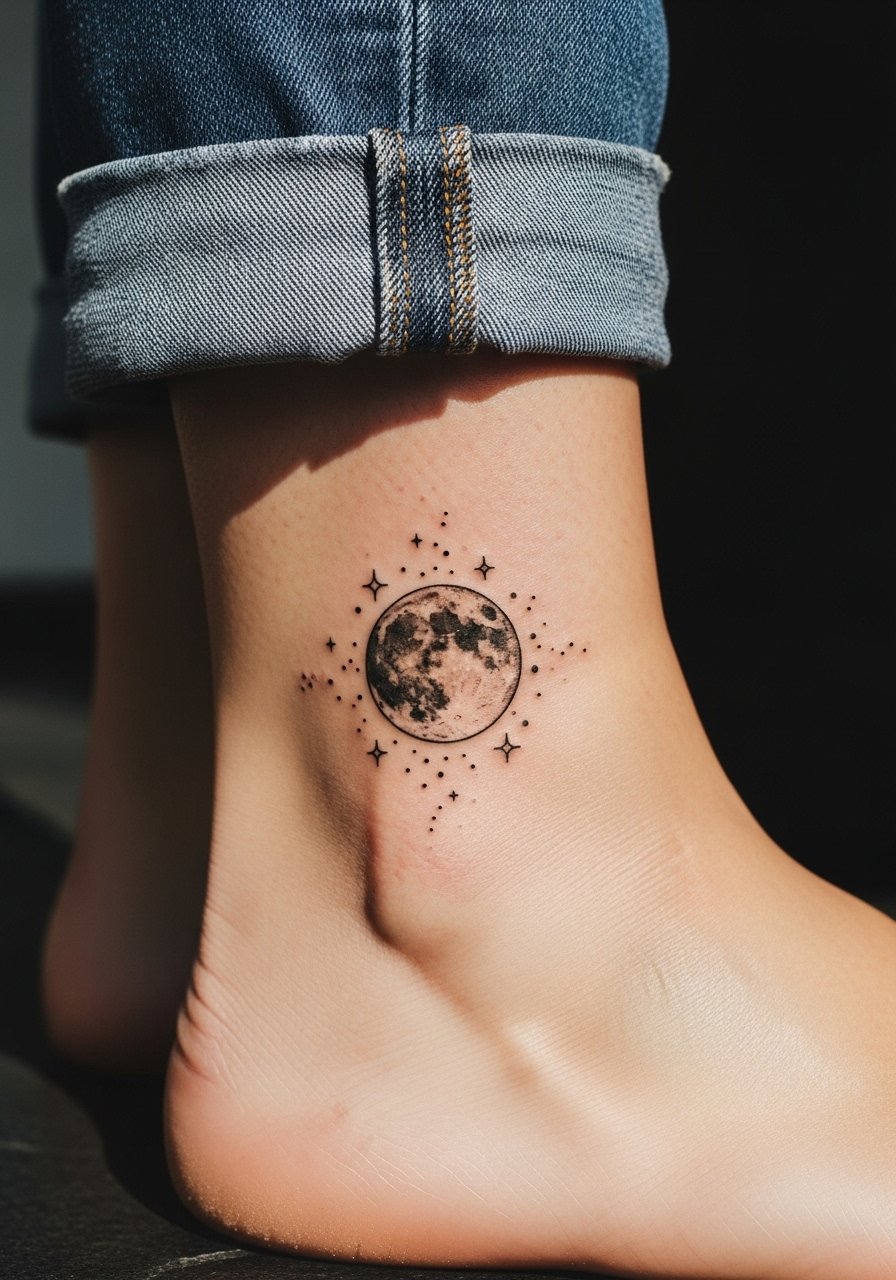
18. Full Moon Surrounded by Stars on the Ankle
A moon plus a constellation of small stars fits neatly on the ankle and reads like jewelry. For longevity avoid tiny clusters too close to the ankle bone. Ankle sessions have sharp but brief pain spikes and require tight post-session protection because shoes can rub. For showing the piece off roll trousers or wear simple sandals so the ankle remains visible. A common error is overloading with micro stars that fade into a blur.
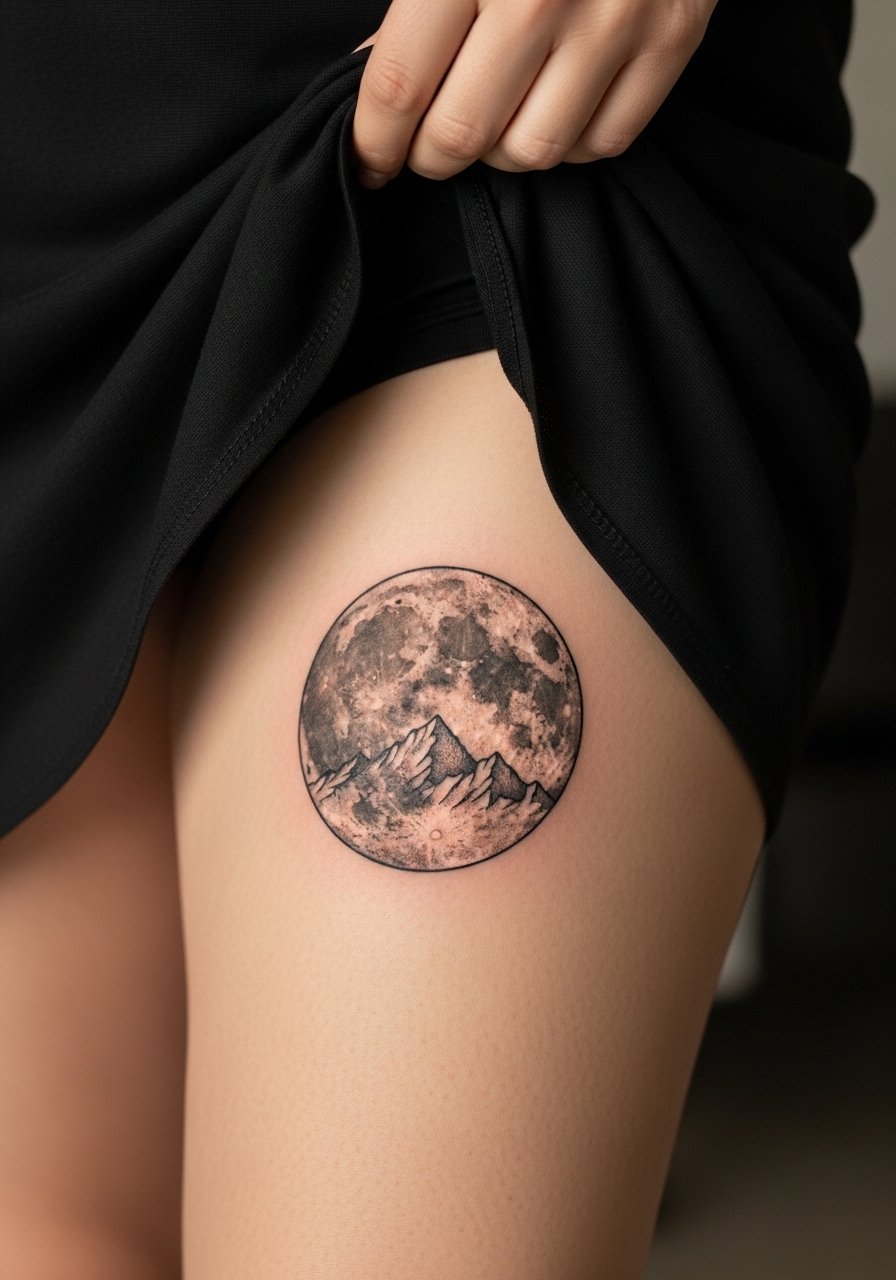
19. Textured Moon with Mountain Silhouette on the Thigh
A bold mountain silhouette inside a textured lunar disk plays well on the outer thigh. Thigh skin tolerates saturated color and detailed shading, and sessions are comfortable for many. The mistake is shrinking the mountain detail too much. Give it scale relative to the moon so the peaks stay readable after healing. During the session wear high-waisted bottoms you can shift or a wrap skirt to expose the area without discomfort.
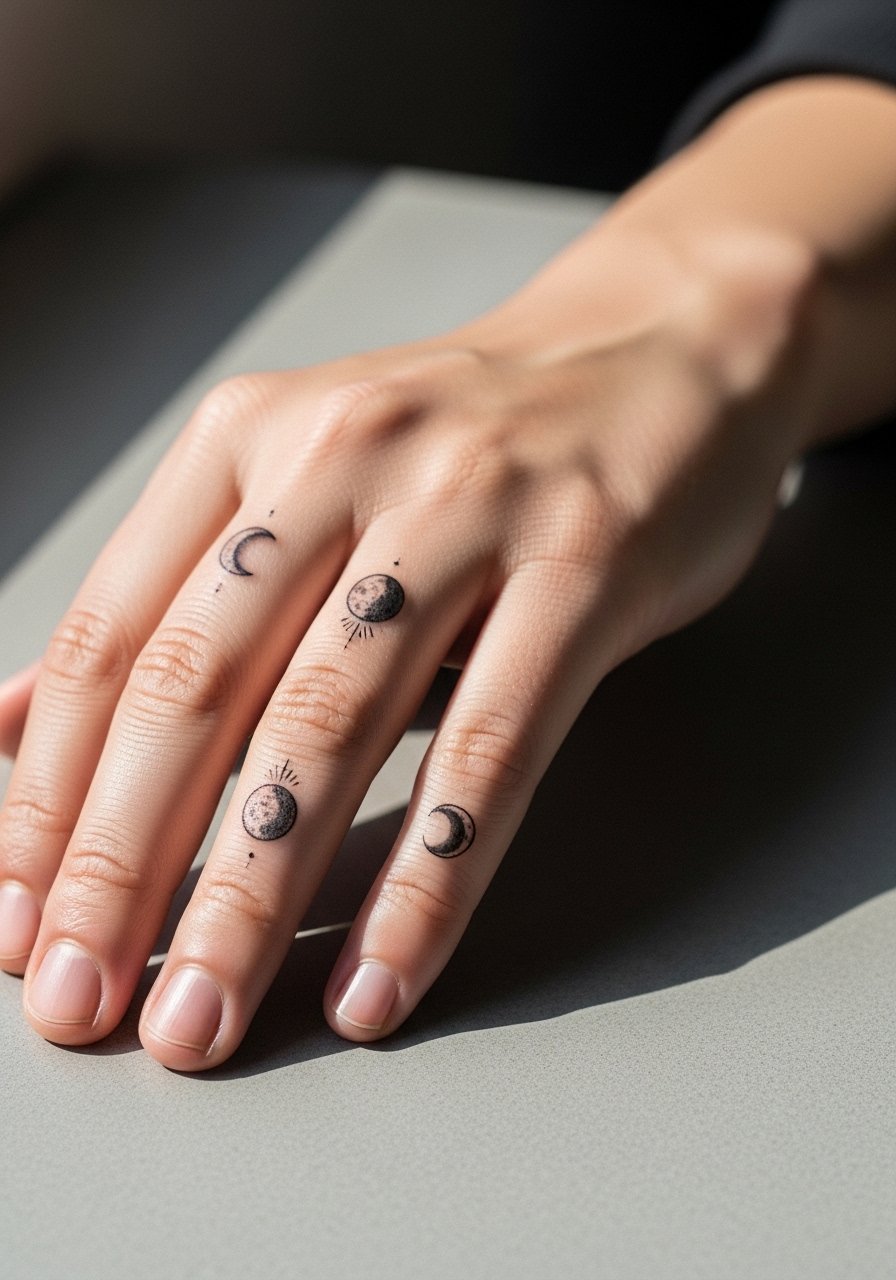
20. Minimal Moon Chain Across the Fingers
Tiny moons connected like a chain across two or three fingers look delicate but are high risk for fading. Finger skin is thin and sees oil and wash friction constantly. Expect frequent touch-ups. If you want durability choose slightly bolder moons and space them a touch wider. A mistake is placing more than three micro pieces across adjacent fingers, which often blurs into one shape. For session convenience bring gloves or a sleeve to rest your hand on for steady placement.
21. Full Moon in a Floral Wreath on the Lower Back
A lunar disk framed by a wreath looks sculptural on the lower back. Have the artist design the wreath so it tapers toward the sides, which helps it sit with low-rise jeans or skirts. Lower back sessions are moderate and healing can be interrupted by tight waistbands. Avoid placing the wreath too close to pant lines. For session modesty wear a tank top with high-waisted bottoms you can shift slightly.

22. Full Moon and Wolf Silhouette on the Bicep
A wolf silhouette inside a full moon makes for a bold emblem on the bicep. Ask for the wolf to be slightly off-center within the disk to create motion and avoid crowding the crust of the moon. Biceps are forgiving and sessions are moderate. Common mistakes are tiny fur detail that blurs into the moon texture. For casual wear pair with short-sleeve shirts and a loose linen shirt for a relaxed look.

23. Ornamental Lace Moon on the Hip
Lace patterns inside a moon suit hip placement well because the area allows curved compositions. For safety the image shows a high-cut short or swimsuit bottom so only the tattoo area is visible. Hip sessions can be sensitive depending on fat distribution. Ask for simplified lace motifs near edges to avoid a heavy scab line. The mistake is too many tiny loops that merge. Keep larger negative shapes in the lace.

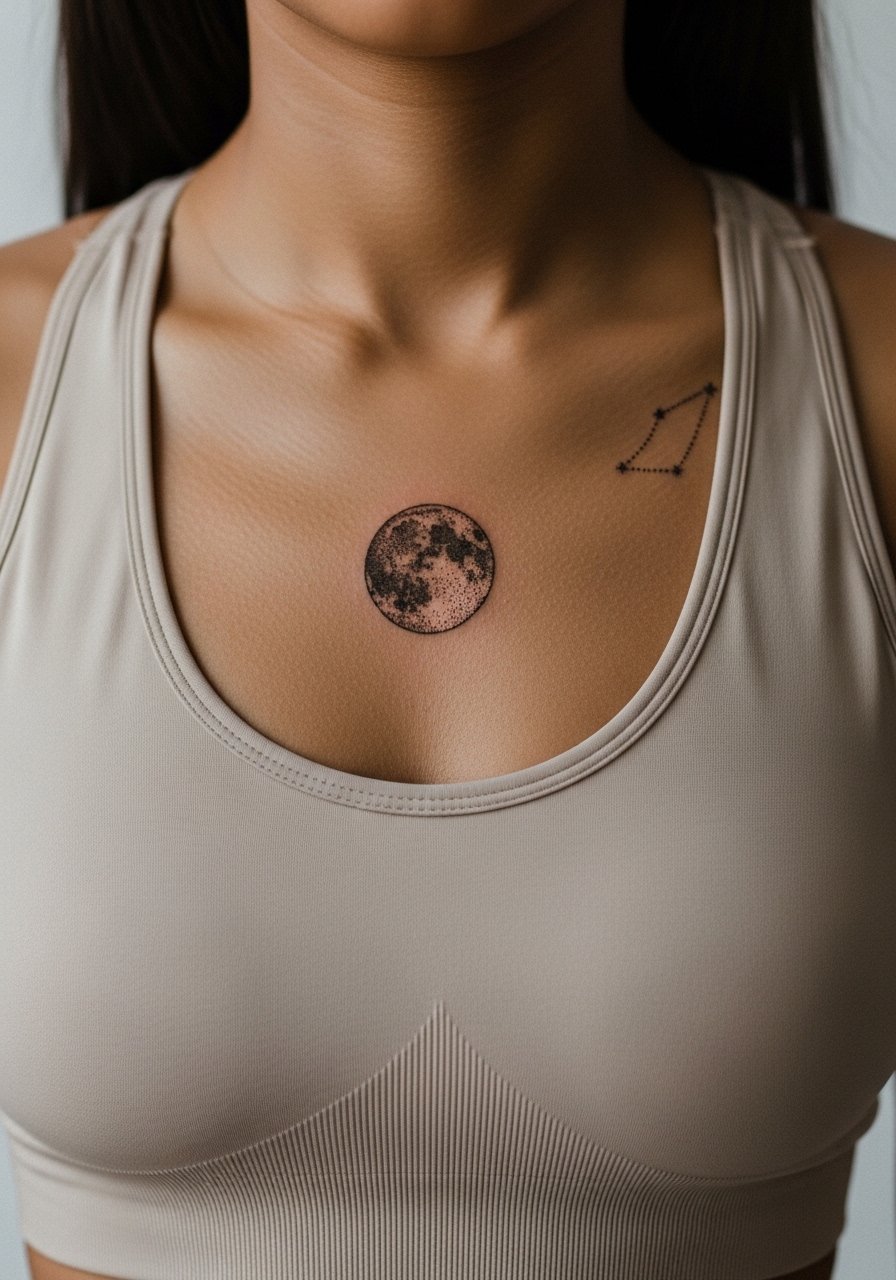
24. Stippled Moon with Constellation Overlay on the Sternum Edge
A stippled moon that reaches the sternum edge needs breathing room for the spacing and a relaxed layout that accounts for breathing motion. Sternum area is sensitive. Artists split on stippling near the sternum for durability. One camp says dense stipple can compact and look muddy. The other argues that well-spaced dots and stronger outer line keep the texture readable. Ask the artist to show healed stipple examples from similar placements. Wear a bandeau or fitted sports bra so the artist can adjust exposure.
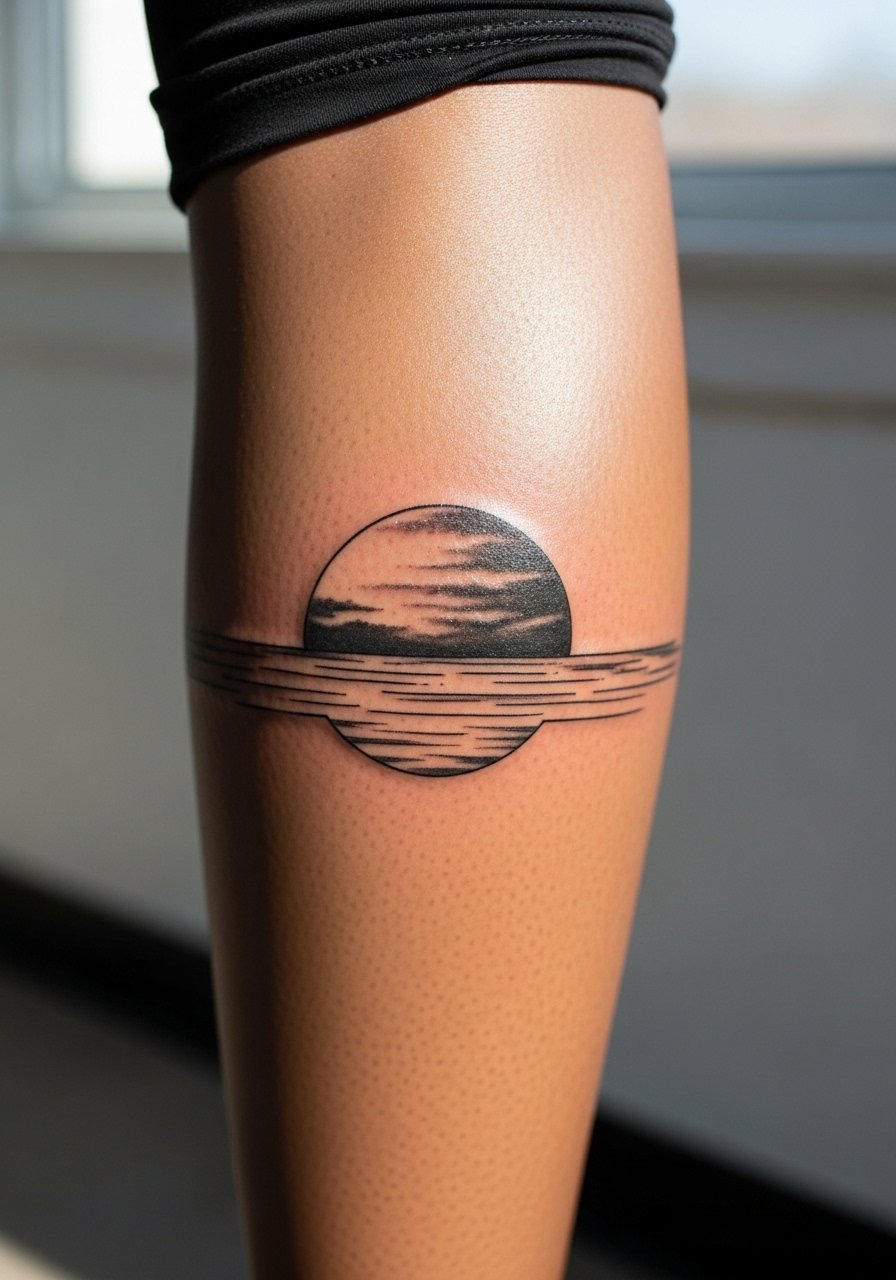
25. Full Moon with Geometric Horizon on the Calf Wrap
Wrap the moon into a geometric horizon band that circles the calf for an architectural effect. Request that the horizon lines align with the calf muscle so the composition does not warp when you flex. Calf wraps heal well if you avoid tight socks and shoes that compress the area. The error is ignoring muscle movement in layout, which causes the horizon to appear bent later. For showing it off choose cropped pants or a knee-length skirt.
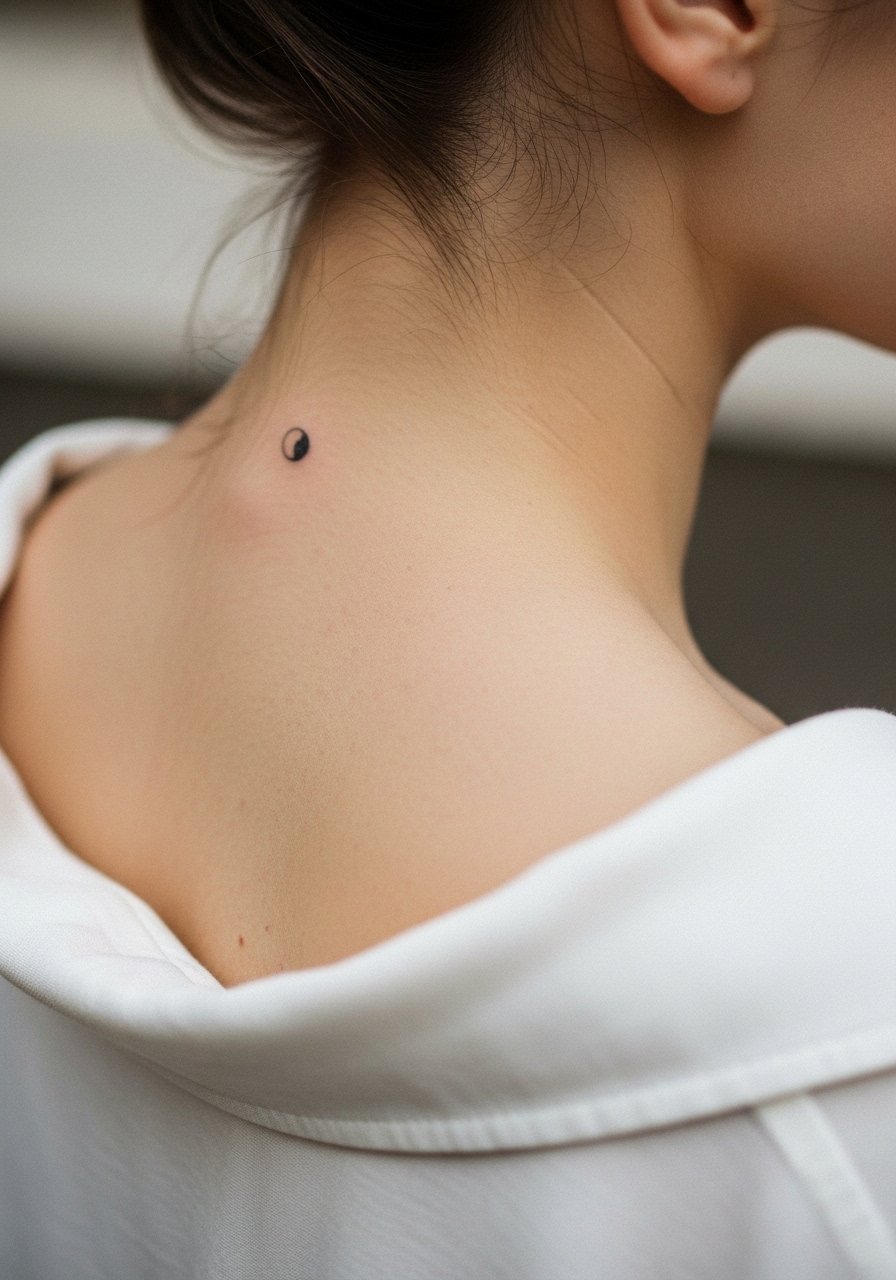
26. Minimal Lunar Dot on the Back of the Neck
A single lunar dot on the nape is discreet and reads like a personal marker. For safety the image shows a wide-neck shirt collar pulled to one side. Keep the dot slightly larger than you think so it does not blur into a freckle over time. The session is quick and sensitive. A common mistake is choosing an ink tone that is too faint. Go with a true black or rich gray for small back-of-neck pieces. Pair with high collars or loose hair updos to show it selectively.
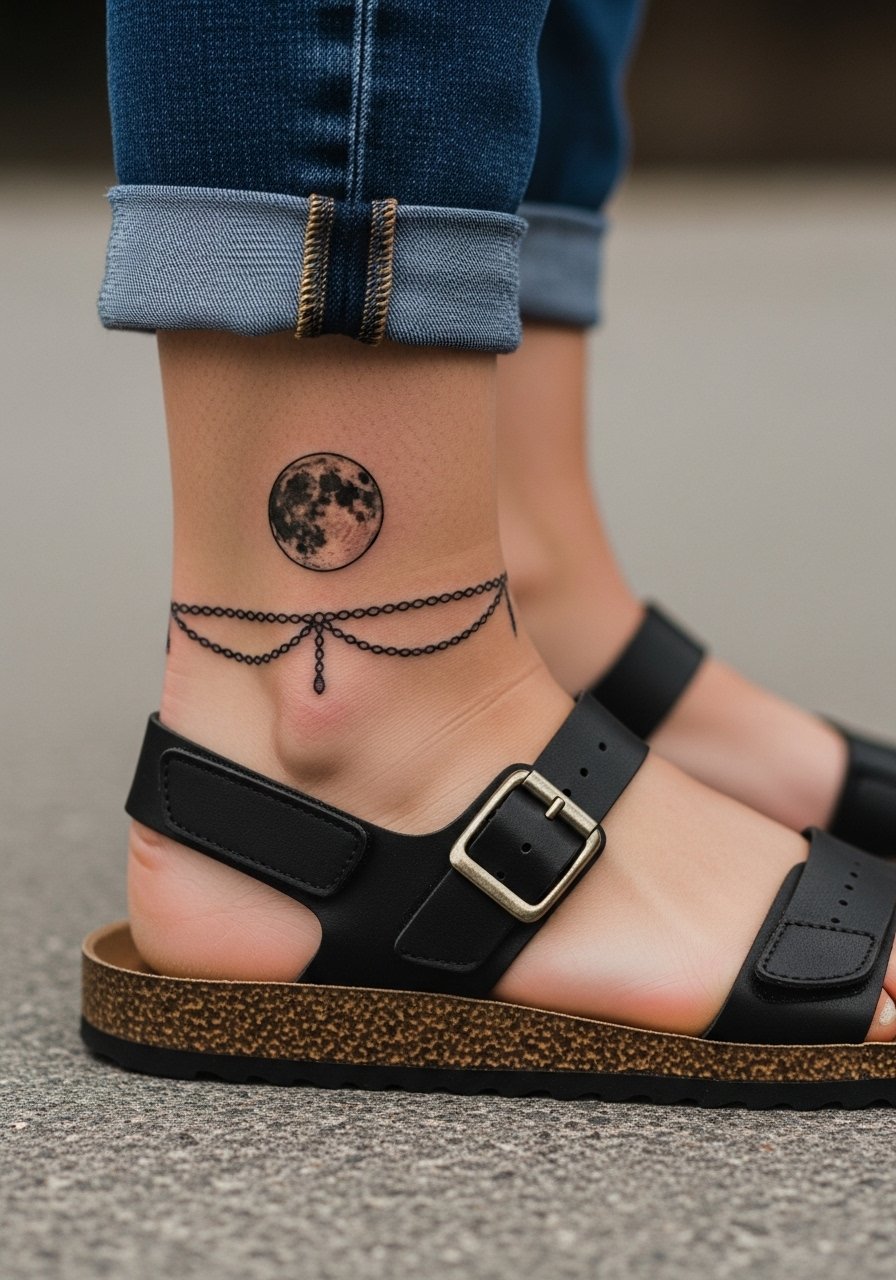
27. Full Moon Ankle Chain That Reads Like Jewelry
A lunar charm with tiny links inked along the ankle reads like a permanent anklet. Keep the chain slightly open between charms so it does not fuse visually. Ankles see shoe friction and washing, so plan for a possible touch-up in year one. Avoid asking for hairline links. Slightly bolder connections keep the chain readable. For seasonal showing wear sandals or roll your jeans and pair with a thin anklet chain that complements the tattoo.
Frequently Asked Questions
Q: Will fine line full moon tattoos on the inner forearm need touch-ups more often than bold blackwork?
A: In my experience fine line pieces generally need touch-ups sooner because the thin strokes diffuse faster under the skin, especially in sunny areas or on mobile surfaces. Bold blackwork tends to hold a readable silhouette longer. Ask your artist about planned touch-up windows and expect a possible touch-up at year two to three for fine line work.
Q: Are watercolor full moons safe for the thigh if I want bright pigments?
A: Yes, thighs handle saturated color better than wrists or fingers, and watercolor washes settle nicely there. The trick is to ask for slightly denser pigment at the core of the moon so the outer washes age into soft edges instead of disappearing. Plan for moderate sessions and avoid tight clothing that rubs while it heals.
Q: How do I find an artist who can do micro-realism or dotwork moon pieces without naming anyone specific?
A: Search studio directories, check convention portfolios, and use community forums to find artists who publish healed photos of similar techniques. Look for recent healed work in portfolio images and ask about touch-up policies during the consult. Bringing clear reference photos and asking where they show healed pieces will give you a quick read on fit.
Q: Will ribcage moon tattoos blur because of breathing and movement?
A: Artists are split into two camps on this point. Some say ribs stretch and blur finer lines within a couple of years. Others say that with proper depth, spacing, and slightly bolder outer lines the work can settle well. The honest answer depends on your skin and the artist technique. Discuss which approach they follow and ask to see healed examples on ribs.
Q: What should I wear to a session for an upper-thigh watercolor moon?
A: Wear loose drawstring shorts or a wrap skirt so the artist can expose the area without stretching the skin. I like lightweight shorts because you can adjust them for placement and keep the rest of your leg covered and comfortable.
Q: Do finger or ankle moon tattoos impact professional settings more than forearm pieces?
A: Finger tattoos are very visible and face more workplace scrutiny in some industries, while ankles and forearms are easier to conceal. Think about visibility and your typical attire before committing to a highly visible small placement.
Q: Any quick tips for planning a full moon piece that respects cultural origins like mandalas?
A: If you want motifs tied to cultural or spiritual practices, mention that to your artist and consider slight customizations rather than direct replicas. Many people opt for inspired variations to show respect while keeping the piece personal.