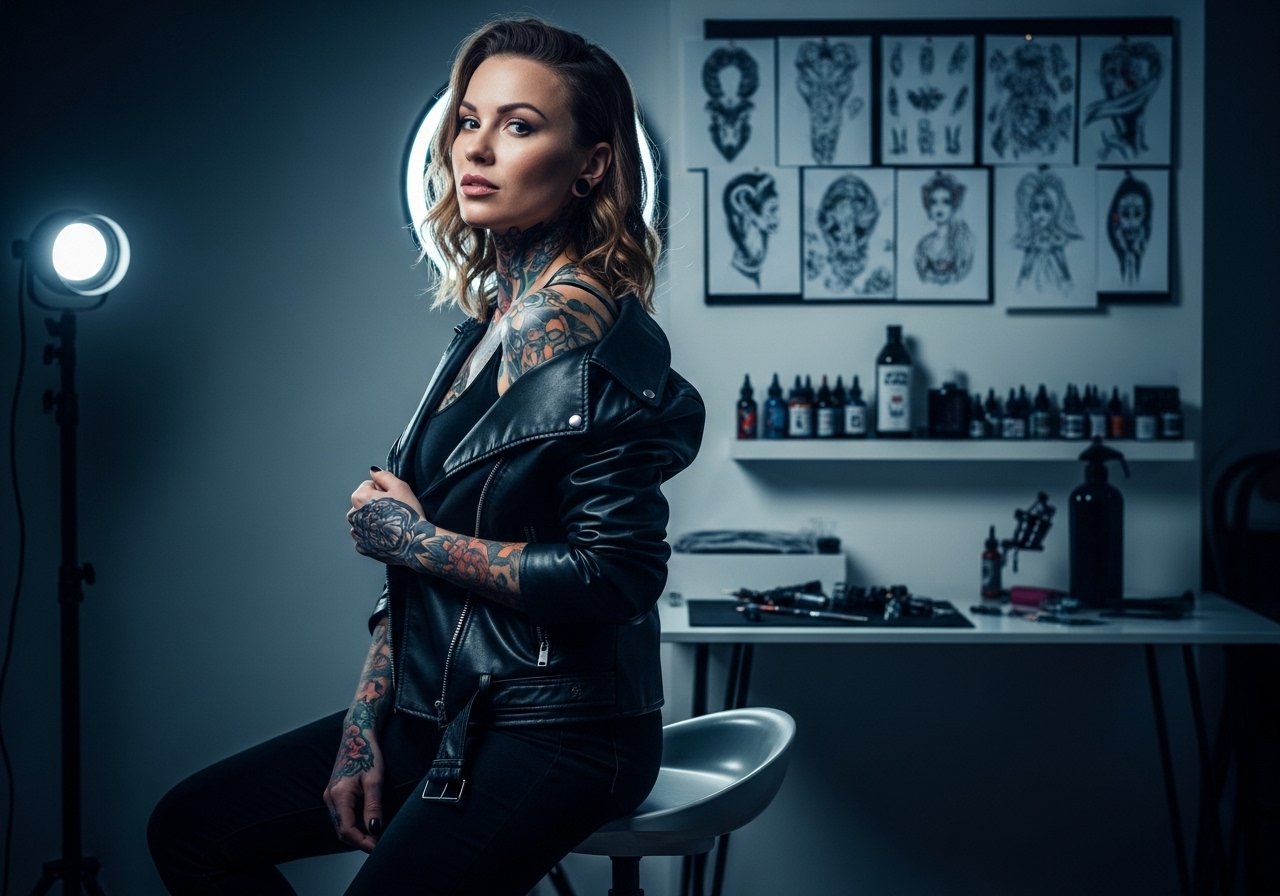
Fine line is trending across feeds, but on a thigh the numbers tell a different story. Thigh skin moves, rubs, and sweats more than the forearm. That means small script and delicate dot work need careful placement, bold linework, or the expectation of touch-ups. I pulled together practical traditional thigh concepts and what to ask your artist so you get a piece that still looks sharp after gym seasons, summer sweat, and the odd guest-spot reschedule.
1. Traditional Japanese Dogu Figure on Outer Thigh
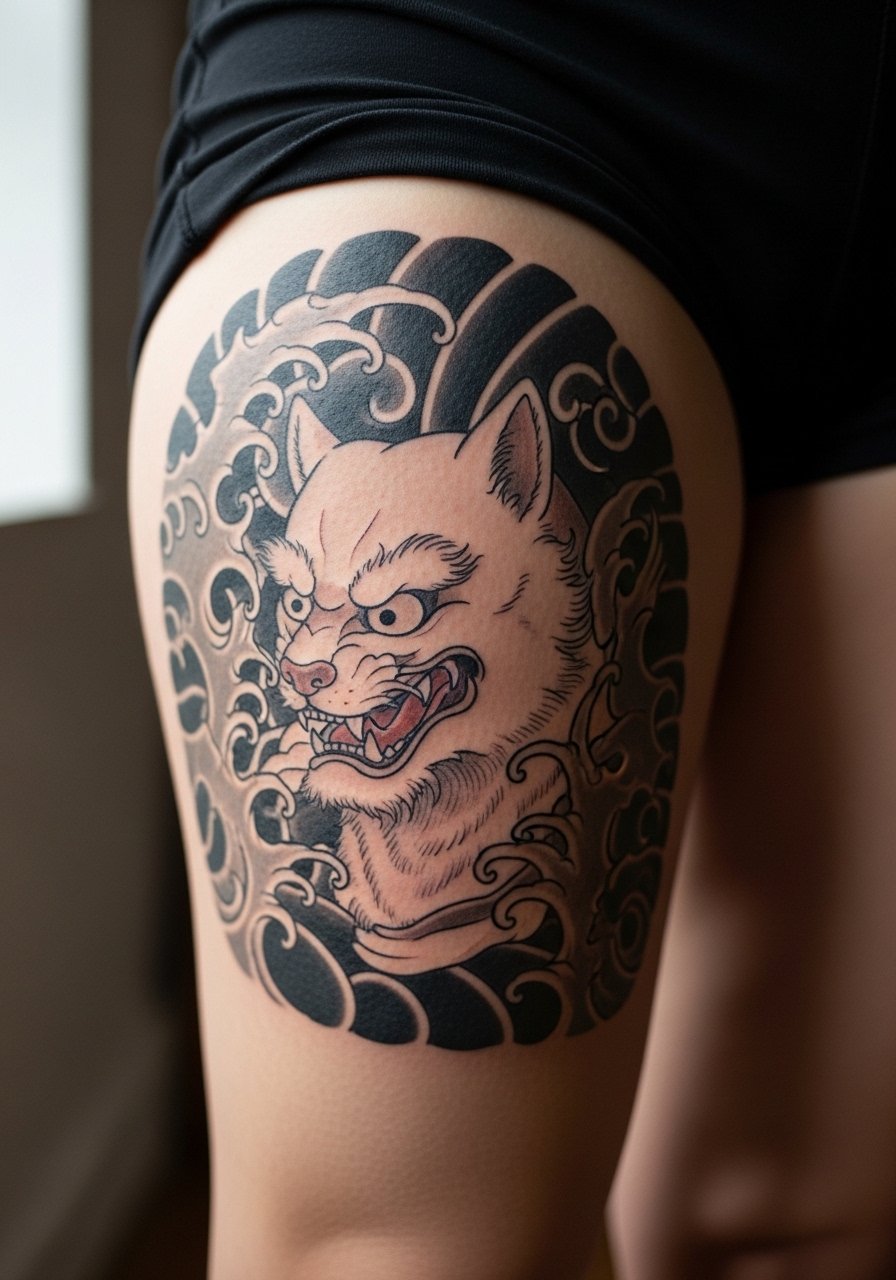
A Dogu figure sits well on the outer thigh because the shape lets the design breathe across muscle contours. Tell your artist you want strong linework and slightly increased spacing between pattern elements so stipple shading and saturation hold over time. Common mistakes include packing too much tiny detail into an 8-inch patch, which leads to loss of definition after a year. Expect two sessions and medium pain while the needle hits the outer quad. For show-off outfits, pair this with fitted athletic shorts in solid black so the motif reads against skin without color competition.
2. Symmetrical Swords on Both Thighs
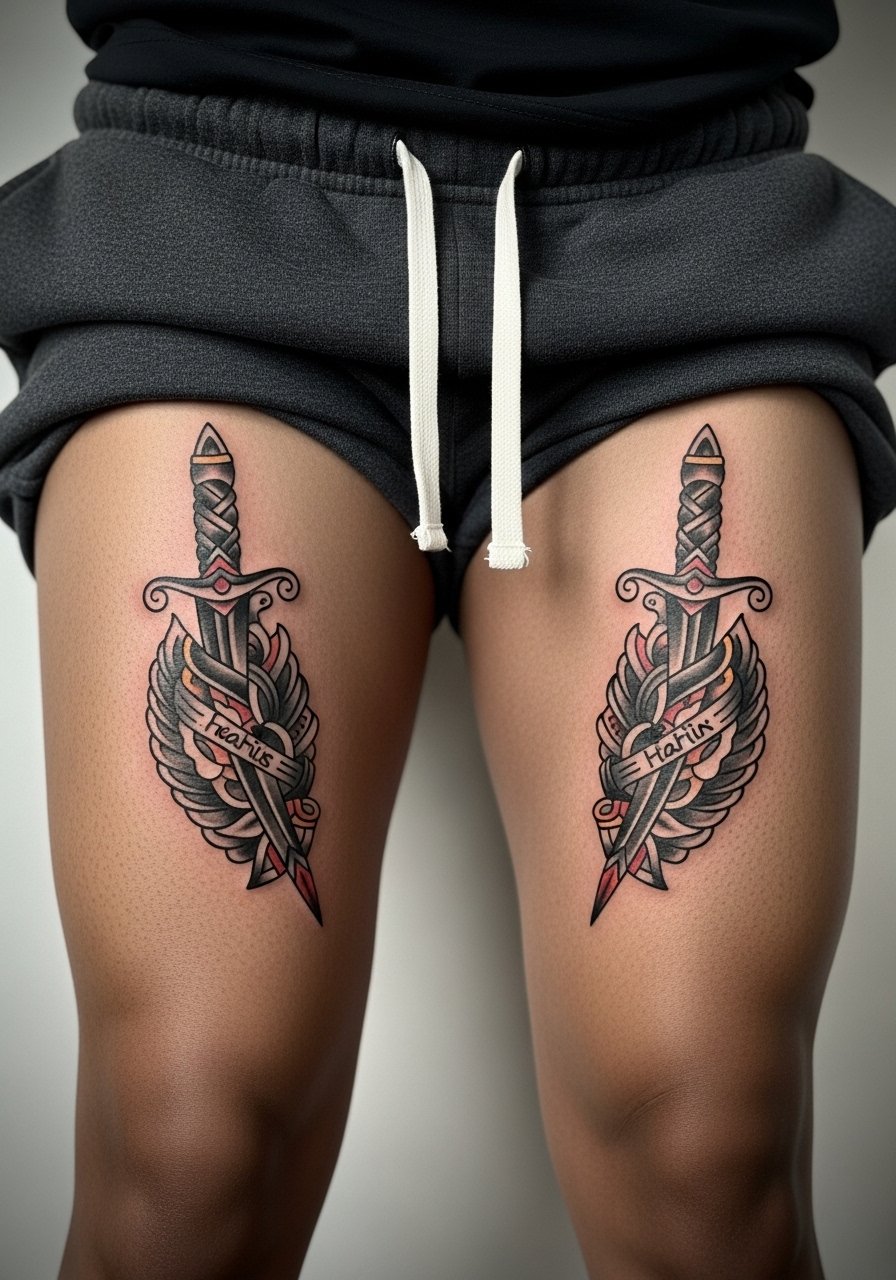
Dual-thigh swords work if you want balance that complements an athletic frame. The key consultation point is symmetry markers on the stencil and asking for mirrored negative space so the quads do not distort the hilts when you flex. Artists will warn that one thigh healing differently than the other is common if you sleep on one side. Pain is moderate, sessions are short per side, and touch-ups at year one are normal. For the studio day wear, slide into drawstring sweatpants you can lower on the chair without constricting the area.
3. Skeleton Gentleman with Rose on Front Thigh
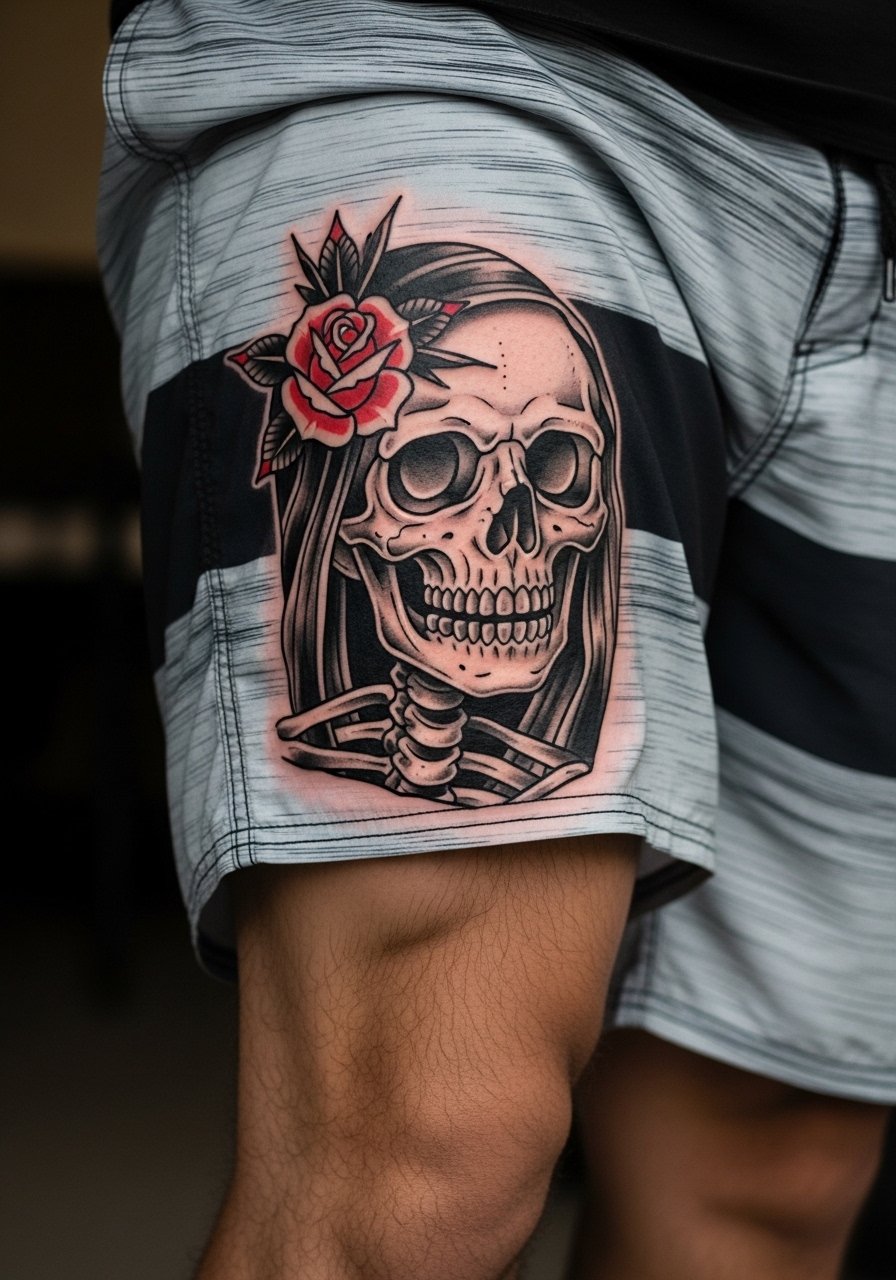
A front-thigh portrait like a skeleton gentleman benefits from strong linework and saturated red in the rose to maintain contrast over time. Tell your artist you want a bold backdrop rather than tiny portrait shading, because the thigh's friction can soften micro-detail. The biggest mistake is asking for ultra-fine texture inside the face; that detail blurs faster than expected. Expect medium-high pain when the needle crosses the upper femur region near bone. Pair this with baggy board shorts the day of the session so you avoid pressure on fresh ink.
4. Sak Yant Dragon with Script on Upper Outer Thigh
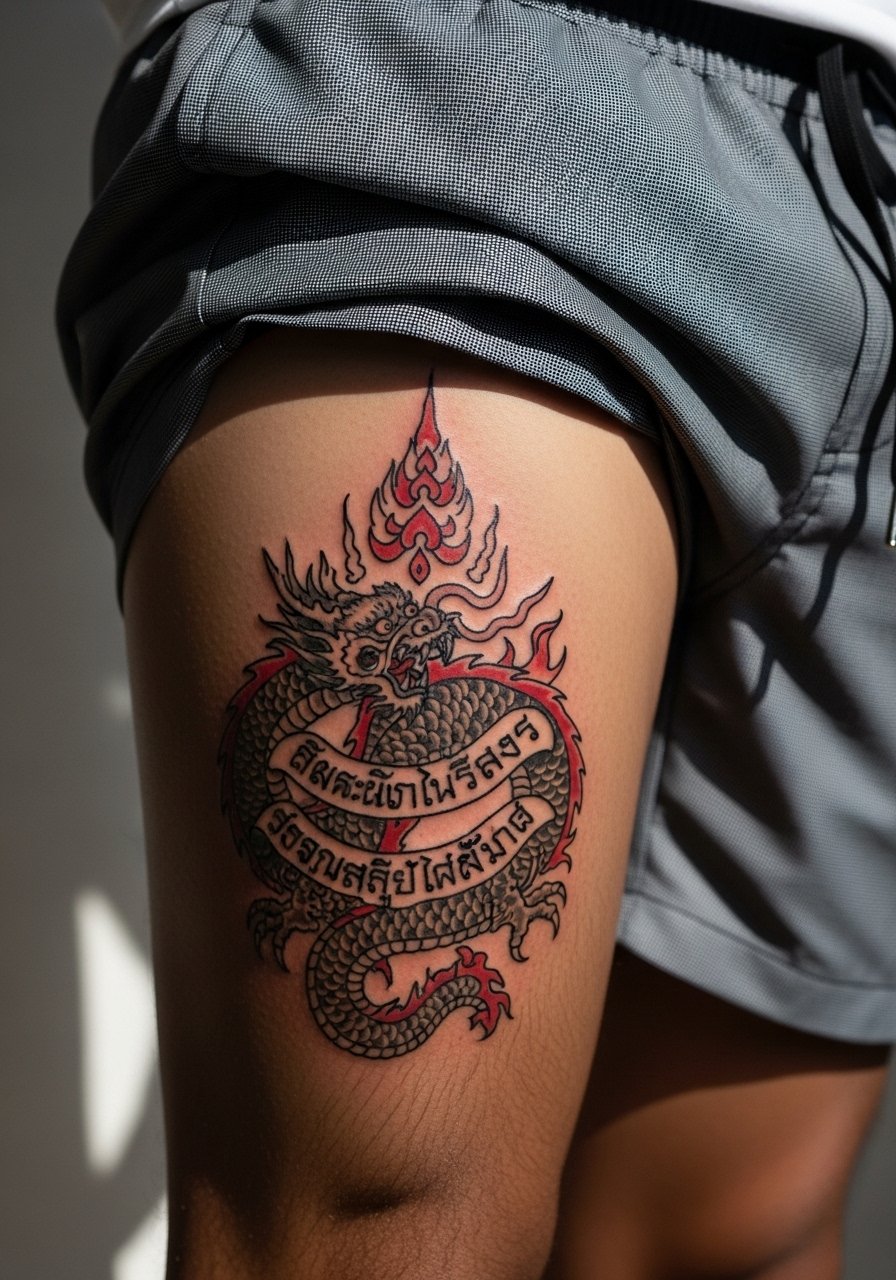
Sak Yant motifs rely on crisp black work and strategic negative space. For upper outer thigh placement, ask for simplified script spacing so the lines do not merge as skin moves. A real mistake is requesting tiny script inside dense dragon scales. Session time can be longer because of line repetition for saturation. This piece also raises cultural origin questions. Two camps exist on direct replication versus adapted motifs. One camp prefers exact traditional forms for authenticity. The other camp suggests respectful adaptation to avoid cultural missteps. Ask a shop how they approach cultural imagery during consultation.
5. Colorful Woodpecker Bird on Side Thigh
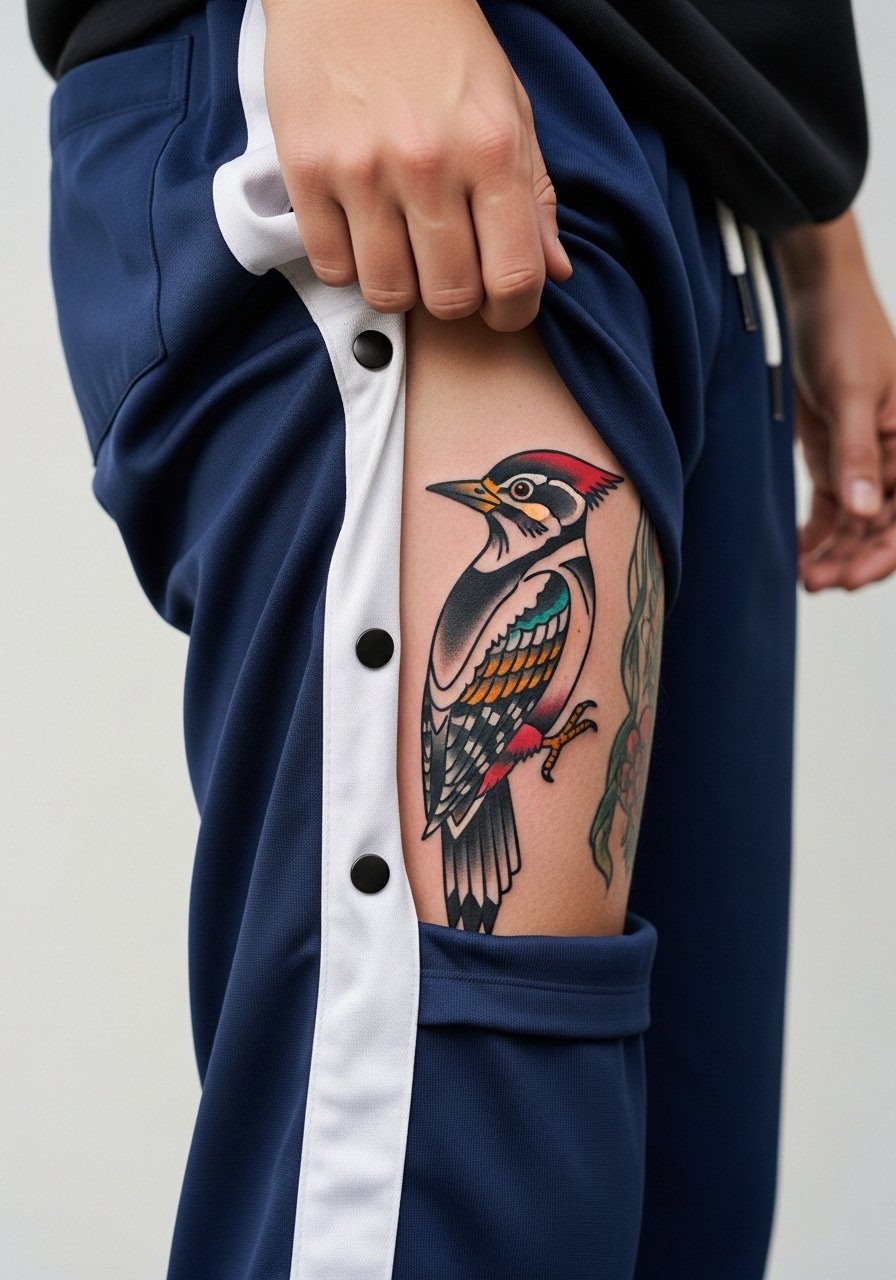
A woodpecker with clean linework reads clearly even after a season of shorts. Tell your artist you want saturated color blocks with heavy outlines and minimal tiny feather detail. The common aging problem is overworked feather stippling that becomes muddy after a few years. Pain is moderate because the side thigh has more soft tissue. For show-off looks, pair the piece with ripped skinny jeans or roll one leg of your pants; for the session, wear loose track pants so the artist can access the side without tight seams.
6. Skull and Snake Wrap-Around on Thigh
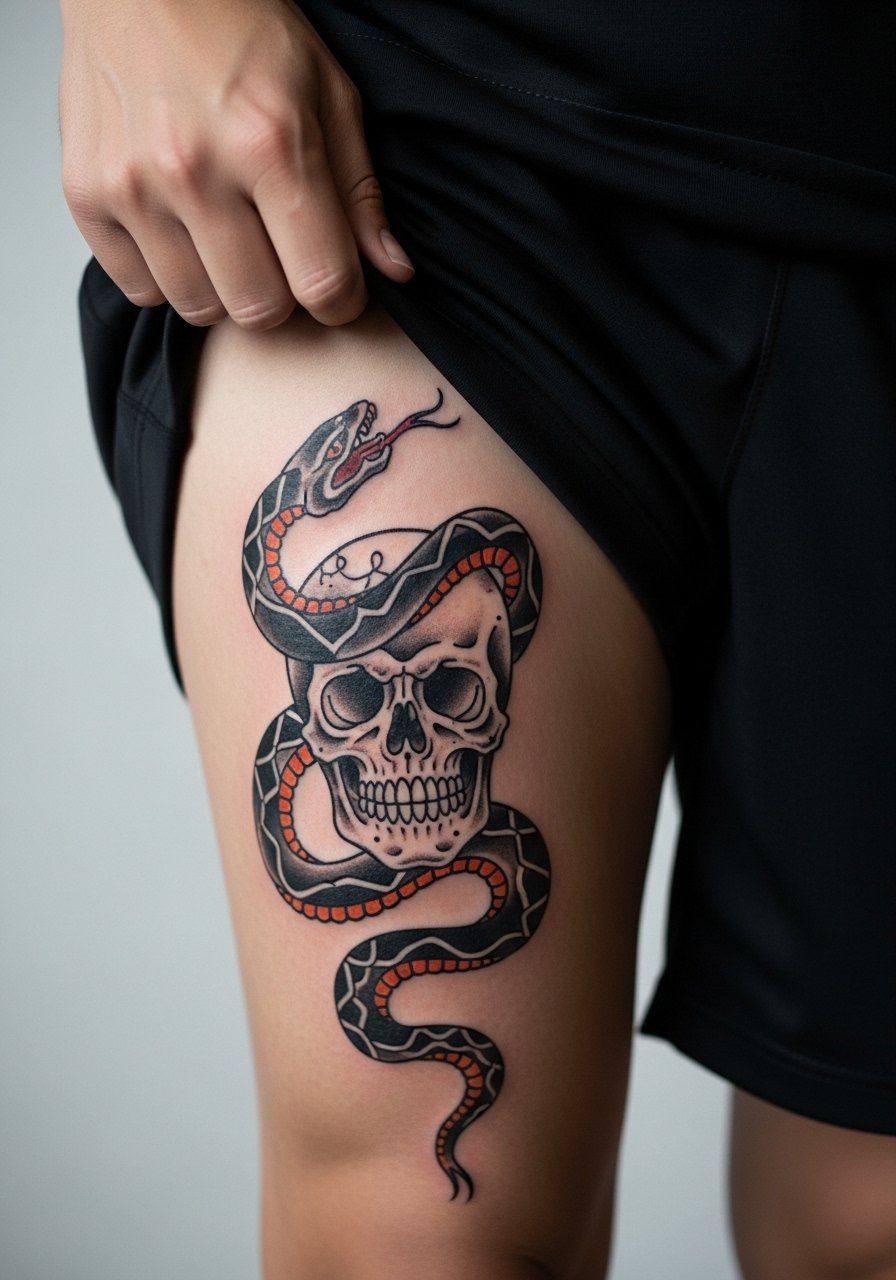
Wrap-around motifs shine on the thigh because the canvas lets the snake coil. When consulting, emphasize clear lineweight changes between the skull and the snake so one element does not drown the other as the skin stretches. A common mistake is trying to cram very fine scales into the snake on tight curves. Expect two sessions for proper saturation and an initial heavier swelling phase that eases in a week. For outings, knee-length athletic shorts in olive frame the wrap without cutting across the composition; try knee length gym shorts when you want a clean reveal.
Studio Day Picks
The first six thigh ideas include heavy outer-thigh saturation, wrap-around motion, and dual-thigh symmetry, so a small kit geared toward swelling, friction, and harsh summer sweat will smooth the session and first week.
-
CeraVe Healing Ointment. Gentle, non-greasy ointment many people prefer over thicker gels for initial sealing on hairy thigh areas without clogging pores.
-
Indie Butter Tattoo Balm. Thinner summer-friendly balm noted in forums for breathable hydration during warm weather heals on the thigh.
-
Hada Labo Gokujyun Lotion. Lightweight hydration that some users with deeper skin tones find avoids shine while keeping skin supple under ink.
-
Green People Aftercare Balm. A breathable balm mentioned for sensitive skin that prefers non-greasy finishes during longer thigh healing windows.
-
Saniderm Tattoo Bandage. Protective film for the first few days that helps prevent sweat-related infections on lower-body placements when used according to shop guidance.
7. Eagle in Flight Starting a Thigh-to-Calf Sleeve
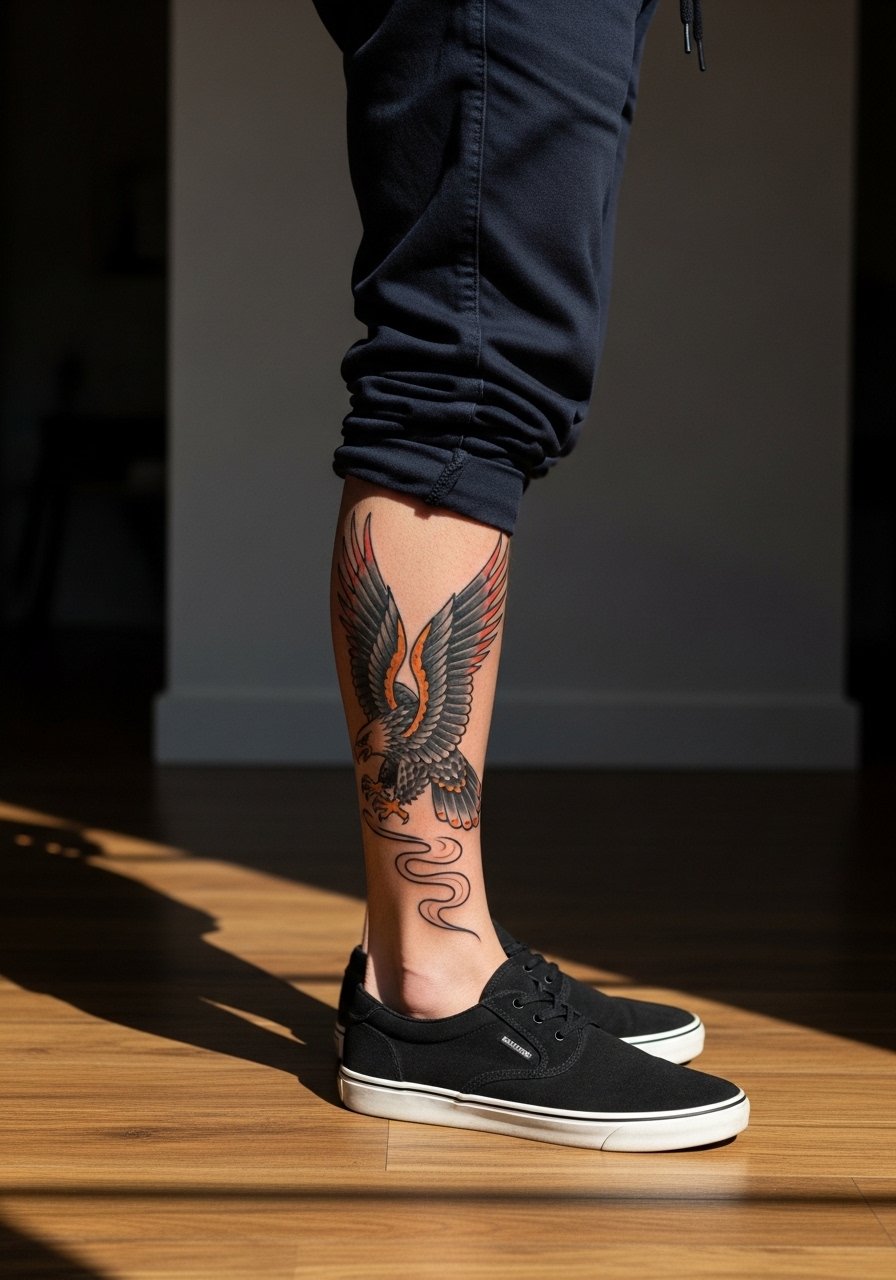
An eagle that begins on the thigh and stretches toward the calf needs composition planning for muscle movement. Ask your artist how the wings will wrap over the quad and transition into calf elements so the linework remains consistent across sessions. The mistake is treating the thigh as a separate piece without planning flow for sitting and walking. Sessions are long and you should expect multiple sittings. For showing it off cuff bootcut jeans high or pair with bootcut jeans dark wash cuffed above the design.
8. Sailor Ship with Waves Across the Thigh
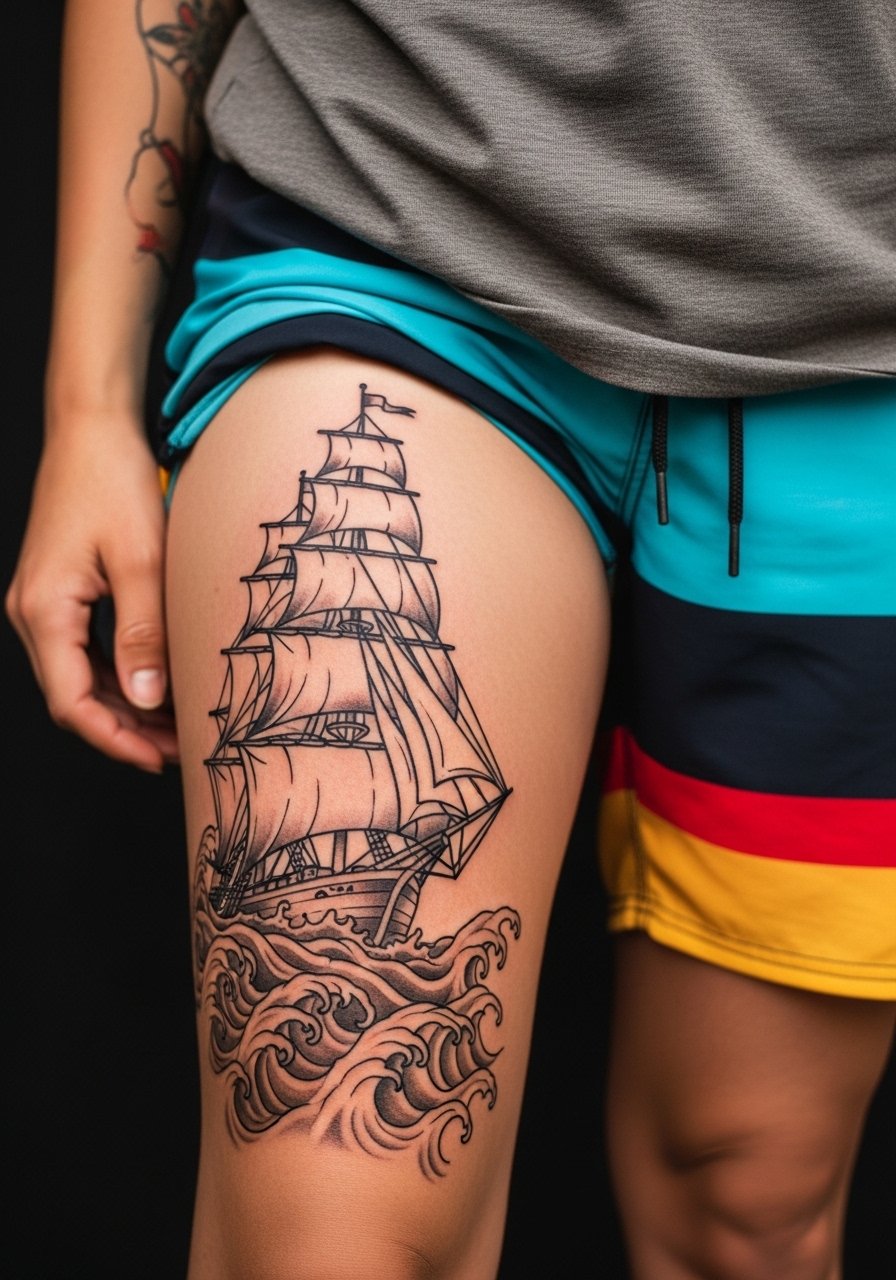
A sailor ship benefits from large solid color fills and thick outlines so the mast and sails remain readable after a few years. Tell your artist you want heavy black anchors on key lines for longevity. Avoid overly tiny rigging detail inside sails or it will wash out. Pain varies across the front thigh depending on how close the design gets to the knee cap. For day-of comfort wear baggy board shorts to give the artist full access without compression.
9. Lion Portrait on Front Thigh

A lion portrait asks for a balance between realism and traditional saturation. Ask for deeper contrast in the mane and less micro-hatching in the muzzle. The common aging error is asking for subtle fidelity that blurs as skin stretches. Expect multiple sessions and heavier time under the machine. For show-off styling roll slim chinos to mid-thigh and wear a chunky leather belt to match the portrait's bold edges.
10. Wolf Pack on Outer Thigh
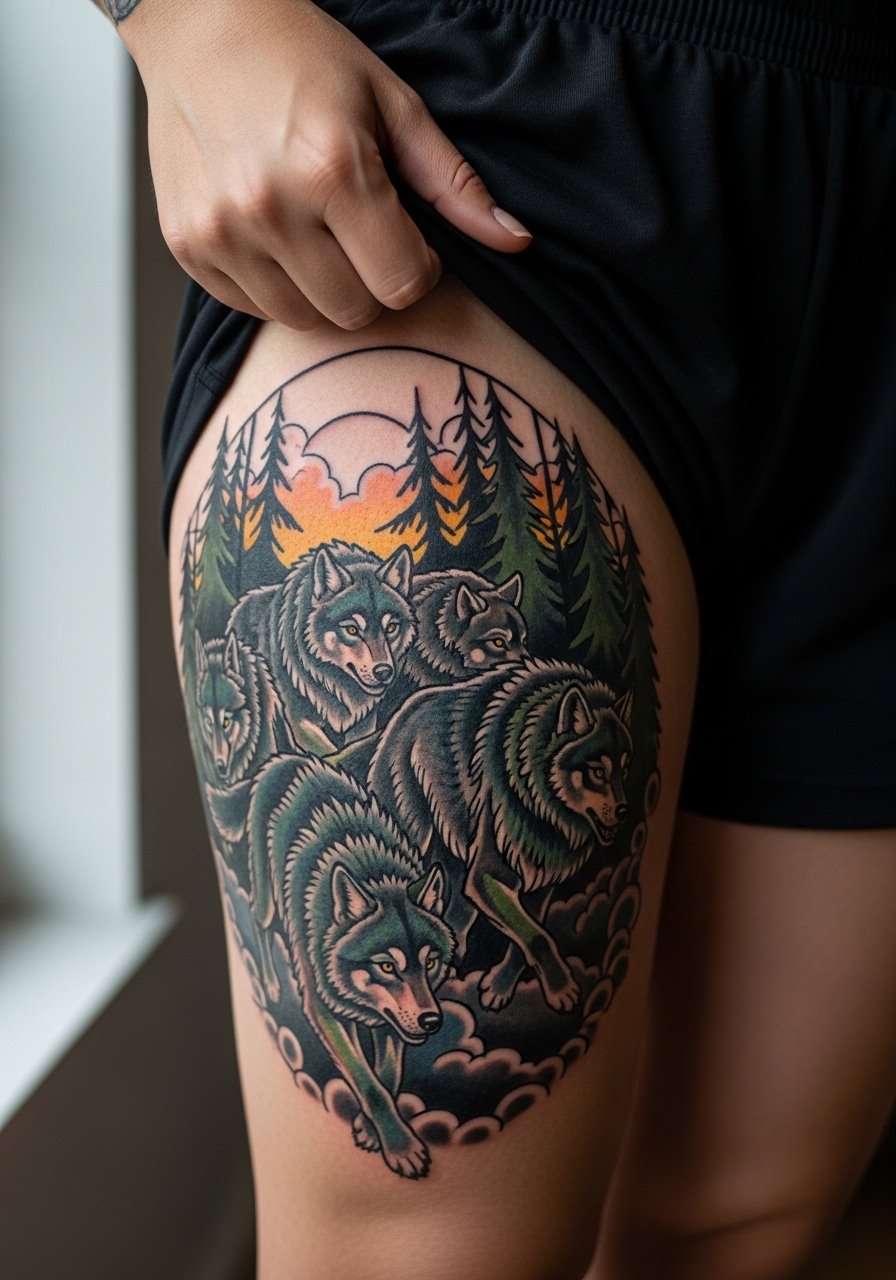
Wolves wrapping a quad should follow the muscle curves so the heads do not warp when you flex. During consultation show photos of how the design sits on moving models and ask for directional fur strokes that read with motion. A common mistake is forcing a straight-line layout on a curved area. Pain is moderate and touch-ups after heavy training seasons are expected. To show the pack, match the piece with fitted athletic shorts in navy or black that frame the composition.
11. Snake Coiling Down the Thigh Side

A long snake reads best when linework varies in weight along curves so scales do not blur. Tell your artist to keep scale patterns large and avoid tiny detail on tight turns. The thigh side has friction with pants, so plan touch-ups at year one. Sessions are usually split into two to give the skin time to settle. For the session wear loose track pants one leg rolled so the artist can access the full length without tugging the fabric.
12. Oval-Framed Traditional Motif Above Knee

An oval-framed motif above the knee is an ideal starter thigh piece for men who want bold impact without full commitment. Ask for thick outer borders and reduced interior micro-detail for longevity. The main mistake is sizing the oval too small, which causes the interior details to merge after six months. Pain spikes around the kneecap when the stencil approaches the joint. Wear knee-length athletic shorts in olive to keep the area easy to access and to show it off.
13. Compass and Anchor on the Inner Thigh
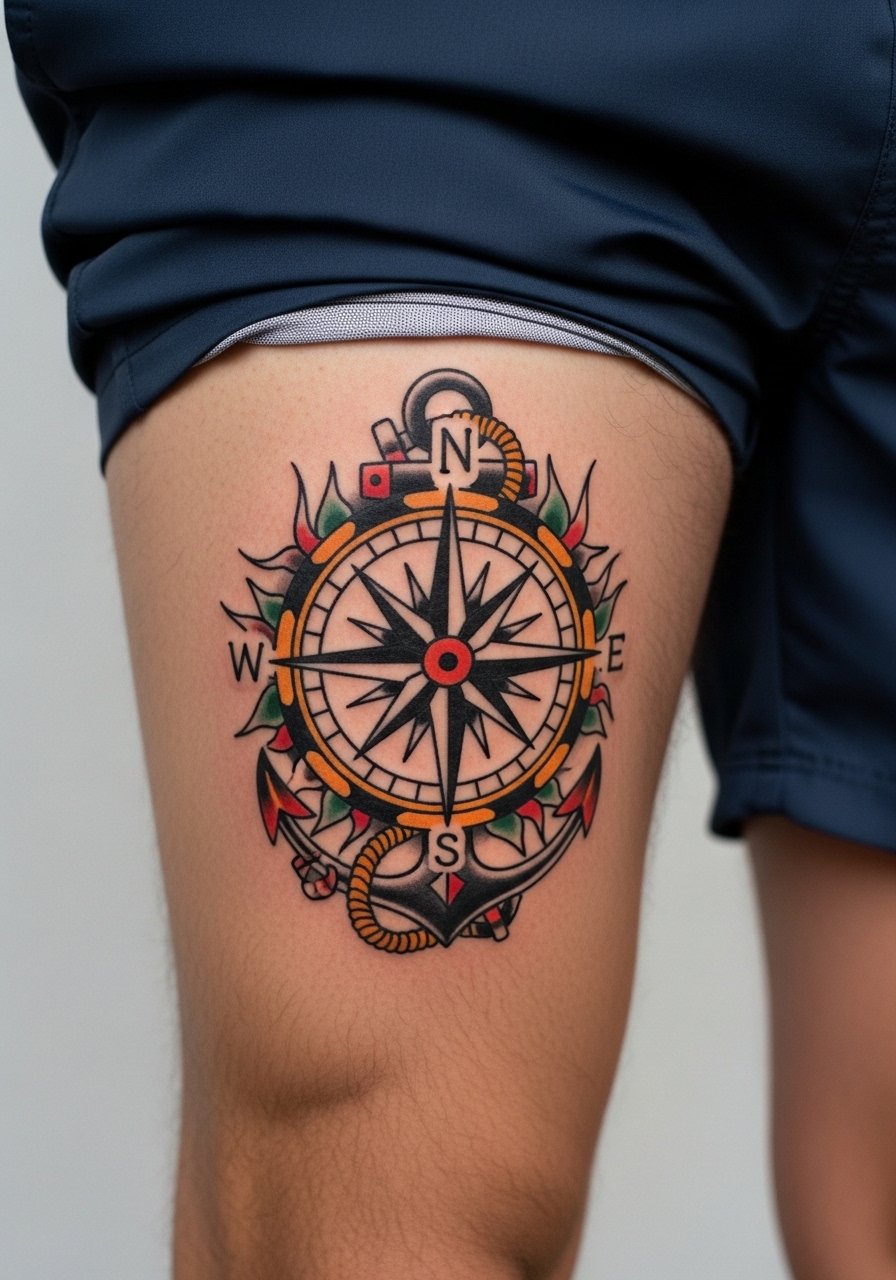
Inner-thigh anchor and compass pieces read well close to the leg crease, but they are one of the tenderer placements. Be honest with your artist about numbing and pain tolerance. A common mistake is asking for tiny needlework too close to the crease which causes more blowout risk and longer swelling. Sessions are shorter to limit discomfort. For show-off situations pick tailored swim trunks so the tattoo peeks in pools without overt exposure; for the session bring a loose robe or towel to maintain comfort.
14. Thigh-to-Calf Flowing Ship and Waves
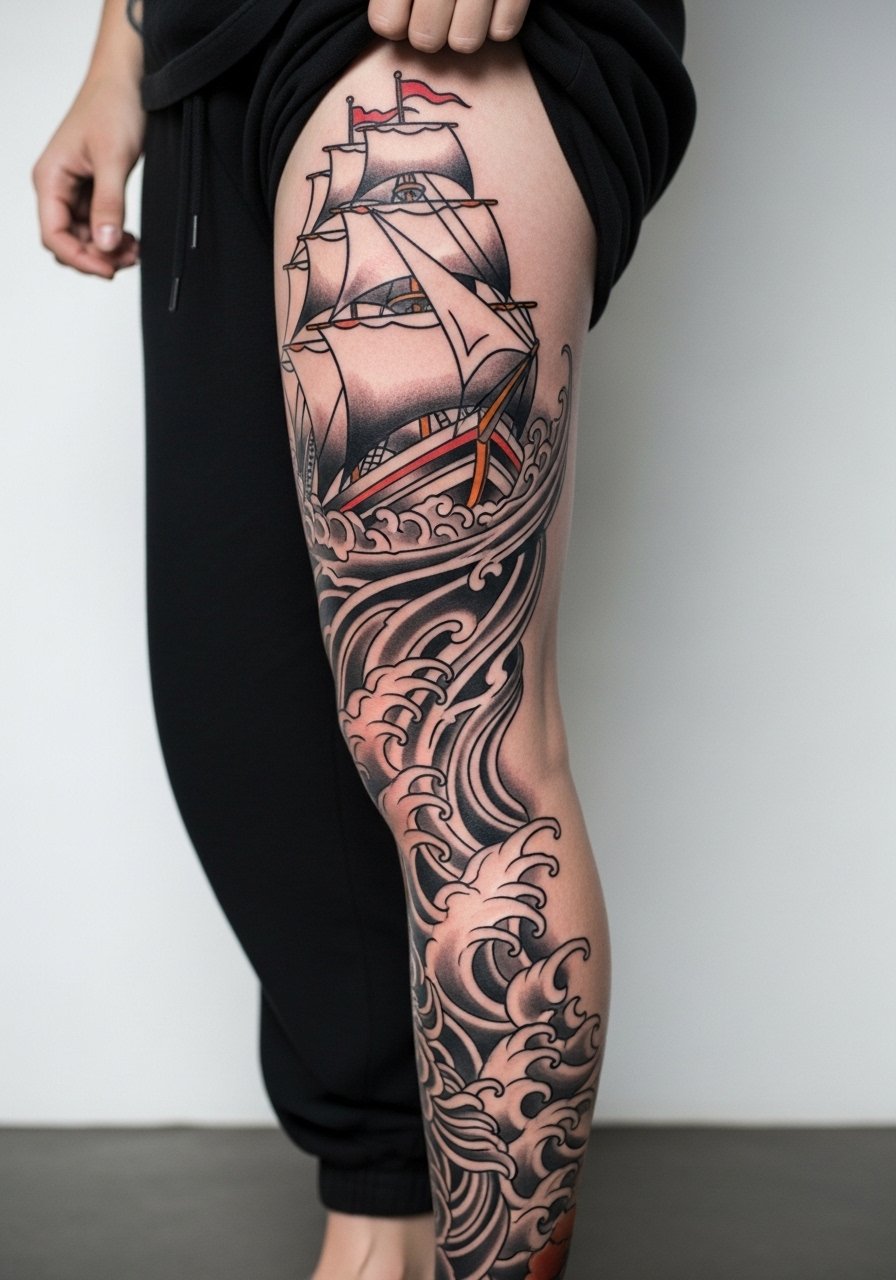
When building a thigh-to-calf ship, plan the negative space so waves do not collide with knee creases. During consultation ask your artist to map how seated poses will compress the composition. The error I see is treating the calf as an afterthought and ending up with a disjointed lower leg. Expect multiple long sessions and plan for mobility limitations for a few days after each sitting. For off-duty outfits cuff loose joggers tapered to the right height and pair with low boots.
15. Ovalized Minimal Rose Near Knee for Easy Concealment

A compact oval rose is an excellent minimal traditional option that hides under pants but still reads bold when shown. Ask for a thicker border and single-color saturation to keep it crisp. The typical mistake is adding tiny leaf veins and expecting sharpness past one year. Pain is moderate near the knee and sessions are usually quick. For casual reveals, pair with knee-length gym shorts that stop just above the motif for the best framing.
16. Symmetrical Thigh Daggers for Athletic Frames

Daggers with mirrored placement emphasize leg symmetry and athletic shapes. Share photos of your best-fitting shorts with your artist so they can place the daggers to align when you stand. A mistake is ignoring muscle insertion points which can distort dagger symmetry when you train. Pain is manageable and sessions are often split to match both sides. For session comfort bring fitted athletic shorts you can easily pull aside without irritating the area.
17. Front-Thigh Panther for Raw Contrast
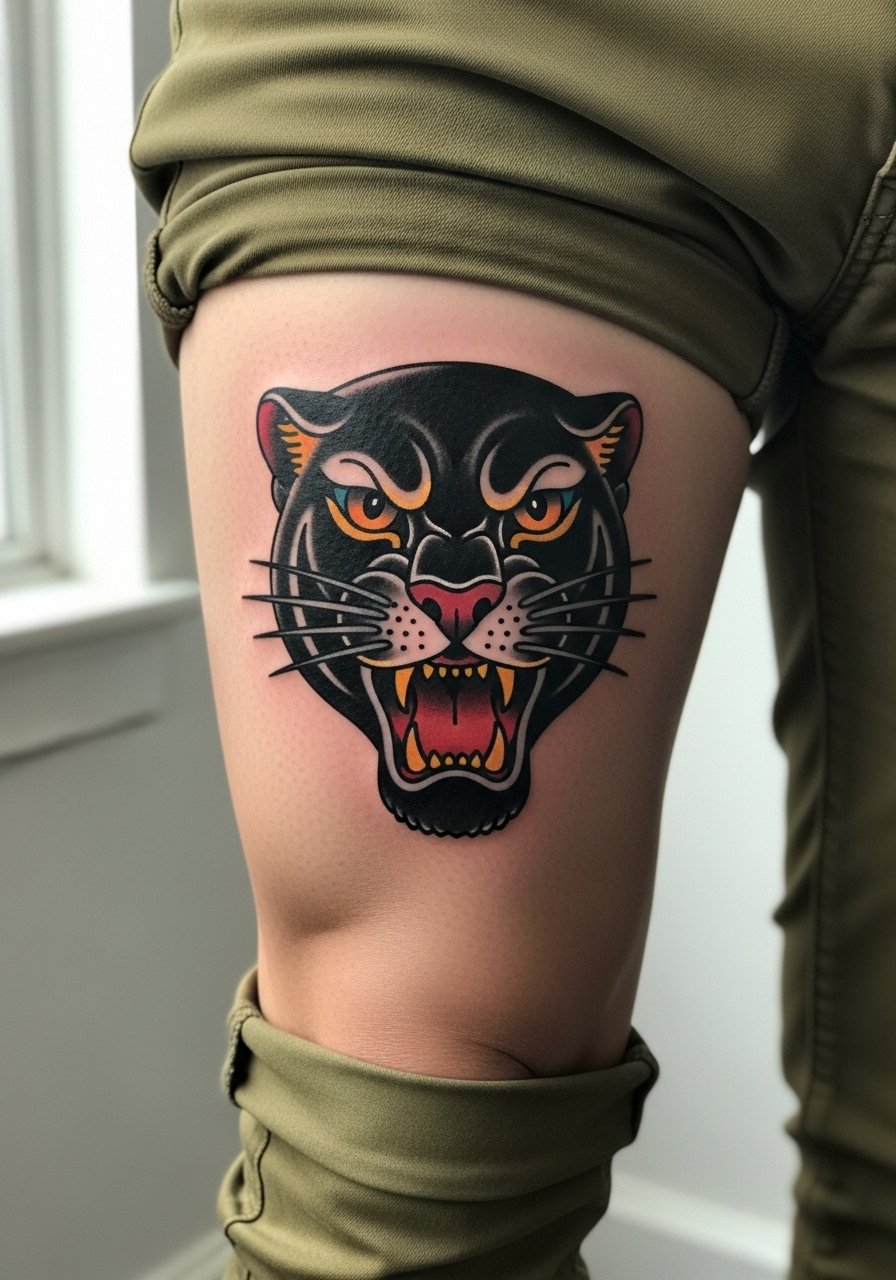
A panther on the front thigh is great for dramatic contrast. Ask for saturated blackblocks with clear highlights so the face keeps definition as it ages. The common mistake is over-texturing the fur with thin strokes that vanish under regular friction. Expect medium pain and plan a touch-up window at year one if you train heavily. For showing the piece, roll slim chinos to mid-thigh and match with a chunky leather belt to mirror the piece's weight.
Frequently Asked Questions
Q: Will a traditional thigh tattoo stretch out if I gain muscle or lose weight, and how can I prevent distortion?
A: It depends on where the design sits. Outer-thigh placements handle size changes better than designs over the muscle belly or near the knee. Tell the artist you plan to change size and ask for slightly looser composition and larger elements that tolerate stretching. Also expect touch-ups if you go through major bulk or cutting cycles.
Q: I have darker skin, will traditional colors pop on a thigh piece?
A: Darker skin tones respond well to strong black outlines and high-contrast color blocks. Ask your artist for deeper saturation in reds and limited subtle gradients. Photographs may need specific lighting to show color vibrancy, but a solid black outline preserves the design's readability long term.
Q: Fine line details are trending. Should I avoid them on the thigh?
A: Fine line can work on stable, low-friction areas. On thighs the safer route is heavier linework or more spacing between lines. There are two camps. One group says fine line blurs faster on moving skin. The other group says with exact needle depth and bigger spacing it settles fine. Ask how your chosen artist handles fine line on legs before booking.
Q: How do I handle studio cancellations and guest-spot reschedules for thigh work?
A: Book through apps or shops that show cancellation policies and keep a short waitlist with two studios you like. Many people follow convention calendars and local hashtags like #ThighTattooMen to track returning guests. If a guest cancels, having a backup shop limits months-long delays.
Q: What should I wear to a thigh tattoo session for comfort and artist access?
A: Wear loose, easy-to-adjust items. For outer or front thigh work consider loose drawstring sweatpants or baggy board shorts so the artist can roll fabric without pressure on the fresh ink. Choose fabrics that do not shed lint.
Q: Is it safe to use Saniderm on thigh tattoos in summer heat?
A: Artists split on this. One group says Saniderm speeds clean healing and protects against sweat. The other group warns it can trap moisture in humid climates and recommend breathable balms. If you choose Saniderm, follow the shop's timeline closely and watch for signs of irritation.