Fine line butterflies flood feeds right now, and the small ones on the back are a favorite for people who want something private yet visible in the right outfit. The trick with tiny butterfly back tattoos is balancing delicate detail and placement so the image stays crisp as skin moves and years pass. Below are 21 small butterfly concepts that work on different parts of the back, plus what to ask for in consultation.
1. Minimal Outline at the Nape

A tiny outline at the nape reads understated and can be shown off with a low bun or hidden under hair. Fair warning, the skin at the nape moves when you turn your head so ask for slightly bolder linework than you might want on the forearm. Tell your artist you want the line weight consistent rather than fragile, and ask about spacing inside the wings so the detail does not merge over time. The session is quick, often under 30 minutes, and the pain is usually low to moderate. Expect a small touch-up at year two if you want the outline to stay crisp. For the appointment wear a wide-neck tee you can pull aside easily.
2. Micro Dot-Shaded Butterfly on the Upper Spine

This center-back placement is great when you want symmetry with minimal scale. I recommend stipple shading inside the wings rather than solid fill because dots give texture without risking a dense block that can blur. During consultation say you want dot work with slightly more open spacing near the wing tips, that helps longevity. Expect a session of 45 to 60 minutes and a moderate pain level because the spine sits over bone. Common mistakes include asking for tiny texturing that ends up muddy. For the session wear a racerback tank so the artist has clear access.
3. Little Blackwork Butterfly on the Left Shoulder Blade

Blackwork saturates longer than thin gray lines, so this is a practical pick if you want contrast that still looks small and neat. Tell your artist to use a slightly thicker outer outline and low saturation inside the wings so it does not read like a solid blot over time. The shoulder blade has good canvas and usually heals predictably, pain is low to moderate, and session time is under an hour. A common misstep is asking for micro detail in a design that is too small for the placement. Show reference photos of healed blackwork rather than fresh pieces when you consult. Pair this with an open-back dress for nights out and link it to your everyday wardrobe with a loose button-down you can pull aside.
4. Tiny Watercolor Accent Near the Bra Line
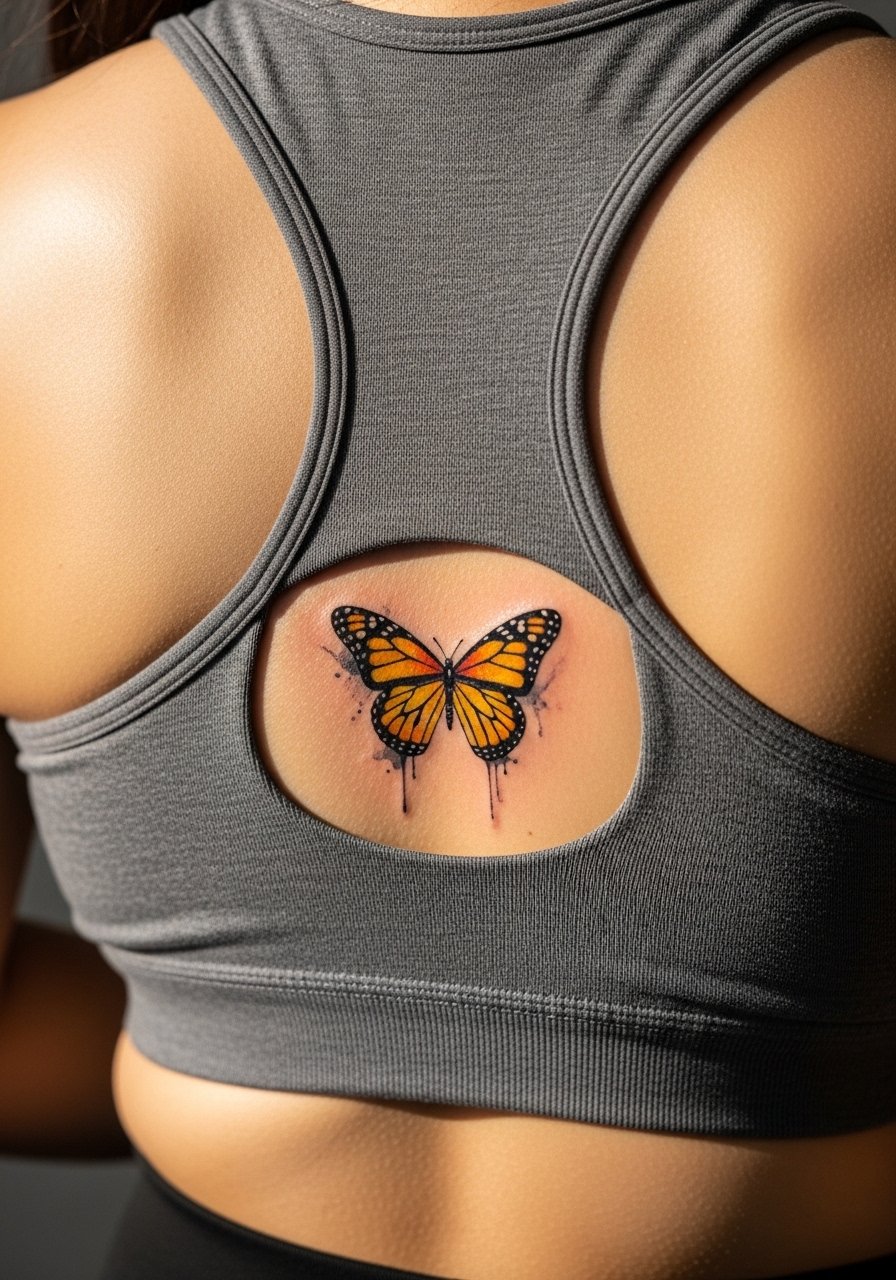
Watercolor edges look delicate but they can fade faster, especially where a bra strap rubs. Artists split into two camps on watercolor here. One camp avoids watercolor near friction zones because the pigments disperse and fade. The other camp says careful placement and gentle saturation can make it last. I suggest asking for soft color accents rather than full watercolor pools and request that colors sit slightly denser than you might want fresh. Session time is roughly 45 minutes and pain is low to moderate. For the appointment wear a sports bra or bandeau so the artist can expose only the area that needs work. For evenings, an open-back top shows the piece without rubbing from straps.
5. Micro-Realism Butterfly Behind the Right Shoulder

Micro-realism on the upper back gives a lifelike feel in a small scale, but it's sensitive to how much shadowing you ask for. I usually recommend keeping contrast moderate because heavy shading at small scale tends to merge. Tell the artist you want crisp wing edges and restrained shadowing. The session often runs 45 minutes and feels like low to moderate discomfort. Expect a touch-up window at around year three if you want it to preserve fine gradations. Show your artist healed micro-realism references so they match your longevity goals.
6. Symmetrical Pair on Either Side of the Spine

Matching twins on the back create a neat visual rhythm and work well with tops that show the spine. For symmetry, insist on stencils and a check before the needle so both wings align perfectly. The spine can be sensitive, so expect moderate pain and a session under an hour for two small pieces. A common mistake is trusting photos alone and not confirming scale in the chair. For showing this pair, pair it with open-back midi dresses that frame the central line without covering the wings.
Studio Day Picks
These placements above can sit under straps and clothing differently, so a few items smooth prep and early healing for upper and lower back work.
-
Stencil transfer paper kit. Lets you preview placement against the curve of the back before one line goes down, which is important for symmetry pieces and shoulder blade work.
-
Topical numbing cream. Applied per product directions before sessions near the spine or lower back to ease sensitivity during short, sharp passes.
-
Thin protective film roll. Useful for the lower back where clothing rub can disturb fresh ink in the first days.
-
Fragrance-free gentle body wash. Cleans the area during showers without stripping delicate fine line work that tiny butterflies depend on.
-
Aquaphor healing ointment. Thin application for the first few days helps keep moisture in while the epidermis repairs, which supports line retention in small designs.
7. Tiny Script Butterfly Accent at the Upper Left Back
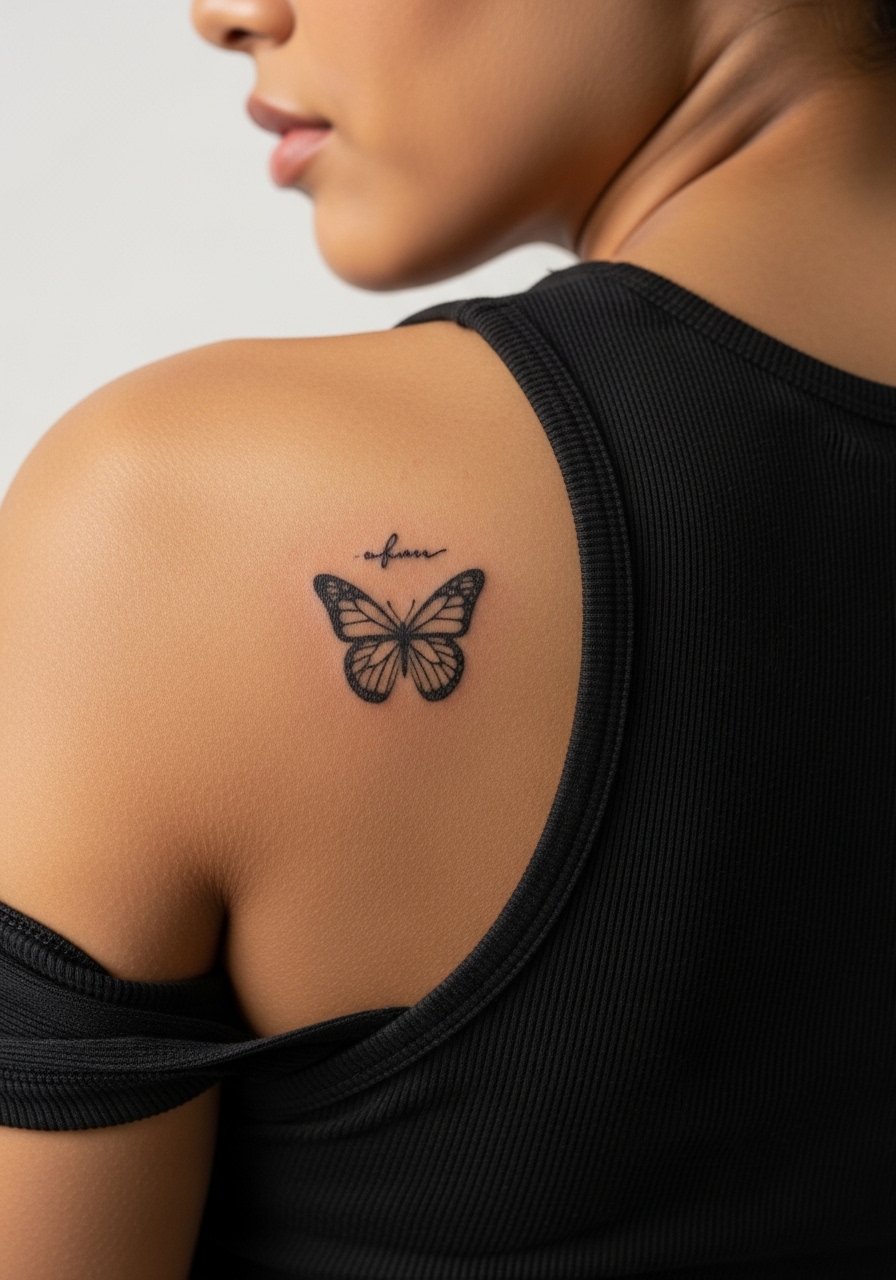
Mixing a tiny script or date with a butterfly can personalize the piece without increasing scale. The angle matters because curved skin can distort script if it is too small. Ask your artist to write the text at a legible size and to curve the butterfly slightly with the shoulder blade. The session is brief and the pain is usually low. A frequent mistake is requesting very small type that becomes illegible after healing. For the appointment wear a loose tank top so you can move freely and the artist can angle the stencil precisely.
8. Tiny Geometric Butterfly Over the Left Scapula

Geometric linework gives a modern edge to a classic butterfly silhouette. Tell your artist you want open negative space inside the wings, not dense fill, that helps keep edges legible as the skin settles. Scapula placement has a low blowout risk compared to the flank, and pain is typically low. Expect about 30 to 45 minutes in the chair and a touch-up possibility at two to three years if you prefer razor-sharp geometry. Style it with a backless top or halter for nights you want to show it off.
9. Minimal Color Pop Under the Right Shoulder Blade
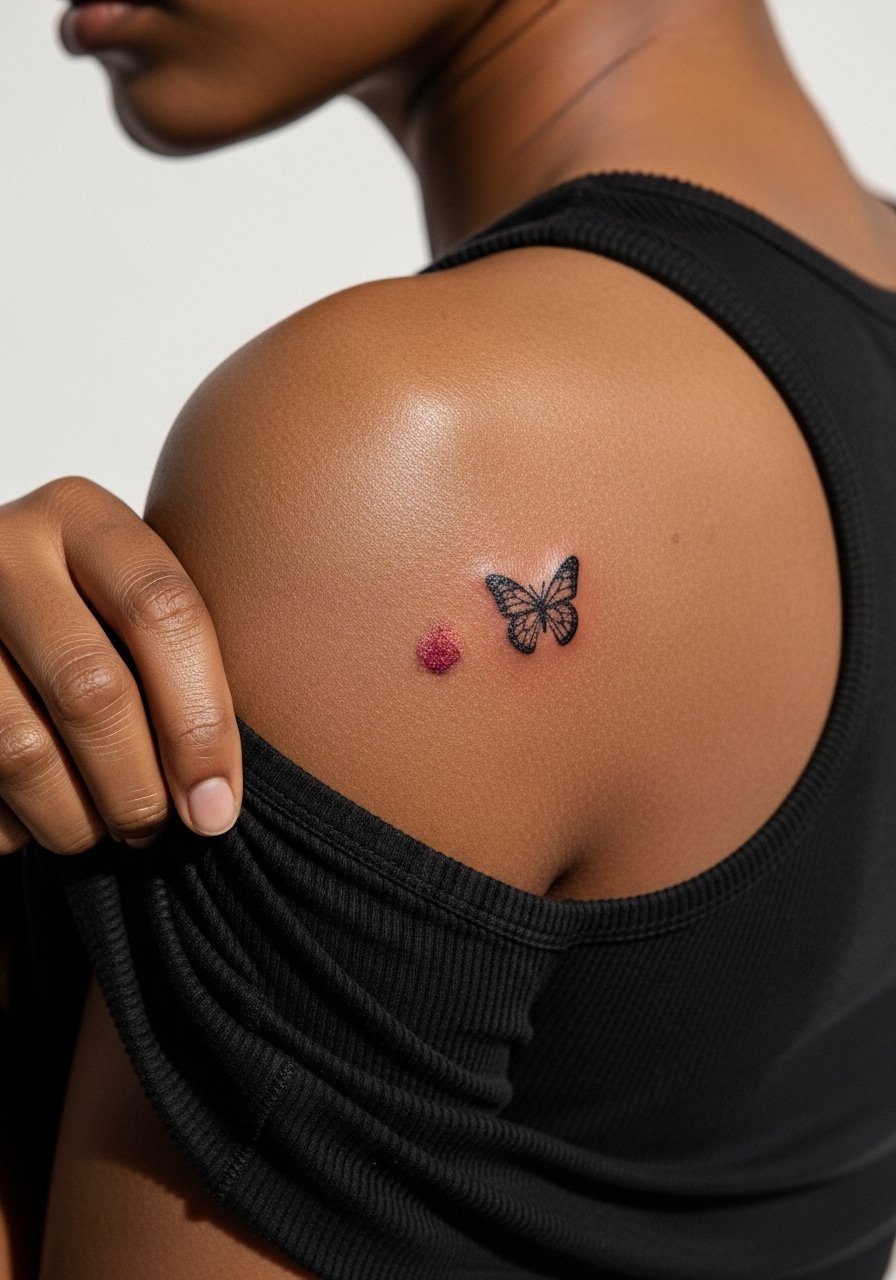
A single color dot in the wing adds personality without committing to full color. Darker skin tones sometimes require slightly more saturation to register the hue as healed, so ask your artist about color contrast during consultation. Session time is short and pain is low. The common mistake is asking for too many delicate colors in a small area; focus on one accent. For showing off wear a loose button-down you can pull to the side for a peek.
10. Tiny Lace-Patterned Butterfly Just Above the Lower Back
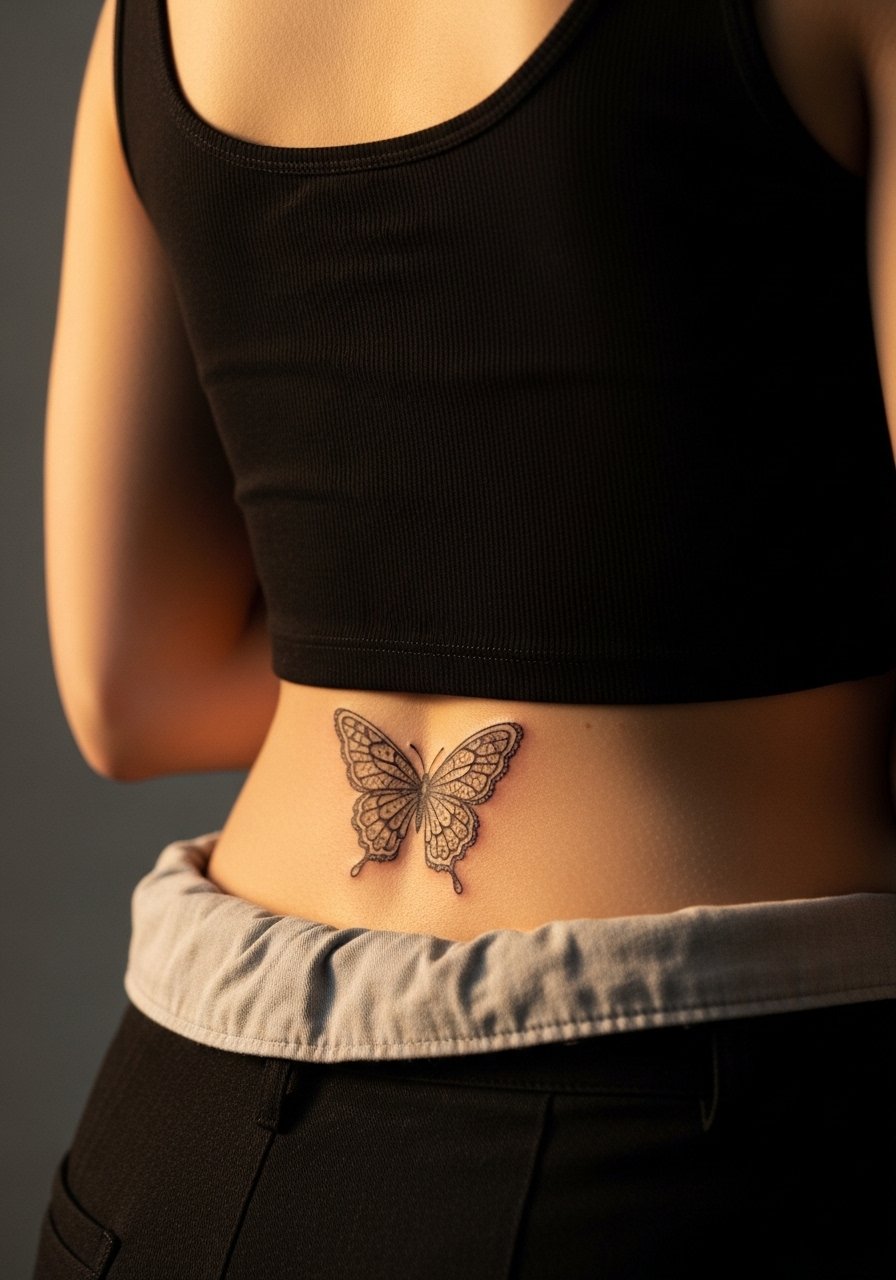
Lace-style linework looks delicate on the lower back but that same area sees friction from waistbands. One camp of artists advises against intricate low-back detail because the wear from clothing blurs the pattern. The practical alternative is to keep the lace motif hinting at pattern rather than full filigree. During the consultation say you want open spaces in the lace to avoid dense line clusters. Expect a short session and moderate pain that varies by person. For the appointment choose high-waisted pants that can sit below the stencil while you are in the chair.
11. Micro Script Wings Centered on the Upper Back
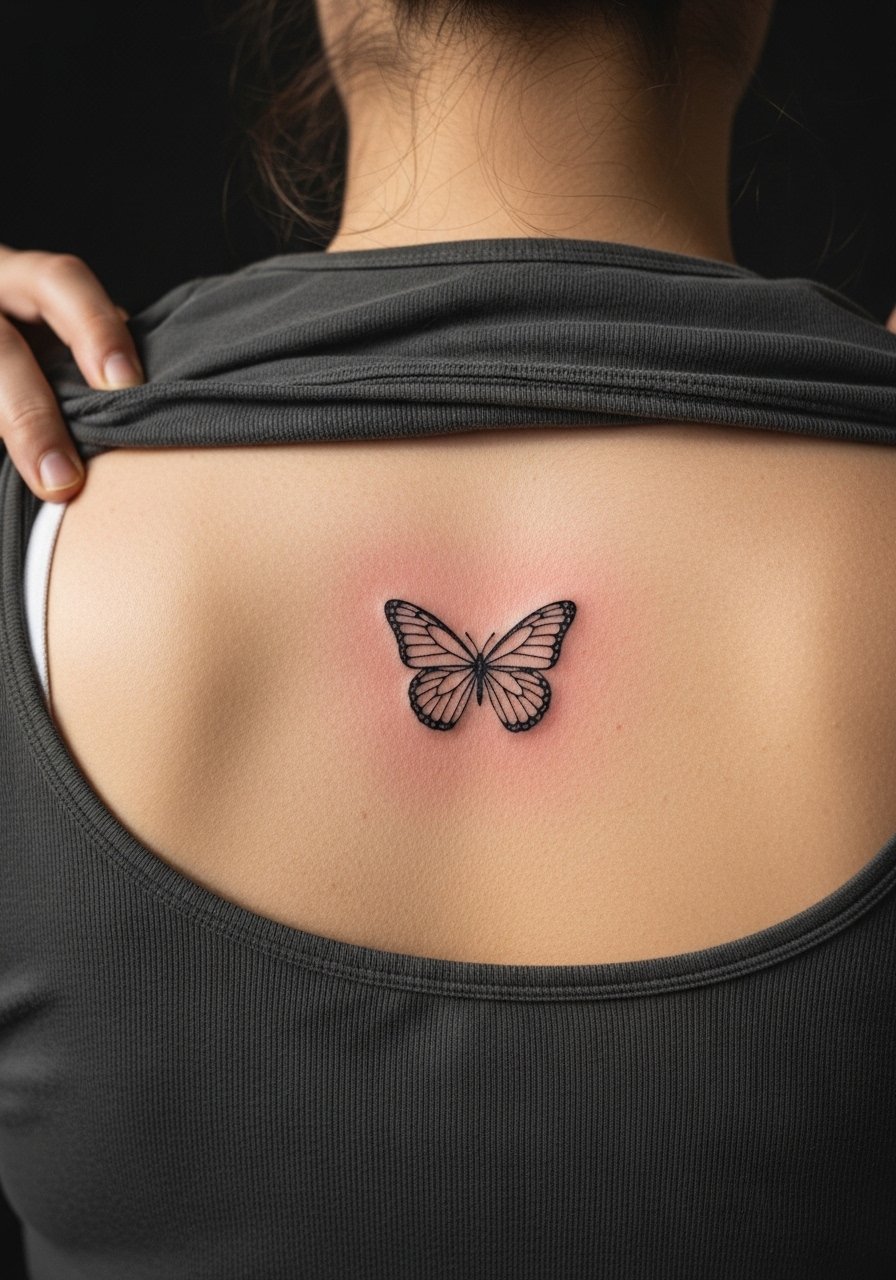
Using tiny script lines to shape wings is clever but legibility is the constraint. Ask your artist for slightly larger lettering if you expect the words to remain readable after healing. The upper back offers a forgiving canvas so the tiny script can hold better than on mobile surfaces. Sessions are under an hour and pain is low. A common error is expecting micro lettering to read at arm's length. Consult with your artist about whether the script should be decorative rather than literal text.
12. Tiny Tribal-Influenced Butterfly Near the Left Lower Back
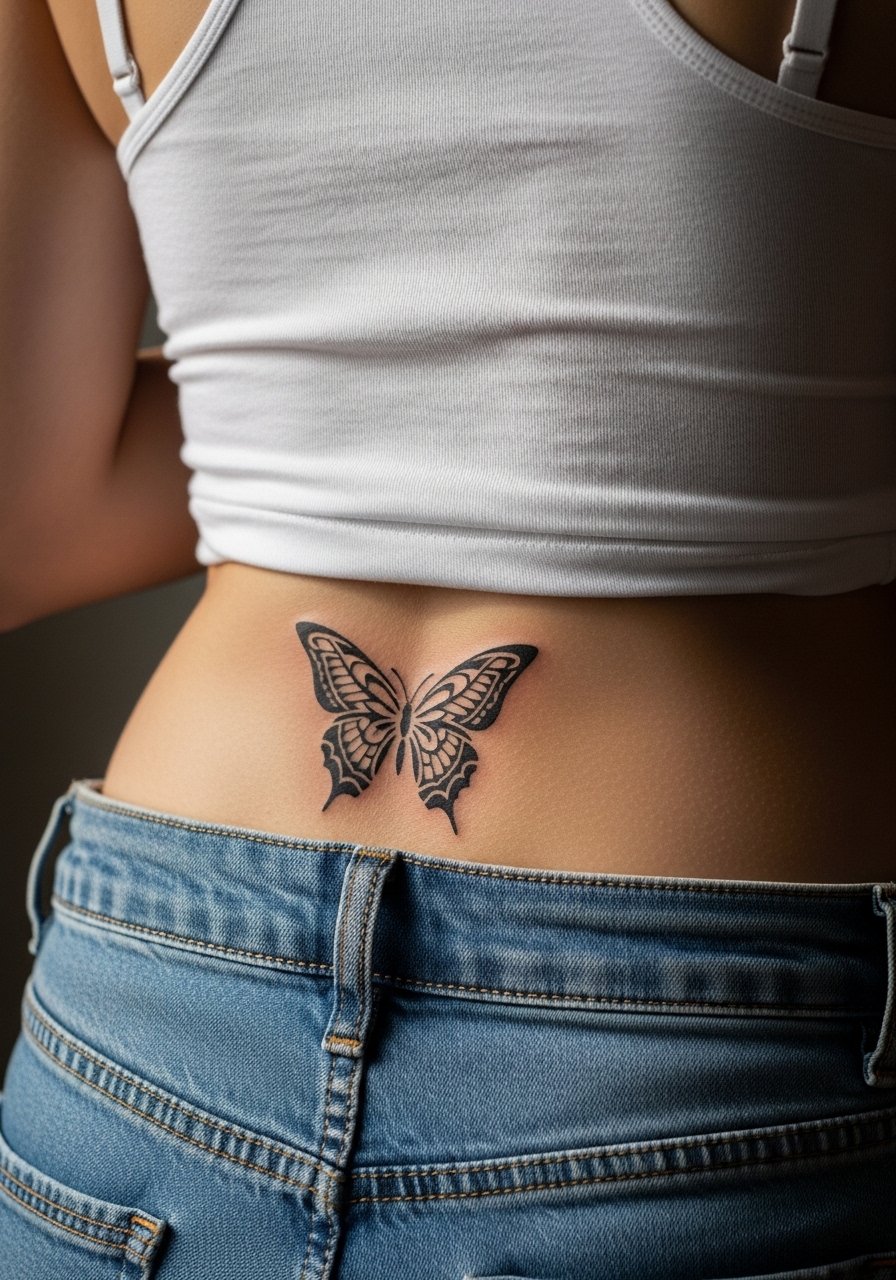
When a pattern borrows from tribal motifs, respect matters. Consider asking the artist to adapt elements rather than replicate a specific cultural symbol. This placement is private and pairs well with crop tops. The lower back has moderate friction so keep line density low to avoid future merging. Session time is short and pain varies by person. For the appointment wear high-waisted bottoms that you can lower slightly to reveal only the tattooed zone.
13. Tiny Photoreal Butterfly Along the Spine

Photoreal detail along the spine draws attention but artists debate whether extreme micro realism holds in that location. One camp says the spine and shifting skin break up tiny tonal gradients and that realism softens into a blur. The other camp contends that with careful needle depth and slightly larger scale, realism can last. My advice is to scale up the smallest elements and prioritize crisp contours over extreme shading. This piece can need a touch-up at year three to retain those subtle tonals. Wear a top you can shift for the session so the artist has unobstructed access.
14. Tiny Gemstone-Accented Butterfly Below the Left Shoulder
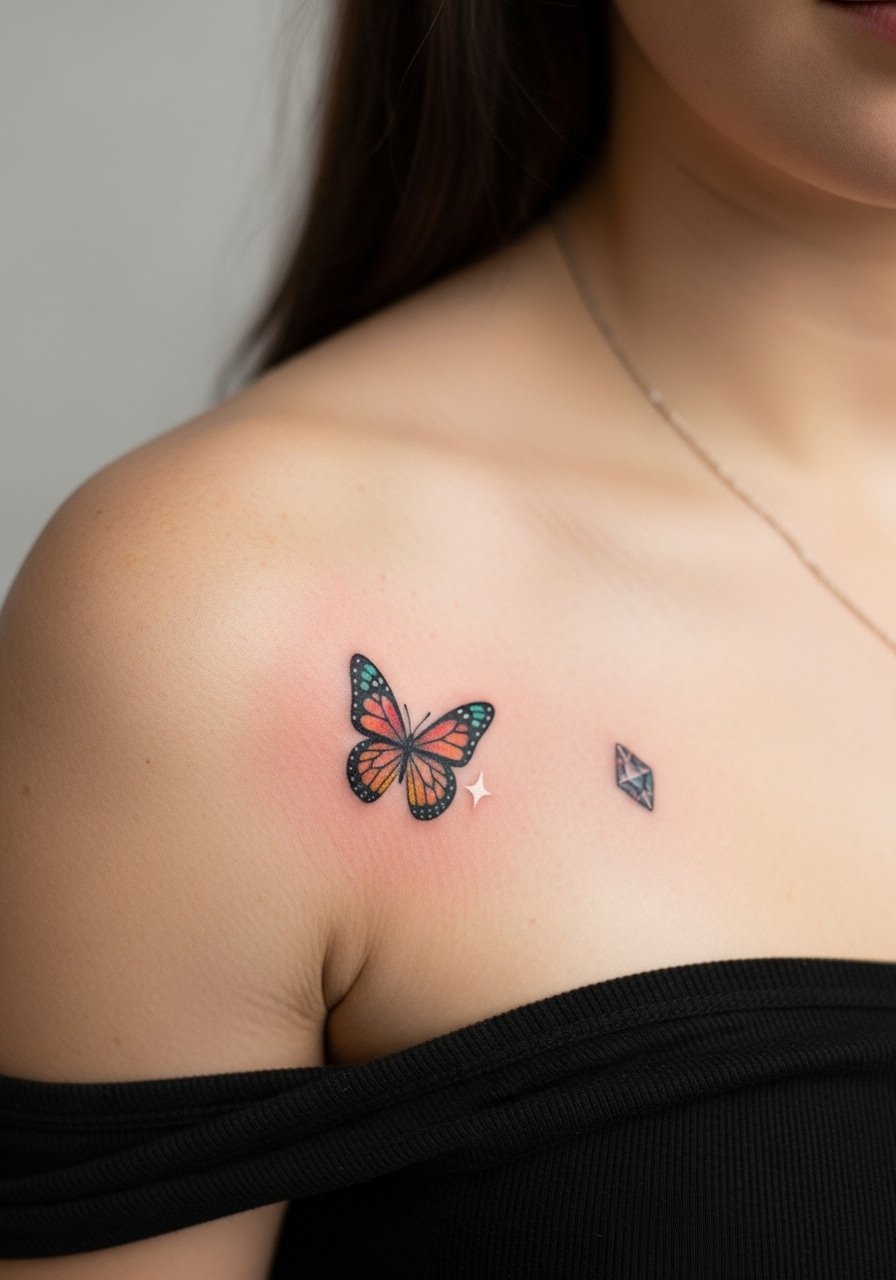
A tiny "gem" highlight in a wing gives an inky sparkle without full color work. For darker skin tones ask for slightly stronger contrast in the highlight so it reads as healed. Tell the artist you want a reserved white highlight only if they are confident in healed white retention. Session is brief and pain is low. A styling match is a strappy top that frames the shoulder and makes the small gemcatch light, try a strappy summer top for nights out.
15. Tiny Negative-Space Butterfly Over the Right Lower Scapula

Negative-space designs rely on crisp surrounding linework. On the scapula this reads clean because the skin is relatively flat. During consultation request a heavier outer line and open interior so the negative area heals as intended. The session is quick and pain is low. Avoid requesting ultra-thin borders because tiny gaps close up during healing. For showing it off, a backless sundress highlights the negative silhouette.
16. Tiny Butterfly with Whip Shading on the Lower Back Center
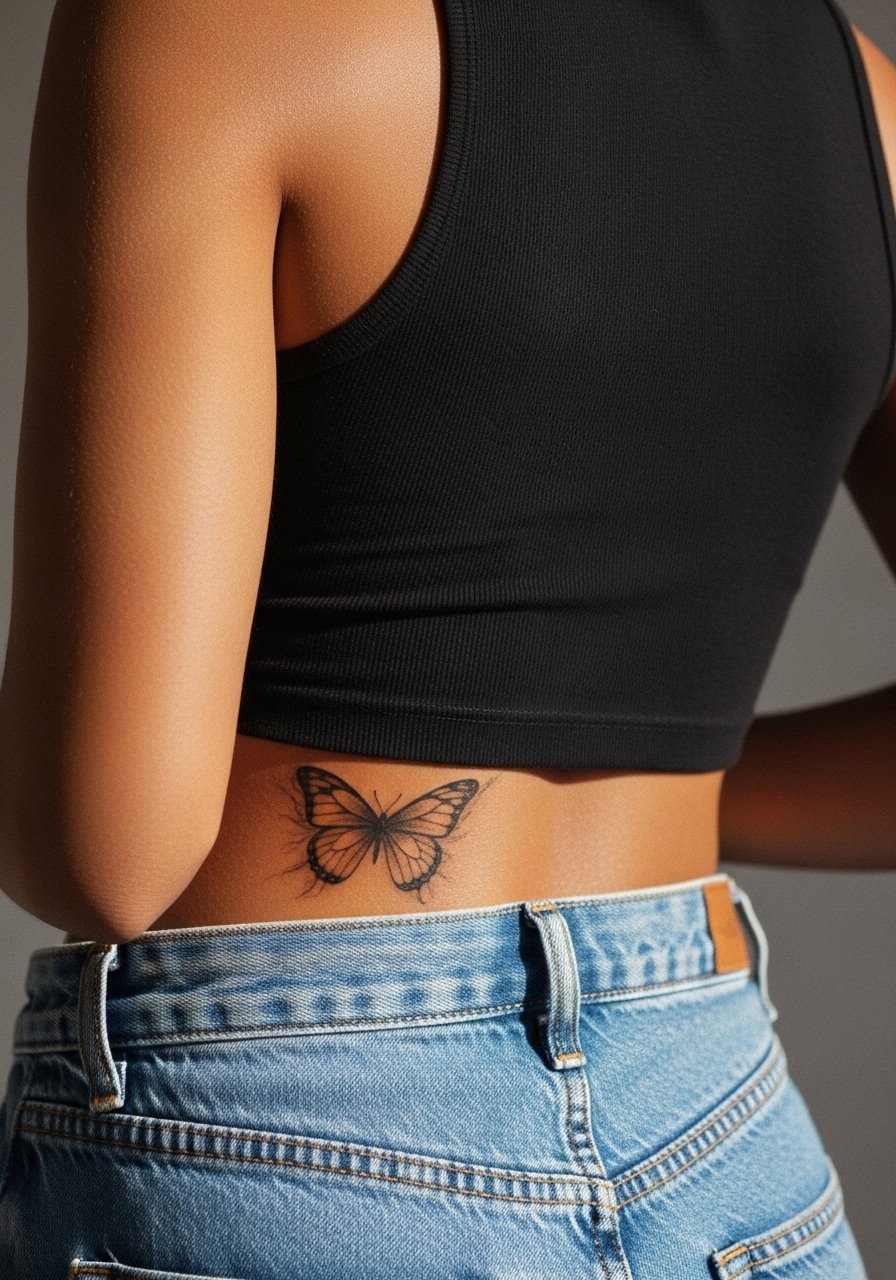
Whip shading offers soft gradients at small scale without heavy saturation. The lower back sees waistbands and irritation so the strategic use of whip shading helps keep shading airy rather than dense. Tell the artist you want a feathered approach, not a packed gradient. Expect a short session and moderate pain depending on personal thresholds. A frequent mistake is packing shading too tightly. For the appointment choose high-waisted jeans you can lower a touch while staying covered.
17. Tiny Butterfly with Dot-Work Halo at the Upper Center Back
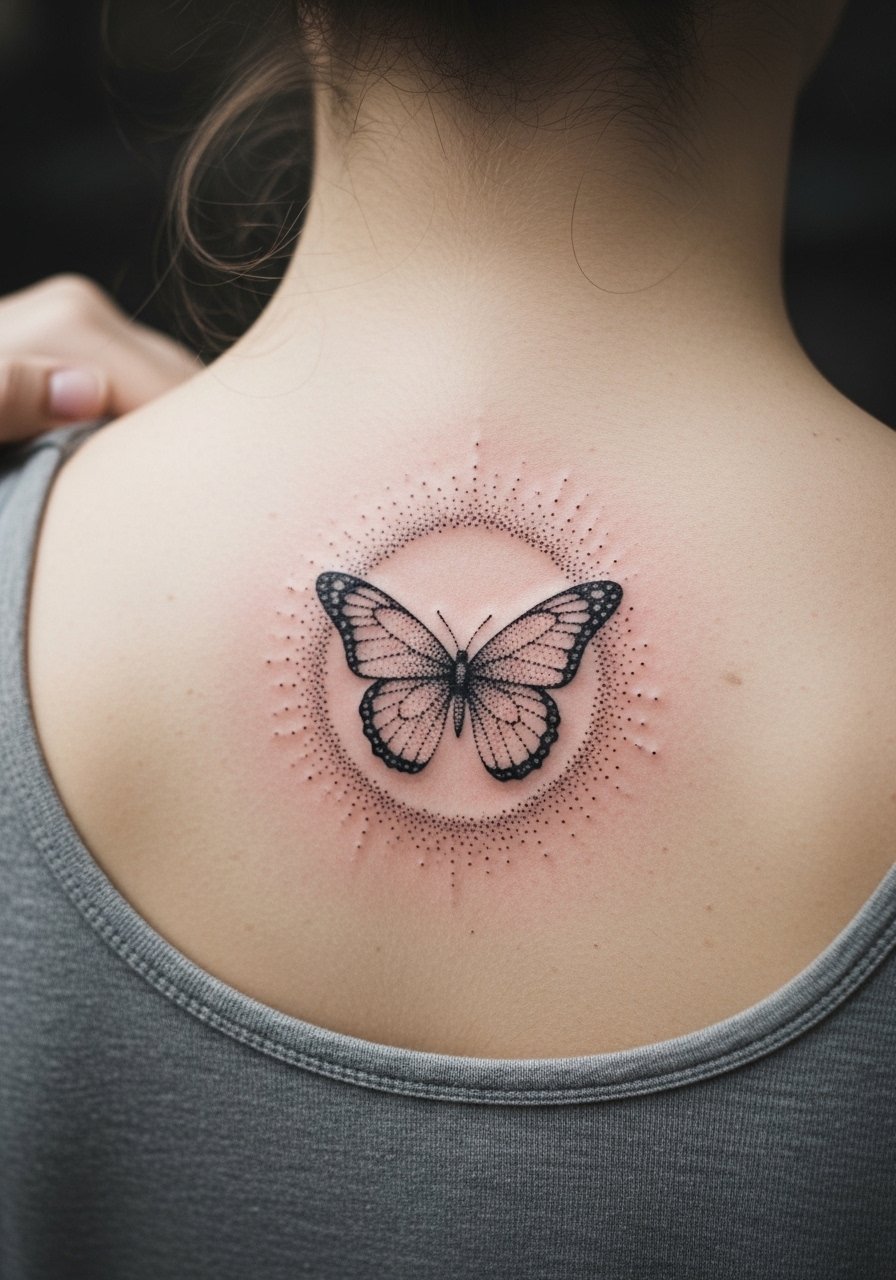
A stippled halo calls attention without increasing scale. Dot work heals with texture that still reads from a short distance, and it ages well if dots are spaced. During the consult ask for open spacing in the halo rather than a dense cloud. Session time is under an hour and pain is low. The trick is not to overdo the dot density, which some request thinking more will read bolder. For showing this one, a racerback dress frames the halo cleanly.
18. Tiny Butterfly with Filigree Tail Near the Left Mid-Back
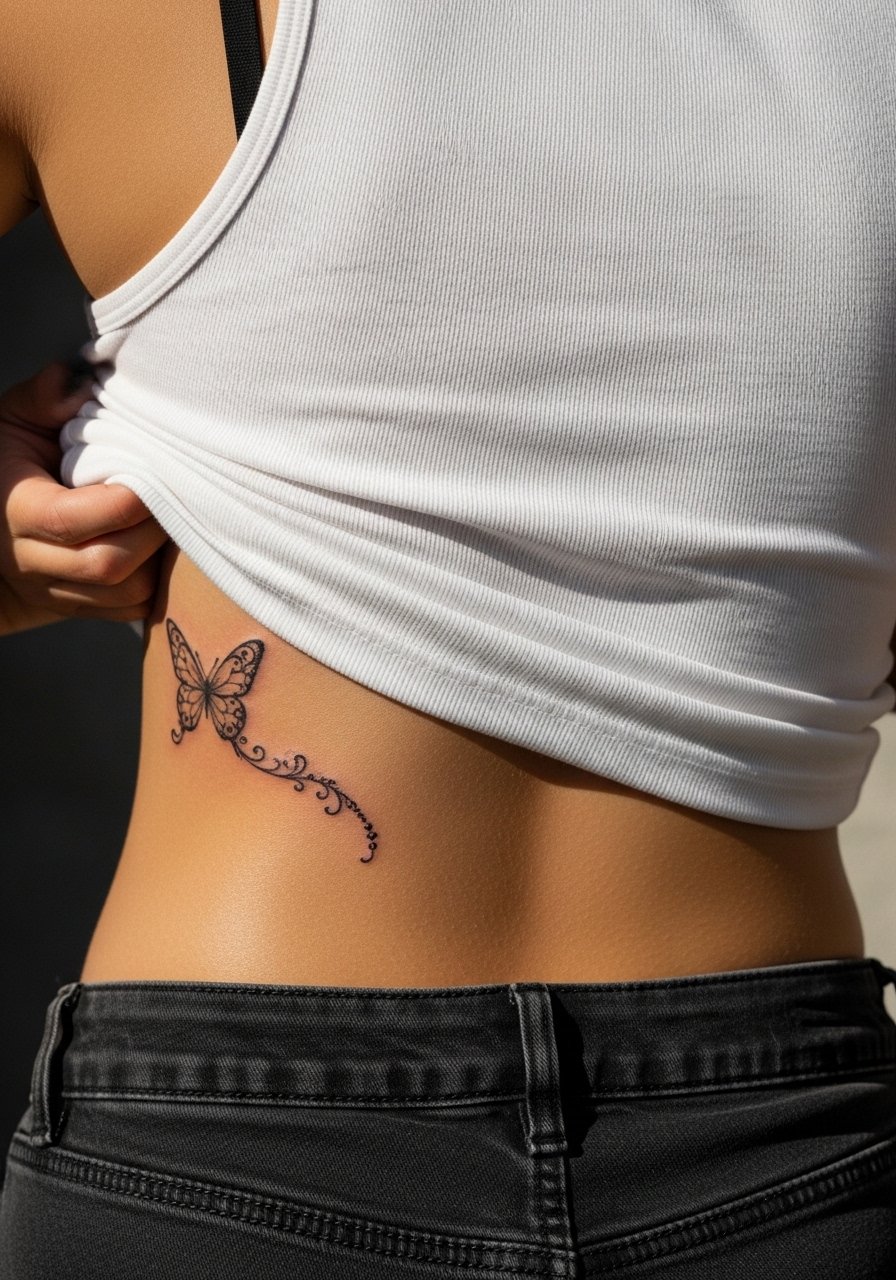
A trailing filigree line gives movement but avoid long thin tails that will blur over time. Ask for a slightly bolder anchor point where the tail meets the butterfly to prevent early merging. The mid-back provides good space for a short tail and the session is brief. Pain level is low to moderate. For evenings choose tops with low backs or adjustable straps so you can show the trail without rubbing.
19. Tiny Butterfly with Chain-Link Pattern Across the Upper Back

Linking a butterfly to a delicate chain motif is decorative and works best when the chain lines are not too thin. Chains on the back can be irritated by straps, so plan clothing accordingly in the first week after tattooing. When you consult, ask the artist to draw the chain so it sits slightly above areas that will flex. Session time depends on length but small runs are under an hour and discomfort is low to moderate. For outfits, a strapless top or off-the-shoulder piece shows the chain without constant chafing.
20. Tiny Butterfly with Metallic Ink Accent on the Right Upper Back
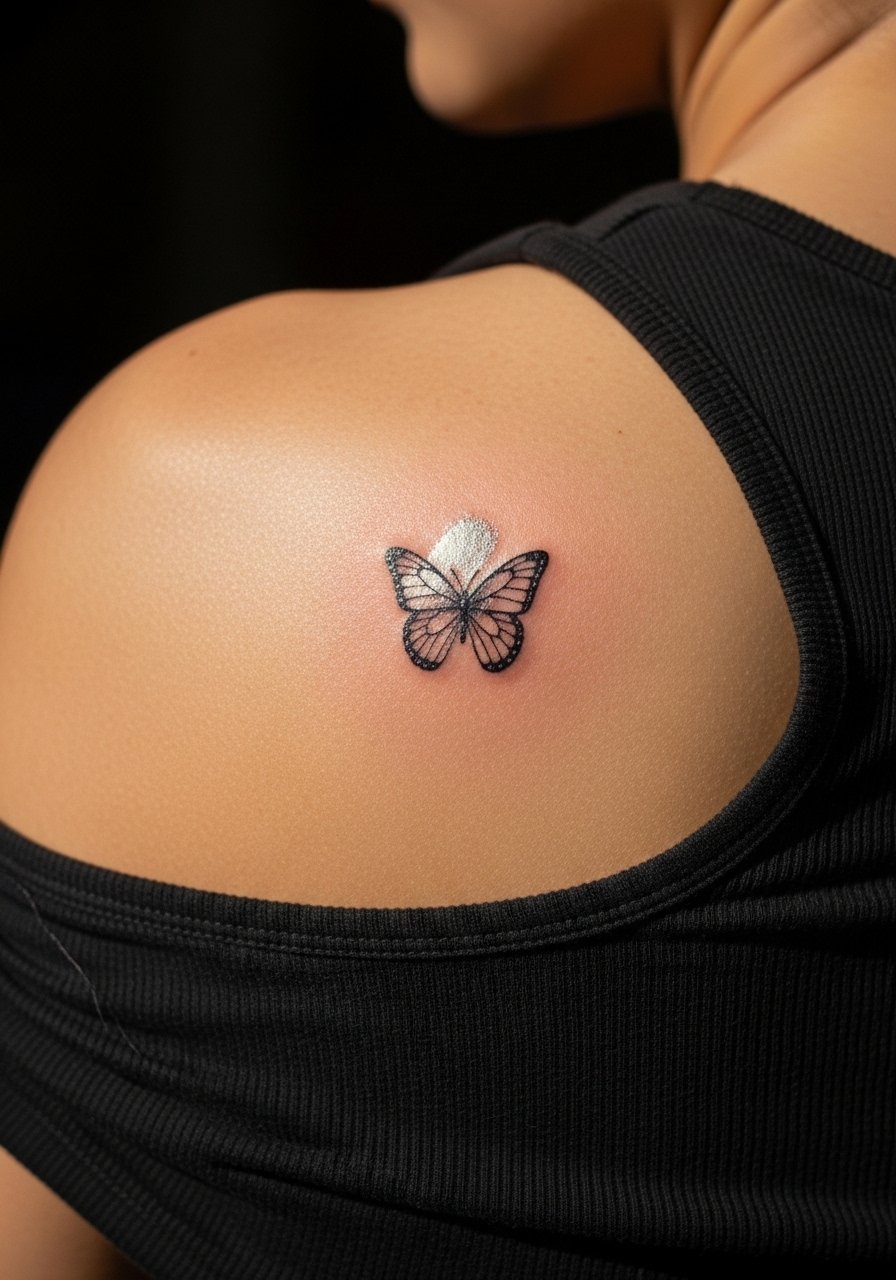
Metallic or pearlescent inks can add a shimmer but they do not behave like standard pigments and may fade faster. Some artists avoid metallic inks for exactly that reason and prefer custom white highlights. If you want a sparkle, discuss healed expectations and whether they have experience with cosmetic inks on skin tone similar to yours. Sessions are short and pain is low. Wear a top you can move aside easily so the artist can test placement without stretching the area.
21. Tiny Butterfly Constellation Cluster Across the Upper Middle Back
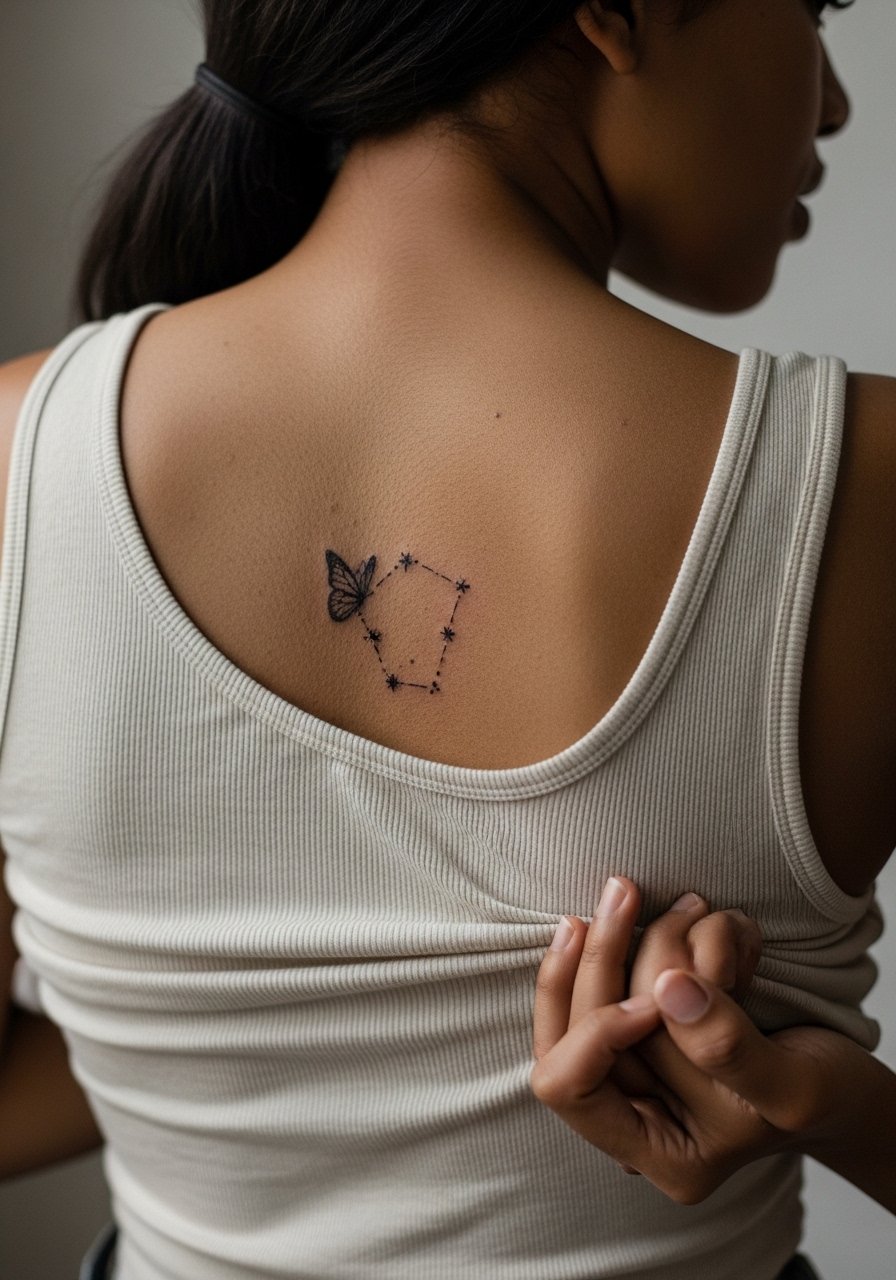
Combining a single butterfly with tiny stars spreads attention and keeps the scale small while adding context. This works well centered over the bra strap or slightly above it. Ask your artist to space the stars so that they do not fill the area densely, stars need space to age well. Session time is about 45 minutes and pain is low to moderate. For the session wear a strapless or sports bra you can move to expose the upper back area without full undressing.
Frequently Asked Questions
Q: Will fine line butterfly details blur if I place one on the lower back?
A: The lower back is prone to friction from waistbands which can soften ultra-fine lines. I recommend slightly bolder linework and open interior spaces for any lower back butterfly. That approach keeps the design readable longer and reduces the need for touch-ups.
Q: How long do tiny color accents last on medium and dark skin tones?
A: Colors can need more saturation to read on darker skin tones, and small color accents tend to fade faster than black. From what I have seen, a modest color pop that is placed carefully usually needs a touch-up sooner than pure black linework, often within two to four years depending on sun exposure.
Q: Are there artist styles better suited to tiny photoreal butterflies on the spine?
A: Photoreal on the spine demands an artist comfortable scaling realism up slightly so gradients heal. Look for portfolios via hashtag searches, tattoo directories, and forum threads that show healed images on the spine. Those discovery pathways help you find someone who has reliable healed results.
Q: What should I wear to my session for a butterfly just below the bra line?
A: Wear a fitted sports bra or bandeau you can adjust so the artist only sees the area that needs work. That keeps the rest of your torso covered and gives the artist an unobstructed field. A product like a simple sports bra is usually ideal.
Q: If I want the butterfly to remain private, which back placements are easiest to conceal?
A: Center spine and lower back placements are easy to conceal under regular shirts. Shoulder blade and upper back placements show in tank tops and open-back dresses, so choose based on how often you want it visible.
Q: Do tiny butterflies affect future tattoos in the same area if I plan to expand?
A: Small butterflies can be integrated into larger back pieces later, but plan the scale and orientation with that future expansion in mind. Tell your artist if you want a potential sleeve or larger back piece later so they can leave comfortable negative space.
Q: How long should I expect before scheduling a touch-up for a tiny butterfly?
A: It depends on placement and style, but many tiny butterfly styles benefit from a check at year two or three. Fine line versions often need touch-ups sooner than modest blackwork or stipple-based designs.