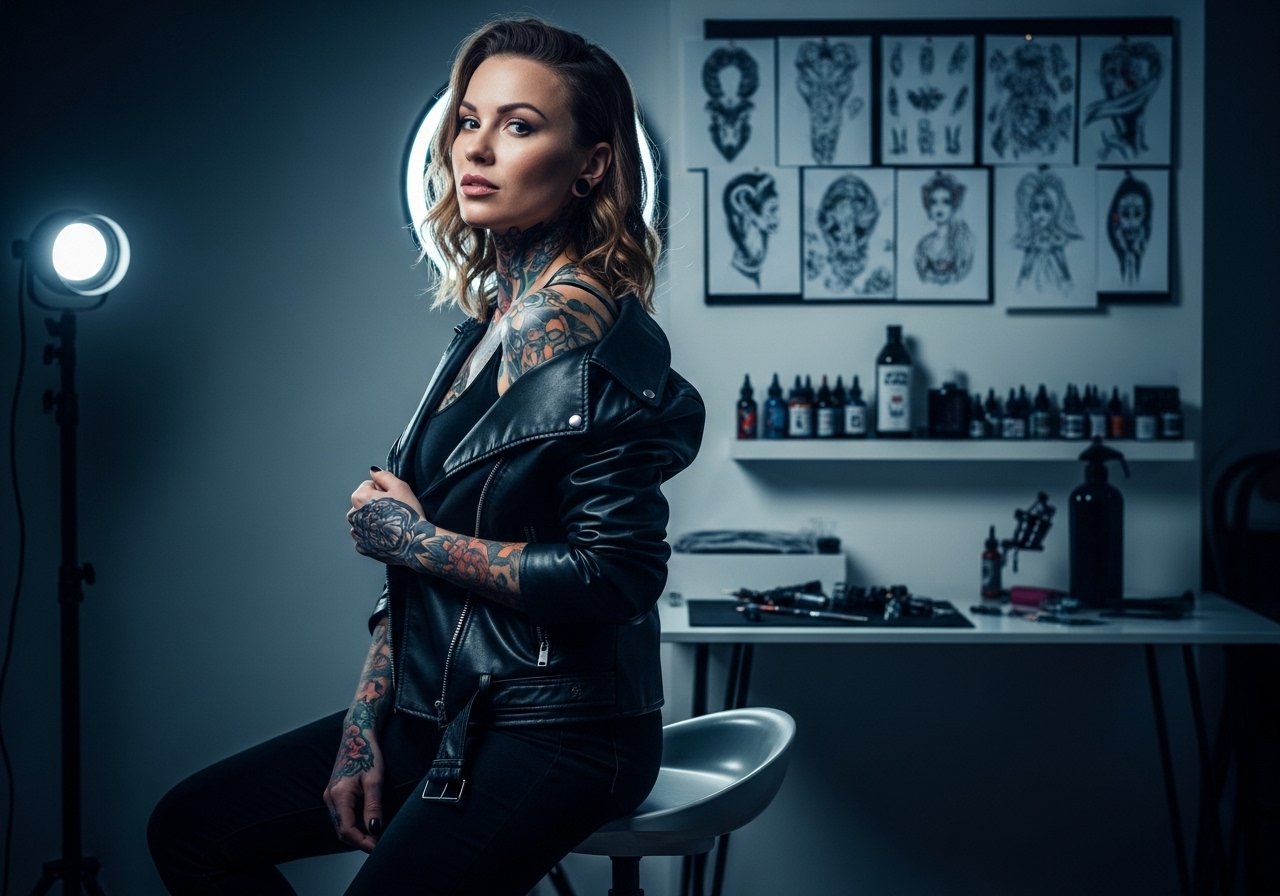
Fine line tiger outlines dominate saved boards right now, and they photograph razor sharp the day you get them. They do not all survive the first year of rings, hand washing, and sweaty summers. I want to show small tiger options that actually hold up on fingers, what to ask for in consultation, and a handful of styling moves to make tiny work read intentional when it matters most.
1. Minimalist tiger head outline on the side finger
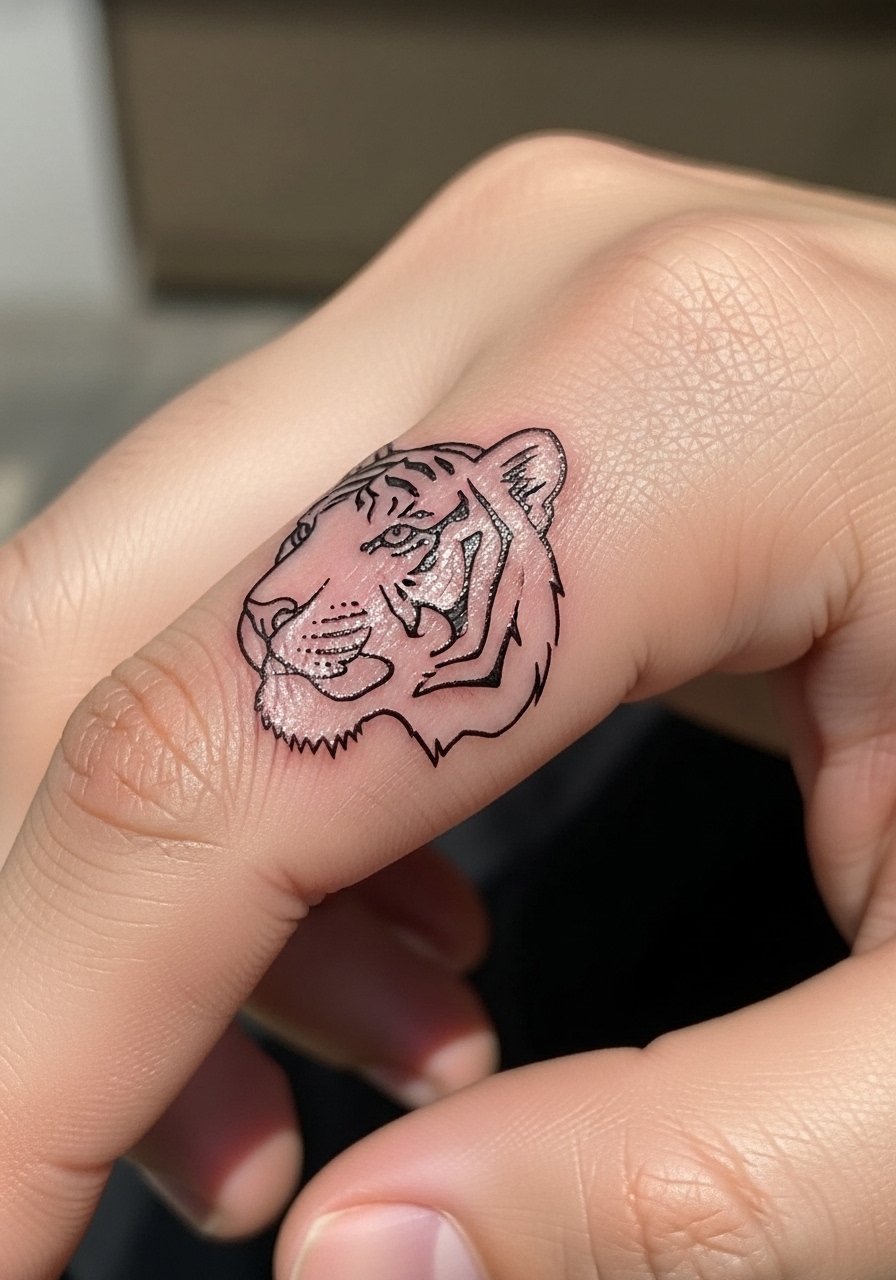
I recommend this one when you want a hint of animal energy without crowding jewelry or rings. Fair warning on finger work, the thinner the line the faster it loses crispness from friction. In consultation say "single-needle outline, slightly thicker contour lines, no micro shading" so the artist gives the outline room to hold. Expect a quick session under 45 minutes and a likely touch-up around the one-year mark. A common mistake is asking for too many whiskers in a tiny space which merges into a smudge. For showing it off, stack a few thin gold signet rings next to the design so the outline reads like jewelry.
2. Fine line tiger claw on the ring finger
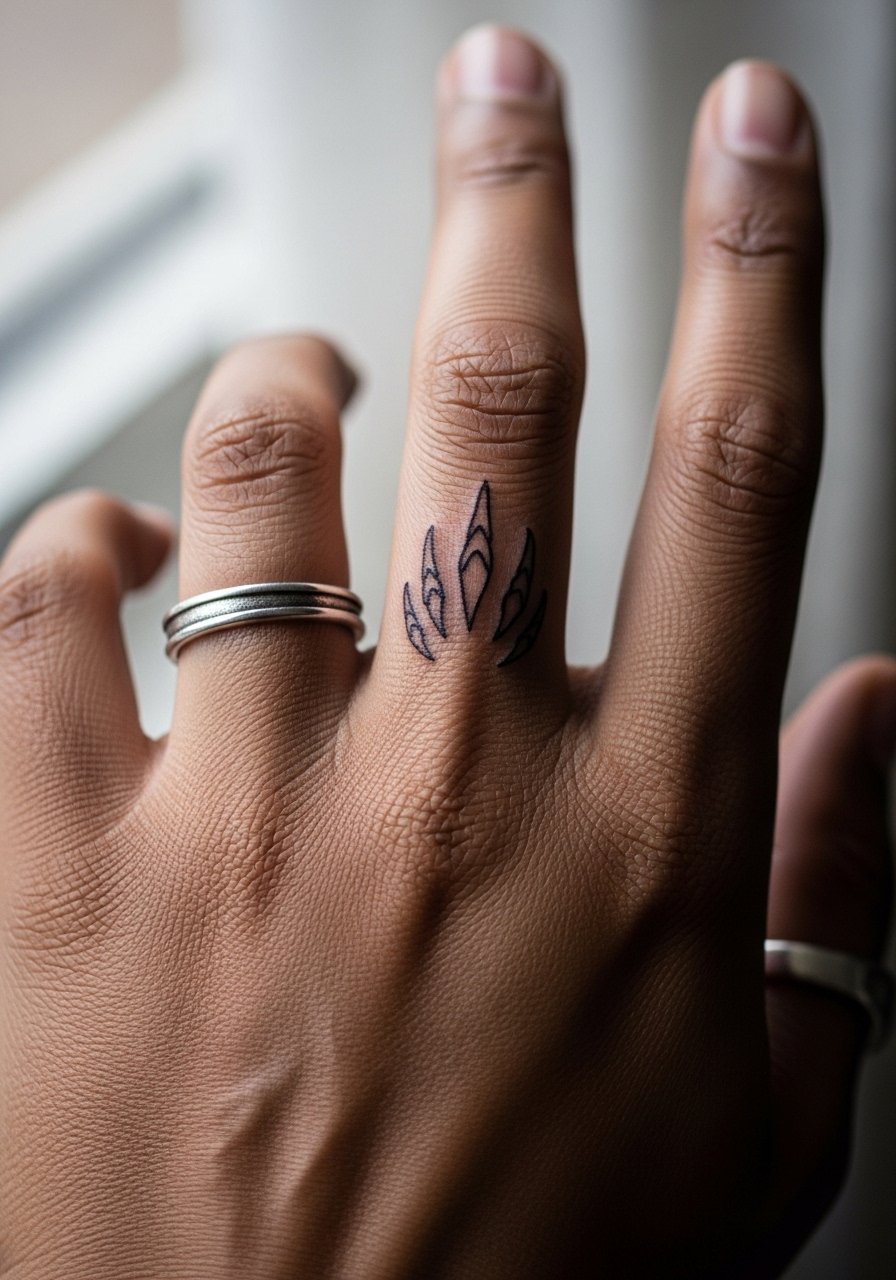
When someone wants a discreet peek of attitude peeking under bands, this works better than a full face. Artists are split on fine line on fingers. One camp says thin strokes blur within a year because of constant friction. The other camp argues that with correct needle depth and slightly heavier line weight fine line can hold. Tell your artist you want ultra-thin claws but ask them to bump contour lines up one step so the design lasts. Pain is moderate for fingers and a single short session usually does it. For show-off pairing, match it with a matte black ring so the claw peeks between metals.
3. Neo-traditional snarling tiger face on the index finger
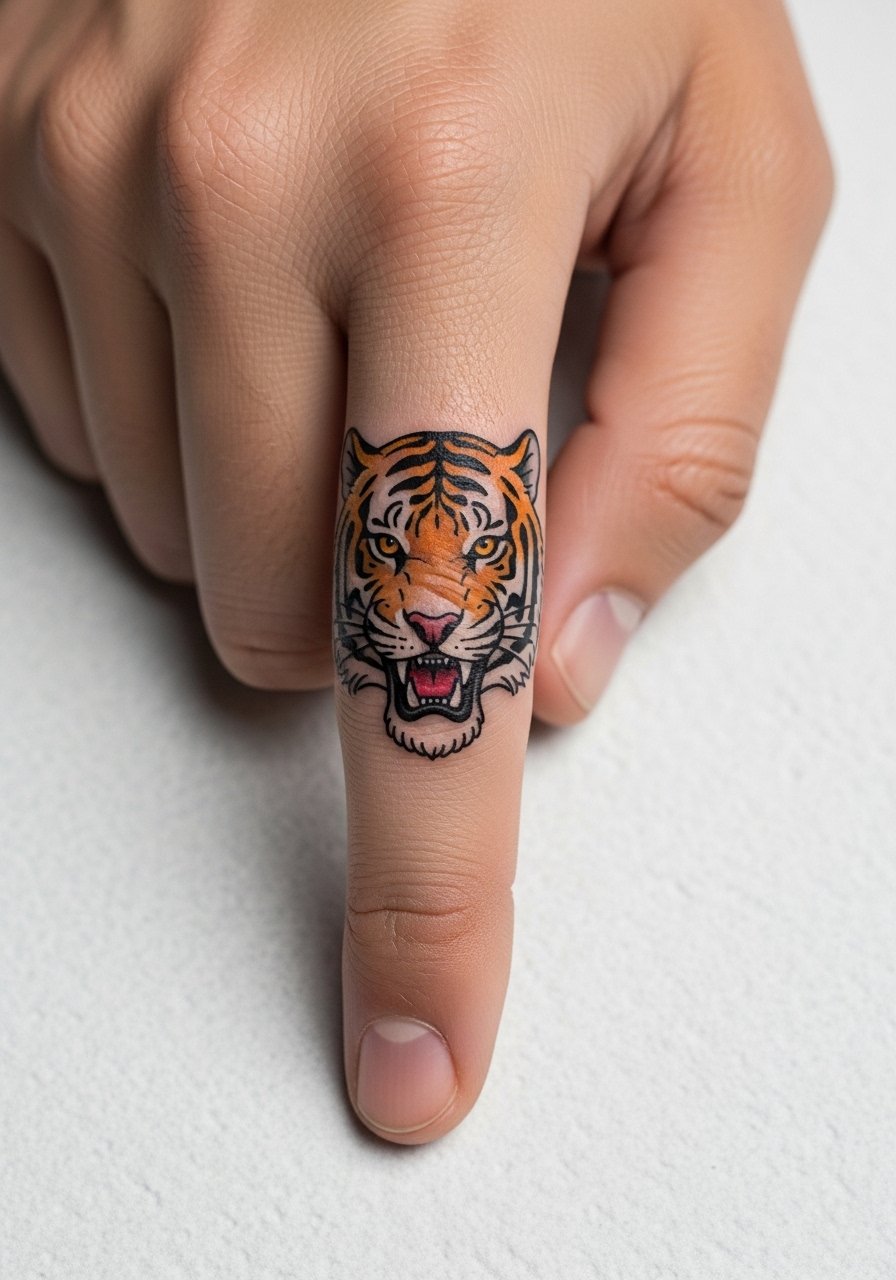
This is the pick for people who want vintage flash scaled way down. Expect two short sessions if color is involved, and tell the artist to keep color blocks roomy rather than tiny stipples. The biggest rookie move is forcing full neo-traditional shading into a fingertip canvas. That leads to color bleed and muddiness. Healed at six months the outline still reads, but by year three the color needs saturation if it sees lots of sun and hand-wash. Pain is higher on the index than on the pinky and the session feels like a sharp, steady sting. Skip heavy gradients and keep the palette simple.
4. Blackwork tiger stripe band around the middle finger

This one functions almost like jewelry so it ages differently than fine line pieces. If longevity is your priority pick solid black fills and clear negative space stripes. In consultation ask for crisp edges and slightly wider spacing between stripes to avoid early merging. The session is fast, often under 30 minutes, and touch-ups are typically minor. A common mistake is trying to replicate a photographed wrap without accounting for finger curvature which can distort the pattern. Pair this with a simple stackable ring set so the tattoo and metal read like a coordinated ring.
5. Micro-realism tiger eye on the pinky

Tiny realism can look intense and intimate when executed well, but it demands an artist who shows healed micro work on fingers. Tell them you want black and gray with clear contrast and ask to see a healed piece on similar skin. Expect two to three short sessions and notes that the fine shading will soften over time. A common mistake is trying to cram too much pupil detail into a pinky-sized space which ends up muddy. For an elevated frame, wear a dainty pearl stud earring and cream tones in outfits so the eye remains the focal point.
6. Traditional tiger head profile on the thumb base
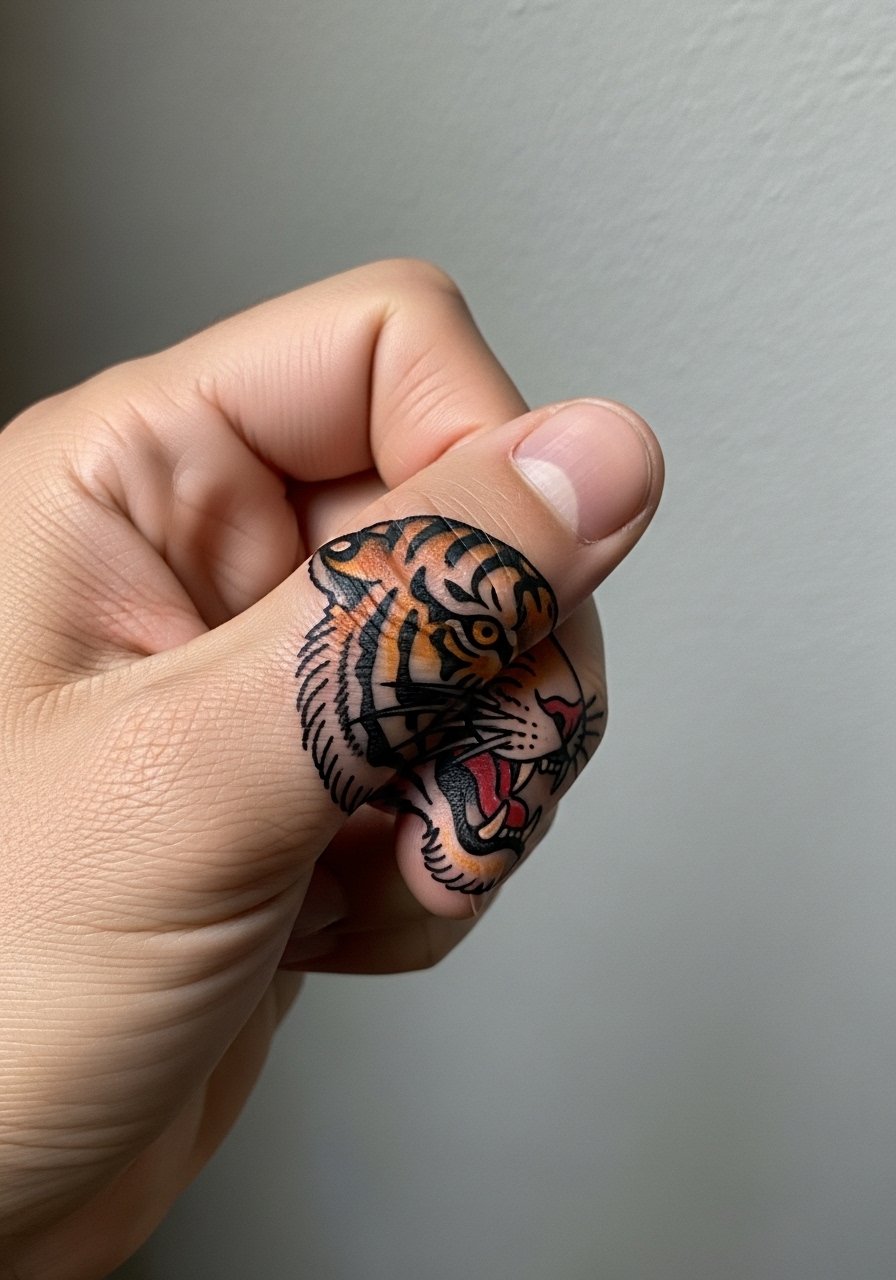
Thumb work is notorious for pain because the bone sits close to the skin, but it shows off incredibly well with rings. Ask for a slightly bolder outline than you would on an arm, and keep color palette to two or three saturated tones. The session usually runs 45 to 60 minutes and a touch-up at one year is common. Avoid tiny teeth or too many whiskers on this scale, those elements lose definition fast. For a balanced look, slip on a leather cuff bracelet on the opposite wrist when you want a rugged contrast.
Pre-Session Essentials
The first six ideas above all live on high-friction zones of the hand, so a few specific items make the session and the first week easier.
-
Bepanthenol scar gel. A thinner scar gel many people on forums recommend for finger heals because it keeps skin from getting rubbery while still hydrating.
-
Indie Butter tattoo balm. Lightweight balm that users in humid climates say avoids the clogged-feel heavier ointments can cause on flex areas.
-
Hada Labo moisturizing lotion. Hydrating lotion that helps prevent scabs from cracking after the peak scab stage while staying non-greasy around finger creases.
-
Lush tattoo bar soap alternative. Gentle bar option some artists suggest for the shower phase to avoid stripping delicate linework.
-
Hustle Butter Deluxe. A commonly used healing balm that many switch to for the first few weeks when they need a non-petroleum option on high-wear finger pieces.
7. Ornamental tiger mandala spanning knuckles
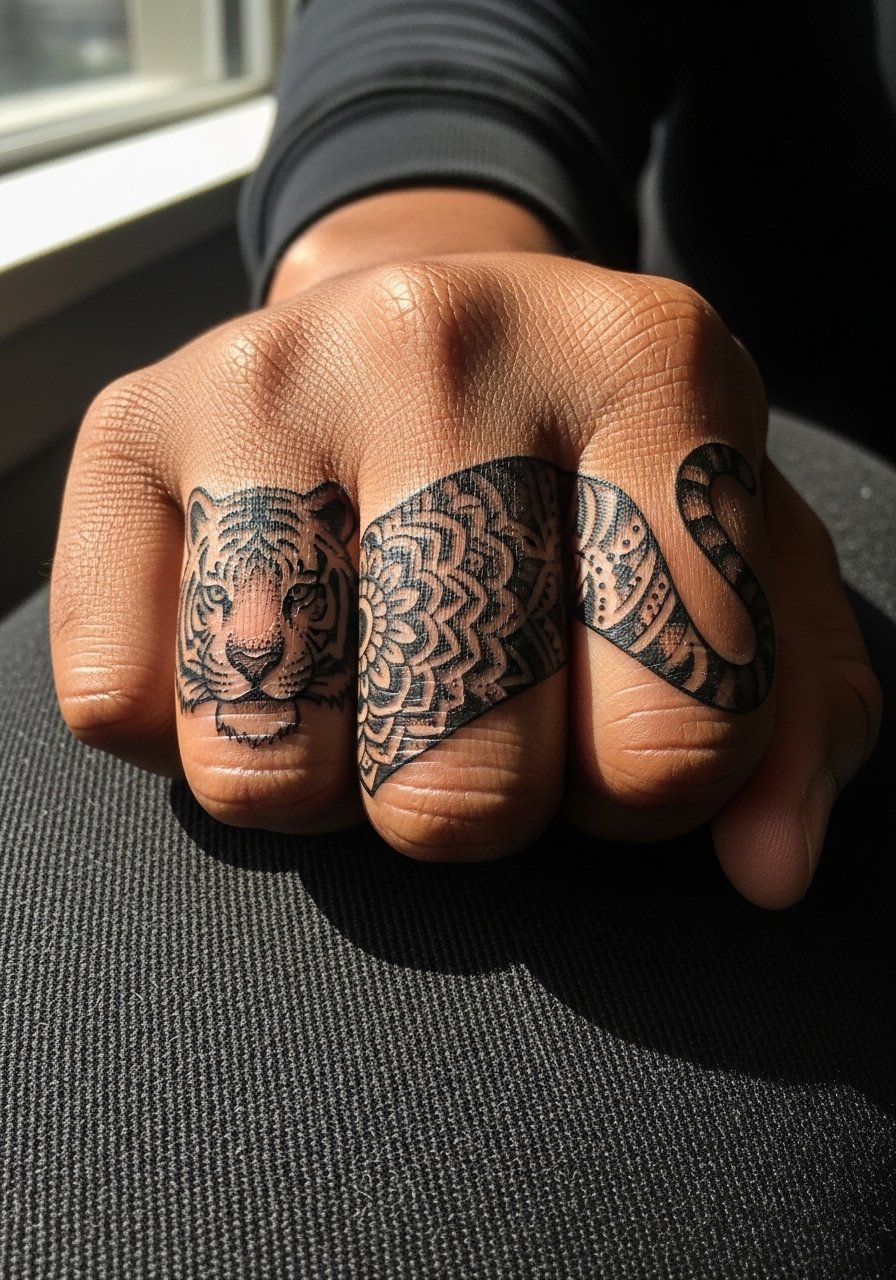
Knuckle pieces ask for symmetry and breathing room in geometric work. I tell people to size these slightly larger than the photo they love so dots and stipple shading do not merge into one mass after a year. The session is split into short passes because the knuckles bruise and swell easily. A frequent error is compressing too many ornamental layers into a tiny knuckle span, which kills the mandala's negative space. If you want edge with versatility, try fingerless gloves when showing it off and layer thin chains to draw the eye upward. Hand tattoos can have workplace implications so check that before booking.
8. Ignorant style tiger roar along the pointer finger
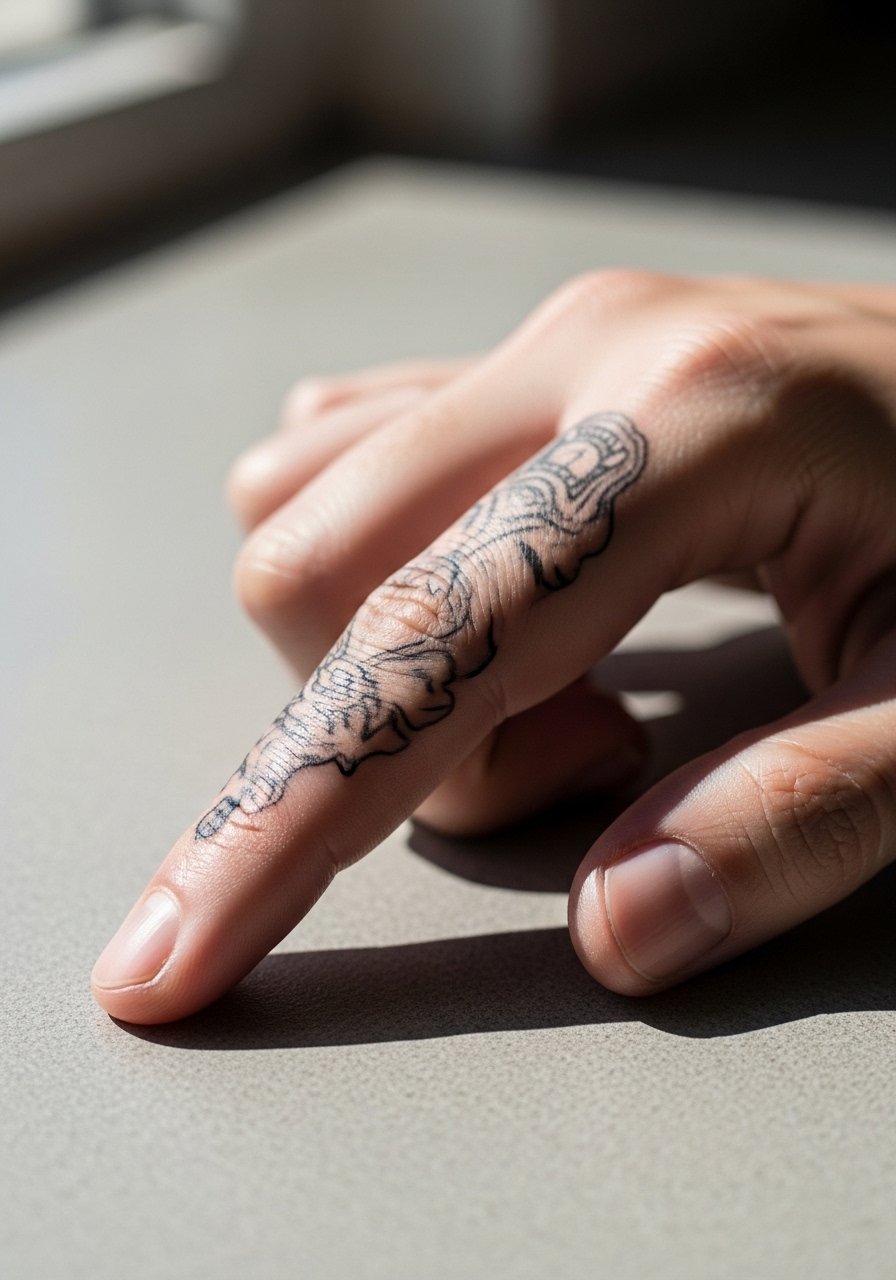
This raw, sketchy option reads fresh because it intentionally mimics a quick pen mark. It is great for people who like the idea of imperfection that still reads deliberate. The session is fast and forgiving because the aesthetic accepts wobble. A common mistake is asking for a "perfect sketch" which defeats the point and ends up looking like a failed fine line. Expect touch-ups at longer intervals because the design's energy tolerates slight fading. For the consult, bring several reference photos that show the exact scribble weight you like so the artist can match the looseness.
9. Watercolor tiger whisker trail on the finger side

Color on fingers divides opinion. One camp loves watercolor for the instant visual punch. The other camp argues that color and wash techniques suffer faster on hands and fingers because the skin sees so much use. If you still want watercolor, ask the artist to anchor the design with a thin black contour so there is contrast as color softens. A common regret I see is choosing full rainbow washes in summer months which can bleed into a mush after a sweaty healing period. For showing off early, lean on a clean nude gel nail polish that keeps the finger photo-friendly without competing with the colors.
10. Dotwork tiger paw print on the ring finger

Dotwork translates well to fingers when dots are given enough spacing. Tell your artist to use a slightly larger dot pattern than the reference so the paw retains definition after a year. Sessions are short and usually one sitting. The frequent mistake is tight-packed dots that look crisp at first and then fill in. For a jewelry-like finish pair the paw print with a simple stackable ring rather than bulky gems so the design remains the visual anchor.
11. Tiger stripe finger ring aligned with a wedding band

This under-covered idea uses negative space so the tattoo lines up with a metal band when the finger turns. In consultation explain your exact ring profile and finger orientation so the stripes nest rather than clash. Expect very precise stencil work and a steady hand session, usually under 45 minutes. A real mistake is designing without trying the stencil on while wearing the band. For a seamless look pair it with a hammered silver band that has similar visual weight to the tattoo.
12. UV-reactive tiger accent on the side of a finger

UV-reactive ink is a nightlife trick that glows under blacklight while staying subtle in daylight. Note that UV pigments behave differently with fading and some healers advise extra caution. If you pursue this, ask the shop about their experience with UV inks and whether they offer a warranty on color stability. Session time is similar to a fine line detail and touch-ups are more common when the ink sees a lot of sun or abrasion. This is a novel option for people who want hidden drama that only appears in certain lighting.
13. Arthritis-aware expandable tiger spacing for aging knuckles

I rarely see sizing advice for fingers prone to swelling, yet spacing matters if your knuckles change with age or arthritis. Ask for slightly wider gaps between stripes and fewer micro-details so the pattern can "stretch" visually without collapsing. The artist should mock the design on a flexed hand to simulate future movement. Sessions are conservative and you may need a minor touch-up in the first year. The common mistake is scaling a design to look perfect on relaxed skin only. For session comfort wear a cotton long sleeve shirt so the artist can rest your arm without pressure.
14. Hybrid tiger-claw mandala wrapping multiple fingers

This design feels like linked jewelry and reads best when the negative space between fingers is planned. In the consult point out how the mandala should align when fingers are relaxed and when they are together. Expect two short passes because the skin between fingers heals differently. The mistake is assuming exact symmetry while fingers are in different positions. For a cohesive look accessorize with a knuckle ring set that echoes the mandala rhythm.
15. Negative-space striped band with a tiny tiger silhouette
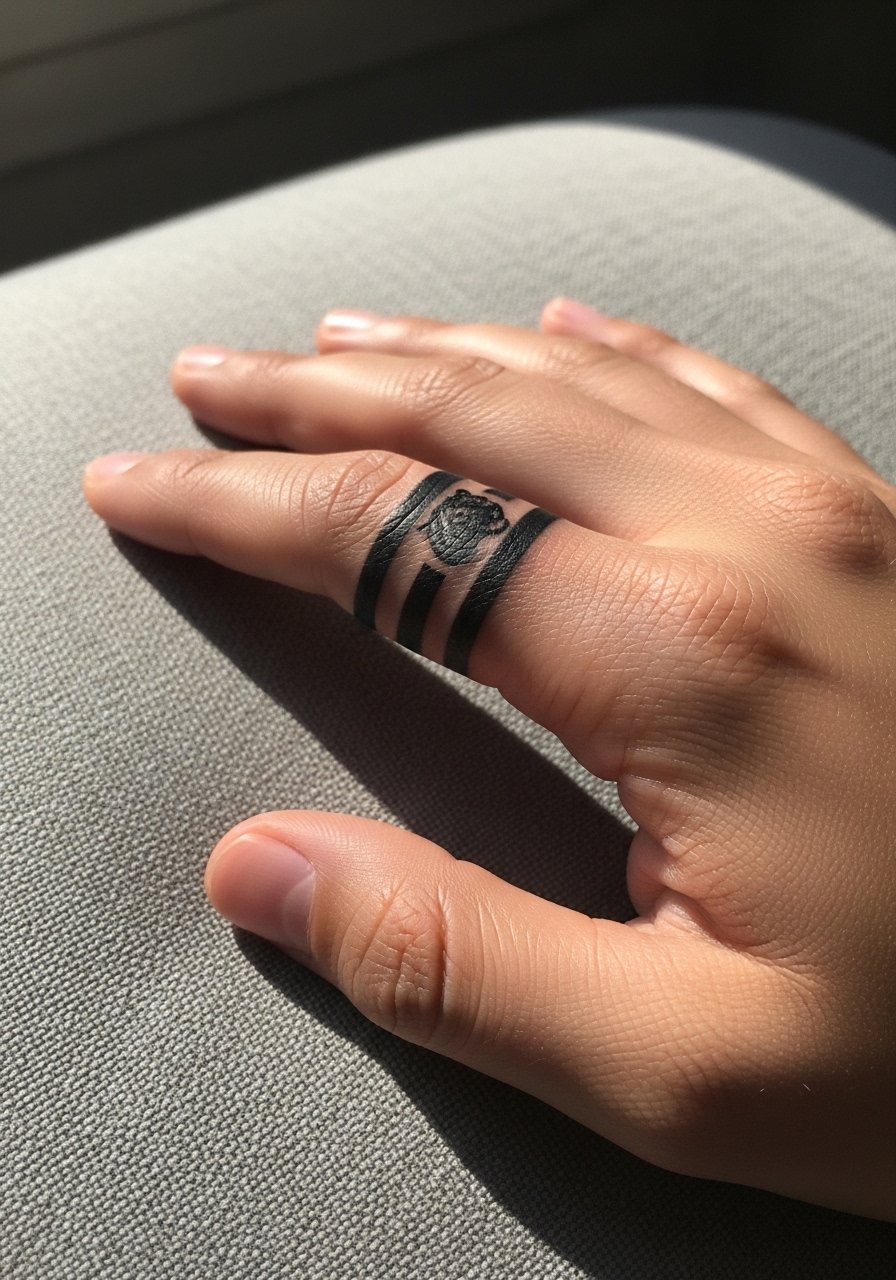
Combining silhouette and negative space gives a readable motif without heavy color. Tell your artist to keep the silhouette simple and to avoid tiny interior details that will merge. Session time is quick and pain is moderate, with touch-ups optional at year two depending on wear. A common error is cramming facial detail into a silhouette which defeats the point. This design is low-maintenance visually while still carrying the motif.
16. Stipple-shaded micro tiger whisker cluster near the cuticle

Stipple or dot shading can give a softer edge for a whisker cluster and it plays nicely with nail art. Ask for slightly larger dots than the initial reference and for the artist to show healed examples. The session feels like a steady tick with minor tenderness and often sits under 45 minutes. A mistake I see is requesting extremely dense stippling that later reads as gray blur. Keep spacing in mind for longevity.
17. Single continuous line tiger silhouette that wraps a finger seam

Continuous line tattoos have a modern minimalism but they need confident spacing. Tell your artist you want one uninterrupted stroke and ask them to mark where the seam of the finger will meet so the curve reads correctly. Sessions are brief and the pain is manageable. The typical error is trying to compress a complex pose into a single line which makes the form unreadable. This is a good beginner-friendly option for someone who wants a clean, low-fuss look.
18. Tiny paw constellation wrapping the finger
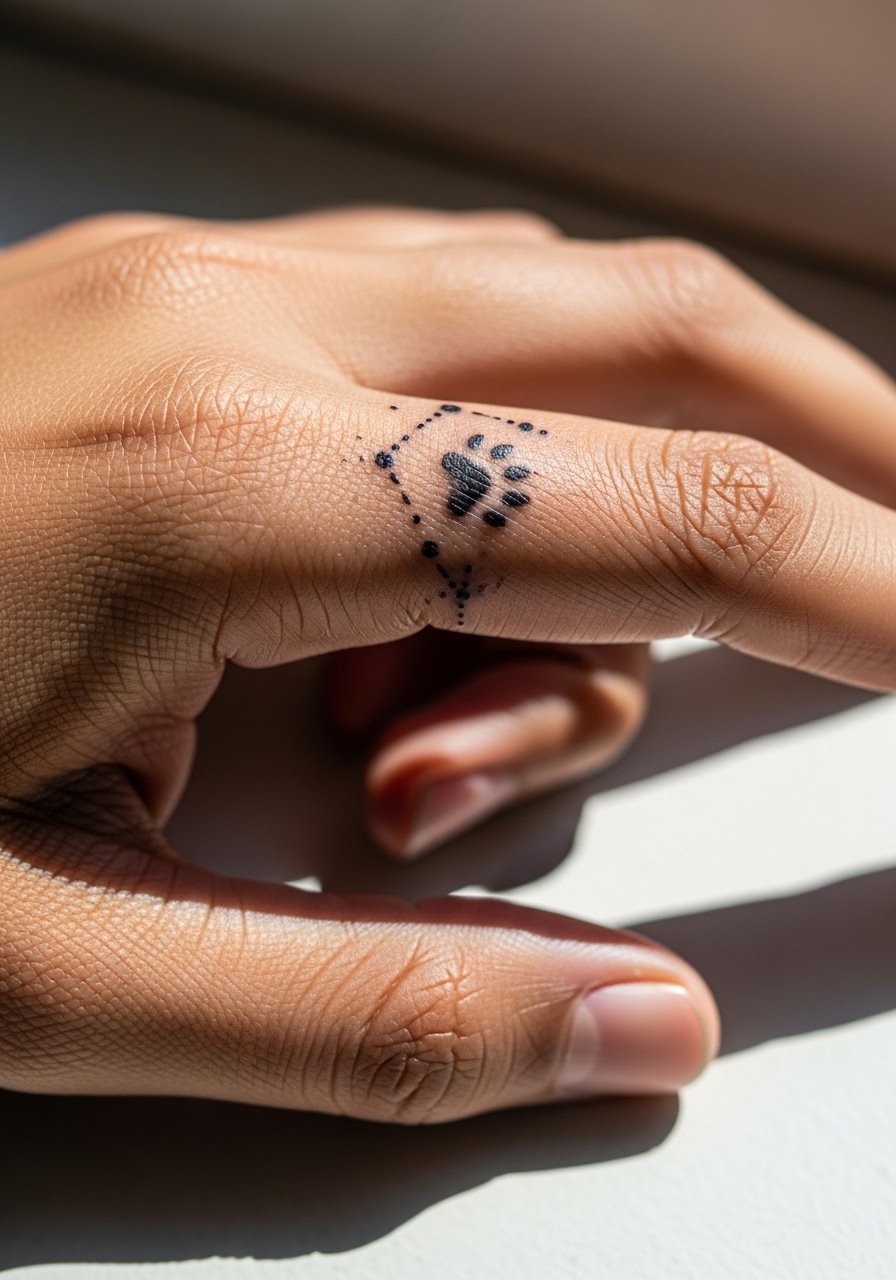
Constellation-style paw designs use dots and tiny connecting lines to create a delicate curve. For fingers, request more spacing between stars so they do not merge. The session is short and works well as a matching set across multiple fingers. A common mistake is aligning stars too close to rings which causes early abrasion. If showing it off at events, keep wrist jewelry minimal so the pattern remains the focal point.
19. Geometric tiger mandala band across two fingers

Geometric mandalas that bridge two fingers require modeled stencils to ensure the pattern aligns when fingers touch. Ask the artist to trial fit the stencil with fingers pressed and relaxed. Sessions tend to be cautious and brief to avoid excess swelling. A common misstep is assuming mirror symmetry without testing flex positions. Pair this with a knuckle ring set to amplify the linked jewelry vibe.
20. Micro peek tiger eye under the cuticle edge
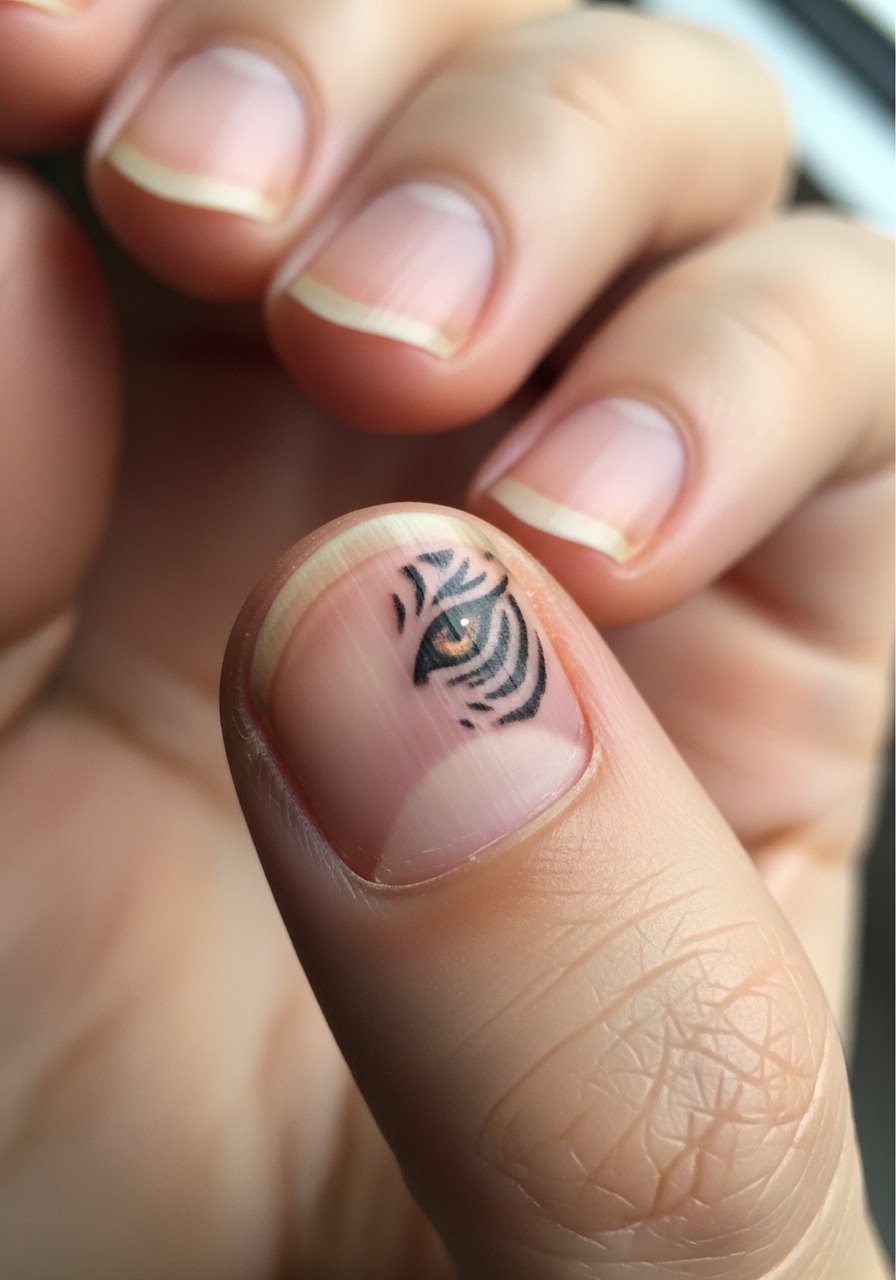
Placing micro elements near the cuticle gives a secretive peek when you move your hand. The skin here is thin so expect a sharper sting and a careful, short session. Tell your artist you want the eye to read as a tiny crescent with one dark pupil rather than a detailed iris. The usual mistake is too much texture, which fades into a gray patch. This is a choice for someone who wants subtlety rather than a display piece.
21. Hidden tiger stripe that aligns with a wedding band rotation
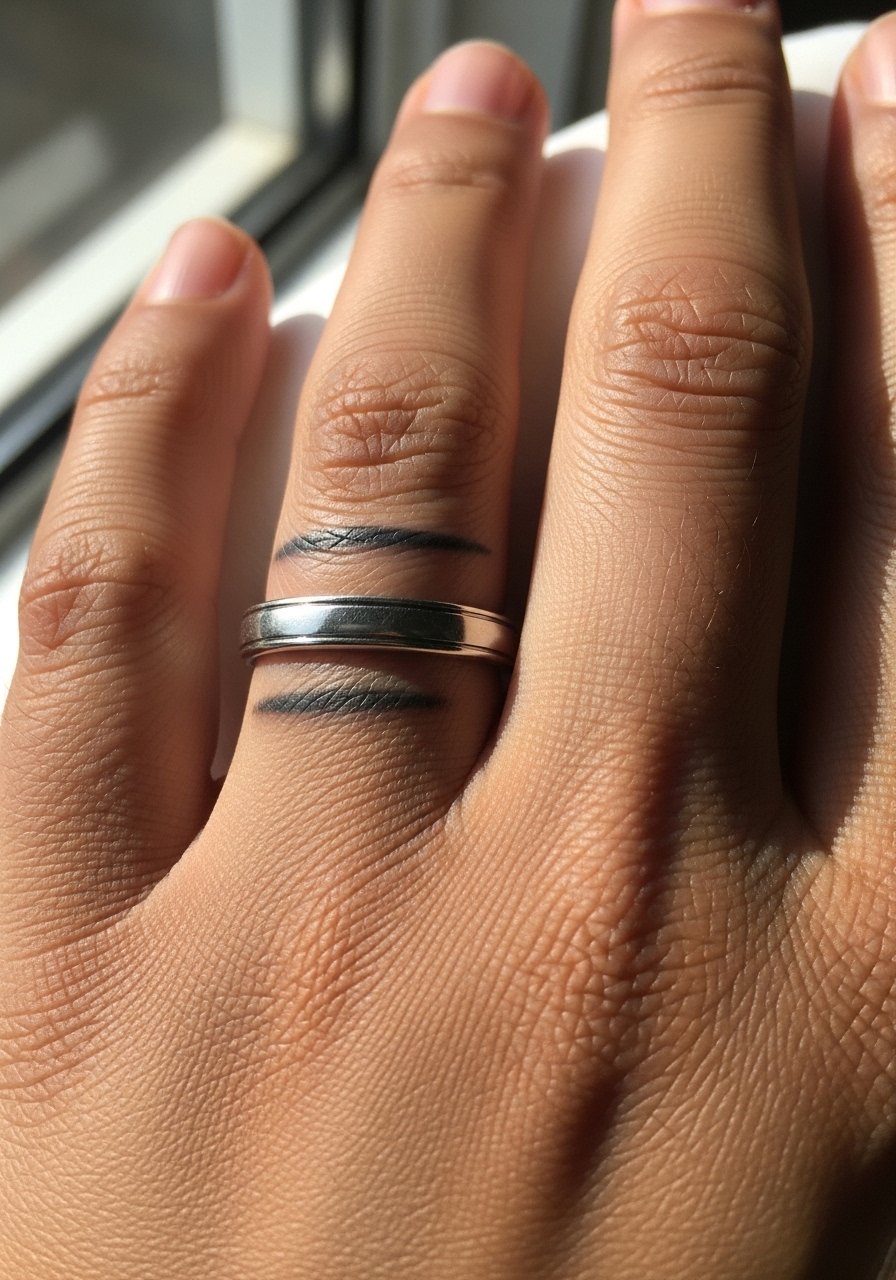
This variation builds on idea 11 with a twist. The concept is that when your hand turns, the stripe meets the band and creates a momentary alignment. Insist the artist mock the effect while you move your finger so the visual nest is predictable when you wear the band. Sessions depend on precision and often need the stencil tested multiple times. The common error is neglecting to simulate rotation during the consult. For display days, keep adjacent rings slim so the alignment reads clean.
Frequently Asked Questions
Q: How often will a finger tiger tattoo need touch-ups?
A: From what I see, finger tattoos typically need touch-ups more often than arm pieces. Expect a touch-up within the first 6 to 12 months for fine line work and then periodic refreshers every 1 to 3 years depending on wear. Blackwork and solid fills usually hold longer than delicate whiskers, so if you want fewer trips to the shop pick higher contrast lines.
Q: Can watercolor or bright color hold up on fingers?
A: Color on fingers is possible but it requires trade-offs. One camp favors bright washes for the immediate impact and accepts more frequent touch-ups. The other camp prefers blackwork for durability and argues color blurs faster on hands. If you choose color, ask for anchoring outlines and plan for at least one color-saturation session within the first year.
Q: What should I ask my artist in the consultation for a tiny finger tiger?
A: Bring healed photos of similar work on fingers and ask specifically about healed examples on skin tones like yours. Say what you want for line weight and negative space, and ask how they handle touch-up policies for fingers. Use discovery paths like the hashtag feeds and appointment apps to find portfolios that show healed finger work rather than only fresh photos.
Q: How painful is a finger tiger compared with other placements and can I use numbing cream?
A: Fingers rank higher on the pain scale because bone is close to skin. Sessions under 45 minutes are common to manage discomfort. Numbing cream is used by many first-timers and can reduce the sting. Some traditionalists argue it dulls the experience, while others welcome the relief. If you plan to use a topical, apply it about 45 minutes before as instructed and tell your artist you used it.
Q: Will a tiger tattoo show up clearly on dark skin?
A: Yes, but choose contrast-first approaches. High-contrast blackwork, solid fills, and negative space tend to photograph and heal better than ultra-fine gray washes on darker tones. Ask to see healed examples from the artist on similar skin tones and favor thicker contour lines. If you want to accessorize, a simple stackable ring can frame the area and enhance contrast in photos.
Q: How do I save money on a finger tiger without sacrificing quality?
A: Look for guest spots, apprentices working under senior artists, or shop minimums that offer smaller custom slots. Many people find that a guest spot can be 30 to 50 percent cheaper than a fully booked studio while still giving you the needed attention. Confirm touch-up policies and bring precise references so the artist can work efficiently during a shorter session.