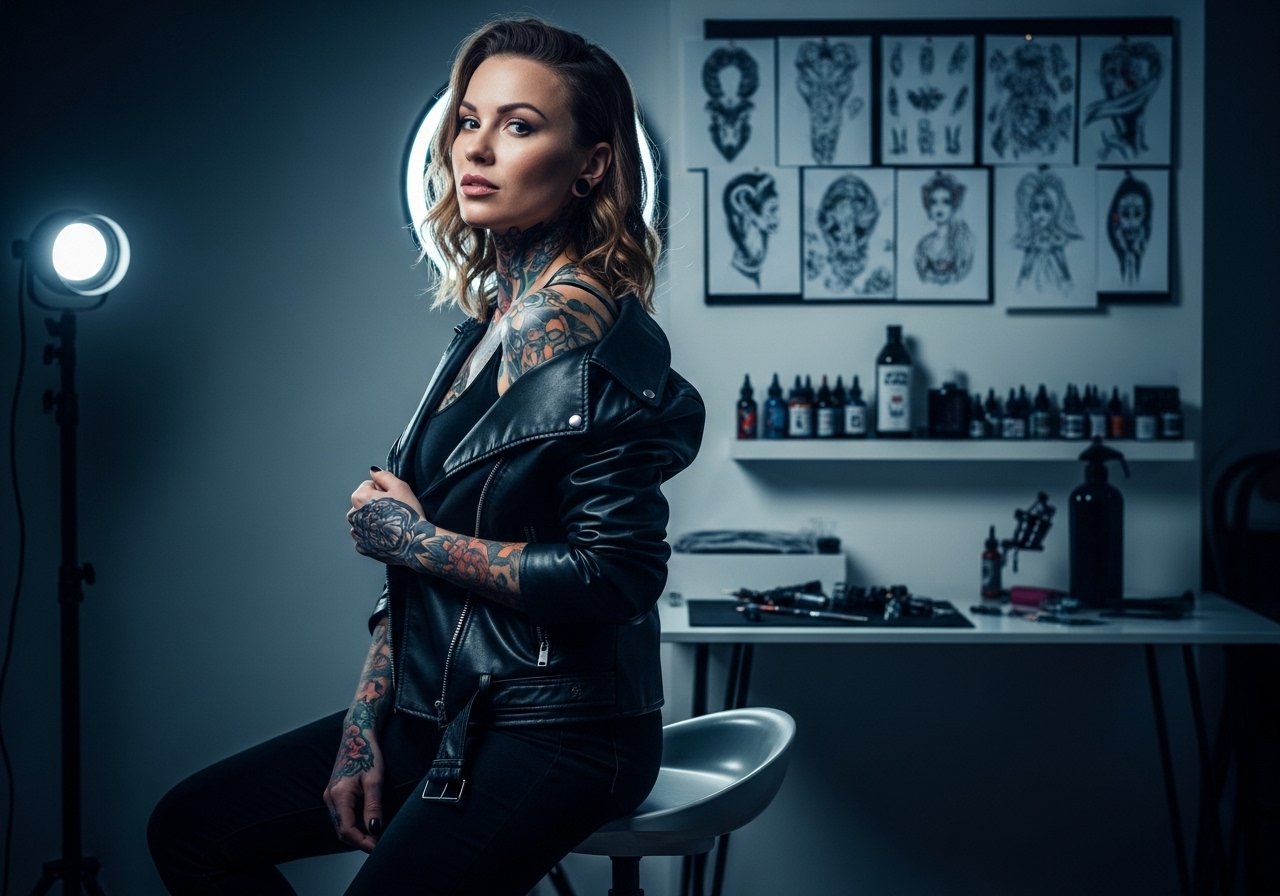
Fine line dove tattoos are everywhere on saved boards, and the way they look fresh is not the same as the way they age. Delicate linework reads fragile after a few seasons if spacing and placement are off. These 17 soft dove tattoo design directions balance what looks great today with what still looks deliberate years from now. Start with a gentle wrist option that keeps the lines spaced for longevity.
1. Fine Line Dove with Olive Branch on Inner Wrist

I’ve seen this little arrangement on wrists that were meant to read subtle every day. The inner wrist is low on pain, and a small fine line dove holds up well if the leaves have spacing. Tell your artist you want slightly bolder line weight than micro hairlines so the olive branch stems do not disappear by year two. A common mistake is squeezing tiny leaves into a 1.5-inch piece. For the session wear, pick a loose button-down shirt you can pull aside so the artist has clean access. Expect one short session and a touch-up chance at year three.
2. Tiny All-Black Silhouette on Ankle

Fair warning: ankles rub against socks and shoes during healing which can pull pigment. The all-black silhouette is forgiving for trips through friction. The usual error is making it too tall so the shape looks elongated when the foot flexes. Ask for compact proportions that sit clean on the lateral ankle. For showing it off, pair with strappy flat sandals or cropped pants in summer. Session time is quick, pain is moderate, and the silhouette usually needs no color touch-up for years.
3. Geometric Minimalist Dove Outline on Forearm
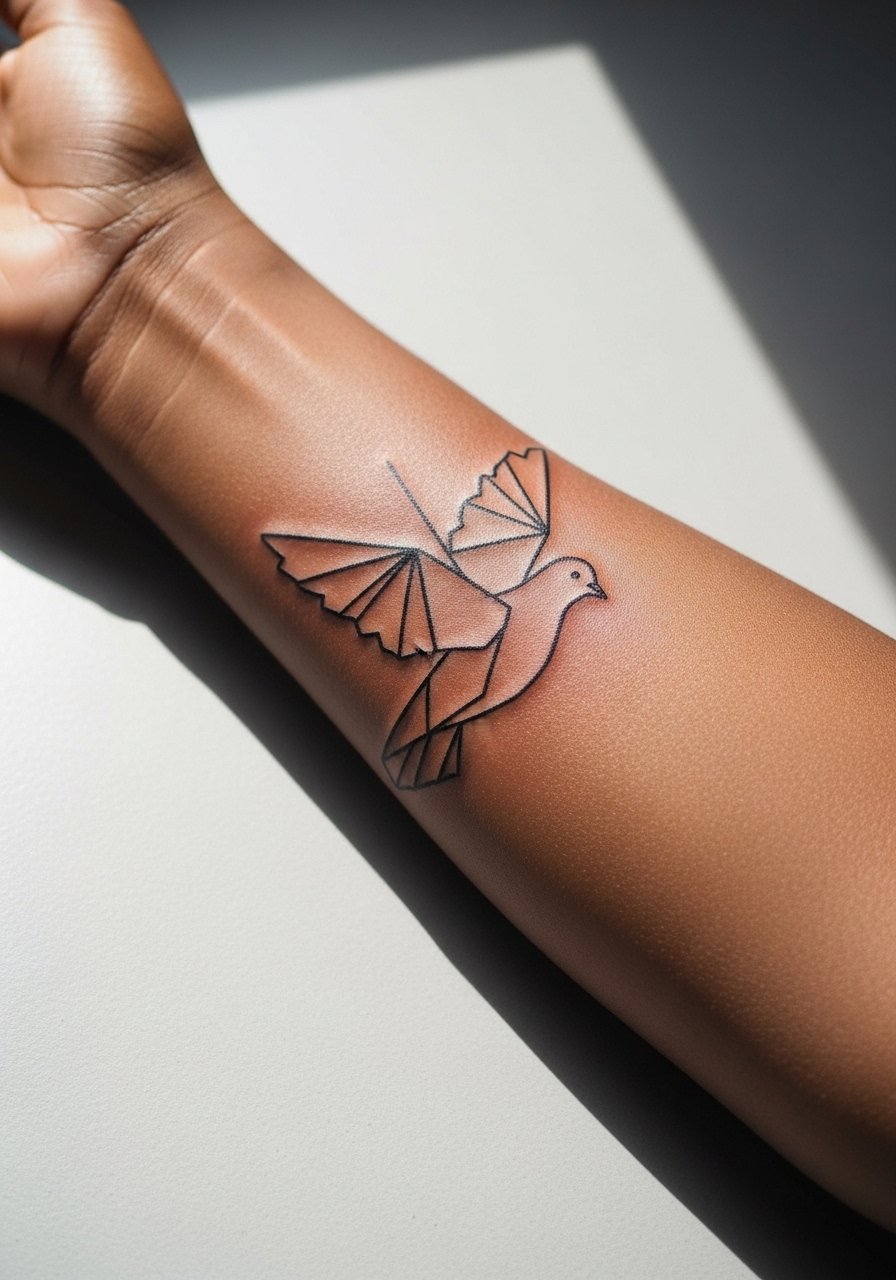
The biggest mistake with geometric pieces is going too small. Lines need breathing room or they blur together. I advise asking for measured negative space between wing segments and a slightly heavier primary outline so the shapes read at distance. Forearm placement gives visibility and a low pain score. During the session wear a linen button down shirt you can roll up for access. Over five years this style ages well if spacing is respected, unlike dense mandalas which compact into blotches.
4. Watercolor Dove with Cloud Wash on Upper Arm

Most watercolor pieces look dreamy fresh and then lose vibrancy if placed where skin stretches a lot. This upper arm placement is forgiving because the canvas is relatively flat. There is a split in opinion about watercolor longevity. One camp accepts touch-ups every five to seven years to keep the wash vivid. The other camp prefers saturated black and gray for permanence. If you love the watercolor look, ask for denser saturation points near the wing base so the piece keeps a focal point as the bleeds mellow. Show it off in a sleeveless tank top to echo the soft palette.
5. Black-and-Gray Heavenly Dove on Upper Chest

Most chest pieces are medium pain and take steadier sessions. The upper chest allows for larger wing gradients without distortion from breathing. A common version that ages poorly has overly tight stipple in shadow areas. Ask for gradual gradients and less stipple density near the sternum so the shading retains depth at year two and beyond. For outfits, a low neck tank frames the top without competing with the tonal work. Plan for one to two sessions depending on scale.
6. Fine Line Turtle Dove Pair on Inner Forearm
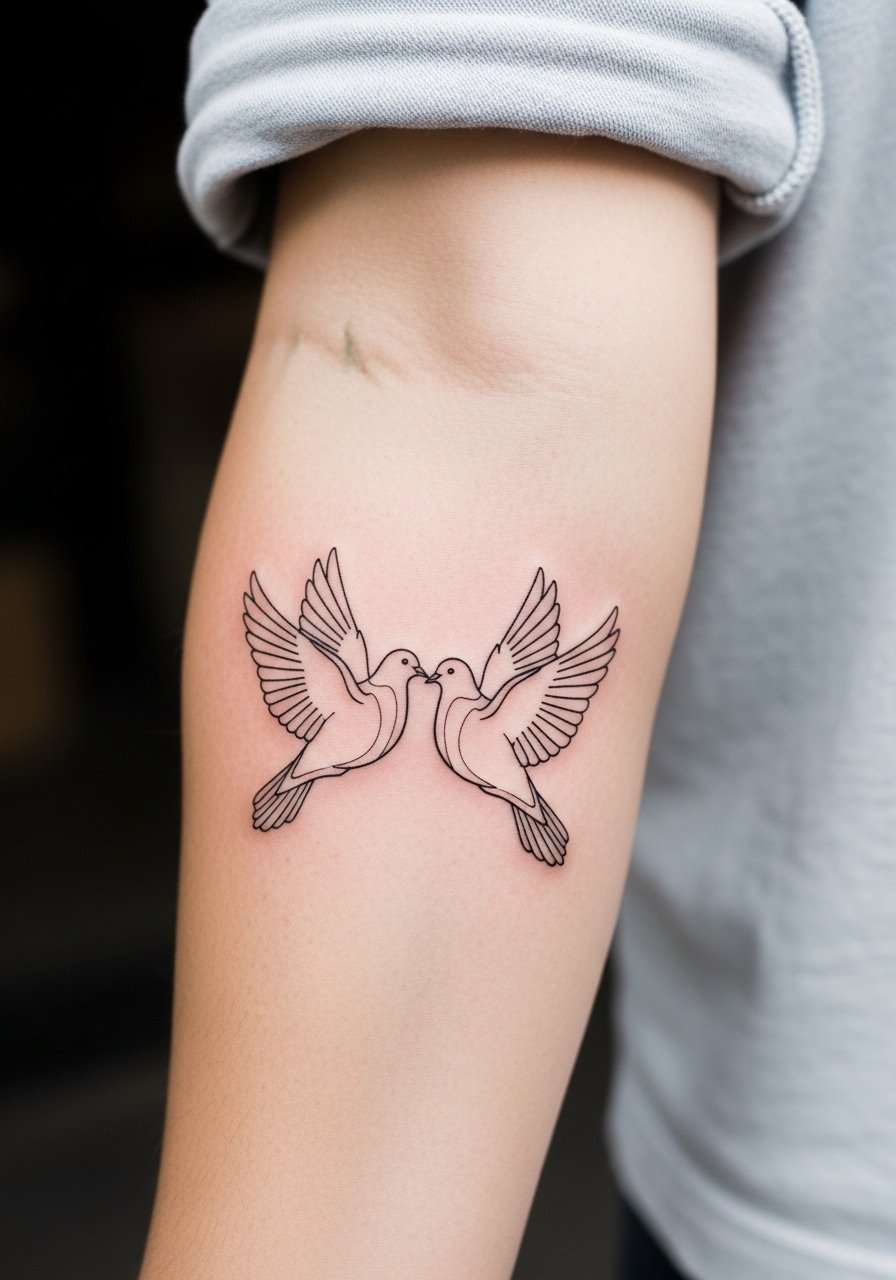
When people want matching couple tattoos this design is a gentle choice without being too literal. The inner forearm is low pain and shows well over time if the outlines are not whisper thin. A real mistake is opting for mirror-image tiny birds that run into hair follicles and fade unevenly. Tell your artist you want a clean outline with a hairline secondary feather detail. For session comfort wear a rolled cuff blouse so the artist can work without tugging fabric. Expect one easy session and a touch-up timeline at two to three years.
Studio Day Picks
The wrist, ankle, and forearm pieces above heal differently than chest and ribs, so a few targeted items make the session and first week easier.
- Stencil transfer paper kit. Lets you preview the placement on skin before commitment, which is handy for the wrist and forearm layouts above.
- Topical numbing cream. Applied as directed it takes the edge off sensitive zones like the ankle and upper chest.
- Thin protective film roll. Useful for finger and ankle work that sees a lot of friction during the first week.
- Fragrance-free body wash. Cleanses healing areas without irritating the fine line work on wrists and forearms.
- Aquaphor healing ointment. A thin layer for the immediate days after the shop helps keep delicate linework from drying into scabs.
7. Neo-Traditional Soaring Dove on Upper Back
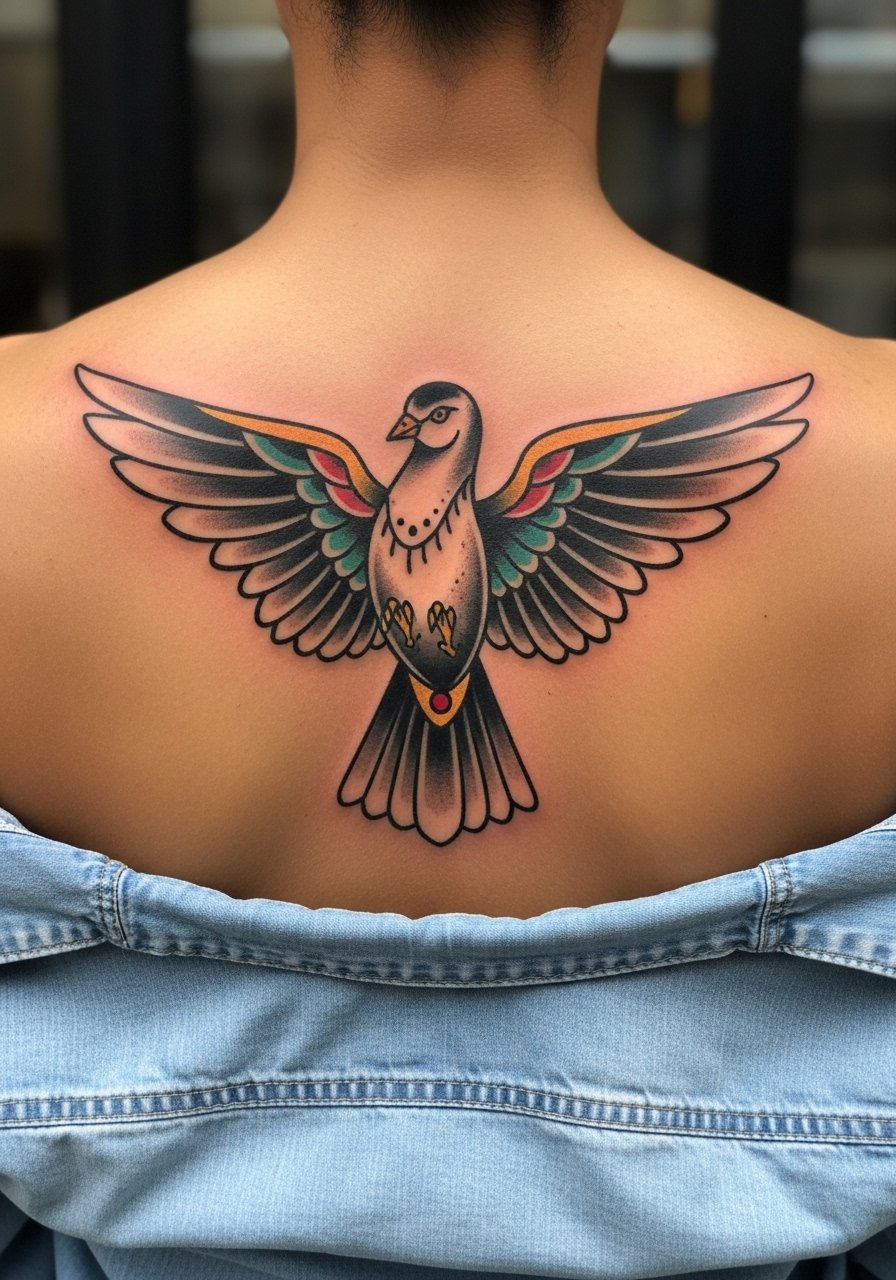
There is visual impact to a bird with saturated wing accents on the shoulder blade area. The upper back accepts larger scale and allows for two-session work with comfortable breaks. The common error is overloading with small color details that blur when the piece settles. Ask for strong primary outlines and fewer, larger color fields. For showing it off at events pick a backless dress or open-back top. Expect medium pain and a second session for color saturation.
8. Sketch-Style Dove with Swirls on Ribcage
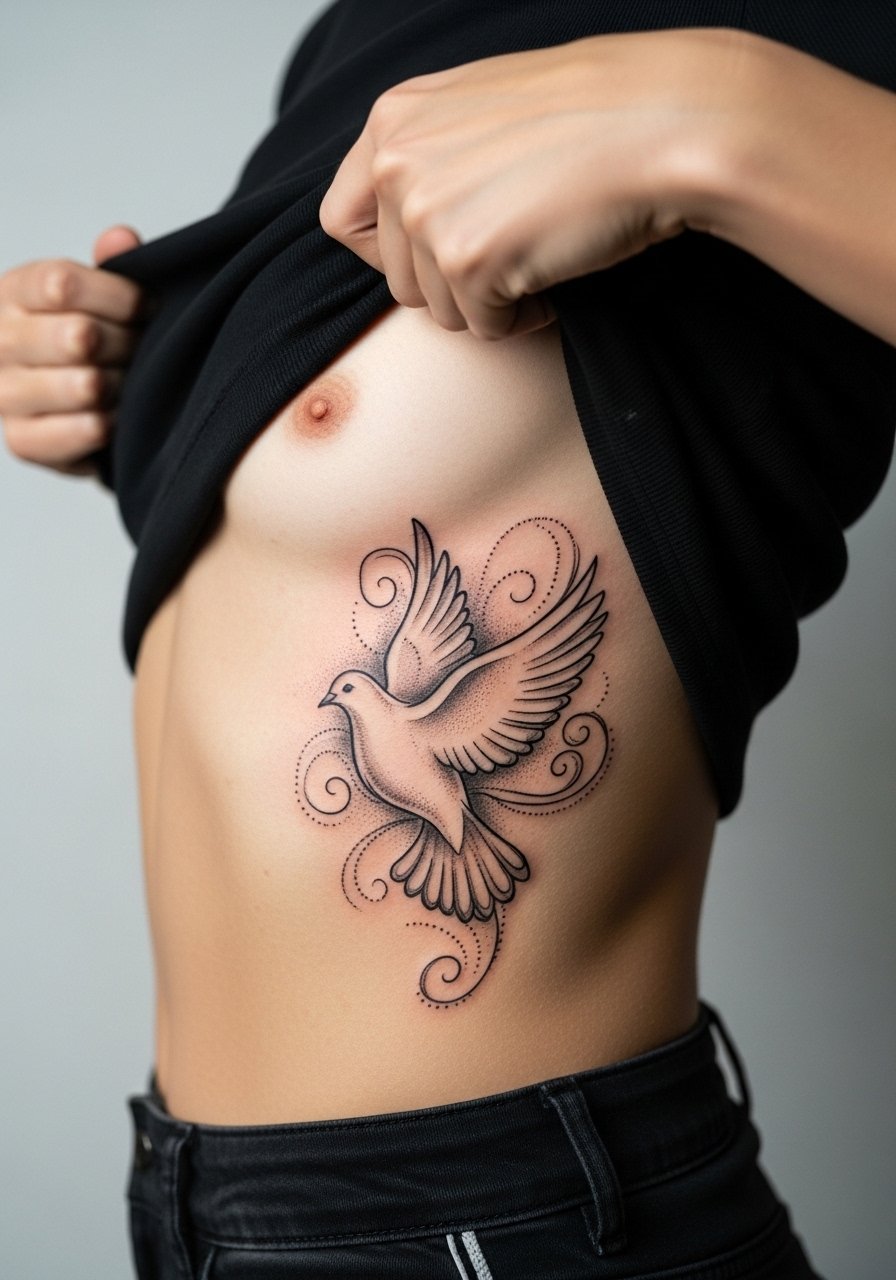
Fair warning: the ribcage rates high on pain scales but yields intimate results. Artists split on fine line on ribs. One camp says the skin stretch blurs delicate lines within two years. The opposing camp says with correct needle depth and spacing the lines settle fine. Ask your artist how their rib work has healed on similar builds and request slightly bolder key strokes rather than whisper lines. For the session wear a crop top fitted you can lift easily. Healing here benefits from patience and careful sleep position.
9. Micro-Realism Single Dove on Inner Bicep
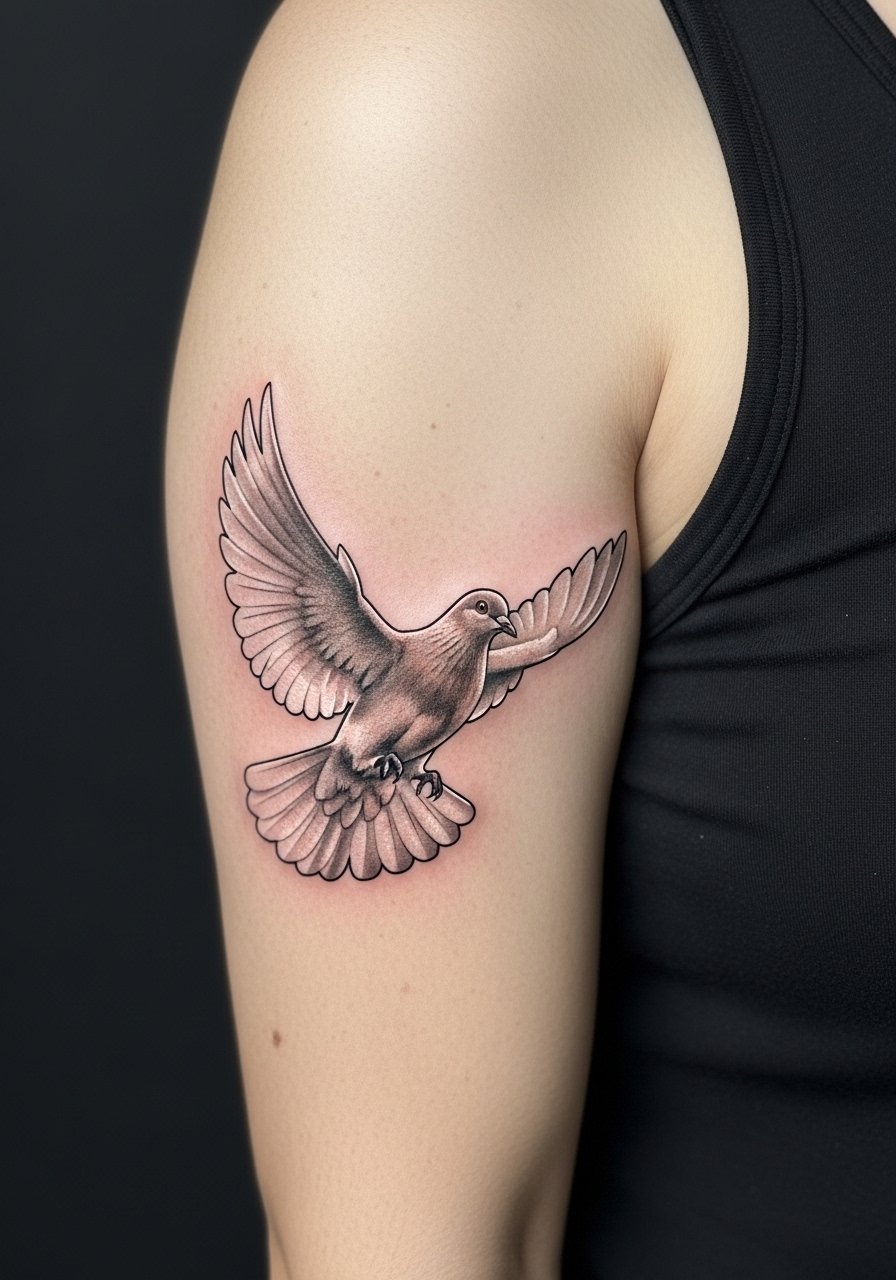
I've noticed micro-realism reads incredible when viewed up close. The inner bicep gives enough flat surface for feather detail while staying relatively private. The main mistake is over-detailing a small area, which turns into muddiness as it heals. Ask your artist to prioritize clarity over excess fine texture and to plan for a second session for perfecting depth. Wear a loose tank top for the appointment. Expect moderate pain and a potential touch-up at year two.
10. Minimalist Outline Behind the Ear
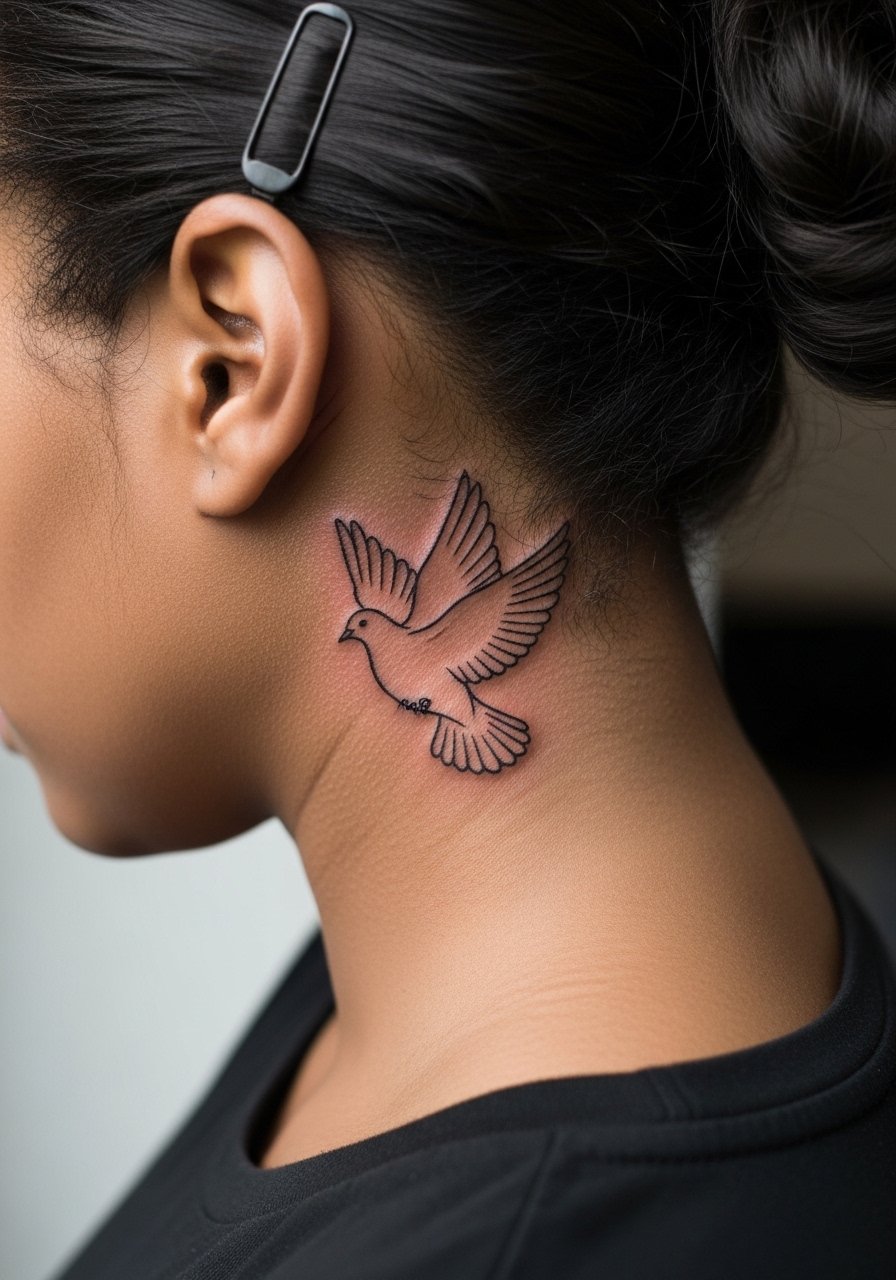
This placement has visible charm and quick sessions. Behind-the-ear designs require precision because the skin is thin. A common error is asking for micro hairline outlines that fade in months. Ask for a confident single-weight outline that will hold, and check healed photos of similar placements. For showing it off, try a sleek updo with small studs. Wear minimal jewelry and pin hair up on session day. Note that small neck-area pieces can show differently when hair covers them.
11. Dove Nesting with Small Flowers on Hip

Hip tattoos are intimate and often chosen for symbolism. The hip area moves with clothing and body shifts so the mistake is placing too many dense lines where waistbands sit. Ask for a layout that sits above likely waistband lines and for simplified floral elements. Session wear should be high-waisted bottoms or flexible shorts so the artist has access without discomfort. Pain is variable. Expect one session for a compact piece and good long-term readability if the composition avoids tight clusters.
12. Stipple-Shaded Dove Along Collarbone
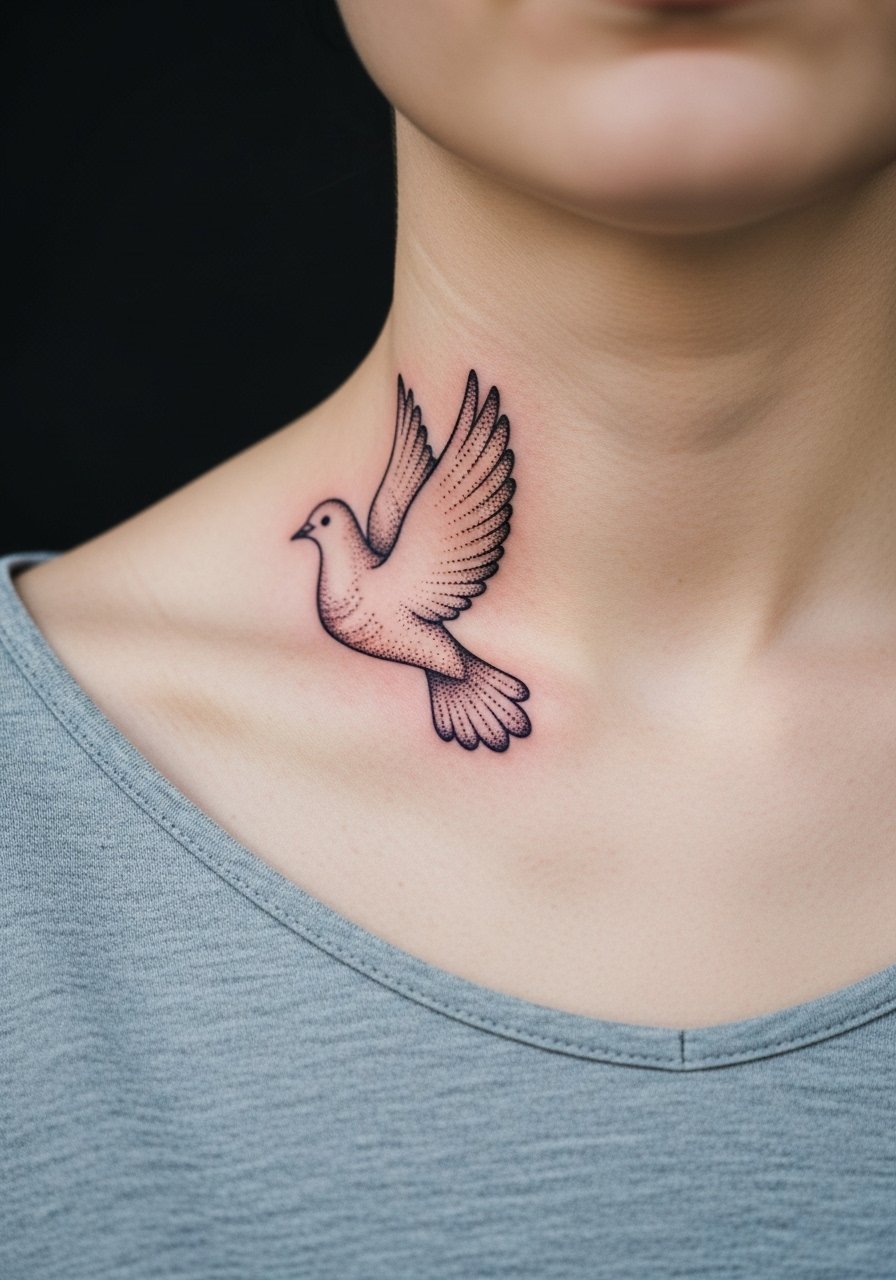
There is a strong visual rhythm to dot work along the collarbone. The common version that fails uses too dense stippling against the bone which reads muddy after settling. Ask for airy stipple gradients and a clear anchor line for the bird so the piece keeps contrast as it heals. For outfits, a wide-neck shirt pulled slightly aside frames the area without overexposing skin. Expect moderate pain near the bone and a one-session layout with minor touch-up potential.
13. Sketchy Flight Line on Upper Thigh

Thighs are forgiving canvases and are kind to experimental sketch styles. The usual mistake is placing a sketch with too many intersecting strokes that creates patchy healed texture. Tell your artist to retain a clear main flight line and to keep secondary strokes airy. Session wear should be easy shorts or a skirt so the artist can access the spot. This placement heals with low friction if clothing is chosen carefully, and it tends to need fewer touch-ups than ribs or hands.
14. Tiny Dove on Finger with Negative Space

Finger tattoos face constant washing and abrasion which makes longevity a challenge. The common mistake is placing too much detail on the narrow pad. Opt for simple negative-space silhouettes and thicker outlines to help longevity. During the session expect a short sharp sting and a possible reline at six to twelve months. For showing off, stack dainty bracelets on the opposite wrist rather than crowding the finger area. Keep expectations realistic about touch-ups.
15. Dove with Celestial Accents on Sternum

Sternum work is high on the pain chart but reads strong under clothing that already follows the chest line. A frequent error is overcomplicating with tiny stars and dots that blur into the sternum crease. Ask for spaced celestial accents and clear negative space around the bird. For the session wear a fitted sports bra so the artist has easy access without full exposure. Healing requires care with bras and straps, so bring soft options for the week after.
16. Linear Dove Cluster on Lower Back

Lower back pieces adapt well to a cluster layout that reads across the lumbar curve. The common error is lining birds too close to the waistband, which leads to distortion and rubbing. Ask your artist to position the cluster higher and to allow breathing room between figures. For session comfort wear low-waisted pants you can shift lower briefly. Pain is moderate and this area often requires only one session for modest clusters.
17. Abstract Linework Dove Near Collarbone

There is something satisfying about a single confident stroke just under the collarbone. The mistake is requesting a hairline single pass that vanishes in months. Ask for intentional line weight with a slight ink deposit that reads like a drawn stroke even after healing. A low-friction outfit helps during healing. Expect a short session and clear visual payoff when paired with jewelry like a thin chain pendant.
Frequently Asked Questions
Q: How should I choose between fine line, geometric, and watercolor dove styles for longevity?
A: From what I’ve seen, geometric pieces with clear negative space age best because they give the lines room to hold. Fine line can look elegant but often needs touch-ups at year two to four depending on placement. Watercolor looks gorgeous then usually needs refreshes every five to seven years if you want the vibrancy maintained. Ask artists how their similar healed pieces look after several years before committing.
Q: Will a fine line dove on the ribcage blur faster than one on the forearm?
A: Yes, ribs move more and that can make ultra-thin lines soften sooner. Artists are split on this. One group says ribs are too stretchy for the faintest hairlines. The other group says careful depth and spacing make ribs viable. The honest approach is to ask to see healed rib photos and request slightly bolder primary strokes rather than whisper lines.
Q: What should I wear to the appointment for a watercolor dove on the upper arm?
A: Wear a sleeveless tank top or an easy-roll sleeve so the artist has unobstructed access. Loose fabrics are better than tight ones for sliding aside without tugging the skin.
Q: How often will a tiny finger or ankle dove need a touch-up?
A: Fingers and ankles see more friction and washing, so plan on possible touch-ups within one to three years. Fingers are the fastest to fade. Ankles vary by footwear and clothing habits. Choose simpler fills and thicker outlines for better longevity.
Q: How can I find someone who specializes in the soft dove look without naming artists?
A: Use style-specific hashtags like #finelinedove or #watercolortattoo, search location tags such as "dove tattoo [city]" on image platforms, and check tattoo directories that let you filter by style. Reddit threads and booking apps can also show portfolios. Look for healed photos rather than fresh work when you vet a portfolio.