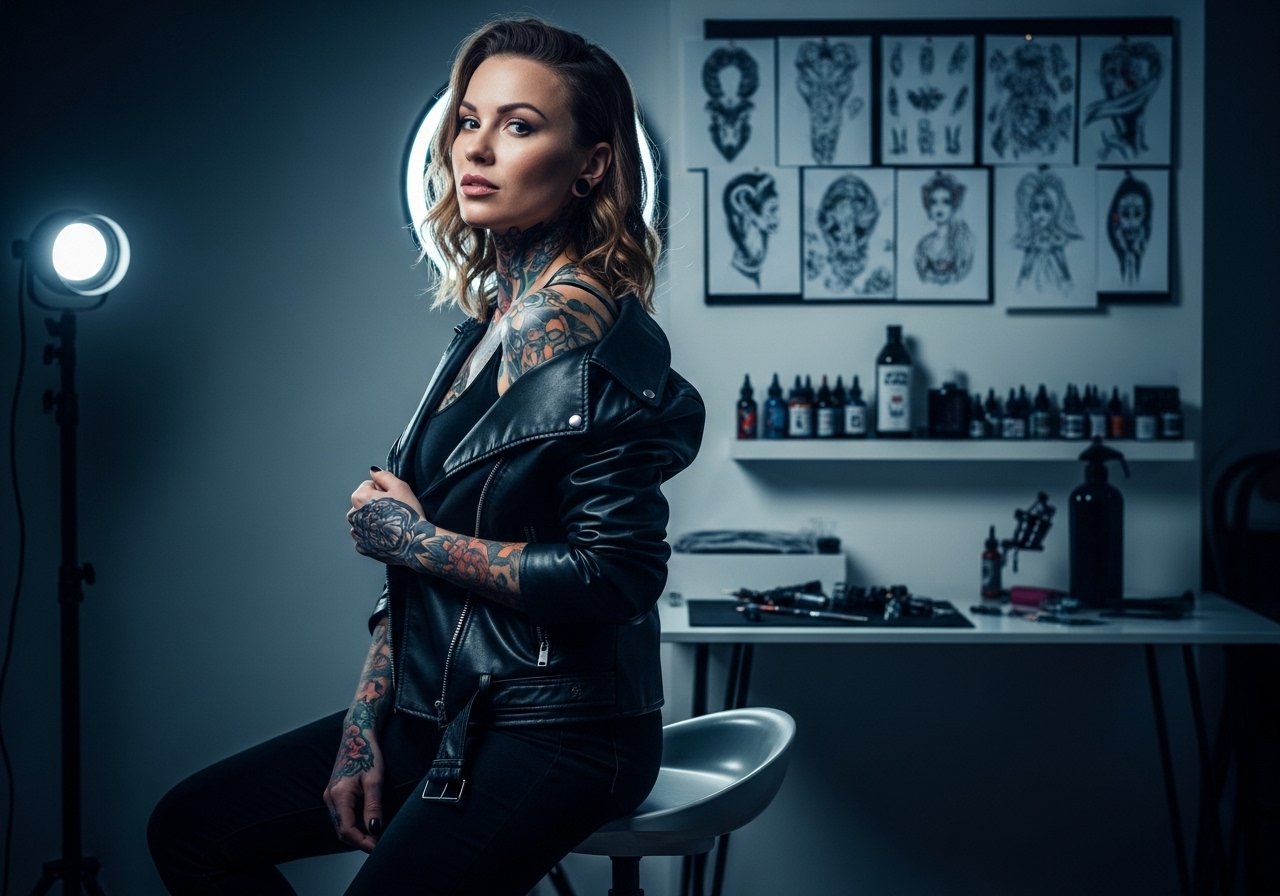
Fine line tattoos dominate social boards right now, but what looks delicate on a phone rarely tells you how it will hold up in daylight, sweat, and sun. The soft Chicano trend borrows the classic black and gray language and pares it back into gentler linework and whisper shading so pieces age without screaming. Below are 21 ideas that lean soft without losing the design DNA, plus what to ask for in consultation and how each choice behaves over time.
1. Payasa Portrait with Roses on Inner Forearm
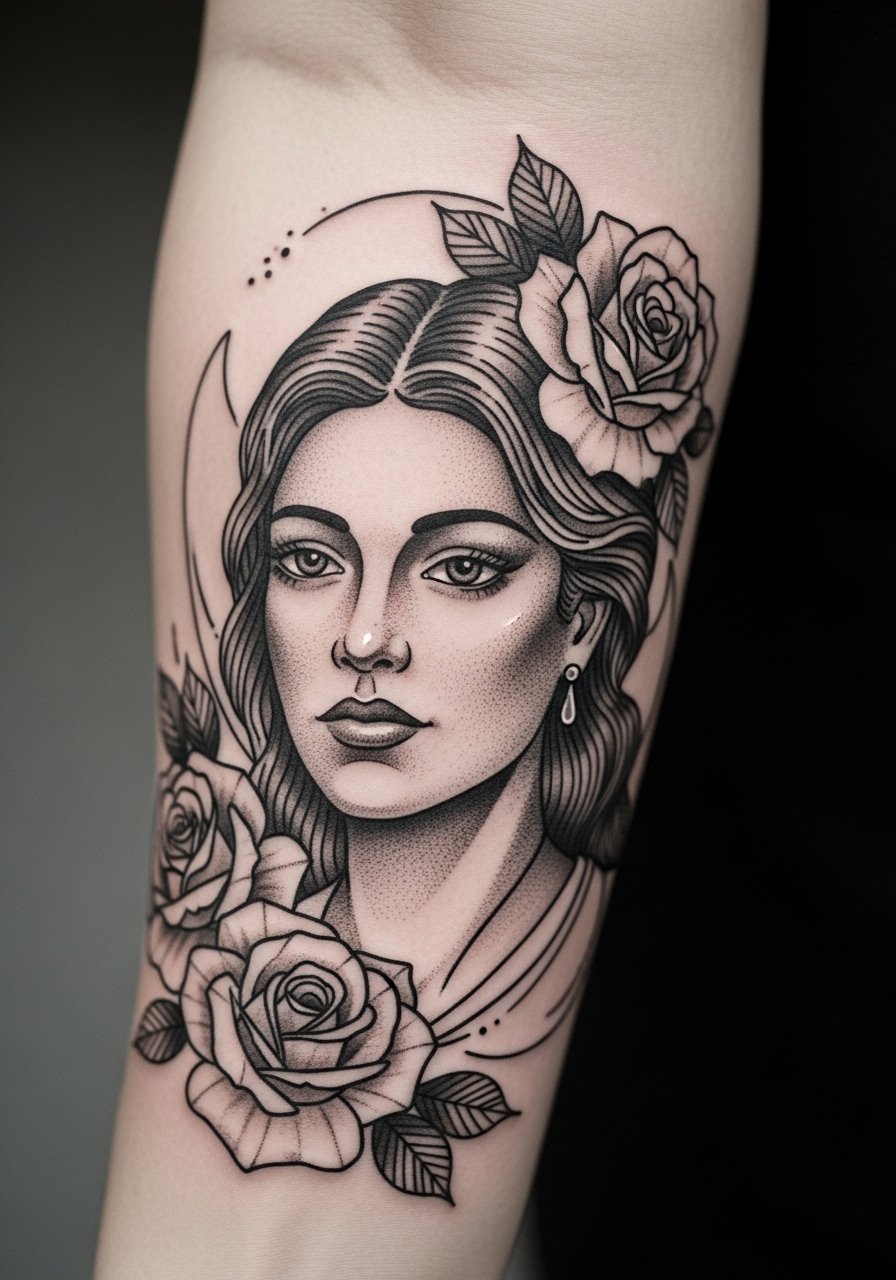
I have seen payasa portraits age well when artists drop heavy outlines and focus on mid-tone saturation. Tell your artist you want softer linework around the cheekbones and stipple shading in the petals rather than heavy black fills. A common mistake is requesting a tiny face with crowded detail. At 6 months this reads crisp and soft, at two years the stippling keeps the face readable, at five years expect some softening in hairline details and plan a light touch-up then. Forearm placement is low-risk for blowout. For showing it off, rolled sleeves work best, try a fitted black t-shirt when you want the portrait visible.
2. Small Virgin Guadalupe on Upper Arm
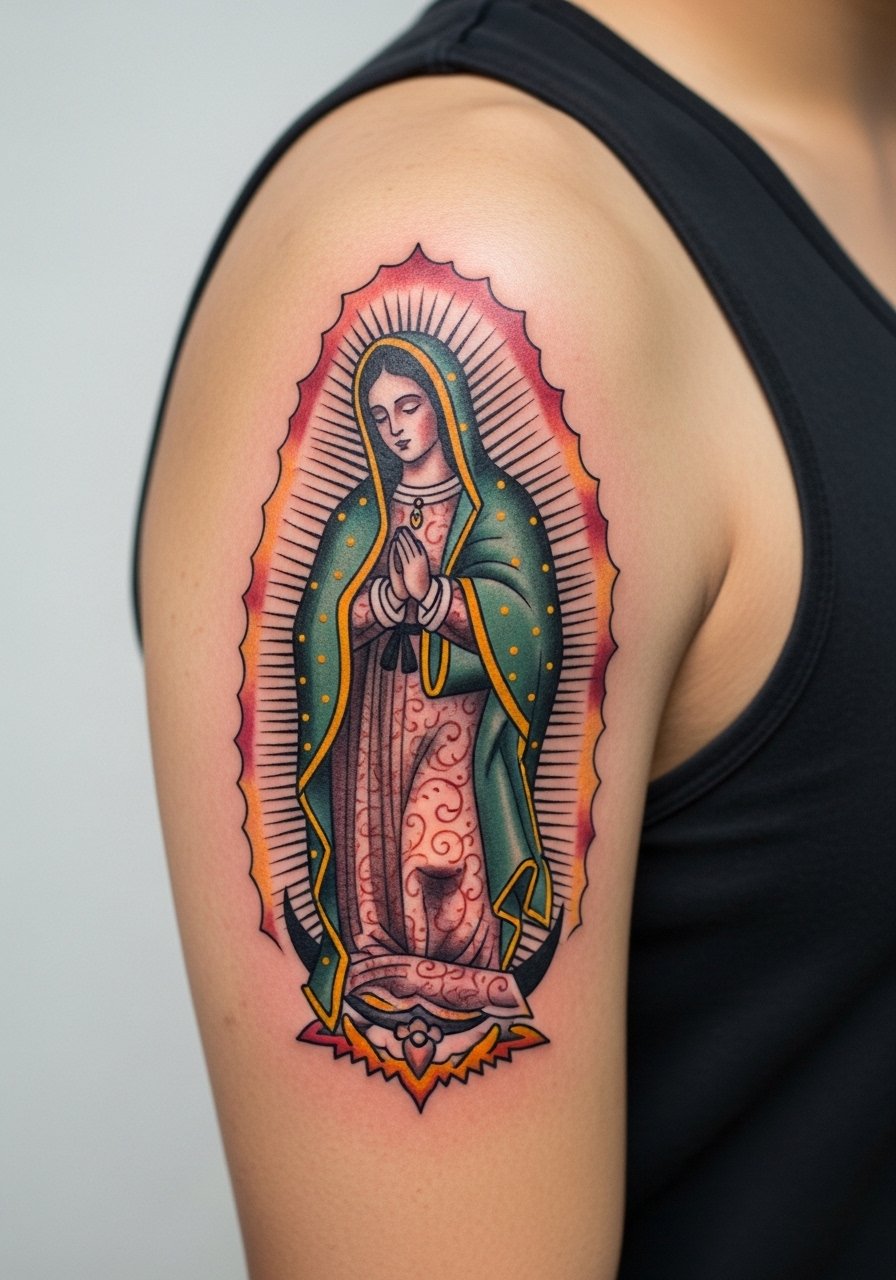
Fair warning: the upper arm tolerates saturation well, and the classic Guadalupe benefits from a slightly bigger scale than most people ask for. In consultation, specify color accents limited to the halo or floral accents rather than full color fills. A mistake is insisting on a tiny chest-sized piece on the arm. Session time is usually a single two to three hour block for a 6 to 8 inch piece. Expect touch-up at year three for lighter color highlights. For show-off outfits, an off shoulder crop top or tank keeps the silhouette clean and frames the motif.
3. Lowrider Car on Calf with Lettering Banner

I recommend the calf for lowrider cars because the muscle gives the composition room without wrapping into awkward curves. Ask your artist to simplify reflections and avoid micro-detail in chrome areas that will blur first. The debate over color versus pure black and gray shows up here. One camp prefers traditional black and gray for longevity. The other camp adds bold color for pop. If you want softer longevity, stick to blackwork with layered gray. Calf pain is moderate, sessions last two to four hours. Pair with rolled joggers and low-top sneakers when you want it visible, try slim joggers men for summer styling.
4. Aztec Calendar Motif on Ribs
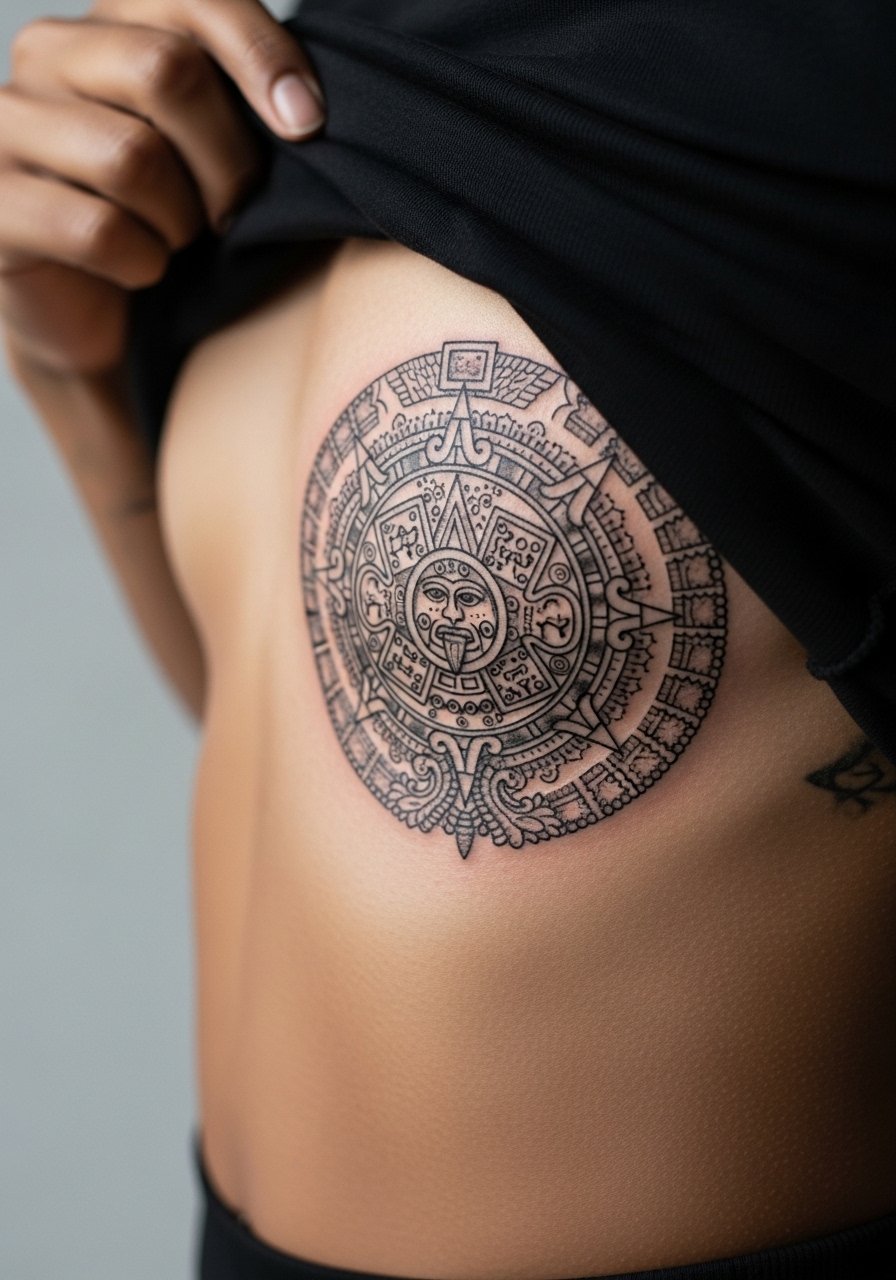
Fair warning: the ribcage is one of the more painful spots, often a 7 out of 10, but the canvas takes fine line well if spaced correctly. When booking, tell the artist you want increased spacing between concentric lines and stronger negative space so the motif stays legible as skin shifts. Artists split on bold outlines versus fine line here. One camp says thick outlines prevent early merging. The other camp believes careful fine line with correct depth will settle and read softer. Ask the artist which camp they follow. This piece often needs two sessions and a touch-up at year two if you prefer the softer look.
5. Chicano Script with Tiny Mustache on Wrist

When the wrist is your canvas, scale and spacing are everything. I tell people to pick a phrase no longer than six words and ask the artist for slightly enlarged counterspace in letters so the script does not merge. Common mistakes include too-small script and high-contrast hairline letters. Pain is low to moderate and sessions are short, often under an hour. Expect the wrist to need touch-ups sooner than the forearm because of sun and washing. For showing it off try a slim leather watch or a cuff on the opposite wrist to balance the look.
6. Sugar Skull with Subtle Filigree on Forearm
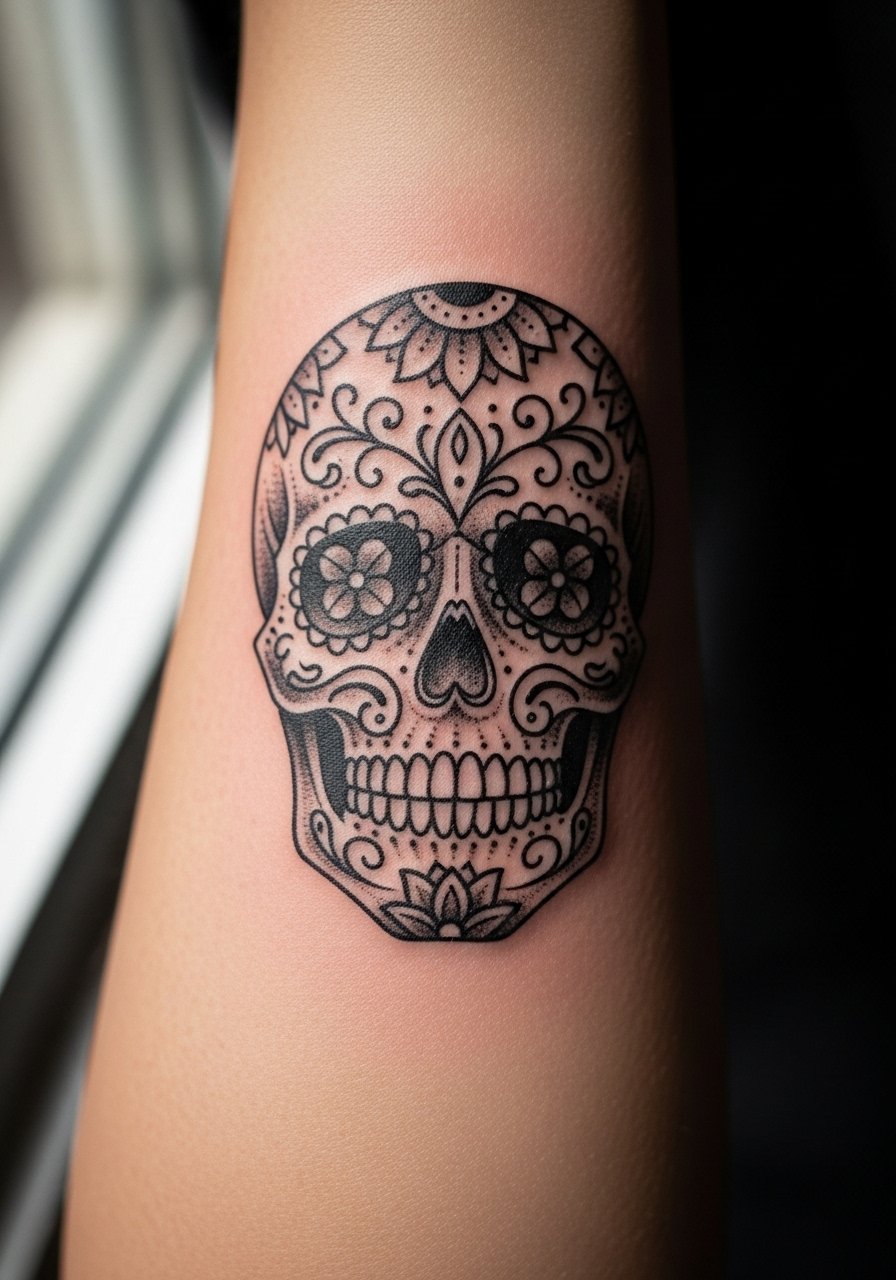
Most sugar skull pieces that age well rely on mid-tone layering rather than dense black backfills. Tell your artist to keep dot work in the filigree and use slightly heavier contrast around the eye sockets to preserve shape. A frequent error is asking for extremely tight ornamental details that merge after a year. Forearm placement heals reliably and is lower risk for blowout. Session time for a mid-sized skull is two sessions of two hours. For wardrobe, rolled sleeves or a vintage denim jacket men frame the ornamentation without competing.
Studio Day Picks
Those forearm, wrist, and upper arm pieces above each ask for different session prep and first-week protection, so a small kit smooths the day and the first few days of healing.
- Stencil transfer paper kit. Lets you preview line weight on skin and adjust placement before long sessions, especially useful for wrist and forearm script.
- Topical numbing cream. Applied according to instructions it eases rib and calf sensitivity without changing how the artist works.
- Thin protective film roll. Helpful for hand and wrist pieces that face constant washing and friction during the first week.
- Fragrance-free body wash. Cleans the area gently during daily showers without stripping hydration from delicate fine line work.
- Aquaphor healing ointment. A thin layer in the first days helps keep fine line channels moisturized while you follow your artist's aftercare timeline.
7. Jesus Portrait with Payasas on Sleeve

When committing to a sleeve, plan the narrative across three consultations. I recommend starting with the portrait and one payasa cluster so you can test how soft Chicano shading reads on your skin. A common mistake is trying to cram a full sleeve in one session which flattens texture. This approach often requires four plus sessions. Expect parts nearest the wrist to need touch-ups before upper arm panels. Sleeve sizing debate is real. One group pushes full coverage for visual cohesion. Another warns to start smaller to avoid regret. If you plan to show or hide, wear a loose button-down shirt for the appointment so artists have clean access.
8. Floral Cluster on Collarbone
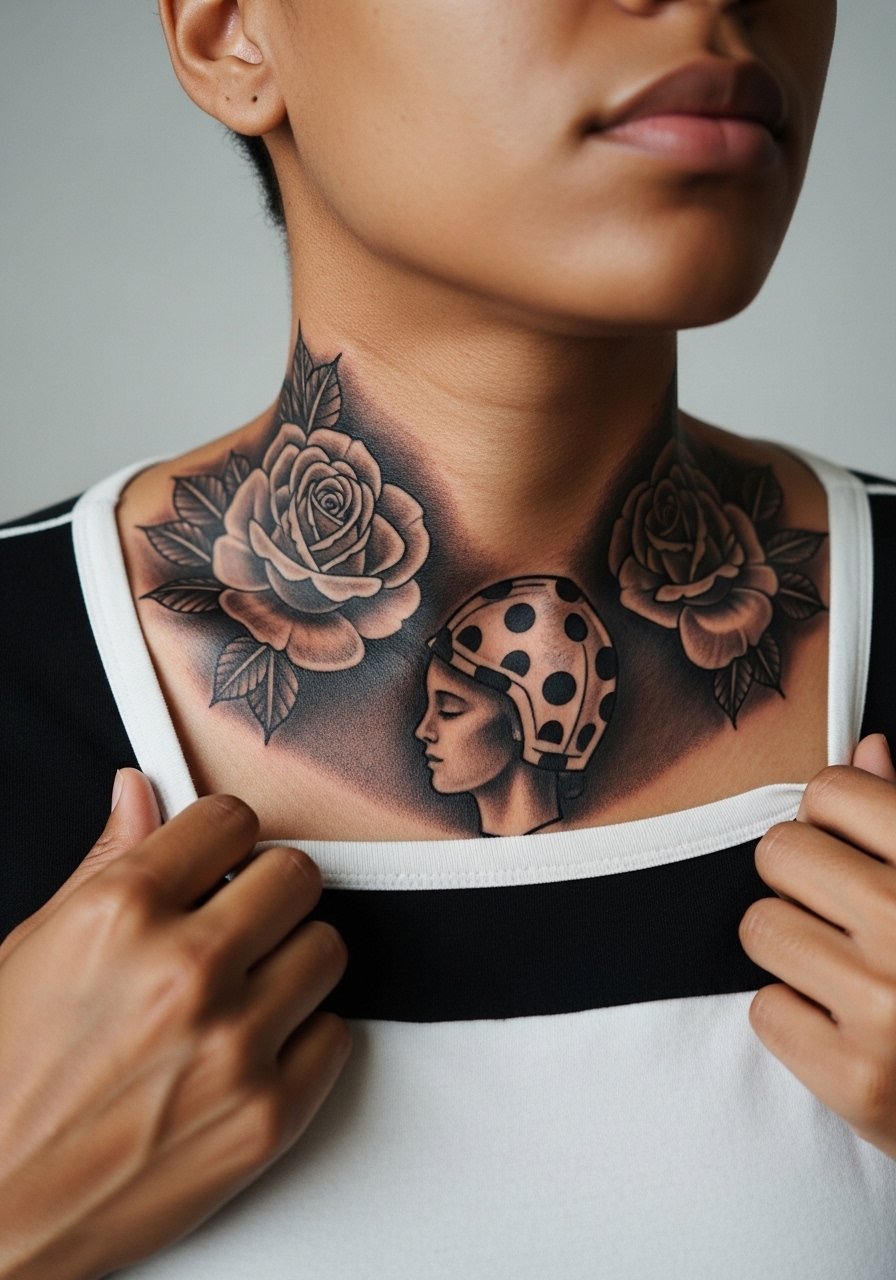
I often point to the collarbone when someone wants a feminine Chicano nod without a sleeve. Ask for flow that follows the bone and avoids dense black at the center. The biggest mistake is asking for a perfectly symmetrical bouquet on an asymmetrical body landmark. Session time is usually an hour and a half for a 5 to 8 inch piece. Heals well when you avoid chafing from straps. For evenings out pair this with an off shoulder crop top to frame the roses.
9. Micro-Realism Clown Eye on Hand
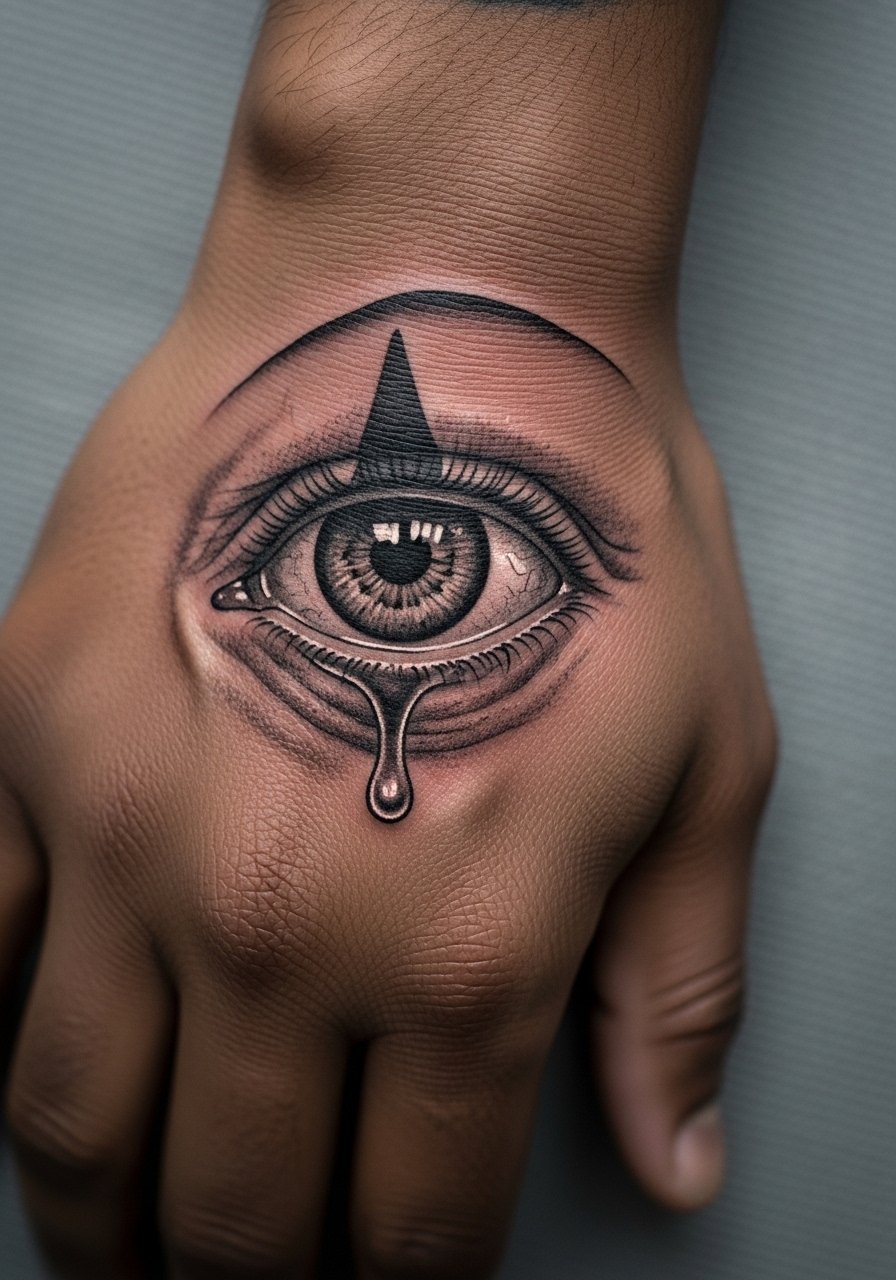
Hand pieces age differently because of constant washing and movement. My lead into this is a caution: keep the composition compact and avoid tiny lashes or hair detail. A common error is packing micro-detail into a high-friction zone. Expect touch-ups at year one for hand work, and accept some softening by year three. Hand tattoos also carry professional visibility considerations, so think about career contexts. For session day wear, remove rings and keep hands clean. Aesthetic pairings like stacked signet rings on other fingers highlight the eye without crowding it.
10. Minimal Sombrero or Cross at Ankle
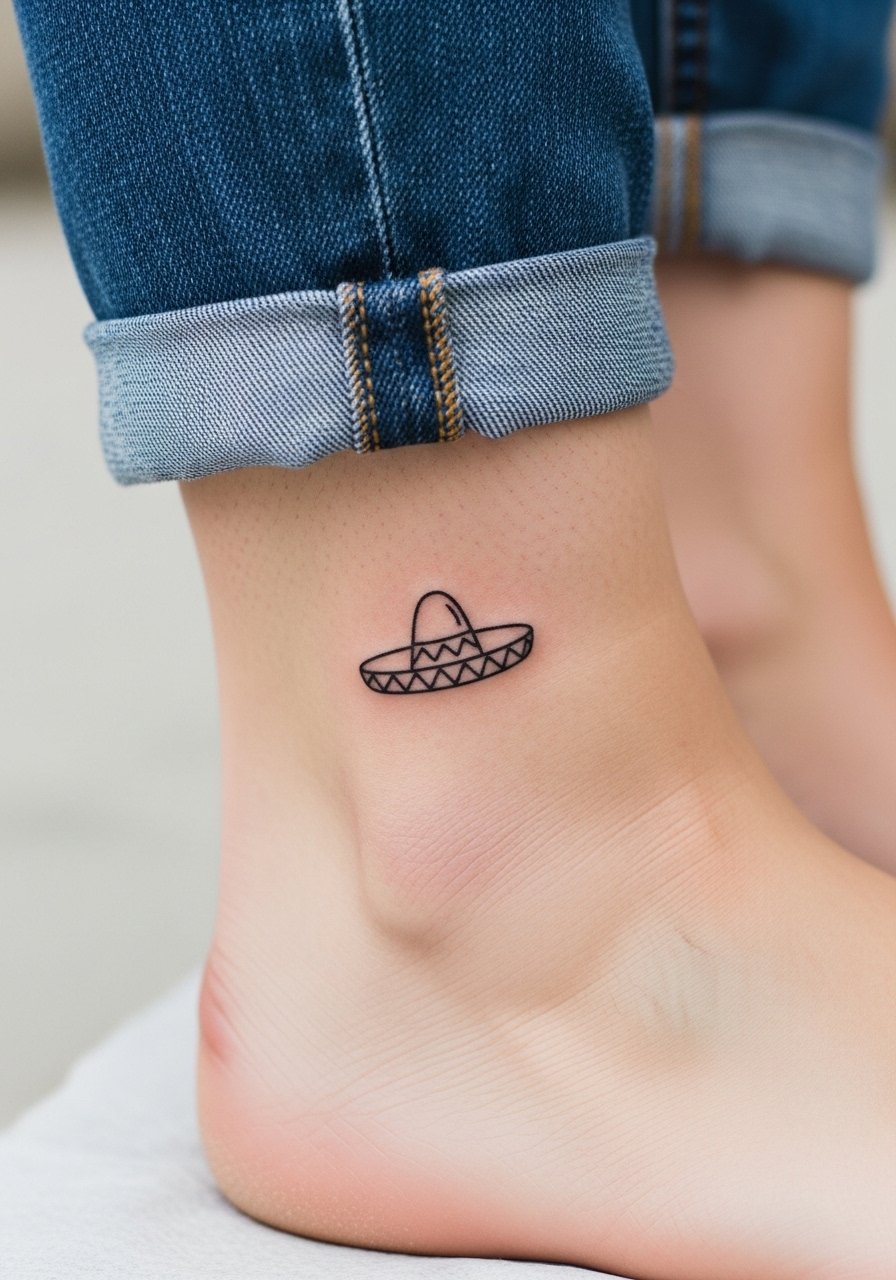
Ankle and wrist icons work well for first Chicano pieces because they test the style at small scale. When you ask for a sombrero or cross, specify a slightly thicker single-line outline and open negative space so the icon does not blur with time. A common mistake is choosing hairline outlines that vanish after frequent sock friction. Pain is mild. For summer visibility, wear shorts or low top sneakers and roll your pants to show the piece.
11. Hyper-Realistic Skull and Gun on Thigh
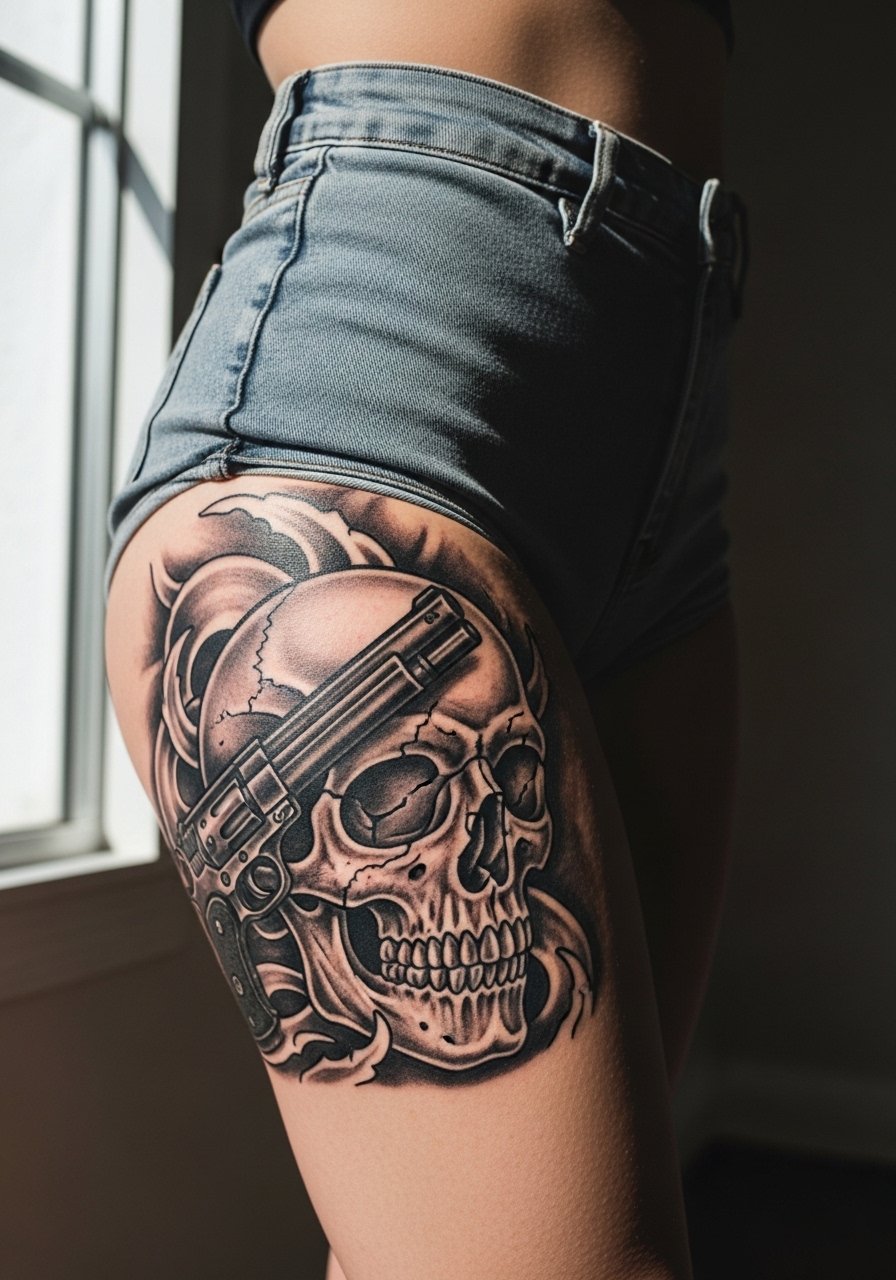
The upper thigh is forgiving for large technical pieces and hides well if you change your mind. When you book this, ask your artist for matte blacks and layered grays rather than glossy fills that can shiny-blend. A common mistake is asking for the smallest possible version of a complex composition. Expect three-hour sessions across two to three sittings. Thigh tattoos age well if you avoid prolonged sun exposure and heavy friction from tight clothing. For showing it off try high waist athletic shorts that rise above the piece.
12. Small Clown Eye with Script on Fingers
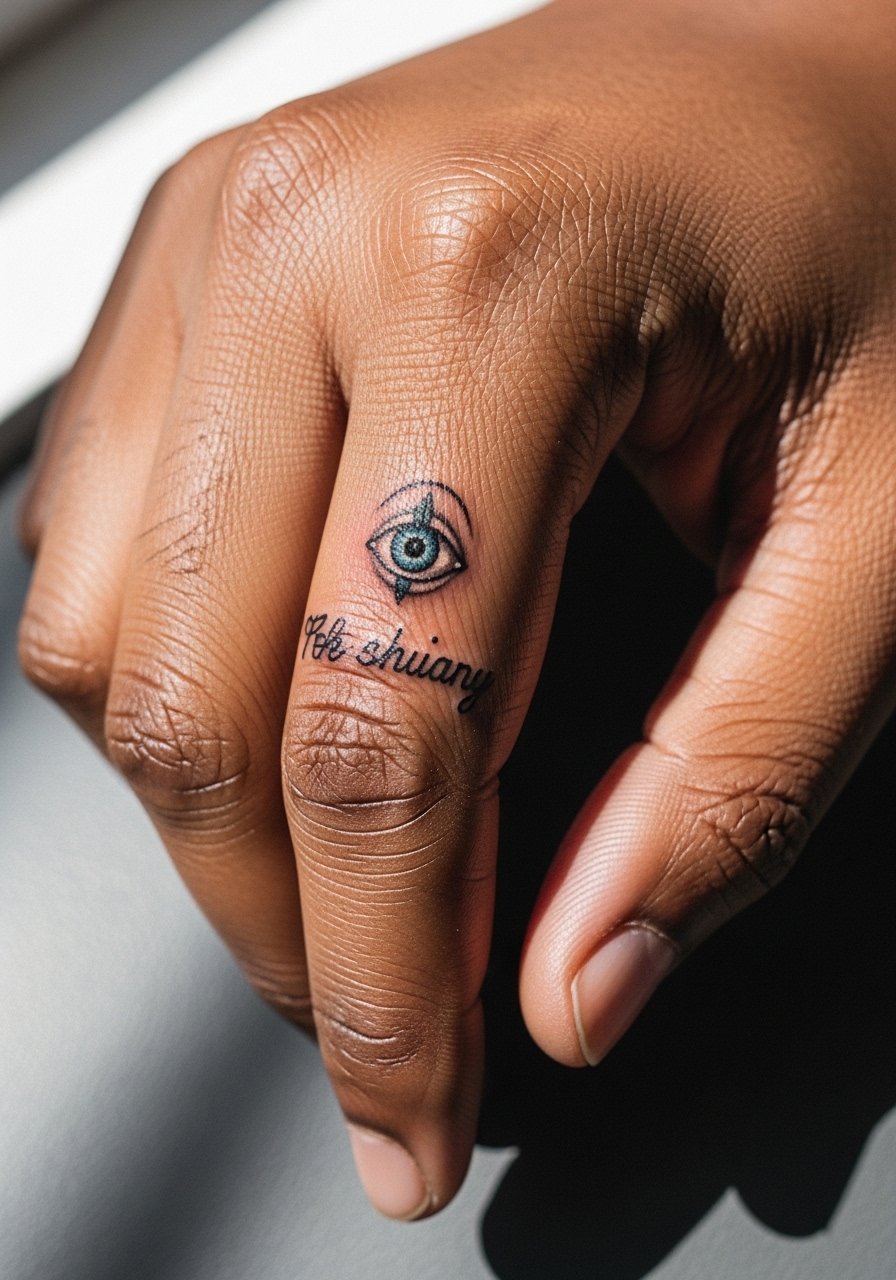
Finger tattoos are quick but high maintenance. My consultation tip is to choose single glyphs or one-word scripts and accept that touch-ups at year one are likely. The mistake with finger script is dense calligraphy without room to breathe. Expect a sharp look at six months and the need for refresh at twelve to eighteen months. For wear during the session remove any hand jewelry and avoid topical lotions. If you do accessorize, fingerless options like fingerless leather gloves on the non-tattooed hand keep focus on the ink.
13. Watercolor-Soft Rose on Shoulder Blade

Most watercolor experiments in Chicano aesthetics need careful anchors of black and gray to keep them readable over time. In the consult, ask for subtle black contours that the color can sit on, rather than color-only washes that fade into a bruise. A mistake is requesting saturated watercolor on high-sun areas without UV plans. Shoulder blade work is moderate pain and tends to hold color better than hands. Wear a loose tank top for the session. If you want the look without heavy upkeep, ask for muted washes and stronger stipple shading.
14. Ornamental Mandala on Upper Back
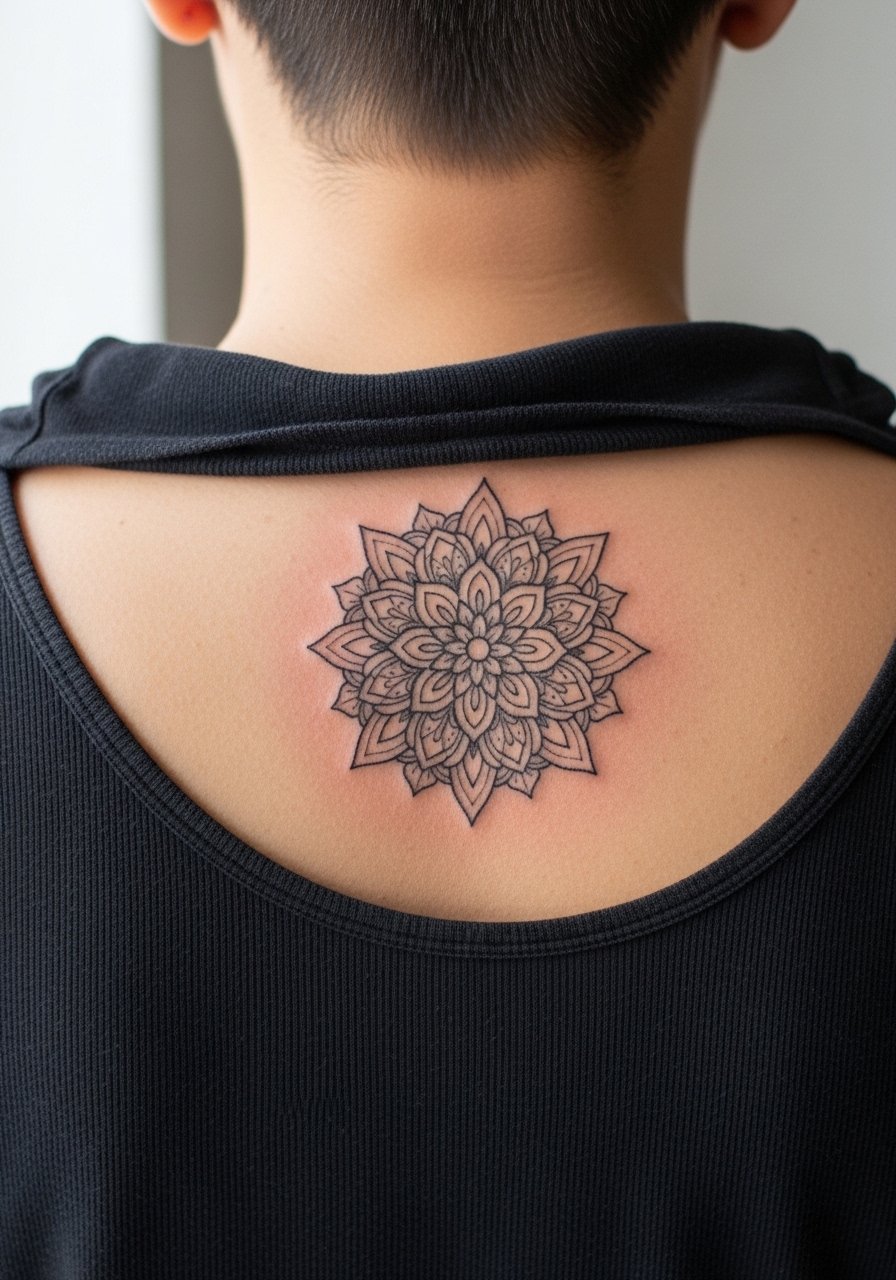
Personal observation tells me mandalas need breathing room, especially on the back. Tell your artist to leave negative space between concentric rings and avoid micro-stipple that can merge into a solid after two years. The common error is asking for an overly dense mandala at a small scale. Upper back placement handles detail well and usually requires two sessions. For evening wear pair with open-back dresses or halter tops that highlight the geometry.
15. Small Cross or Sombrero Behind the Ear
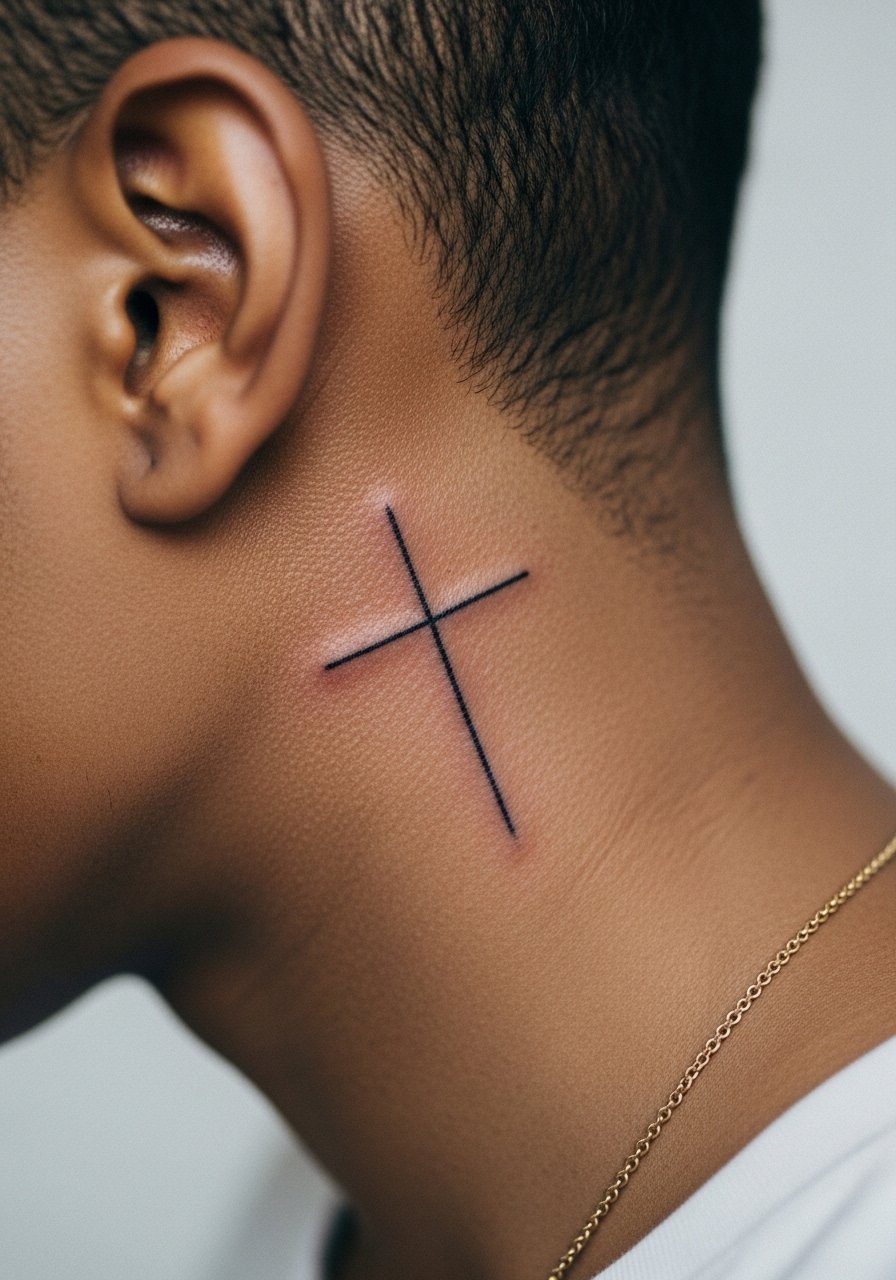
Behind-the-ear pieces are intimate and subtle. When asking for this placement, make sure the artist understands the small scale and uses slightly heavier contour lines so the motif does not blur at year two. A common mistake is asking for script or excessive filigree there. Pain is low but the area is sensitive. For work concerns remember visibility depends on your hair. Discovery pathways like #PayasaTattoo on social platforms help you find appropriate references.
16. Chestpiece Virgin with Floral Accents

The upper chest can read beautifully with softer shading if artists avoid heavy black slabs over the sternum. Tell your artist you want lower contrast at the neckline and stronger contrast toward the shoulders to frame the face. A repeated mistake is trying to reduce the scale to fit into a small chest area. This design often needs three sessions and a color refresh by year three. For session wear choose a wide-neck top to make access simple. Some people opt for a thin chain pendant near the collarbone if they want extra framing.
17. Floral Sleeve Accent with Light and Shadow Play
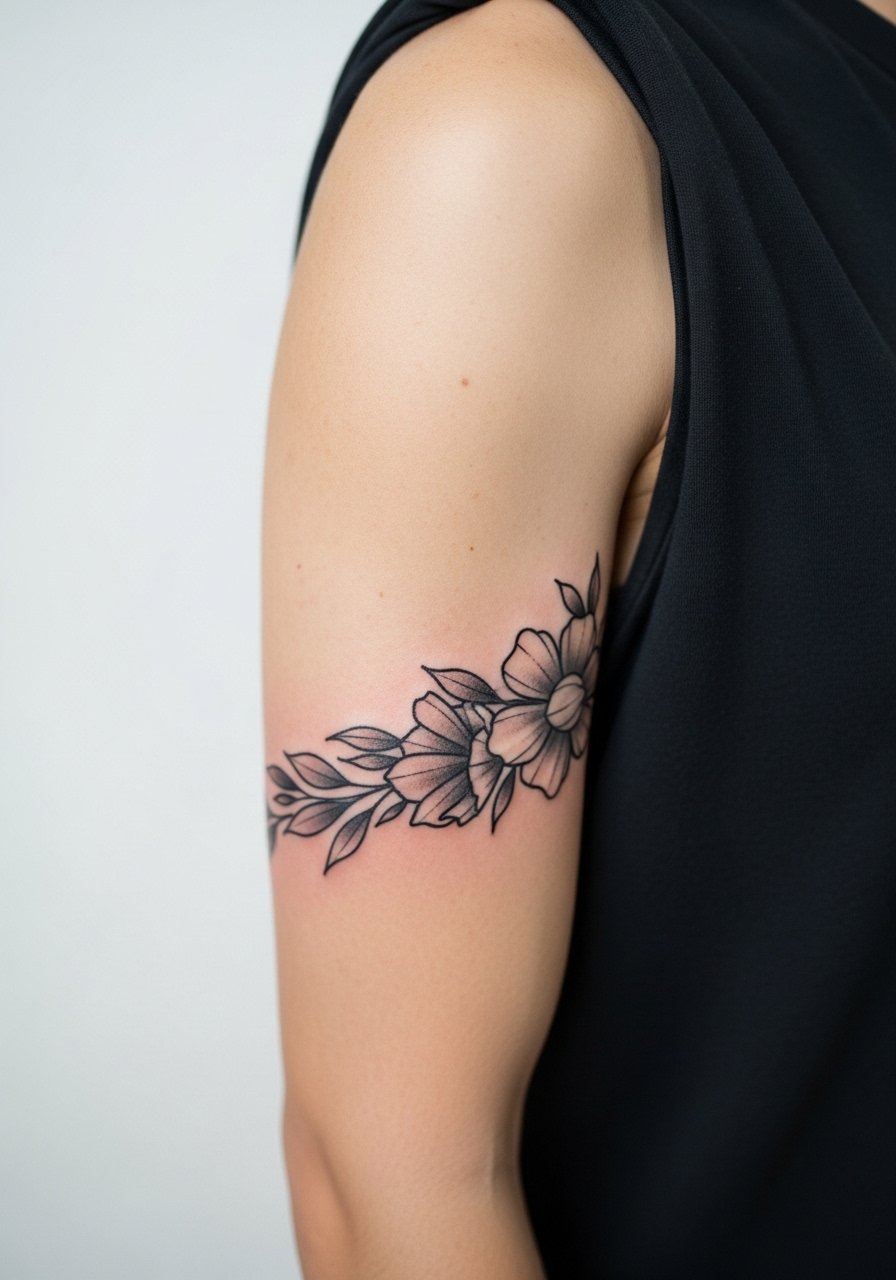
When building a sleeve from floral accents, spread sessions across a few months so artists can layer saturation and let previous work settle. I advise asking your artist to balance stipple shading with whip shading to create depth that does not collapse. A frequent error is filling every negative space at once which speeds up the look of heaviness. Sessions are medium length and most people plan five to eight sittings for a full sleeve. For showing it off try rolled-up linen shirts or a vintage denim jacket men that frames the arm.
18. Micro-Script on the Sternum
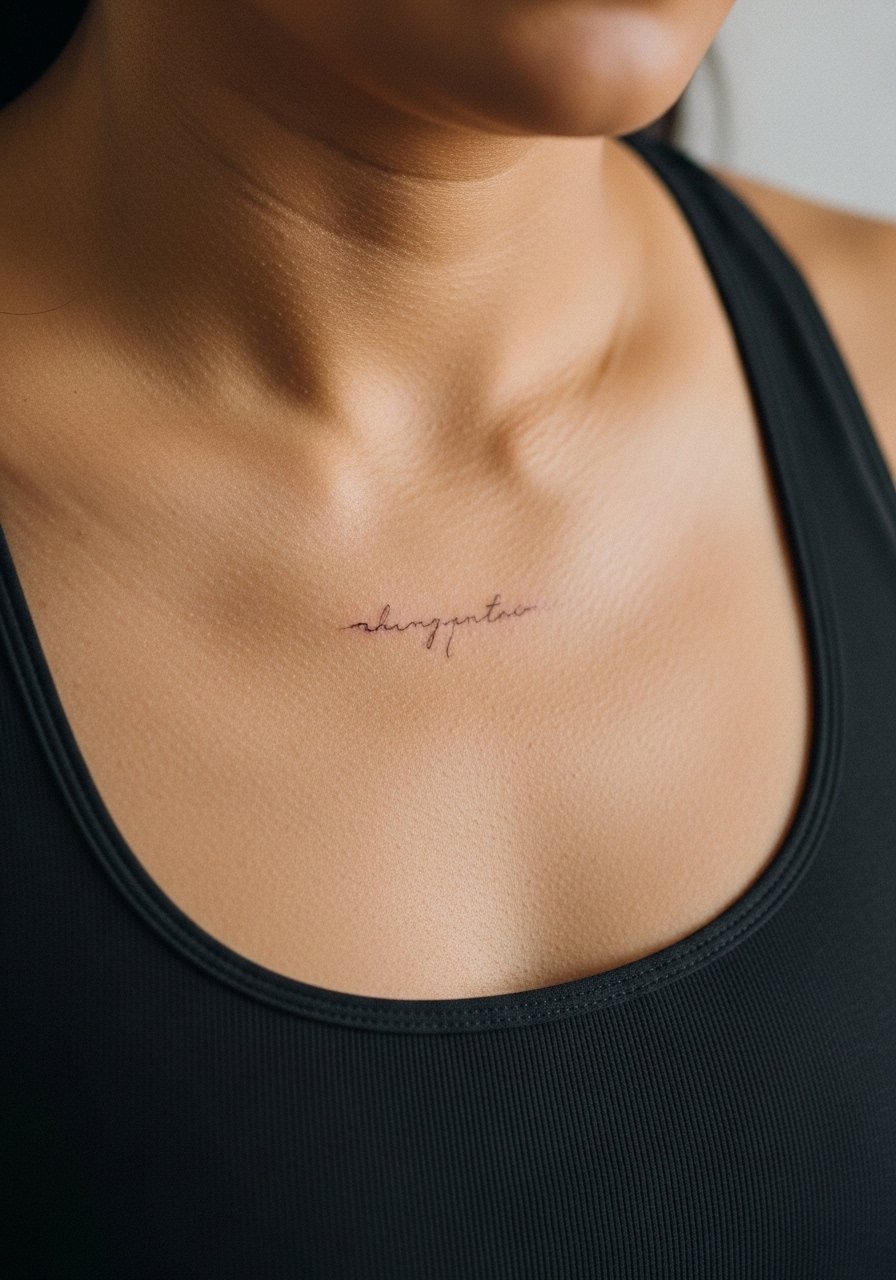
Sternum and underbust pieces can be high on the pain scale but sit discreetly under clothing. When you ask for script here, request slight spacing increases and ask the artist if they recommend a serif or sans lettering to keep edges clear. The mistake is asking for tight cursive in a moving area. Expect slower healing due to friction from clothing and plan session wear accordingly. This placement often needs a touch-up at year two if you wear tight clothes frequently.
19. Aztec-Inspired Band Across Wrist

Wrist bands read well as a subtle statement if the pattern has repetition and adequate gap between elements. Tell the artist to avoid tiny triangles and insist on slightly thicker intermediary lines to reduce fast merging. A common error is packing dense ornamentation into a narrow circumference. Wrist bands are visible and may require a touch-up at year two. For complementary accessories, choose a leather cuff bracelet on the opposite wrist.
20. Lowrider Bike Silhouette on Calf

Calf pieces are seasonal show-offs and great for lowrider motifs. I advise asking for strong silhouette shapes and limited tiny engine detail that will fade into blurs. The common mistake is requesting overly intricate chrome work that loses definition. Calf sessions are comfortable and last two to three hours for mid-sized pieces. For street styling roll your joggers or wear shorts. A pair of ankle roll pants helps when you want to display the bike.
21. Minimalist Cross on the Ankle with Script Accent
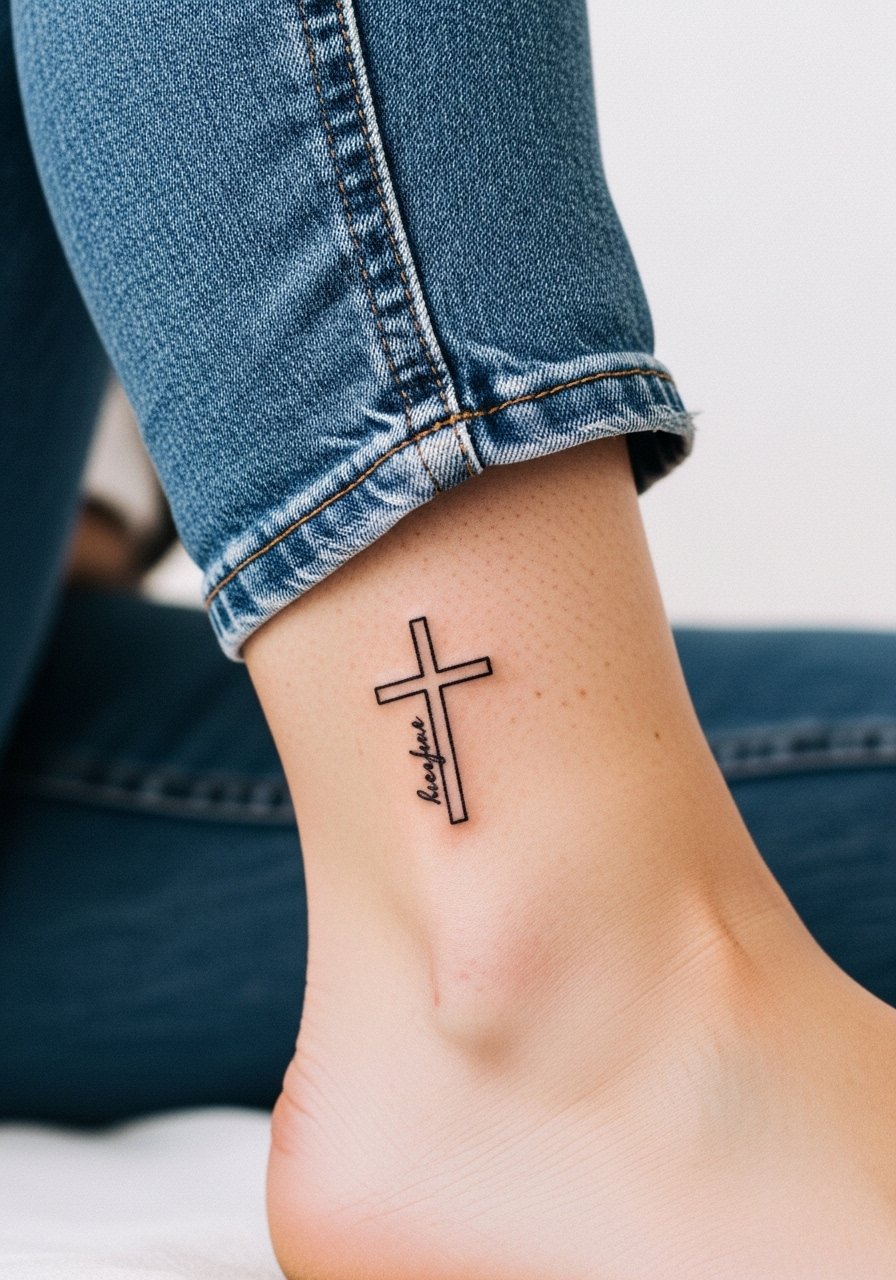
Ankle icons pair well with a tiny script line underneath if the letters are spaced openly. My consultation tip is to ask the artist for open counters in the letters and a slightly heavier cross outline to compensate for shoe friction. A mistake people make is requesting tiny italic script where a simple serif would hold longer. Pain is low and sessions are brief. For showing it off, sandals and cropped pants work best.
Frequently Asked Questions
Q: Will fine line Chicano pieces blur faster than traditional black and gray work?
A: Fine line can blur sooner because the lines are thinner and sit closer to the surface over time. One camp argues thicker linework preserves shape longer. The other camp says correct needle depth and spacing make fine line hold up. Ask your artist which approach they prefer and plan a touch-up around year two to three for delicate work.
Q: How should I plan sessions if I want a soft Chicano sleeve but worry about commitment?
A: Start with a single panel on the upper arm or forearm as a test and schedule the rest across multiple sessions. That lets you see how the soft shading looks on your skin and limits regret risk. Many people book two to three initial sessions, then pause and reassess after healing.
Q: Are hand and finger tattoos practical if I work in customer-facing roles?
A: Hand and finger tattoos are highly visible and can affect first impressions in some industries. If you cannot risk visibility, choose placements like the inner forearm or upper thigh first. If you proceed, consider compact designs and accept earlier touch-ups.
Q: Do watercolor-style soft Chicano pieces need different clothing during healing?
A: Yes. Watercolor and soft washes benefit from loose clothing that avoids rubbing the area while it scabs. For shoulder or back pieces wear a loose tank top during the first week and swap to breathable fabrics like linen. A loose drawstring linen pant works for thigh sessions.
Q: How do I choose between black and gray versus adding color for a Chicano design?
A: Decide based on longevity and aesthetic. Black and gray ages predictably and usually needs fewer color refreshes. Color adds pop now but can require color-specific touch-ups later. If you are undecided, ask for color highlights only in small accents so you can keep the base in black and gray.
Q: When should I expect to schedule a touch-up for wrist and hand pieces?
A: Plan for a touch-up at around twelve to eighteen months for hand and wrist work. Those zones face the most wash and sun exposure. If you keep them covered and use UV protection you can extend the interval between touch-ups.