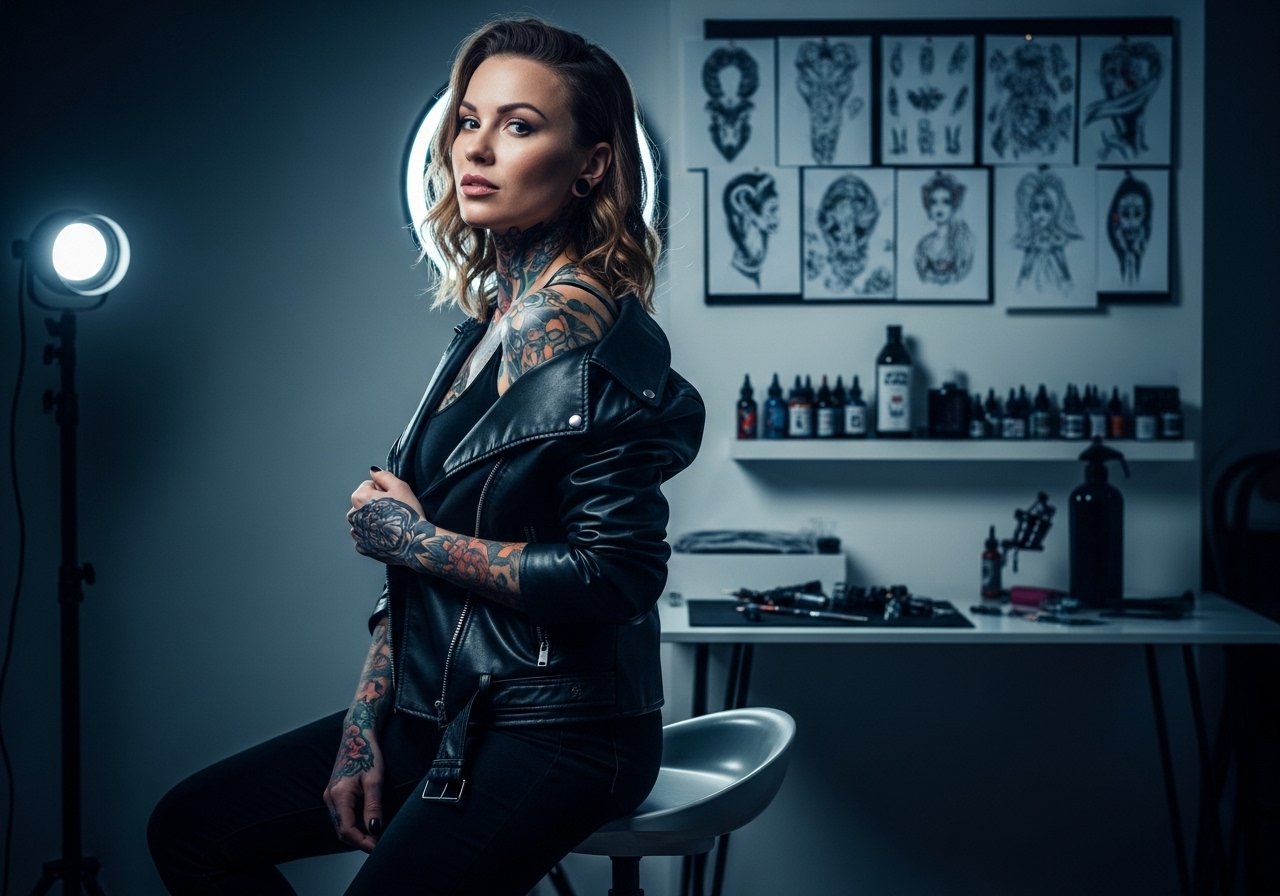
Fine line neck trends look flawless on a saved board, but the reality in the chair is messier: the side neck vibrates, the stencil shifts, and what looks crisp at hour one can need a touch-up by year two. Expect some teeth-vibrations on bony spots, extra bleeding on fatty areas, and the occasional artist cancellation that means guest spots or travel. Keep reading for 21 side neck ideas that show how each style holds up, what to ask at consultation, and how to dress for the session.
1. Fine Line Rose Just Below the Jaw
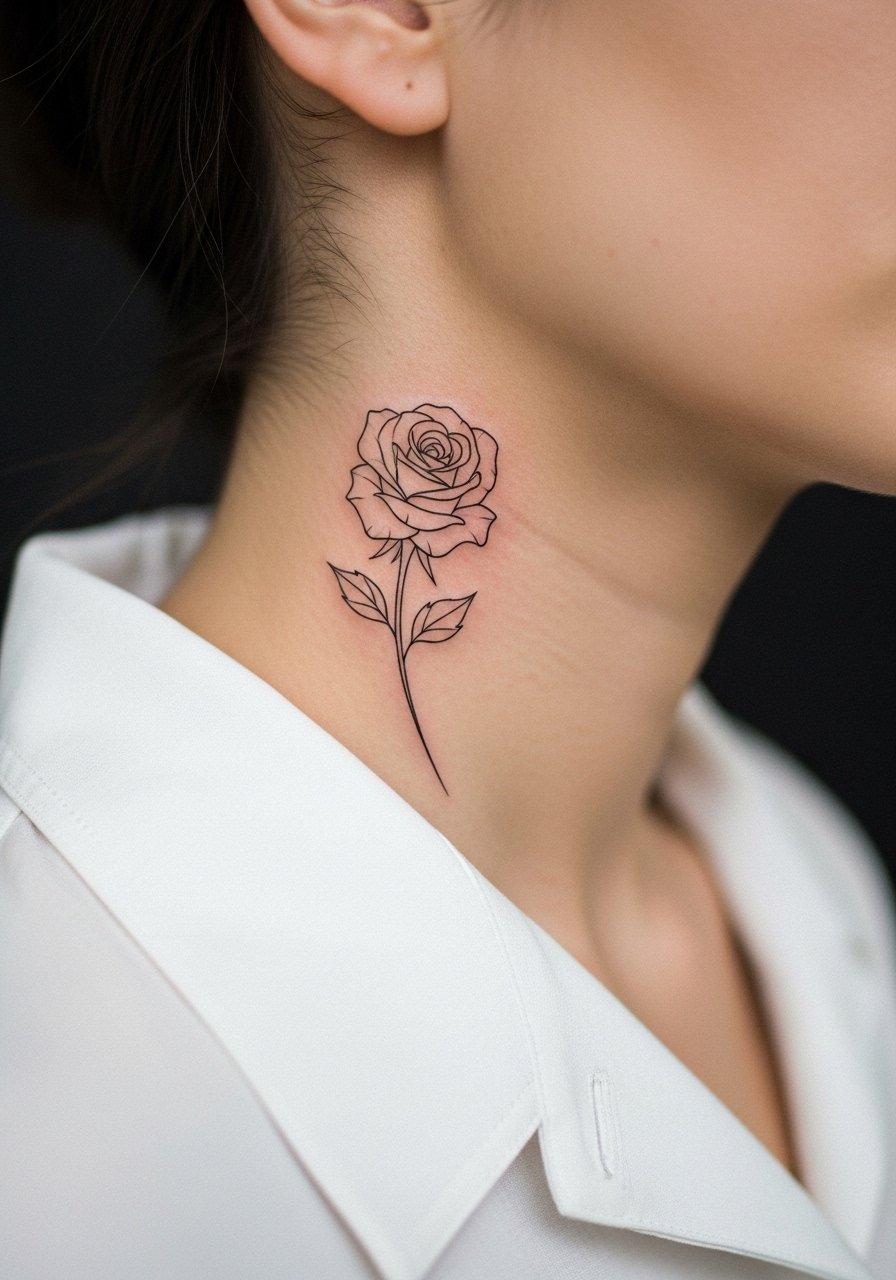
A small rose tucked under the jaw reads feminine without shouting. Tell your artist you want single-needle linework with light negative space between petals so the ink has room to age. The main mistake is asking for petal detail that is too tight, which blurs on movement-heavy neck skin by year two. Expect a one-hour session and sharp pain where the bone is near the jaw. For showing it off, pair with a V-neck crop top in black and a layered gold chain on the opposite side to balance asymmetry.
2. Minimalist Geometric Arrow at the Nape
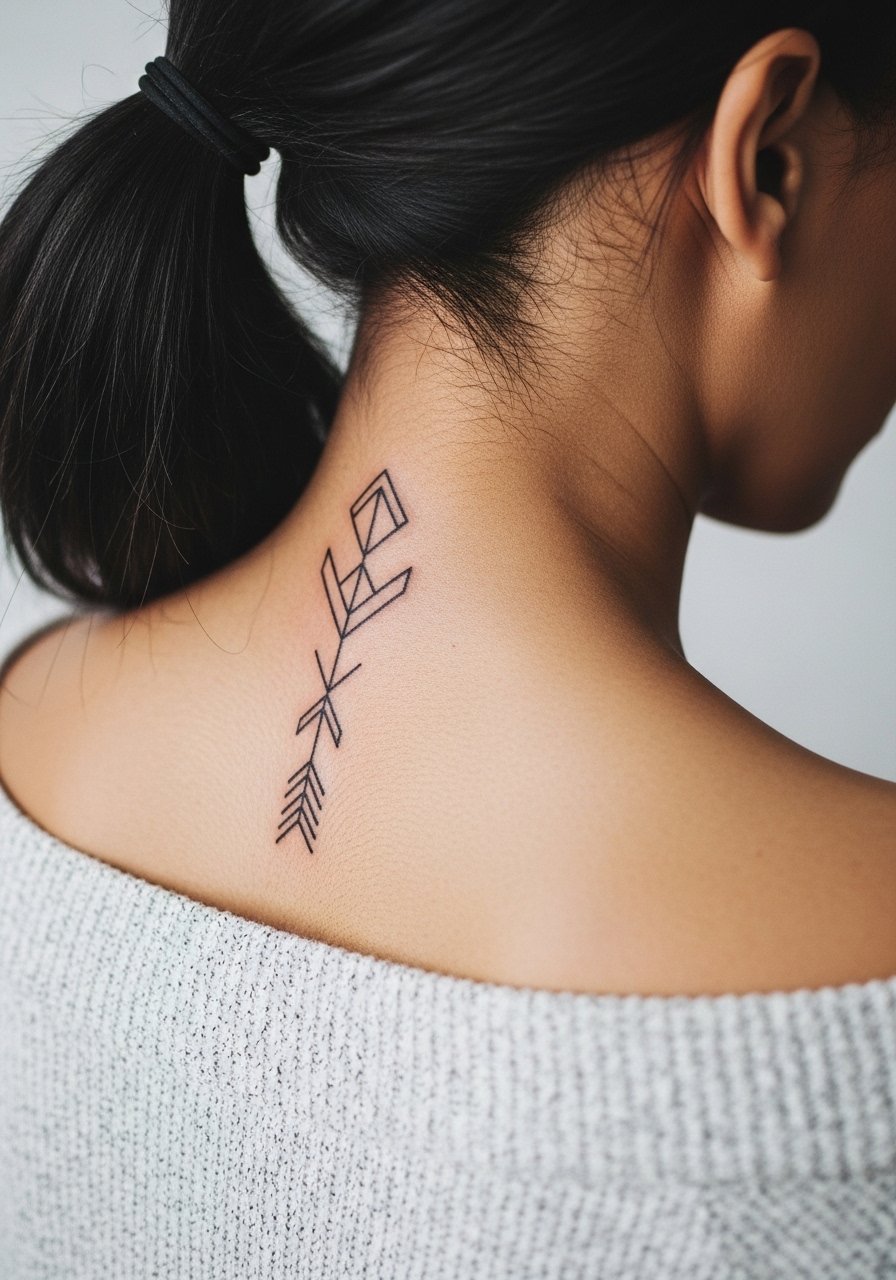
A one- to two-inch arrow along the hairline fits professional dress codes while still carrying symbolism. Ask for slightly heavier line weight than a typical fine line so the shape lasts on moving skin. Artists split on fine line vs bolder lines here. One camp says fine line gives the subtle look people want. The other camp argues a bolder line is the only way to avoid ghosting in two years. Plan for a single short session and wear a high ponytail for access. For evenings, a messy updo clip shows the nape without overexposing it.
3. Neo-Traditional Mandala Curved Under the Jaw
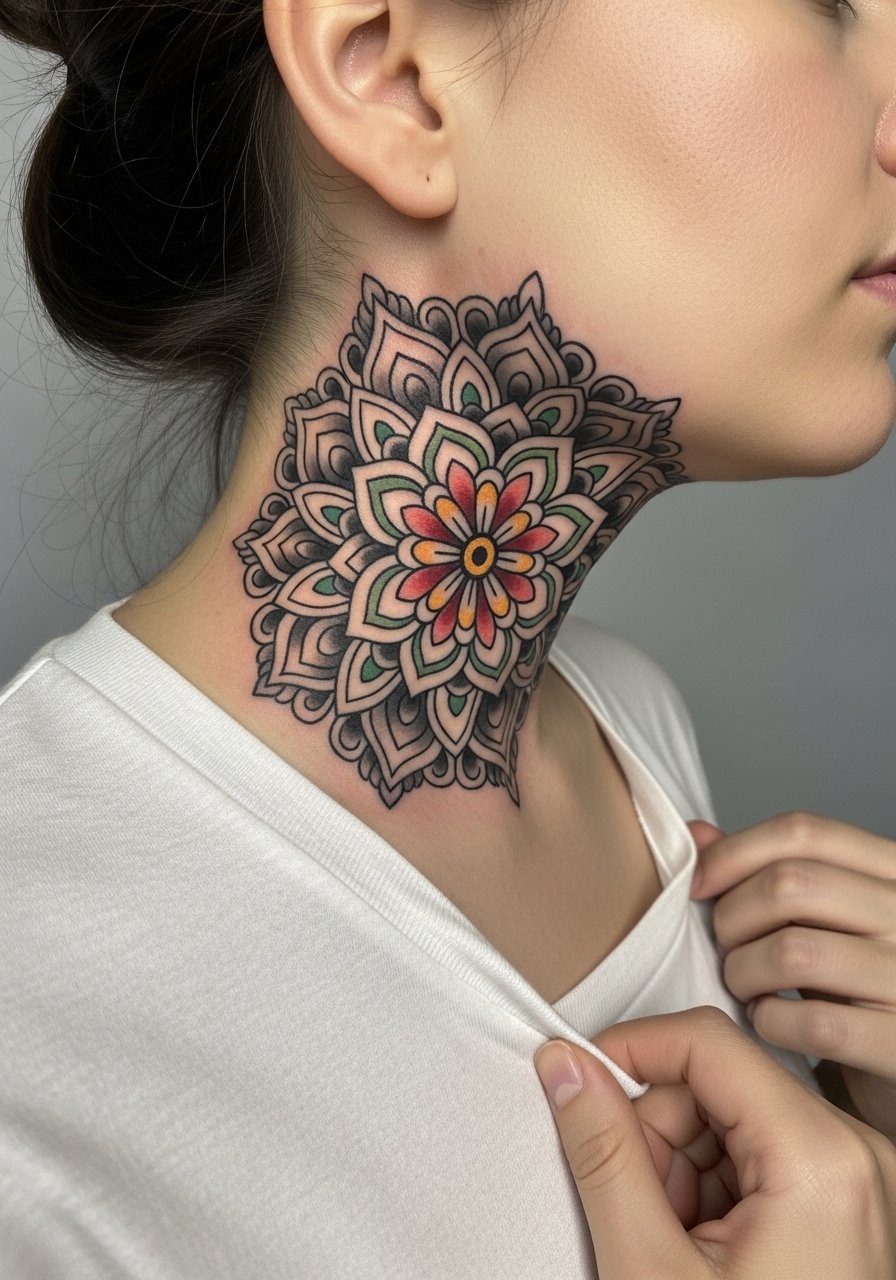
A mandala that follows the jawline frames the lower face and brings color without overwhelming small spaces. Tell your artist to map the curve to your jaw so the petals sit flat when you tilt your head. The common error is cramming too many concentric rings into a small scale, which turns dense and muddy as it heals. Expect two sessions if you want color accents. This piece pairs well with strapless or off-shoulder tops in rich jewel tones, so try a wrap dress in deep jewel tones for nights out.
4. Blackwork Snake That Wraps Vertically
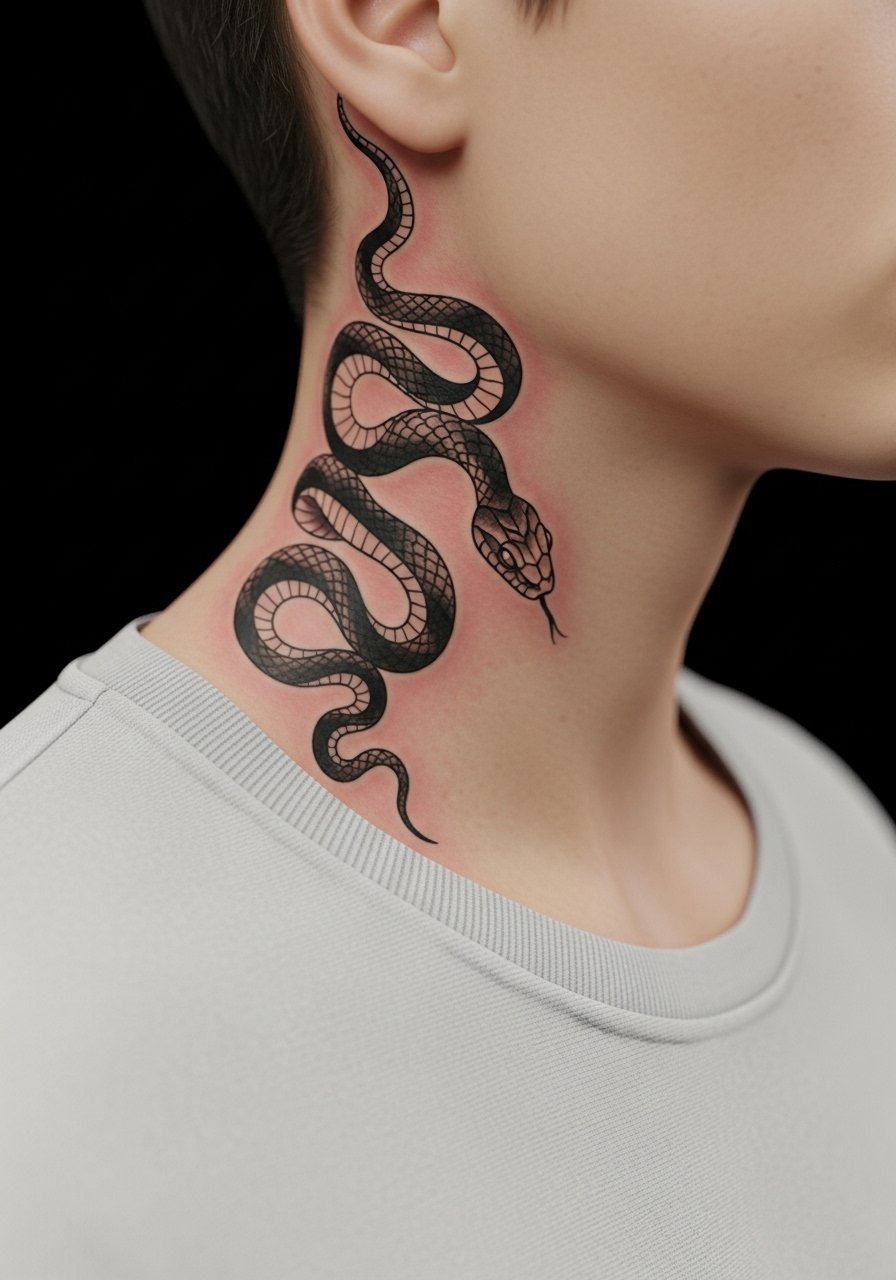
This is a statement piece that ages into a sculpture of negative space and saturated black. During consult, say you want solid fills and clear separation between scales to avoid dull blobs later. The session will be longer and more intense on pain because of continuous strokes over sensitive areas. A frequent mistake is shrinking the snake to fit a small patch, which loses the wrap effect. For casual wear, a crewneck tee in solid black pulled slightly low frames the design without hiding movement.
5. Watercolor Feather Behind the Ear
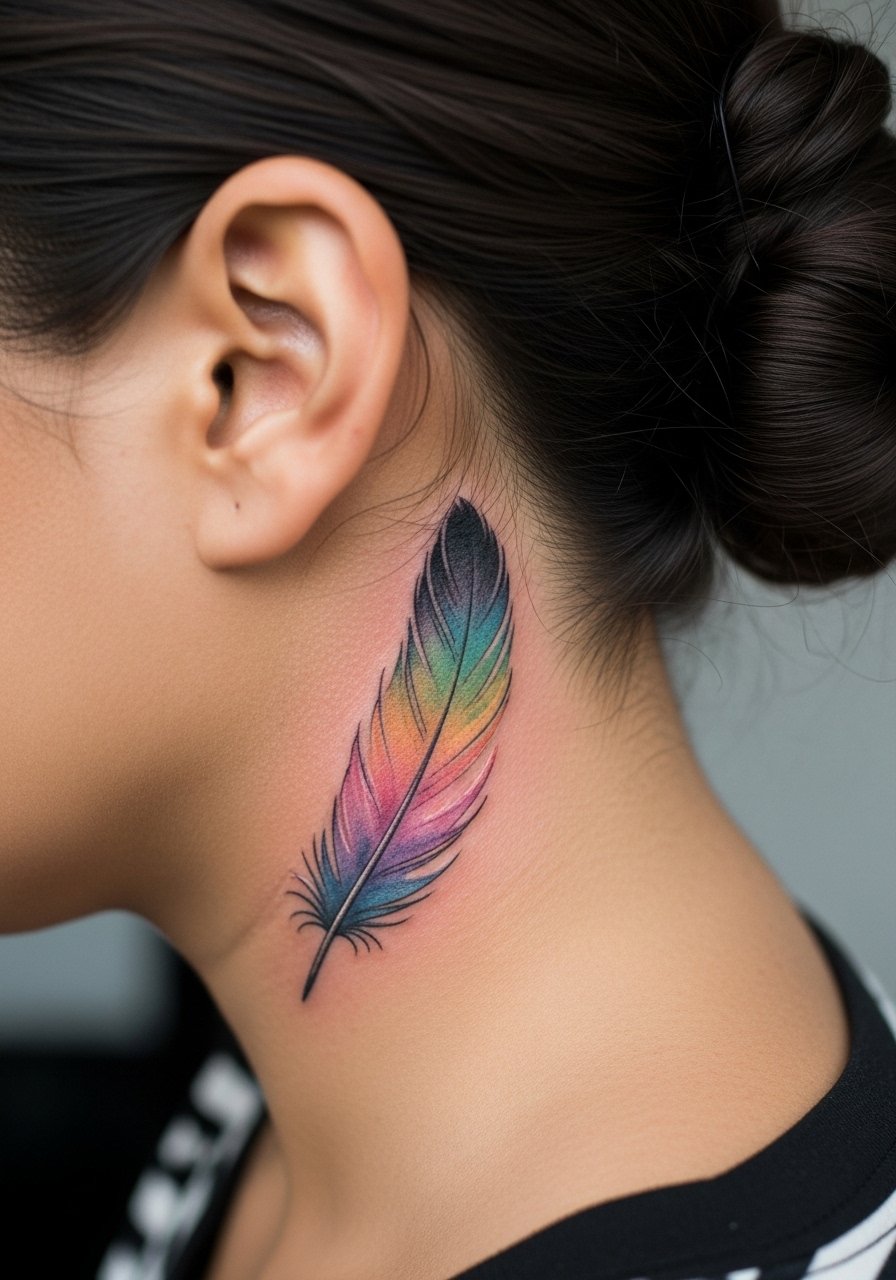
A soft feather behind the ear reads like a whisper when you tuck hair up. Ask for color gradients that fade to a darker tip so the edges keep contrast on darker complexions. Watercolor can look dreamy fresh but tends to need touch-ups sooner than saturated black, especially on the neck. Keep the session short and expect more tenderness where hair follicles are dense. Show it off by sweeping hair into a side part and wearing a dainty hoop earring on the opposite ear to echo the lightness.
6. Micro-Realism Butterfly Near the Collarbone
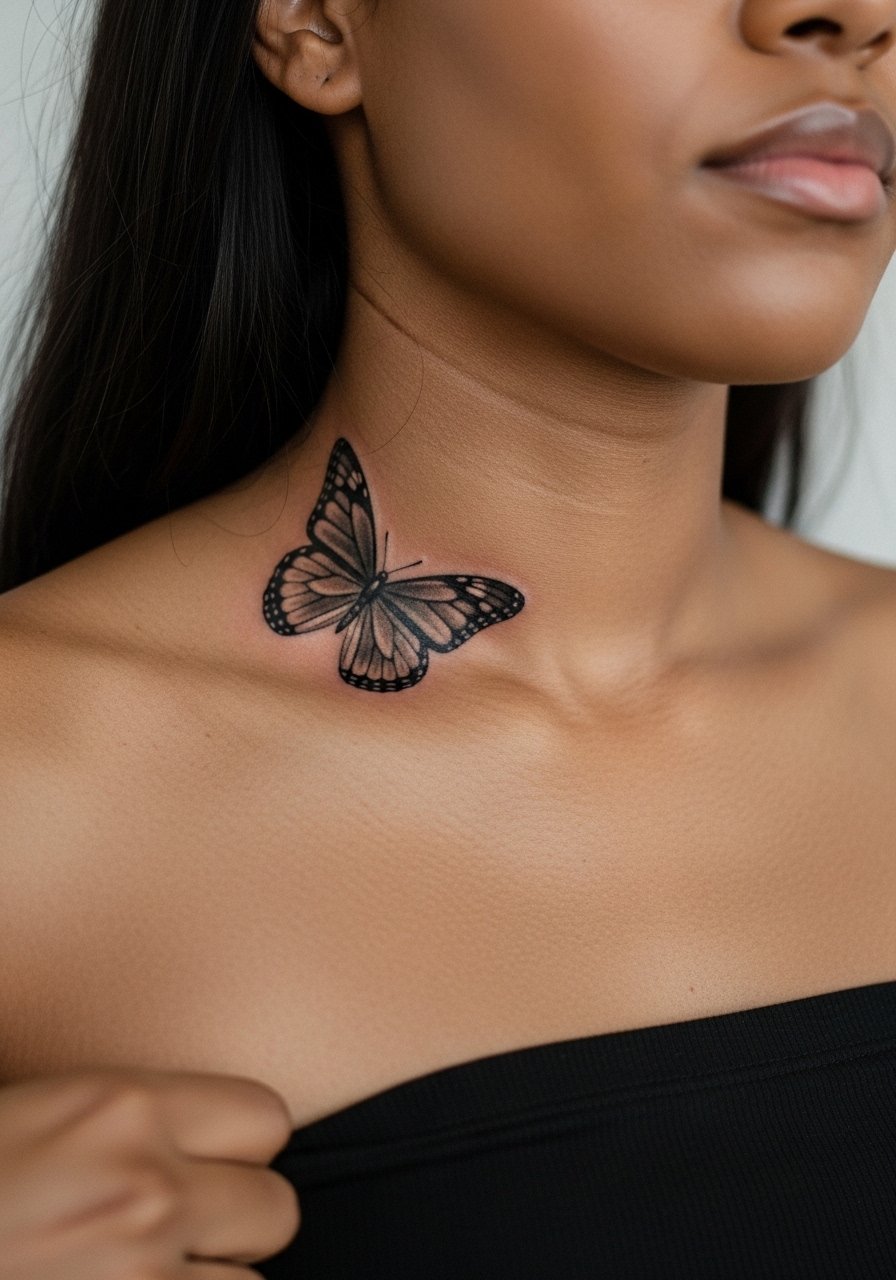
Micro-realism gives lifelike wings in a compact footprint, perfect by the collarbone. Tell the artist you want contrast in wing veins and rounded negative space to keep the insect readable at distance. The mistake is requesting ultra-fine details in a one-inch design, which loses definition as skin moves. Expect a focused single session and moderate pain near the collarbone. This placement looks striking with a strapless tube top that reveals the full wing silhouette.
Pack Smart
The first six designs above include delicate fine line and saturated blackwork, so a small kit that covers both precision and friction zones will make session day and week one smoother.
- Tea tree tattoo balm. A lightweight balm some people prefer for neck areas prone to sweat, it can help control irritation without heavy shine.
- Japanese rice bran salve. Fast-absorbing and non-greasy, useful for behind-ear and collarbone placements where products tend to transfer to hair or clothing.
- UK hemp seed oil balm. Favored by some on darker skin for low shine during the initial healing window.
- Korean centella cream. Thinner texture that helps with neck itch in humid summer conditions without feeling heavy.
- Hustle Butter Deluxe. A mainstream ointment option that many use for initial days to keep small linework from drying out and flaking heavily.
7. Ornamental Dotwork Wave at the Base of the Skull
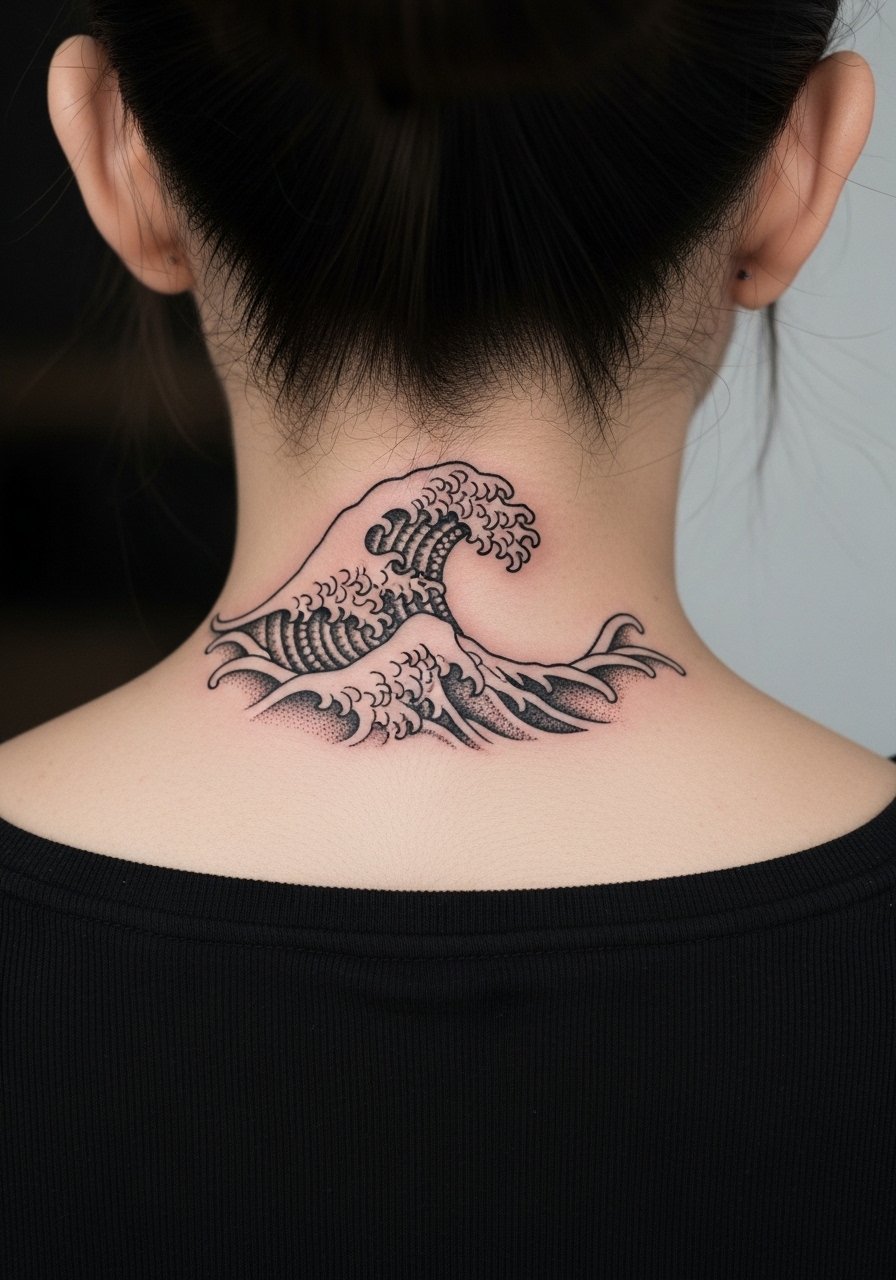
Dotwork plays with rhythm and negative space, which suits the curved base of the skull. Ask your artist to map the wave to your skull contour so dots densify where you want weight and disperse toward hairline. A common mistake is packing dots too densely for a small design, which turns into a gray patch after a year. This area is less painful than the lower neck near bone but can sting where the skull is thin. For festival season, half-up hair and an off-shoulder sweater cream let the dotwork peek through.
8. Traditional Anchor Under the Jaw
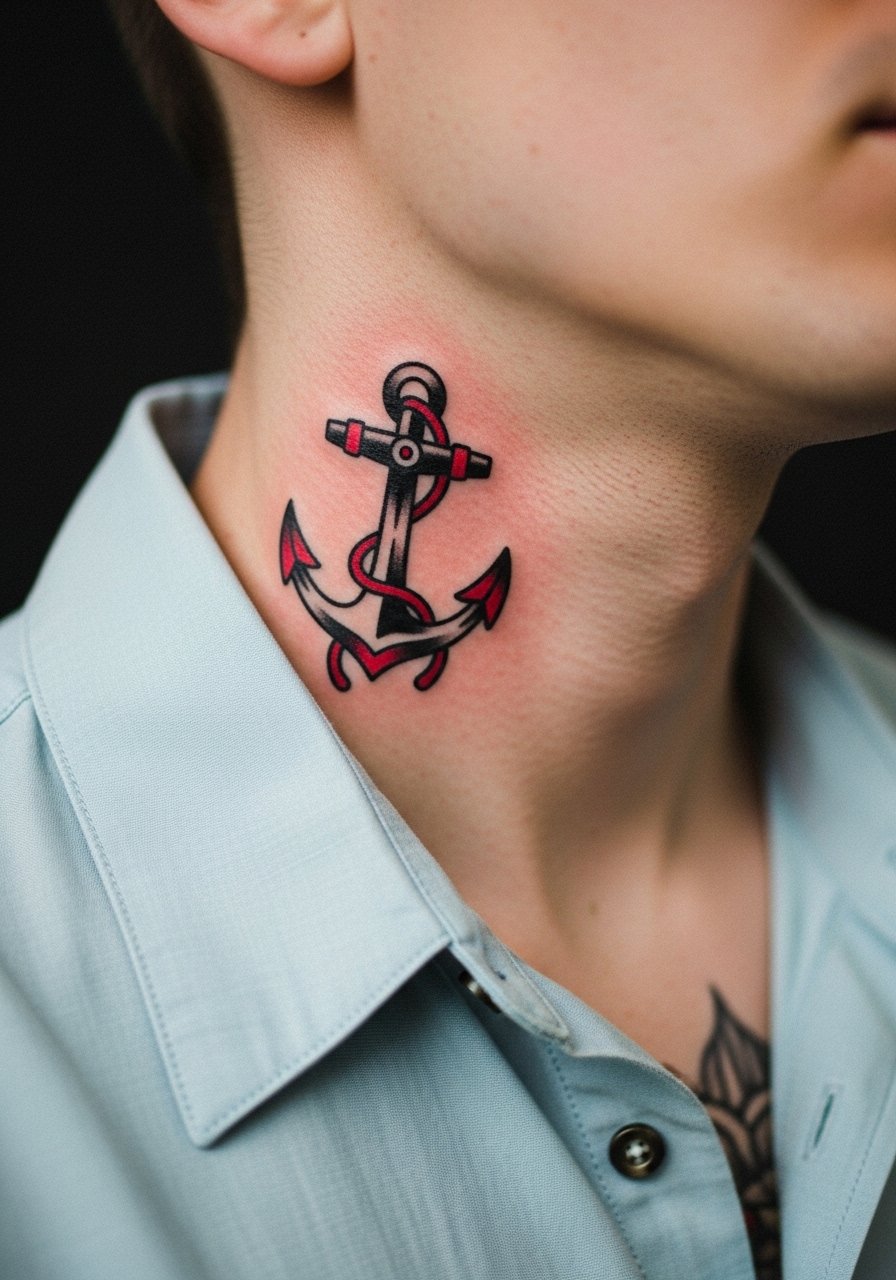
A sailor-style anchor uses bold outlines that age predictably on the neck. Request a clear one- to two-inch anchor with thick outlines and small color blocks so saturation holds. The mistake is shrinking traditional flash down to micro size, which loses the line weight that keeps the piece readable. Expect a two-session layout if color is involved and an intense sensation around the jawline. For casual framing, a loose button-down shirt makes access easy and keeps the remainder of your wardrobe simple.
9. Ignorant-Style Script Vertical by the Ear
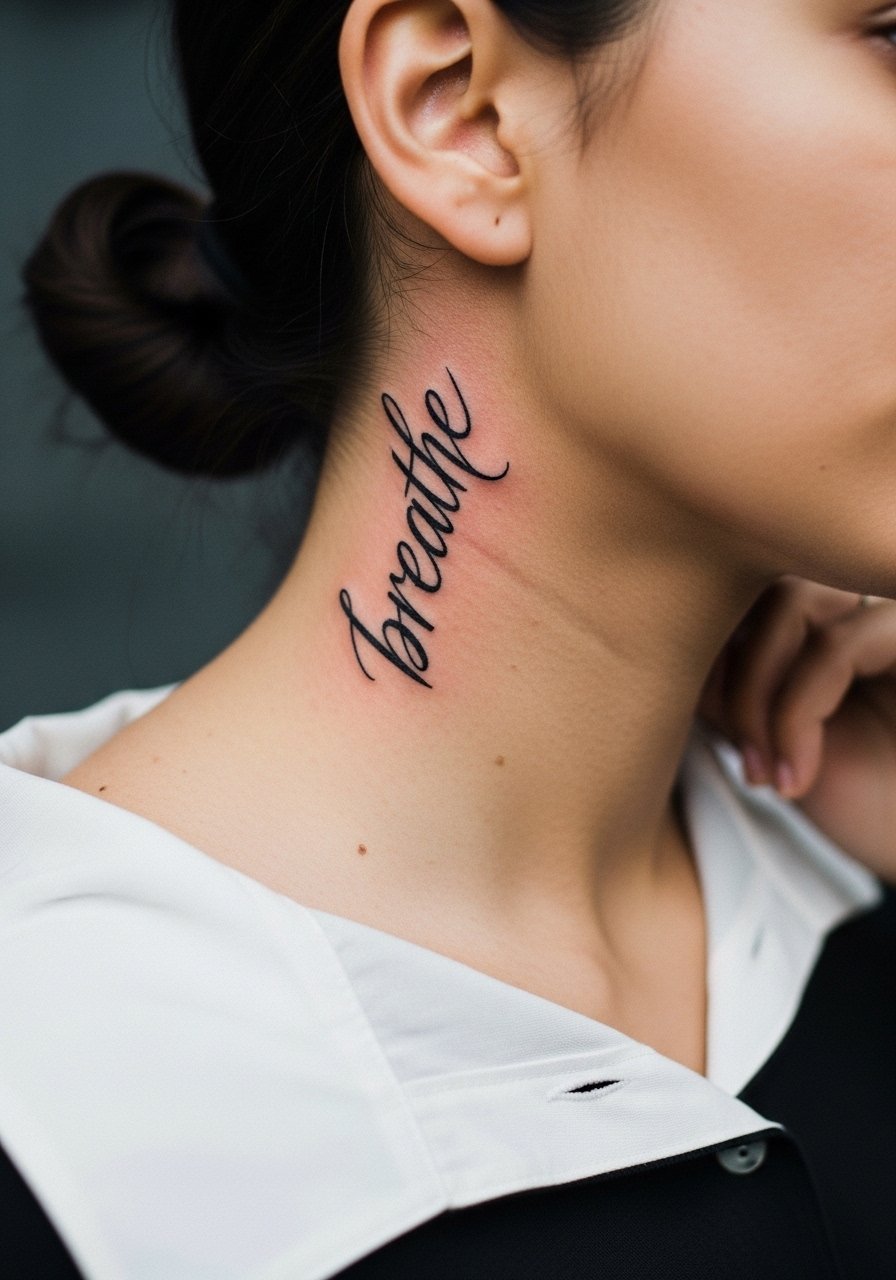
Hand-drawn, shaky lettering reads intimate and raw. Be explicit about scale and vertical spacing so letters never compress as skin moves. The common regret is asking for a partner's name on a whim, which often leads to expensive removal later. This script is fast to ink and painful closer to the ear. For session day, a loose tank top makes access simple and keeps collarlines from rubbing the fresh work.
10. Fine Line Constellation Cluster Behind the Ear
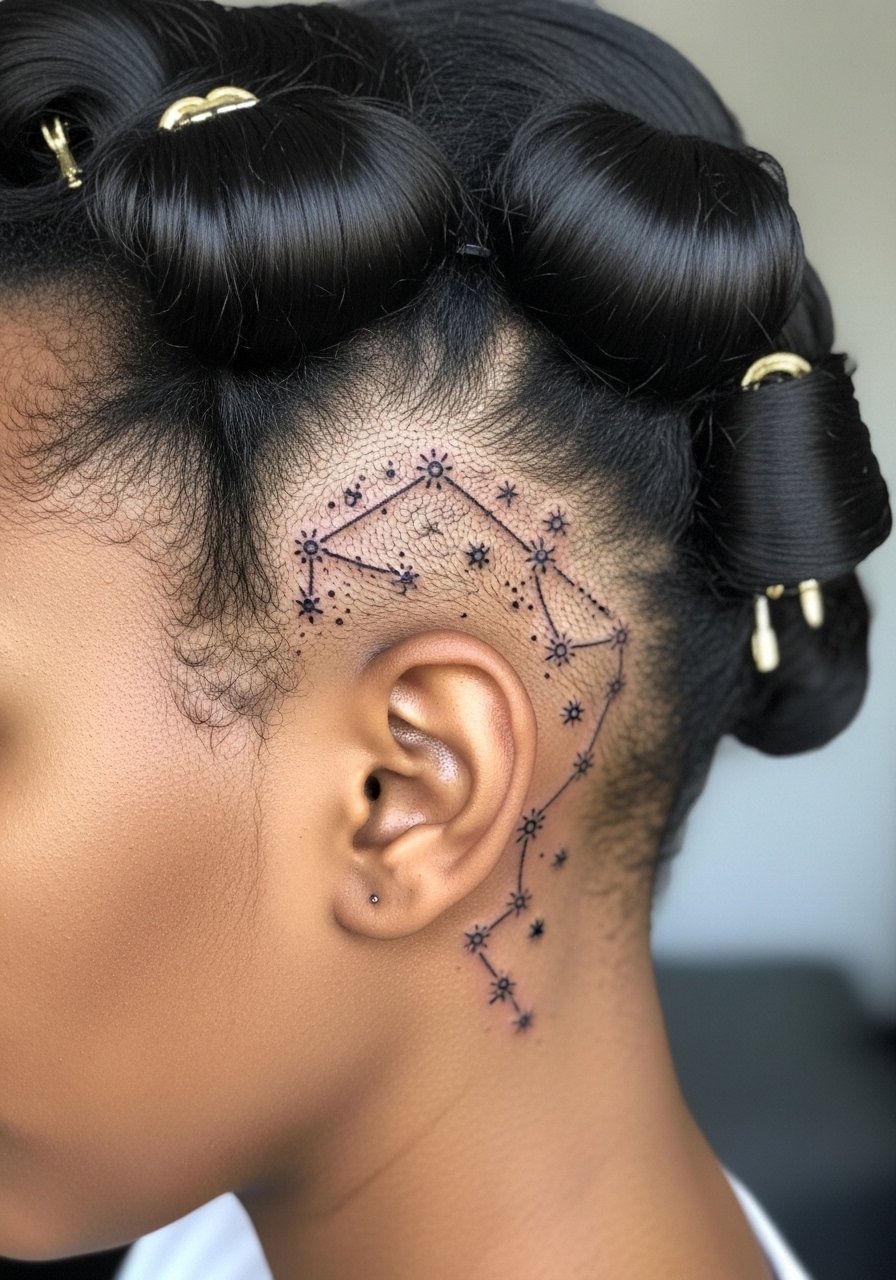
Tiny stars and connecting dots read delicate and personal behind the ear. Ask for slightly larger dots and bolder connector lines than you might for the forearm so the pattern survives on darker skin. Fine line here risks ghosting, so plan a touch-up at three to six months. The session is brief but the area can ache thanks to hair follicles. Wear your hair fully pinned up and bring a hair pin set for the appointment.
11. Blackwork Floral Vine From Ear to Shoulder
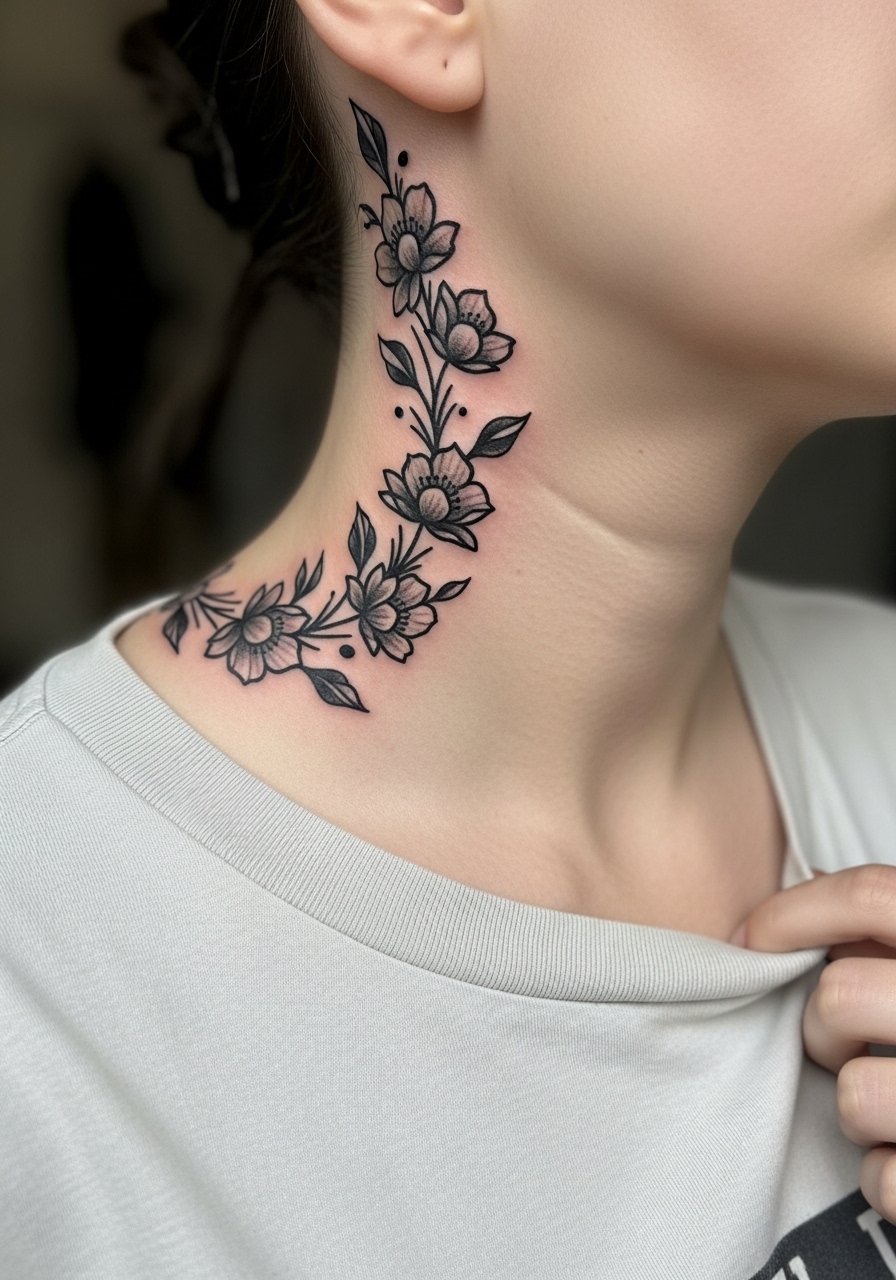
A bold vine gives movement and can adapt to weight fluctuation better than rigid shapes. During consult, specify where leaves should thin to avoid heavy patches near folds. A common mistake is insisting on tiny leaves that blur; scale up and the design keeps its flow. Longer sessions will be required to saturate black fully. Pair this with a crewneck tee solid black to echo the tattoo's boldness without competing.
12. Neo-Traditional Bird in Flight at the Hairline
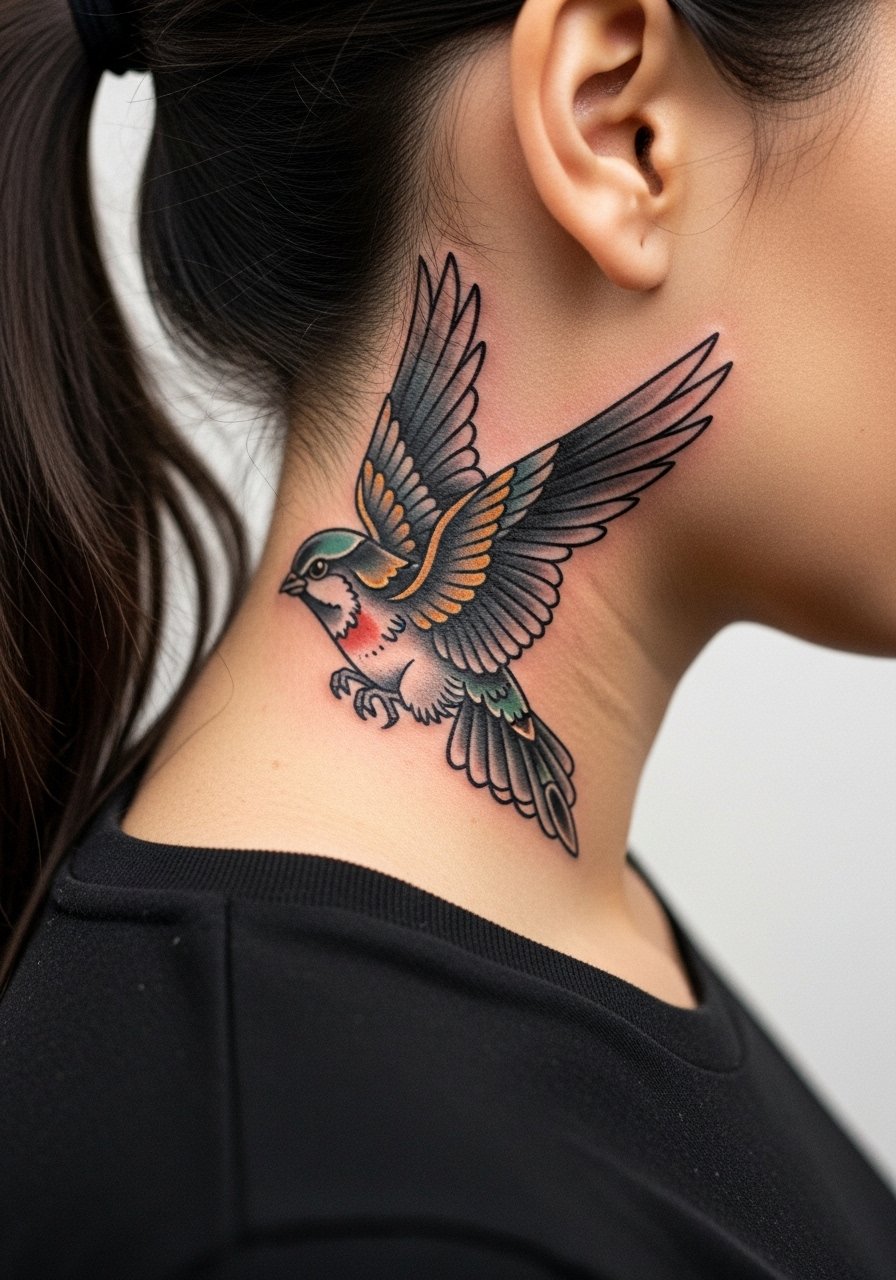
A bird with color accents reads dynamic and frames movement when placed at the hairline. Ask for clear feather segmentation so each feather keeps contrast as it heals. The mistake is compressing wing detail into too small a space, which loses motion. Expect two sessions for color and linework. Show it off with a messy updo clip that reveals the wings when you want them visible.
13. Vertical Script That Follows the Jawline
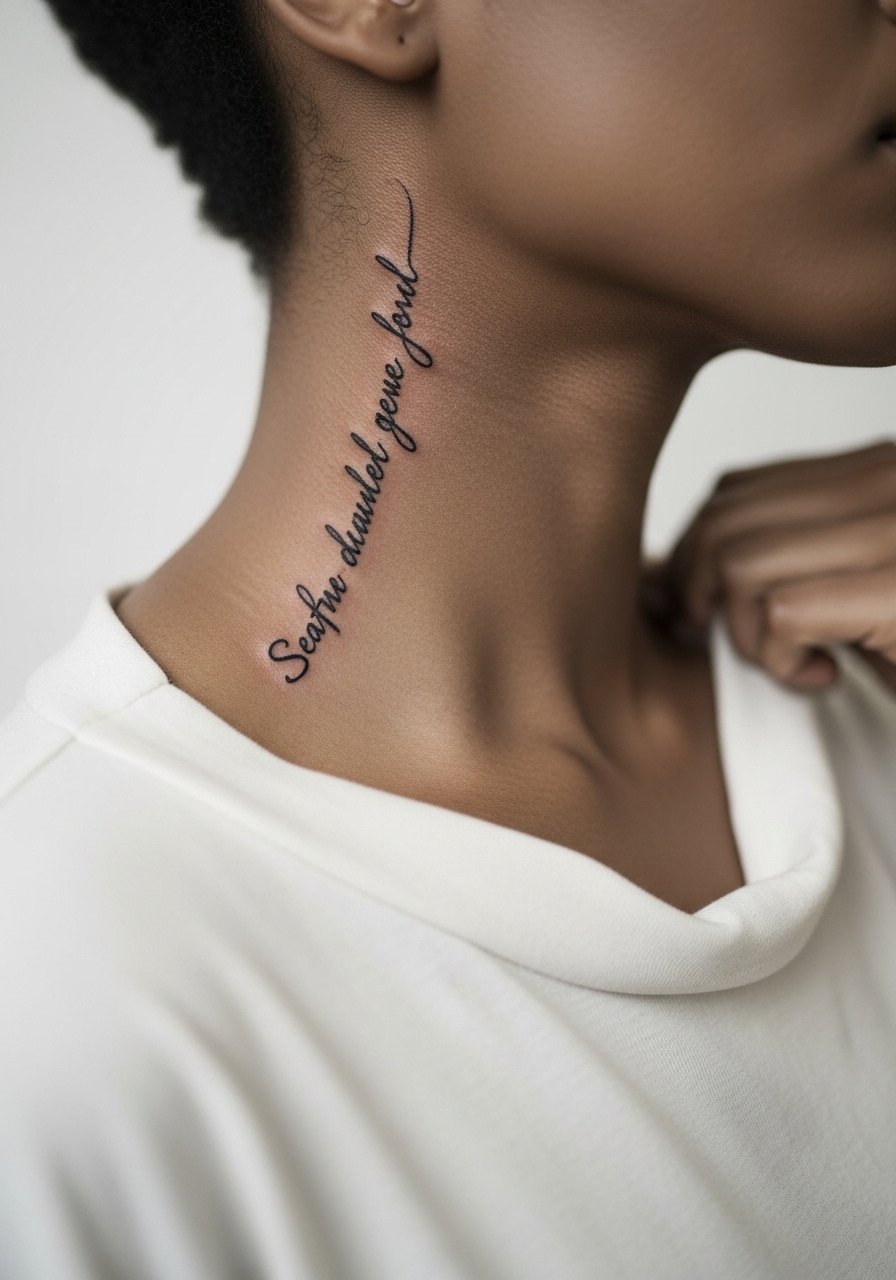
A vertical phrase that reads down the jaw uses natural contours to lengthen the neck visually. Tell your artist how far down you want the lower letter to sit so the phrase does not disappear into clothing. The error is choosing a thin cursive that loses negative space with movement. Expect moderate discomfort and plan for a short touch-up at eight to twelve weeks. For nights out, a thin chain pendant necklace sits just above the script without competing.
14. Ornamental Crescent Moon with Dot Halo

An ornamental moon with stipple dots reads subtle at a distance but detailed up close. Ask for dot spacing gradients so the halo loses density outward, which prevents muddiness over time. The skin here moves a lot, so keep the crescent size medium to avoid dot merging in dense areas. Session time is short and pain moderate. Style with layered gold chains on the opposite side and try a gold chain necklace layer to balance the visual weight.
15. Micro-Realism Portrait Mini at the Base of the Ear
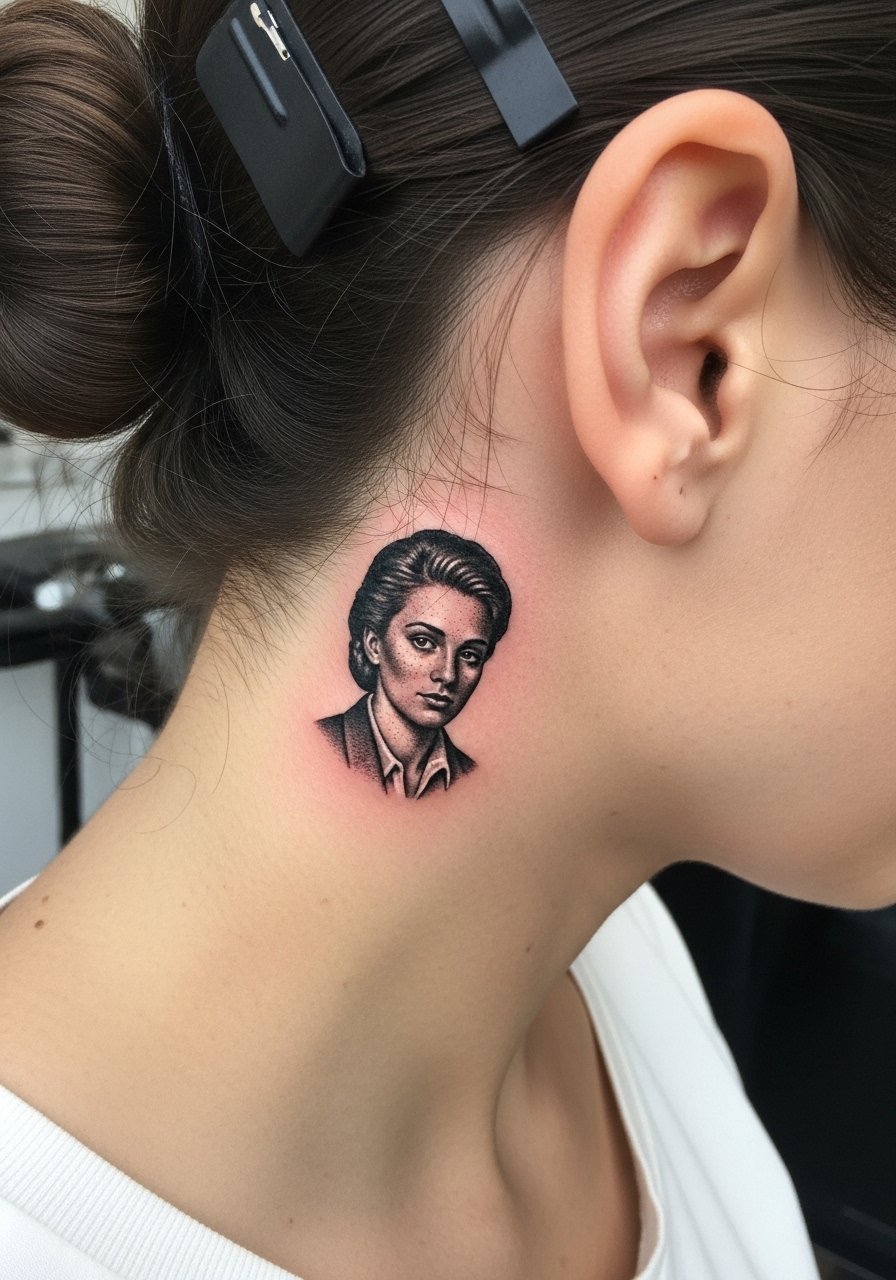
Micro-portraiture in a small area is impressive but demands an artist experienced in miniature realism. During consult, ask to see healed mini portraits on similar skin tones to judge contrast. The common mistake is picking someone who only shoots large portraits and expecting the same fidelity at a one-inch scale. Expect a focused session and higher price for skill. This spot hides easily during work, which is useful for trying a realism piece without wide exposure.
16. Stylized Geometric Mandala Along the Lower Neck
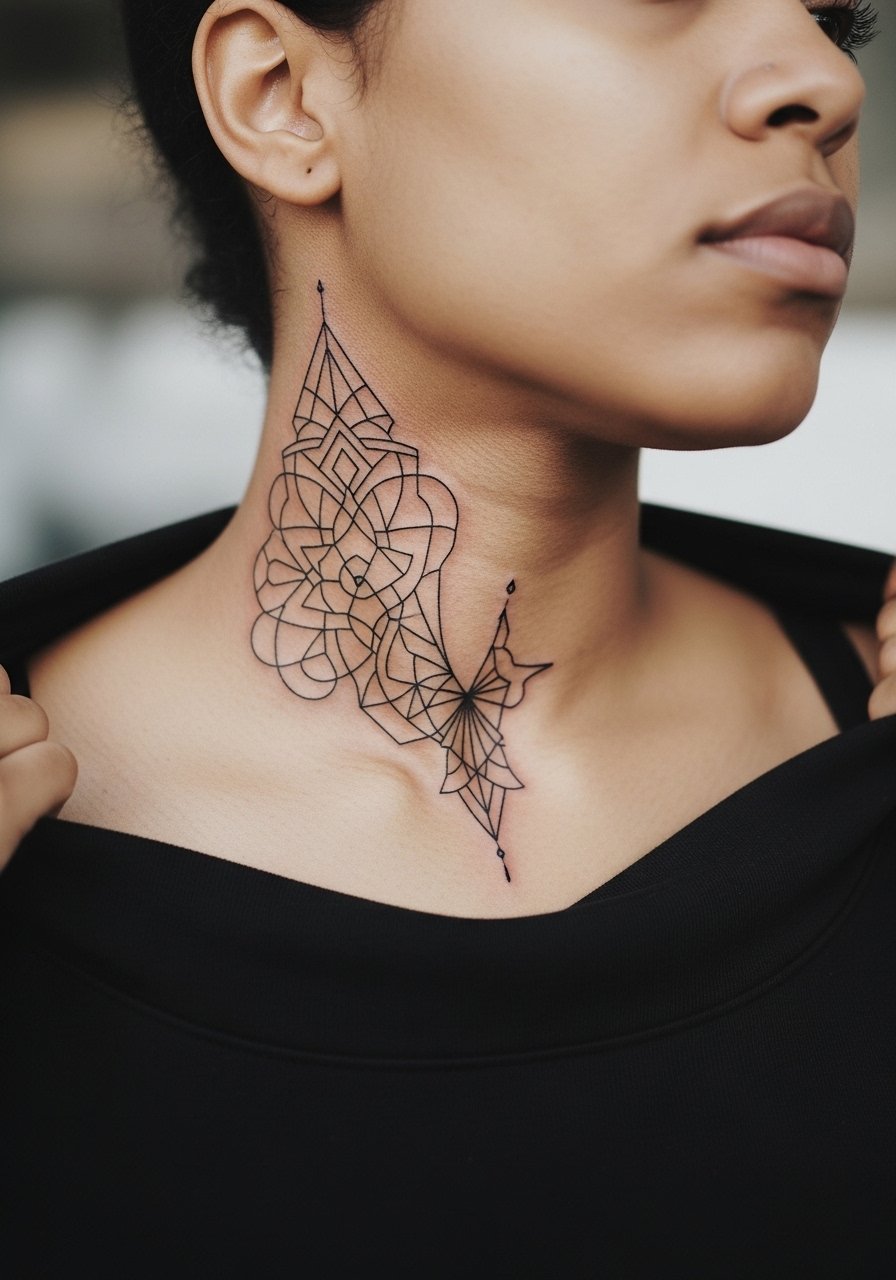
Geometry looks crisp when given breathing room. Ask for extra spacing between repeating shapes so the pattern does not collapse into gray lines after two years. The mistake is forcing intricate geometry into a too-small patch. This placement is less painful than the upper jawline but still sensitive near the collarbone. For evening wear, a wrap dress silk or open-neck blouse shows the pattern without crowding it.
17. Elongated Vine That Follows the Jaw Contour
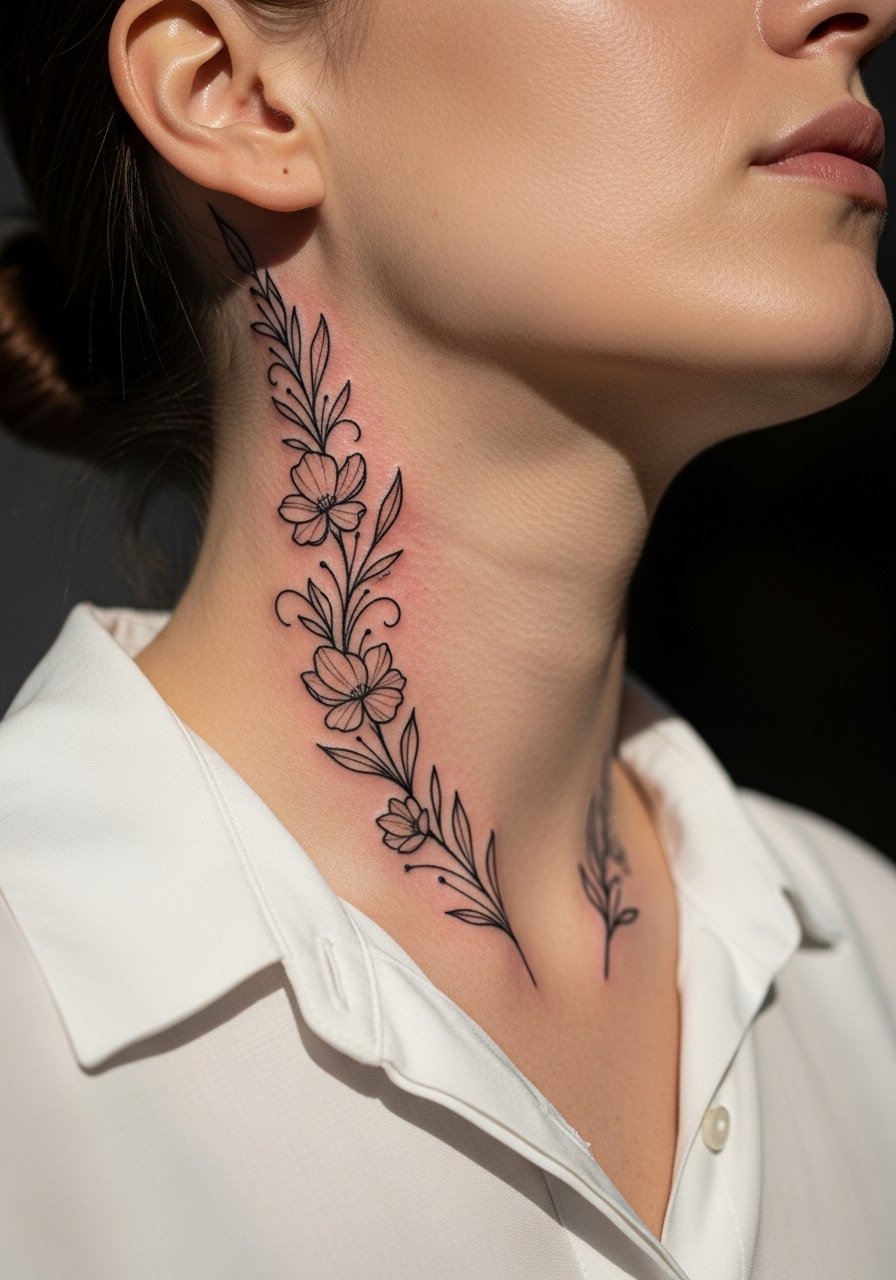
An elongated vine adapts well to changes in body contour and hides better under short hair or turtlenecks. During consult, request the vine be drawn to curve with your jaw so it keeps flow as you move. A common oversight is wanting a rigid shape that won't flex with the neck, which looks off after weight changes. Session pain is moderate and layout may take longer because of the long curve. For the session wear, pull on a loose button-down shirt for easy access.
18. Small Script Date Near the Ear with Exact Lettering
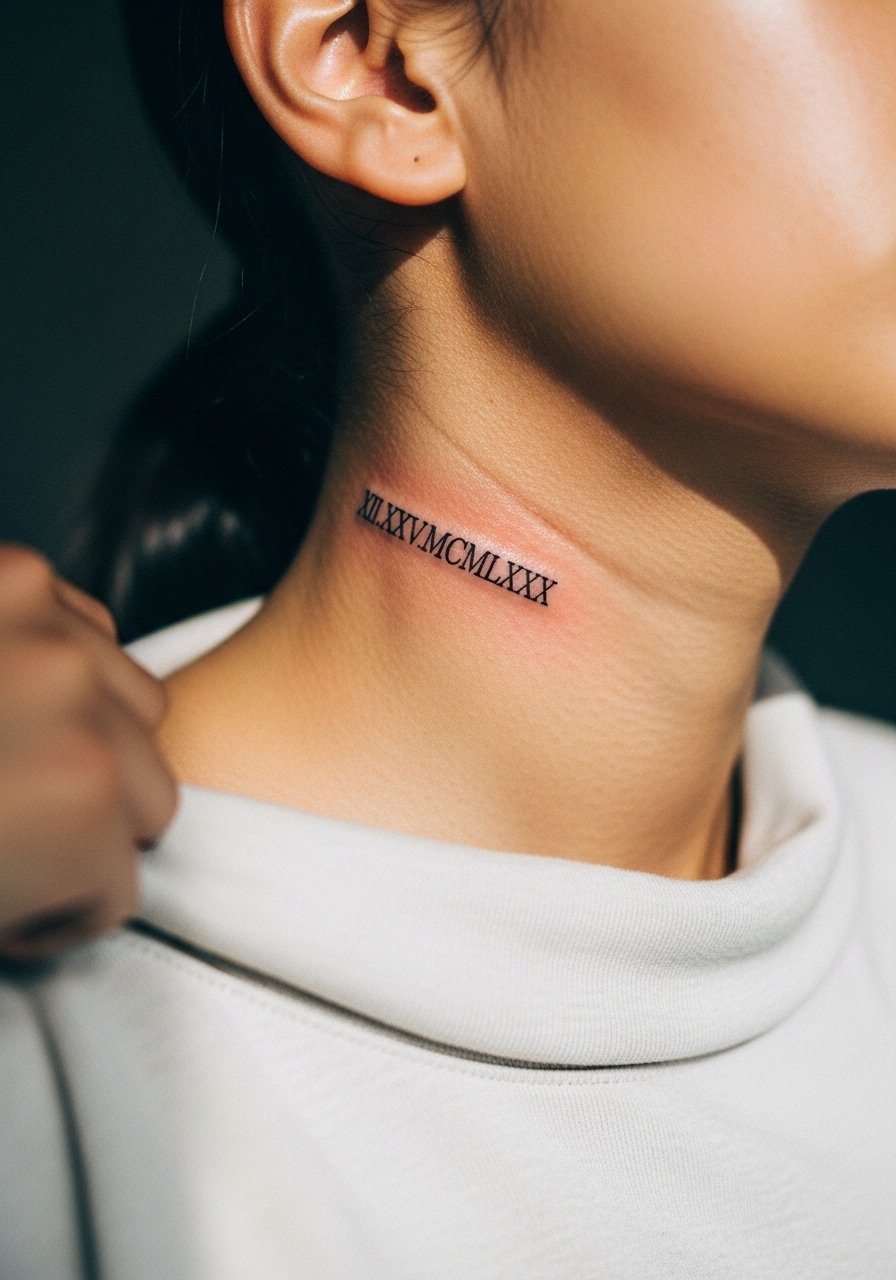
When text is the focus, specify exact punctuation and font style so generators and stencils match expectations. Ask for slightly bolder numerals than you might on the forearm to prevent early blurring. The typical mistake is assuming tiny serif work stays sharp on high-motion neck skin. Plan for a quick touch-up if any lines soften. A thin chain pendant sits above the date nicely and keeps attention away from the jawline when needed.
19. Ornamental Filigree That Frames the Jawline
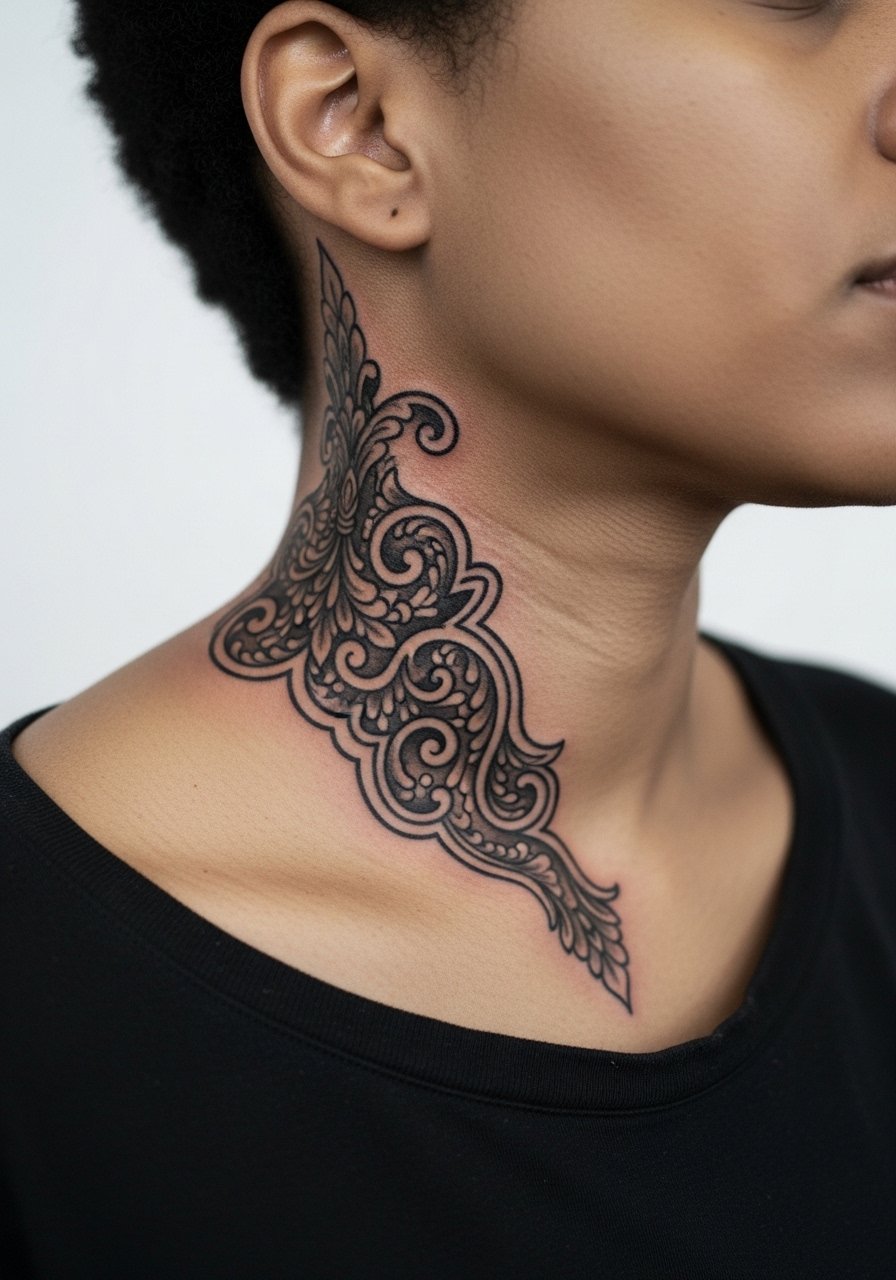
Filigree can act like a jewelry piece drawn on skin. Tell your artist you want balance between filigree and open skin so the pattern breathes with motion. Overworking small swirls is the usual error, which creates loss of definition after healing. Sessions vary by complexity and comfort depends on proximity to bone. Pair with a thin chain pendant necklace above the pattern to mimic layered jewelry.
20. Minimalist Symbol Tucked Behind the Ear
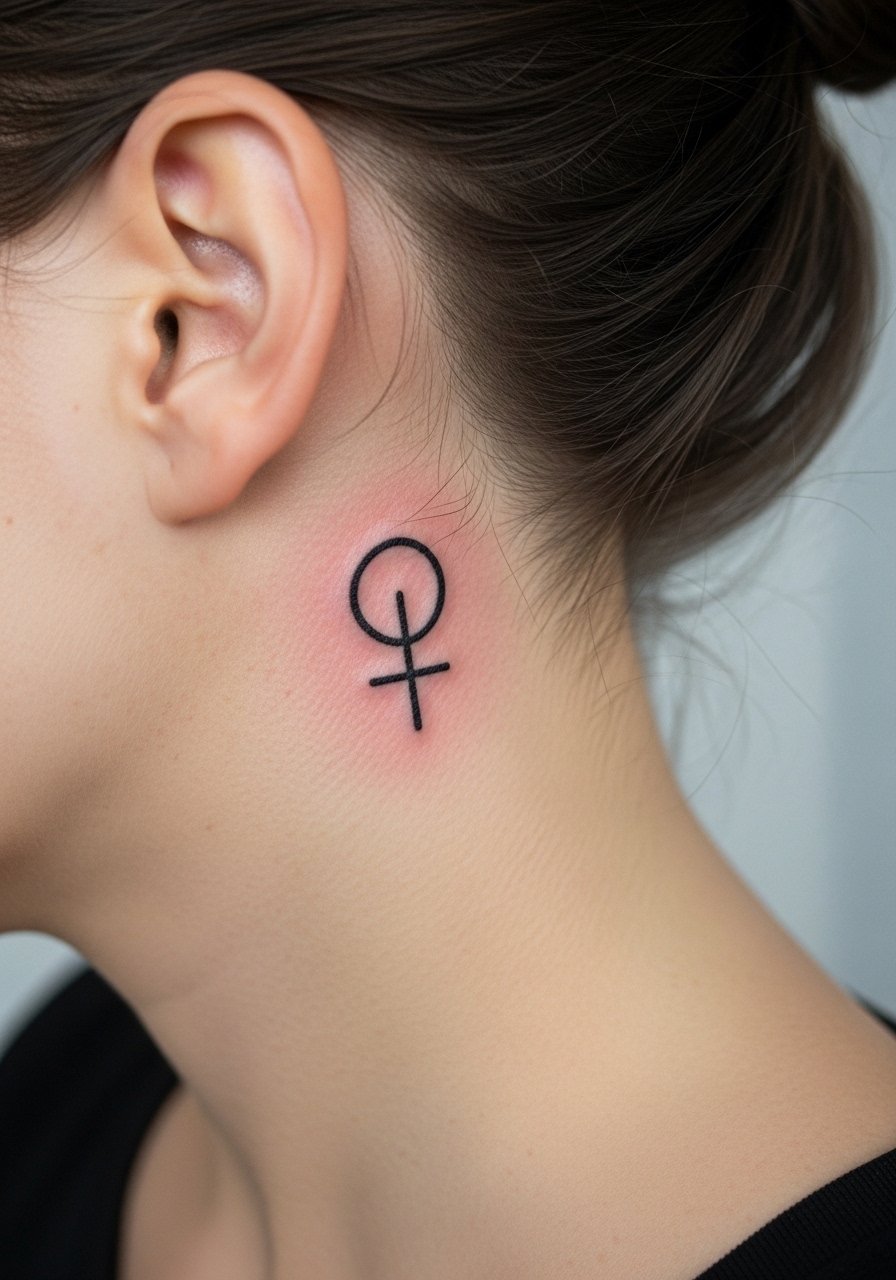
A tiny, single-shape mark behind the ear is subtle and a good first neck experiment. Ask for bold dot sizes and short connector lines so the shape keeps presence on darker skin. The pitfall is asking for ultra-fine strokes that vanish after a few months on movement-heavy areas. The session is quick and pain is sharp but brief. Pin hair up and wear a hair claw clip large for easy access.
21. Vertical Botanical Stem That Ends at the Collarbone

A stem that travels from jawline to collarbone flatters the neck and adapts when weights change. Request open leaf spacing and alternating leaf sizes so the negative space preserves clarity over time. The common mistake is tight leaf repetition that merges into a gray block. Session time depends on length but expect moderate discomfort. For display, a strapless tube top black or deep V shows the full stem without interrupting it.
Frequently Asked Questions
Q: How much does a side neck tattoo usually cost and how long will it take?
A: Prices vary by style and studio, but expect small fine line pieces to be a single short session and larger blackwork or neo-traditional pieces to take multiple sessions. Time on the table ranges from under an hour for tiny script to two to three hours or more for wraparound blackwork. Always confirm session length with your artist before booking.
Q: Fine line lovers say their neck work ghosts fast. What do the two camps argue and what should I do?
A: One camp says fine line is perfect for subtle neck work and can stay legible with careful spacing. The opposing camp insists bold lines are the only reliable way to avoid blurring on the neck. Your best move is to show the artist healed fine line and bold examples on similar skin tones and ask which approach they trust to hold up on your neck.
Q: Should I use protective film or dry healing on a fresh side neck tattoo?
A: Artists are split on this. Some use protective film to reduce friction and mess on high-contact neck areas. Others worry it traps moisture and increases infection risk on sensitive skin. Ask your artist about their experience with the product and whether they prefer a breathable balm routine or a short-term film application.
Q: My work requires a low profile. Which of these placements hides best for office settings?
A: Designs behind the ear and at the hairline hide most easily under hair or with a collared shirt. Vertical scripts tucked near the jaw can be obscured with a high collar or scarf. For hiring concerns, consider starting with a behind-ear or hairline placement as a trial.
Q: What should I wear to the appointment for a side neck or nape tattoo?
A: Wear clothing that gives clear access to the exact spot. For most side neck and nape work a wide-neck shirt, loose button-down, or tank top works best. Bring hairpins or a clip so you can secure hair out of the artist's way during the session.