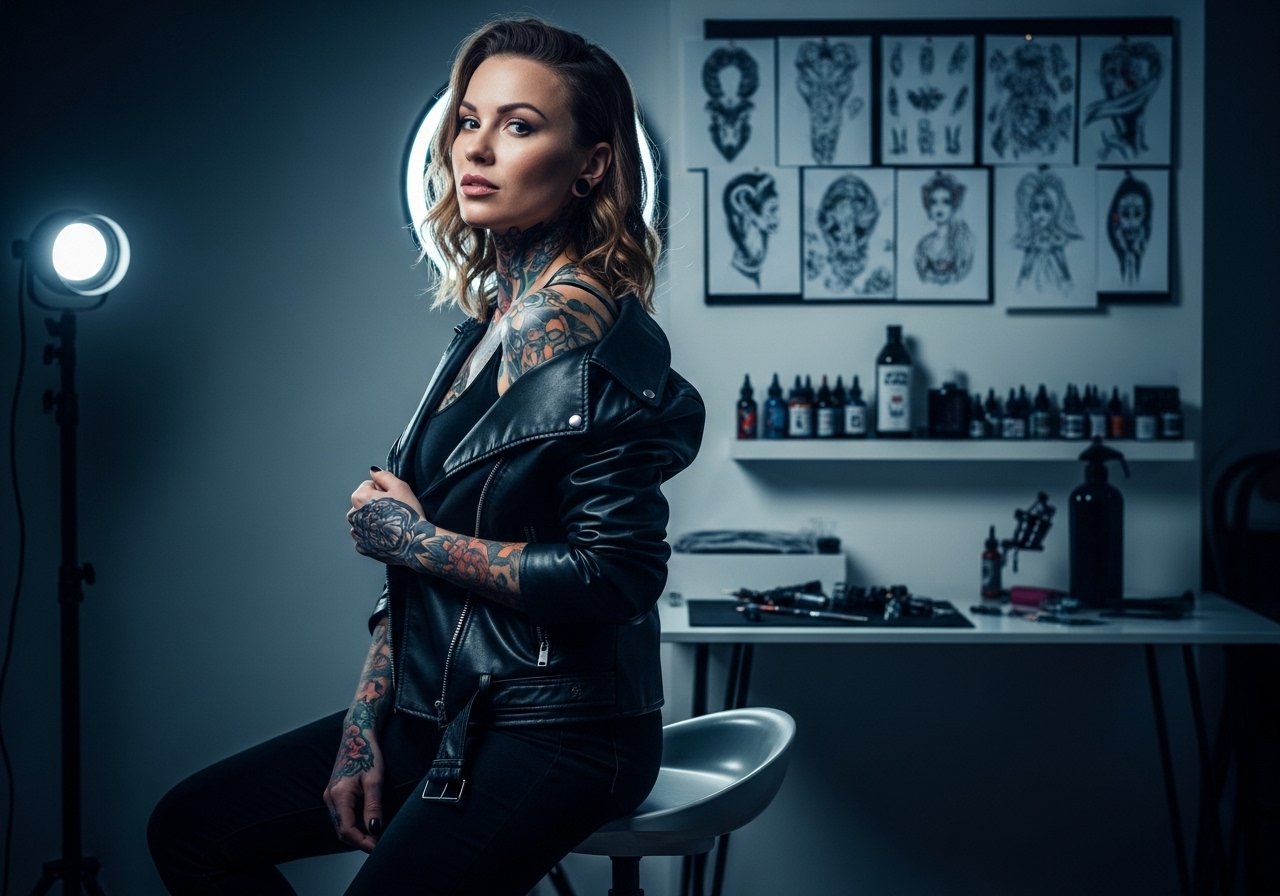
Fine line New York motifs look effortless on social feeds, but what holds up over years is less obvious. Trends push delicate skyline ribbons and micro-lettering, and the reality is that placement and spacing decide whether those pieces still read clear at year three. Read on for 21 New York–themed ideas that balance delicate detail with real-world wear, plus what to tell your artist and how to show them off without losing the design.
1. Fine Line Inner Forearm Skyline with Tiny Stars
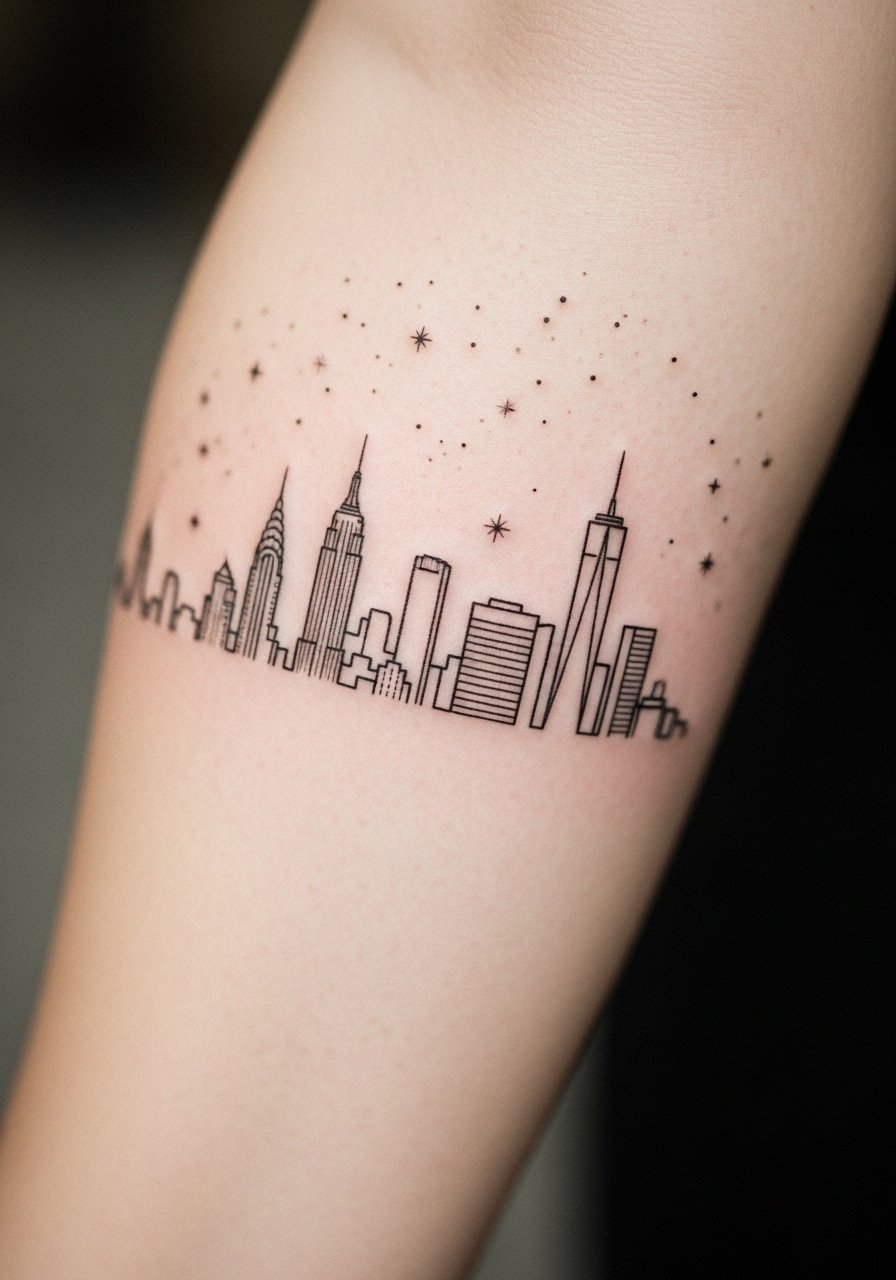
I've seen this one age well when artists keep the skyline as simplified silhouette instead of micro-detail. Request slightly heavier linework for the smallest rooftops to avoid early feathering. Common mistake is packing in too many tiny windows, which look crisp at first and merge by year three. Pain is low on the inner forearm and sessions are often a single short appointment. For show-off pairing, rolled sleeves or a linen button-down frames the forearm without covering the linework.
2. Micro-Realism Statue of Liberty Outline on Ribcage

Fair warning, the ribcage is a high sensitivity area so expect a longer session and breaks. When you want a delicate liberty silhouette, ask for negative space around the torch and fewer micro details near the sternum. One aging issue is skin stretch across ribs, which can soften thin lines. In consultations, ask the artist how they space lines for ribs and what touch-up timeline they recommend. For the session wear, a lifted cropped top makes access easy and keeps you comfortable.
3. Tiny Subway Token on the Side of a Finger

Finger tattoos are adorable and they also trade longevity for visibility. If you want a token-style dot and ring, go slightly thicker on outline and accept touch-ups might be needed earlier than for arm work. The biggest mistake is requesting ultra-thin lines on the fingertip area, which is prone to faster wear and partial loss. Sessions are short but painful in spots. To keep the design visible when styling, try a minimalist ring stack that frames the finger without covering the token.
4. Watercolor Brooklyn Bridge on Upper Arm
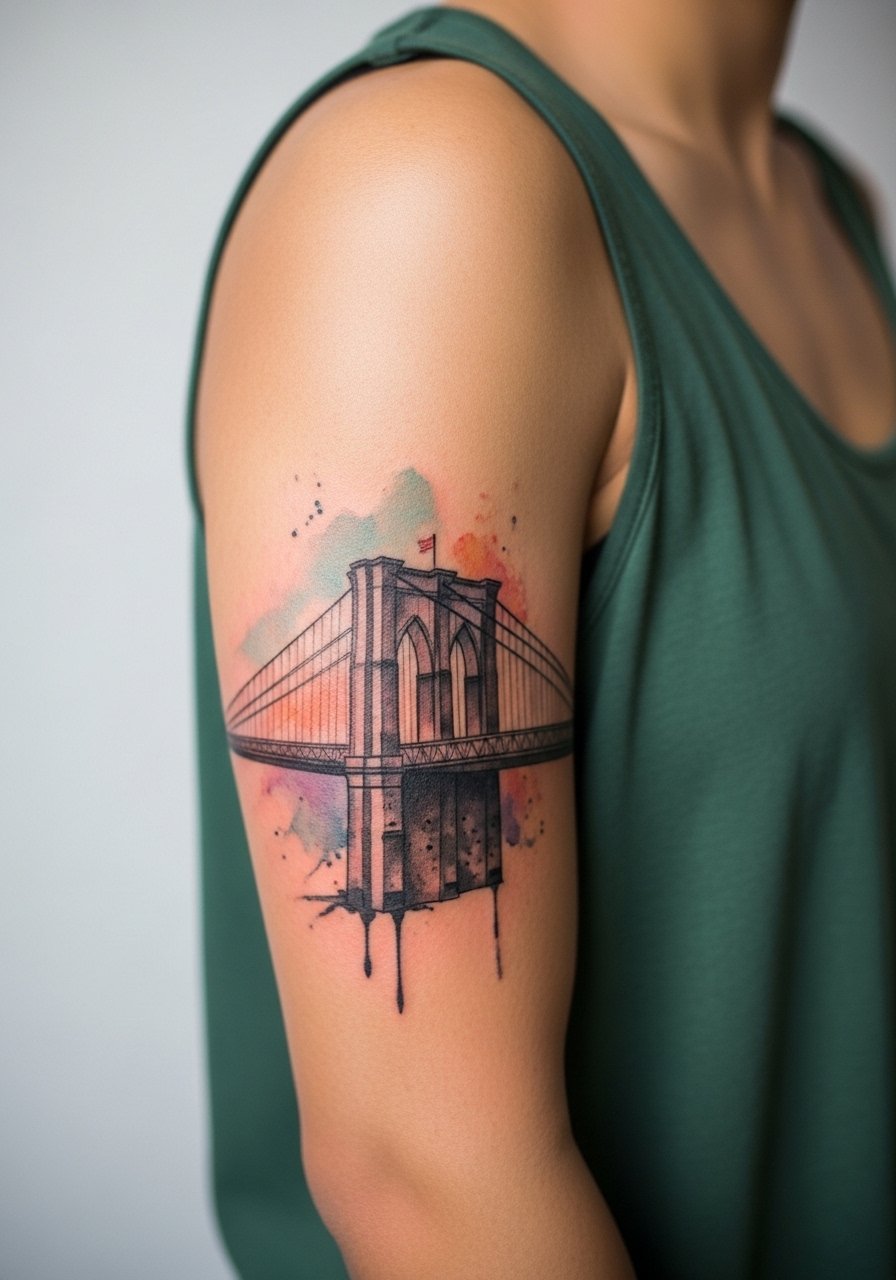
Visual impact is high for watercolor bridge pieces, but porous color tends to fade faster than saturated black. Ask your artist to anchor the watercolor with fine black linework so the structure keeps reading as the pigments soften. A common mistake is placing washed color on the inner bicep where friction from clothing speeds fading. Upper arm sessions are moderate in pain and often finish in one or two sittings. For evenings out, a sleeveless linen dress shows the arm without competing with the colors.
5. Script of a Favorite NYC Neighborhood on Collarbone
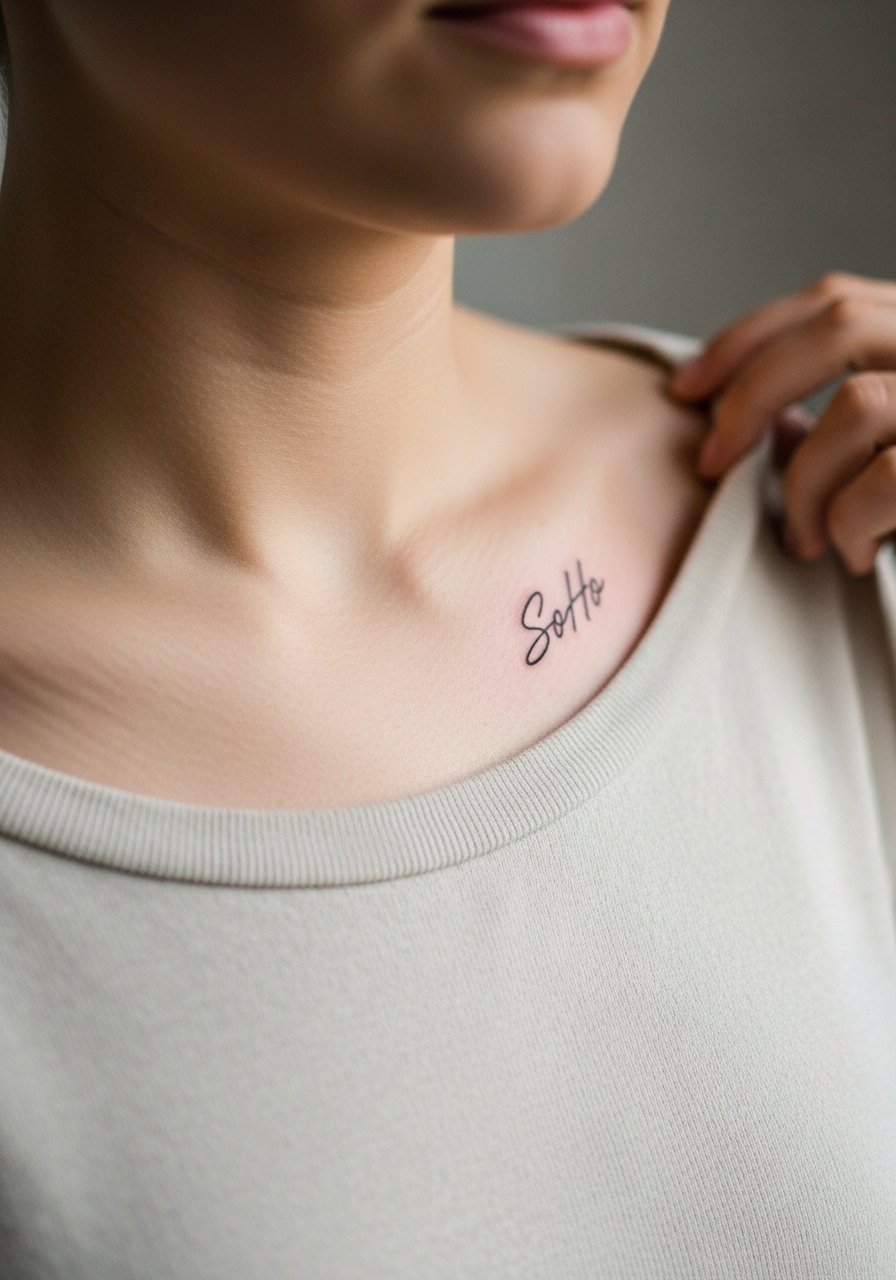
Consultation tip, bring the exact font weight you want and ask for a slightly bolder variant if you plan to expose the piece often. Collarbone skin is thin so tiny script can blur if the strokes are too close. A common mistake is insisting on ultra-tiny lettering for a very long word. Sessions are relatively short but the area can be sore during healing. To style it, a thin chain pendant necklace sits above the script and keeps attention on the collarbone rather than masking the lettering.
6. Mini Empire State Silhouette Behind the Ear
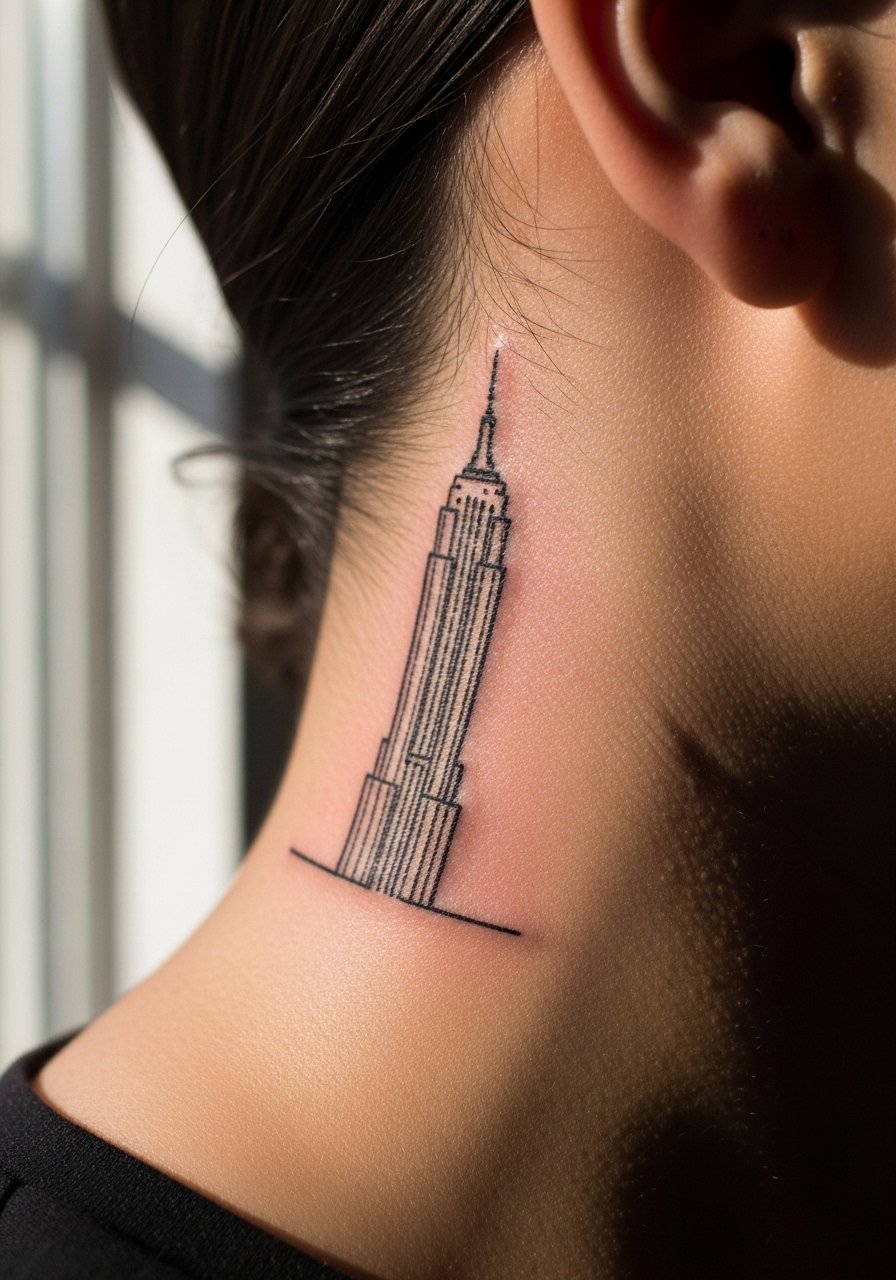
This placement is subtle and highly visible only when hair is up, which is why many pick it. Artists split on tiny behind-the-ear work. One camp warns that constant hair and movement can blur micro lines quickly. The other camp says with the right needle depth and spacing, small silhouettes hold fine. Ask your artist which approach they take and how they space the skyline. For appointment day, wear hair up and bring a clip so the area stays accessible.
Studio Day Picks
These first six placements vary in sensitivity and exposure, so a few targeted items smooth the session and early healing.
- Stencil transfer paper kit. Lets you preview how the skyline or script will sit on curved areas like the forearm and ribcage before ink goes down.
- Topical numbing cream. Applied 45 minutes before helps manage ribs and inner arm sensitivity without excessively numbing the surface.
- Thin protective film roll. Useful for the first few days on high-friction spots like fingers and wrists.
- Fragrance-free gentle body wash. Supports clean showers for pieces near the chest and collarbone while avoiding irritation.
- Aquaphor healing ointment. Thin application in the first 48 hours helps lock moisture without clogging delicate linework.
7. Tiny Subway Map Coordinates on Inner Wrist
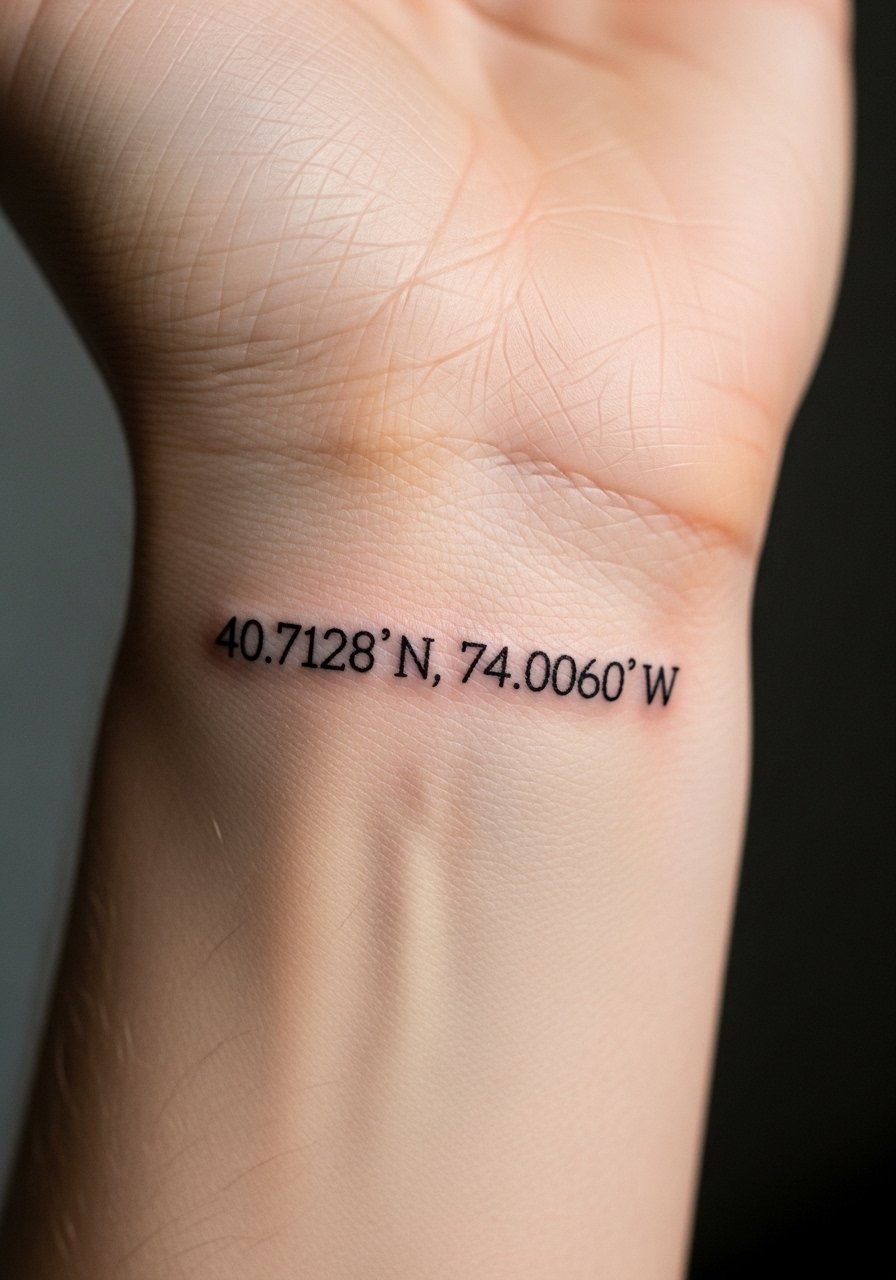
Consultation lead, bring the exact coordinate format because text tattoos need precision. Inner wrist skin shows small lettering well but is exposed to sun and wear, which speeds fading. A common mistake is letting the characters sit too close together. Plan for a touch-up window at year two to three if you wear bracelets or a watch. During the session, skip wrist jewelry and wear a short-sleeve top or a racerback tank that leaves the area free.
8. Blackwork Taxi Cab Silhouette on Calf
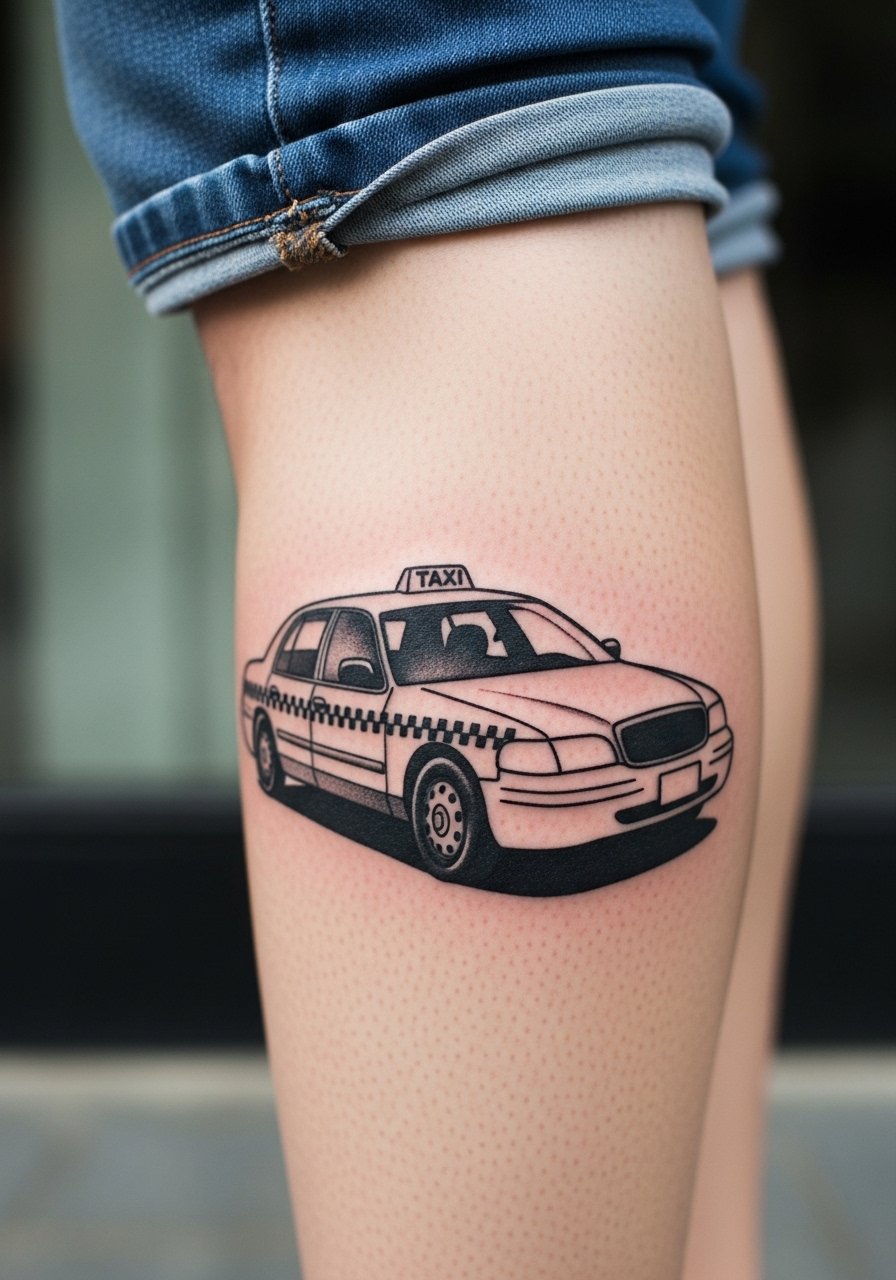
There is something about solid blackwork that reads from a distance and ages into a clear shape. Ask for solid fill and consistent saturation so the cab keeps its silhouette over time. The common mistake is adding tiny lettering inside the cab which becomes illegible as skin ages. Calf sessions are lower pain and often allow for bold saturation in one visit. For casual showing, pair with a denim short and low-top sneakers.
9. Micro-Realism Hot Dog with Condiment Accent on Ankle

Ankle tattoos face constant friction from socks and shoes, so expect slightly faster fading. When you want micro-realism, ask the artist to keep the color accents subtle and the shadowing minimal so the shape reads even after pigment softens. A frequent mistake is expecting a full-color portrait level detail in a very small area. Sessions are short but touch-ups might be needed for saturated color spots. Style with sandals or rolled jeans and a suede ankle strap sandal that keeps the area visible.
10. Minimalist Borough Outline Wrap on Upper Arm
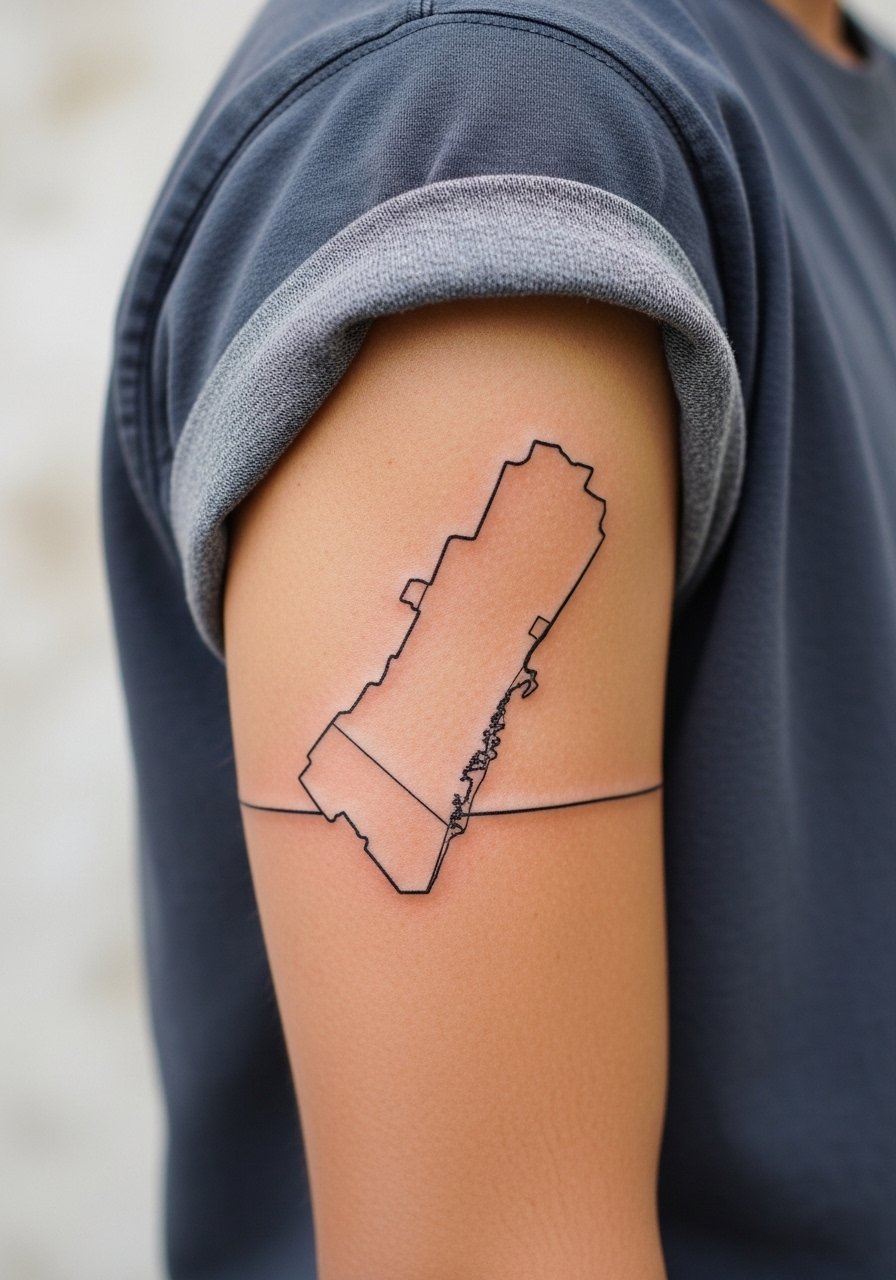
Mistake lead, people often request wrap pieces that try to hug too much anatomy with thin lines, and that leads to distorted outlines after a few years. Ask for deliberate spacing and a slightly bolder contour so the borough shape stays legible. Upper arm handles linework well and sessions are generally comfortable. For showing off the wrap, a rolled short-sleeve shirt keeps the arm open without pulling attention away.
11. Tiny Broadway Marquee Star Near the Ear
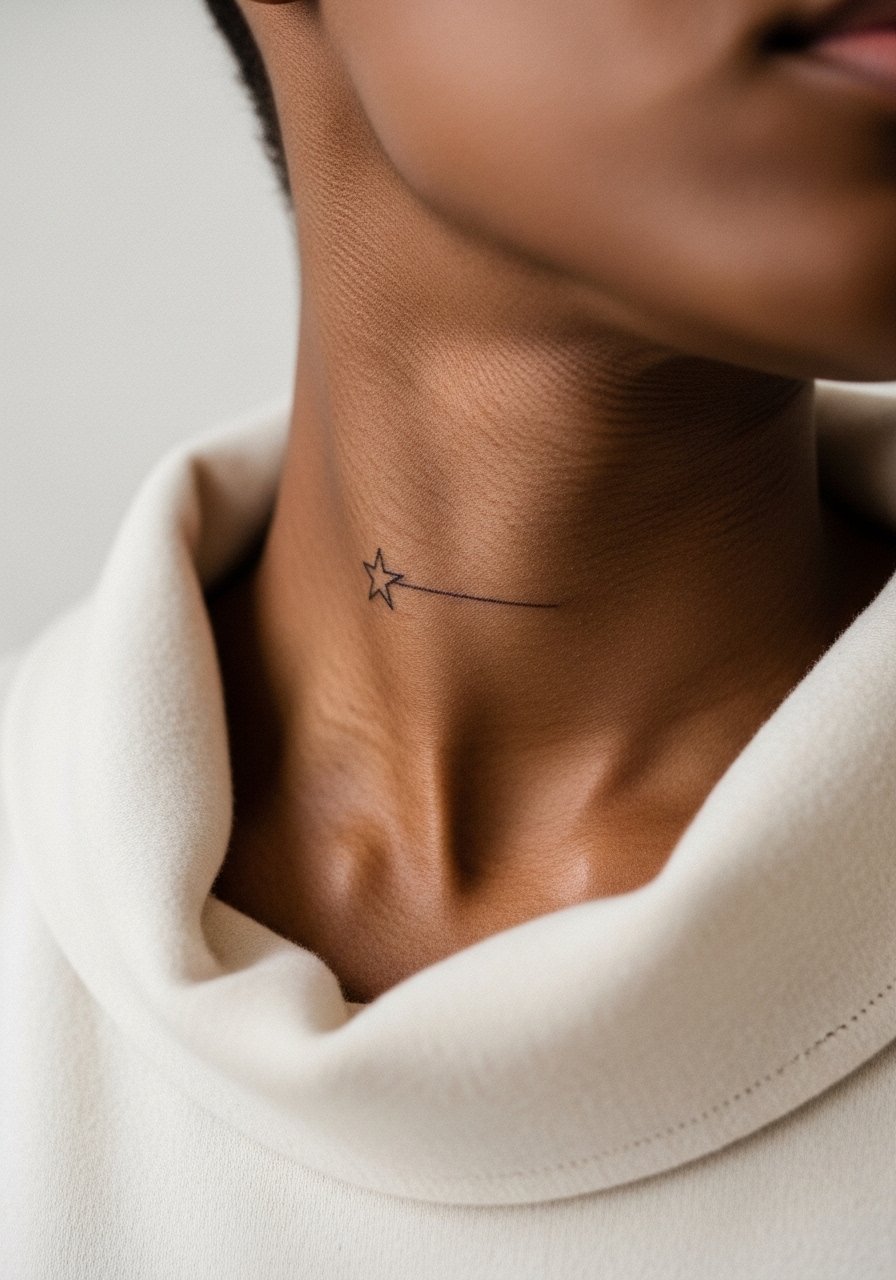
Aging lead, small neck accents read as delicate on fresh skin but can blur if placed too close to folds or heavy movement zones. Tell the artist you want deliberate negative space between points so the star keeps its shape as the skin moves. Sessions are quick and sensitive depending on exact placement. If you work in a conservative setting, remember neck visibility can affect first impressions. For a subtle reveal, pair it with a wide-neck sweater that can be pulled aside.
12. Tiny Hot Spot: Times Square Neon Script on Ribcage

Aging/healing lead, color on the ribs tends to soften faster because the area sees less sun but more stretch. If you want neon script, ask for a contrasting fine black outline beneath the color so the word still reads as pigments fade. The ribcage is painful and usually needs breaks during sessions. Artists are split about fine line on ribs. One group says thin scripts blur within a couple of years. The other group says careful depth and spacing preserve fine scripts longer. Ask where your artist stands and their recommended spacing. Session wear of a fitted sports bra makes access easy.
13. Small Floral Subway Tile on Upper Hand

Hand tattoos are visible and they weather faster because of constant use and washing. The common mistake is asking for dense stipple shading on the hand, which can resolve into a muddy wash. Opt for cleaner linework and leave larger shaded fills for areas with more tissue. Pain is sharp and healing can feel itchy as movement increases. For stylistic balance, pair with a thin bracelet or cuff that does not rub the tattoo during healing.
14. Subtle Constellation Skyline Along the Side Rib
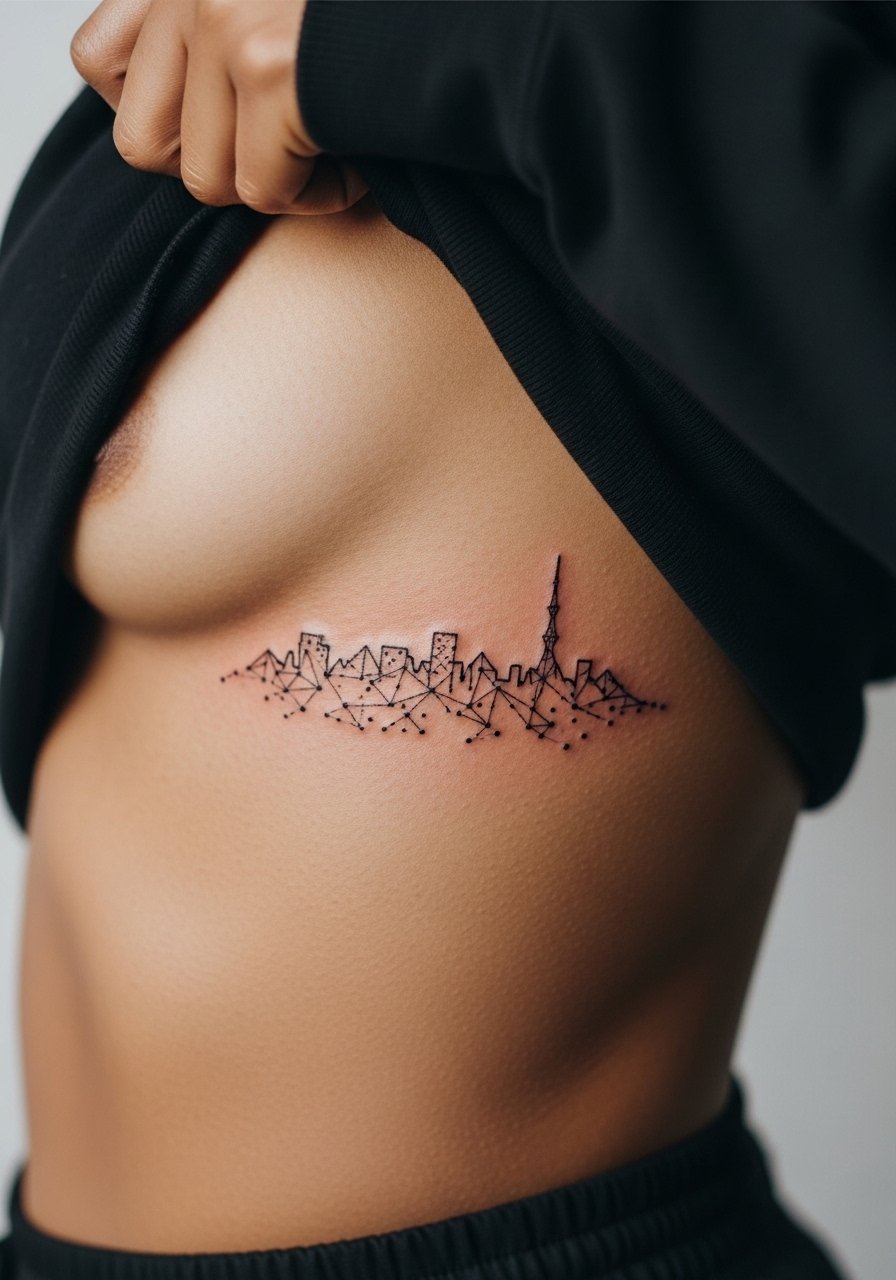
Mistake lead, cramming a star cluster into a tiny rib patch makes the connecting lines merge as the skin moves. Ask for spaced constellation points and slightly bolder connector lines so the skyline reads at distance. The sternum and sides are sensitive, so prepare for breaks and a careful aftercare plan. For session comfort, wear a loose zip hoodie you can lift as needed and nothing restrictive around the rib area.
15. Subway Line Minimal Dot Work on Inner Bicep
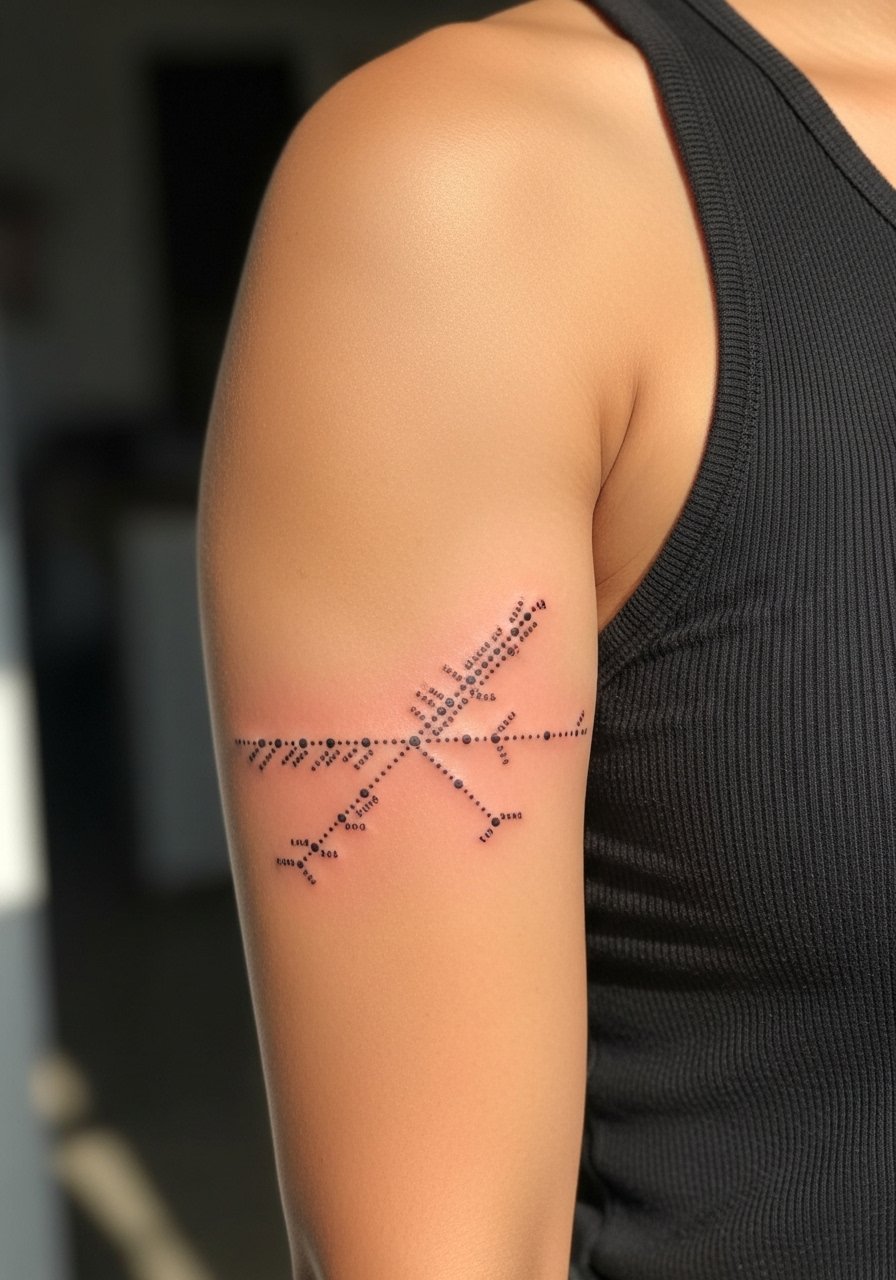
Consultation lead, dot work relies on consistent spacing so bring clear references and ask the artist to mark the negative space. Inner bicep is moderately sensitive and dot work can feel like repeated tapping. A common mistake is expecting ultra-fine dot gradients on thin skin, which can leave an uneven look as it heals. For session day, wear a loose tank top so the artist can raise the sleeve and you stay comfortable.
16. Micro-Realism Pretzel on the Thigh
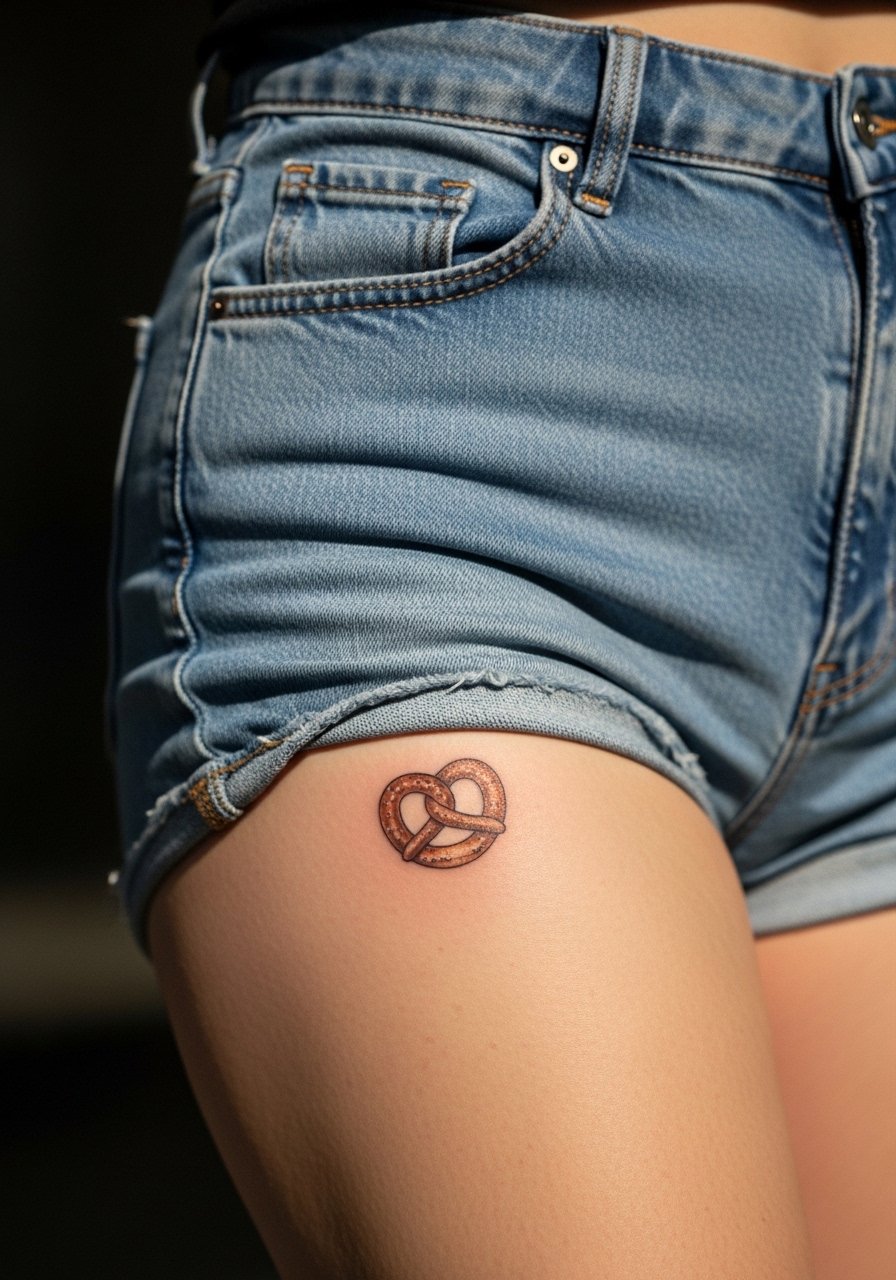
Personal observation, the thigh is forgiving for micro pieces because it has more tissue to hold detail. The mistake is placing tiny shaded areas too close to the pant line, which causes rubbing during healing. Sessions are comfortable and the area heals well when clothing is loose. For the appointment, wear high-waisted shorts so the artist can roll the top down without restricting blood flow. To show it off later, a flowy skirt keeps the thigh visible without tight seams.
17. Small Borough Coordinates Around the Ankle

Visual impact lead, ankle bands are subtle from afar and readable up close. The ankle faces daily friction, especially if you wear socks or low sneakers. Avoid tiny dots for long runs of coordinates, and instead ask for slightly larger numerals with clear spacing so they remain legible. The session is short but the area can feel tender when shoes press down. Style with sandals early in healing and swap to a neutral canvas slip-on that does not rub.
18. Tiny Hot Dog Cart Line Art on the Side Wrist

Mistake lead, placing small mechanical elements on the wrist without negative space leads to visual clutter after healing. Ask your artist to simplify the cart into essential shapes and leave breathing room around wheels and umbrella lines. Wrist sessions are short and sensitive, and wrist work often needs touch-ups at year two. For showing it off, a thin leather strap watch can sit on the opposite wrist so the tattoo remains a focal point.
19. Borough Flower Cluster on Lower Back
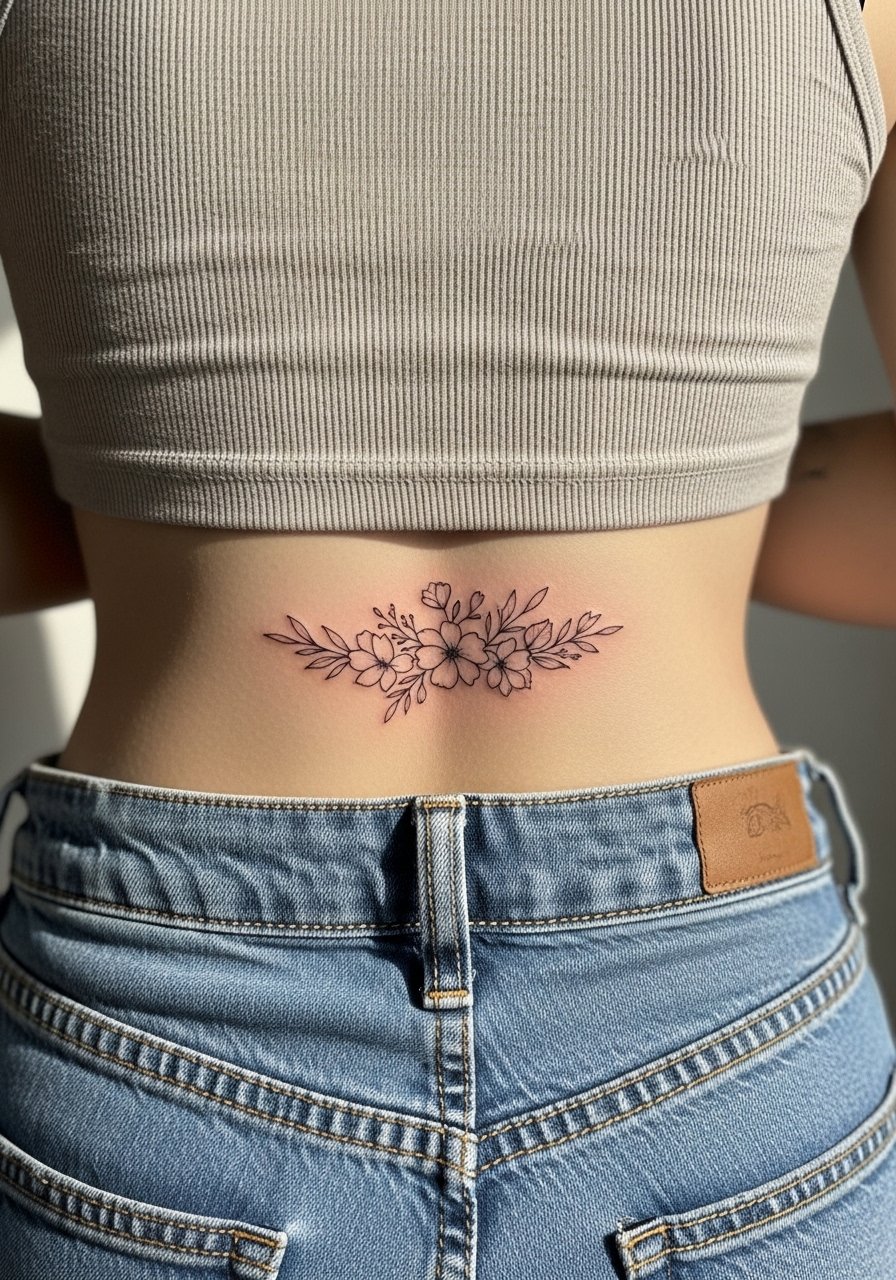
Aging lead, lower back pieces can ride under waistbands and see abrasion, so plan placement slightly above the beltline. A common mistake is heavy shading that catches on clothing and fades unevenly. The session is tolerable and placement allows for a bolder layout if you want a larger cluster. For outfits that highlight the piece, a low-back dress reveals the work while keeping everything else covered.
20. Tiny Hot Dog Stand Minimalist on Inner Wrist
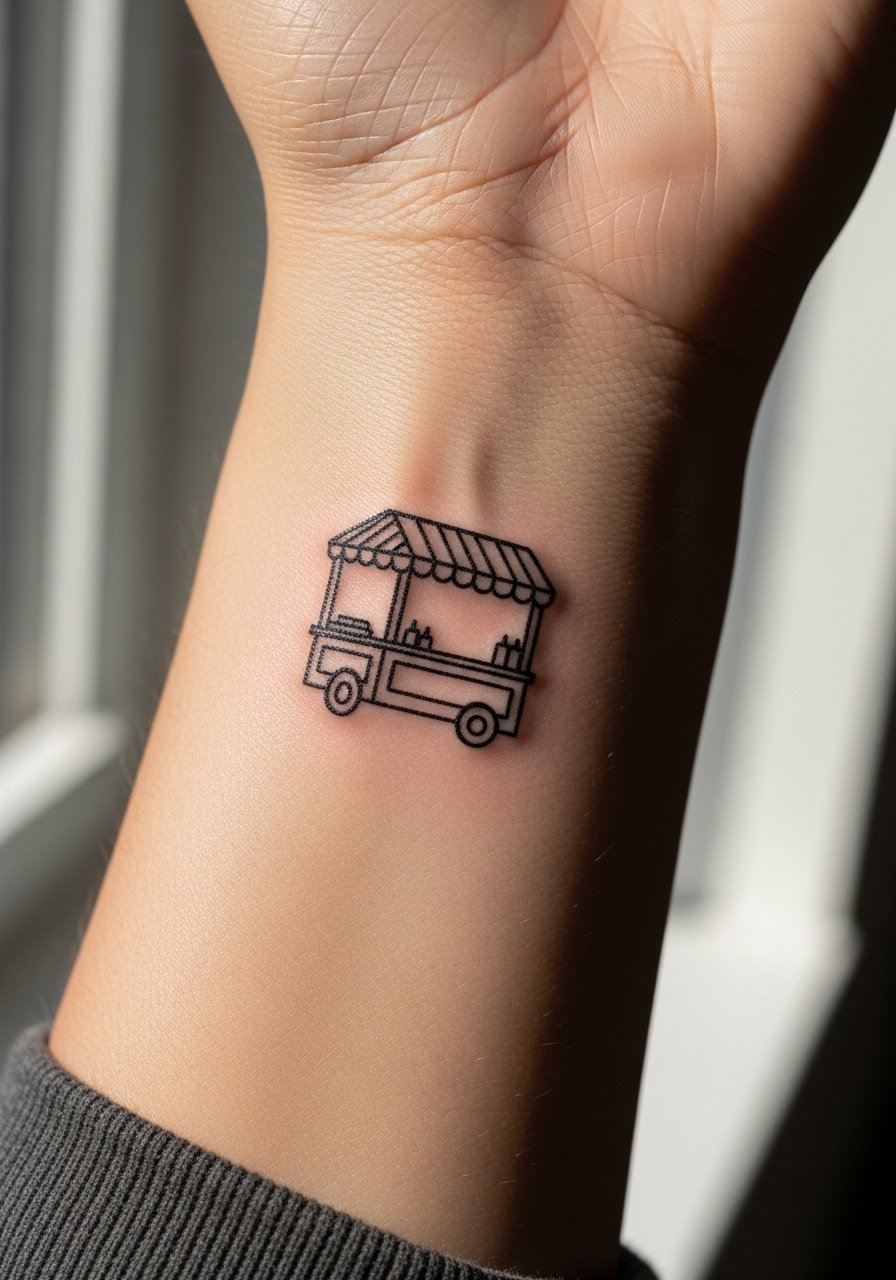
Styling lead, inner wrist pieces are great for daily visibility but require a plan for abrasion from watchbands. The biggest mistake is placing a design that needs heavy shading there. Ask for clean linework and expect touch-ups sooner than for upper arm work. Sessions are quick and the wrist tolerates short sittings well. To protect and show the piece after healing, skip tight watchbands and try a slim minimalist watch strap on the opposite wrist.
21. Tiny Night Sky Over the Manhattan Outline on Sternum

Consultation lead, sternum work needs a specialist touch because the skin there shifts with breathing. The controversy around fine line on sternum mirrors the rib debate. Some artists say the chest is too mobile and thin lines will blur. Other artists point to careful depth control and spacing as the solution. Ask where your artist stands and expect a slower session with breathing breaks. For the appointment, a fitted sports bra makes access simple and modest.
Frequently Asked Questions
Q: Will fine line New York skyline tattoos blur faster than bolder silhouettes on the forearm?
A: In my experience, ultra-fine detailing can soften faster than bolder contours, especially if the skyline includes many tiny windows. Ask for slightly heavier lineweight on the smallest architectural elements and expect a possible touch-up at year three if you want crispness maintained.
Q: How should I prepare clothing-wise for a ribcage or sternum session?
A: Wear a fitted sports bra or a cropped top you can lift so the artist has clear access without full exposure. Bring a loose zip hoodie to cover up warmth quickly between breaks and avoid tight waistbands that press where you just sat.
Q: Are hand and finger tattoos compatible with office jobs in New York?
A: Hand and finger tattoos are common in the city but they can still affect professional settings depending on the workplace. Consider placement and size, and ask about cover options for meetings if visibility might matter.
Q: If I want the Times Square neon look, how do I make it last longer?
A: Anchor neon colors with a fine black outline and choose slightly less saturated pigments near high-motion areas. Protect the area from sun and expect color touch-ups sooner than for pure black linework.
Q: How do I find artists who specialize in these small New York-themed pieces without naming specific shops?
A: Search local shop portfolios on tattoo directories, check hashtag threads that show healed pieces, and visit weekend shop walk-in hours or conventions to see work in person. Spend time looking for healed work photos in the style you want and ask about their touch-up policy before booking.