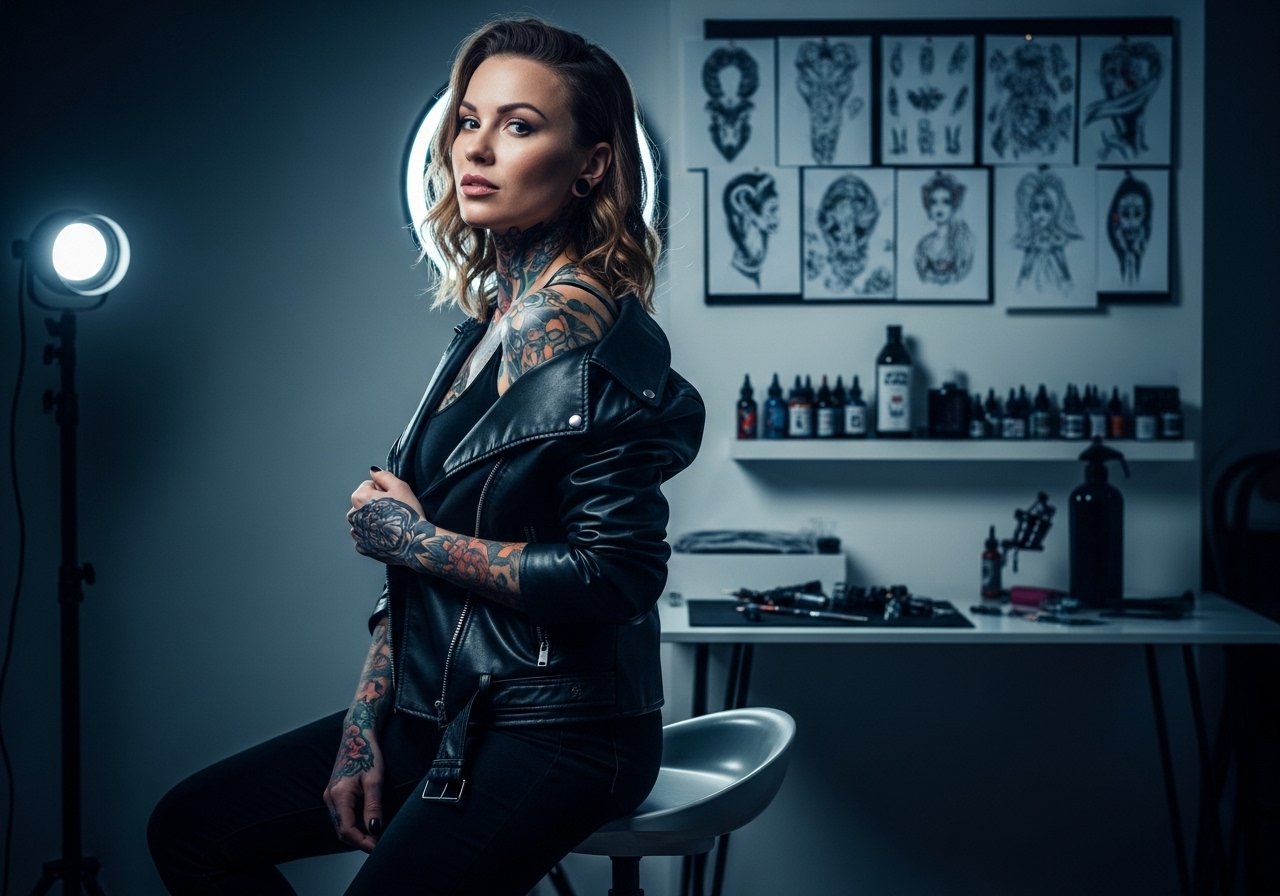
Neo traditional yin yang pieces balance bold linework with decorative color and symbolism, and what reads great on Instagram does not always hold up on skin. Fine detail can soften, dense color can yellow, and placement changes a design more than most clients expect. Below are 17 variations that lean on neo traditional techniques while aiming for longevity, plus what to ask for in consultation so the symbol still reads after years of sun and life.
1. Micro-Yin Yang on the Inner Wrist with Floral Halo
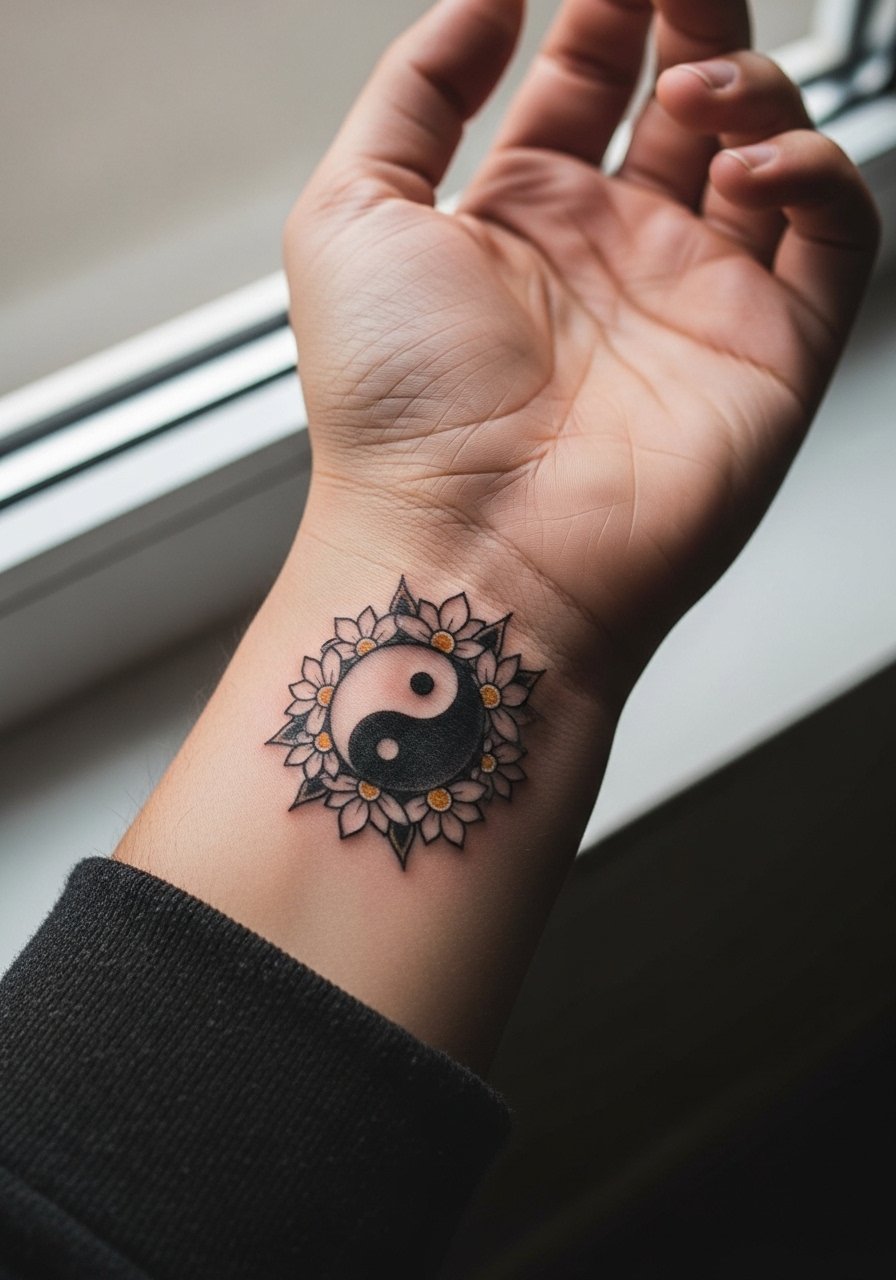
This tiny wrist yin yang uses thick neo traditional outlines so it reads at arm's length while retaining interior detail. I recommend asking your artist for stronger outer linework and simplified internal shapes during the consultation, not more micro detail. Fair warning, wrists see constant washing and friction, so expect fading at year two and a potential touch-up at year three. For the session wear, put on a loose button-down shirt you can slide the sleeve up without brushing the fresh ink. A common mistake is asking for hairline interior lines inside a tiny circle, which blurs quickly.
2. Forearm Yin Yang with Koi and Wave Motif
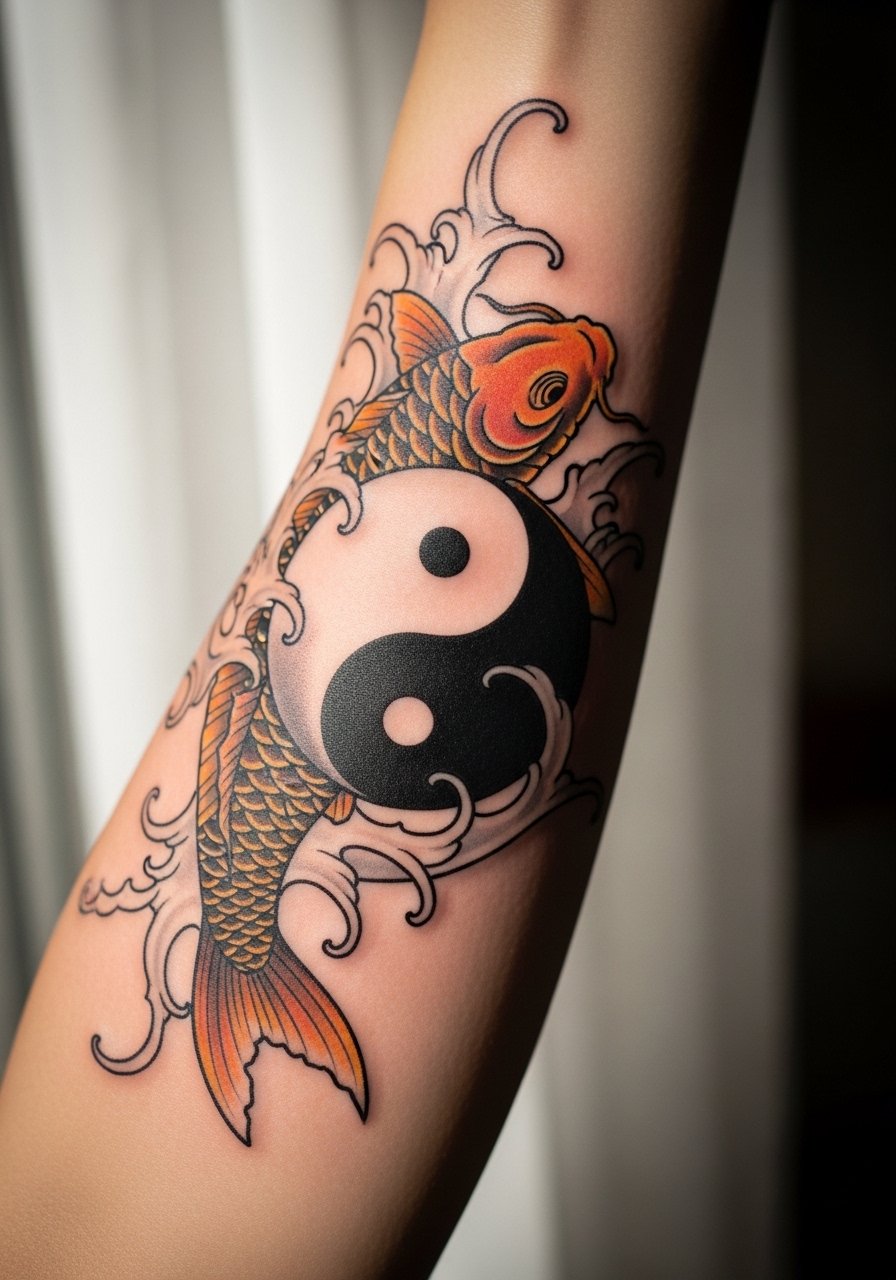
On the forearm this concept feels dynamic and reads well from a distance thanks to bolder fills and saturated color. Tell your artist to map the koi so the flow follows the arm, and request balanced negative space so the waves do not crowd the symbol. Most people see good results at six months, and by two years the color will soften but the outlines hold if the ink sat well. Pain is low on the forearm and sessions usually run one to two hours depending on size. Pairing note for showing it off: roll sleeves and wear a racerback tank or a short-sleeve linen shirt.
3. Small Ankle Yin Yang with Stippling Shadow
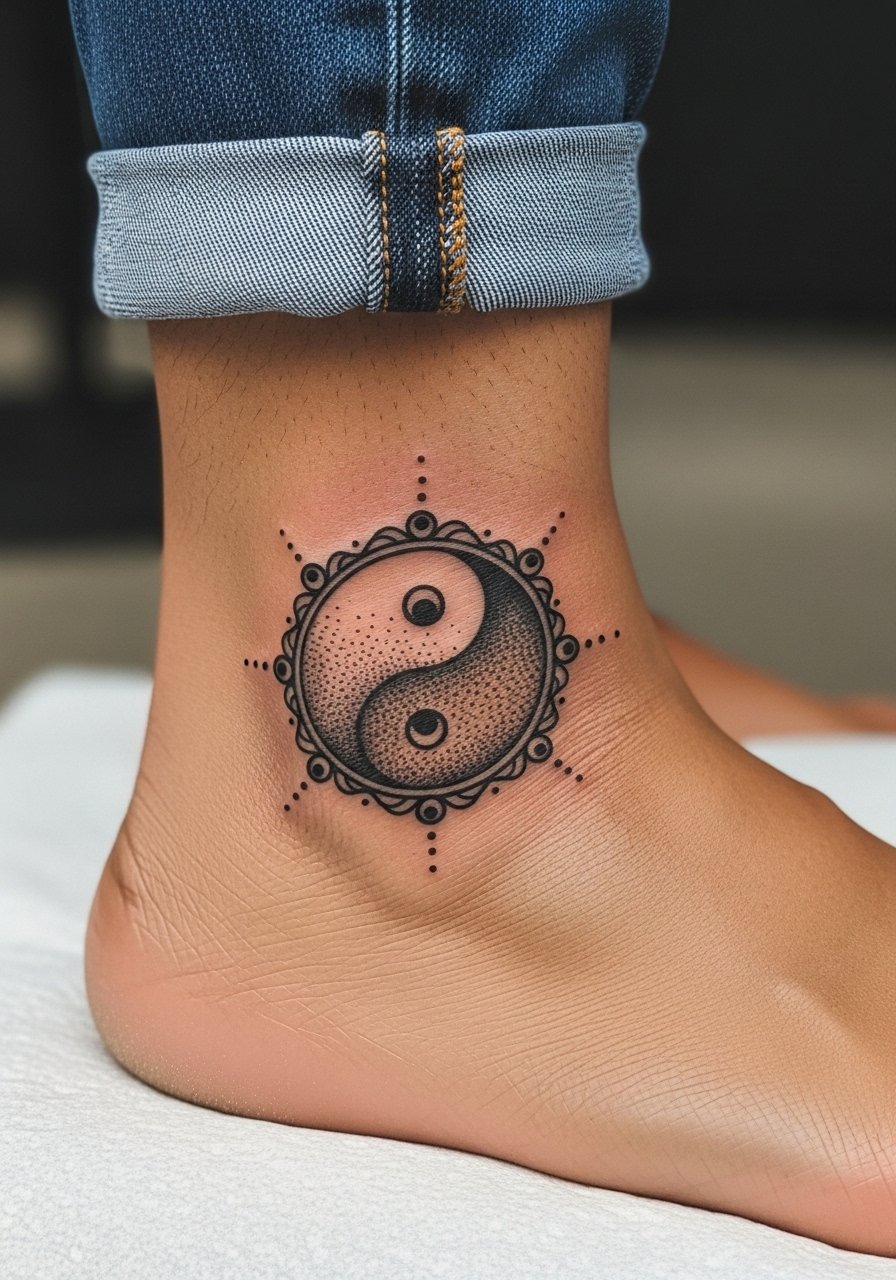
An ankle yin yang takes fewer needles but more thought about movement. Ask for stipple shading rather than dense block fill under the white area to avoid a muddy patch after a few years. Expect the ankle to be a mid-range pain spot with one short session. Friction from socks and shoes will be the main enemy during healing and beyond. For session comfort, wear pants you can roll up easily and slip-on shoes. A real mistake is asking for very tight dot work against the edge of the symbol. Give the dots room to breathe so they do not merge into the outline.
4. Collarbone Yin Yang with Peony Accents
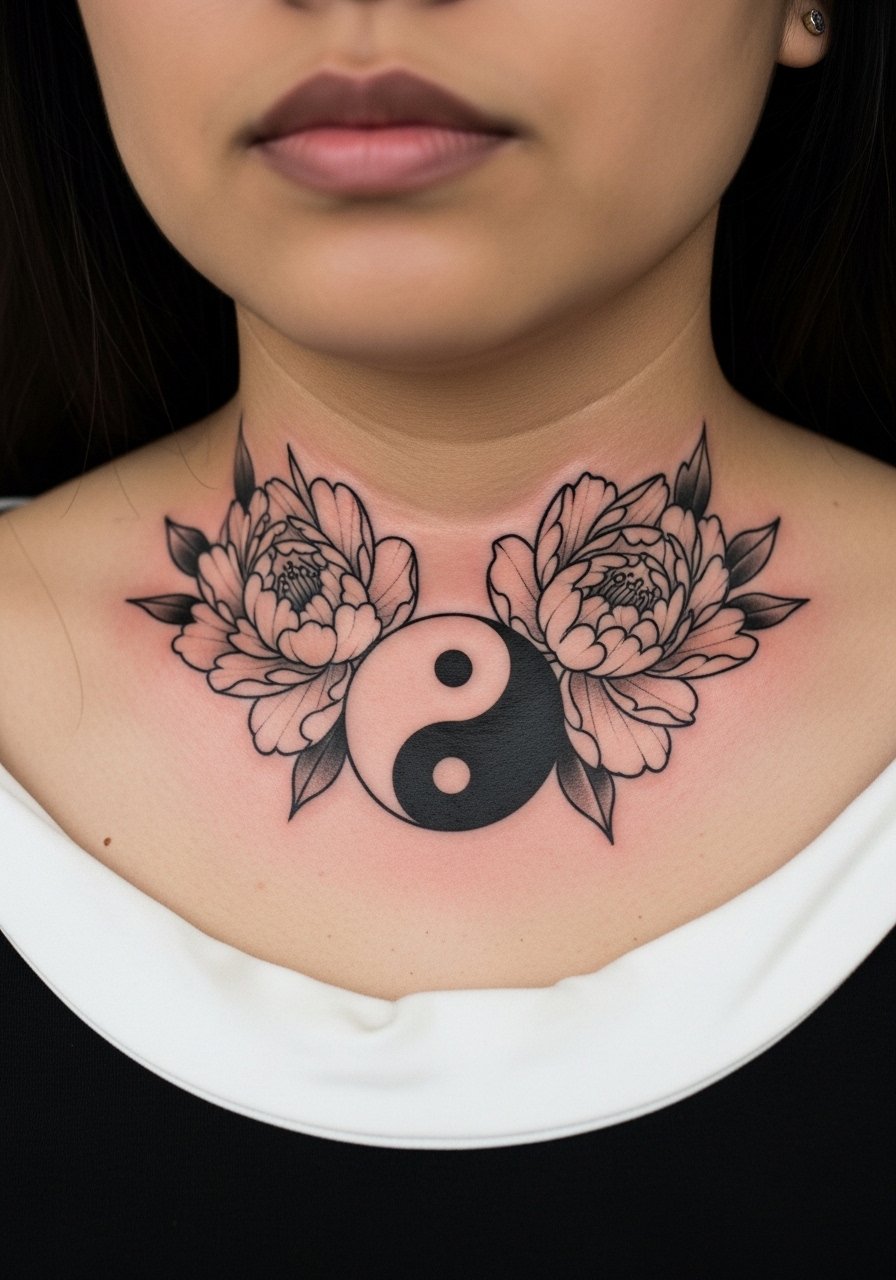
Collarbones show a tattoo elegantly but they are bony and session discomfort is higher. The neo traditional approach here pairs thick outer lines with saturated mid-tone fills so the yin yang remains readable even if some edge softening occurs. Ask your artist to keep dense detail at least a finger's width from the bone to reduce blowout risk. Wear a thin chain pendant necklace above the work to draw attention upward without competing with the piece. Expect a touch-up at year three if you spend a lot of time in the sun.
5. Neo Traditional Yin Yang Sleeve Accent with Bold Saturation
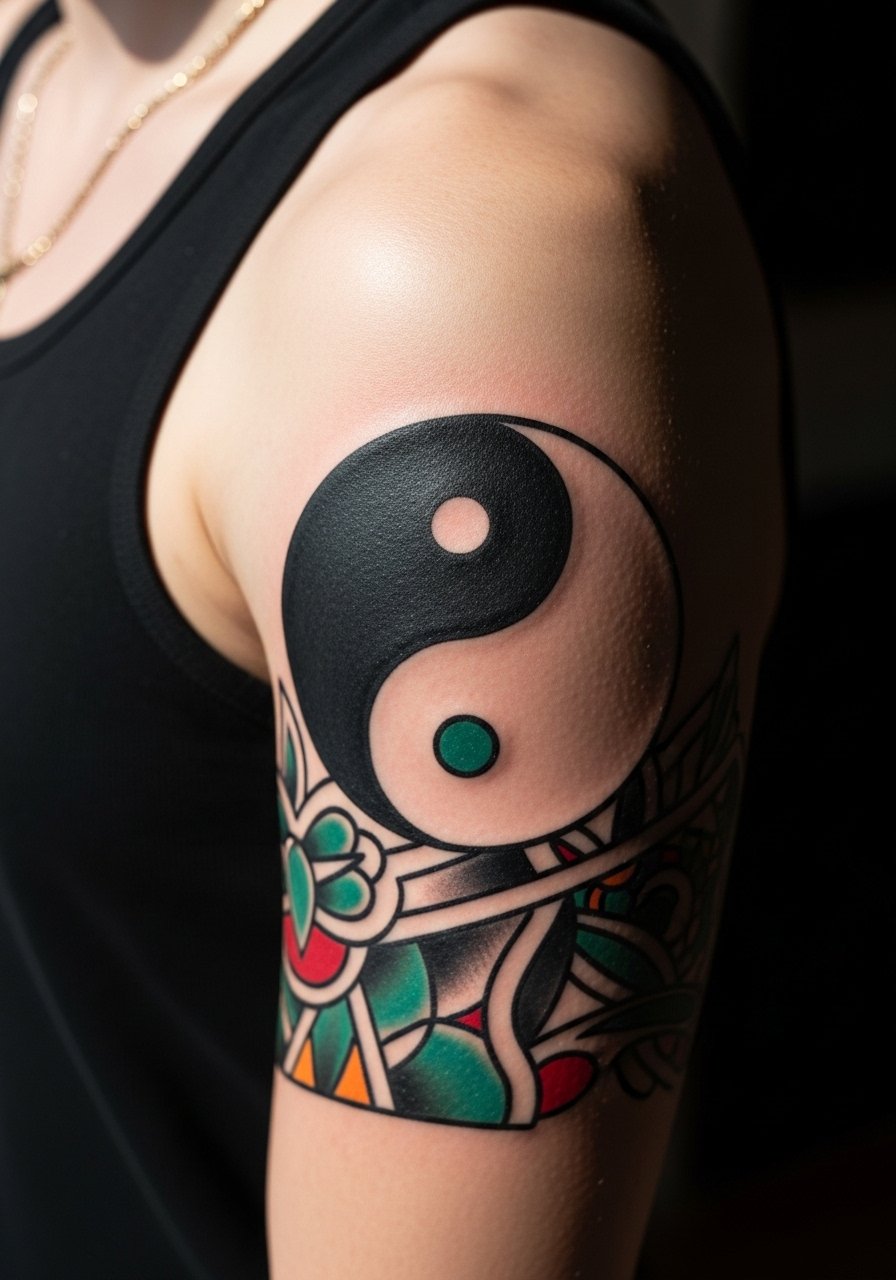
Use this as an anchor in a sleeve where saturation and strong outlines are the priorities. In consultation, say you want the yin yang to function as a focal point from across the room, not a hidden detail. That means thicker outlines, heavier saturation, and simplified inside motifs. Aging favors this approach because bold color ages more gracefully than hairline detail. Sessions will be longer, expect two to four hours depending on complexity. A mistake I see often is packing too many small elements around the symbol. Leave breathing room so the focal shape does not get lost.
6. Tiny Finger Yin Yang with Single-Needle Accent
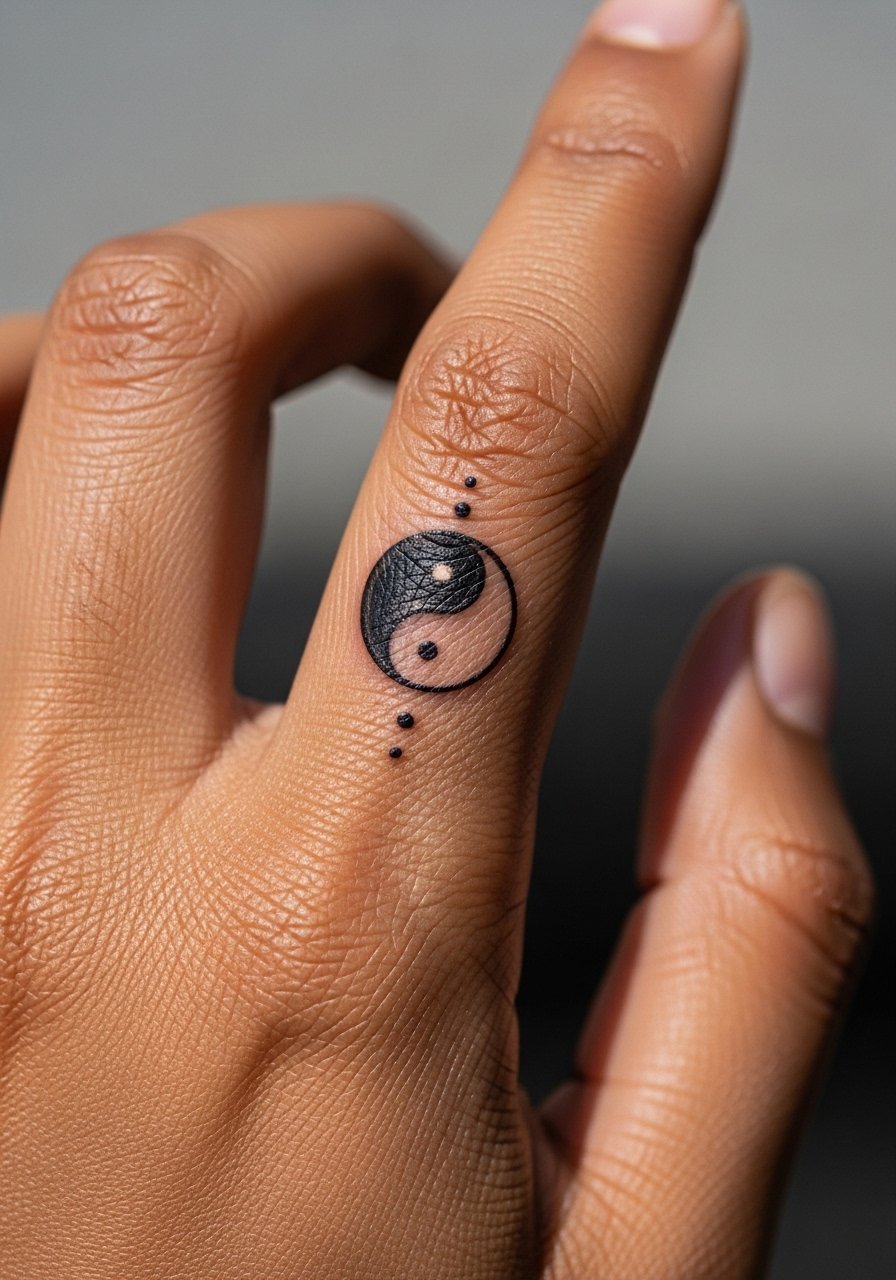
Finger work is high maintenance. The skin there regenerates fast and the symbol can blur or fade in months. If you want this, ask for bolder outline work rather than micro detailing. Expect a touch-up within a year and possibly another in two or three years. Session time is short but the healing window is fussy because of constant hand use. For showing it off, stack with a minimalist thin band ring placed nearby so the eye reads the hand as composed. Be honest about job-related visibility concerns before booking.
Studio Day Picks
The small, high-friction locations above like the finger, wrist, and ankle need different prep than larger pieces, and these items make the session and the first week smoother.
-
Stencil transfer paper kit. Lets you preview placement on skin so the tiny wrist and finger layouts match your natural lines before needles start.
-
Topical numbing cream. Applied an hour ahead it can take the edge off on bony spots like the collarbone or ankle without changing the artist's linework.
-
Thin protective film roll. Useful for keeping finger and wrist tattoos clean during the first week when washing and typing cause friction.
-
Fragrance-free gentle body wash. Cleans healing areas without stripping ink, handy for forearms and lower-leg pieces where soap transfer is frequent.
-
Aquaphor healing ointment. A thin layer in the first days locks moisture without clogging fine line channels, which matters for small interior details.
7. Ribcage Yin Yang with Floral Lace
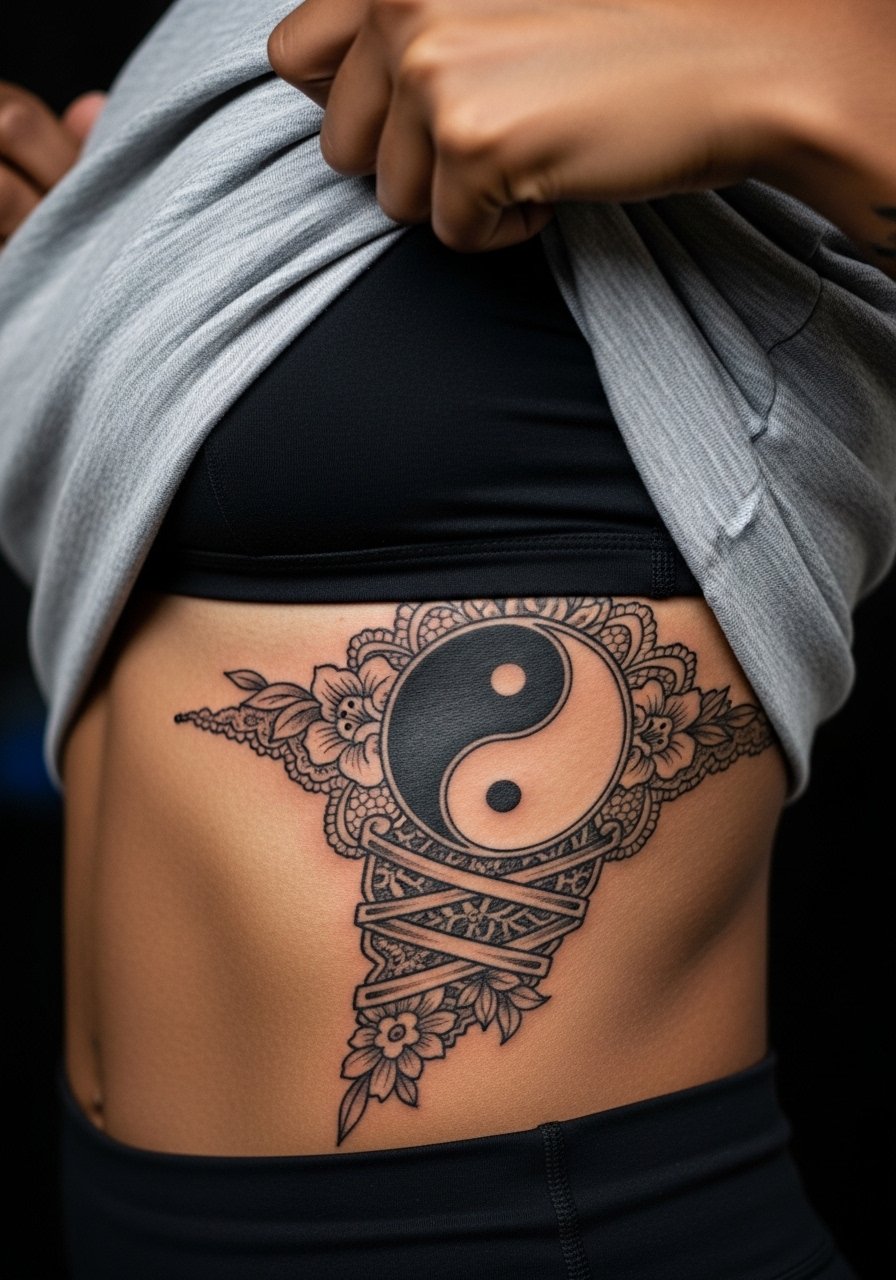
Ribcage work splits artists into clear camps. One group says fine line on the ribs blurs within two years because the skin shifts. The other group argues that with correct needle depth and spacing, careful fine line holds up. Name both when you consult and ask where your artist stands. This design benefits from medium-weight outlines and spaced floral elements to avoid dense, merge-prone patches. Pain is high here, so sessions may be broken into shorter appointments. For the session wear, bring a zip-up hoodie you can pull aside so you do not disturb healing fabric later.
8. Sternum Yin Yang with Crescent Moon Embellishment
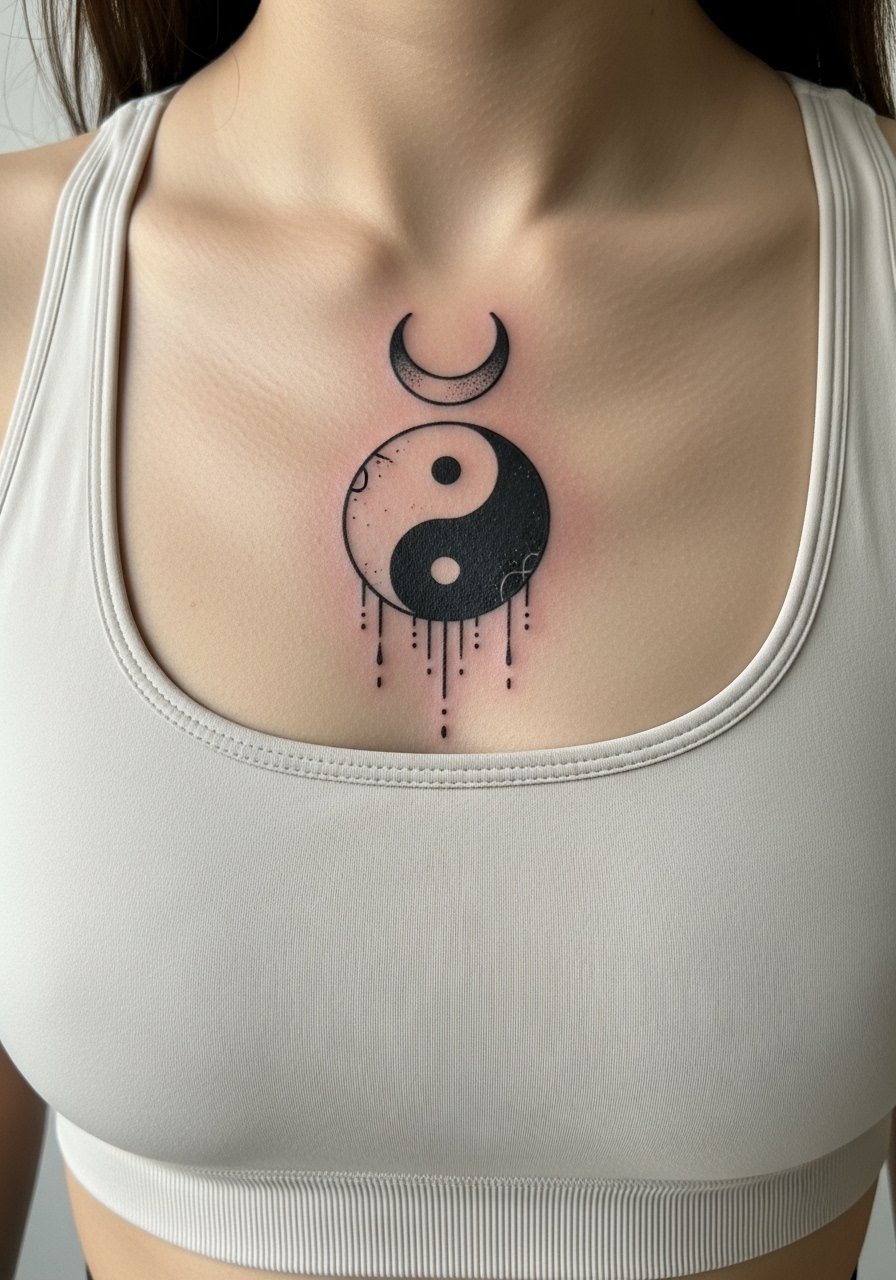
Sternum pieces have strong visual impact but the area needs careful planning. Ask for symmetry checks and for color blocks that avoid too much micro shading near the center. Most artists will warn about increased sensitivity and a longer swelling window. A common mistake is requesting ultra-fine interior shading that turns into a gray patch after healing. For the session, wear a strapless or sports bra so the artist can access the area cleanly. Expect follow-up work at year two if you expose the chest to sun a lot.
9. Upper Thigh Yin Yang with Botanical Surround
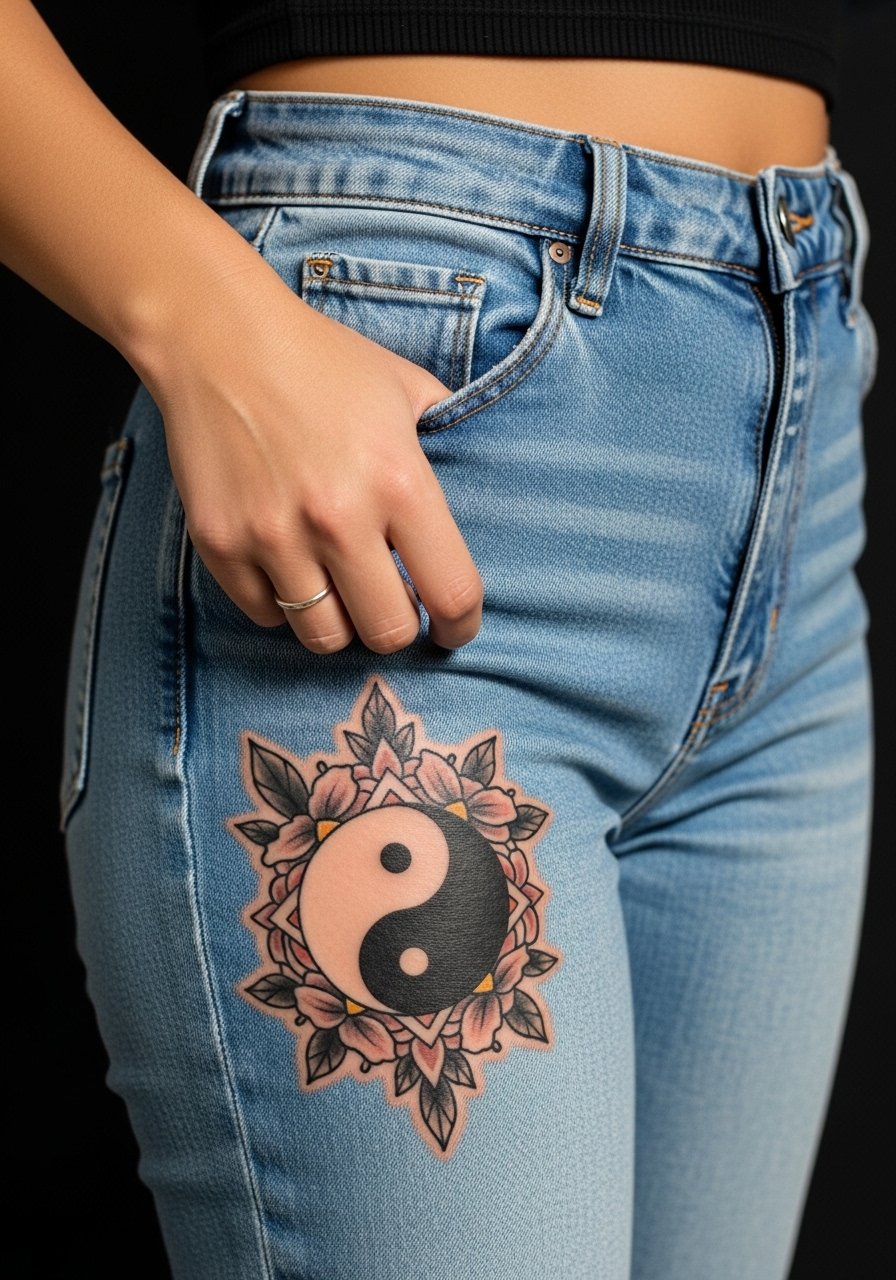
Upper thigh is a forgiving canvas for neo traditional shading and richer color because it is low friction and often covered. Tell your artist you want saturated mid-tones with lighter highlights so the yin yang keeps its contrast without dense black blocking. Session pain is moderate and many people prefer a single longer appointment. For session comfort, wear high-waisted shorts so you can adjust coverage without exposing more than the tattoo area. This placement ages well and needs fewer touch-ups than hands or feet.
10. Calf Yin Yang with Snake Coil
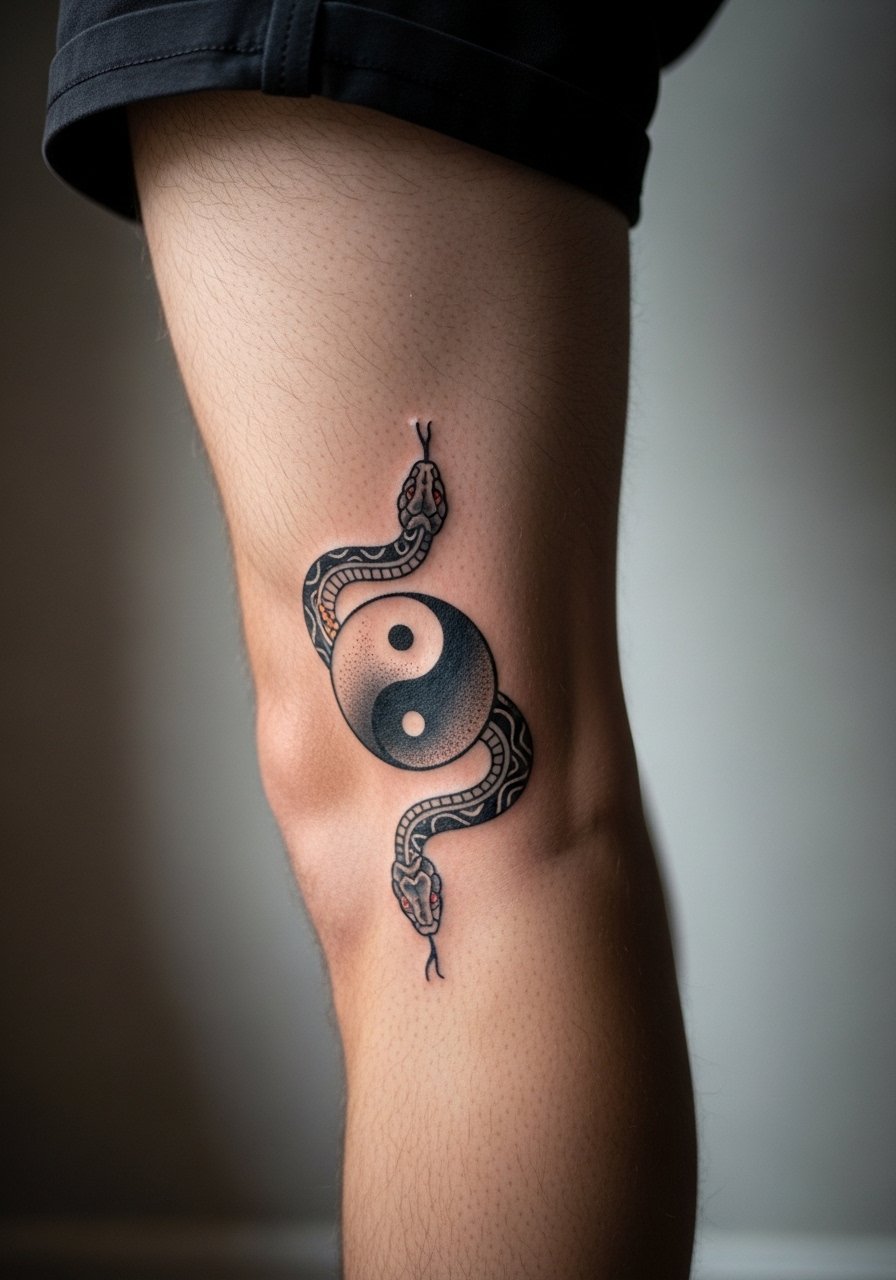
The calf provides firm muscle and a nice plane for elongated motifs like a coiling snake. Ask your artist to orient the snake so it reads while standing and while seated, not only in one pose. Blowout risk is low on the calf compared to inner arm work, so you can push saturation more. Sessions usually feel like a steady hum of vibration with moderate pain. For showing it off, pair with rolled shorts or a mid-calf boot. Avoid packing tiny teeth and tongue details too close to the yin yang edge or they may blur with time.
11. Neck-Side Yin Yang with Whip Shading Accents
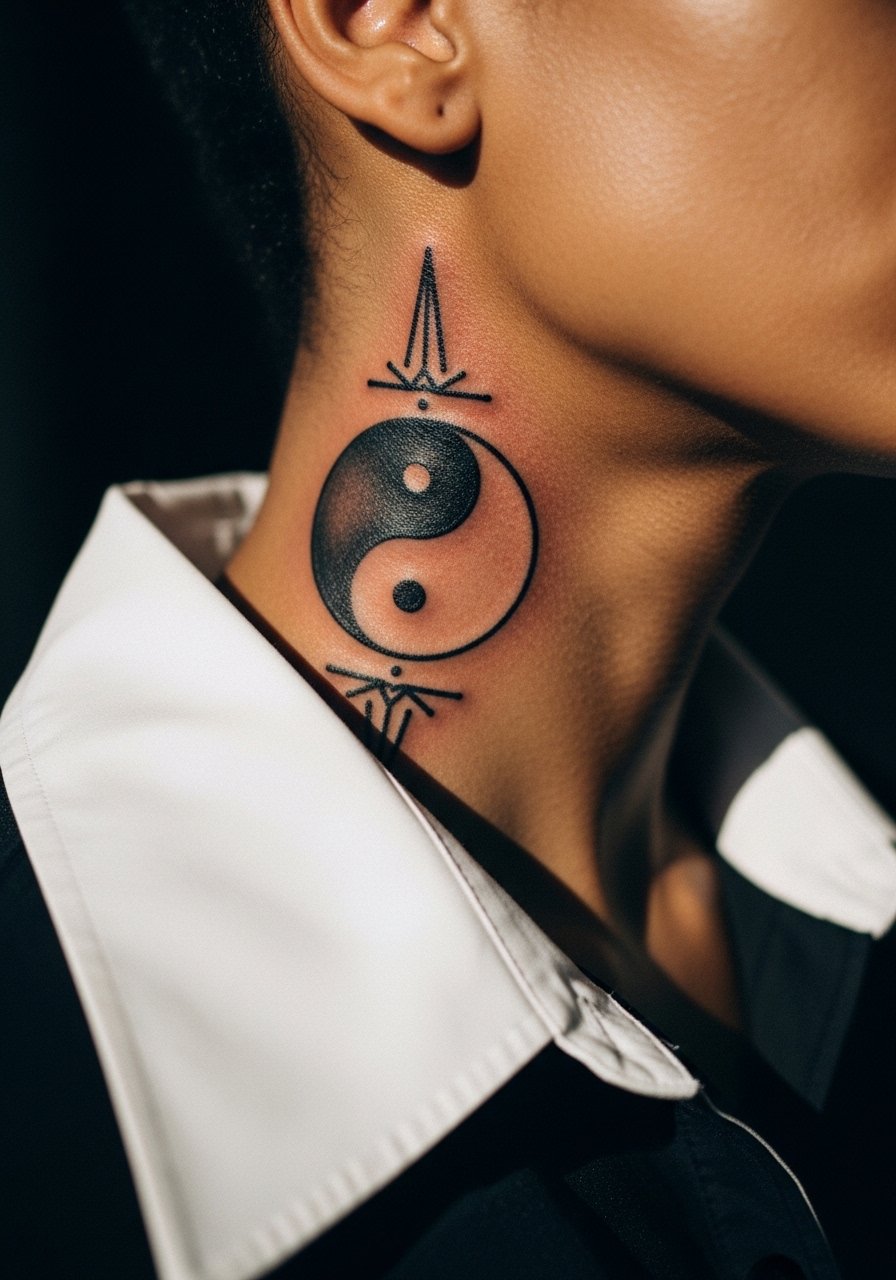
Neck placements are visible and can affect professional situations. The neo traditional approach here uses strong outer lines and whip shading outward from the symbol so the center does not get overloaded. Discuss visibility and touch-up expectations in the consultation. Artists are split on neck longevity compared to arms, so ask about their specific portfolio pieces. Sessions are short but healing is sensitive to friction from collars and scarves. Wear a wide-neck shirt you can adjust during the session.
12. Back-of-Shoulder Yin Yang with Phoenix Tail
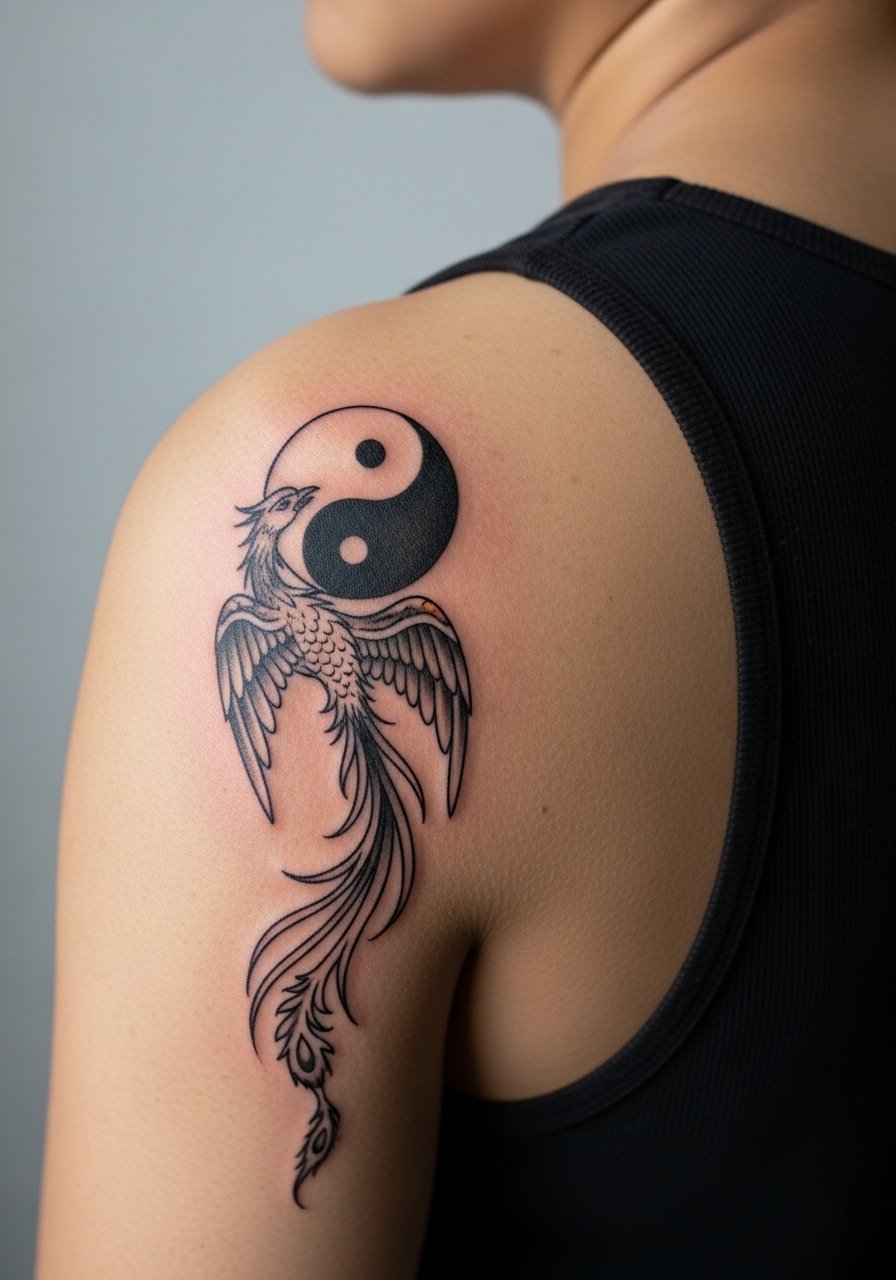
This placement reads like a statement when paired with open-back or strap tops. Ask your artist to plan the tail flow so it reads with the shoulder's movement. The area tolerates heavier saturation and usually heals cleanly, though you may need a short touch-up in two to three years depending on sun exposure. Session pain is moderate and the positioning allows longer sittings. For showing it off, wear an open-back dress or a tank to let the tail fall naturally across skin.
13. Chest-Center Yin Yang with Heraldic Skull
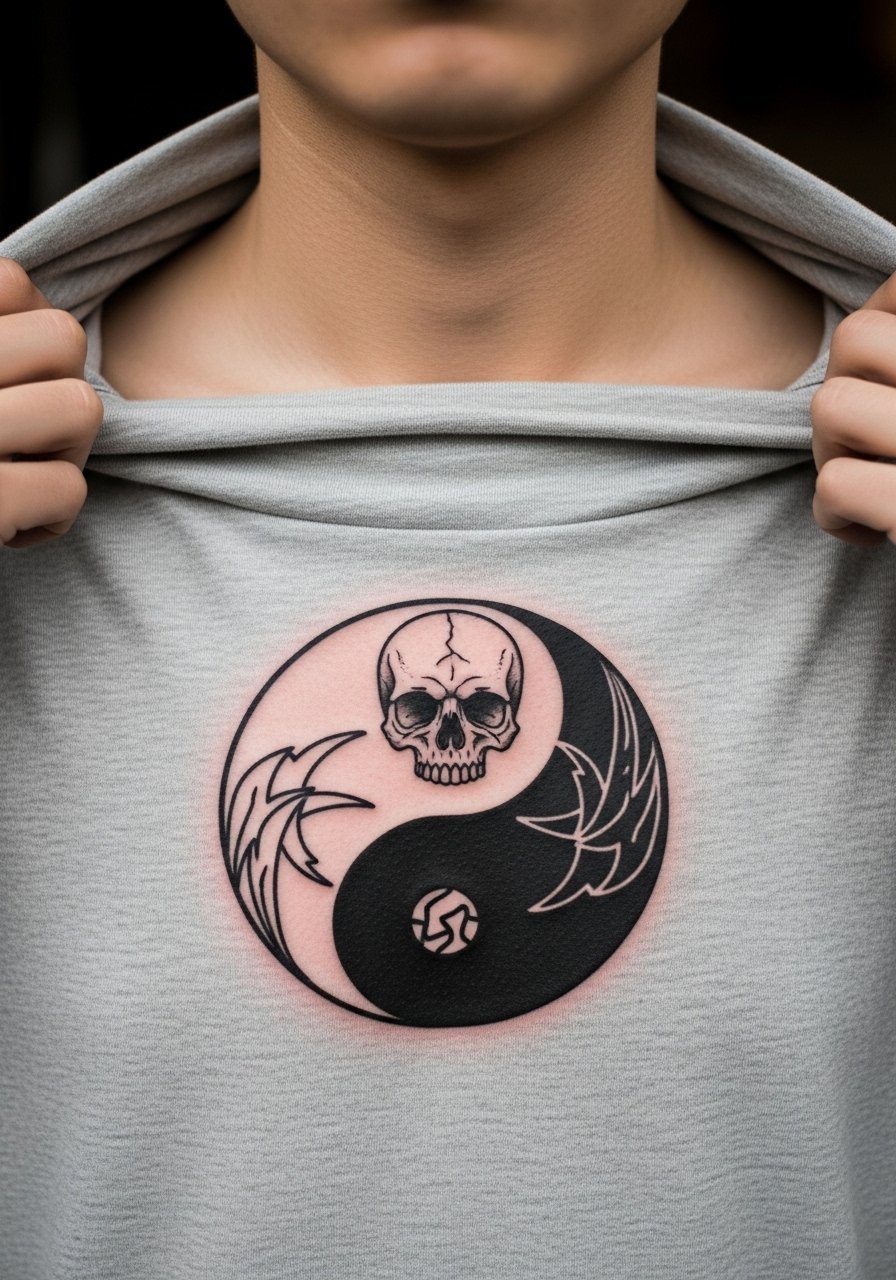
Central chest pieces demand symmetry and clear contrast so the yin yang is not lost behind ornamentation. Tell the artist to prioritize silhouette and to place heavy outlines around the yin yang before adding skull details. The chest sees sun and shirt friction, so saturated fills must be balanced with negative space. Sessions can be longer and discomfort is moderate. A common mistake is layering too many tiny features inside the symbol. Keep internal motifs simplified to preserve clarity over time.
14. Hand-Back Yin Yang with Dot Work Halo
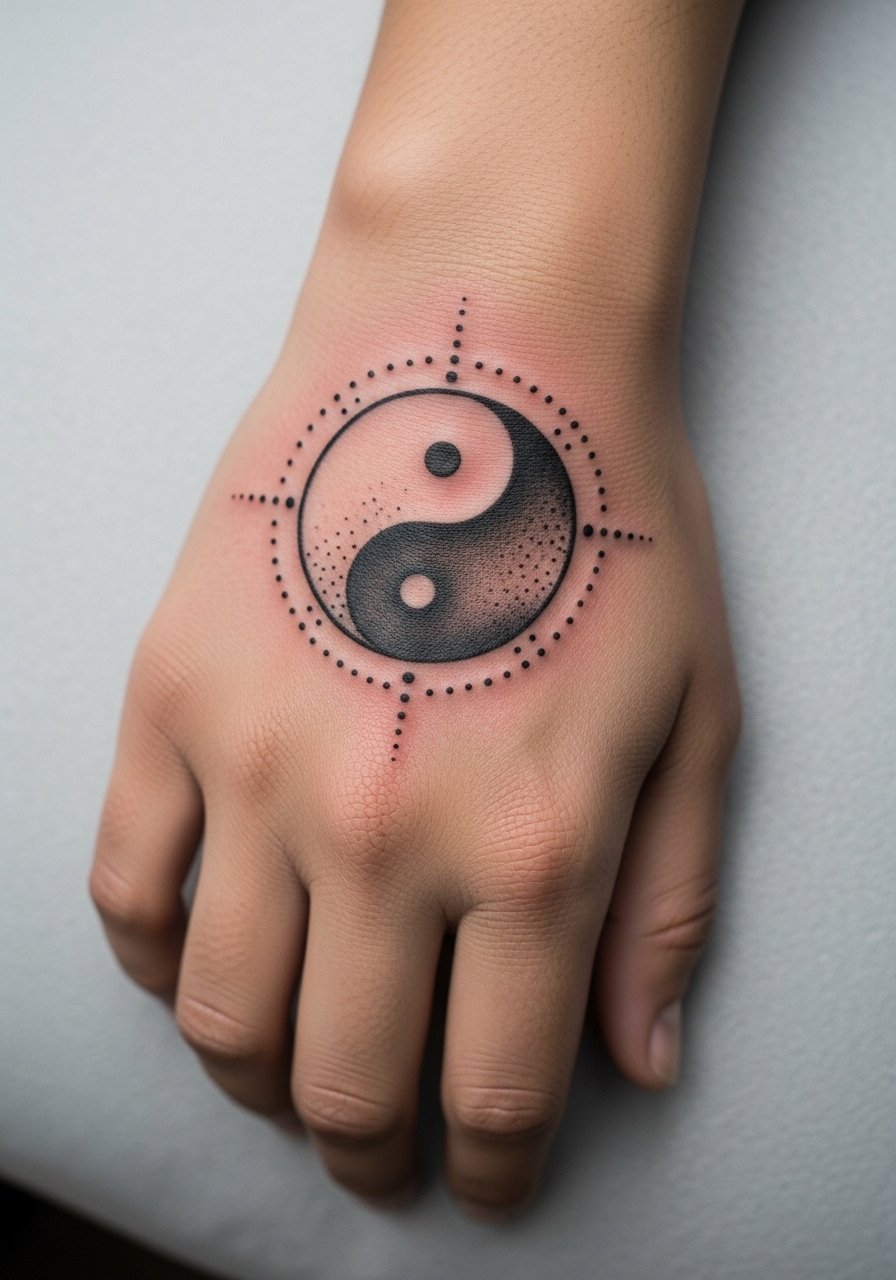
Back-of-hand tattoos carry a high rate of fading from frequent hand washing and UV exposure. Ask for heavier outer linework and avoid tiny interior dot clusters that will wash out. Expect a touch-up within a year. The session is brief but healing is fussy because hands move constantly. For showing it off, wear simple bracelets that do not rub the piece. Be realistic about career visibility and about the likelihood of more frequent maintenance with hand work.
15. Throat-Level Yin Yang with Minimal Script
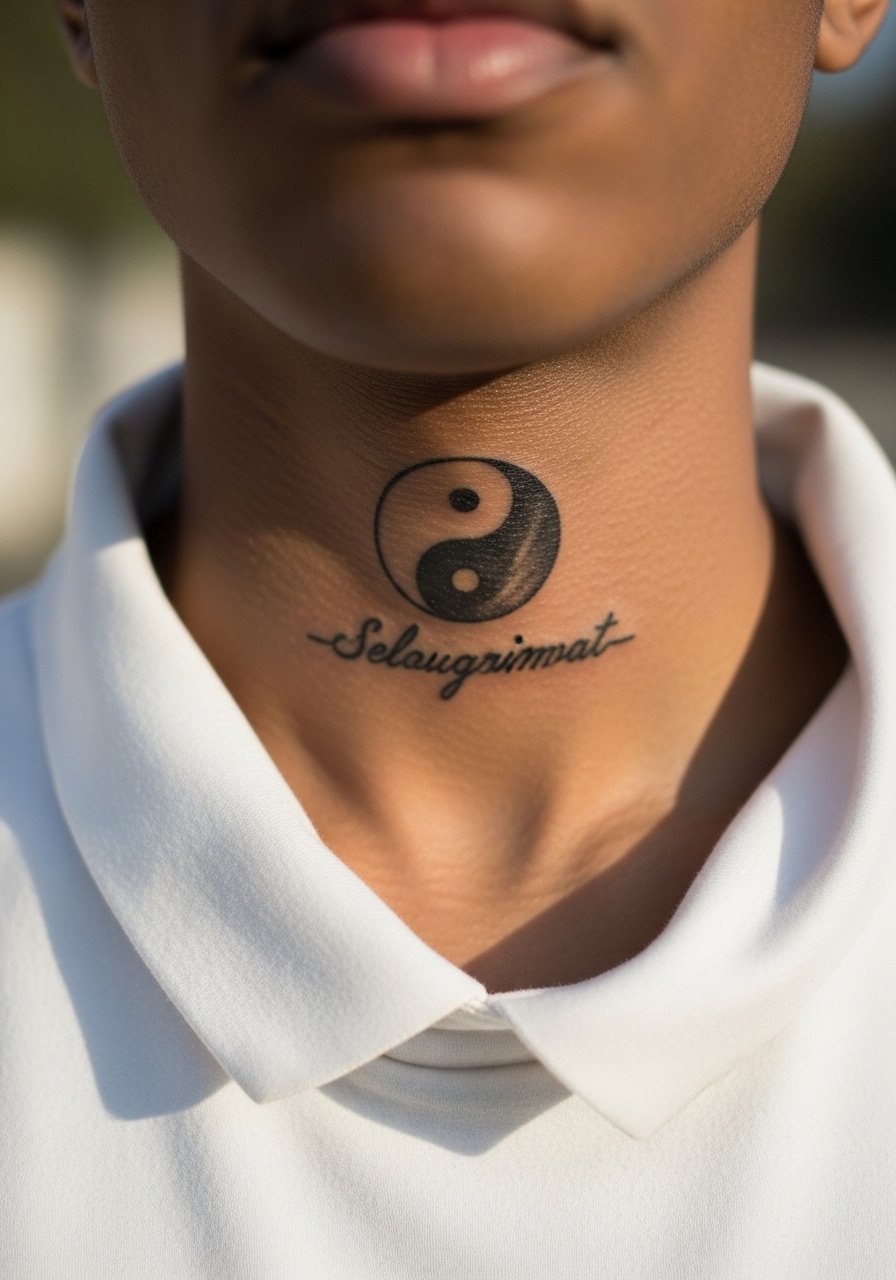
Throat-level tattoos are bold and visible. When text or script is present, specify the exact wording to your artist and the exact font style. In image prompts, lettering must be specified. This placement wants minimal interior detail and stronger outer shapes. Pain is higher and healing can be sensitive to shaving or collar rubbing. Consider career impact before booking. A common mistake is tiny script combined with fine interior shading. Keep text size readable and give it space from the yin yang to avoid merging.
16. Calf-Wrap Yin Yang with Mandala Elements
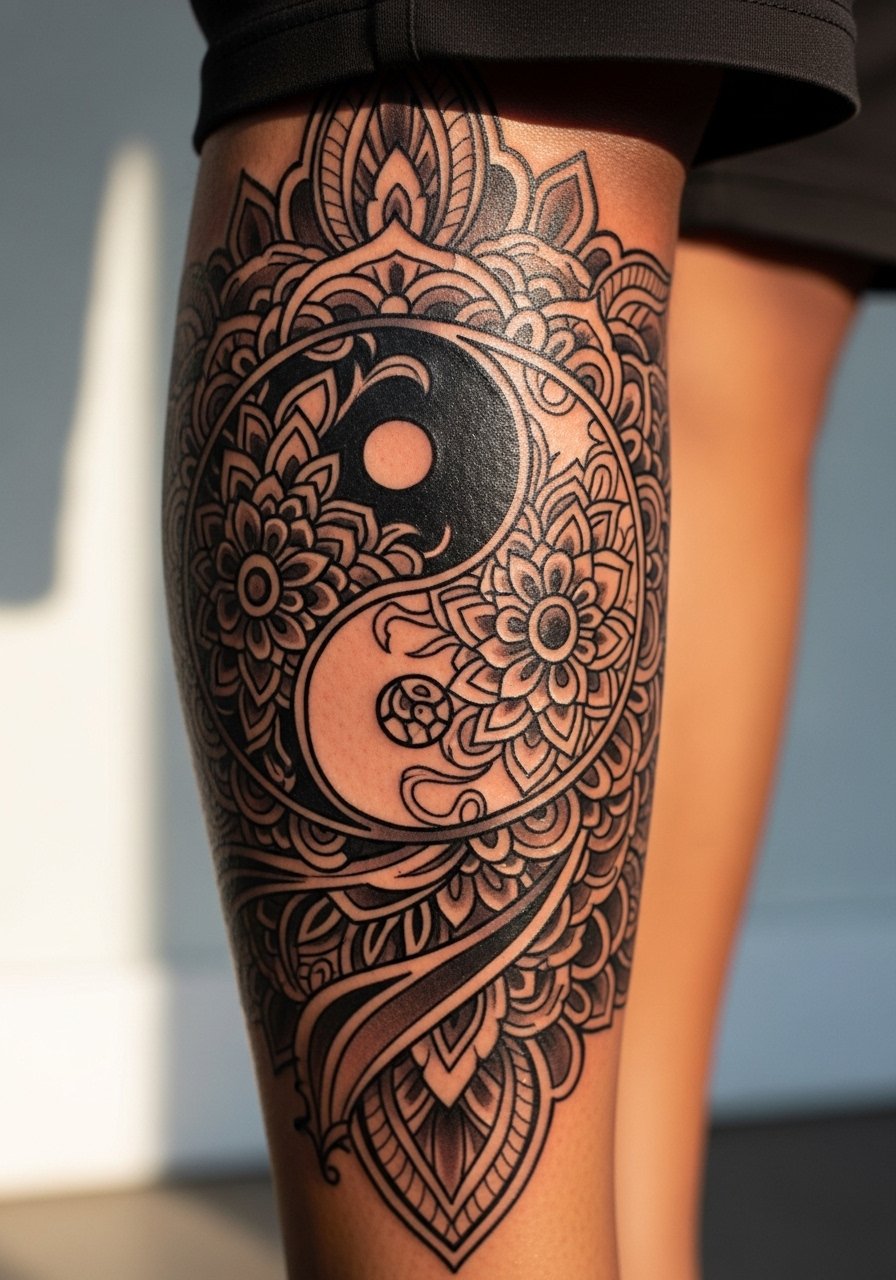
Using mandala elements brings an extra layer of cultural meaning. This pattern draws from South Asian and Buddhist visual vocabularies, so many people choose to alter motifs rather than copy sacred designs directly. Ask your artist about respectful adaptation and plan spacing so the mandala radiates without merging into the yin yang. The calf handles dot work and linework well, and touch-ups are usually infrequent. For session and style, tall boots or rolled shorts show this area nicely.
17. Neo Traditional Back Plate Yin Yang with Two Animals
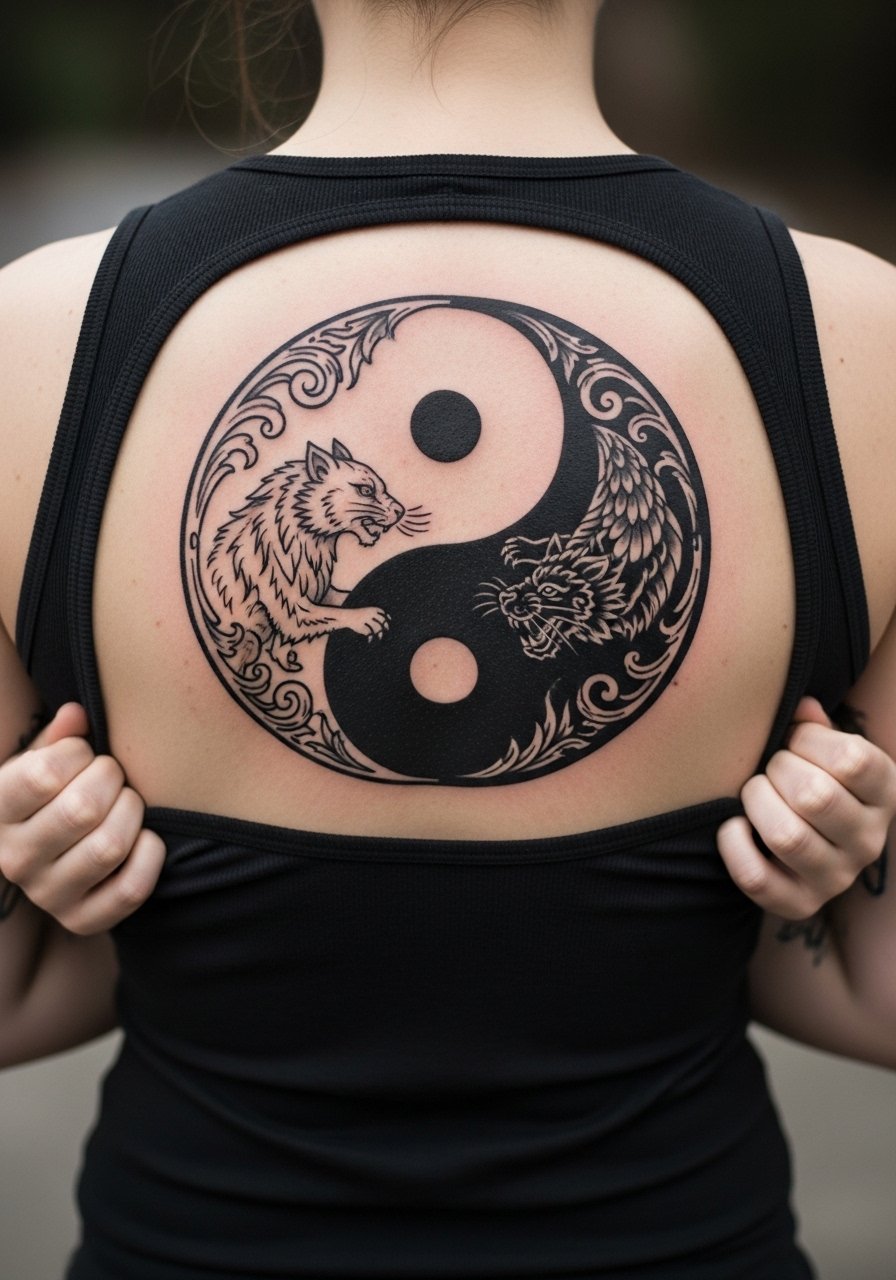
Large back pieces let you play with symmetry and complex neo traditional ornamentation while still preserving readability. Tell the artist you want the yin yang to anchor the composition and for the animals to read as silhouettes when viewed from a distance. Sessions will be multiple and recovery requires loose tops so seams do not rub. A common mistake is asking for too much micro shading in the central field. Keep that area simpler and reserve detail for the animals and scrollwork.
Frequently Asked Questions
Q: How much will a neo traditional yin yang fade on the wrist or fingers compared with the forearm?
A: Wrist and finger placements typically fade faster because of constant movement, washing, and friction. Expect touch-ups sooner on fingers and wrists than on forearms. Choosing bolder outlines and slightly larger internal shapes slows that loss of readability.
Q: Does fine interior detail on the ribcage really blur faster than on the forearm?
A: Yes, the ribs shift with breathing and movement and the skin there can be less stable. Artists split on this point. One camp says fine line on ribs blurs within a couple of years. The other camp says careful spacing and depth keep lines crisp. Ask an artist to show you rib examples from their healed portfolio.
Q: Are there styling tips that help neo traditional pieces look intentional with everyday outfits?
A: Visible placements pair well with certain wardrobe choices. For a collarbone or shoulder piece try an open-back dress or a tank to frame the work. For wrist pieces, rolled sleeves and a minimalist watch keep the focus on linework without competing elements.
Q: How often should I expect touch-ups for a neo traditional yin yang on a large back plate?
A: Large back plates with solid saturation often need fewer touch-ups than hand work. Many people go three to five years before a color refresh, but sun exposure and skin care change that timeline. Plan for at least one revisit in the first three years.
Q: What should I bring to the consultation to get a neo traditional yin yang that ages well?
A: Bring reference images that show the exact line weight and color range you like, not just the motif. Bring photos of healed work by the artist when possible and ask about healed pieces on similar placements. Also ask about touch-up policies and expected timelines for the placement you choose.