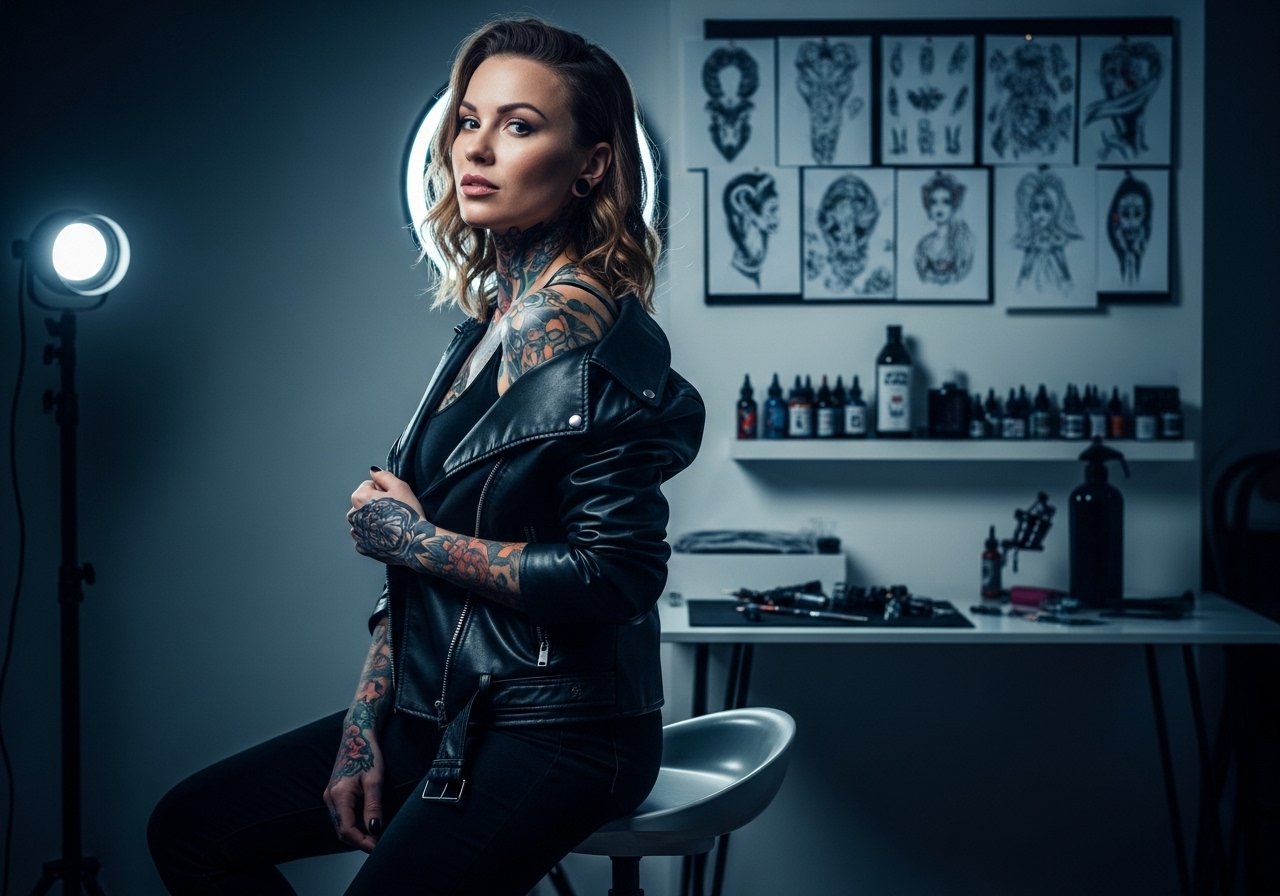
Neo traditional dragons marry bold silhouette with painterly color, and they read differently on real skin than on a screen. I have noticed pieces with strong outlines and saturated fills age far more predictably than tiny, overworked scales. Pick a design that respects placement and plan for a touch-up timeline up front, and the ideas below will give you concrete options to bring into a consultation.
1. Dragon Head on Upper Arm, Bold Outline with Painterly Fill

Start this one if you want a piece that reads from across a room and still looks crisp after five years. Tell your artist you want heavier linework around the main contours and lighter internal detail so the scales do not merge with time. A common mistake is asking for micro-detail inside each scale. That looks great fresh but tends to soften into muddiness by year three. Expect a two to four hour session depending on size and saturation, and plan a touch-up around year two if you live in a sunny climate. Pain is moderate on the outer arm. For showing it off, roll sleeves or wear a short sleeve linen shirt that frames the piece while keeping attention on the silhouette.
2. Climbing Dragon Sleeve Accent, Scales and Negative Space

This placement favors a design that breathes. Ask for distinct scale spacing and areas of uninked skin to preserve crispness. I've seen full sleeves packed with tiny detail lose definition faster than designs that give elements room. Forearm linework needs confident needle depth because blowout risk increases with shallow, shaky lines. The session feels like steady vibration more than sharp stabs. Expect a multi-session process if you want saturated color throughout. For shows and casual wear, rolled sleeves or a linen button-down with sleeves pinned up keeps the arm visible and styled without competing patterns.
3. Dragon and Peony Thigh Piece, Bold Color Blocks
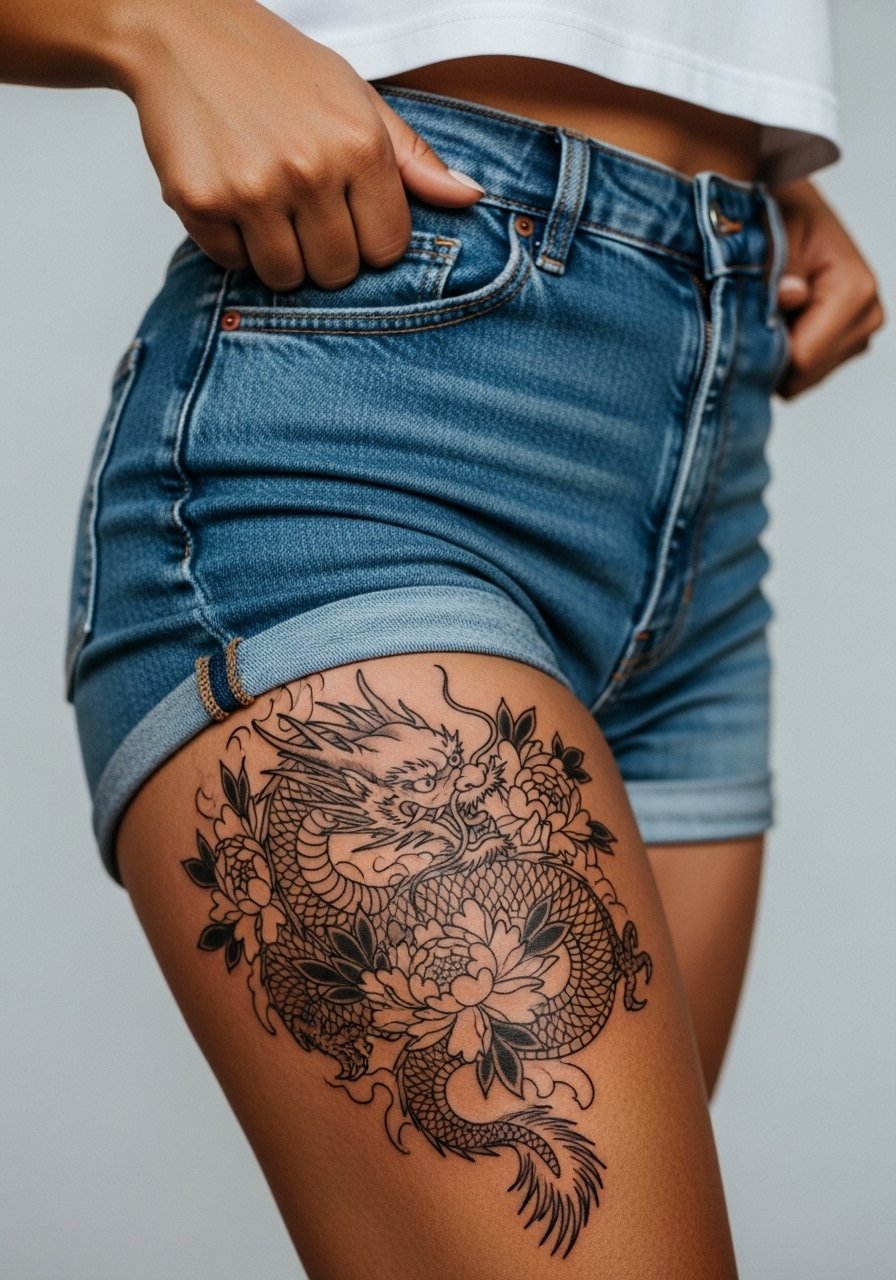
Thigh placements let artists work larger with dramatic color fills. I recommend solid color blocks instead of delicate gradients if you want the design to age well. A frequent mistake is asking for tiny stipple shading across a large curved surface. That detail flattens over time. The session can run long because the artist has space to paint, and pain is lower than ribs. For the appointment, wear high-waisted shorts you can shift without pressure on the area. If you plan to show the piece at the beach, pick swimsuits with side cutouts or high-cut styles that frame the design.
4. Koi-Dragon Fusion on Calf, Flowing Composition
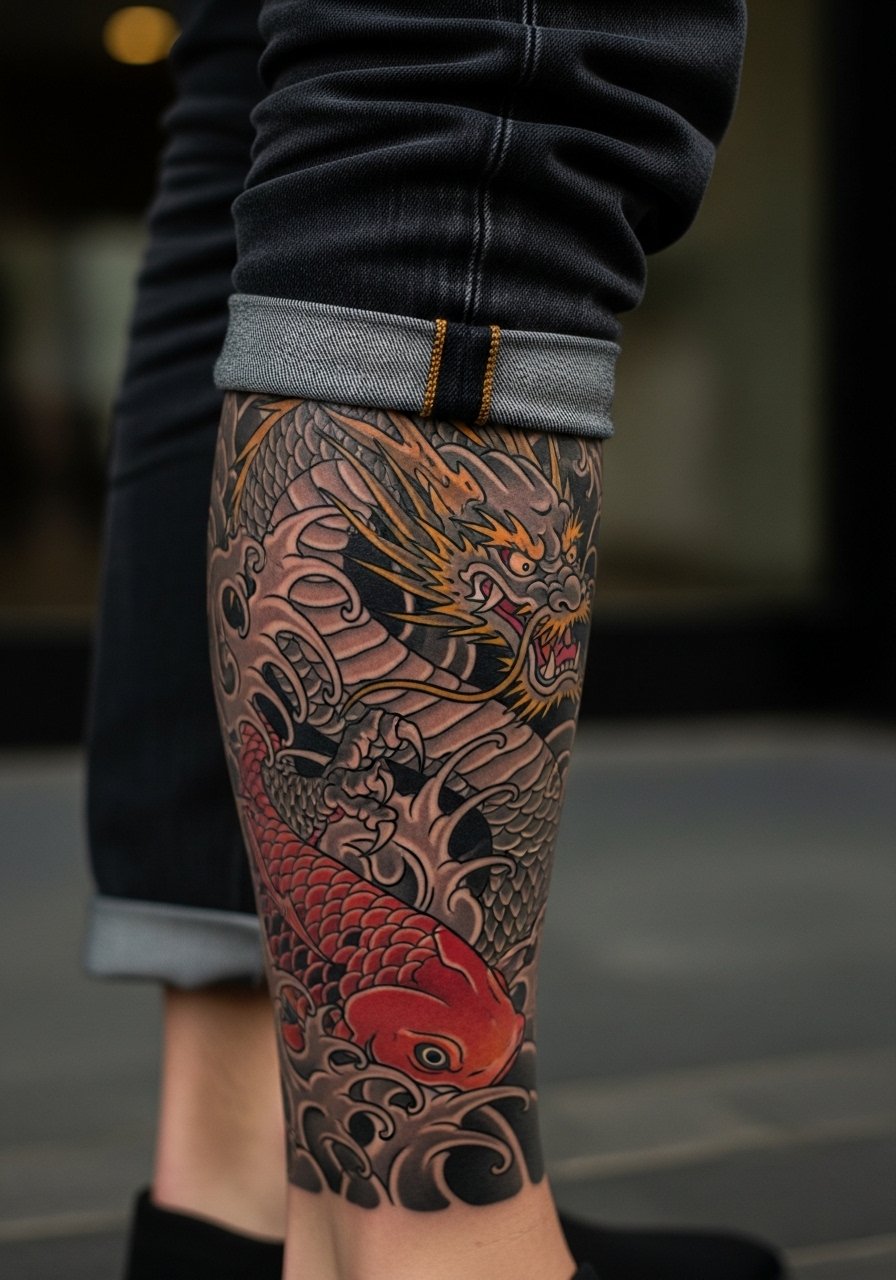
The calf is a forgiving canvas for long, flowing compositions. Ask for a directional flow that follows muscle lines so the dragon reads as motion when you walk. A mistake people make is forcing a circular composition that fights the leg shape. Sessions can sit anywhere from two to five hours depending on saturation. Calf work bruises mildly and benefits from wearing loose pants you can pull up easily on the way to the studio. For evenings out, pair the piece with rolled jeans or a midi skirt with a side slit that showcases the curve.
5. Tiny Wrist Dragon, Minimal Scale Suggestion

Tiny neo traditional dragons on the wrist need restraint. Ask your artist for simplified scale suggestion and slightly bolder outline so the motif keeps shape as the skin shifts. The wrist sees constant washing and friction, so expect more rapid fading there and a likely touch-up at year two. Pain is sharp but brief. The common mistake is asking for too much interior detail at a small scale. For the session, wear a short sleeve tee you can roll up. To show it off, stack delicate bracelets or choose a minimalist watch that frames the dragon without covering it.
6. Collarbone Dragon, Elegant Horizontal Sweep

Collarbone dragons can be striking but require careful line weight. Artists split on how light to keep the internal detail. One camp argues that light detail preserves a delicate look. The other camp says stronger primary lines maintain form as skin shifts. Name the camp you prefer in consultation. Pain is moderate to high because the area sits on bone. A common mistake is asking for dense shading right on the clavicle. For session comfort, wear a wide-neck top you can pull aside and layer if needed for warmth.
Studio Day Picks
Those upper-arm, forearm, and wrist pieces above each have different prep needs, and a few simple items smooth the studio visit and the first week of healing.
- Stencil transfer paper kit. Helps you and your artist preview placement on curved areas like the collarbone or calf before the first line goes down.
- Topical numbing cream. Useful for wrist or collarbone sessions when sensitivity spikes, applied per artist instructions so it does not affect linework.
- Thin protective film roll. Keeps friction-prone spots like the wrist and ankle cleaner during the first few days of heavy use.
- Fragrance-free gentle body wash. Gentle cleansing matters for fine-line areas that rely on defined linework to stay readable.
- Aquaphor healing ointment. A thin layer in the immediate window helps maintain moisture without suffocating fresh lines on smaller dragon pieces.
7. Half-Sleeve Dragon with Floral Panels
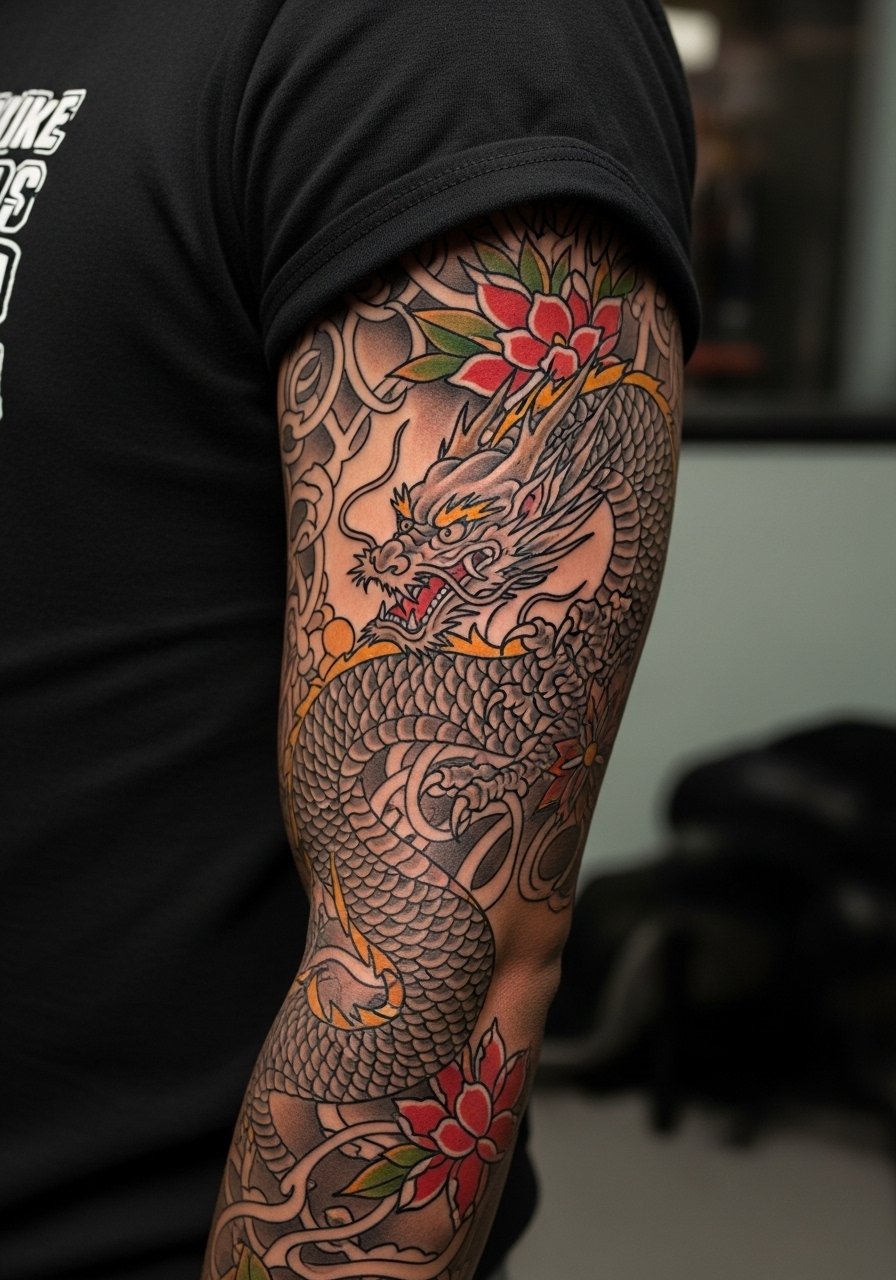
Half-sleeves let you combine bold dragon linework with floral fills for contrast. In consultation, specify which elements should be focal and which should recede. A mistake I see often is giving every element the same saturation. That flattens depth once healed. Expect multiple sessions to layer color and punch up saturation. Elbow area services add discomfort because the artist works over thin skin and movement. For showing off a half-sleeve, roll sleeves and choose a short sleeve fitted shirt that stops just above the elbow.
8. Dragon Spine Runner, Vertical Composition

Spine pieces are dramatic but sensitive. Tell your artist if you want the dragon to anchor to the nape or taper toward the tailbone; that changes session pacing. Pain is high on the spine, and longer sessions may require breaks. The common error is packing too much dot work near the vertebrae. That detail can become indistinct with natural skin movement. Consider a staged approach with an initial outline session followed by color. For public looks, open-back tops highlight the vertical sweep while keeping most skin covered.
9. Chest Dragon with Symmetrical Wings

Sternum and upper chest demand careful composition so the design sits with the body. There are two camps on heavy symmetry. One camp favors exact mirroring. The other suggests slight asymmetry to read more naturally with breathing motion. Name which you prefer. Pain can be high around the sternum and ribs. A common mistake is insisting on dense cross-hatching in the center. That tends to blur into a gray area after healing. For the session, wear a fitted sports bra you can slightly adjust so the artist has clean access.
10. Mini Dragon Ankle Tattoo, Low-Key and Graphic

Ankle tattoos are subtle and need bold silhouette to survive shoe rubbing and socks. Ask for a graphic outline and less internal micro-shading. The mistake is requesting tiny interior textures at this scale. The session is short, but aftercare must account for footwear. Pain is sharp but localized. For showing it off, wear sandals or roll jeans. A simple ankle-length sock alternative or strap sandal keeps the area visible without excess rubbing.
11. Dragon and Phoenix Back Piece, Full Canvas Work

Back pieces let you tell a narrative across a large canvas. Make a list of focal moments and prioritize the dragon's head or claws so the composition reads at a glance. A common error is crowding the center with too many mid-sized elements. Back work requires longer sessions and often multiple visits. Pain is moderate to low except near the shoulder blades. For appointments, wear a button-down you can pull aside or a tank top you can remove easily. For evenings, open-back dresses showcase the piece while staying elegant.
12. Finger Dragon Chain, Micro but Bold
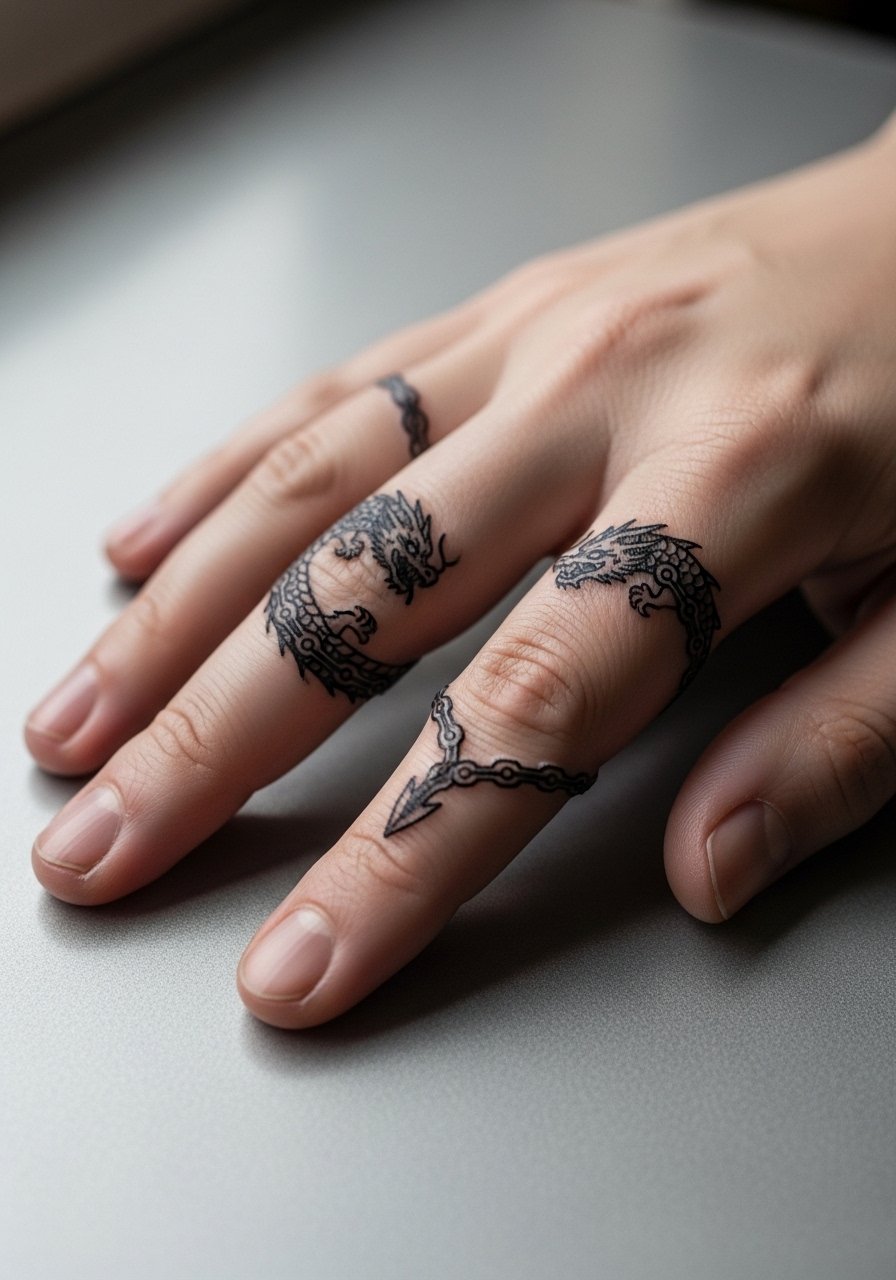
Finger tattoos face fast fading and higher risk of line blur. Ask for bold, simplified segments rather than continuous micro-detail. A common mistake is expecting long-term clarity without planned touch-ups. The session is quick but may sting because fingers have thin skin. For showing, pair with thin stacking rings that avoid covering the art. Consider a thin stacking ring set to frame the chain without rubbing directly over the lines.
13. Nape Dragon Curl, Delicate Tail Accent

Nape work reads best when scaled to the space. Keep internal detail minimal and let the tail or tip be the focal point. Pain is moderate. A mistake people make is requesting dense stipple shading right at the hairline. That can age unpredictably with hair growth and sun exposure. For visibility, choose collars that reveal the nape in backless or wide-neck tops. If you plan frequent touch-ups, remember the nape is an awkward spot to maintain without help.
14. Ribcage Dragon, Curved Flow with Negative Space

Ribs are notorious for pain and skin movement. Two camps disagree on fine line here. One warns that ribs stretch and blur small lines quickly. The other says careful spacing and correct depth mitigate that risk. Name which approach you want in consultation. Avoid tiny cross-hatching across curves. Sessions can be long and may require breath control strategies during lines near the sternum. For the appointment, wear a cropped top you can raise easily and consider scheduling shorter sessions if pain tolerance is a concern.
15. Inner Bicep Dragon, Hidden Detail
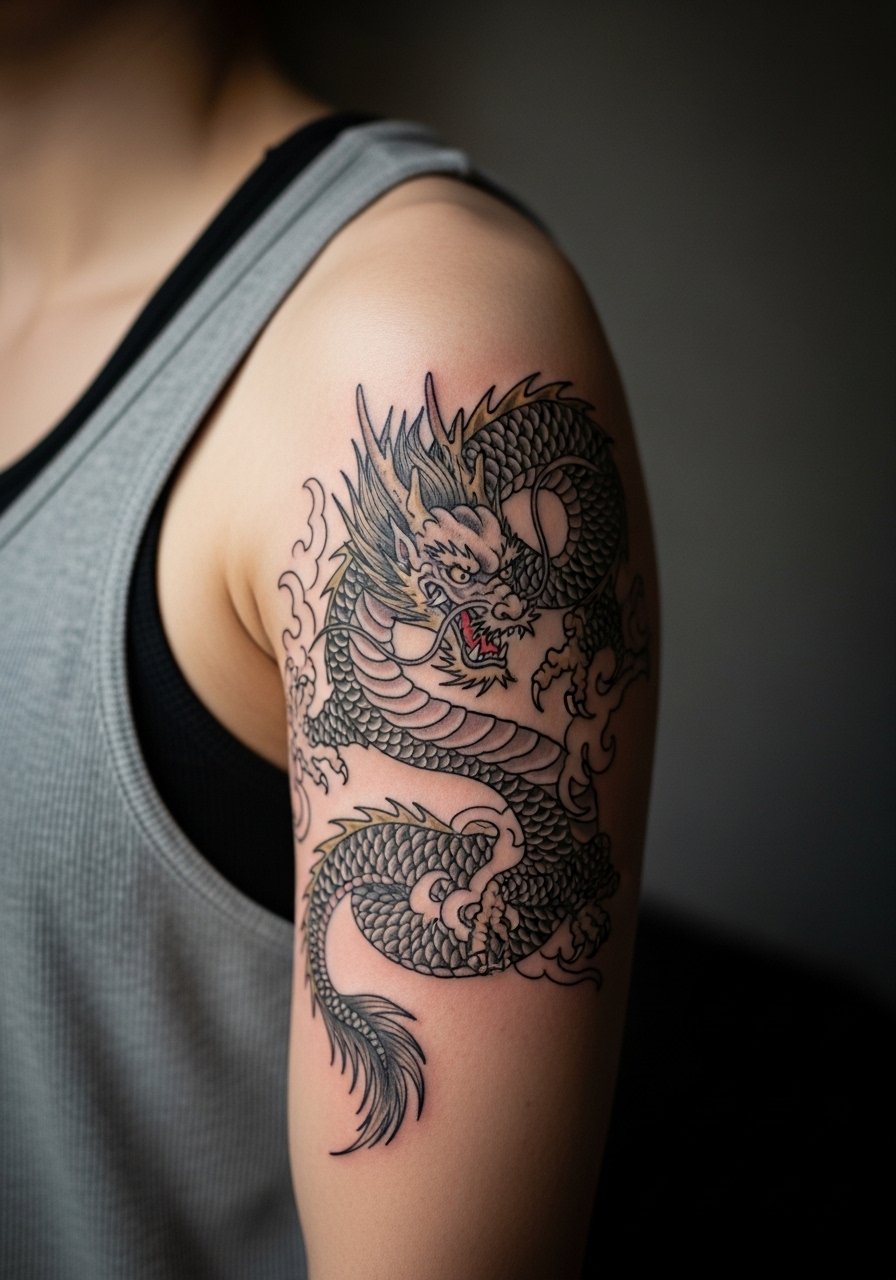
Inner bicep pieces hide well under clothing and show off during summer. The skin here is softer so needle depth matters to avoid blowout. A common mistake is packing high-contrast detail into a small inner arm patch. Expect moderate pain and a session that might need gentle stretching breaks. For the session, a tank top is ideal because it exposes the area without full arm movement. If you want the dragon to peek out in short sleeves, ask for a tapered tail so it lines up with your sleeve edge.
16. Lower Back Dragon, Horizontal Tail Sweep
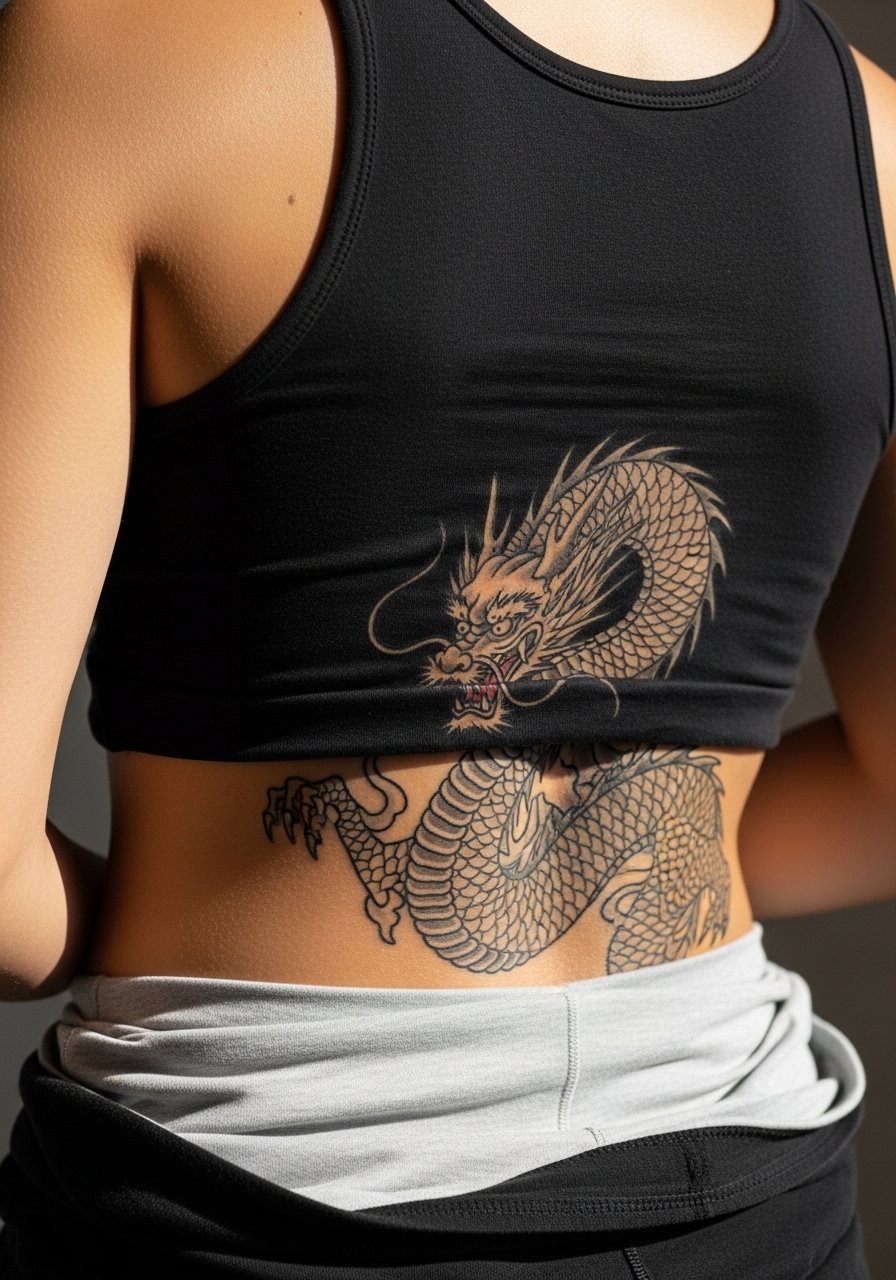
Lower back dragons benefit from a horizontal composition that follows the lumbar curve. Avoid high-density dot work near the spine. Pain is moderate and sessions are manageable. A frequent mistake is choosing an overly thin outline that loses clarity when sitting. For the session, wear high-waisted bottoms you can lower slightly without exposing more than the tattoo zone. For showing the piece, low-rise jeans or crop tops with a slight dip in the back frame the work well.
17. Hip Dragon Accent, Curlicue Tail

Hip tattoos can be sensual and private. Ask for a design that works with swimsuit lines so it reads whether you choose a high-cut brief or something more conservative. Heavy interior shading will not always translate well on this curved surface. Pain is moderate. For the session, wear high-cut shorts that you can shift as needed. Respect the imagery origins if you are borrowing from traditional motifs and consider slight variation to avoid direct cultural replication.
18. Stomach Dragon, Narrow Vertical Motif

Stomach placements move with weight changes and core tension. I recommend a narrow vertical motif rather than a wide panel. The mistake is asking for dense detail across a broad expanse that can warp with natural body changes. Pain varies and can be sharp near the ribs. For the session, wear a cropped tee you can lift easily. For showing off, high-waisted skirts or pants keep the balance between coverage and reveal.
19. Calf Dragon with Banner Script

Adding a banner or small script under a dragon is classic. If you include lettering, specify exact text and font style to avoid generator gibberish in reference images. Scripts on calves hold well because the area sees less friction than hands. A common mistake is squeezing long phrases into a tiny banner. Keep text short and legible. Sessions are moderate and bruise risk low. For shows, rolled jeans or a midi skirt with a side slit frames the coil without hiding the banner.
20. Inner Thigh Dragon, Bold Shadowing
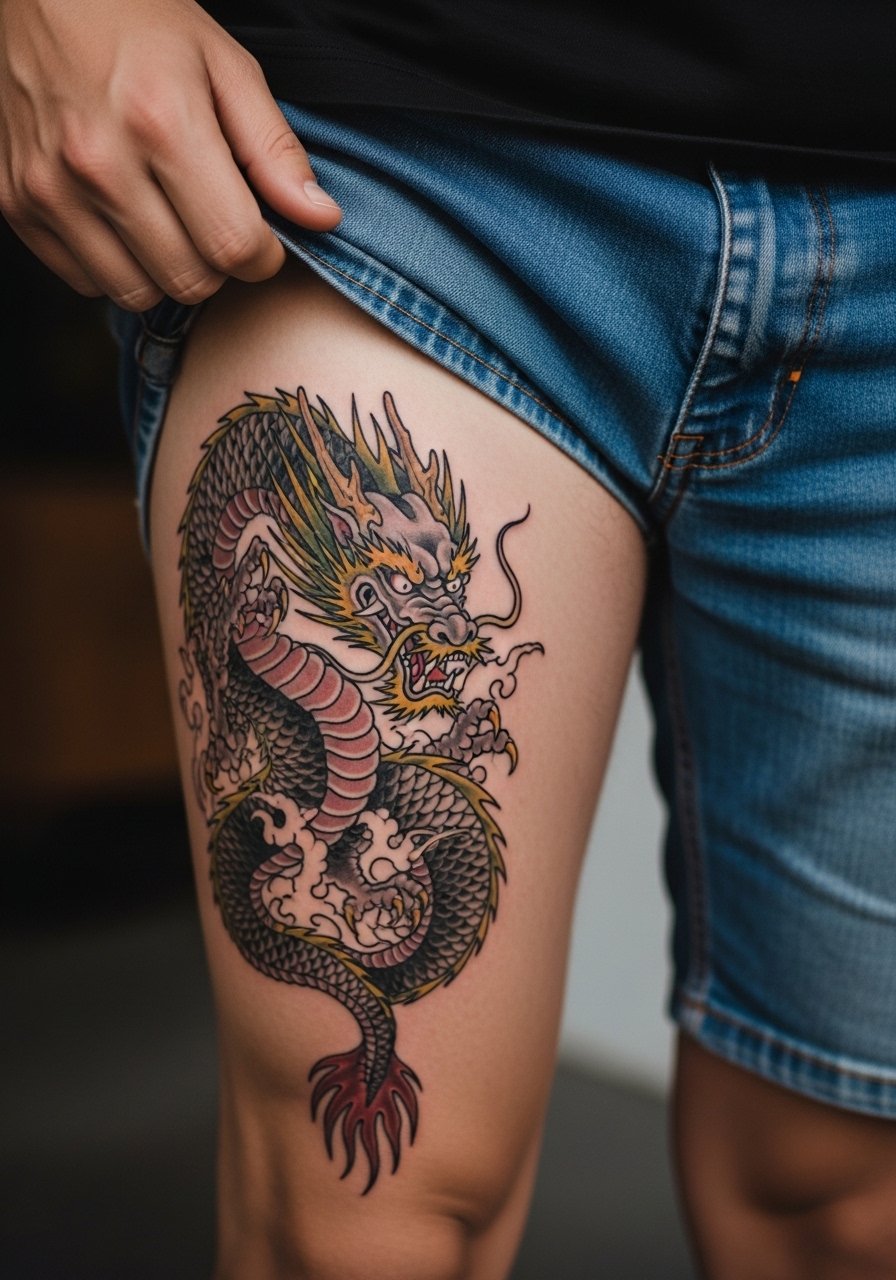
Inner thigh tattoos age well when artists use bold shapes rather than skin-dependent micro shading. The area has thicker skin but is private, so think about visibility and career implications. The session can feel tender because motion is limited. A mistake is requesting lots of tiny dots close to each other. For the session, wear shorts you can adjust without constricting the area. If cultural motifs are involved, name the origin and ask your artist for respectful adaptation.
21. Shoulder Cap Dragon, Scale Fade Across Muscle
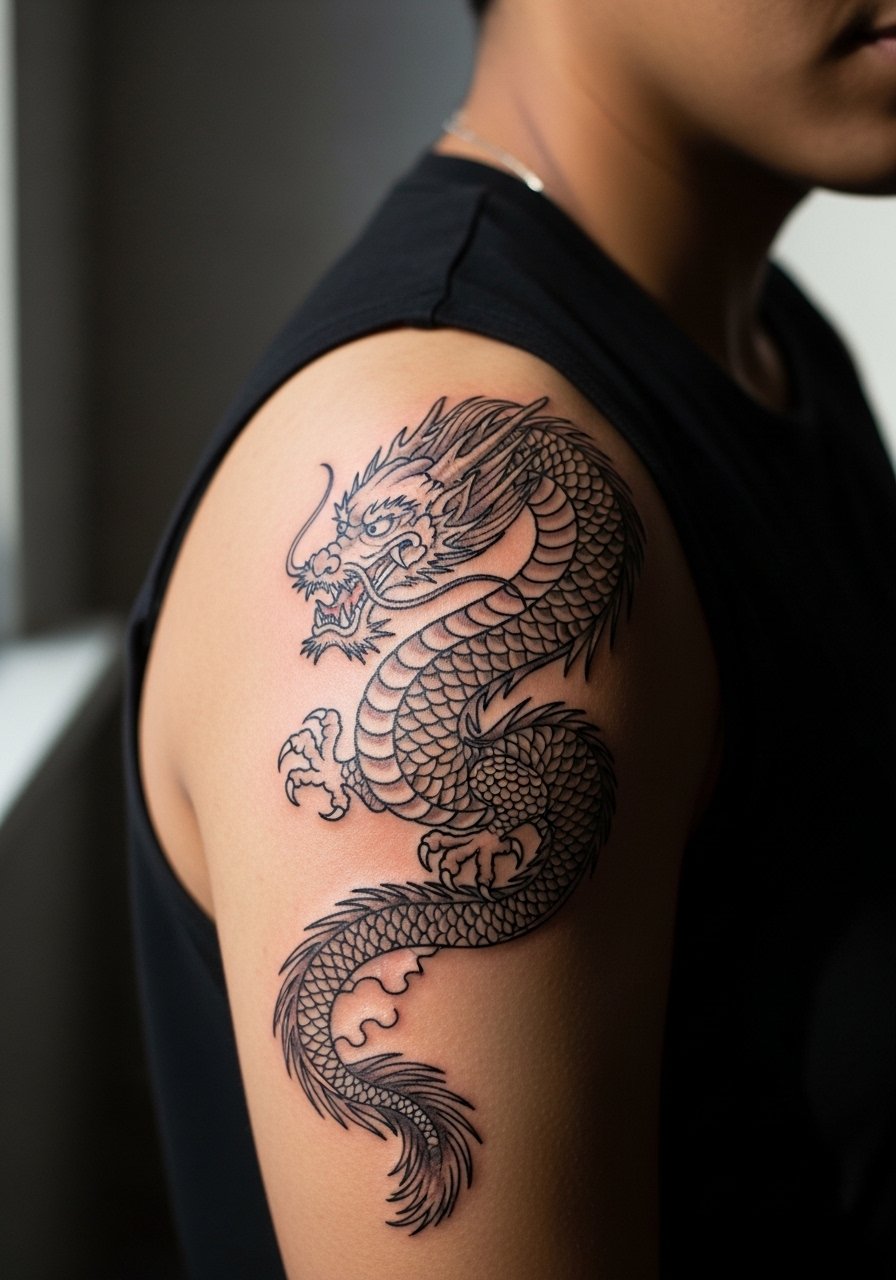
Shoulder cap pieces are durable because movement there is moderate and lines hold. For longevity, request a scale fade that moves from bold near the head to lighter as it wraps around the arm. A common error is too much tight stipple at the wrap point. Sessions are comfortable and often fit into one extended appointment for medium sizes. For the session, a sleeveless top gives the artist clear access. For wearing, tank tops or strap dresses show the cap without competing prints.
Frequently Asked Questions
Q: Will a neo traditional dragon with lots of small scales blur faster than one with bolder shapes?
A: Yes, tiny, densely packed scales are more likely to lose separation over time. If longevity is a priority, ask for stronger primary outlines and negative space between scale clusters. Expect touch-ups earlier on wrists and fingers than on arms or back.
Q: How does placement affect the choice between saturated color and painterly washes for dragons?
A: Saturated color holds better on areas with less friction like the upper arm and back. Painterly washes look beautiful but can fade unevenly on hands, ribs, or ankles. Match the fill style to the canvas and plan for a color boost after a couple of years if you choose softer washes.
Q: Are there special consultation notes I should bring for a ribcage dragon given the controversy about fine line there?
A: Bring clear references and ask the artist which camp they fall into on rib work, fine line or bolder spacing. Also discuss session pacing and breathing control. If you prefer conservative spacing, say so explicitly and request an outline-first approach.
Q: What should I wear to a collarbone or sternum session to make access easy and keep modesty?
A: Wear a wide-neck top or a fitted sports bra you are comfortable adjusting. That gives the artist access while keeping other areas covered. A wide-neck top is a practical choice for these appointments.
Q: How often should I realistically expect touch-ups for tiny wrist or finger dragons?
A: Plan for a likely refresh around year two for fingers and wrists because those zones see heavy use. Bigger, bolder pieces on arms or back often stretch the interval to three to five years depending on sun exposure.
Q: If I want to avoid cultural appropriation with motifs that inspired my dragon composition, how should I handle it?
A: Mention the origin of the motif in your consultation and ask for respectful adaptation rather than direct replication. Many artists will suggest subtle changes that honor the source while avoiding exact copies.