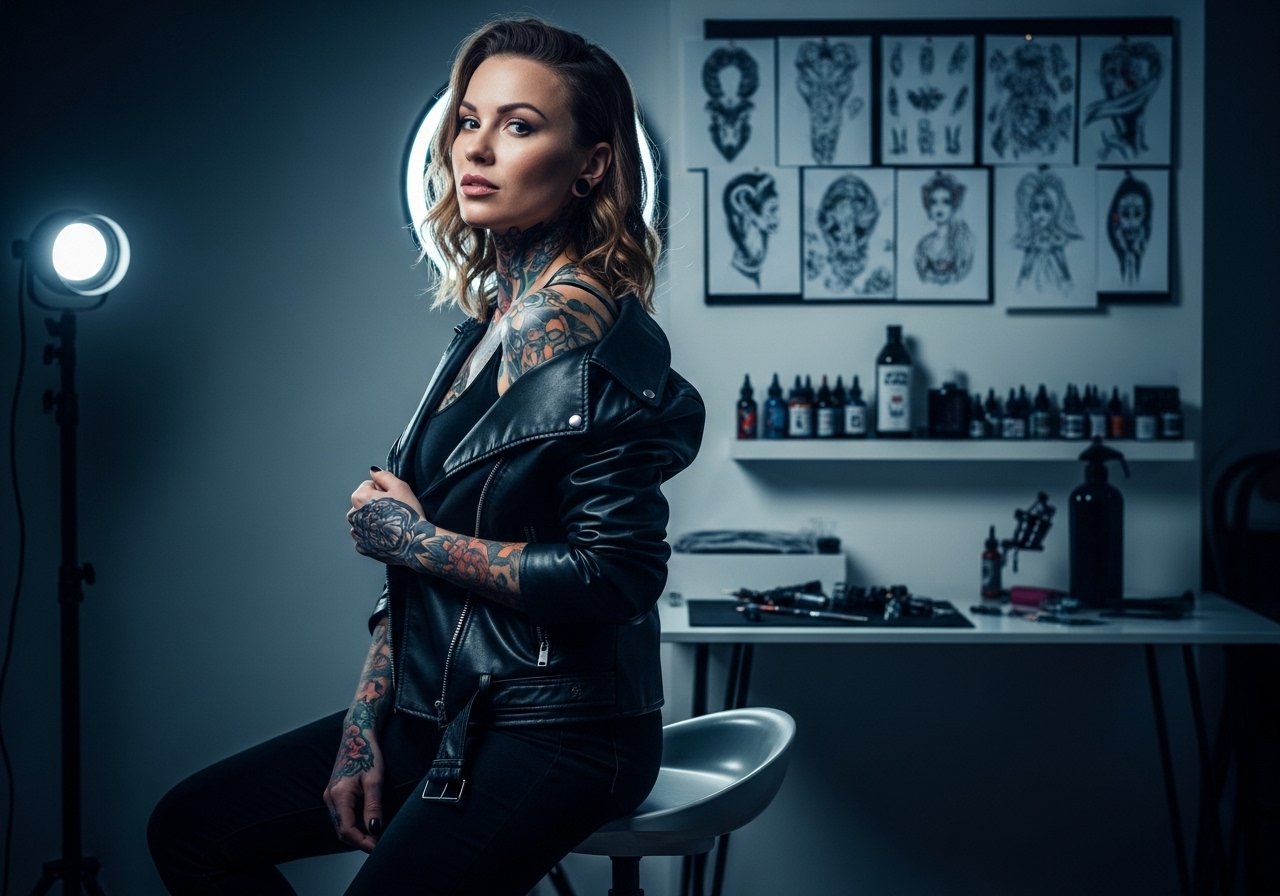
Fine line moons rule saved boards and Reels, but they do not all age the same. Thin crescents on the inner wrist look fragile after months of hand washing, while bold blackwork holds shape years longer. Bone placements bite harder on pain, and small shops charge a wide price range for tiny, detailed work. Read these 17 moon ideas with practical notes on what holds up, what hurts, and what to ask in consultation.
1. Crescent Moon Outline on Inner Wrist
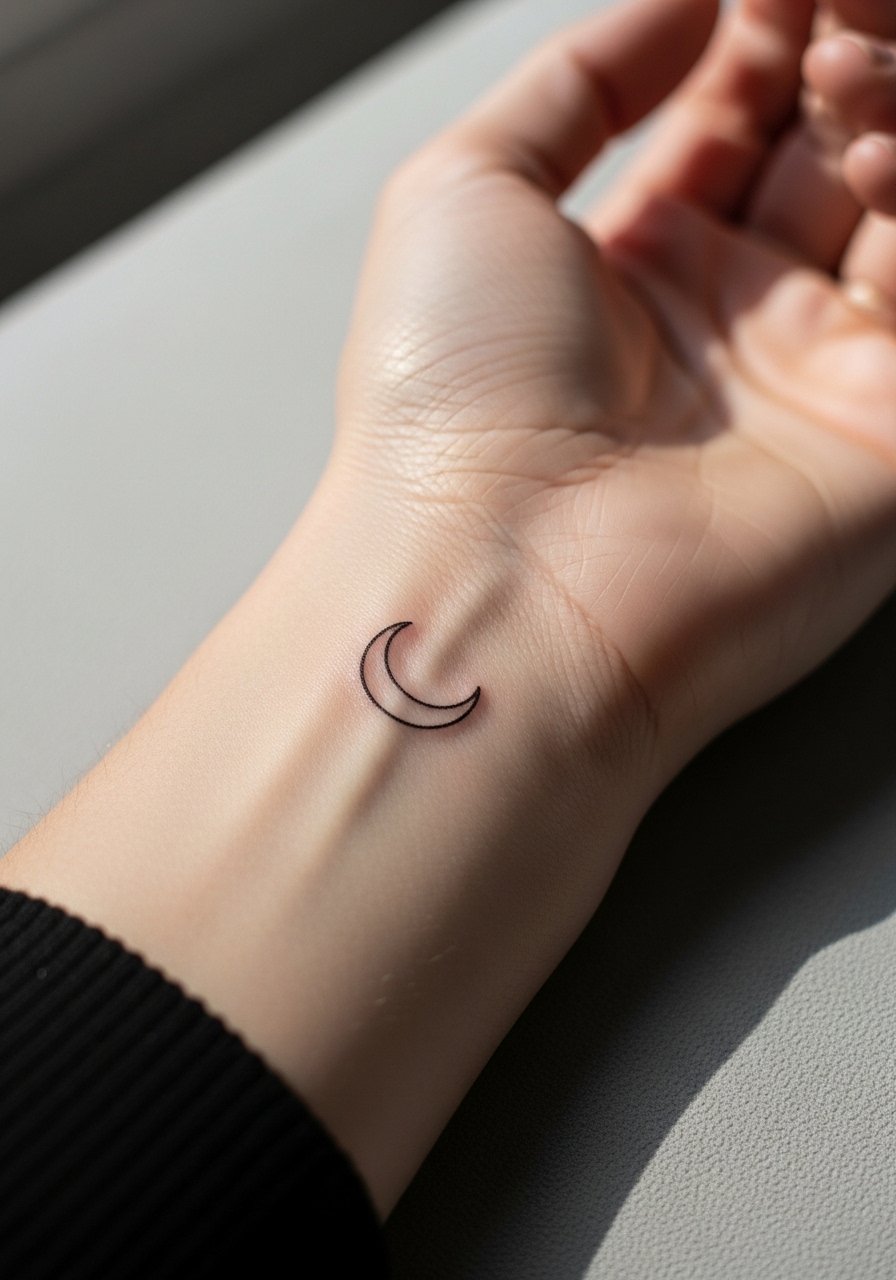
A narrow crescent on the inner wrist reads minimal without screaming for attention. Consultation tip, ask your artist for slightly heavier linework than the flattest single-needle trace if you want it to last through frequent washing. Controversy is real here. One camp says single-needle fine line is elegant even as it softens. The other camp argues that on a high-motion spot like the inner wrist, thin lines lose clarity and need touch-ups sooner. If you prefer subtle, plan a touch-up at 9–18 months. Session feels quick, but the inner wrist is more sensitive than the soft forearm. For showing it off, roll a cuff and stack a thin silver bangle set opposite the tattoo.
2. Full Moon with Stars on Outer Wrist
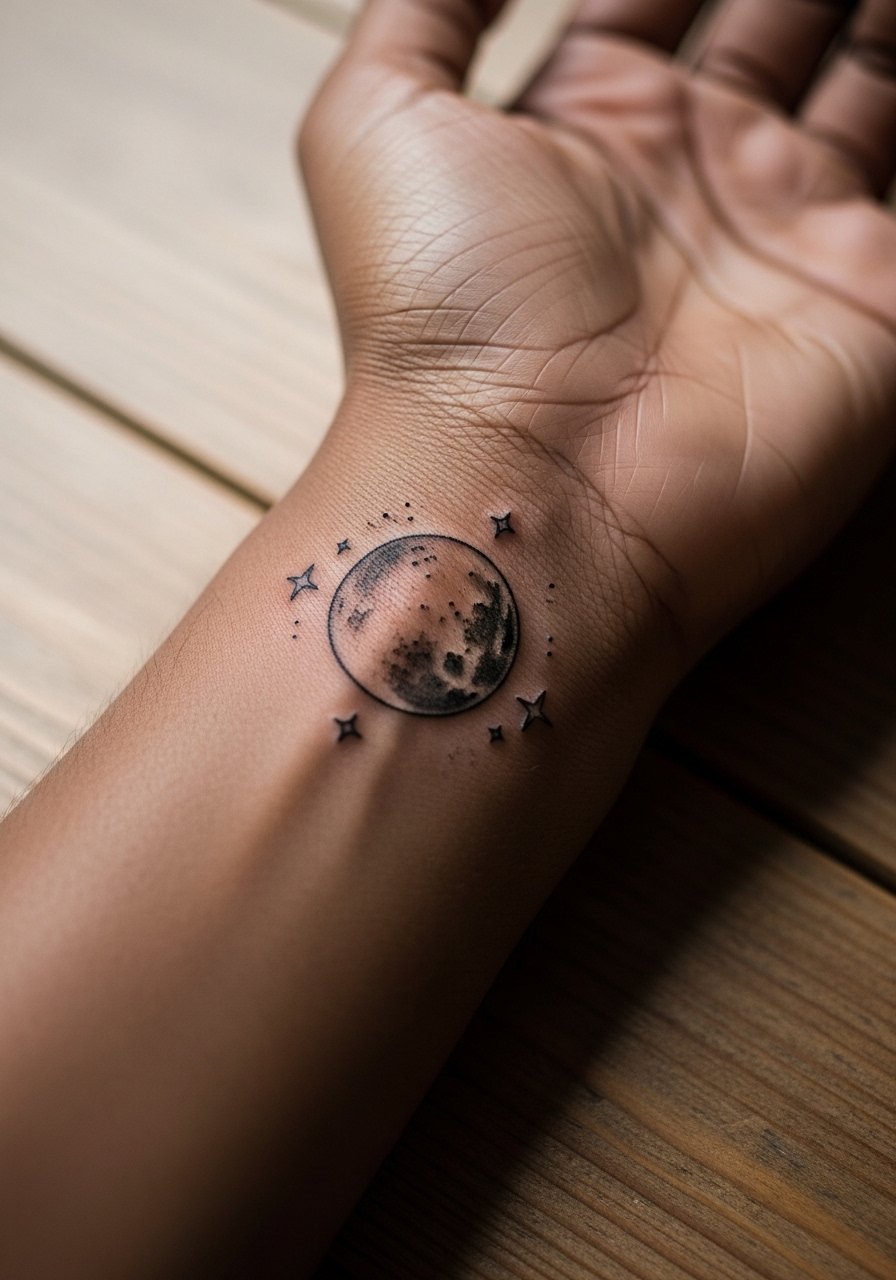
A compact full moon with tiny stars photographs well and frames the top of the wrist. Tell your artist you want soft gray shading rather than dense black fill so the stars remain visible as the piece heals. This placement tolerates slightly bolder linework than the inner wrist because it gets less constant friction. Expect the session to run around 30 to 60 minutes with light shading. Common mistake is asking for micro shading that turns into patchy gray after healing. Plan to avoid heavy sunscreen on the spot the first two weeks and schedule a quick touch-up if the stars wash out. For appointment day, choose a black short sleeve tee so the artist can work without you tugging at sleeves.
3. Cross and Crescent Stack on Wrist
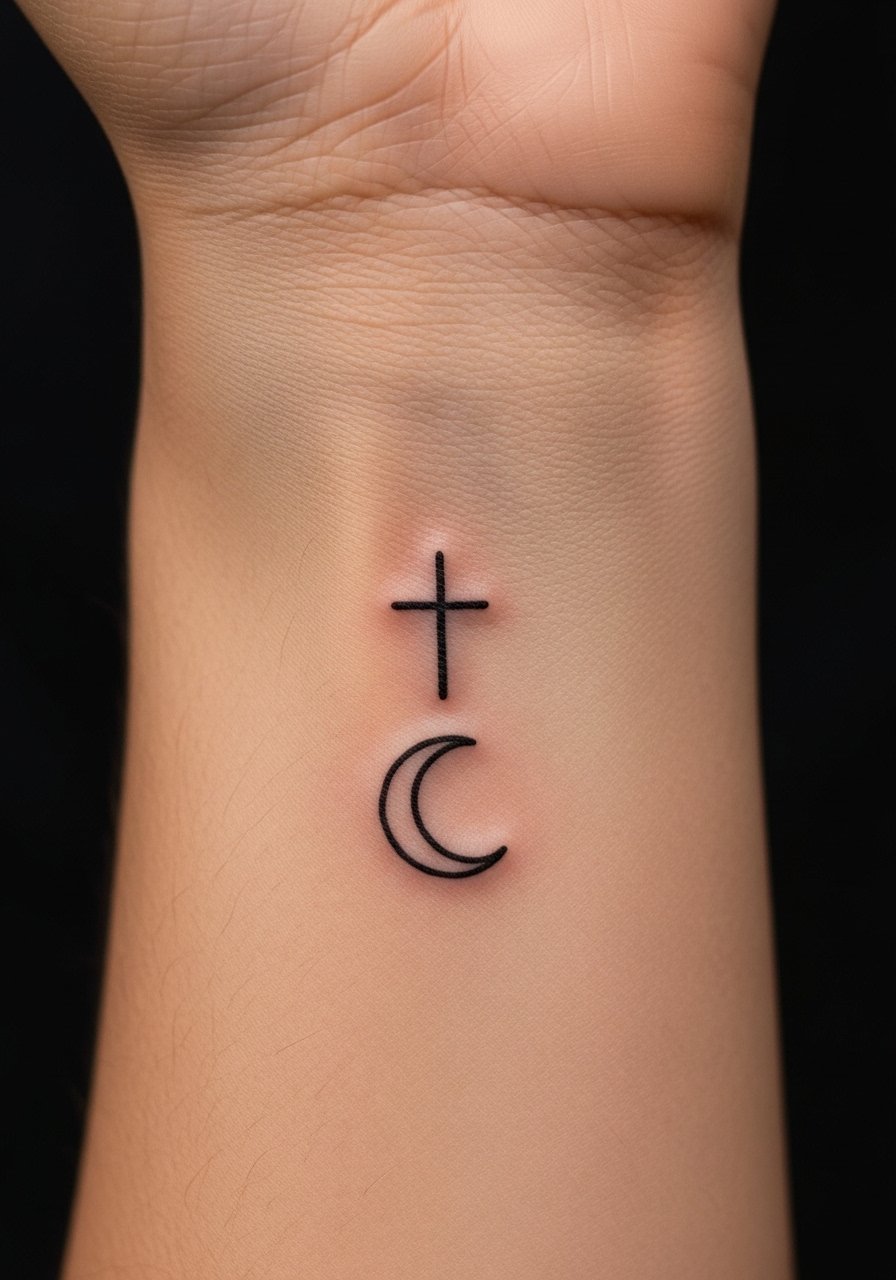
Compact stacks pair faith with lunar symbolism in a tidy vertical block. When you ask for this in consultation, specify clear spacing between the cross and crescent so lines do not merge over time. The biggest mistake is crowding tiny symbols into a single square inch. Pain is moderate since the side of the wrist has a thin fat layer but more movement. If career concerns exist, keep the stack small and vertical so it can be covered by a watch or sleeve. For showing it off after healing, a wide leather cuff bracelet can frame the design without competing.
4. Phases of the Moon Arc Across Wrist

A phase band reads like a tiny watch replacement when spaced correctly, and collectors love the rhythm of small crescents. Tell your artist you want generous negative space between phases to prevent merging as the ink settles. There is a debate about line weight here. One camp insists bold outlines make phases readable for years. The other camp says careful single-needle phase dots keep the band airy and elegant if done slightly larger. For longevity, aim for a medium line weight and expect a touch-up around year two on busy wrists. Session time depends on how many phases you choose, but plan for 45 to 90 minutes if you want the band to wrap fully. When you want to show this off, roll a long-sleeve mesh top to mid-forearm and wear thin stackable rings to extend the motif.
5. Minimalist Half Moon on Wrist Bone

The wrist bone gives a crescent a sculptural edge but also increases pain. Ask for a slightly bolder single-needle contour to counter the bone's tendency to thin lines during healing. This is another spot where the two camps argue. One side says fine line here is graceful and ages like a soft contour. The other side warns that the bone causes micro-trauma and blurring within a few years. If you want it to keep its shape, plan for a small annual touch-up and avoid choosing a size smaller than an inch. For session wear, keep bracelets off and bring a leather wrap watch to try on after healing so you can judge spacing.
6. Ornamental Moon with Dot Accents on Inner Wrist
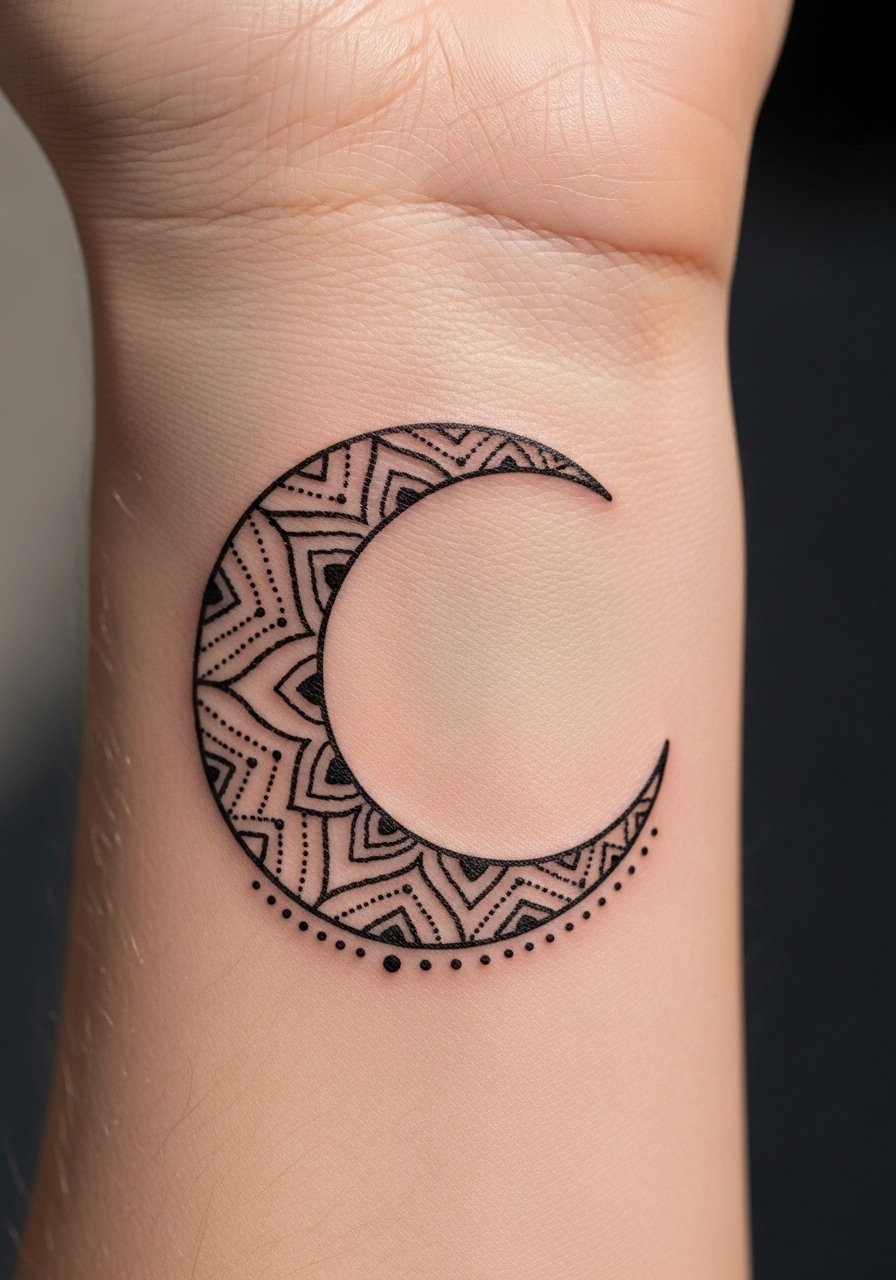
Ornamental moons use dot work to suggest pattern without heavy fill, and they sit naturally on the inner wrist. Tell your artist you want stipple shading instead of solid gray to keep the moon airy. Common mistake is cramming too many geometric details into a small area, which becomes muddy after six months. Dot work requires precise depth so the stipple keeps texture instead of disappearing. Expect moderate pain and a 45-minute session for a two-inch composition. For after-session photos, an ivory cotton tank keeps the wrist visible without tugging at fabric.
Pre-Session Essentials
The wrist pieces above heal faster but face more surface abrasion than larger pieces, so a few small items change the session and first week.
- Indie thin non-clogging balm. A lighter balm is less likely to trap sweat in tight needle channels on the wrist while still locking in moisture for fine line work.
- UK dotwork aftercare spray. Quick drying sprays suit stipple and single-needle pieces that need minimal smear during the first few days.
- Australian breathable wrist wrap. A conforming, breathable film can protect a freshly inked wrist through hand washing and light activity without trapping heat.
- Fragrance free gentle body wash. Use a mild wash in the shower to clean the area without irritating delicate lines.
- Aquaphor healing ointment. A thin layer on day one helps prevent crusting while fine lines begin to set, especially on motion-heavy spots.
7. Blackwork Crescent with Ocean Waves on Wrist Side

If you want contrast that lasts, blackwork crescents are the heavy hitters. Because the wrist is small, the contrast reads from a distance and ages into a confident silhouette. Tell your artist you want solid saturation with clean negative space for the wave details. The session will feel brisk but intense because of the density of fill and the wrist's contour. Blowout risk is real when artists pack too many passes into thin skin, so ask about single-pass saturation and touch-up policy. After healing, this style needs less frequent refresh than single-needle moons. Show-off pairing includes chunky leather cuffs or a metal wrist cuff after the healing window.
8. Fine Line Moon Face at Center Wrist

A moon with a tiny face works if you accept very careful line weight choices. Ask for slightly larger facial features than the reference so the expression survives the first year. The common mistake is copying a micro-face meant for paper rather than skin. On the central wrist, this one is visible and flirts with the bone pain point, so expect a quick, focused session under an hour. For photographers and daily wearers, choose a watchless day and plan to show it with thin bracelets across the opposite wrist.
9. Neo-Traditional Moon and Dagger on Outer Wrist
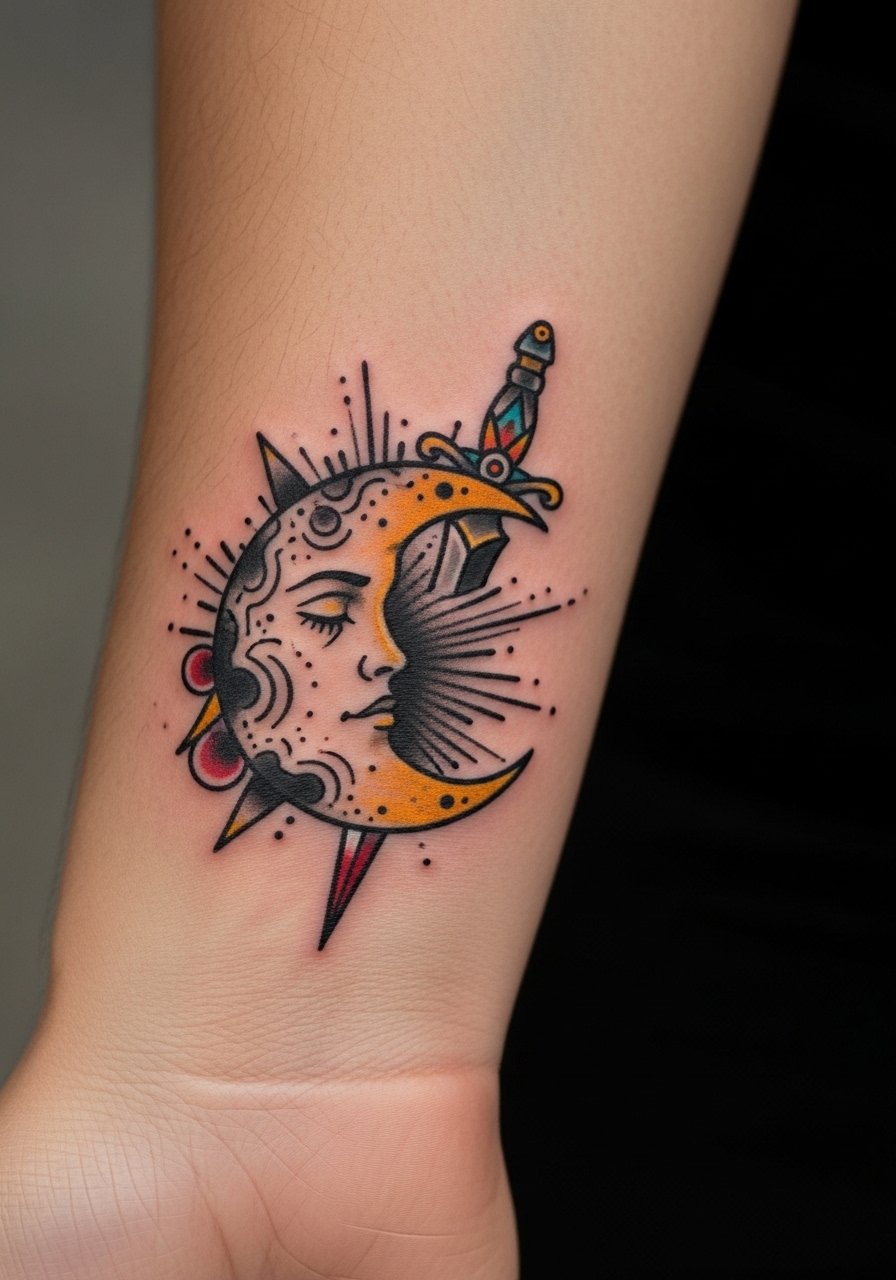
A moon paired with a dagger takes the celestial theme into neo-traditional territory. Request bold outlines and saturated color spots so the dagger retains contrast as the ink ages. This design typically lasts better than ultra-fine moons because thick outlines maintain shape. Session time is 60 to 90 minutes depending on color. Beware of crowding the dagger hilt with tiny ornaments. For after-healing styling, contrast the piece with a black short sleeve tee or a chunky ring on the hand to balance the wrist focal point.
10. Watercolor Full Moon Splash on Wrist Top

Watercolor wash gives a painterly feel but it can bleed on active spots like wrists. If you choose this, ask your artist for anchored black or gray outlines to maintain form as pigments soften. This is the design most likely to require touch-up because washes spread more readily than crisp linework. Session time varies widely with color layering, plan for one long appointment or two shorter sessions. If you like the color effect but worry about longevity, discuss converting soft washes into faint stipple shading over time.
11. Ignorant Style Chunky Moon Wrap

The ignorant style favors confident, unapologetic line weight and playful proportions. On the wrist, this becomes a graphic band that resists the usual washing fade of fine lines. When requesting this, be explicit about line thickness so the artist avoids tentative strokes. Because the aesthetic is bold, session time is short and touch-ups are rare. For an outfit pairing that complements the chunky look, try a metal wrist cuff after the healing period. Ignore tiny detail suggestions; the style works best large and simple.
12. Dotwork Lunar Phases Band Around Wrist
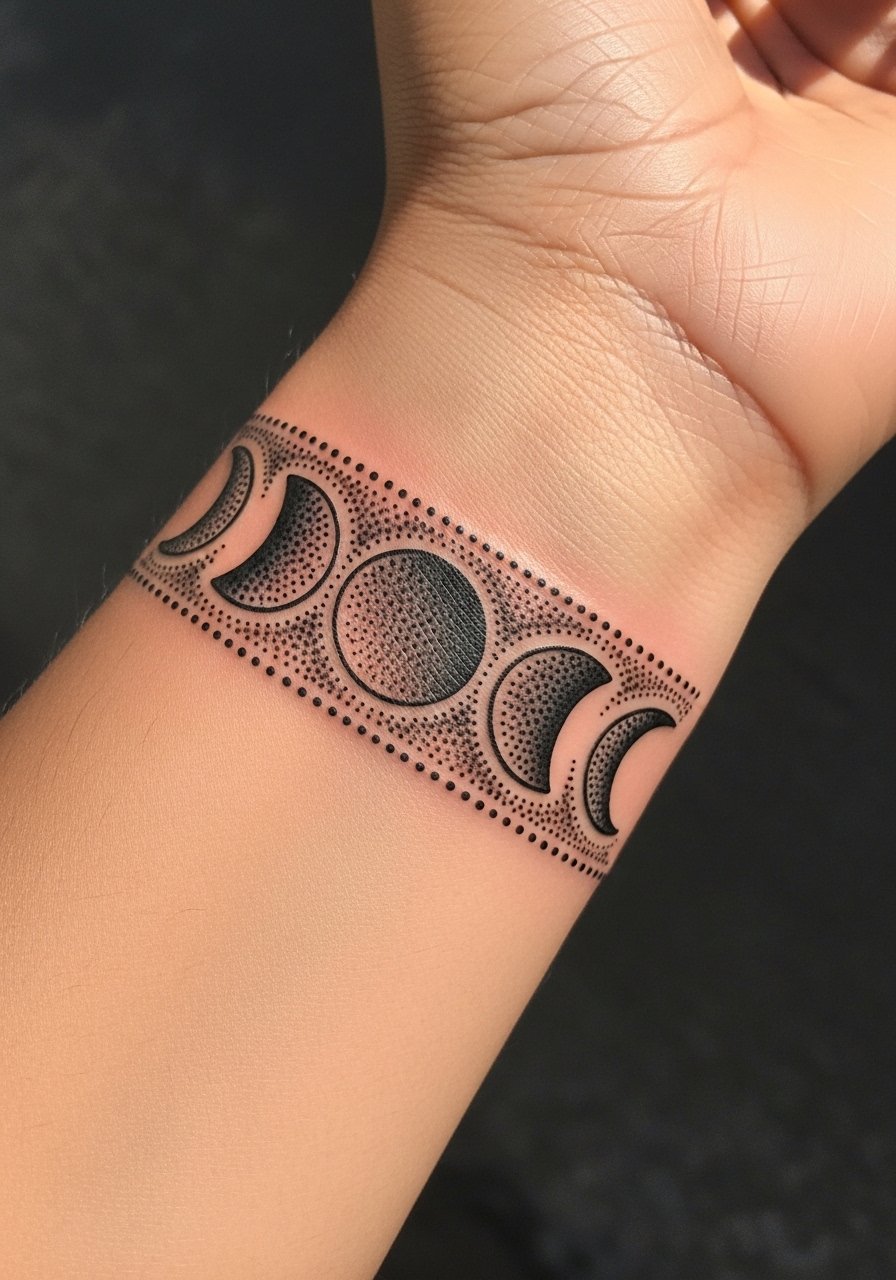
Dotwork bands make excellent watch substitutes and age into a textured band rather than a blurred line. Ask for tighter dot spacing in darker phases and looser spacing in highlights so the phases keep their rhythm. A common mistake is making the band too tight to the wrist bones, which causes early softening. Dotwork takes patience in the chair, expect 60 to 120 minutes for a full wrap. There is an aftercare split in the community about protective film versus dry healing. One group prefers protective film for dotwork to prevent scabbing, the other favors dry healing to avoid trapped moisture. Ask your artist which method they use for dotwork before you book.
13. Micro-Realism Crescent with Tiny Constellation
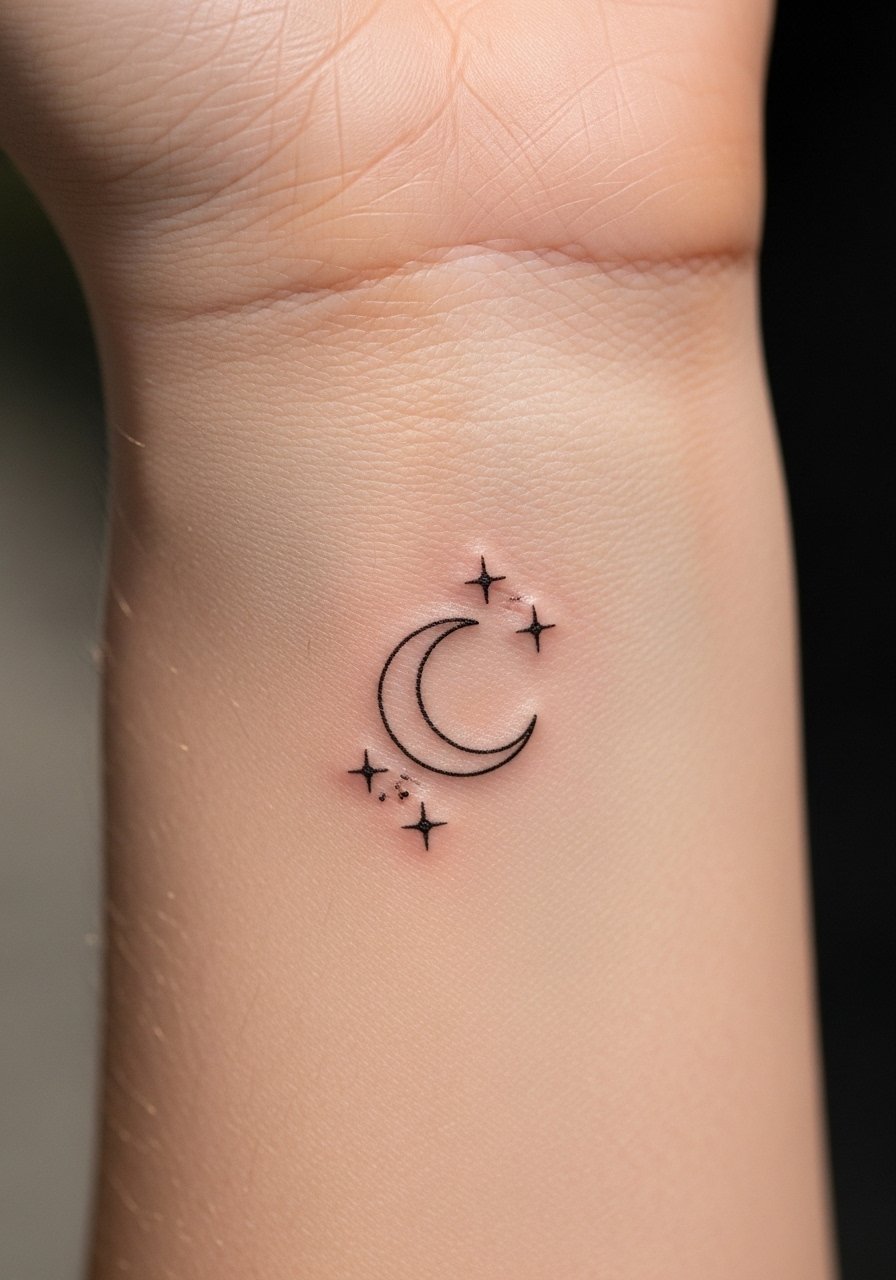
Micro-realism needs a steady hand and deliberate sizing choices. Tell your artist you want the constellation spaced so each star reads individually after healing. The error people make is insisting on paper-scale detail that cannot survive wrist motion. Expect upward of an hour for placement and execution. If your skin tone is darker, ask for subtle dot shading and slightly larger negative space for contrast. For session wear, keep sleeves off and bring a neutral tank so the artist has clean access.
14. White Ink Highlighted Dark Moon on Wrist
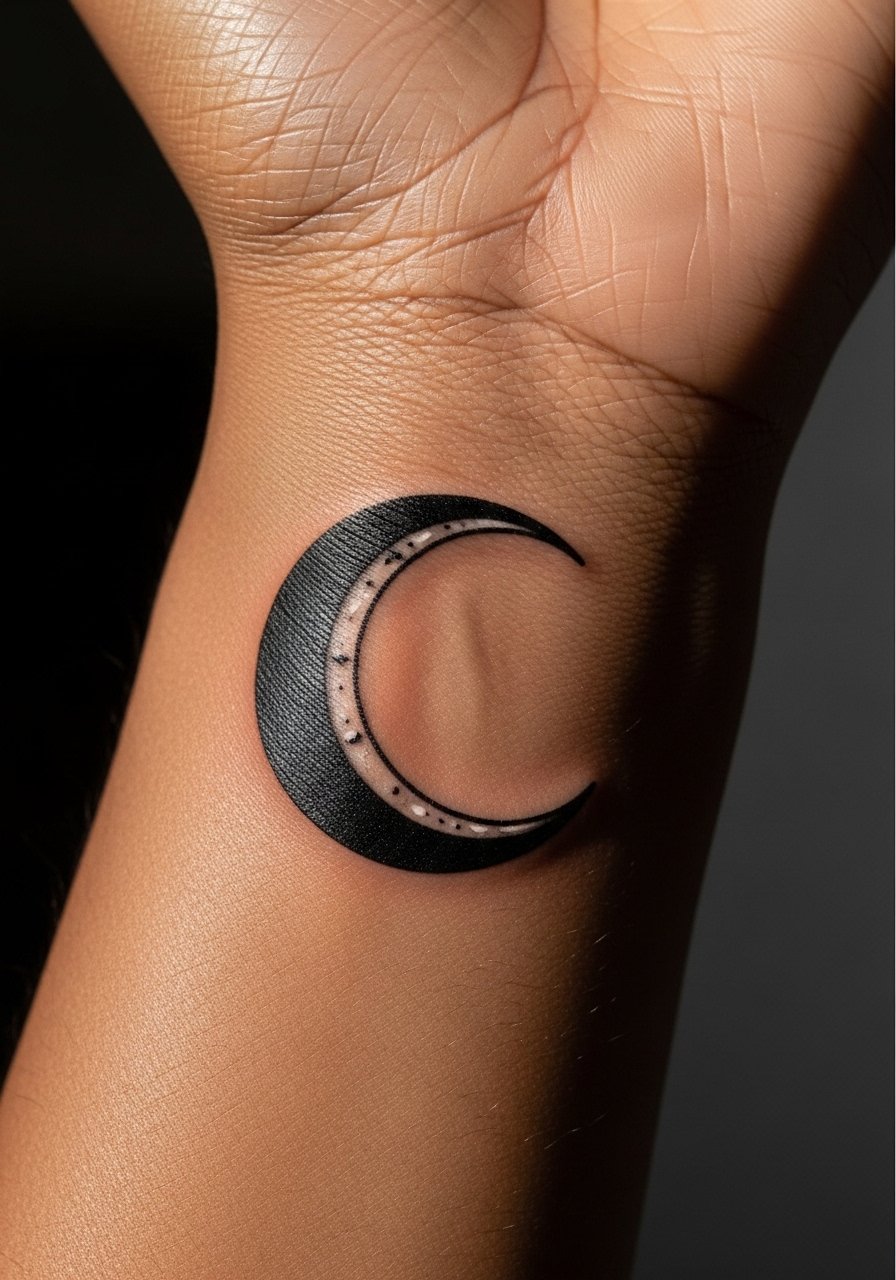
White ink pops on darker tones when used sparingly. Use it only as tiny highlights rather than blocks, and ask the artist about how white settles on your skin. This approach addresses the gap many dark-skin clients report: fine line can photograph soft, but white highlights can restore definition in photos. Pain and session time are typical of a small solid piece. A real mistake is asking for large areas of white on wrists that rub against clothing during healing. For showing it off, a simple thin silver bangle set keeps the attention on the contrast without crowding.
15. Stacked Crescent Chain Along Inner Wrist

A stacked chain of tiny crescents reads like jewelry when spaced and scaled properly. When consulting, request consistent negative space and a slightly larger repeat pattern than you think you need. Mistakes happen when repeats are too tiny and merge into a blur. Pain is lower on the fleshy inner wrist compared with the bone. For session comfort, wear a loose tank or rolled sleeve. After healing, dress the look with a rolled cuff blouse women and an opposite-arm bracelet for balanced visual weight.
16. Tiny Moon as Watch Marker on Wrist
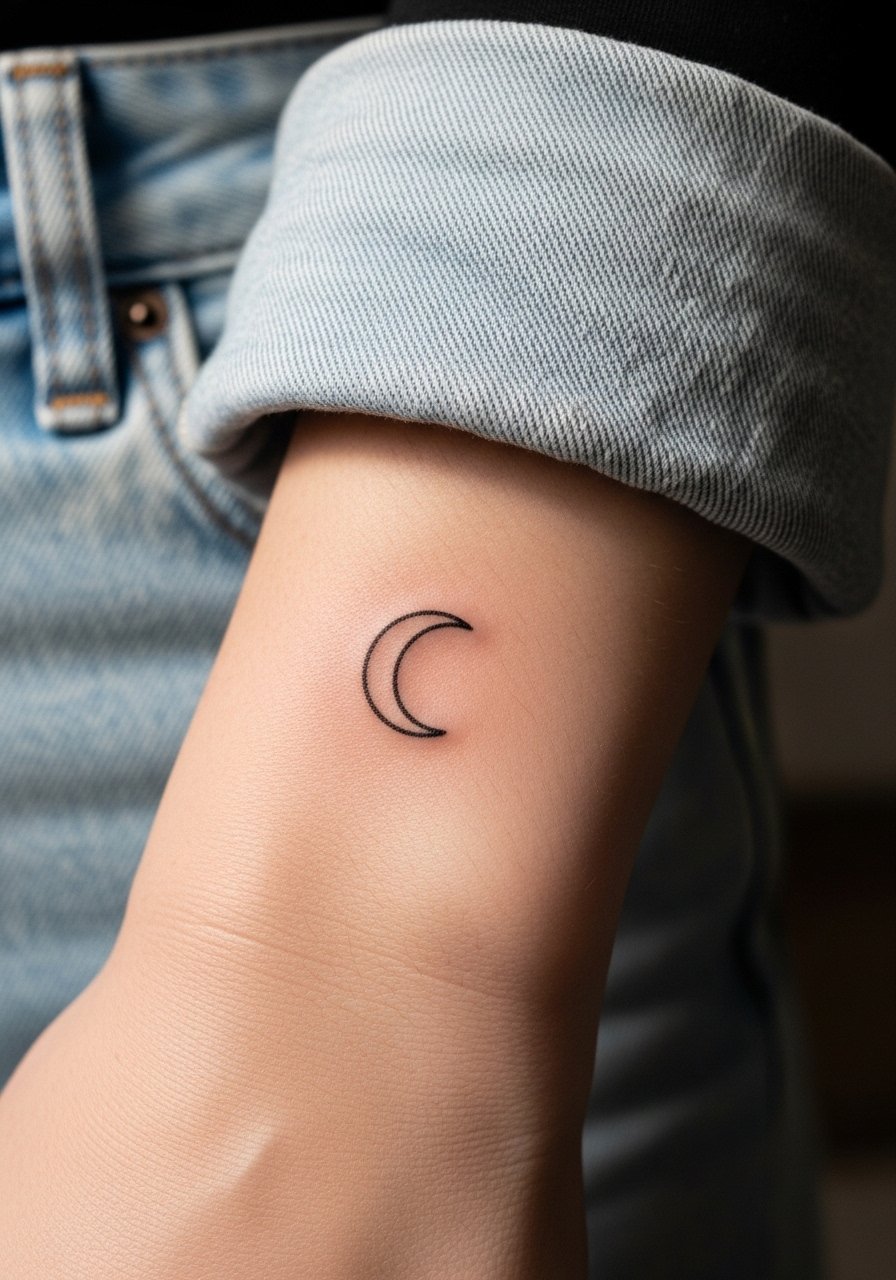
Using a moon as a watch marker is an under-covered idea that reads as intentional and tidy. Ask your artist to align it with how your watch sits so the moon remains visible when you wear a timepiece. The common oversight is misplacement relative to common accessory locations. Session time is short and pain moderate. For showing versus wearing a watch, try a minimalist bracelet on the opposite wrist to maintain symmetry when your timepiece is off.
17. Seasonal Harvest Full Moon on Inner Wrist
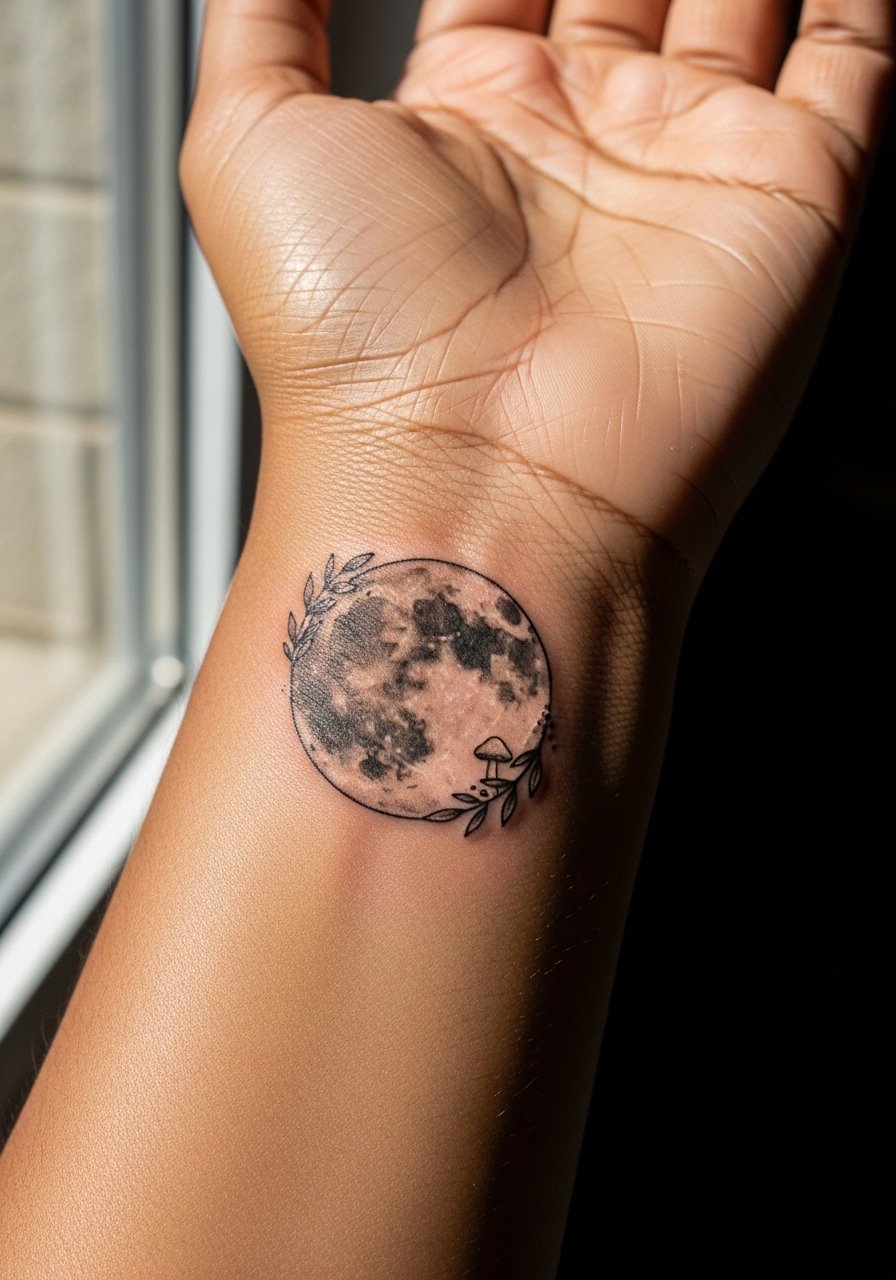
A seasonal motif ties personal timing to the moon without being literal. Ask the artist to keep leaf motifs small and spaced so they age like tiny accents not muddled shapes. This design is good for people who want symbolism tied to a time of year without large commitment. Pain is modest and the session can be done in under an hour for a compact arrangement. For session-day comfort, wear a ivory cotton tank that allows easy access and minimal tugging.
Frequently Asked Questions
Q: Will a fine line crescent on the inner wrist fade faster because of hand washing?
A: Yes, frequent hand washing and constant friction shorten the crispness of single-needle lines. Picking slightly bolder line weight, spacing details, and scheduling a touch-up at around 9–18 months helps retain clarity. Protective measures in the first two weeks, like gentle drying and avoiding abrasive soaps, also matter.
Q: How much should I budget for a small moon tattoo on the wrist?
A: Prices vary by studio and city, but expect a range from about 80-600 depending on complexity, artist, and fill. Simple single-needle crescents sit at the low end, and saturated blackwork or color pieces run higher. Ask about minimum session fees and touch-up policies during booking.
Q: I have darker skin. Can a fine line moon still read clearly in photos?
A: It can, but fine line sometimes appears softer in photos on darker tones. Ask for slightly larger negative space and consider tiny white highlights or subtle stipple shading for contrast. Review healed examples from the artist on similar skin tones before booking.
Q: Do phase bands really work as watch alternatives?
A: They can. A well-spaced phase band mimics a strap and reads like a minimalist timepiece for casual wear. Make sure the band aligns with the wrist circumference and that the artist spaces phases to avoid merging with everyday movement.
Q: Which healing method is better for wrist dotwork, protective film or dry healing?
A: Artists and clients split into two camps. One group prefers protective film for wrists to prevent scabbing and reduce friction. The other group favors dry healing to avoid trapped moisture that can irritate the spot. The right choice depends on your daily activity and your artist's proven method for dotwork. Ask how they handle wrist pieces and follow their recommended aftercare.
Q: How bad is the pain on the wrist bone compared with the outer wrist?
A: The wrist bone area usually rates higher on pain scales than the fleshy outer wrist. Expect a sharper sensation over bone for quick bursts during the session. Numbing options exist if you feel anxious, but talk through them with your artist first.
Q: What should I wear to a wrist tattoo session so the artist has clear access?
A: A loose tank or a short sleeve that can be rolled comfortably gives the artist clean access to the wrist. For inner wrist pieces, avoid bracelets and choose a top like a ivory cotton tank you do not mind moving around slightly.