Fine line lucky cat photos dominate feeds, but they do not always tell the whole story. Fresh single-needle paws look incredible on camera and then ghost within a year if placed on high-friction spots or on certain skin tones. I want to line up 21 modern lucky cat ideas that balance current trends with what actually holds up, plus the styling and session tips that make each choice worth the chair time.
1. Fine Line Lucky Cat with Raised Paw on Inner Forearm
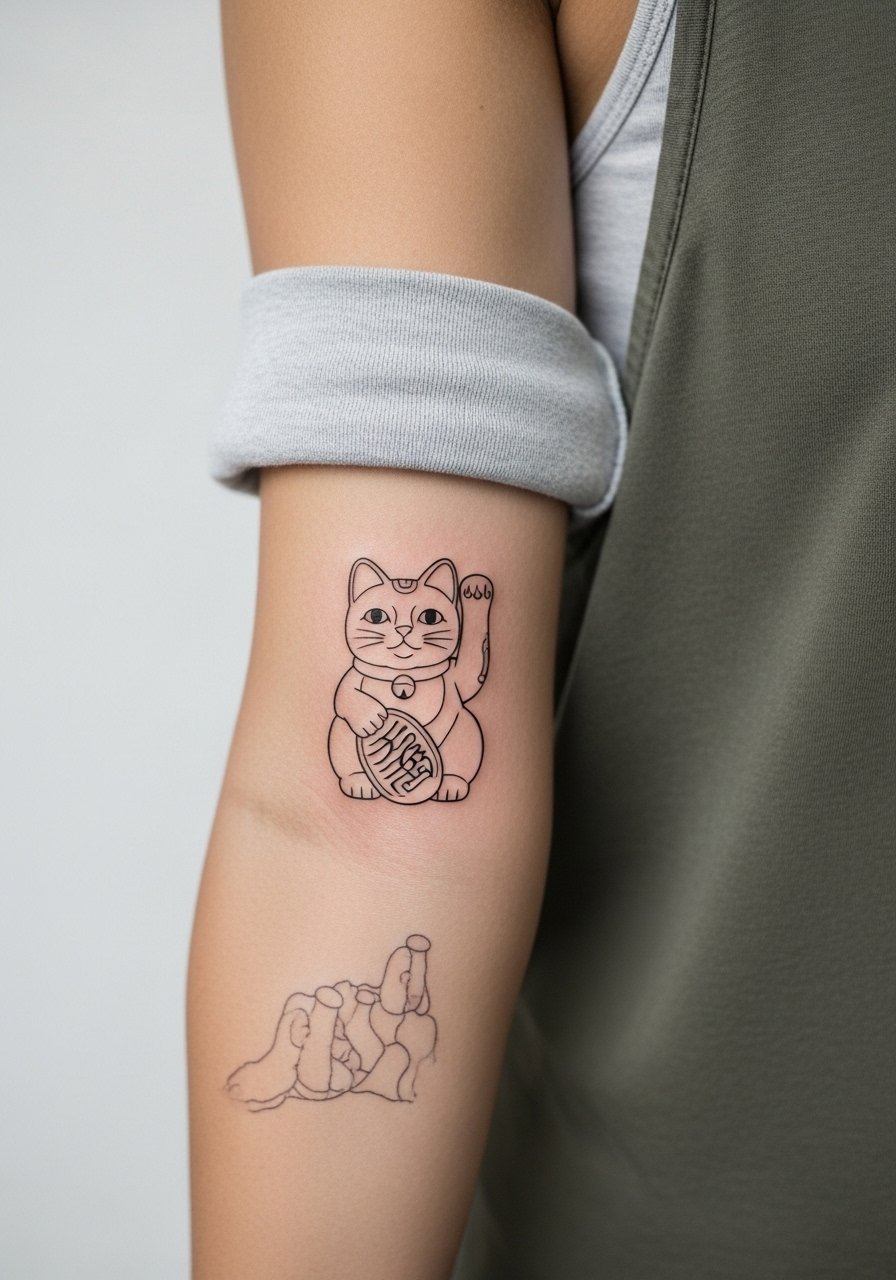
I've seen this version hold up best when artists space the whisker lines and avoid packing too many tiny loops into the collar. Tell your artist you want single-needle linework with a deliberate gap between dense areas, and ask about touch-up windows ahead of time. Pain is mild to moderate on the inner forearm and a session usually fits a single appointment. Common mistake is shrinking the design to 1 inch, which invites early blur. For showing it off, wear a rolled cuff chambray shirt and thin silver bangles on the opposite arm so the linework reads clean in photos.
2. Modern Minimalist Maneki-Neko Outline on the Wrist
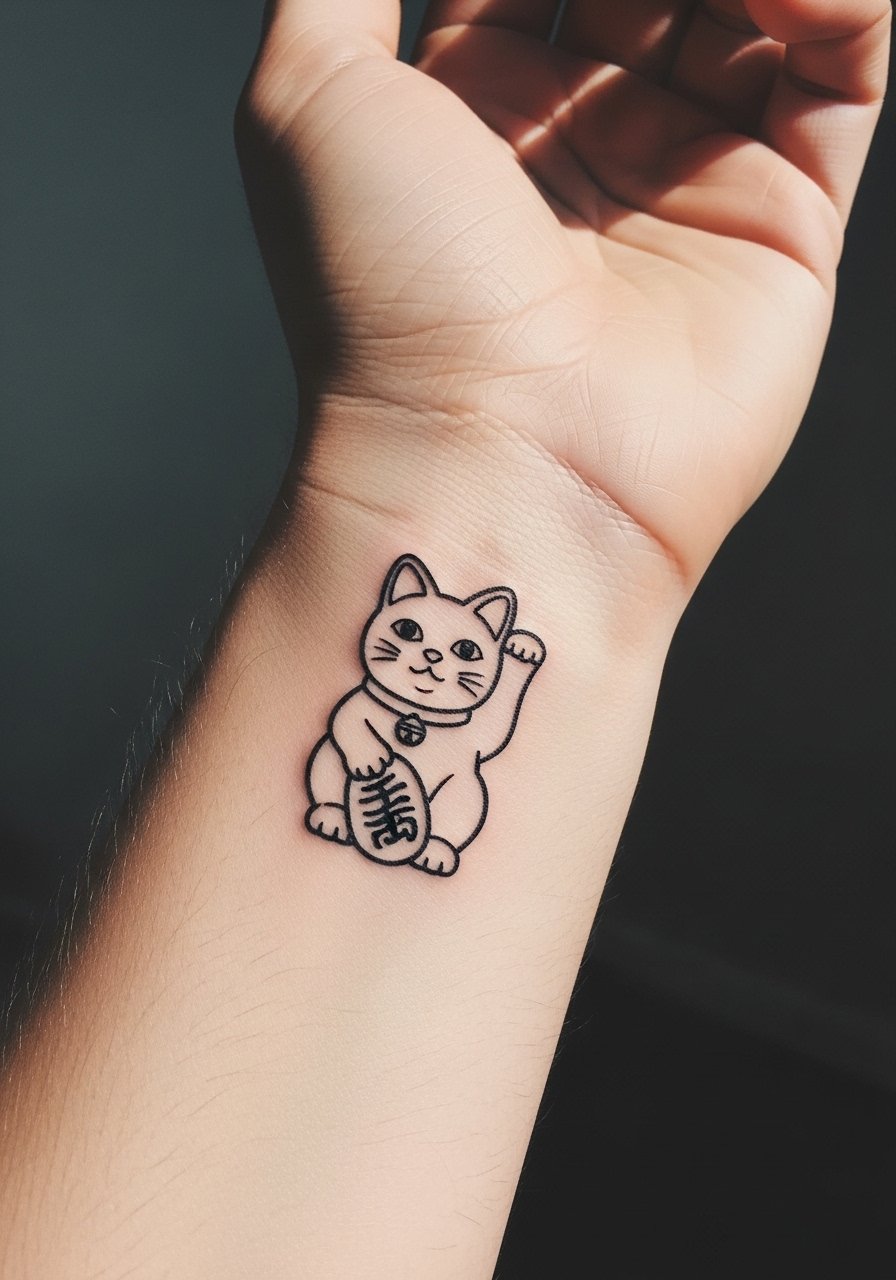
Wrist pieces are high-friction zones and fine line variants can ghost fast. If you want a minimalist outline, ask for slightly heavier linework so the shape keeps contrast after a year. The session is short and the pain is sharper because of the bone under the skin. A common misstep is expecting micro detail to survive constant washing and bracelets. For showing it off, pair the piece with a slim leather cuff bracelet on the opposite wrist and avoid full sleeves that hide it. Expect a touch-up at 6 to 12 months if you choose needle-thin lines.
3. Micro-Realism Calico Lucky Cat Behind the Ear
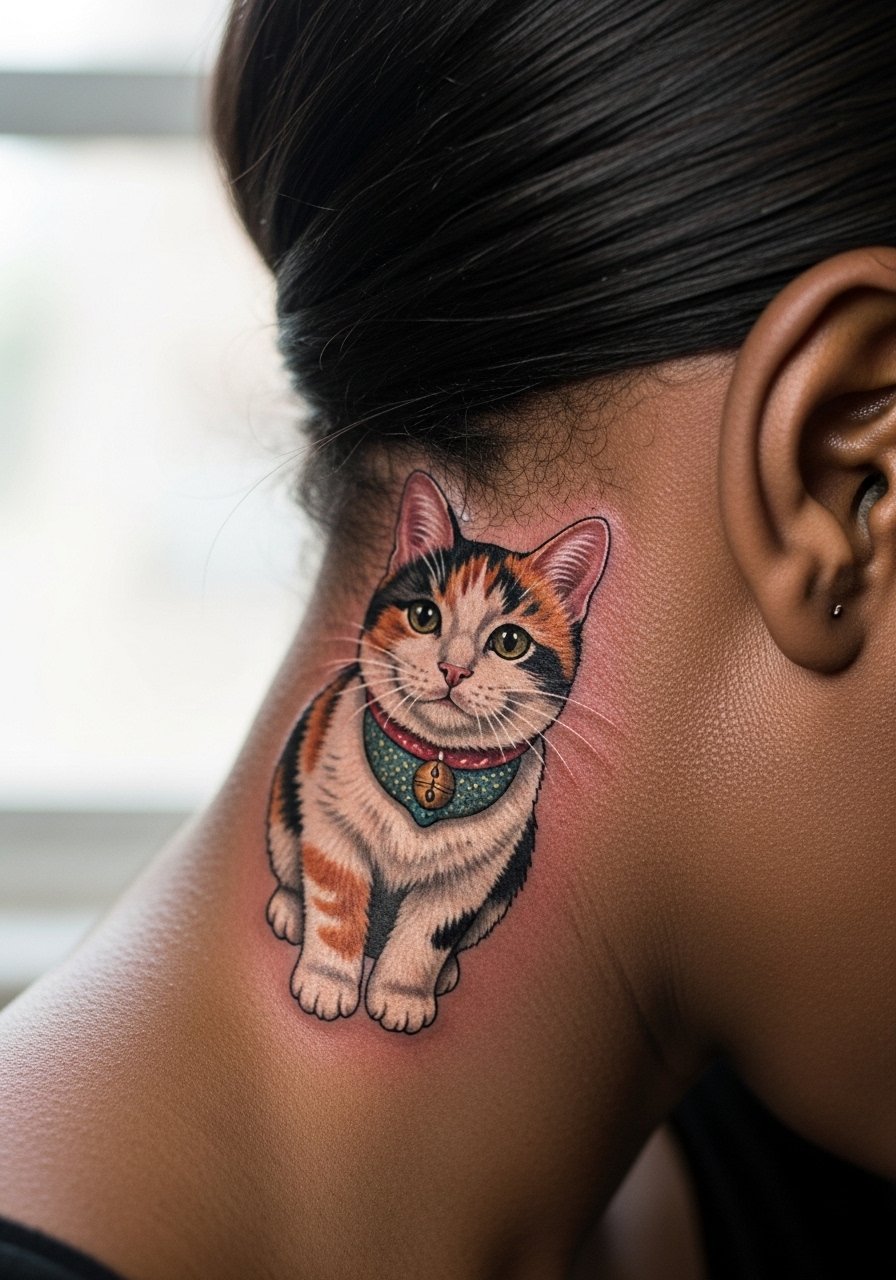
This tiny, pet-like calico reads personal and intimate. Behind-the-ear placement demands a careful test of shading on darker tones, so ask the artist for a small healed reference and whether they do test patches. Sessions are fast but delicate, and the skin there can lose contrast faster than the thigh. A common mistake is requesting ultra-fine stippling for fur on very small pieces, which can wash out. Because the location is discrete, consider how often you want it visible when you style hair or accessories. Professional experience with melanated skin matters most for realistic texture here.
4. Neo-Traditional Lucky Cat with Floral Accents on Outer Thigh

Outer thigh is forgiving for color saturation and lets artists build lively neo-traditional palettes without worrying about immediate blowout. Tell your artist you want saturated fills and clear black outlines that frame the petals, and schedule two shorter sessions rather than one marathon. The biggest mistake is asking for too many tiny petals in the same area, which compresses over time. For summer visibility, style with high waisted denim shorts and espadrilles once healing is complete. Expect medium pain and solid longevity if saturation is prioritized.
5. Blackwork Geometric Lucky Cat on the Shoulder
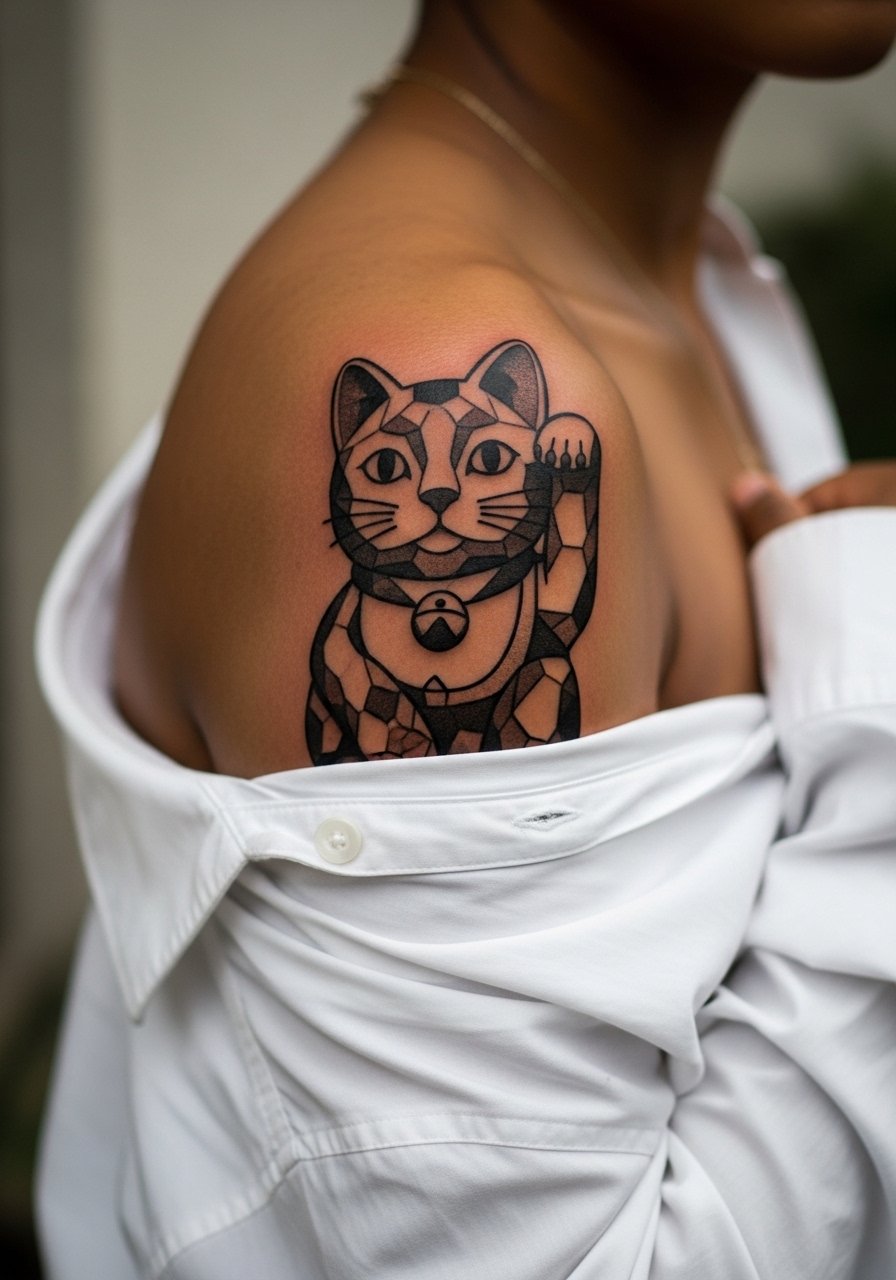
Blackwork reads boldly on darker skin tones and the shoulder handles heavy saturation well. During consultation, ask for large negative-space shapes and crisp edges rather than tiny interior detail. Artists sometimes split on how much solid fill to place near the edge, so discuss blowout risk and the plan for touch-ups. The session is moderate and can span two sittings for that solid black depth. For the session wear, put on a loose button-down shirt you can pull aside easily. The payoff is a piece that holds its graphic silhouette across years.
6. Watercolor Lucky Cat Silhouette on the Collarbone
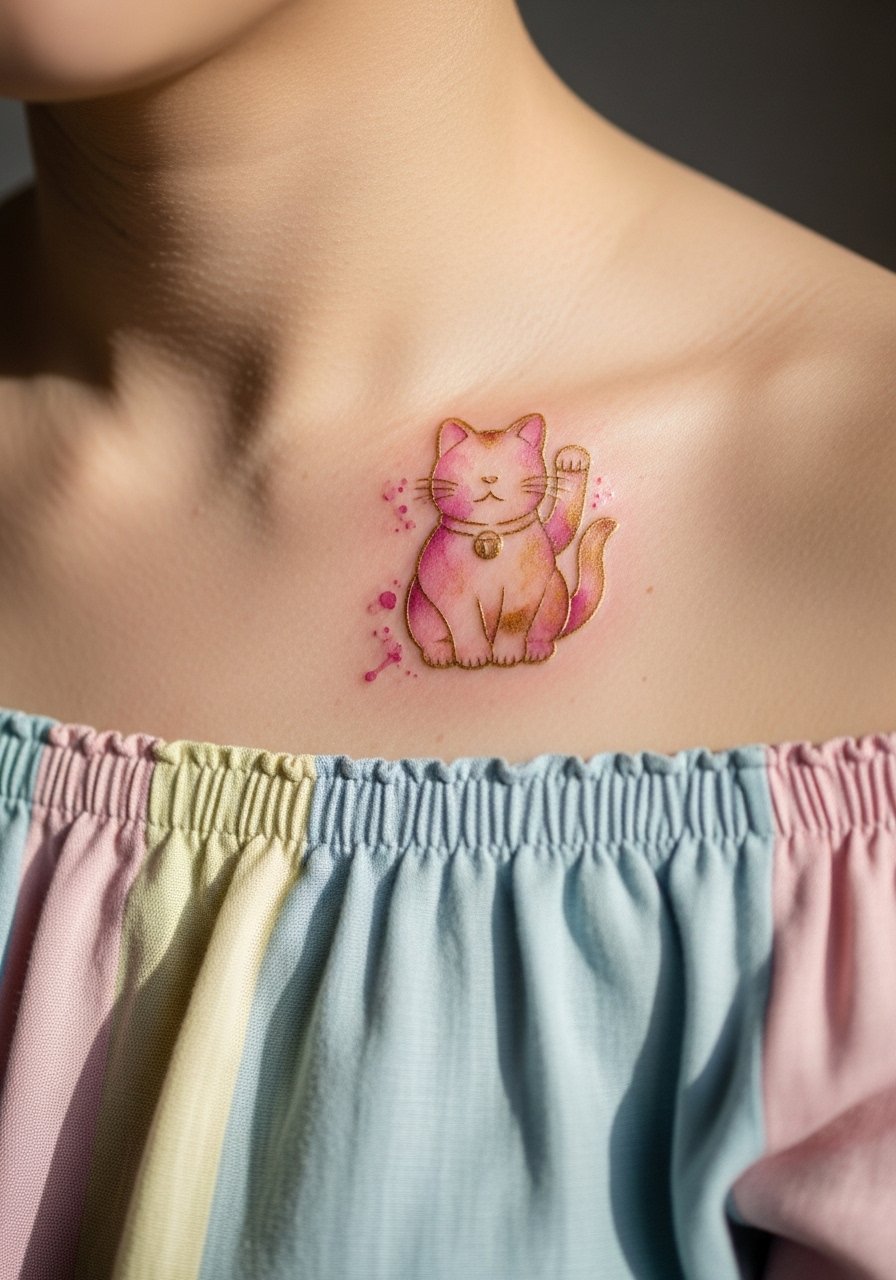
Watercolor collarbone pieces pop under layered necklaces but can suffer in humid climates if not sealed properly during healing. If you want painterly washes, request that the artist anchor color with a thin black or gray contour so the shape keeps its edge as pigments fade. The collision artists argue over is wrap-style aftercare for watercolor. One camp prefers breathable dry healing for subtle washes. The other favors protective film to prevent scabbing that drags color. Ask what the studio recommends for color retention on the collarbone. For showing it off, pair with an off shoulder linen blouse and layered delicate necklaces.
Before You Book
The forearm, wrist, collarbone, thigh, shoulder and ankle pieces above each demand different prep and a few targeted products smooth the session and the first week.
-
Lotion Doctor Tattoo Balm. A non-greasy option that users report keeps color from caking in humid conditions, helpful if you pick watercolor or chest-adjacent placements.
-
Nip + Fab Tattoo Fix. A lightweight finish that can help fine line wrist pieces avoid white cast on darker skin tones while still moisturizing.
-
Earth's Enrichments Balm. Natural-ingredient salve for sensitive skin zones like behind the ear and inner bicep, which reduces irritation during the first week.
-
Japanese Kamiderm Sheets. Slim protective sheets that adhere well on active areas like ankles and hands and help avoid sand or debris during early healing.
-
Hustle Butter Deluxe. A thinner alternative to heavier ointments that many people use for fine line work because it absorbs quickly and avoids caking on delicate needles.
7. Traditional American Lucky Cat with Banner on the Bicep

Classic American lines age well when artists prioritize bold outlines and saturation. The bicep is forgiving on blowout and the session is usually a single appointment for a small 4-inch piece. Tell your artist you want strong linework and a simple color blocking plan. A common error is crowding the banner text with tiny serifs. For session comfort, wear a sleeveless muscle tee that gives full access. Expect this style to soften into a pleasant vintage look rather than blur into an unreadable patch.
8. Dotwork Lucky Cat with Wave Patterns on the Ribcage
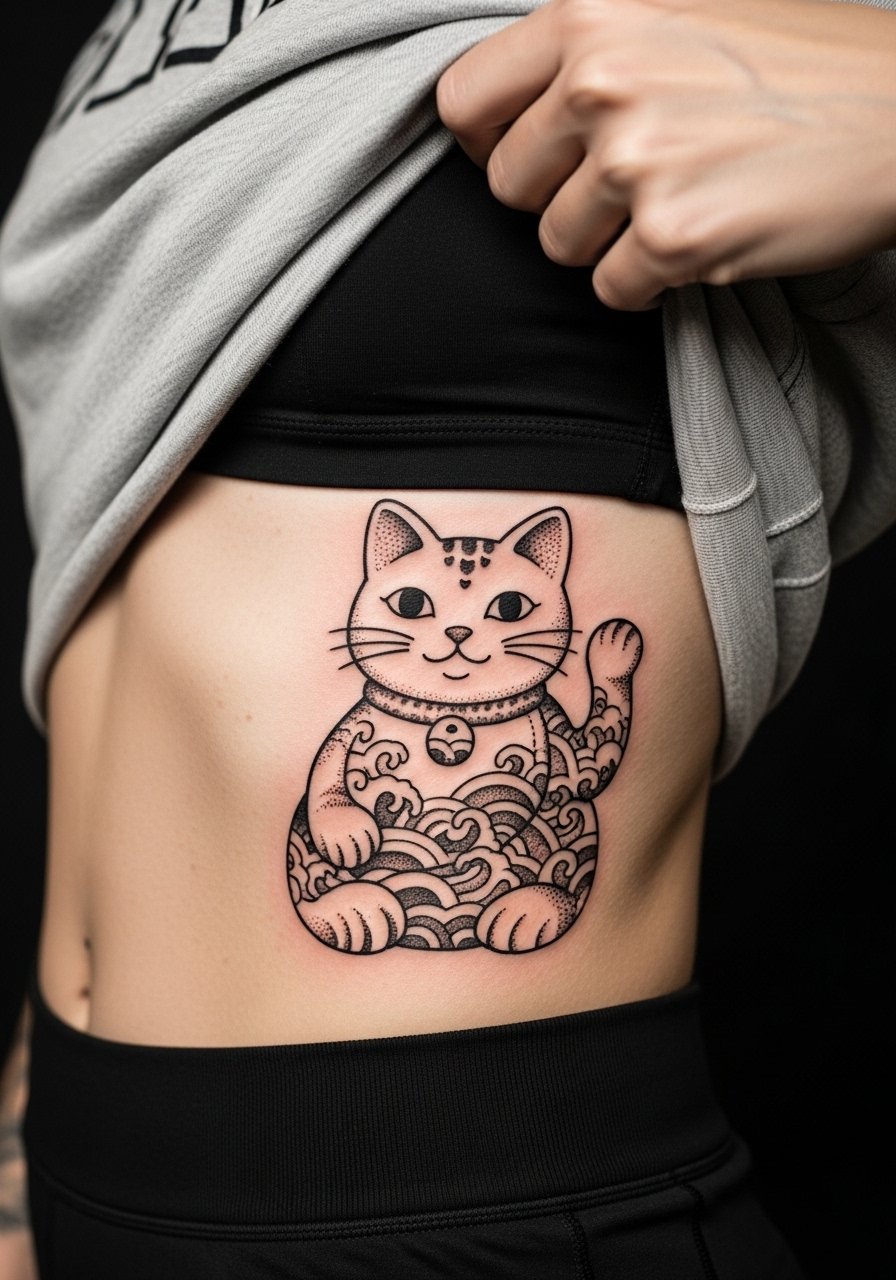
Fair warning, the ribcage is a high-pain placement and dotwork there tests both patience and time. Artists split on the best aftercare for dense dotwork. One camp says Saniderm traps moisture and risks softening tiny dots. The other camp prefers dry healing to let micro scabs fall naturally. The truth is your artist's experience with stipple shading on ribs matters most. Common mistakes include asking for ultra-dense stippling in a small vertical area, which can merge after a few years. Plan for multiple sessions and a slower build to keep the pattern readable at five years.
9. Linework Lucky Cat Duo on Matching Ankles
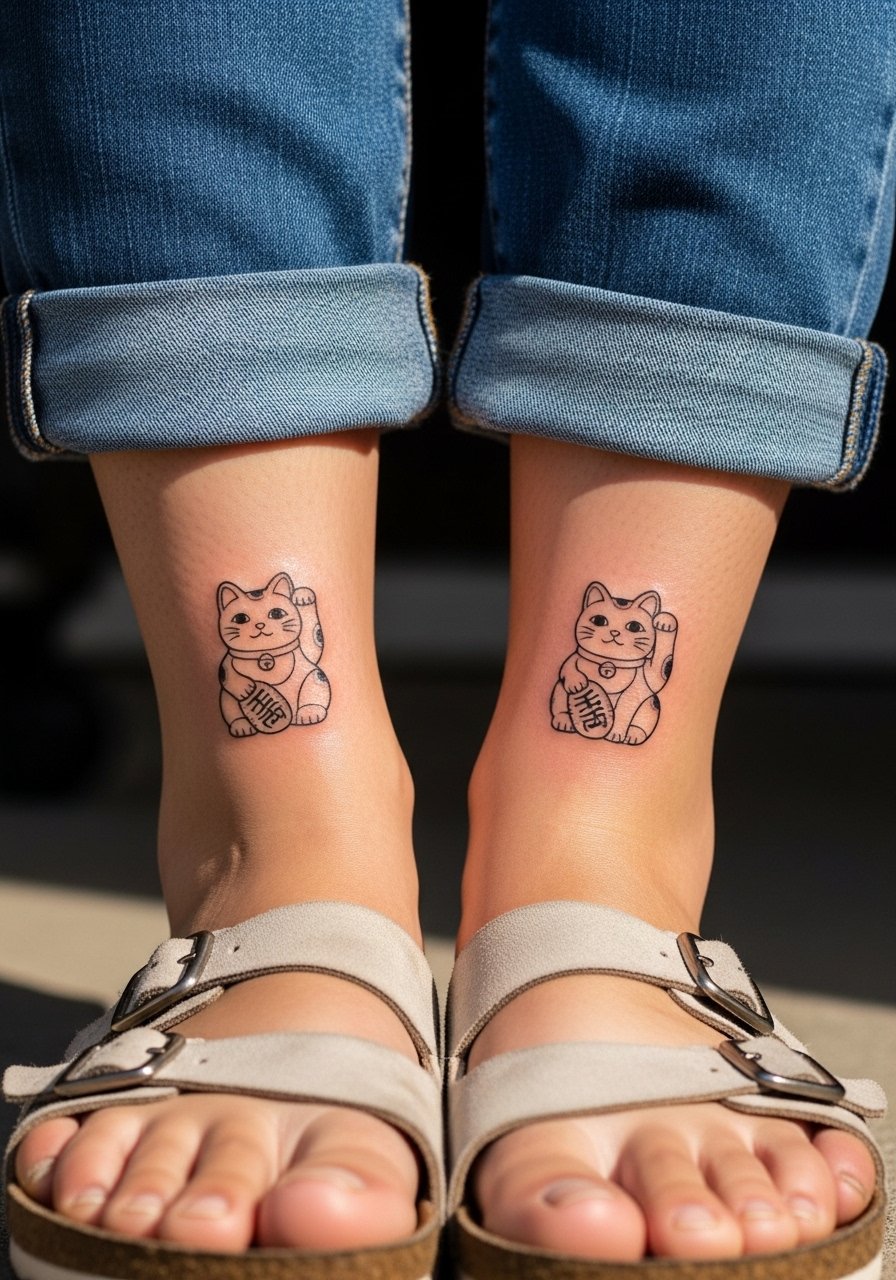
Matching ankle tattoos make a subtle statement and work well for couples or friends. Ankles are friction-heavy during boots season, so ask for slightly stronger line weight than a hairline single needle. The most common mistake is placing these under sock lines where constant rubbing accelerates fading. For summer reveal, add a dainty ankle chain to frame the piece. Sessions are short and pain is moderate. Expect touch-ups if you wear tight footwear often.
10. Neo-Japanese Lucky Cat with Cherry Blossoms as a Sleeve Starter
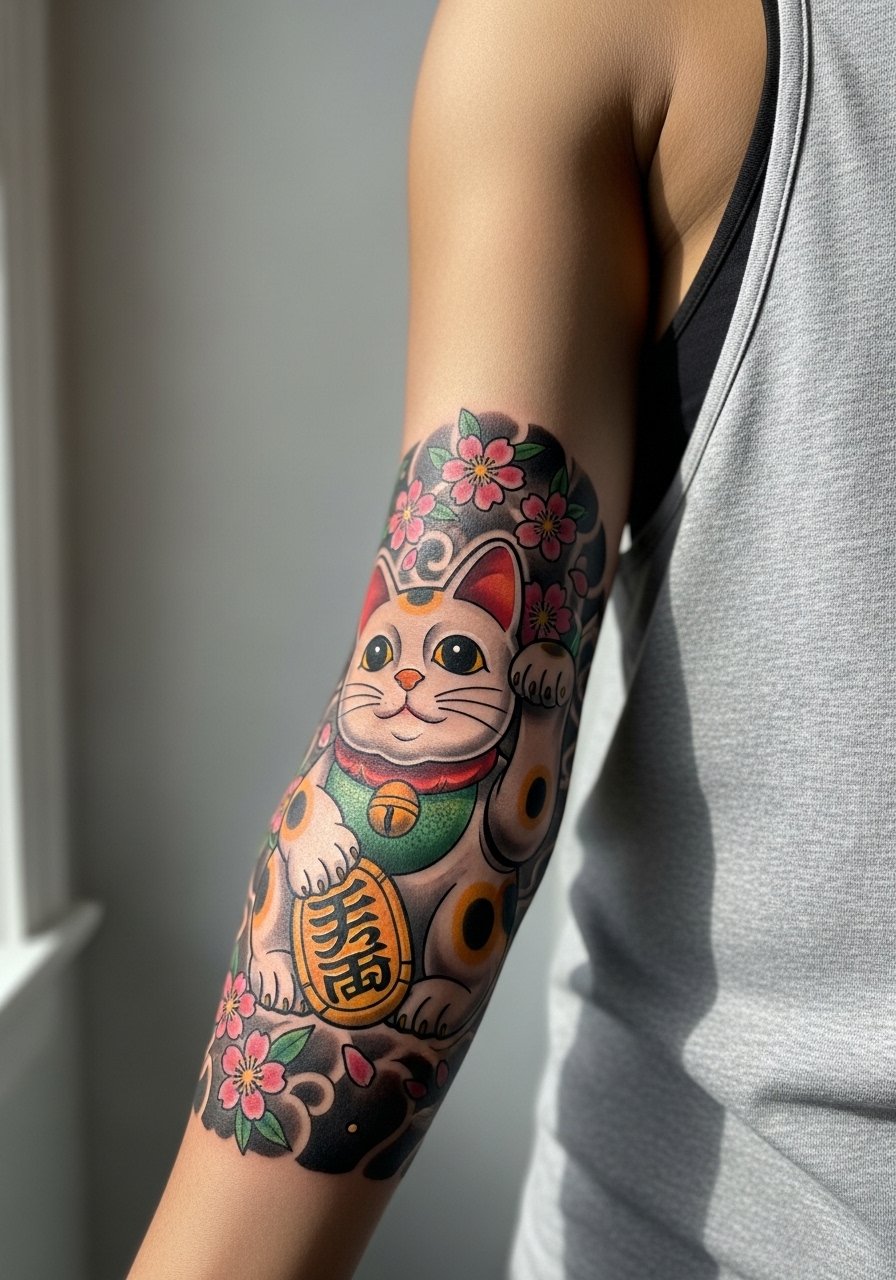
Sleeve starters need modular thinking so the cat reads as a focal element when more pieces are added. Tell your artist you want a composition that allows room for negative space and future panels. Pain on the forearm is reasonable and you can plan this as two to three sessions. A rookie move is asking for every detail in the first pass. For session wear, pick a loose fit tank top so the artist has easy access and you stay comfortable. Over time the blossoms soften but the neo-Japanese contrast keeps the cat legible.
11. Ornamental Lucky Cat Mandala on the Upper Back
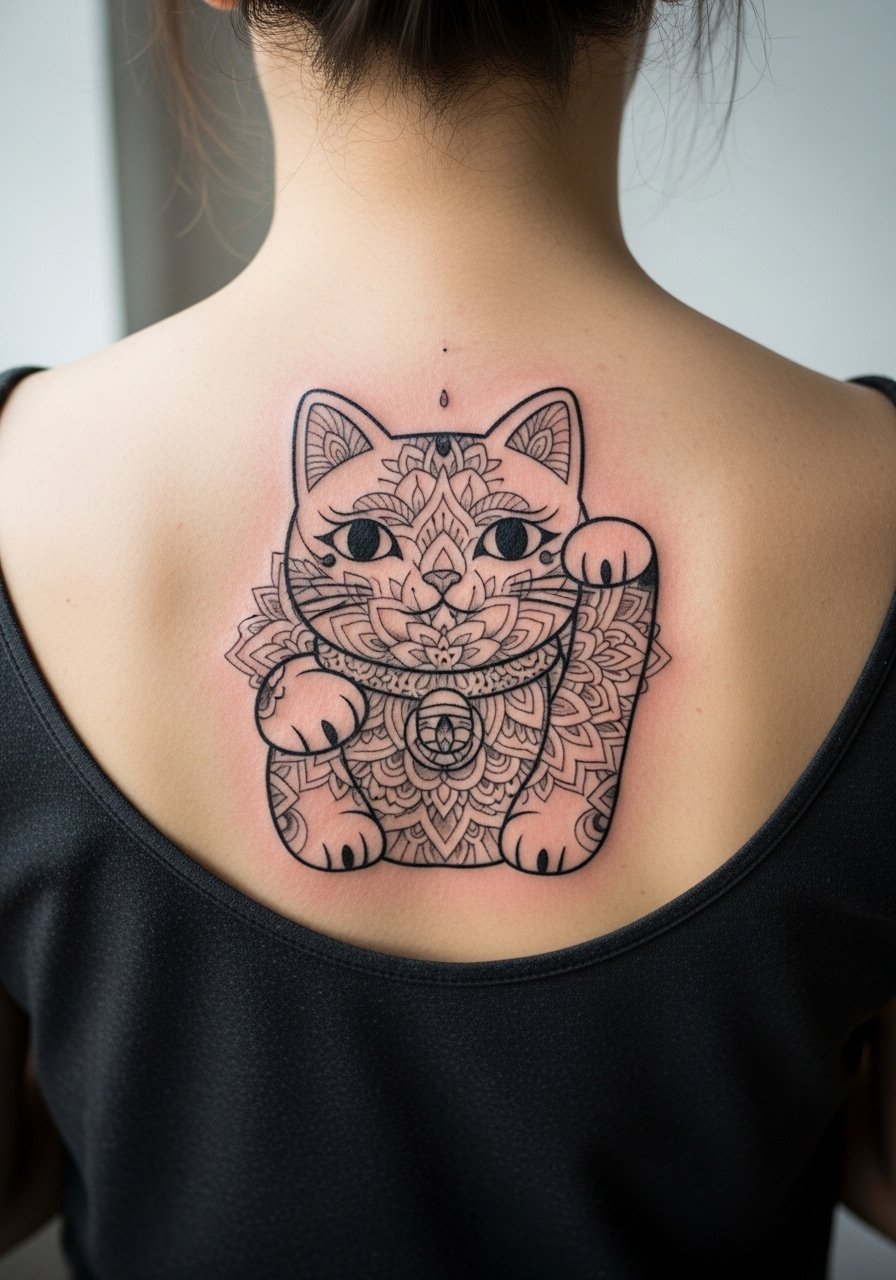
Large ornamental mandalas need space to breathe, and the upper back is ideal for scale and symmetry. When briefing your artist, emphasize radial balance and avoid cramming tiny repeats inside small rings. The common mistake is tight dotwork that looks great fresh then floods over time. Sessions can span multiple days and the pain is moderate. For career-sensitive clients, remember large back pieces are easy to hide under shirts. If you plan to expand into a full-back project, ask about session pacing so the mandala remains the anchor.
12. Ignorant Style Cartoon Lucky Cat on the Calf

Ignorant style thrives on bold outlines and playful proportions, which also makes it durable. The calf handles saturation well and is forgiving on blowout, so you can expect longer-lasting crispness. Tell your artist you want simple color blocks and exaggerated paw proportions, and avoid tiny internal cross-hatching that defeats the style. For showing it off casually, go with cropped jogger pants that can be rolled to reveal the piece. Sessions are comfortable and usually finish in two sittings for a medium-sized design.
13. Micro Minimal Lucky Cat on the Finger Knuckle
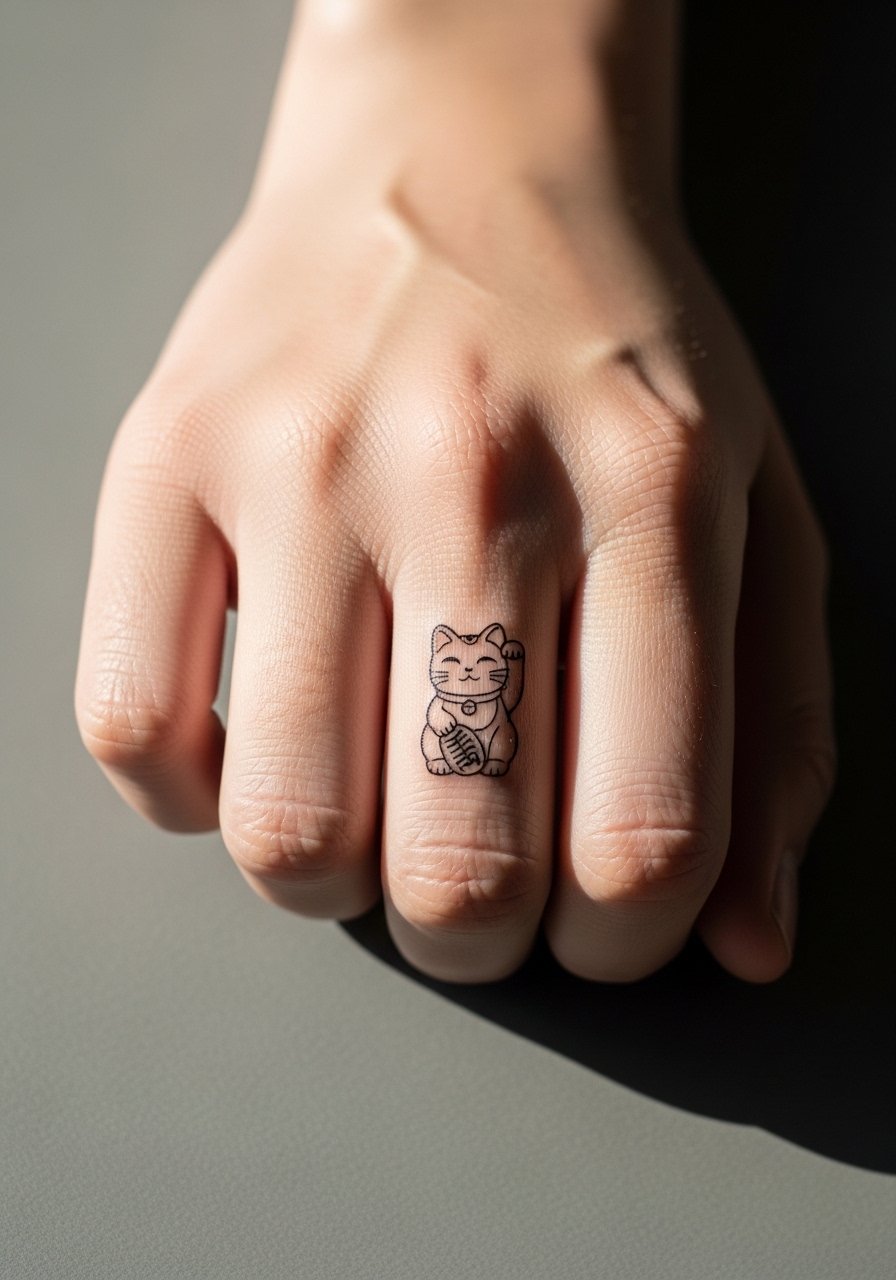
Knuckle placements are highly visible and face a lot of wear from hand washing and friction. Micro minimal designs here require bold simplification so they last beyond a few months. The mistake most people make is asking for tiny internal detail that vanishes quickly. Pain is sharp and sessions are brief. Expect accelerated fading and anticipate periodic touch-ups. Think about career considerations before committing to knuckles because they are not easily concealed.
14. Reverse Lucky Cat on the Palm-Facing Hand
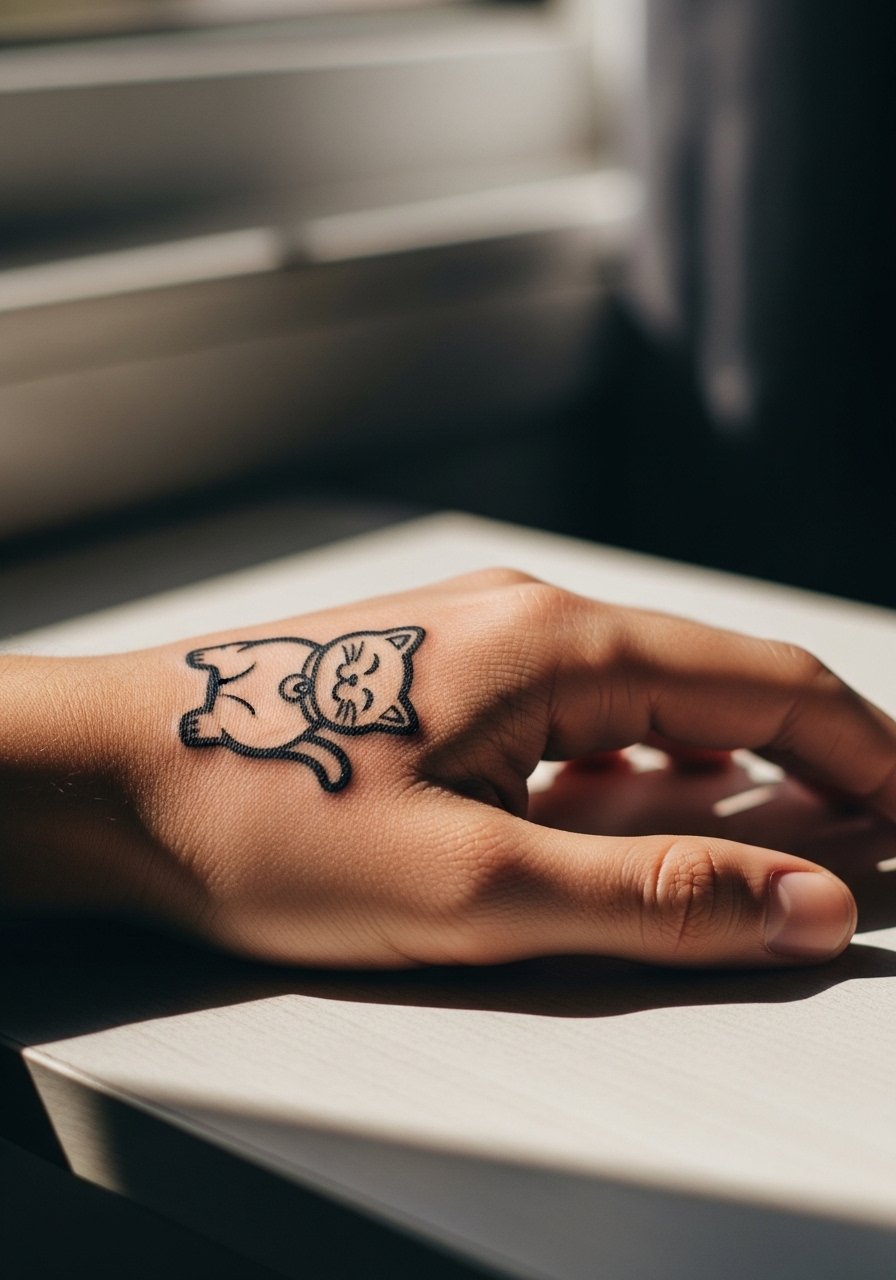
Reverse cats that face outward are a clever twist and tend to read as protective icons. Hand placements are notorious for fading because of constant washing and movement. If you pick this spot, ask the artist to simplify the silhouette and use heavier outlines rather than tiny shading. Sessions are short but you will likely need touch-ups within a year. The biggest mistake is treating the palm-side like regular skin. If you want longevity, plan touch-ups as part of the design budget.
15. Small Neo-Traditional Lucky Cat on the Ankle
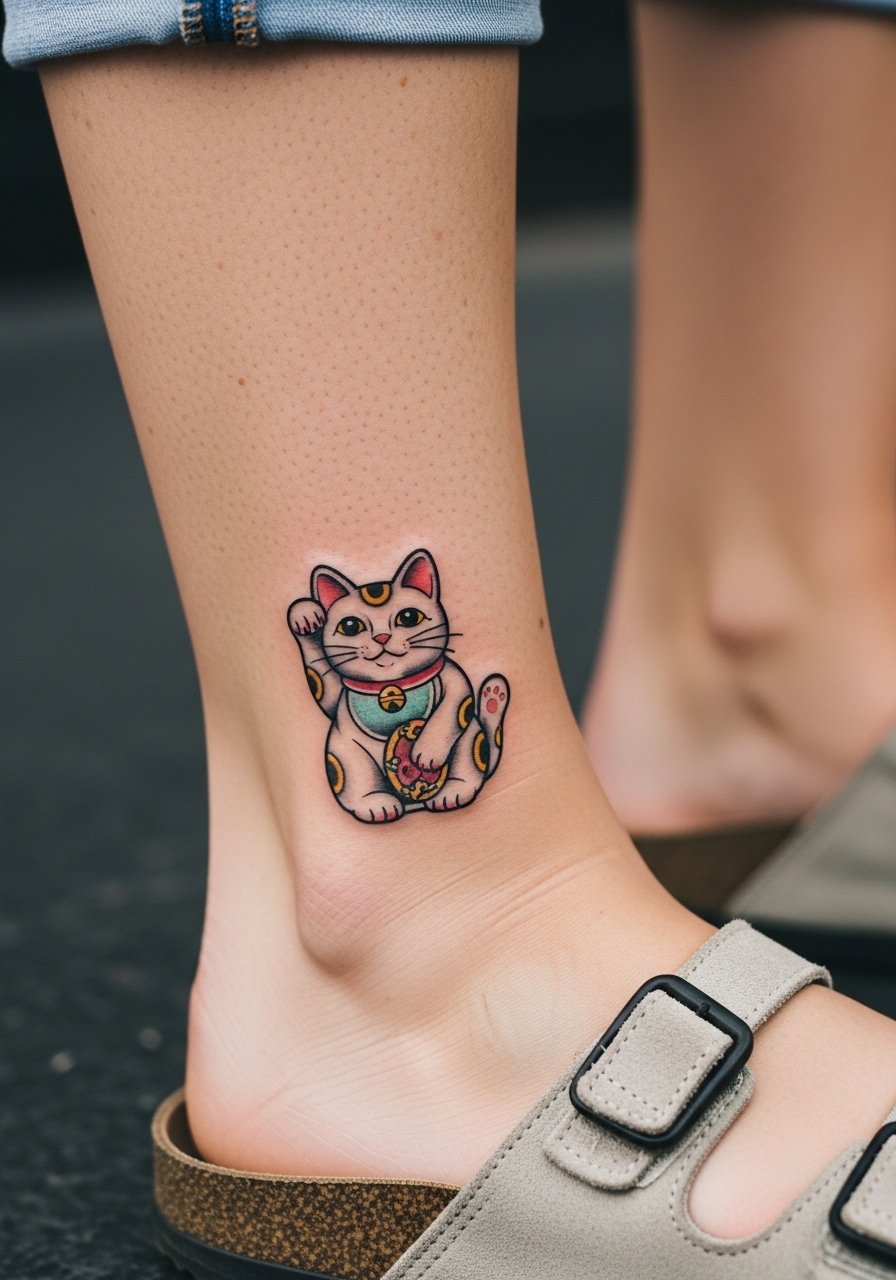
Ankle placements benefit from seasonal visibility, especially in summer. To prevent early blurring, ask for a clear outline and avoid layering thin color washes too close to the edge. Common errors include placing the lowest line where shoe collars rub. For post-heal styling, wear espadrille wedge sandals or dainty sandals to frame the piece. Pain is moderate and the area may need a touch-up once you start wearing shoes that rub.
16. Black and Gray Micro-Realism Lucky Cat on the Outer Thigh
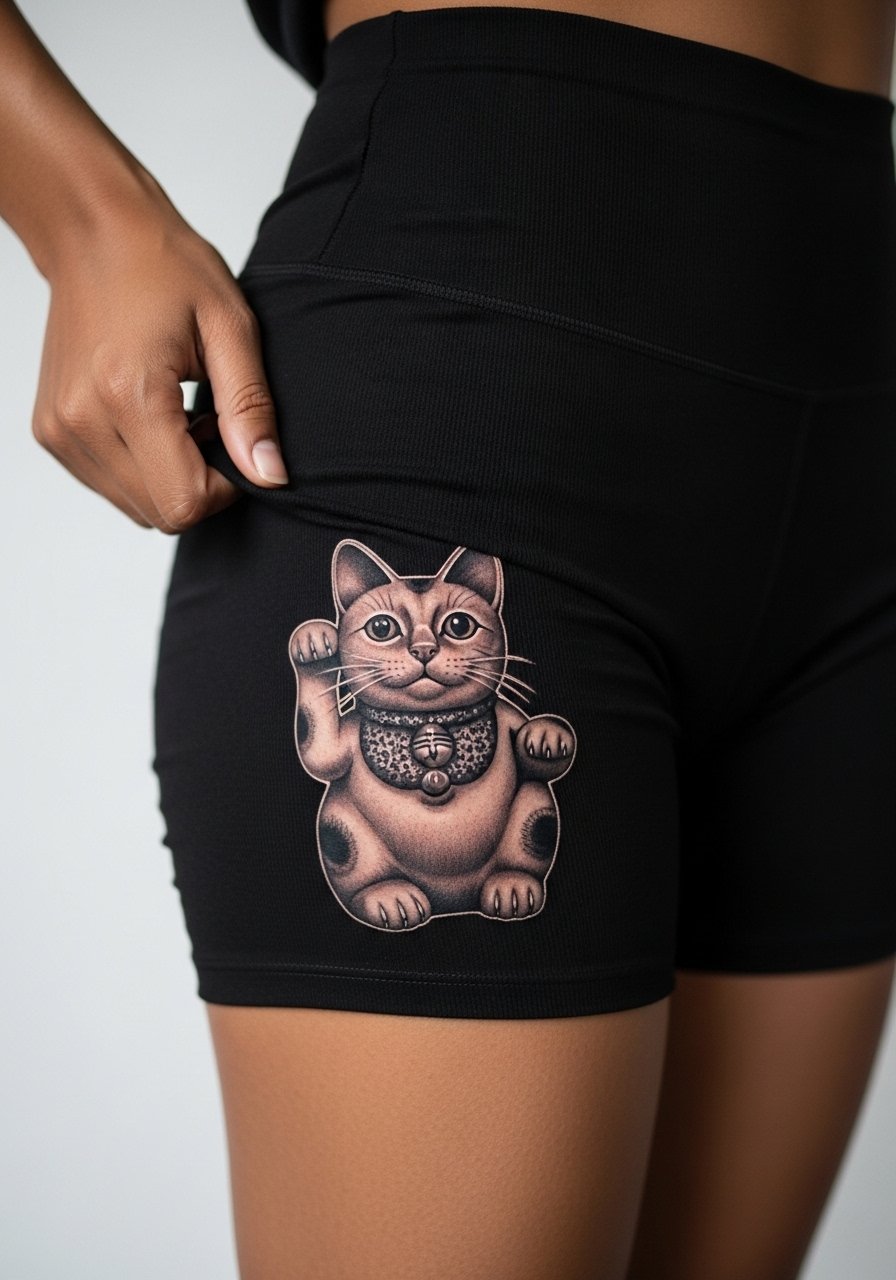
Outer thigh gives space for fine gradation and micro-realism works well here because friction is low and color retention is strong. Tell the artist you want layered gray washes and small highlights that mimic fur. The mistake is compressing too much photoreal detail into a tiny footprint. Sessions may take one to two sittings depending on size. For showing it off, pick high cut bike shorts in black to add edge and keep attention on the texture work.
17. Modular Lucky Cat Sleeve Elements for Collectors
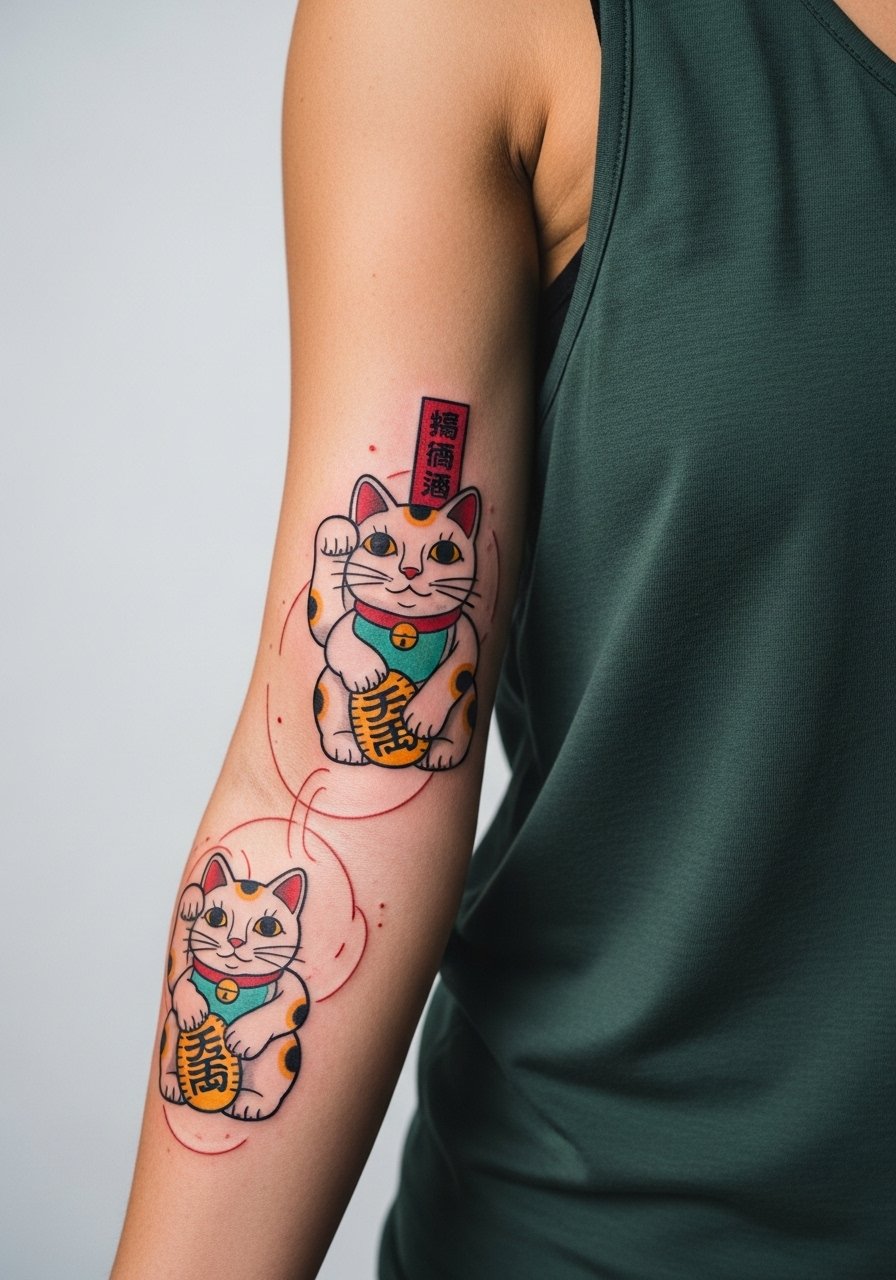
If you are building a sleeve slowly, think modular. I advise starting with one clear focal cat and leaving breathing room for future panels. During consultation, ask your artist to map where negative space will sit so each new insert does not crowd previous work. Sessions are comfortable if you break them up into targeted blocks. For the session, wear a loose fit tank top so the artist can work up and down the arm without pressure from clothing. The modular approach helps each cat retain identity as the sleeve evolves.
18. Finger-Knuckle Ring Lucky Cat for Symbolic Wear
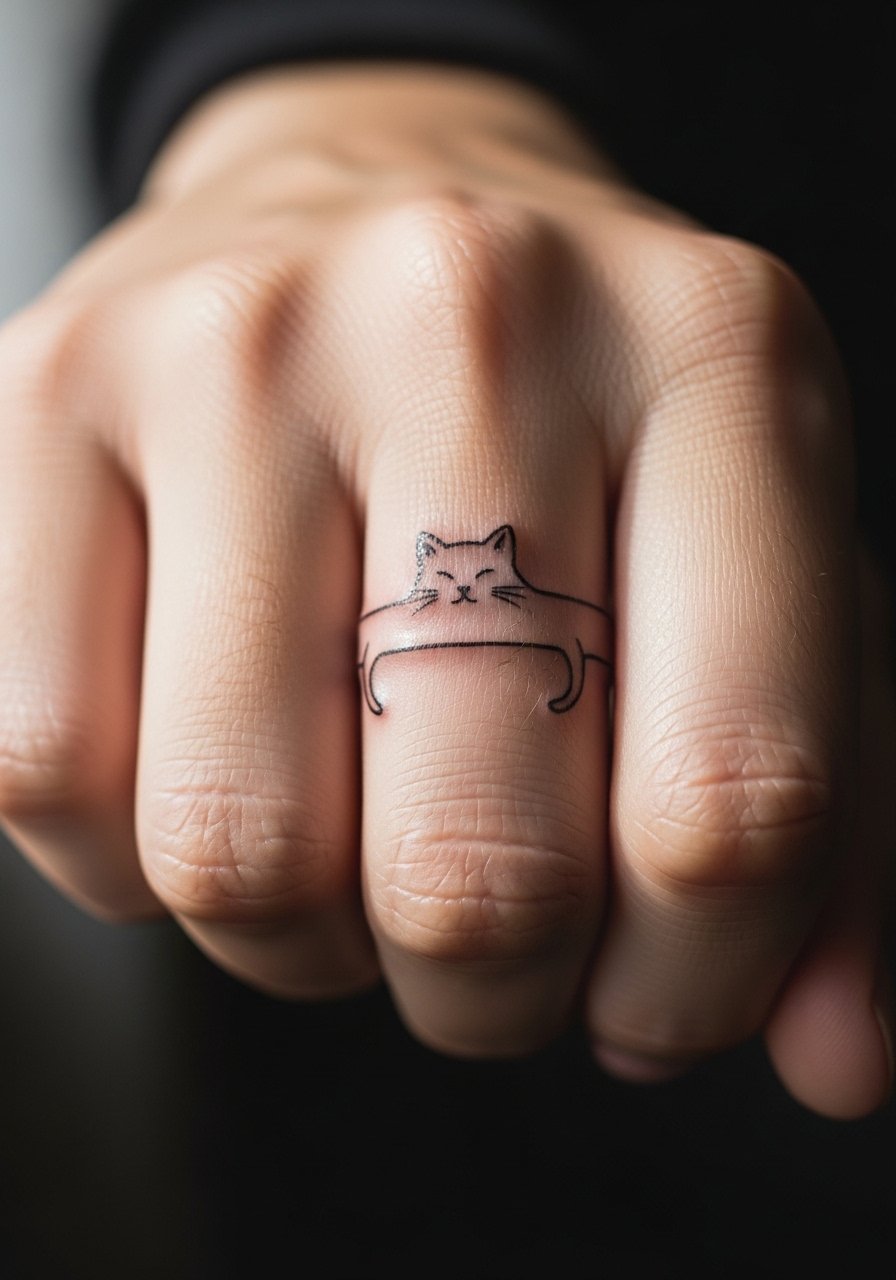
A knuckle-as-ring concept is novel and subtle but expect higher maintenance than an actual ring. Hands see soaps, sunscreens, and constant rubbing, so ask your artist to simplify icons and use bold line placement where skin moves less. The common oversight is wanting ornate lettering or shading, which disappears quickly. Pain is sharp and touch-ups are common. This idea trades permanence for immediacy and daily visibility.
19. Lucky Cat with Embedded Birthstone Accent on the Wrist
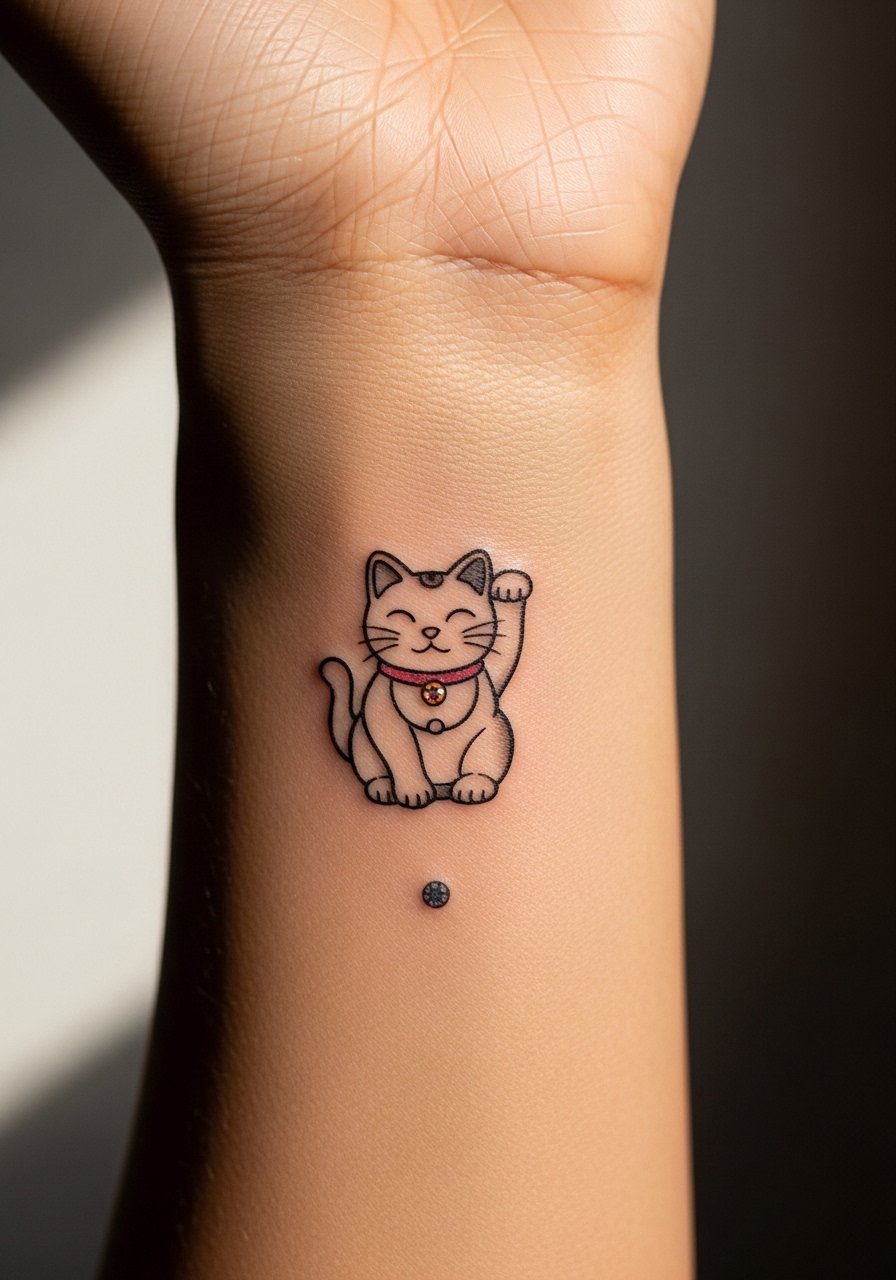
Personalizing a lucky cat with a birthstone-colored dot adds meaning without complicating the design. If you want color as an accent, ask the artist to keep the jewel as a single saturated point and avoid surrounding washes that can bleed into it. On the wrist, protect the dot from early rubbing and plan for a touch-up if the pigment loses intensity. For showing it off, a slim bracelet can complement the spot. The session is quick and the risk is more about friction than technique.
20. Blackwork Geometric Lucky Cat on the Shoulder Blade
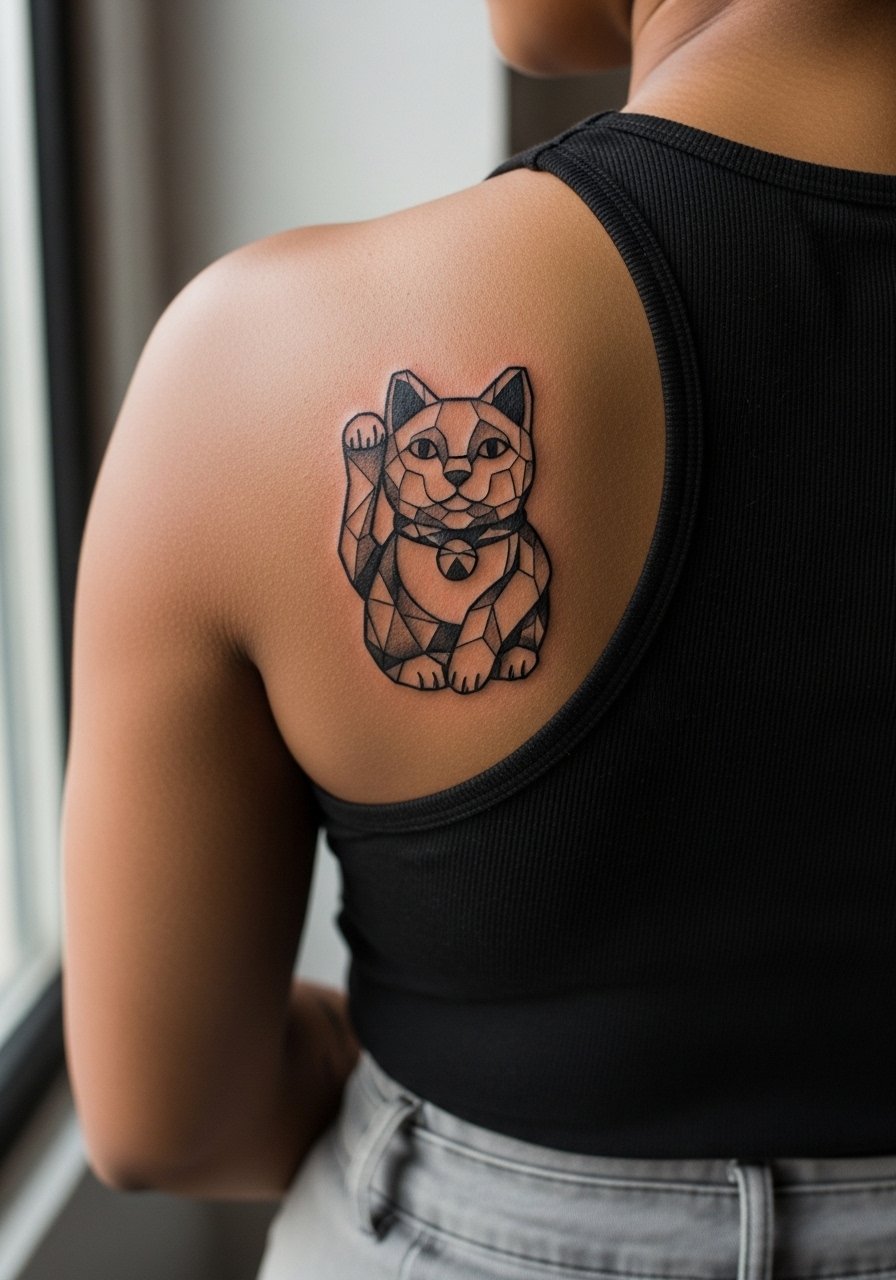
The shoulder blade handles bold blackwork and geometry very well because the canvas is large and flat. Ask for crisp edges and test stencils so the symmetry reads as intended. People often ask for tiny interior lines that do not hold on this canvas. Pain is moderate and sessions may be split for saturation. This placement hides easily under shirts and shows nicely with sleeveless tops.
21. Neo-Traditional Pastel Lucky Cat for Ankle Summer Flair
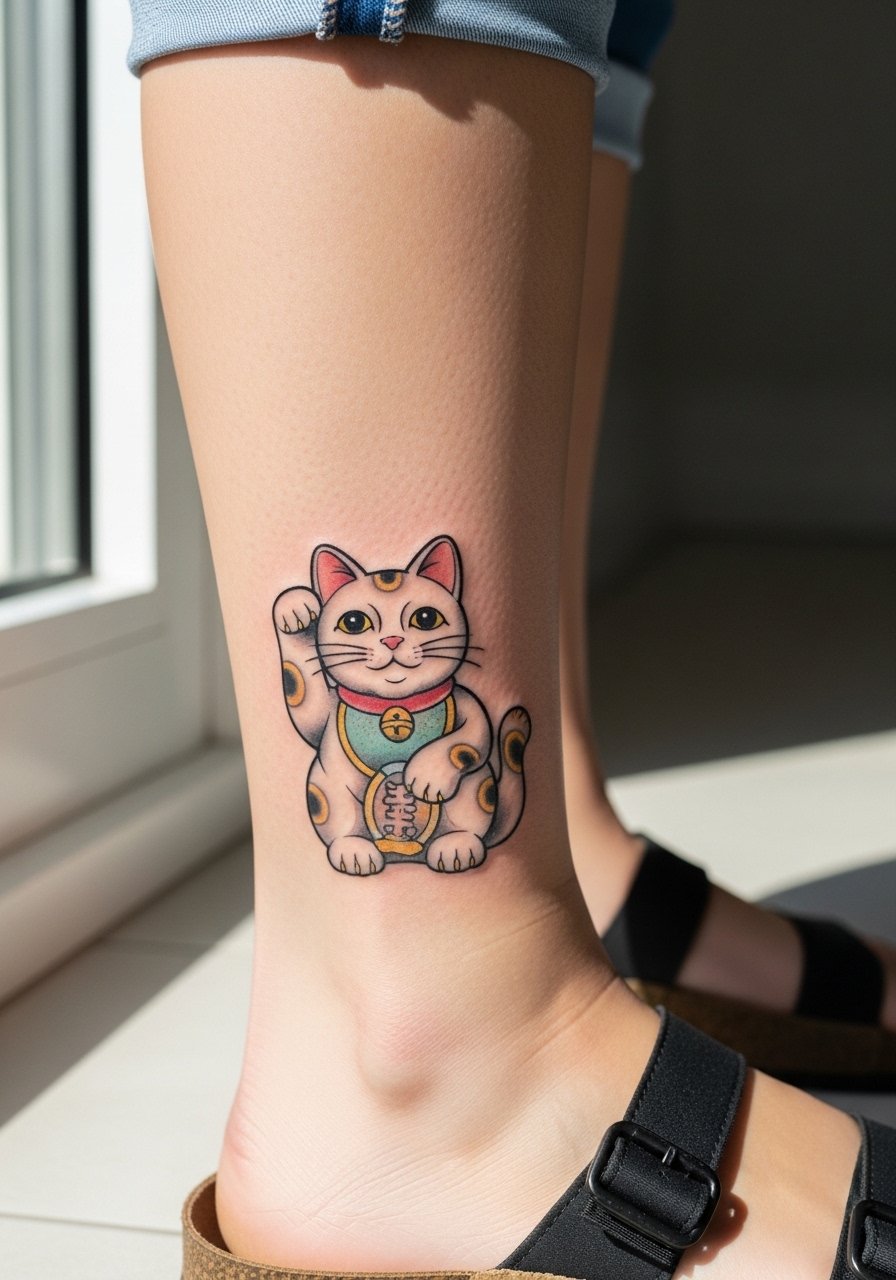
Pastel neo-traditional work for ankles looks great in warmer months but is vulnerable to summer sweat during healing. Ask the artist to anchor pastel fills with a clean outline and to use pigments that read on your skin tone. Common mistakes are asking for pale yellows close to the edge where they disappear. For season-ready looks, pair with dainty ankle chain and sandals once healed. Expect one light touch-up to refresh the pastel at the one-year mark.
Frequently Asked Questions
Q: Will fine line lucky cats fade faster than bold blackwork on wrists and hands?
A: In my experience, yes fine line tends to fade more quickly on high-friction areas like wrists and hands. One group of artists recommends slightly bolder line weight for those spots. Another group still does single-needle work but plans for touch-ups at year one. Ask potential artists how they handle fine line on hands and what their touch-up policy is.
Q: Do watercolor lucky cats need different session pacing or aftercare than blackwork pieces?
A: Watercolor pieces usually benefit from shorter focused passes that allow color layering without overworking the skin. Blackwork often needs saturation sessions to lock in solid fills. For watercolor, discuss the studio's approach to scab management since that affects pigment migration. Also ask what they recommend for humidity during healing if you live in a warm climate.
Q: How should I brief an artist for a lucky cat that will work on darker skin tones?
A: Be specific about visibility goals. Mention that you would like stronger outlines or higher contrast fills, and ask to see healed examples on similar skin tones. Many artists will suggest a slightly bolder approach for longevity. Request healed portfolio photos rather than only fresh work and discuss test patches if you have concerns about pigment showing.
Q: Are modular sleeve starters for lucky cats more expensive because of multiple sessions?
A: They can be, because you are booking multiple focused sessions instead of one long appointment. The benefit is better pacing and less risk of compressing details. Talk with the studio about session planning and how they price staged builds so you have clear expectations.
Q: Can I get a tiny birthstone accent without compromising the black linework?
A: Yes. Keep the colored accent as a single saturated point and avoid surrounding washes that could dilute it. Ask the artist to anchor the dot with nearby black lines or collar detail so it reads as intentional rather than accidental. This approach keeps the piece resilient to minor fading while preserving the accent.