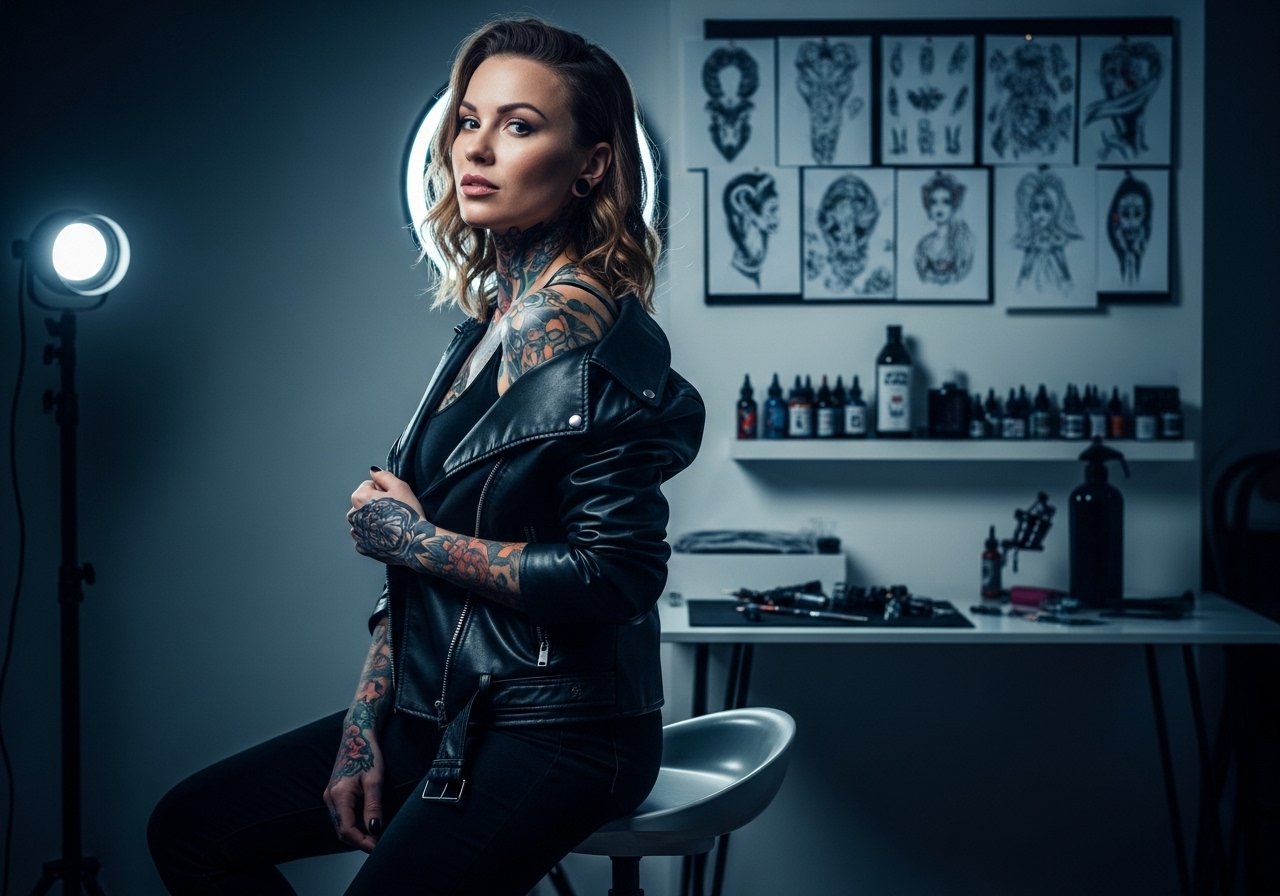
Fine line butterflies are all over feeds right now, but the pieces that still look intentional after a few years are rarely the tiniest ones copied straight from a phone screen. How you size, space, and place a mini butterfly matters more than the sketch. Below are 17 small butterfly ideas that balance simplicity with lasting linework and realistic touch-up timelines, starting with a wrist option that reads like jewelry.
1. Fine Line Butterfly on the Inner Wrist

I recommend this for a first minimal piece because the inner wrist gives a flat, consistent canvas that helps fine line hold. Tell your artist you want single-needle linework with slightly more spacing between the antennae and wing veins so the lines do not merge over time. Fair warning, wrists get sunlight and frequent washing, so expect a light touch-up around year two or three. The session feels quick, usually under 45 minutes, and pain is mild. For showing it off, pair with a thin chain pendant necklace that sits above the tattoo without crowding the wrist.
2. Tiny Butterfly Behind the Ear, Below the Hairline
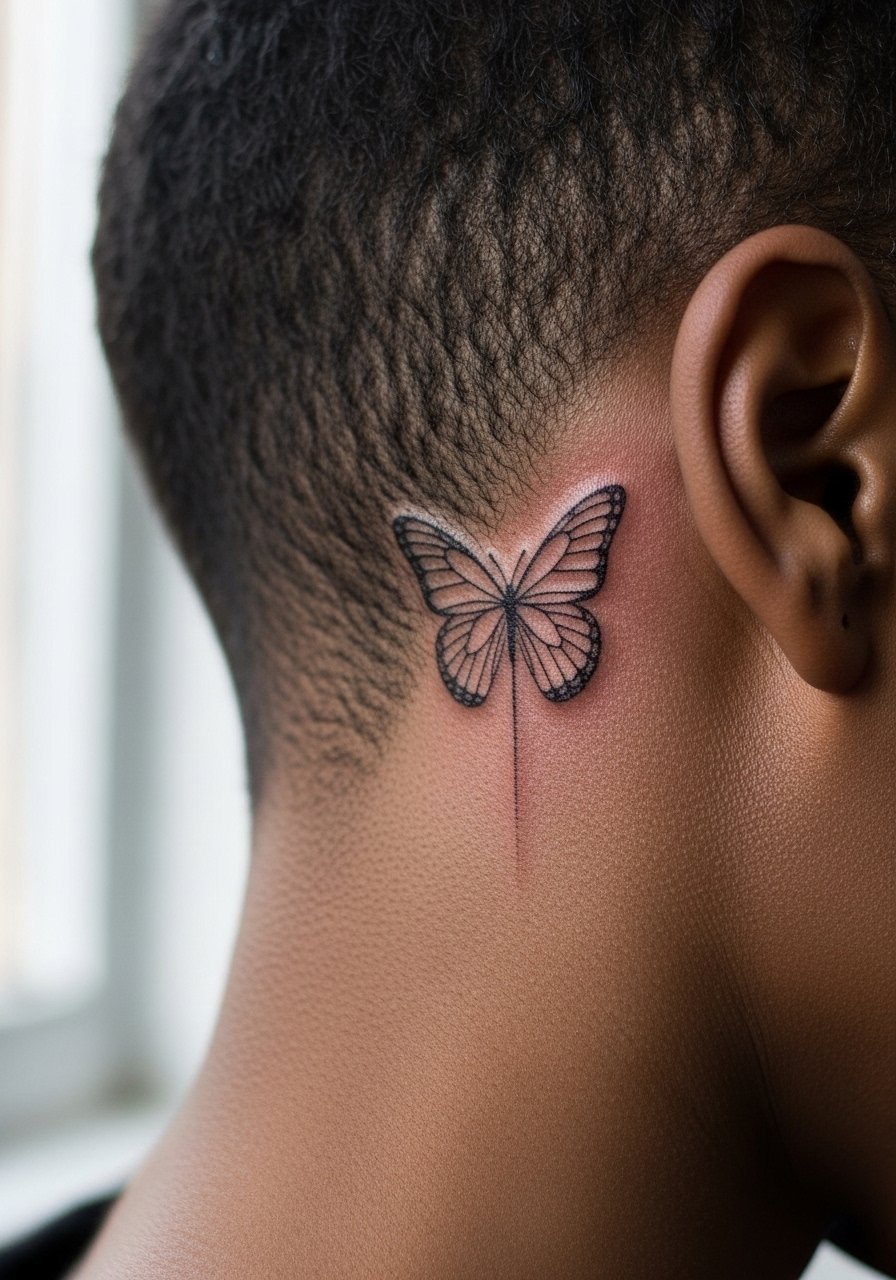
This placement reads like a secret detail and works well for single-needle or light stipple shading. Ask your artist to keep the wings small but not microscopic so the veins have breathing room. Pain is low to moderate and the session is often under 30 minutes. Artists split on whether ultra-fine detail holds best here or whether slightly bolder linework fares better with hair friction. Name both approaches in the consult and pick the one your artist practices most. For the appointment, wear hair up and a top with an easy neckline so the area is accessible.
3. Micro Butterfly on the Side of a Finger
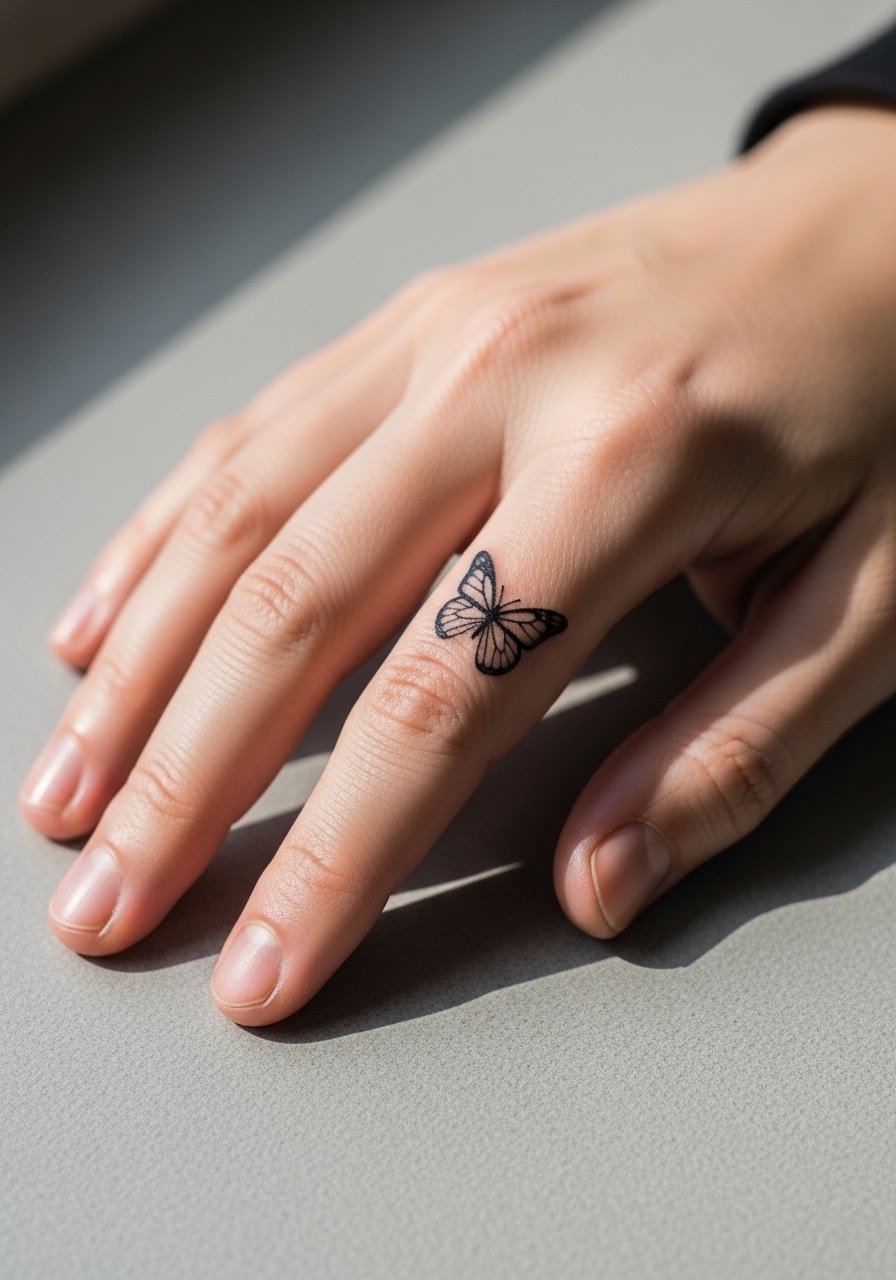
Finger work is trendy and controversial. One camp says fingers blur fast because skin is thin and moves constantly. The other camp argues that with slightly bolder single-line work and planned touch-ups, small finger tattoos can remain crisp. Expect more fading and possible partial loss than on the forearm. The session is short but stinging, and the touch-up window is often within 6 to 12 months for many people. A common mistake is asking for ultra-fine veins. If you want longevity, ask for the line a touch thicker and plan on a quick touch-up. For showing off, stack with a delicate midi ring set rather than heavy bands that rub the skin.
4. Minimalist Butterfly on the Outer Ankle
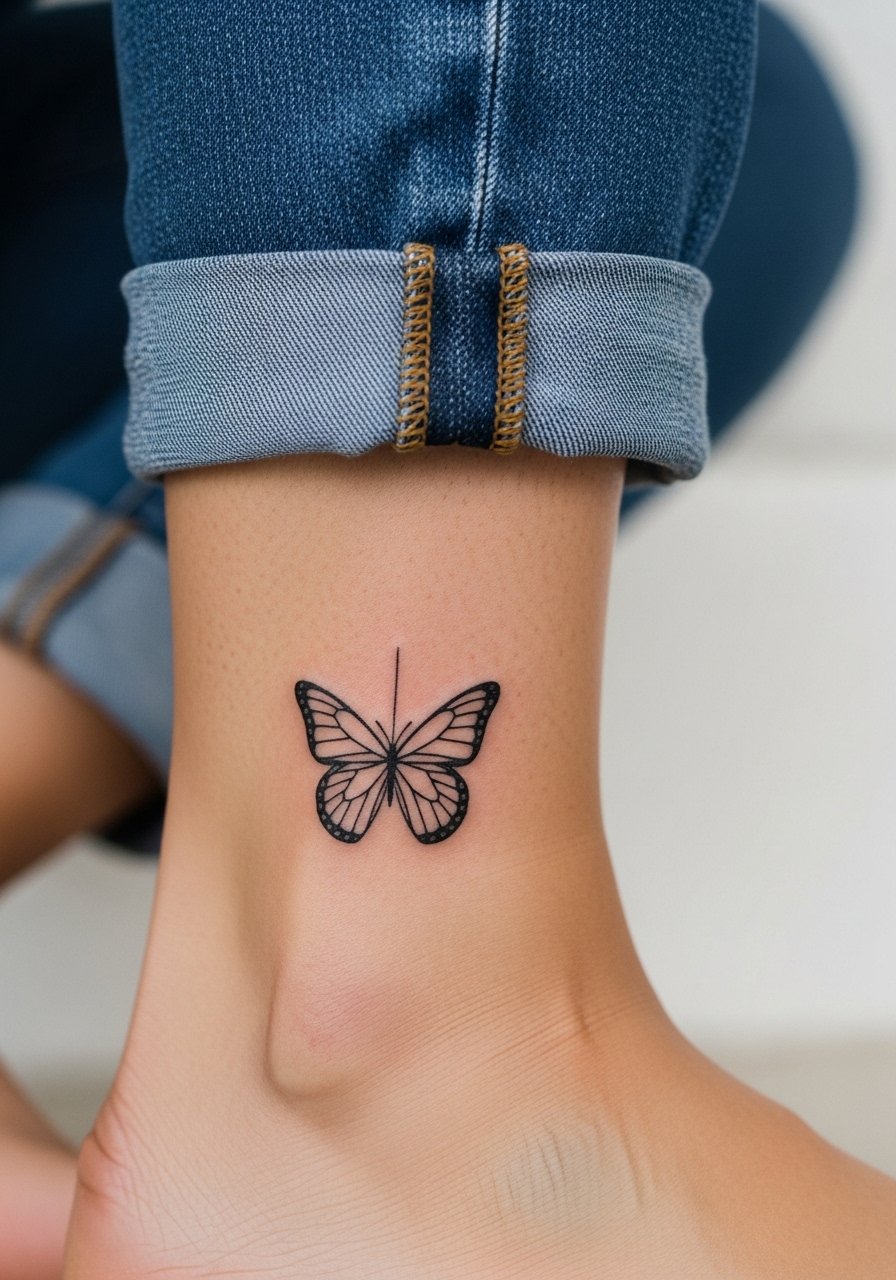
Ankle pieces look charming with simple silhouettes. Tell the artist you want a slightly raised wing tip to read from the side and avoid dense shading that can smudge under the thin skin there. Pain is moderate because of bone proximity and session time is usually 30 to 50 minutes. Expect friction from shoes and socks to speed fading, so ask about placement a few centimeters higher if you wear ankle boots often. During the session, wear loose drawstring linen pants you can roll up without rubbing the fresh work.
5. Tiny Blackwork Butterfly on the Back of the Neck
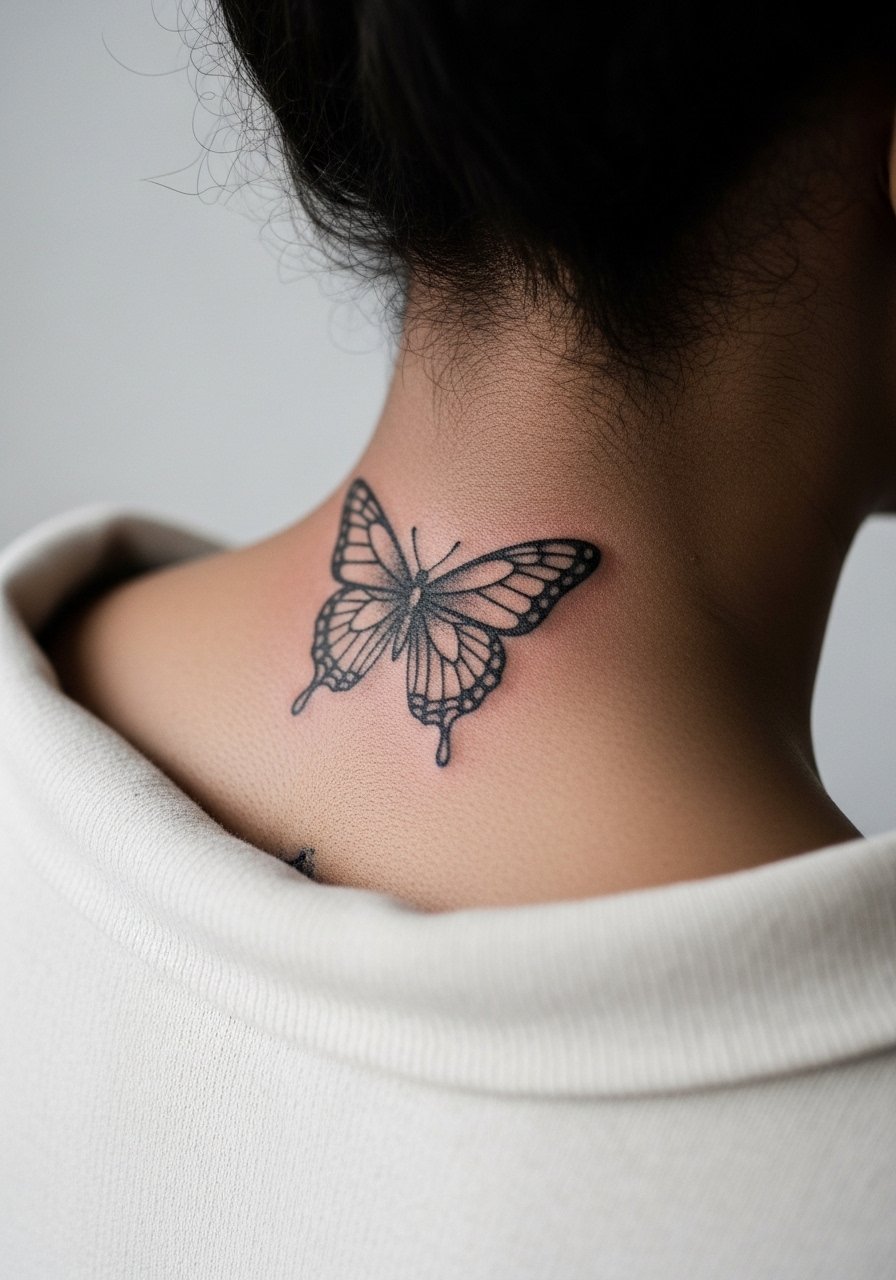
This is a discreet spot that flips between visible and covered depending on hairstyle. Blackwork with bold contour lines survives better here than single-needle veins because the neck gets a lot of movement. Expect moderate pain and a short session. A common error is packing too much interior detail in a tiny area, which can become a smudge. For showing it off, a low bun or cropped haircut makes the piece readable. If you plan to keep it covered for interviews, consider the visibility trade-off first.
6. Micro Butterfly on the Side Ribcage

Ribcage pieces are intimate and can hold delicate lines nicely if spaced correctly. Full disclosure, artists split into two camps about fine line on ribs. One camp warns the skin stretch and breathing motion make lines blur quickly. The other camp says with correct needle depth and spacing the work settles well. Ask explicitly where your artist stands and what their healed examples look like. The session is more painful than forearm work and can take 45 minutes to 90 minutes with breaks. For the appointment wear a cropped sports bra so the artist can access the area without you being uncomfortable.
Pre-Session Essentials
Small placement pieces above, like wrists and ribs, ask for different prep than larger work, so a few items make the session and first week easier.
-
Stencil transfer paper kit. Lets you and the artist preview exact placement on skin, which matters for tiny butterfly wings and finger edges.
-
Topical numbing cream. Applied as instructed before the session it can reduce discomfort for sensitive zones like the ribs without affecting the artist's linework.
-
Thin protective film roll. Useful for fingers and ankles that will see friction from clothing and shoes in the first few days.
-
Fragrance free gentle body wash. A mild cleanser keeps fine line work clean during the healing window without stripping moisture.
-
Aquaphor healing ointment. A thin initial layer helps lock in moisture for small black and fine line work during the earliest days.
7. Mini Watercolor Butterfly on the Upper Forearm
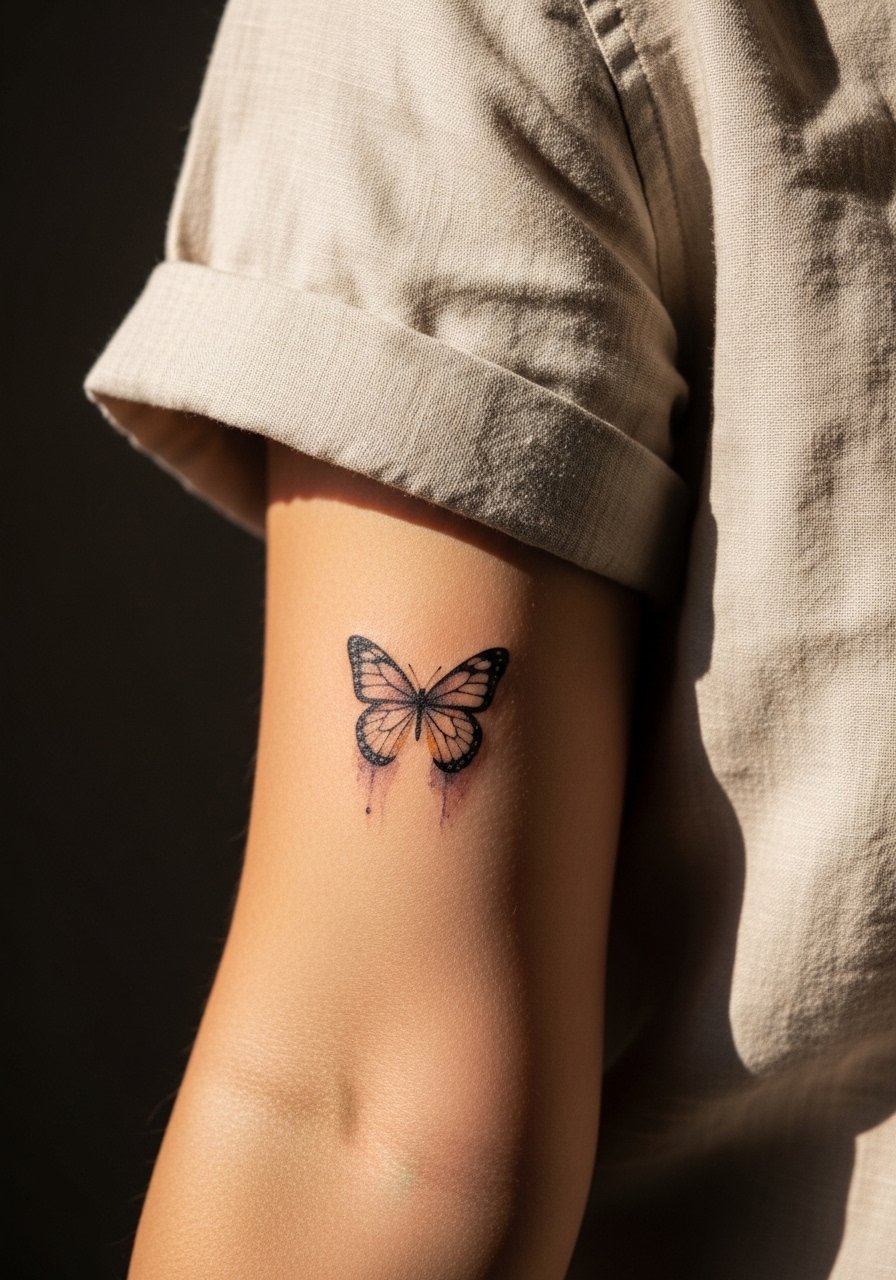
Watercolor effects are soft and airy at first but tend to diffuse faster than pigmented blackwork. For a mini watercolor butterfly keep the color pools small and pair them with a thin black contour so the shape reads over time. At six months expect muted color, at two years plan for a modest fade if you are in direct sun often. The session is relaxed and usually under an hour. For showing it off, rolled sleeves and a light linen shirt frame the forearm without competing with the color.
8. Single-Needle Butterfly on the Collarbone

The collarbone gives a delicate, jewelry-like placement but the skin can be thin and unforgiving. Ask for single-needle with light stipple shading and a touch more line weight where the wings meet the body so the silhouette holds. Pain ranges from low to moderate and session time is short. Avoid asking for dense shading inside the wings if you want clarity at year three. For the session wear an open-neck blouse you can pull aside without stripping down.
9. Tiny Geometric Butterfly on the Outer Hand
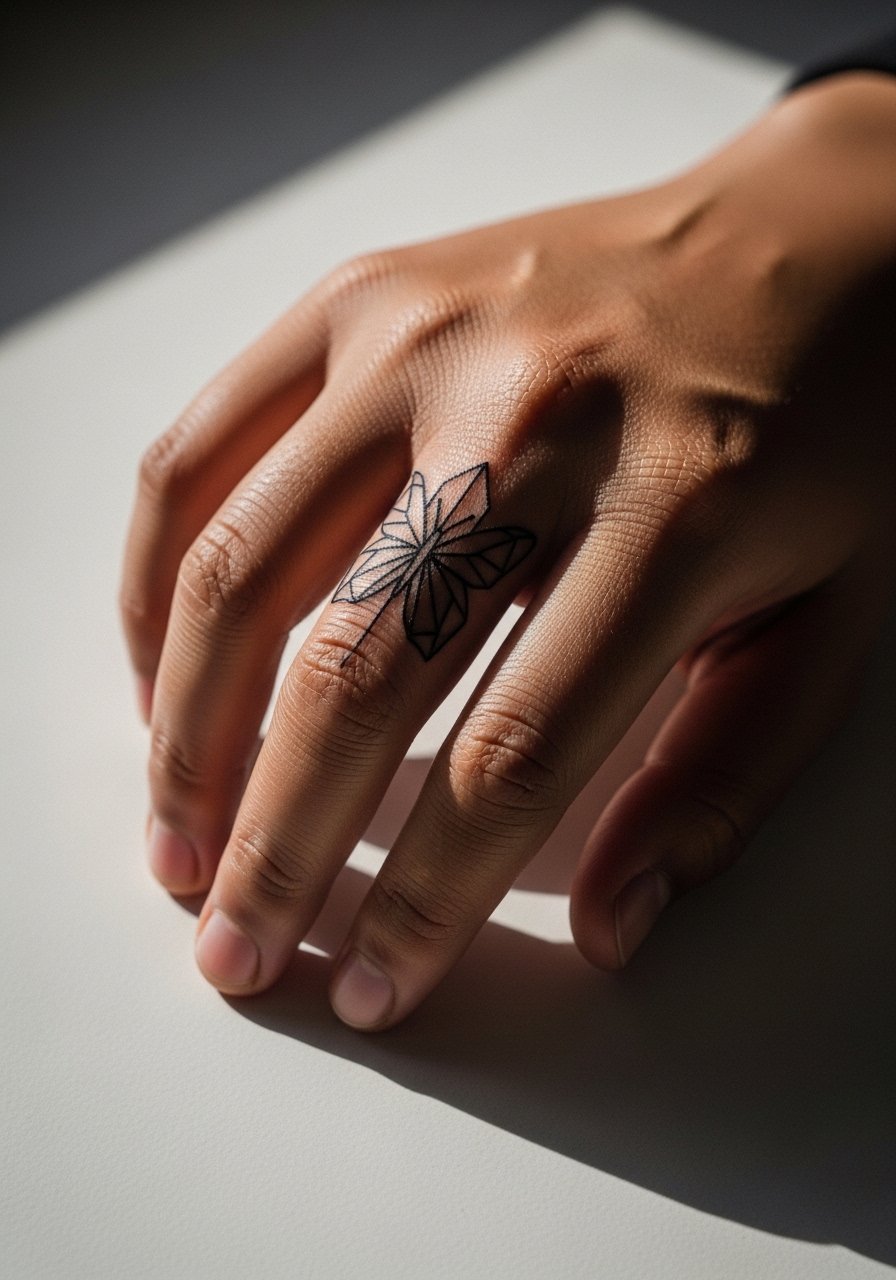
Hand tattoos age differently than arm or chest pieces. The skin here gets sun, washing, and abrasion, so keep geometry bold and avoid micro-crosshatching if you want longevity. A common mistake is cramming dot work into a tiny hand piece, which can blur into a dark patch. Expect touch-ups sooner than with forearm work, often within a year. The session is sharp and quick. Pair this look with a minimalist watch strap that does not press against the tattoo while it heals.
10. Tiny Butterfly on the Side of the Foot
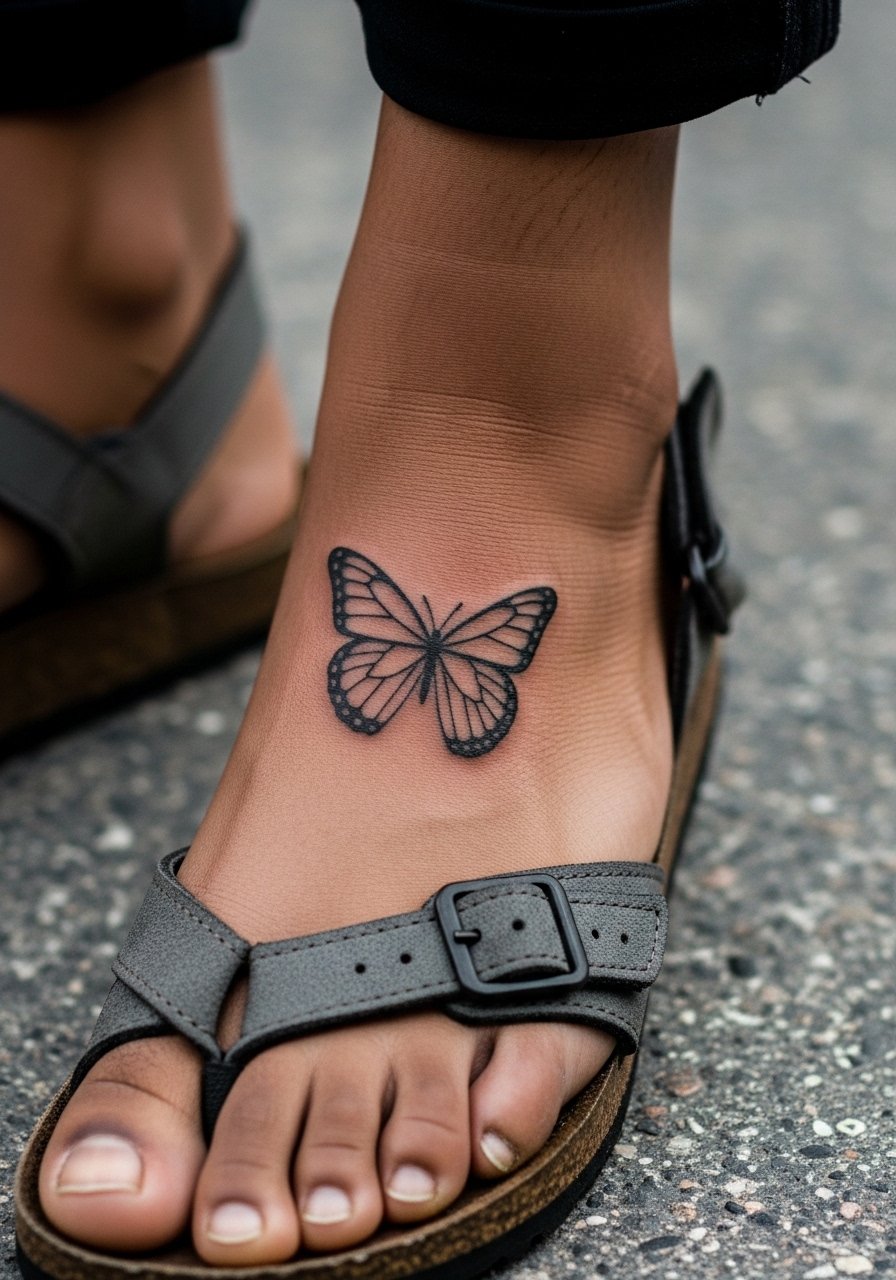
Foot placements are visually discreet but notorious for slow heals because of shoe friction. Keep the design simple and slightly higher on the side to avoid rubbing from low-cut shoes. Pain is moderate and the session is short. Expect more scabbing and a touch-up window in the first year. For the session wear open-toed sandals so the area breathes and the artist can work without sock interference.
11. Micro Dotwork Butterfly on the Upper Shoulder

This placement is classic and forgiving. Dotwork or stipple shading reads well on the shoulder because the skin is less prone to friction. Ask your artist for broader spacing in the dotwork to prevent merging at year three. Pain is mild and session time is short. A frequent mistake is over-packing dots too densely for the scale. Wear a loose tank top to the appointment so the artist can work without you getting hot or constrained.
12. Minimal Outline Butterfly on the Inner Bicep

The inner bicep hides well and offers a flat surface but the skin can be softer and more prone to blowout if needle depth is inconsistent. Mention blowout risk to your artist and ask for slightly more spacing between lines. Sessions here are moderate in discomfort and usually under an hour. A common mistake is choosing hair-thin single-needle lines for a very small butterfly. If longevity matters, aim for a balanced line weight and plan a touch-up around year two.
13. Tiny Outline Butterfly Above the Ankle Bone
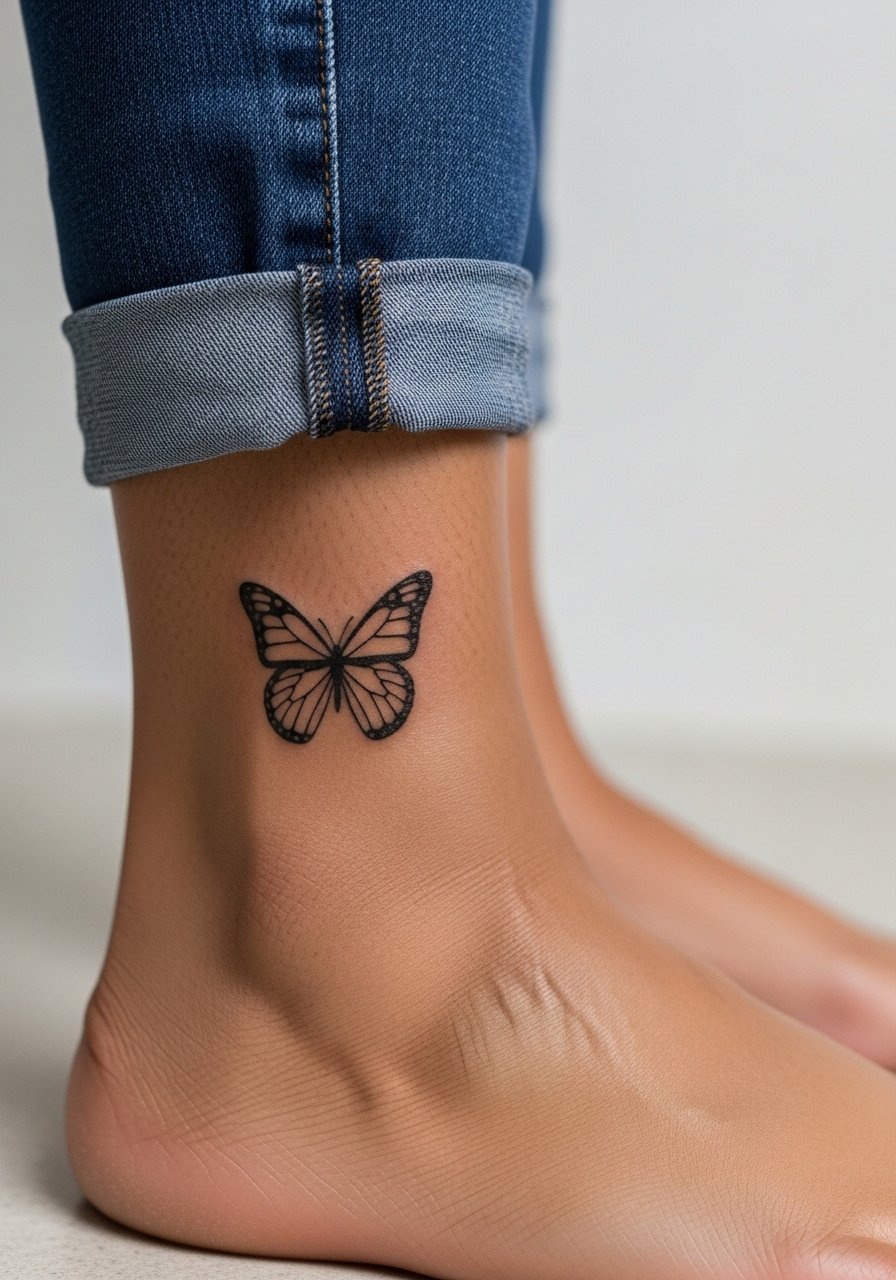
This is a low-visibility spot that still reads when you wear cropped pants or skirts. Keep the outline open and avoid interior black fill at this scale. Friction from boots speeds fading, so ask to place the design slightly higher if you wear ankle-covering shoes often. Expect a short session and mild pain. For showing off, pair with sandals or cropped pants that let the piece peek through without constant abrasion.
14. Mini Butterfly Over a Clavicle Scar
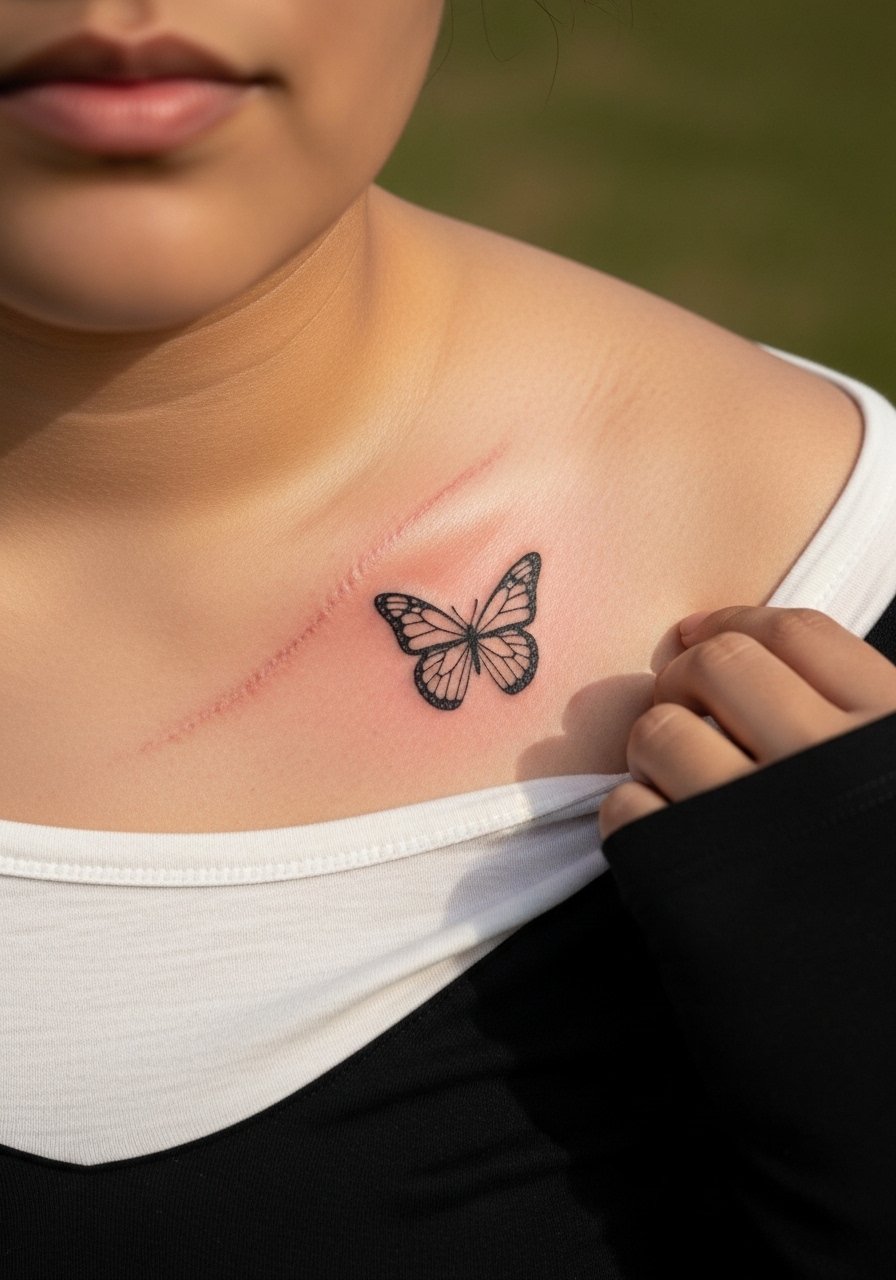
Scar tissue requires a bespoke approach. Tell your artist about the scar and bring photos of healed examples. One common mistake is expecting identical saturation over scar tissue as on normal skin. Sessions can take a little longer because the artist may work more slowly to find stable tissue. Pain varies. If the scar is raised, ask for slightly bolder linework and avoid tight micro-details.
15. Micro Butterfly on the Upper Thigh
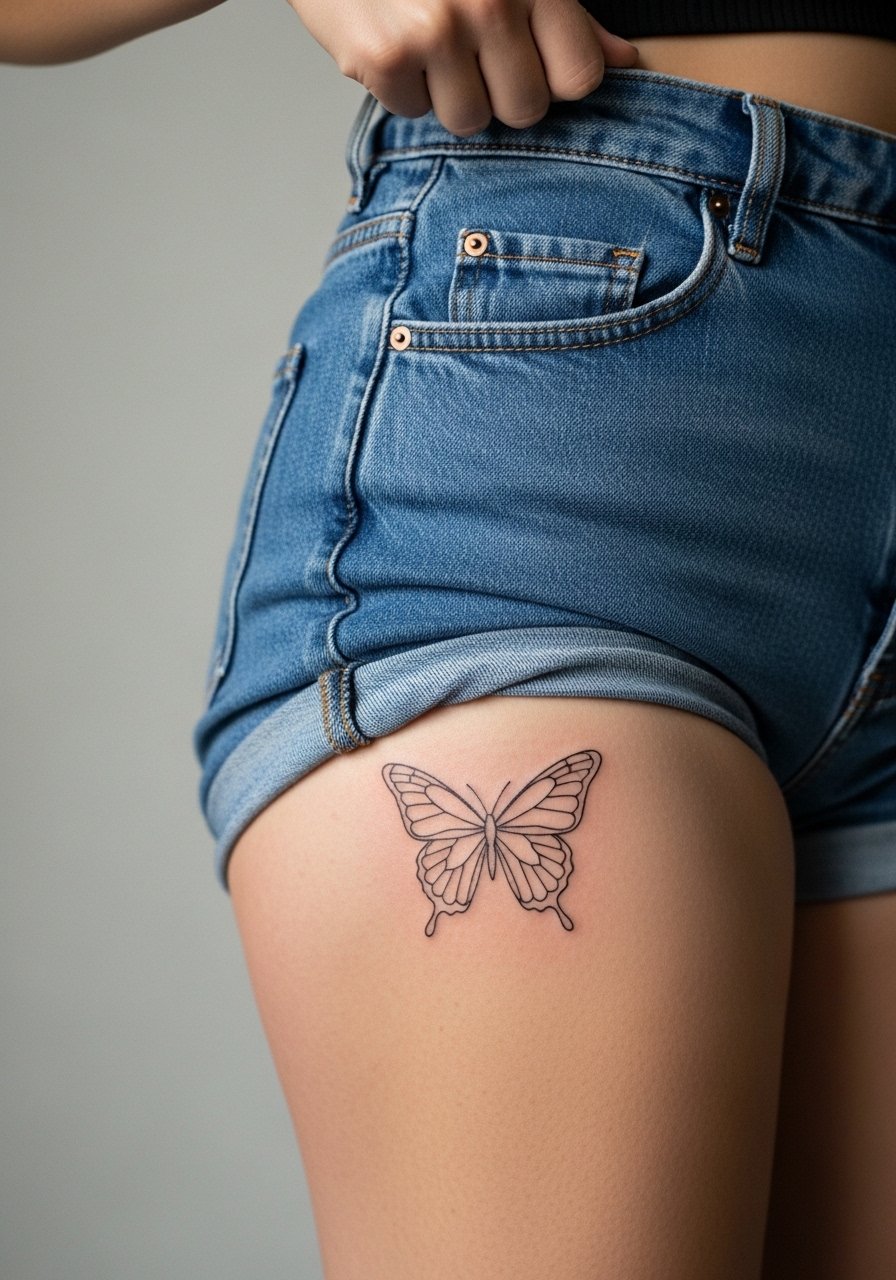
Thigh placements are forgiving for small designs and age well if you avoid micro-detail. The session is comfortable for many people because you can lie down. Watch for stretch from weight change or pregnancy if those are concerns. A common mistake is requesting ultra-dense shading in a tiny area. For the session, wear high-waisted shorts so the artist can access the outer thigh without you fully undressing.
16. Minimal Butterfly on the Sternum Edge
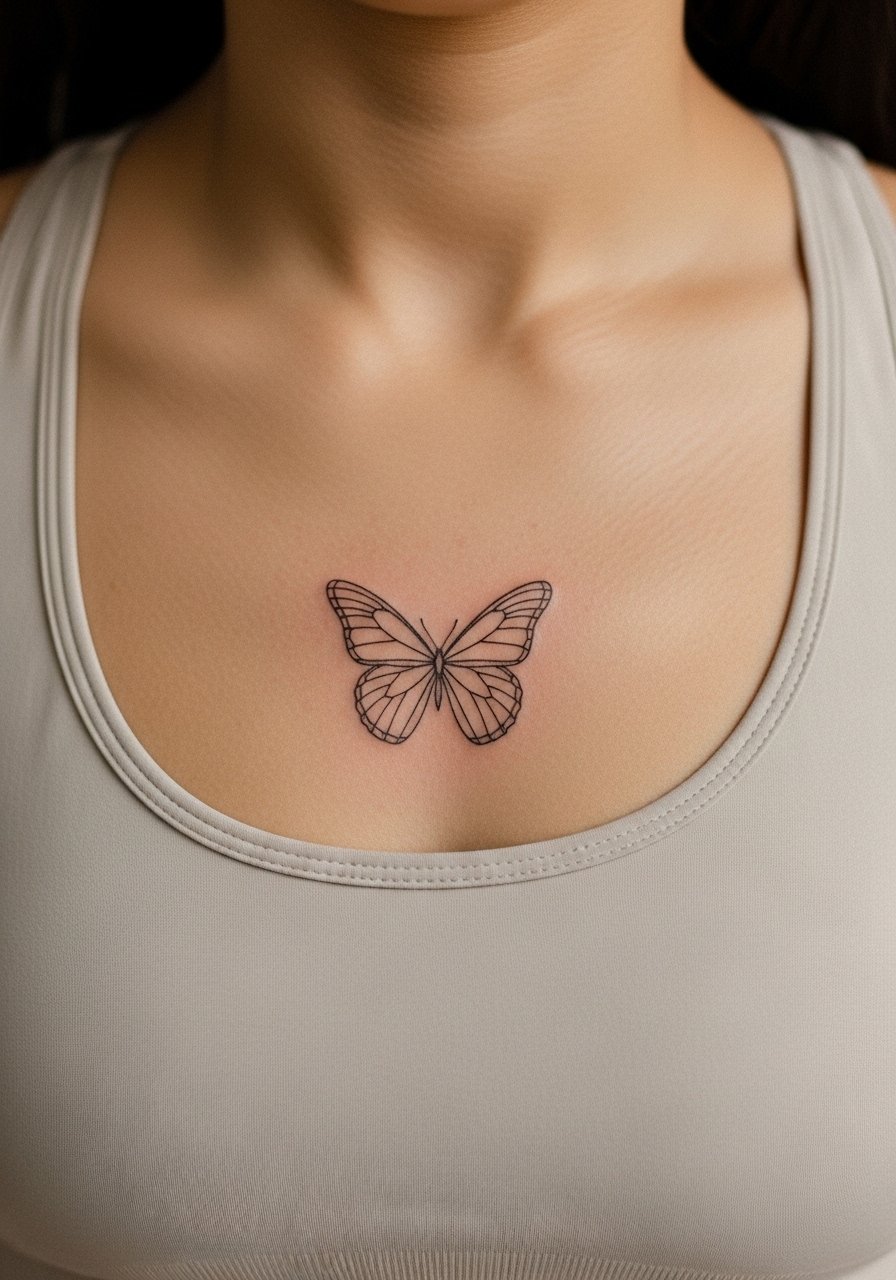
Sternum and underbust work is intimate and sensitive. Expect higher pain and longer breaks during a session. Artists differ on fine line density here because movement and skin tension can alter healed results. Name both camps in the consult. If you want longevity, choose slightly wider spacing in the wing veins and plan a touch-up if bands or bras press on the area regularly. For the session bring a fitted sports bra you can pull down a bit so the artist has room without you being uncomfortable.
17. Tiny Butterfly Near the Lower Back, Above the Waistline

Lower back pieces sit in a spot that sees movement and occasional sun exposure. Simple outlines hold best here, and avoiding dense interior work reduces the chance of a smudge over time. Sessions are usually brief and pain is moderate. If your clothing habit includes low-rise jeans, place the butterfly just above the waistline to avoid constant friction. For the appointment wear a tank top and high-waisted bottoms so the area is easy to expose and keep private otherwise.
Frequently Asked Questions
Q: How small is too small for a fine line butterfly before it just becomes a smudge?
A: In my experience, pieces smaller than about 1.5 centimeters across with single-needle veins risk losing detail on most body parts. If you want a very tiny mark, opt for a simple silhouette without interior veins or plan for a touch-up at year one.
Q: Do finger and hand butterflies always need touch-ups sooner than forearm ones?
A: Yes, hands and fingers face more abrasion and washing, so expect earlier touch-ups. Ask your artist about planned maintenance and whether they prefer slightly bolder linework for these spots.
Q: Are watercolor butterflies worse at aging than black outline ones?
A: Watercolor effects fade softer because they rely on color pools. If longevity matters, pair the watercolor with a thin black outline so the shape remains readable as pigment fades.
Q: Will a butterfly over a scar look the same as on regular skin?
A: Not exactly. Scar tissue can accept pigment unevenly. Bring photos of the scar and ask for healed examples from the artist. They will often adjust line weight and spacing for the best result.
Q: What should I wear to a sternum or ribcage appointment?
A: Wear a fitted sports bra or a cropped top that can be lifted so the artist has clean access while you stay comfortable. Loose clothing can be harder for the artist to manage mid-session.
Q: How do I find artists who specialize in tiny, long-lasting fine line work without naming one?
A: Look through local studio portfolios for healed photos of small single-needle pieces, search community directories and hashtag galleries for healed examples, and bring clear references to consult. Ask where the artist has photographed healed work and whether they offer a standard touch-up window.