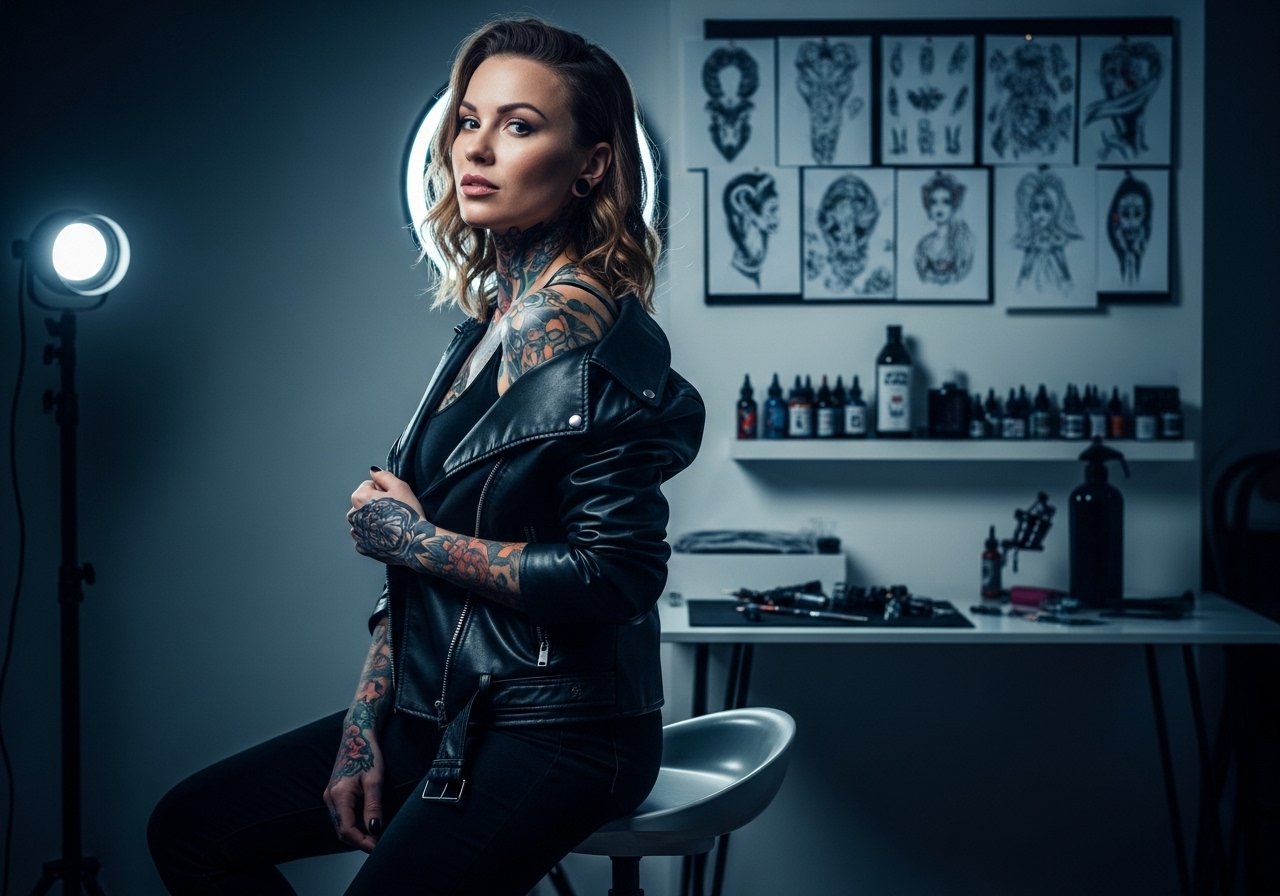
Fine line name tattoos are all over feeds right now, but the pieces that still read clean at year five are rarely the flashiest ones. Many moms worry about names crowding a forearm, fonts dating, and whether fine line will fade faster than expected. This list of 17 forearm ideas balances what looks fresh with what lasts, and it tells you what to say in the consultation so your name holds up.
1. Cursive Baby Name with Heart Trail
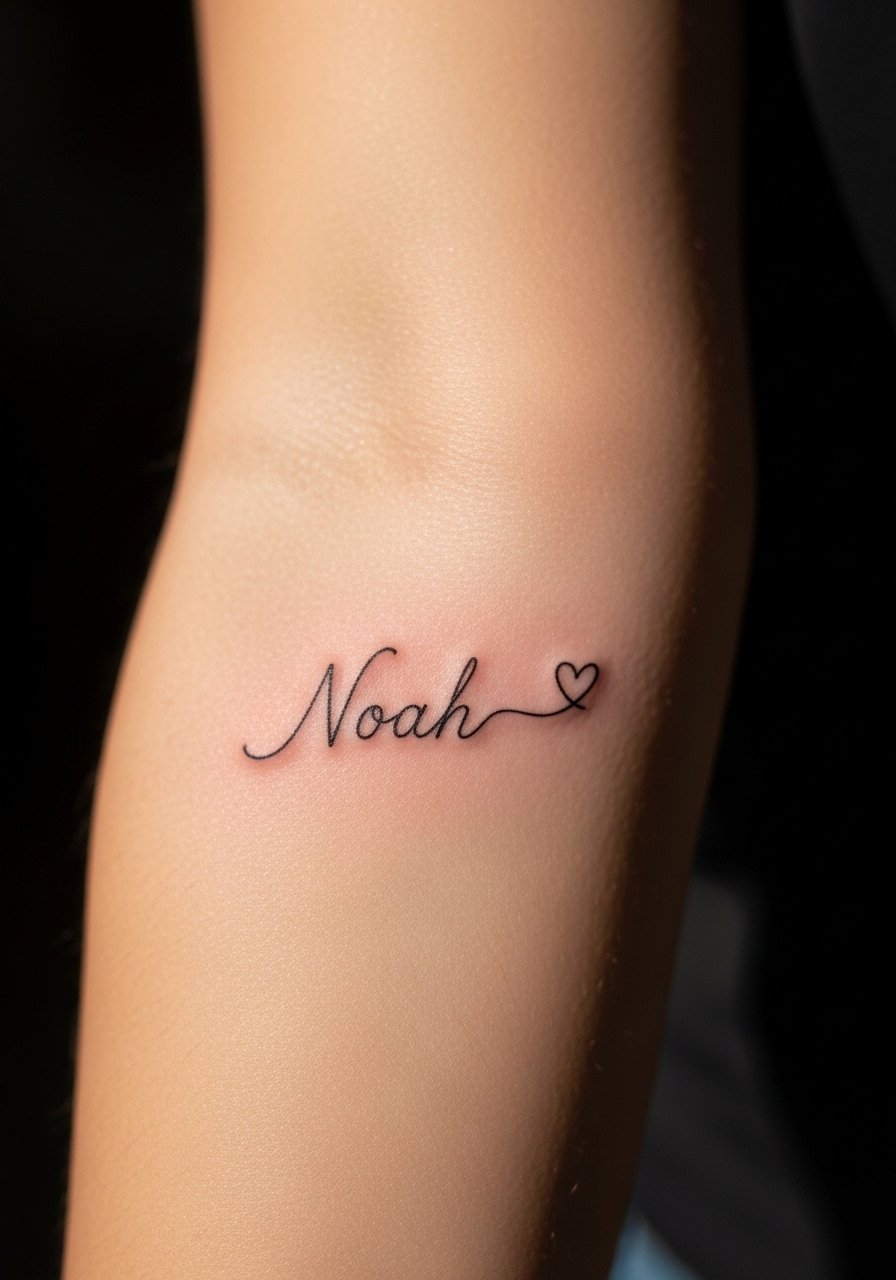
This classic pairs a flowing script name with a tiny heart that looks intentional instead of decorative. I suggest telling your artist you want the script sloped to follow the inner forearm curve and to keep the heart outline thin so it ages the same as the letters. A common mistake is asking for ultra-tiny single-needle cursive across several inches, which blurs faster. Expect a one-session piece that hurts less on the inner forearm than on bone-adjacent spots. Over time the lines soften, so plan a touch-up around year three if your lifestyle includes heavy sun exposure.
2. Infinity Loop With Embedded Name

This design hides a name inside a symbolic form for a neat visual solution when you want subtlety. When you consult, ask for the name to sit along one curve rather than cramped inside the knot. Some artists prefer a slightly thicker single needle for longevity. There is a current debate about fine line longevity and another debate about aftercare. One camp favors a protective film like Saniderm to speed healing. The other camp prefers dry healing and warns that sealed film can trap moisture and bacteria. Ask your artist which method they use and why before you book so you know what to expect during the first week.
3. Thin Outline Heart Encasing a Script Name
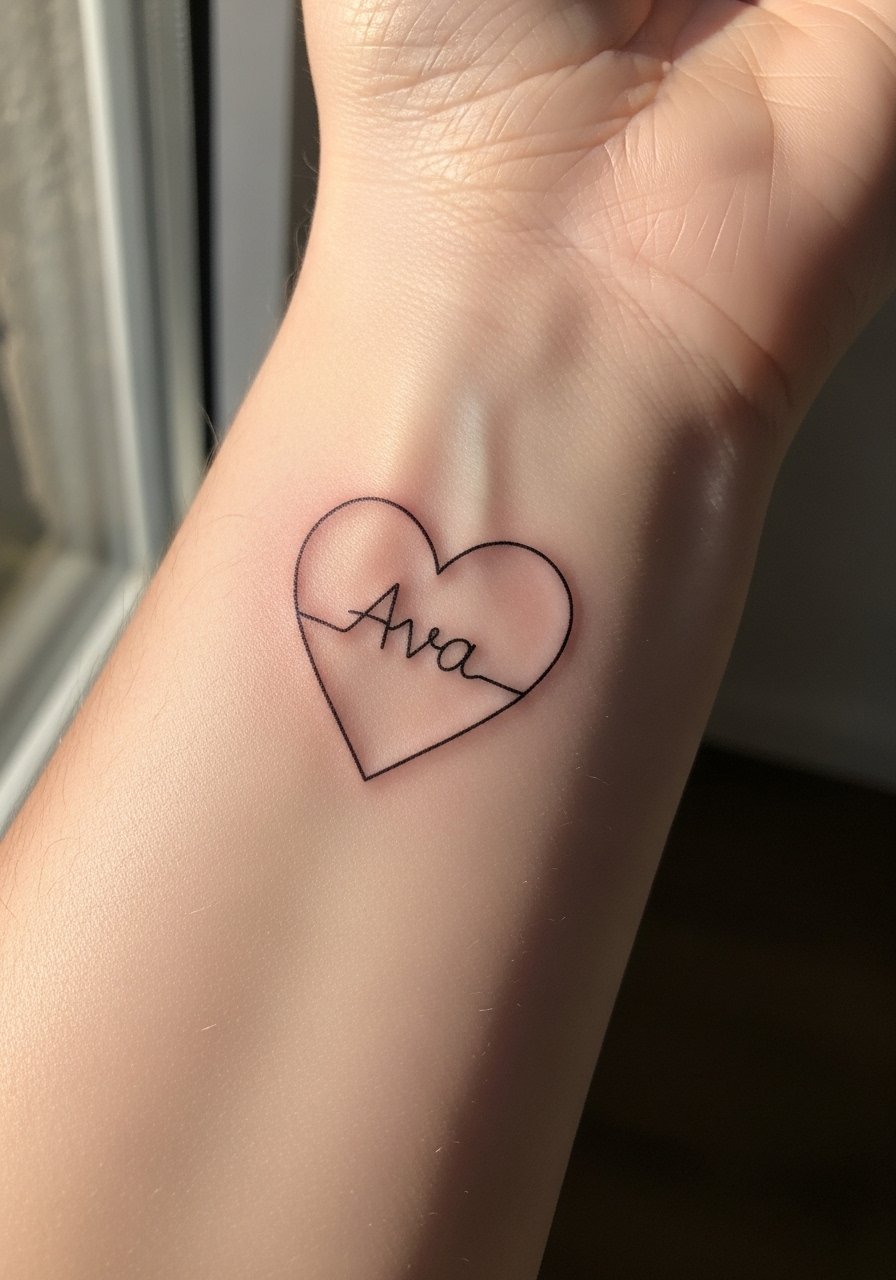
This minimalist look is great for moms who want a compact symbol that still reads as a name. Mention to your artist that the heart should be slightly larger than the script so the letters never touch the outline. The usual mistake is shrinking the text until legibility suffers after six months. The wrist transition can be more sensitive, so plan a short session and wear a sleeveless top to the appointment. For showing it off, cuff bracelets on the opposite wrist or a thin bangle stack make the piece read intentional when you roll sleeves up during warm months.
4. Baby Footprints Arching Over a Name
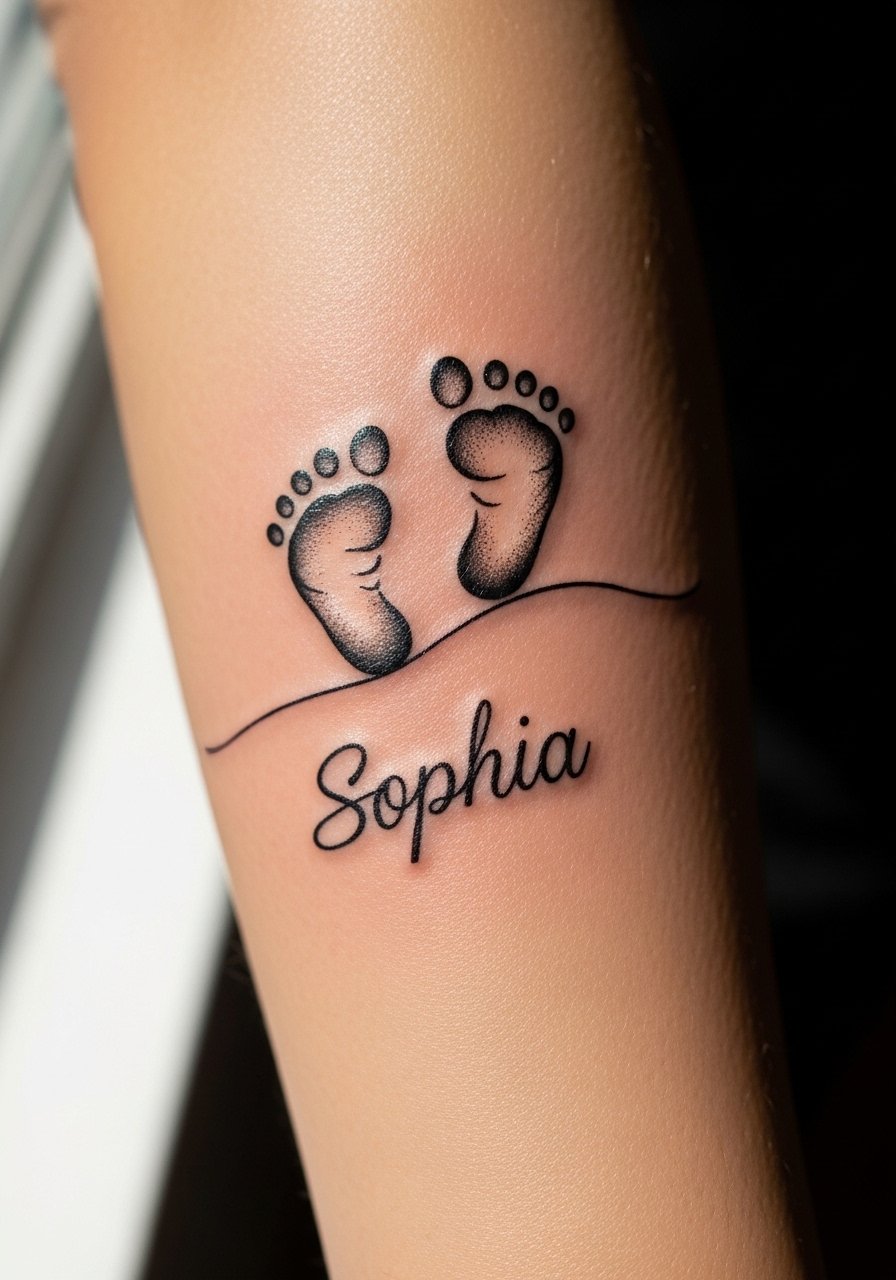
Footprints give a narrative feel and fit well on the forearm center without taking over. In the consultation, bring a size reference so the artist knows you want the prints tiny and illustrative rather than full nursery scale. A real mistake is asking for heavy fill in the prints for extra realism, which creates unnecessary saturation and ages like a smudge. This area tolerates a 1-2 session approach depending on detail. For session wear, a loose short-sleeve or chambray button down you can pull aside keeps the area accessible without rubbing.
5. Heartbeat Line That Turns Into a Name
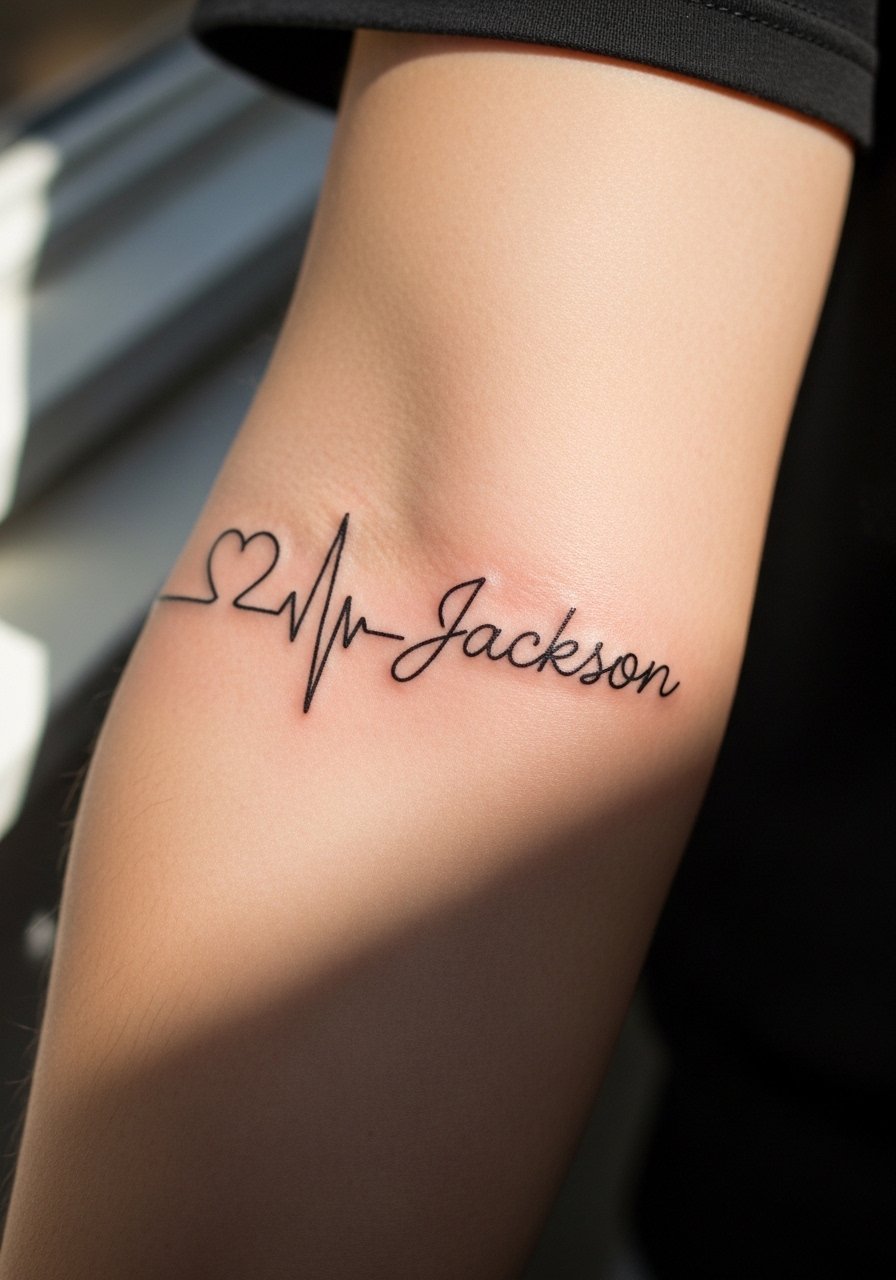
Heartbeat lines are kinetic and photograph well along the forearm length. Tell your artist you want the EKG peaks balanced visually rather than perfectly medical. The biggest mistake is making the peaks too dense near the letters, which can blur into the script over time. Expect a single session piece with some sting along the outer forearm where the needle crosses more often. This design shows well with fitted long-sleeve henleys rolled to mid-forearm and a leather cuff on the other wrist if you want an edgier look. For the appointment, bring a sleeveless tank so the artist can rotate the arm easily.
6. Three Names Arranged in a Curved Heart Formation
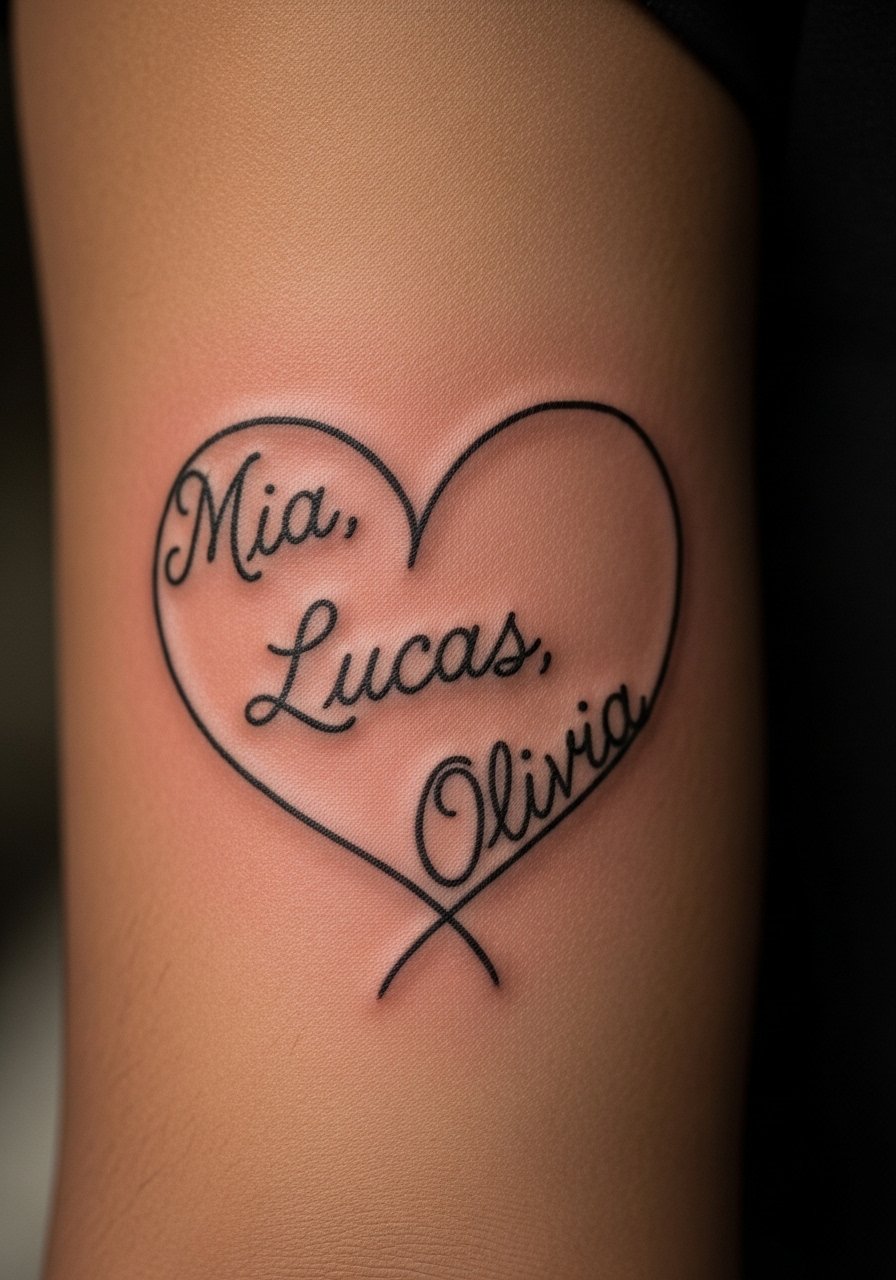
This layout solves the multi-kid crowding problem with a balanced curve. When you plan this, decide the order and spacing beforehand and have your artist sketch the curve on skin so you can check fit. A frequent error is stacking names too tightly, which makes the heart read messy as lines settle. For heavier pieces like this, expect two sessions if you want subtle red accents. Upper forearm pain is moderate and tolerable. Roll three-quarter sleeve blouses or linen tops during show-off moments to keep attention on the curve without overwhelming the chest.
Pre-Session Essentials
The five forearm designs above include both wrist transitions and upper forearm work, so a small kit smooths the session and the first week.
-
Stencil transfer paper kit. Lets you preview the name placement on skin before the needle, which is helpful for curved heart and curve-layout ideas above.
-
Topical numbing cream. Applied about 45 minutes before can ease wrist sensitivity without changing the artist's linework.
-
Thin protective film roll. Useful for keeping wrist transition pieces clean during the first week of frequent hand washing.
-
Fragrance free gentle body wash. Cleans the area without irritating fine lines that need gentle care.
-
Aquaphor healing ointment. A thin layer in the first few days helps protect fine line work without clogging the healing channels.
7. Roman Numeral Birthdate Stacked Over a Name
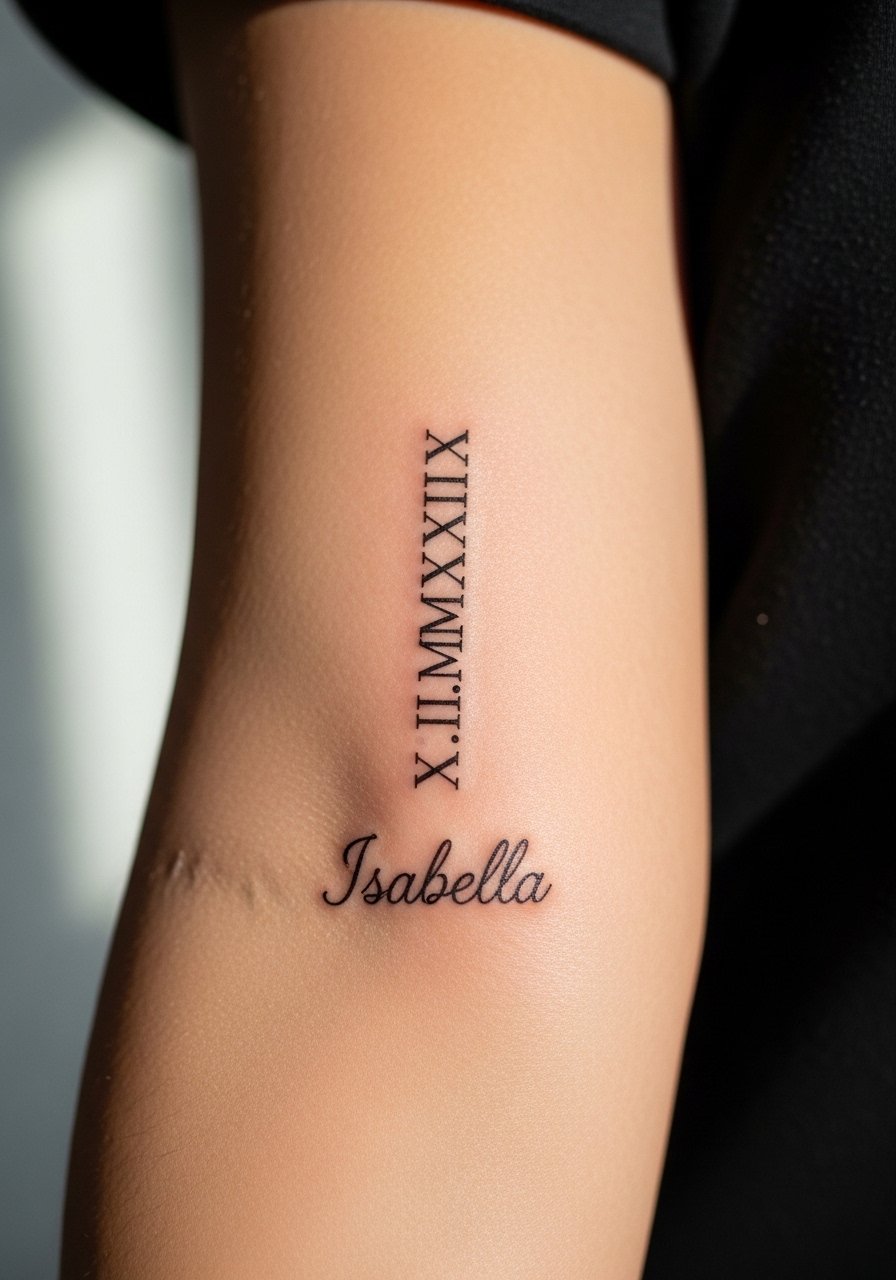
Roman numerals add privacy and keep the visual weight low for a vertical forearm placement. Ask your artist to use a slightly wider serif for numerals so they remain readable as lines soften. A common error is tiny numerals with thin serifs that blur into a gray line. Inner forearm vertical pieces age better than wrist bands because of less friction. For session wear, a slim-fit cardigan open over a tank gives easy access and keeps you comfortable during a longer sit.
8. Names Flowing on Interlocking Arrows
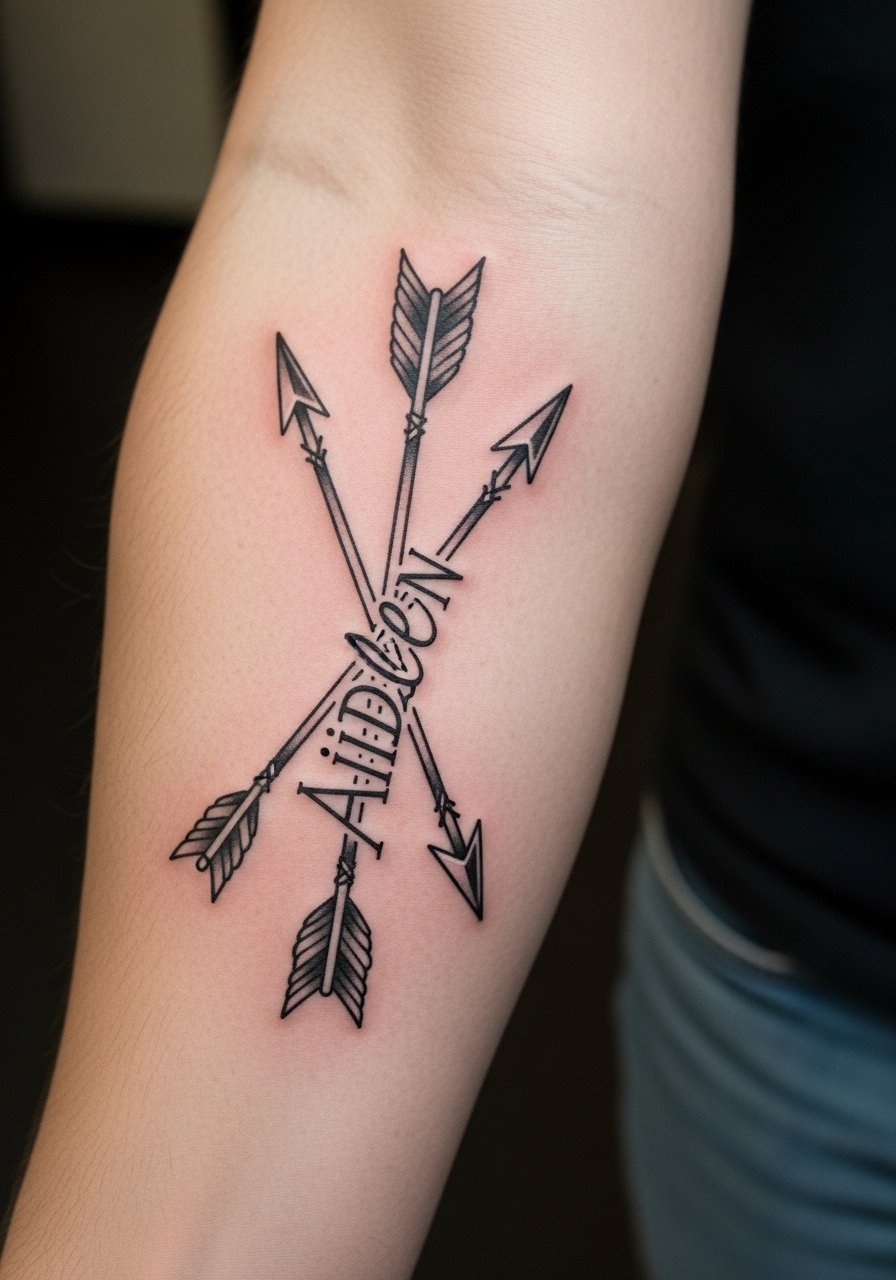
Interlocking arrows are an artistic way to place multiple names without hearts. Tell your artist how many arrows you need and which name maps to which arrow before stenciling. The usual mistake is lining arrows too close together, which makes negative space vanish as the piece heals. This design works as a sleeve starter and may need 1-2 sessions. Outfit-wise, fitted henleys rolled to the forearm show off the arrows while keeping the look grounded with a leather cuff on the opposite wrist.
9. Thumbprint Heart with Encased Initials
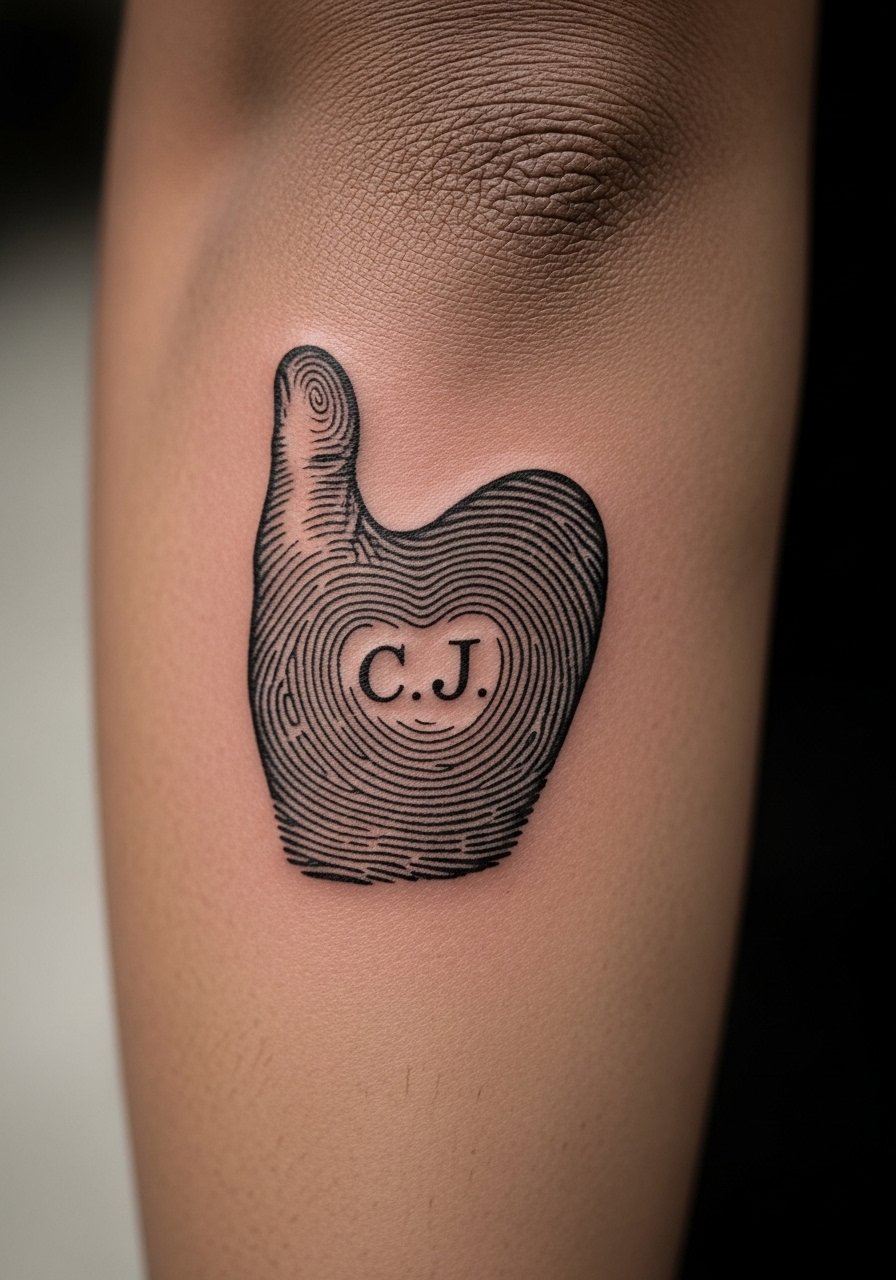
Using an actual scanned thumbprint adds unmatched personalization. Bring a clear high-contrast print to the consultation so the artist can translate it into linework. A mistake people make is submitting a smudged print that loses ridges, which forces the artist to invent details that may not read personal. Micro-realism here needs a steady hand and a single session. Because of the tiny detail, expect a touch-up at year two if you use a lot of lotion or sun exposure.
10. Spiral Name That Includes Birthdates
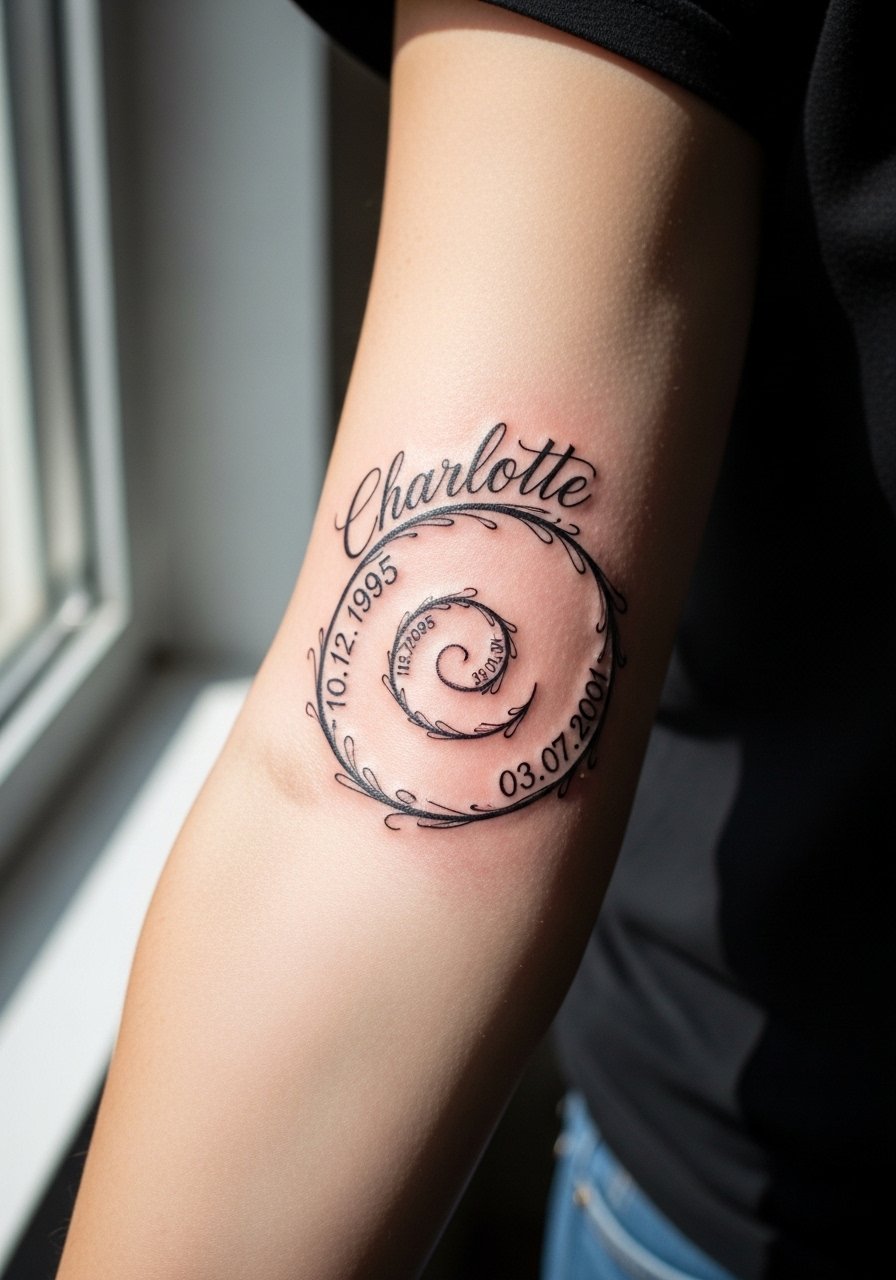
Spirals pack names and dates into a compact vertical or curved space, which is helpful for smaller arms. Tell your artist whether you want the spiral tight or more open to preserve negative space. The common error is overcompacting all elements, which makes the spiral illegible after one to two years. This design often needs two sessions for crispness. For session wear, a loose short-sleeve tee keeps the area flat and easy to work on. A minimal stud earring or simple chain keeps attention on the forearm without visual noise.
11. Kid's Drawing Outline with Name Below

Turning a genuine kid drawing into a forearm piece gives a one-of-a-kind look that photographs well. Bring a scanned copy and ask the artist to preserve the imperfect lines rather than smoothing everything. A mistake is asking for high saturation color in a childlike scrawl, which can age unpredictably. This piece often runs longer and may require color sessions if you choose to add pigment. For showing it off, half-unbuttoned chambray shirts or rolled sleeves frame the artwork while keeping it the focal point.
12. Single Name on a Cursive Banner

A cursive name on a banner gives boldness without losing elegance. Ask your artist to keep the ribbon edges soft and the script centered with slight breathing room. People often ask for very narrow banners that compress the letters, causing distortion as the skin moves. This design is forgiving with a single session and photographs cleanly. Pair it with rolled-up sleeves and a cuff bracelet on the opposite wrist to balance the horizontal line.
13. Name in Child Handwriting Converted to Script

Using a child’s actual handwriting is emotionally specific and hard to replicate convincingly. Scan the handwriting and ask the artist to trace the lines exactly rather than smoothing them. The usual mistake is converting the handwriting into a stylized script, which loses the personal character. Handwriting pieces tend to need touch-ups sooner if done extremely fine. Inner forearm placement keeps the letters readable in photos. For the session, wear a rolled-sleeve cotton tee so the artist can access the area without tugging at fabric.
14. Birth Flower Accent Behind a Script Name
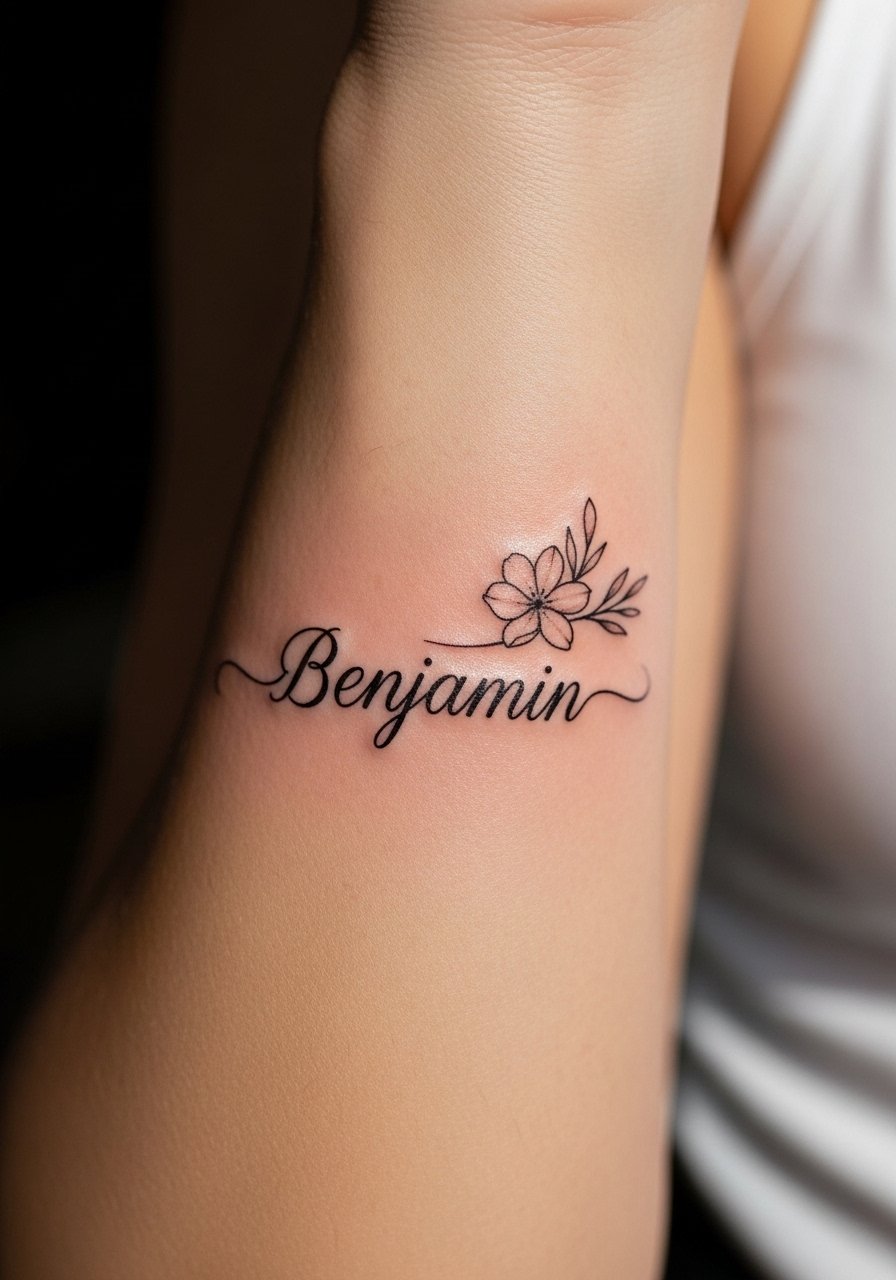
Add a tiny botanical motif for a subtle color or blackwork accent that ties the name to a birth month. Tell the artist whether you want the flower filled or left as linework. A common error is oversaturating the flower in color next to delicate script, which creates uneven aging. This is a small session and works well with a loose short-sleeve tee during the appointment. When showing it off, a rolled-up linen shirt in neutral tones complements the linework and keeps the focus on the combined symbol.
15. Name Threaded Along a Thin Rope or Chain
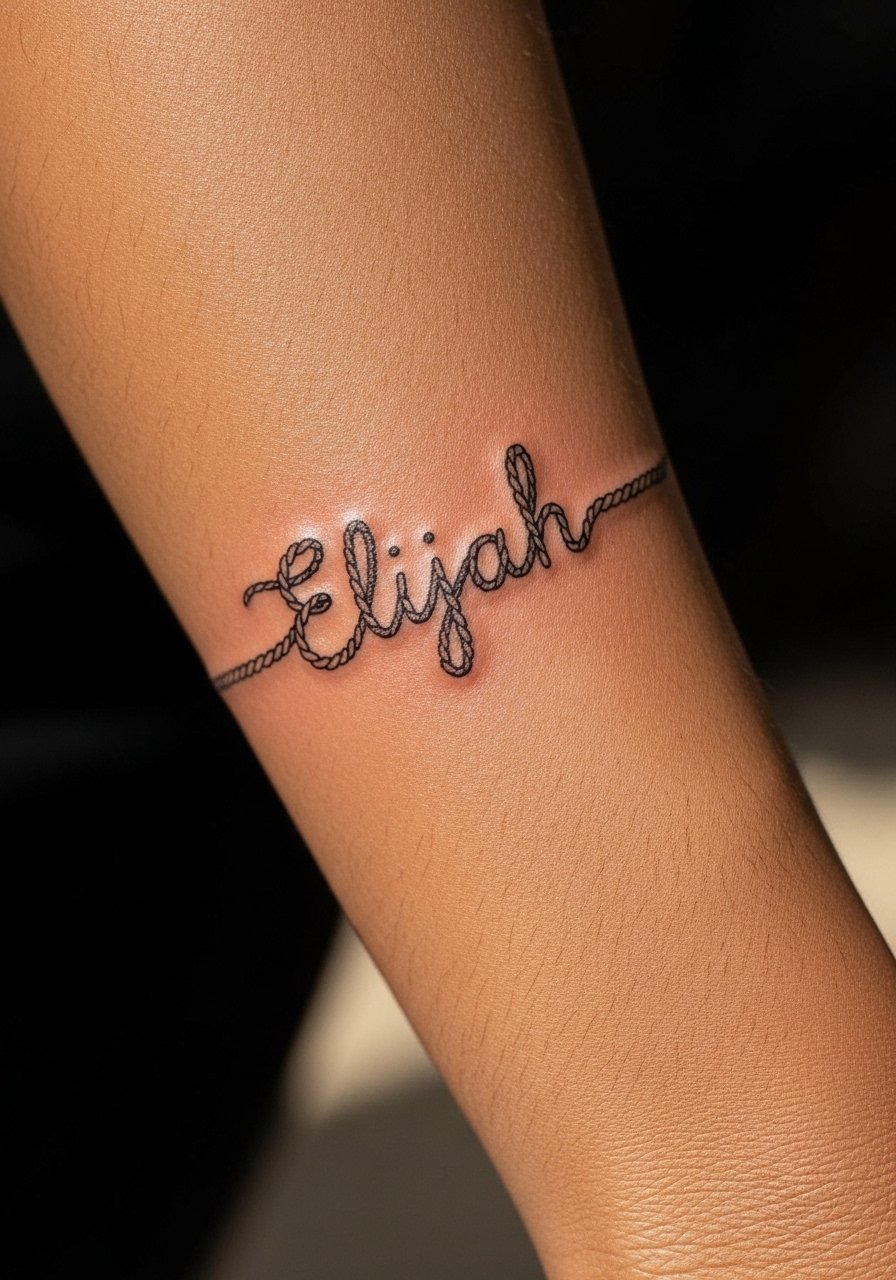
Threading a name into a rope or chain adds texture without heavy shading. During the consult, clarify whether you want the chain link suggestion or a literal rope. The biggest mistake is making links too small which then merge with letters as the ink spreads. This piece usually takes a single session and looks great with three-quarter sleeve blouses or delicate chain necklaces when you want to draw the eye upward. For the appointment, a T-shirt with easy arm extension keeps the artist comfortable while working.
16. Small Animal Icon Next to a Script Name

Pairing a name with a small animal gives personality while keeping the forearm uncluttered. Bring reference images of the exact animal style you want so the artist can match scale and line weight to the script. A common error is mixing a heavy animal silhouette with fine script, which creates imbalance. This placement is friendly to single-session work and pairs well with rolled sleeve cotton tees and thin silver bangle stacks for casual days. During the session, wear a loose short-sleeve button-up for easy access to the outer forearm.
17. Vertical Name with Hidden Coordinates or Small Date

Stacking a vertical name with a tiny coordinate or date gives privacy and a design cue that reads crisp in photos. Tell your artist the exact text for the coordinate so it stays legible in the stencil. The usual mistake is placing the numbers too close to the letters which makes both elements hard to read after two years. Vertical forearm pieces age fairly predictably but expect a small touch-up window if you are outdoors a lot. For a refined look, pair it with a slim-fit cardigan open over a tank and a thin minimalist watch on the opposite wrist.
Frequently Asked Questions
Q: How can I fit three or more kids' names on one forearm without it looking crowded?
A: Curved formations like a heart or interlocking arrows help distribute visual weight. Ask your artist for a mock stencil on skin that maps where each name will sit. Also consider mixing text orientation, for example two horizontal names and one vertical, so negative space keeps the composition readable.
Q: Will fine line script fade faster on the forearm than bolder styles?
A: From what I've seen, fine line can soften sooner than saturated blackwork, especially on high-friction areas like the wrist. It depends on placement, sun exposure, and how deep the ink sits. Budget a touch-up around year three for delicate scripts and protect the area from UV.
Q: Should I worry about my skin tone when choosing thin script for a name?
A: Yes, contrast matters. On darker skin tones, ask for a slightly heavier line weight or a bolder outline so the letters stay legible in photos. A test stencil and small patch can help you see how the lines read before committing.
Q: How do I prepare clothing for the session depending on forearm placement?
A: Wear clothing that gives the artist clean access to the area. For inner forearm work choose a rolled sleeve cotton tee so you can push sleeves without tugging. For outer forearm or elbow-adjacent pieces, a loose short sleeve button up shirt makes positioning simpler.
Q: Are there disputed aftercare methods I should know about before I book?
A: Yes. There are two clear camps. One favors protective film to speed healing and reduce scabbing. The other prefers dry healing and warns that sealed film can trap moisture and cause issues. Ask your artist which method they use and why, then follow their protocol for the best healed result.