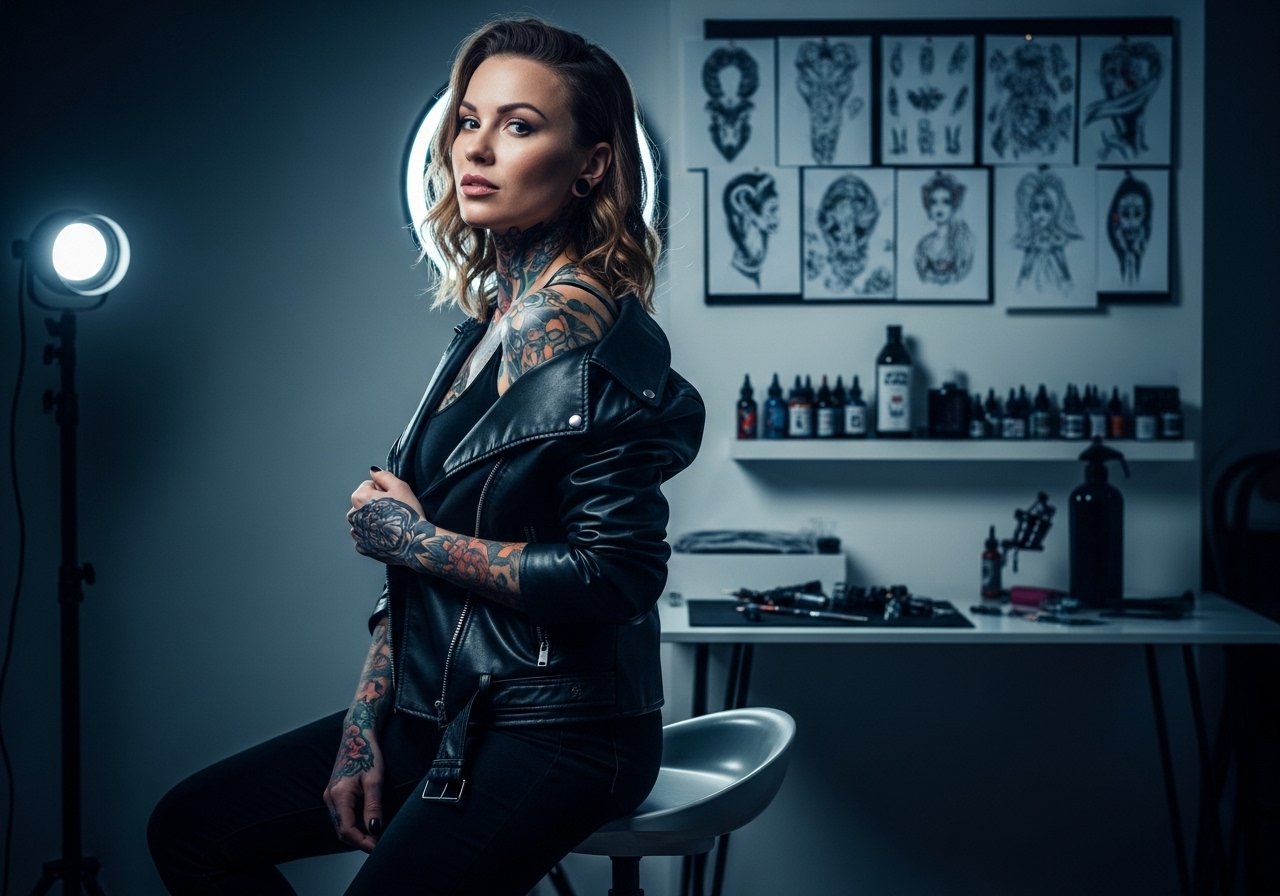
Fine line chest work is everywhere online right now, and it is worth saying the trend does not always match the long view. Some of the designs that get the most saves look delicate for a week and need touch-ups by year two, while other bold pieces settle into the body and still read clear at five. Below are realistic, illustrative options that consider scars, placement, and what you should ask for in a consult.
1. Scar-Wrapping Botanical Wreath on Upper Chest
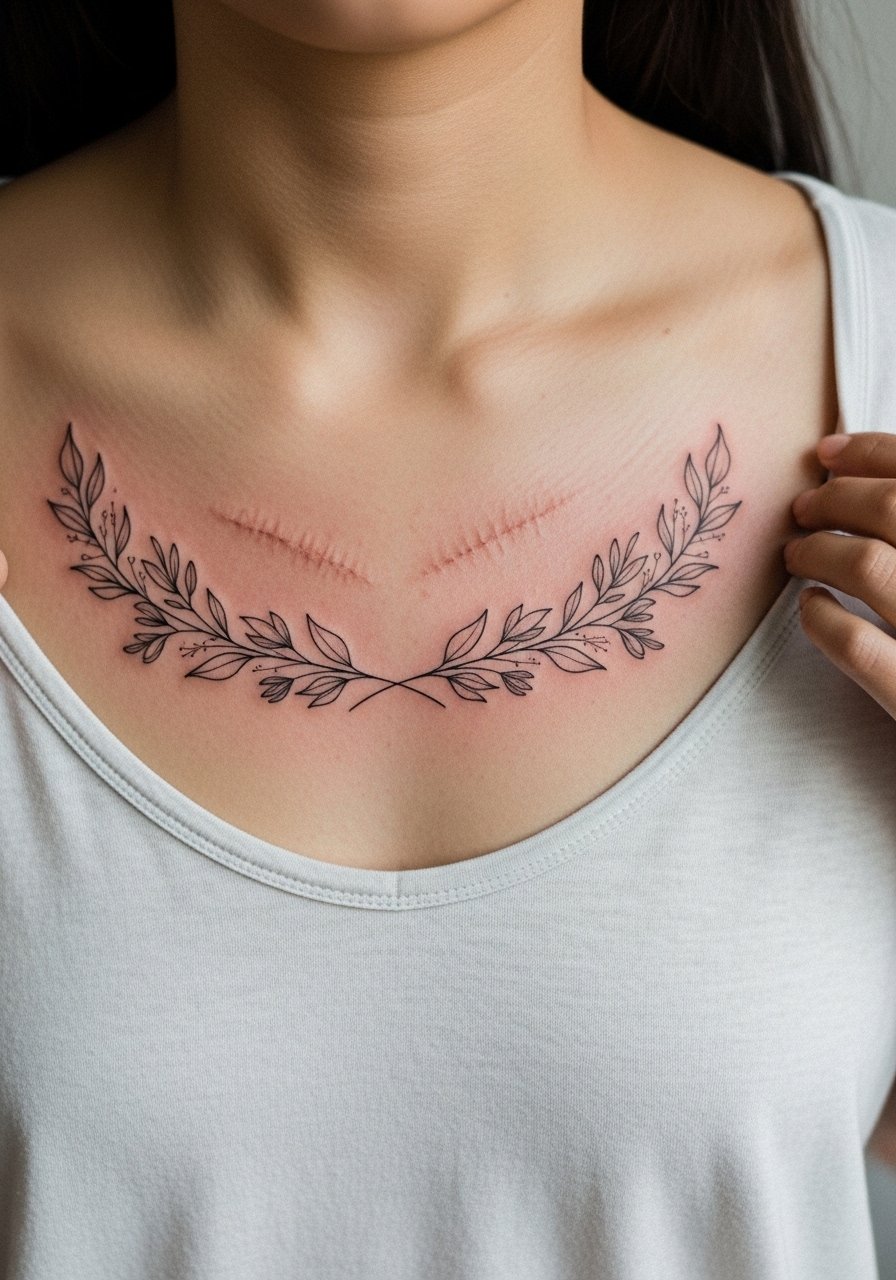
I've seen this approach more than any other at conventions, and it works when the wreath is designed to move with the scar. Tell your artist to map the scar first and design the wreath branches to curve around it, not sit directly on a thin, raised line. The common mistake is asking for a dense ring that crowds scar tissue, which leads to uneven saturation and patchy healing. Expect a moderate pain level for upper chest sessions and plan for a touch-up at year two if you want the fine leaves to read crisp. For the appointment, wear a wide-neck shirt so the artist can expose the area without you being uncomfortable.
2. Symmetrical Illustrative Chest Panels Along the Scars
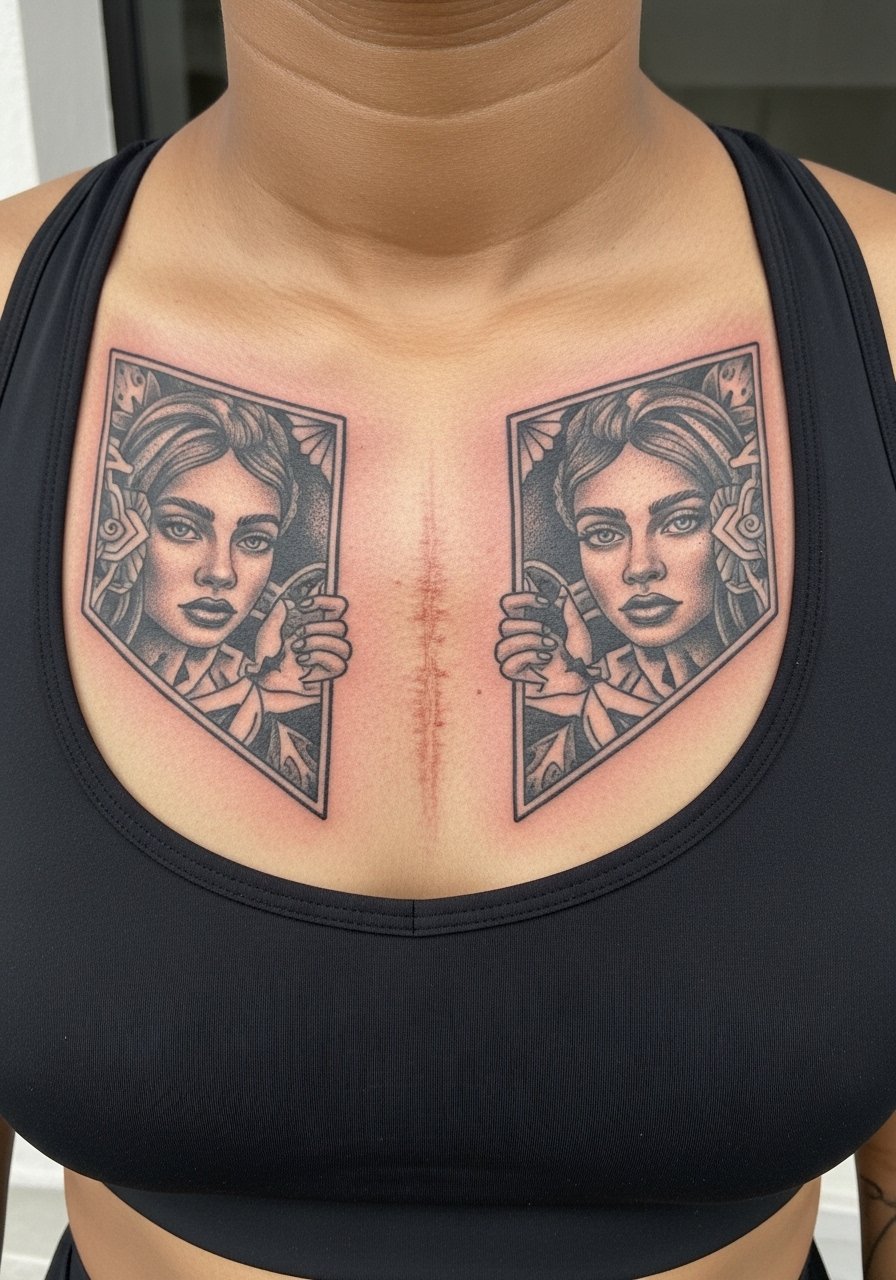
When symmetry is the goal, bring photos of the exact scar spacing and ask for mirrored negative-space margins. Artists will often draft mirrored panels and then step back to check for optical balance before tattooing. A mistake I see is forcing identical mirror marks on scars that are slightly offset. That reads odd after healing. For sessions that span both sides, expect two shorter sittings rather than one long marathon. If you want this to read bold at a distance, ask for slightly heavier linework in the outer contours so the panels do not fade into the skin over time.
3. Minimalist Linework Bridge Across the Sternum
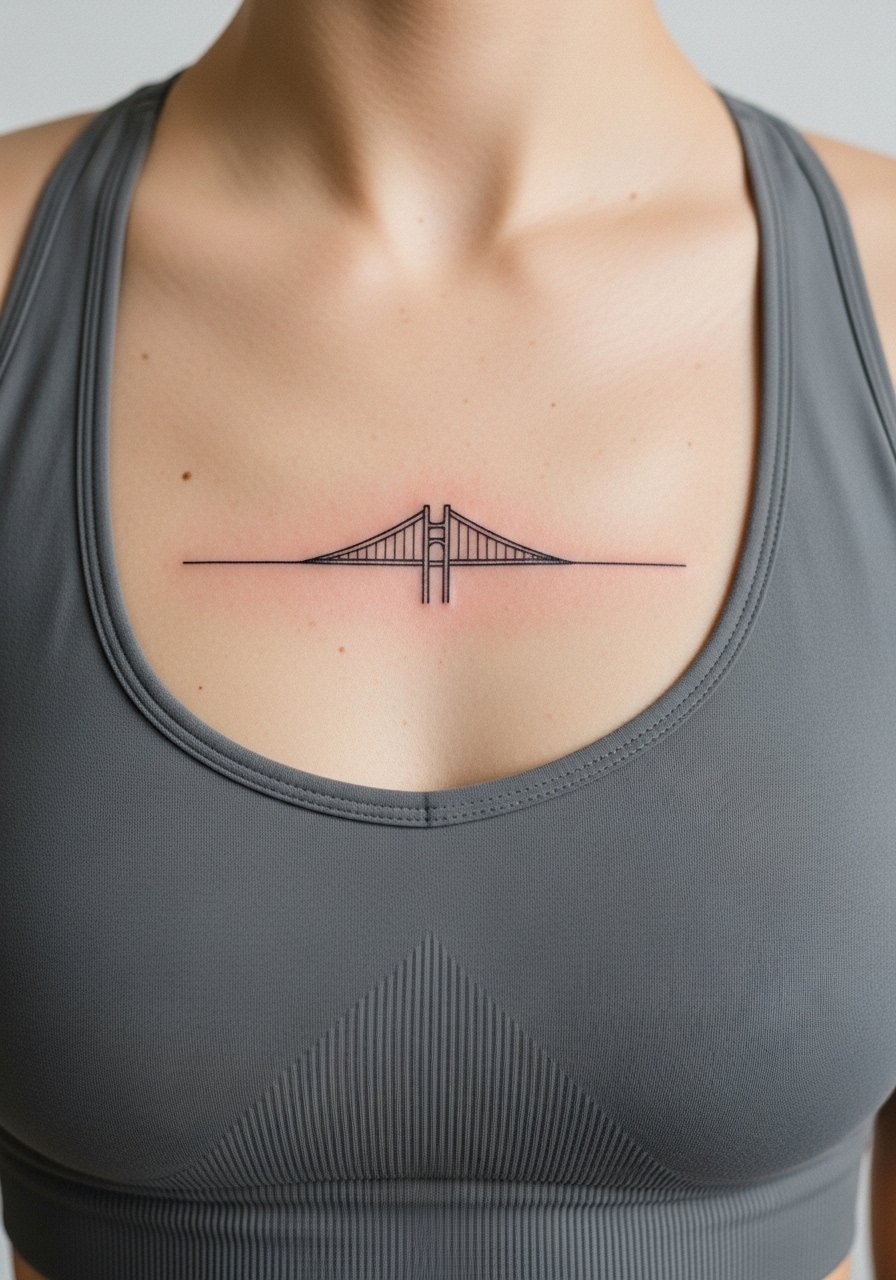
Fair warning, the sternum is unforgiving on tiny linework. Small single-line bridges can look delicate at first and then blur if placed too close to scar tissue. The better move is to request slightly increased spacing and a consistent needle depth so the bridge keeps its negative-space rhythm after healing. During the consult, ask the artist to draw a mock-up at scale so you can see how the lines read with movement. For the session, wear a fitted sports bra you can pull down slightly to expose only the sternum area.
4. Micro-Realism Bird Pair Around Nipple Sites
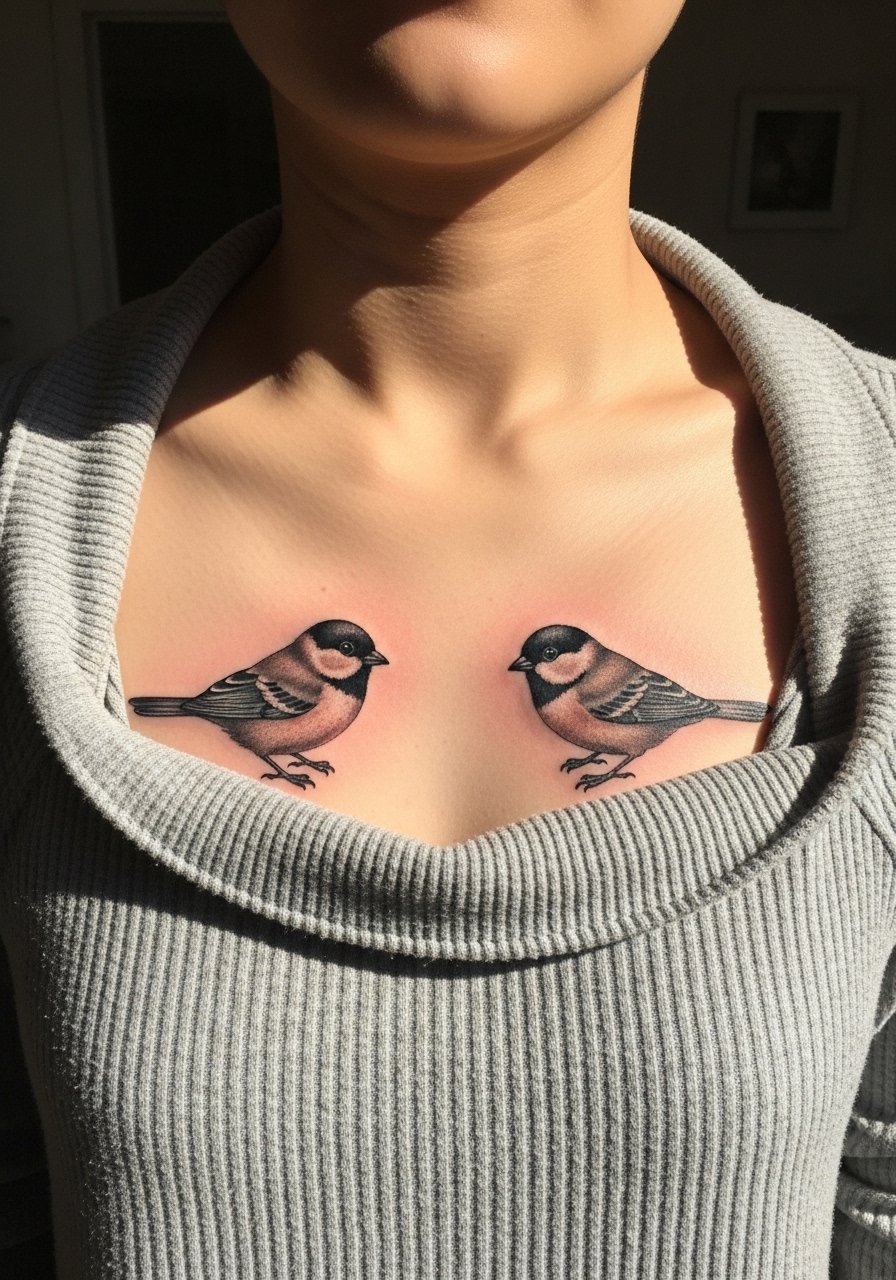
There is a tactile quality to micro-realism near former nipple sites that reads intimate and deliberate. Ask the artist for feather texture with stipple shading rather than dense color fills to avoid saturation puddles over scarred skin. The common error is pushing color saturation too deep into scar tissue. Expect tenderness in the area and a session that might be broken into two shorter passes to let tissue settle. If you plan to show this off, layer a thin chain pendant necklace so the piece sits above the birds without competing with the chest.
5. Scripted Coordinates Along the Scar Line
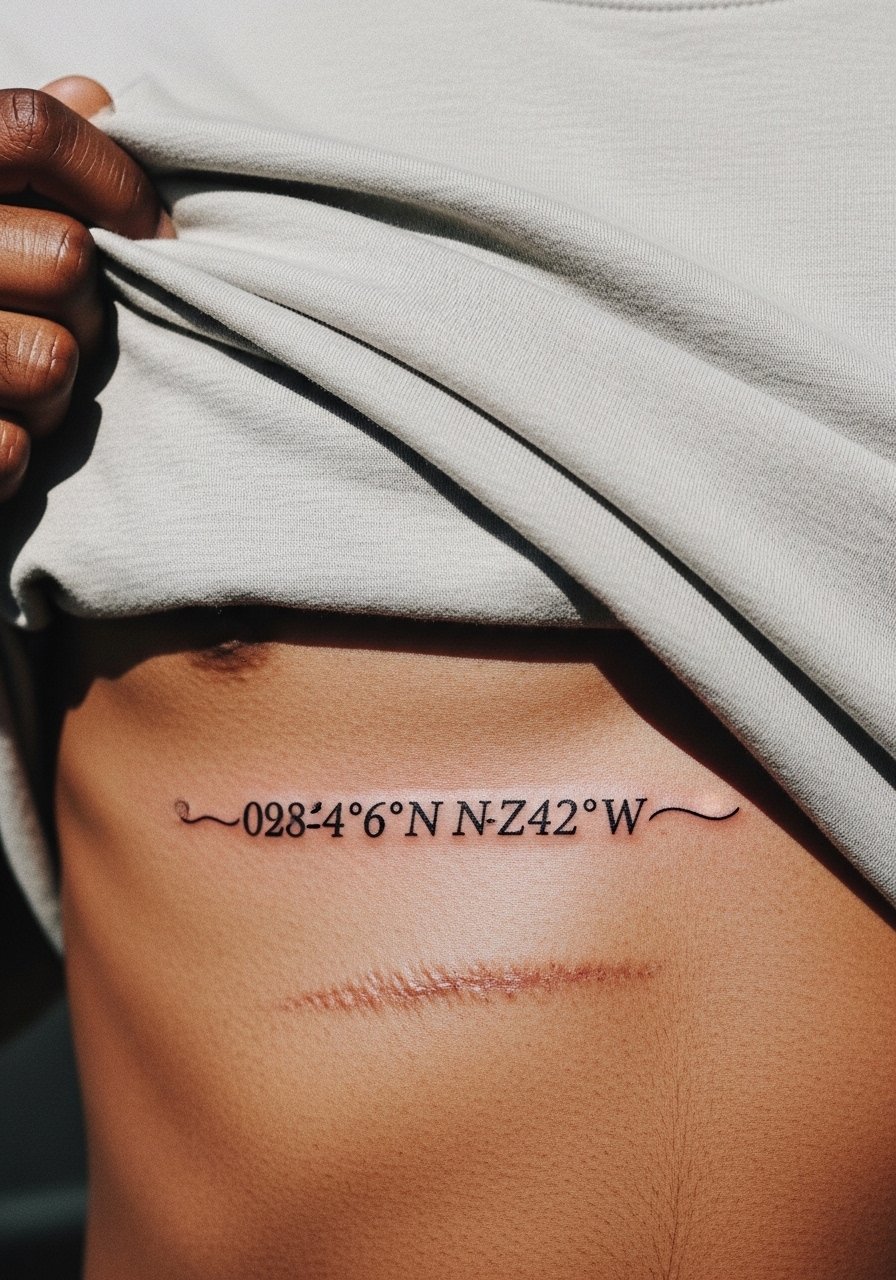
Letters over scar tissue can be tricky. The simplest ask is to choose slightly bolder single-stroke lettering and increase letter spacing to avoid the letters merging as the tissue settles. Tell your artist the exact font weight you want and ask them to stencil at full scale. A frequent mistake is choosing very tight cursive for a scarred area, which can become illegible. For sessions, wear a loose button-down shirt you can open to expose only the area needed. Consider waiting until the scar is mature and supple before inking.
6. Traditional Anchor and Banner Framing Scars
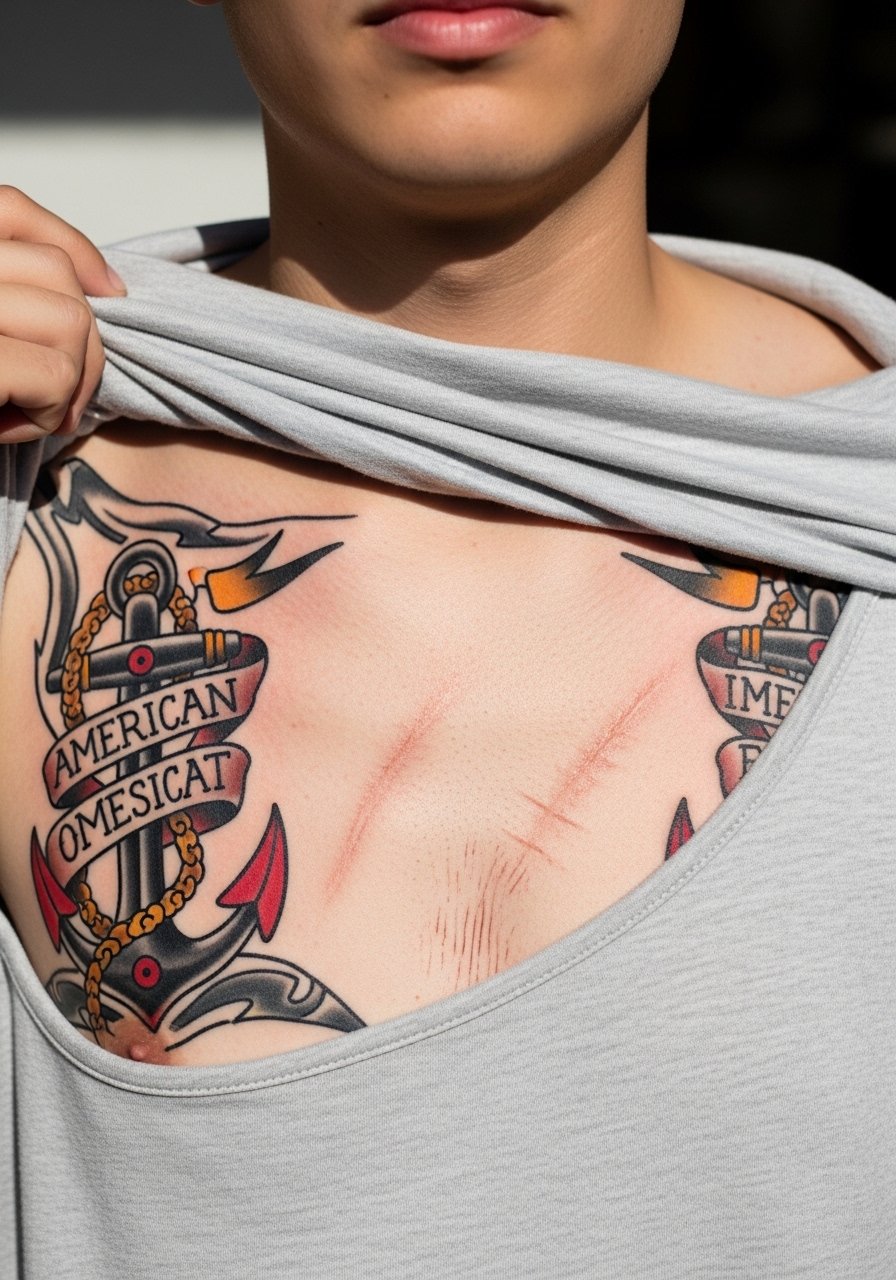
This is a reliable option if you want coverage that ages predictably. Solid outlines and saturated fills wear into a stable look over years, unlike ultra-fine script in the same zone. Ask for slightly larger linework and full saturation in the fills so the anchors read from a distance after the first few years. A mistake is downsizing traditional motifs for the chest and losing the boldness that makes them last. For the session, plan for color layering and let your artist know you prefer a staged fill approach to reduce trauma.
Studio Day Picks
The designs above combine fine line detail and saturated fills across the sternum and upper chest, so I pack a few items that make the session and the first week easier.
-
Thin protective film roll. Keeps chest pieces clean during the first days, especially for designs near the sternum that rub against clothing.
-
Low-residue adhesive bandages. Useful for small touch zones where bandaging needs to stay in place without pulling on delicate skin.
-
Fragrance-free gentle body wash. Cleanses without stripping the area, which matters when the ink sits near scar tissue.
-
Silicone-based scar sheet roll. Helpful during later stages of healing to keep scar texture even before and after tattooing.
-
Aquaphor healing ointment. Thin layers help manage dryness during the first few days after chest work without clogging fine channels.
7. Mandala Radiant from Sternum
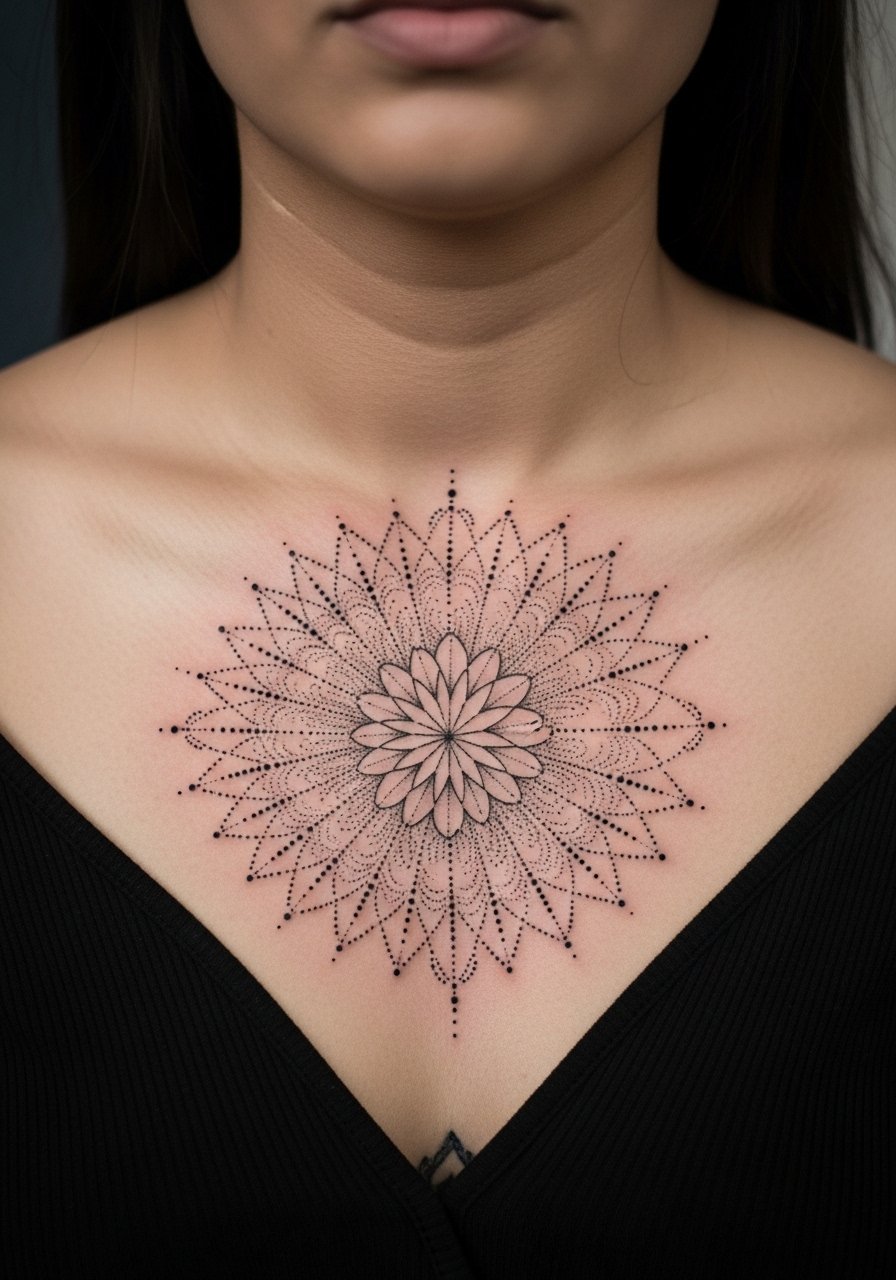
Mandalas centered on the sternum create a visual anchor and mask central scars well when scaled correctly. The key is spacing the rings wide enough to avoid dense dot clusters that merge on scar tissue. Ask for stipple shading with larger negative spaces toward the center. One known controversy is mandala sizing on chest. Some artists say tight rings look precise at first but blur, and the other camp insists that with expert stippling the detail can remain. Ask your artist where they stand before booking. For show-off outfits, a halter top reveals the central symmetry without cutting the design off.
8. Anatomical Heart Over Central Scar with Dot Work
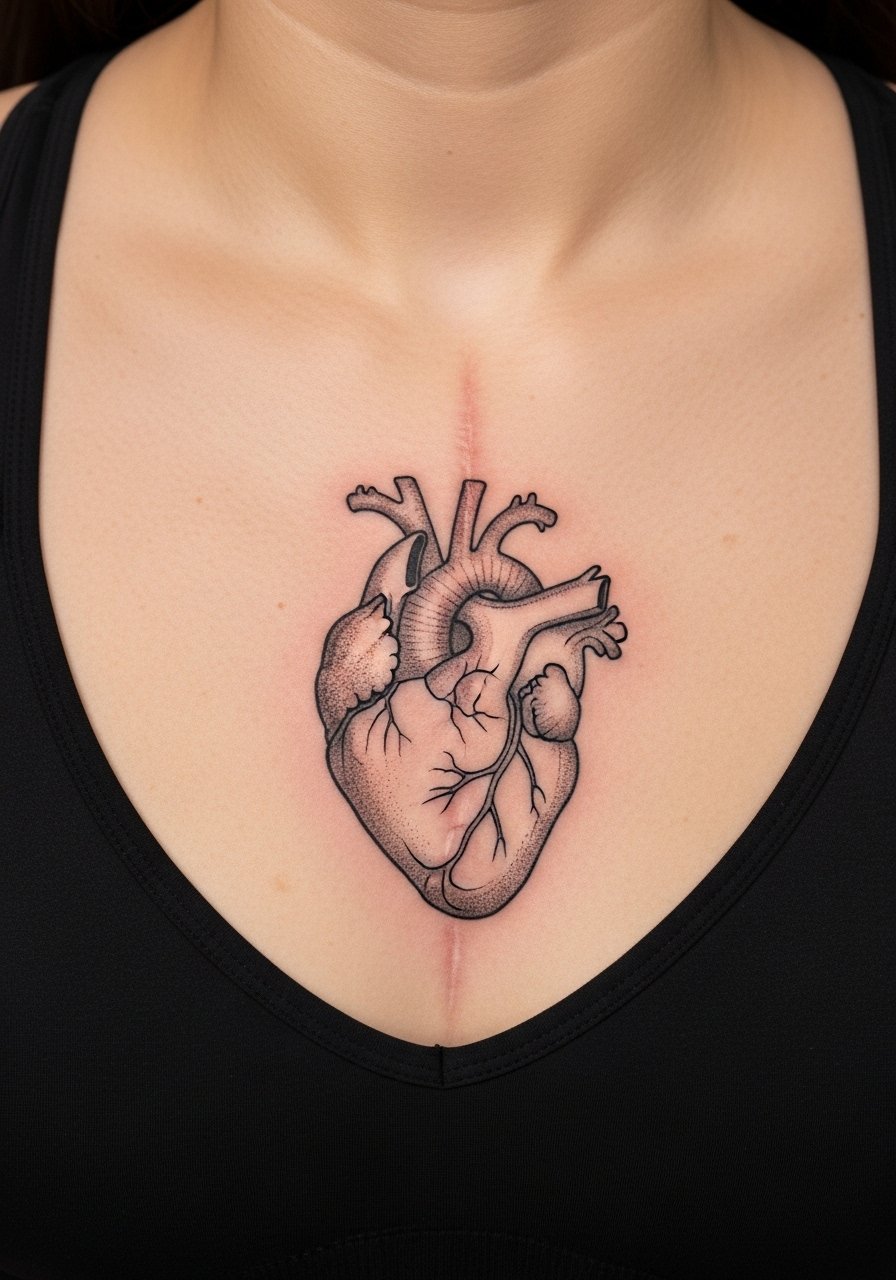
An anatomical heart reads as personal and illustrative when the linework is softened with stipple shading. Tell the artist you want dot work to create depth rather than heavy solid fills on scarred tissue. A common mistake is pushing heavy black into the entire heart, which can create uneven saturation over scar lines. Expect the session to feel like moderate abrasion if the scar is raised. For the session, a zip-up hoodie is useful so you can remove outerwear without pulling fabric over the chest.
9. Stipple Shaded Mountain Range Across Chest
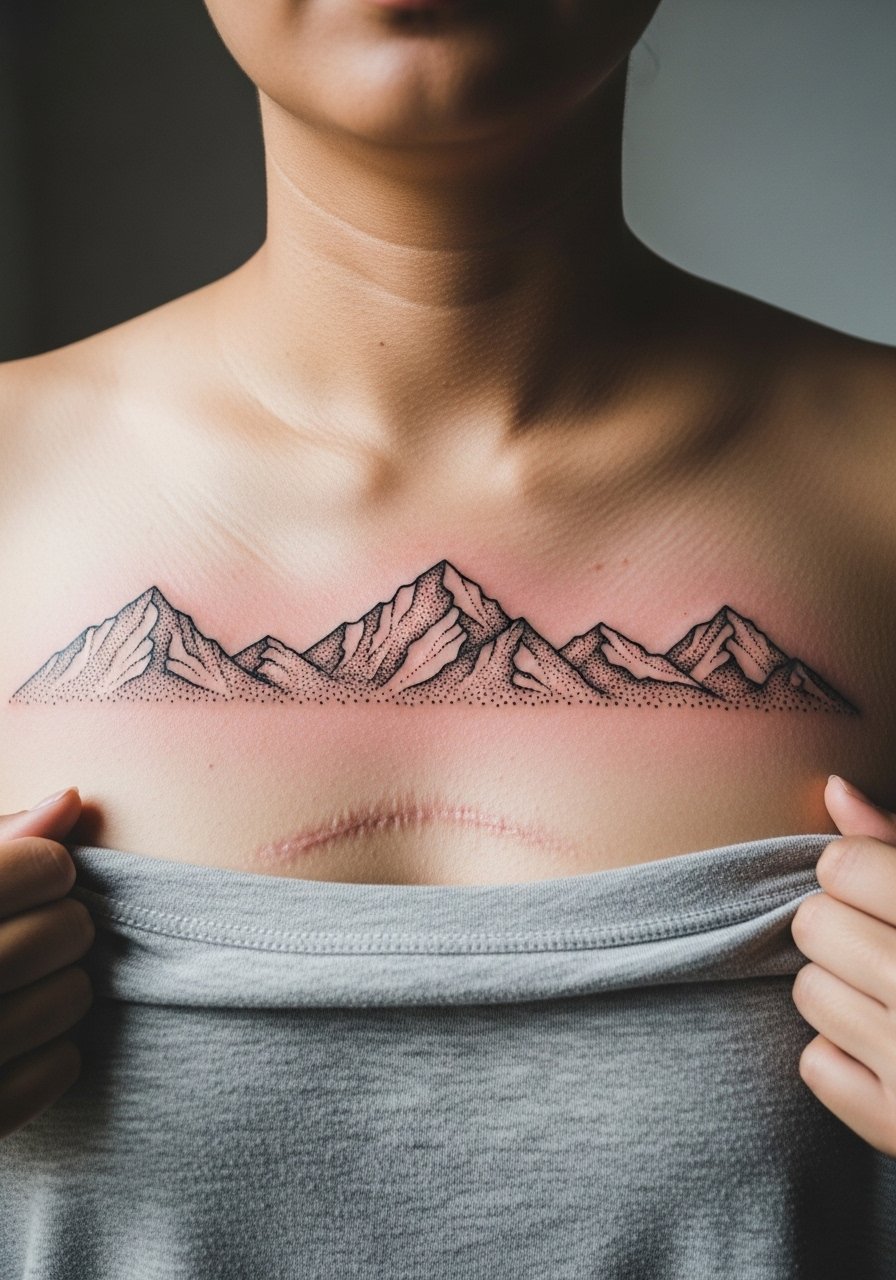
Visual impact here comes from rhythm and spacing. Small stipple dots create texture that reads as distance when you step back, which is useful for hiding linear scars. During consults, ask for reference photos that show stipple scale so you can see how the dots will translate at your size. A mistake people make is shrinking a landscape to fit like a wrist tattoo, which loses the intended gradient. For showing off, pair this with a cropped tee that keeps the chest visible without exposing too much skin.
10. Abstract Watercolor Wash Over Scar Tissue
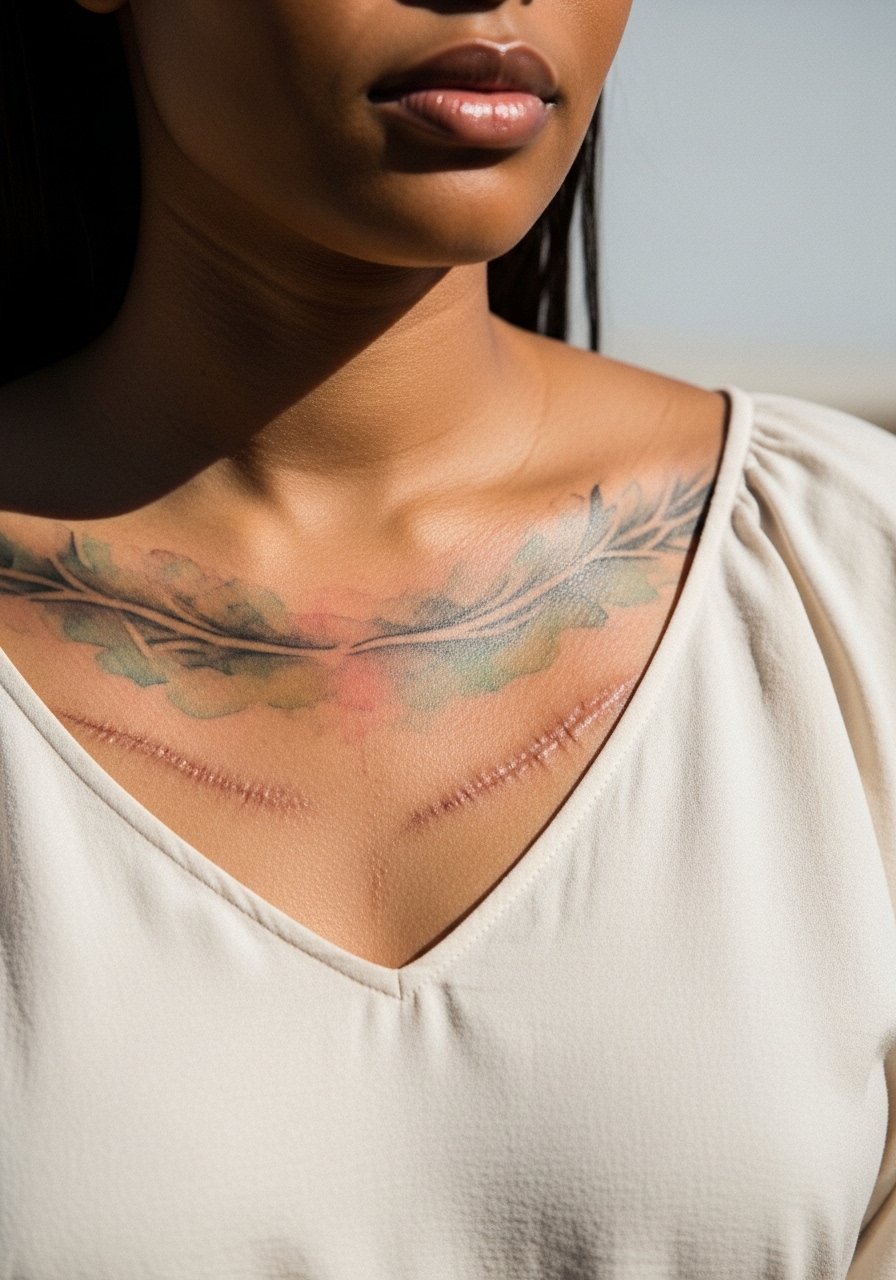
Watercolor can be beautiful but it ages unevenly on scar tissue if the color sits only superficially. The safer version is to pair watercolor washes with fine outlines or subtle stippling to anchor pigment into the skin. In the consult, ask for a layered plan where color is added after a solid groundwork. A real mistake is choosing pure wash without anchor points on scarred areas. For session comfort, a loose button-down shirt makes access painless and keeps you warm between passes.
11. Geometric Negative Space Chest Piece
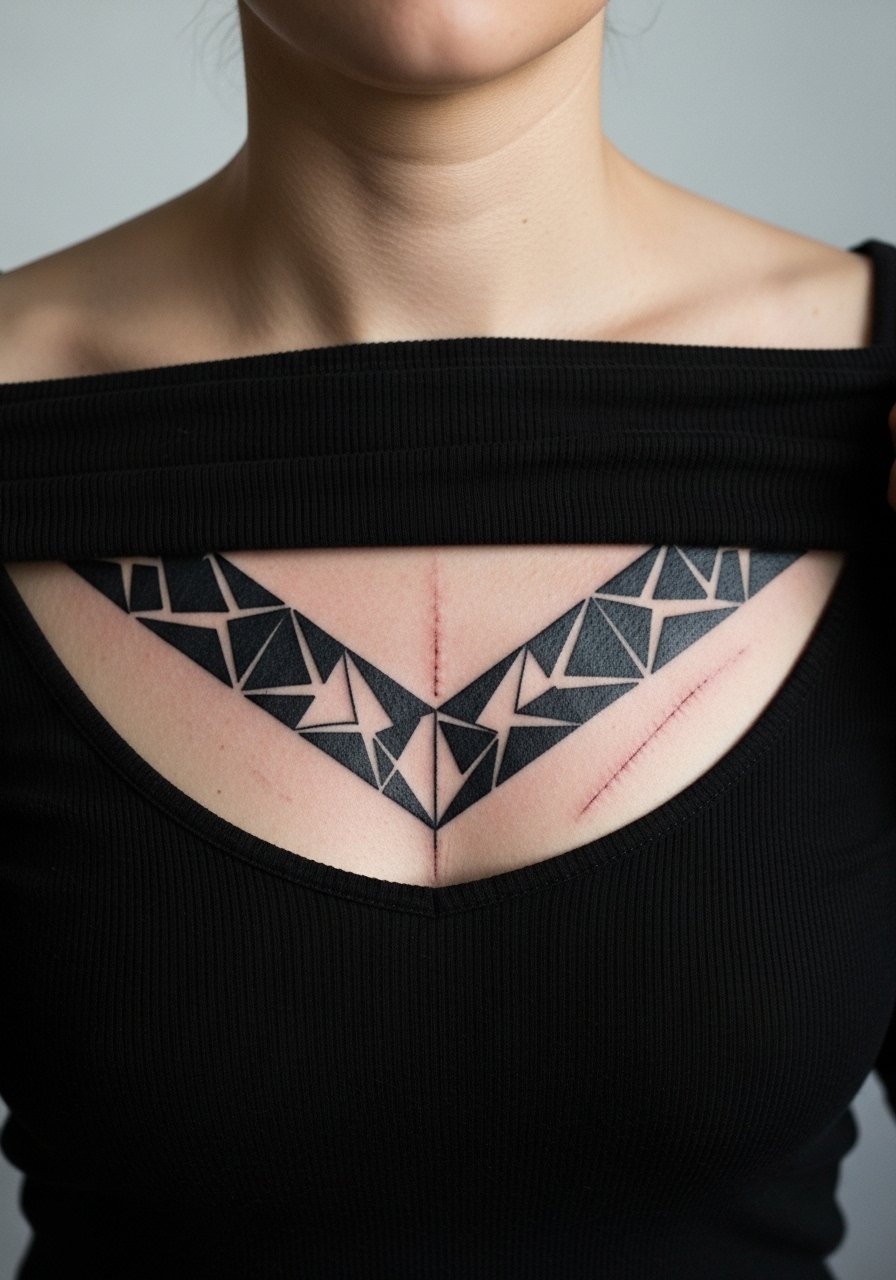
Geometric shapes can use negative space to redirect attention away from scars. The technique requires crisp linework and careful planning so that the voids fall over scar lines rather than across them. Tell your artist you want the negative spaces mapped over the scars to create optical balance. The mistake is assuming symmetry of the skin beneath; have the artist sketch directly on you in multiple positions. Heavy blackwork sessions are often longer and can be broken into two sittings to allow the skin to calm.
12. Single-Needle Fine Line Constellation Map
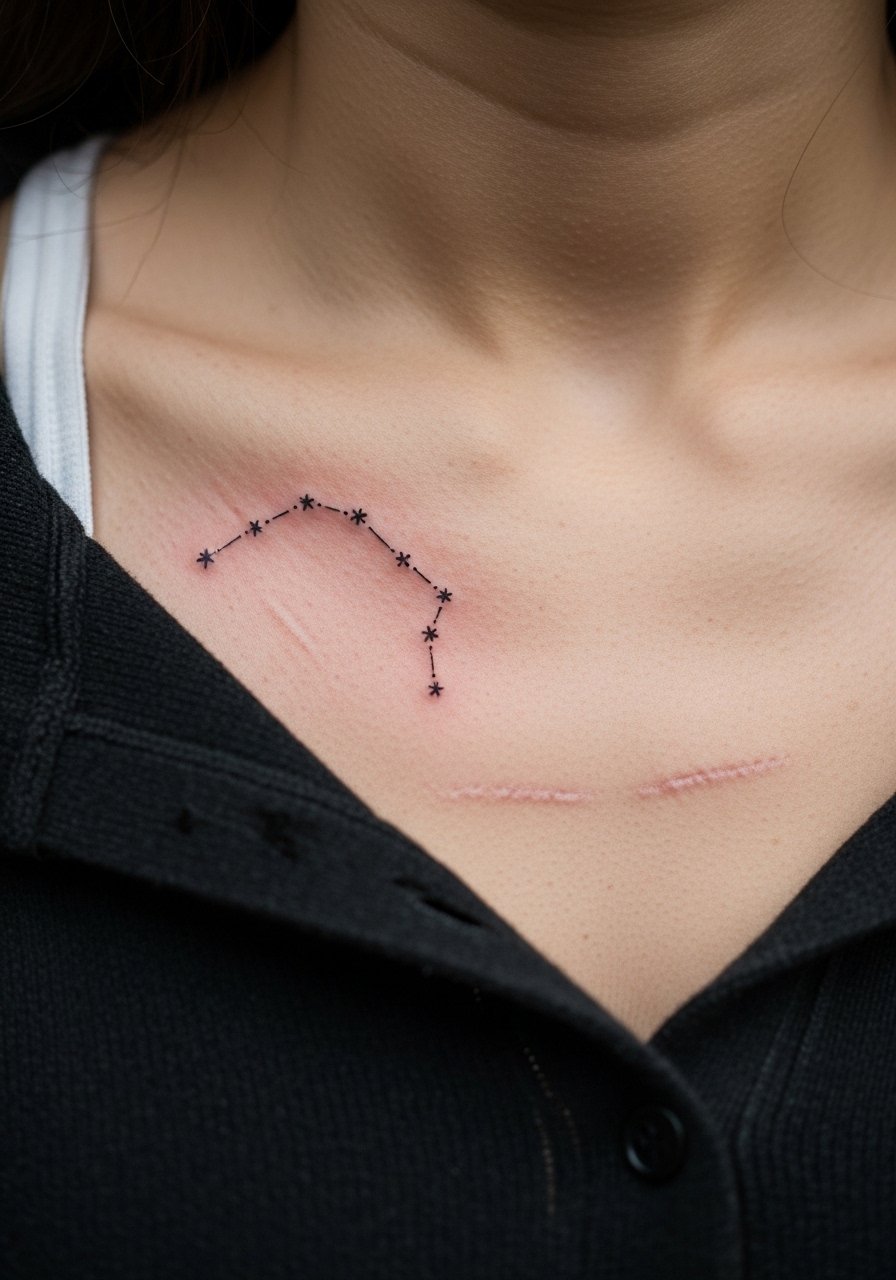
Fine single-needle work reads delicate and personal, but it has higher touch-up likelihood on scar tissue. When you want constellations, ask for slightly bolder star dots and increased spacing in the connecting lines so the pattern keeps its structure after healing. A common error is requesting ultra-thin connectors over scars, which may blur into faint smudges. Expect touch-ups in the two to three year window depending on skin type. For showing it off, stack a few dainty bracelets on your wrist so attention travels rather than crowds the chest.
13. Baroque Filigree Panel Under Collarbone
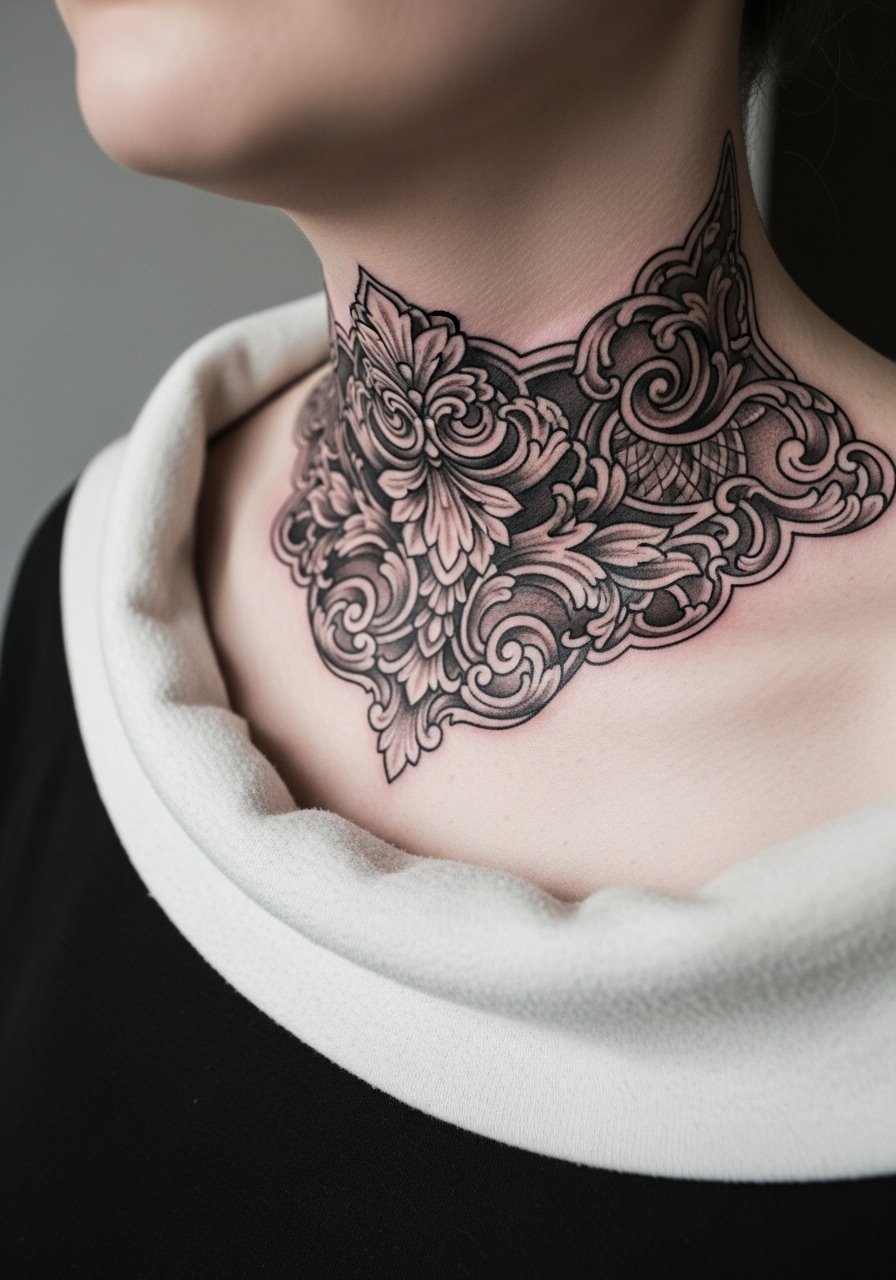
Filigree panels look elegant when the negative space and curls are allowed to breathe. If you want filigree under the collarbone, have your artist increase curve radii and leave slightly wider gaps in tight curls to prevent early merging. People often ask for intricate curls with tiny gaps, and then the curls blur in two years. This area is great for session wear flexibility, so bring a wide-neck shirt you can shift without losing modesty.
14. Botanical Sleeve Connecting Chest to Shoulder
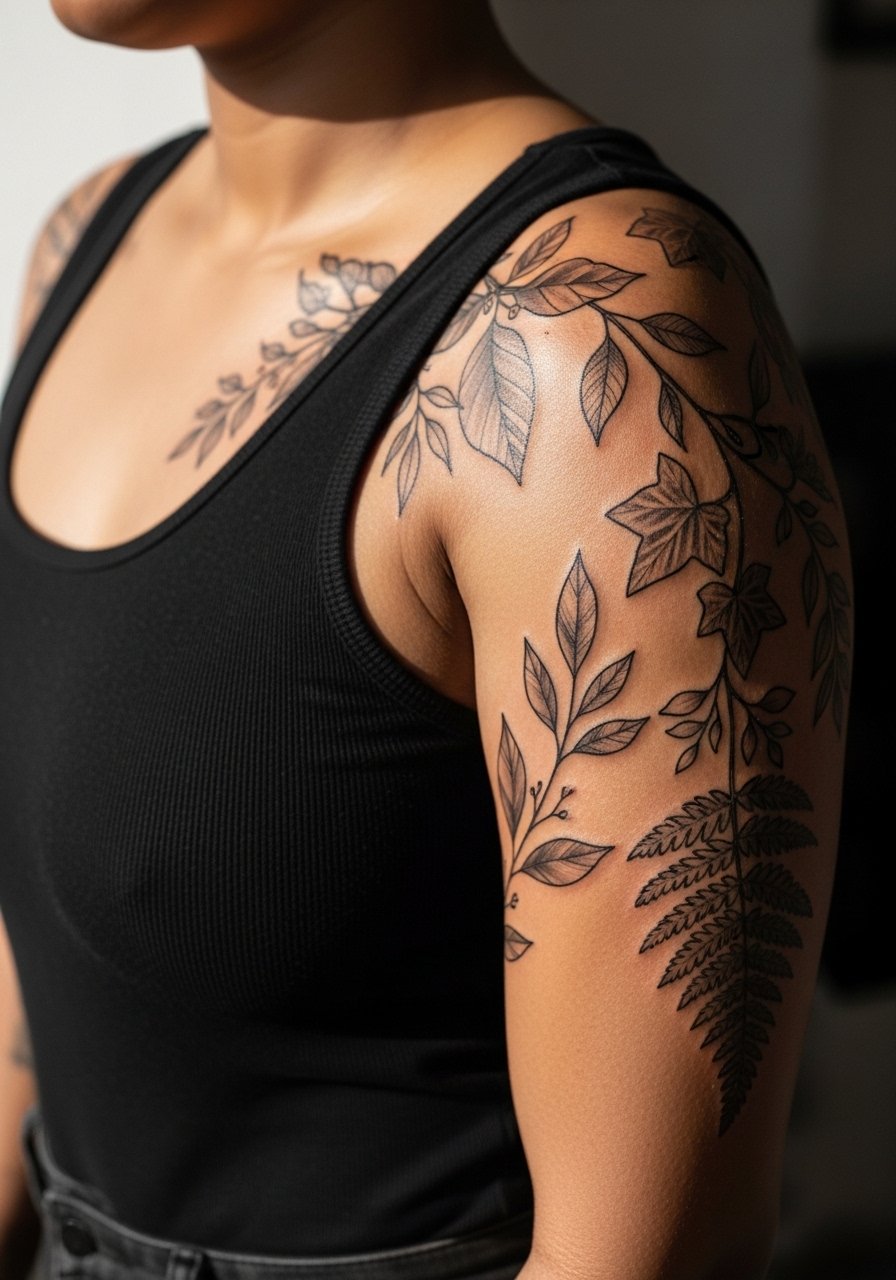
This is a higher-commitment option that visually integrates chest scars into a larger composition. The plan must include flow so the shoulder and chest components read as a single piece when you move. Tell the artist you want anchor elements near the chest scars and looser tendrils on the shoulder. A common scheduling mistake is treating it as one session; break it into two to three visits to preserve skin integrity. For the appointment, wear a tank top so the artist can access both shoulder and chest areas cleanly.
15. Bold Blackwork Block to Mask Wide Scars
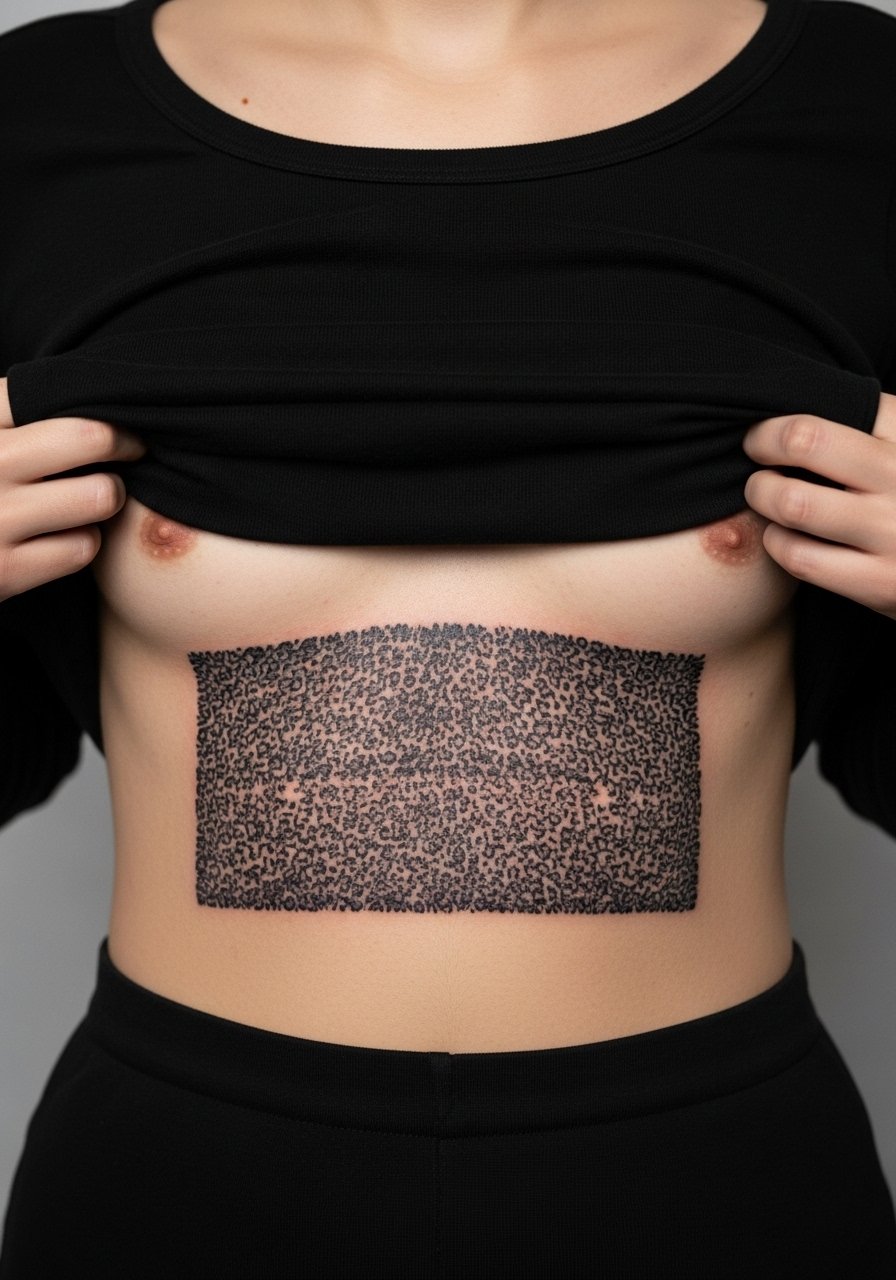
When scars are wide and irregular, a bold block can be the most reliable camouflage. The trade-off is commitment of a heavy visual. Ask for gradual edges rather than an abrupt box so the piece integrates with surrounding skin. A common error is placing a hard-edged rectangle that looks like a sticker. Expect longer sessions and staged fills to let the skin recover between passes. Clothing that layers well helps while the area heals, so consider a loose cardigan to wear without rubbing.
16. Minimal Portrait Medallion Over Pectoral Scar
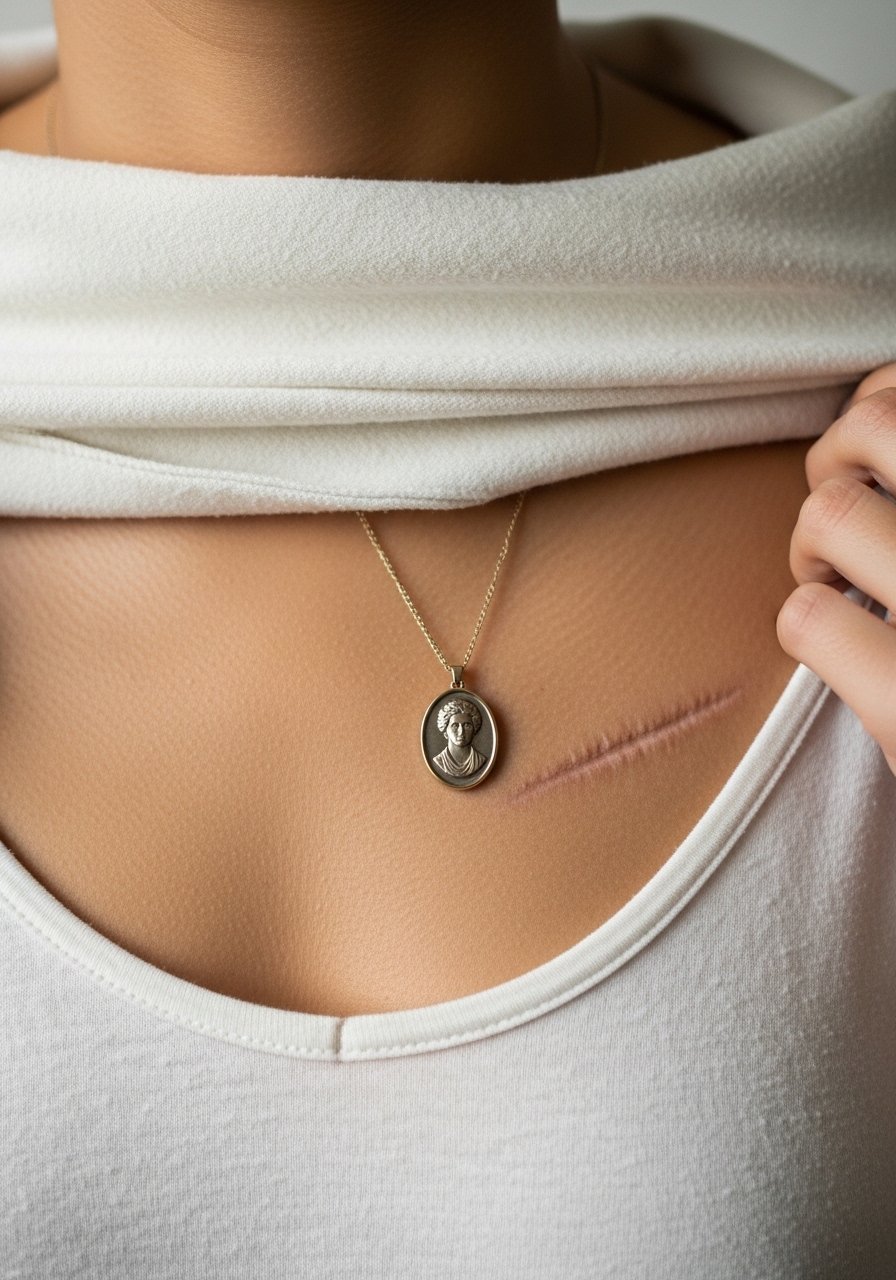
Portrait medallions are a precise illustrative approach and require an artist experienced in small scale realism. During consults, ask to see healed small-portrait examples on scar tissue. The mistake people make is assuming any portrait artist can scale down without loss of detail. Expect a careful, possibly slower session with planning for a touch-up. If you plan to reveal it, wear a thin chain pendant necklace to frame the medallion without crowding the chest.
17. Roman Numeral and Symbol Pairing Along Scar Edge
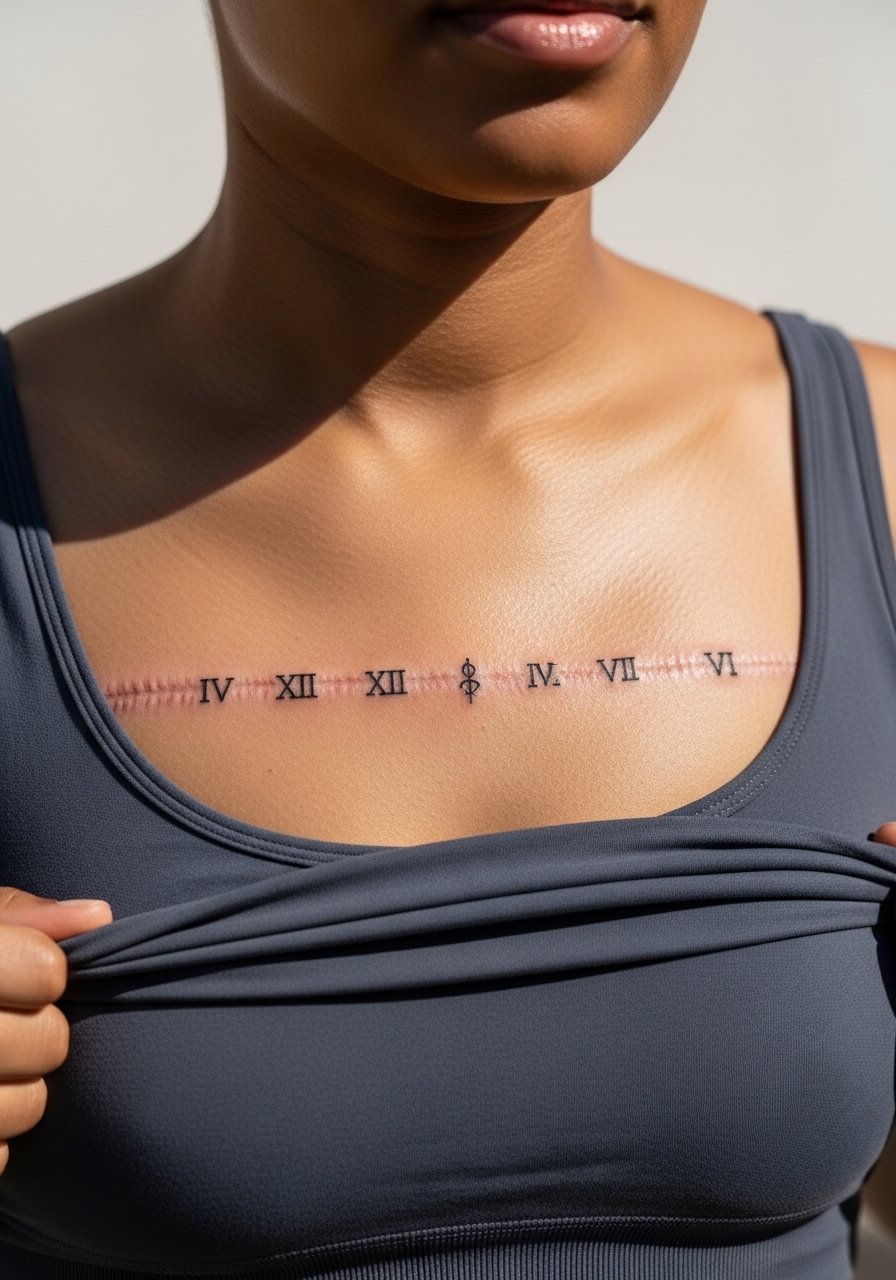
Numbers and small symbols read crisp when spacing is increased and serif weights are moderate. Tell your artist you want the numerals slightly larger than you think so they remain legible when the scarbed skin shifts. A mistake I see is choosing ultra-thin numerals that blur against raised scar texture. For the session, a sports bra that pulls down gently will give the artist access while keeping you covered.
18. Lace-Inspired Underbust Band Tattoo
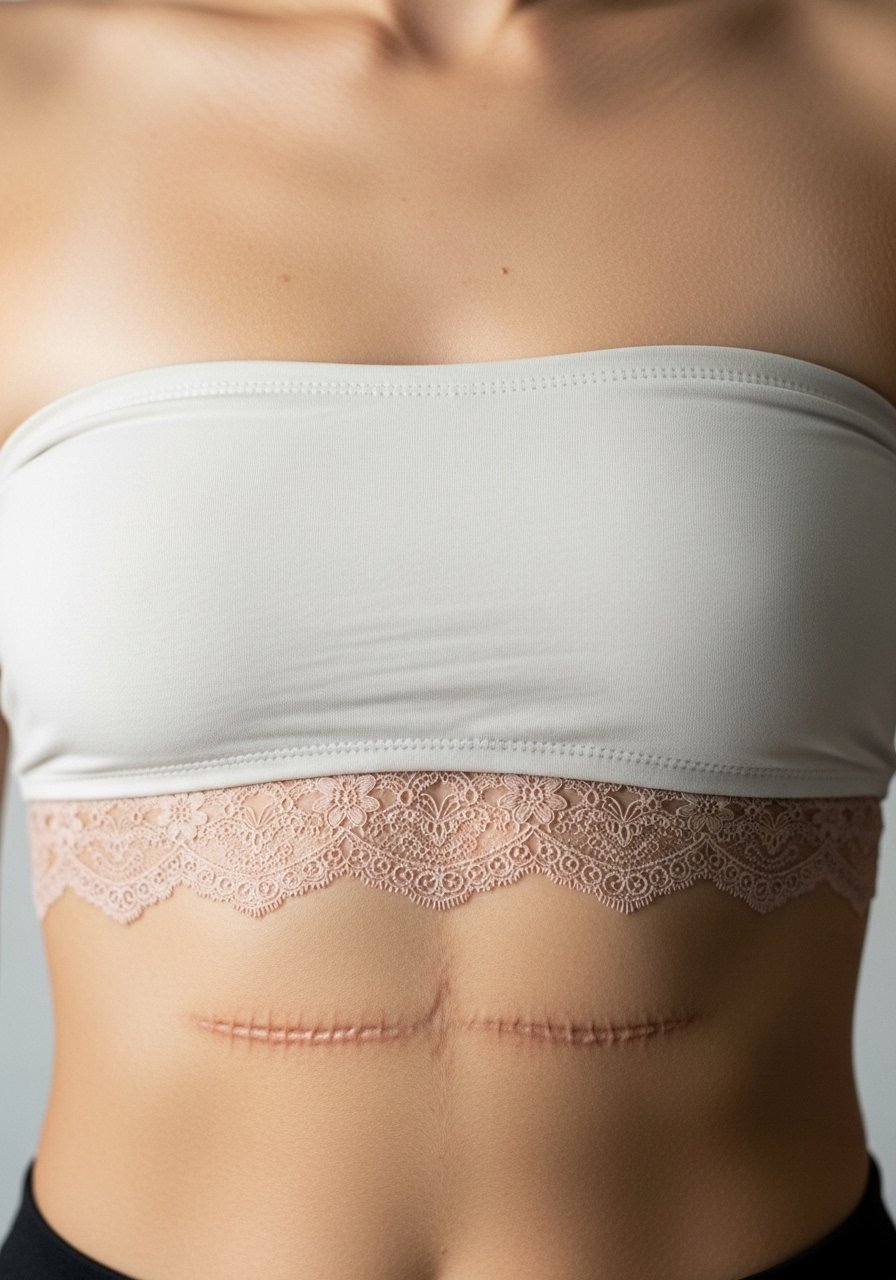
Underbust lace bands read like intentional adornment when the pattern includes slightly larger scallops and intentional negative spaces over scar lines. The real misstep is packing tiny lace details into scar tissue and expecting museum-like detail after healing. This placement also has specialized artist considerations because the skin tension changes with movement. For the session, wear a bandeau top so the artist accesses the area without you being exposed.
19. Compass Rose Centered on Sternum
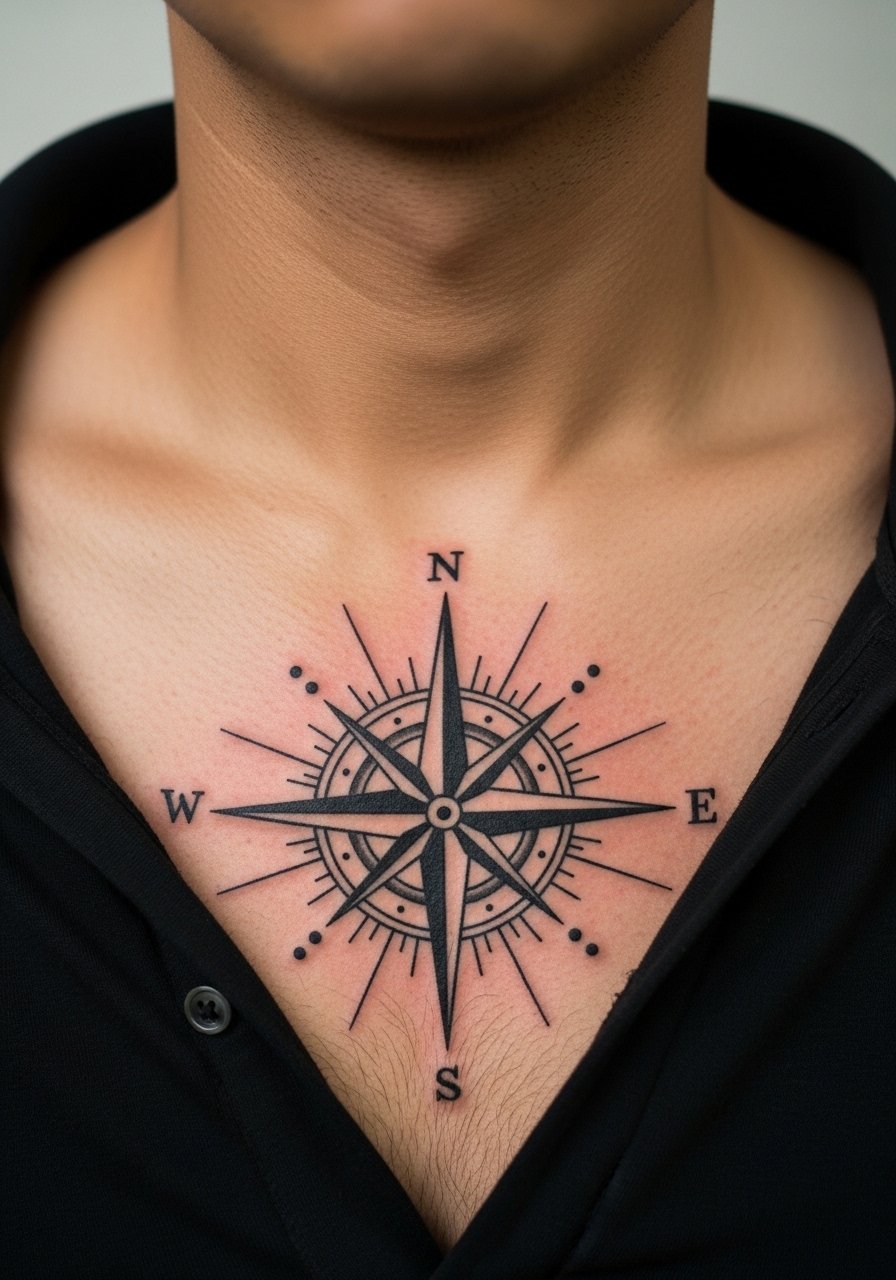
A compass makes a strong central motif that can incorporate scars into its north-south axis. Ask for thicker outer rings and controlled dot accents so the center does not become a tight point on scar tissue. The common mistake is over-detailing the immediate center; leave room for lines to read. For show-off outfits, an open collared shirt or wide-neck top frames the symmetry without interruption.
20. Collage-Style Cover for Revision Work
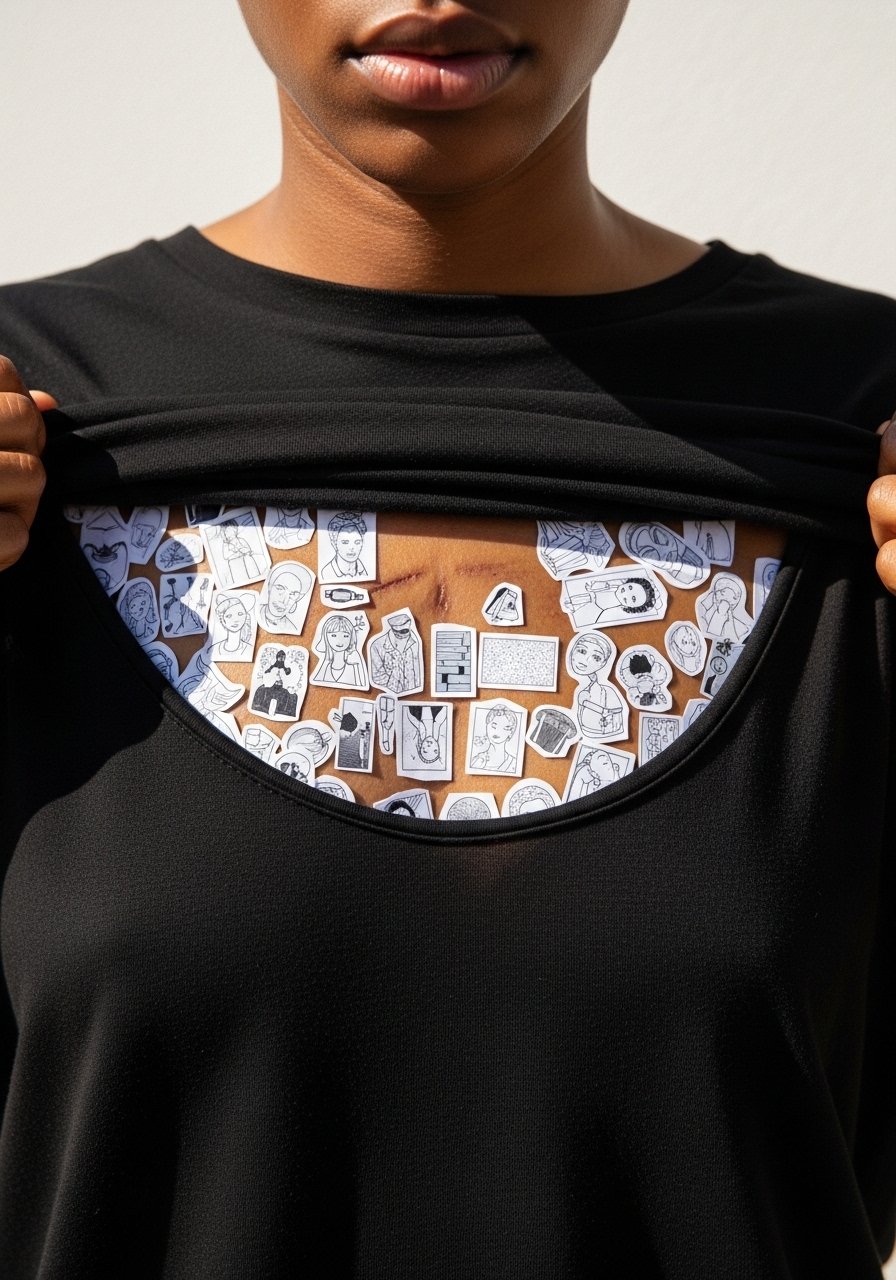
Revision work benefits from a collage approach where multiple small elements mask irregular texture and color. The consult should include a staged plan explaining which elements will camouflage different scar zones. A frequent error is trying to hide everything under a single motif, which exposes the underlying irregularities later. Sessions are often incremental for revision cases. For comfort, bring a zip-up hoodie you can remove and put back on without snagging.
21. Custom Flash Panel Combining Symbols
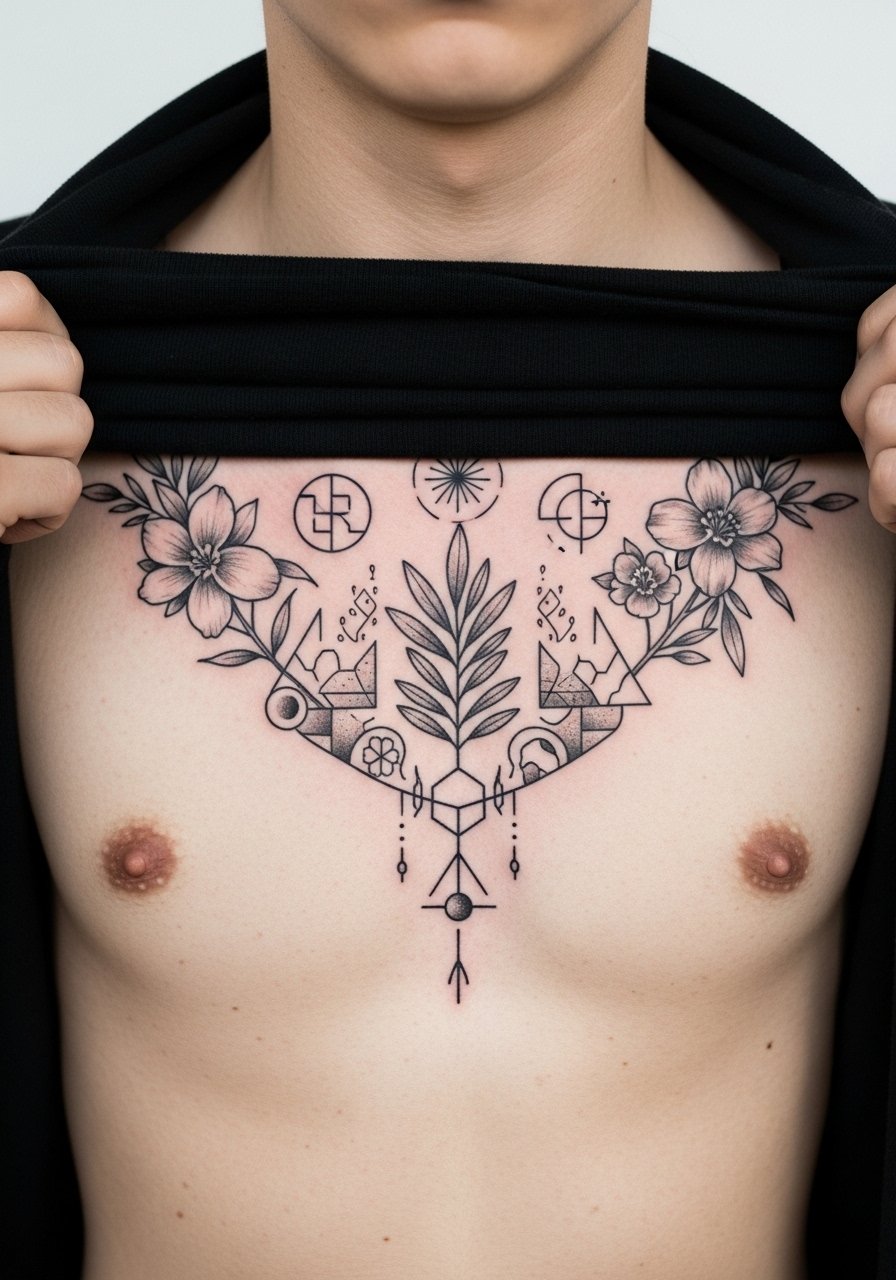
A custom flash panel is where you get all your elements planned into a single cohesive piece. During a consult, ask the artist to show multiple scaled options and explain how each will sit over the scars when you move, breathe, and wear different shirts. The mistake is giving a vague brief and expecting the artist to guess which elements you want emphasized. This is the place to use discovery pathways like local directories, convention booths, and hashtag searches to find portfolios that show healed examples similar to your plan. Bring a loose linen shirt for the session so you can roll sleeves or shift fabric without stressing the area.
Frequently Asked Questions
Q: Can you tattoo directly over top surgery scars and how long should I wait?
A: You can, but timing matters. Most artists recommend waiting until scars are mature and flat, which often means a year or more, and some prefer even longer. Ask the artist to assess scar texture in person and explain their preferred waiting window based on experience with similar scars.
Q: Which styles hold up best over scar tissue, fine line or saturated blackwork?
A: Saturated blackwork and bold outlines tend to age more predictably over scar tissue, while fine line pieces often need touch-ups sooner. If you want fine detail, plan for slightly increased spacing and an expected touch-up at year two or three.
Q: How should I dress for a chest or sternum session to make the appointment easier?
A: Wear a wide-neck shirt or a fitted sports bra you can shift without removing completely. Layering makes breaks easier and keeps you comfortable between passes.
Q: How do I find an artist who understands scar work without naming anyone?
A: Use discovery paths like local shop directories, convention portfolios, and hashtag searches that include "scar tattoo" or "top surgery tattoo" to find healed examples. Look for clear healed photos and ask to see before-and-after portfolio shots during your consult.
Q: Will a tattoo over a scar hurt more than normal skin?
A: It can feel different. Scar tissue may be less sensitive if nerves were cut, or it can be more tender depending on how it healed. Expect variability and plan for shorter sessions if you are worried about endurance.