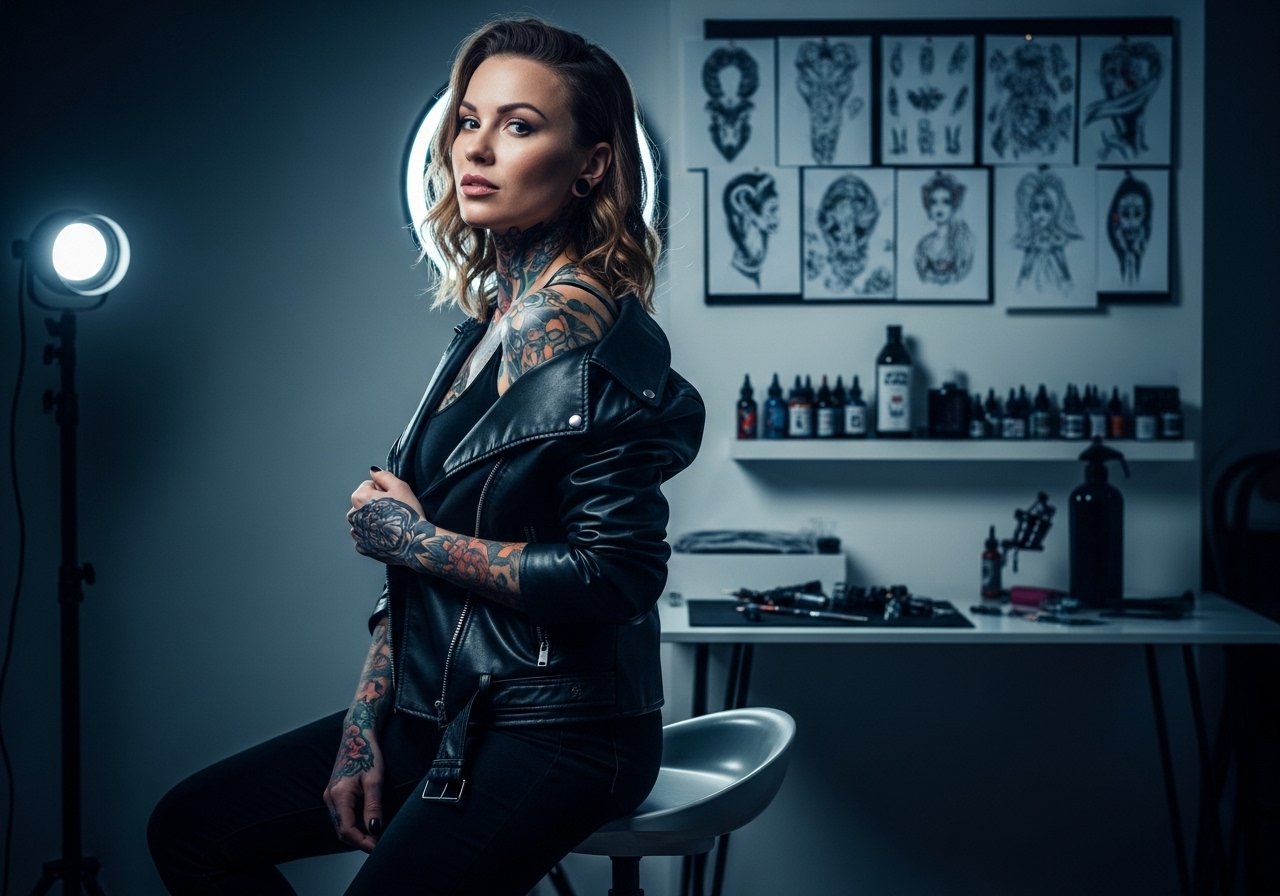
The quiet phases of the moon make for some of the most persuasive tattoos because they read like jewelry and not like a billboard. For people who want something delicate but distinct, an illustrative moon can be as decorative or as literal as you want. Below are 21 focused ideas, with notes on aging, what to ask your artist, and simple wardrobe tips that help each piece sit right on the body.
1. Crescent and Vine on Inner Forearm
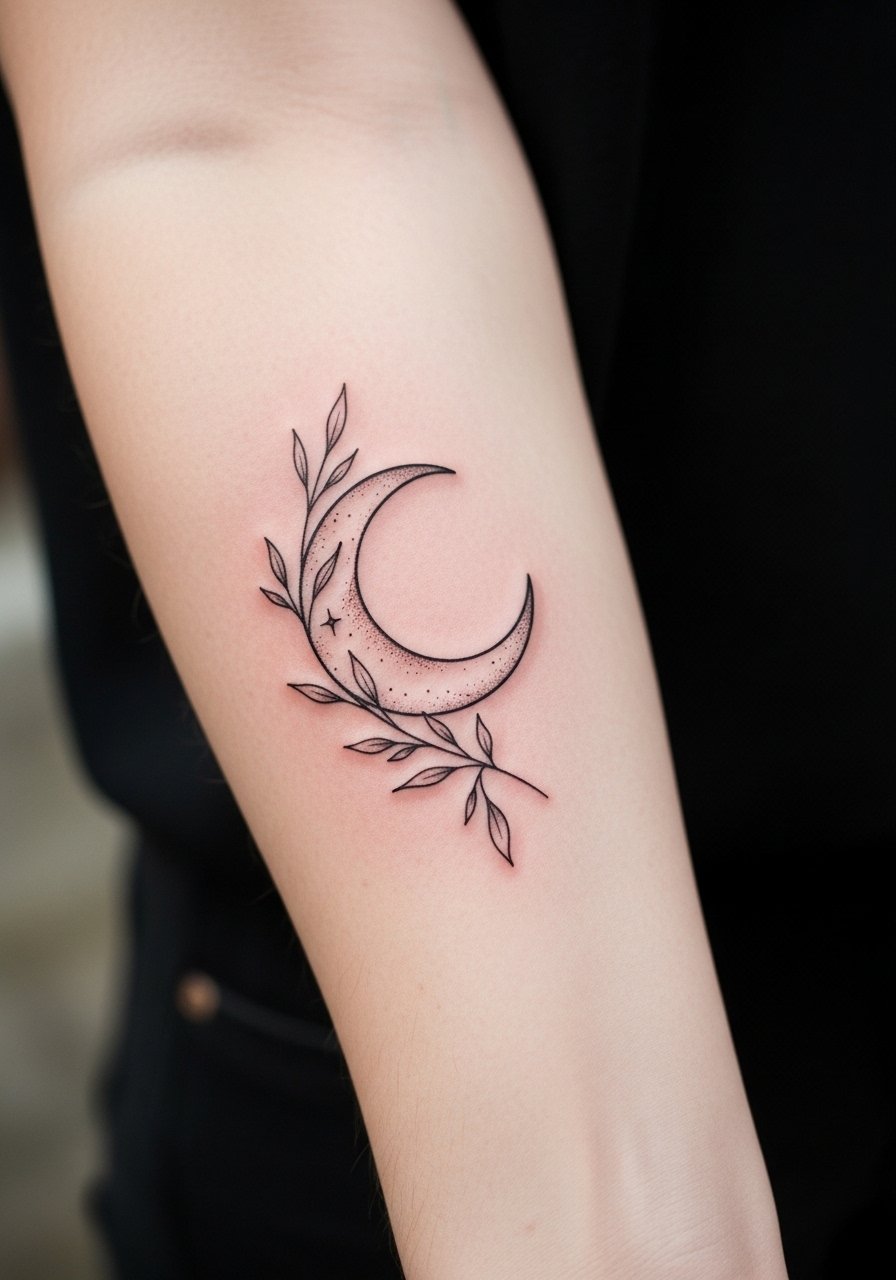
I've seen this placement hold detail longer than people expect. Ask your artist for slightly heavier primary linework and stipple shading inside the crescent so the silhouette keeps contrast as the piece heals. Fair warning, the inner forearm is visible and takes sunlight, so expect gradual softening at year two without sunscreen. A common mistake is making the vine too dense near the crescent, which causes the tiny leaves to merge over time. For the session, wear a loose button-down shirt you can pull aside so the artist has full access. Pain is low to moderate and most sessions finish under an hour.
2. Tiny Moon and Stars at the Ankle

Fair warning, the ankle sees a lot of friction from socks and shoes in the first two weeks. I tell clients to expect a short session, usually 20 to 40 minutes, but plan for careful aftercare because rubbing speeds fading. The biggest mistake is asking for ultra-fine dots for the stars without spacing, which can blur into small smudges. For showing the piece off, pair it with a delicate ankle chain or sandals that expose the area. Healing at six months looks crisp, at two years the tiny dot work may need a touch-up depending on lifestyle.
3. Center Sternum Moon with Rays

Most sternum work feels intimate in the appointment and requires careful stencil placement. The pain can be higher than the forearm, so expect a slower, measured session. A common version that ages poorly uses extremely thin rays that pierce skin too closely. This style holds up when the rays have small breaks and subtle stippling instead of continuous hairlines. For the session, wear a fitted sports bra you can easily remove or shift. Sternum tattoos also call for an artist comfortable with chest curvature and fabric edge placement.
4. Tiny Moon Behind the Ear

The behind-the-ear spot is stealthy and personal, and it reads like punctuation when hair is tucked back. The session is brief and the skin there is thin, so the biggest mistake is asking for heavy saturation. This area blurs if the artist goes too deep. Expect touch-up needs within two to three years more often than for arm pieces. It's also a placement where discovery pathways matter. Look at convention listings, niche hashtag searches, and local shop portfolios to find someone who photographs healed behind-the-ear work.
5. Micro Moon on the Side of a Finger

The finger is unforgiving. Expect a short but sharp session and plan for touch-ups. The common mistake is demanding hairline strokes without accounting for constant hand washing and friction. If you want the moon to last, ask for slightly bolder outline and a thin negative-space crescent inside. For showing it off, stacked dainty bracelets or a thin ring balance attention without covering the design. Try a thin chain ring set that complements the hand art. Fingers often need a touch-up around year one or two.
6. Lunar Phases Along the Ribcage

Most people underestimate rib pain, so I always give a clear heads-up about pain levels before booking. Fine line phases here look beautiful on the stencil, but one camp of artists says ribs stretch and blur lines quickly. The other camp argues that with correct needle depth and spacing the phases can settle well. Ask your artist where they stand and review healed photos from the ribcage. The common mistake is compressing phases too tightly. Expect a longer session and a realistic touch-up at year two if you want those tiny crescents to stay distinct.
Studio Day Picks
The inner forearm, finger, and ankle pieces above all benefit from slightly different pre-session and healing prep. These picks smooth the experience for the first week and protect delicate linework.
-
Stencil transfer paper kit. Lets you see how the crescent and vine align on the skin before the needle touches it, which is helpful for inner forearm and sternum placements.
-
Topical numbing cream. Applied as directed 45 minutes before helps take the edge off for ribcage and sternum sessions without interfering with linework.
-
Thin protective film roll. Useful for ankle and finger tattoos that rub against socks or rings during the first week.
-
Fragrance-free gentle body wash. Cleanses the healing area without stripping delicate stipple shading on forearm pieces.
-
Aquaphor Healing Ointment. A thin layer in the initial days helps lock in moisture for fine line moons without clogging the channels.
7. Negative Space Moon on Upper Shoulder
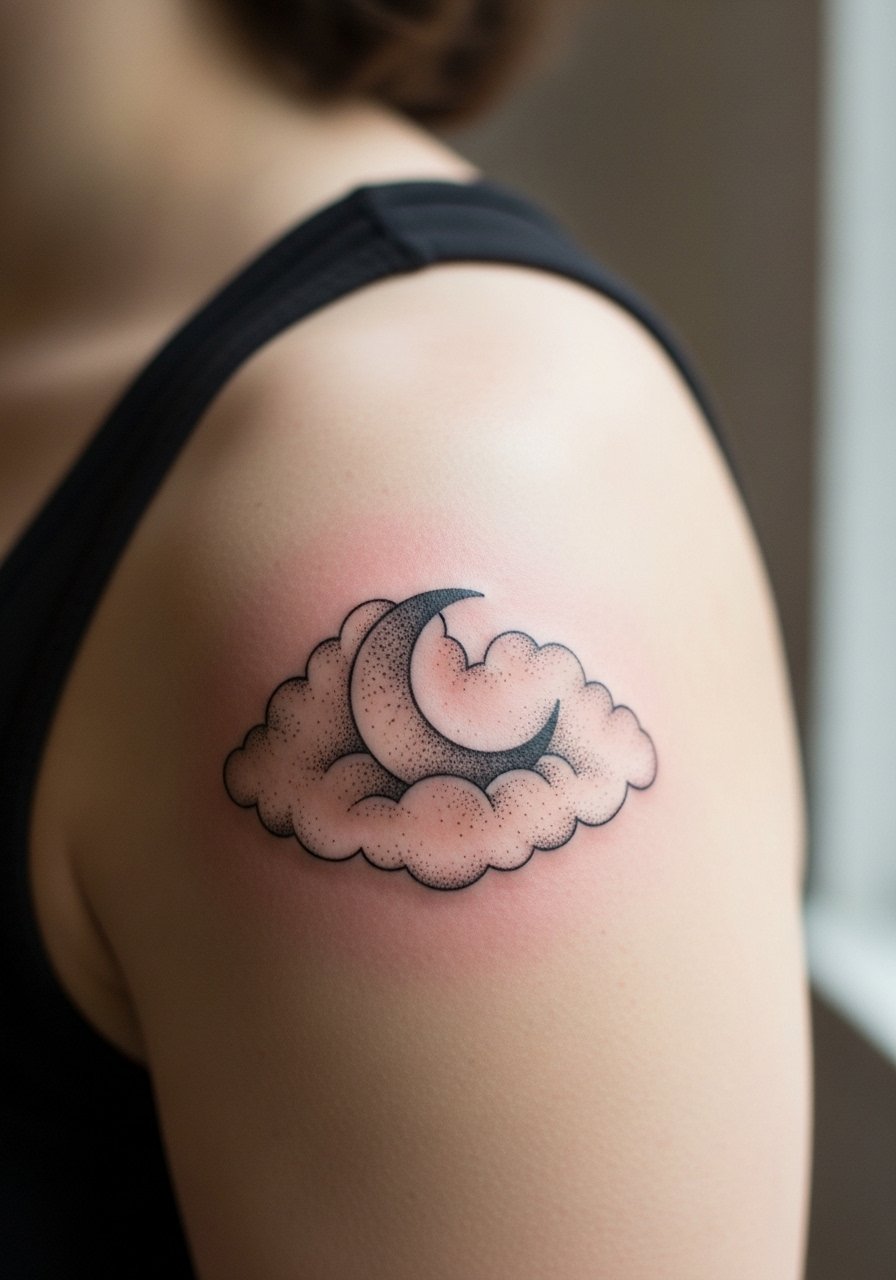
Artists split on how delicate negative space holds up on the shoulder. One group worries about the skin texture and sun exposure, which can wash out subtle gaps. The other group says that a good balance of surrounding stipple and confident linework preserves the shape. I recommend asking for a slightly larger negative gap than you think you need so the crescent reads at year three. The shoulder pairs easily with rolled sleeves and a simple loose tank top for casual show-off. Sessions are low to moderate in pain and usually wrap in an hour.
8. Collarbones: Offset Moon with Tiny Script

This space is great for pairing a moon with a single word or date. Most clients are surprised by how the collarbone throws shadows, so ask for a stencil check in the actual light you plan to wear the piece in. A common mistake is squeezing script too close to the moon. Give the letterform room. This placement shows beautifully with open-neck blouses or a thin chain pendant necklace that sits above the ink. Expect moderate discomfort near bone and a session time of 45 to 90 minutes depending on lettering.
9. Back of Neck Mini Moon
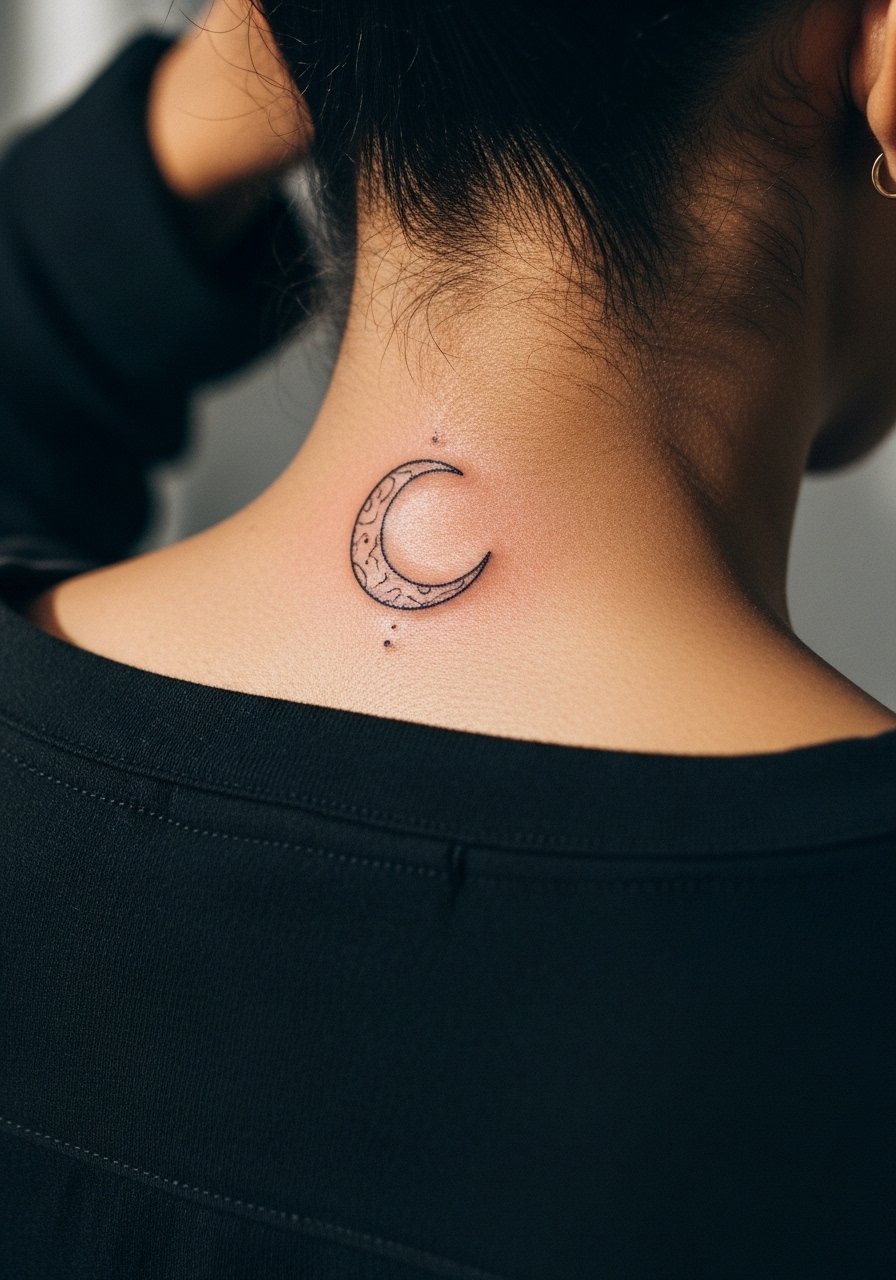
This placement is subtle when hair is down and playful when hair is up. The biggest mistake is asking for extremely thin outline without considering how much the neck moves with daily motion. Ask for modest line weight and clean negative spacing. For the session, wear a shirt you can pull slightly off the shoulder or a wide-neck tee. For showing the area off, a cropped ponytail or hair clip will reveal the small moon nicely. Healing is straightforward and touch-ups are occasional.
10. Calf Moon with Constellation Tail

There is something about a vertical constellation that elongates the leg and reads from a distance. The calf is forgiving and the session feels moderate because of the muscle under the skin. Common mistakes include cramming too many dots into the tail, which ages as one blurred line. Tell your artist you want evenly spaced dot work with variable spacing to let the constellation breathe. Wear loose shorts or a skirt to the appointment, and consider low-cut sneakers while healing. Most calf pieces hold very well at five years.
11. Tiny Moon Tattooed Behind a Minimal Wrist Bracelet
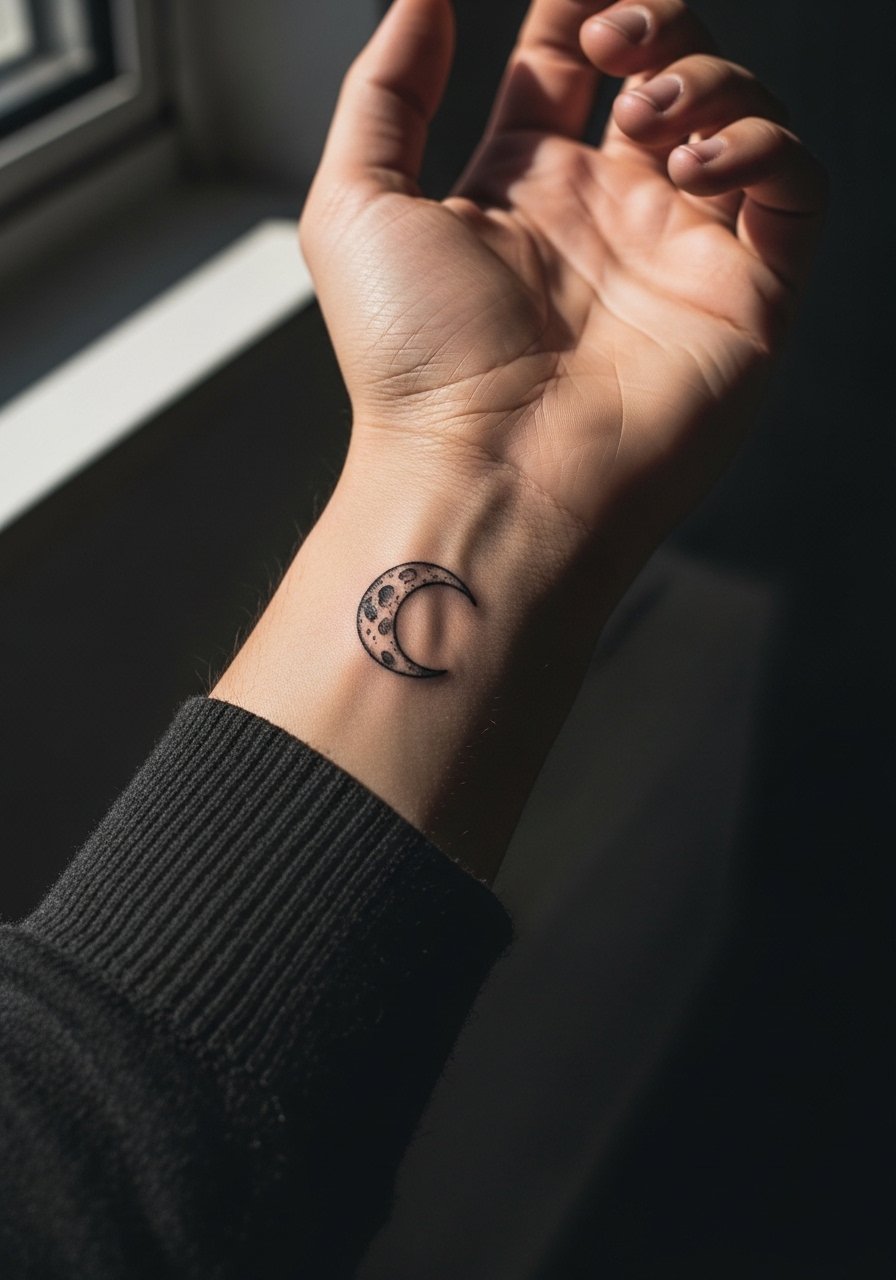
I've seen wrist moons look delicate and intentional when framed with a minimal bracelet. Pain is low but the area sees so much sun and washing that fine details soften faster than you expect. Ask for a compact design with a slightly thicker silhouette so the moon remains legible. For styling, pair it with a minimalist bangle bracelet or a leather cuff depending on your wardrobe. Expect a touch-up by year two if you wear a lot of sunscreen or bracelets that rub the area.
12. Small Moon Above the Hip

The hip is a great spot if you want something private but occasional to show. Sessions are comfortable with a relaxed posture and usually short. Avoid extremely tight, dense patterns around the moon, since stretching and clothing friction can make details merge. For the appointment, wear high-waisted bottoms you can shift down a touch if needed. Healing is slow because the area is close to waistbands, so expect cautious dressing in the first week. Touch-ups are common after weight or shape changes.
13. Moon Phase Anklet That Wraps Slightly
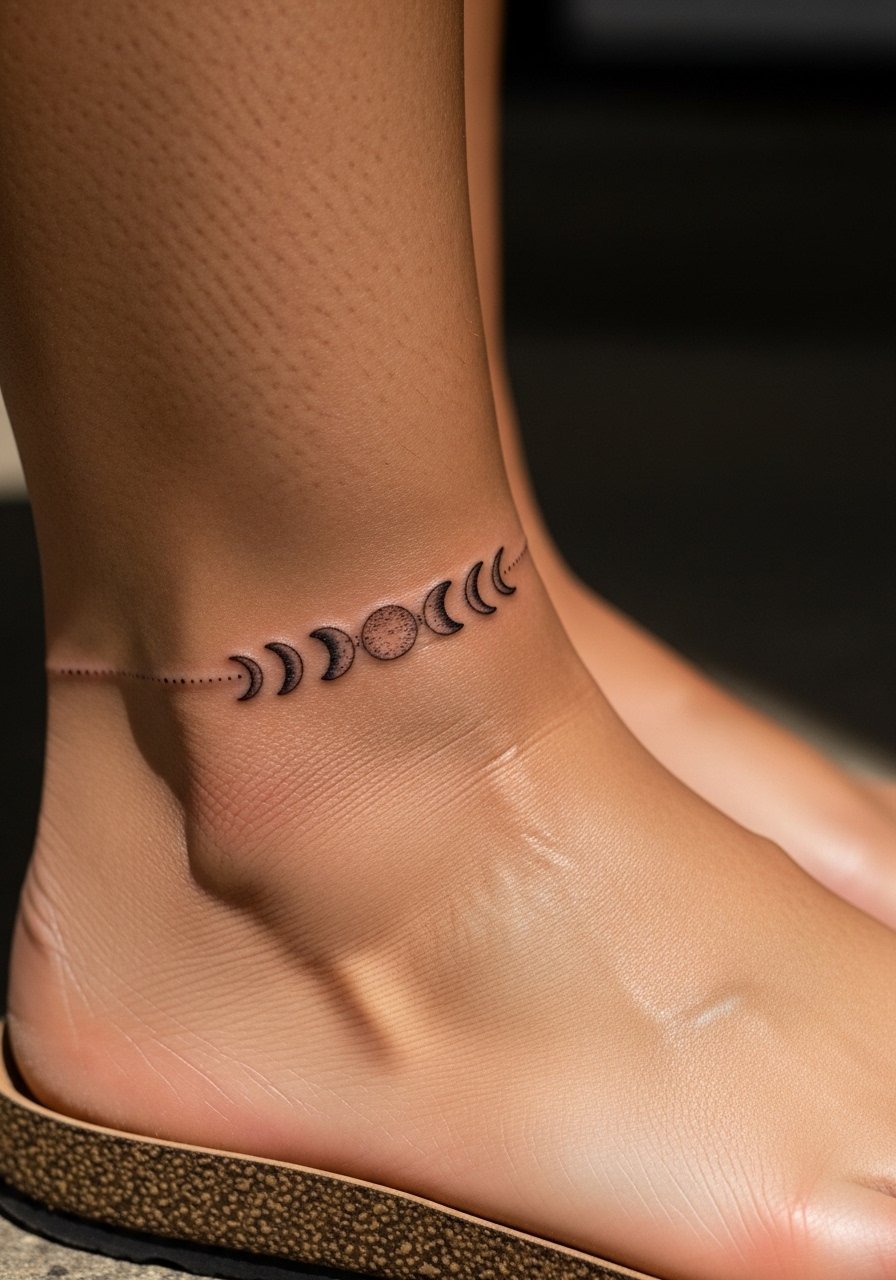
The visual impact of a wraparound phase is nice for ankle jewelry vibes. The most common mistake is extending the wrap too far toward the heel where shoes cause friction. Ask the artist to keep the design to the outer ankle and to space phases for breathing room. For showing it off, pair with an ankle chain and low sandals. The session is short and healing is straightforward, though you may need touch-ups if your shoe choice rubs the area often.
14. Small Moon at the Top of the Foot

Feet take a lot of contact and water exposure, so expect a finicky healing window. The mistake is asking for hairline detail without allowing for thicker anchor lines. A slightly bolder contour with open interior keeps contrast as scabbing resolves. For the session, wear slip-on shoes or sandals so you avoid pressure on the fresh tattoo. Most foot pieces need touch-ups within a couple of years if you frequently wear closed shoes that rub the area.
15. Stippled Moon on the Inner Bicep

Artists argue about fine line on the inner bicep. One camp says the movement and softer tissue there cause blurring in two years. The other camp maintains that careful needle depth and heavier primary lines allow the piece to age well. I advise clients to ask for modest line weight plus stipple rather than hairlines. The inner bicep is a tender spot but the session usually stays under an hour. For the appointment, a sleeveless tank top makes access easy and keeps the area private.
16. Small Moon with Floral Halo on the Lower Back

The lower back gives room for a halo without competing with clothing lines. A common mistake is making the halo too dense, which can read as a single dark patch after healing. I suggest open petals and dot work to define negative space. For the session, wear a top that you can pull up slightly or a tank so the artist has clean access. This area is low friction and ages well if you avoid long periods of sun without protection.
17. Delicate Moon at the Side Rib with Tiny Stars
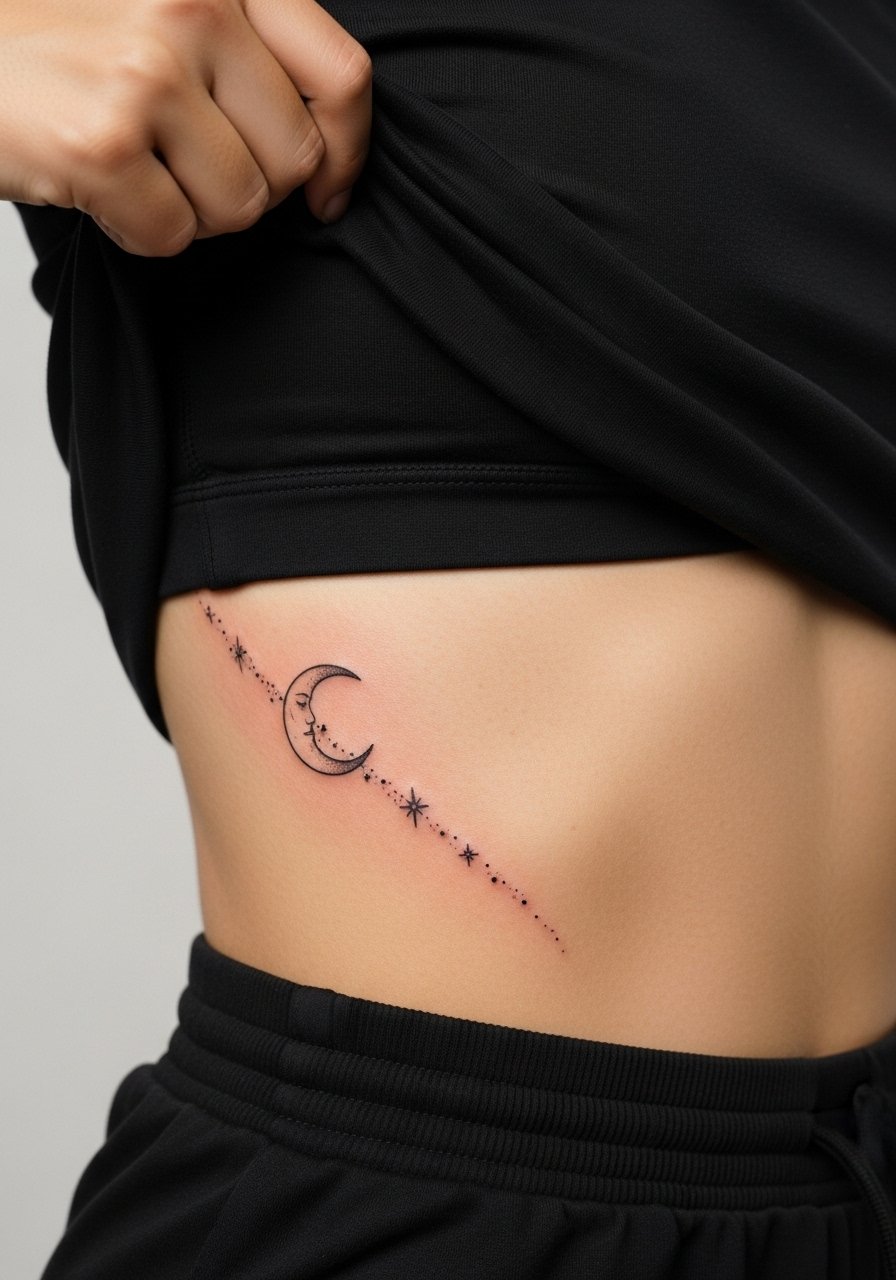
Sitting for side rib work demands patience because this area is sensitive. My consultation lead here is direct. Tell your artist you want spacing between the stars and the moon so the tiny points do not merge as the skin stretches. Pain is above average, and sessions may be broken into passes. Bring a comfortable, loose top you can shift. This placement is beautiful under open-back tops but the healing window needs gentle clothing choices to avoid aggravation.
18. Mini Moon Near the Collarbone Edge

Fair warning, the collarbone area sits close to bone and can get zingy during the session. The piece reads like jewelry when placed just off the bone. The mistake is crowding the moon with extra motifs that compete with the natural shadow of the collarbone. Keep the design compact and ask for a stencil check in the light you plan to wear. For showing it off, a wide-neck top or a thin chain necklace frames the tattoo without covering it.
19. Moon and Tiny Geometric Halo on the Outer Thigh
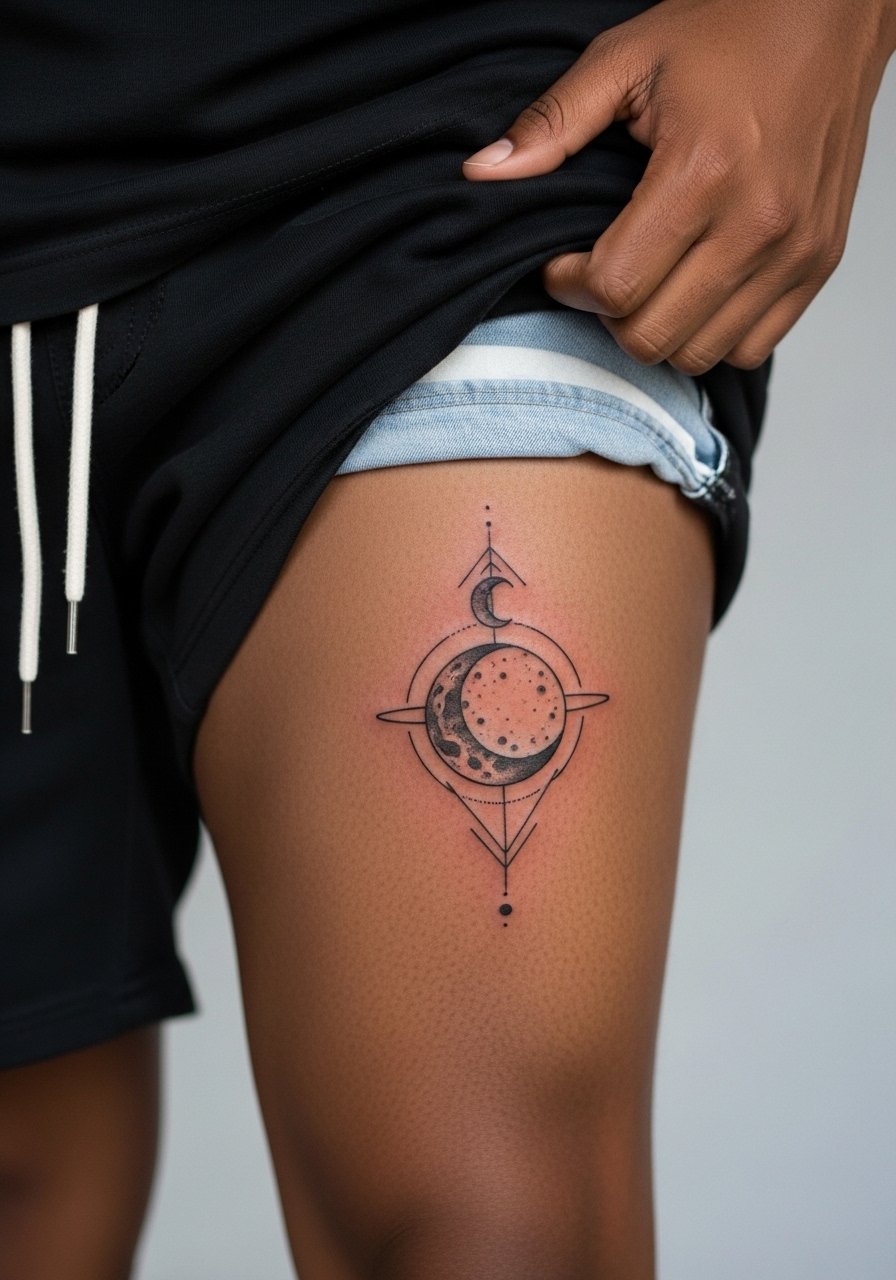
Outer thigh pieces tend to age gracefully because they avoid constant abrasion. I've noticed geometric halos keep shape if the lines have breathing room. The common mistake is shrinking the halo too much, which causes the shapes to merge as the skin moves. For the appointment, wear loose shorts you can shift without tight elastic cutting across the area. For show, high-cut shorts or a swimsuit bottom reveal the design cleanly and let the halo read from a distance.
20. Fine Line Moon at the Inner Wrist with Dotwork Trail

There is clear visual impact when a tiny moon has a dotwork tail that moves with the wrist. The mistake is making the dots too close to the moon. Give a centimeter gap so the tail keeps identity as skin settles. Session time is brief and pain is low. For the appointment, wear short sleeves you can pull up easily. Expect the wrist to need a touch-up earlier than the forearm because of washing and sunscreen habits.
21. Tiny Solar Eclipse Over the Tricep

The tricep is a forgiving canvas for a compact eclipse. The visual balance is why many pick this spot. A common mistake is requesting too many interior line details without enough contrast, which fades faster with time. Ask for a mixture of bold outline and subtle inner texture so the eclipse reads at six months and keeps character at five years. Pain and session time are both moderate. For showing the piece off, a sleeveless top or a loose tank works well.
Frequently Asked Questions
Q: Will tiny moons on fingers and wrists need touch-ups more often than those on the forearm?
A: Yes, fingers and wrists usually require touch-ups sooner because they endure frequent washing, friction, and sun exposure. I tell clients to plan for at least one touch-up around year one or two for finger work and to protect wrist pieces with sunscreen to slow fading.
Q: Can a sternum or ribcage moon keep its fine details long term?
A: It depends on stencil placement, line weight, and how your skin moves. Some artists prefer bolder anchor lines on ribs, while others rely on spacing and stippling. Ask the artist to show healed rib photos and be prepared for a possible touch-up after the first year.
Q: What should I wear to a session for an inner forearm or shoulder moon?
A: Wear a garment you can move aside without exposing more than the tattoo area. For inner forearm, a loose button-down shirt works well. For shoulders, a tank top that slides down slightly gives clean access without fuss.
Q: Are negative-space moons riskier than filled moons?
A: Negative space adds elegance but needs surrounding contrast to read over time. If the surrounding stipple or shading is too light, the cutout can vanish as the skin softens. Favor modest gaps and confirm the artist has healed photos of negative-space work.
Q: How do I find an artist who specializes in delicate illustrative moons without naming anyone?
A: Use local convention listings, tag-specific hashtag searches, and portfolio filters on shop directories. Community forums and dedicated tattoo subreddits are also good for photos of healed work. Look specifically for healed images, not only fresh photos, and ask about touch-up policy before booking.
Q: Will a moon tattoo affect my job prospects or appearance in professional settings?
A: It depends on placement and your industry. Visible spots like fingers, neck, and hands are still scrutinized in some fields. If that is a concern, choose placements that can be covered during meetings, or pick a spot that is easily concealed by sleeves or jewelry.