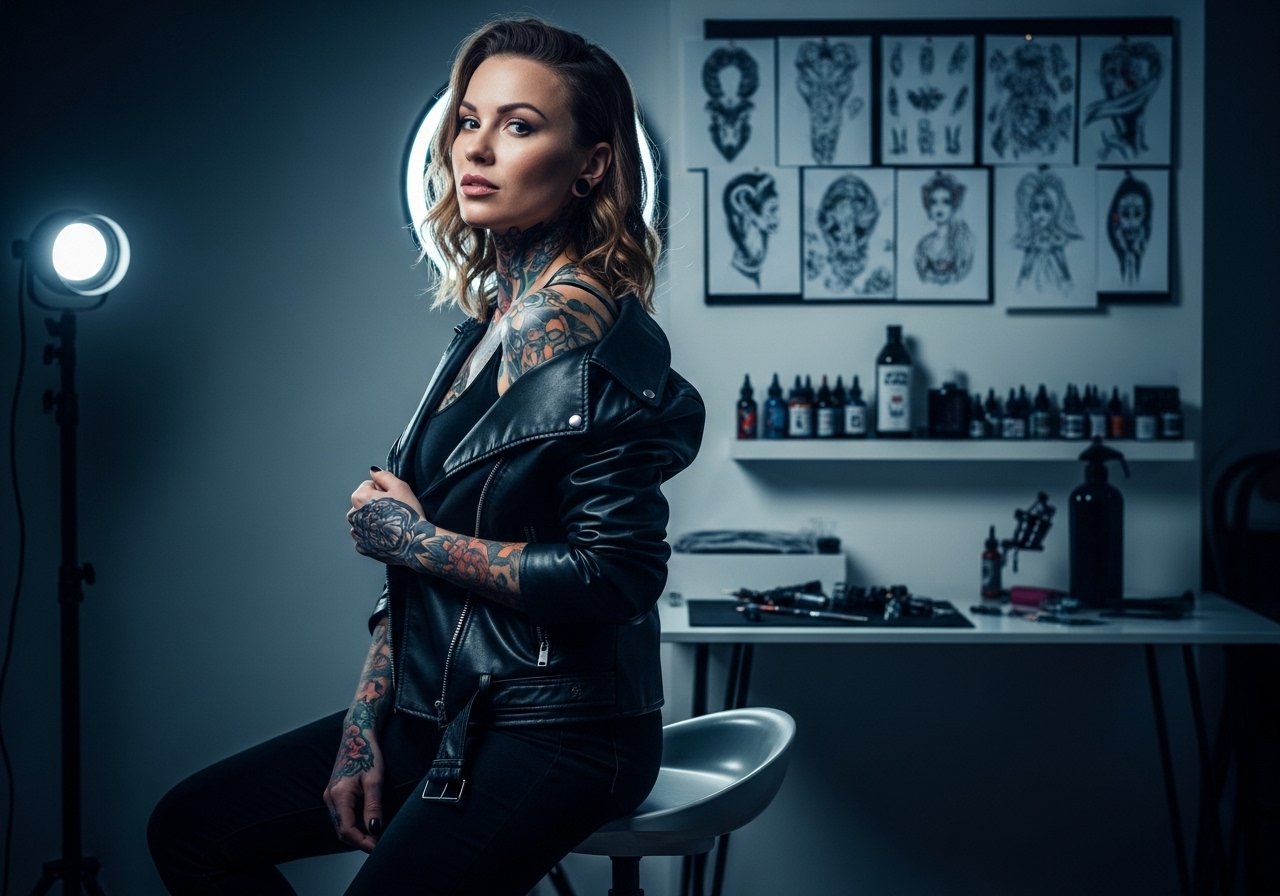
The geometric Shiva pieces that age best are usually the ones that start with disciplined spacing rather than maximal detail. Tiny concentric mandalas and overly dense third-eye lines often merge with time, while designs that balance negative space and steady linework keep the iconography readable. Ahead are 27 geometric takes on Shiva that pair sacred motifs with placement choices and real-world aging advice so you can book the session with clearer expectations.
1. Minimal Shiva Outline on Inner Forearm
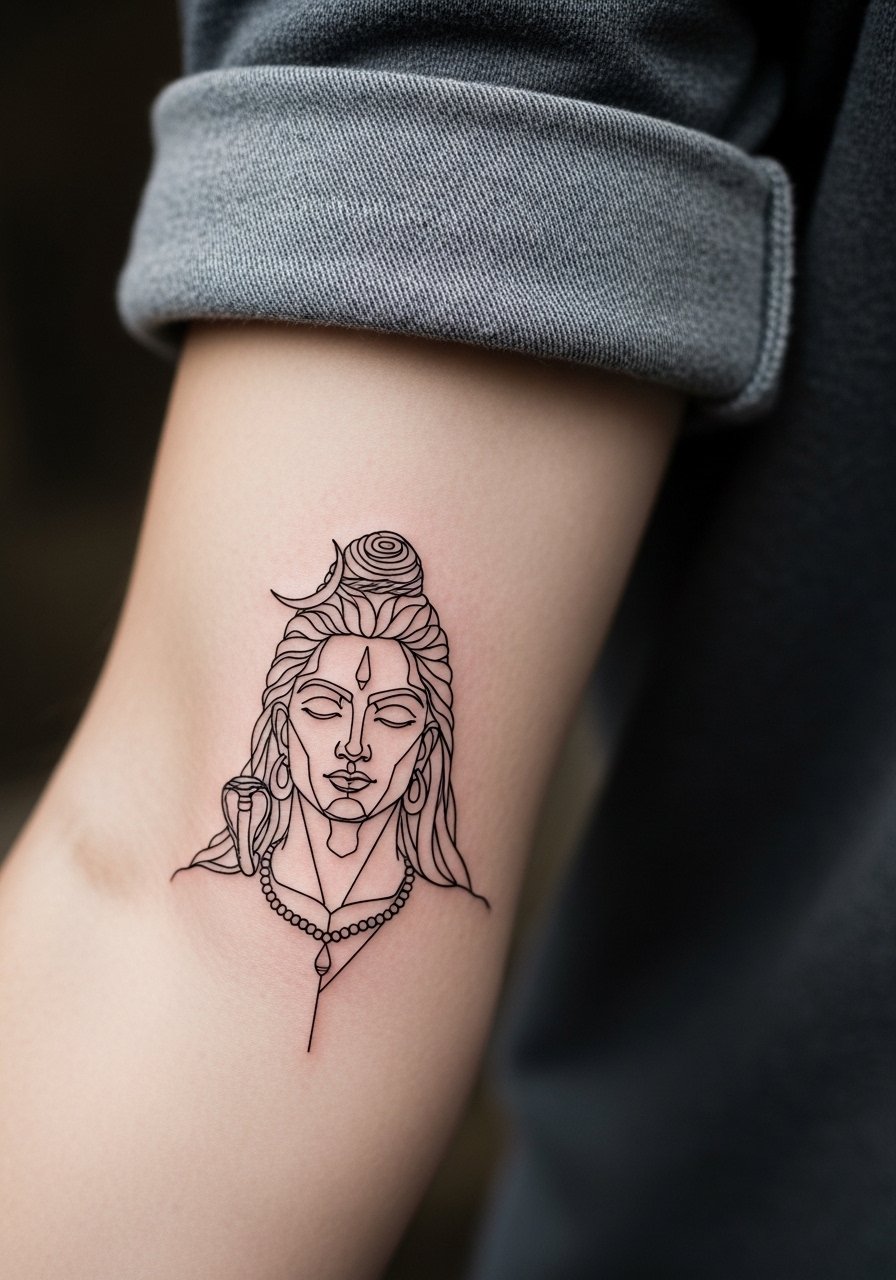
I recommend this when you want a daily-visible devotional piece that wears casually. Fair warning, the inner forearm sees sun and friction from watches and bags, so ask your artist for slightly heavier line weight than a typical micro piece. The session feels moderate on pain and often fits into a single short appointment. The common mistake is asking for too-small facial detail. Tell your artist to simplify the facial geometry and increase spacing so the third eye and trident remain distinct at year two. For showing it off, pair the piece with a rolled linen shirt that keeps the forearm exposed without competing for attention.
2. Geometric Shiva Mandala on Upper Arm

This reads well when you want a bold shoulder anchor that can expand into a sleeve over time. I often tell clients to treat the mandala like a frame, not the main subject. During consultation, point to spacing between concentric rings and ask for stipple shading rather than packed shading in the inner rings. The outer arm handles saturation and larger geometry with low blowout risk, but tiny inner mandalas can blur. If you plan sleeved layering later, leave a clear breathing space around the main halo. Wear a short-sleeve linen tee to show it off.
3. Third-Eye Linear Portrait on Collarbone

Collarbone placements need precise consultation because the bone can make linework read thinner than planned. Expect a 6 out of 10 pain level but a high visual payoff when framed by neckline choices. The usual error is asking for super-fine facial features right on the collarbone. Ask for slightly thicker contour lines and for the artist to map the negative space before inking so the third eye stays clear after healing. Pair this with an open collar linen shirt for evenings, or a simple thin chain pendant necklace that sits above the work.
4. Shiva Trident Wrist Band

Wrist tattoos show frequently used skin and friction, so expect a touch-up sooner than larger pieces. The session is short but the area heals under constant motion and washing. A common mistake is compressing too many trident details into a thin band. Instead ask for bold, simple negative-space trident motifs spaced around the wrist. This reduces blowout risk and keeps the symbolism readable. For showing it off, stacked dainty bracelets can either complement or crowd the band, so pick a single minimalist bracelet that frames the trident.
5. Half-Face Shiva with Geometric Crescent on Thigh
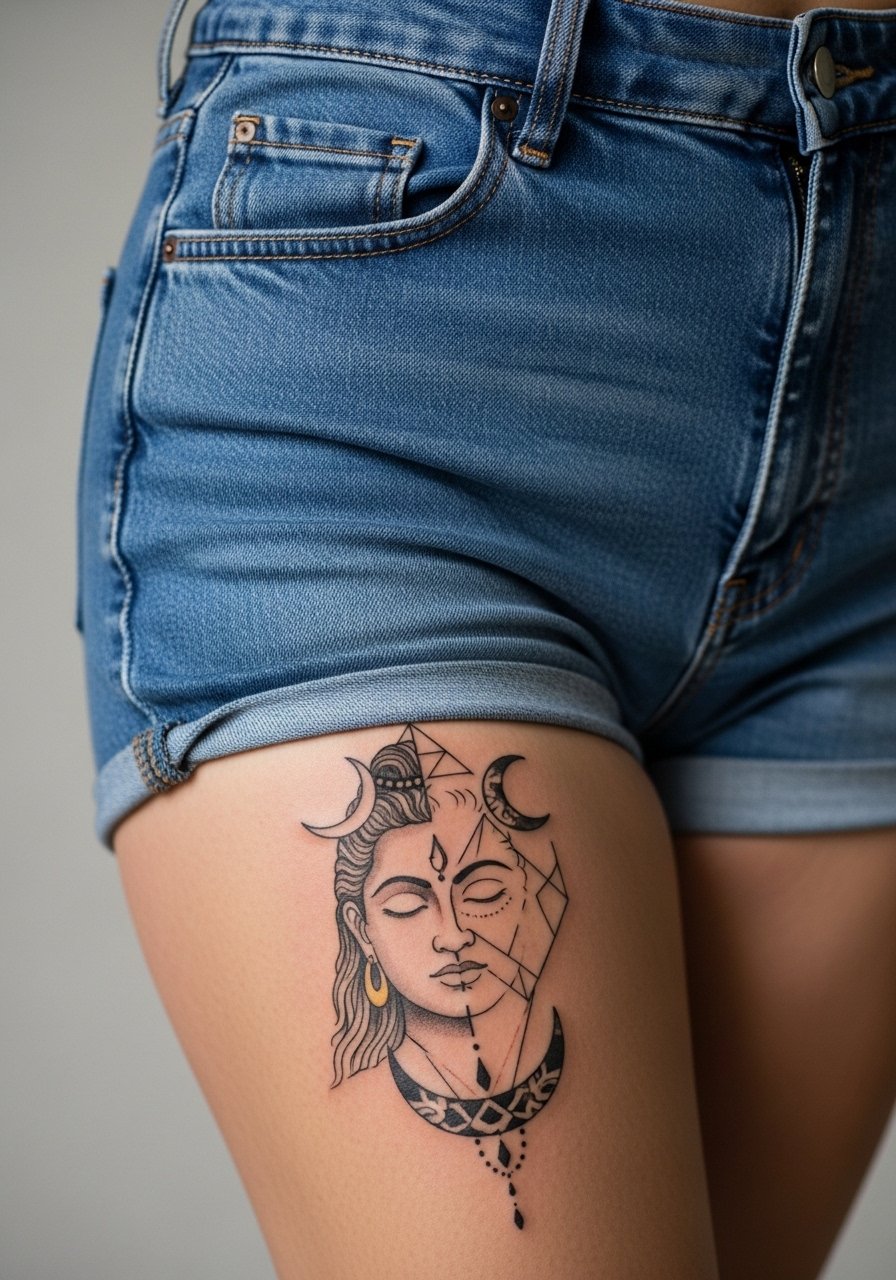
Thighs tolerate dense geometry better than wrists, so this placement works if you want facial detail plus pattern. The session can run longer and feels more comfortable than rib or sternum work. Common mistakes include asking for too many micro details that read like texture instead of form. Tell the artist to prioritize silhouette and to use stipple shading for depth. This placement is private by default but pairs well with high-waisted shorts for summer showing.
6. Shiva in Lotus Frame on Upper Back

Upper back pieces age predictably and scale well for detail. I tell people to expect a longer session and to book two appointments if they want tight dot work and crisp outlines. A frequent error is expecting chest-level intimacy from a back piece; the curvature changes how faces read. Ask your artist to map the face angle against your posture so the portrait sits naturally when you stand. For session comfort, bring a thin button-down you can pull aside. For evenings, an open-back dress shows the lotus frame without overexposing the tattoo.
Studio Day Picks
The upper-arm, thigh, and collarbone pieces above all benefit from a few targeted session items that make the appointment smoother and the first week easier.
-
Stencil transfer paper kit. Lets you check placement and lineweight directly on skin before the needle starts, which helps with shoulder and collarbone geometry.
-
Topical numbing cream. Applied 45 minutes before can reduce discomfort for long back or thigh sessions while keeping the artist's work clear.
-
Thin protective film roll. Useful for wrist and ankle pieces to limit friction from daily wear during the first days.
-
Fragrance-free gentle body wash. Cleans the area without irritating fine line work on exposed placements like forearm and collarbone.
-
Aquaphor healing ointment. A thin layer for the initial days locks in moisture and helps fine line geometry retain crisp edges without clogging.
7. Shiva Nataraja Silhouette on Calf

Calf pieces work well for elongated motion-driven figures like Nataraja. The skin there takes shading and saturation reliably, and sessions are tolerable for most people. The usual mistake is shrinking the dancing silhouette to a size that loses the sense of motion. Tell the artist you want visible limbs and rhythmic negative space. At six months the figure should read clean, and at two years the silhouette holds if spacing was prioritized. For warm-weather wear, a mid-calf sandal or cropped pant shows the piece without covering it.
8. Geometric Shiva Head on Sternum
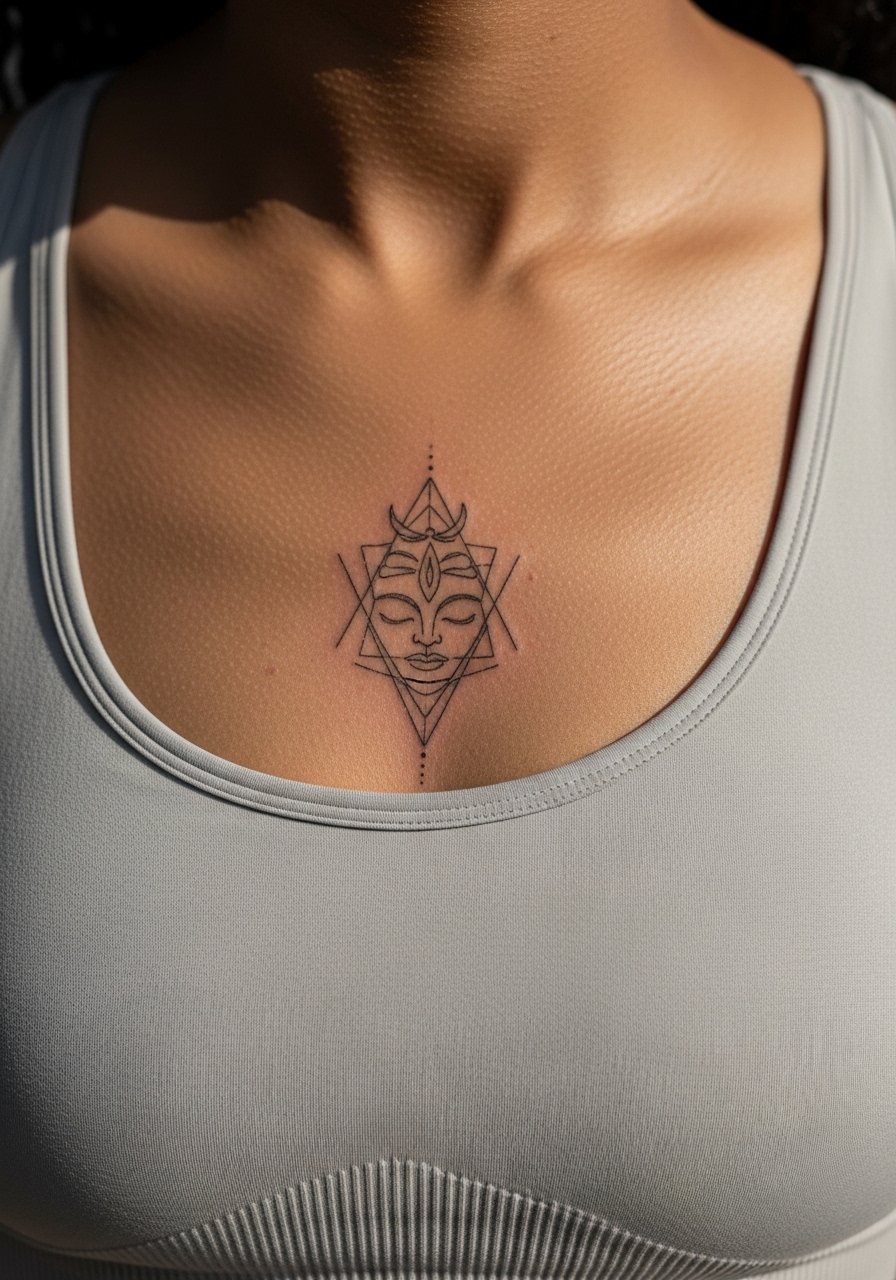
Sternum placements split artists into two camps. One camp says fine line and dense detail on the sternum blur quickly because of skin stretch and torso movement. The other camp argues that if spacing and needle depth are right the piece can settle clean. I recommend naming that debate in consultation and asking where the artist stands. Expect a higher pain level and longer healing that may need a touch-up at year two for very fine details. For session wear, bring a strapless or zip-up top for easier access.
9. Geometric Trishul Finger Accent

Finger tattoos demand realism about longevity. Lines on fingers face constant washing and friction, so expect faster fading and more frequent touch-ups than larger areas. The typical mistake is asking for overly intricate geometry in a tiny area. Instead pick a simplified trident glyph with negative space between prongs. The session is short but healing needs care for the first two weeks. For showing off while minimizing wear, avoid heavy rings over the design and try a thin minimalist ring that does not rub directly on the ink.
10. Geometric Shiva with Flowing Ganga on Side Ribcage
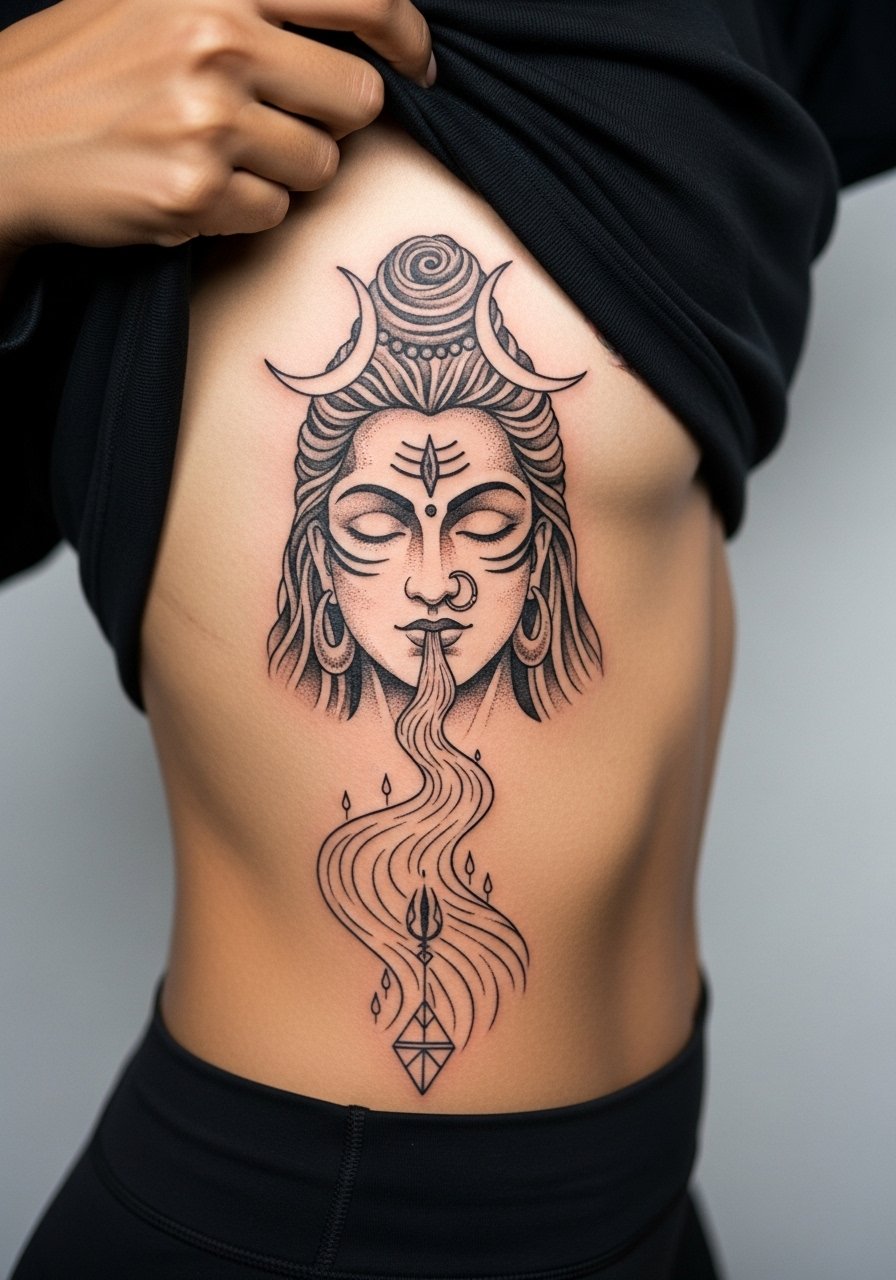
Ribcage work is painful and controversial for fine line geometry. One group of artists says the skin there stretches and lines merge in two years. The other group accepts the area for fine line if the design includes spacing and layered dot shading. If you choose ribs, plan for a patient session and expect touch-ups. A common error is packing too many concentric rings tight to the torso. Ask for wider spacing and staggered dot shading. For the session, wear a cropped top you can lift easily.
11. Shiva with Crescent Halo Behind Ear and Neck

Behind-ear and neck placements require discrete presentation and a clear conversation about visibility. The area heals quickly but the skin is thin so linework needs conservative depth. I often tell clients to expect a visible statement but to consider their workplace before booking. Keep the design simple and bold rather than tightly detailed portraits. For showing this off subtly, pair with a high collar or a wide-neck sweater that lets the crescent peek when you want it to.
12. Linear Shiva Portrait on Upper Thigh
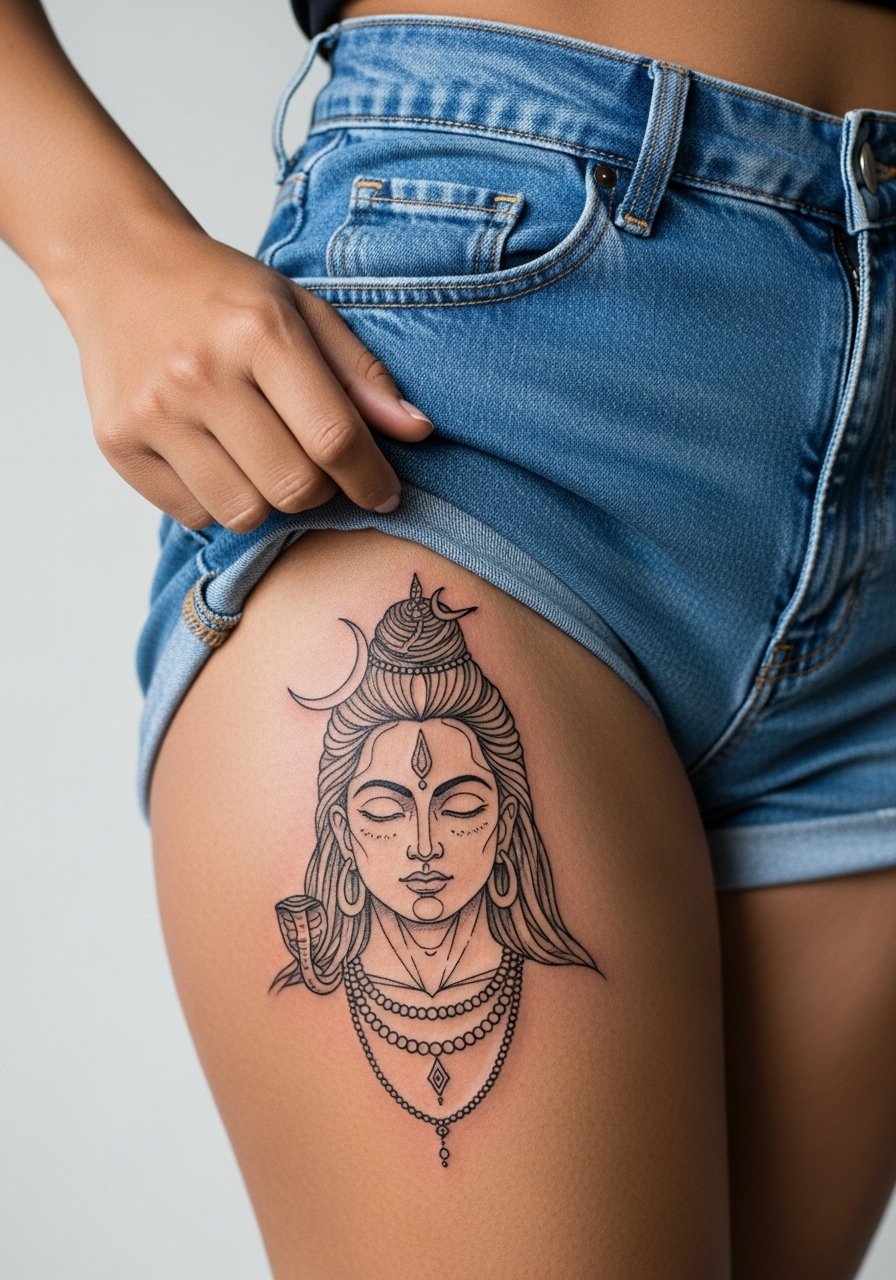
Thigh skin tolerates dense linework with low blowout risk, which makes it a good place for delicate portraits where you want preservation. The session is comfortable for most people and can be scheduled in a single block. A frequent mistake is expecting immediate public display; the area needs time before swimsuits or shorts reveal it. For session clothing, wear loose shorts or a wrap skirt that the artist can adjust easily. For summer showing, a high-waisted swim bottom complements the piece.
13. Dot-Work Shiva Halo on Shoulder Blade
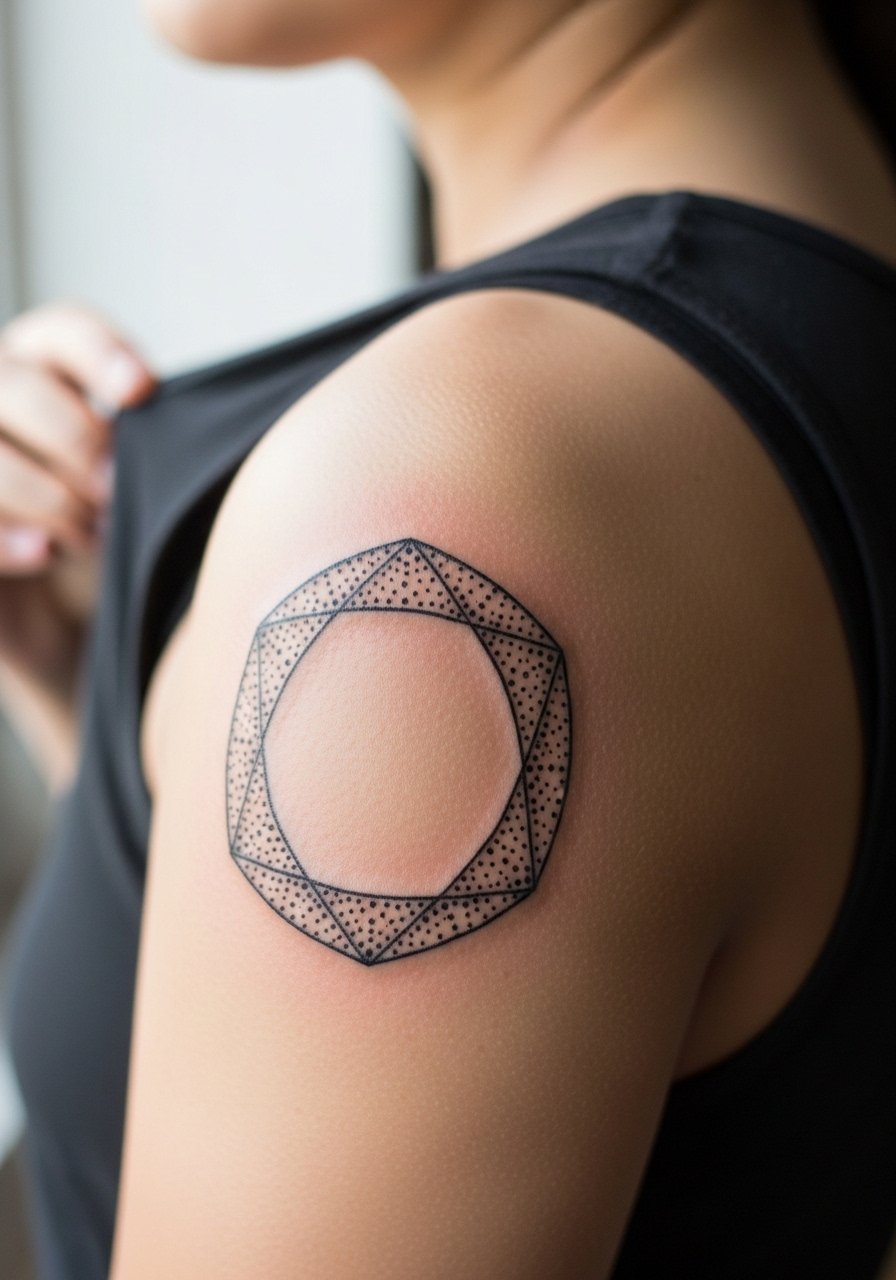
Shoulder blades are forgiving places for stipple and dot-work halos. The area handles saturation and multiple shading passes without much blowout. The common mistake is asking for the inner halo to be packed too tightly. Ask your artist to increase dot spacing as you move outward from the face so the halo keeps its form at two and five years. For showing this off, open-back or thin-strap tops frame the halo. Try an open-back top that draws attention to the shoulder blade.
14. Geometric Shiva Bust on Upper Arm with Snake Accents
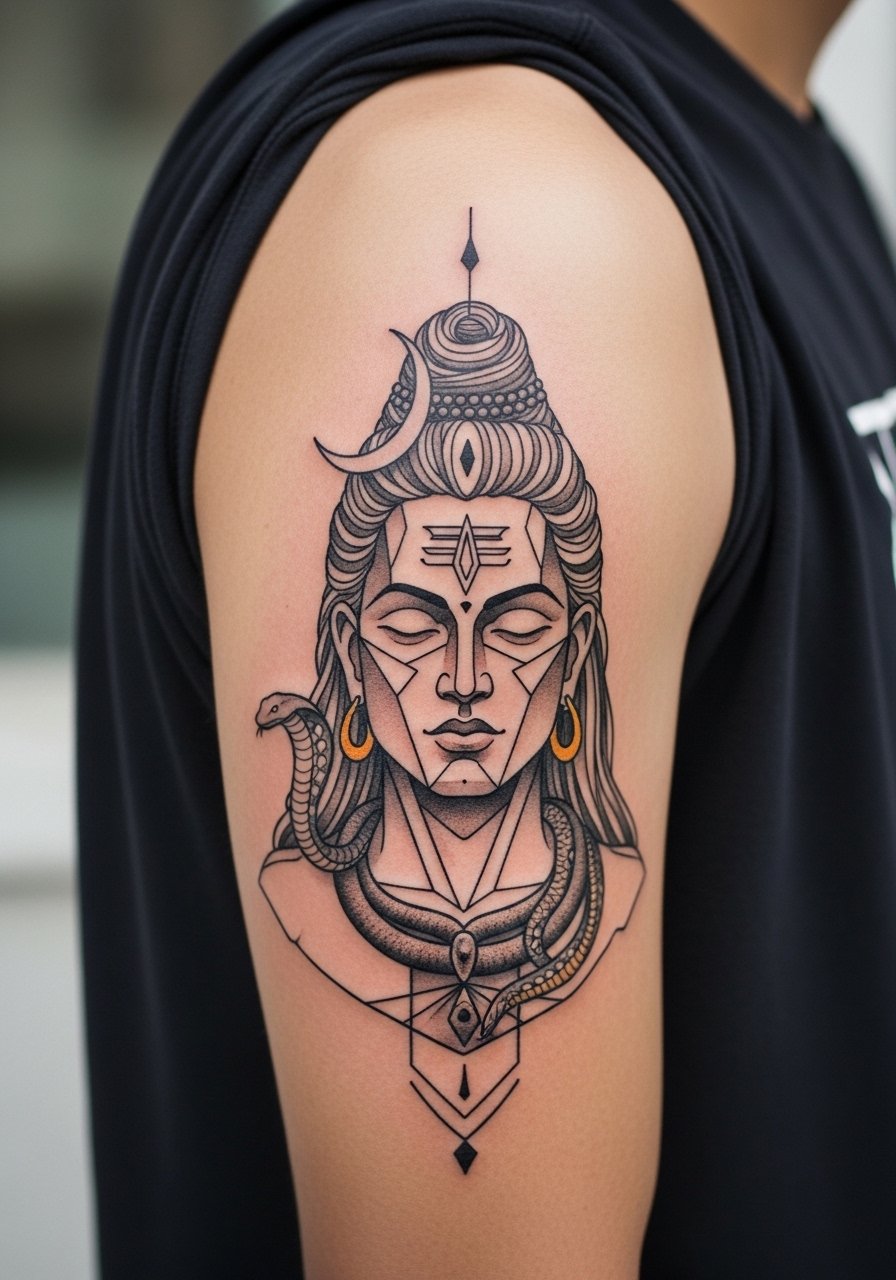
Upper arm busts are resilient to everyday wear and show detail well. The session is moderate and often completed in a single afternoon. A mistake I see is over-detailing the snakes so their scales merge into texture. Request simplified scale geometry and defined negative space between coils. If you plan a sleeve around this, leave clear margins for future expansion. For casual show-off, roll the sleeve and wear a short-sleeve linen tee that keeps the arm visible without distraction.
15. Geometric Shiva Crest on Back of Neck

The back of the neck is a place that has social visibility and a thin skin profile. Expect faster fading and occasional touch-ups. A common misstep is choosing micro detail that the thin skin cannot hold. Instead ask for confident, slightly heavier linework and a clear top-to-bottom orientation so the crest reads when you look in a mirror. For styling, a wide-neck tee keeps the area visible when you want it exposed.
16. Crescent Moon and Shiva Micro on Ankle

Ankle tattoos endure rubbing from shoes and socks, so expect fading more quickly than leg or arm pieces. The error I see most is packing facial geometry into a size that simply cannot hold it. Go for a clean crescent and suggest slight bolder contours for key features. Healing requires less motion than fingers, but friction from footwear still matters. For showing this off with low risk, wear sandals or roll your pant leg and try a pair of slide sandals.
17. Geometric Shiva Sleeve Anchor on Forearm
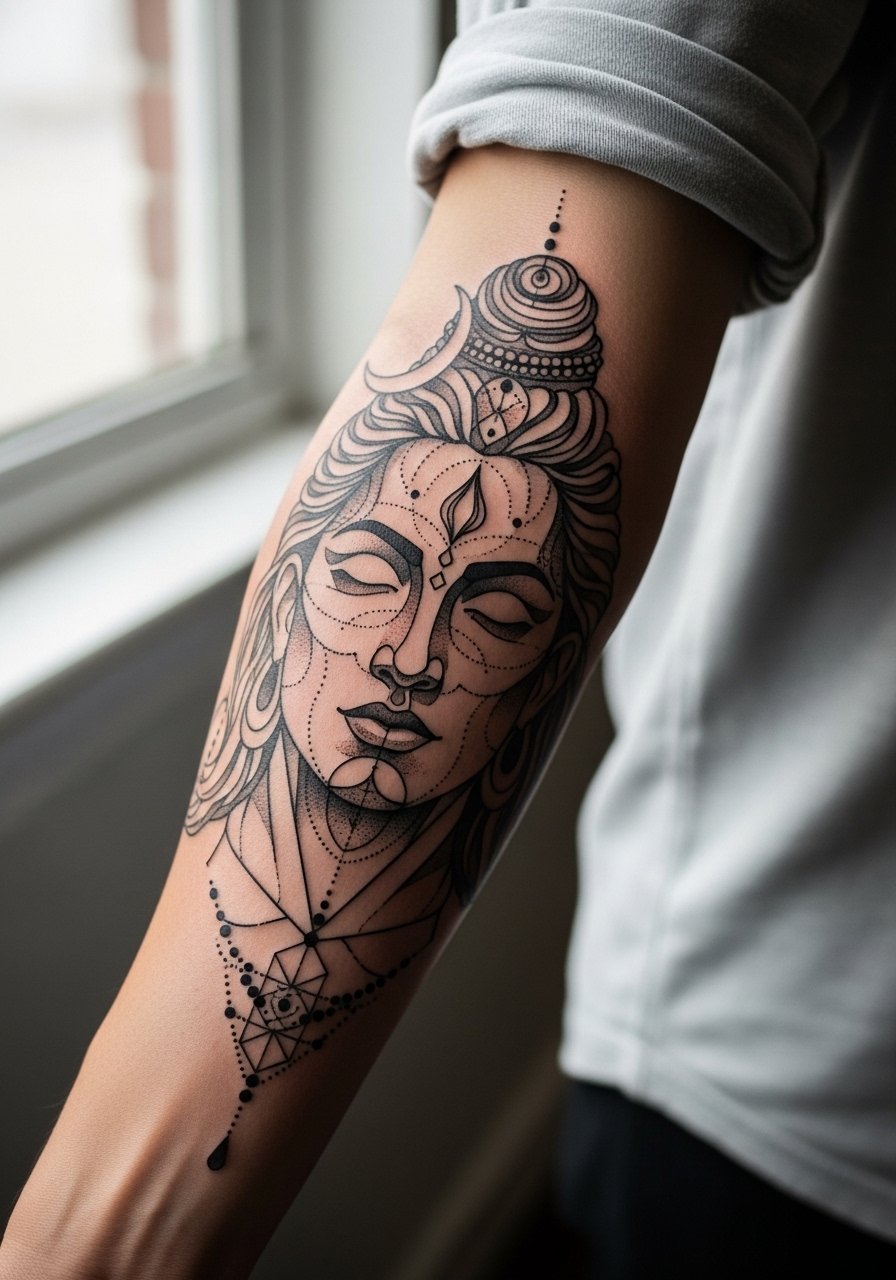
Forearm sleeves age well when you leave breathing room between elements. If you are planning a sleeve, treat this anchor as an architecture problem. During consultation, request mock placement photos and layered stencil checks. A common mistake is squeezing adjacent flash into the negative space. Ask the artist to reserve buffer zones so the portrait and subsequent pieces do not compete. For showing off the sleeve in casual settings, roll sleeves or pick a button-down shirt you can cuff.
18. Shiva with Geometric Serpents on Rib-to-Hip Flow
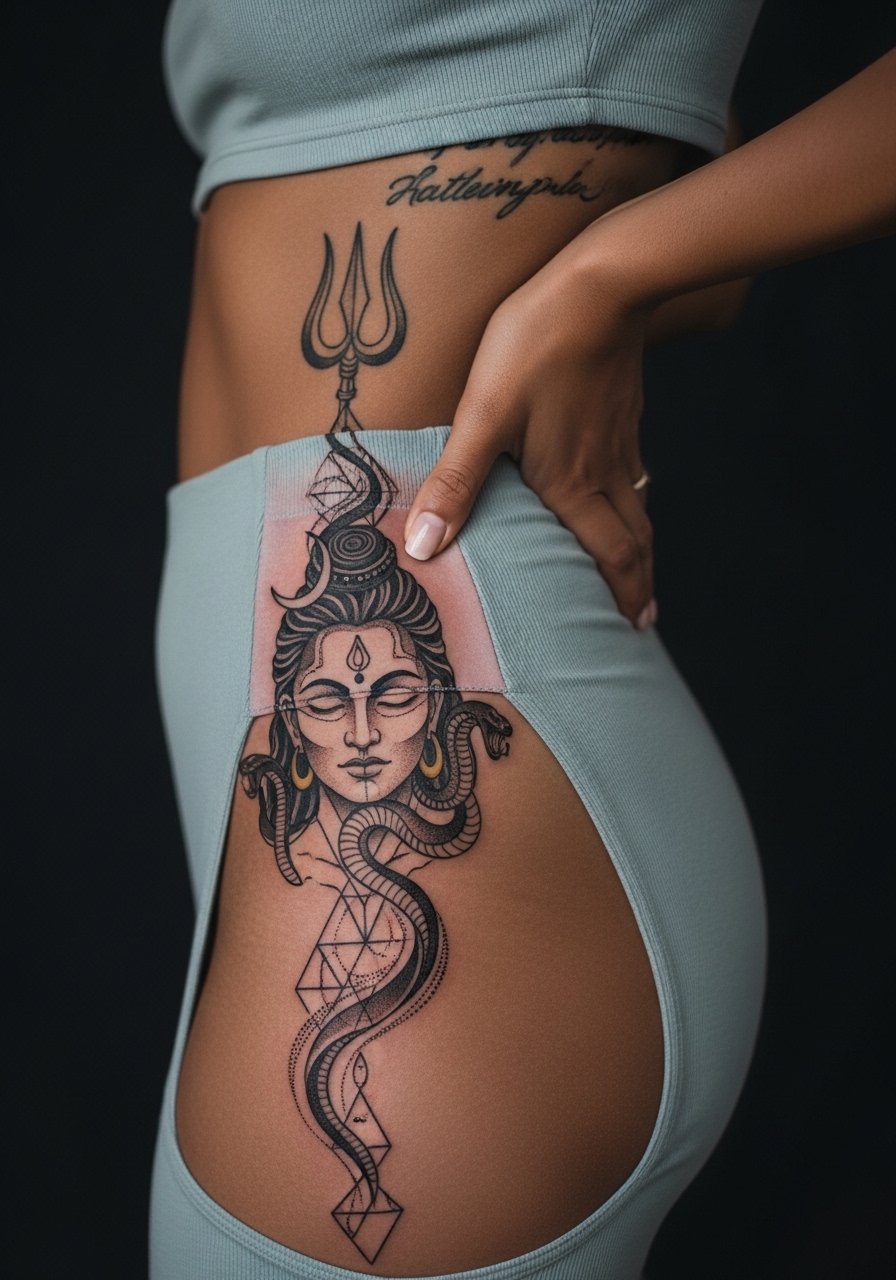
This is a movement-focused piece that needs contour mapping so the serpents flow with body curves. The pain is higher across the ribs and the session may require breaks. Many clients ask for dense serpentine scales that later blend into a shaded mass. Ask for defined negative space between serpent segments and use dot shading to keep separation. For session wear, pick a cropped top you can lift easily. For occasional revealing, a high-waisted skirt shows the flow.
19. Shiva Micro on Finger Side-Pad
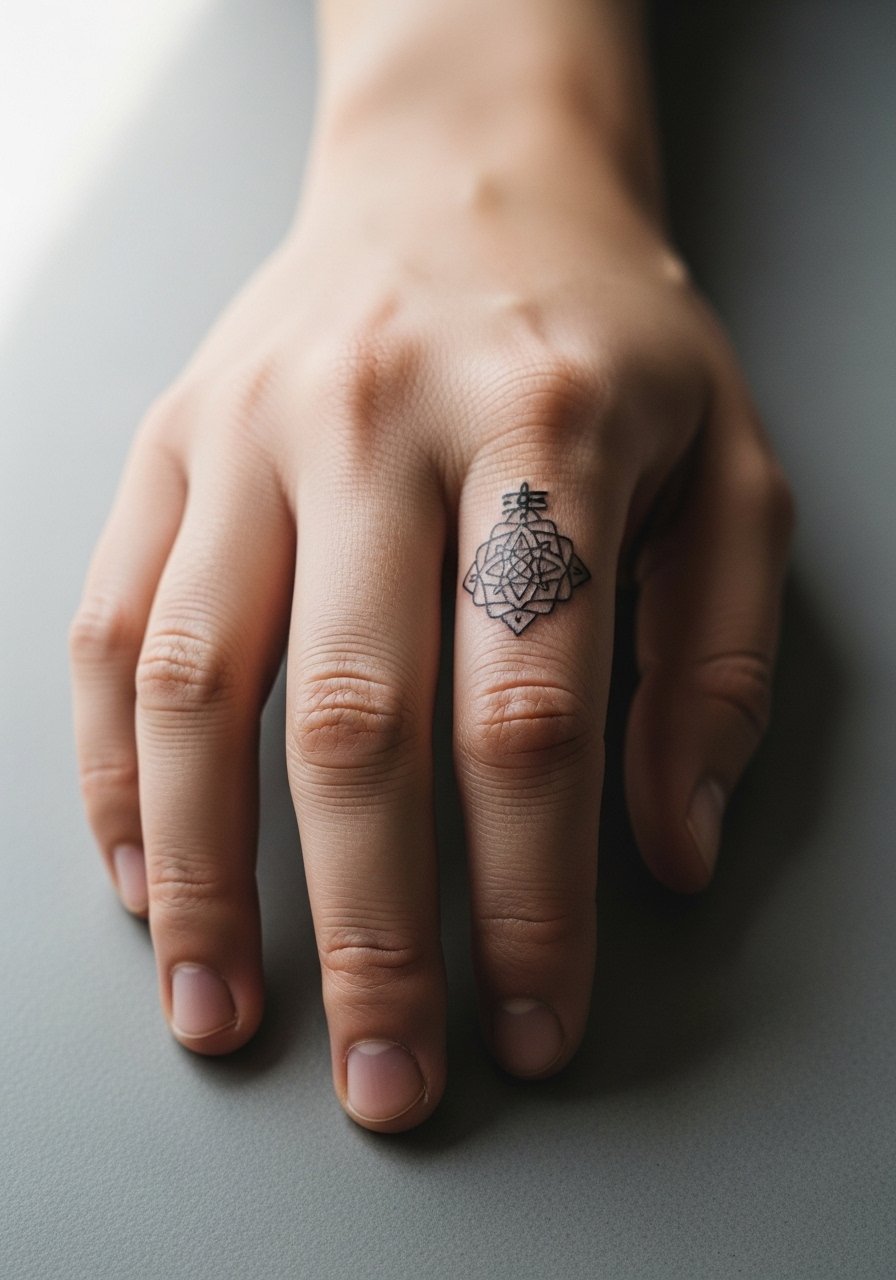
Side-finger placements face intense abrasion and frequent re-inking needs. The biggest mistake is treating this like a permanent solution for fine geometry. Expect higher fade and a likely touch-up schedule in the first year. Keep the symbol minimal and high-contrast, and avoid tiny internal ornamentation. The session is quick but healing requires avoiding rings on that finger for weeks. If you wear jewelry, choose open bands or a thin adjustable ring that limits constant rubbing.
20. Geometric Shiva Line Art on Sternum-Rib Shelf

Sternum-to-rib pieces combine sensitive areas and movement, so discuss longevity with your artist. This placement again reveals the field split among artists. One camp warns that fine detail across the sternum and ribs will soften quickly. The opposite camp says careful spacing and conservative depth yield good long-term results. State the debate and ask the artist how they plan to preserve critical geometry. Expect a sore session and book a calm recovery window. For session comfort, wear a zip-up top you can remove without lifting your arms.
21. Shiva with Geo-Lotus Spine Column
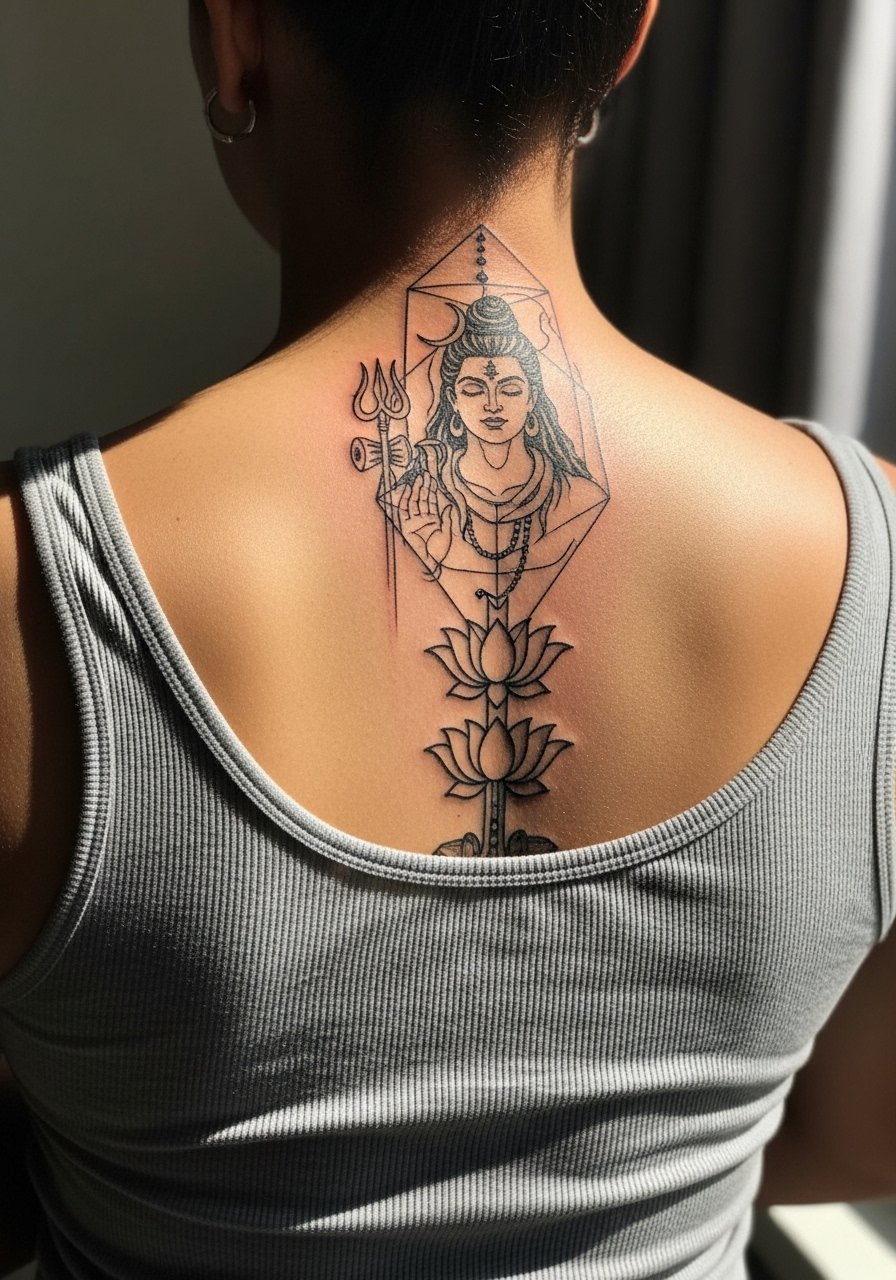
Spine work reads dramatically when scaled for body lines, but the skin there can be unforgiving for micro detail. I tell clients the session is sharp, and healing can be slower because of movement. A common error is asking for tiny facial features stacked vertically that lose definition when you move. Ask for a simplified face and stronger negative space between elements. For evenings out, an open-back dress highlights the vertical column.
22. Small Geometric Shiva on Palm Edge
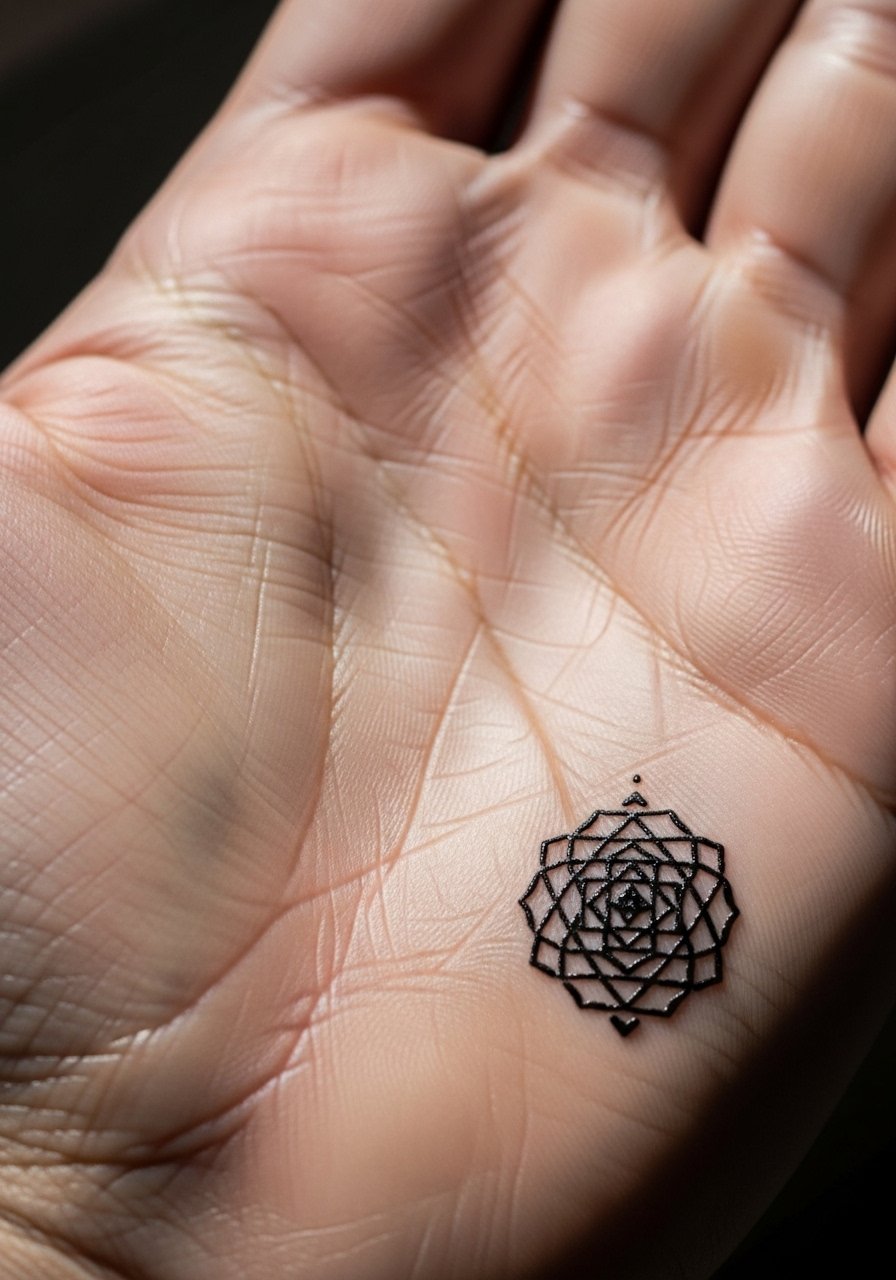
Palms are one of the least permanent skin sites for tattoos because of friction and skin renewal. If you want symbolism in this zone, pick an extremely simplified glyph and prepare for frequent touch-ups. The session is quick but the healing process requires avoiding heavy hand use for several days. The typical mistake is trying to transfer forearm detail into the palm; it will not hold. Consider a complementary wrist piece instead if you want longer wear.
23. Geometric Shiva with Lotus and Dot Halo on Throat Side
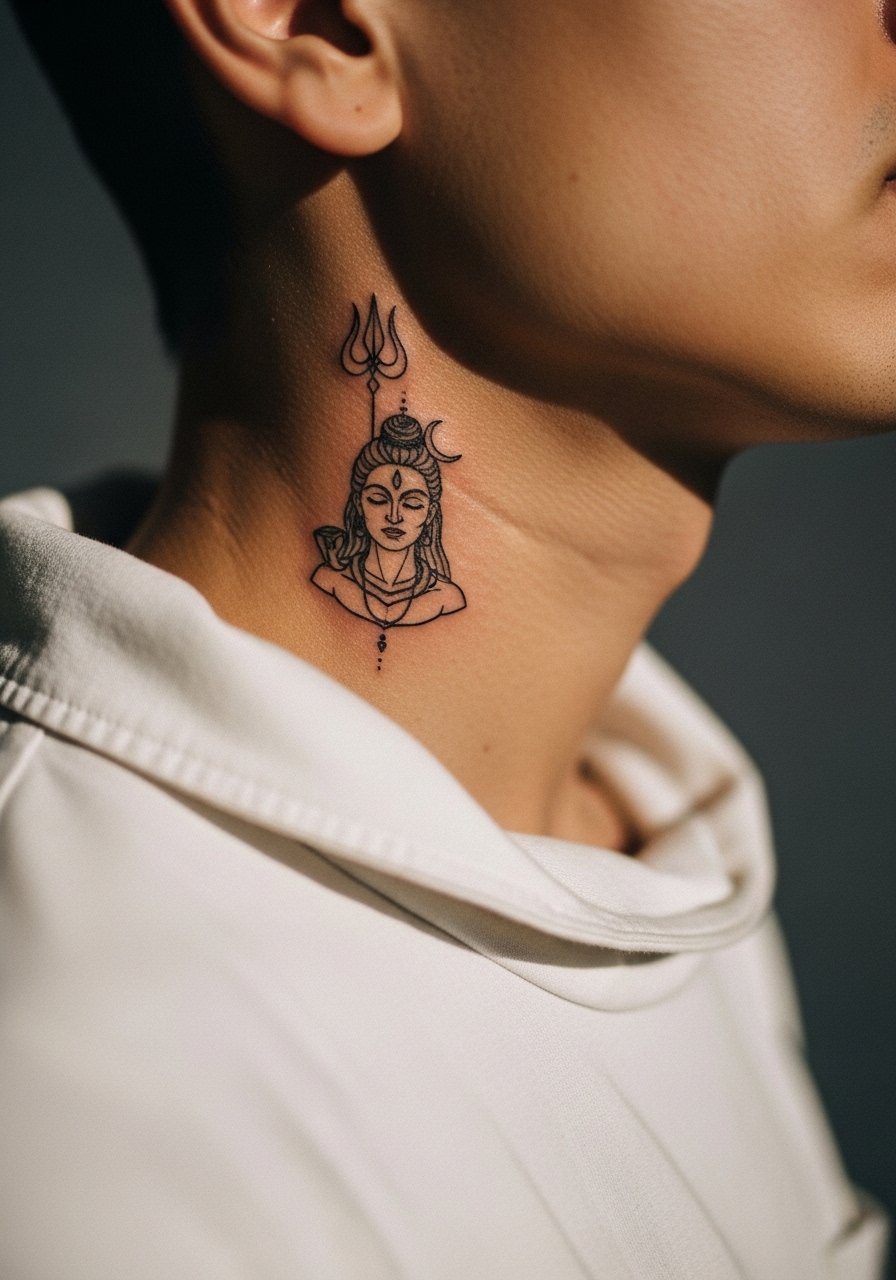
Neck work is visible and carries social weight, so plan accordingly. Skin there is thin which makes line depth and spacing crucial. A usual mistake is dense facial ornament that the neck cannot hold. Instead opt for a bold contour and spaced dot halo. Expect touch-ups within a few years. For subtle daily show-off, a thin chain necklace sits above the piece and frames the jawline.
24. Geometric Shiva on Lower Back Panel

Lower back pieces are private and age quietly if kept out of constant UV. The skin there tolerates larger panels and dense geometry, but a mistake is cramming portrait detail into a broad pattern without clear focal points. Tell your artist where you want the eye to land and to design concentric frames that guide it. For session clothing, wear low-rise jeans that can be adjusted. For showing it selectively, a crop top and low-rise skirt pairing works.
25. Shiva Geometric Bust on Pectoral Edge
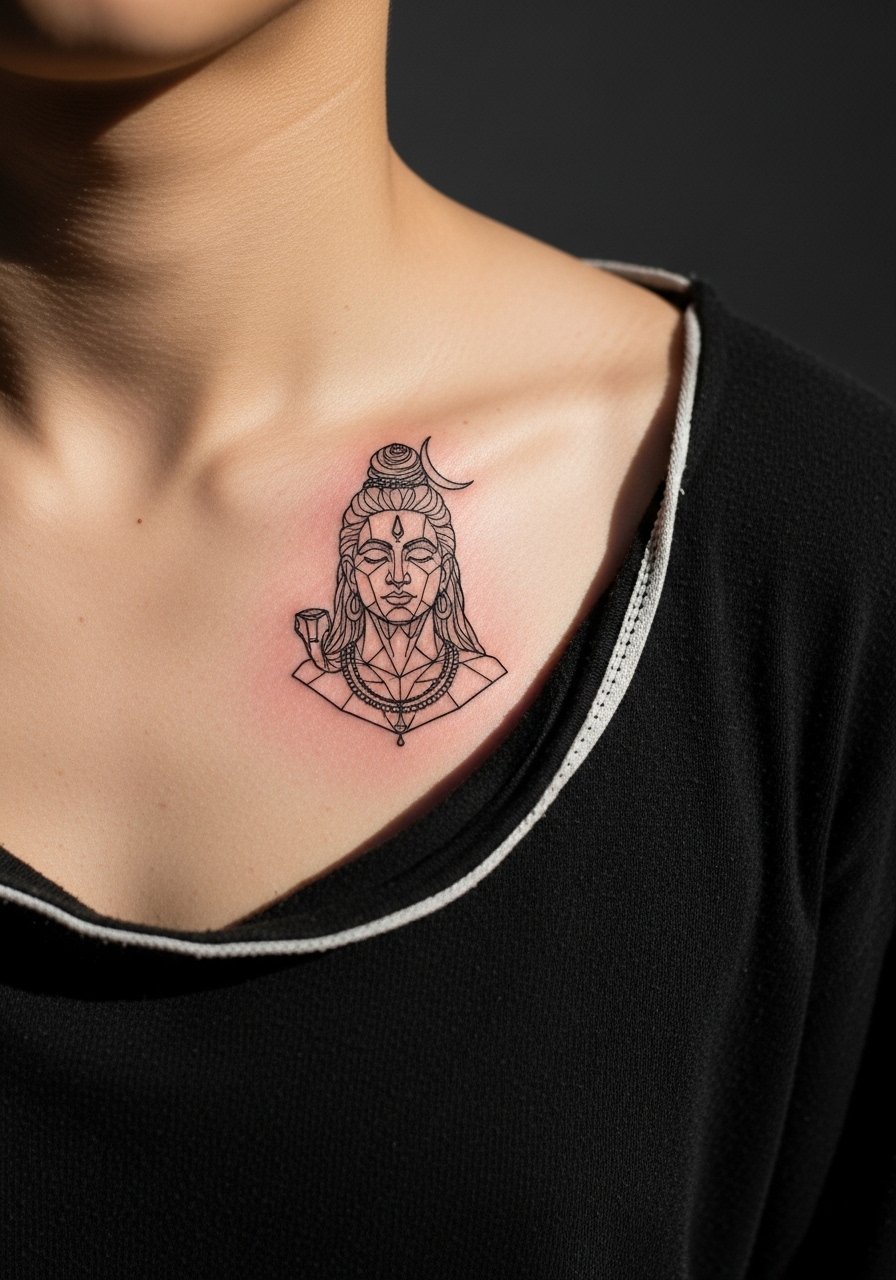
Pectoral-edge placements read well under shirts and age similarly to collarbone pieces. They tolerate linework if you avoid tiny facial strokes along the curve of the muscle. The session is moderately painful and contour mapping ensures the face does not distort with movement. A frequent mistake is misplacing the portrait too close to the armpit where motion will blur detail. For showing it off, a wide-neck shirt or a button-down worn open highlights the area.
26. Shiva with Geometric Halo Across Chest Center

Chest-center pieces are classic and visible with open necklines. The chest moves a lot with breathing, so delicate inner halo lines should be spaced out to avoid merging. I advise clients to expect a longer session and to discuss touch-up timelines in advance. A common error is overpacking inner halo dots too tightly. Ask for layered spacing moving outward. A wide-neck sweater frames the chest without competing with the halo.
27. Geometric Shiva Mini on Behind Wrist Cuff

The behind-wrist spot is highly visible and experiences frequent touch. A common mistake is expecting micro facial detail to last there. Go for a bold central motif with clear negative space and ask for touch-up scheduling in the first two years. The session is short but healing sees constant motion. For showing it off in professional settings, wear a thin leather cuff bracelet that can be removed when you want the art visible.
Frequently Asked Questions
Q: Will a geometric Shiva mandala on the ribcage hold its detail for more than two years?
A: It depends on spacing and the artist's approach. Ribcage skin stretches and moves, so tightly packed mandalas tend to soften faster. If your artist uses wider rings, layered dot shading, and leaves negative space, the piece can stay readable longer. Ask for a staged stencil preview so you can see how the rings sit when you breathe.
Q: Are religious Shiva motifs respectful to get as tattoos if they are heavily geometric?
A: Many people adapt sacred imagery into geometric or abstract forms out of respect and personal meaning. I recommend acknowledging origin and avoiding direct copies of ritual objects or temple imagery. Some choose slight variations rather than literal replicas to keep intent personal and respectful.
Q: How often should I expect touch-ups for wrist, finger, and hand placements shown here?
A: For high-friction zones like fingers and hands, plan on touch-ups within the first year and then periodically after that. Wrists are slightly more forgiving but still need attention compared with upper arm or thigh work. Discuss a realistic maintenance schedule with your artist before booking.
Q: For the sternum and ribs, what should I wear to the session for easiest access and modesty?
A: Wear a fitted sports bra, bandeau, or a zip-up top that you can loosen without removing fully. That lets the artist access the area while keeping exposure minimal. I often advise clients to bring a loose hoodie for post-session comfort.
Q: Can geometric linework be combined with dot shading without losing the sacred iconography?
A: Yes. Many of the designs above use dots to add depth while preserving the clean lines of the icon. The trick is to instruct the artist to keep dots as texture and not as the primary outline. That preserves the geometry and the symbolic silhouette.
Q: How do I find an artist who understands geometric sacred iconography without naming individuals?
A: Search local shop portfolios through community hashtags, shop directories, and tattoo convention lineups. I also look through forum threads and subreddit portfolios to see healed work. In consultation, ask to see healed photos of similar placements and to explain their approach to spacing and depth.