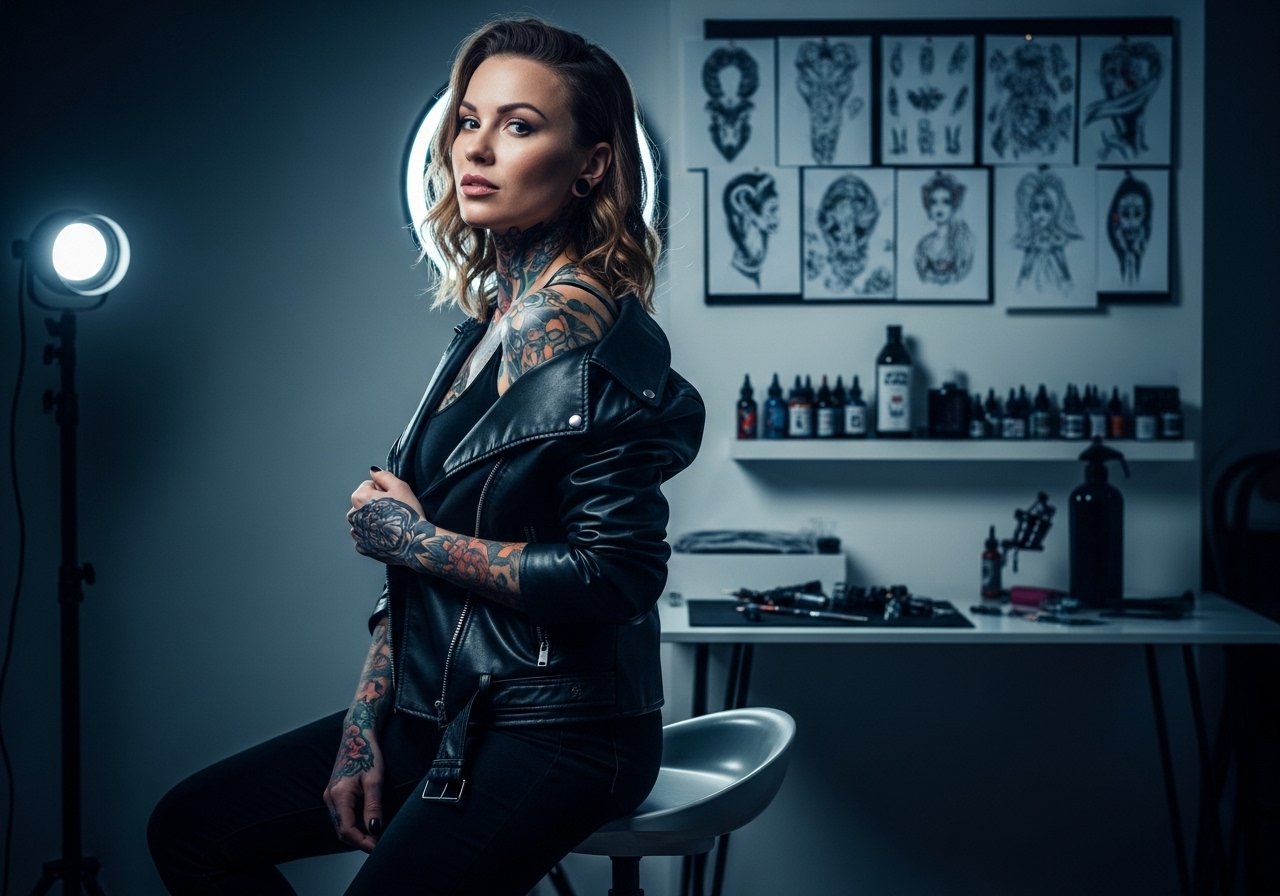
Fine line tattoos dominate Pinterest right now, but the pieces that still look crisp after a few years are not always the ones that got the most saves. Fading, unexpected pain in inner placements, and healing irritation from sweat are common first-tattoo surprises. I wrote this list for people who want pretty thigh work that lasts, and for the questions to ask before you book.
1. Fine Line Rose on Outer Thigh
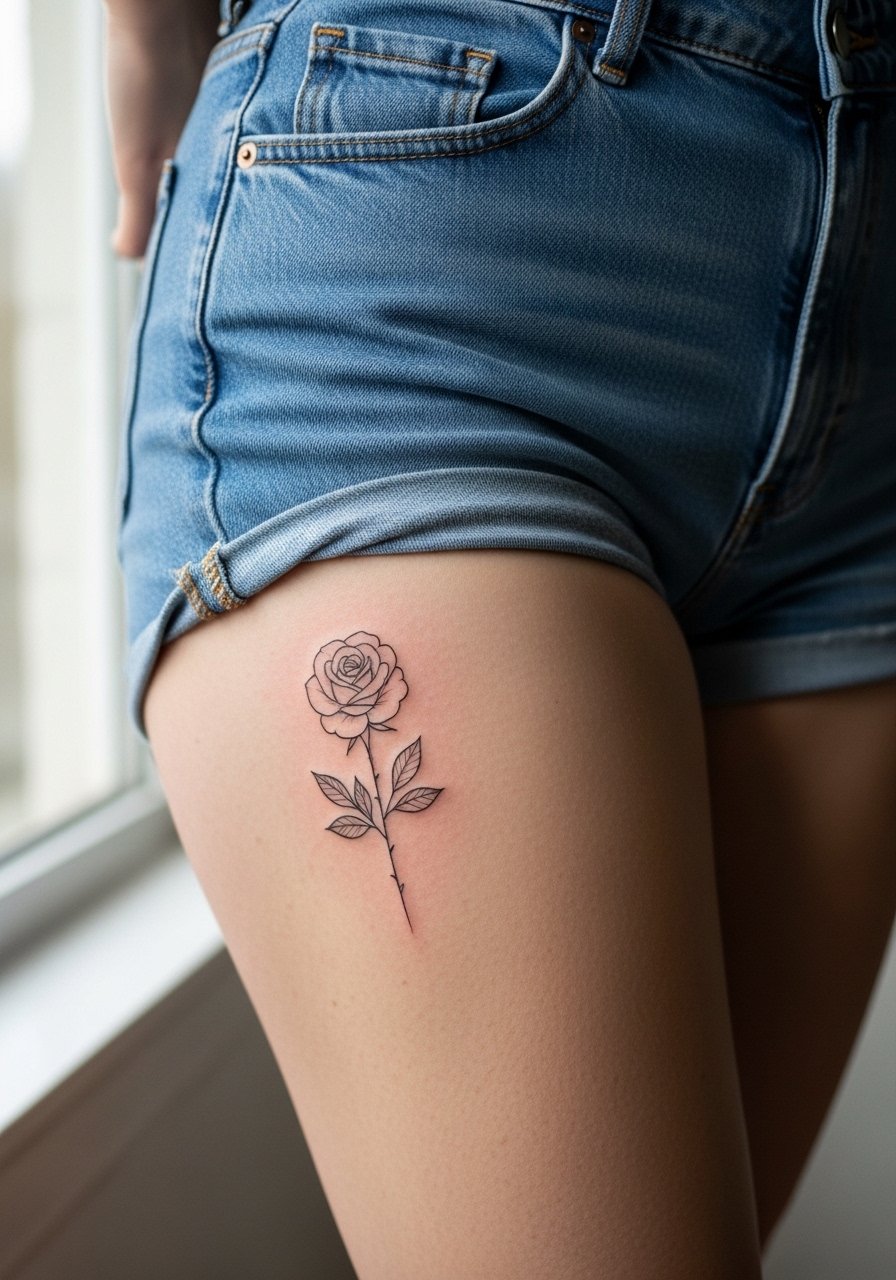
I recommend a 4-6 inch fine line rose for someone who wants a discreet piece that still reads in photos. Tell your artist you want slightly increased spacing between petals and a modest line weight so it keeps its form as the skin moves. Common mistakes are compressing too much detail into a small area and asking for hair-thin lines that will blur in two to three years. Expect a one to two hour session on the fleshy outer thigh and lower pain than inner placements. Pair it with high waisted denim shorts to show it off casually.
2. Symmetrical Butterfly on Inner Thigh
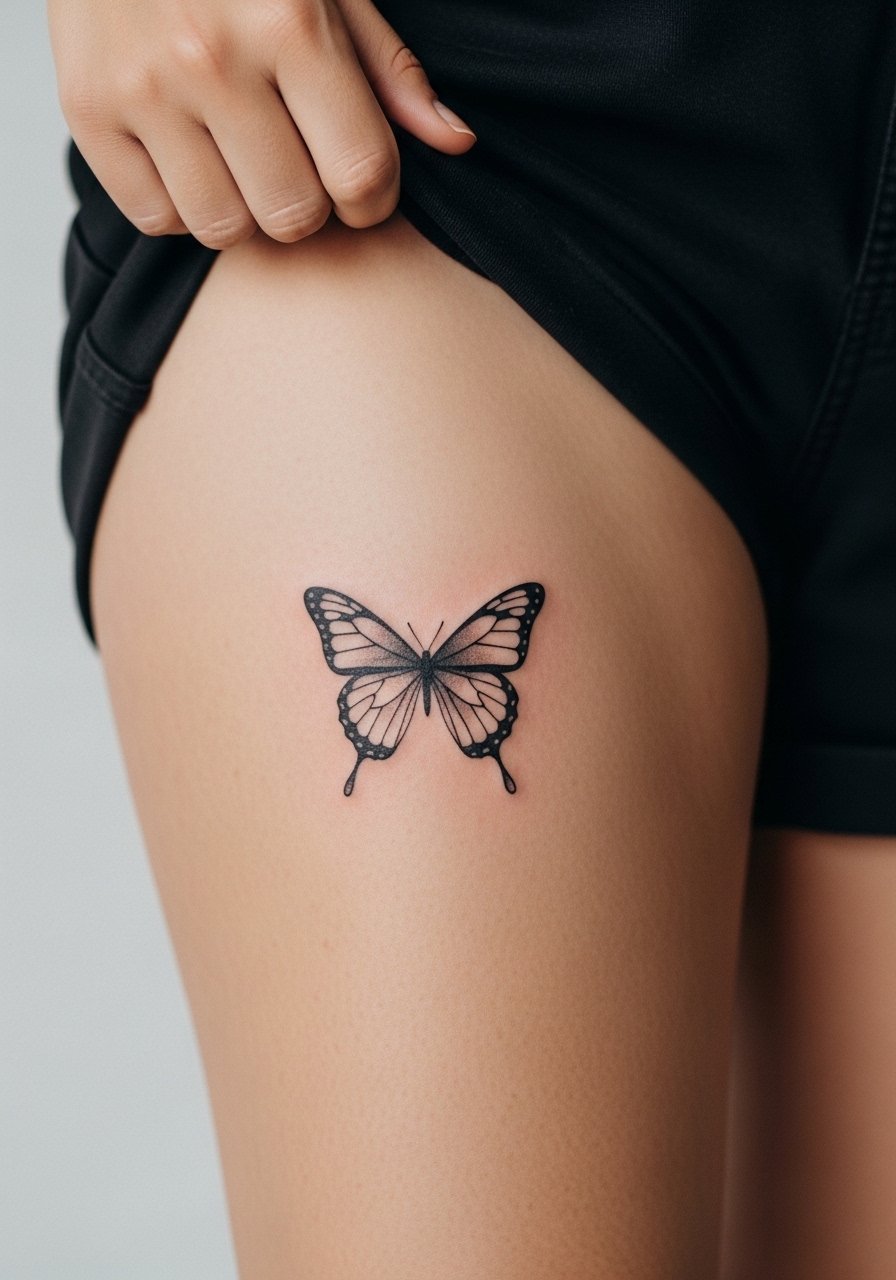
This minimalist butterfly works best at roughly five inches wide and centered on the inner thigh where it can stay discreet. When you consult, say you want mirrored wing veins and balanced spacing so the symmetry reads when seated and standing. Pain is higher here because of thinner skin and nerve density. The controversy around inner thigh work is real. One camp argues inner-thigh pieces bleed and blur quickly because of friction and movement. The other calls it doable with the right needle depth and touch-up plan. For showing it off, try a flowy midi skirt with a thigh-high slit.
3. Watercolor Flower on Upper Thigh
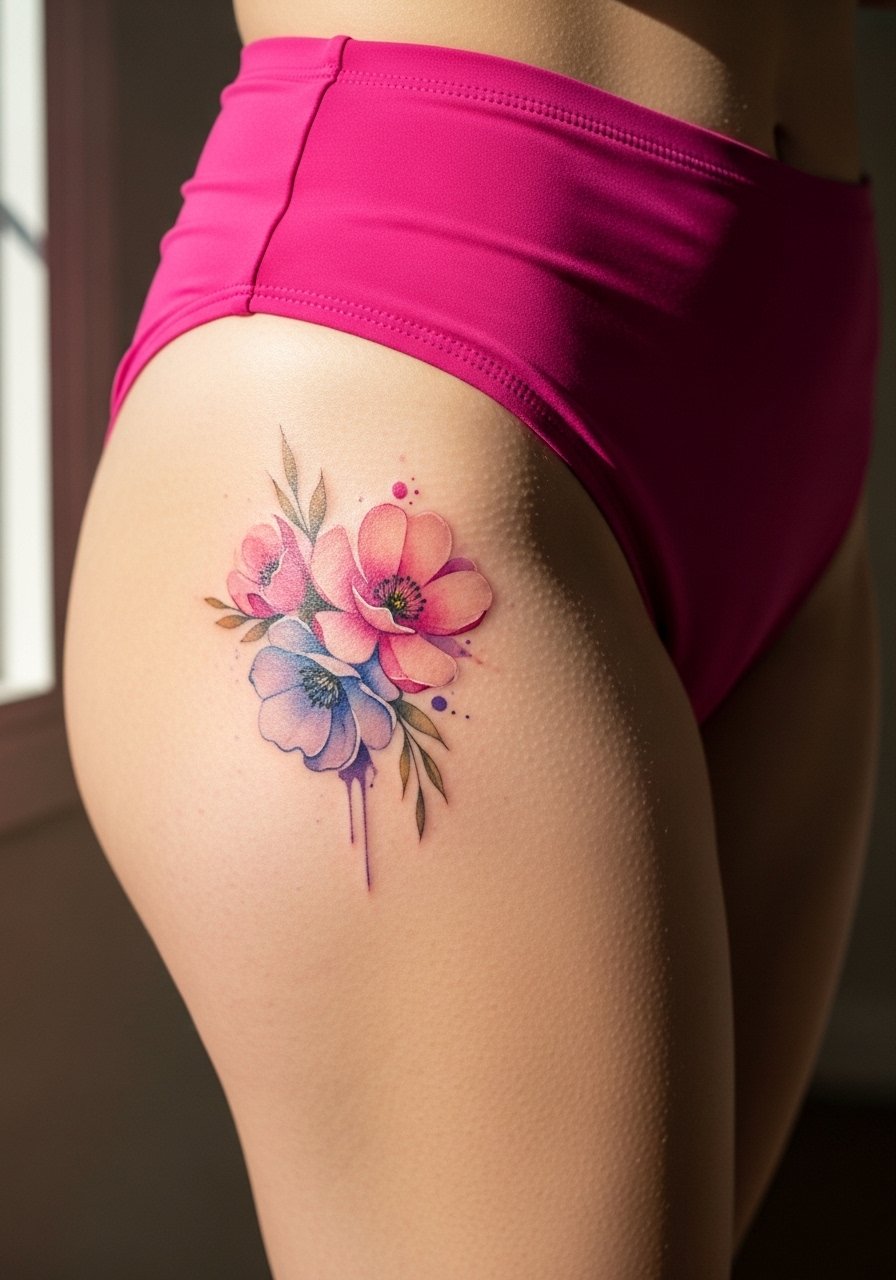
Watercolor florals on the upper thigh read like soft sketches when healed. Ask the artist for layered washes and soft stipple shading rather than heavy pigment blocks so the color breathes with skin tone. The usual mistake is over-saturating early, which turns the subtle blends into a muddy patch over time. Expect longer sessions for layering and slightly higher touch-up probability around year two. For sessions, wear pastel mini skirts or loose shorts you can shift easily.
4. Two Koi Fish Mid-Thigh Wraparound
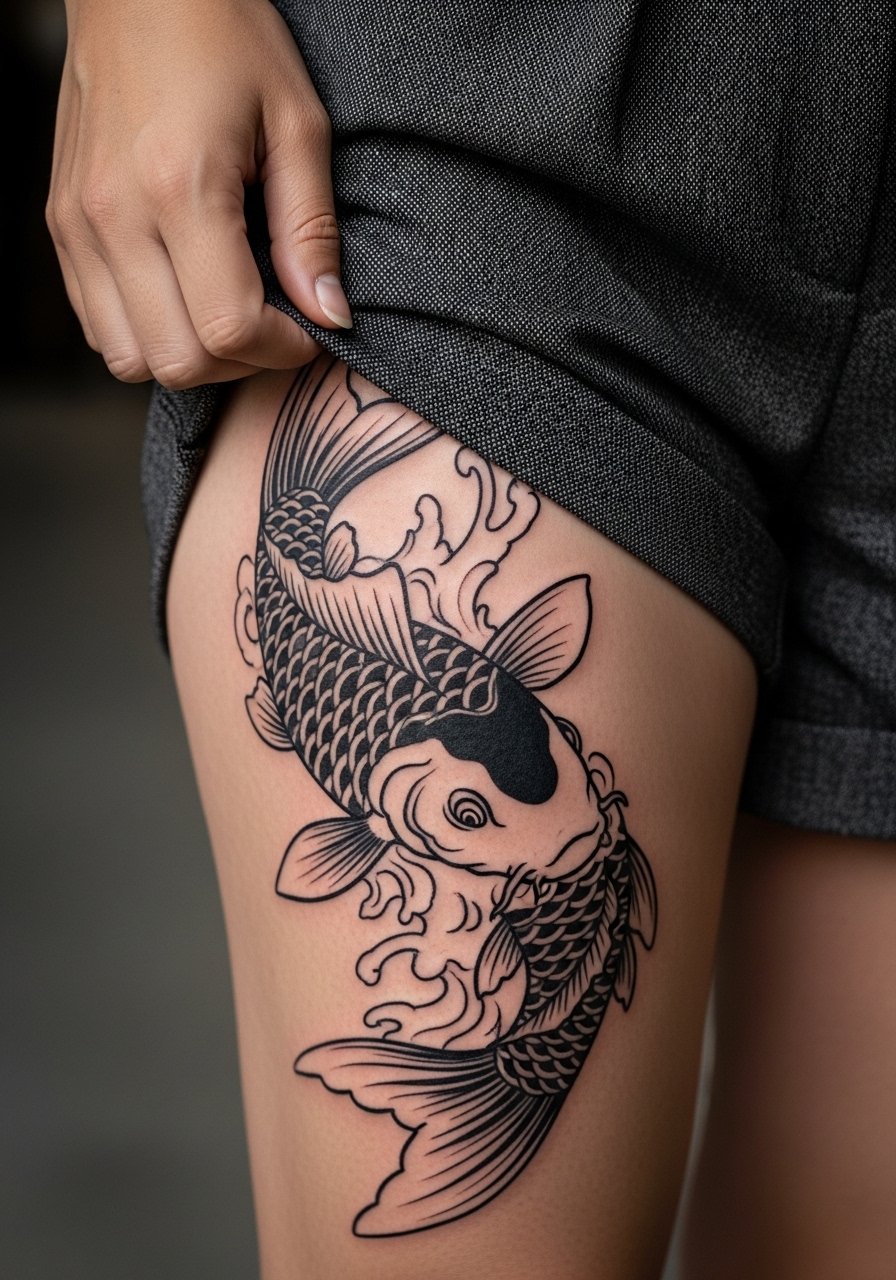
Koi fish in blackwork make a strong mid-thigh band that benefits from bold outlines and clear negative space. Tell your artist you want solid black outlines and open belly areas so the two fish remain distinct when the thigh curves. A common mistake is asking for too much fine detail in a wrap that sits on moving skin. This style usually needs two sessions and a touch-up around year two for saturation. Sessions feel like steady machine work with occasional heavier pressure on the wraps. Pair with tailored short shorts for a clean, modern look.
5. Bird with Flowers and Moon Background
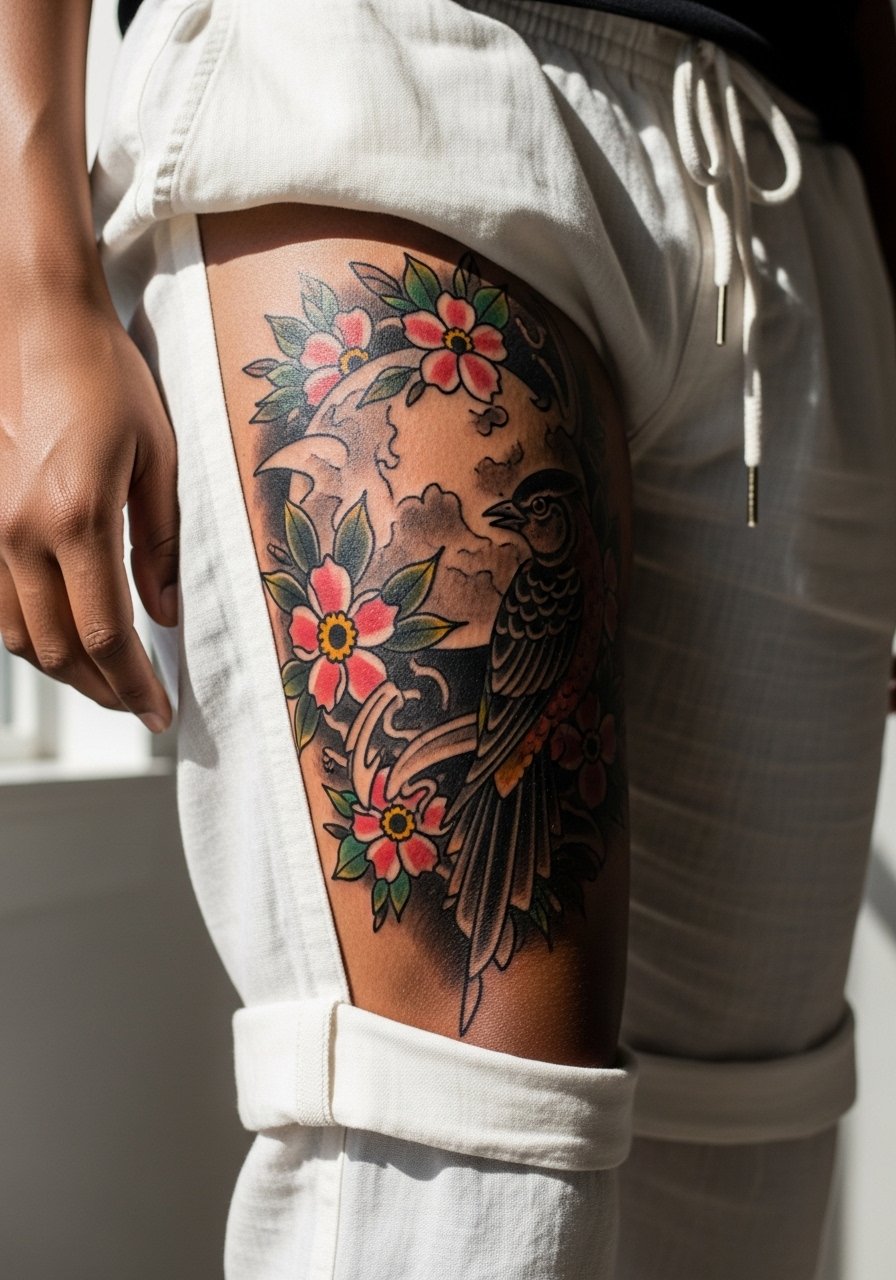
A neo-traditional bird with a soft moon background scales well at around eight inches. When you brief the artist, mention where you want color accents and ask for clear black anchors to protect against future fading. The common aging failure here is overfilling small feathers with color that blurs into the background. The session will feel like moderate time under the needle with frequent short breaks. For evenings out, a loose linen jogger and cropped top frame the piece without covering its storytelling elements.
6. Floral Band Wrapping the Thigh
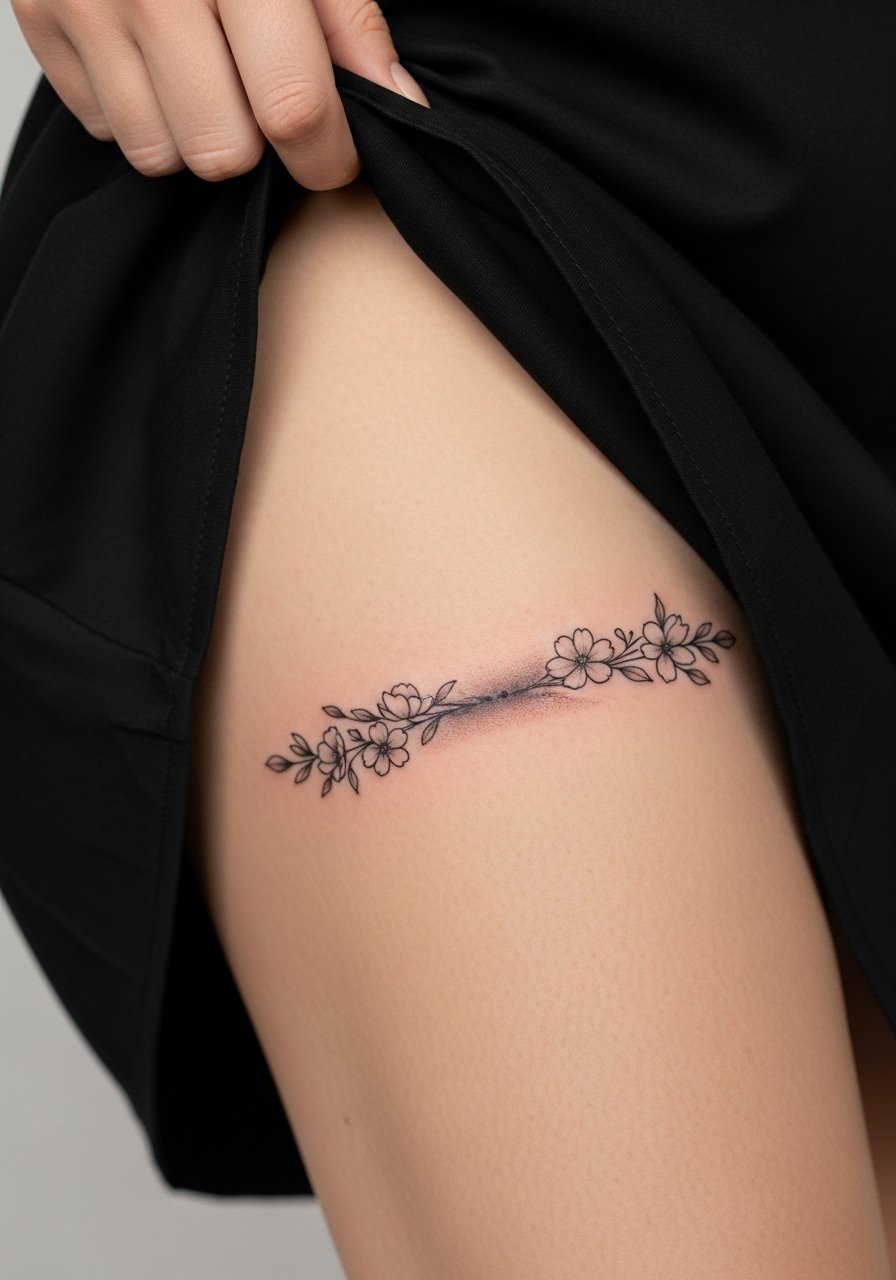
A floral band, three to five inches wide, acts like wearable art that scales well for a first thigh tattoo. Ask for clean negative space between blossoms so the band does not merge after movement and weight changes. A frequent error is making bands too dense; spacing keeps the pattern readable at year three and beyond. One session can work if the circumference is modest. Show this piece off with a wrap dress that lets the band peek while you move.
Pack Smart
The outer and inner thigh pieces above each pose different healing challenges, so a few studio-day items smooth the session and the first week.
-
Stencil transfer paper kit. Lets you preview placement on the curved thigh before the needle meets skin, which matters for wrap and band work.
-
Topical numbing cream. Useful for inner-thigh or near-bone spots when pain could force shorter, patchy sessions.
-
Thin protective film roll. Helps shield outer thigh pieces from friction during the first two days of healing.
-
Fragrance-free gentle body wash. Cleanses without stripping pigments, which is helpful for both fine line roses and watercolor blends.
-
Aquaphor healing ointment. Thin layers can protect fresh linework during the initial sealing phase and ease tightness on larger thigh sessions.
7. Ornamental Pattern on Inner Thigh
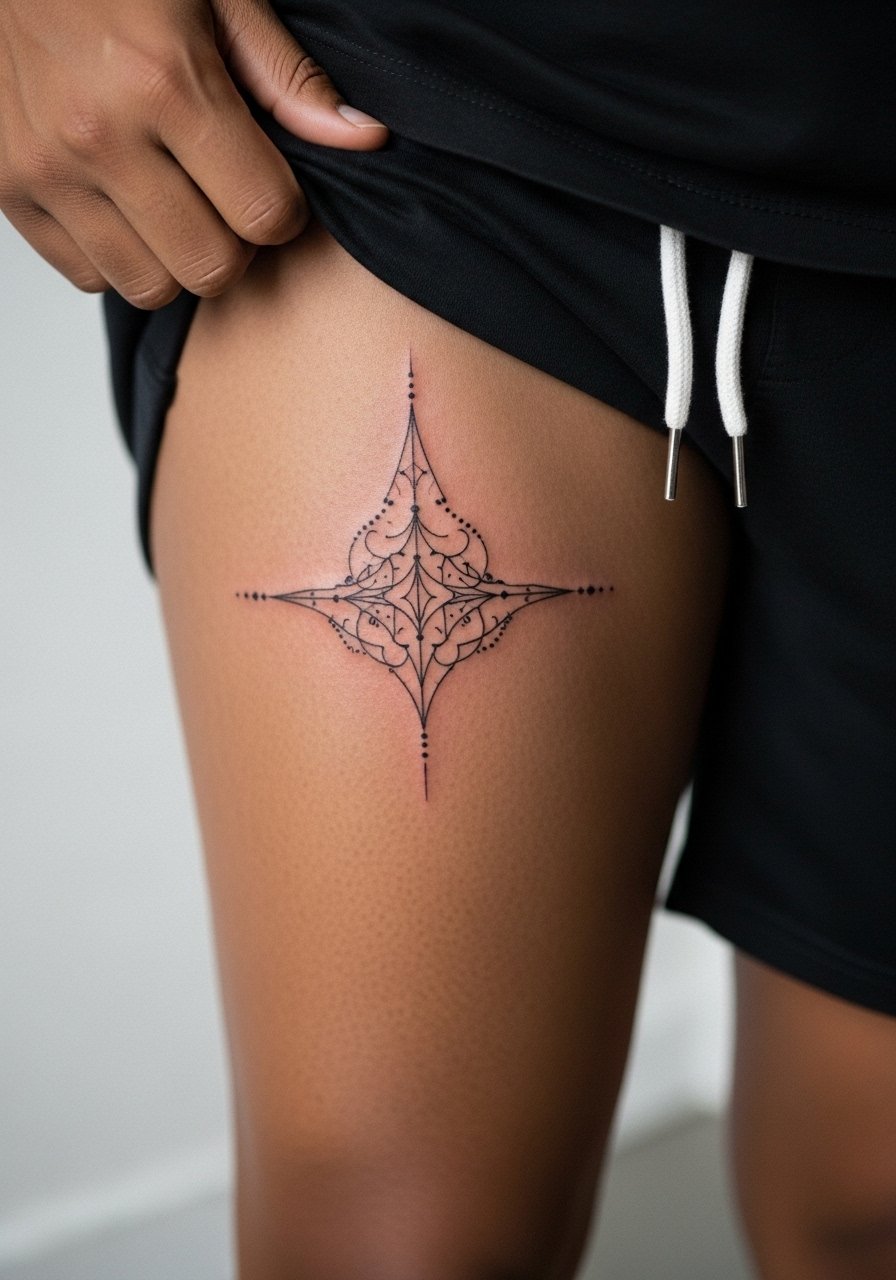
An ornamental pattern of five inches on the inner thigh reads like jewelry when balanced. During consultation, ask for bold enough linework to survive friction but keep the filigree open for breathability. The inner thigh is sensitive, so expect higher pain and plan a single long session rather than multiple short ones if you prefer fewer gross-out healing days. A common mistake is requesting extremely thin filigree that fills in quickly. For privacy and occasional show-off moments, pair with thigh high slit dresses.
8. Brush Stroke Abstract on Outer Thigh
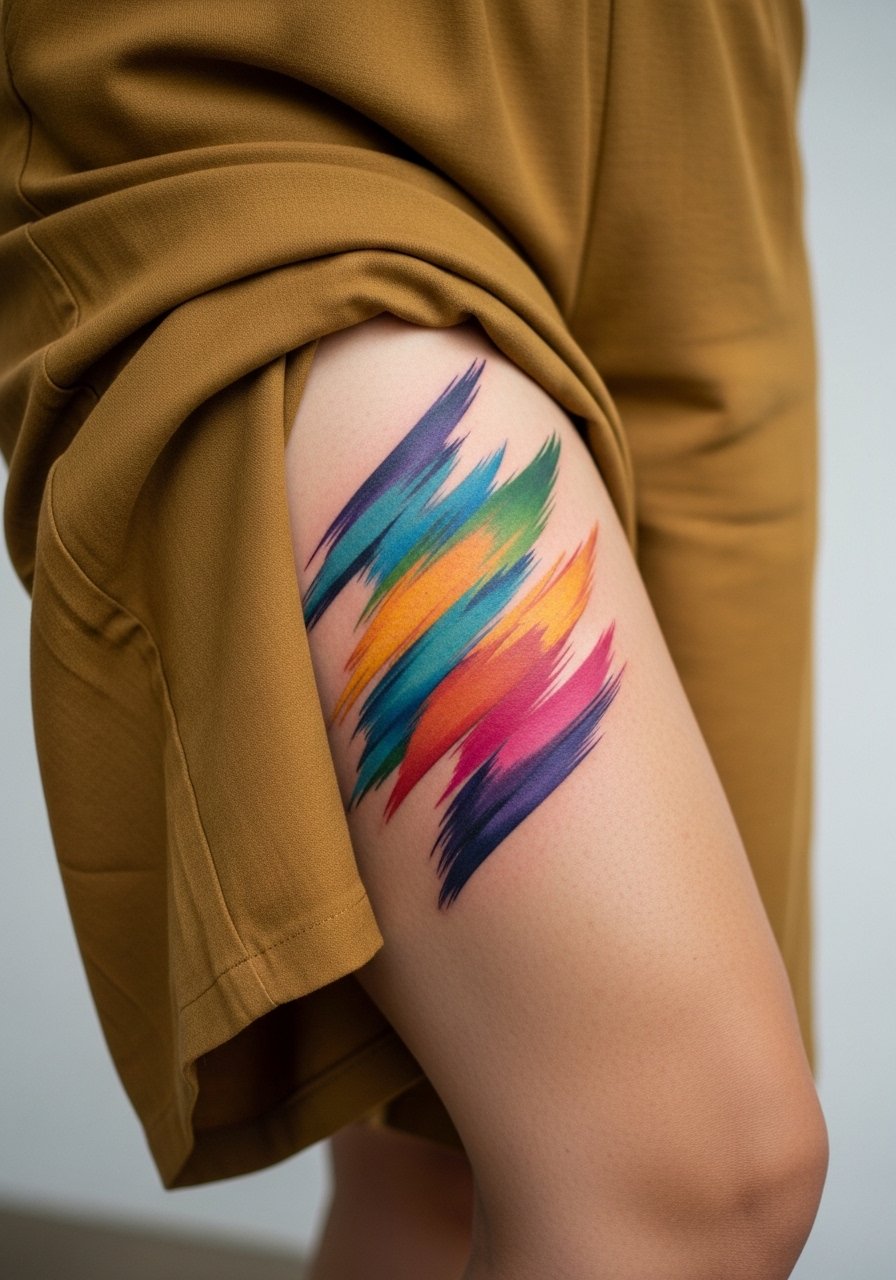
Brush stroke abstracts take advantage of the thigh's large canvas. Tell your artist you want confident, separated strokes with negative space so the piece keeps motion even as color settles. The right scale prevents the overlapping washes from becoming a single muddy block after a few years. Sessions are usually two sittings for layering and blending. For a minimal frame, wear wide leg culottes that let the abstract breathe alongside tailored shapes.
9. Bold Rose Cluster on Upper Outer Thigh
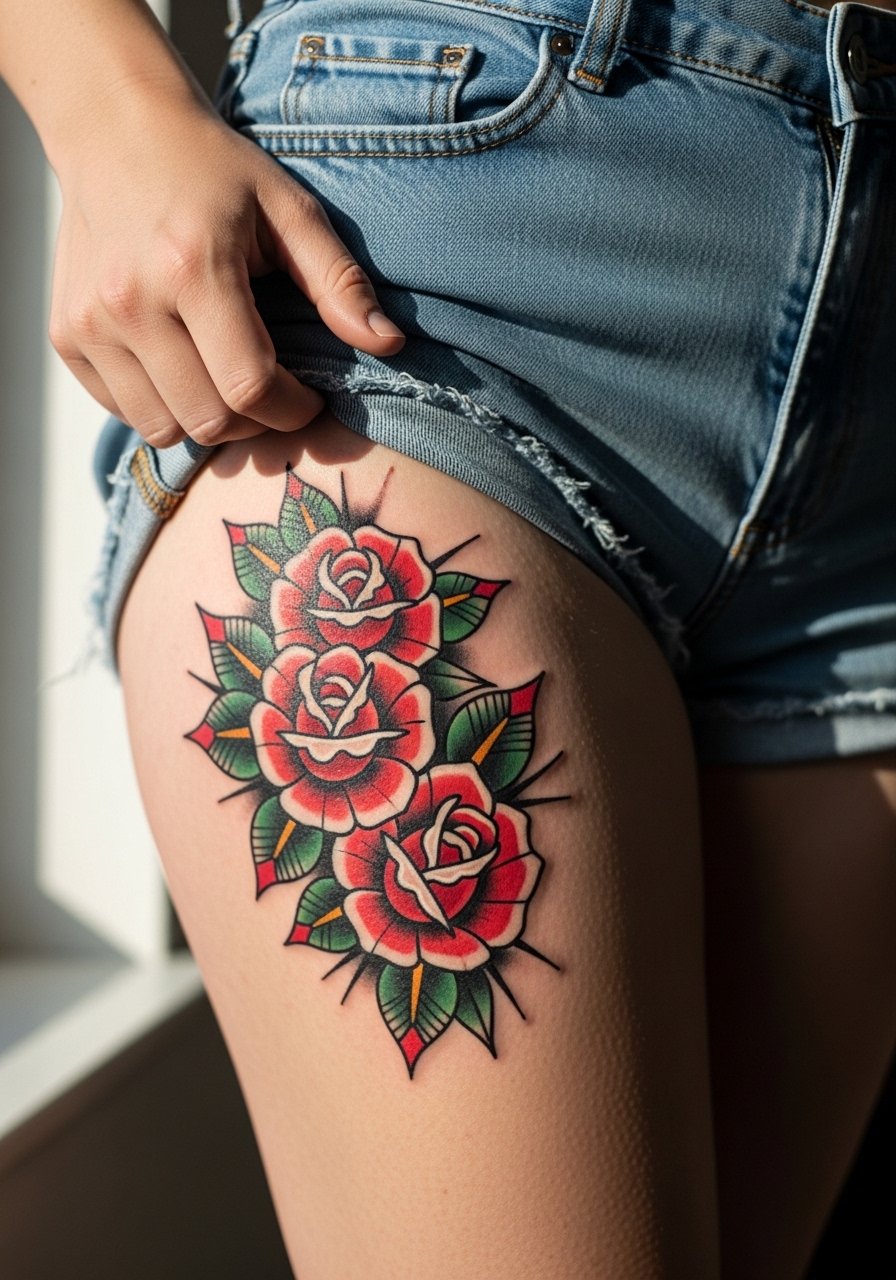
A seven-inch traditional rose cluster relies on saturation and solid black outlines to age gracefully. Request clear anchor lines and areas of negative space between blooms so the piece stays readable when skin shifts. A common mistake is over-layering small detail where bold shapes would work better long term. Expect two to three sessions depending on color saturation. For show-off outfits, try pairing with a cropped tank top and high-waisted bottoms.
10. Micro Butterfly Silhouette on Upper Inner Thigh
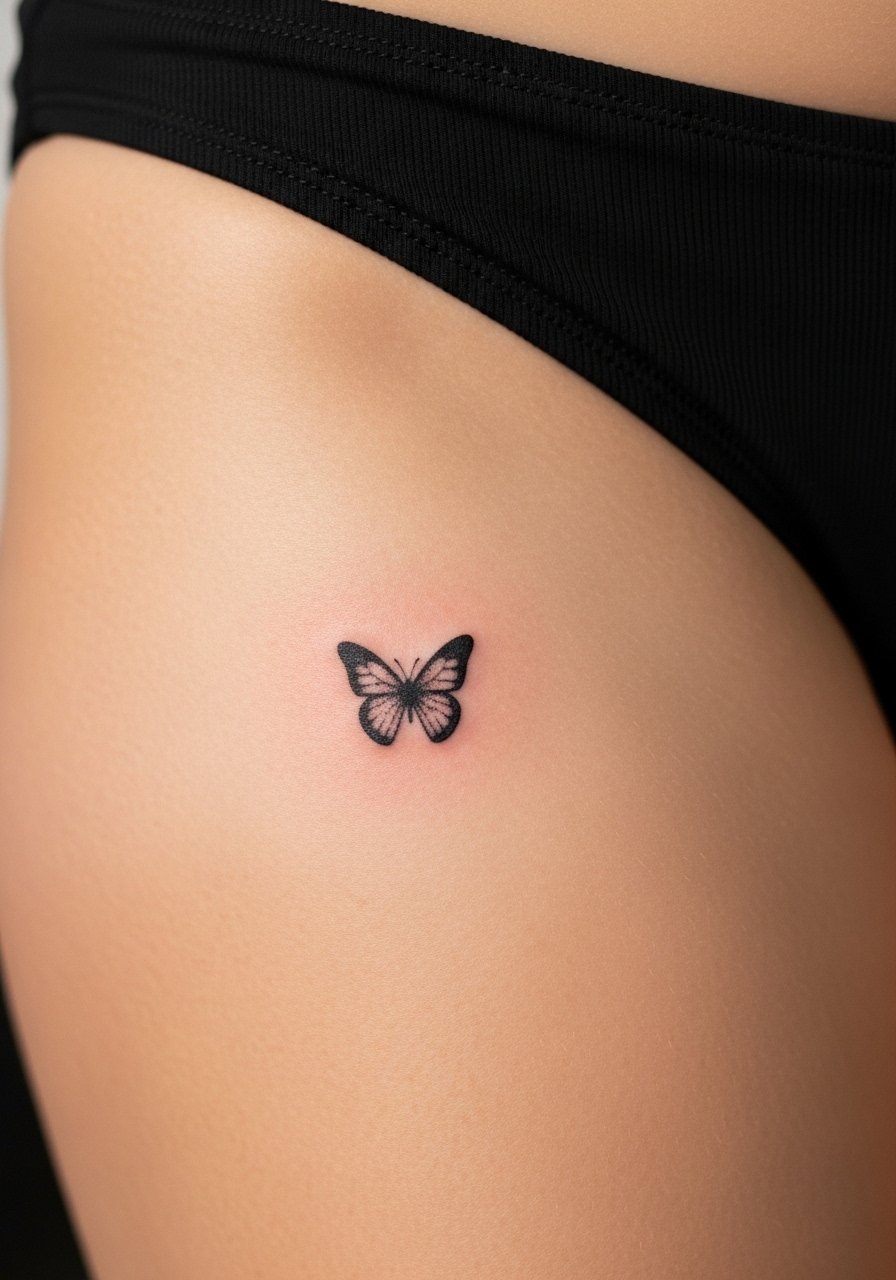
A 2-3 inch micro butterfly is delicate and highly discreet. Ask for a slightly bolder silhouette than a hairline single-needle to account for movement in the inner thigh. The main pitfalls are requesting a size so small the wings lose definition after a year and underestimating the sting for inner placements. One quick session should do it, but expect a touch-up sooner than on the outer thigh. For session comfort, wear loose shorts or a skirt you can shift easily.
11. Floral Watercolor Garland Wrapping Thigh
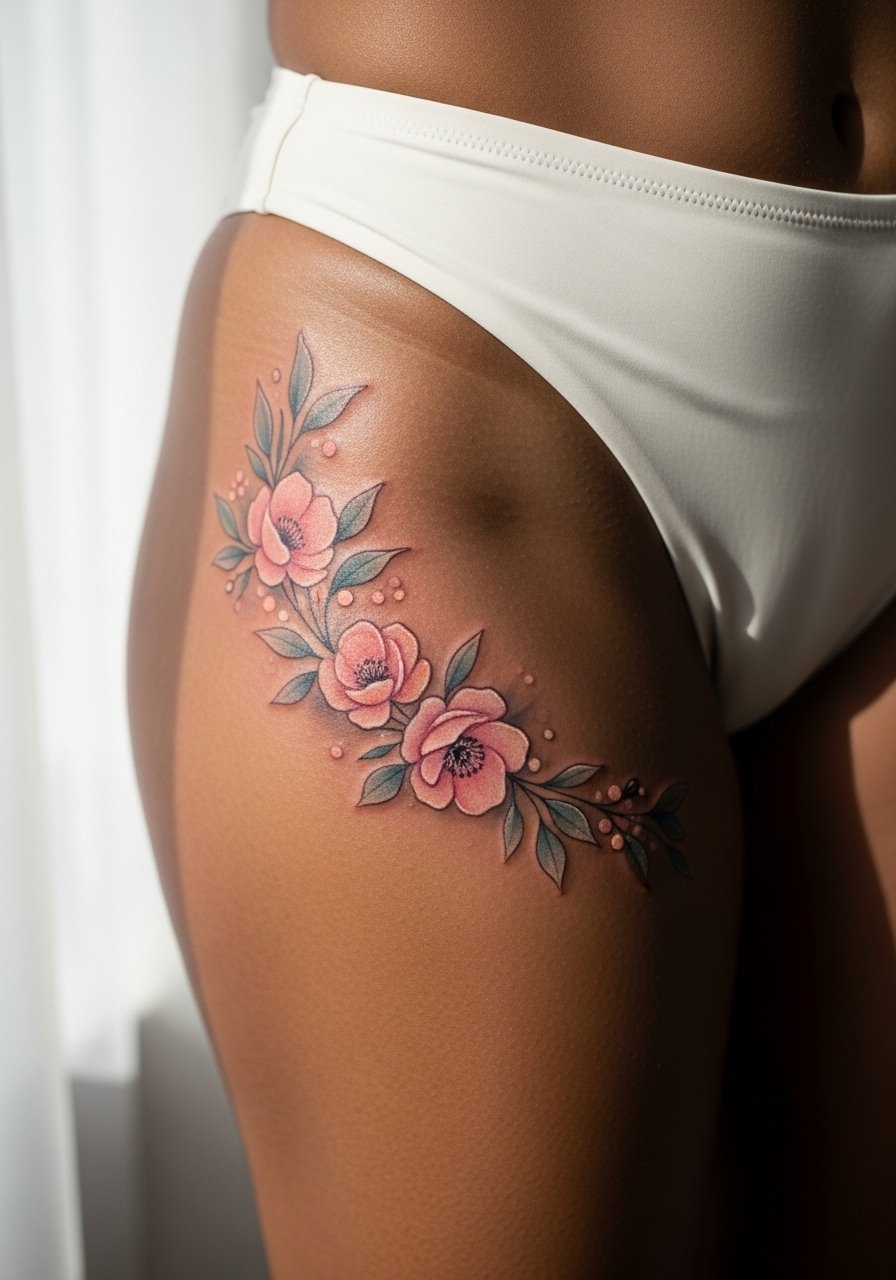
A 10-inch wraparound watercolor garland reads like a sash and suits someone ready for multi-session work. Tell your artist you want defined blooms with soft watercolor fills around them so the shapes remain once the washes fade. The usual mistake is continuous heavy color across the entire wrap which ages into a washed band. Expect two to three sessions and plan wardrobe to avoid tight waistbands that rub during healing. For summer looks, a high cut bikini bottom frames the garland without hiding it.
12. Pisces Fish Duo in Fine Line on Mid-Thigh
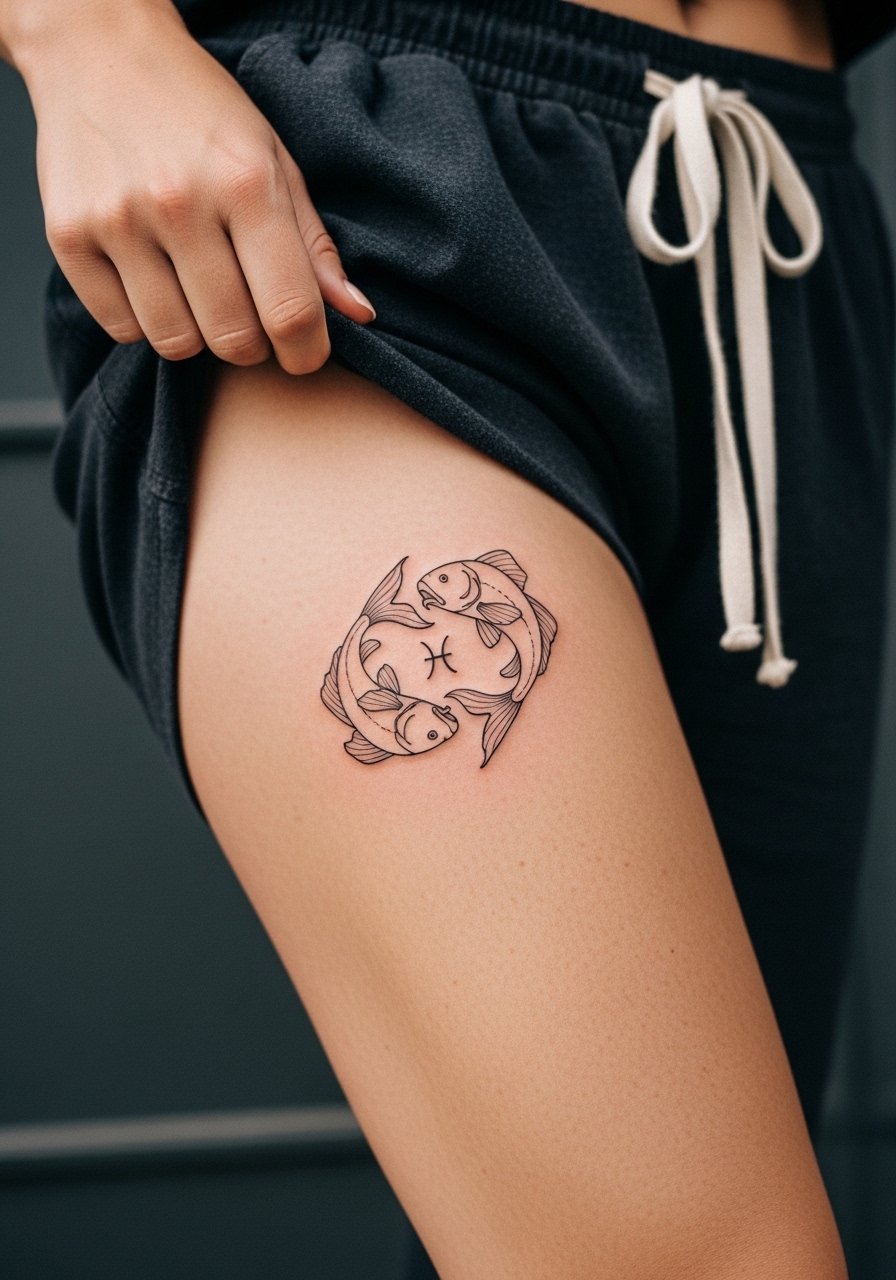
Pisces fish in fine line at about five inches work well for zodiac fans who want delicate symbolism. Ask the artist for slightly heavier linework on outer contours and softer internal lines so the duo keeps relationship clarity as time passes. A typical mistake is pushing too much inner detail that blurs on the moving thigh. One session usually covers this size, but plan for a possible touch-up around year two. For casual style, a drawstring pant makes access and healing comfortable.
13. Tiny Script Curving Along the Thigh
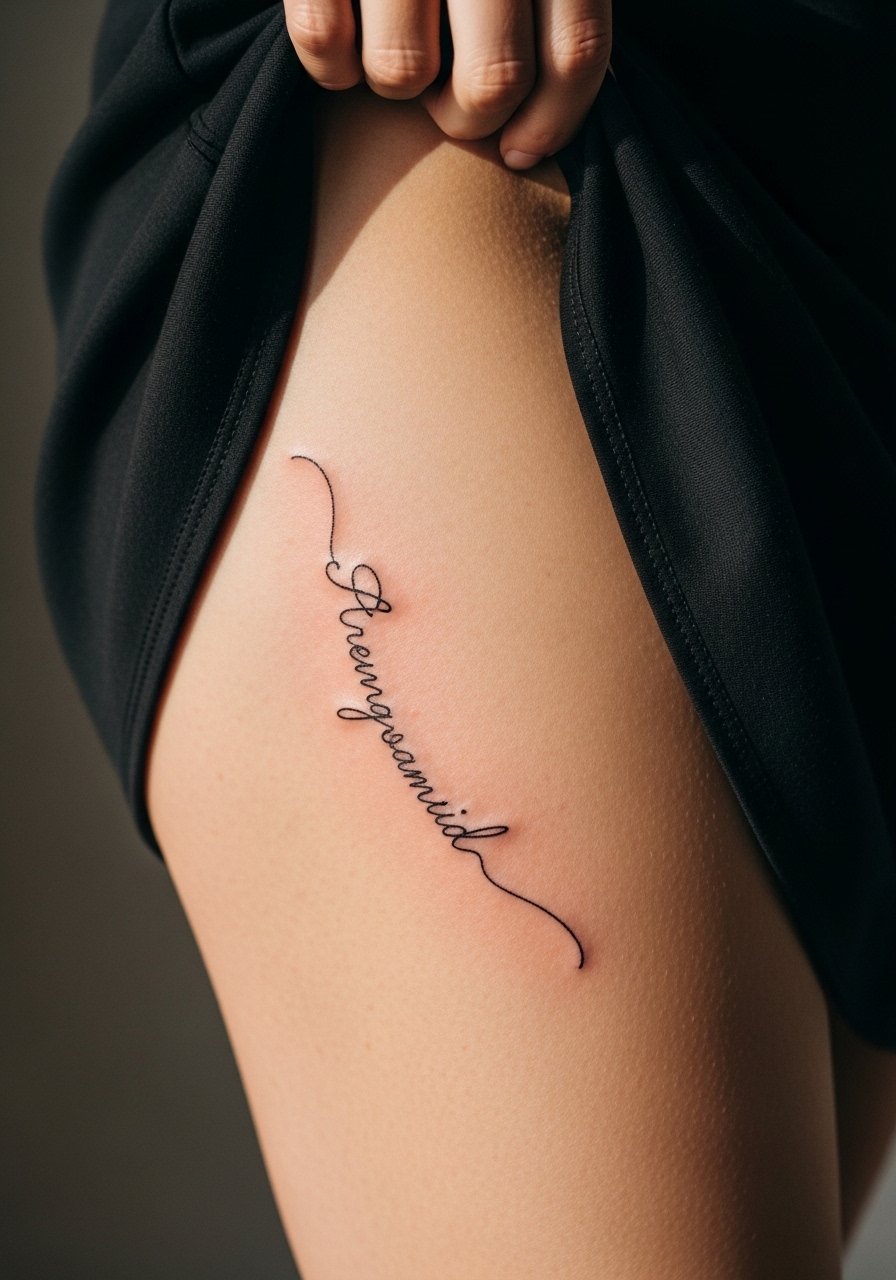
Script that follows the thigh curve looks natural when spaced and sized properly. Provide your artist the exact word and font example and request slightly increased letter spacing to prevent letters from merging over time. A frequent error is asking for script too small and with tight kerning. Pain is moderate on the outer thigh and the session is usually brief. Pair with an A-line midi skirt for soft reveals.
14. Geometric Mandala Mid-Thigh Panel
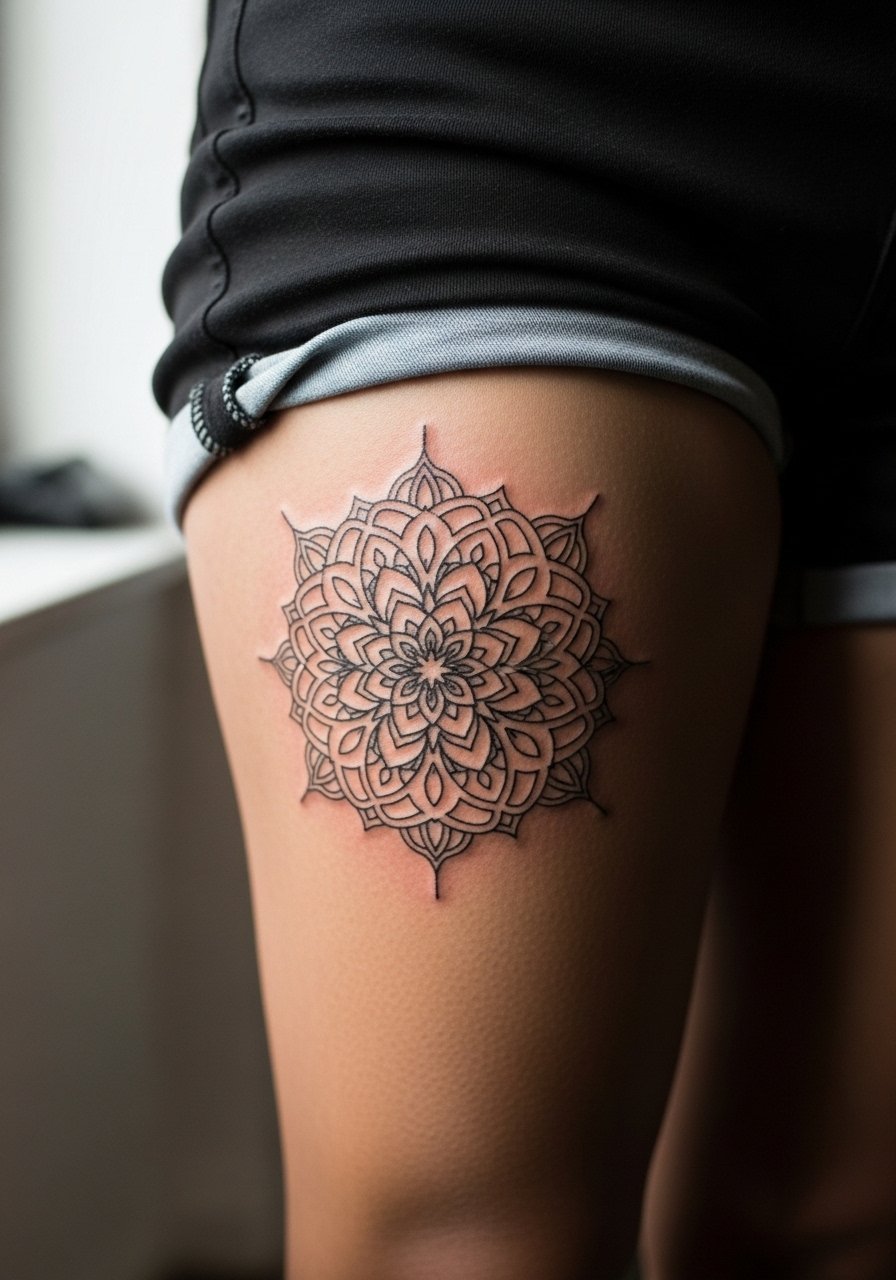
A mid-thigh mandala needs room for lines to breathe, so scale it up and request intentional spacing between concentric rings. The biggest mistake is shrinking density into a compact area which leads to merging lines after healing. Tell the artist you want consistent line weight and some stipple shading to add texture without overcrowding. Sessions vary with complexity, and older mandalas show more blur if packed too tight. For consultation, bring reference mandalas that show both line weight and spacing preferences.
15. Vine Trail That Climbs the Thigh
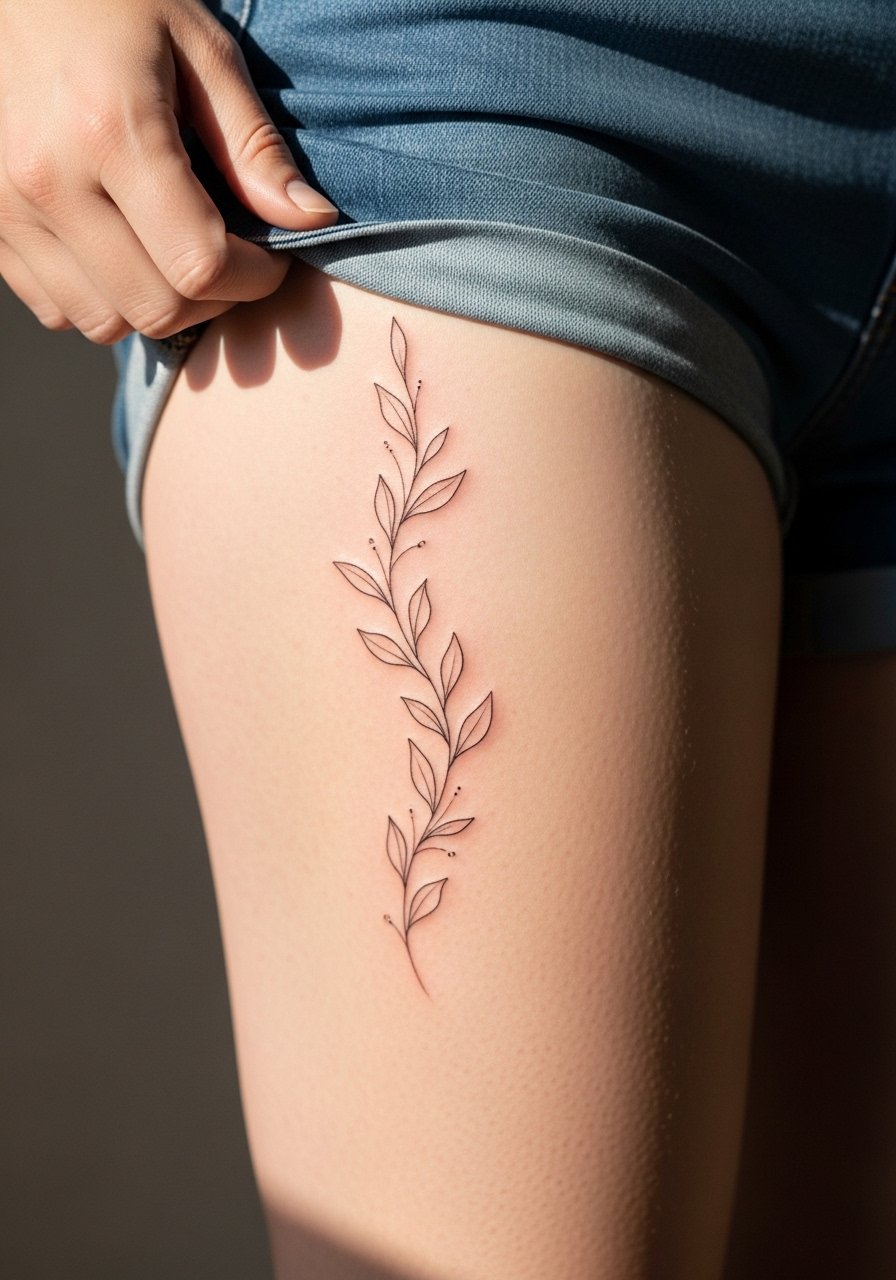
A climbing vine benefits from asymmetry and negative space so it follows the body rather than fights it. Ask for alternating leaf sizes and slight gaps so the trail keeps its rhythm as the skin changes. Common mistakes include overcomplicating the path and trying to mirror a botanical photo exactly. Pain is modest and sessions are quick when the trail is kept to five to seven inches. Pair with high waisted denim shorts for casual reveals.
16. Single-Line Continuous Portrait
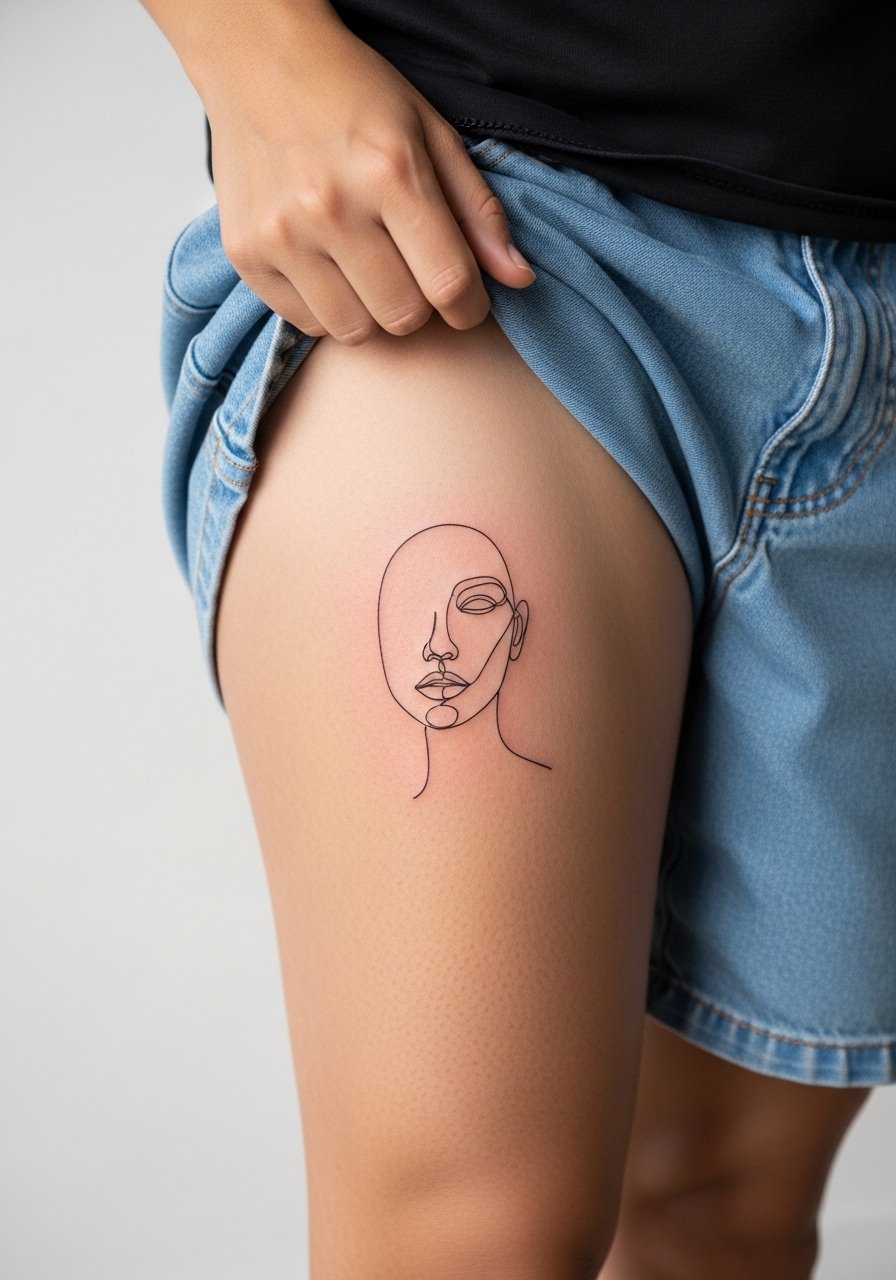
Single-line portraits read as modern statements and depend on confident negative space. Tell your artist you want deliberate pauses in the line rather than busy contour lines so the face reads at a glance. A common mistake is forcing too many features into the single stroke which destroys the aesthetic. Sessions are short but require precise hand control. For effortless styling, wear loose cotton shorts that keep pressure off the area during healing.
17. Constellation Band Along the Thigh
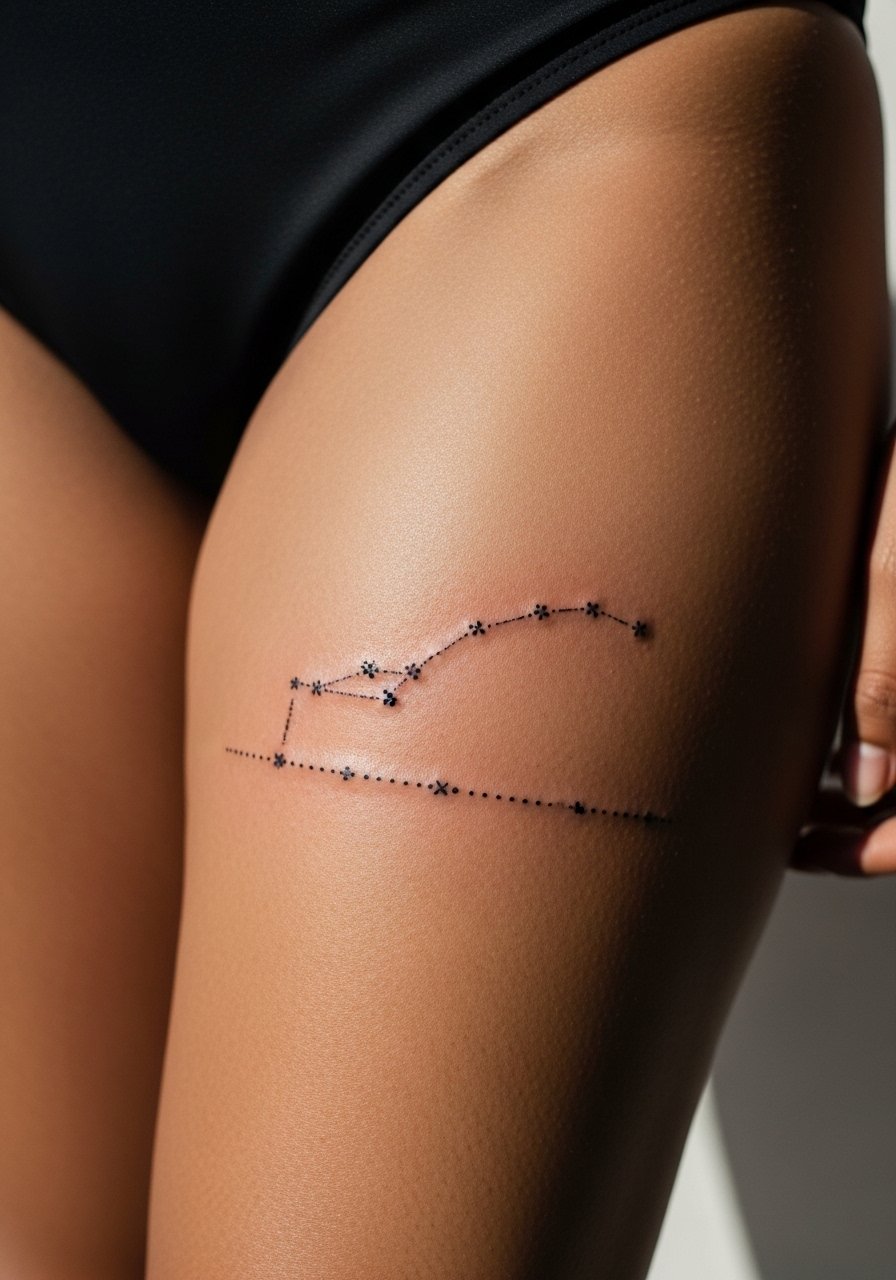
A constellation band uses dot work and tiny anchors to emulate stars. Ask for slightly larger dot anchors paired with thin connecting linework so the pattern stays legible after a few years. The mistake is making the dots too small or the lines too close, which leads to merging. Expect a one-hour session and gentle dot work discomfort. For beach days, a high cut bikini bottom frames the band cleanly.
18. Crescent Moon and Stars Cluster
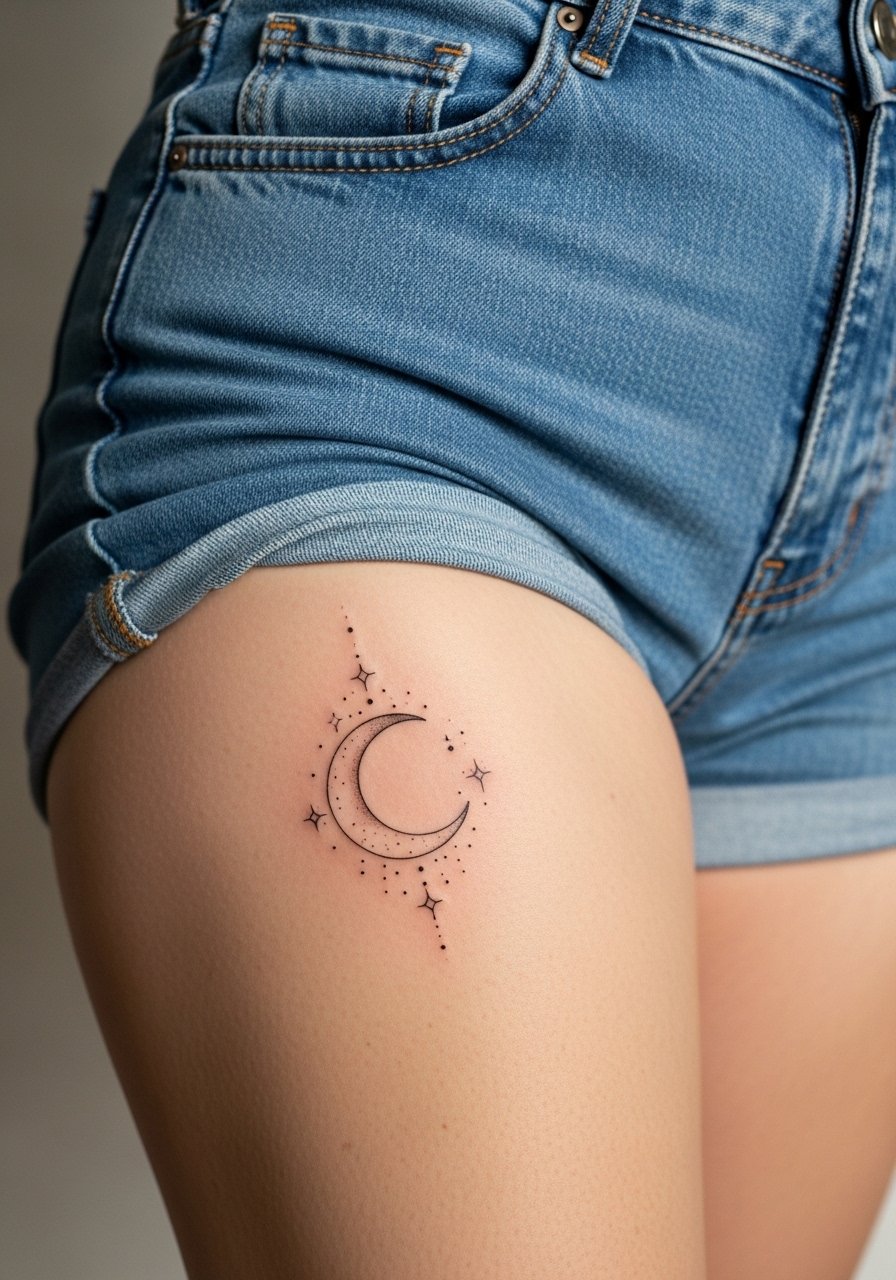
A crescent and star cluster at five inches reads well when the moon has a slightly bolder curve and the stars are spaced. Tell your artist you want subtle dot shading behind the moon to keep the piece airy. The usual mistake is packing stars too tight which becomes a gray patch after healing. This placement hurts less than inner thigh and heals predictably. Pair with high waisted denim shorts or low-rise jeans for a peek.
19. Minimalist Wave That Follows the Thigh Curve
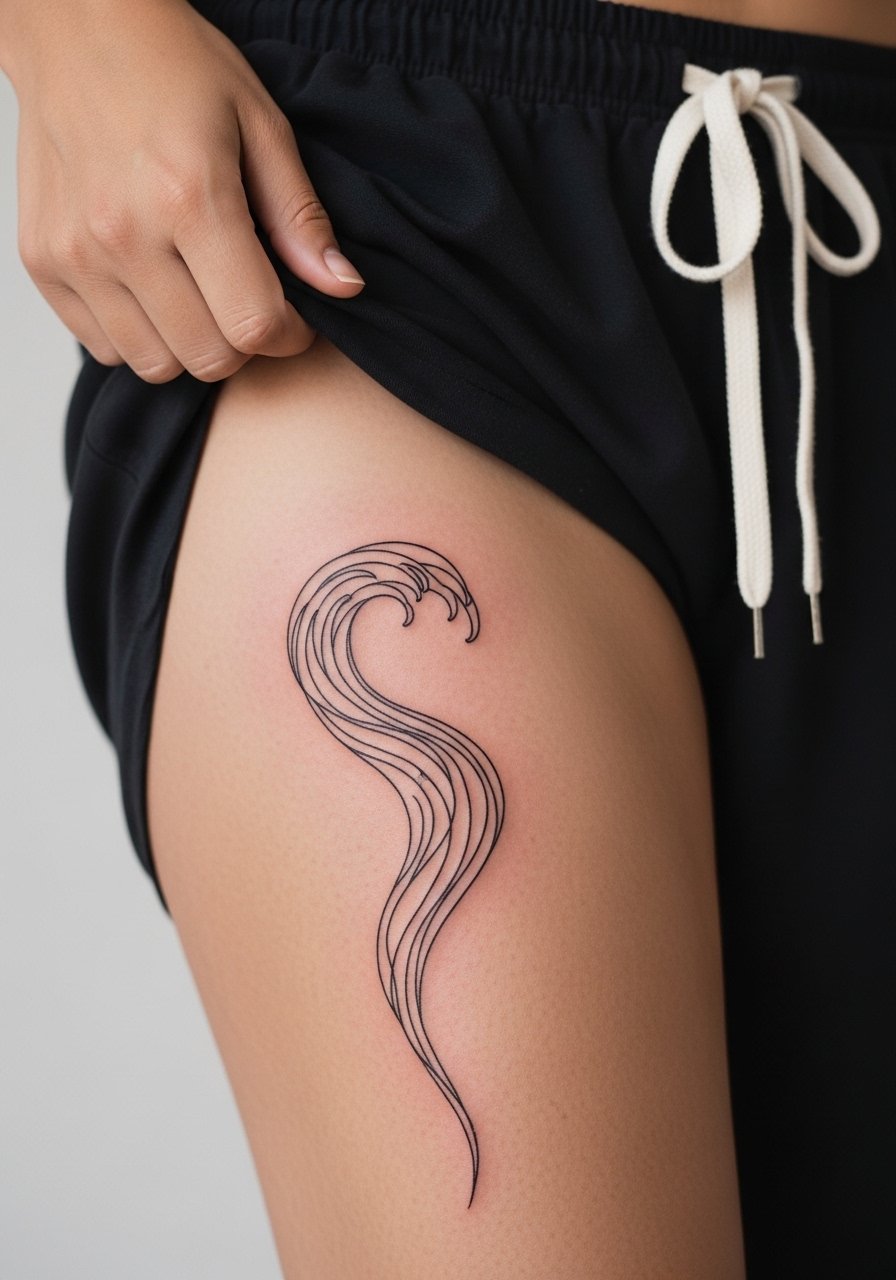
A single wave line is deceptively tricky. Specify the exact curvature and ask for a slightly thicker outer contour so the wave maintains shape after settling. Small waves with tight turns blur faster than smooth, open curves. Sessions are short and relatively low pain on the outer thigh. For casual days wear a drawstring pant that keeps fabric off the tattoo while it seals.
20. Tiny Locket Silhouette Near the Hip
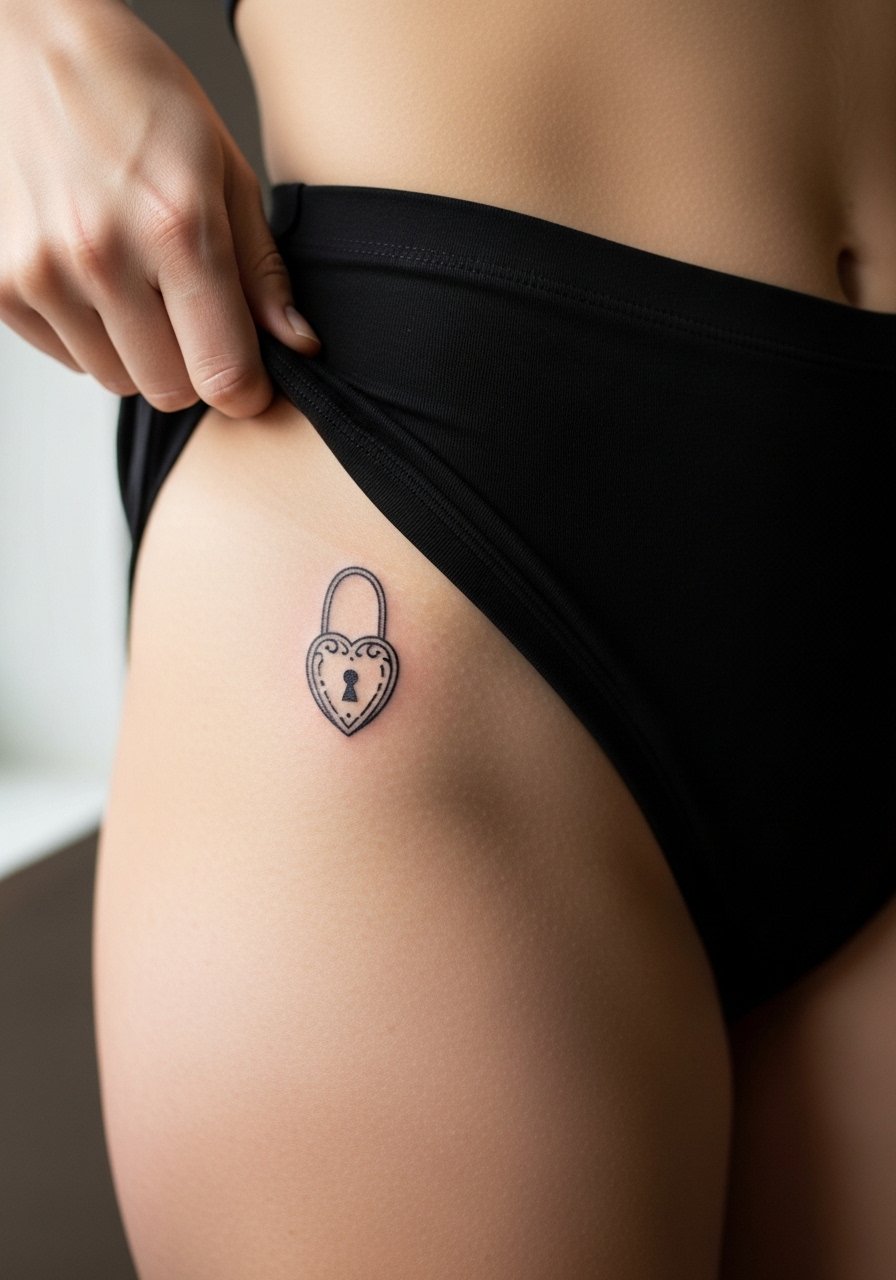
A tiny locket at the hip reads like an intimate accent. Put the exact locket shape and size on your artist's table and request thicker outline anchors so the silhouette survives waistline friction. The main risk is rubbing from belts and waistbands in the first week. Expect a quick single-needle session and plan session wear accordingly. For beach or summer looks, a high cut bikini bottom keeps the area visible without constant chafing.
21. Discovery Pathways and First-Thigh Checklist
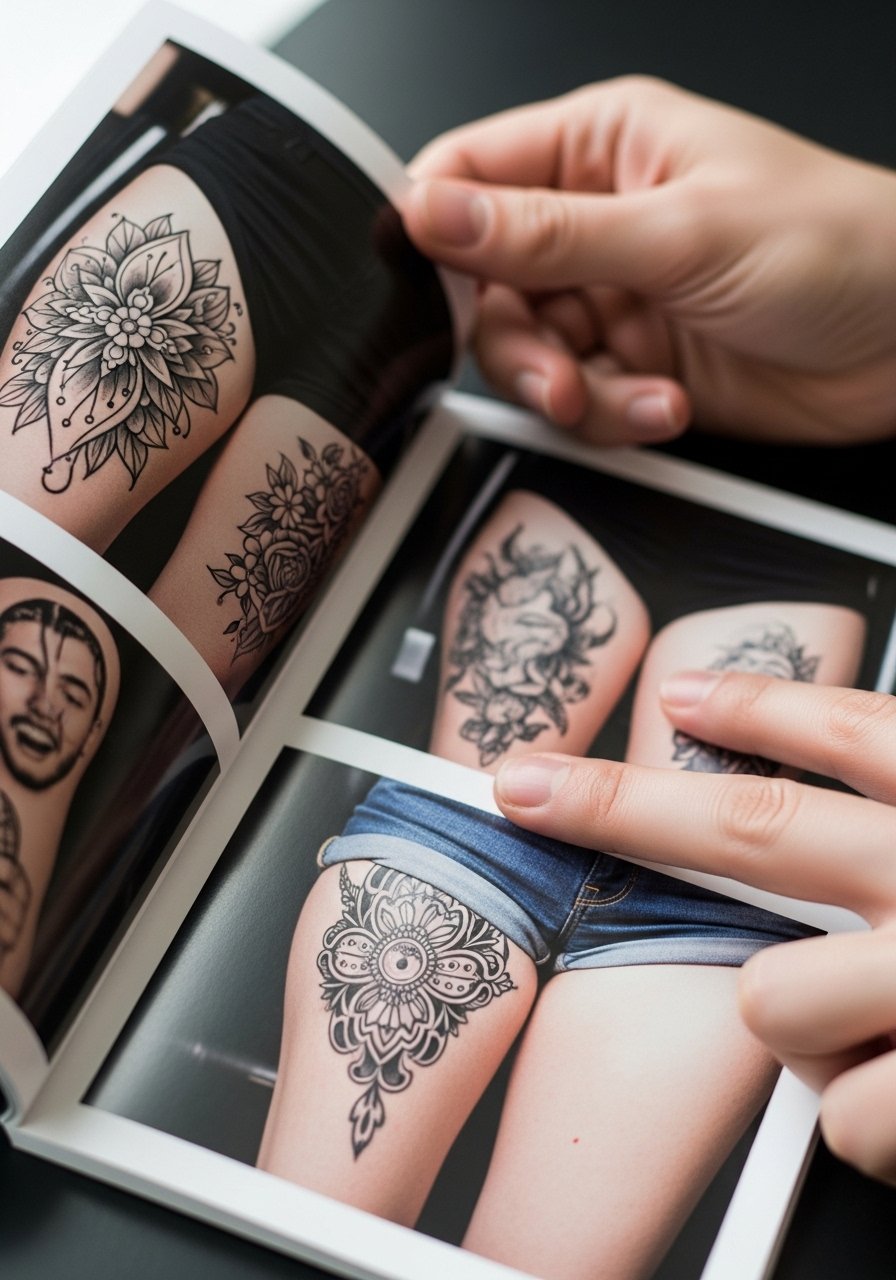
If you are still deciding, search hashtags and platforms to find the style fits you want. I use tags like #thightattooforwomen and #finelinethigh on Instagram, check guest-spot reels on TikTok, and browse Tattoodo portfolios for placement examples. When you message a studio, ask to see healed photos of thigh pieces in similar scale and skin tone, ask about touch-up timelines, and confirm session logistics so you do not get surprised in the chair.
Frequently Asked Questions
Q: How much does a fine line thigh tattoo usually take in the chair?
A: A typical fine line rose or small zodiac piece on the thigh runs one to two hours. Bigger watercolor washes and wraparounds often need two to three sessions. If pain or sweating slows the session, artists may split work across visits, so plan wardrobe and time accordingly.
Q: Do inner thigh tattoos hurt more and how should I prepare?
A: Inner thigh placements are generally more sensitive because of nerve density and thinner skin. Topical numbing cream and relaxed breathing help, but expect higher discomfort than the fleshy outer thigh. Wear loose shorts or a skirt you can easily shift for the session.
Q: Will a watercolor thigh tattoo fade faster than blackwork?
A: Watercolor pigments can lighten over time more than saturated blackwork, especially if the piece sits where clothing rubs. You can ask the artist for stronger color anchors and occasional touch-ups to retain vibrancy. Sunscreen and avoiding abrasive waistbands during healing also help.
Q: How do weight changes affect thigh tattoos and what should I ask an artist?
A: Weight and muscle shifts change how designs sit, particularly on the inner and outer thigh. Ask your artist about placement that follows a natural curve and avoid highly detailed tight patterns in stretch-prone zones. Artists can recommend scaling or spacing choices that tolerate modest body changes.
Q: Should I use Saniderm or air dry healing on my thigh piece?
A: Artists split into two camps. One side recommends protective film for friction-prone thigh areas to block bacteria and reduce scabbing. The other prefers dry healing to avoid trapped moisture and loss of pigment. Ask your artist which method they use and why, and follow their plan for the best healed result.
Q: Where can I find healed photos for the exact style I want?
A: Look for healed shots on portfolio pages and saved reels under hashtags like #finelinethigh. Tattoodo and r/tattoos threads are helpful for recent healed images. When you message a shop, request healed photos of prior thigh work in a similar size and skin tone.