Fine line fingerprint tattoos are everywhere on socials, but what most saved posts do not show is how they look after a year of typing, washing, and sun. I have seen fine line prints smear on fingers and tiny wrist prints keep their contour when scaled up and given room. Expect trade offs in pain, pricing, and longevity, and read on for 17 focused fingerprint concepts with exactly what to ask your artist and what to wear to the session.
1. Tiny Fingerprint Ring on the Ring Finger
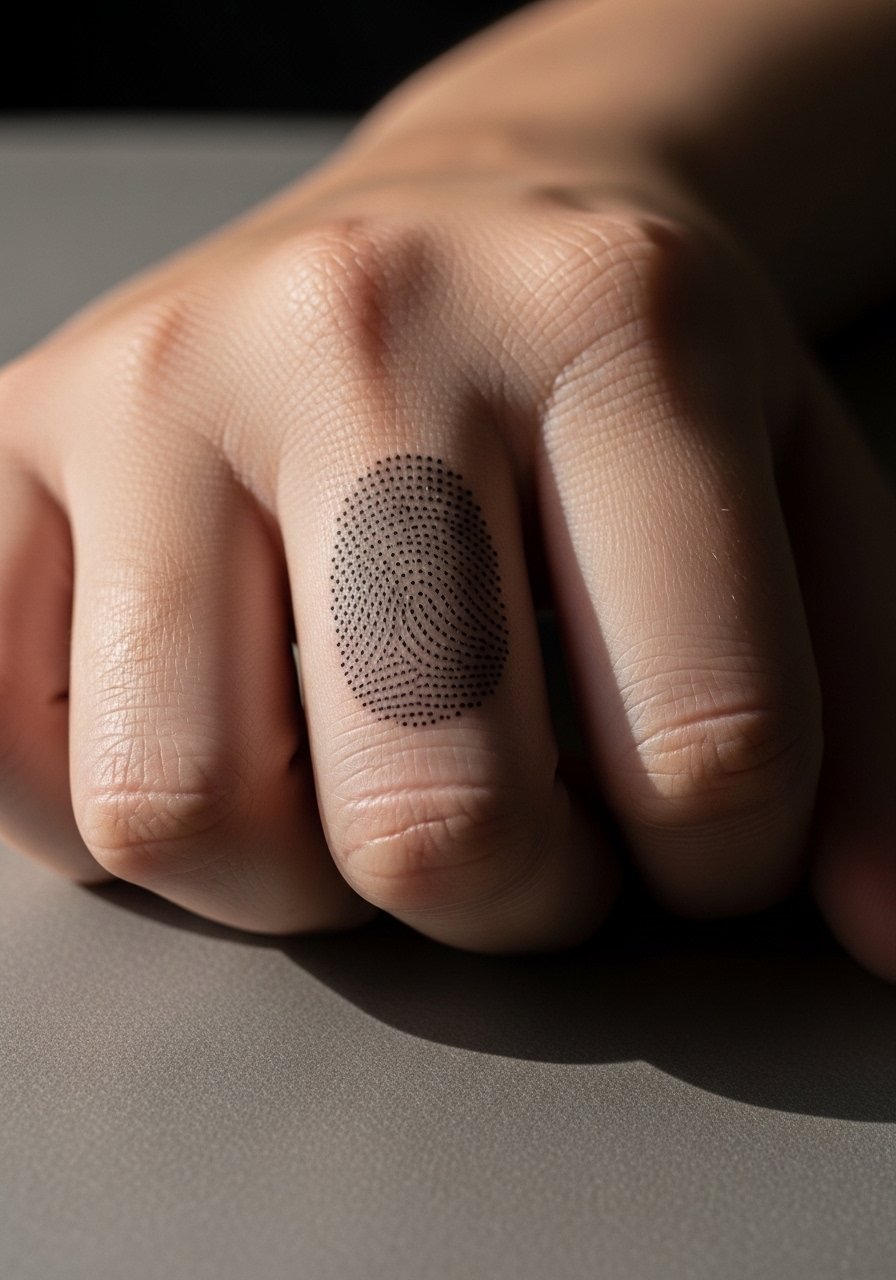
Finger placements hurt more than wrist pieces, expect a 6 to 8 out of 10 sensation. I recommend this when you want a private symbol that reads like a band, not a full decorative ring. Tell your artist you want bold linework with slightly increased spacing between ridges so the print does not blur into a smudge at six months. Common mistake is asking for ultra-thin detail on the finger, which often turns into soft gray at year one. Plan for touch-ups every 12 to 24 months for fingers. For the session, remove rings and keep nails short.
2. Minimalist Fingerprint Heart on the Wrist
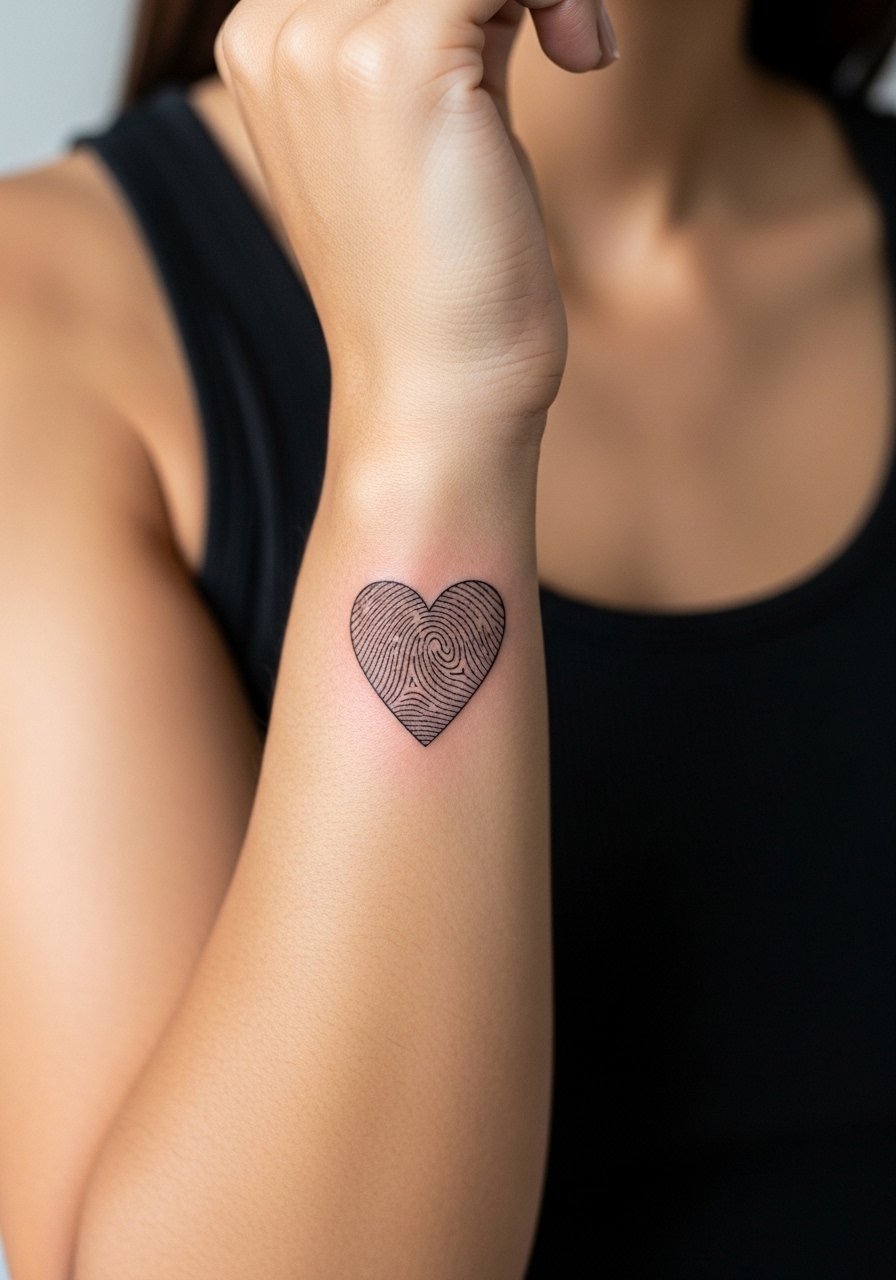
Wrist pieces are a softer pain than fingers, often a 3 to 5 on a personal scale. This tiny heart made from fingerprint ridges works when you want clear silhouette from day one. In consultation, ask for slightly thicker outer lines and a denser interior so the negative space heart keeps its shape as it heals. A version that ages poorly uses ultra-fine cross hatching that fills in after a year. If you plan to show it off, roll a cuffed chambray shirt and stack thin bangles for contrast with the black linework, and wear a sleeveless tank to the appointment so the artist has full wrist access, for example rolled cuff chambray shirt.
3. World Map Fingerprint on the Forearm
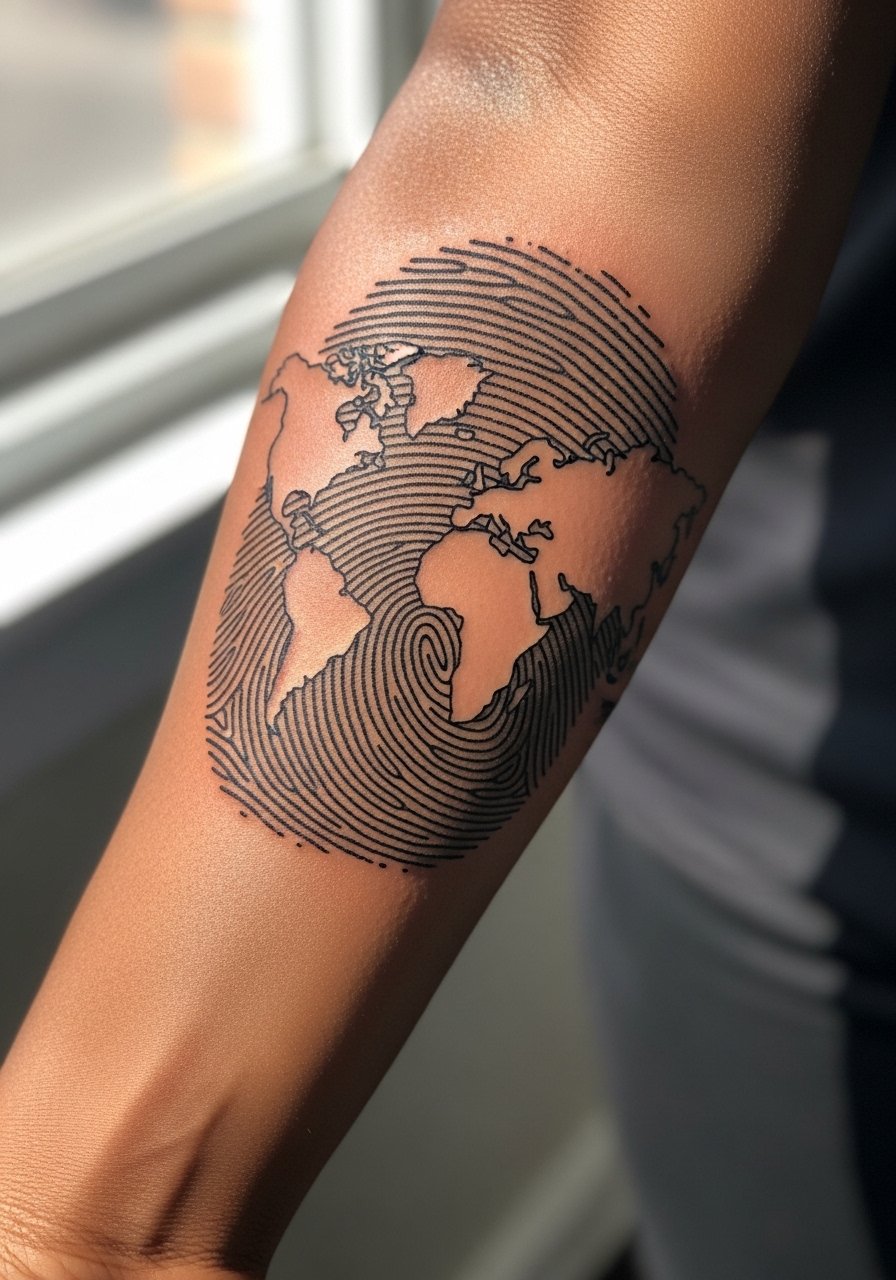
This medium forearm piece reads well from a distance and holds up because the skin there moves less than the hand. Bring clear map references and mark the primary continent or country you want emphasized when you consult. The common error is cramming tiny islands into a micro print, which blurs into a blob at two years. Expect a one to two session plan and moderate soreness for 24 to 48 hours. For showing it off, push up a linen button-down in beige and pair with a minimal leather cuff, and wear a short-sleeve button-up to the session so sleeves do not press on fresh ink, for example linen button down shirt.
4. Semicolon Fingerprint Butterfly on the Inner Wrist
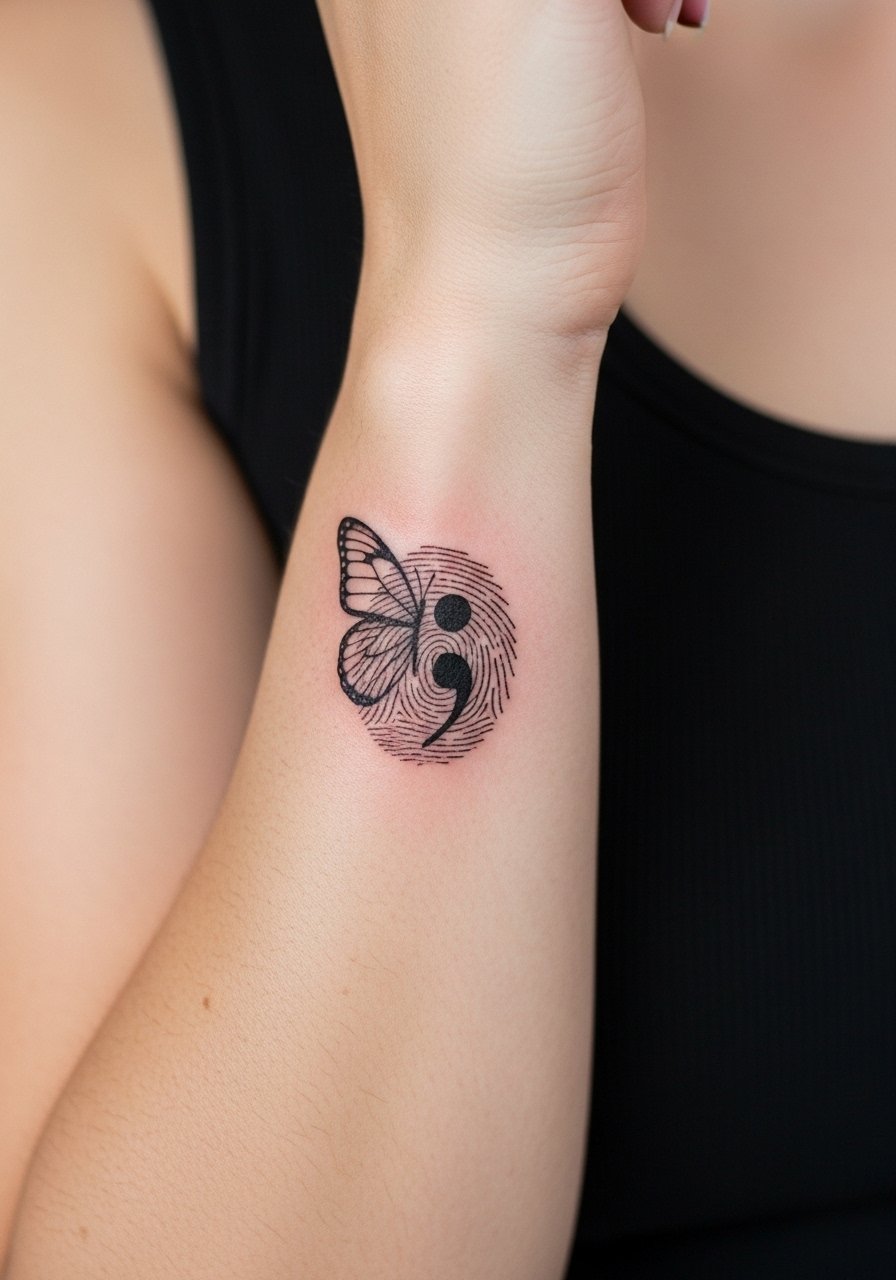
This design pairs symbolism with subtle movement and is perfect for a wrist-sized memorial or recovery token. Tell your artist you want the semicolon small and centered, with fingerprint ridges forming the wings around it. A mistake is over-shading the wings early on, which hides the semicolon after healing. This placement heals with light scabbing for some people, so expect to moisturize often in the first two weeks. For the session, wear a loose tank so the artist can work without fabric rubbing against the inner wrist. Paired looks work well with pushed-up sleeves and a delicate chain pendant.
5. Negative Space Fingerprint on the Collarbone
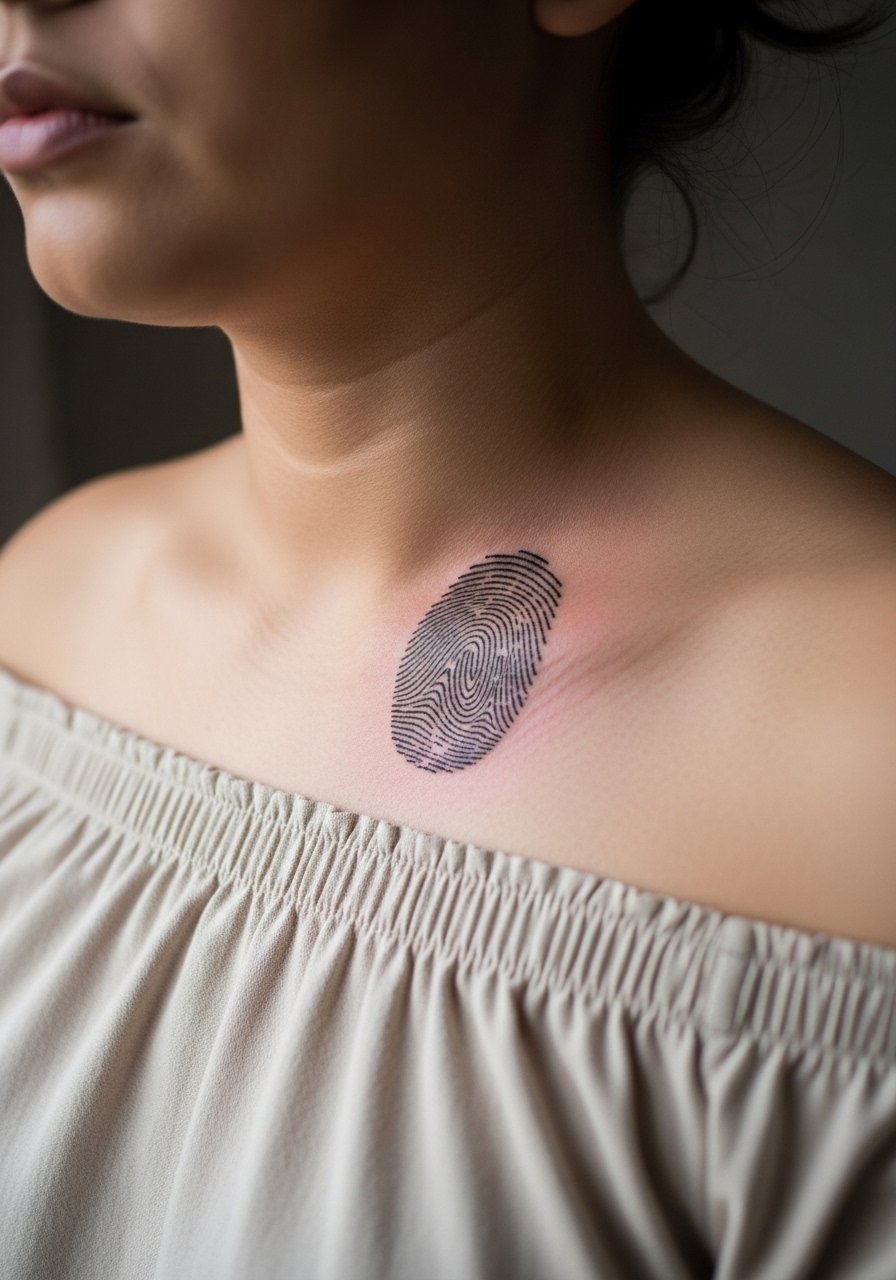
Collarbone pieces show off elegantly and age differently than wrist work because the skin there stretches less. Request negative space blocking from your artist so the skin itself forms part of the ridge pattern. Artists split on whether dense fine line belongs on collarbones, and both camps make fair points. One camp warns that close-packed lines merge as the skin moves, and the other camp says with careful depth and spacing negative space stays crisp. Ask your artist which approach they use, and bring photos showing exact spacing. For evenings out, wear an off-shoulder blouse and layer a long pendant necklace that drops below the design, for example off shoulder blouse.
6. Infinity Fingerprint on the Ring Finger
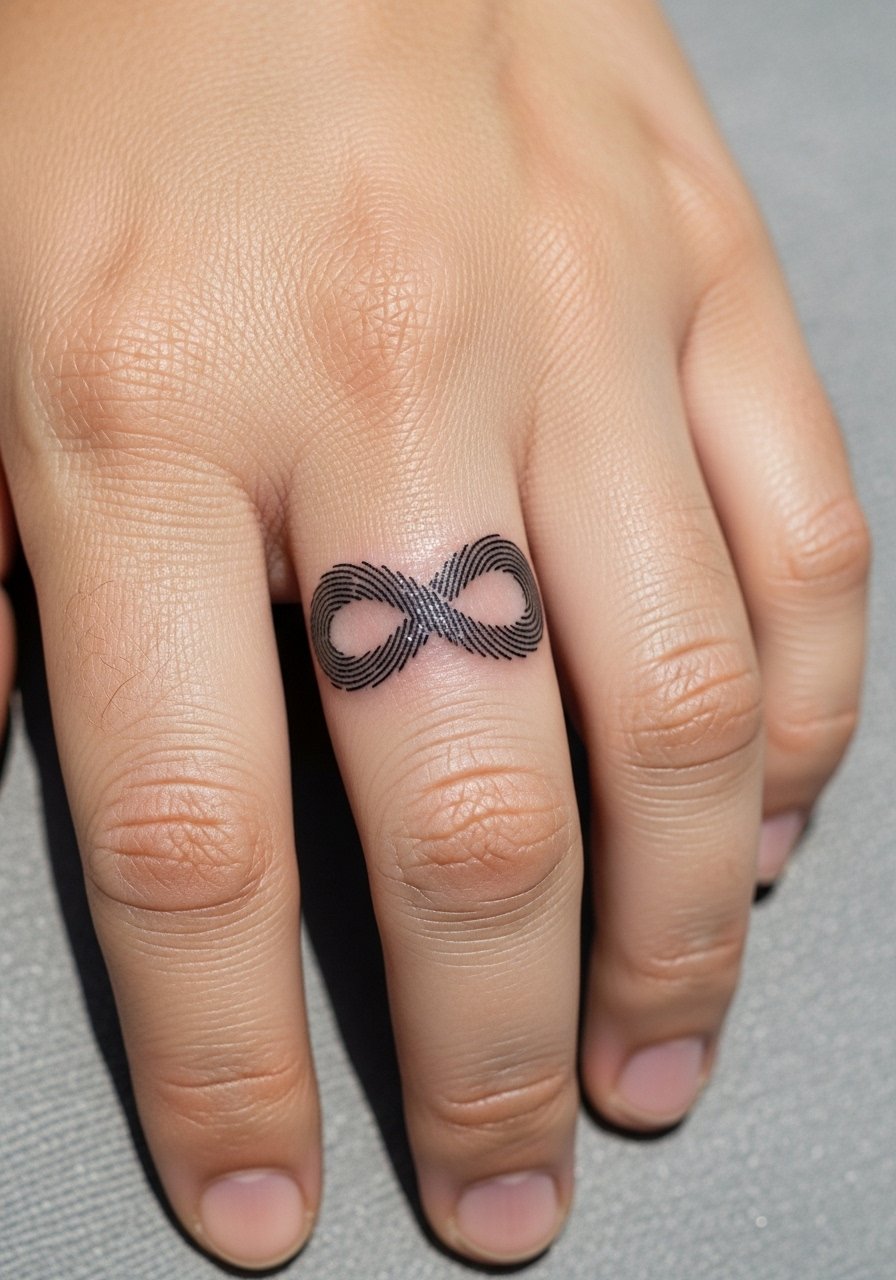
Couple matching rings get complicated when one print heals darker than the other. The ring finger is high-friction and prone to early softening. Tell your artist you want simplified loops and slightly thicker outer line so the infinity symbol still reads after touch-ups. The session is quick but painful, usually a focused 20 to 40-minute slot. For showing the effect without crowding, avoid rings on the inked finger and stack thin bands on adjacent digits, and plan the appointment with no polish or jewelry. Pair visually with thin rose gold stacks, for example thin rose gold ring stack.
Studio Day Picks
The wrist, collarbone, and finger pieces above each ask for different session prep, so these small items smooth the work and the first healing week.
-
Hustle Butter Deluxe. A popular go-to for many who dislike greasy ointments, it soothes new ink and absorbs quickly, which helps fine line spots stay clear without heavy residue on fingers.
-
Ink-Ich Ban healing balm. Lightweight balm that reduces itching on wrist pieces where movement is constant, useful during the first week when you are moisturizing frequently.
-
Australian Gold H2O Tattoo Aftercare. Works well in humid conditions and can help keep delicate lines from smearing by maintaining balanced moisture without heavy occlusion.
-
Recovery Ink Patch silicone sheet. A breathable alternative to cling film for detail-heavy forearm pieces that need protection from friction while healing.
-
Aquaphor healing ointment. A thin layer for the earliest days helps with scabbing on wrist and collarbone work, and most artists accept a light application for fine line pieces.
7. Fingerprint Heart with Script Date on the Inner Forearm
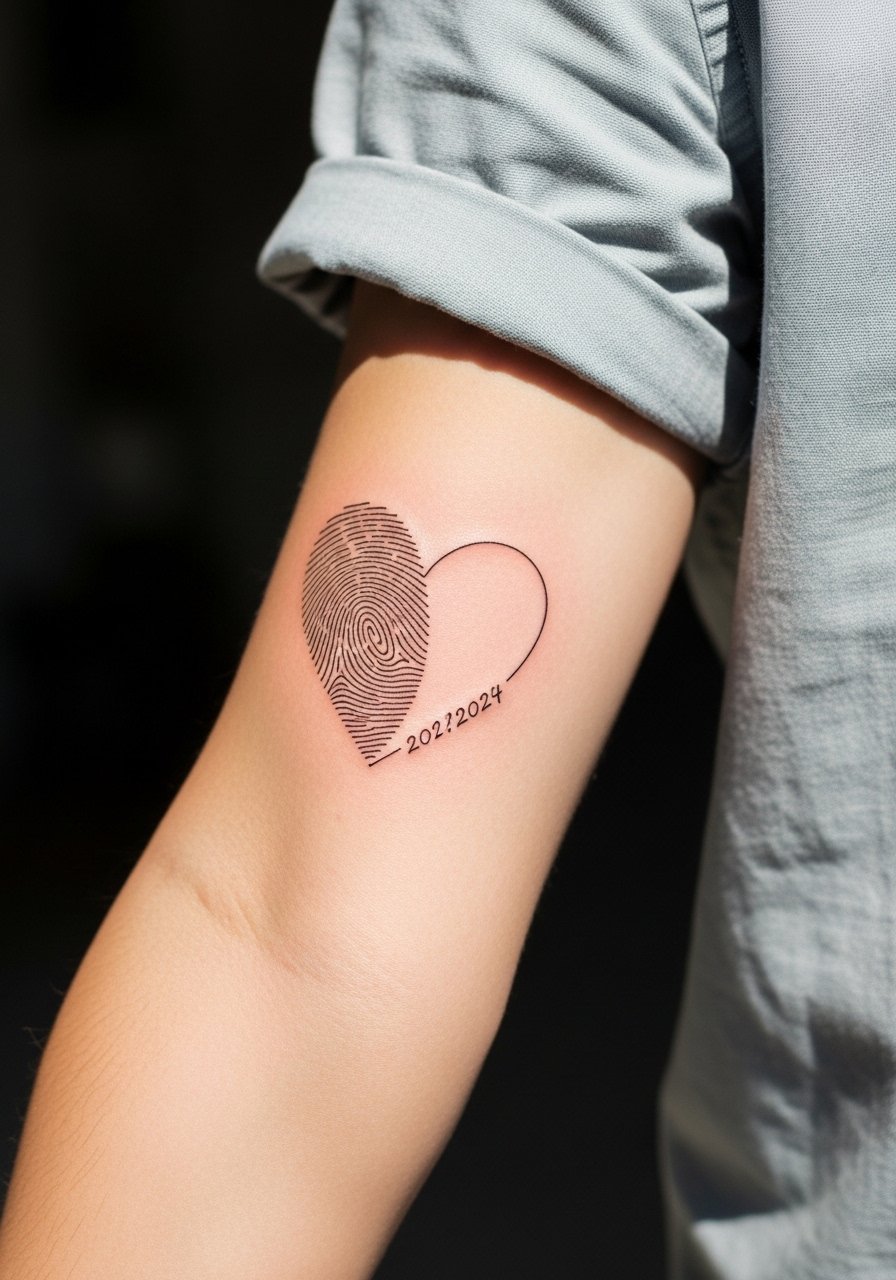
The inner forearm gives you space for a small fingerprint heart plus a date in clean script. Many people forget to ask for proportion between the print and the date, and that causes the date to overpower the design after healing. Tell your artist you want the script at about half the height of the heart so both elements breathe. This spot ages well because it avoids constant rubbing. Expect two to three weeks for full settling and a possible touch-up at year two for saturated linework. For showing it off, push up a linen button-down and keep the opposite arm accessorized with a minimal leather cuff, for example minimal leather cuff.
8. Fingerprint Heartbeat Across the Inner Forearm
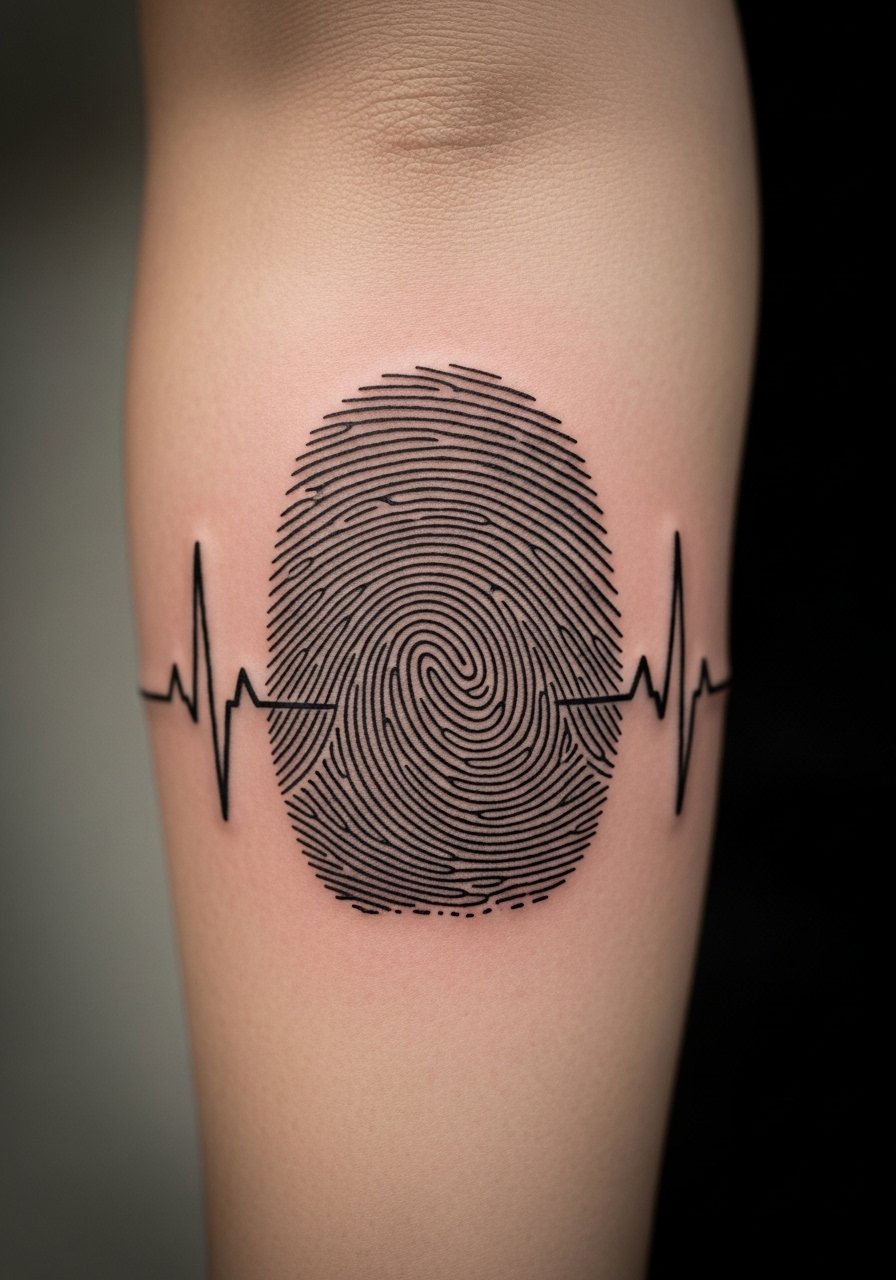
This elongated design looks striking and has higher blowout risk if the artist packs too many ridges into the ECG line. When consulting, bring a clear photo of the ECG you want and request moderate spacing where the fingerprint merges into the waveform. The aging path is predictable: crisp at six months, softening at year three if exposed to sun. Session time is moderate, often 60 to 90 minutes. For a tidy reveal, wear pushed-up sleeves and a thin chain pendant on the opposite arm, and arrive in a short-sleeve shirt you can loosen for full access to the inner forearm.
9. Anatomical Heart Built from a Fingerprint on the Chest
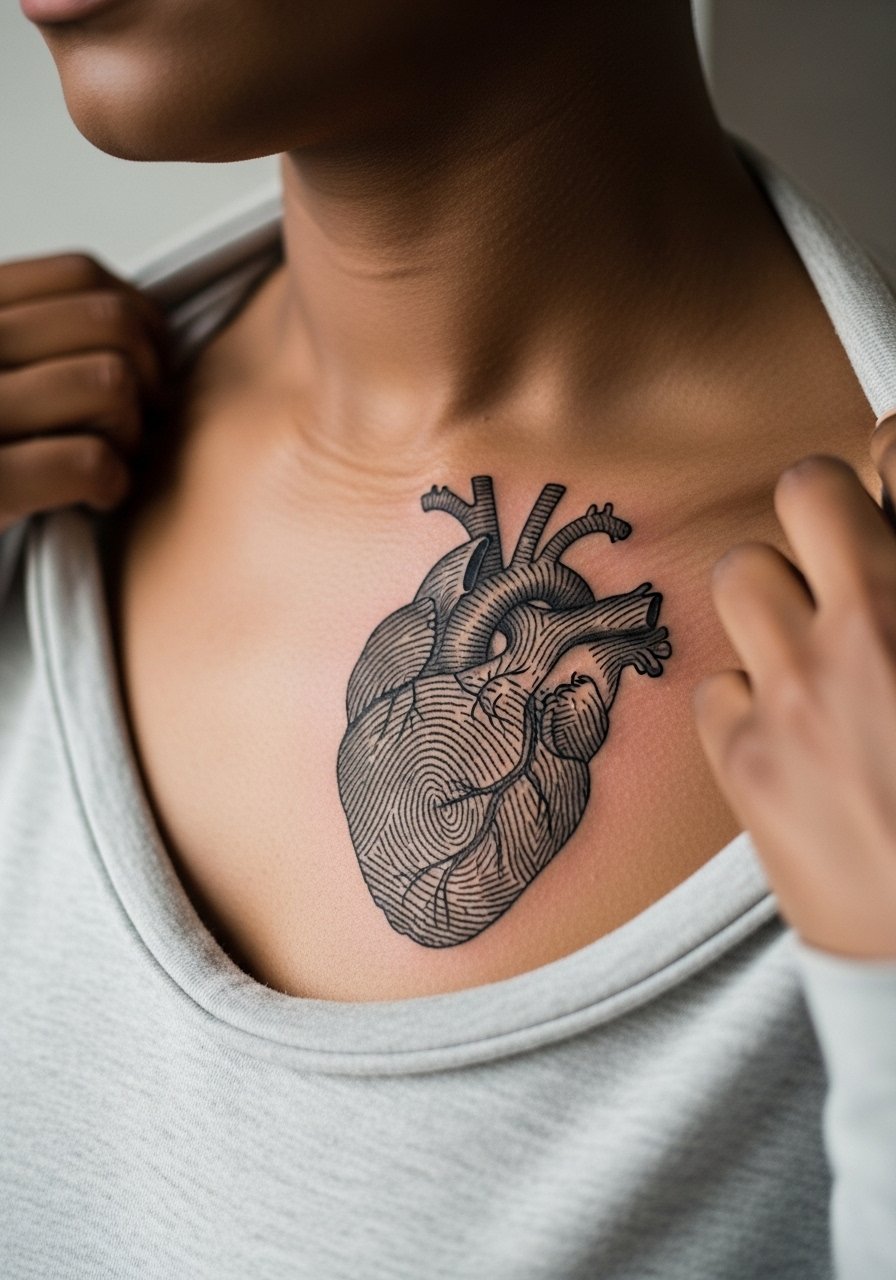
Upper chest work needs a careful plan for size and depth because the area moves with breathing. Ask your artist to scale the fingerprint to match the anatomical lines so the heart still reads when worn under a shirt. A common mistake is shrinking the print too small, which leads to merging lines after healing. Expect two short sessions if you want shading and definition. Sensitive placement note: wear a wide-neck shirt or sports bra to the appointment so the artist can access the area without full exposure. This piece pairs with open-collar shirts for easy showing.
10. Fingerprint Flower on the Ankle
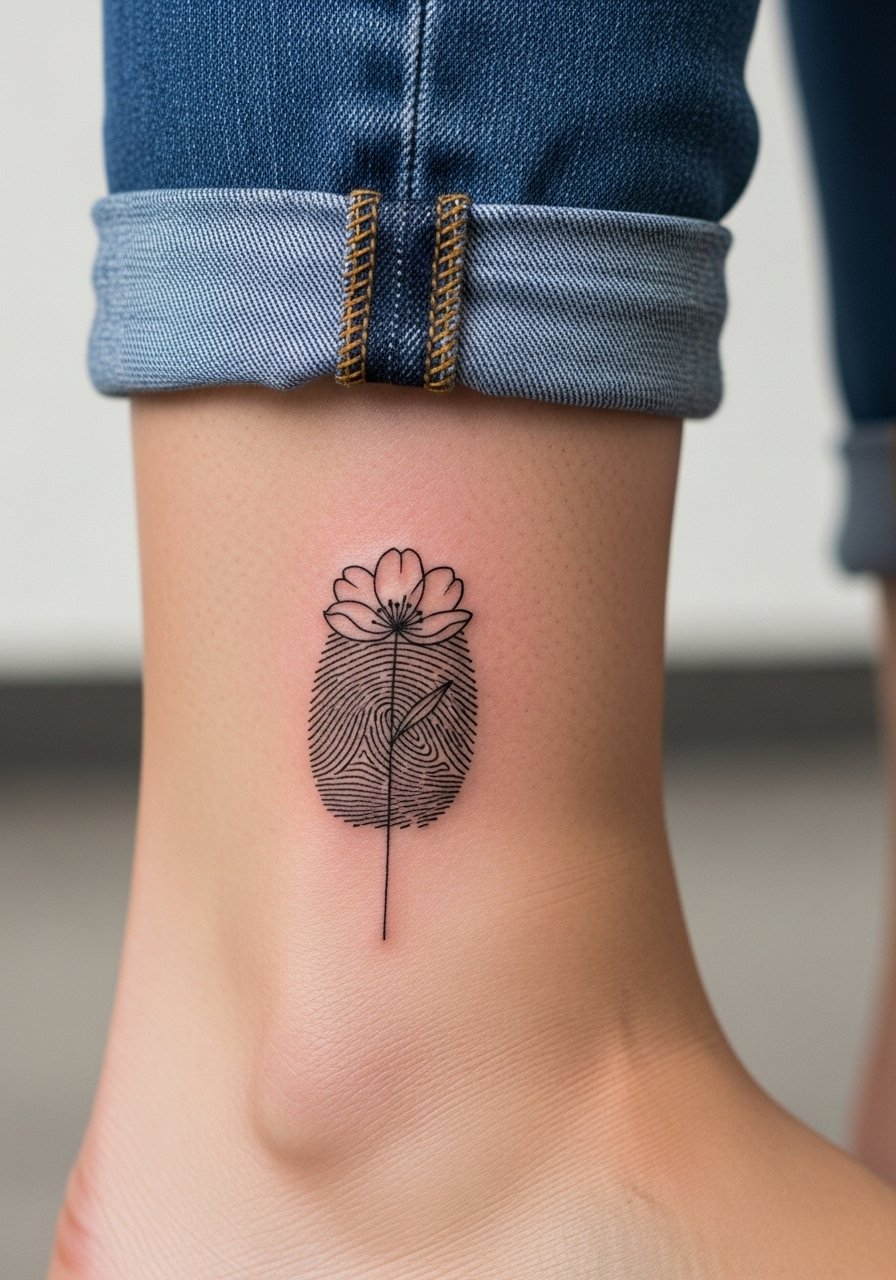
Ankle tattoos sit close to shoes and socks, so friction during healing is the main risk. Ask for a compact design with bold outer contours so the petals do not fill in. Expect soreness when walking the first couple of days and keep footwear loose after the session. For style, cuff straight-leg jeans or wear a midi skirt rolled at the hem and add a delicate ankle chain on the opposite side, for example cuffed ankle jeans. Session wear should be barefoot or loose joggers so the artist can access the area cleanly.
11. Black and Gray Realism Fingerprint on the Inner Bicep
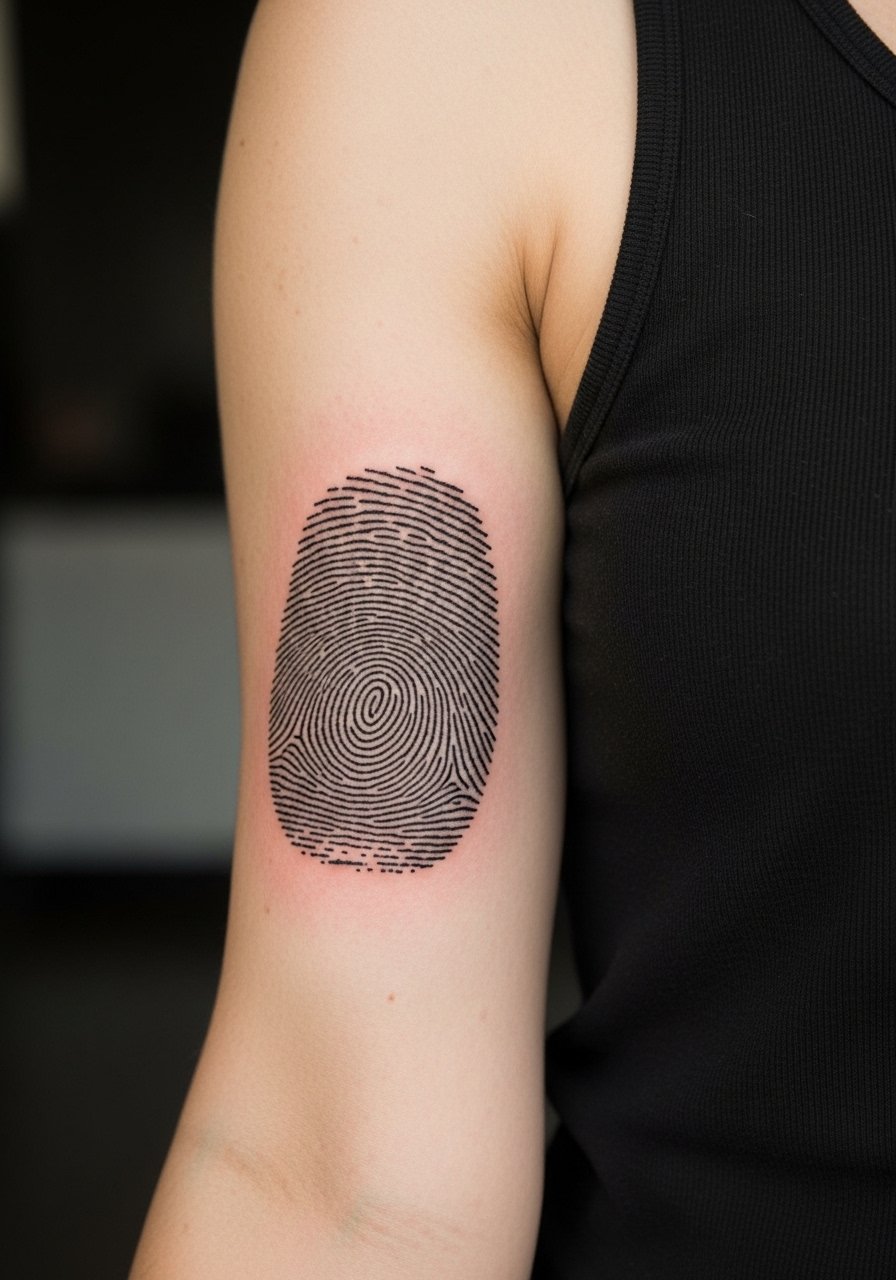
Inner bicep work is comfortable for many clients but requires a steady hand for texture. Request stipple shading and layered graywash so the fingerprint’s ridges keep depth without heavy linework. One mistake is dense black fills that flatten the ridges. This spot is less prone to blowout and often holds crispness for years with proper sun protection. For showing it off, pair with sleeveless tanks or racerback tops, and wear a tank to the appointment to give the artist unhindered access, for example sleeveless racerback tank.
12. Mom Fingerprint on the Ribcage
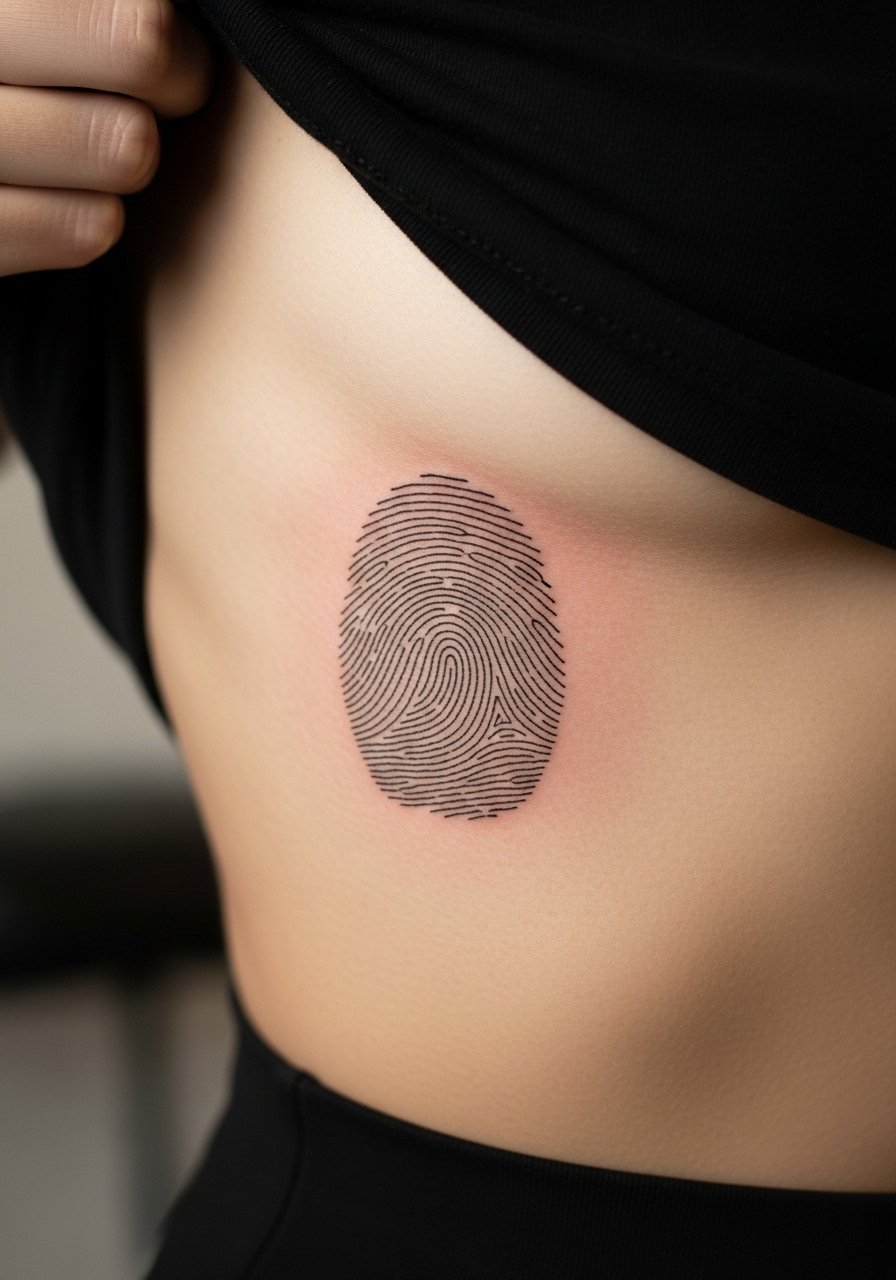
Ribcage sessions hurt more, often a 7 to 9 for many people, but the canvas offers privacy and scale. Ask for a scanned print scaled to the available rib space and request slightly less dense ridging so breath movement does not cause merging. There is debate among artists about fine line on ribs. One camp notes skin stretch and breath motion blur lines, and the other camp says careful spacing and needle depth can keep the work crisp. If you pick ribs, plan for aftercare and possibly a touch-up once the swelling settles. For the session, wear a cropped top or sports bra that can be shifted to show the area without full exposure.
13. Family Tree Composition on the Shoulder Blade
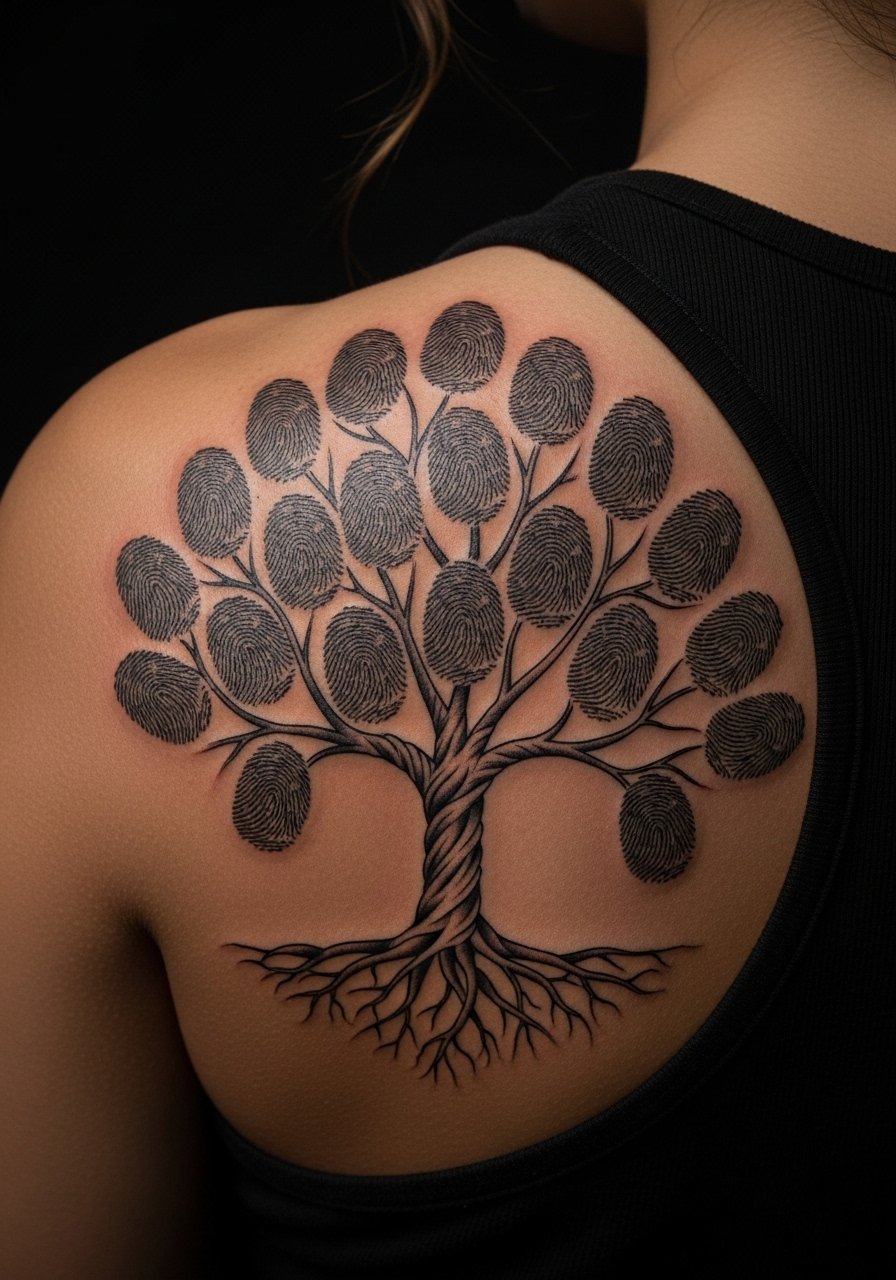
Large shoulder blade pieces let fingerprints branch into a readable family tree. The main pitfall is packing too many tiny prints into a small area, which turns into muddled shading over time. Tell your artist you want clear negative space between each print node and to treat each print as a distinct shape, not a texture. Expect two to three sessions for layered blackwork and shading. For showing, wear racerback tops or sleeveless tanks in solid colors so the design holds visual priority. For session wear, choose a tank or a button-down you can pull aside easily.
14. Fingerprint Puzzle Set for Sibling Matching on the Forearm
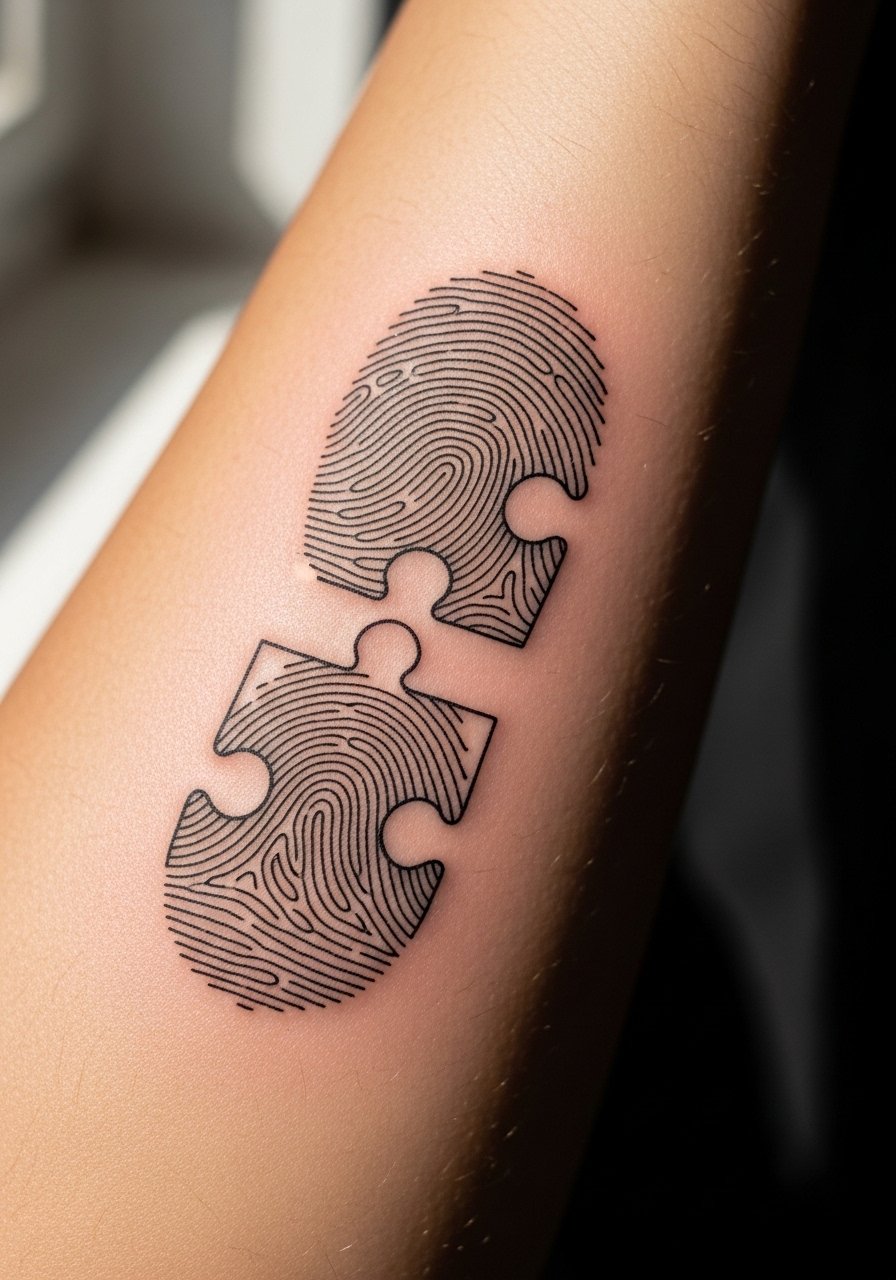
Custom puzzle designs are lovely when each person’s lines interlock, but alignment matters. Bring high-resolution scans and communicate that you want matching scale and complementary negative space so the pieces interlock in photos and in person. A common mistake is letting each print be a different scale, which looks off when placed together. Touch-ups are common after the set heals because slight shifts in healed tone can unbalance the pair. Wear short-sleeve shirts to the session and choose neutral nail polish if hands will appear in the reveal photos.
15. UV-Reactive Fingerprint Hidden Ink on the Inner Wrist
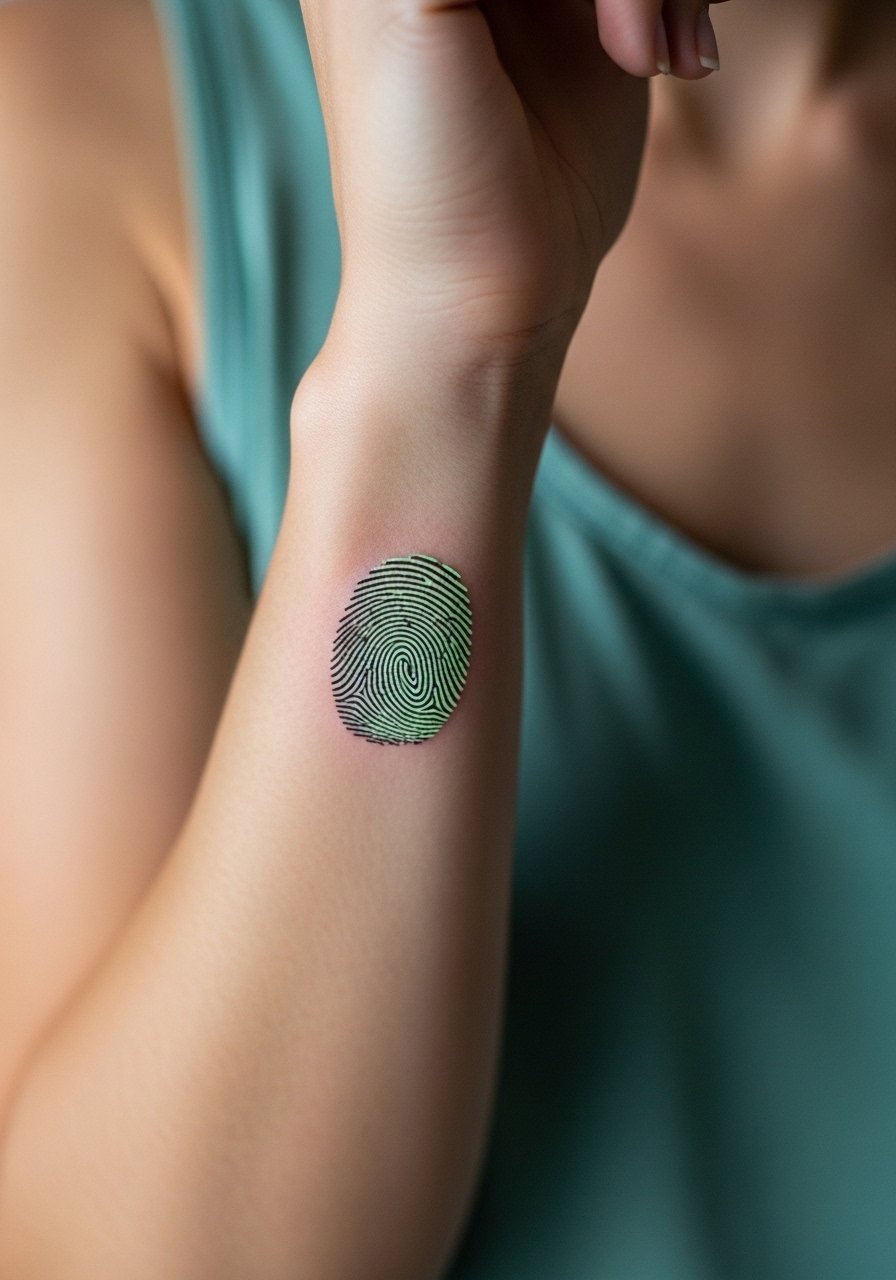
UV ink offers privacy when you want your print to stay low-key, but not every studio uses it. In consultation, ask if the artist works with UV inks and whether they have healed examples on similar skin tones. The trade off is that UV can fade differently and may require a separate touch-up schedule. Saniderm supporters and dry-healing advocates both have reasons in this space. One camp says protective film locks moisture and detail, and the other warns thin films can pull on delicate ink. If you pick UV, plan sessions with an artist who documents healed photos under blacklight.
16. Braille-Adapted Fingerprint for Accessibility Symbol on the Upper Arm
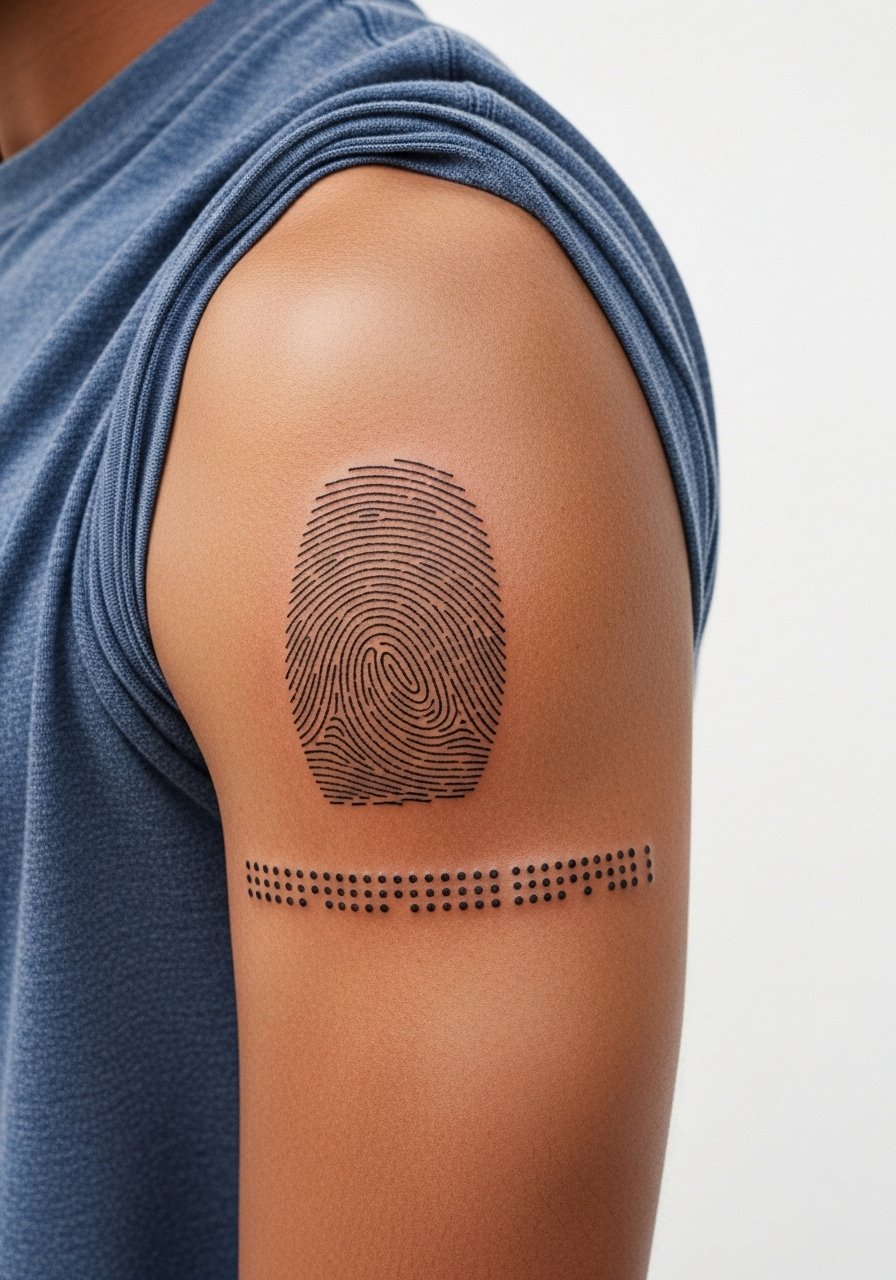
This niche concept blends tactile symbolism with visual print patterns. Explain to your artist that you want the ridges to suggest Braille dots while keeping the fingerprint contours readable from a distance. A typical mistake is trying to force true raised texture, which is not possible in standard tattooing. Instead, aim for visual suggestion and coordinate with an accessibility-minded community or consultant when the message is the point. For session comfort, wear a short-sleeve button-up you can roll and keep the area accessible. Expect long-term clarity because the upper arm sees less friction.
17. Fingerprint Flower on the Shoulder Blade
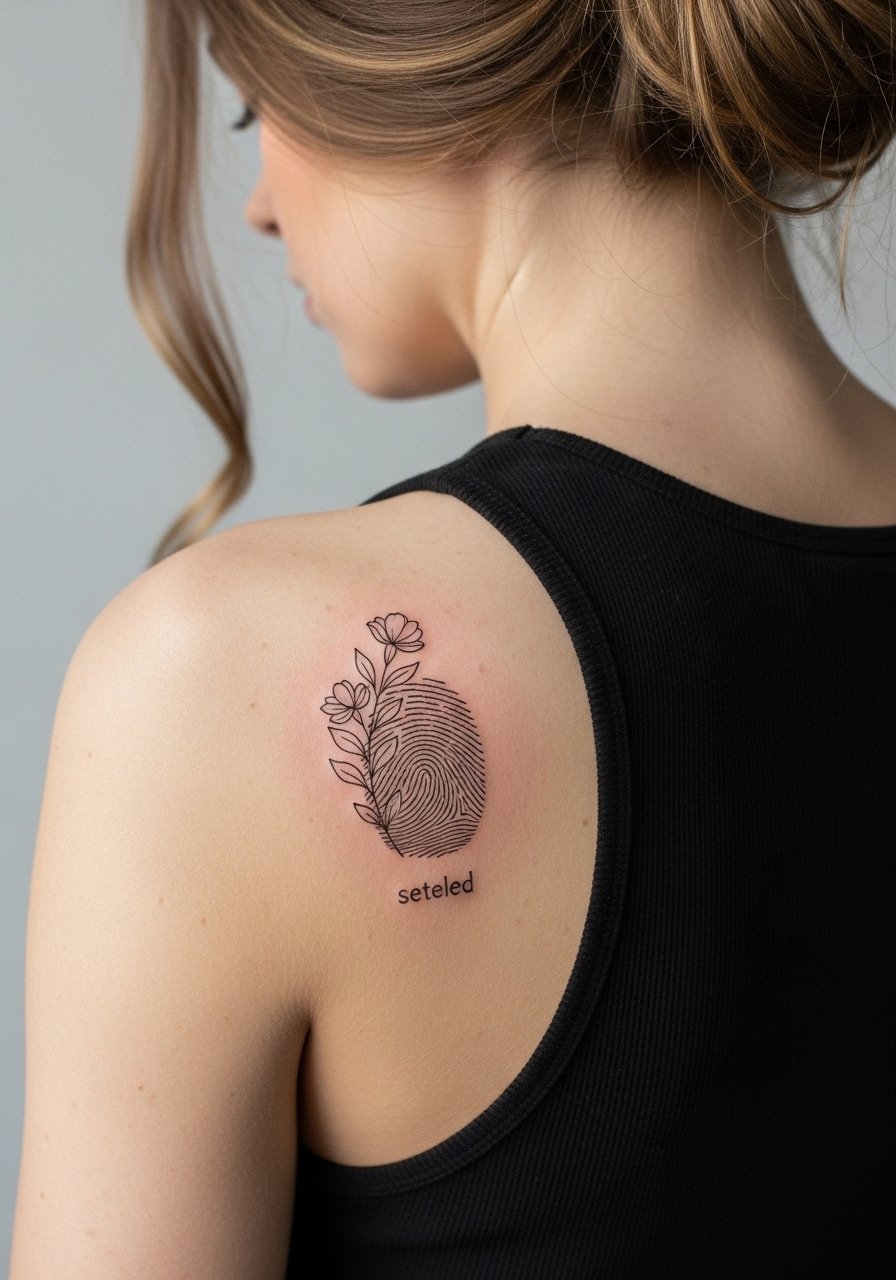
Shoulder blade placements are forgiving and tend to stay crisp if the design is not crammed. For a fingerprint flower, ask for a bold outer petal outline with inner ridging suggested rather than fully detailed. That prevents the small inner lines from filling in over time. A mistake is insisting on miniaturized ridge detail at the petal center, which often disappears at year two. For showing the piece, choose open-back dresses or halter tops that let the negative space breathe. For the appointment, a tank top gives the artist clean access.
Frequently Asked Questions
Q: Will fine line fingerprint tattoos on fingers fade faster than ones on the wrist or forearm?
A: From what I have seen, fine line on fingers does fade and blur faster because of constant washing and friction. Wrist and forearm placements move less and usually keep their contour longer. If you really want a finger print to last, ask for slightly bolder outer lines and plan on a touch-up within 12 to 24 months.
Q: How should I prep clothing and accessories for a collarbone or sternum fingerprint session?
A: Wear something that exposes just the area, like a wide-neck shirt or a sports bra you can shift so only the tattooed strip is visible. That keeps the rest of you covered and makes it easy for the artist to work. For showing off afterward, an off-shoulder blouse or a thin chain pendant necklace frames collarbone work without competing.
Q: If I want matching infinity fingerprints with a partner, how do we ensure they age together?
A: Match scale, placement, and line weight across both pieces. Small differences in needle depth or line spacing cause one to gray sooner. Book the same artist for both sessions whenever possible and accept that touch-ups are a normal part of keeping two pieces visually synced.
Q: What are the trade offs between Saniderm and dry healing for tiny wrist or finger prints?
A: Two camps argue this loudly. Supporters of protective film say it keeps small wrist tattoos clean and reduces scabbing. Advocates of dry healing warn that sealed films trap moisture on detailed lines and can pull pigment when removed. If you lean toward film, practice careful removal and discuss the plan with your artist before leaving the chair.
Q: Can fingerprint tattoos be done on darker skin tones and still read clearly?
A: Yes, but technique matters. I have noticed black and gray realism and bolder blackwork often read better on higher melanin tones than delicate color or washed-out inks. Ask to see healed examples on similar skin tones and request a test patch or a slightly heavier outer contour to preserve the fingerprint's shape over time.