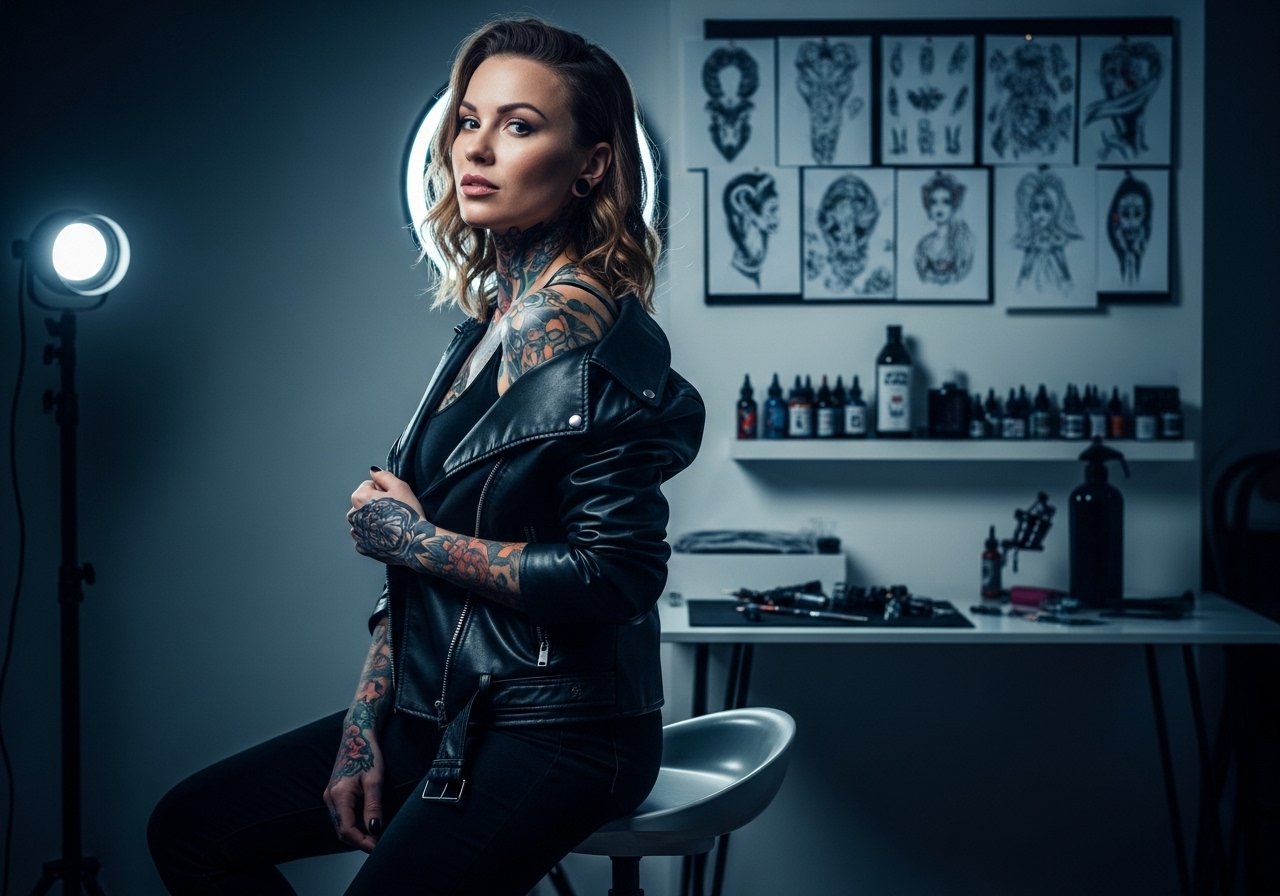
Fine line tattoos are everywhere on feeds right now, and the trend-versus-reality gap is wide. Fine line runes can look razor-sharp on day one and then ghost by month six if placed on a high-motion spot. Prices have climbed and artists cancel more often than they used to. Darker skin tones sometimes need different contrast choices to read in photos. Below are 17 Elden Ring tattoo references that balance style, longevity, and real-world wear.
1. Micro-Realism Malenia Blade on Inner Forearm

I suggest the forearm for Malenia because the flat surface makes hyper-detailed shading and subtle color accents on the blade hold up better than curved spots. Tell your artist you want slightly heavier linework around the prosthetic edges so the small details do not blow out over time. Expect a 4 to 8 hour session and a touch-up window at three to six months. A common mistake is asking for maximum tiny detail in a 3-inch design. Instead, scale the portrait to let stipple shading and micro-saturation breathe. For the session wear, roll up a rolled cuff chambray shirt so the artist has clear, comfortable access without tight sleeves.
2. Ranni Minimalist Outline on the Wrist
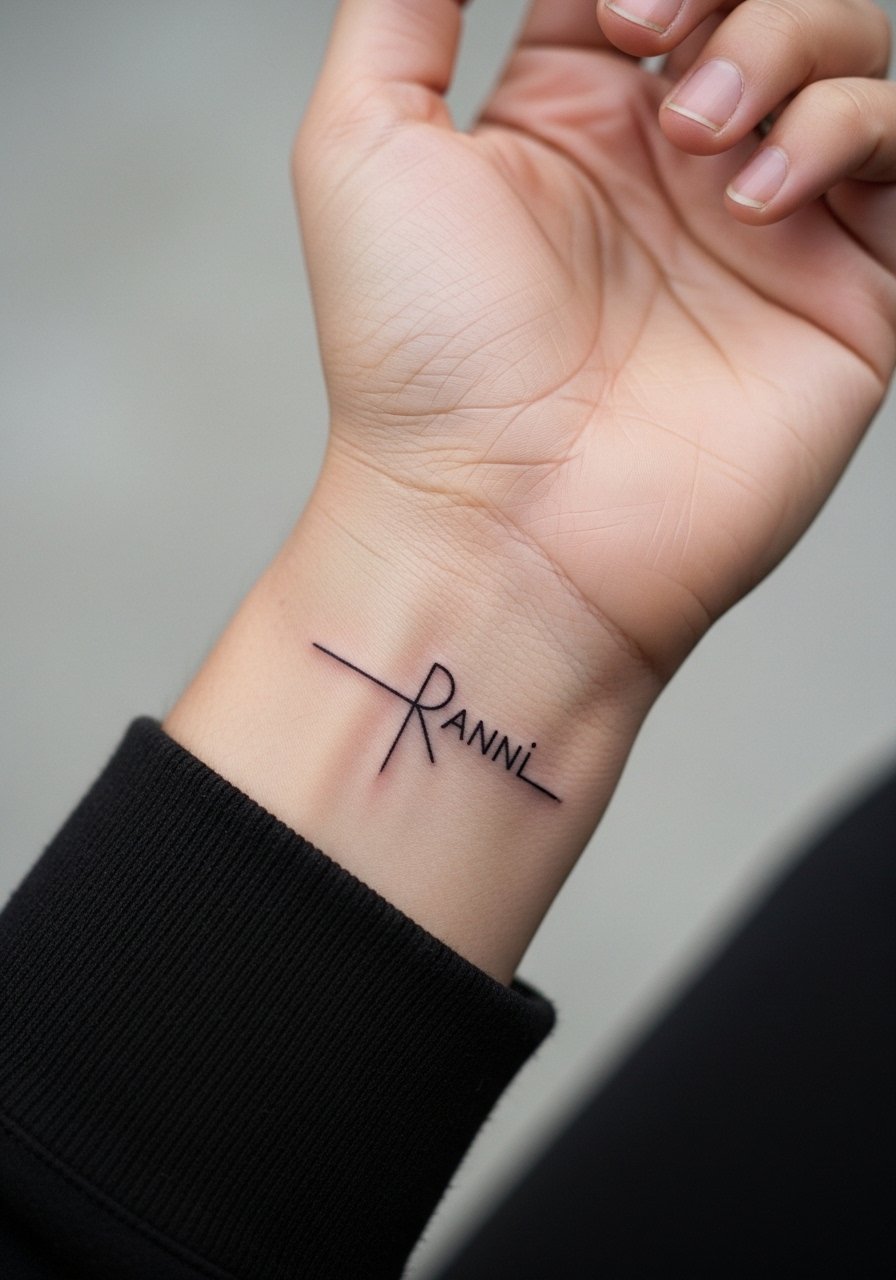
Wrist runes look great when kept small and simple, but the wrist moves and causes rubbing. For longevity, ask for 2 to 3 mm line weight rather than a hairline that will ghost. Pain is low to moderate, and a single short session usually does it. The aging story here is clear: fine line at the wrist often needs a touch-up by year two. Artists disagree on numbing creams and healing films, so ask where they stand on those first. Style this with a thin leather cuff bracelet on the opposite wrist to frame the outline when you want the design to read without clutter.
3. Erdtree Ornamental Mandala on the Shoulder

Shoulder placement gives the mandala room to breathe and keeps gold accents away from constant sun exposure. During consultation, bring geometric references that show exact spacing rather than just a screenshot of the in-game art. The common error is compressing too many radial lines into a small circle. When spaced properly, stipple shading and decorative negative space protect the pattern from merging as it heals. For session comfort and later showing off, an off shoulder blouse black pairs well and keeps attention on the mandala.
4. Godskin Apostle Blackwork Silhouette on Upper Arm

Bold black silhouettes survive gym gear and sweat much better than fragile color washes. The upper arm tolerates saturation so the solid fills develop a dense healed look. Expect multiple sessions if the piece is large and full of saturated black. A frequent mistake is packing too many small internal details into a silhouette. Keep the silhouette clear, then add light stipple shading for depth. Mention blowout risk with your artist and ask about touch-up policy within the first six months. For session wear, choose a sleeveless top you can remove easily without dragging fabric across the fresh ink.
5. Messmer Neo-Traditional Flames on the Calf
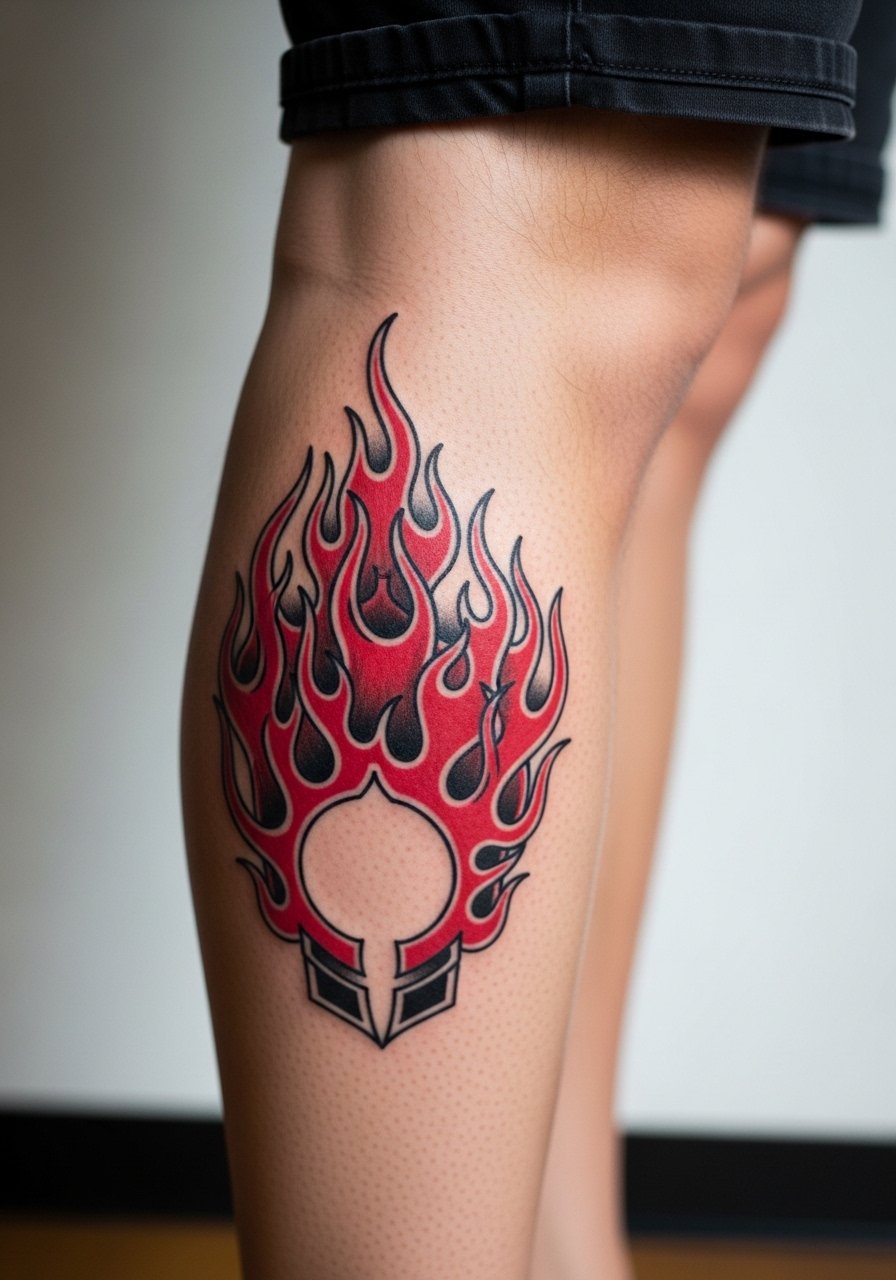
Calf placements are forgiving for neo-traditional saturation, and they sit well under shorts or boots for show-off season. Tell your artist you want strong outline contrast and heavy color saturation to resist early fading from sun exposure. Sessions are typically split into two blocks so swelling and saturation are managed. People often choose too many subtle gradients for this style and then lose pop in a year. For outfits that match the flame palette, roll your jeans or wear chunky leather ankle boots to frame the calf without covering the artwork.
6. Tarnished Rune Fine Line on Inner Bicep

Fair warning, the inner bicep is a high-motion zone and can blur fine detail faster than flatter areas. One camp of artists says fine line here will often soften into fuzz within two years. The other camp says with correct depth and spacing it can settle well. Ask your artist where they stand and request slightly thicker linework where the skin flexes. Expect moderate pain and one short session for a small rune. A typical mistake is tiny script without breathing room. For session comfort, wear a loose fit tank top men or similar so your arm can be moved without fabric tugging.
Studio Day Picks
The wrist, forearm, shoulder, calf, and inner bicep pieces above all demand slightly different prep. These picks help with stencil placement, friction zones, and the first-week healing needs for fine line and blackwork alike.
-
Tea tree soap bars. Gentle cleansing that many prefer over petroleum options, useful when finger and ankle pieces face daily friction during early healing.
-
Ink-Illustrated lightweight balm. A thinner oil that absorbs quickly for humid climates, which helps the calf and shoulder saturation stay clearer when you sweat.
-
After Inked tattoo balm. Frequently recommended for darker skin tones because it moisturizes without leaving a heavy white cast during the first week.
-
H2Ocean saline spray. A light saline spray that some people use on large saturated areas to keep the surface clean without over-ointment, helpful for upper arm blackwork sessions.
-
Aquaphor healing ointment. For the first couple of days a thin layer can lock in moisture on fine line areas like the inner bicep and wrist before switching to a lighter balm.
7. Radagon-Marika Fusion Watercolor on the Ribcage
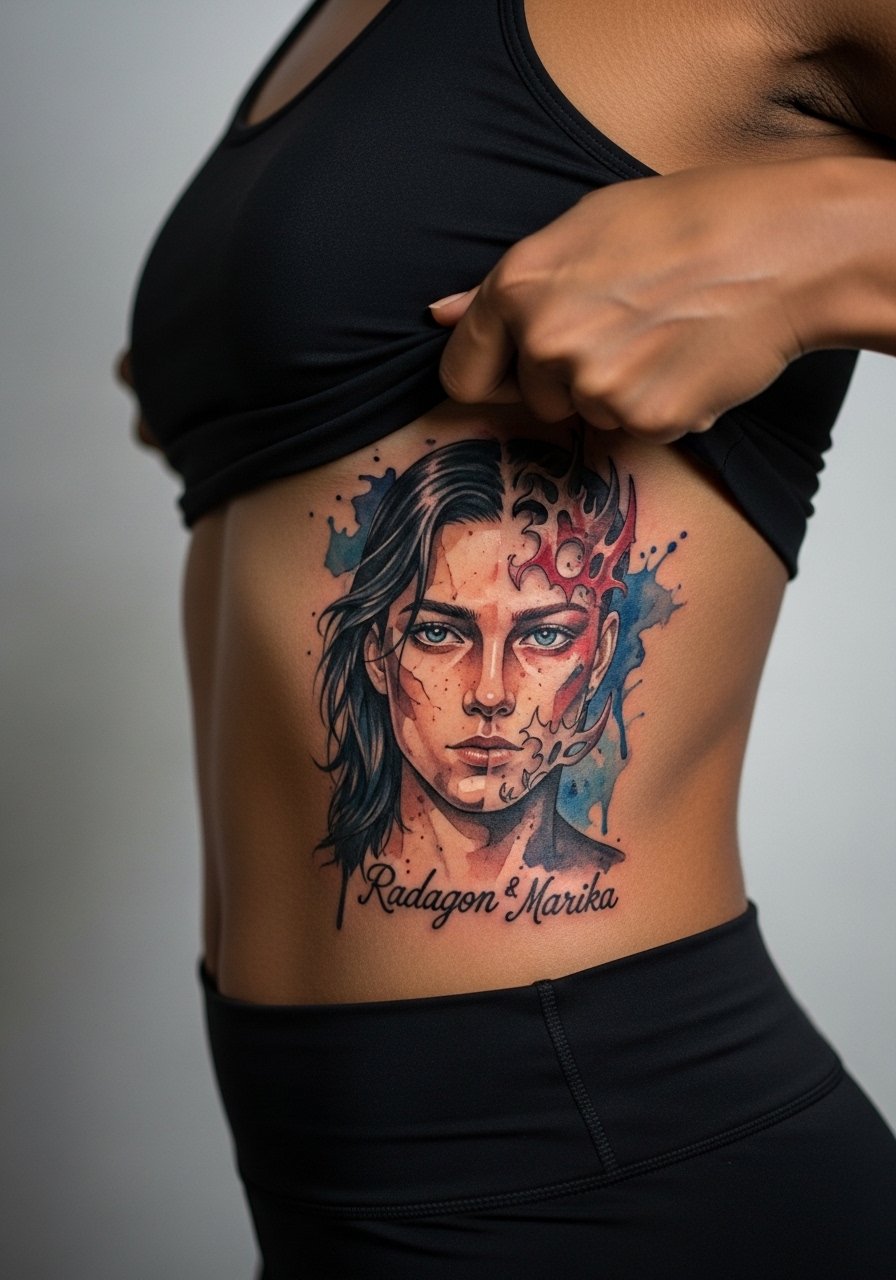
Ribcage sessions are painful for many, so this placement is for someone who tolerates the chair and wants a dramatic vertical canvas. Watercolor is gorgeous here but carries a higher risk of early bleeding out of color. If longevity is a priority, ask for a watercolor base with darker anchor lines or subtle micro-realism accents. The common regret with ribcage watercolor is asking for too many blended hues that wash out after showers and sweat. For the session, bring a loose sports bra or crop top that the artist can shift without exposing more than needed. Note that Saniderm users and dry healing advocates clash about ribs and films. One camp swears films keep color crisp, the other says films trap moisture and cause worse scabbing. Ask the artist which approach they prefer for ribs before you book.
8. Starscourge Radahn Horse-Rider Traditional on Outer Thigh
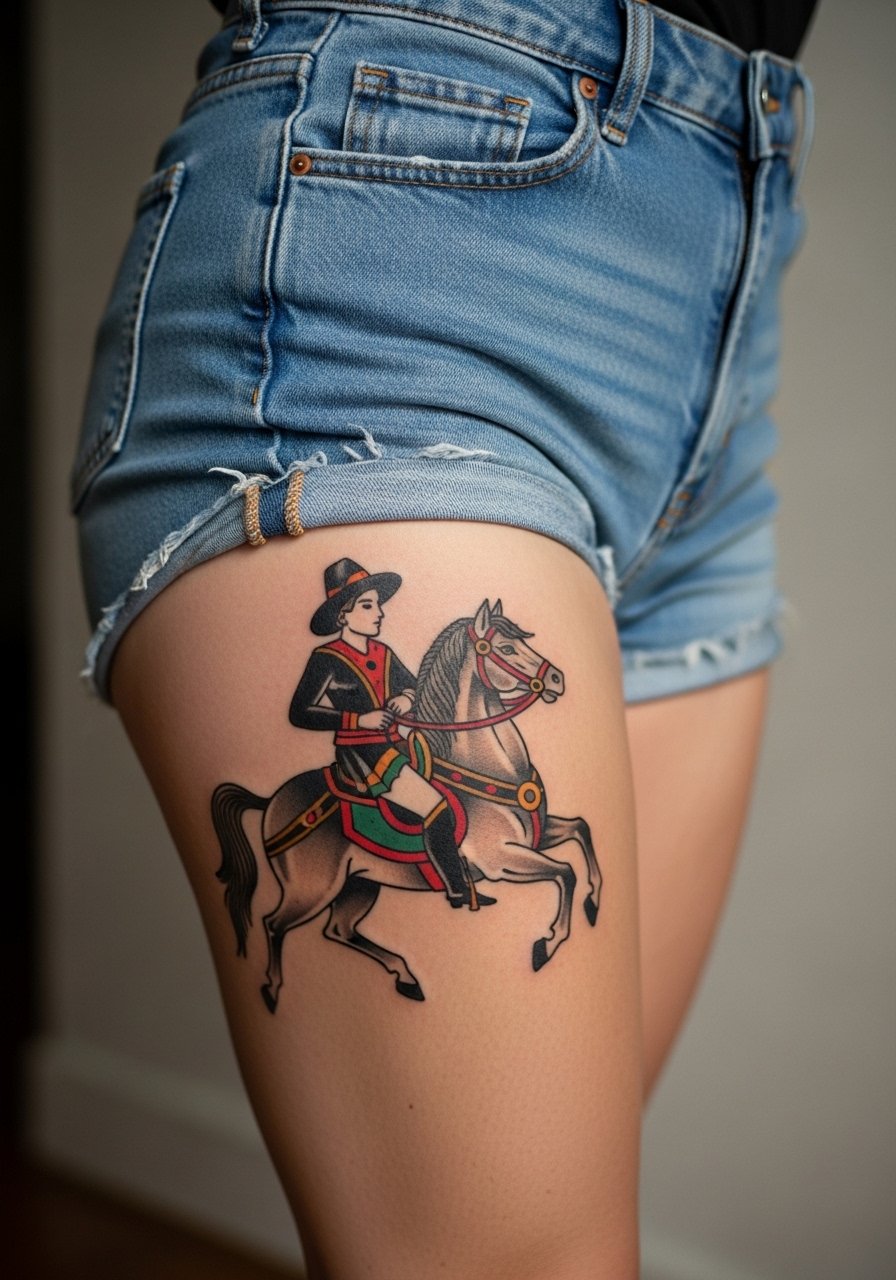
Thighs are forgiving for medium-to-large traditional pieces and they age well because they avoid constant sun. A classic rider motif needs clear, confident outlines and saturated fills to read at distance. The main mistake is trying to compress a full scene into a very small thigh space. Sessions usually run one to two blocks depending on color saturation. For showing the work, high-waisted shorts or a high waist denim shorts silhouette frames the piece for summer looks while letting the design breathe.
9. Finger Ruin Blackwork Pattern at the Ankle

Turning the finger ruin motif into an ankle band gives the pattern scale and reduces blowout risk. Solid black dots and geometric spacing make the pattern read clearly on darker tones. The ankle sees a lot of shoe friction early on, so a thin protective routine during week one helps. A common mistake is repeating micro dots too close together, which can merge into a solid line when healed. For wear, roll your jeans or choose cropped pant legs so the ankle pattern is visible without constant abrasion. Try a casual roll like you would with bootcut slim jeans men for a laid-back frame.
10. Moon and Finger Micro-Realism Near the Collarbone

Collarbone micro-realism reads as delicate and intimate, and it shows well with a little negative space around the piece. Tell your artist you want heavier midtone saturation in the shadows and thinner white highlights so the moon and finger read in photos on darker skin tones. The ribcage and collarbone both challenge fine detail, but this spot is less prone to stretch. Expect moderate pain and two short sessions if you opt for subtle color. When showing it off, a strapless tube top silk keeps the neckline clean without tugging on fresh ink.
11. Golden Order Rune Arc on the Shoulder Blade
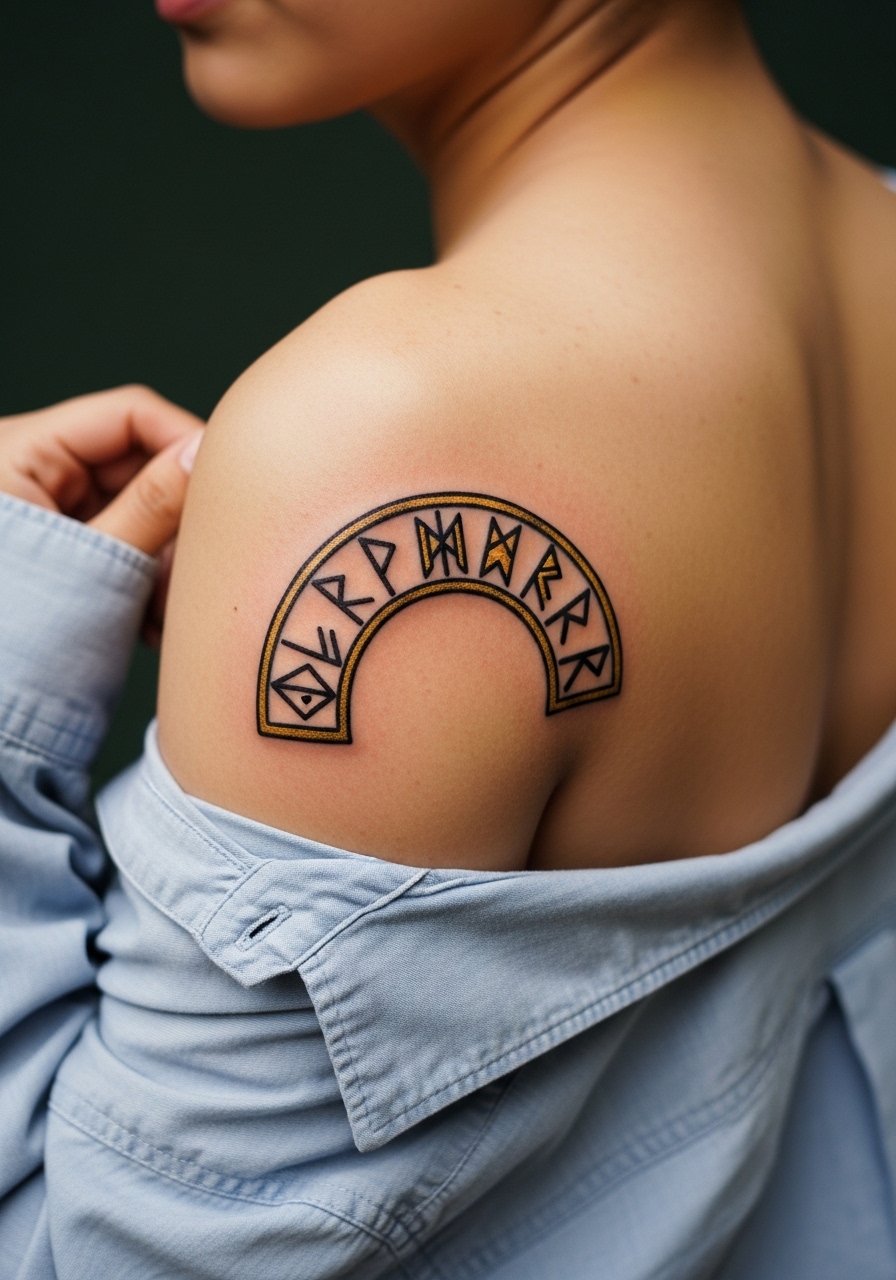
The shoulder blade gives a flat plane and natural protection from direct sun, which suits heraldic rune arcs with gold accents. Ask for crisp heraldic outlines and a small margin of negative space to preserve clarity as the piece ages. A common misstep is stacking too many small rune marks inside one arc, which crowds the design. For the session, pick a loose button down shirt mens you can slip on and off without dragging fabric across the area. Also mention any career considerations if your workplace has visible ink policies.
12. Shadow of the Erdtree Fine Line Spine Piece
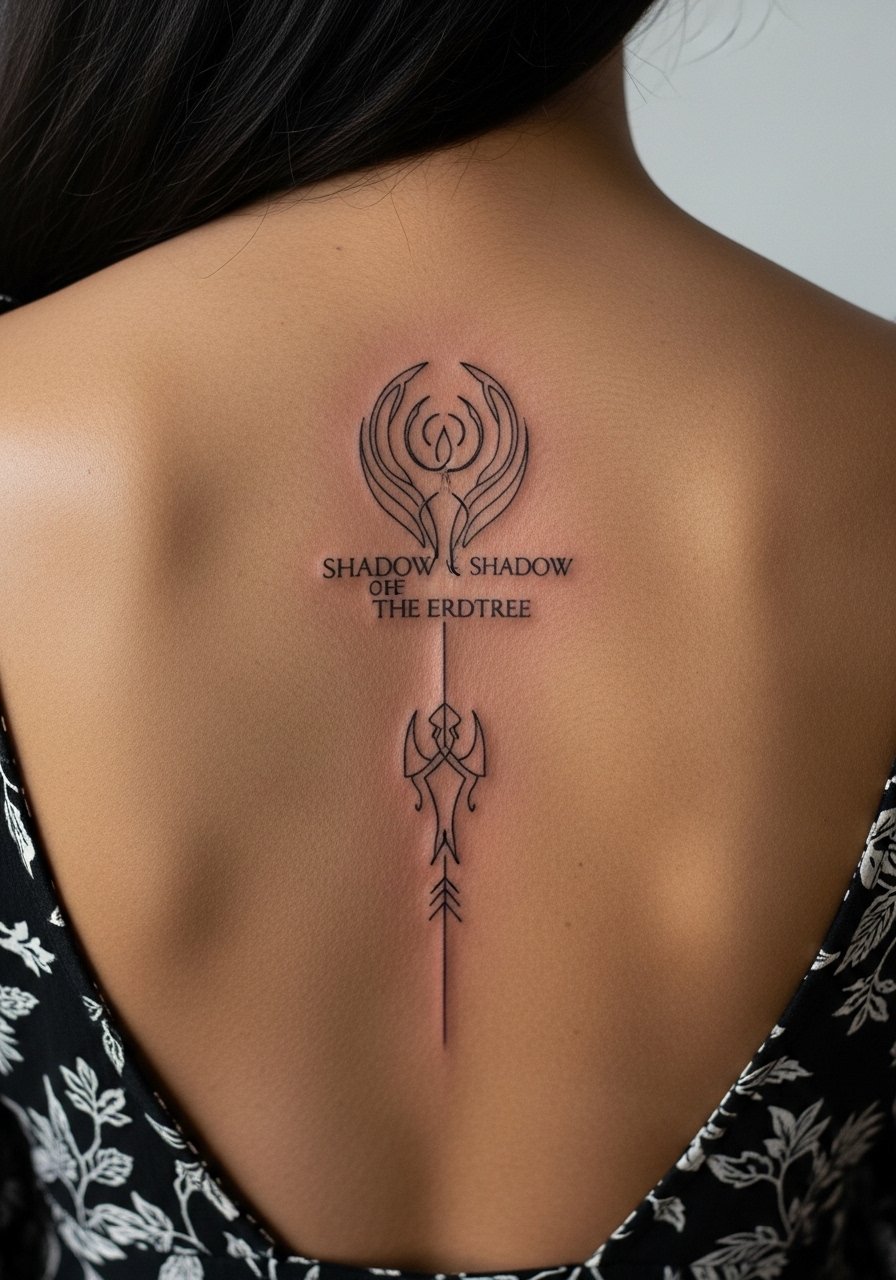
The spine lets vertical motifs breathe but the skin tension and curvature can make single-needle work soft over time. Some artists say single-needle fine line on the spine blurs quickly. Others argue that correct needle depth and spacing keep it readable for years. I recommend slightly more spacing and modest line weight near the lower spine to avoid merging. Pain is higher on the spine, and sessions may need breaks. For evenings out, an open-back dress or halter top shows the vertical flow. If career visibility is a concern, keep in mind how often the area will be seen.
13. Mimic Tear Ignorant Style Duplicate on the Hand
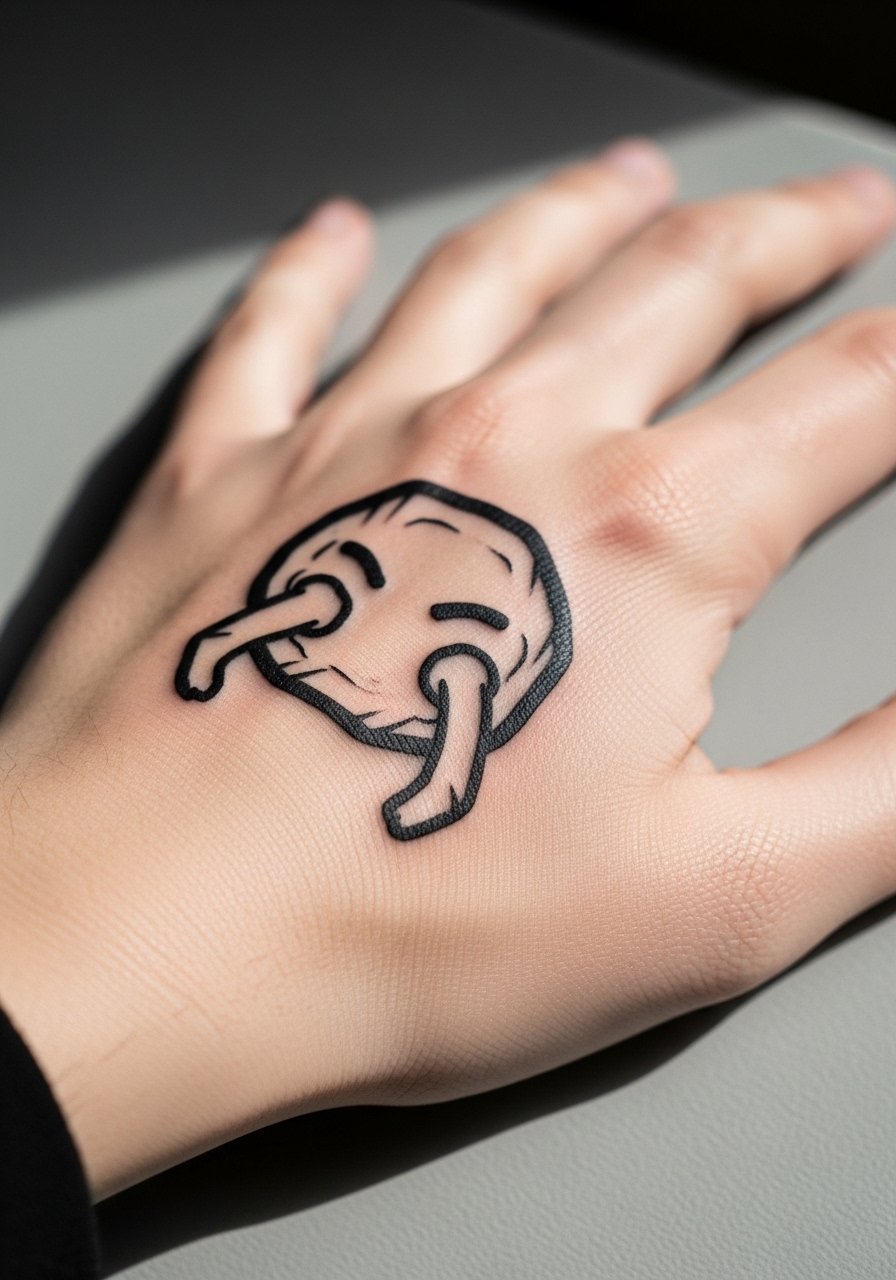
Hand and wrist placements flash quickly at conventions but age fast because of daily washing and friction. Ignorant style thrives on uneven, naive lines so small imperfections are part of the charm. The risk is that hand pieces often need touch-ups at year one due to constant abrasion. If you want this look, accept that a yearly touch-up may be part of the plan. A frequent mistake is expecting hand ink to last like an arm piece. Consider a slightly larger scale so the deliberate roughness reads from a distance. Also note hand tattoos can influence some employers, so factor that into your decision.
14. UV-Reactive Erdtree Accent That Glows Under Blacklight

UV-reactive ink adds a playful invisible layer that appears under blacklight at cons or shows. Be explicit with your artist about pigment safety and long-term expectations. UV pigments can fade differently than standard inks and they sometimes require touch-ups sooner. The design works best as accent lines or halo effects around a blackwork Erdtree rather than as the main filled area. For the session wear, a rolled cuff chambray shirt gives easy access and keeps the rest of the arm covered while you heal. If you travel for conventions, carry a simple blacklight to see the effect without relying on photos.
15. RPG Character Sheet Rune Arc Series Along a Sleeve
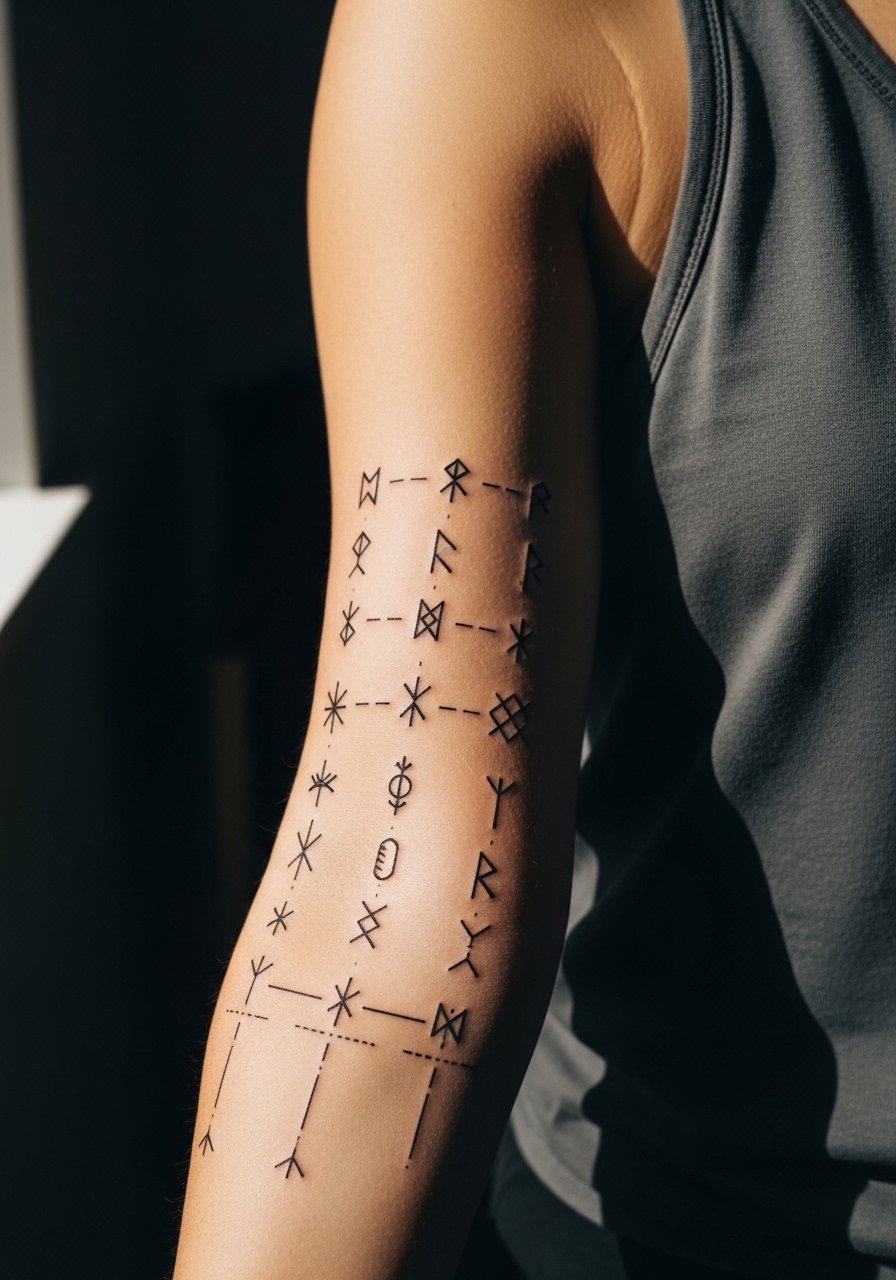
This idea treats each rune as a milestone marker for real-life achievements. Lay out the arcs with your artist so spacing reflects future additions. A common early mistake is cramming too many tiny symbols into a narrow strip. Plan the negative space now so you can add runes later without crowding. Ask about expected touch-up intervals if you plan to add to the series. For session comfort, wear a loose fit tank top men so the artist can rotate the arm and access each node without restraint.
16. Placement-Mirroring Tarnished Scars on Elbows or Knees

Mimicking in-game wounds on actual joints is a dramatic way to reference character scars. Elbows and knees are high-motion and the skin there shifts a lot, so expect more blurring and a need for a heavier outline compared with a decorative piece. The main mistake is treating a joint like flat skin. Ask your artist how the design will read when the joint bends and request practice stencils on the same area. Session sensation is sharper around joints, and healing requires avoiding tight clothing that rubs the spot. If you plan future weight changes, discuss stretch risk with the artist.
17. Rune Overlay Cover-Up for Old Gamer Tattoos

Using rune arcs or blackwork overlays is a clever way to mask older, poorly aged game tattoos. Start by showing clear photos of the old piece and mention which elements you want concealed versus preserved. The usual mistake is underestimating how much saturation and size are needed to cover dense old ink. A cover-up often requires a larger canvas and heavier saturation, so be prepared for extra session time. For the appointment, a loose button down shirt mens makes access easy and keeps the area clean as it heals.
Frequently Asked Questions
Q: Will fine line runes fade faster on my wrist than on my forearm?
A: Yes, wrists face more motion and abrasion from clothing and washing, so fine line runes there often need touch-ups sooner than forearm pieces. Choosing a slightly thicker 2 to 3 mm line weight and scheduling a touch-up at three to six months reduces the chance of early ghosting.
Q: How should I approach aftercare choices given the Saniderm versus dry healing debate?
A: Artists split into two camps. One camp prefers protective film to limit scabbing and maintain crisp lines. The other camp favors short open-air windows to avoid trapped moisture. The right choice depends on the placement, your skin type, and your artist's experience. Ask the artist which method they use for that body area and what they have seen work for similar clients.
Q: My skin is dark, how do I make Erdtree or gold tones read in photos?
A: For darker skin tones, high-contrast blackwork and strong midtone saturation read best in photos. Ask for bold outlines and strategic negative space so metallic accents sit against a dark backdrop rather than relying on pale highlights that can disappear. A ring light or even indirect natural light helps when you photograph healed work.
Q: What should I wear to a ribcage or sternum session to stay comfortable and keep the area accessible?
A: For ribcage and sternum work, wear a fitted sports bra or bandeau that the artist can move aside without exposing more than necessary. A comfortable top that you can remove without pulling it over your head also works. This reduces fabric friction on the area during the session and on the way home.
Q: How much should I expect to tip or budget when booking a small Elden Ring rune?
A: Pricing varies, and tipping customs vary by region, but many people budget a tip around 20 percent of the session price to build rapport and encourage future accommodations like touch-ups. If budget is a concern, look for flash days or apprentices for smaller pieces while still respecting studio policies.