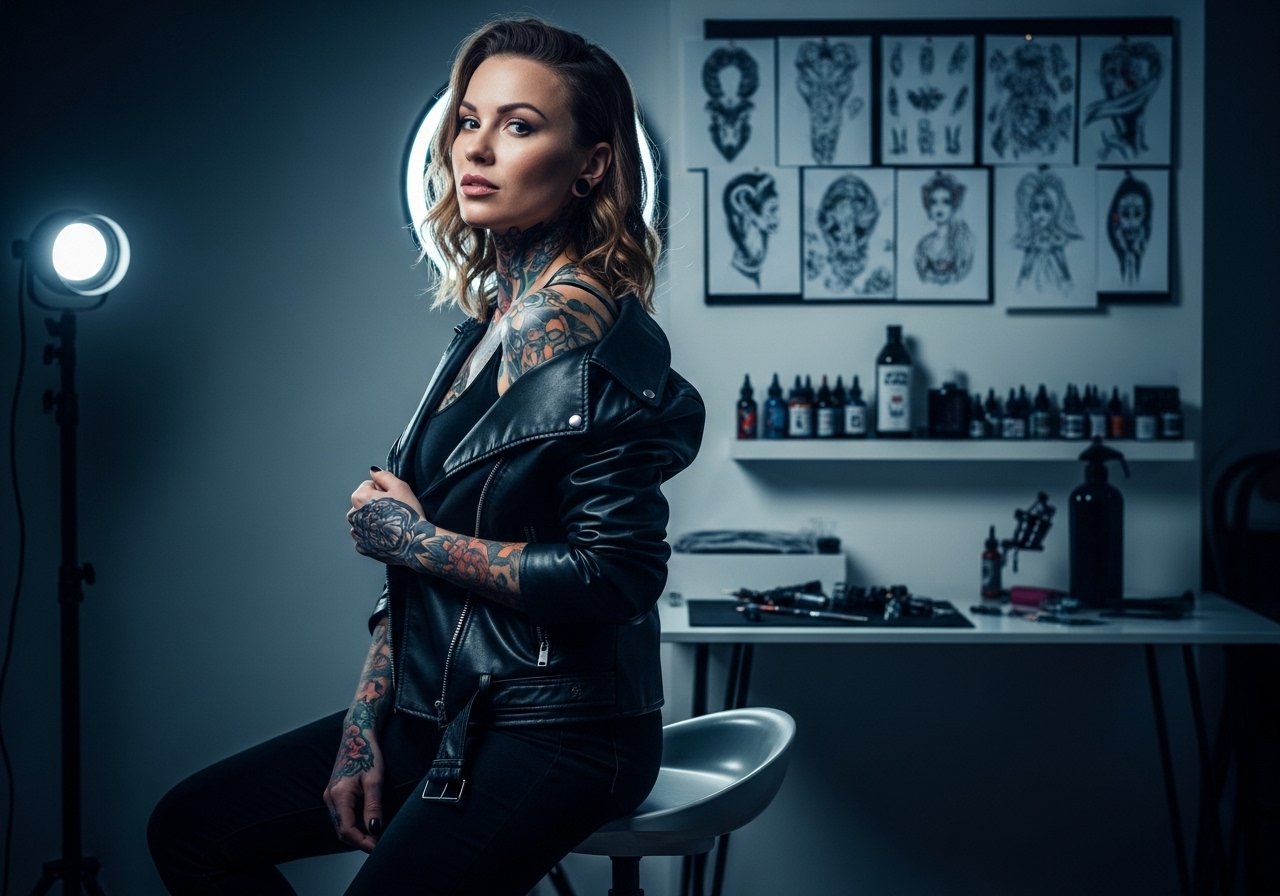
Sitting under the lamp with the stencil warming to skin is when most people realize how much the back changes a design. The curve of the spine, the slope of the shoulders, and even what you plan to wear to show it off all shape a dragon that needs to look fierce for years. Read these 17 back-focused dragon directions and you will walk into a consult with clear ideas on placement, aging, and what to ask for first.
1. Full-Back Japanese-Style Dragon
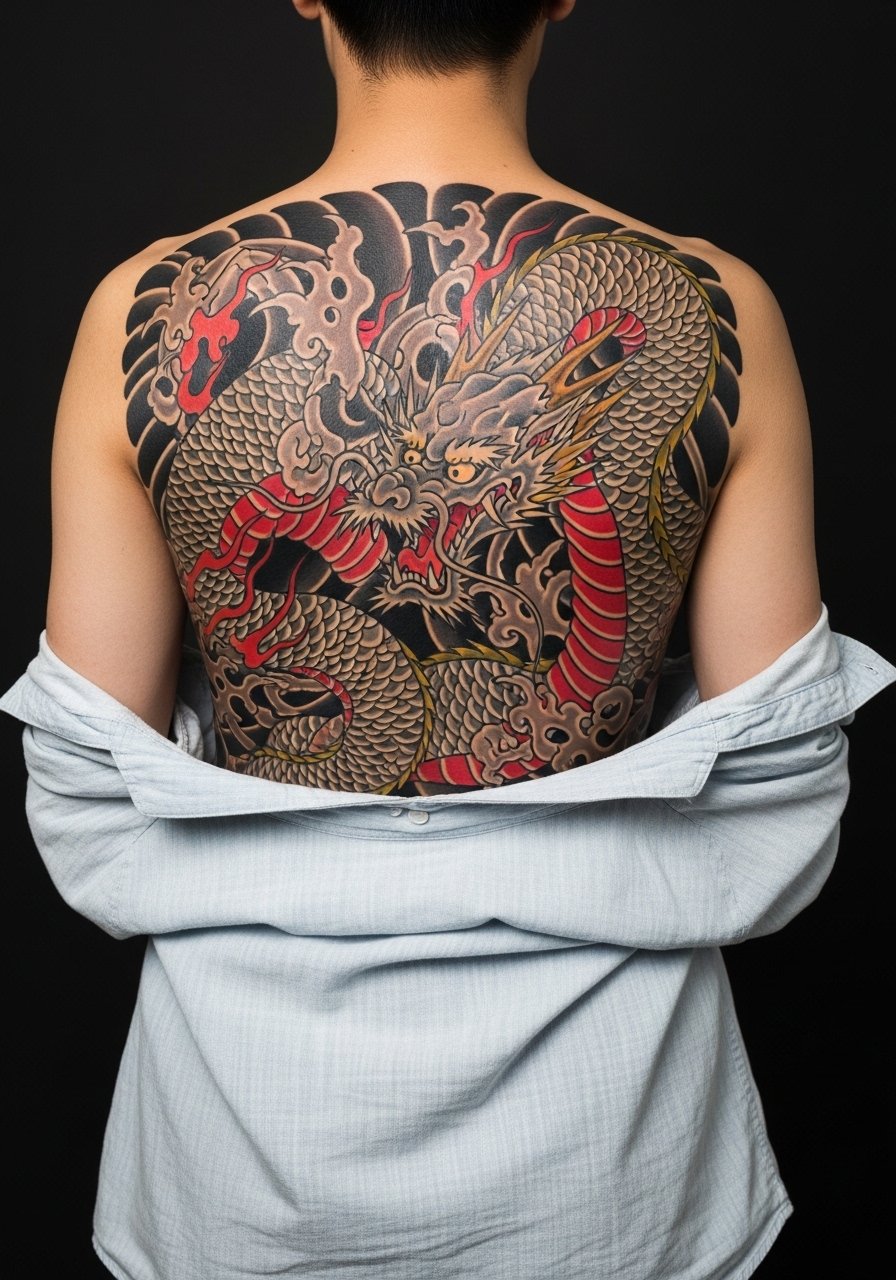
A full-back Japanese-inspired dragon makes a statement during and after healing. I recommend asking for slightly more spacing between scales and heavier linework along the spine so the silhouette stays readable as saturation softens at two to five years. Session time is long and can run across multiple days, and pain on the lower rib section will spike compared with the fleshy shoulders. Common mistakes are cramming too much tiny detail into the lower back where blowout risk is higher. For the consult, bring sectional references showing the scale pattern you want and say you want bold anchor lines for longevity. Expect a touch-up window around year two depending on sun exposure.
2. Spine-Running Serpent, Vertical Flow
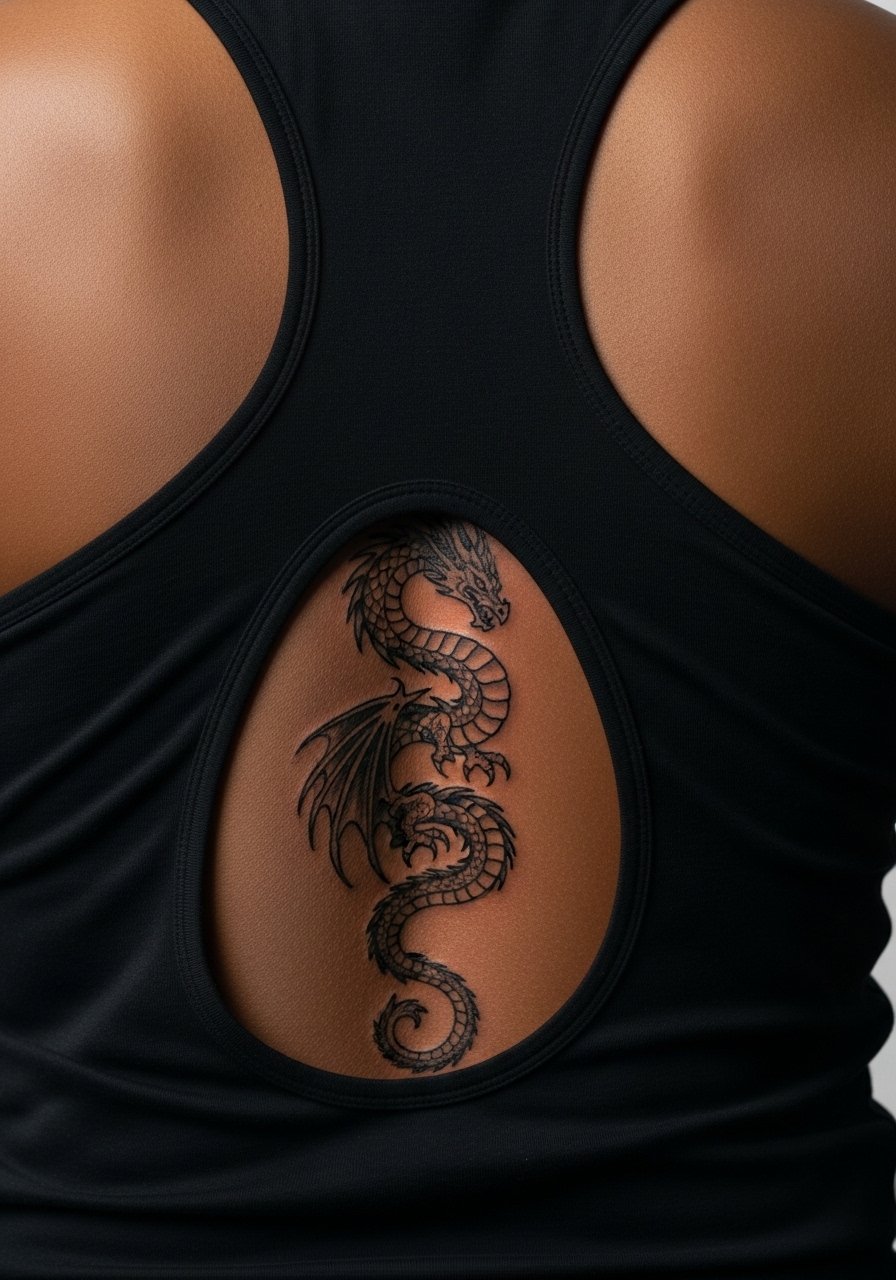
The spine is unforgiving and it shows everything, from shaky linework to uneven depth. This vertical dragon reads best with strong linework and controlled saturation rather than micro detail. Pain here is higher along bone, but the visual payoff is dramatic. Tell your artist you want defined anchor lines and stipple shading for the body so the scales do not blend together as the piece heals. For the session wear, bring a racerback tank you can adjust so the artist has clear access. Expect touch-up needs earlier along the lower spine where friction from clothing is constant.
3. Shoulder-Blade Guardian, Curved Composition
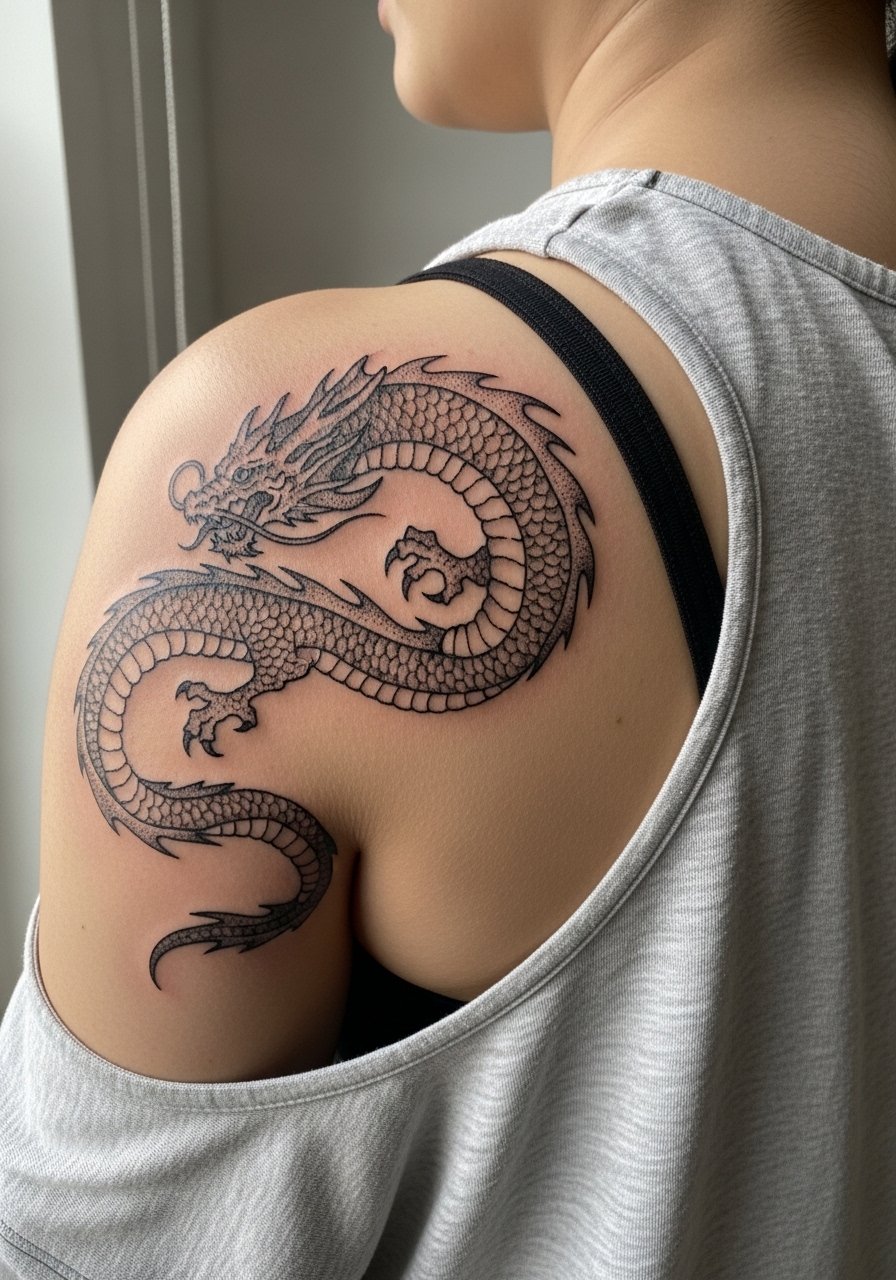
A dragon that wraps the scapula reads well in motion when you reach or twist. The shoulder-blade tissue handles stipple shading and dot work nicely, so ask for those techniques to keep the texture from going muddy. A common error is forcing a perfectly symmetrical dragon across an asymmetric muscle zone. I suggest a composition that follows the shoulder blade arc. Session feels like light to medium discomfort. Watch for touch-ups along the edge where clothing rubs the longest. Pair this with a loose button-down shirt you can pull aside to show it off without stretching the skin.
4. Demi-Back Mini Dragon, Upper-Center
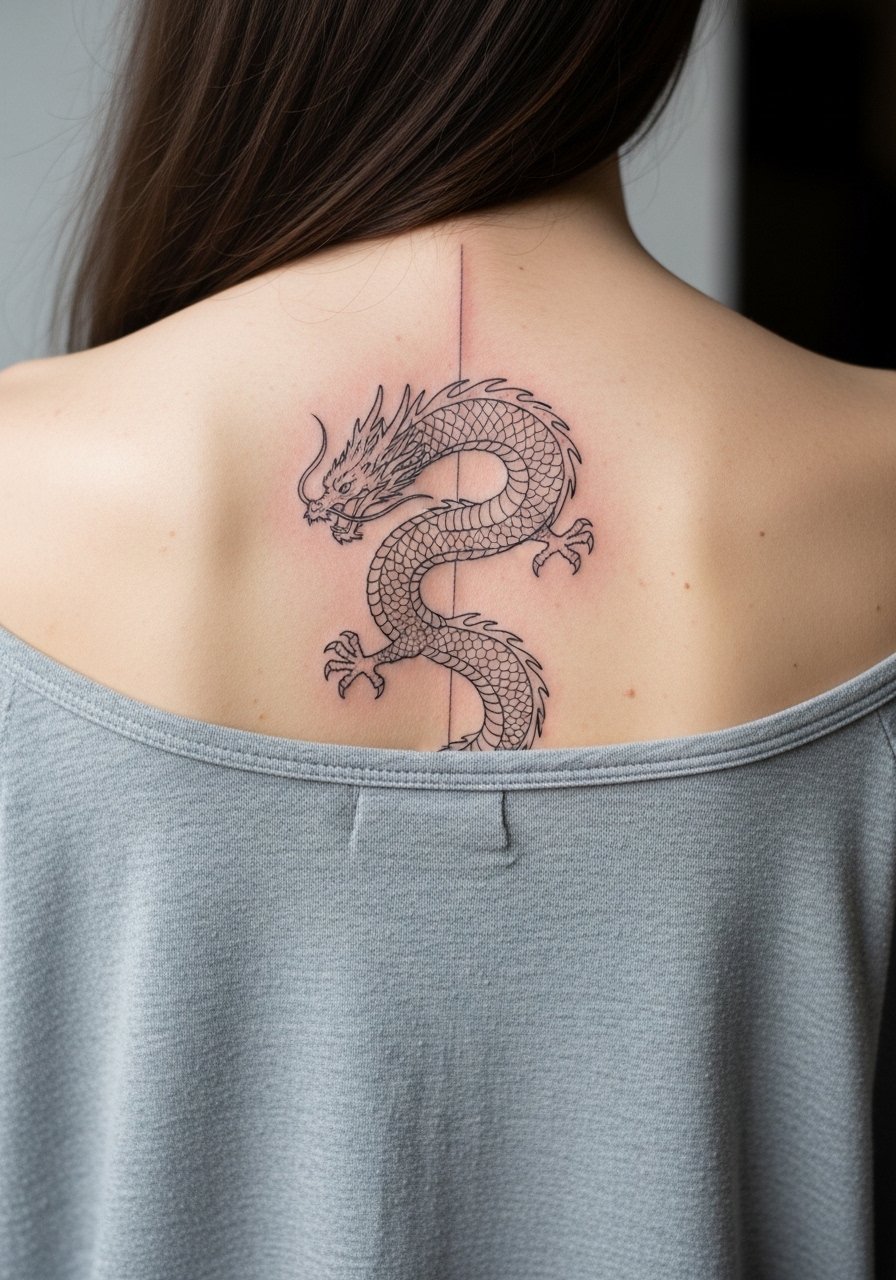
If you want dragon imagery without a full commitment, a demi-back piece centered high is a tasteful option. Fine line works here but artists disagree on the longevity of ultra-fine strokes on back tissue. One camp argues fine line loses clarity quickly. The other camp says proper depth and spacing preserve detail. Name this controversy in your consult and ask where your artist stands. Wear an open-back midi dress when you want to show it off. Expect a lighter session time than a full-back, but still plan for shading work that ages better than micro detail.
5. Lower-Back Tribal-Influenced Dragon Emblem

Lower-back designs face unique friction and clothing pressure. For a tribal-influenced dragon emblem, bold anchored lines and larger negative spaces keep the symbol readable as the skin stretches or clothing rubs. The biggest mistake is detail too fine for the site's movement. During the consult, ask for simplified scale shapes and a matte saturation finish. For the session, bring a loose top you can shift and high-waisted bottoms you can lower a hair to expose only the tattoo zone. Career considerations still apply for visible low-back tattoos in some industries so weigh placement before booking.
6. Scrolling Western Dragon Across the Midback
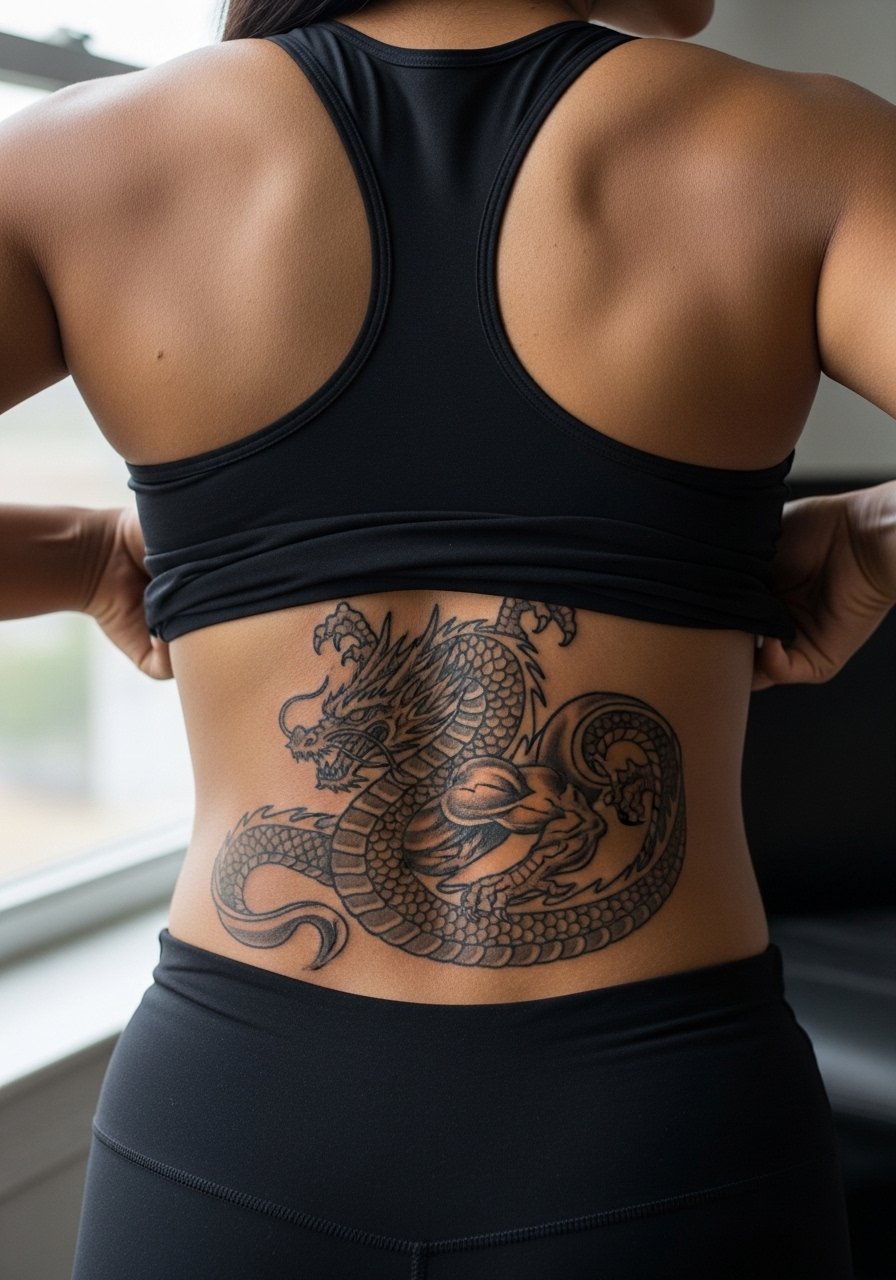
Western dragons with muscular anatomy look powerful on the midback when you emphasize form over tiny surface detail. Whip shading across the flanks and heavier saturation on the spine line make the dragon read from a distance and age into a solid silhouette. A frequent error is over-texturing the belly scales which blends with time. Tell the artist you want body volume first and scale detail second. This placement is medium on most pain scales and usually finishes in one long session or two medium-length sessions. For showing the piece, open-back tops dramatize the horizontal flow.
Studio Day Picks
The upper and lower back pieces above ask for slightly different prep and session kits, so these items make the chair day and early healing smoother.
-
Stencil transfer paper kit. Helps you and your artist preview placement across curves, which matters for full and demi-back compositions.
-
Topical numbing cream. Applied as instructed before the session, it can lower the initial sharpness along the spine and ribs without changing how the ink sits.
-
Thin protective film roll. Useful for lower-back or midback zones that face clothing friction in the first 48 hours.
-
Fragrance-free body wash. Gentle cleansing during showers avoids irritating newly tattooed skin, especially on larger back panels.
-
Aquaphor healing ointment. Thin layers in the earliest window help lock in moisture for dense saturation areas without clogging delicate channels.
7. Dragon Scale Mosaic Over the Shoulder to Midback
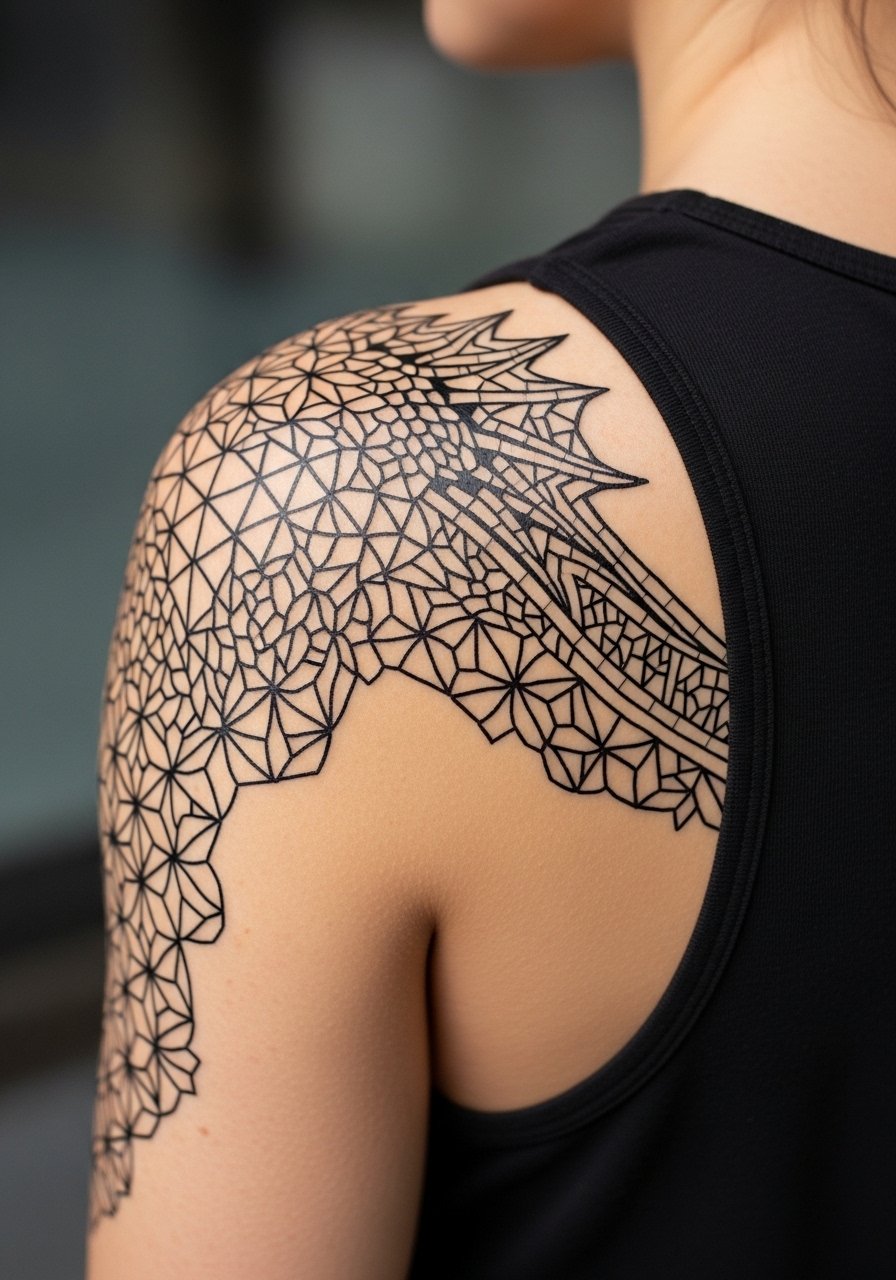
A scale mosaic that transitions from shoulder to midback needs breathing room between elements so the pattern does not merge as it heals. I advise stipple shading inside larger scales and stronger outline anchors where the shoulder moves most. This design is medium pain and often fits into a two-session plan. A common mistake is making scales uniformly small across a moving joint. For showing off the mosaic, consider a loose drawstring linen pant and cropped tops that frame the shoulder line without crowding the design.
8. Heraldic Dragon Crest on Upper Shoulder
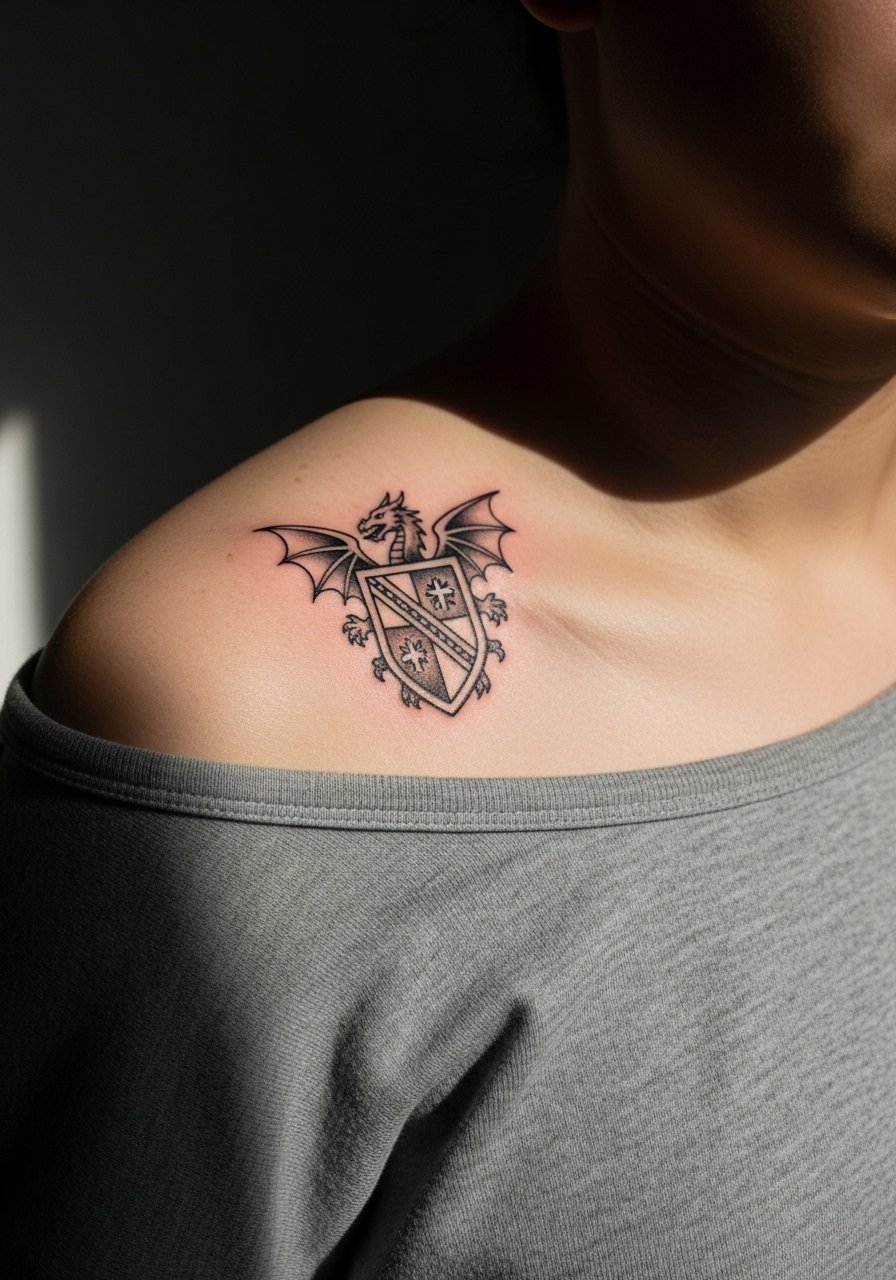
A heraldic crest reads as emblematic on the upper shoulder and ages predictably if you keep the outline defined. Expect light to moderate pain. The mistake I see most is trying to compress complex heraldry into a thumbnail sized crest. Tell your artist you prefer fewer interior lines and stronger exterior silhouettes. The session is short and you can usually finish in one visit. This placement pairs with sleeveless shirts to show the crest without stretching the surrounding skin.
9. Watercolor Dragon Accent on the Shoulder Blade Edge
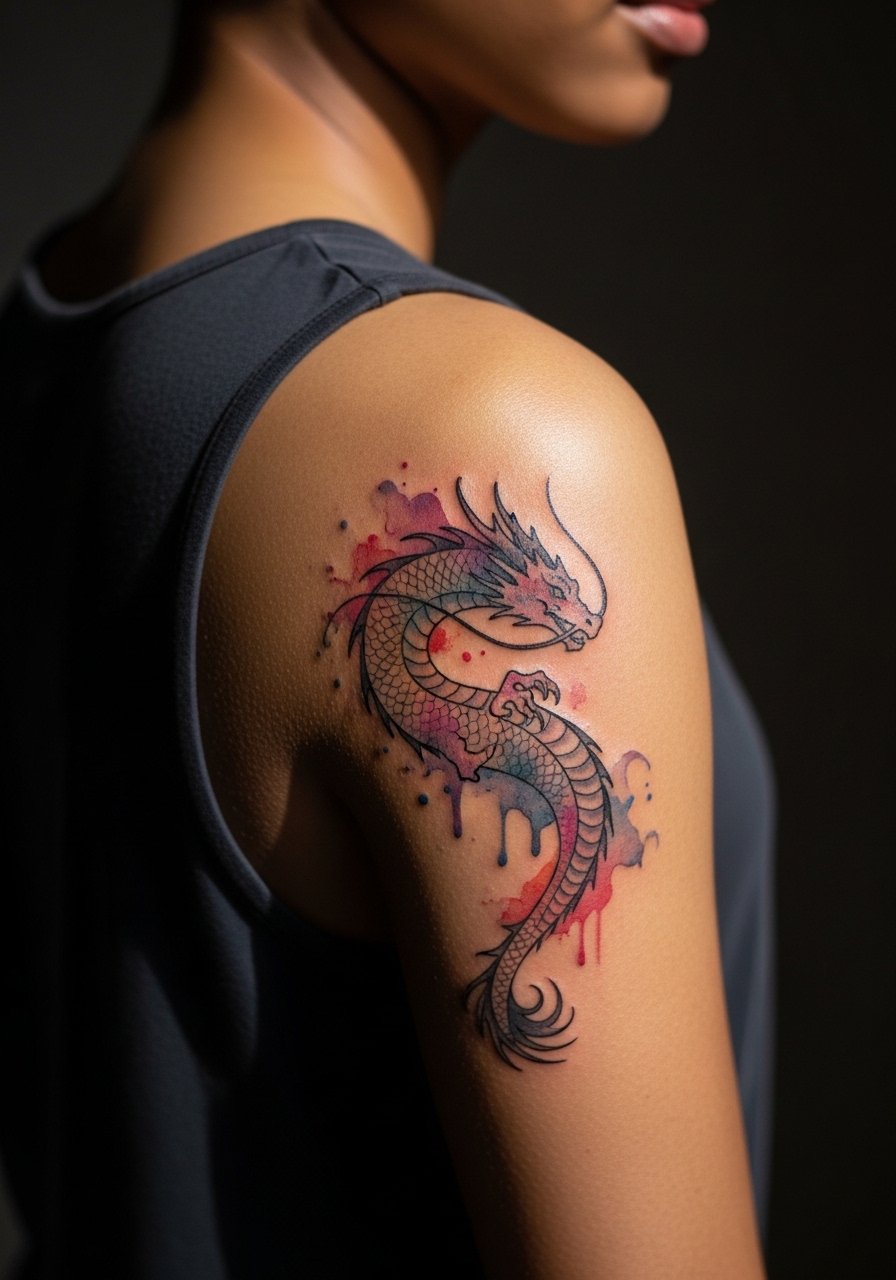
Watercolor approaches across the shoulder blade can be gorgeous but they fade faster than saturated blackwork. If you like painterly washes, ask for a mixed approach where key contours receive subtle linework to keep form as the color disperses. The controversy here mirrors many community debates. Some artists avoid watercolor on the back because diffusion over time can turn the piece into an indistinct blur. The other camp uses controlled saturation and touch-ups to make the style last. For session wear, a racerback tank or loose tank avoids smearing the area during studio prep.
10. Minimalist Outline Dragon Along the Upper Spine
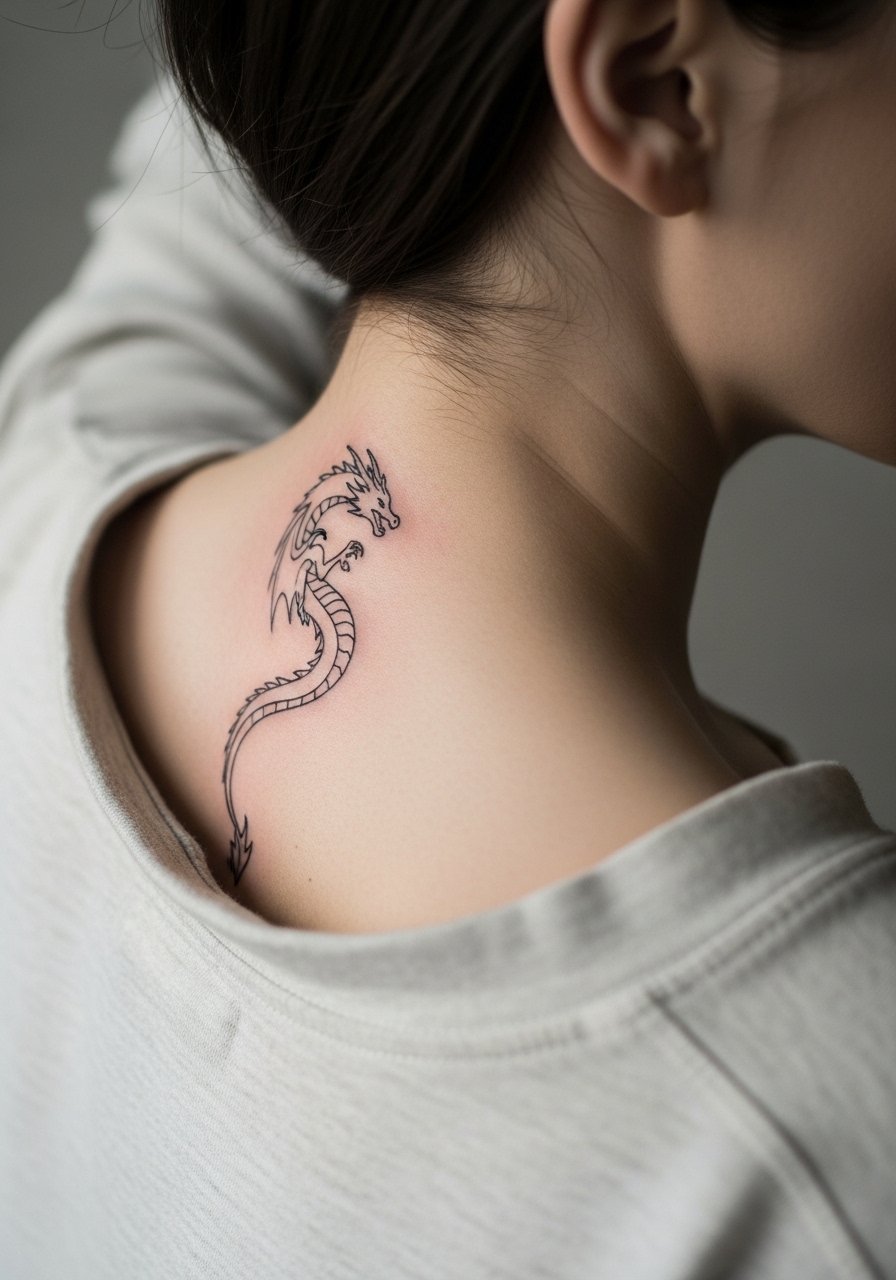
Minimalist outlines on the upper spine read clean initially but they test line longevity. I advise slightly bolder single lines than the faintest micro stroke so the contour holds at year two and beyond. The common error is choosing a line weight that is too fine. The session is brief and low to medium pain. Expect touch-ups earlier than with dense blackwork because the thin line has less pigment reservoir. Ask during your consult whether the artist prefers micro or slightly heavier single-line work for this exact site.
11. Dragon Wrap from Shoulder to Lower Back
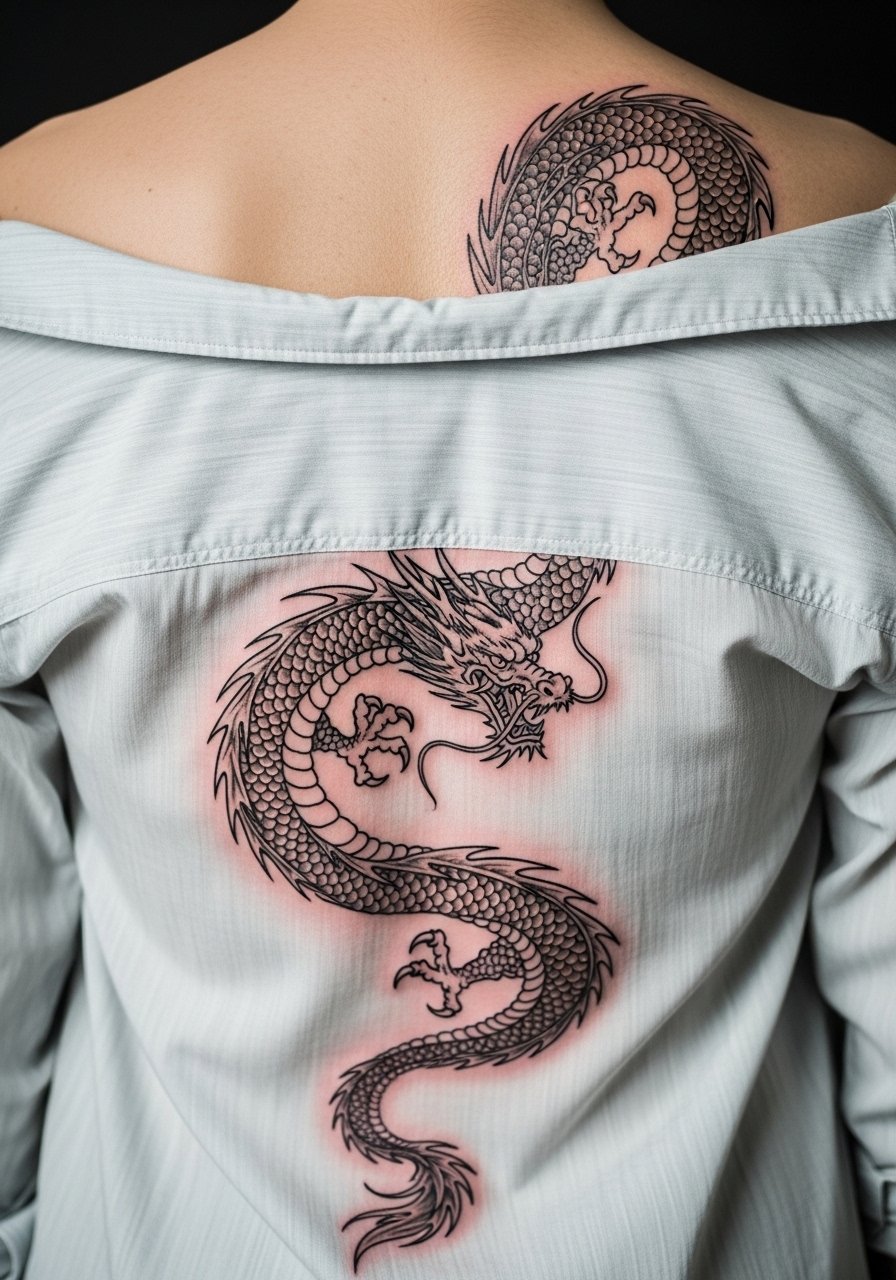
A wrap that crosses several back zones requires a clear plan for how the dragon's body changes with anatomy. I often recommend varying scale size along the path and introducing anchors at the shoulder and lower flank so flow does not look like a single flat band. The session can be long and may be split into three parts. For showing it off, an open-back top or backless dress frames the diagonal flow well. Bring a loose button-down shirt to the appointment for easy access.
12. Neo-Traditional Dragon Sitting on the Upper Back
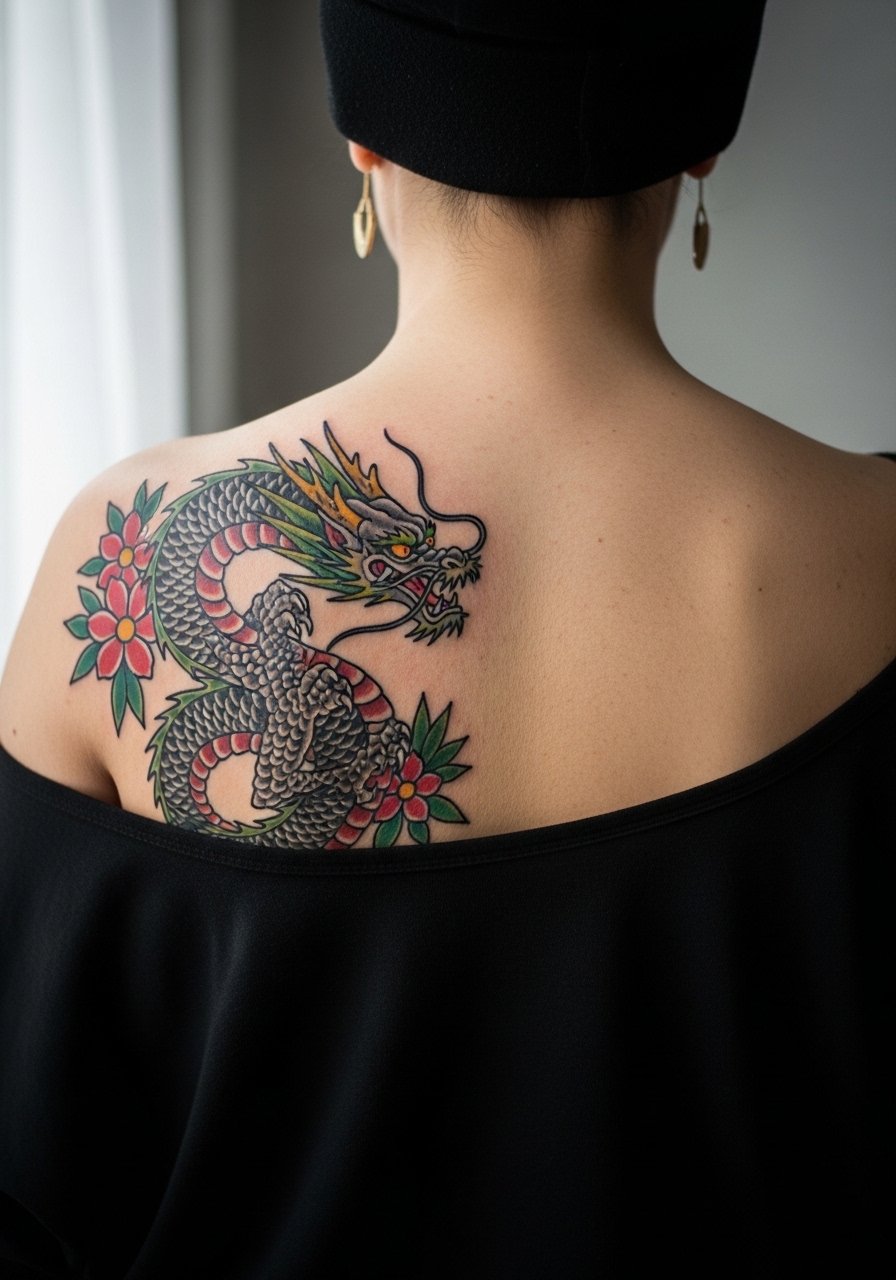
Neo-traditional line weight and saturated fills hold up well on the upper back because the skin there tolerates heavier saturation. Ask your artist for solid black anchors and for color shading that pulls away from tiny hairline details. A frequent mistake is loading too many small floral elements that blur into the dragon at two to three years. Session time is medium and often completed in one to two visits depending on color layers. For visibility, choose garments with open backs or wide necklines.
13. Geometric Dragon Panel Over the Mid-Lower Back
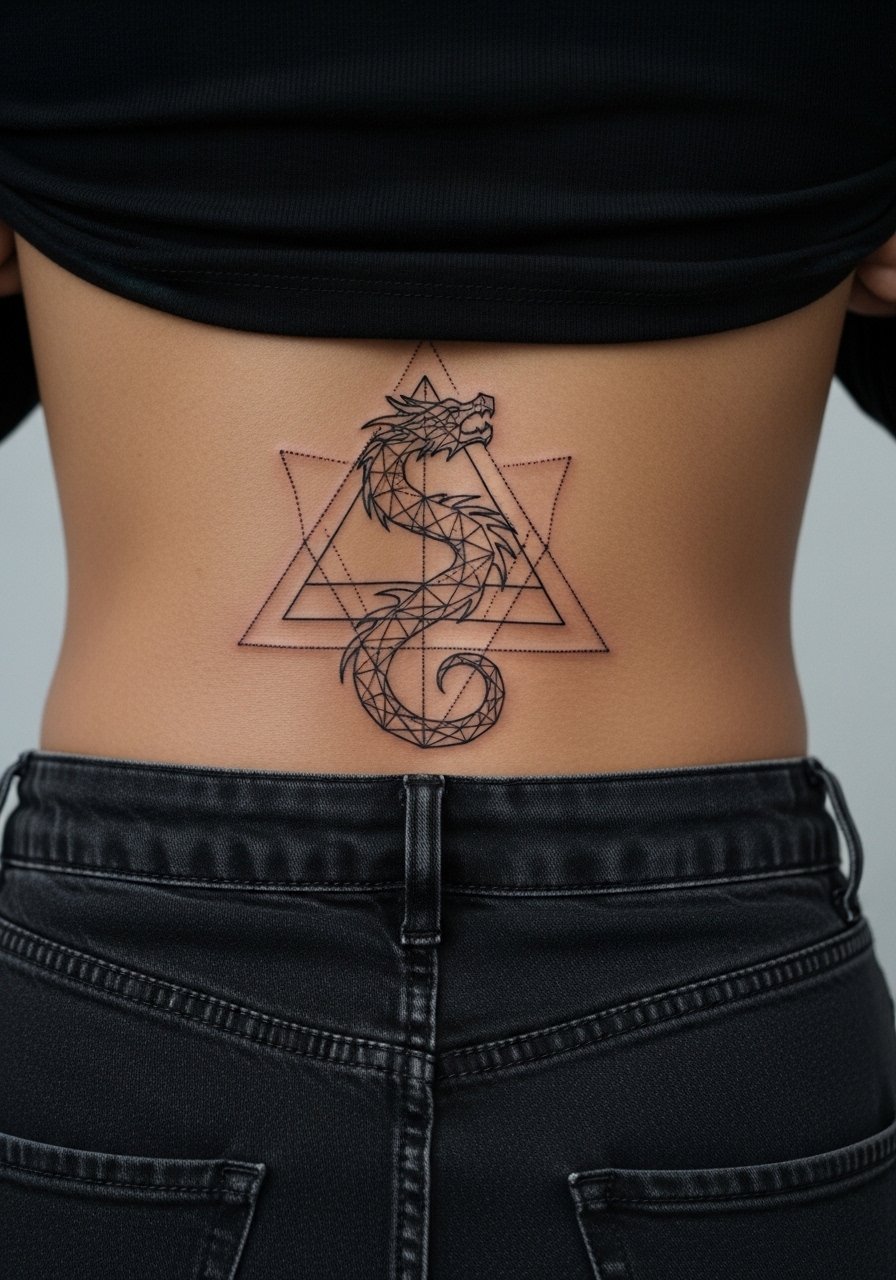
Geometric segmentation across the mid-lower back can be a sharp visual, but it demands clear spacing to avoid the shapes blending. Use dot work and stipple shading to create texture without relying on micro lines. The lower back moves and sees more friction so anchor your composition with bolder perimeter lines. The session is moderate and may require touch-ups where clothing seams rest. For showing this, high-waisted bottoms and cropped tops frame the panel without pulling on the ink. Consider asking in consult about how the negative space will age where jeans rest.
14. Mythic Cloud Dragon Across the Upper Back
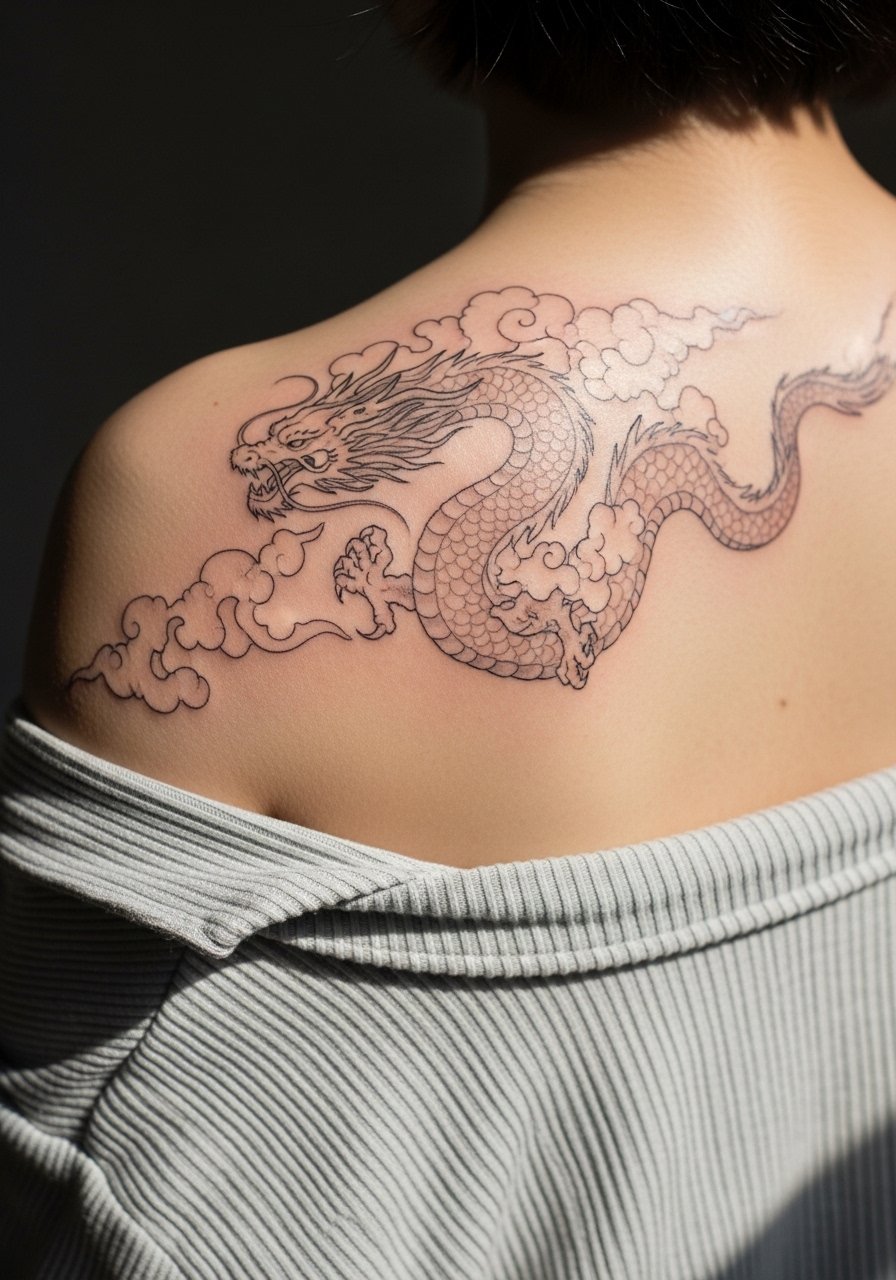
Cloud motifs paired with dragons are classic in many traditions. If you pick a soft grey wash, request stronger contour lines where the dragon intersects muscles to keep the form visible as washes lighten. The mistake is making clouds too dense around the dragon head which can obscure facial features after healing. Session time varies with shading complexity. This composition benefits from light layers so plan for a two-session build. It also pairs well with open-back evening wear for dramatic reveals.
15. Small Compass Dragon Near the Lower Thoracic Spine
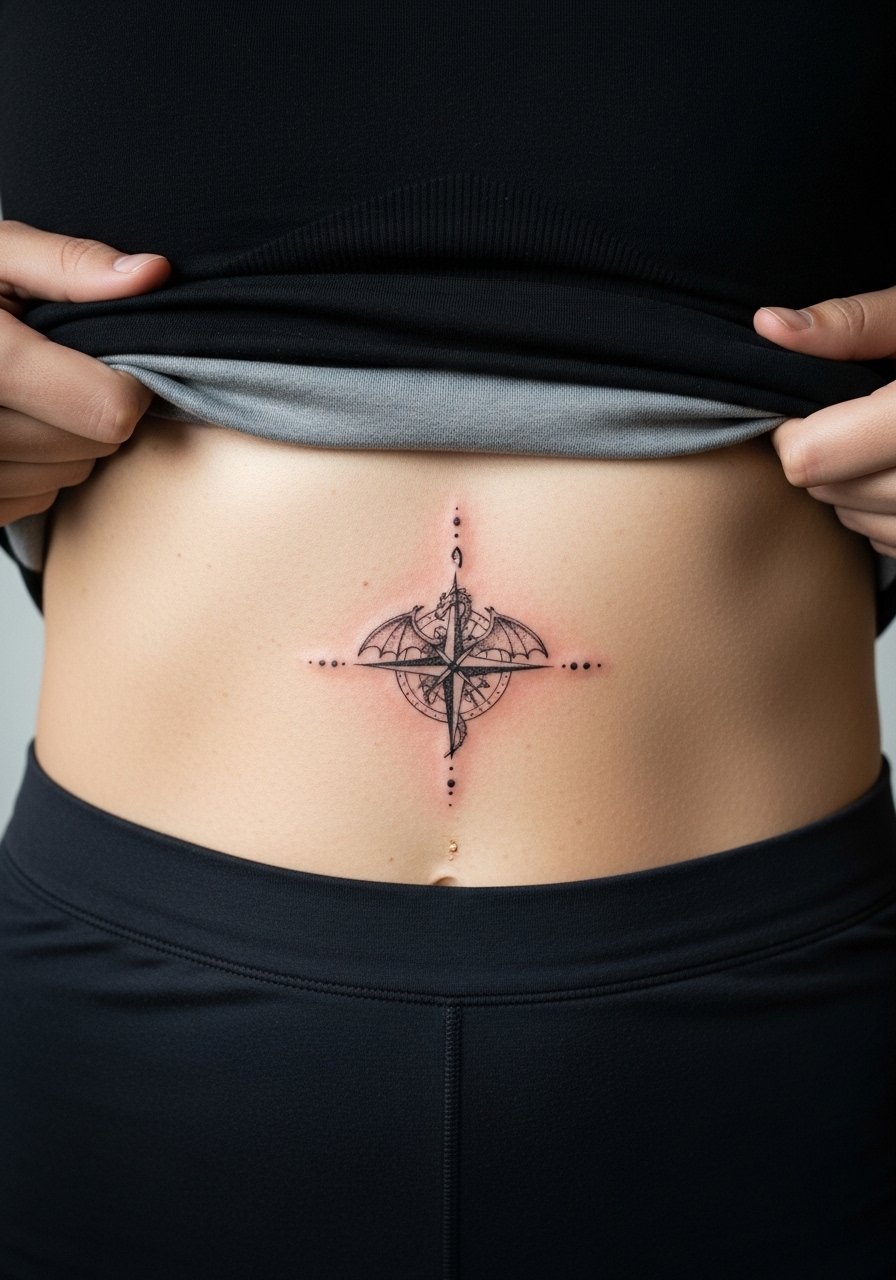
For a compact compass dragon near the lower thoracic spine, scale the design up from any thumbnail references so the compass points and dragon features have room to age. The area is medium pain and the session is short. The common error is squeezing in tiny directional markers that vanish over time. Ask for slightly heavier dots in the compass and for the dragon to have a clear silhouette. Pair this with a bandeau top when you want the compass to sit under strap lines without competing.
16. Ornamental Lace Dragon Across the Lower Back Flank
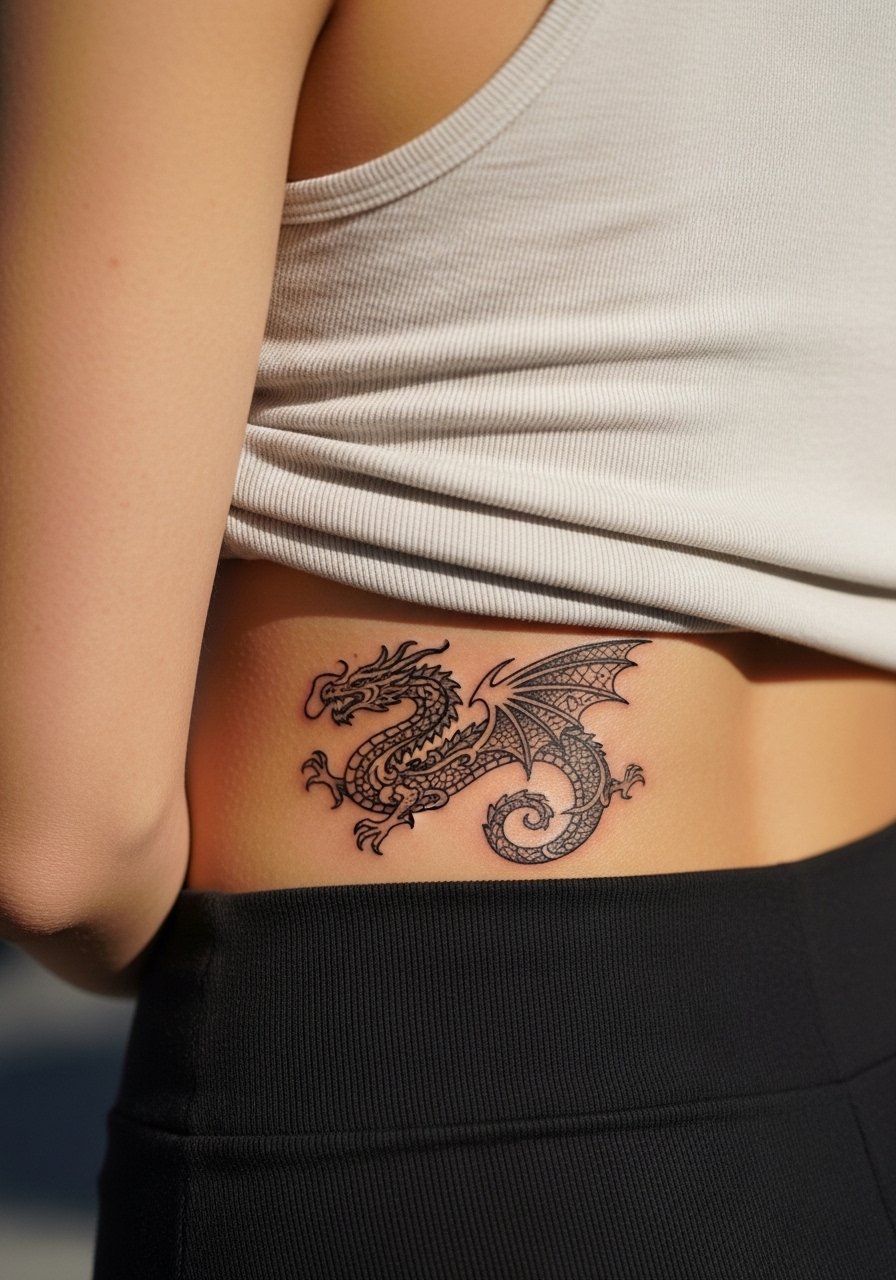
Lace motifs near the lower back can be delicate but they do not tolerate microfiligree under constant clothing pressure. Ask your artist to simplify lace elements and to use heavier outline anchors where mesh meets dragon form. This reduces blowout risk and preserves silhouette. Session feels medium with areas of higher sensitivity near the hip bone. On session day, wear high-waisted bottoms you can lower a little so only the tattoo zone is exposed. Expect touch-up needs in the first two years where seams lie.
17. Half-Back Vertical Dragon with Negative Space Flames
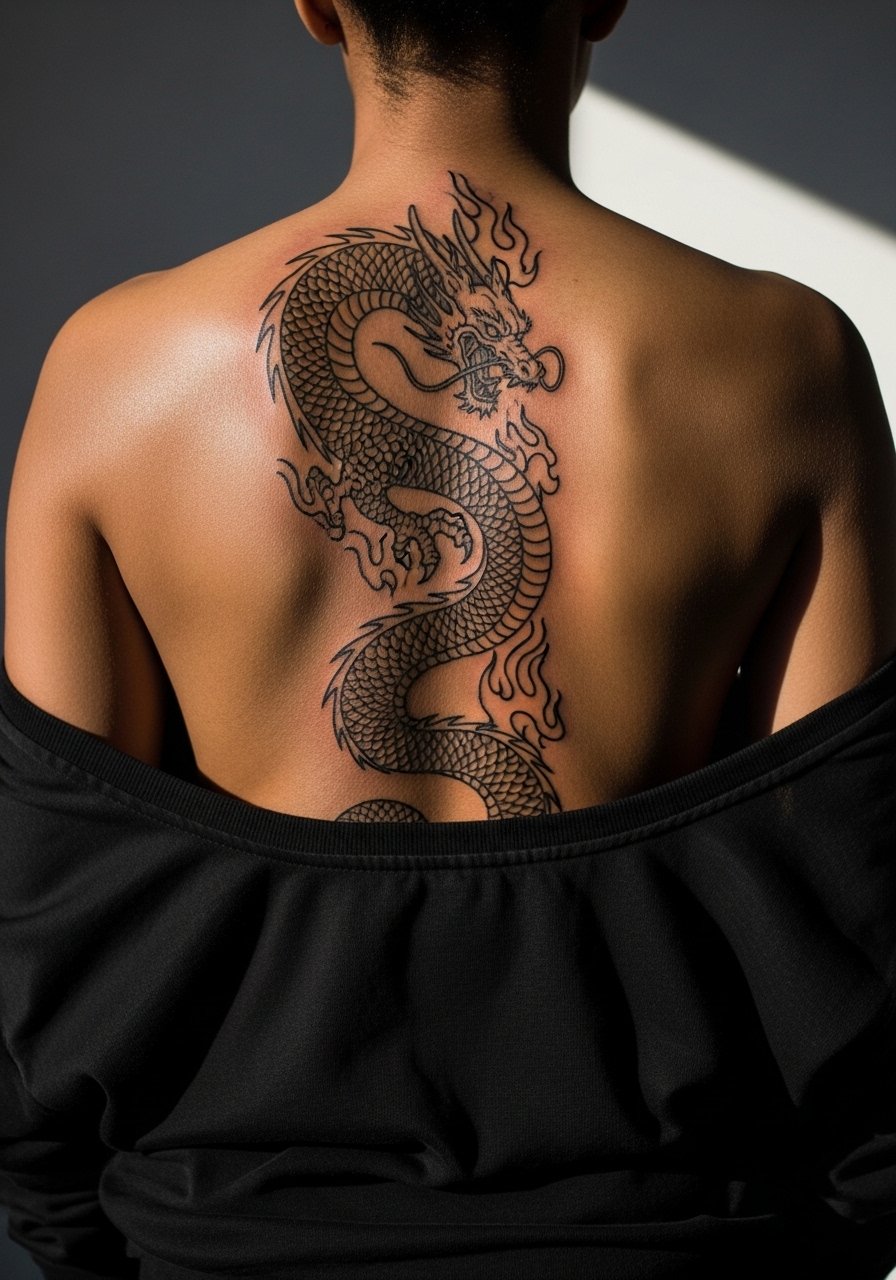
A half-back vertical dragon offers drama without the full back commitment. Negative-space flames can create motion, but be careful to keep the negative areas large enough to read over time. The primary mistake is using too many thin flame tongues that fuse as healing progresses. This design usually fits into two sessions. For showing it off, consider an open-back dress or a halter top that exposes the vertical line cleanly. Ask the artist how they plan to divide sessions along the vertical axis so color and line match perfectly across days.
Frequently Asked Questions
Q: Will a full-back Japanese dragon need touch-ups more often than a blackwork dragon?
A: It depends on how much color saturation you use and your sun exposure. From what I have seen, heavily saturated color areas often keep a strong presence but may need touch-ups at year two to refresh bright pigments. Solid blackwork tends to soften into a readable silhouette longer without frequent color refreshes.
Q: How do I decide between fine line and bold line for a spine-running dragon?
A: Think about how long you want the detail to remain crisp. Fine line looks elegant at first but often needs touch-ups sooner along the spine. If longevity is a priority, ask for a slightly bolder anchor line with fine internal detail. During the consult, say you want "defined anchor contours with softer interior texture" so expectations are clear.
Q: Are there cultural sensitivity concerns with Japanese or Chinese dragon imagery on the back?
A: Yes. Practitioners split into two camps. One camp sees careful adaptation of motifs with respect and context as appropriate. The other camp urges caution and prefers personal or familial ties before using specific cultural imagery. Consider adapting elements rather than copying sacred or traditional iconography and ask your artist about respectful variations you can make.
Q: How should I dress to the studio for a lower-back dragon session?
A: Wear high-waisted bottoms you can lower slightly and a loose top you can lift or shift so only the tattoo area is exposed. A tank top that you can rearrange works well and keeps the rest of your back covered while the artist works.
Q: Will watercolor dragons on the shoulder blade hold up on darker skin tones?
A: Watercolor techniques can look beautiful on darker skin tones but they require careful pigment selection and possibly denser layering. From what I have seen, controlled saturation and strategic line anchors help maintain the painterly effect. Ask your artist for healed examples on similar skin tones before booking.