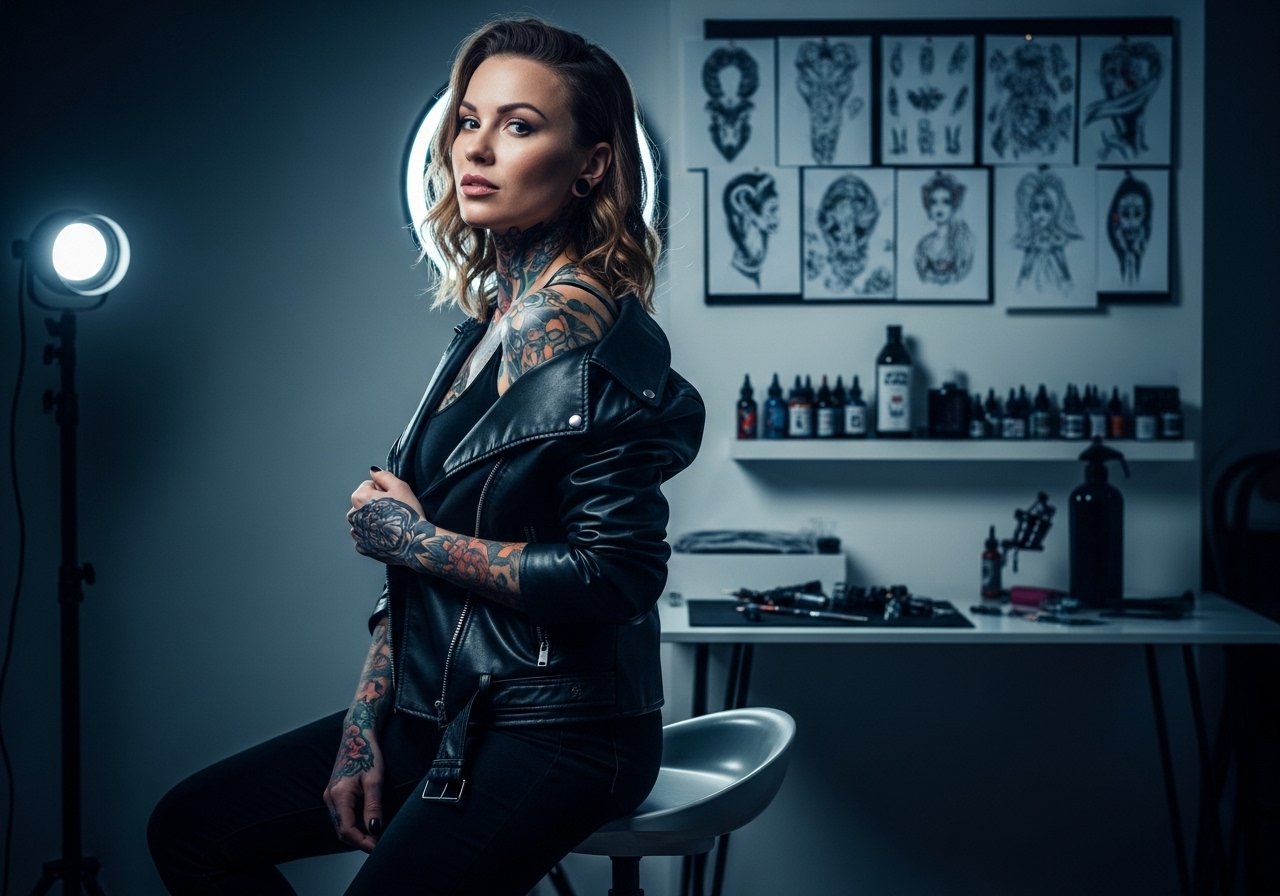
Fine line dot work is having a moment in fight-camp imagery, and Muay Thai motifs translate surprisingly well into stipple shading and delicate linework. Expect pieces that read detailed up close and graphic from a distance, but also know dotwork behaves differently on ribs, hands, and calves. Read on for 21 Muay Thai tattoo ideas that balance the style with realistic aging, session notes, and what to tell your artist.
1. Stipple Nak Muay Silhouette on Outer Forearm

This forearm placement is a straightforward show-off spot, and dotwork makes the motion feel like grainy film. I tell people to ask their artist for slightly larger stipple clusters so the shading keeps separation over years. Fair warning, the outer forearm is forgiving for dot work, but small tight dots placed too shallow can fade into gray at year five and call for a touch-up. Session time is usually two to three hours depending on size. For the appointment wear a loose button-down shirt you can roll up so the artist has a clear area to work.
2. Geometric Muay Thai Mask on Upper Arm
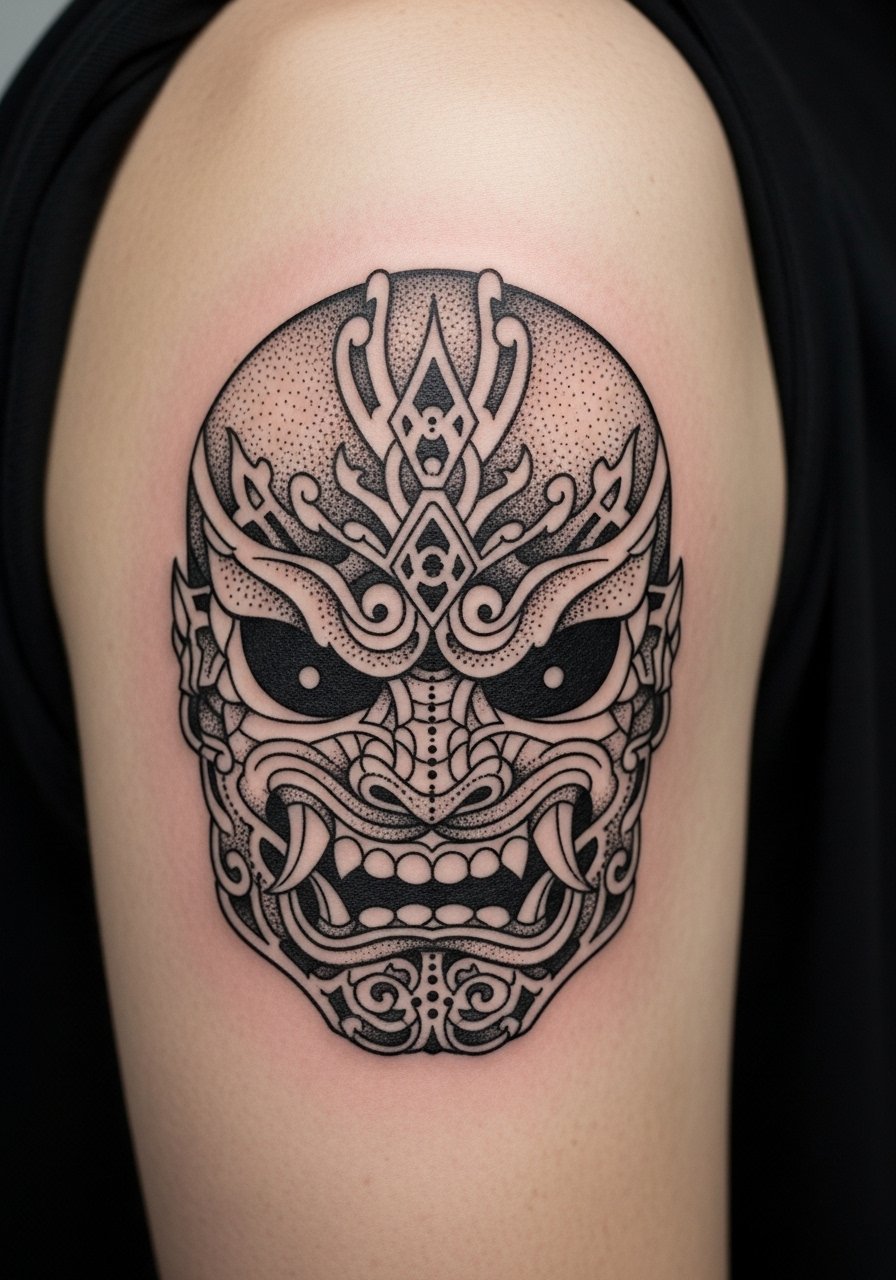
A mask or guardian face rendered in dot work reads like a talisman and fits the upper arm nicely. One common mistake is compressing too many tiny motifs into a small patch. Ask for breathing room between elements so the stipple holds. Upper arm sessions feel moderate on pain and usually finish in one long sitting if kept compact. Dotwork ages well here because the skin is stable. For evenings out pair the piece with a short-sleeve linen shirt where rolled sleeves frame the design.
3. Minimalist Mongkhon Band Near Wrist
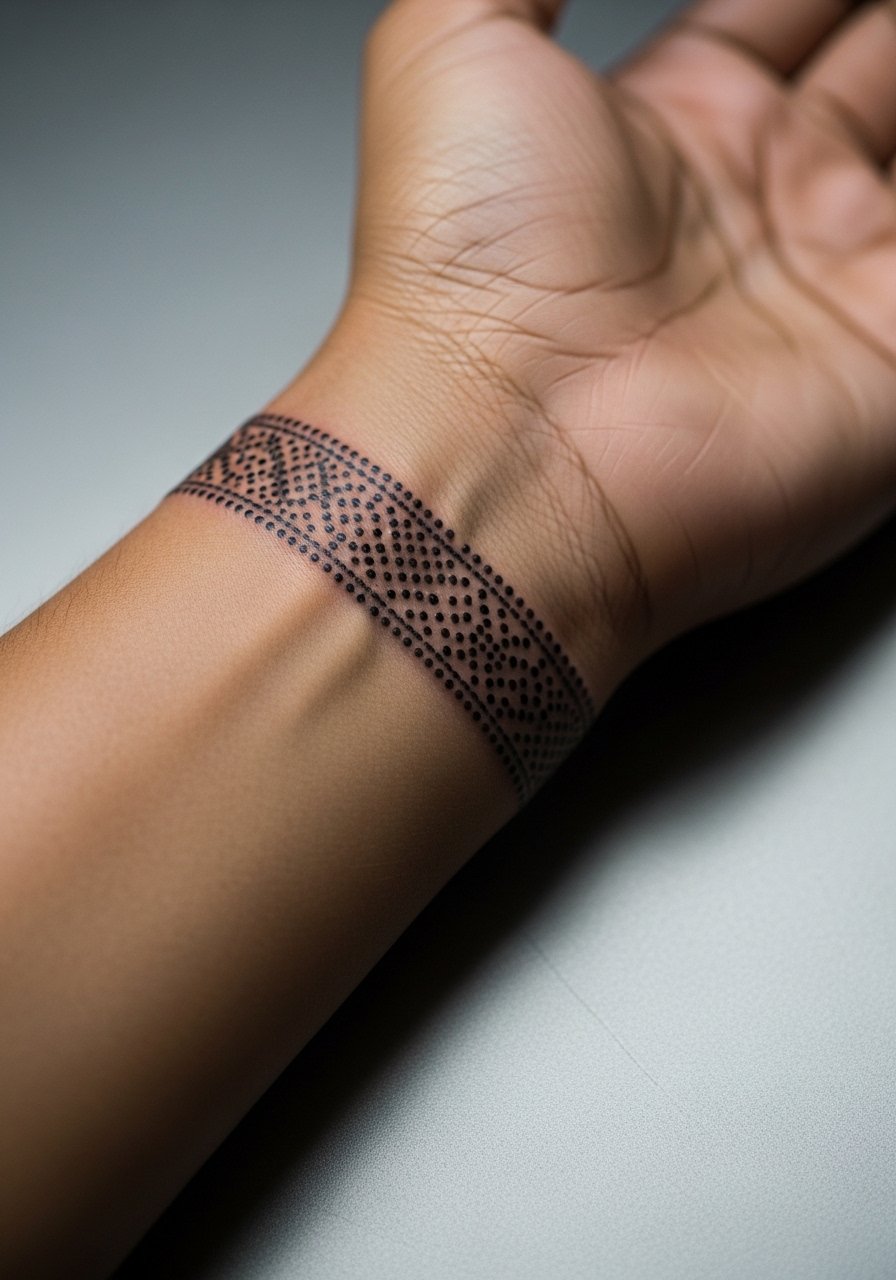
A narrow stipple band around the wrist reads subtle but needs care. Wrists face constant friction from watches and sleeves, so expect faster fading than upper-arm pieces. The biggest error is going thinner than the skin allows. I usually advise slightly thicker lineweight and denser stippling so the band keeps contrast at year two. Sessions are short but expect a touch-up window at year one or two. If you wear a watch, choose one with a thin band while healing to reduce friction. Hand and wrist placements can impact hiring in some fields, so think about that before committing.
4. Stipple Muay Thai Shorts Motif on Thigh
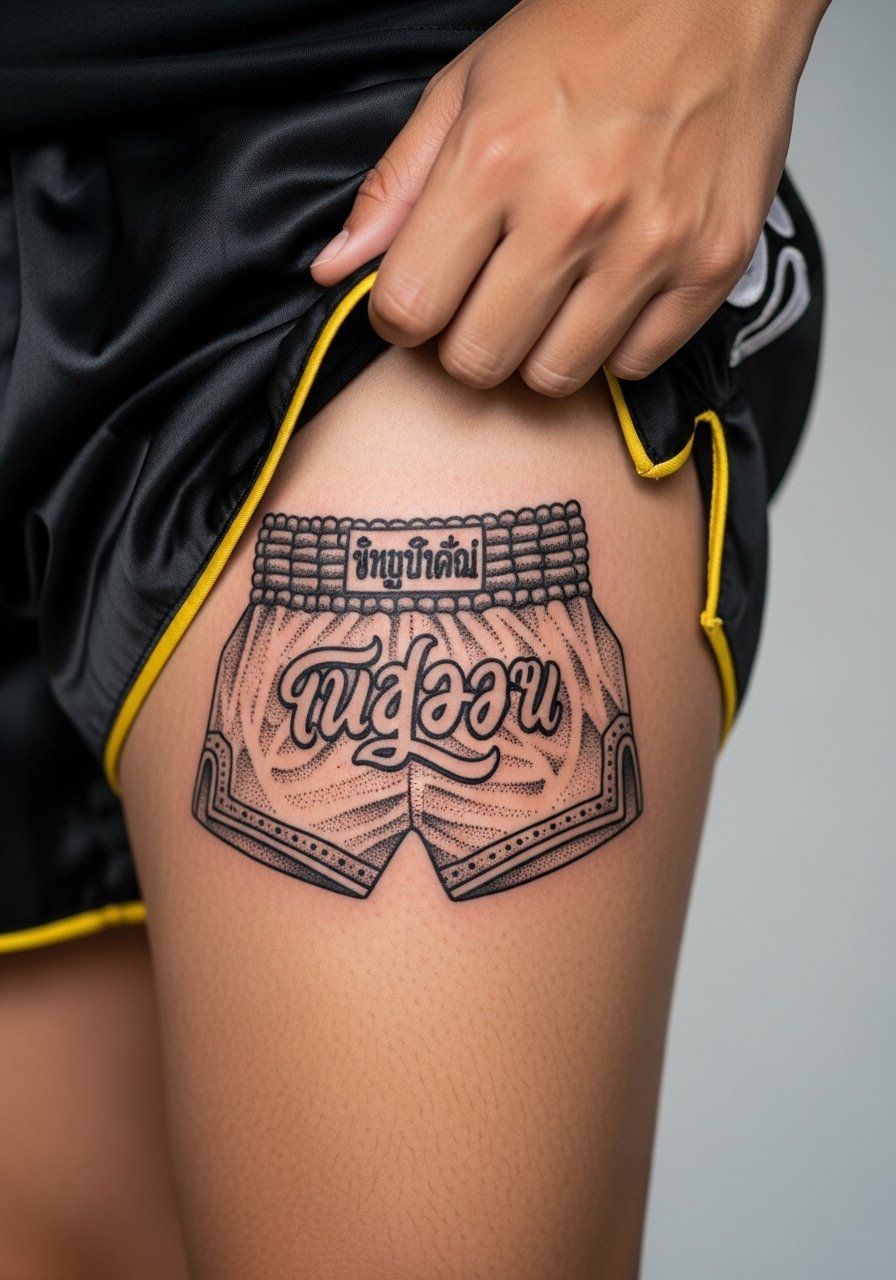
The upper thigh is spacious and forgiving for dense dotwork, which lets you include ornate patterning without smudging. For this area I recommend bringing reference that shows the exact repeat pattern and telling the artist which areas you want heavier stipple versus lighter negative space. Thigh sessions feel like medium discomfort and usually allow longer sittings. Aging is generous here because the skin is thicker, but weight fluctuations can subtly distort tight geometric work. For the session, wear high-waisted shorts that you can shift so the artist has clean access.
5. Intricate Sak Yant–Style Grid on Side Ribcage
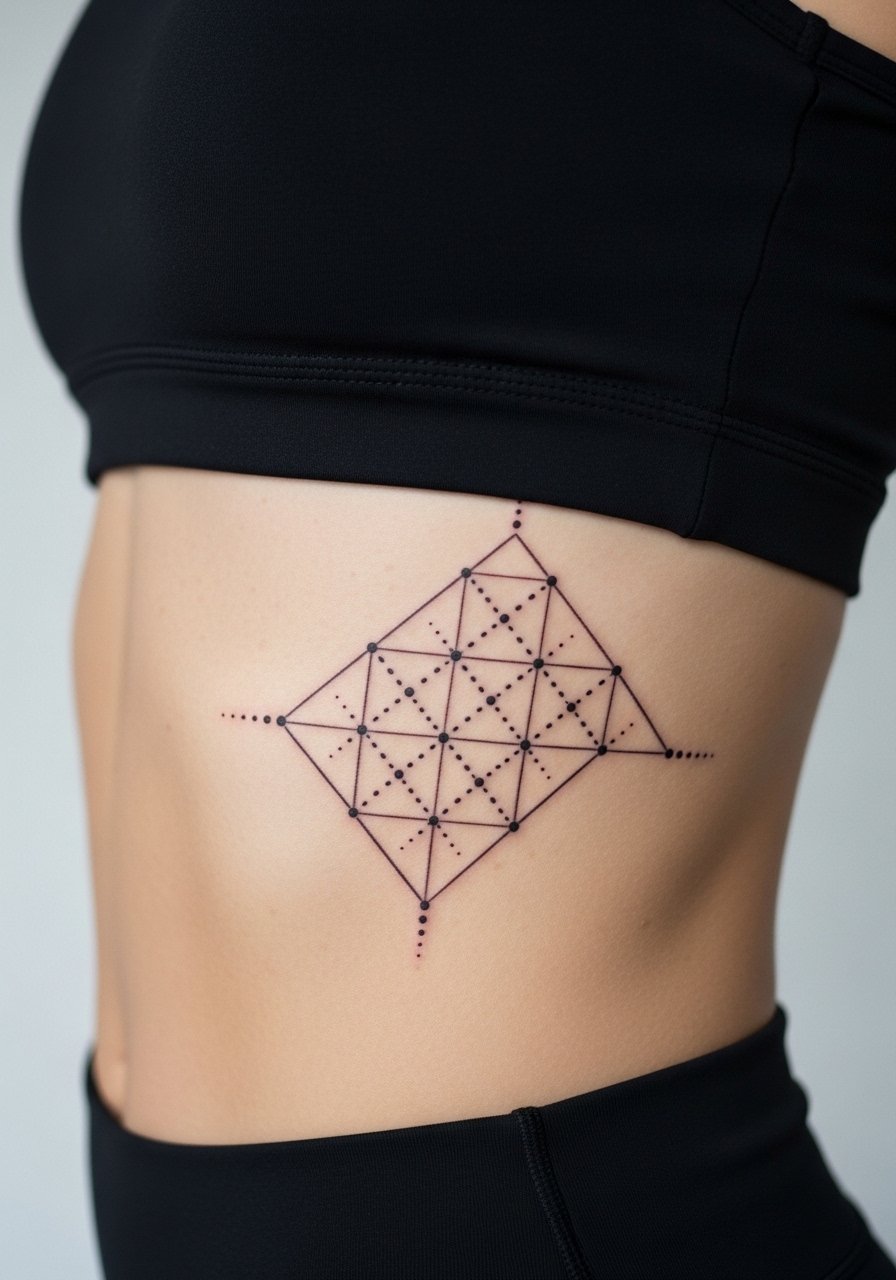
Rib placements are notorious for pain and for changing as you move. Artists split into two camps on dotwork here. One camp says fine stipple blurs fast on ribs because the skin stretches and shifts. The other camp argues that with proper depth and spacing it settles fine. Ask your artist where they stand and expect one to three sittings for a dense grid. The session feels sharp and breathing matters. Many people choose slightly larger dot spacing for ribs so the pattern keeps clarity at year three. Sensitive cultural note, grid patterns that trace to sacred Sak Yant should be approached with respect and discussed with your artist.
6. Muay Thai Fighter Portrait in Dotwork on Calf
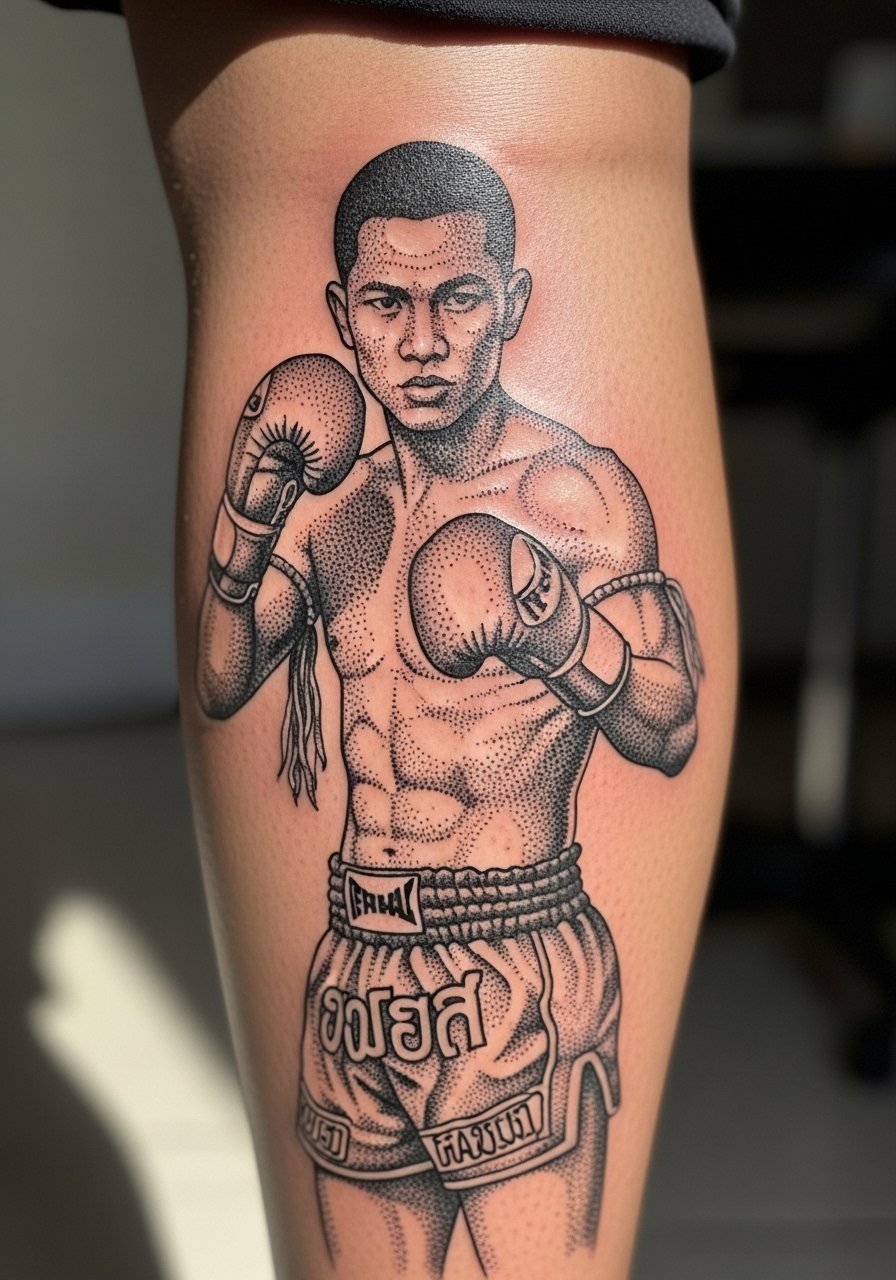
Calves are great for portraiture with dotwork since the curvature lets shading sit naturally. Tell your artist during consultation to prioritize contrast zones so facial features hold up after a few years. A common mistake is over-detailing the face with hairline dots that later merge. Sessions can run two to four hours and usually finish as a single sitting if properly planned. Calf tattoos show well with skirts or rolled pant hems, so consider pairing them with a mid-length skirt for evening looks.
Studio Day Picks
The forearm, wrist, thigh, ribs, calf, and upper arm pieces above have different prep and early-healing needs. These picks help with stencil placement, session comfort, and protecting fine dotwork in the first week.
-
Stencil transfer paper kit. Lets you preview linework placement on skin before committing, which is especially helpful for forearm and calf portraits.
-
Topical numbing cream. Applied as directed 45 minutes prior it can ease ribcage and inner-thigh sensitivity for denser dot sessions.
-
Thin protective film roll. Keeps wrist and hand work clean during the first week of frequent washing and friction.
-
Fragrance-free body wash. Gentle cleansing protects fragile stipple work without stripping moisture in the early healing window.
-
Aquaphor healing ointment. A thin layer in the first days helps fine dotwork retain contrast while the skin forms its outer barrier.
7. Mini Muay Thai Glove Pair on Inner Wrist
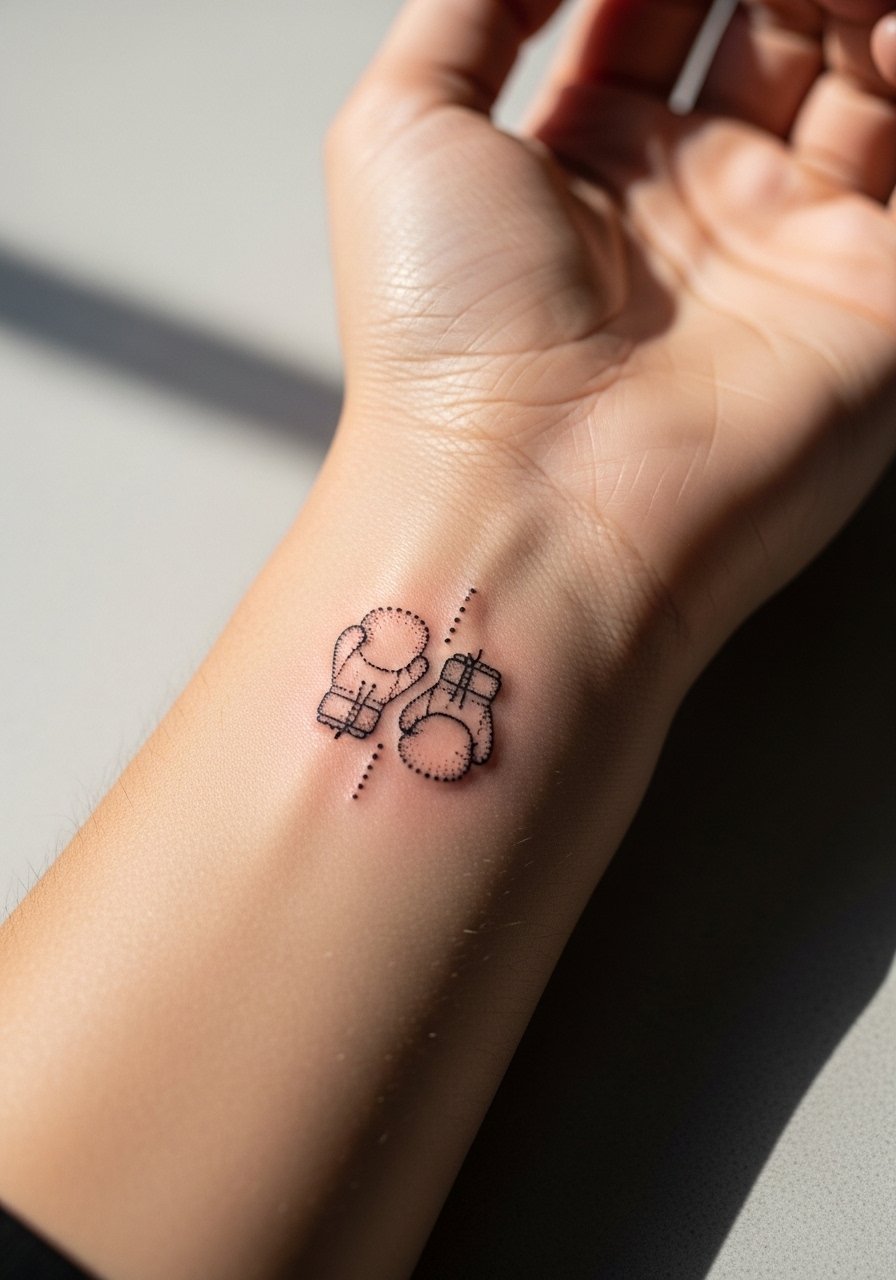
Inner wrist small pieces look crisp at first but face constant washing and sun. For dotwork icons I advise asking for slightly bolder dots than a pure micro look so the gloves keep shape at year two. Expect a short session but prepare for an early touch-up. The inner wrist can sting during the session but heals quickly. For showing this off, stacked dainty bracelets can frame the piece without crowding. Try a thin chain bracelet when your tattoo is fully healed.
8. Traditional Muay Thai Locket Motif on Sternum
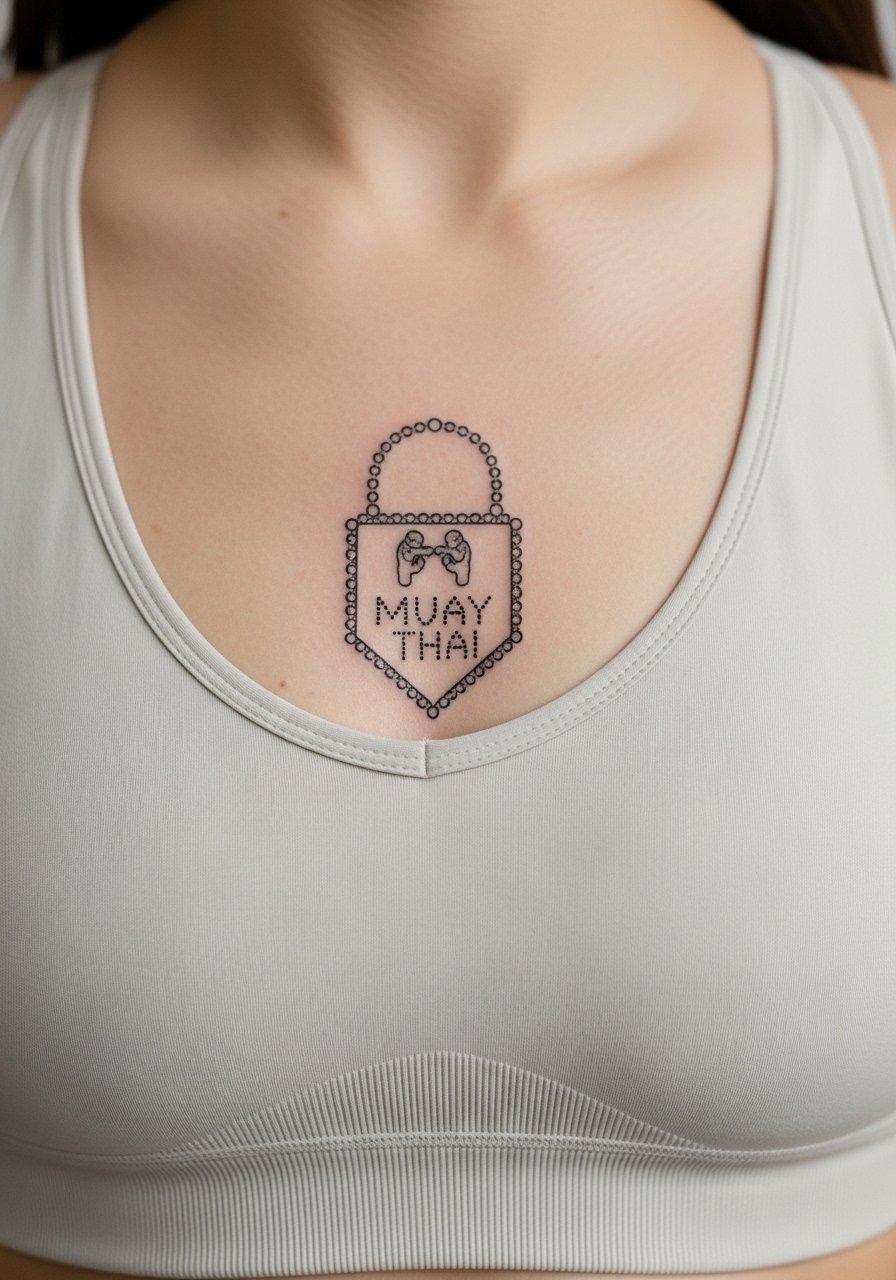
Sternum pieces are intimate and demand specialized technique. The sternum skin moves with breathing and can soften tiny dots over time. I tell people to expect sharper contrast if they want the art to last: larger dots and open negative space. Sessions here are painful for many and sometimes split across two appointments. Professional considerations apply since chest placements are more private. If you are incorporating iconography that has religious meaning, discuss cultural context with your artist and consider respectful adaptations.
9. Dotwork Yantra Band Across Collarbone
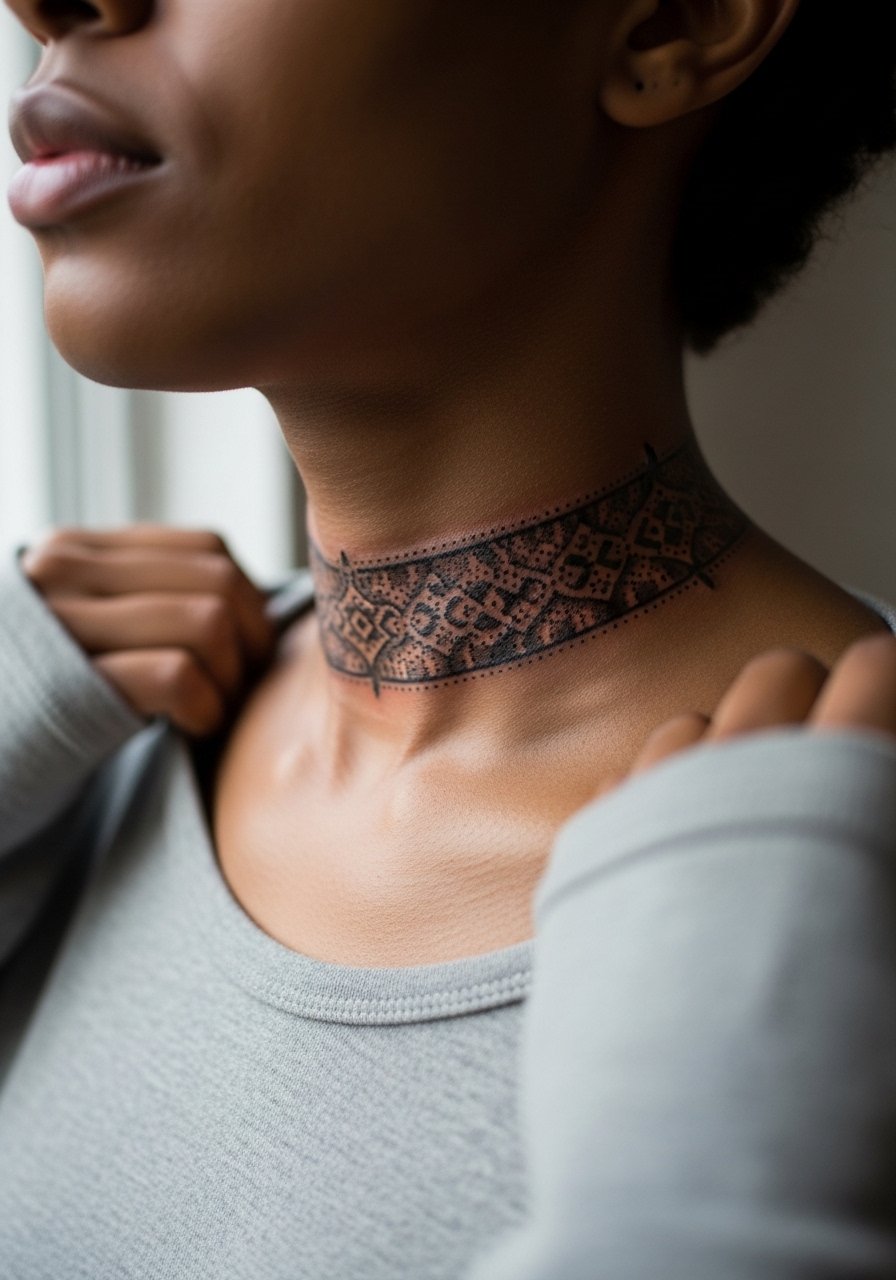
A collarbone band in dotwork can be delicate and graphic at once. The key consultation note is to specify how close the design sits to the bone. Very tight placement risks more discomfort during the session and subtle blowout if the needle is placed poorly. Aging depends on sun exposure because collarbones are often visible. Pair this design with open-neck tops to show just the band. A thin chain pendant necklace placed above the band can help balance the look after healing.
10. Stipple Muay Thai Scene Across Upper Back
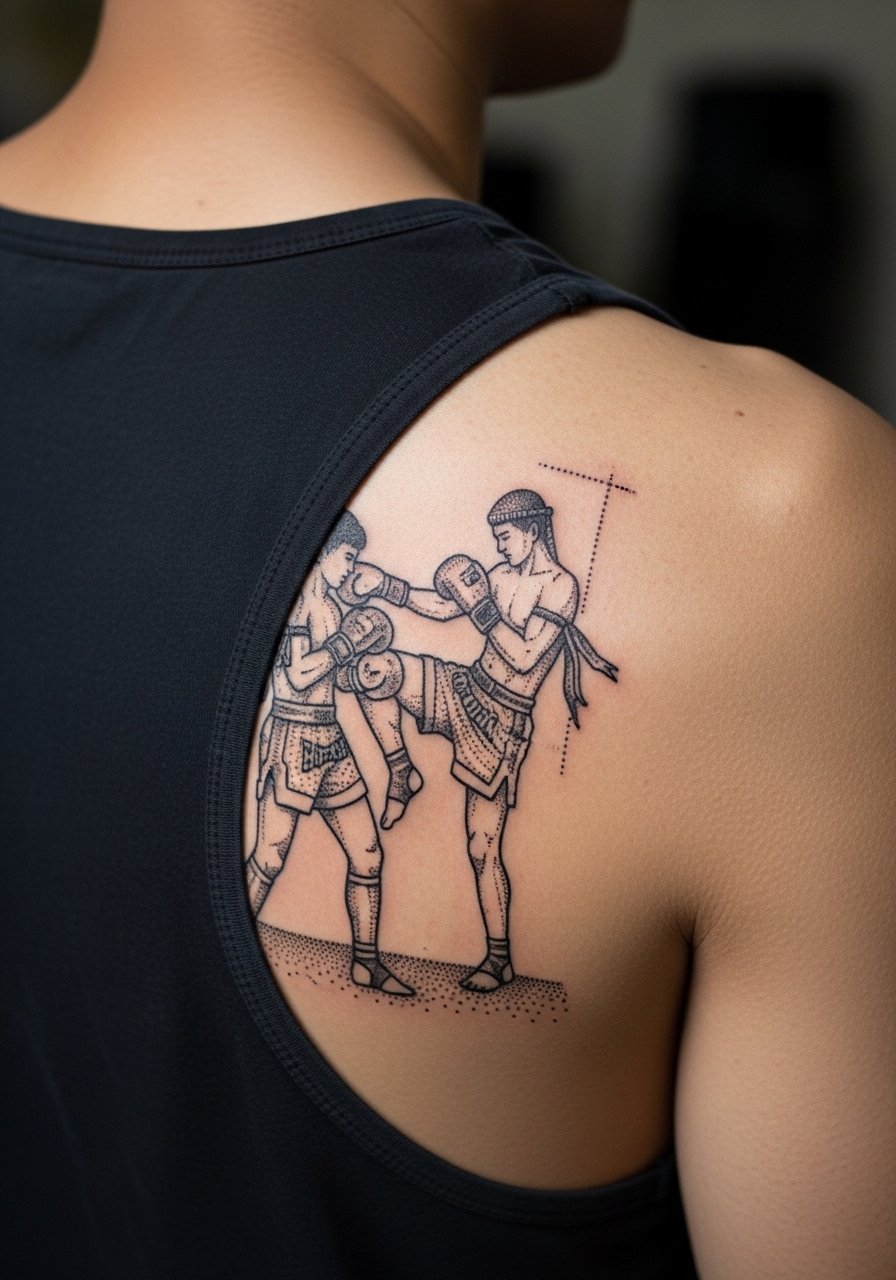
Upper back panels let you tell a small story with stipple transitions. One mistake is packing too much tiny detail into a shallow depth, which flattens after healing. During consultation specify which focal point should retain the most contrast so the rest can read as background. Sessions are usually longer and may require a day spent reclining, which can feel achy but manageable. Touch-ups at year three are common for background stippling if you spend a lot of time in the sun. For the session wear a loose tank top you can pull aside.
11. Thin Stipple Script in Thai on Inner Bicep
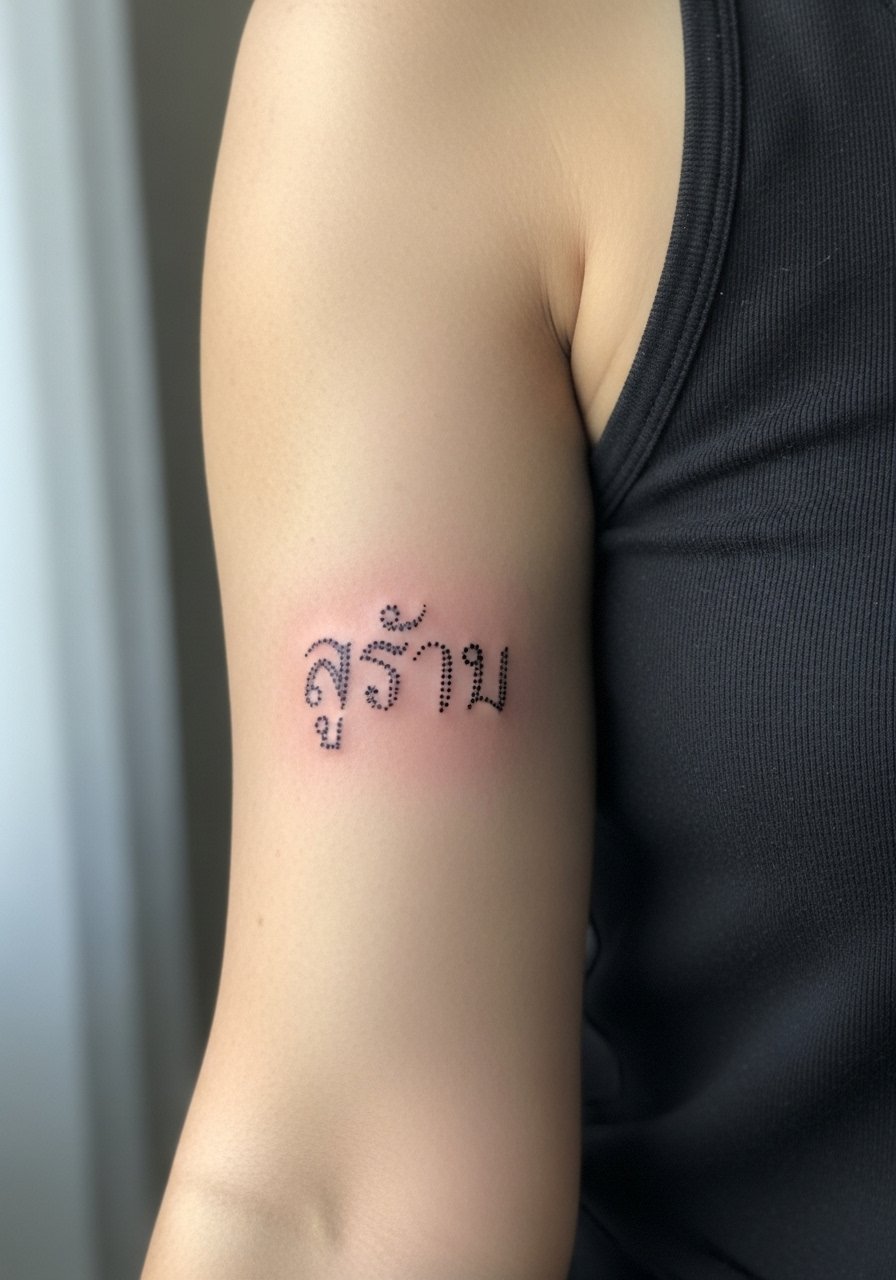
Script in dotwork reads delicate but needs scale. The inner bicep is a soft area and tiny dots can blur if placed too finely. Ask for slightly increased spacing and for the artist to map the script along the muscle so movement does not distort legibility. Sessions feel tender with the arm raised. Expect a touch-up at one to two years for thin scripts. Because this uses script tied to Thai language, approach the phrase with respect and double-check spelling and context using discovery paths like community forums and language-savvy references rather than random images.
12. Dotwork Muay Thai Patch on Shoulder Blade
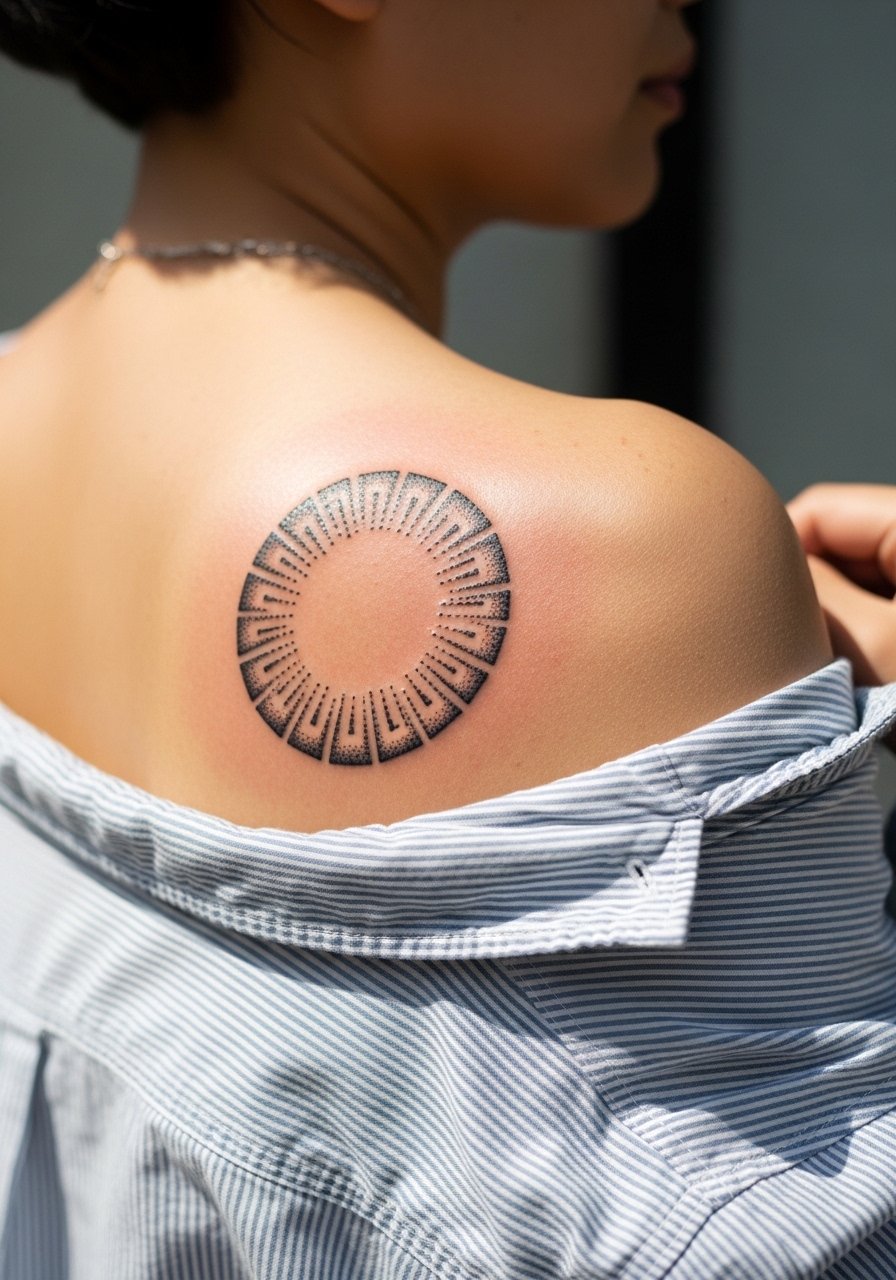
Shoulder blade patches are low-risk for blowout and age well thanks to stable skin. The common mistake is asking for ultra-fine stippling without enough contrast, which looks flat after a few years. For this placement I recommend clear separation between the central motif and outer halo. Sessions are moderate and often finish in a single sitting. The shoulder blade shows well with open-back tops. For the appointment consider a loose button-down shirt you can slip off or pull aside easily.
13. Micro Dot Muay Thai Star Behind Ear
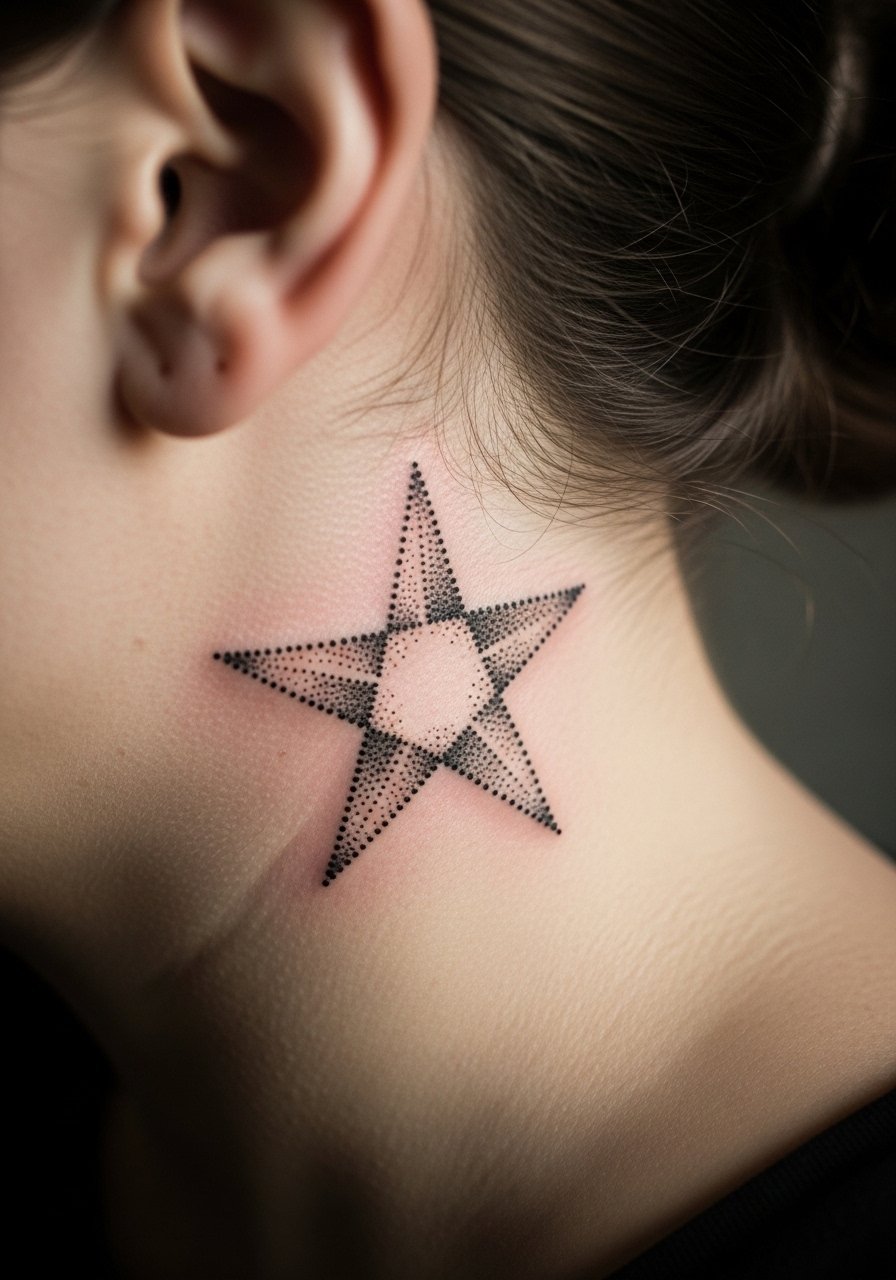
Behind-the-ear micro pieces are ultra-small and read like discreet accents. The skin there is thin and dots placed too shallow or too tight can vanish or migrate. Artists split about whether micro dotwork holds in this zone, so ask about touch-up history. Sessions are very quick but can feel sharp. Aftercare is straightforward but the area is often covered by hair so sun exposure is low. For the session pull hair back or wear a wide-headband so the artist has clear access.
14. Stipple Muay Thai Trainer Emblem on Chest
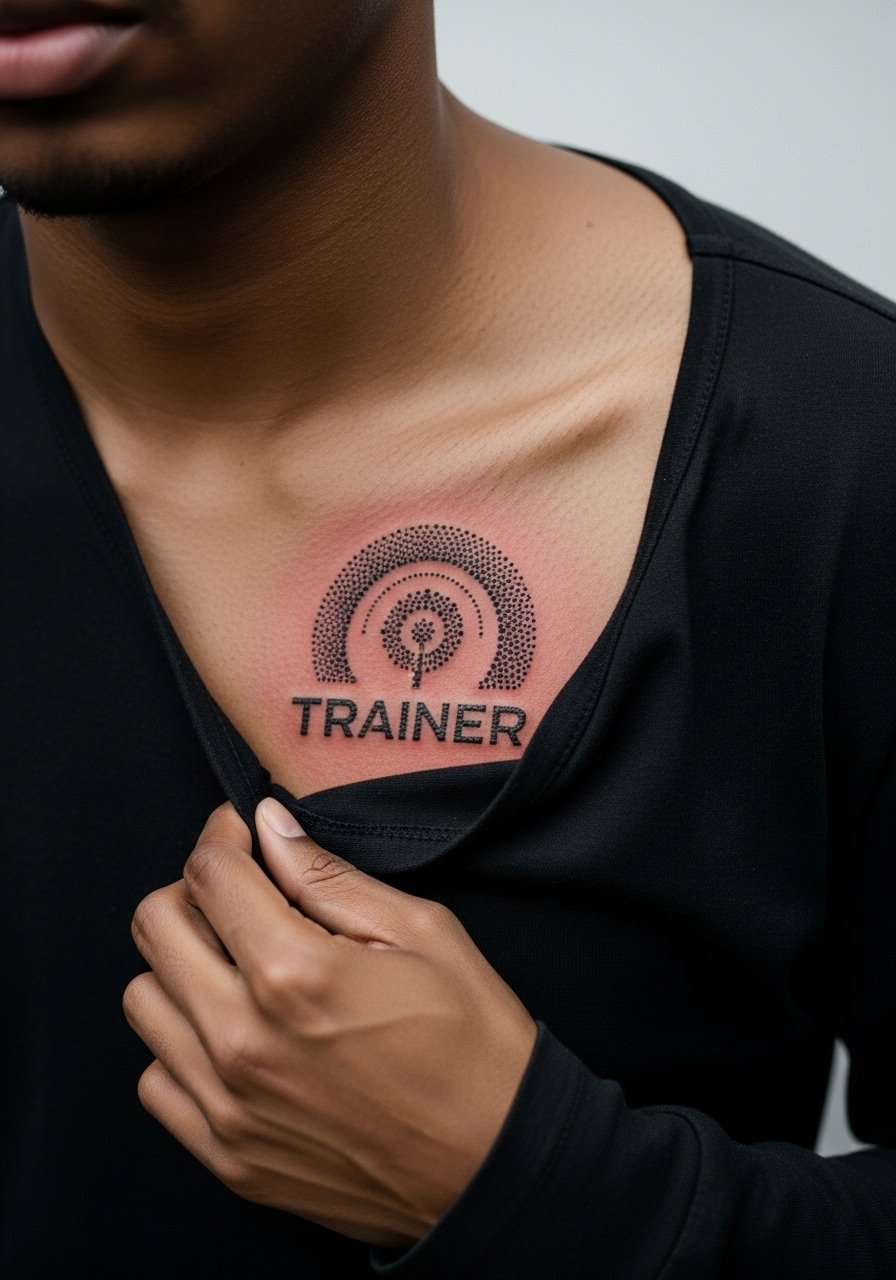
Upper chest pieces require mindful placement around bone and muscle. Tiny stippling near the sternum or clavicle can soften as the skin ages and moves. I advise asking the artist to mark placement while standing and again while lying down, because chest contours change. Sessions can be painful if the piece sits over the bone. Expect to protect the area from friction with bras and straps during early healing. If your emblem draws from cultural symbols, discuss respectful adaptation rather than direct replication.
15. Dotwork Thai Floral Sleeve Start on Outer Forearm
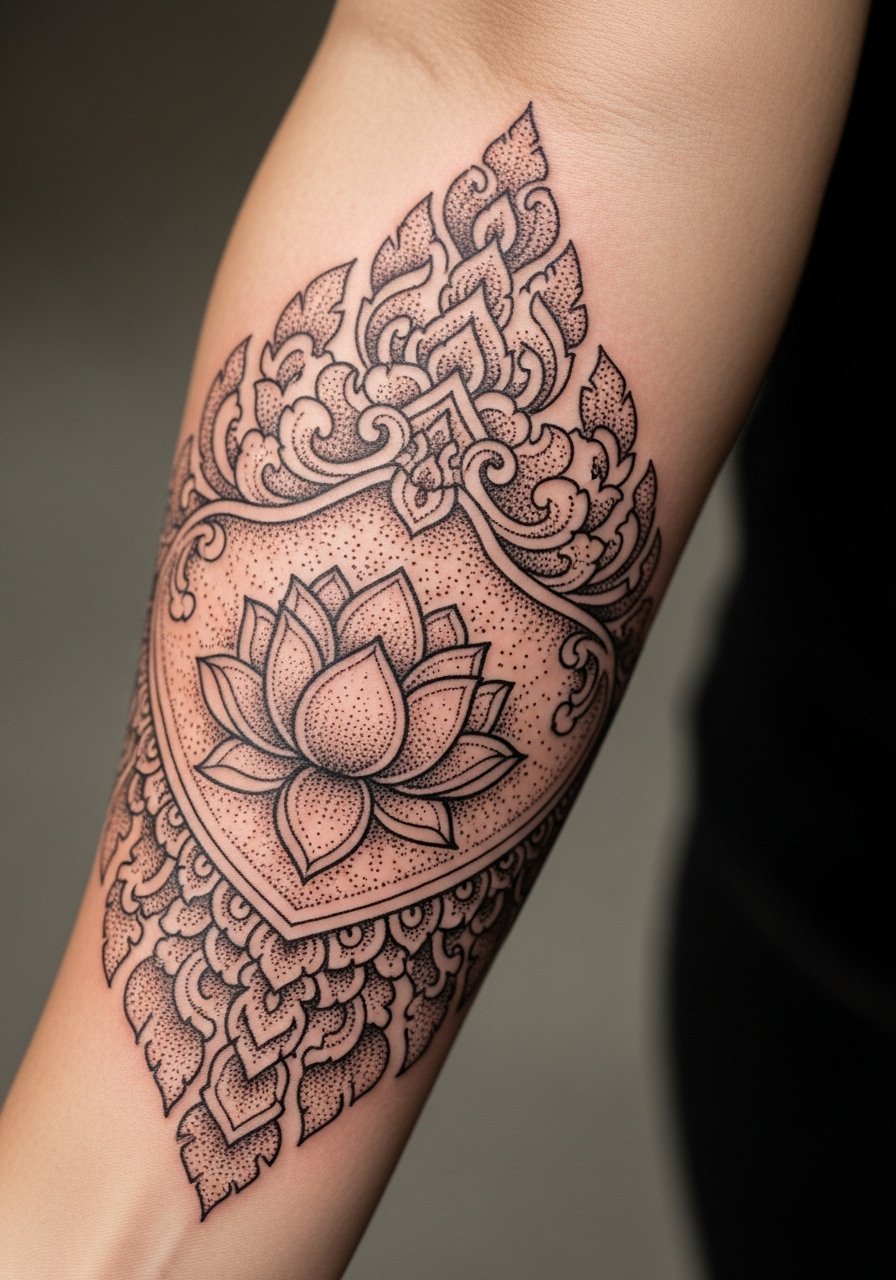
Using dotwork to build a sleeve start lets you add panels over time. A common mistake is starting with pieces that lack a plan for negative space, which makes future integration harder. Tell your artist where you might want future additions so they leave linking areas. Forearm sleeves can take multiple sessions and may need touch-ups at year three for tight stippling. For the appointment wear a short-sleeve linen shirt so the artist can access the entire forearm without rubbing fabric.
16. Compact Muay Thai Coin Motif on Ankle
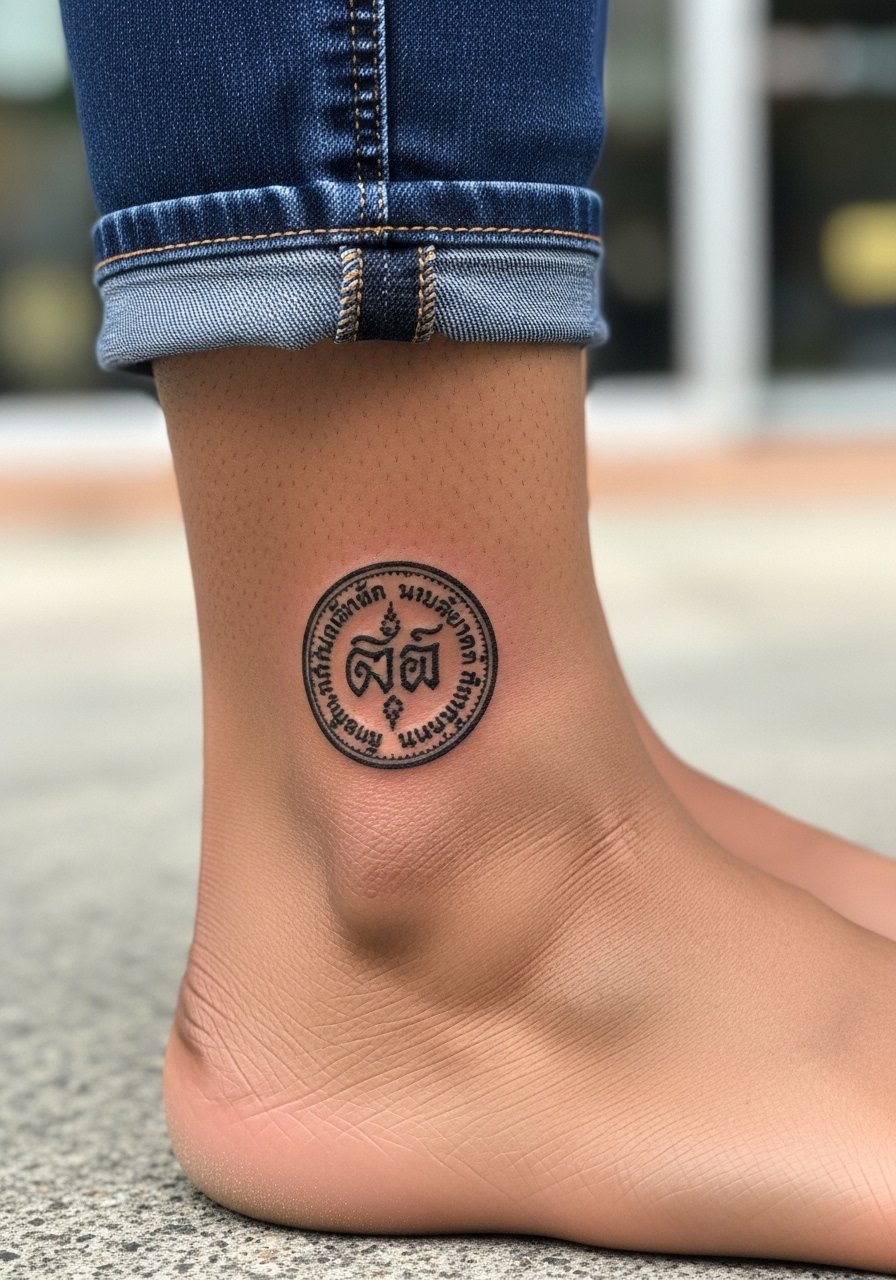
Ankle pieces contend with shoes and socks, so friction is the main concern. Dotwork coins need a buffer of space around the design to avoid being rubbed by footwear. The session is quick but delicate because the ankle has thin skin near bone. Expect a touch-up within the first year if you wear closed shoes constantly. For healing, roll pant hems or wear sandals to reduce contact. A pair of thin sandals during the first two weeks can help lower irritation.
17. Linear Muay Thai Timeline Along Spine
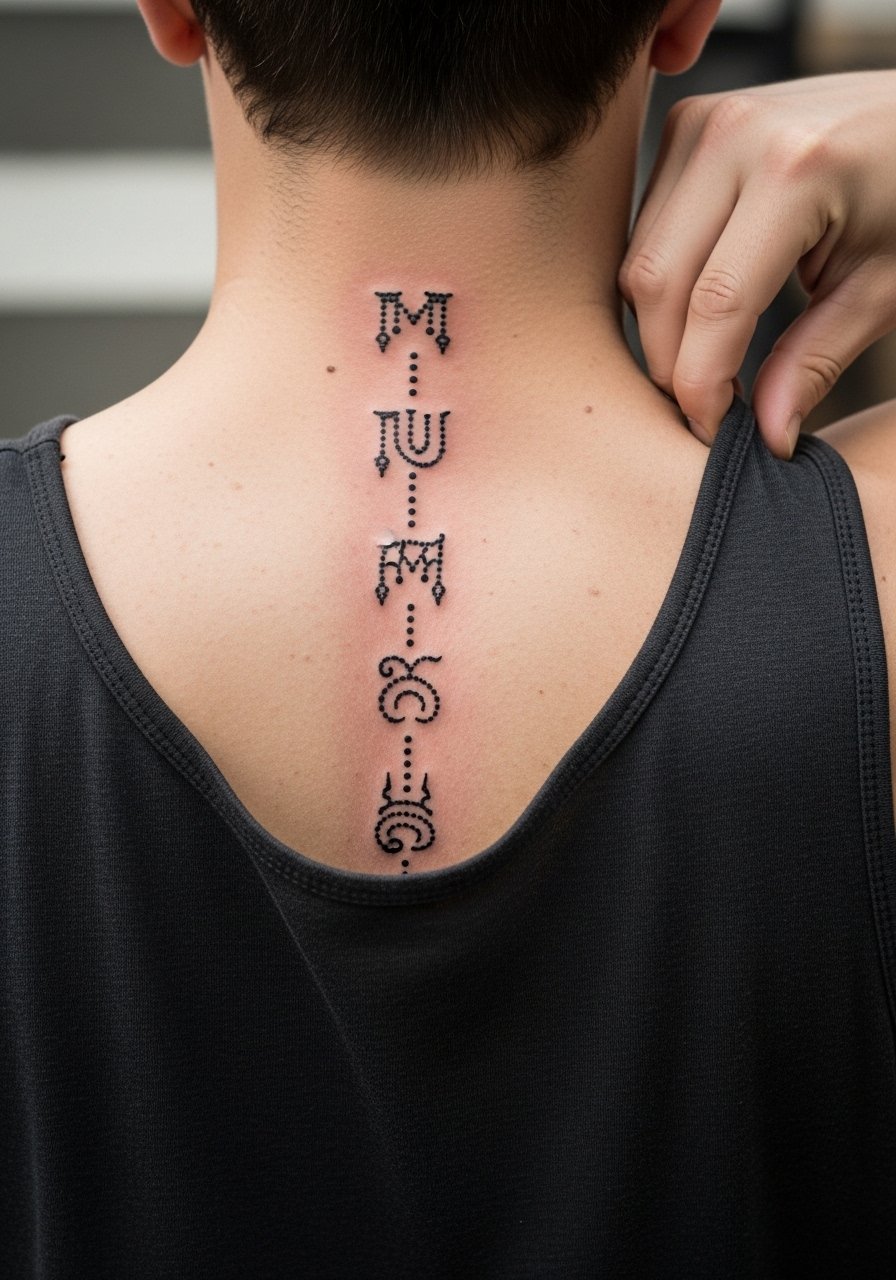
Spine placements need consistent spacing to follow the vertebrae without looking crooked. For dotwork lines ask the artist to mark anchor points aligned to your posture so the visual flow stays centered when you move. The session often involves lying face down for extended time and may be split across appointments. Tiny dots along the spine can blur faster than broader stipple because skin shifts. Expect conservative dot spacing and a possible touch-up at year two. For the session wear a loose tank top you can slide down slightly.
18. Muay Thai Trainer Portrait on Thigh Panel
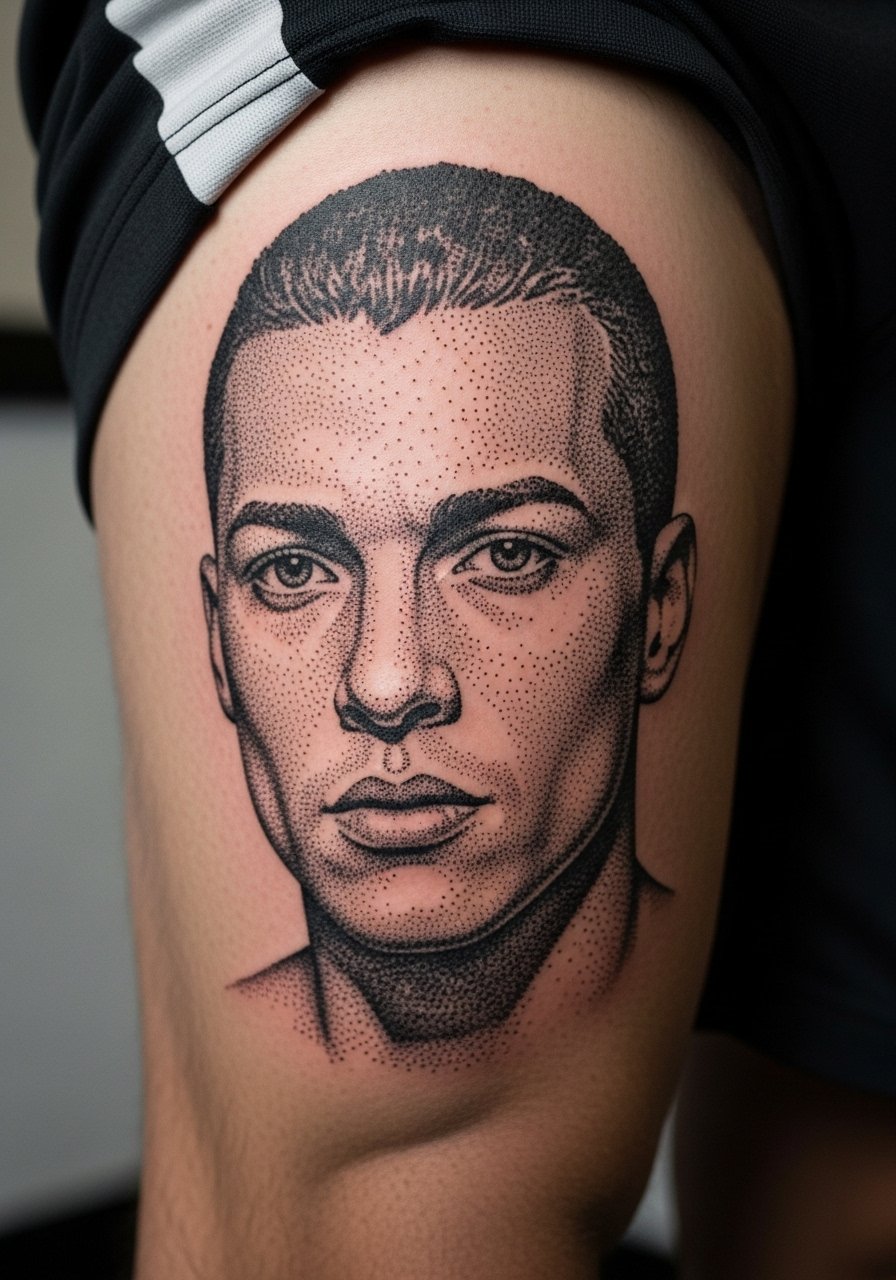
Thigh portraits can handle high detail in dotwork because the skin tolerates dense shading. The error I see most is trying to compress facial detail into too small an area. Specify face size and focal contrast so features survive time and movement. Sessions are longer but generally less painful than ribs. The thigh lets you show large panels with minimal sun exposure if you keep clothing choices in mind. For the day, wear loose drawstring linen pants so you can roll the leg up without pressure.
19. Compact Muay Thai Emblem on Hand Back
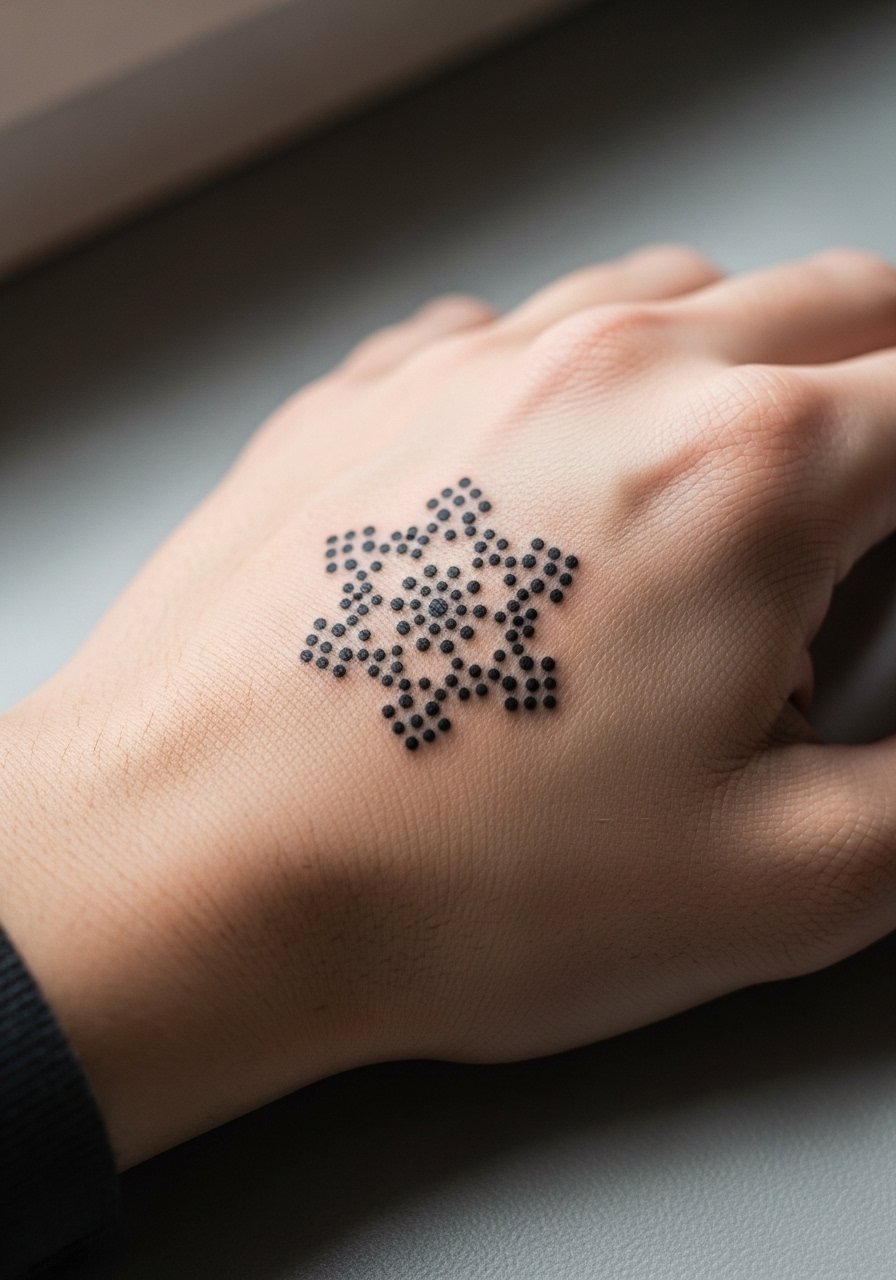
Hand tattoos face the highest fade risk because of constant washing and exposure. Dotwork on the back of the hand needs to be bold enough to survive daily abrasion. The common mistake is asking for very fine stipple there. I recommend stronger contrast and acceptance that regular touch-ups are likely at year one and beyond. Sessions are quick but painful due to thin skin and proximity to bone. Consider how visible hand tattoos are for professional settings before booking.
20. Muay Thai Knee Cap Motif in Dotwork
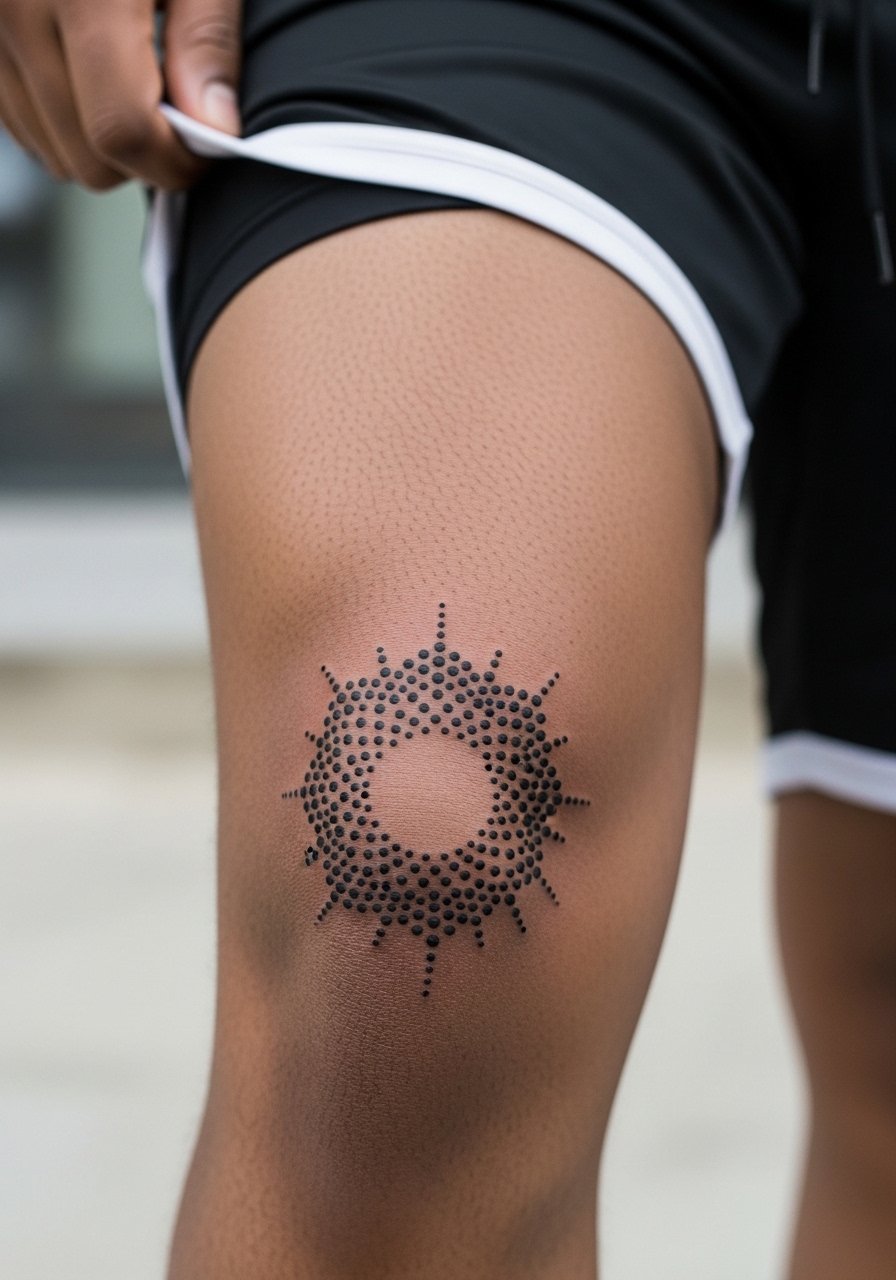
Knee-cap tattoos are playful but bounce around when you bend, so tight dots can blur with repeated motion. A successful knee motif uses open negative space and slightly larger stipple to keep definition. The session feels intense near the patella and may involve topical numbing if you want. Expect early touch-ups because motion stresses the healing tissue. For the appointment pick shorts you can shift easily. If you plan on showing this off, knee-high socks after healing can frame the piece without rubbing it.
21. Full Dotwork Muay Thai Chest Panel with Symmetry
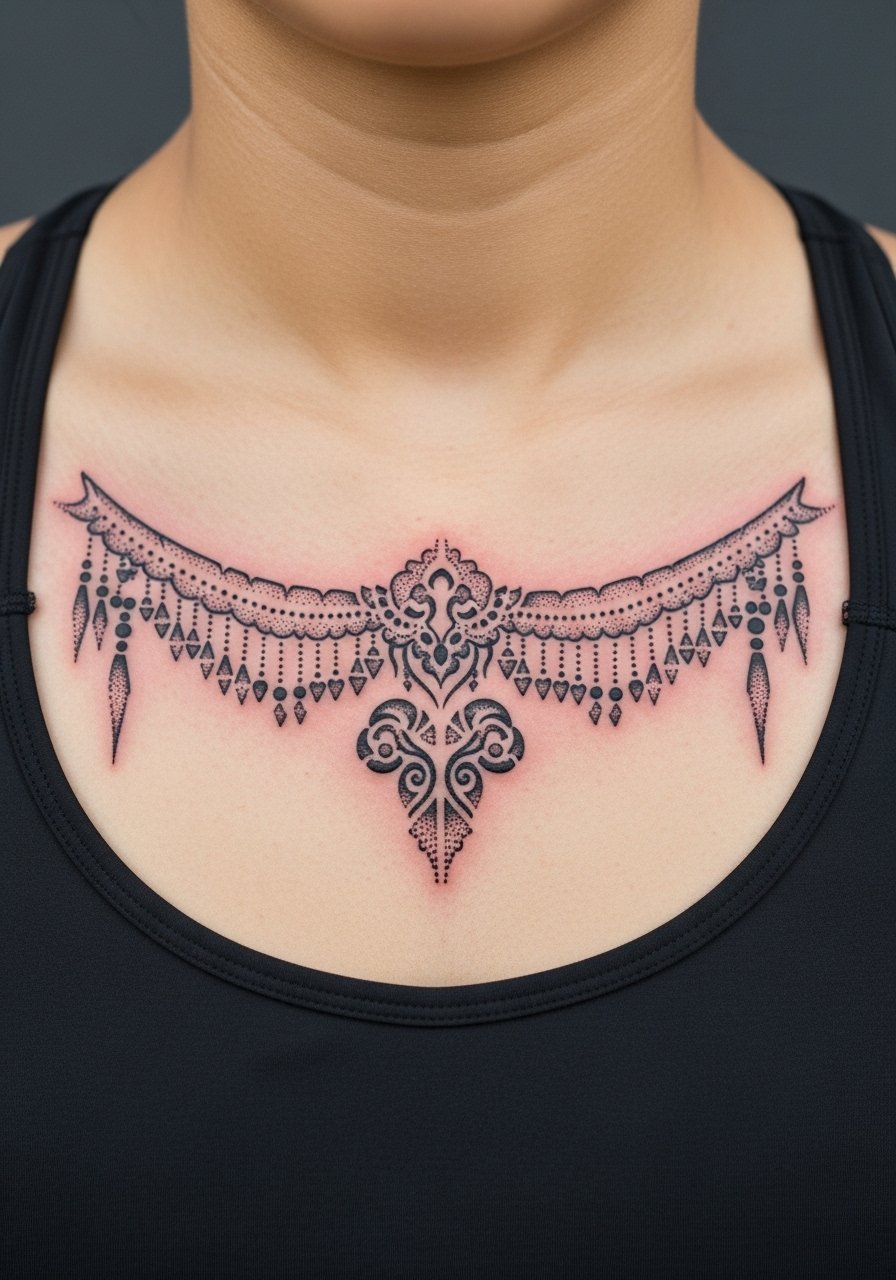
A full chest panel is ambitious for dotwork because symmetry and spacing determine longevity. Ask your artist to map the symmetry while you stand and while you lie down, and to plan negative space so the central motif remains crisp. Sessions are long and often split across multiple days. The chest sees sun and friction, so expect touch-ups at two to three years depending on exposure. If the design draws on sacred iconography discuss respectful choices and adaptations rather than copying religious pieces outright.
Frequently Asked Questions
Q: Will dotwork Muay Thai script blur faster on the ribs than on the forearm?
A: Yes, ribs can be tougher for fine dotwork because the skin stretches with breathing and movement. I recommend slightly larger dot spacing and asking the artist about their touch-up history on ribs. If longevity matters, place script on forearm or upper arm where skin is more stable.
Q: How soon can I wear jewelry that frames a wrist or collarbone dotwork piece?
A: Wait until the tattoo has formed its outer layer of healed skin, usually two to three weeks for light jewelry. For wrist pieces avoid tight watches in the first month. A delicate thin chain pendant over healed collarbone work is a safe styling choice.
Q: Are Muay Thai–style sacred designs appropriate for casual tattooing?
A: Artists and collectors are divided. One camp treats sacred yantras and Sak Yant as spiritual objects that require proper ritual and understanding. The other camp sees cultural sharing as part of contemporary tattooing. If you choose sacred motifs, have a respectful conversation with your artist and consider a design that acknowledges origin without direct replication.
Q: What realistic touch-up timeline should I expect for fine dotwork in high-friction areas like hands or ankles?
A: Hands and ankles often need touch-ups within the first year because of washing and footwear friction. Plan on a minor touch-up at year one and then reassess every one to three years depending on wear and sun exposure.
Q: How can I find an artist who understands dotwork Muay Thai motifs without naming specific studios?
A: Use discovery pathways like convention portfolios, local shop directories, hashtag browsing, and community forums. Look for portfolios that show healed dotwork, not just fresh photos, and ask about healed follow-ups during consultation.
Q: Does dotwork require different aftercare than other styles?
A: The basic aftercare is similar, but dotwork benefits from keeping the area protected from sun and abrasion until fully healed. Because dotwork relies on contrast, early scabbing management and minimal friction help preserve stipple density. The inline product picks above cover gentle cleansing and protective film options.