Fine line and dotwork doves are everywhere on saved boards right now, and the pieces that actually look as good at year five as they did at year one are not always the flashiest. Small dots that form soft gradients age differently than solid black patches, and placement makes the difference between a crisp silhouette and one that needs touch-ups. Read on for 21 thought-through dotwork dove layouts and what to ask for in your consult to help them last.
1. Inner Forearm Minimal Dotwork Dove

I’ve seen inner forearm doves hold up very well if the dotwork is given room rather than crammed into a tiny outline. Ask your artist to space the stipple fields so the light-to-dark transition reads at six months and still reads at two years. Fair warning, the forearm is a moderate pain area but forgiving on touch-ups. A common mistake is asking for ultra-tiny dots that merge after a year. For the session wear, a loose short-sleeve or a racerback tank top makes it easy to roll the sleeve without friction on fresh ink. Expect a touch-up window around year two if you live in high-sun settings.
2. Tiny Wrist Dove in Dotwork Halo
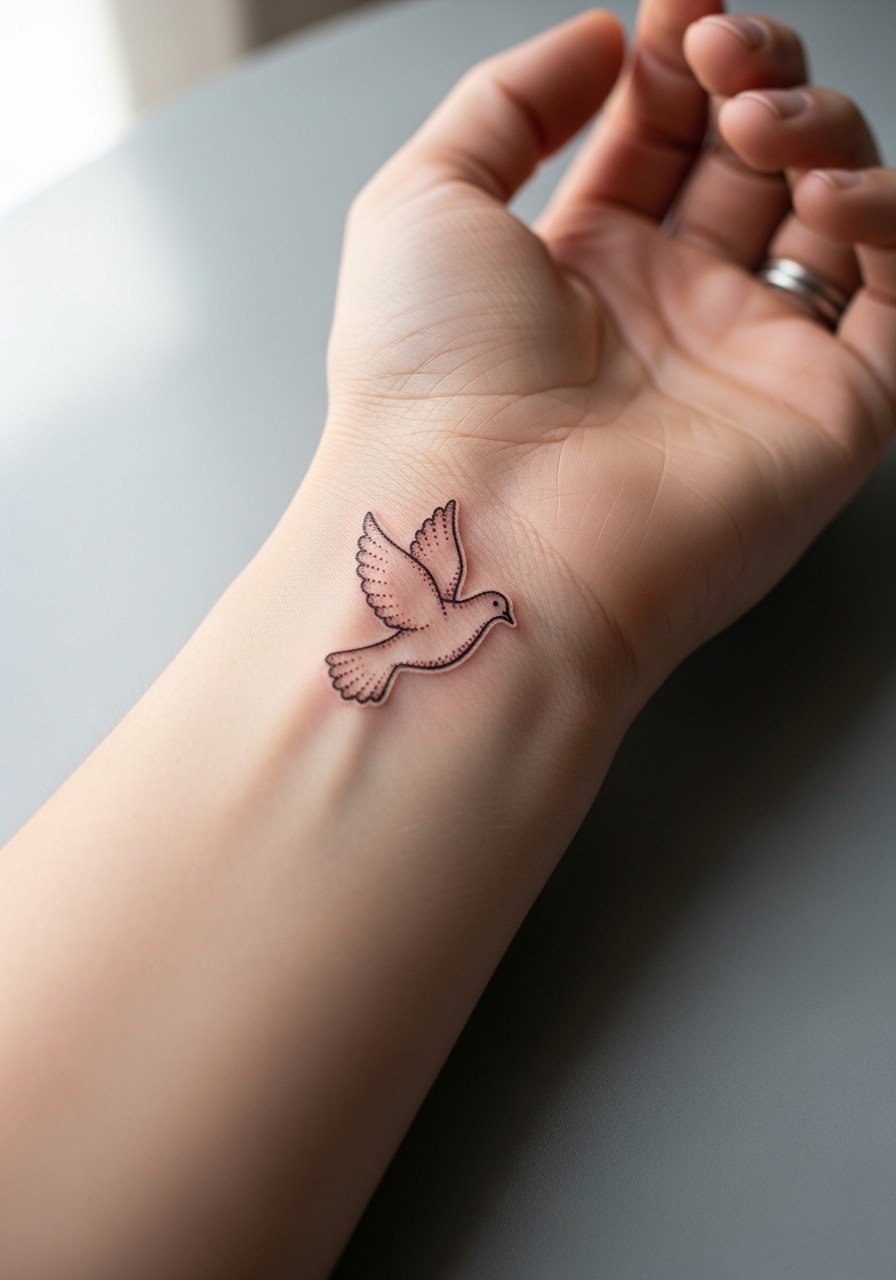
Fair warning, the wrist sees a lot of washing and friction so tiny stippling can soften quickly. I suggest a slightly bolder outer contour with interior dot gradients to protect the silhouette. During consultation, ask for a preview stencil and request the dots be mapped out with varying sizes, not a single repeat. This placement is quick to do but sensitive on the bone, so session time is usually short and sharp. For showing it off, a dainty chain bracelet sits above the mark without crowding the dove. Plan a potential touch-up at year two if you keep your wrist exposed to sun and shampoo often.
3. Sternum Dotwork Dove with Subtle Negative Space
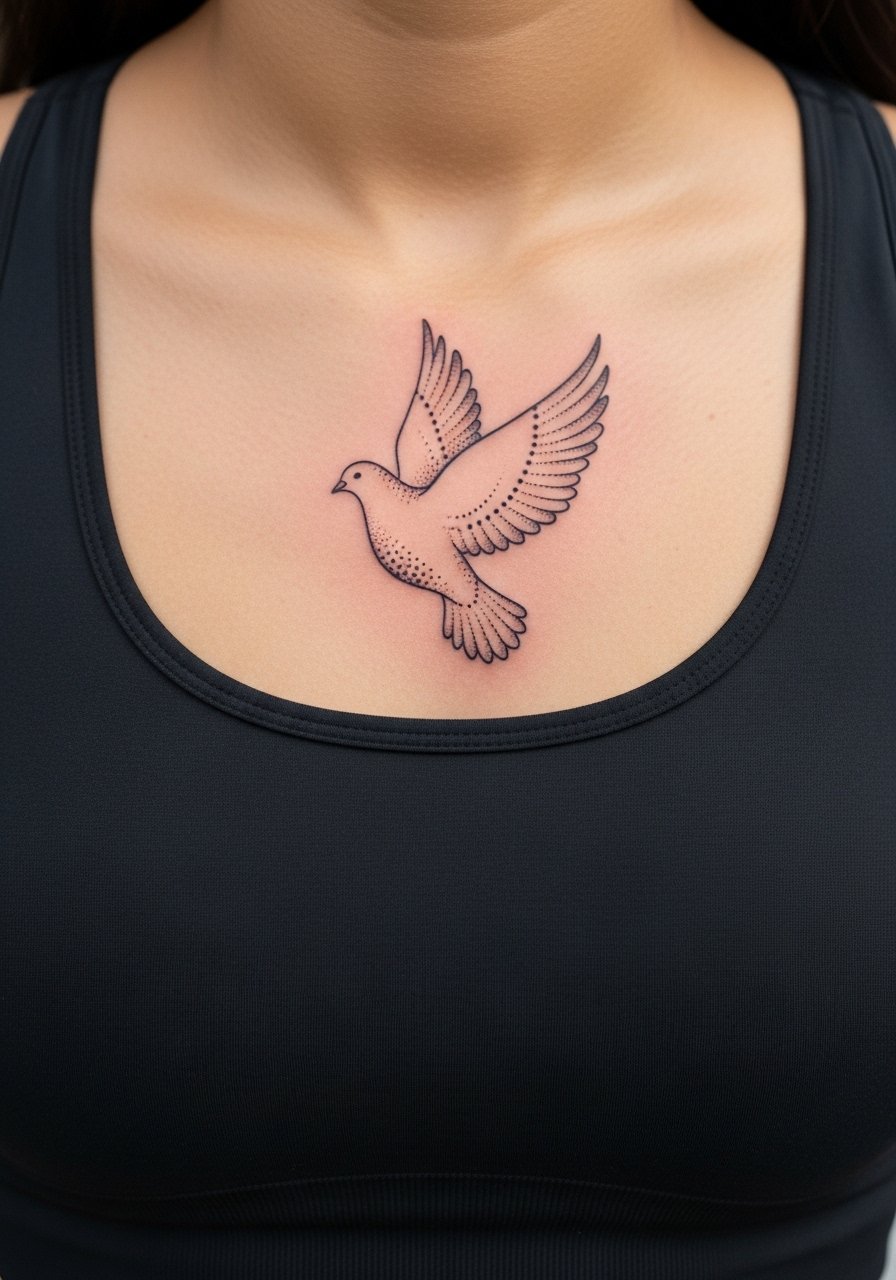
The sternum can make dotwork look sacred and centered but it is a sensitive area and breath affects the linework during the session. Pain levels are higher here, and sessions may need a slower pace. The common version that ages poorly is doing dense dots right against the midline, which can blur as skin moves. I recommend leaving a narrow band of negative space at the body center to preserve the dove’s beak and wing tips. For the appointment, wear a zip-front top or a sports bra you do not mind adjusting so the artist can work without you being uncomfortable. This placement demands an artist experienced with chest movement and dense stippling.
4. Shoulder Cap Dotwork Dove with Ornamental Dots

There’s something about a shoulder cap dove that reads like a badge from across a room. Most people get a bold shoulder piece thinking it will read the same when wearing sleeves, but the trick is balancing stipple density so the texture does not collapse under tan lines. When you sit with an artist, ask them to show a photo simulation on skin tone and to keep the densest dots away from the shoulder’s most curved areas. For session comfort, throw on a loose button-down shirt you can pull aside easily. Touch-ups are rarely needed in year one, but expect some softening at two to three years if you wear sleeveless shirts and get a lot of sun.
5. Ankle Dove in Stipple Silhouette

Ankle placements are charming but they live in a friction zone with socks and shoes so dotwork can lose crispness faster than on the arm. The common mistake is compressing the entire shading into a tiny patch that turns into a gray blur. I recommend slightly larger dot sizes and a clean edge so the dove silhouette remains readable. The session feels quick but sensitive above the lateral malleolus. For showing it off, sandals or cropped jeans work best, and a pair of minimalist ankle bracelets can frame the piece without rubbing it. Expect touch-ups after active seasons if you hike or run often.
6. Behind-the-Ear Mini Dove in Dotwork Accent

This tiny accent is subtle and works best as a single dot-suggested wing rather than a full dense body. Artists are split about micro work this close to the hairline. One camp argues that skin there is thin and tiny dots can blur quickly. The other camp says careful depth and a bit more spacing lets micro dotwork settle fine. Ask your artist which camp they follow and view healed photos from their clients. The placement is very low visibility in professional contexts, and session time is short but precise. Because it sits near hair growth, expect a touch-up conversation if any scabbing pulls at the dots.
Studio Day Picks
The chest and shoulder sessions above ask for different prep than the wrist and ankle pieces, and these items smooth the appointment and the first week of healing.
-
Tattoo stencil transfer paper kit. Lets you test placement and orientation on the skin before the needle starts, which is key for symmetric dove work on the sternum and shoulder.
-
Topical numbing cream. Applied per instructions twenty to forty-five minutes before the session it eases the sharp sensation on sensitive spots like the sternum and behind the ear.
-
Thin protective film roll. Useful for ankle and wrist pieces that face repeated washing and friction during the first few days.
-
Fragrance-free gentle body wash. Keeps healing dotwork clean without stripping moisture from delicate stipple fields.
-
Aquaphor healing ointment. Thin application for the first two to three days helps protect fine dot channels without smothering the skin.
7. Collarbone Dove with Delicate Dot Halos
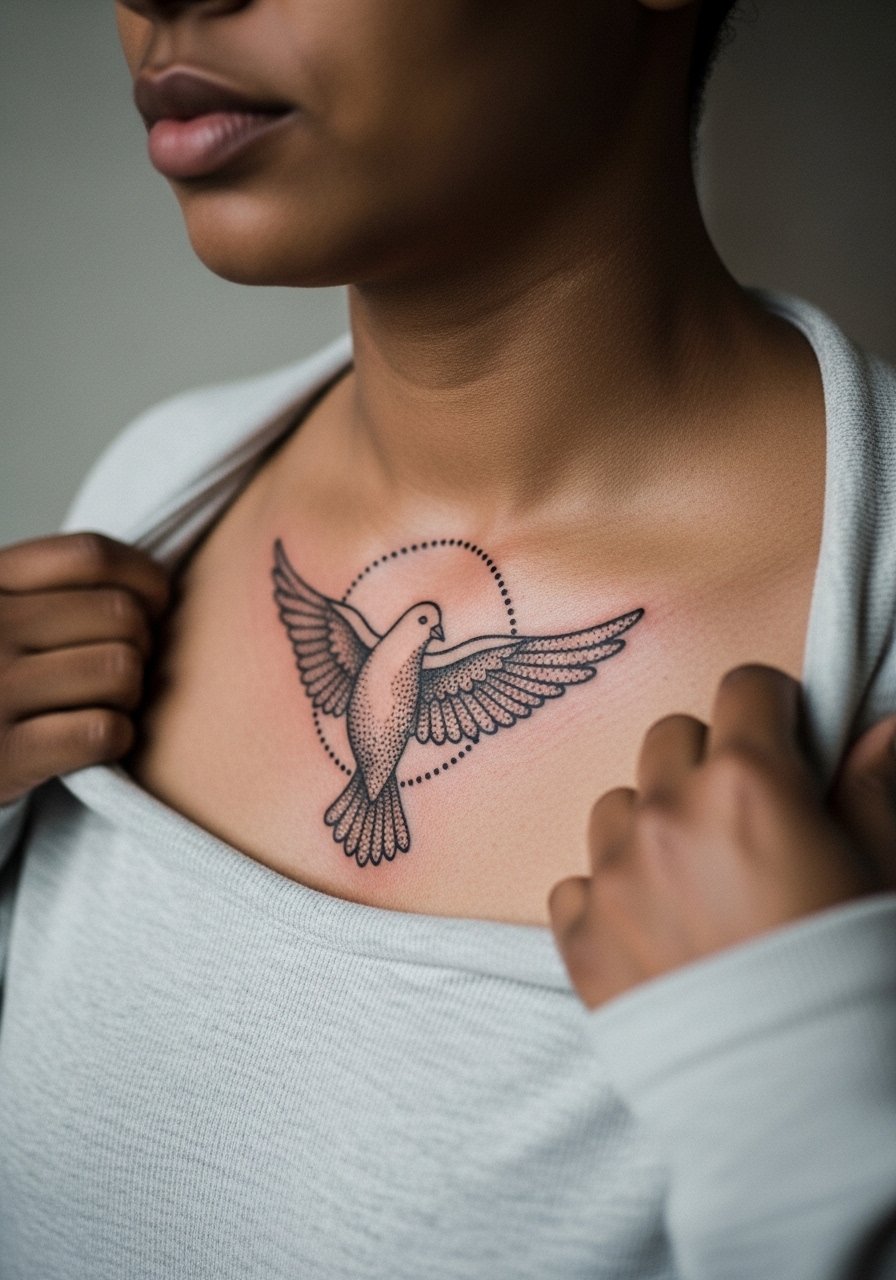
When it comes to collarbone placements, the visible canvas makes dot halos look airy and intentional if you keep the center of the dove slightly bolder. Most people underestimate how often open necklines will show the tattoo, so think about wardrobe. For showing it off, an open-back midi dress or a wide-neck sweater frames the dove without competing. During the consult, specify how you want negative space around the wings so the stipple does not read as noise over time. The pain is moderate and the session is usually efficient, but mention any scar tissue in the area as it affects dot saturation.
8. Back of Shoulder Blade Dove in Constellation Dots

There is a visual impact to placing a dove across the shoulder blade where the natural motion of the scapula gives the wings a slight lift when you move. Ask the artist to map dots along muscle lines rather than in a flat grid for a more organic texture. Mistakes here include over-detailing where movement will blur tiny stipples more quickly. For the session, wear a loose tank top you can shift without rubbing the fresh area. The back blade is forgiving for touch-ups at one year if you decide to deepen contrasts.
9. Calf Dove in Graduated Dot Shading

Visual impact lead works here because a calf piece reads from across a room when you wear shorts. The calf gives a flat plane for long dot transitions so you can get a strong light-to-shadow wing without cramming dots. The session feels slower because the artist has more space to layer. A common error is leaving the darkest dots too close together on the center of the muscle, which can look muddy as the skin tones change. For casual showing, cropped pants or a loose drawstring linen pant that you can roll up makes framing the piece effortless. Expect less sun exposure here than an arm piece so aging is usually kinder.
10. Hand-Side Dove in Decorative Dotwork Accent

Artists are divided about hand tattoos because the skin and exposure lead to faster fading. One camp says hands are a poor bet for detailed dotwork because the ink migrates. The other camp says if you accept higher touch-up frequency and slightly bolder dots, it can hold as a wearable accent. If you choose this, ask for a compact silhouette with slightly larger stipples and expect an annual touch-up plan. Hand ink still affects some hiring decisions, so think about career optics. Session-wise, the hand is sharp but quick and scabbing can pull at the dot texture in the first week. A thin ring or thin band watch frames the placement without crowding it.
11. Thigh Inner Dove in Soft Dot Gradients
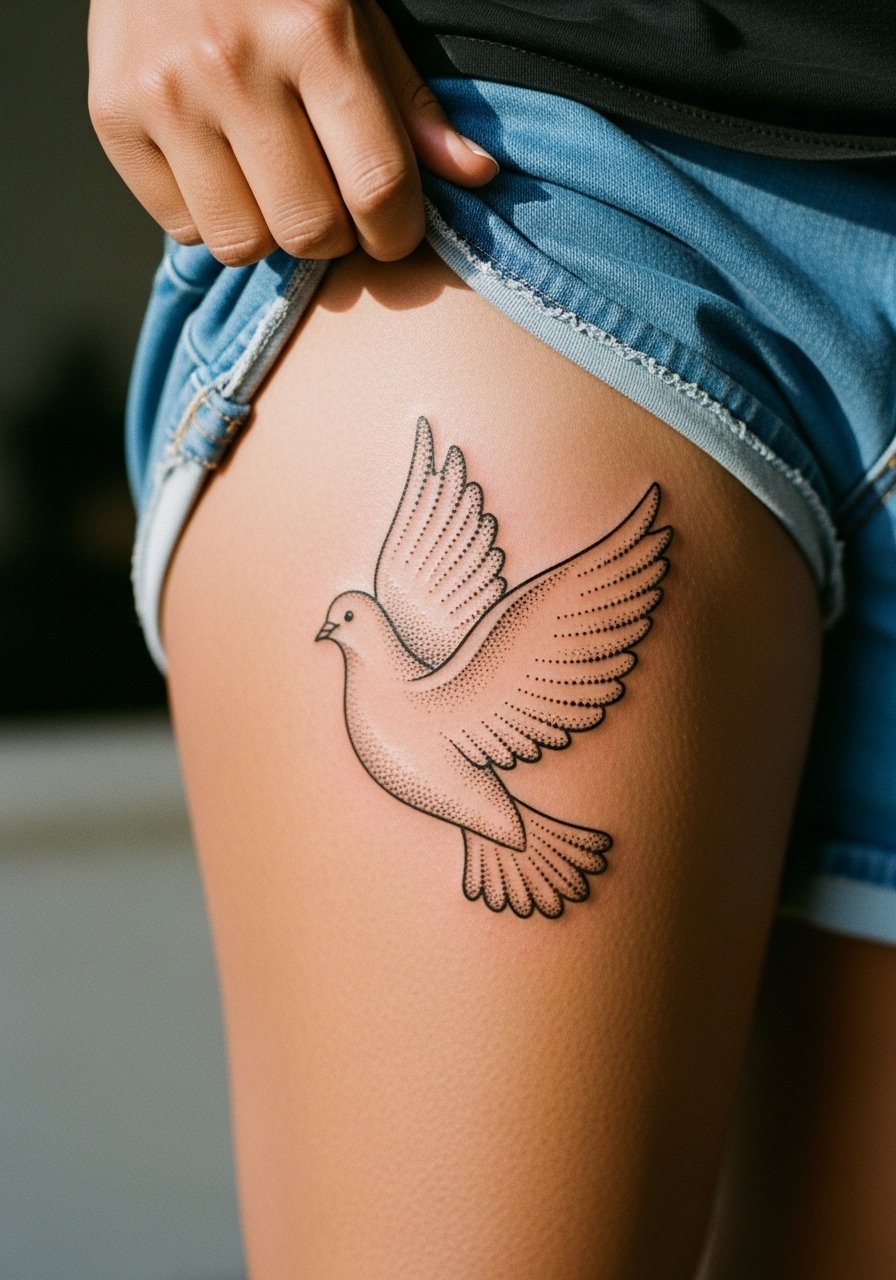
The inner thigh is intimate and ideal for larger dot gradients that read softly under clothing. If you prefer privacy, this placement hides well and heals mostly out of sight. A mistake is choosing overly fine stippling that scabs and pulls in a high-friction area. For the session, wear shorts you can pull at the waistline or a swimsuit bottom so the artist can access the area without full exposure. The pain is variable; most people rate it moderate. Because the area spends a lot of time covered, UV aging is less of a concern but friction from clothing can soften stipples more quickly than expected.
12. Nape-of-Neck Dove in Subtle Stipple Frame

Consultation lead: when you sit with an artist for nape work, show jewelry and hairstyle photos so they can size the dove to sit well under typical parts and updos. The skin on the nape can handle fine dots if spaced slightly wider than face work. A common error is placing the dove too low where shirts sit, which leads to constant rubbing. For showing it off, a simple thin chain pendant necklace sits above the work and keeps attention on the fine stipple frame. Session discomfort is moderate and touch-ups are occasional depending on your hair care routine.
13. Ribcage Dove in Layered Dotwork

Controversy lead: fine line and dense dotwork on ribs split artists into two camps. One argues the stretch and breathing motion blur tiny details within a year. The other says with correct needle depth and spacing the pattern holds. My suggestion is to choose slightly larger dot units and to avoid high-density clusters at the curve of the ribs. The ribcage is painful and sessions are often broken into shorter appointments. For the session wear, a lifted cropped top makes access discreet and avoids full exposure. Plan on at least one touch-up after full settling if you had dense black dots near the lowest ribs.
14. Heart-Adjacent Dove with Subtle Dot Texture
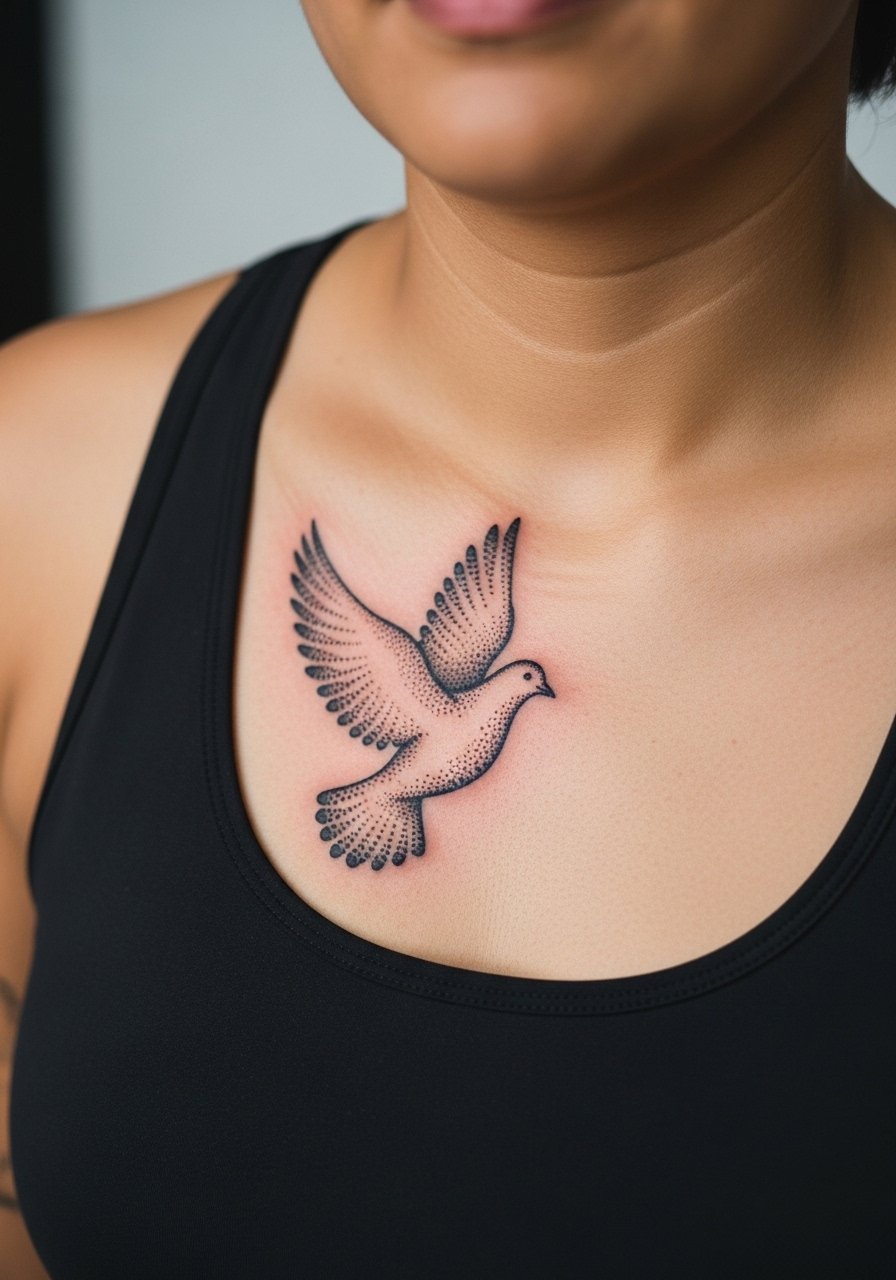
Mistake lead: the biggest misstep here is trying to cram portrait-level detail into a small heart-adjacent space. Dotwork thrives when it gets gradient room. Ask your artist to use negative space to outline the wing edges and to keep the densest dots off the direct center. The session is sensitive and breathing control helps. Because of the proximity to the chest, expect some movement as you breathe, so a follow-up touch-up is common at three to six months if any dots shifted during healing. This placement pairs well with layered necklaces, though for the session wear a zip-front top so access is easy.
15. Upper Arm Traditional-Blend Dove in Dotwork Fill
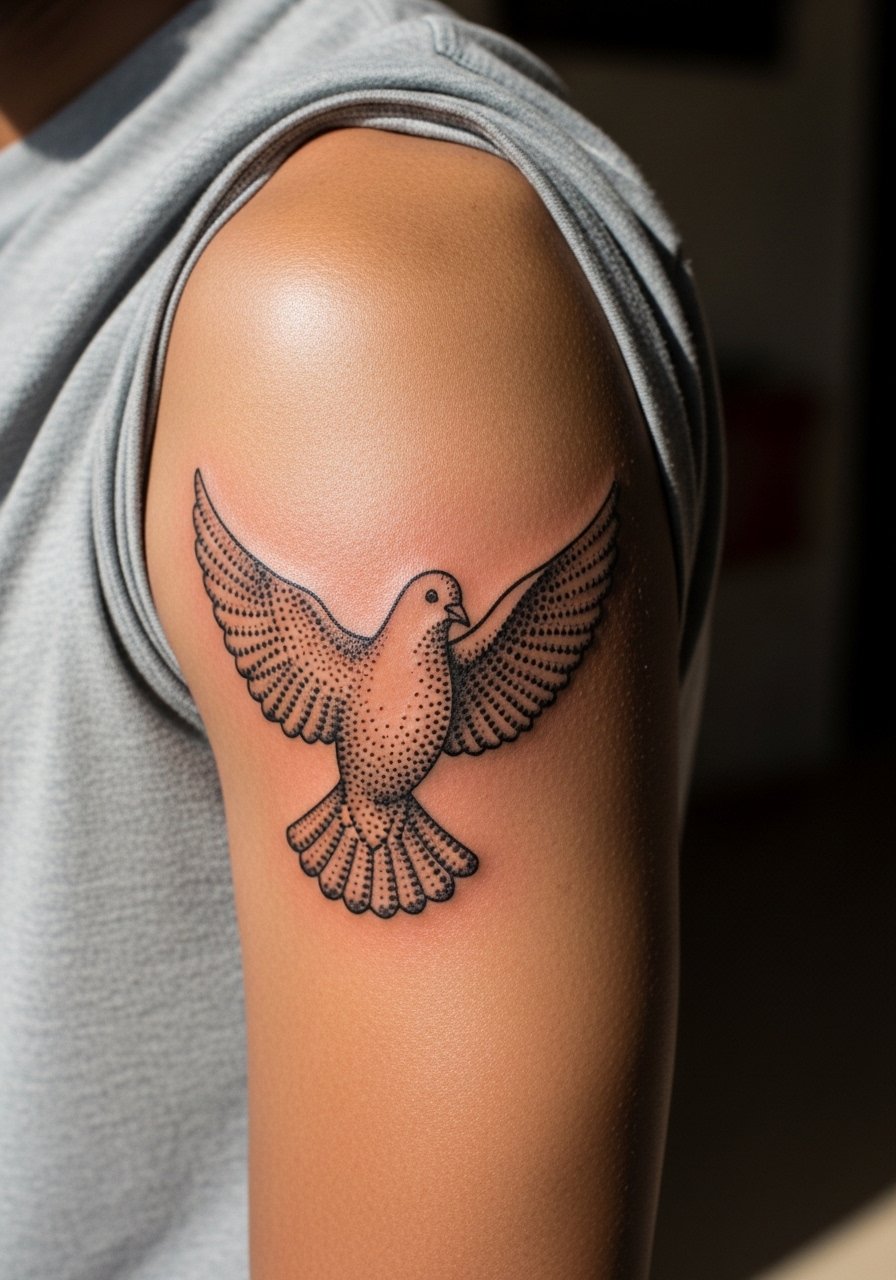
Visual impact lead: blending dotwork fill with classic bold contour gives you a dove that reads at distance and still contains subtle texture up close. Avoid asking for both micro-dots and extremely thin outlines at once. The upper arm is forgiving for saturation and touch-ups are straightforward. During consultation, request a two-shot plan where the artist lays the silhouette first and layers stipple in a second pass if needed. For showing it off, a rolled sleeve or short-sleeve knit is ideal. Session time is comfortable and the area is low friction so long-term legibility is strong.
16. Ribcage-to-Underbust Flowing Dove Composition

Aging/healing lead: dense dot paths across curved torso will look softer by year three unless you build clear spacing into the design on day one. For a flowing composition that survives, ask for broader gradations and avoid micro stipple in the tightest curves. This placement is higher pain and sessions are often paused for comfort. If you want it to peek under low tops, think about the neckline lines during consult to place the dove so it shows when you want it to. A fitted sports bra during the session keeps the area covered before and after without rubbing at the fresh ink.
17. Sleeve Accent Dove in Repeating Dot Motif
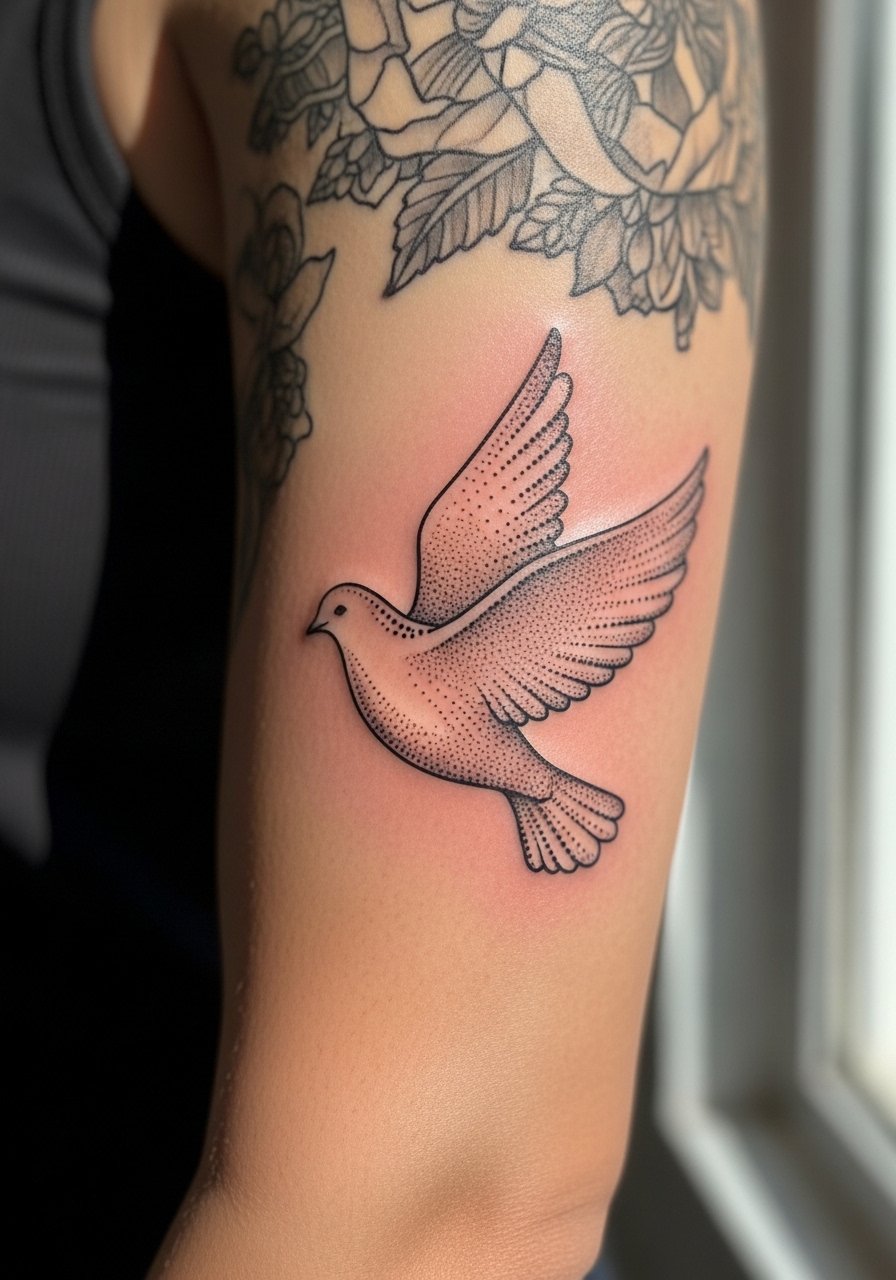
Personal observation lead: sleeves that integrate a dotwork dove as a repeated motif often hold together best when the dove is used as a negative space anchor rather than a fully shaded feature. Tell the artist you want the dove to act as a breathing space for surrounding textures. The common mistake is overloading detail around the dove which makes the silhouette disappear. Sessions for sleeve work are longer and you should book with a realistic timeline. Wear a loose button-down that you can remove without stretching the arm. Expect touch-ups as you add adjacent elements to keep contrast consistent.
18. Finger-Side Micro Dove with Sparse Dotting

Pain warning lead: finger placements are notorious for faster fading because the skin regenerates quickly and hands are exposed to so much washing. Keep dots sparse and slightly larger to avoid early blurring. A common mistake is treating finger dotwork like wrist work and using the same tiny dot sizes. The session is short but sharp and touch-ups are often needed in the first year. If you want it to pair with jewelry, a slim minimalist ring can complement the tiny dove without rubbing the tattoo too much.
19. Upper Back Center Dove with Radial Dot Wash
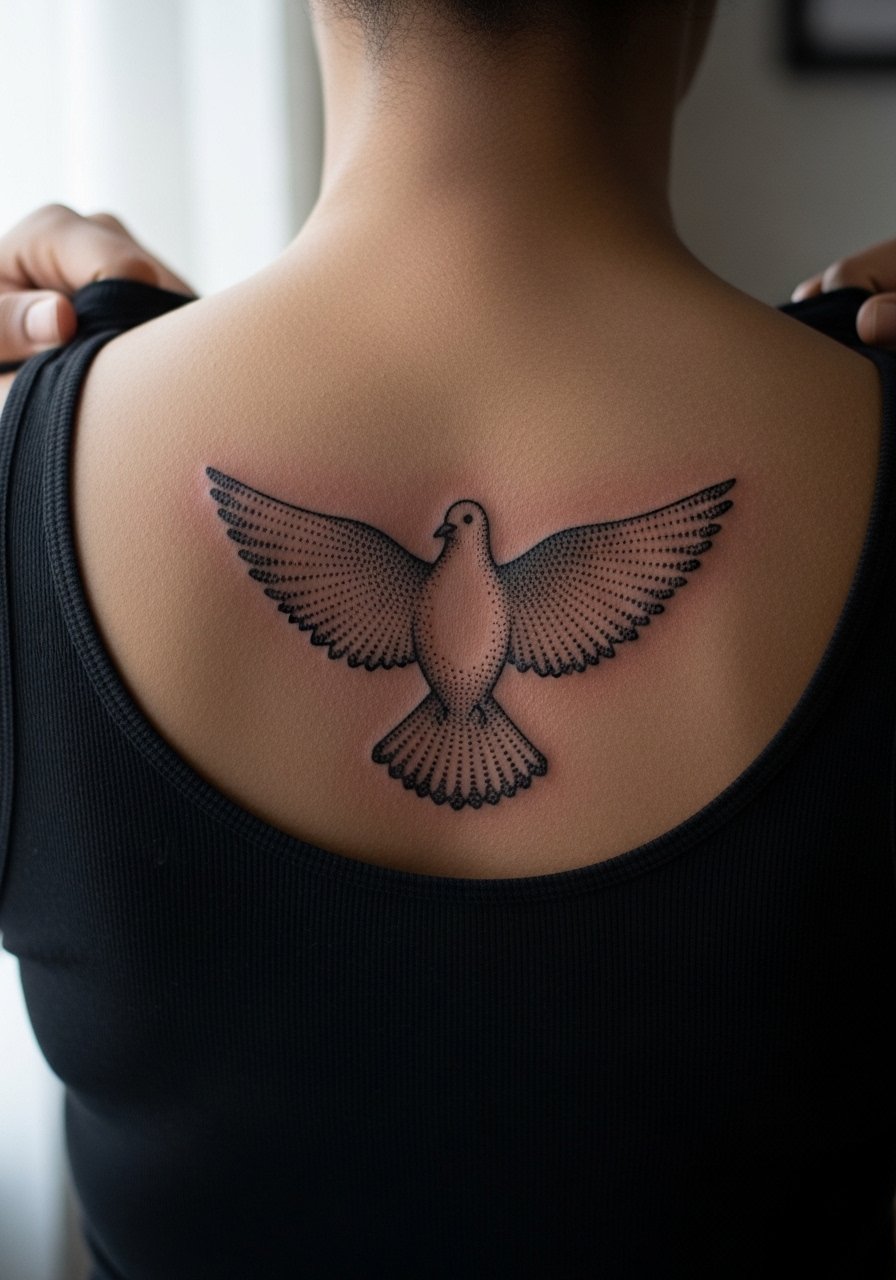
Consultation lead: the upper back is an excellent canvas for radial stipple that gives the dove a halo effect. Ask your artist to visualize the piece with your typical wardrobe so the dove sits where straps and collars will not constantly rub. A mistake is placing the halo too close to straps which can cause scabbing issues during healing. The session is comfortable if you can lie prone, and touch-up work is usually straightforward at one year if you decide to intensify contrast.
20. Collarbone-to-Shoulder Dove with Fine Dot Wingwork

Styling lead: this diagonal placement benefits from wardrobe that frames the motion. For evenings, an open-back midi dress or a crew-neck tee with a scooped armhole brings attention to the wing sweep. When briefing your artist, specify how you want the dot density to taper into the shoulder to keep the silhouette visible when you wear sleeves. The pain is moderate near the collarbone and session time is usually a single appointment. Expect lower UV exposure if you tend to cover shoulders, which helps the dot texture last longer.
21. Subtle Chest-Left Dove with Micro Dot Outline
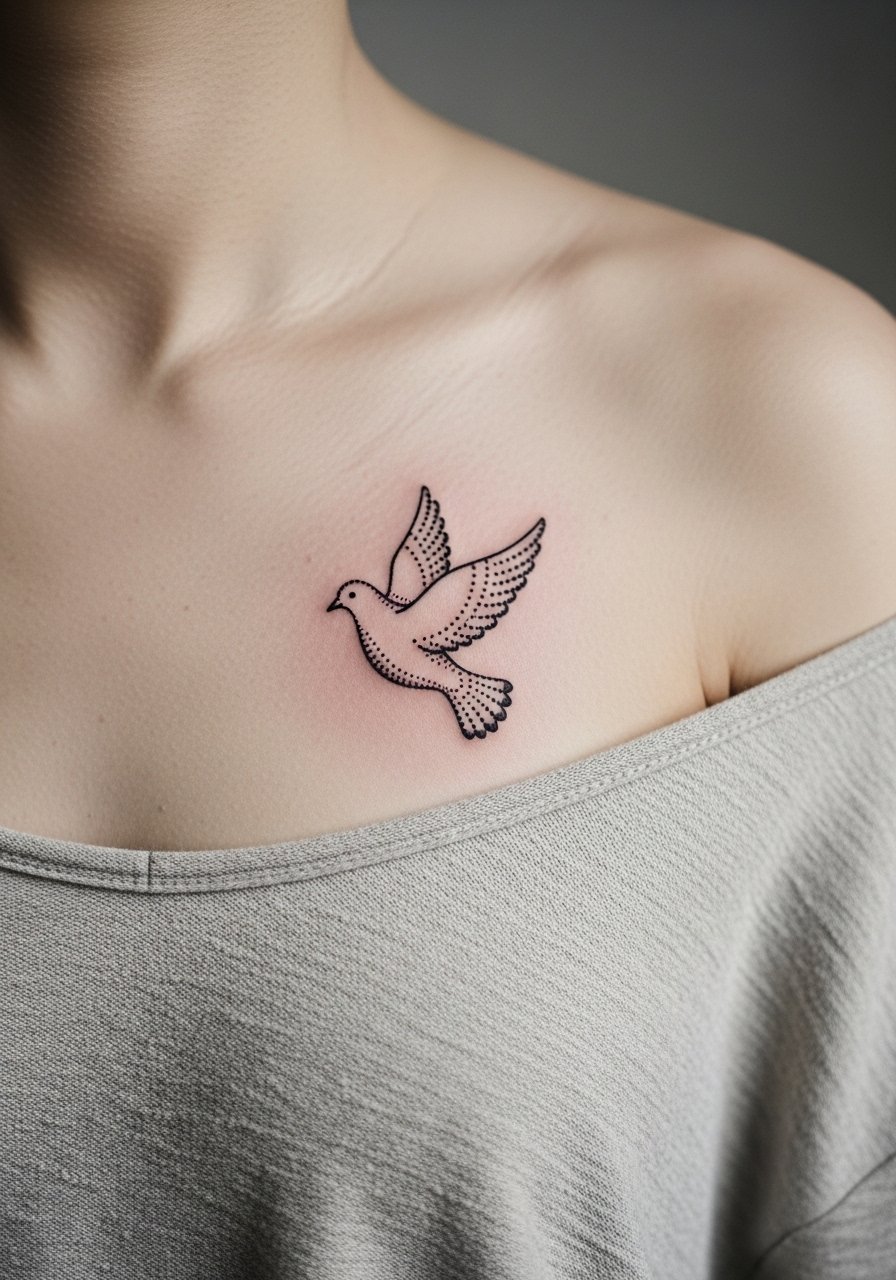
Mistake lead: the smallest chest placements lose impact when the dot outline is too faint against skin tone or when it sits under collarbones that cast shadow. Ask for a micro outline that reads slightly stronger than you think you need so the dove survives changing light. The session is sensitive and you should expect to breathe shallowly during parts of the needle time. For discoverability of artists who do delicate chest dotwork, search local convention portfolios, hashtag galleries, and design directories rather than relying on single saved images.
Frequently Asked Questions
Q: How does dotwork age on high-motion areas like ribs and shoulders?
A: It depends on density and spacing. Ribs and shoulders move with breathing and range of motion, so dense micro dots near extreme curves can blur faster. I recommend asking for slightly larger dot sizes and clear negative space in moving areas, and to expect a touch-up within two to three years for dense pieces.
Q: Will a tiny dotwork dove on the hand or fingers need touch-ups more often?
A: Yes, hand and finger skin renews faster and sees more friction and washing, so expect touch-ups in the first one to two years. If you want less maintenance, choose slightly larger dots and simpler silhouettes and keep the piece on the side of the finger rather than the pad.
Q: How should I describe the dotwork effect to my artist during a consult?
A: Bring close-up healed photos that show stipple density and spacing you like, and ask for a skin-matched mockup. Say you want "graduated stipple with negative-space edges" and request to see healed client photos from the artist. Also ask about their touch-up policy for micro dot work.
Q: What should I wear to a sternum or ribcage session for comfort and access?
A: Wear a fitted sports bra or a zip-front top you can pull aside that still leaves the area mostly covered. That protects privacy and keeps fresh ink from rubbing. A lightweight robe can be useful for travel to and from the studio.
Q: Are there styling choices that help show off a collarbone or shoulder dove?
A: Yes, open necklines and rolled sleeve shirts frame collarbone or shoulder doves nicely. A simple loose button-down shirt you can pull slightly aside or roll the sleeve of works well for both show and session access.