Fine line and dot density trends look great on a saved post, but the real test is how a chest piece moves with your body over years. Chest work asks you to commit to placement, multiple sessions, and longer healing windows. Expect session-day discomfort around the sternum, and plan pockets of time for touch-ups. Start with these dotwork chest tattoo ideas that balance detail, aging, and wardrobe so the finished piece earns the look you wanted.
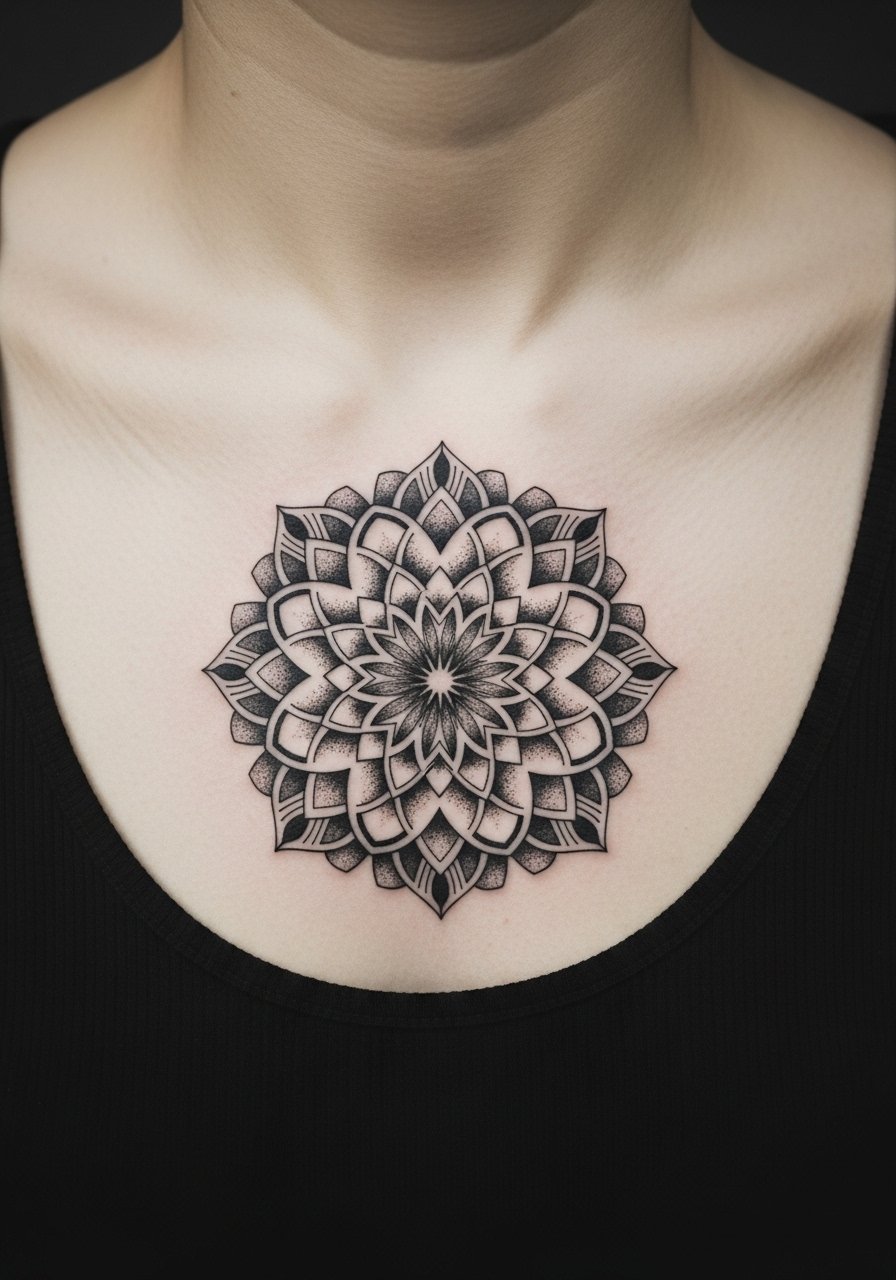
1. Full Chest Mandala That Builds Over Time
I've seen mandalas land better when they are planned to grow instead of packed in one session. Tell your artist you want density gradients that read from a distance, not ultra-fine fill crammed into a tight circle. The consultation should include scale mockups that sit over both pectorals and the sternum, so the pattern breathes and avoids early blur in dense zones. Expect 2 to 4 sessions and touch-ups at year two for high-density areas. Pain is moderate across the chest with sharper pinches at the sternum. For showing this off, layer an unbuttoned henley in charcoal, the neckline frames symmetry without stealing attention. Common mistake is asking for a mandala too small. That forces dotwork into a size that will lose definition in a few years.
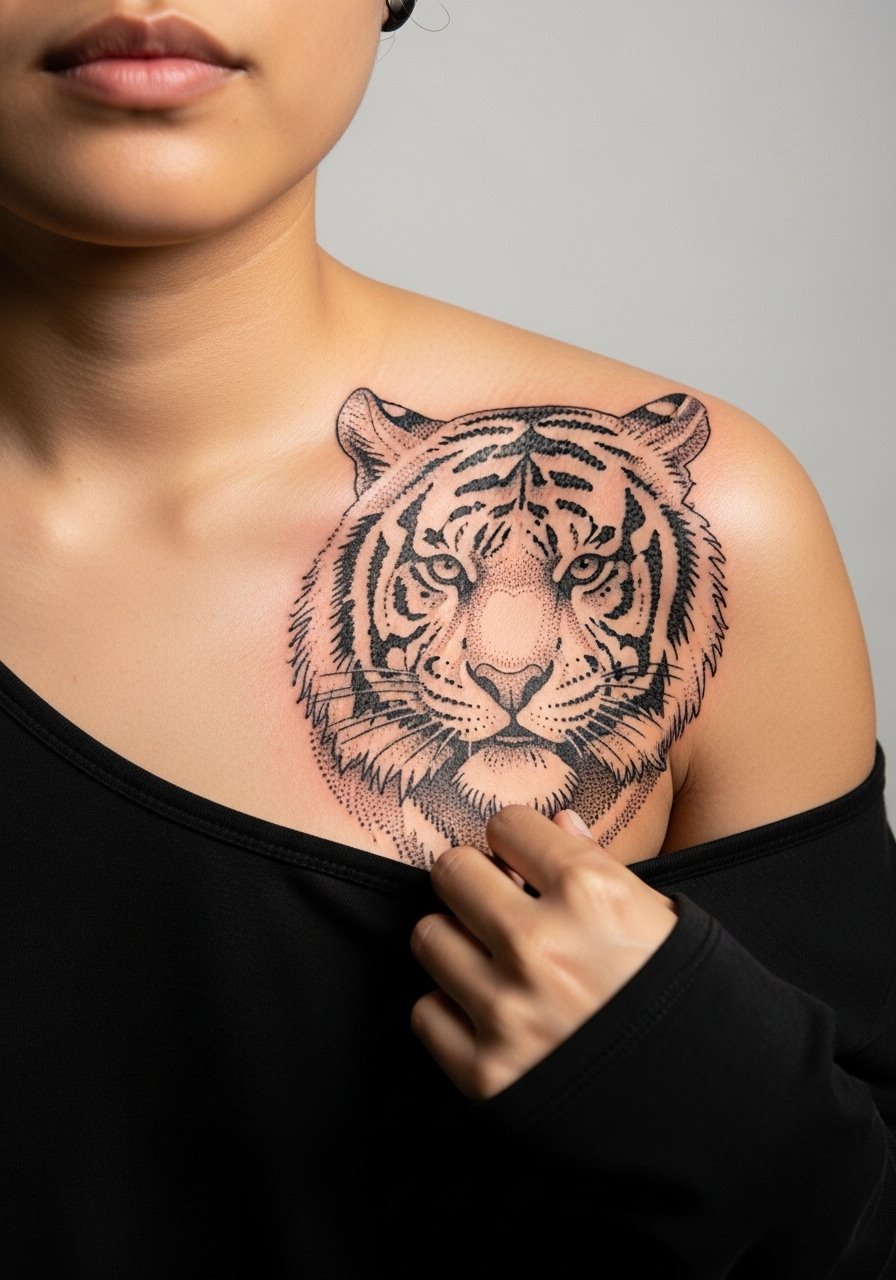
2. Upper Chest Tiger with Shoulder Flow
Fair warning, the upper chest and shoulder meet a lot of movement and stretching, so discuss flow in your consultation. I suggest a dotwork tiger where the head sits on the pectoral and the shoulder receives the whisker and fur gradients. Ask for varied dot sizes to suggest fur direction instead of continuous gray wash. Session time runs long and you will need breaks during a three to five hour block. Blowout risk rises where the skin is thin near the clavicle, so the artist should plan needle depth carefully. For session comfort, wear a sleeveless workout shirt so the artist can access shoulder and upper chest without tight seams. Over time the contrast softens but pattern still reads if spacing is respected.
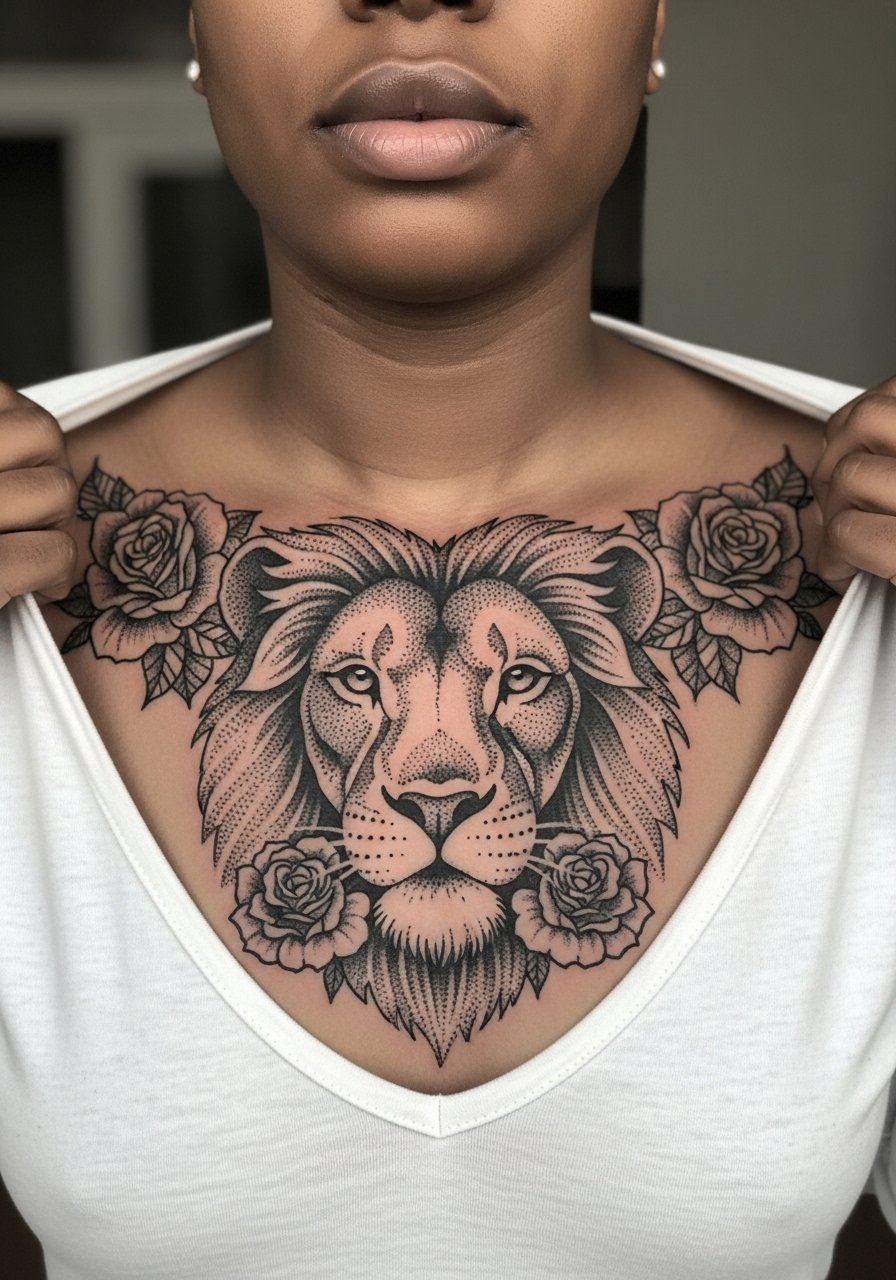
3. Lion and Roses Over the Heart
Most people pick this arrangement for a central focal point that carries symbolic weight and visual balance. Specify a heavier dot density for the lion's mane and finer stippling in the rose petals so each element keeps its edge after healing. The heart-side placement can feel more sensitive during the session because the tissue moves beneath the needle. At six months the petals will look softer, and by year two the mane should still hold its contrast if the dots were spaced for longevity. A common mistake is asking for too many small details near the sternum. That invites muddiness. When you want to show it casually, a deep V shirt in olive sits well with the composition and keeps the centerpiece visible without overexposure.
4. Geometric Patchwork Chest for Collectors
There is a practical route to big chest coverage that I recommend to anyone unsure about a full piece. Patchwork lets you test motifs, add over years, and avoid buyer's remorse. Plan each patch as a self-contained dotwork unit with negative space around it. Tell your artist you want consistent spacing and a shared dot scale so pieces can eventually read as one composition. Typical session time per patch is short, one to two hours, and touch-ups are easier to book. For everyday wear, a fitted muscle tee in white frames individual patches without busy prints stealing focus. Mistakes happen when collectors mix wildly different dot scales. Keep the density language consistent across appointments.

5. Upper Chest Lady Face with Stipple Shading
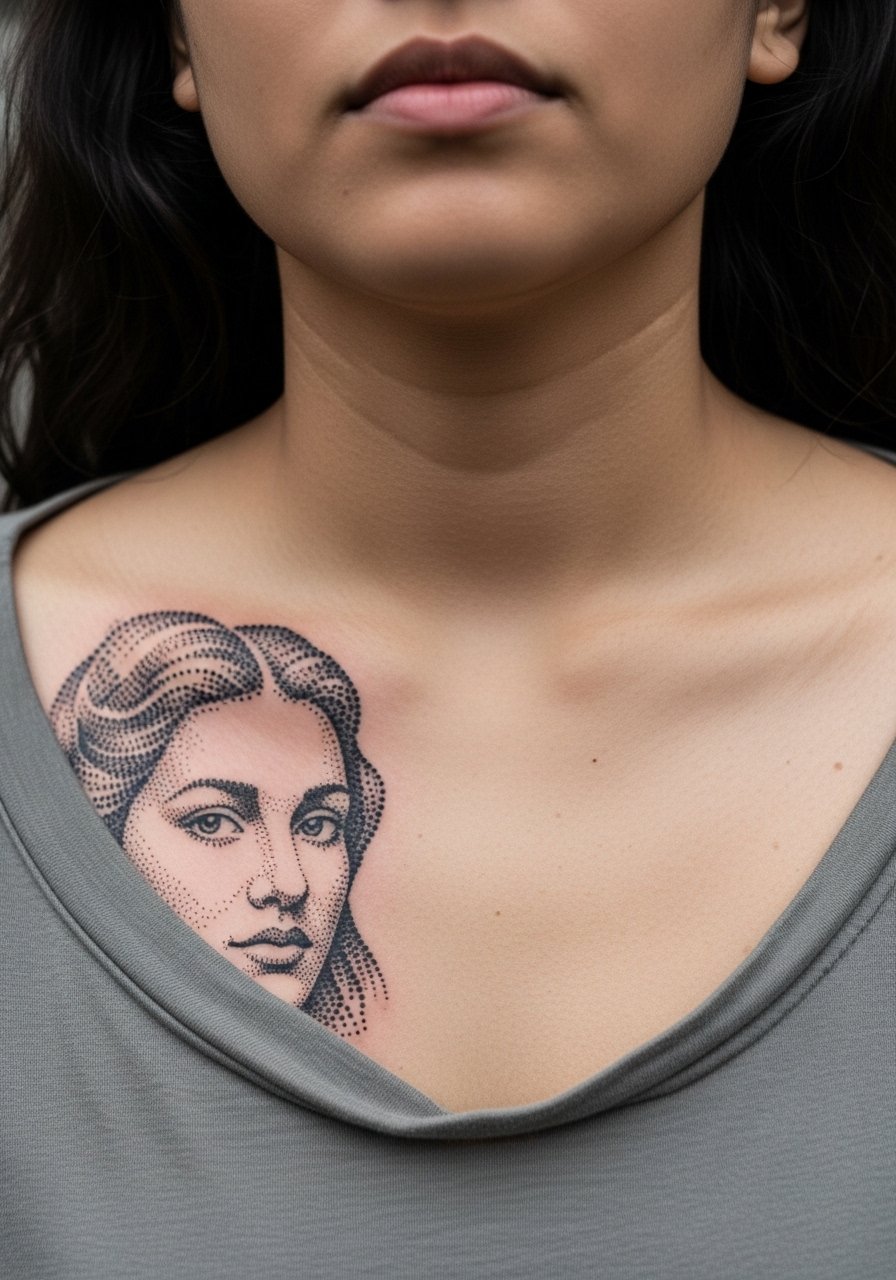
The trick with illustrative faces is to let dot density create facial planes instead of tiny continuous lines. Ask for stipple shading in the cheek and hair areas and leave the eyes slightly bolder so they anchor the face. During the session you will feel longer stretches of fine work, which can be mentally fatiguing. At six months fine dots settle into softer tones and at two years you may notice some blending in areas with thin skin. Do not request ultra-fine portrait detail too small on the pectoral. That is the most common way portraits lose character. When dressing to reveal this, a thin chain pendant sits above the portrait and adds vertical interest without competing with facial shading.
6. Sleeve-to-Chest Abstract Flow
When a sleeve looks unfinished at the chest seam this ornamental dotwork flow is the fix. Describe the expansion points you want and bring sleeve photos so the chest filler matches scale and rhythm. Sessions cross multiple days because large gradients need time to settle. Plan for four or more sessions depending on how much of the chest you connect to the arm. Expect soreness where the shoulder meets the sternum during and after inking. For the session dress in a loose fit tank top so the artist can roll the sleeve and pull the front aside without rubbing fabric over fresh work. The main mistake is forcing contrasting dot scales between arm and chest which makes the joint look patched rather than integrated.
Studio Day Picks
Those first six chest pieces range from delicate portrait dots to full blackwork flow. A few well chosen items smooth out the appointment and the first week of healing.
-
Stencil transfer paper kit. Lets you preview the mandala and portrait placements on the chest so you can adjust symmetry before the needle starts.
-
Topical numbing cream. Helpful for sternum and upper chest sensitivity when you need the extra comfort for longer sessions.
-
Thin protective film roll. Keeps fresh dotwork patches clean during early showers and against shirt friction.
-
Fragrance-free body wash. Cleans the chest area gently without stripping natural oils that dotwork needs while healing.
-
Aquaphor healing ointment. Thin application in the first days locks in moisture for dense dot areas without clogging.
7. Sternum Compass with Negative Space
When you want a focal point but minimal coverage this compass-style design reads bold because of contrast rather than size. Ask the artist to use negative space wedges so the compass spokes do not become a gray blur after healing. Session-day pain around the sternum is sharper than on the outer pectoral, so expect brief pauses. At six months the spokes should still be crisp if the dots were placed with breathing room. A common mistake is packing too many radial dots into the center. That makes the whole piece look muddy at year two. For the appointment wear a front-open button shirt so the artist can expose the sternum without you being fully undressed.

8. Micro-Realism Animal Bust on the Upper Pectoral
Micro-realism in dotwork takes a patient artist and multiple sessions to render texture. For a small animal bust on the upper pectoral tell the artist you want contrast through dot density not line-heavy contours. The session will include long runs of stippling that feel like vibration rather than quick pokes. At two years the texture survives when dots had room to breathe. The mistake most people make is pushing for a tiny, photo-real portrait where dotwork needs scale to depict fur. For showing off, a v-neck tee in solid navy frames the piece and keeps attention on the rendered texture.

9. Ornamental Collarbone Row
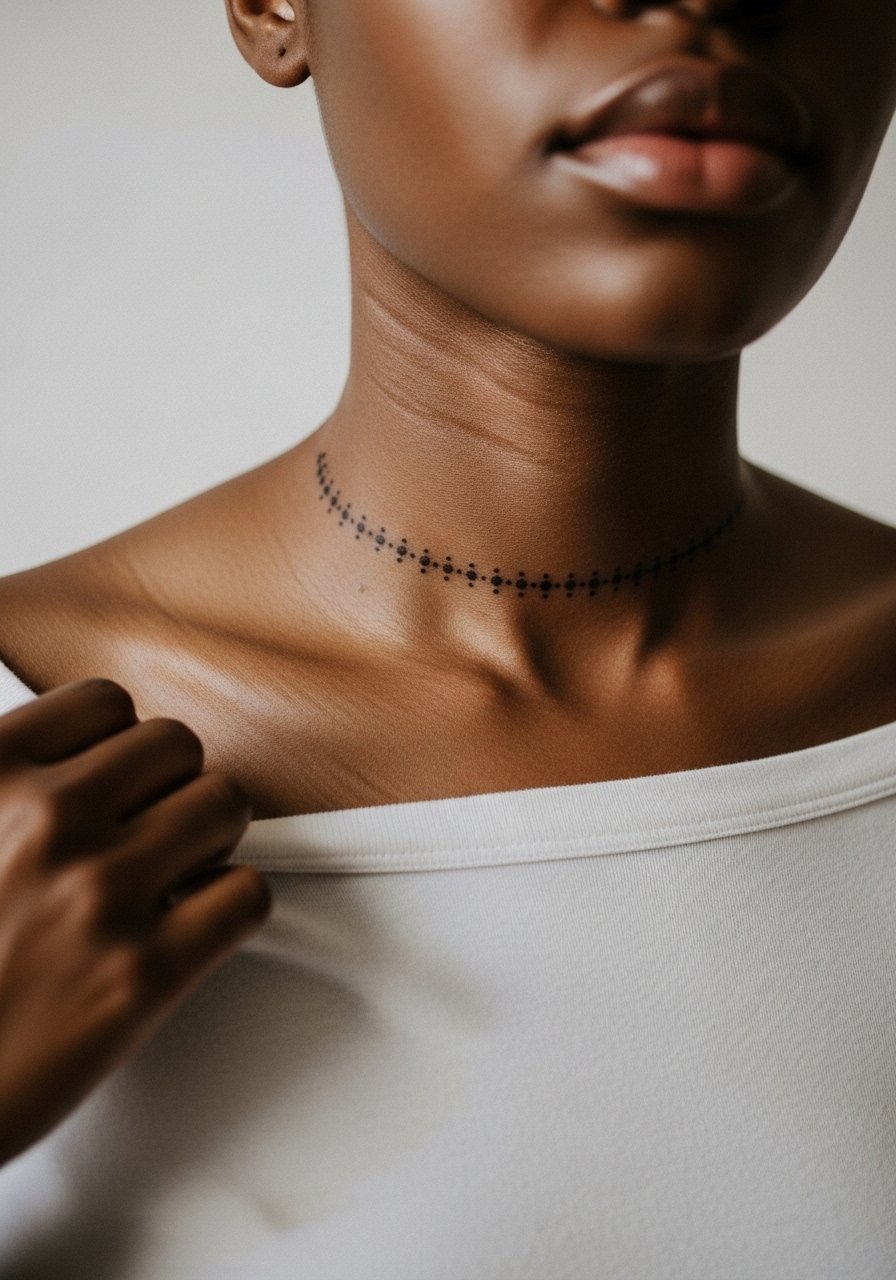
Collarbone placements highlight linework and spacing, and dotwork can create delicate ornamental chains along the clavicle. Ask for slightly larger dots than you might pick for an arm so the row keeps shape over time. The area requires careful needle depth because the skin there is thin and blowout risk is higher. At six months the dots will soften slightly and at five years the pattern should still read if spacing was generous. Wear a thin chain necklace that rests above the collarbone so the metal guides the eye without crowding the dots. A common error is prescribing ultra-fine dot rows that are too close to the bone.
10. Centered Geometric Sternum Tile
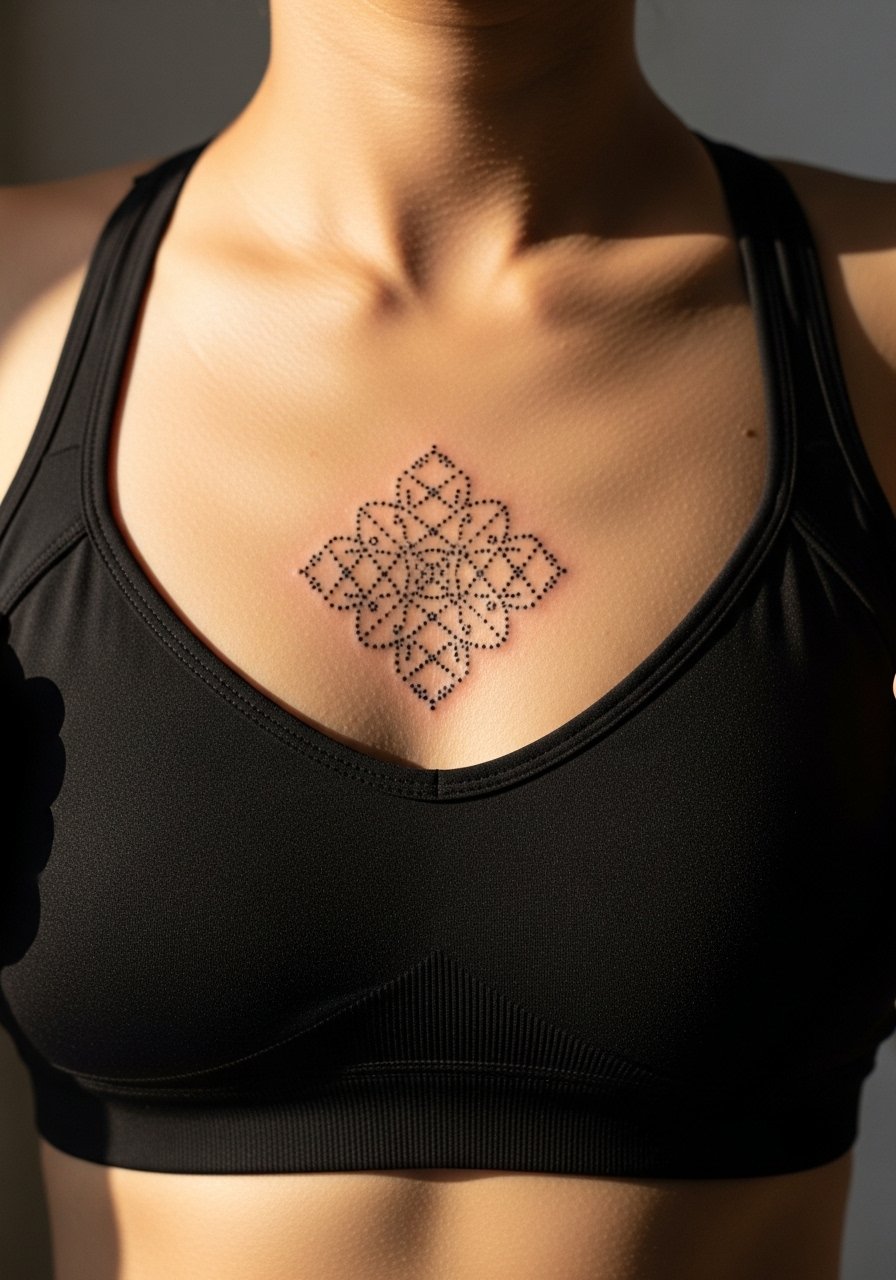
This tile approach sits centered on the sternum and uses repetitious geometry to read bold without covering the full chest. Ask for graduated dot sizes across the tile so the center pops and outer edges fade gently. During sessions you will notice more sensitivity toward the center, so split the work into shorter blocks. The tile looks its cleanest at six months and requires a touch-up in dense center areas at year three if needed. Avoid asking for too many adjacent small elements, which is the usual version that ages poorly. For casual wear, pair the tile with a simple pendant necklace that sits just above the pattern for balanced composition.
11. Asymmetrical Chest Beast
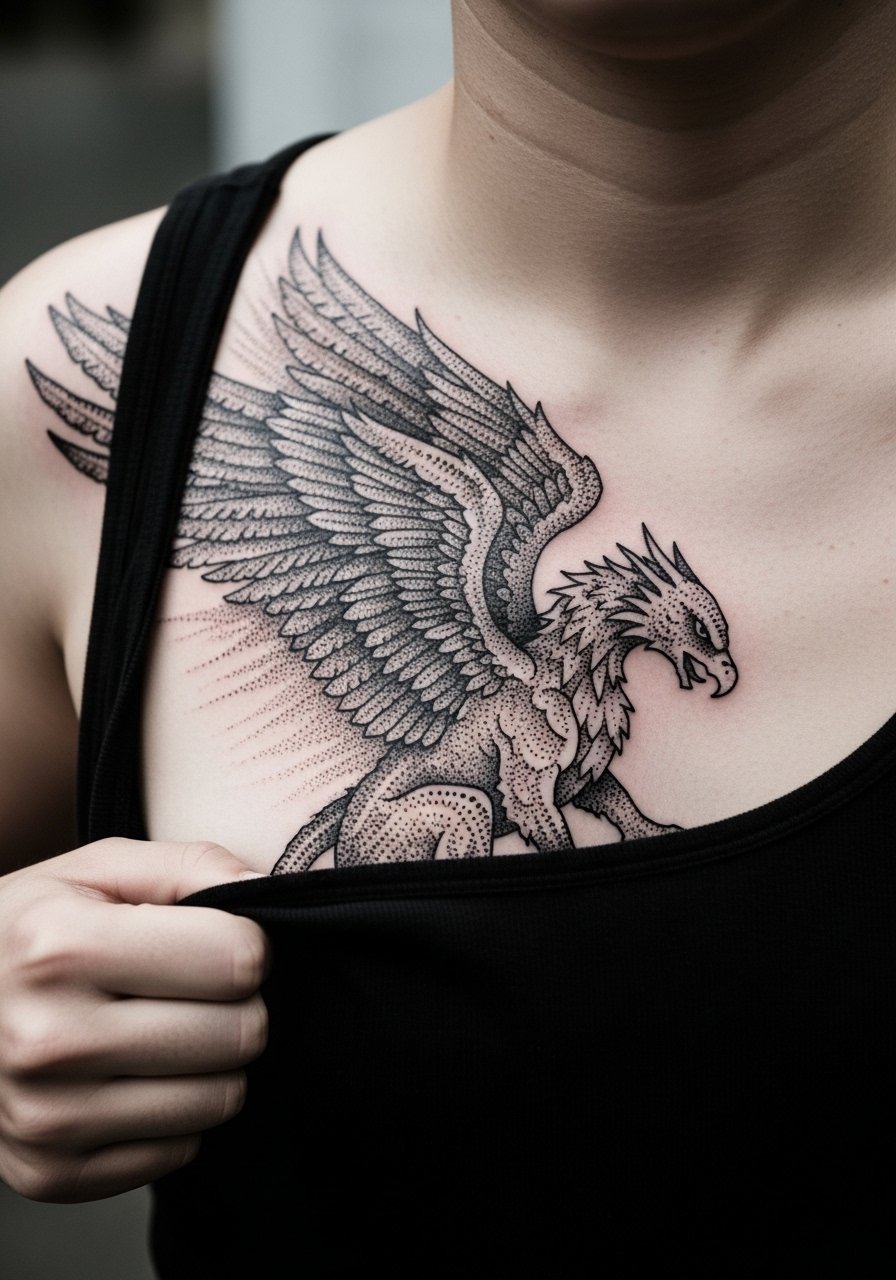
An asymmetrical animal or mythic creature that crosses one pectoral is a strong visual choice for men who want drama without full coverage. Tell the artist you want the head or face to anchor the pectoral and the body to fade using dot gradients across the chest. The session often requires repositioning and multiple passes to get the directional dots right. Watch for blowout around the rib margin if the design creeps too low. Over time the fade areas are meant to soften so the face remains the focal point. For appointment day wear a loose tank top so the artist can comfortably access the entire pectoral without fabric pressure.
12. Minimalist Micro-Mandala Near the Clavicle
Small mandalas near the clavicle rely on spacing more than density to last. Ask for a slightly larger scale than you think is necessary and for the artist to keep a clear negative space border. Pain there is lower than the sternum but you still feel the needle near bone. At six months the micro-mandala should still look crisp if the dots had room. Common mistakes include choosing a motif too tiny with hairline details. When you want to show it off casually, an unbuttoned henley with the collar open highlights the symmetry without distracting patterns.

13. Script Framed by Dotwork Filigree
Script over the chest reads differently when framed by dotwork filigree. The trick is to keep lettering slightly bolder than the surrounding stipple so words stay legible as the fill softens. During consultation bring exact lettering samples and be explicit about scale. Expect the chest to be more forgiving than fingers for text durability. At year three small scripts can start losing crispness if the surrounding dots were too dense. A common error is mixing ultra-thin script with dense filigree. For the session wear a front-open button shirt so the artist can access the area without tugging fabric across fresh ink.
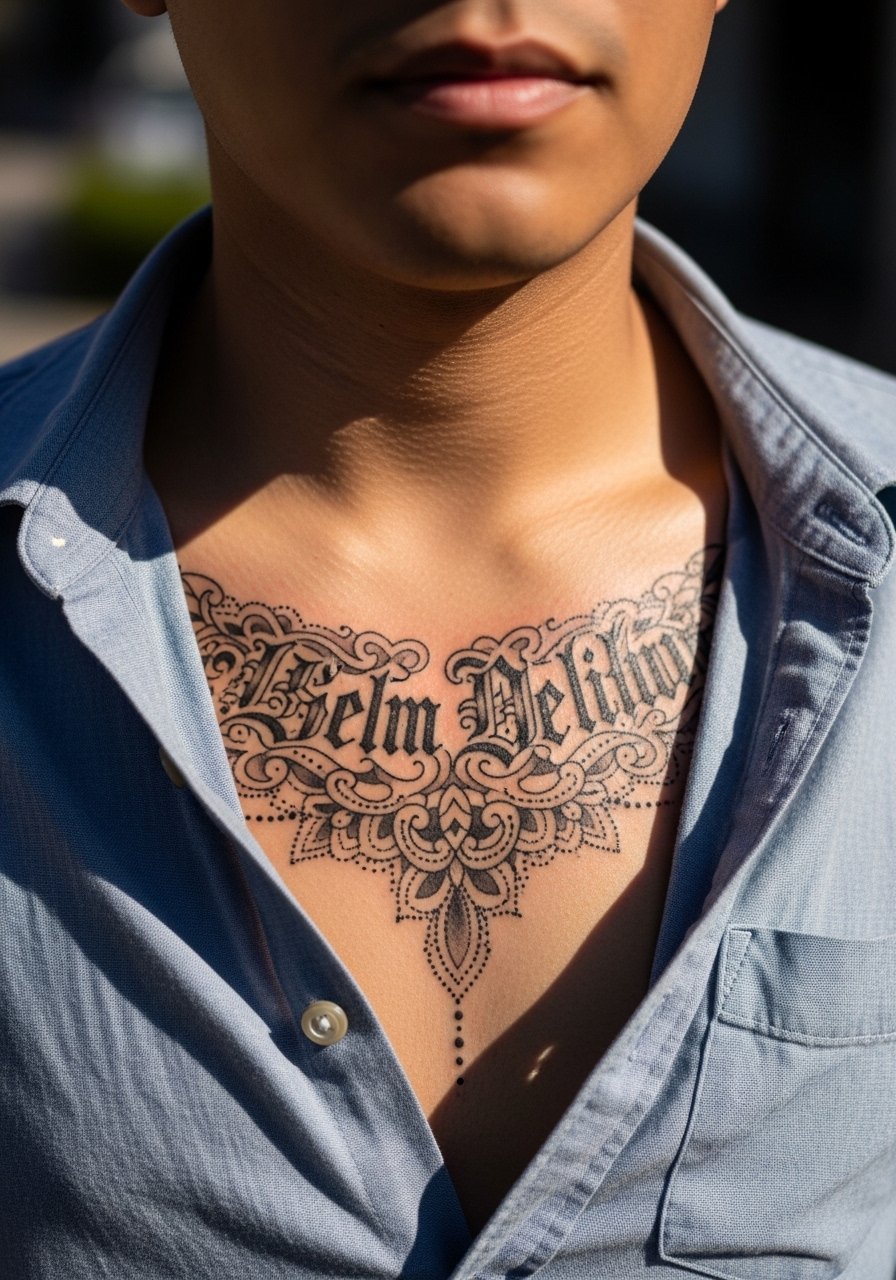
14. Broken Geometry Over the Pectoral
This style uses interrupted geometric lines and dot clusters to create a fractured look that still reads as a unit. Tell the artist you want intentional gaps so the design resists merging during healing. The session involves alternation between tight stippling and open space running across the pectoral ridge. Six months in the clusters will soften and the gaps will help maintain the pattern. People often ask for continuous geometry which can age into a gray plane. For showing the broken geometry, a fitted tank top in black keeps the silhouette clean and emphasizes negative space.

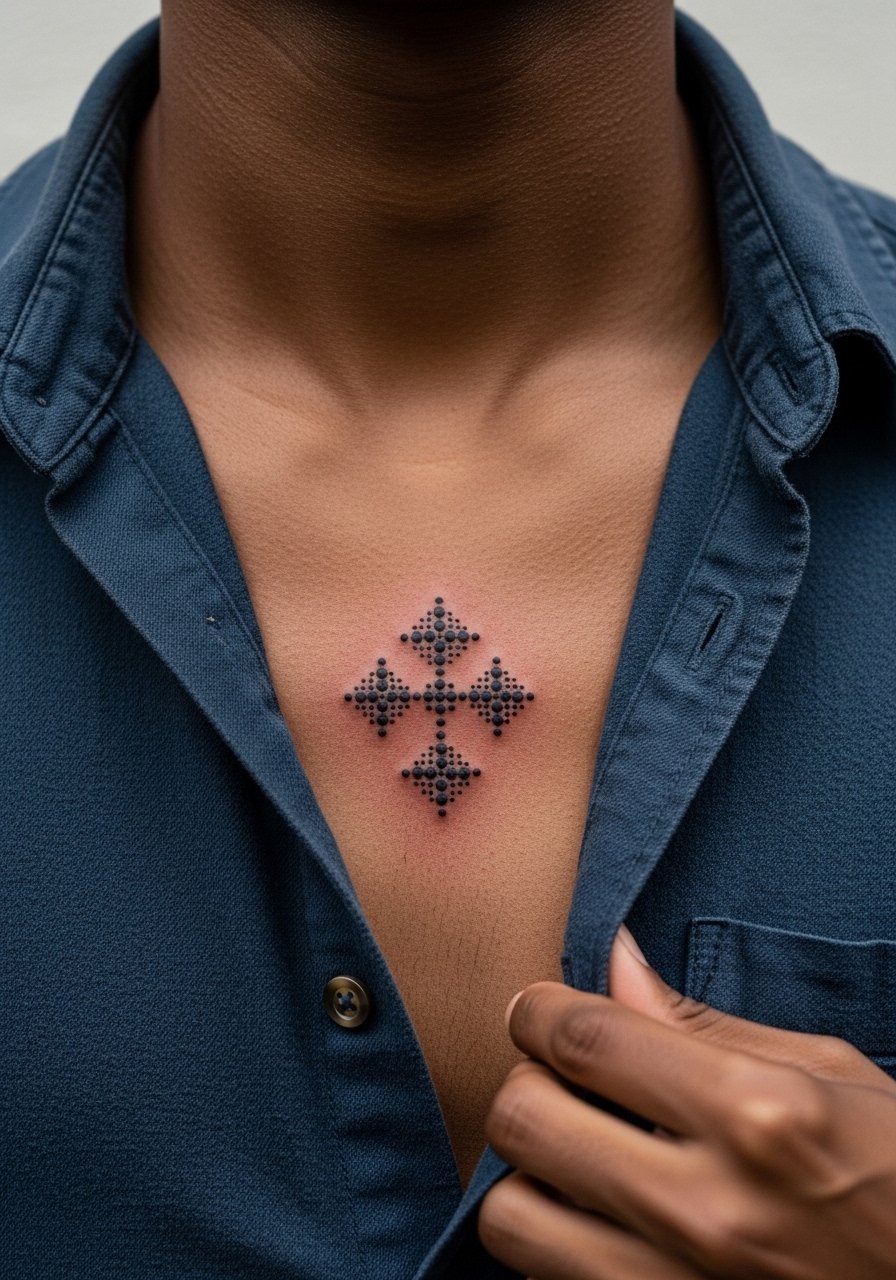
15. Religious Symbol Reimagined in Dotwork
When a religious symbol is the focus, respect its origin and discuss subtle variations rather than exact replicas. Ask the artist about line thickness and dot density so the symbol remains legible without overwhelming the sternum. Pain varies depending on how centered the piece is. Expect one to three sessions. The common mistake is cramming ornamentation too close to sacred motifs which makes recognition harder after healing. For session wear choose a front-open button shirt to expose the sternum area while staying covered. Some clients prefer to consult with a community elder or scholar when the symbol has specific cultural or liturgical meaning.
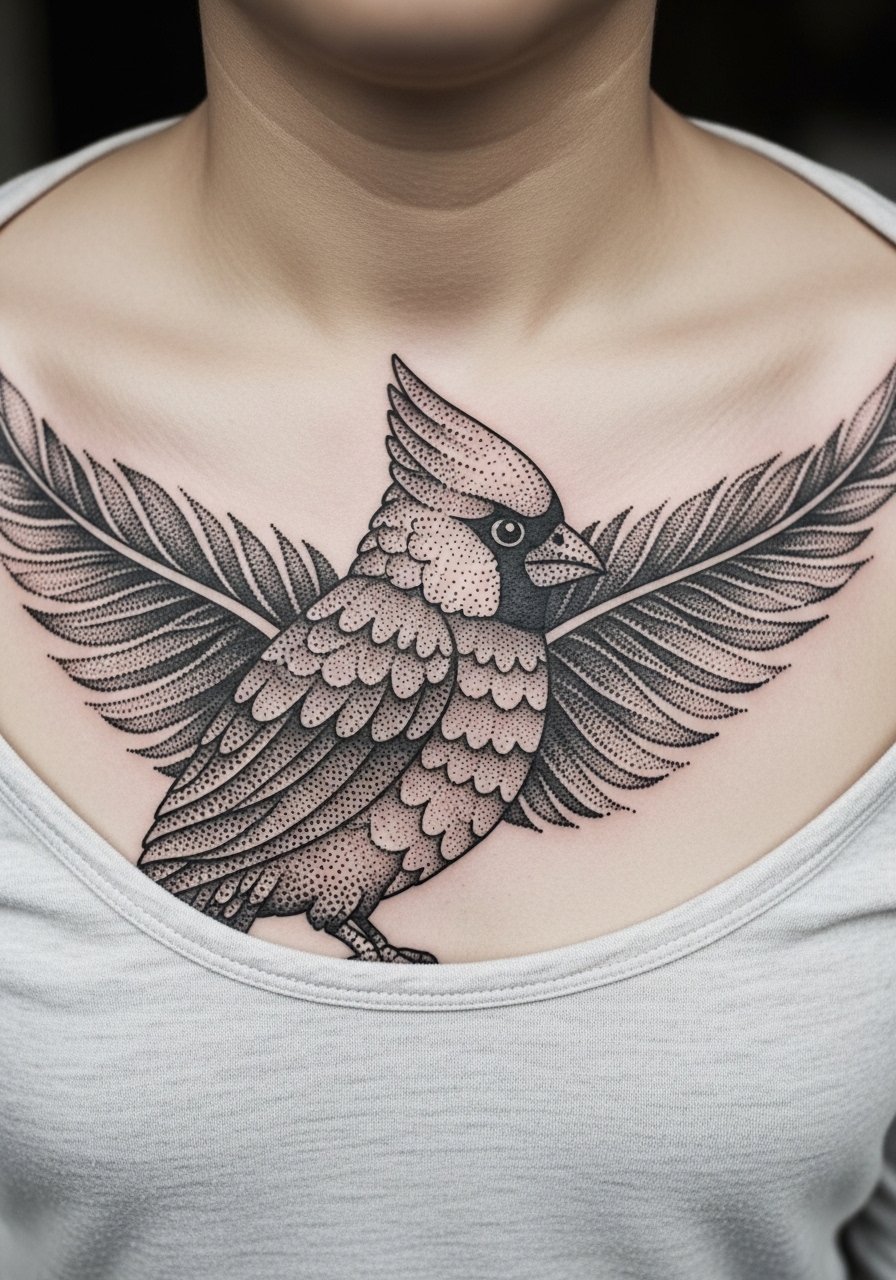
16. Cardinal Motif Spread Across the Upper Chest
This avian motif uses dot gradients to suggest feathers across both pectorals without heavy linework. Tell the artist you want feather direction to follow muscle flow so the bird appears to perch naturally. Sessions are moderate in length and you will feel varied sensations across muscle and sternum. At two years the directional dots should still suggest motion if dot scale was preserved. Avoid requesting hyper-detailed feathers in a very small area. For evenings out pair this with a thin chain pendant that sits between the wings and keeps composition balanced.
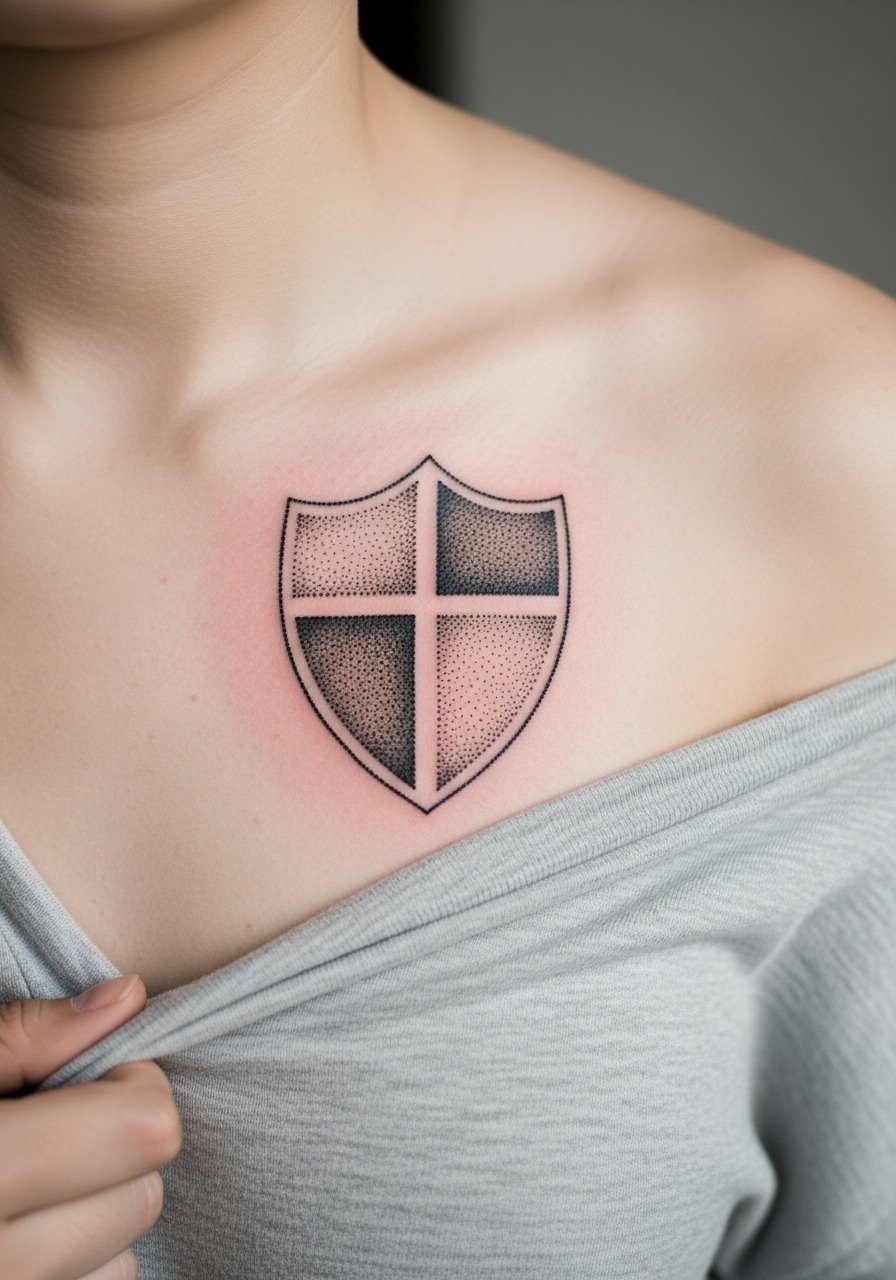
17. Shield Emblem Over the Heart
A shield emblem in dotwork reads authoritative without heavy black blocks. Ask for thicker dots at the crest edges and lighter stipple inside to keep the emblem readable as skin texture changes. The sternum placement is more sensitive and sessions are short but focused. At five years touch-ups may be needed along the outer crest. The frequent error is choosing packed fill instead of gradient shading which flattens the emblem over time. For showing it off, a deep V shirt in a neutral tone frames the chest area and keeps the shield as the focal point.
18. Optical Illusion Dotwork Panel
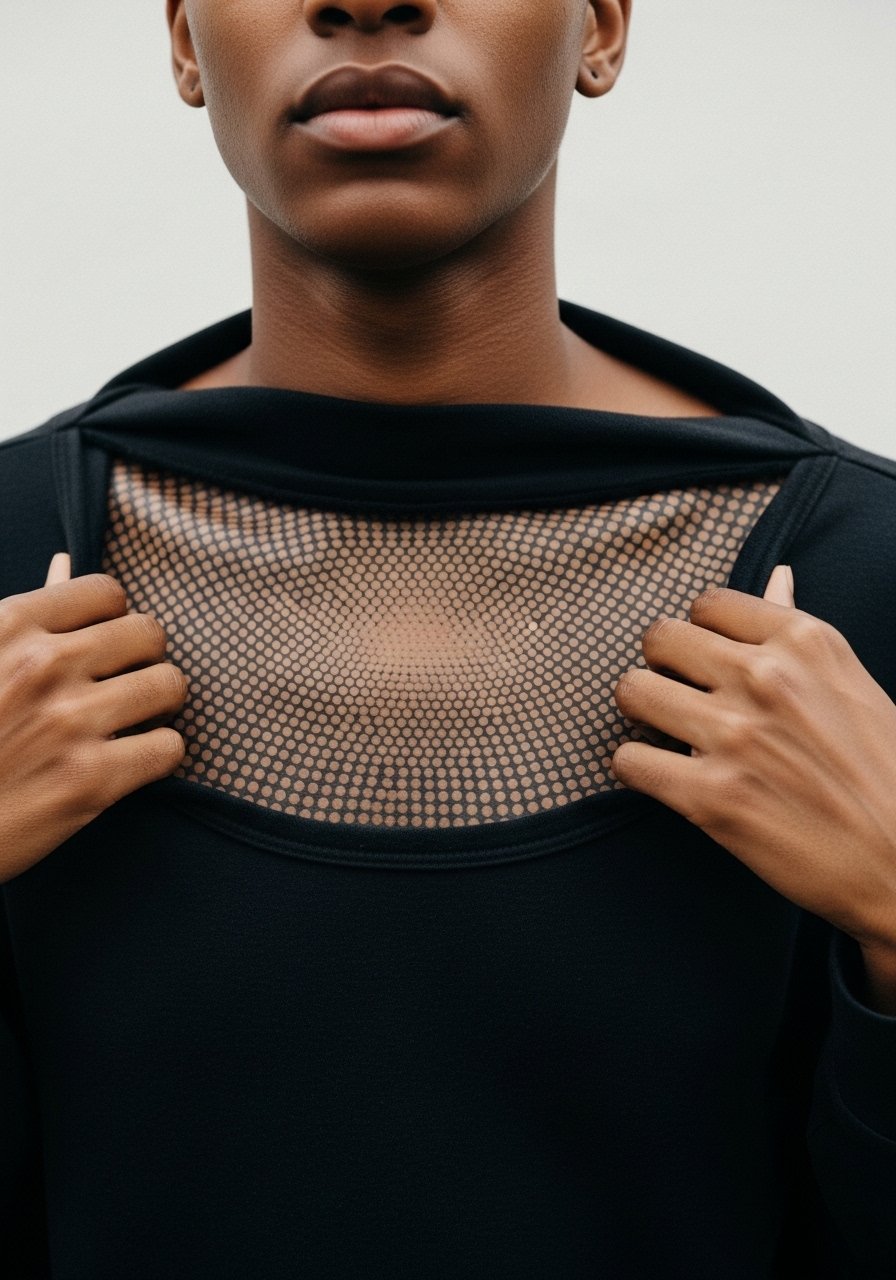
This axis-based panel uses dot density to create a subtle optical illusion that shifts when you move. Discuss with your artist exactly how you want the illusion to read from standing and sitting so the focal points align with muscle curves. The session is detail-heavy and requires steady breaks. Six months in the optical effect still reads if dot transitions were smooth. The mistake to avoid is overcomplicating the pattern which results in muddiness. For casual wear try a v-neck tee that lets the panel peek out at the collar for a controlled reveal.
19. Small Crest at the Lower Chest Rim
A compact crest near the lower pectoral is a discreet option for men who want chest ink that can be hidden easily. Ask the artist to use slightly larger dots so the small crest keeps shape through showers and friction from shirts. Session pain is lower here compared to the sternum though you will feel sensitivity along the rib edge. At two years the crest maintains clarity if spacing was intentional. The common misstep is packing micro details into a crest too small to hold them. For the session choose loose fit shorts and a tank that let you lift the hem without strain.

20. Asymmetric Script with Dot Wash
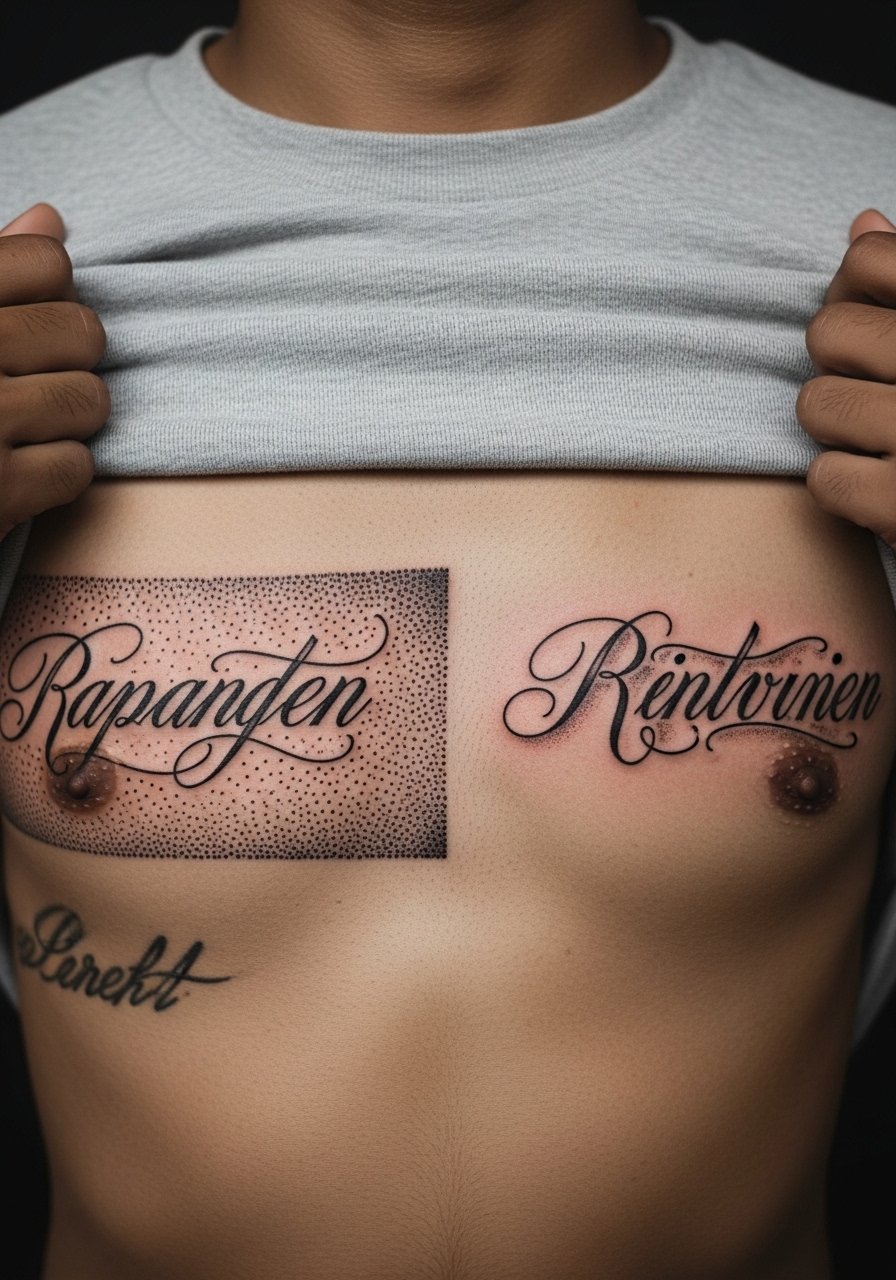
Place a line of script along the lower pectoral and complement it with a dot wash that fades outward. Make sure the lettering is set slightly bolder than the wash so words remain legible after the dotwork softens. During the session you will feel alternate passes for script and wash, which can increase total time. At year three lightening is expected and touch-ups may keep the script crisp. Commonly people ask for script too fine relative to the wash. For days you want to show the script wear a simple pendant necklace that rests just above the line and frames the composition.
21. Full Chest Blackwork Mandala with Negative Borders
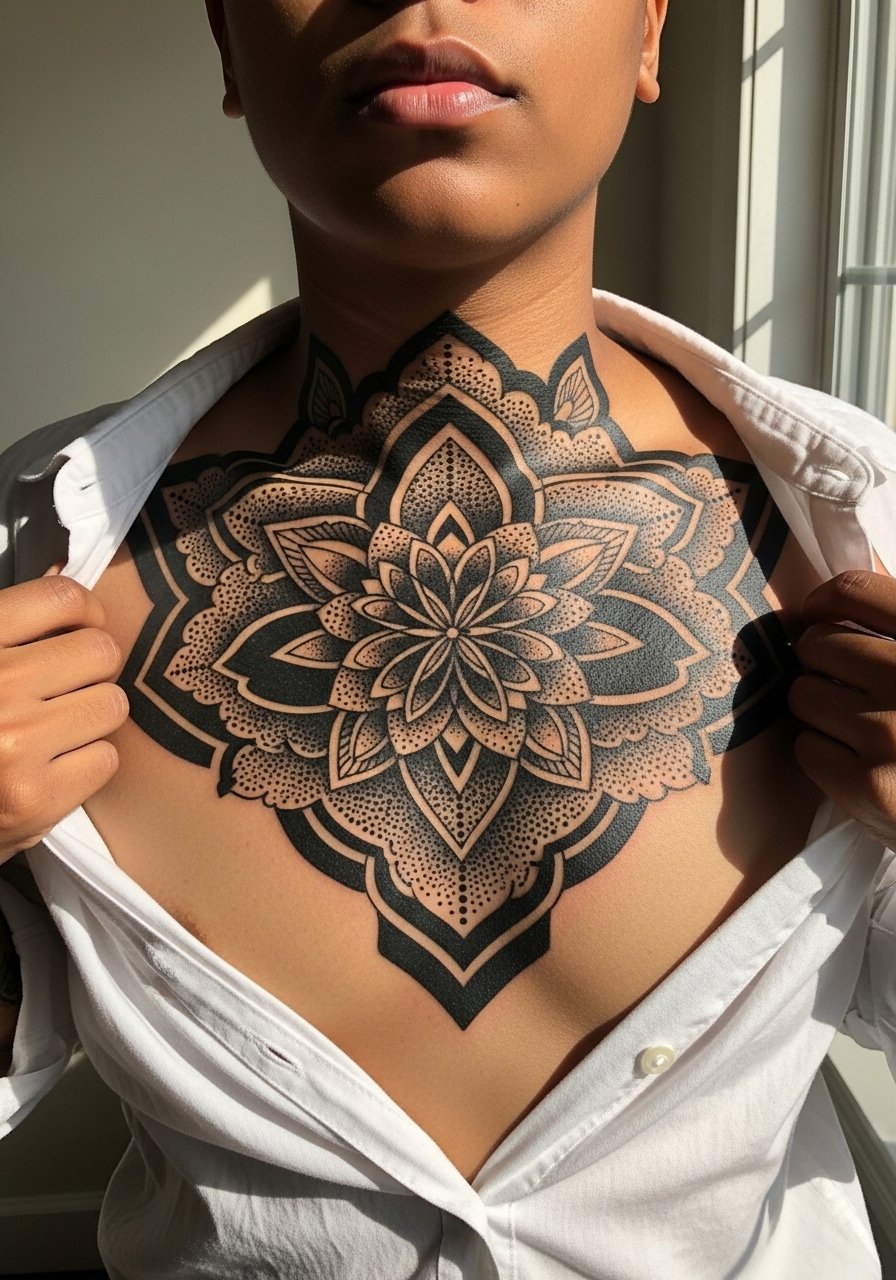
This is the bolder sibling of the patchwork mandala and suits someone ready for a larger commitment. Tell the artist you want heavy outer blackwork balanced by internal negative borders so the mandala reads in motion and does not become a flat black plane. Sessions will be multiple and intense while healing spans weeks for large covered areas. Expect reality checks about time in the chair and the need for staged sessions. A common mistake is asking for too much dense fill across the whole chest which hides detail. For appointment comfort wear a loose button-front shirt so the artist can open the front gradually. When planned this way the piece ages into a powerful graphic that still offers room for touch-ups.
Frequently Asked Questions
Q: How long do dotwork chest tattoos usually take to heal and when will they look settled?
A: Expect the initial skin healing to take two to three weeks and the dots to settle visually over six months. The first week requires careful moisture control and loose clothing to reduce friction. Dense sections can need touch-ups at year two or three more often than small patchwork because dot packing can soften over time. Plan sessions with enough gap so the skin fully recovers between appointments.
Q: Will dotwork on the sternum hurt much more than on the outer pectoral?
A: Yes, sternum and center chest areas are typically more sensitive because you are over bone and thinner tissue. Outer pectorals feel more muscular and tolerate longer sessions. If you are worried, ask about numbing options during consultation and wear a loose fit tank top to the appointment so you can stay comfortable between passes.
Q: How do I avoid a dotwork piece going muddy after a couple of years?
A: The main guardrails are spacing and scale. Ask your artist to leave negative space around dense zones and to use graduated dot sizes to suggest texture rather than packing everything at one size. Also protect the chest from prolonged UV exposure and plan on touch-ups in high-density areas after a couple of years.
Q: Are there placements or designs you should avoid if I want a low-maintenance chest tattoo?
A: Avoid ultra-dense, highly detailed portraits centered on the sternum if you want low maintenance. Smaller patchwork pieces away from high-friction zones and motifs that rely on negative space age more gracefully. Think about how often you want to book touch-ups before choosing scale.
Q: How can I find dotwork artists or examples without naming specific people?
A: Look through style hashtags and local location tags, for example search tags like #dotworktattoo and your city name, and browse tattoo directories that let you filter by dotwork or chest placements. Community threads on forums can give practical accounts about who specializes in the stipple and geometric techniques you want.