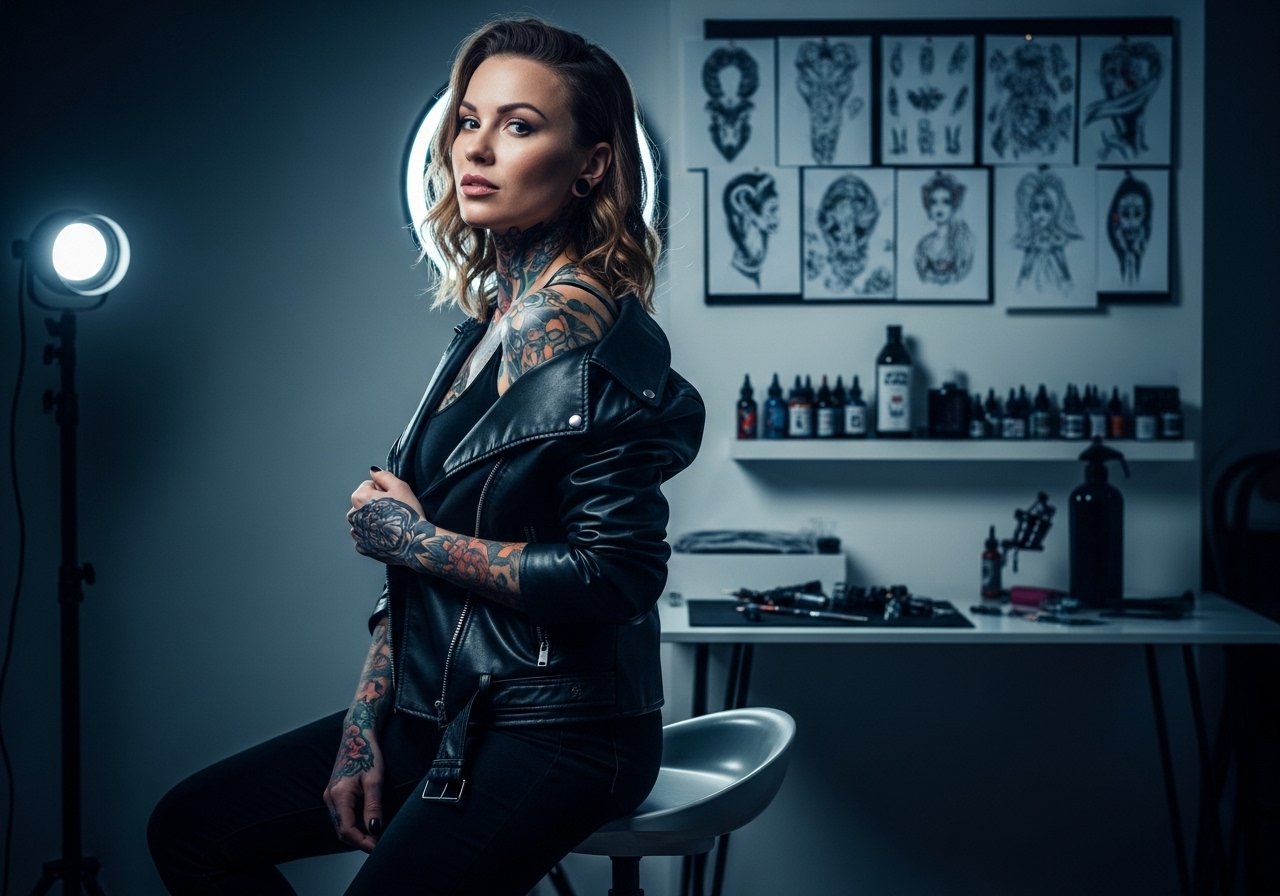
Fine line trends look great on camera, but dotwork on the calf is a different conversation. The calf gives room to breathe so intricate stipple shading reads without bleeding together over time. Pick the right scale, plan for sock and boot friction, and be honest in consults about touch-ups. Below are carefully picked calf ideas that show how dotwork holds up, what to ask your artist, and how to wear them well.
1. Geometric Mandala on the Outer Calf
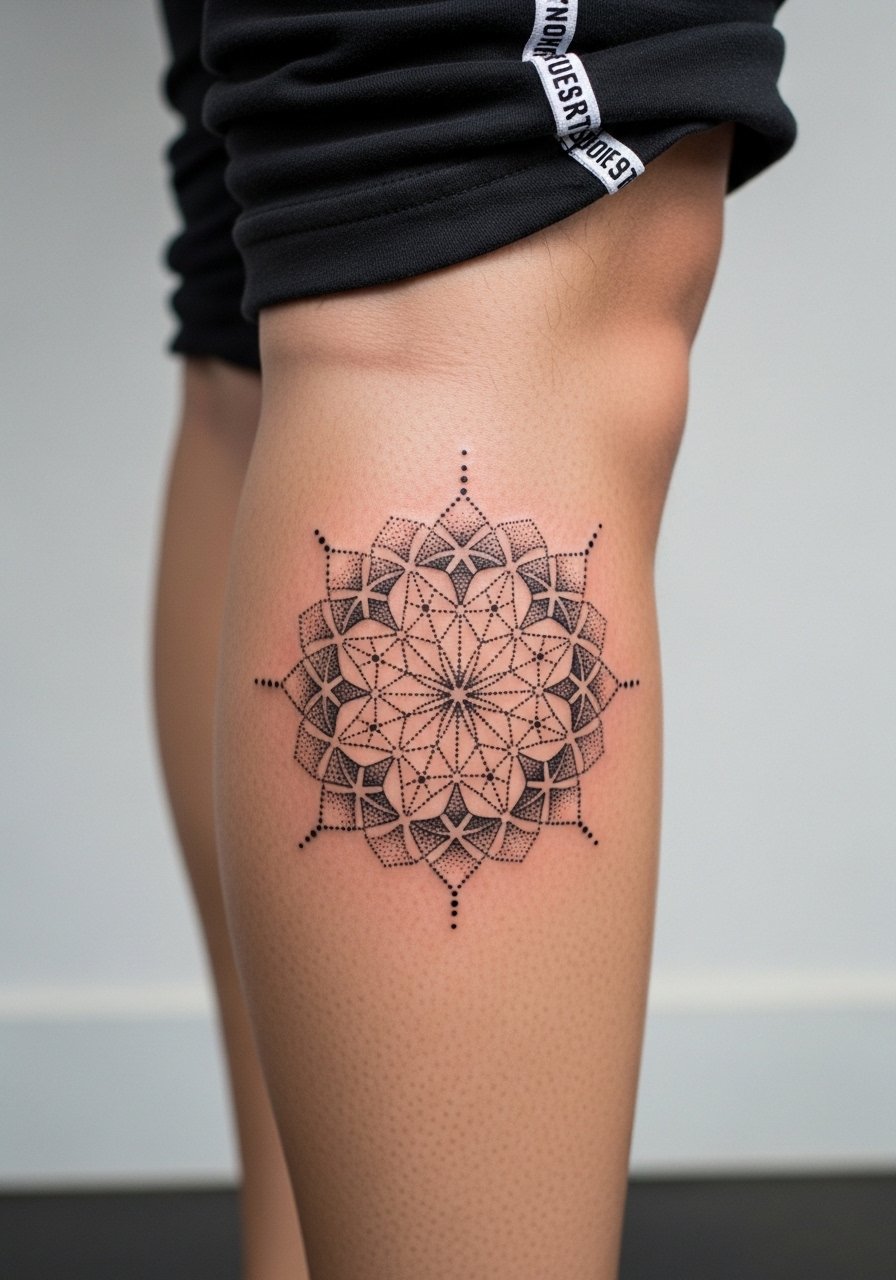
This outer-calf mandala uses concentric dot shading to keep contrast without heavy solid fills. I recommend asking your artist to scale each ring so negative space sits between dense stippling areas. A common mistake is compressing the pattern too small, which invites early merging as the skin ages and stretches. Expect a calm session with moderate discomfort around the muscle belly, and plan for a 90 to 150 minute block depending on size. At six months the dots should read crisp, and by two to five years the high-density rings soften. For showing it off, pair with denim shorts for men that hit above the knee so the whole mandala is visible.
2. Stippled Portrait Silhouette on Lower Calf
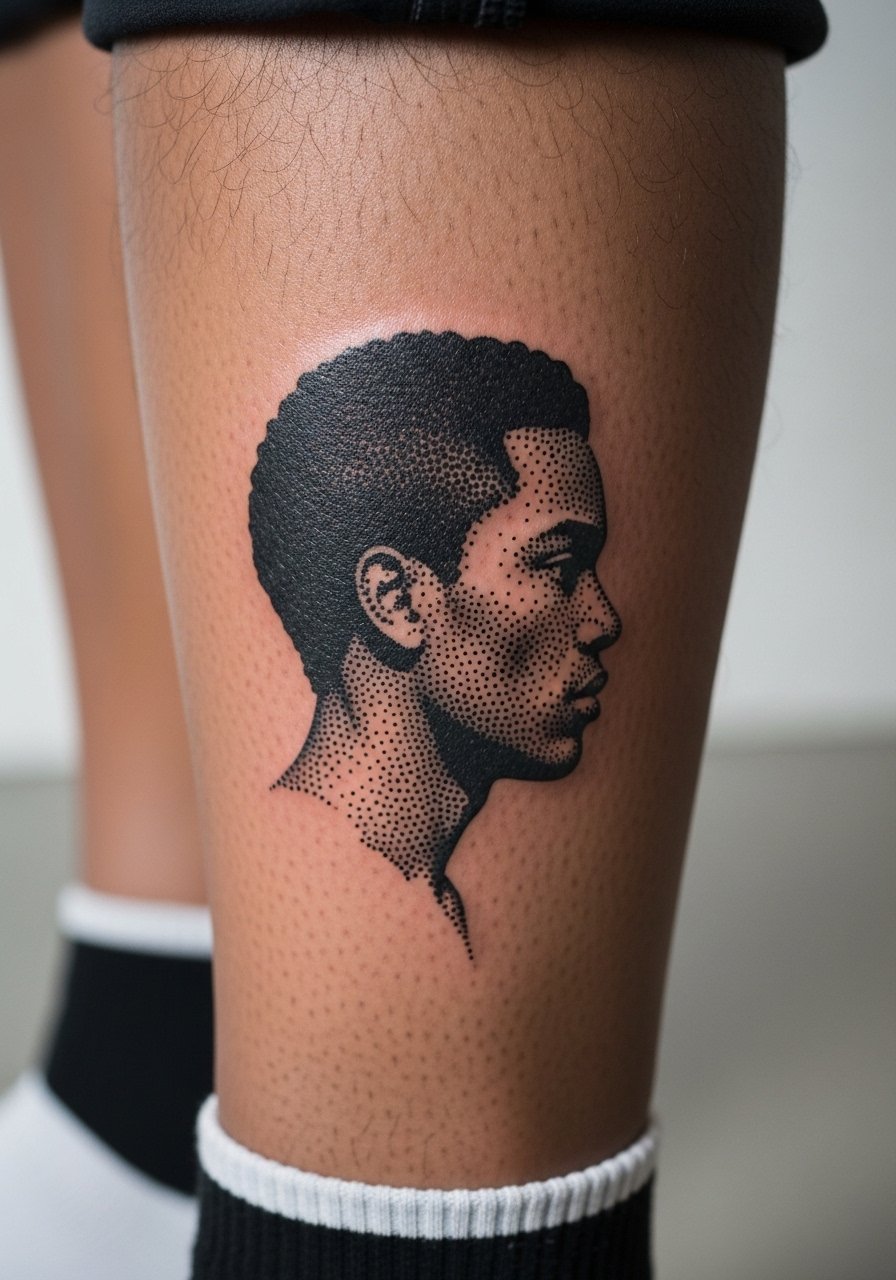
A silhouette made with stipple shading reads like a photograph when distance is considered. Tell your artist you want contrast built from density not line weight, and bring a high-contrast reference. Mistakes start when artists try to render facial detail with lines instead of dots, which ages into fuzz. Pain is lower near the muscle belly but ticks up down by the tendon near the Achilles. Expect 60 to 120 minutes for a lower-calf piece. Over time the silhouette holds because dotwork gives softer edges that age into a pleasing form. For the session, wear low-cut athletic socks so the artist can access the area without you getting cold.
3. Dotwork Compass Band around the Calf
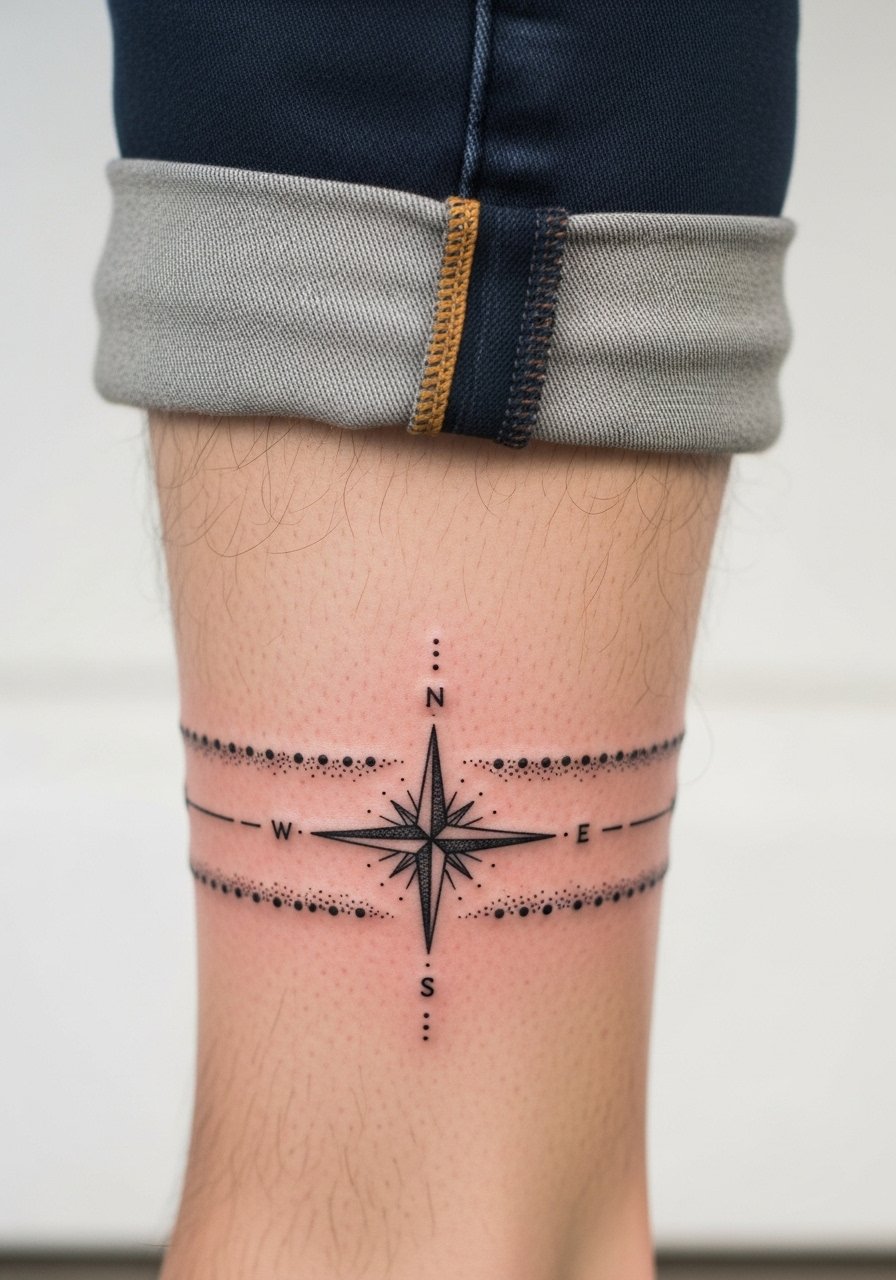
A compass band around the calf works like jewelry, and dotwork bands age better than thin single-line rings because the stippling distributes the visual weight. When consulting, specify that you want at least three millimeters of breathing room between compass elements. The classic error is making the band too narrow, which causes the dots and lines to blur within a few years. The session feels like short focused passes, and session time often sits around 60 minutes. Expect touch-up around year three for tight point details. This band pairs cleanly with rolled chinos or casual cuffed pants when you want to frame the piece.
4. Black Dotwork Wolf Head on Outer Calf
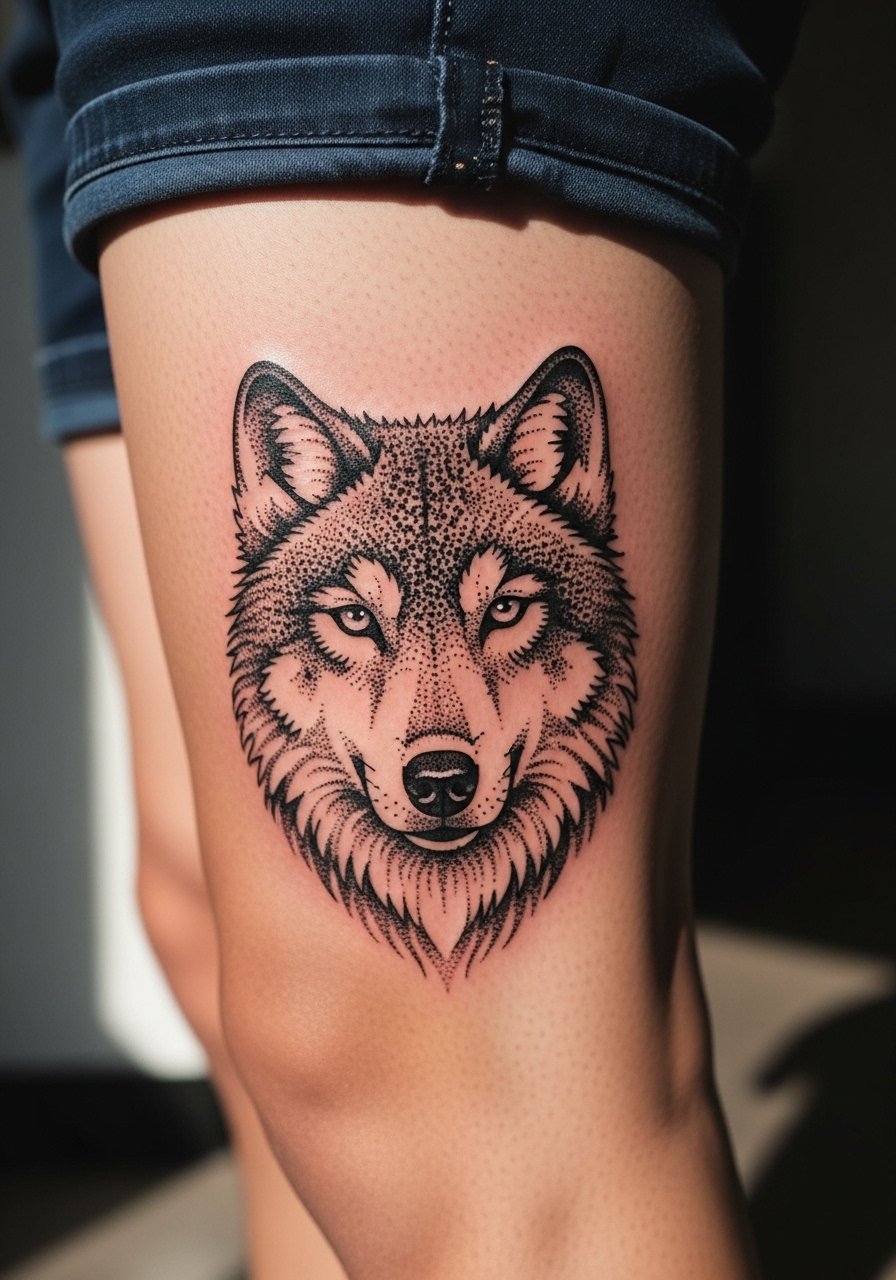
A wolf head drawn in dots keeps fur texture while avoiding heavy block shading. Tell your artist to use stipple for midtones and thicker linework only around the eye and jaw to preserve expression from a distance. A common mistake is over-saturating with solid black, which reads heavy on the calf and ages into a dense patch. Pain is moderate. Larger pieces can run two to three hours. At six months the pattern settles; by three years the high-density spots soften but still read because the fur texture is dot-based. For evenings when you want to show it off, a pair of ankle boots with low-rise shorts frames the outer calf without covering detail.
5. Miniature Constellation Cluster on Inner Calf

Inner calf pieces are less exposed than outer calf ones, so tiny dot clusters can stay crisp when placed correctly. Ask for a slightly larger scale than your phone photo suggests. The frequent error is choosing micro dots too close together. The inner calf feels different during the session because friction from sitting can make the area twitchy, but pain is usually manageable. Sessions are short, often under an hour. Healed at six months the dots look defined, and at two years the pattern keeps its structure because the inner calf sees less sun. For the appointment, wear a sports short or loose gym short so the artist can reach the inner area easily.
6. Abstract Dotwork Landscape on Upper Calf
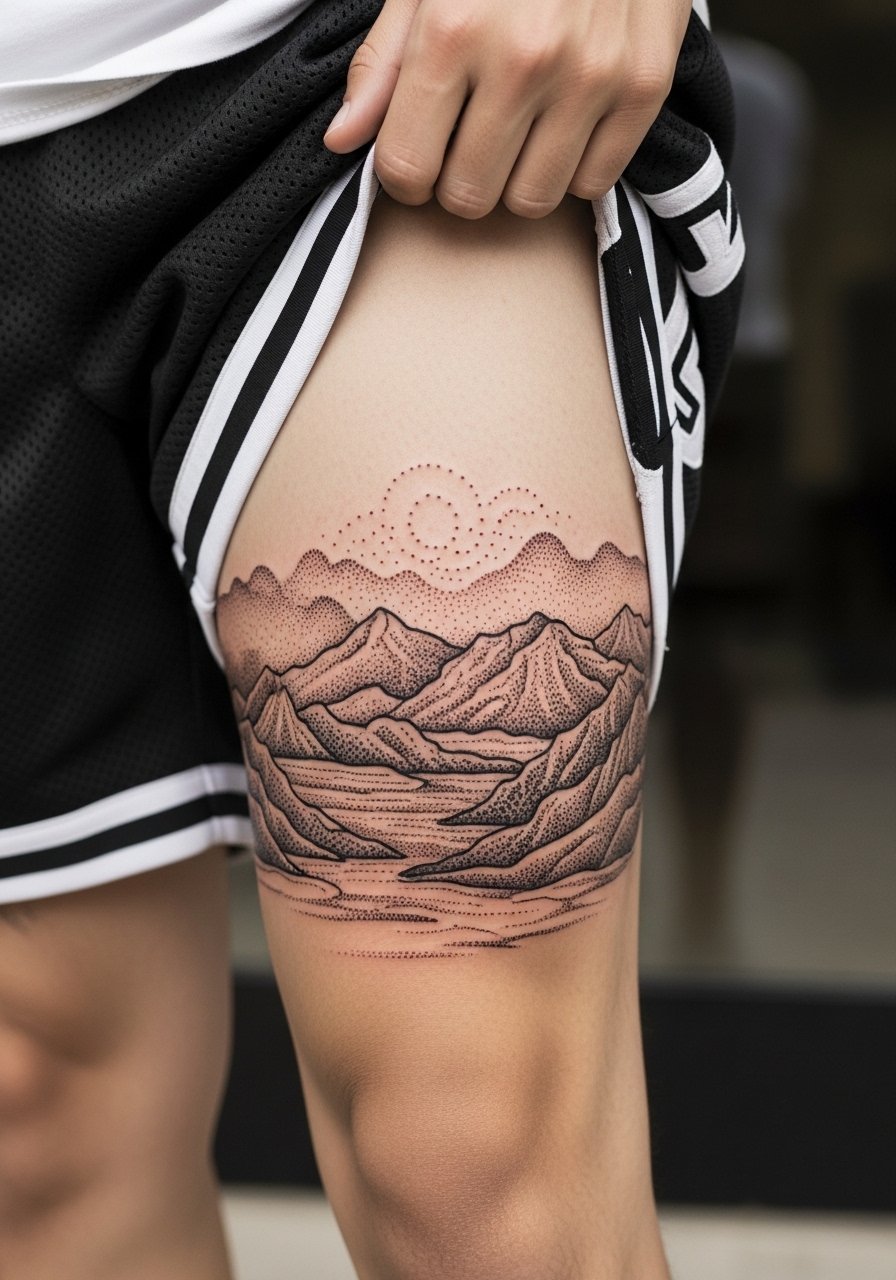
A landscape in dotwork uses density shifts to suggest depth rather than explicit lines. In consults, bring a description of foreground and horizon so the artist composes the lightest and darkest zones intentionally. One mistake is too much midtone density which removes the sense of air. Upper-calf flesh gives a forgiving canvas so sessions here run 90 to 180 minutes depending on sweep. At two years the gradients soften but keep their readability because dots handle stretch better than long continuous lines. For showing it off on warm days, try basketball shorts or loose athletic shorts that reveal the full wrap.
Studio Day Picks
The calf designs above sit in different friction zones, and prepping the session plus the first week of healing requires a few targeted items.
-
Stencil transfer paper kit. Lets you preview placement so the mandala and band ideas land where you expect.
-
Topical numbing gel. Helpful for longer upper-calf sessions without changing how the artist reads your skin.
-
Thin protective film roll for wounds. Useful when boot friction is likely after calf work.
-
Fragrance-free gentle body wash. Cleans the area safely during the initial healing window for dotwork detail.
-
Aquaphor healing ointment. A thin layer protects delicate stippling during the first few days without suffocating the skin.
7. Vertical Script with Dot Fill on Back Calf

A vertical script along the back calf benefits from dot shading inside or around letters to add depth. Tell the artist whether you want the script to read at eye level standing or when seated. Mistakes include using too thin script which blurs as letters age. Sessions are moderate in length, often 45 to 90 minutes. The back calf sees a bit of rubbing from longer socks and pant seams, so dot fill helps the letters keep definition longer. At year three expect subtle softening that often looks intentional. For visibility while keeping a refined look, pair with athletic shorts that sit above the calf.
8. Dotwork Floral Sleeve Accent on Lateral Calf

Instead of a full sleeve, a floral accent wraps the lateral calf and plays well with leg contours. Ask your artist to map where the petals will sit relative to muscle movement. The common error is over-detailing every petal which becomes visual noise after healing. Pain is variable where the muscle meets tendon. Expect 90 to 150 minutes for a wrapped cluster. In my experience dotwork florals age gracefully because the stippling creates soft negative edges. For beach days wear swim trunks with a mid-rise cut so the design is visible without discomfort.
9. Micro-Geometric Chevron Panel on Outer Calf
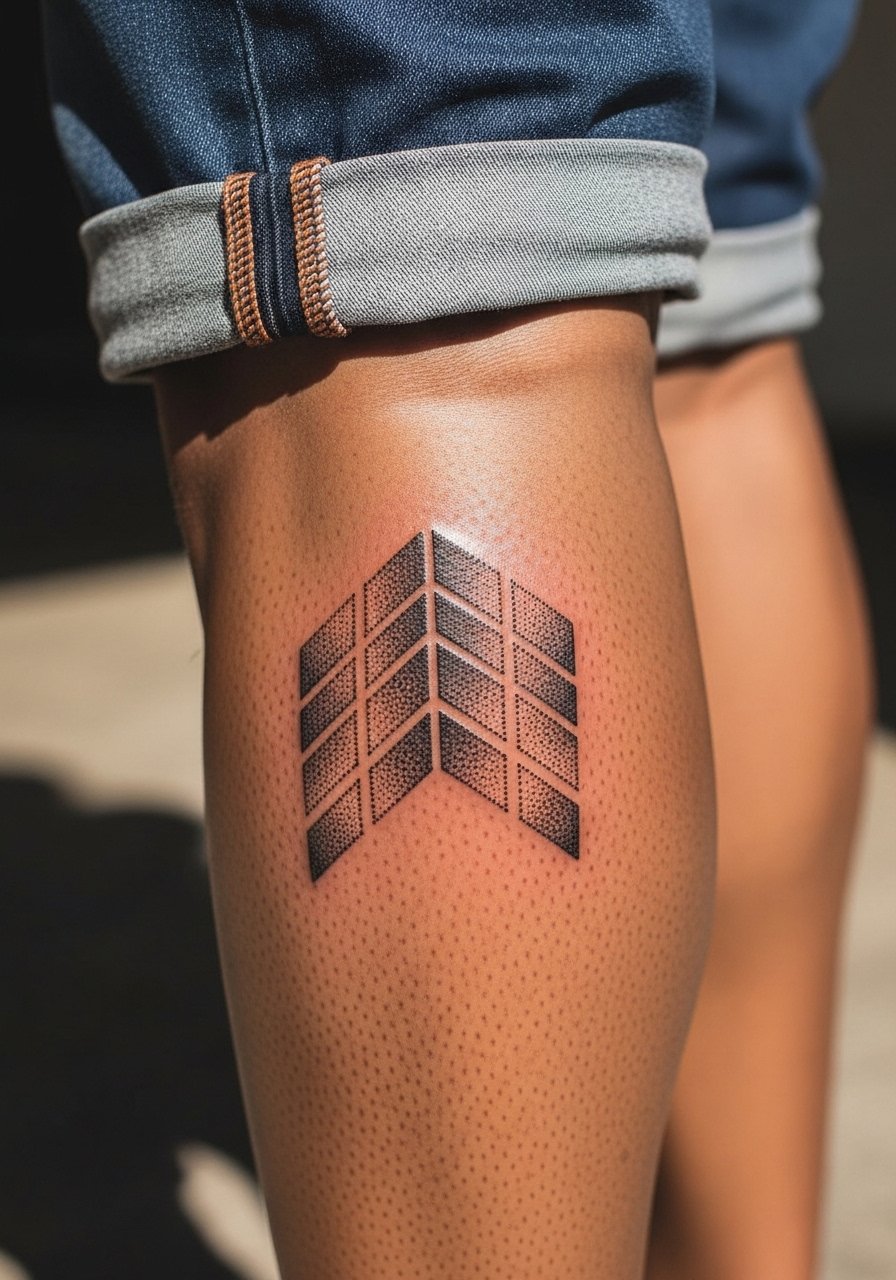
Chevron panels made from stippling create movement without heavy ink. During consultations say you want negative space between chevrons so the geometry breathes on the calf. The mistake is compressing the pattern too tightly which causes early merging. Outer-calf placement reduces blowout risk compared with thinner skin areas. Sessions commonly run 60 to 120 minutes. At two years these panels keep the directional optical effect because dots adapt to micro-skin changes. For styling, cuffed shorts or rolled cuff jeans let the panel read as a visual stripe.
10. Dotwork Celtic Knot Wrap on Mid Calf

Celtic knots rely on negative space, so stippling helps separate overlapping bands without heavy outlines. Tell your artist you want clear crossing points and slightly more spacing than a flat print would show. The primary mistake is tiny, overly intricate crossings that merge over time. Expect a 90 to 180 minute session for a wrap. In my observation, mid-calf knots maintain their weave longer than ankle knots because the skin stretches less. Pair this with weekend wear like loose drawstring linen shorts that keep the knot visible.
11. Negative-Space Mountain Range on Calf Side
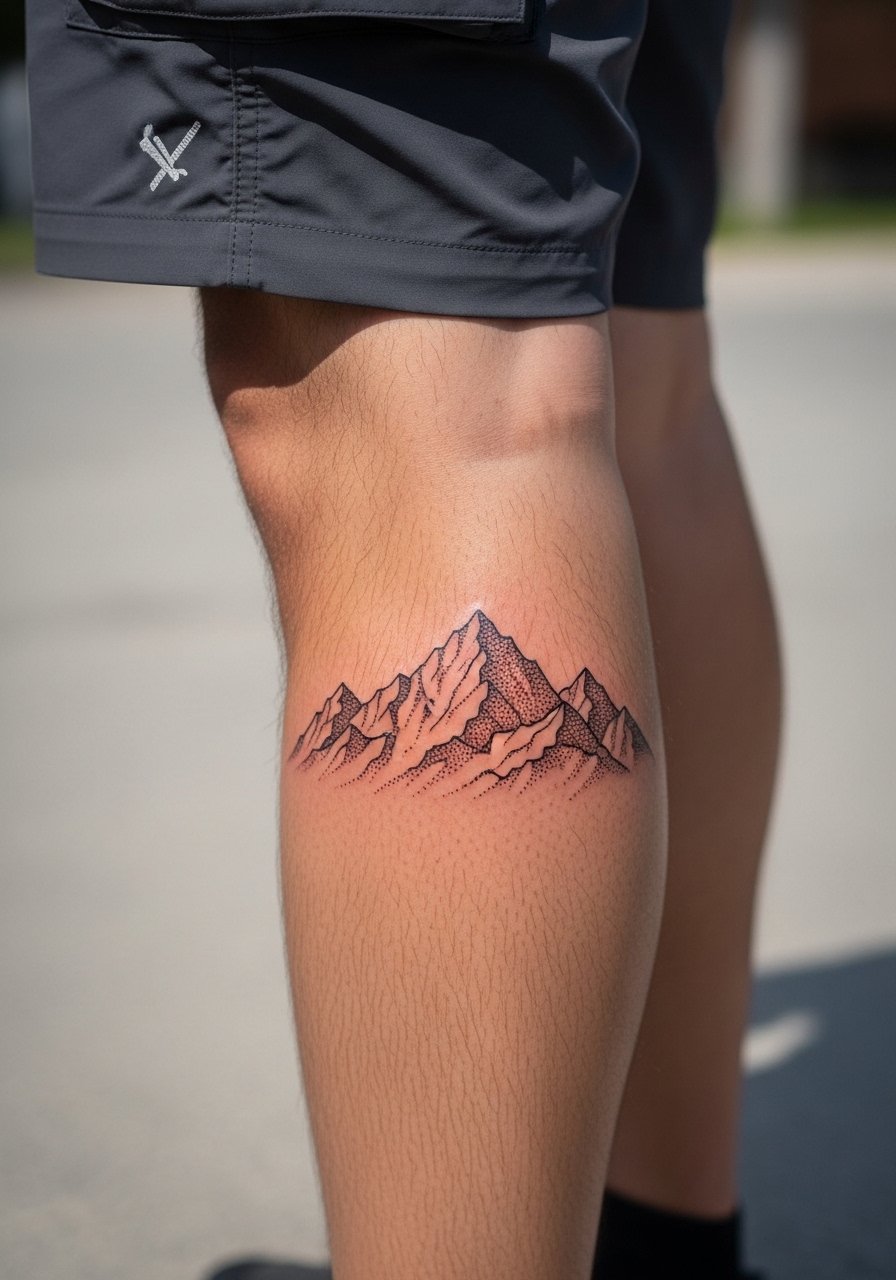
A mountain range created by negative space and stipple works well on the calf side where the skin curves. In consults specify the top line and how much sky you want left open. A mistake is overfilling sky areas which removes the silhouette feel. Sessions are comfortable and often under two hours. At two to five years the range keeps its silhouette because dots avoid long unbroken lines that blur. For outdoor hikes or festivals, pair the piece with hiking shorts with a relaxed fit so the tattoo sits naturally against the calf.
12. Stippled Aztec Band with Negative Breaks

Aztec bands look best when the pattern includes intentional breaks so the eye can rest. Say you want negative gaps every few motifs to reduce visual density. The common error is trying to translate every tiny glyph, which becomes muddy. Expect 90 minutes for a mid-sized band. The calf tolerates pattern wrap well and reduces blowout risk compared with inner ankle work. At three years these designs mature into softer motifs but keep their rhythm. If you want to show it off in casual settings, use shorts with a slightly higher hem to reveal the band.
13. Dotwork Serpent Coiling Up the Calf

A coiling serpent benefits from stippled scales to create texture without heavy black. During the consult, explain how much head detail you want at viewing distance. A mistake is forcing micro scales that the skin cannot keep. Sessions for a medium coil are between 90 and 210 minutes. There is a debate among artists about scale density. One camp wants tight scales for texture. The other prefers larger, sparser scales to avoid early blending. Ask your artist which approach they use. For style, pair the coil with mid-calf exposure like loose athletic shorts to keep the flow visible.
14. Dotwork Compass Rose Near the Knee Outer Calf

Placing a compass rose just below the knee uses the calf flange to make the points project visually. Tell the artist whether you want points to align with the leg axis. A common mistake is not compensating for the curve, which skews symmetry when standing. Pain near the knee can spike, so expect intermittent sensitivity. Sessions are often short but exacting, perhaps 60 to 120 minutes. Over time the compass keeps directionality because dots absorb motion differently than continuous black points. Pair with casual looks like mid-length shorts so the compass reads at eye level.
15. Micro-Dot Script Ribbon on Inner Calf
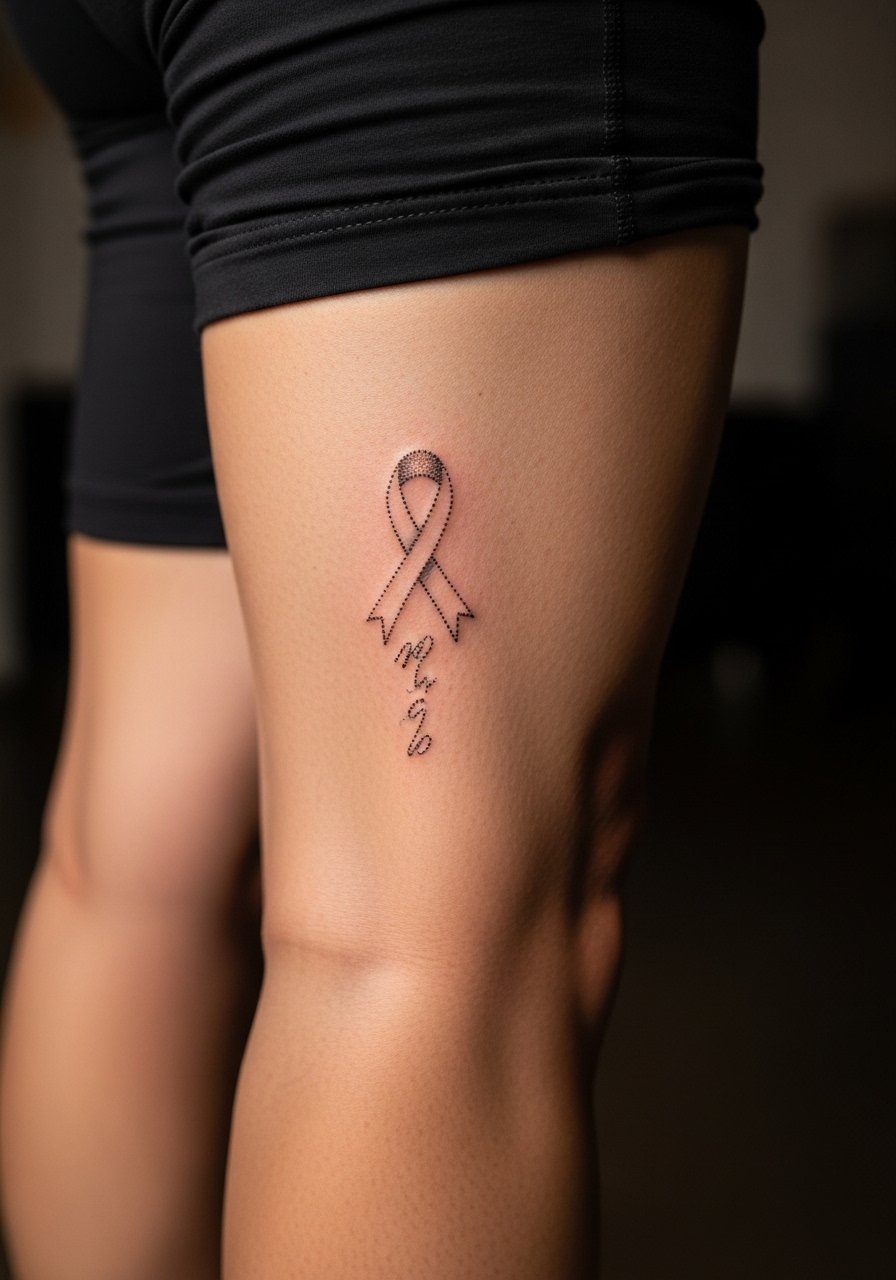
A ribbon of script built from micro-dots creates softness around the letters and avoids harsh lines. Ask for a slightly bolder letter width than you might on the wrist so the dots keep separation. The typical mistake is choosing a wrist-scale script for the calf. Pain on the inner calf is lower than ankle areas but sitting can make the skin sensitive. Sessions are usually under 90 minutes. In my experience dot-based script holds readable longer because it avoids continuous thin strokes. For casual wear that frames the ribbon, try loose gym shorts or track shorts.
16. Stippled Hoop Echoes for Athletic Calf
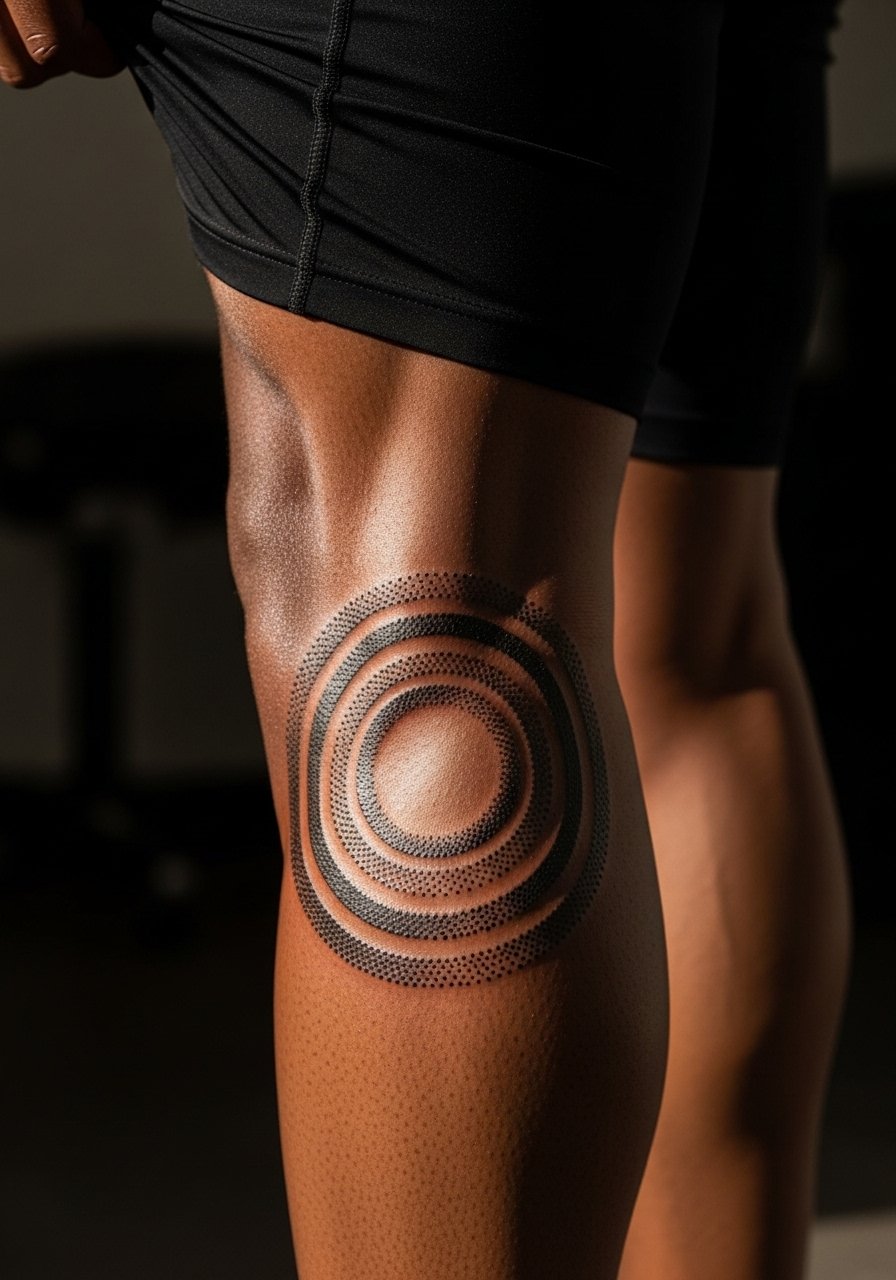
Hoop echoes read like ripples and work well on muscular calves where each ring follows muscle contour. In consults describe how many rings you want and how dense you want inner versus outer rings. A mistake is making all rings the same density which flattens the effect. Sessions are efficient and often done in 45 to 120 minute blocks. Hoop echoes respond well to touch-ups because the patterns are repetitive. For workouts or cooler days wear a compression sleeve that does not rub the ink during healing, but avoid constant pressure until the skin is settled.
17. Dotwork Nautical Anchor with Texture on Lower Calf

A nautical anchor in stipple uses texture to suggest rust and age without heavy fills. Tell your artist whether you want crisp edges or a weathered look in the dot density. The classic mistake is outlining too strongly which conflicts with the stipple texture. Lower calf and Achilles-adjacent placements can be more sensitive and see more friction from socks and shoe collars. Plan for a 60 to 120 minute session and a likely touch-up if the area experiences constant abrasion. For showing the anchor off, wear low socks or no-show socks with rolled shorts so the piece sits unhidden.
Frequently Asked Questions
Q: How long before dotwork on the calf fully settles and looks like the healed photos shown here?
A: In my experience most dotwork on the calf looks close to final at six months. The main shifts happen in the first three months and then slow. Expect subtle softening up to two years depending on sun exposure and friction from clothing.
Q: Is there a higher risk of blowout for dense stippling on inner calf compared with outer calf?
A: Inner calf skin can be slightly looser which increases blowout risk if dots are placed too deep or too close. Ask your artist how they manage needle depth for stippling and whether they recommend spacing adjustments for inner placements.
Q: If I wear boots a lot will dotwork on the lower calf fade faster or need more touch-ups?
A: Frequent boot collars and sock seams can cause extra friction. In practice that means dotwork near the lower calf may need touch-ups sooner. Rotate footwear and give the area time to heal before heavy friction resumes.
Q: Can dotwork be combined with solid blackwork or is that a bad pairing for calf longevity?
A: Combining dotwork with selective solid black works well if composed intentionally. The controversy is real. One camp says mix for contrast. The other warns solids can overpower dots over time. A balanced plan from your artist will avoid overly dense solids next to fine stippling.
Q: What should I wear to the appointment for a calf piece to make the session easier?
A: Bring loose shorts or athletic shorts you can shift easily. I find breathable loose drawstring shorts make long sessions more comfortable and give the artist clean access without tugging.