Fine line moon tattoos are everywhere on saved boards, but the ones that still look crisp years later are not always the smallest or daintiest. Placement, spacing, and how the design moves with skin are the real longevity tricks. Read these 17 delicate moon ideas and you will get concrete notes to bring to your consultation, clothes-to-wear on chair day, and what to expect as the ink heals.
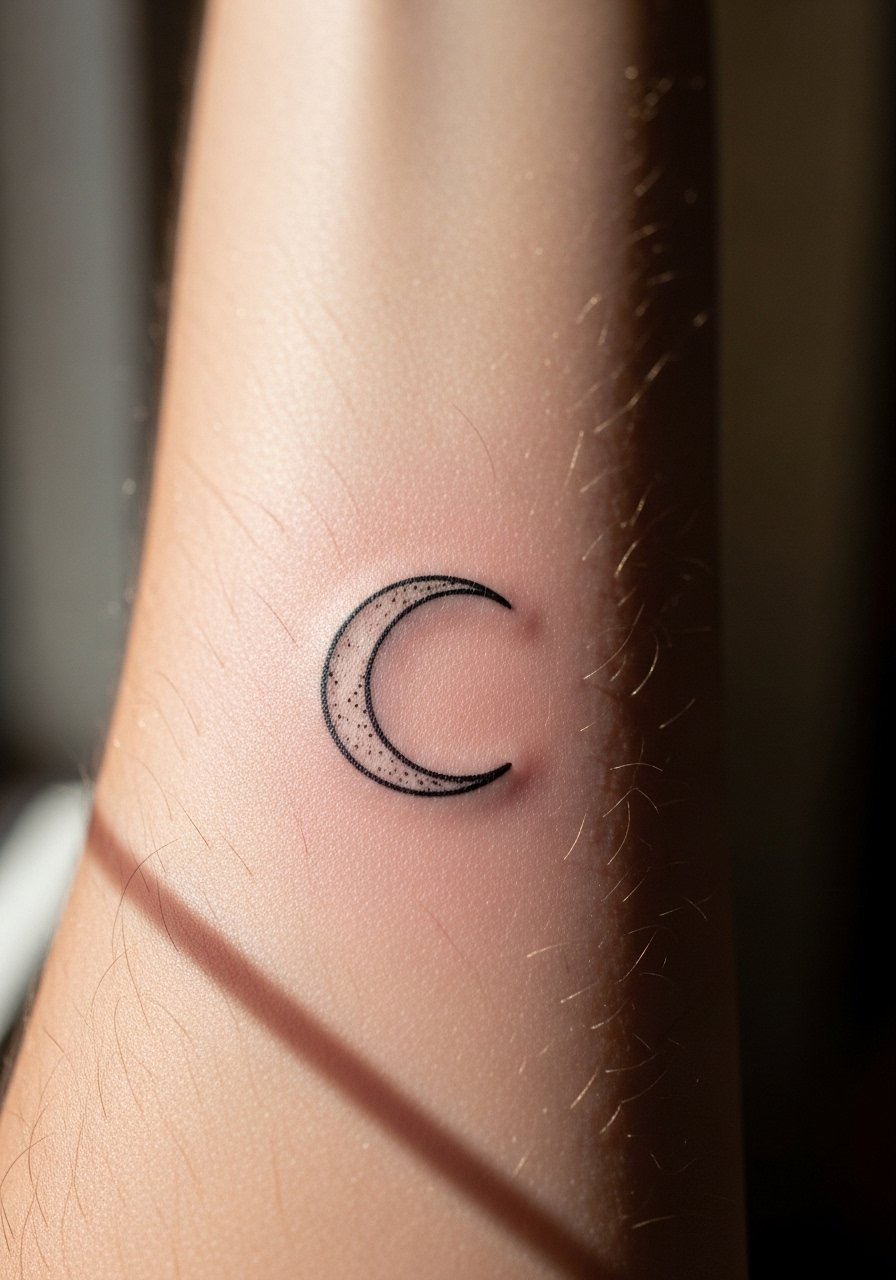
1. Crescent Thread on the Inner Forearm
A thin crescent that follows the forearm curve reads like a personal signature. I recommend this when you want visibility without bold saturation. Tell your artist you want slightly heavier primary linework with airy negative space inside the curve so the shape keeps clarity at year two and five. A common mistake is requesting ultra-micro lines throughout, which can merge if placed too close to wrist creases. Expect mild soreness for a couple of hours and a touch-up at year three for very delicate linework. For showing it off, rolled sleeves help. Pair it with a rolled linen shirt in light tones to keep attention on the crescent.
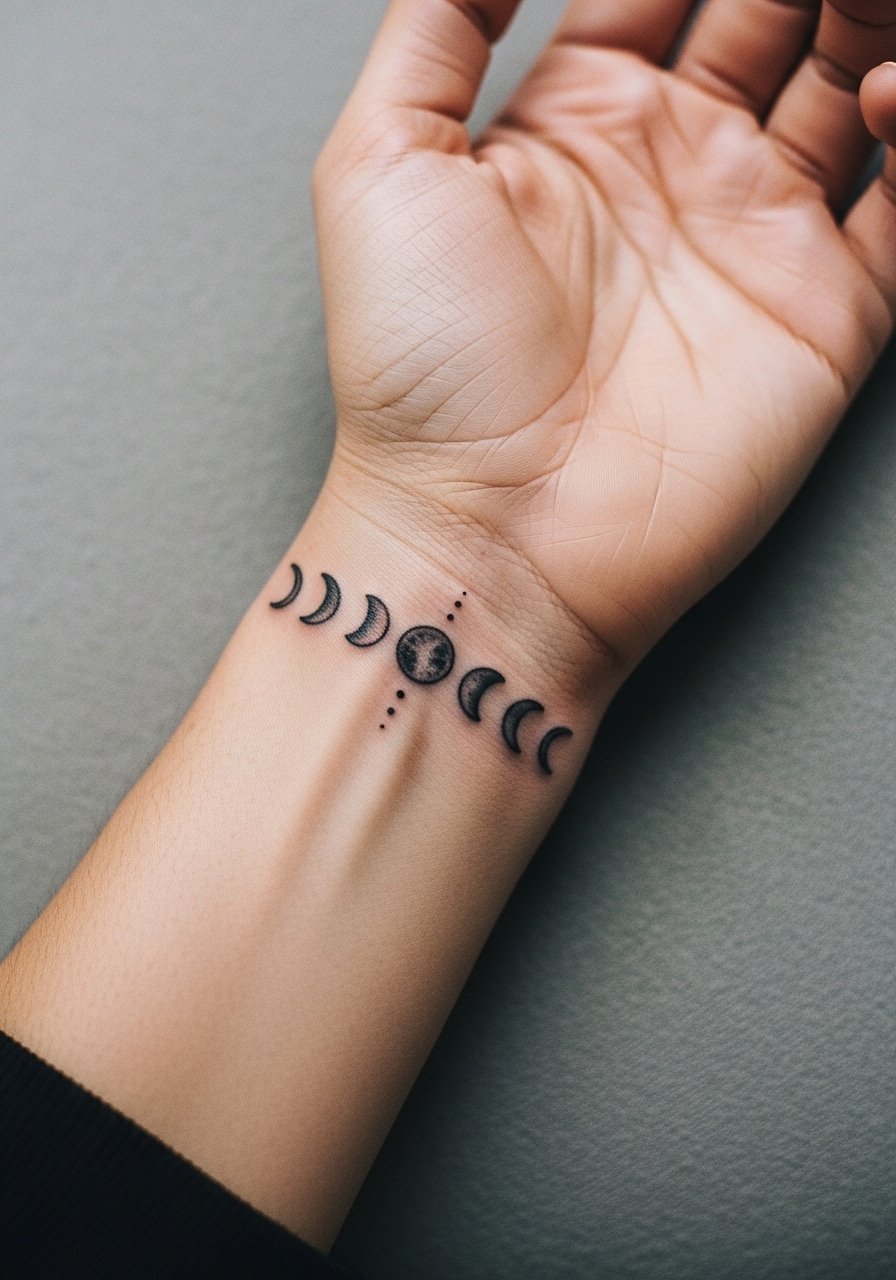
2. Tiny Lunar Phases Around the Wrist
A band of micro moon phases across the wrist works well as a subtle bracelet alternative. I suggest spacing each phase slightly wider than the reference photo so the tiny crescents do not blur together with normal movement. During consultation say you want distinct negative space between each phase and stable linework depth, not super thin single-needle lines. Wrist pieces sit in a high-friction zone so expect faster fade and a likely touch-up at year two or three. For everyday styling, a thin chain bracelet complements the row without crowding the linework.
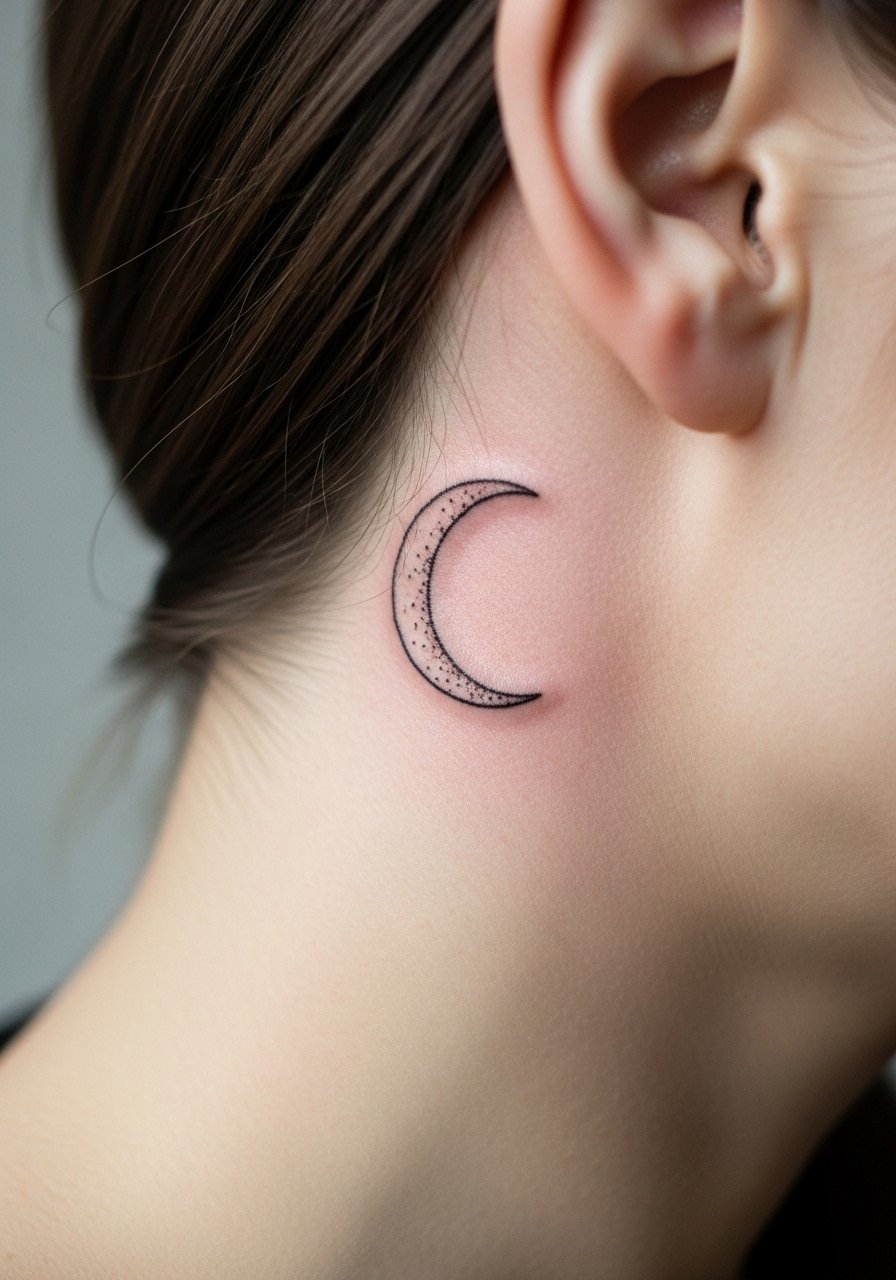
3. Micro-Realism Crescent Behind the Ear
A tiny shaded crescent tucked behind the ear reads intimate and spare. If you want realism in a small area, ask the artist for micro-dot shading rather than heavy wash shading. Artists split on fine detail for this spot. One camp says the skin behind the ear holds fine dots well because it moves less. The other camp warns that oil and hair contact can soften micro detail fast. Ask the shop how they handle hygiene and stencil placement before booking. Expect a short session and fast surface healing. This placement needs careful aftercare and a conversation about touch-ups later.
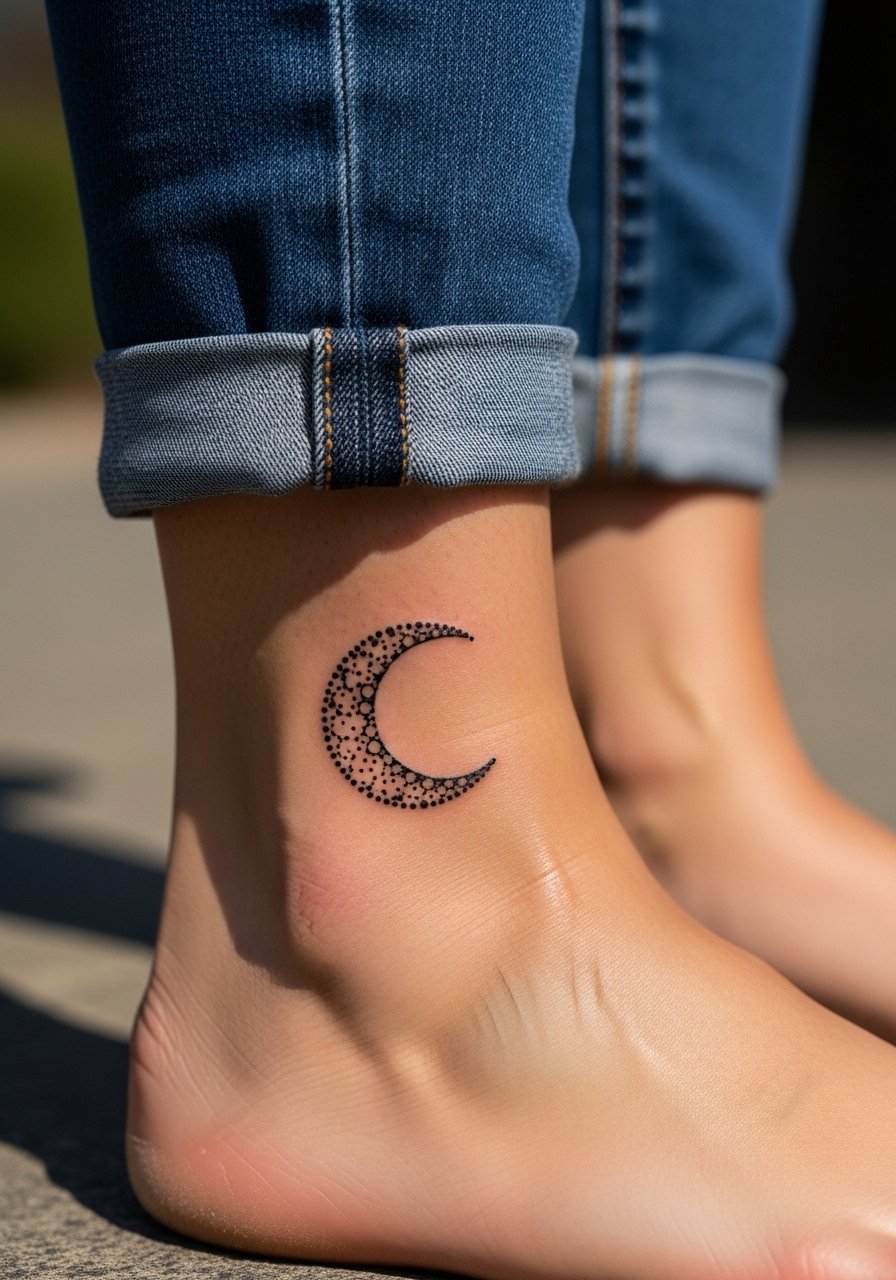
4. Dotwork Lunula on the Ankle
A tiny stippled moon above the ankle looks like an anklet charm but with permanence. Recommend stipple shading to the artist for texture that ages more predictably than a soft watercolor fill. The ankle is exposed to shoe friction and shifting socks, so expect faster surface scabbing and a touch-up in two to three years for delicate dots. Wear low-cut shoes and rolled jeans on show days to frame it. For a casual display, try strappy sandals that keep the ankle visible without rubbing the tattoo.
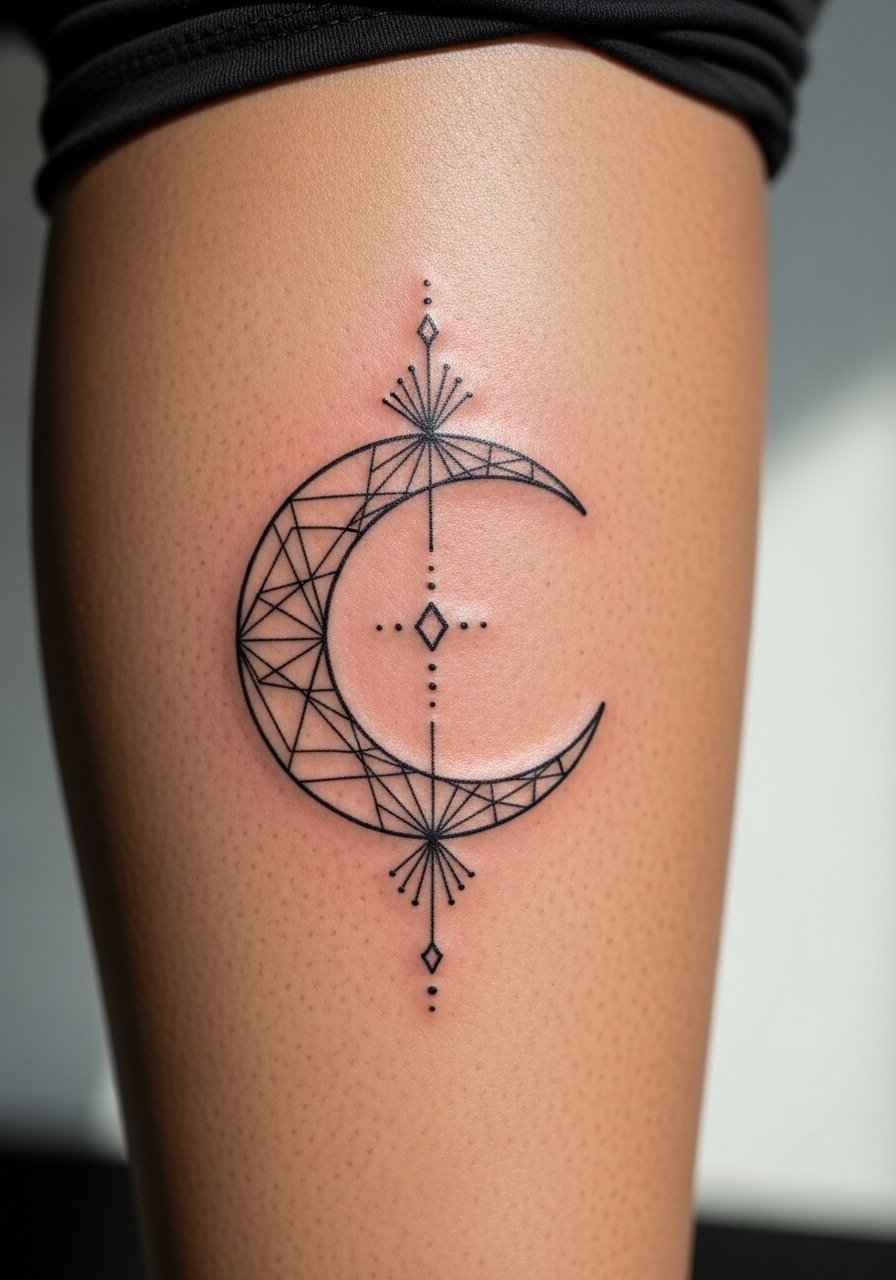
5. Geometric Crescent on the Calf
A crescent nested in geometric lines on the calf gives structure without heavy saturation. This is a good recommendation when you want a small statement that reads from a distance. Tell the artist you want larger line spacing inside geometric elements so dense areas do not merge as the skin settles. Calf flesh tends to hold saturation well, and this placement often looks stronger at six months than it did fresh. Session time is moderate and pain is generally low. Avoid asking for micro-precision in dense geometric fills because too-small geometry is the most common aging mistake.
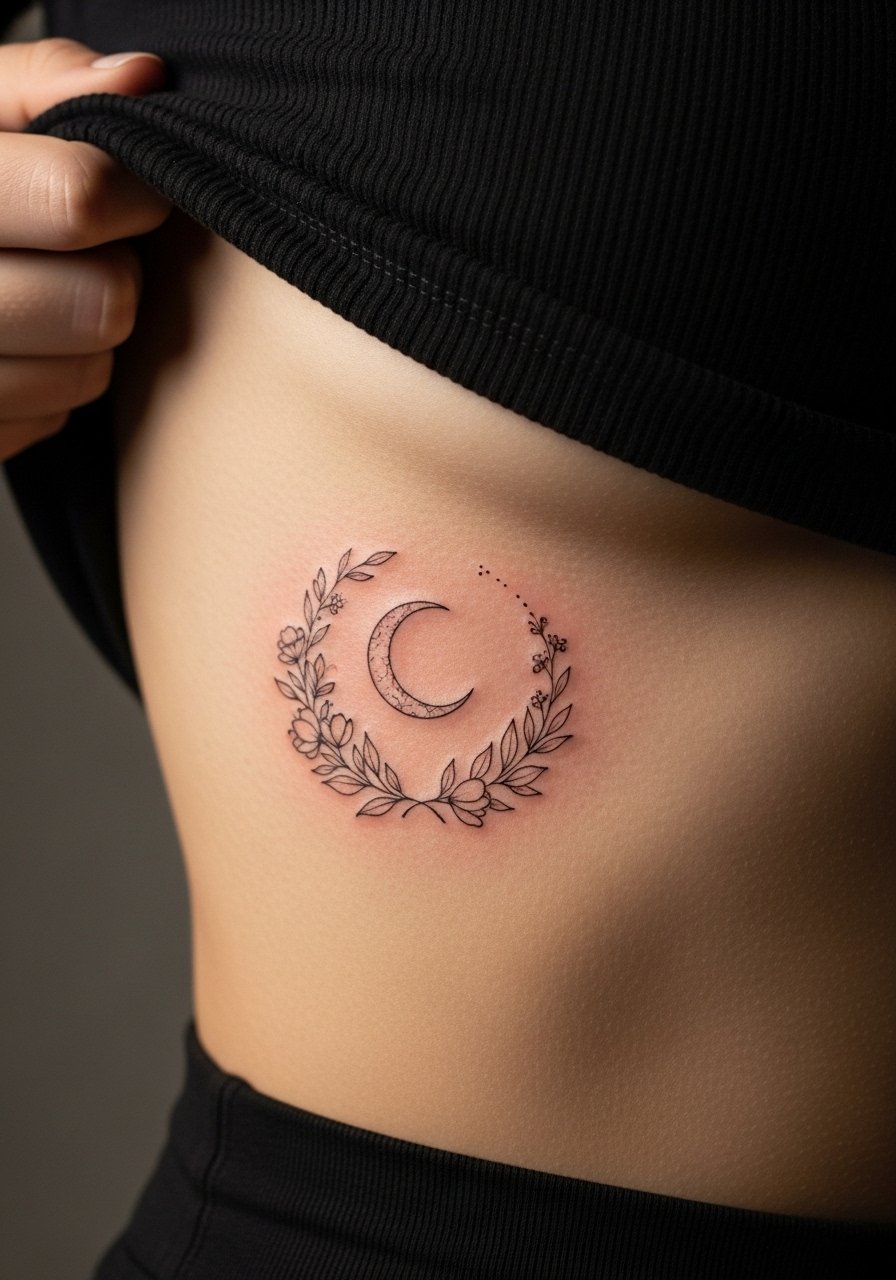
6. Botanical Moon Wreath on the Ribcage
A wreath of tiny leaves circling a crescent on the ribcage reads like a hidden charm. Ribcage placement splits artists into two camps. One group says fine line on ribs blurs quickly because the skin stretches and shifts with breathing. The other group argues that with proper spacing and needle depth the lines settle and last. When you book, mention breathing rhythm during the session and ask the artist to space motifs to allow natural stretch. Expect the session to feel sharp at times and require breaks. For the appointment, wear a cropped athletic top so the artist can lift fabric slightly and you remain comfortable.
Session Day Picks
The rib and forearm pieces above ask for different prep, and a few small items make the chair time smoother.
- Thin protective film roll. Keeps ankle and wrist tattoos cleaner during the first week of friction and showers.
- Fragrance-free gentle body wash. Cleans tattooed skin without stripping delicate linework after the initial scab stage.
- Topical numbing cream. Useful for ribcage sessions where sensitivity spikes and short breaks help the artist maintain steady linework.
- Non-petroleum healing balm. Lightweight balms avoid clogging the skin while keeping fine lines from drying out.
- Aquaphor healing ointment. A thin initial layer can help prevent excessive scabbing on very delicate crescent lines.
7. Minimal Moon and Star Finger Set
A tiny moon and matching star on adjacent fingers reads like coordinated jewelry. Fingers are one of the highest fade and touch-up zones, so plan for maintenance. Ask for slightly bolder contour lines and open negative space next to filled dots so the motifs remain readable under daily washing. The session is quick but the constant hand use means a likely touch-up at year one or two. For showing the set without overwhelming it, stack with a delicate midi ring that echoes the scale.

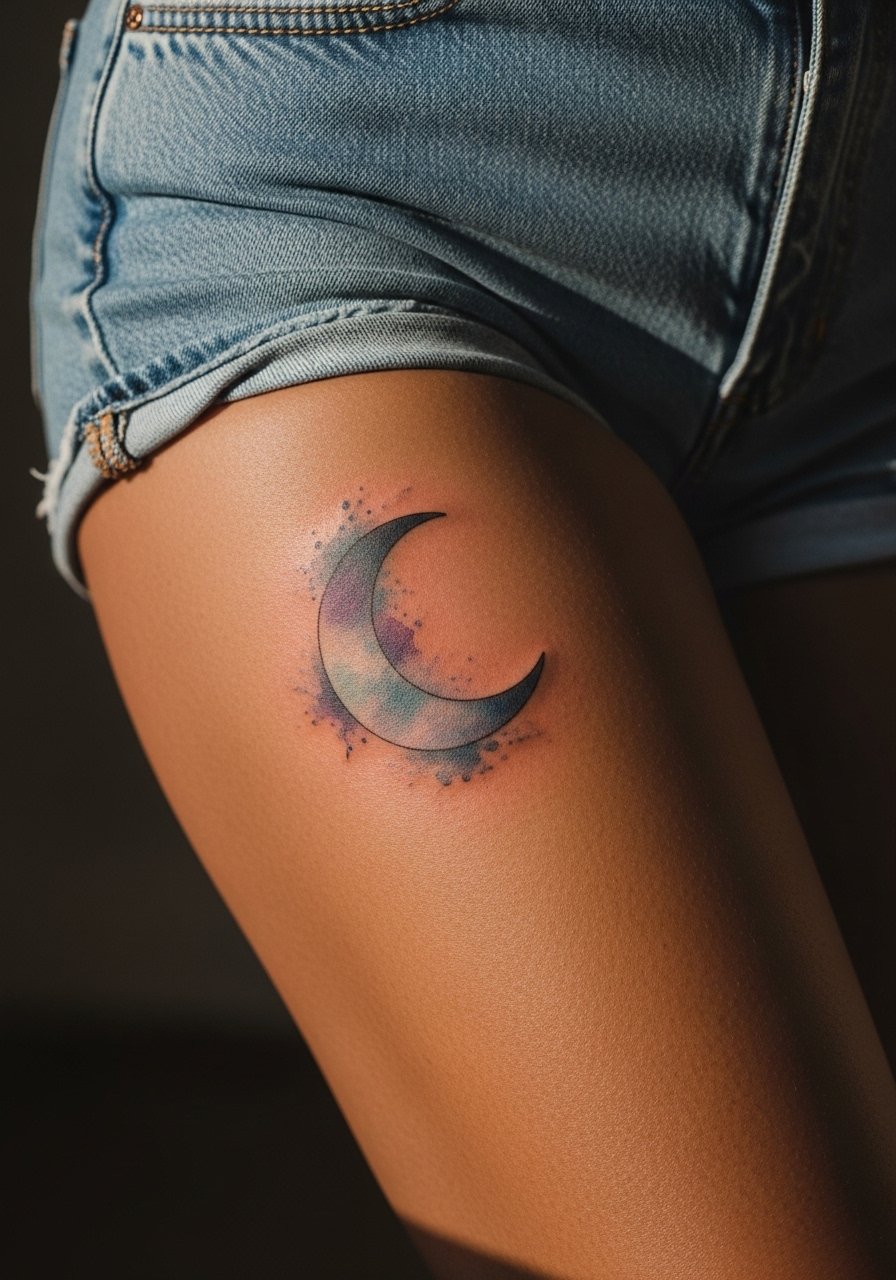
8. Watercolor Crescent on the Upper Thigh
A soft watercolor crescent on the upper thigh gives color without sharp outlines. I recommend requesting subtle edges with a stipple anchor so color avoids bleeding into one wash. Watercolor on darker skin tones can read differently and some artists prefer adapting palette and contrast. Call this one a point of honest debate. One camp says color washes are universal with the right pigments. The other camp cautions that low-contrast washes will not show on darker tones. If you have medium to dark skin, ask for contrast planning and a trial stencil placement. During the session wear high-waisted shorts you can shift for access.
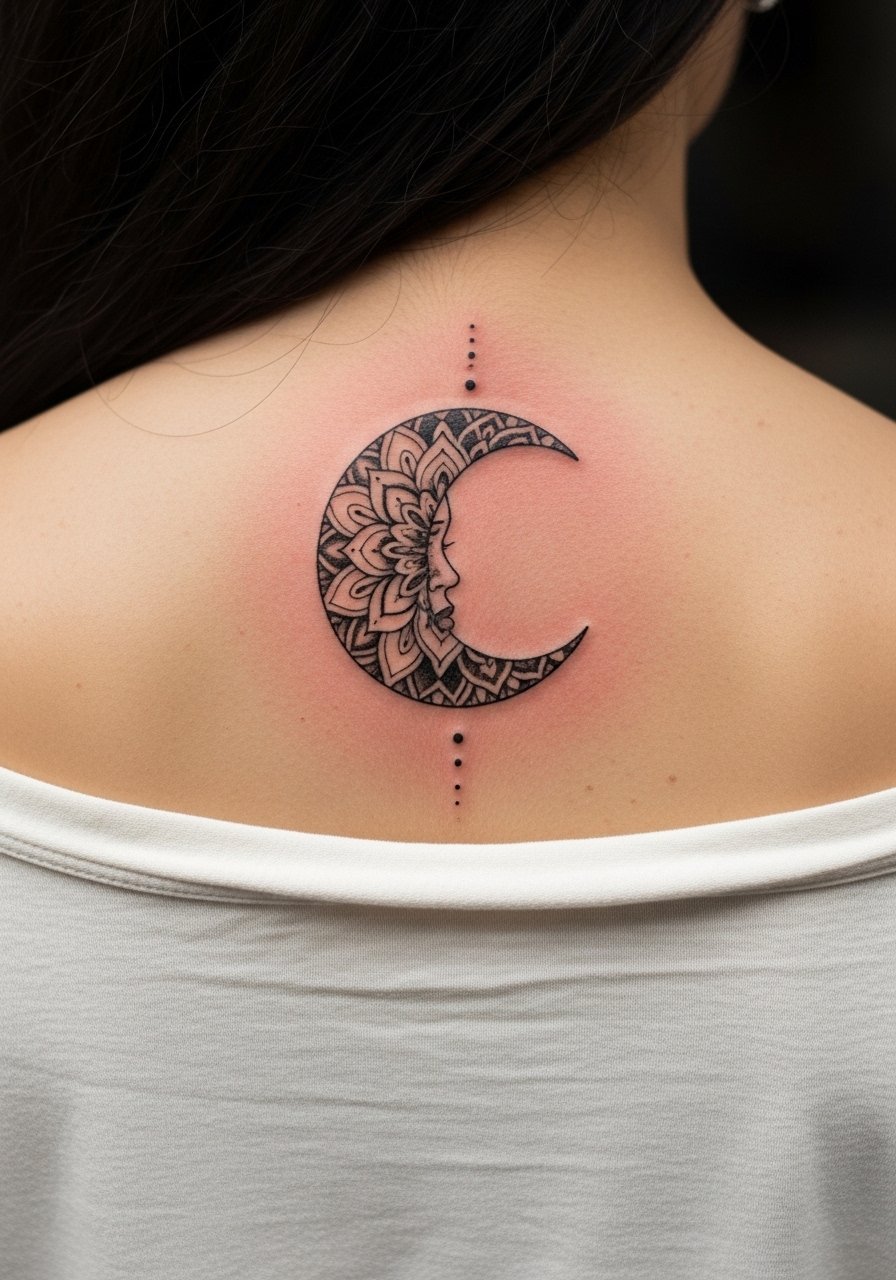
9. Mandala Moon at the Upper Back Nape
A centered mandala sun-moon motif at the nape reads intricate without needing extreme size. For longevity ask that the densest mandala rings be slightly spaced so stipple shading reads instead of merging. Upper back skin holds detail well and tends to soften into a pleasing texture over time. Plan for a longer session and a calm, seated position. When you want to show it, open-back tops work beautifully. Try pairing with an open-back midi dress for evenings.
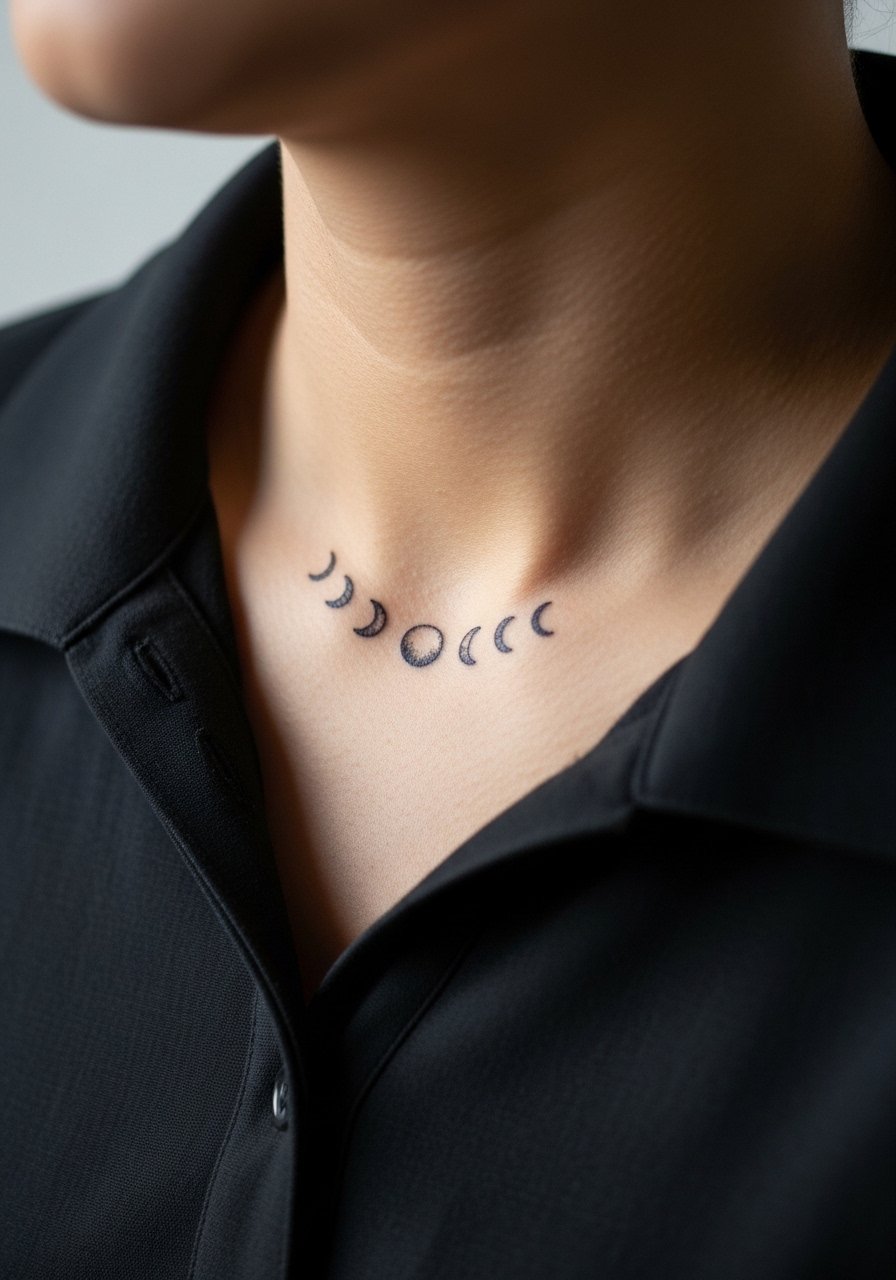
10. Celestial Chain Across the Collarbone
A delicate chain of tiny moons and dots across the collarbone frames the clavicle elegantly. The collarbone is visible and moves with breathing, so ask the artist to test the stencil on both sitting and standing poses to confirm curve alignment. Collarbone pieces can feel sharp in places because the needle crosses thin tissue. For showing off, a wide-neck shirt or a thin chain pendant sits above the design without competing. Expect touch-ups at year four if the pieces are extremely fine.
11. Stacked Micro Moons Along the Spine
A vertical stack of small moons down the upper spine reads like a quiet column of symbols. This placement changes the design when you bend or arch, which can be part of the appeal. Ask for slightly larger spacing between moons to avoid dense merging along the spine line. Sessions require lying face down, and the area tolerates medium-duration sessions well. For showing the vertical line, open-back garments help. Pair with garments that reveal just the strip such as an open-back top when you want the sequence visible.

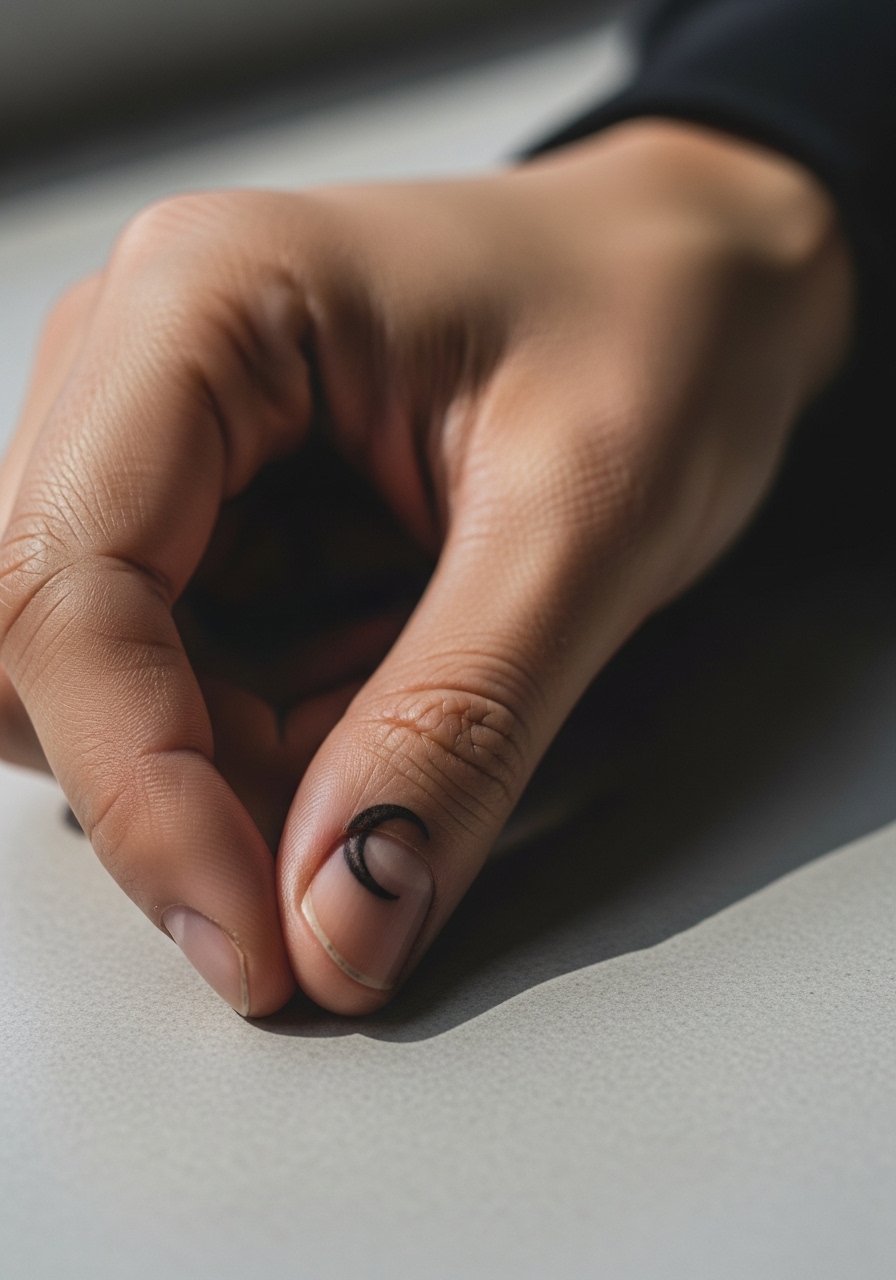
12. Tiny Crescent at the Thumb Base
A crescent tucked at the thumb base sits between jewelry and a practical spot. This area is high-motion and sees frequent washing, so expect the line to soften faster. Ask for slightly bolder contour depth and open negative space around the shape. The most common error is to squeeze too much detail into a thumbnail-sized zone. The session is quick but plan on touch-ups earlier than for arm work. Consider career implications if you work in conservative settings because hand tattoos remain visible in many professions.
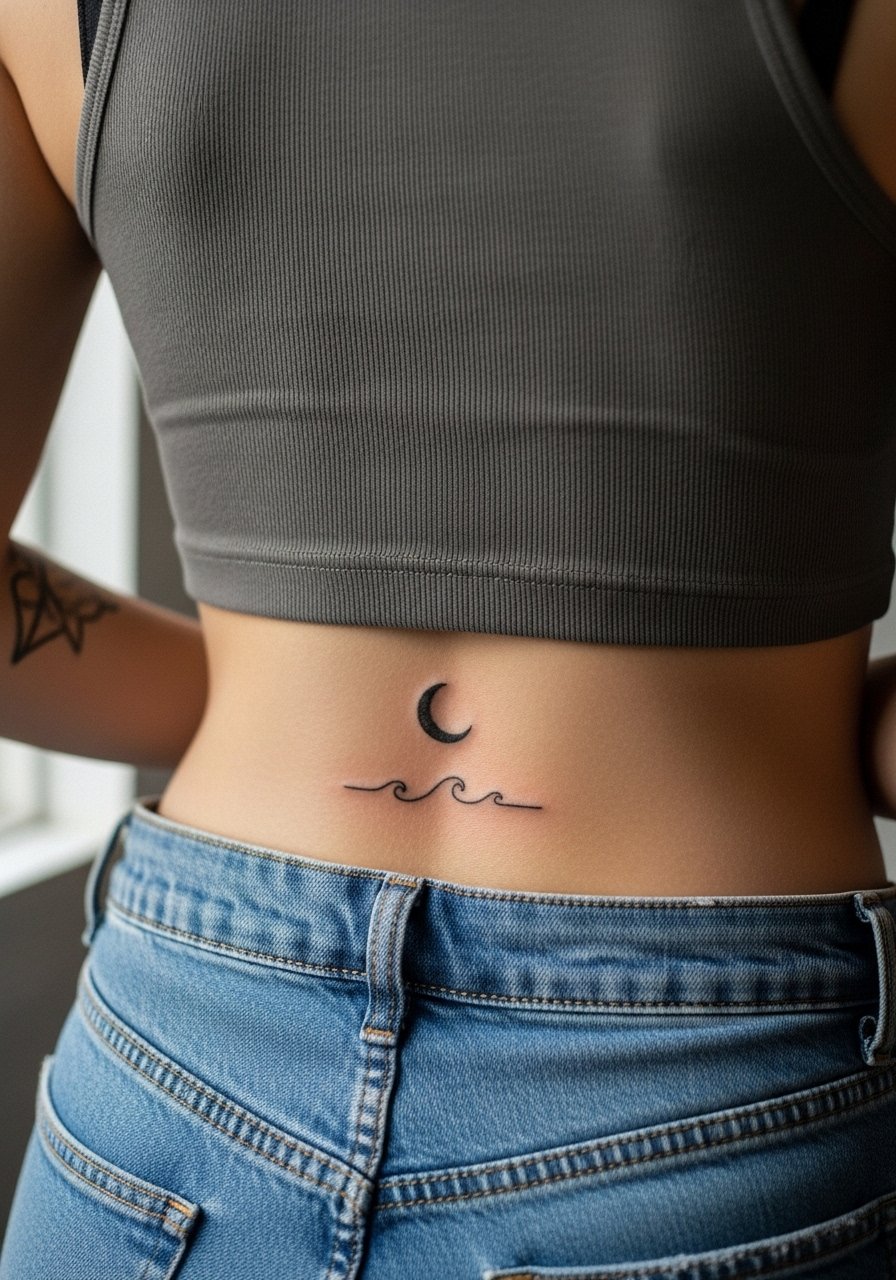
13. Moon and Wave Lower Back Accent
A small crescent paired with a minimalist wave along the lower back is a discreet statement. Lower back skin takes ink well but the area is prone to clothing friction if waistlines sit over the tattoo. During the consult ask the artist to keep the main contour slightly above the natural waistband to reduce rubbing. Session positioning is easy and healing is typically straightforward. For appointments wear a tank top with high-waisted jeans pulled slightly low to expose only the lower back area.
14. Constellation and Moon on Outer Thigh
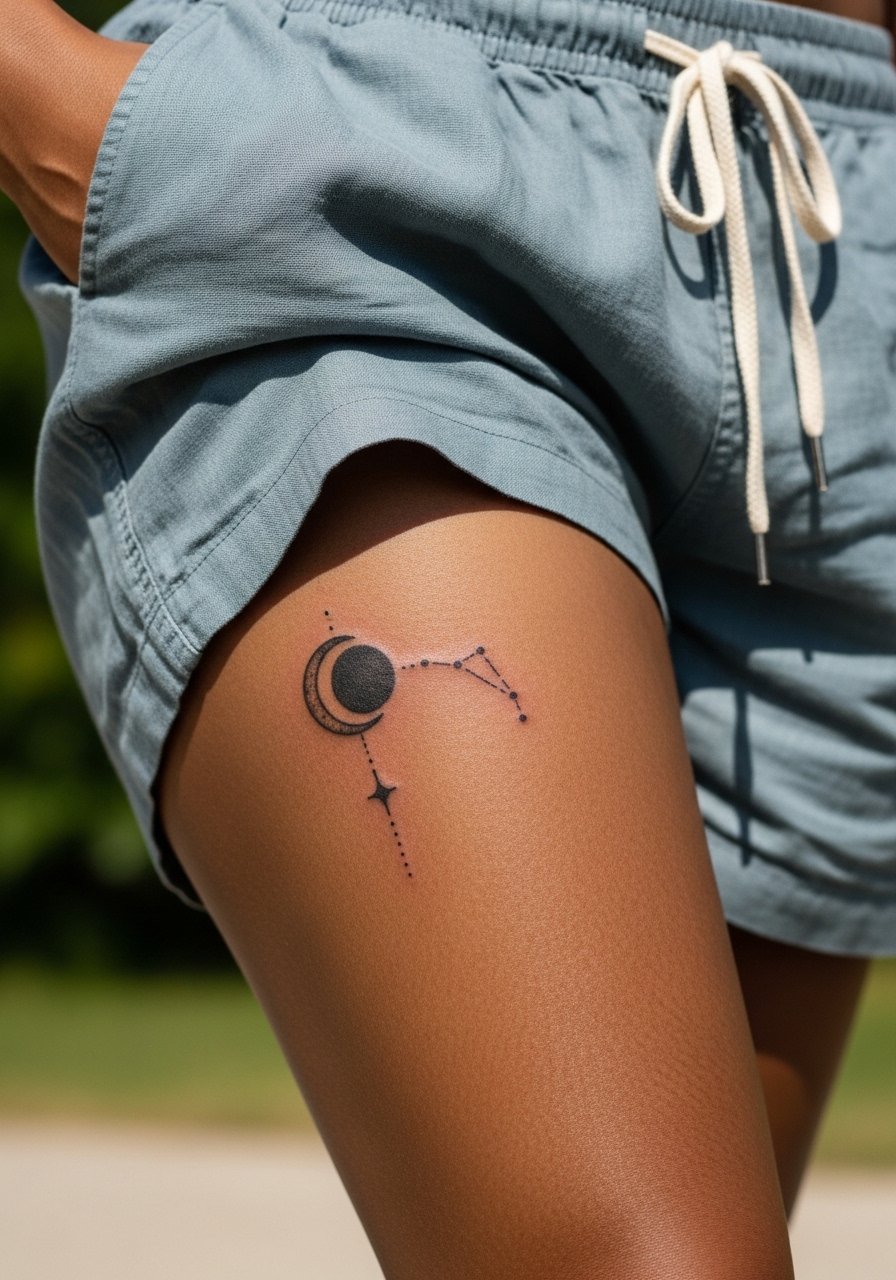
A crescent paired with a linear constellation on the outer thigh reads personal and flirty. Thighs give room for slightly larger spacing and richer shading, which helps the piece age well. Tell the artist you want negative space between stars and the crescent so movement does not blur clusters. The session can be long if you choose heavier shading, and the area tolerates longer sittings with breaks. For showing off wear high-cut shorts or a skirt, such as loose drawstring linen shorts that let you reveal the area without tight waist pressure.
15. Anklet Moon Phase Band
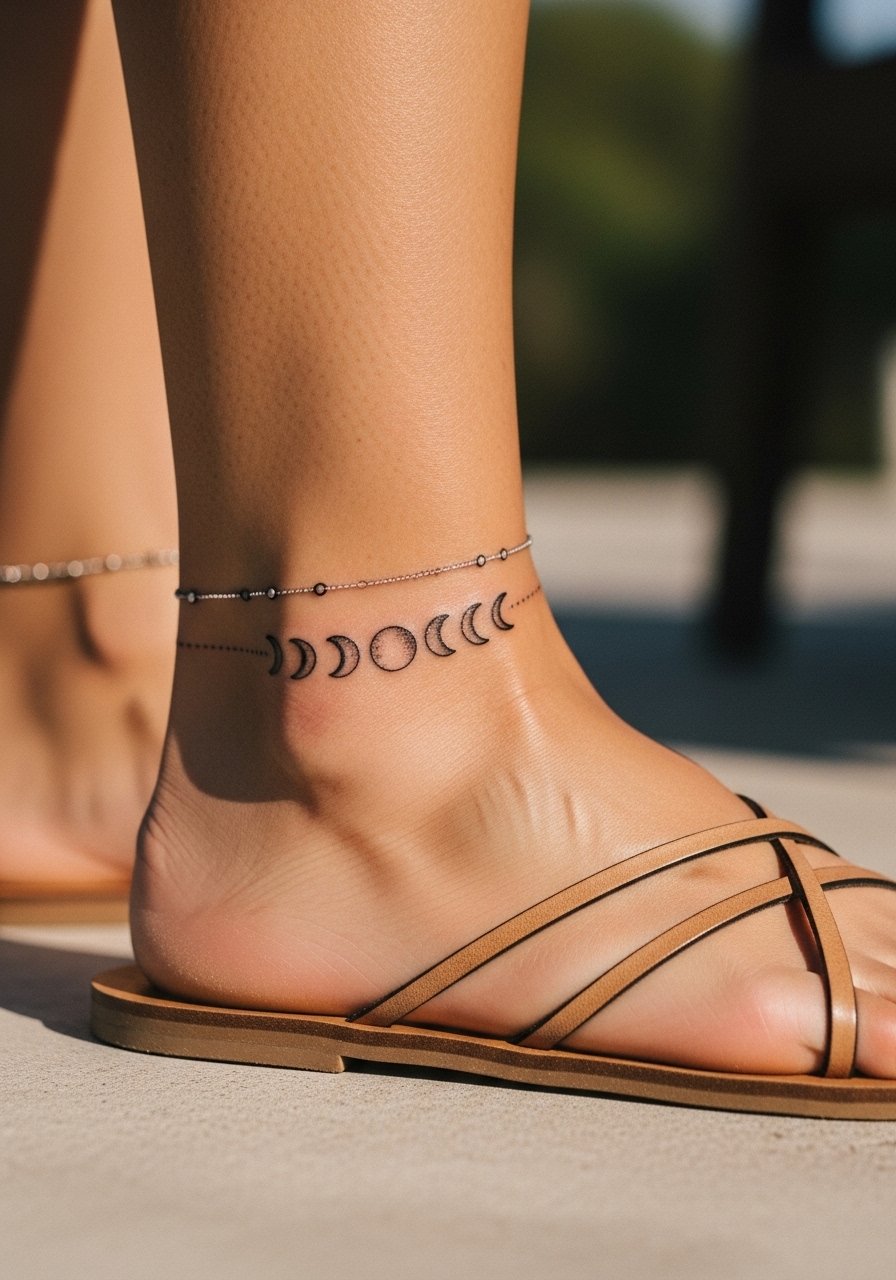
A tiny anklet of moon phases wraps the ankle like jewelry. Because ankles rub against socks and shoes, ask for slightly bolder outer contours and spacing to keep each phase readable. Anticipate a touch-up sooner than for forearm work. The session is short and the site heals quickly if you avoid tight footwear. For show-off days try minimalist sandals that keep the ankle visible without chafing the design.
16. Sternum Crescent with Fine Script
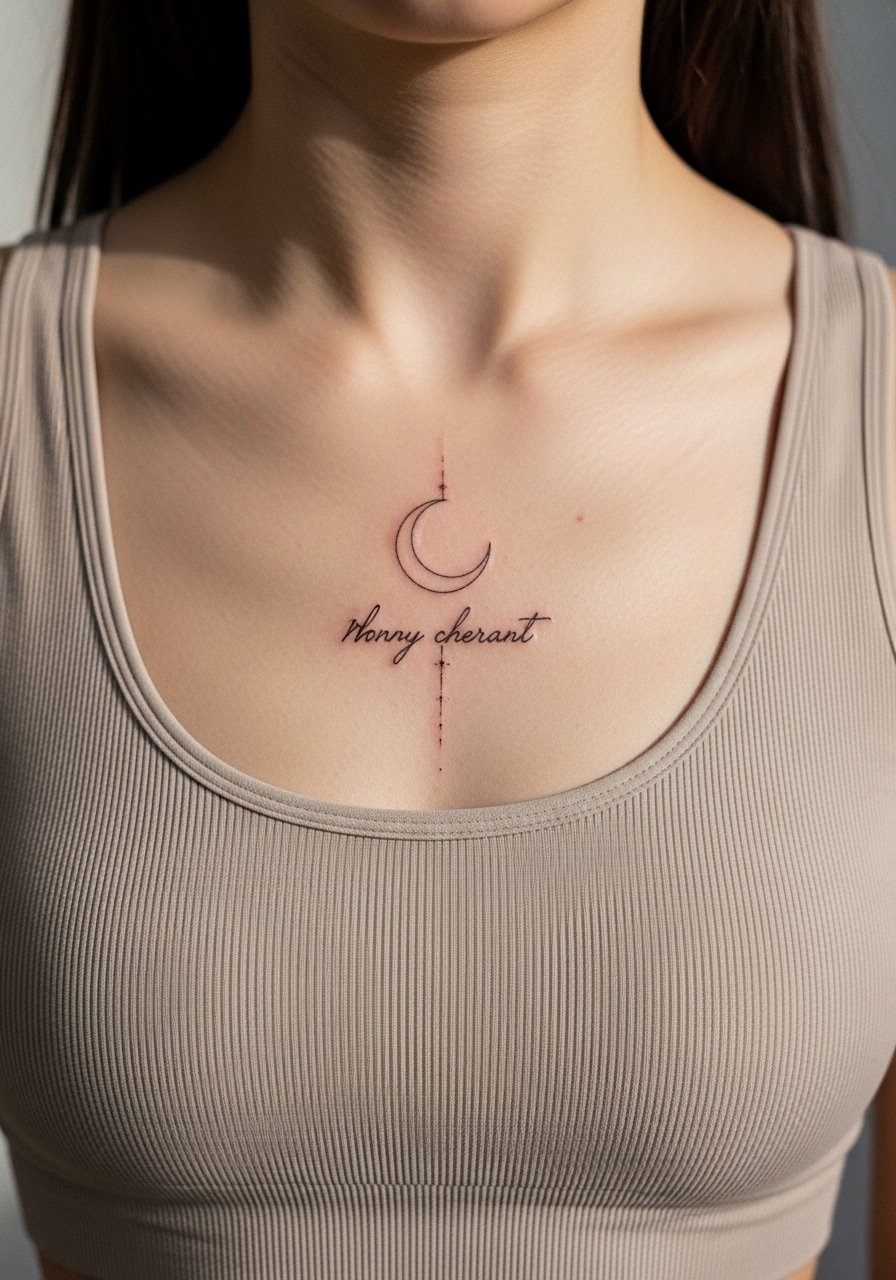
A tiny crescent centered above a short script on the sternum reads intimate and deliberate. Sternum work requires a specialist who understands breath control and spacing. When you consult, request a stencil check with a sports bra or bandeau so placement aligns with clothing lines. This placement feels sharp during the session and needs pacing with breaks. For that appointment, wear a sports bra so the artist can expose only the sternum area safely and maintain modesty.
17. Subtle Moon Motifs in a Sleeve Accent
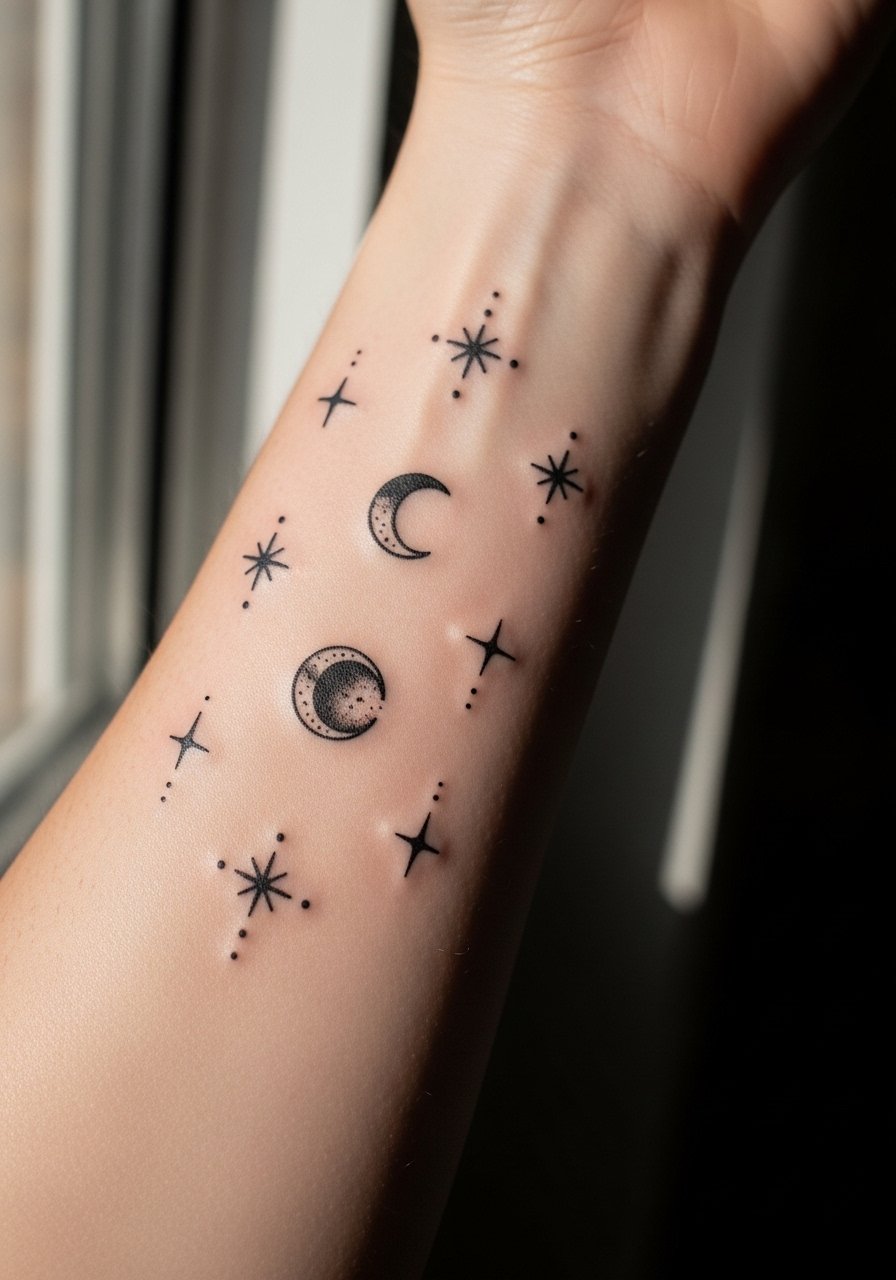
If you want multiple delicate moons across a forearm sleeve, coordinate scale and spacing so the wrist area is less dense. I recommend alternating single-line crescents with small negative-space stars to give breathing room. Tell your artist you want the densest saturation mid-forearm and lighter touches toward the wrist to reduce blowout risk. Sleeve accents require longer sessions and staged appointments. For everyday styling, rolled sleeves and a minimalist watch help the motifs read without crowding. Try a minimalist watch for a streamlined look.
Frequently Asked Questions
Q: How do delicate moon tattoos age on different skin tones?
A: In my experience delicate linework can soften faster on any skin tone if lines are too close together. On medium and dark skin, talk to your artist about contrast and negative space so the crescent reads clearly. Ask to see healed photos on skin tones similar to yours during the consult.
Q: Will a tiny moon on my ribcage need touch-ups sooner than one on my forearm?
A: Yes, ribs often need touch-ups earlier because the skin stretches with breathing and garments can rub the area. Expect a possible touch-up within two to four years, depending on line weight and aftercare.
Q: What should I wear to a session for a sternum or ribcage moon?
A: Wear something easy to adjust and modest like a sports bra or a zip front hoodie you can open slightly. That lets the artist access the area without you being uncomfortable.
Q: Are hand and finger moon tattoos a good idea if I work in a conservative job?
A: Hand work remains the most visible and can affect hiring in some industries. If you are concerned, choose a placement that can be covered by rings or sleeves during professional situations, or pick a less visible spot.
Q: How should I find an artist who understands delicate micro work?
A: Look for portfolios showing healed photos of similar scale and placement. Use local directory searches, convention guest lists, and hashtags focused on healed micro work to discover artists. Ask about healed shots specifically, not just fresh photos.
Q: Do watercolor crescent pieces require different aftercare than fine line work?
A: The care window is similar but watercolor pieces benefit from careful sun protection because color loss from UV is faster. Use sunscreen after healing and avoid prolonged sun exposure on the area to preserve delicate washes.