Fine line dragons flood feeds, and they look gorgeous for the first year. The reality is that how a dainty Asian dragon ages depends more on placement and spacing than on the flashiest ink. Small choices in line weight and where you put it decide whether a piece still reads crisp at year five. Read on for 27 small dragon ideas that balance style, longevity, and the wardrobe moves that help them sing.
1. Fine Line Asian Dragon Outline on the Wrist
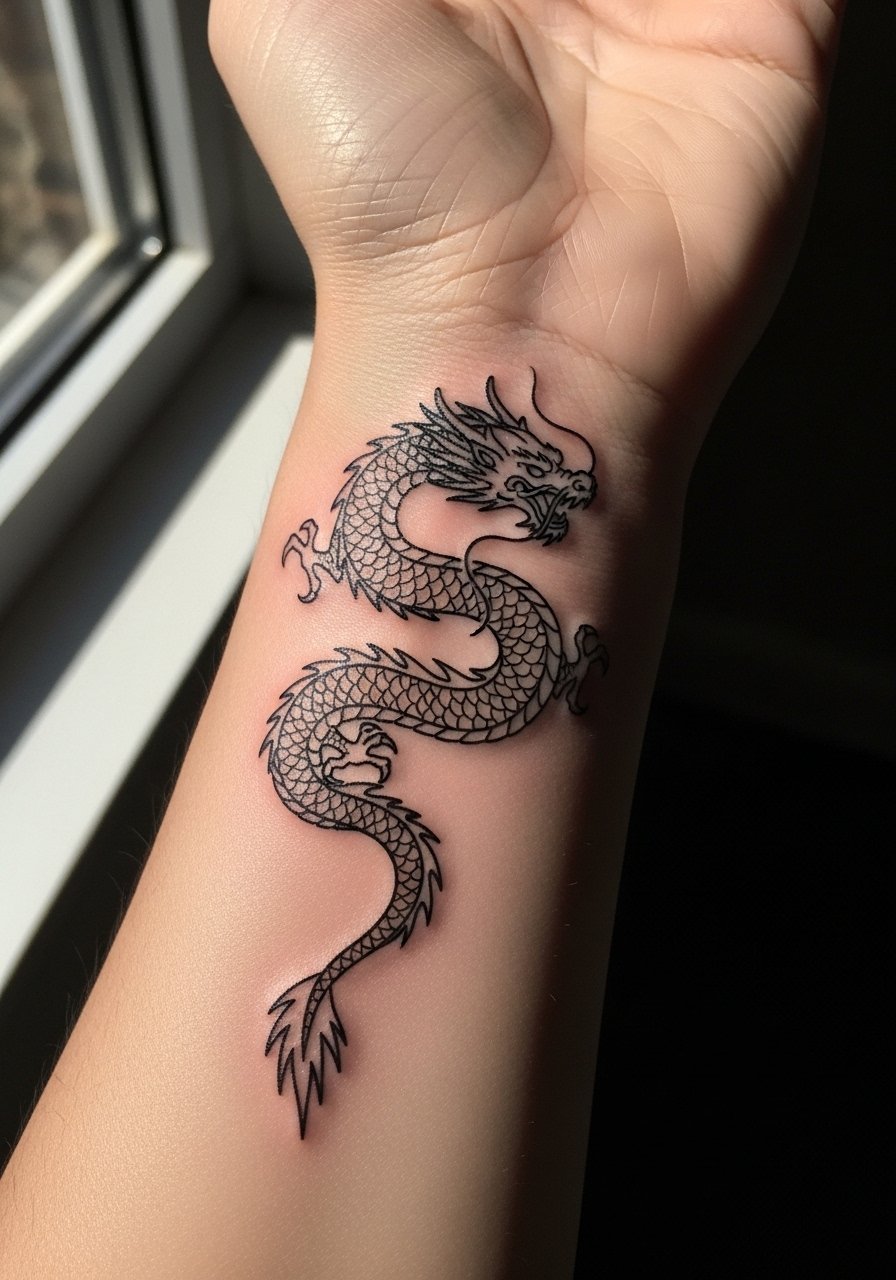
I recommend this when you want clear contour without heavy color, and the wrist placement keeps the piece readable at small scale. Pain is low to medium and most of this fits into a single short session. The common mistake is making it too densely coiled, which creates merging lines at year two. Tell your artist you want slightly increased spacing between scales and a confident single-needle lineweight. Expect a touch-up at year two or three for high-motion wrists. For showing it off, stack with a thin chain bracelet on the opposite wrist and roll back sheer blouse cuffs when you want it visible.
2. Watercolor Dainty Dragon with Floral Accents on the Forearm
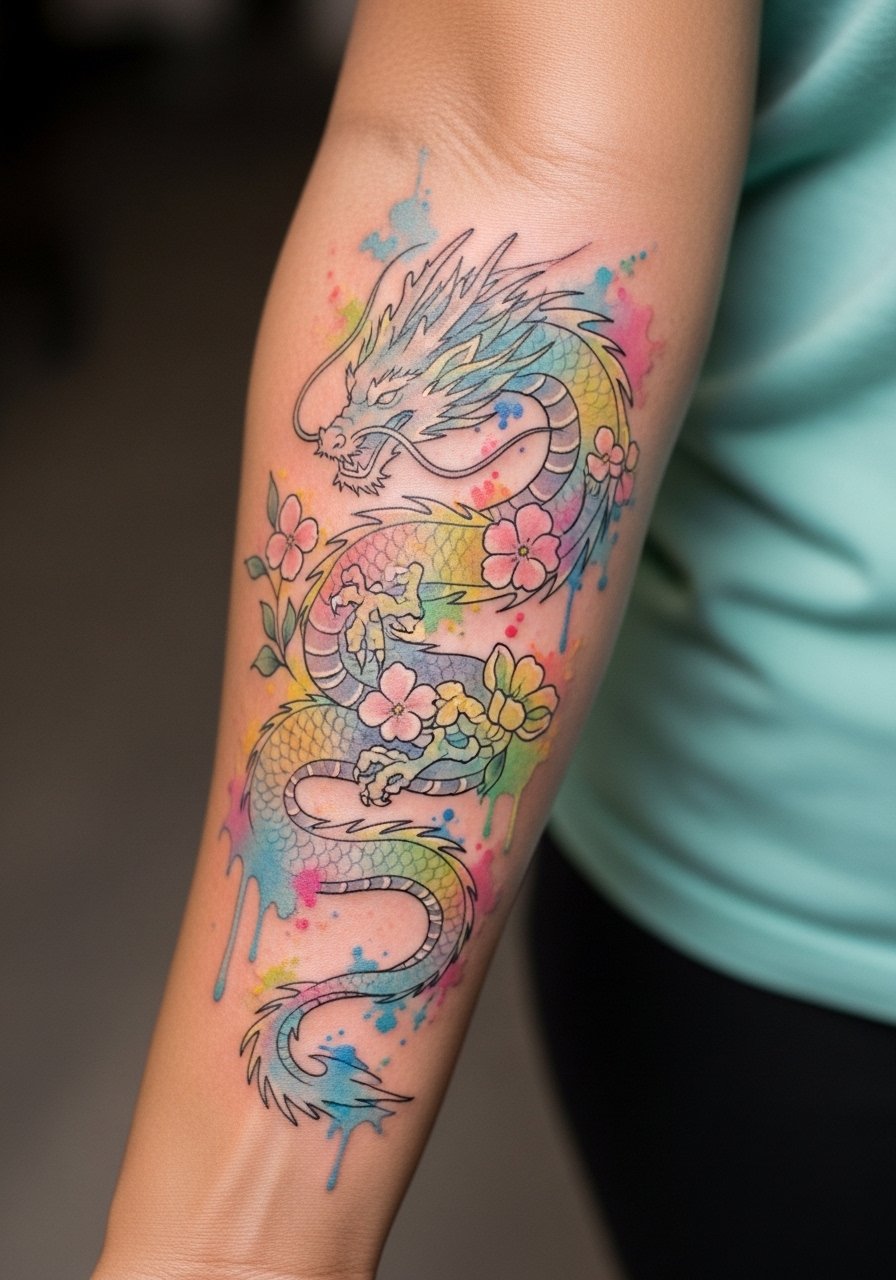
Fine for anyone who prefers softer color and a painterly feel. Session time is one to two sittings depending on color saturation. Beware that pastels tend to wash sooner than black, so ask for slightly denser pigment near the outline for longevity. A mistake I see is overloading tiny details in watercolor washes, which blur into a single tone as it heals. At six months the color reads bright, by two years pastels will soften, and by five years contrast is much lower without touch-ups. Wear a rolled linen shirt while showing it off, the neutral fabric keeps the colors readable.
3. Minimalist Dragon Silhouette on the Ankle
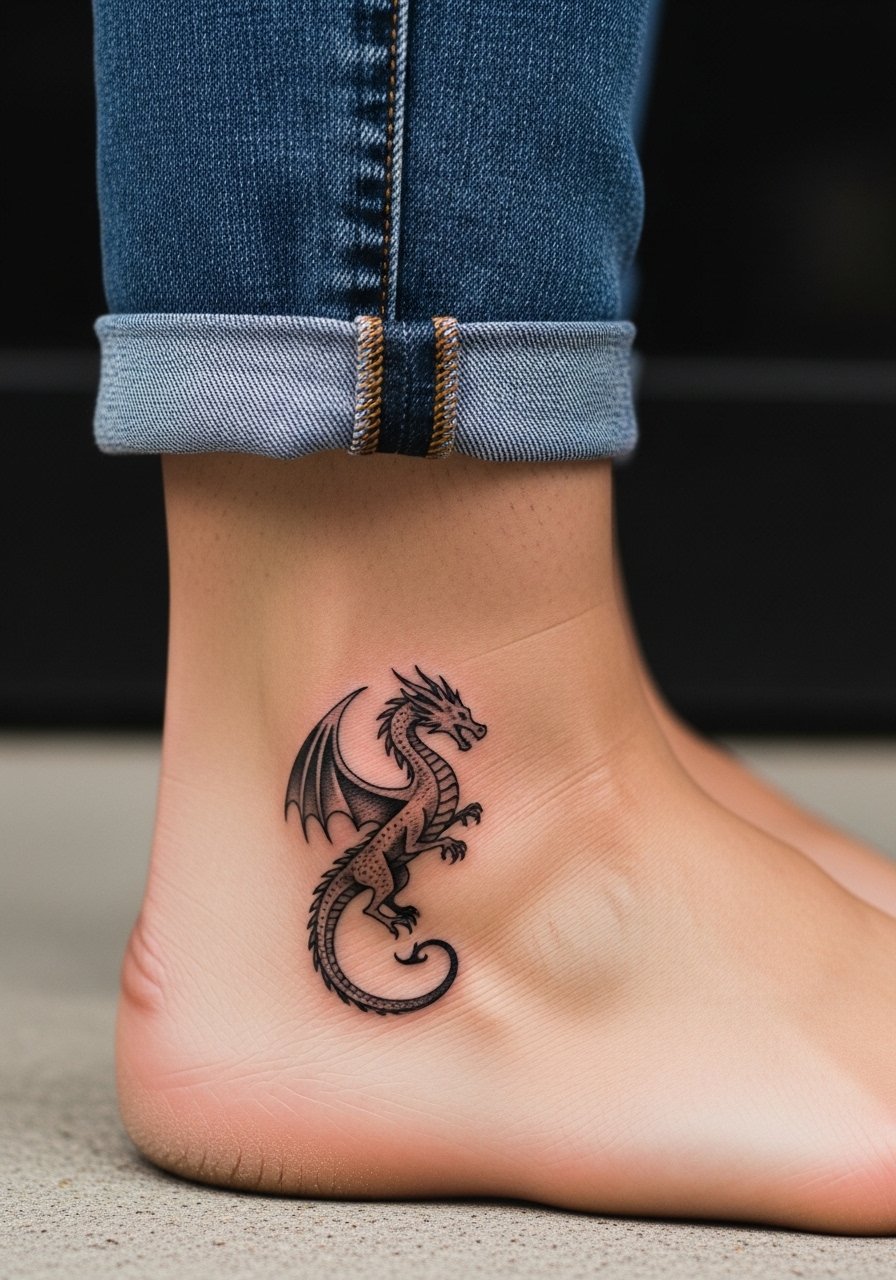
This is for someone who wants a discreet talisman that reads clearly from a few feet away. Expect low pain and a single short session. Common aging issue is friction from shoes and socks, so keep the design slightly raised from the edge of footwear to avoid premature wear. A common misstep is placing it too close to tendons where movement compresses the ink. For session comfort, wear loose shorts or rolled jeans so the artist can access the site. For outfits, pair with strappy sandals or a dainty ankle chain to frame the tattoo without crowding it.
4. Neo-Traditional Dragon with Playful Curves on the Outer Thigh
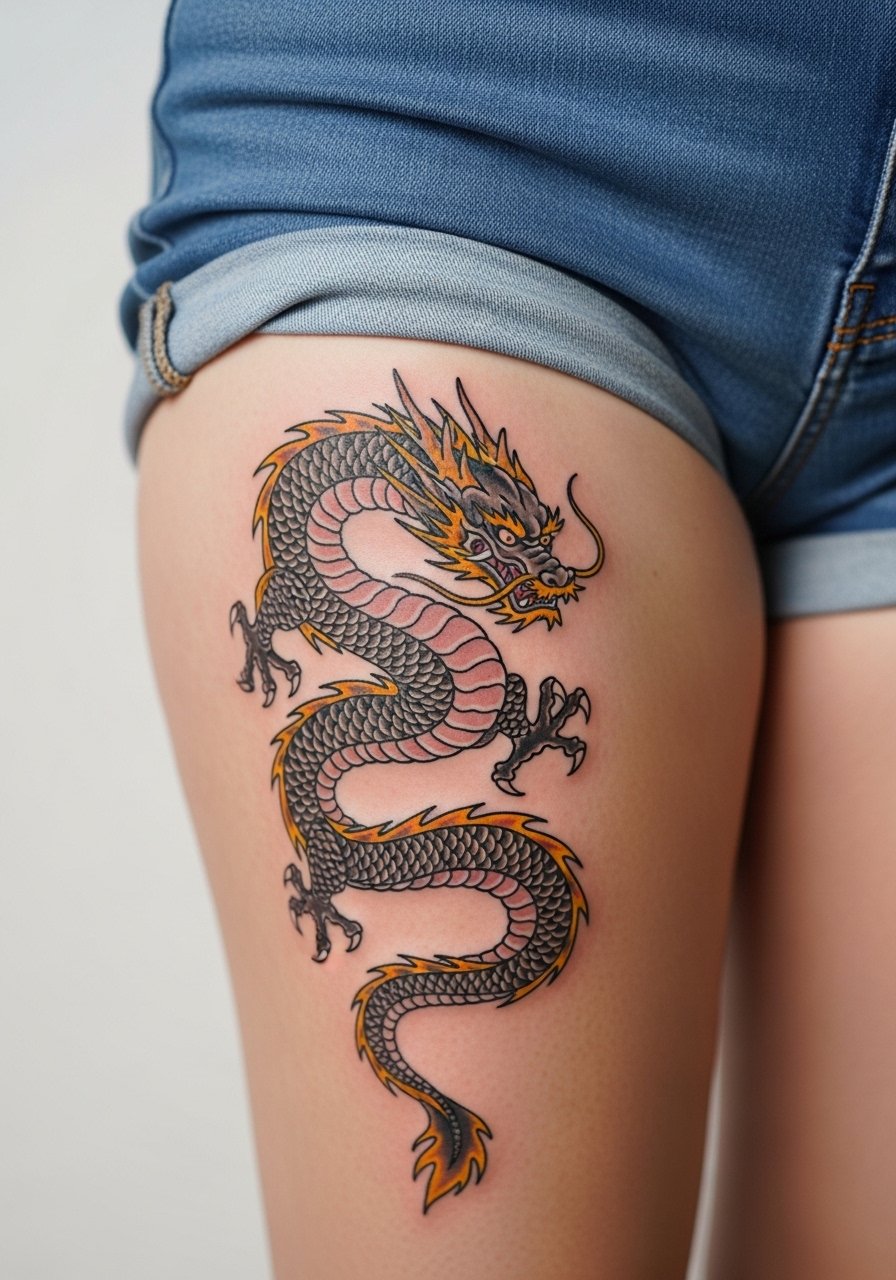
Great when you want more color and bolder outlines while keeping a small footprint. Pain is medium on the thigh and most work finishes in one or two sessions. The biggest mistake is over-detailing at this scale, which can look muddy after a year. Neo-traditional outlines age better than single-needle fine line on high-motion spots. Ask for slightly stronger outlines around key curves so shapes separate as the piece settles. For evenings, this pairs nicely with high waisted shorts or a slit skirt that reveals the wrap.
5. Micro-Realism Tiny Dragon Head on the Collarbone
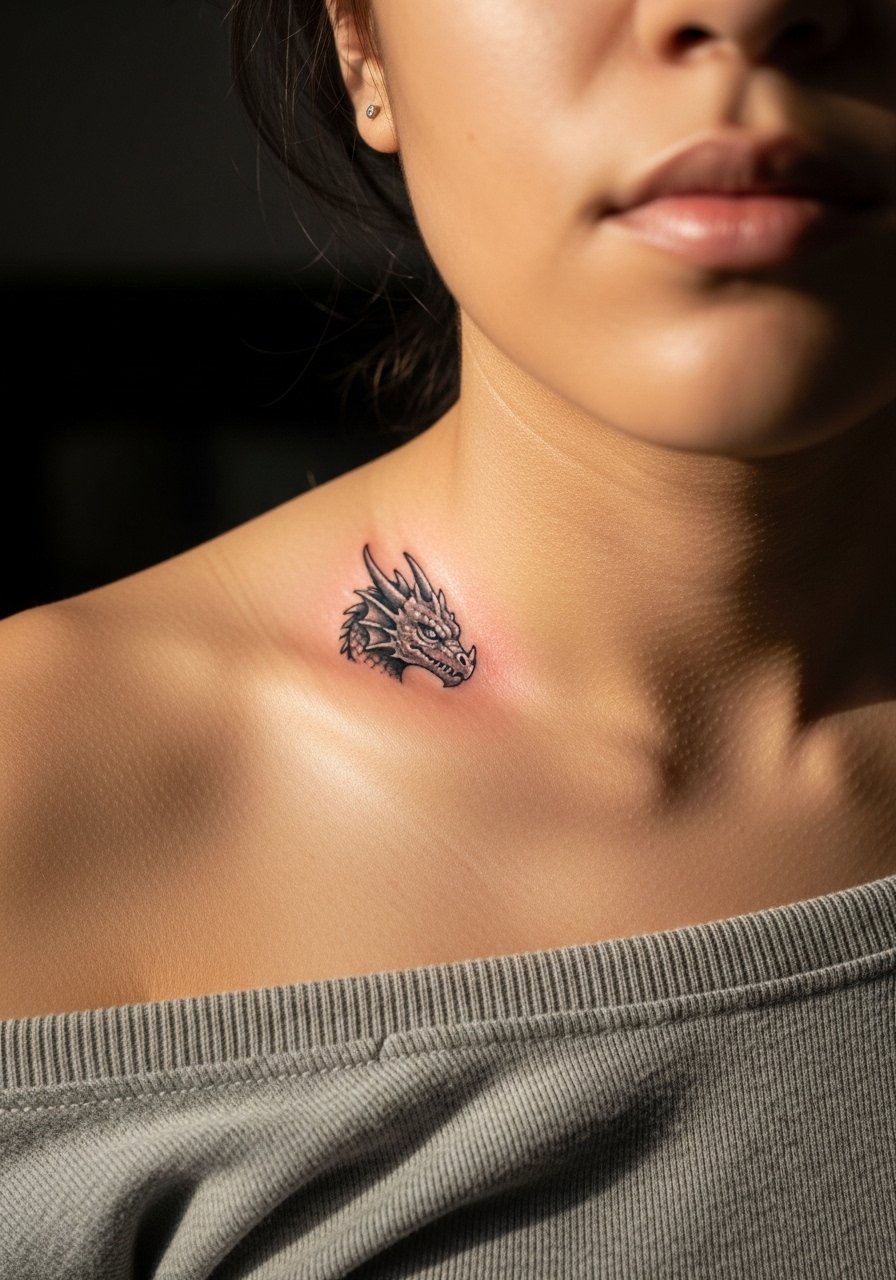
This is a nuanced choice for visibility without dominating an outfit. Collarbone tattoos can sting more than outer arm pieces because the bone is shallow, so expect medium pain and a short appointment. A common error is requesting extreme tiny detail that will blur as it heals. Specify that you want crisp contrast and simplified shadowing to ensure the head reads clearly at arm's length. At two years micro-realism keeps detail better if the shading is stippled rather than overly smooth. Pair with an off shoulder top when you want to show it off.
6. Ornamental Dragon Tail Wrap on the Ring Finger
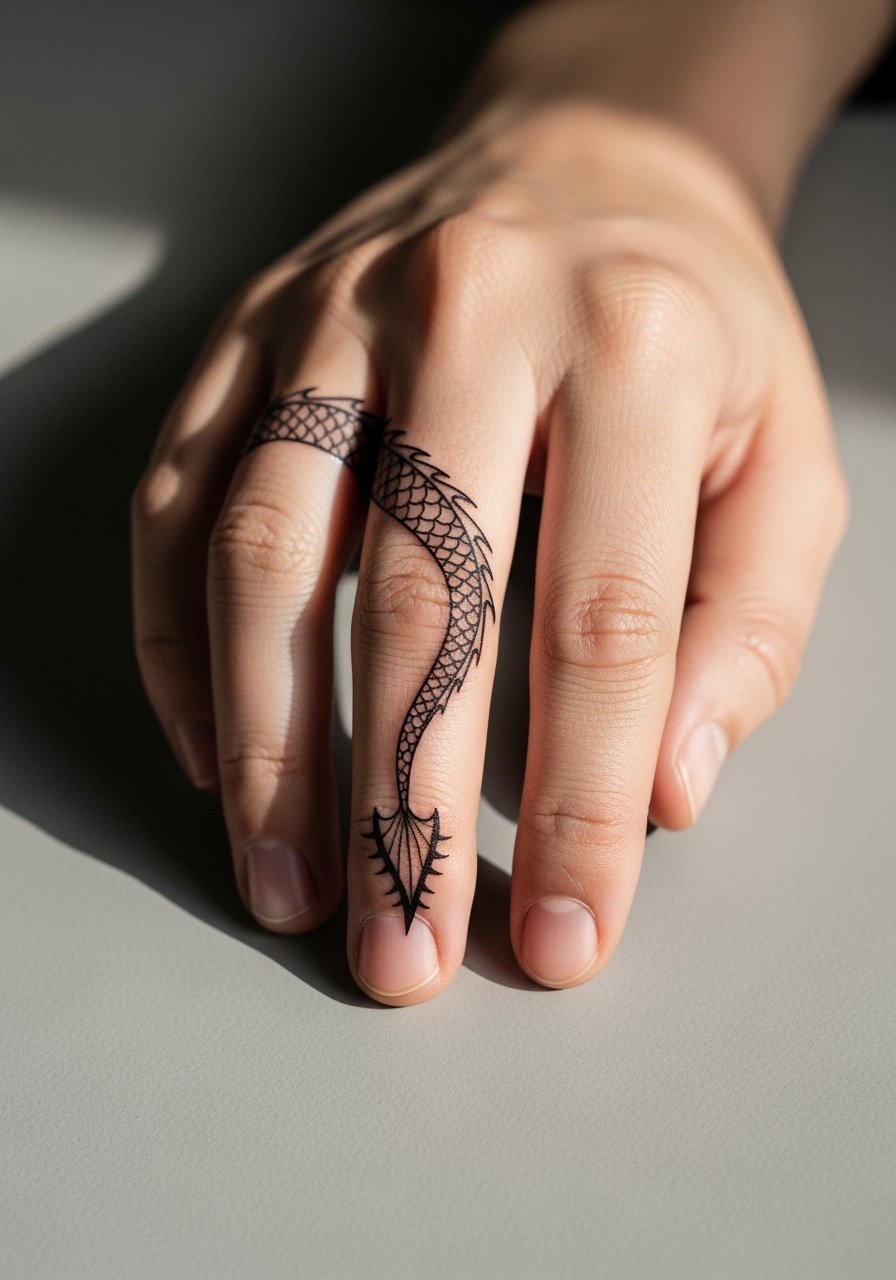
Finger tattoos have high friction and a higher blowout risk, so expect this to need a touch-up sooner than arm pieces. Session time is brief but the healing window is demanding. Avoid super-fine scales in the wrap, since detail disappears fast with daily hand use. A common mistake is asking for multiple colors; black linework lasts much longer on fingers. For the session, keep nails clean and remove rings so the artist can see the exact placement. A thin protective film the first few days reduces rubbing but ask your artist about recommended aftercare.
Before You Book
The wrist and finger pieces above heal differently from larger forearm and thigh work, so a few small items smooth the session and the first week.
- Stencil transfer paper kit. Lets you preview line placement on skin before committing, helpful for the wrist wrap and collarbone head in the ideas above.
- Topical numbing cream. Applied as directed before the appointment takes the edge off sensitive areas like the collarbone without affecting linework.
- Thin protective film roll. Keeps finger and ankle pieces cleaner during the first week when friction is highest.
- Fragrance-free body wash. Gentle cleansing for delicate linework on forearm and wrist pieces during showers.
- Aquaphor healing ointment. A thin initial layer can lock in moisture for small fine line areas without clogging, according to common studio practice.
7. Petite Folklore Dragon with Fairy Elements on the Inner Bicep
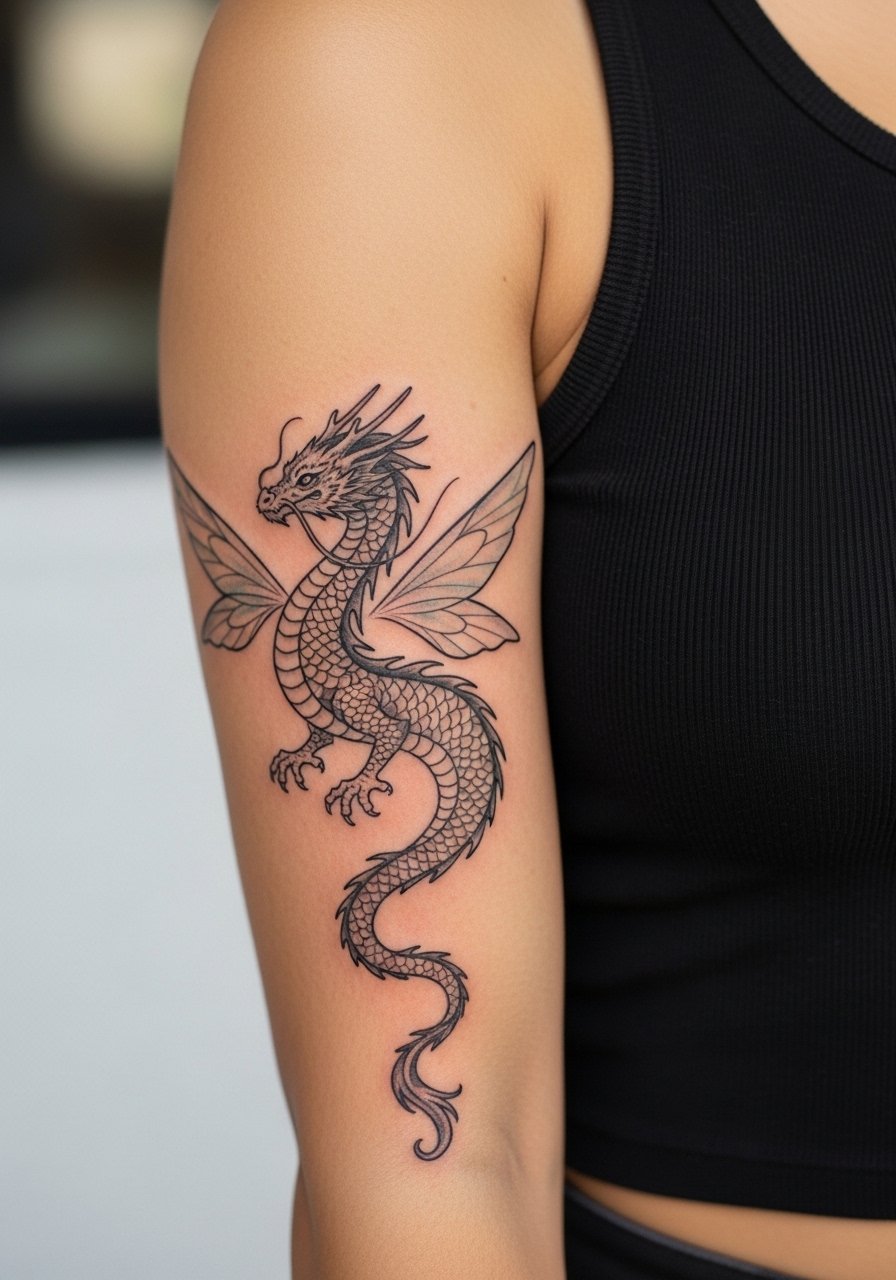
I've seen this idea work well for someone who wants myth mixed with gentle fantasy. Inner bicep pain is medium and the session fits into a single block unless color gets added. A mistake is crowding the dragon with tiny fairy details that merge in a year. Tell the artist you want the wings suggested rather than fully rendered, and ask for stipple shading to keep textures readable at six months and two years. For the session wear, bring a loose tank top so the artist can easily access the site.
8. Tiny Koi-Dragon Hybrid Near the Ankle Bone
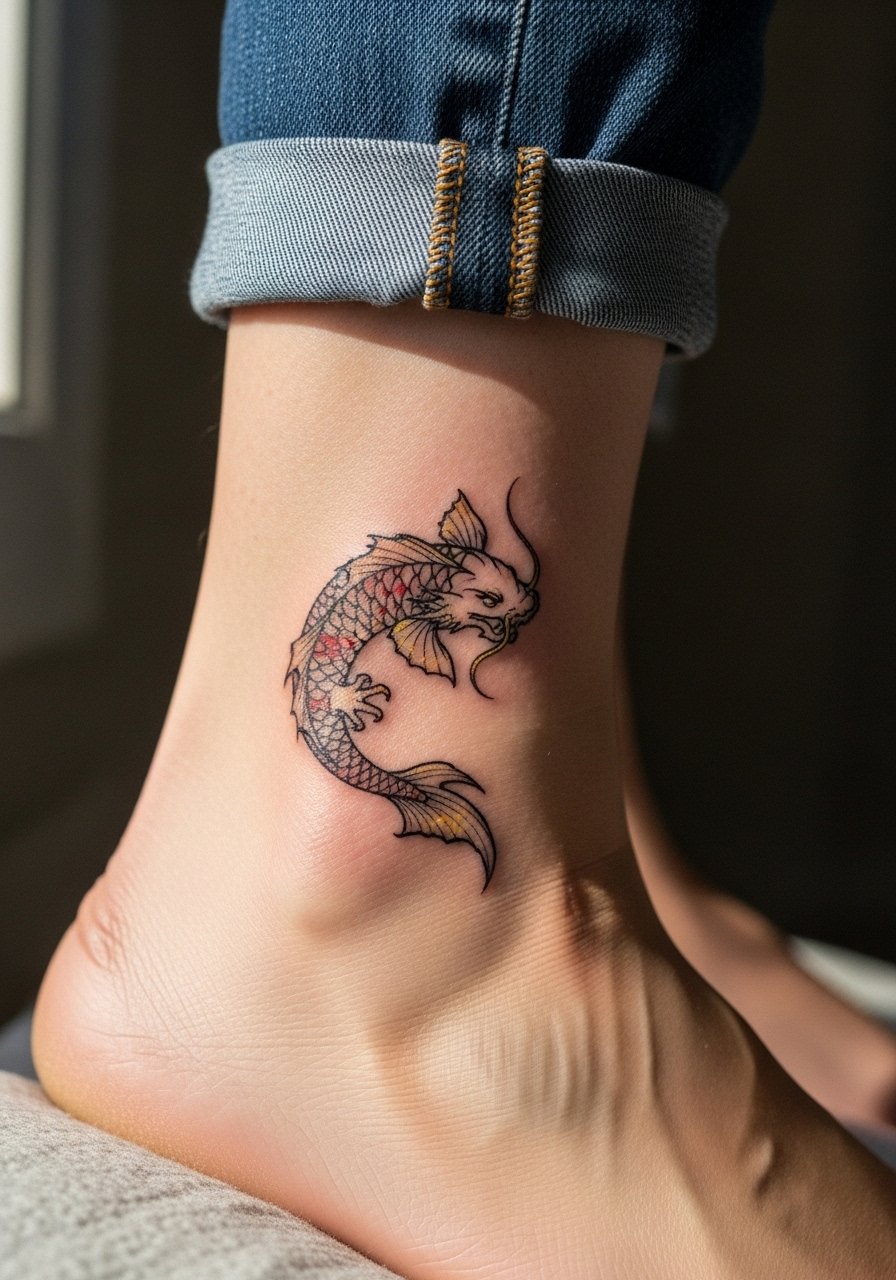
This hybrid reads as jewelry when small and sits well on the ankle bone. Expect low pain and a quick single session. The common aging problem is contact with footwear and socks eroding the lower edge, so place it slightly higher or on the outside ankle. During consultation, ask for a compact silhouette with one or two saturated accents instead of a full color palette. Pair with cropped ankle pants and strappy sandals to show it off, and consider a strappy sandal flat for summer reveals.
9. Stipple-Shaded Dragon Eye on the Wrist Side
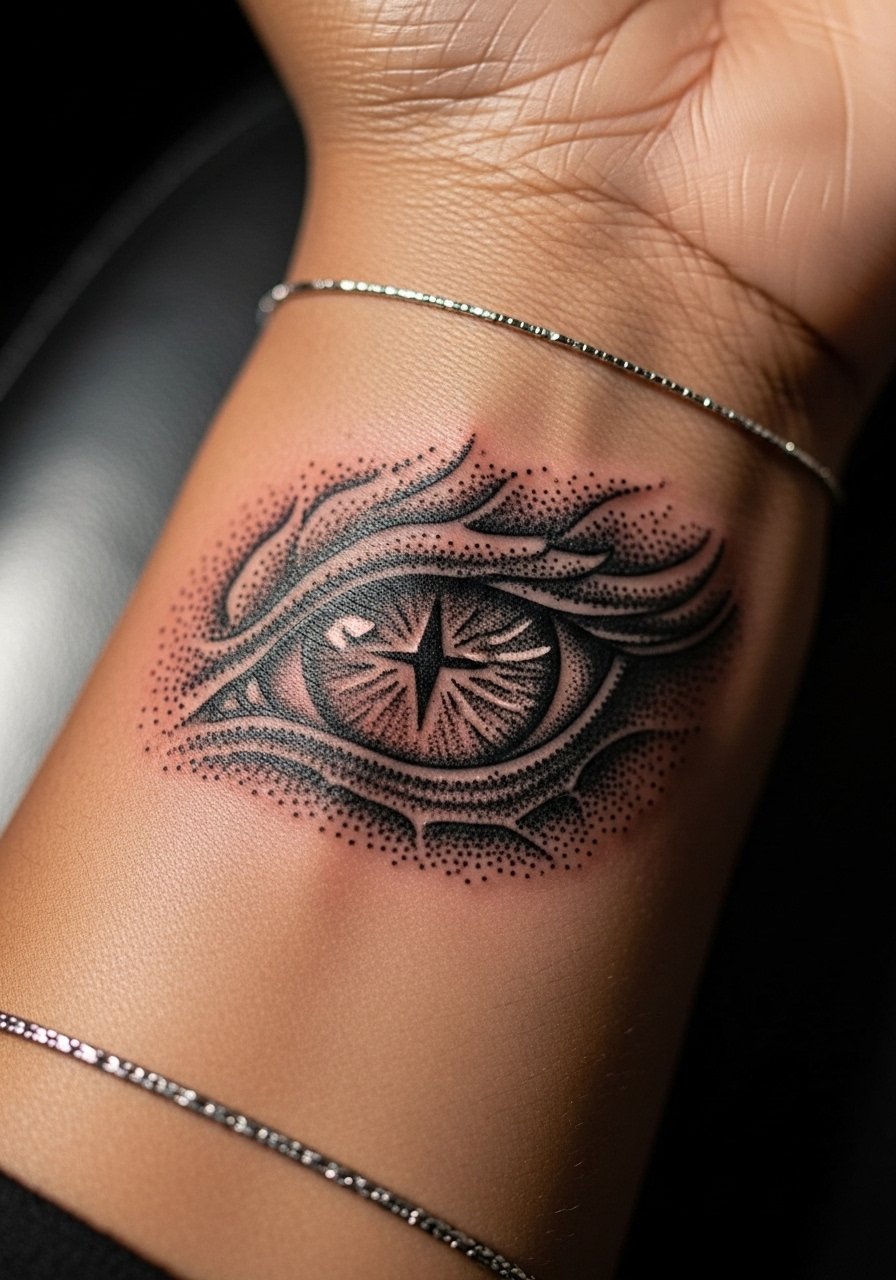
There is an artist debate about how fine stipple holds up on high-motion wrists. One camp warns stipple fades faster on the outer wrist, the other says careful dot spacing preserves texture. My take is to space dots slightly wider and keep the overall size at least 1.5 to 2 inches so the shading remains readable. Pain is low to medium and timing is a single short session. A mistake is asking for extremely dense stipple in under an inch. For showing it off, a minimalist watch or thin chain can sit opposite to balance attention.
10. Matching Mini Dragons Behind the Ear
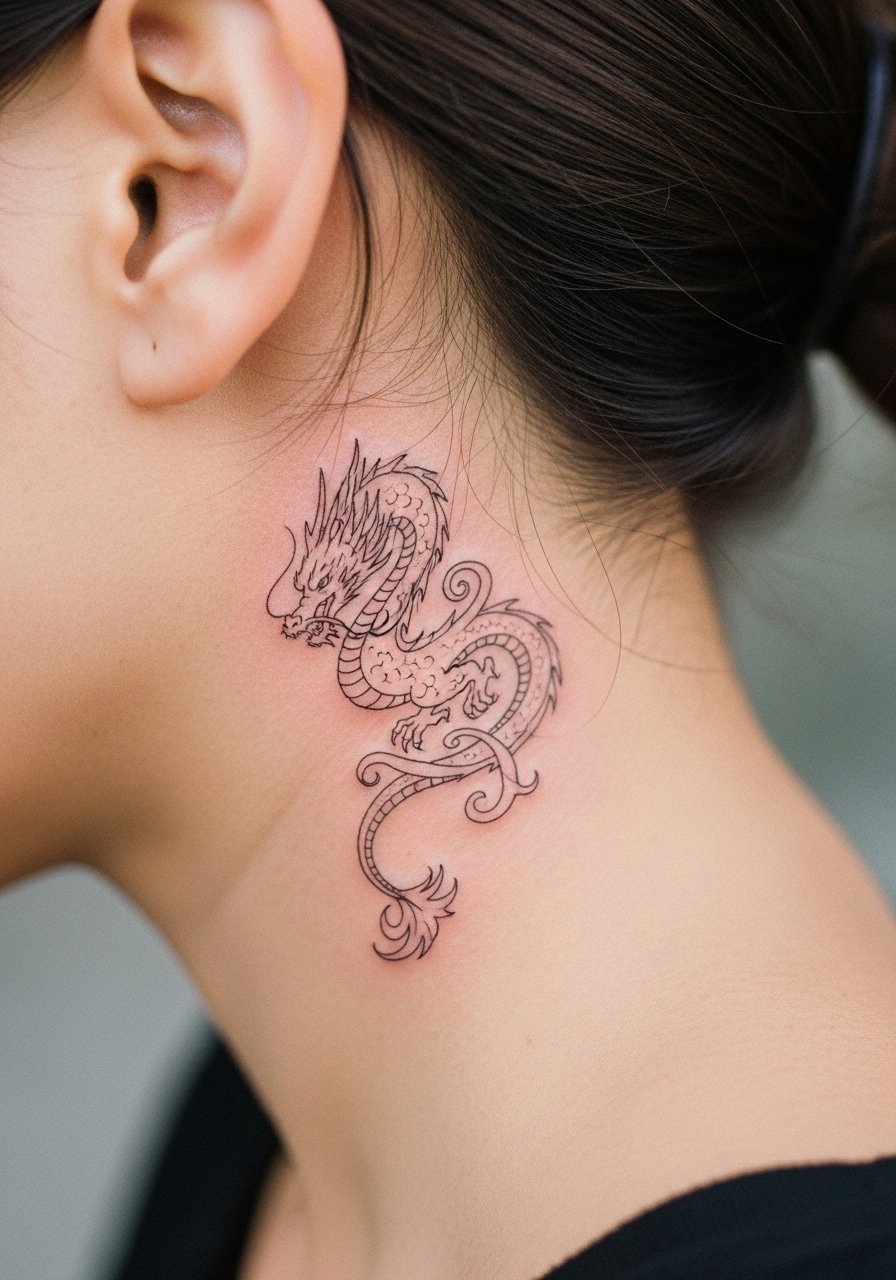
Behind-ear placements require careful framing when photographed and specific artist experience. They are low in size but can be tender. The main mistake is assuming any lineweight will work there. Because the skin is thin and mobile, ask for a slightly bolder single-line contour so it reads after healing. A sensitivity note applies since this is near the neck and hairline, and you should seek an artist accustomed to tiny neck placements. These are subtle show-offs when hair is pulled back.
11. Negative Space Dragon Outline on the Upper Back
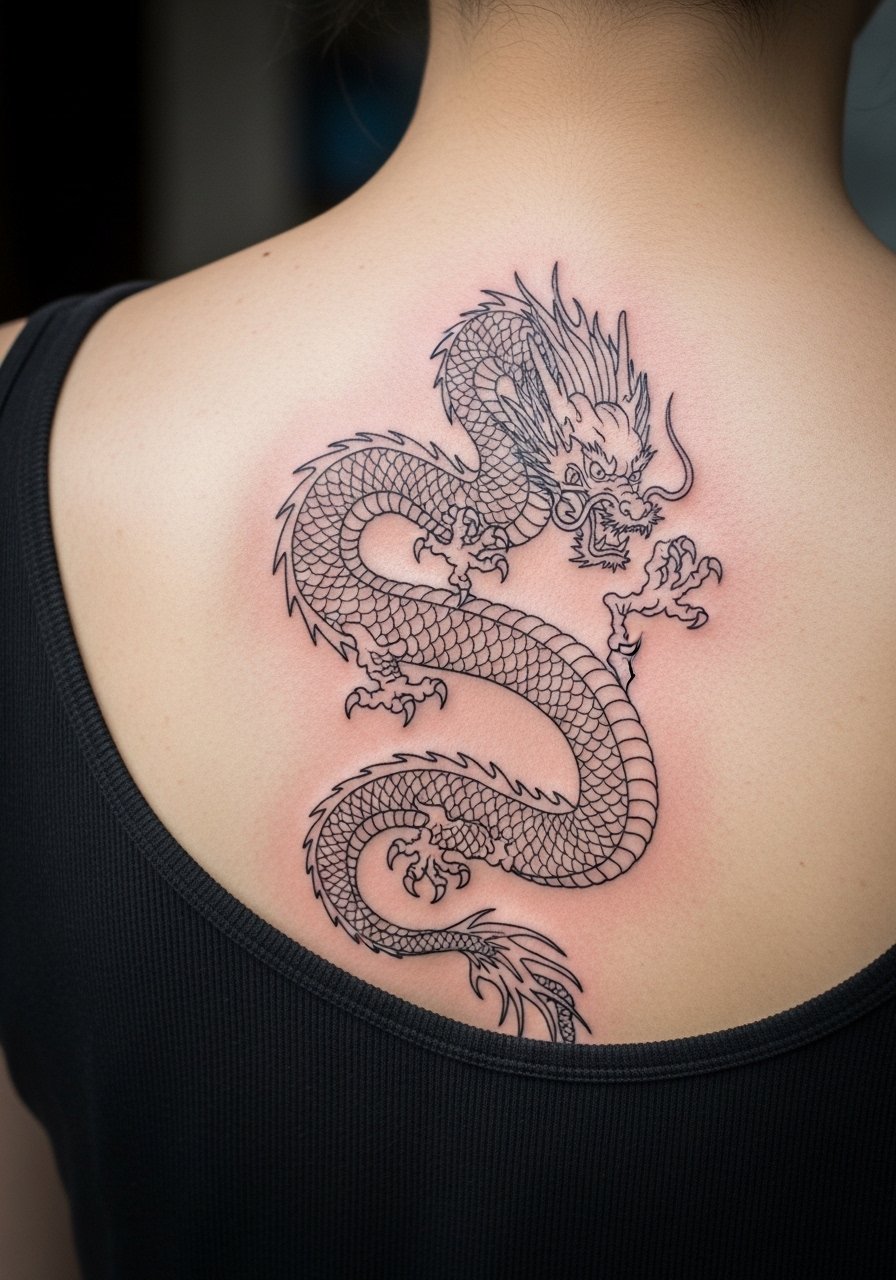
Negative space approaches let skin show as part of the composition, and they age well if the surrounding linework has thoughtful spacing. Upper back pain is mild, and sessions are short. The common error is building too many thin reverse shapes that blur into a dark patch later. In consultation, ask for clean negative shapes with stronger bordering lines so the dragon silhouette remains distinct at two and five years. Pair with low-back tanks or halter tops when you want it visible.
12. Micro-Realism Dragon Scale Cluster on the Collar of a Shoe
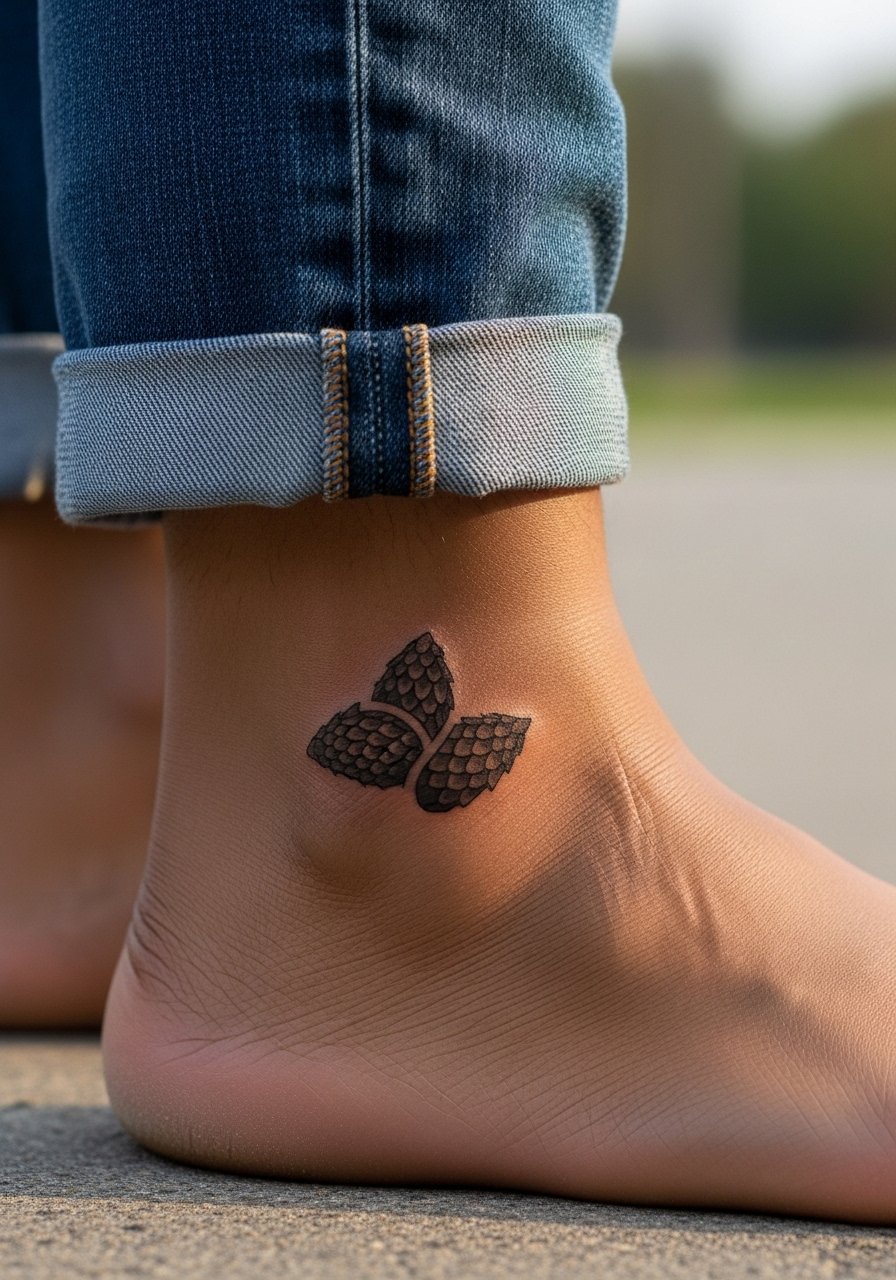
Foot placements suffer from friction from shoes and moisture. Expect faster fading and a likely touch-up at year one or two. Keep the work small and high-contrast rather than micro detail if you want it to last. The mistake is dense realism on the foot where scales blur quickly. For the session, wear shoes you can remove easily and consider sandal-ready footwear afterward to reduce rubbing.
13. Linework Dragon Spine Accent Along the Shoulder Blade
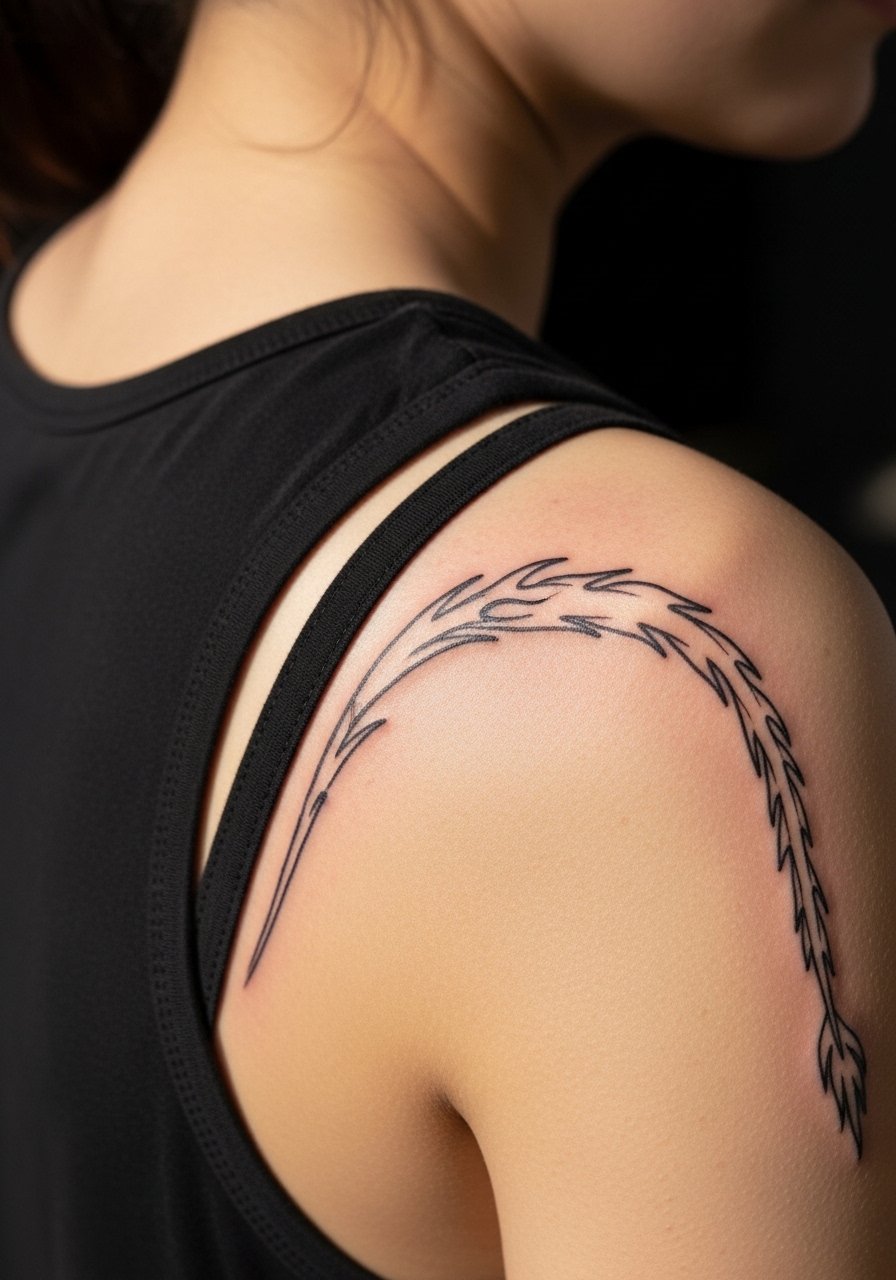
This placement gives motion without being overt. Shoulder blade pain is mild and a single session handles most of the work. Avoid tightly coiled compositions that flatten as the skin moves, and instead choose a gentle S-curve that follows the scapula. A common aging issue is stretching when carrying heavy backpacks, so expect some softening over years. For the session wear, pick a loose tank top that you can pull aside for clean access.
14. Tiny Dragon Head Accent Behind a Collarbone Pendant
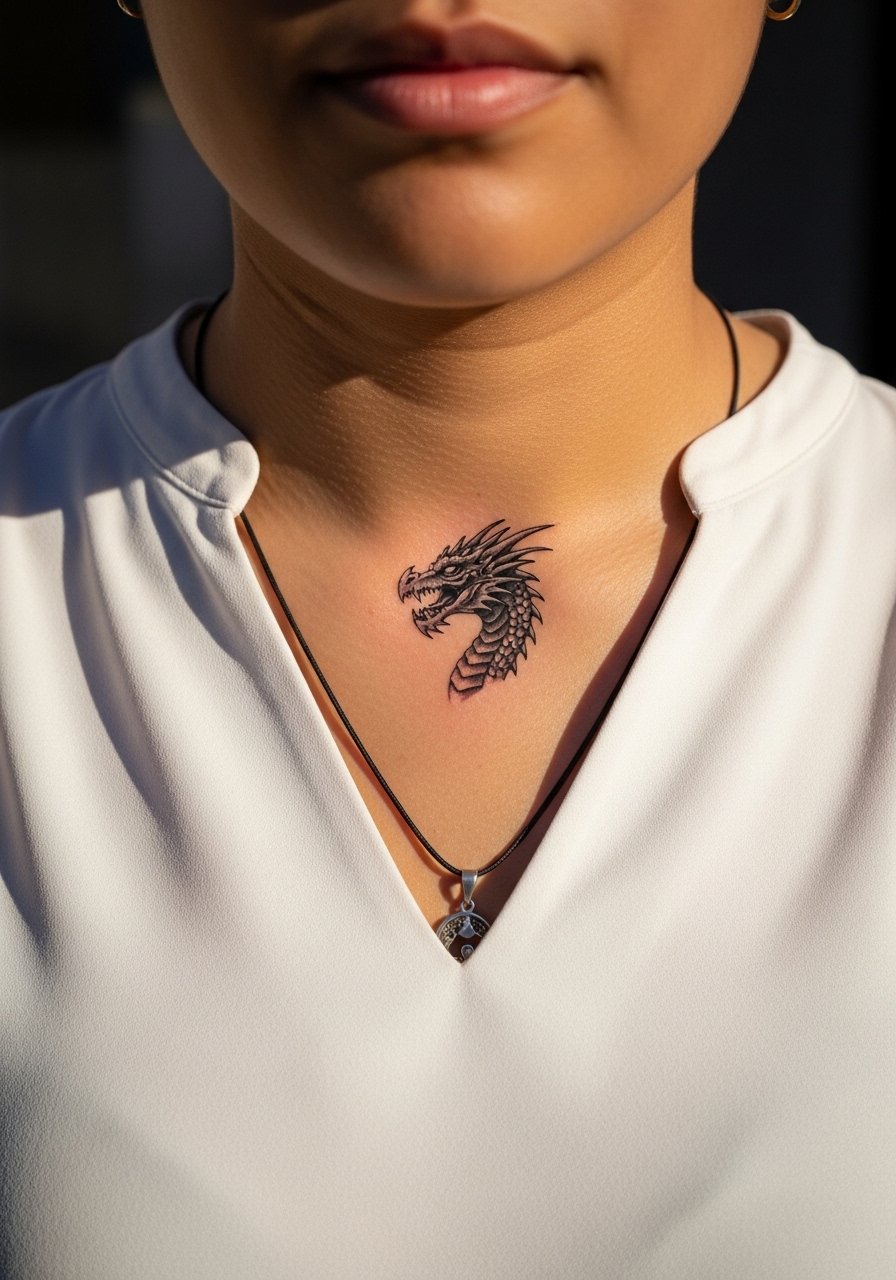
This is a compositional decision piece meant to work with jewelry rather than compete with it. Pain is similar to other collarbone placements. The mistake I see is asking for a pendant and a tattoo exactly in the same spot. Ask the artist to position the head just offset so necklaces and tattoos both read. For showing it off, choose a minimalist pendant necklace that sits slightly below the line of the tattoo.
15. Fine Line Dragon Wrapped Around the Thumb Base
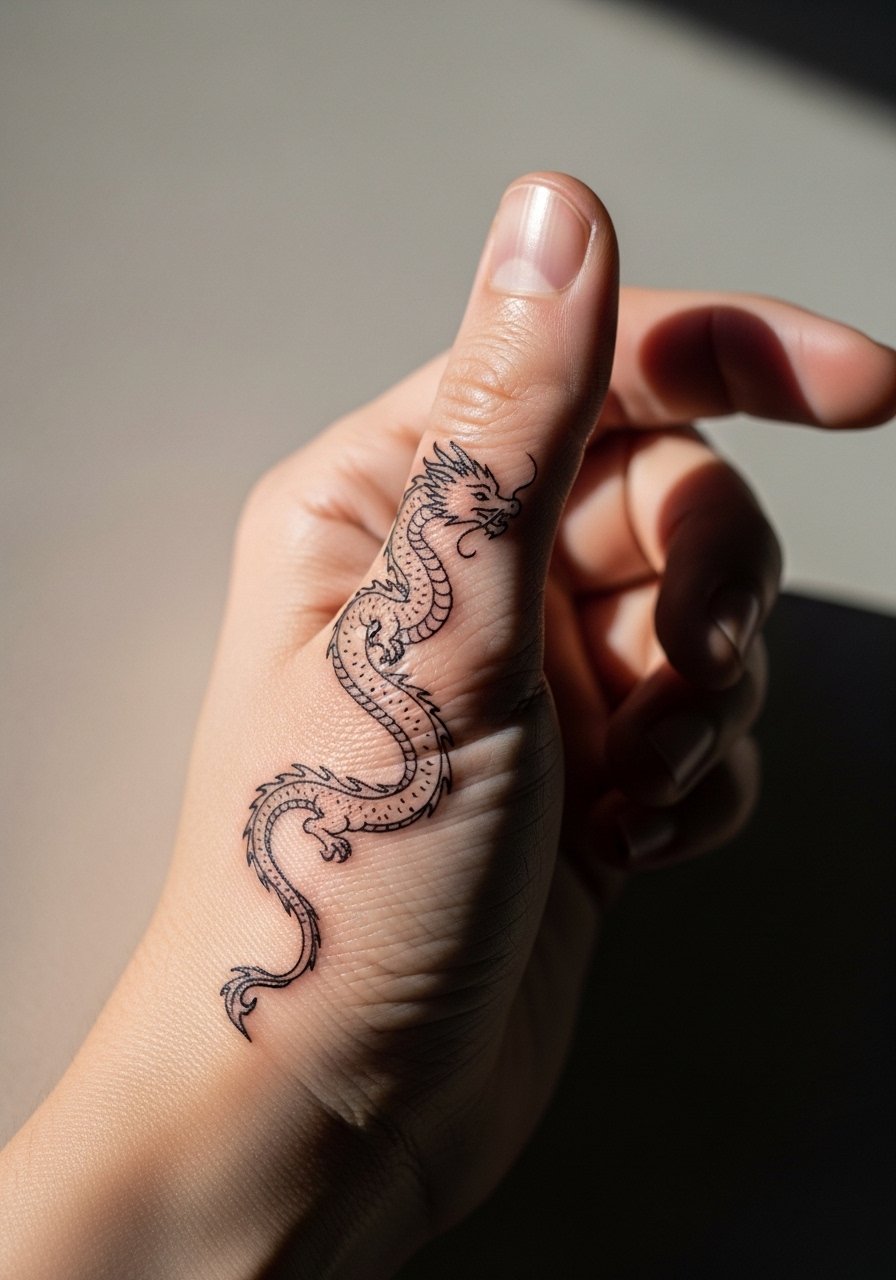
Thumb-base pieces face constant movement from gripping and texting. Pain is medium and healing can be finicky. The typical mistake is cramming too much scale detail into a very small curve, which becomes illegible. Ask for a clear contour and simplified features so the form reads even with wear. Expect a touch-up within a year for most thumb placements.
16. Watercolor Dragon with Cherry Blossom Sprays on the Outer Forearm
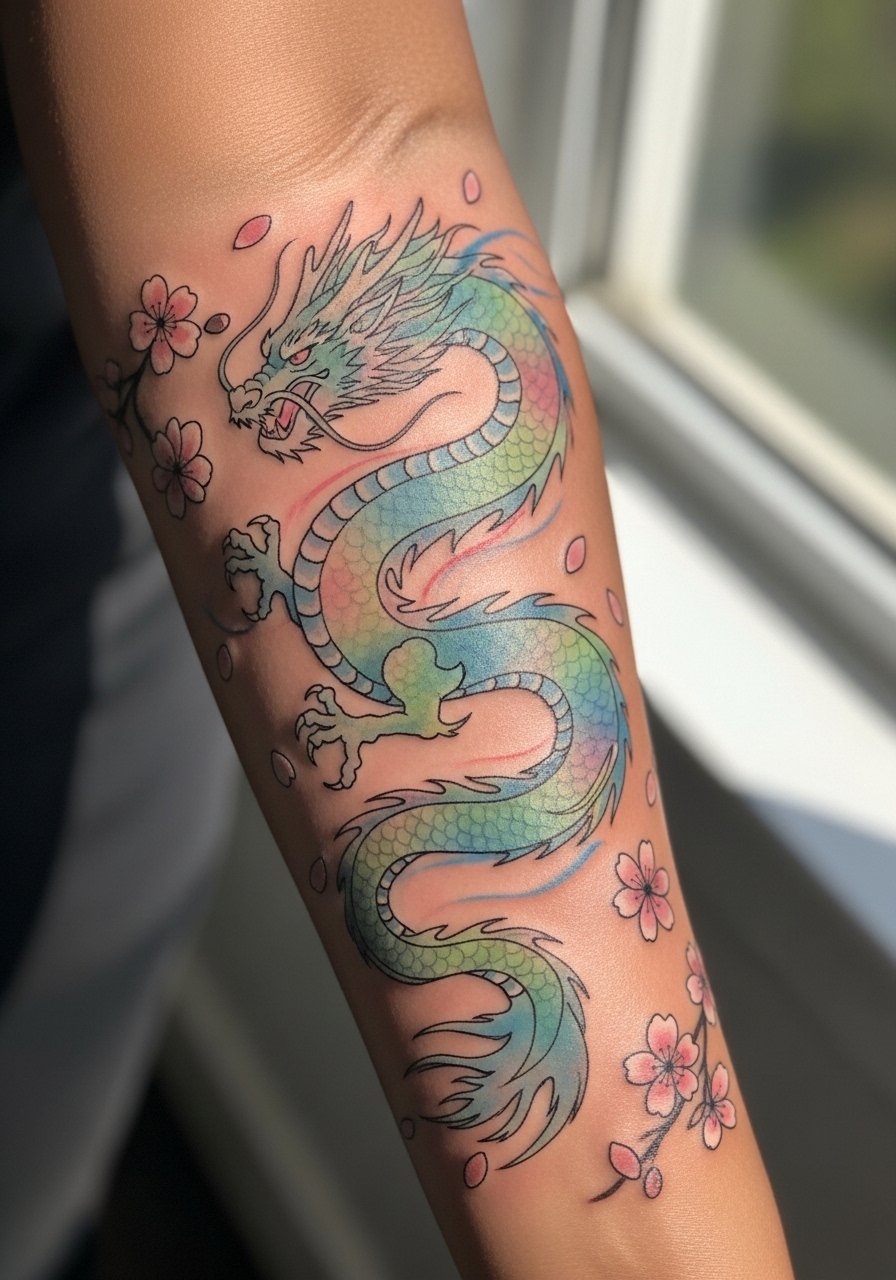
This is for someone who wants a softer narrative in a visible area. The outer forearm tolerates watercolor well if you avoid tiny stippling in wash areas. A common mistake is layering too many pastel gradients which fade unevenly. Ask your artist to keep florals slightly darker at the edges so petals remain distinguishable at two years. For showing off, roll sleeves or wear a pastel rolled sleeve shirt so colors pop against neutral fabrics.
17. Tiny Geometric Dragon in Negative Space on the Ribcage
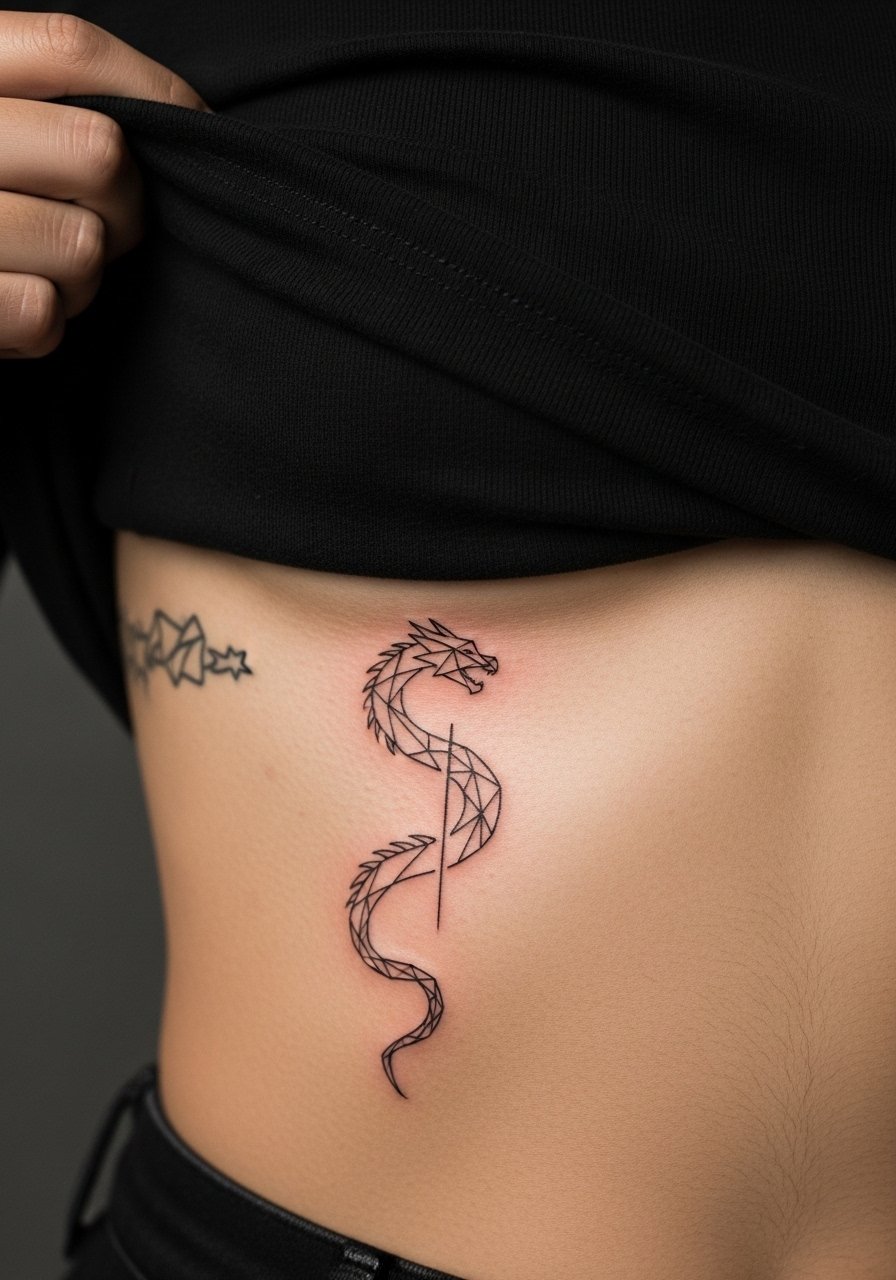
Ribcage placements are notorious for pain and for how skin movement affects fine detail. Artists split on whether ultra-fine line holds on ribs. One camp says the stretch blurs lines quickly. The other says precise depth and spacing will keep the design crisp. If you want a rib piece, plan for slightly larger geometry and ask for clearer border lines. Expect higher pain and a session that might need breaks, but the payoff is a dramatic reveal when you wear low-rise tops.
18. Tiny Dragon Paw Print Behind the Knee
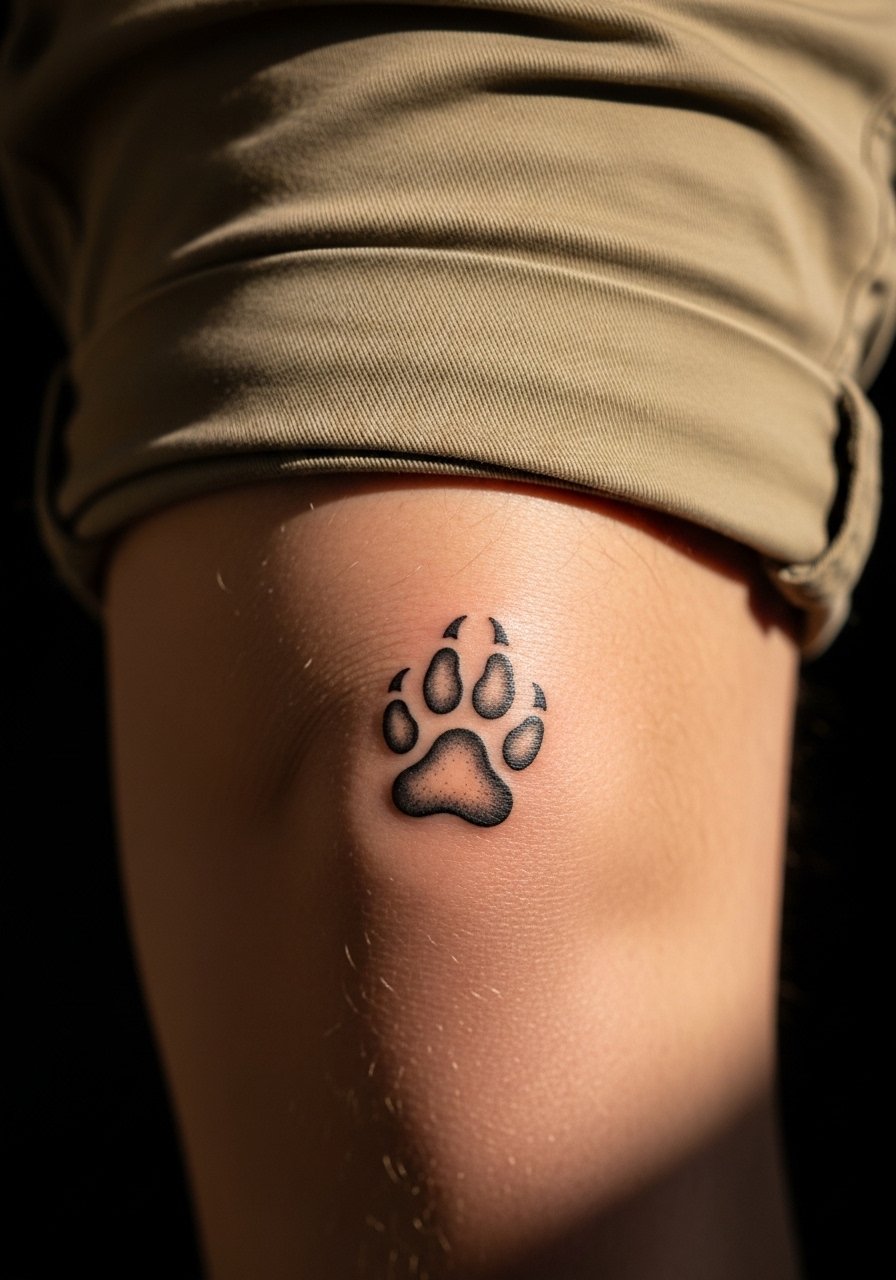
Behind-knee work feels playful but the area bends a lot. Pain varies and healing can be slow due to movement. A mistake is placing too much fine detail in the bend point where skin creases. Ask for the motif to avoid the crease line so it remains stable. For sessions, wear shorts you can adjust easily.
19. Micro Realism Dragon Iris on the Inner Wrist
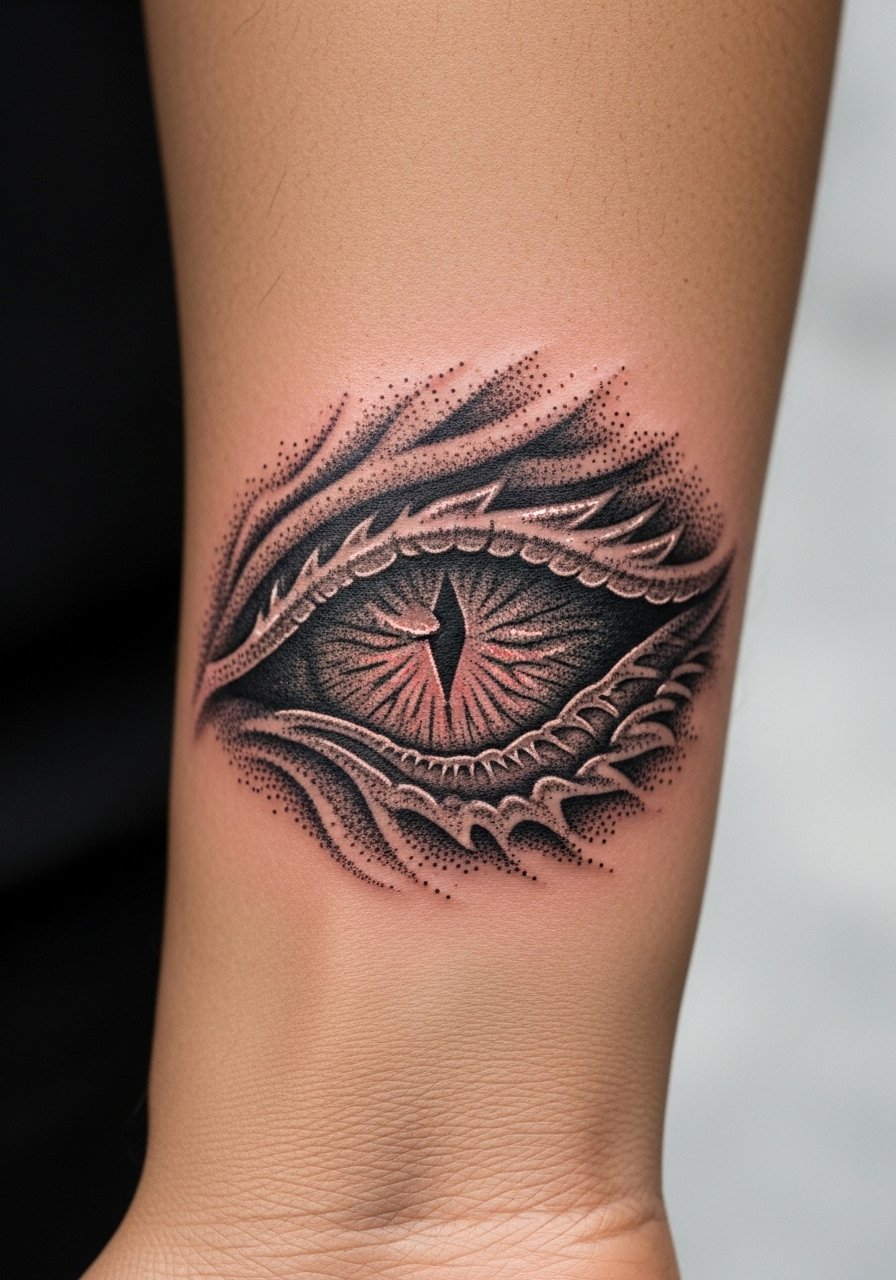
Inner wrist micro work reads intimately and can last if slightly scaled up from a thumbnail size. Expect low to medium pain and discuss dot spacing for stipple to maintain texture. The common mistake is demanding extreme tiny realism under an inch. Size this at 1.5 inches for longevity. For showing it off, pair with a simple thin ring stack rather than heavy bracelets.
20. Miniature Dragon Crest at the Top of the Foot
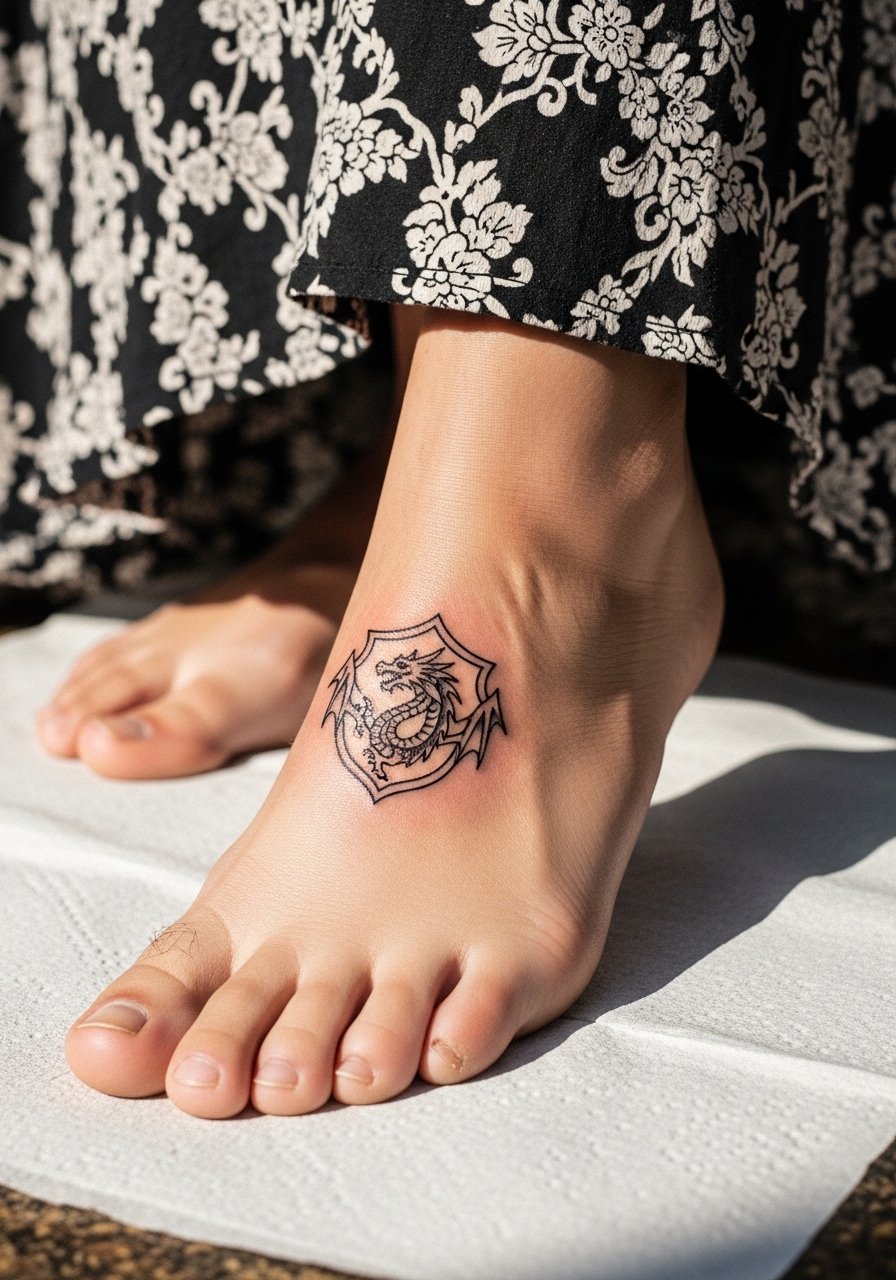
Top of foot tattoos are highly exposed to sun and shoe friction, so expect faster fading and at least one touch-up in the early years. The common error is wanting detailed crests that lose clarity. Ask for bold contours with small internal cues rather than full micro detail. For session wear, bring sandals to avoid pressure on the fresh ink.
21. Dainty Wrap Dragon That Tucks Under a Slit Skirt
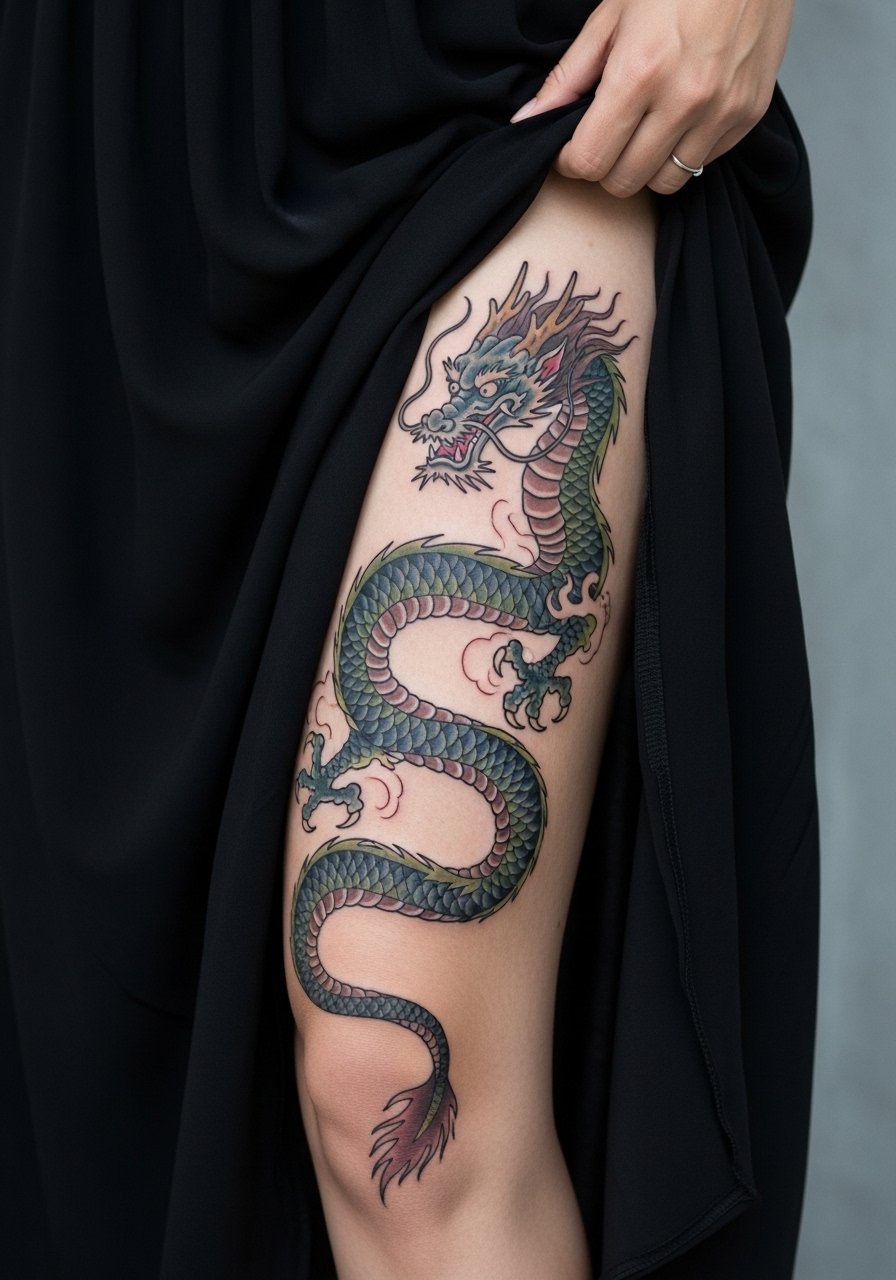
This is an intimate placement meant to be revealed selectively. Thighs tolerate color nicely and the curved surface suits wraps. Common mistakes are making the wrap too tight so it looks cramped on the leg. Ask for a looser rhythm to the coil and slightly larger scales so shapes survive stretching. For showing it off, choose high-waisted shorts or a slit maxi skirt that allows glimpses without full exposure.
22. Tiny Line Dragon Behind the Ear with Hair-Tuck Reveal
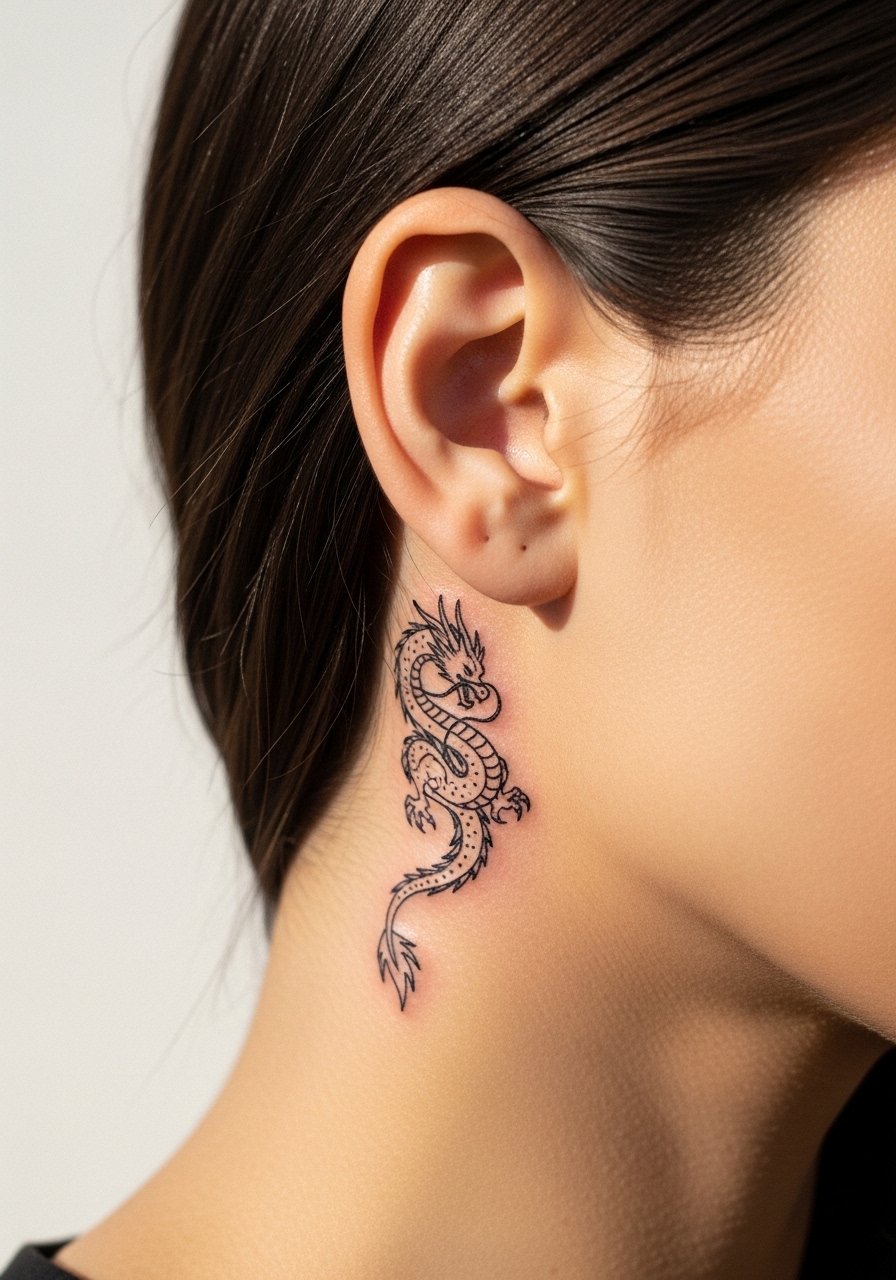
Subtle and flirtatious, this placement needs an artist who knows how to scale behind-ear work. Pain is low and sessions are short. Mistakes include placing it too far forward where hair rubs daily. Ask that the piece sit just below the hairline so you can hide or reveal it. This spot works well for people who want a very private tiny piece.
23. Tiny Dragon and Moon Phases Along the Forearm Ridge
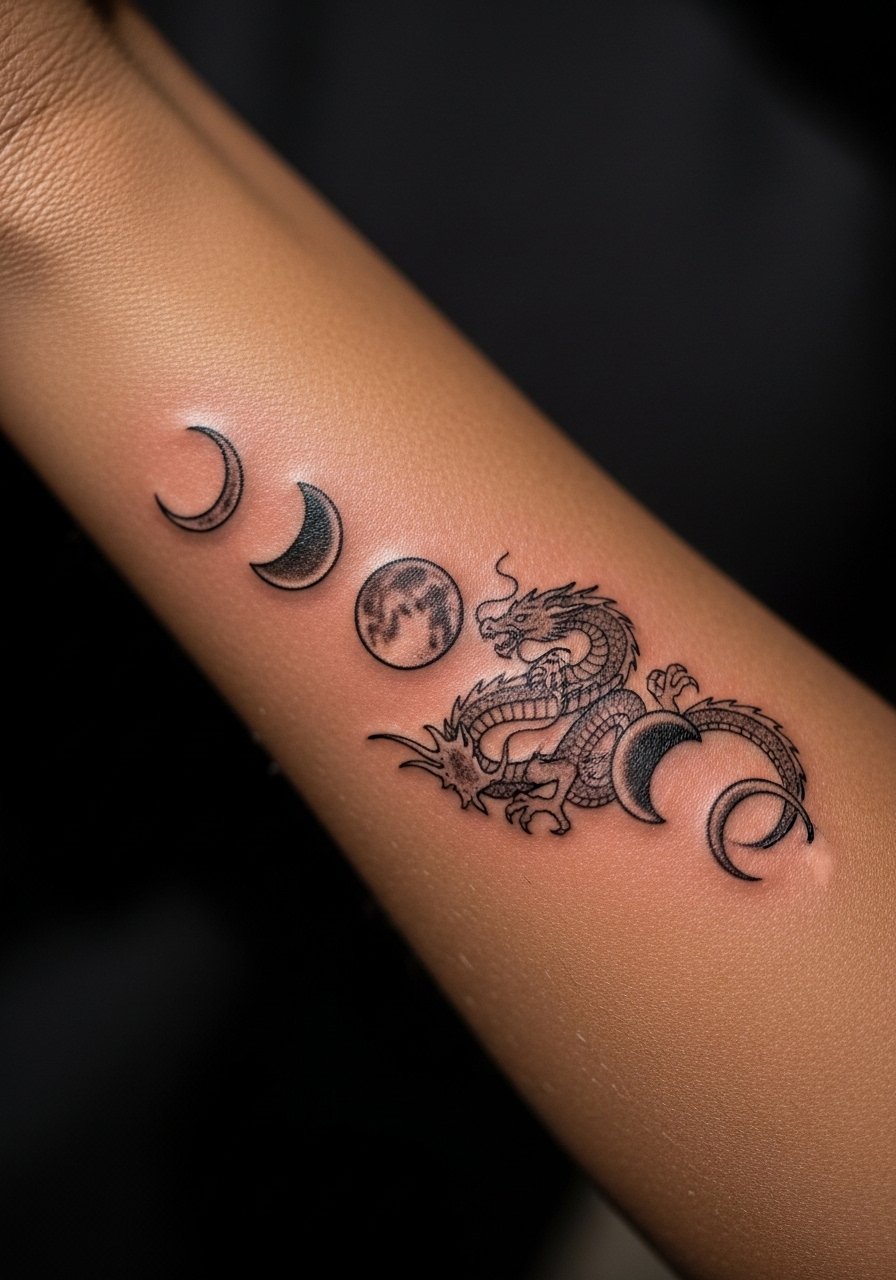
This reads as narrative wrapped in a linear format. Outer forearm placement keeps motion minimal and improves longevity. A mistake is spacing the moons too closely to the body of the dragon where the linework can merge. When consulting, present clear references for spacing and ask the artist to leave extra breathing room between elements. For showing off, roll sleeves or wear a thin gold ring stack to draw attention up the arm.
24. Micro Dot-Work Dragon Tail on the Side Torso
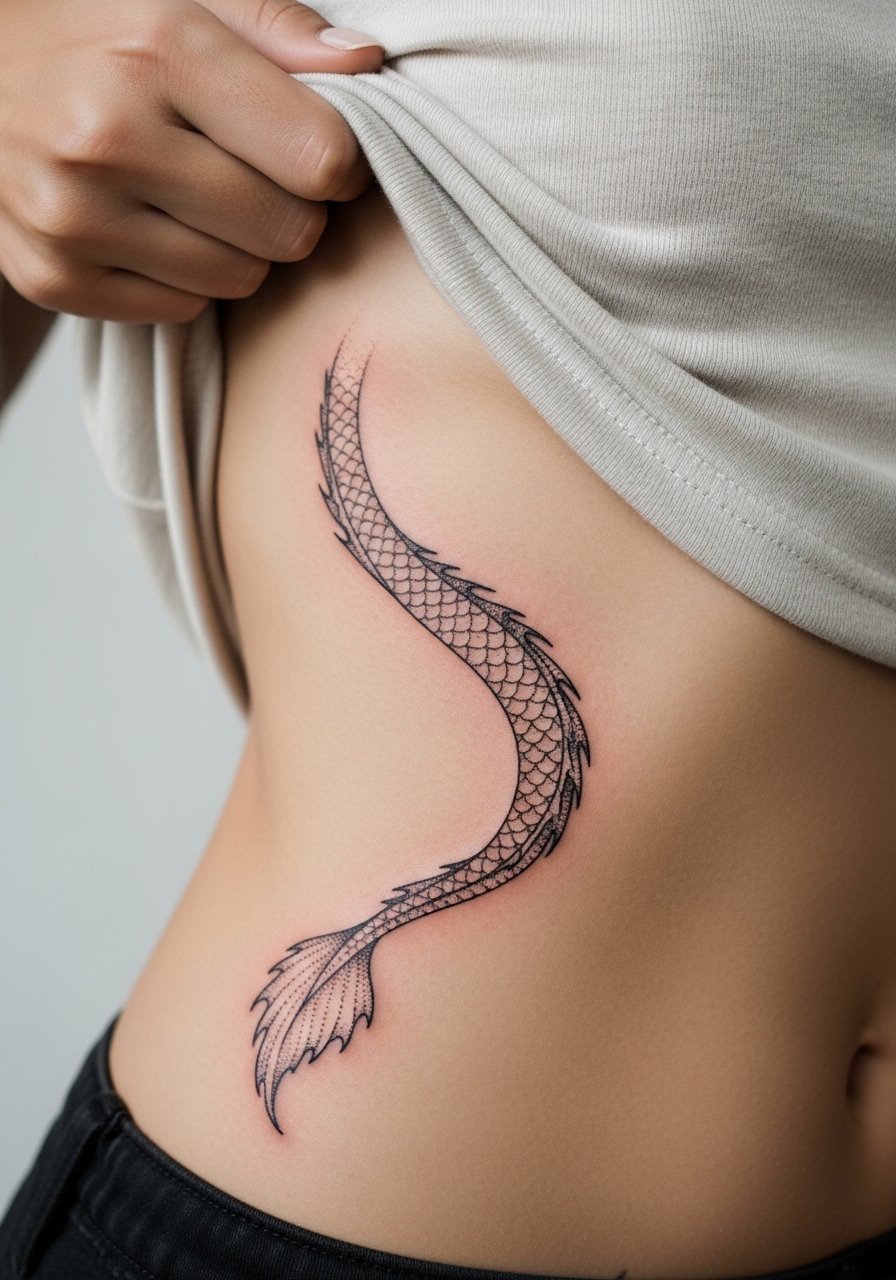
Side-torso pieces respond well to stipple for tonal transitions but need scale to maintain the dot rhythm. Expect medium to high pain and a longer session for coverage. Common mistakes are over-compressing dot density which blurs as it heals. Ask for measured spacing and plan for at least one follow-up to check settling.
25. Small Dragon Silhouette Paired with a Koi Accent on the Calf
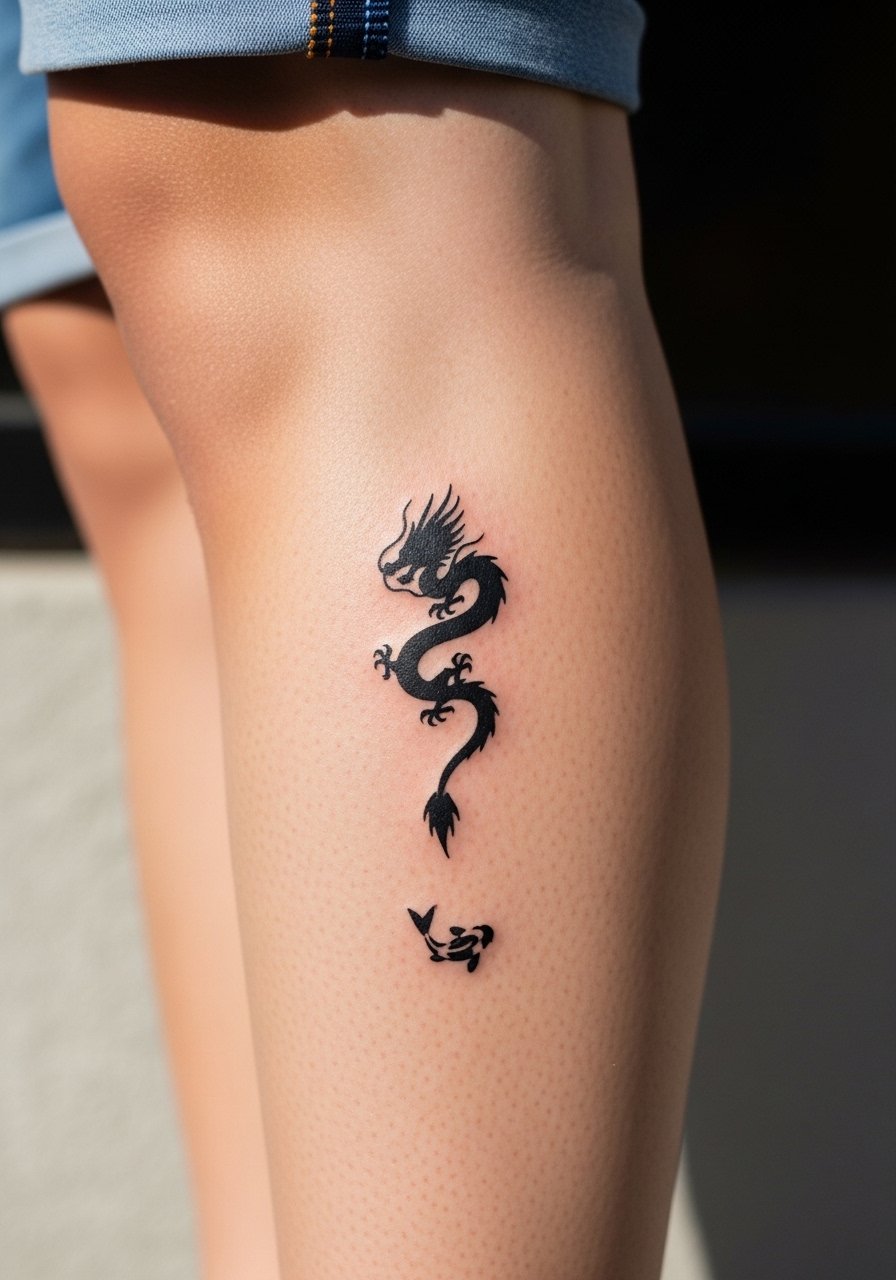
Calf placements are forgiving and age well with moderate movement. The misstep is insisting on too many micro features at a tiny scale. For pairing, keep the dragon silhouette simple and let the koi carry the color. Pair with cropped pants or shorts and consider calf exposure for seasonal reveal.
26. Tiny Mirror-Pair Dragons on Each Thigh for Symmetry
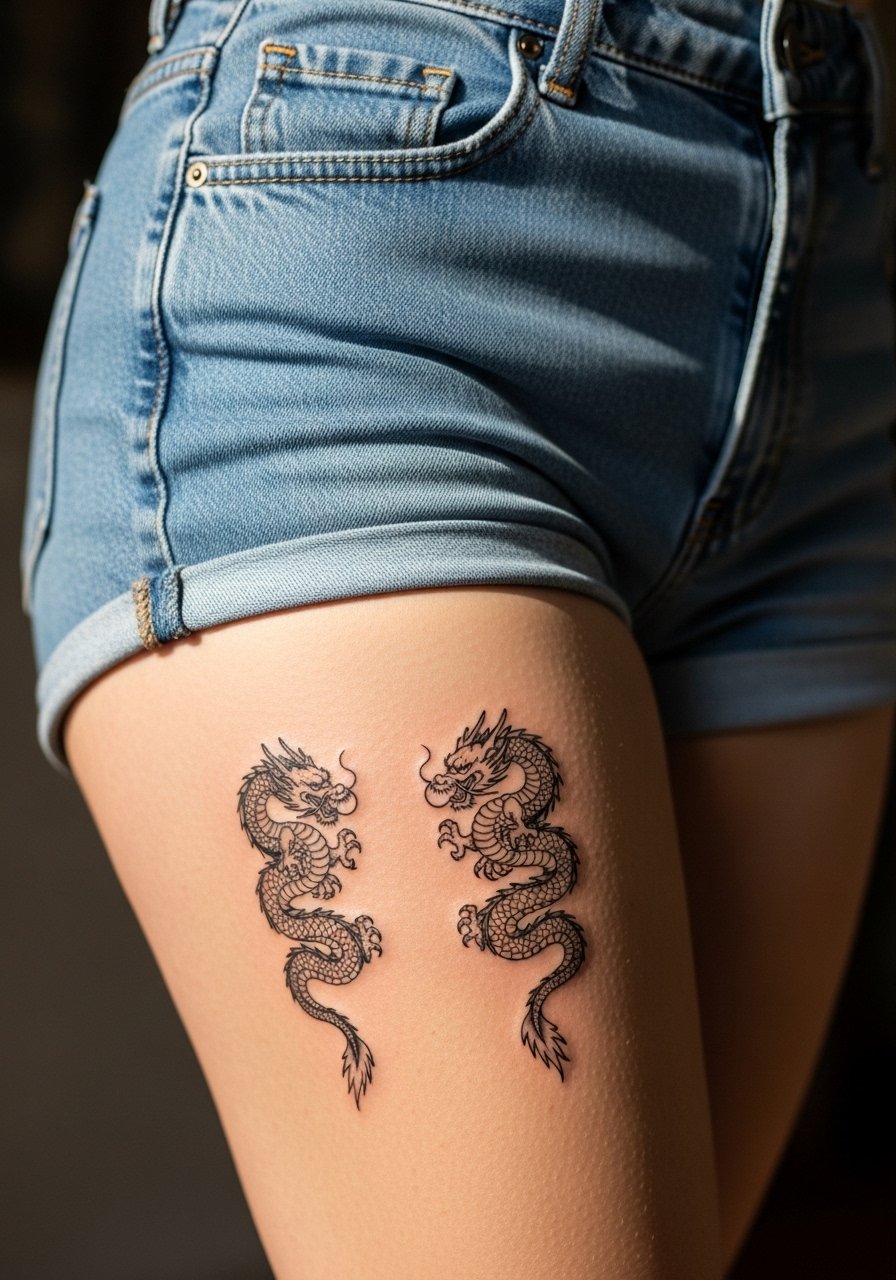
Matching pieces work when both stencils are applied and measured during the same session. Thighs are relatively low pain and hold detail well if not compressed. A common mistake is uneven scaling between sides. Ask the artist to stencil both at once so you can check visual balance while seated. For outfits, high-waisted shorts or coordinated skirts make both pieces a deliberate styling choice.
27. Tiny Script Dragon Coil Around a Finger with a Single Kanji Accent
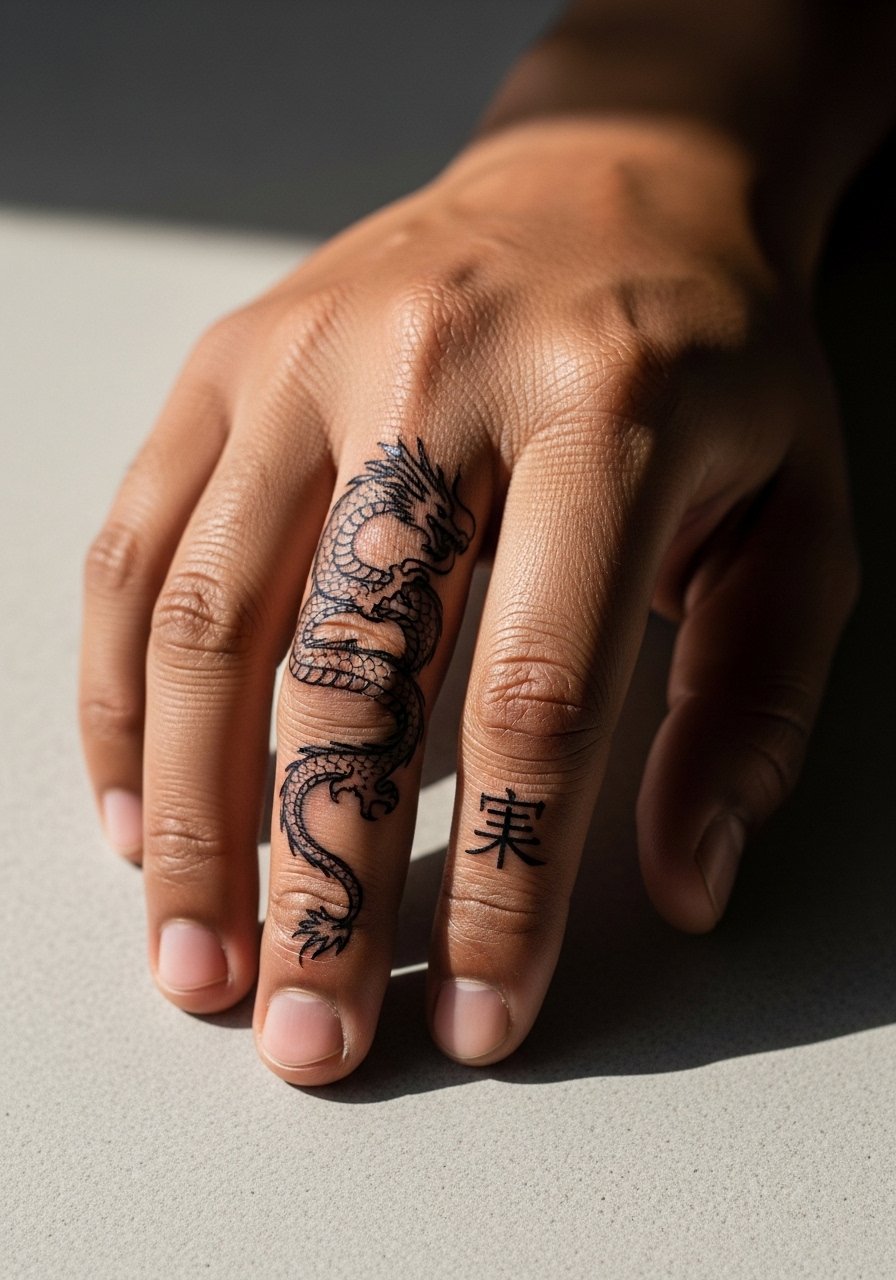
This is a symbolic, very small treatment that reads like jewelry. Fingers call for simplified strokes and strong contrast rather than micro texture. The mistake is overloading with script or tiny characters that blur. If you want kanji included, specify the exact character and font so the placement tool renders correctly. Expect frequent touch-ups and consider position to avoid constant friction from rings.
Frequently Asked Questions
Q: Will fine line wrist dragons blur faster than neo-traditional thigh pieces?
A: Yes, fine line on high-motion areas like the wrist tends to soften faster than thicker neo-traditional work on the thigh. The trade-off is visibility versus longevity. If you want the wrist look with better staying power, request slightly bolder outline strokes and plan for touch-ups around year two or three.
Q: Do watercolor dainty dragons need different aftercare than black-line pieces?
A: Watercolor pieces benefit from careful sun protection and gentle cleansing because pastel pigments lose contrast when overexposed. The basic aftercare steps are the same, but expect color refreshes sooner. Use sun protection once healed and avoid abrasive scrubbing during the first month.
Q: How should I position a tiny dragon on the ribcage to avoid early blur?
A: Choose a slightly larger scale and ask for increased spacing between adjacent lines. Many artists prefer to avoid ultra-fine single-needle work on the ribs because skin movement there can cause merging. Talk to your artist about spacing and depth before booking.
Q: Which wardrobe choices make a collarbone dragon look intentional rather than accidental?
A: Off-shoulder tops and V-neck blouses frame collarbone work without covering it. A thin pendant can sit below a small collarbone piece if you request the pendant sit slightly lower than the tattoo during styling. Try an off shoulder top when you want subtle reveals.
Q: Are finger and ankle dragon tattoos worth it if I want lower maintenance?
A: They are worth it if you accept maintenance. Fingers and ankles face constant friction and sun exposure, so expect more frequent touch-ups than arm or thigh work. Design simply and plan for upkeep.
Q: How do I respect cultural origins when choosing Asian dragon motifs?
A: Many dragon forms come from distinct cultural traditions. A respectful approach is to avoid direct replication of sacred or religious iconography and to be transparent with your artist about inspiration. Search related hashtags and directory boards to find references that fit your aesthetic while maintaining sensitivity.