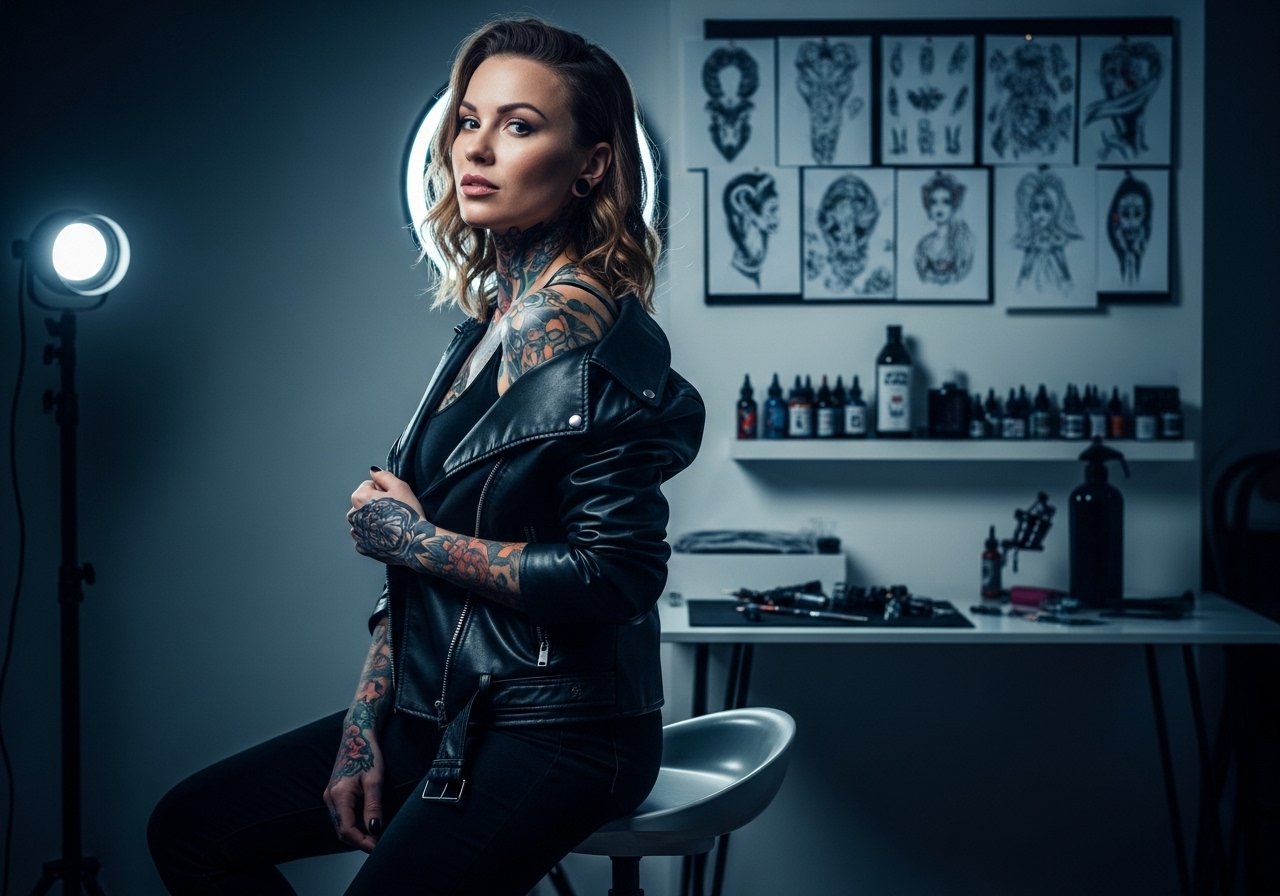
Fine line spider lily trends look gorgeous on feeds, but a few real problems keep coming up: tiny wrist lilies fading into smudges, red ink shifting orange within a year, and bold blackwork getting lost on darker skin tones. I picked these 27 cute spider lily designs to balance what looks great fresh with what actually heals well, plus how to show them off and what to ask in the chair.
1. Minimalist wrist lily with dot stamens
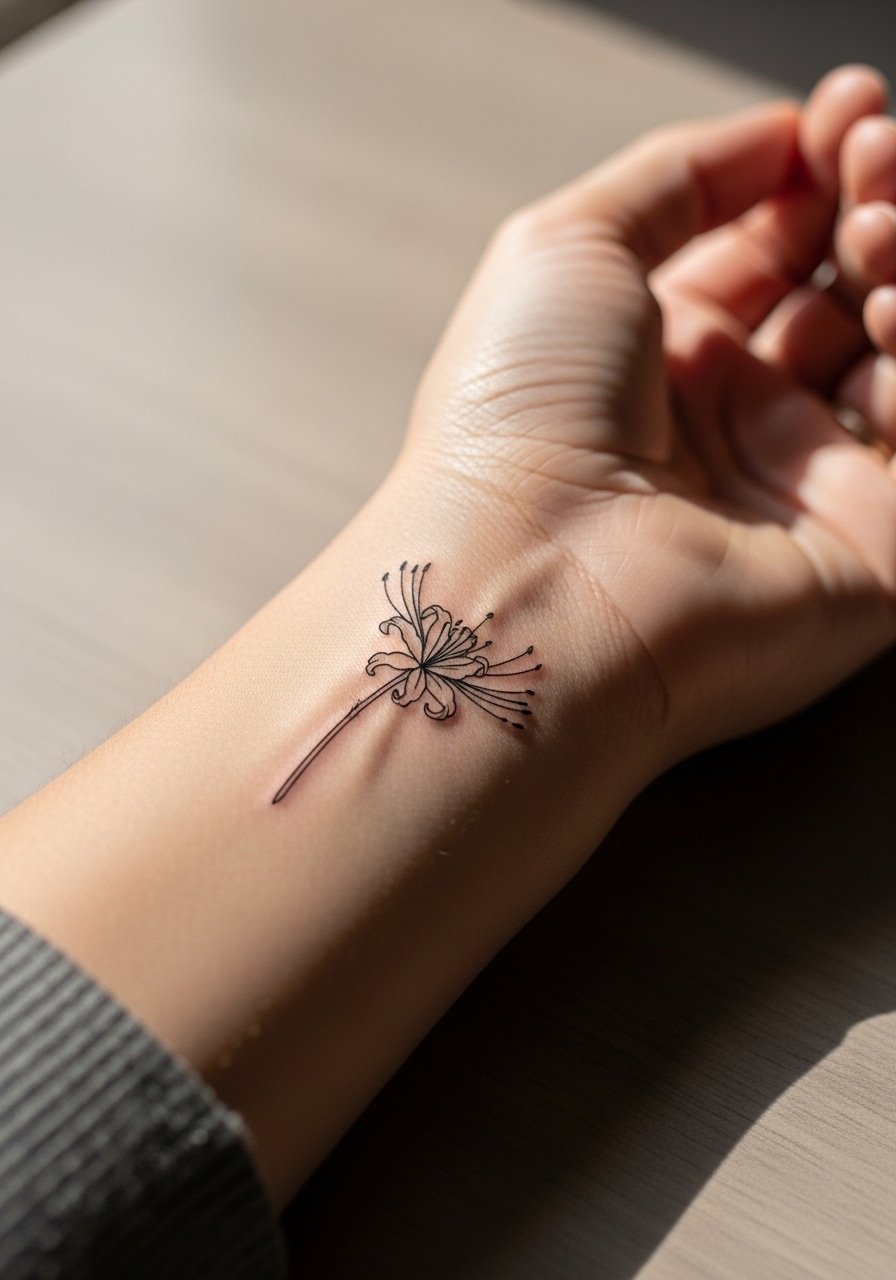
Start with a fair warning: wrists take a beating from washing and bracelets, so the smallest versions blur fastest. I recommend asking your artist to size up about 20 percent and keep the linework slightly bolder than a single-needle flash. Common mistake is asking for hair-thin lines and expecting them to last untouched. Pain on the wrist is moderate, session time is short, and touch-ups are typical at year two on most people. For showing it off, try a thin leather cuff bracelet on the opposite wrist and skip metal bracelets for the first two weeks of healing.
2. Geometric spider lily on inner forearm
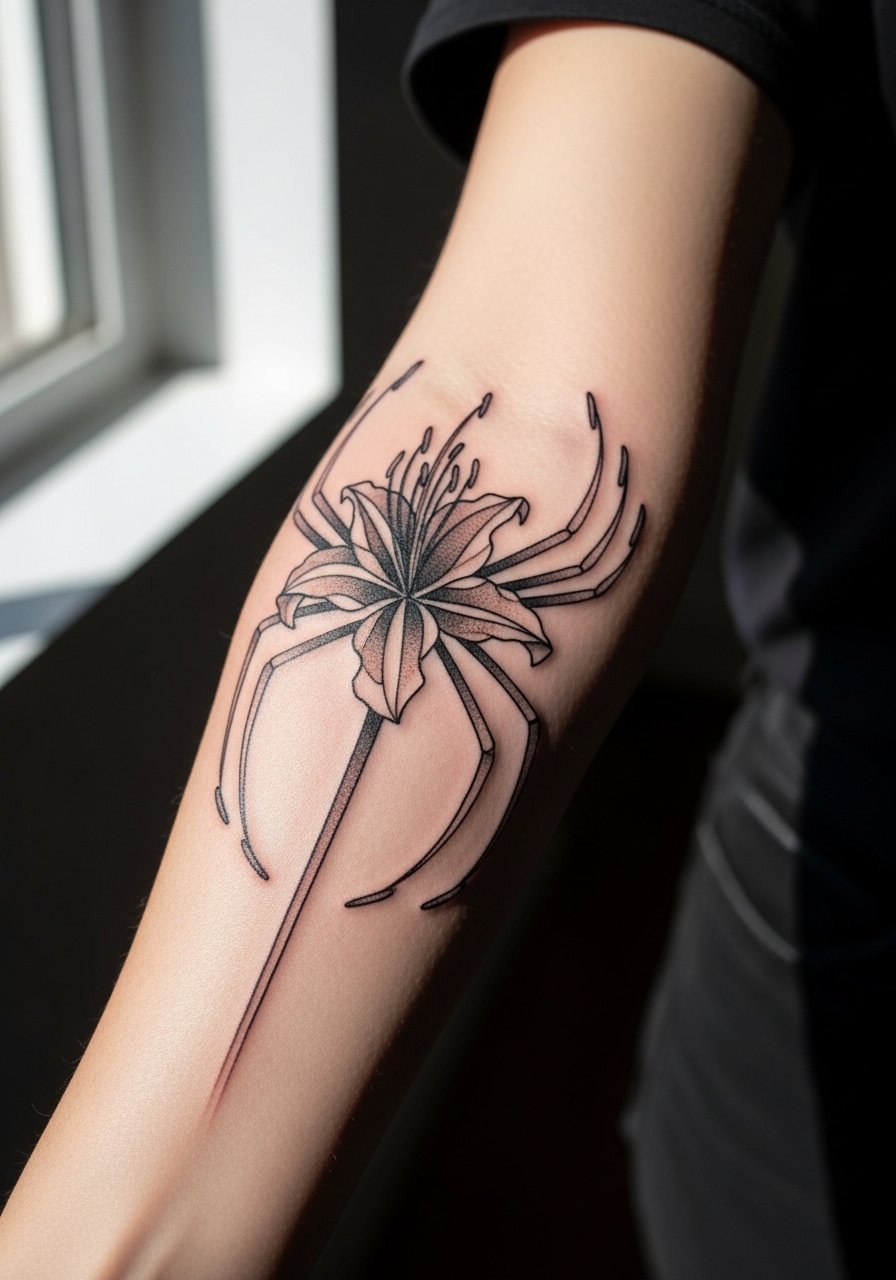
When you want structure that reads at work, the inner forearm is forgiving. Most clients choose a 3-4 inch composition so the shapes have room to breathe. Tell your artist to space petals and use alternating line weights so dense areas do not merge at year three. Expect low to moderate pain and one or two sessions depending on shading. For a casual reveal, pair it with a rolled cuff chambray shirt and roll the sleeves up to frame the piece.
3. Red and black shoulder cluster
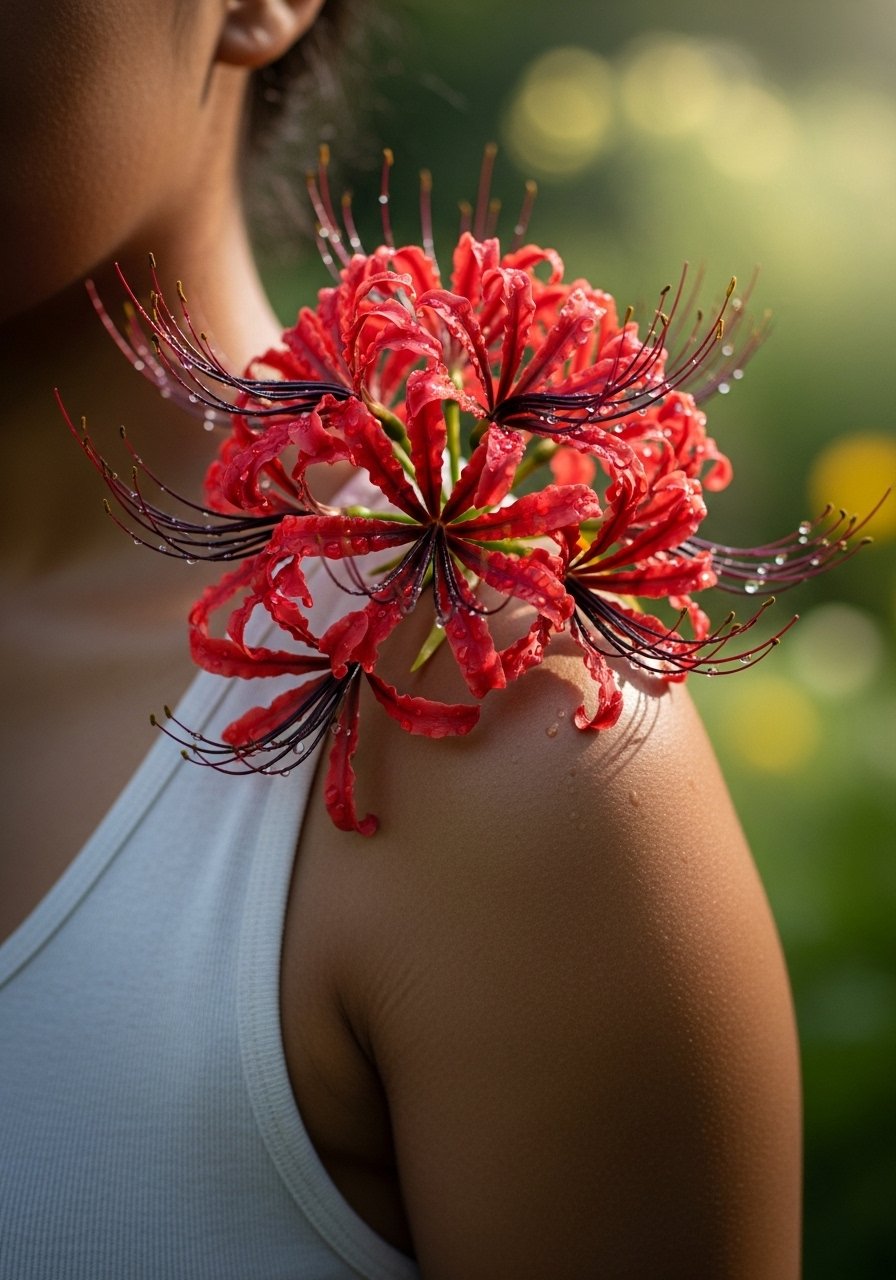
Shoulder clusters let you build drama without daily friction. Expect two sessions for layered reds and blacks and stronger saturation to keep the red readable after healing. Red ink has a reputation for shifting toward orange, so ask about pigment brands and sun protection strategies during your consultation. The shoulder heals better than ankles and forearms for color retention. For show-off outfits, an off shoulder linen top makes the color pop against neutral fabrics.
4. Tiny micro-realism stem behind the ear
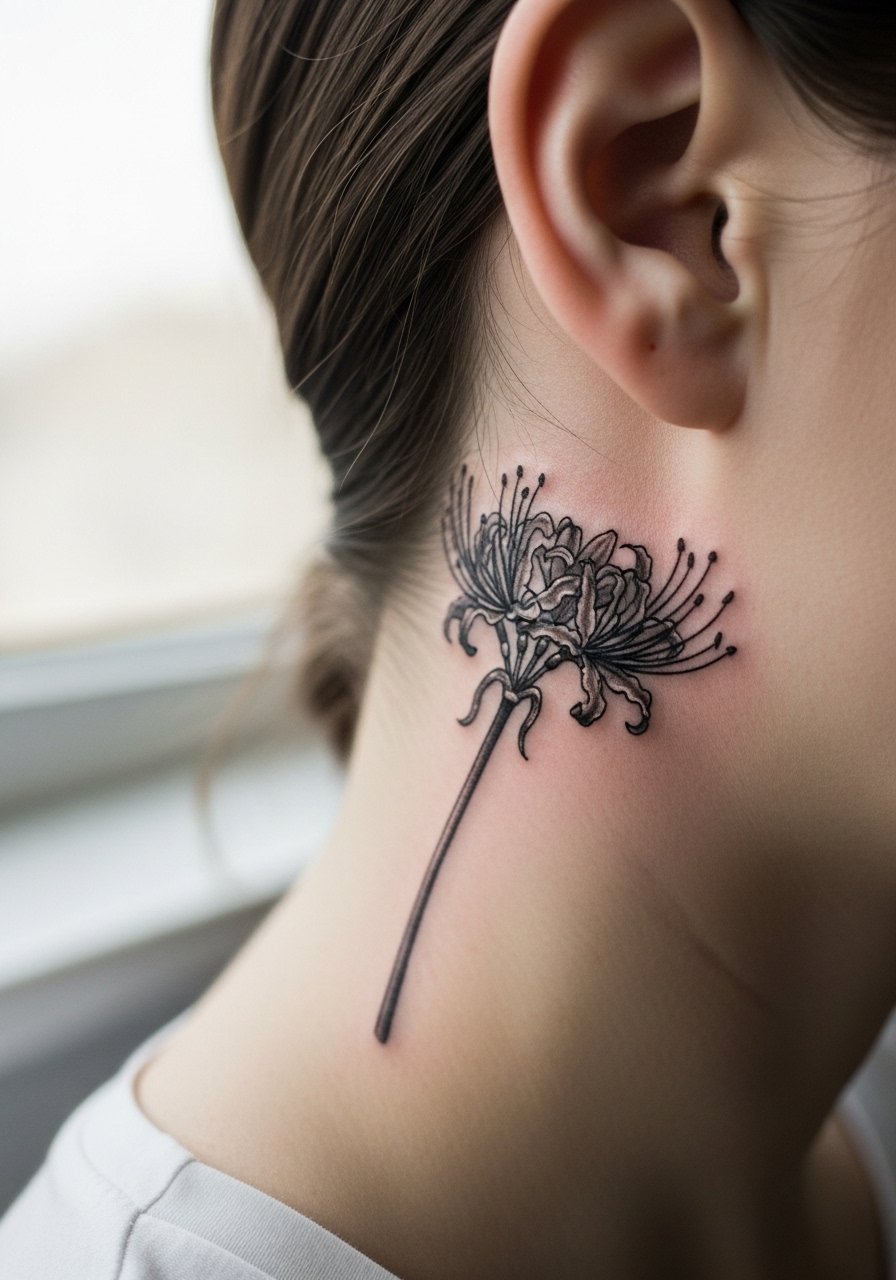
Behind-the-ear pieces are charming but hide in hair oil and products, which speeds fading. This placement is best for people who accept occasional touch-ups. Session time is short and the pain is low, but avoid heavy haircare products for the first month. A common mistake is asking for extreme detail at a 0.5 inch scale; micro-realism needs at least a millimeter more space than most clients assume. If you want to keep it low-profile, ask for a single thin stem rather than clustered tiny petals.
5. Neo-traditional lily on outer thigh
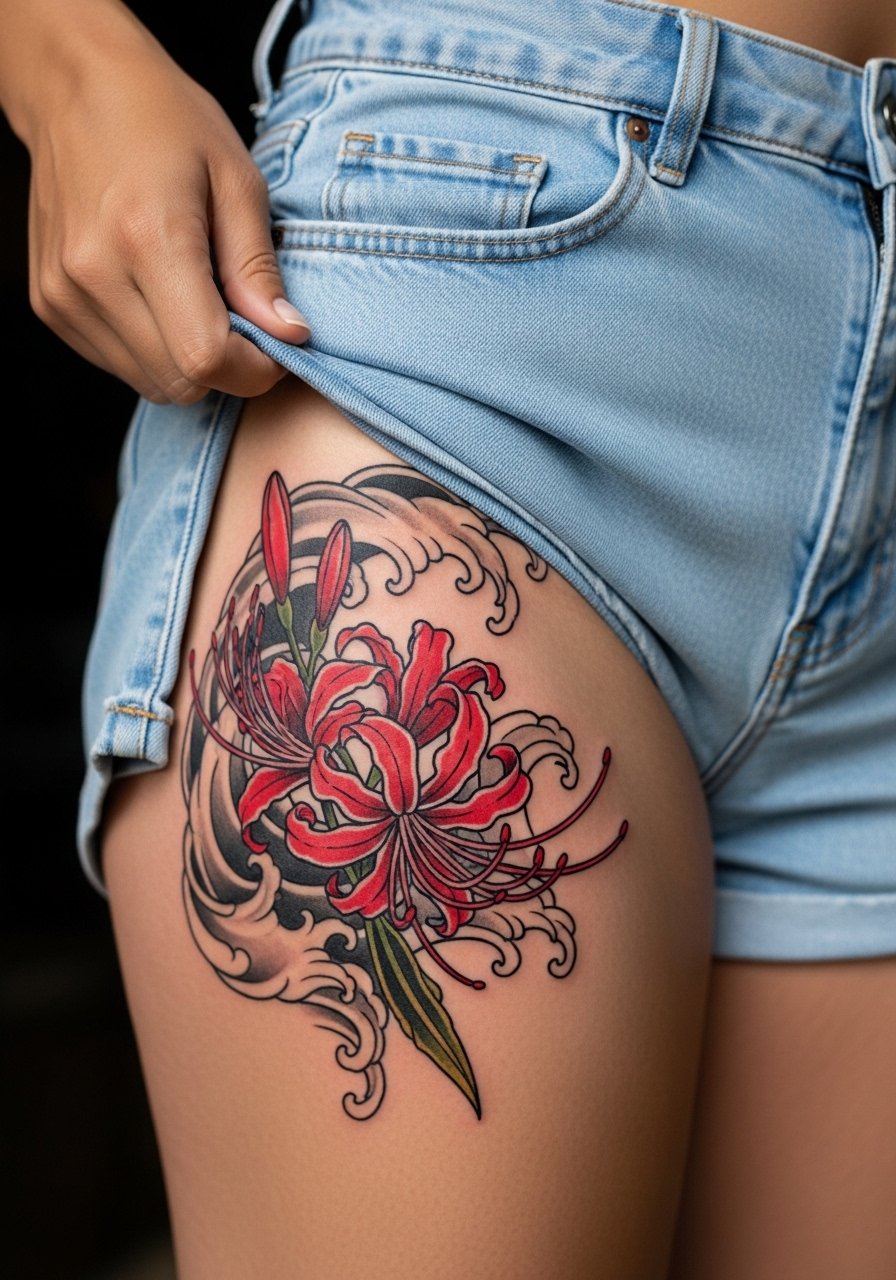
Outer-thigh placement is forgiving for weight fluctuation and stretches less visibly than the inner thigh. The neo-traditional approach uses solid outlines and saturated red, which helps color age better than soft watercolor here. Expect two to three sessions for color layering and a heavier hand at the outline. For showing it off, a pair of high waist denim shorts or mini skirts frames the piece for summer looks. Dancers and athletes should discuss skin movement with the artist so the composition curves with muscle lines.
6. Blackwork spider lily mandala on upper arm
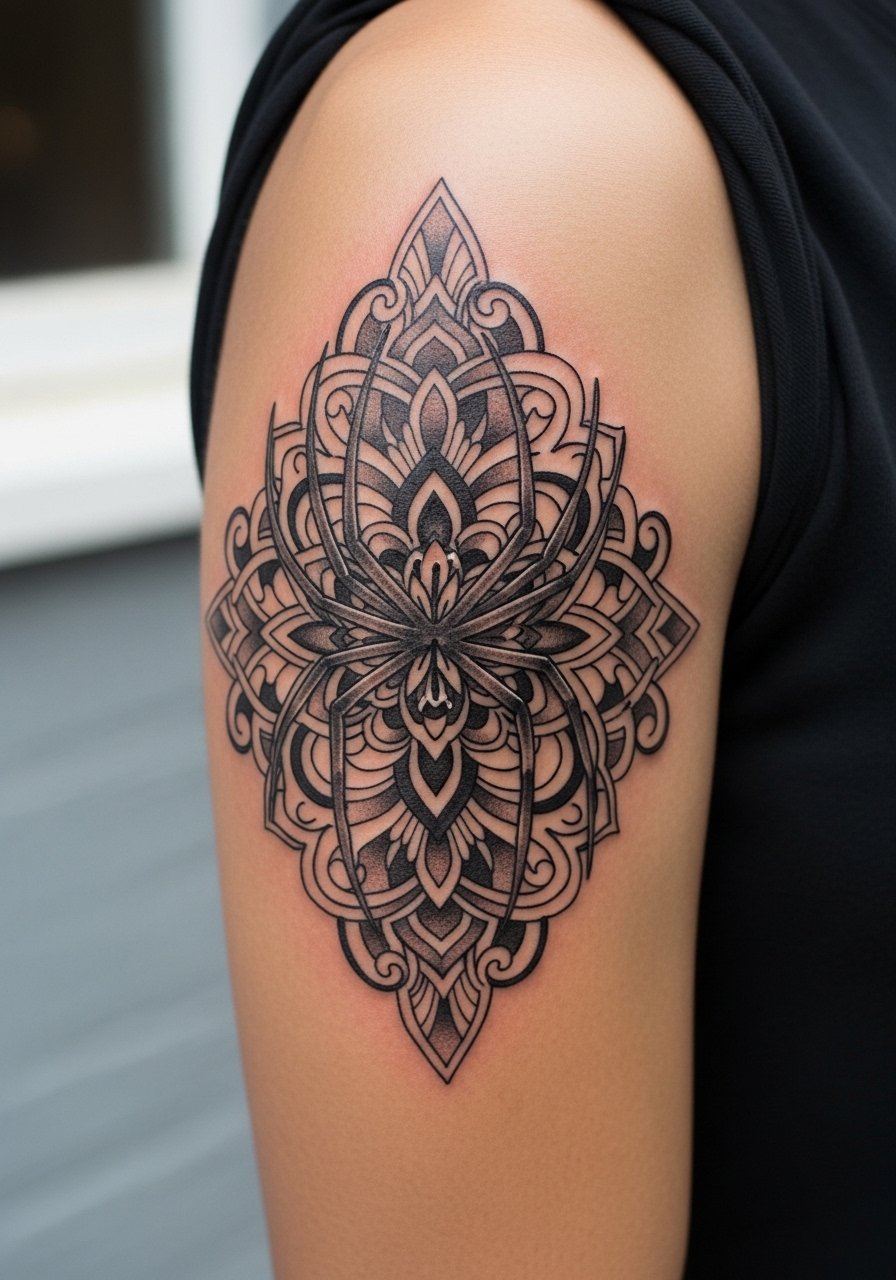
There is a strong practical case for blackwork here. Bold saturation reads across skin tones and avoids the subtle fade that hurts fine line work on darker skin. Expect two sessions and moderate pain that spreads into the shoulder. A mistake people make is requesting tiny mandalas; larger geometry holds up. If you plan future sleeves, treat this as a building block and discuss flow with your artist. For career-sensitive roles, the upper arm can be covered with short sleeves.
7. Minimalist ankle lily with dot accents
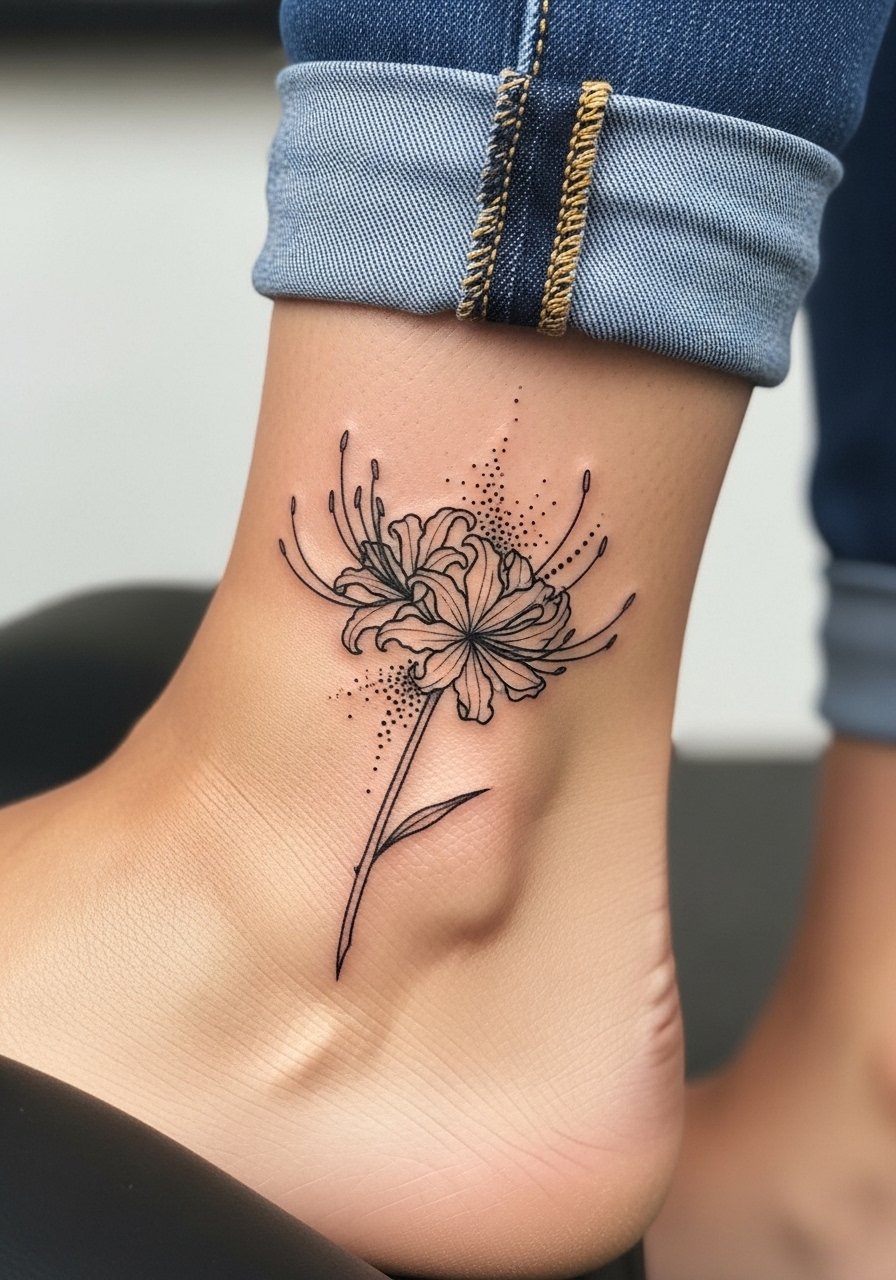
Ankle tattoos are perfect for seasonal reveals but face lots of abrasion from shoes and socks. Size up and avoid single-needle hairlines on the ankle. Pain is moderate and sessions are brief. For summer styling, strappy heeled sandals or cropped jeans are ideal choices. Try a pair of strappy heeled sandals to maximize visibility while keeping the piece safe from constant rubbing.
8. Watercolor collarbone lily splash
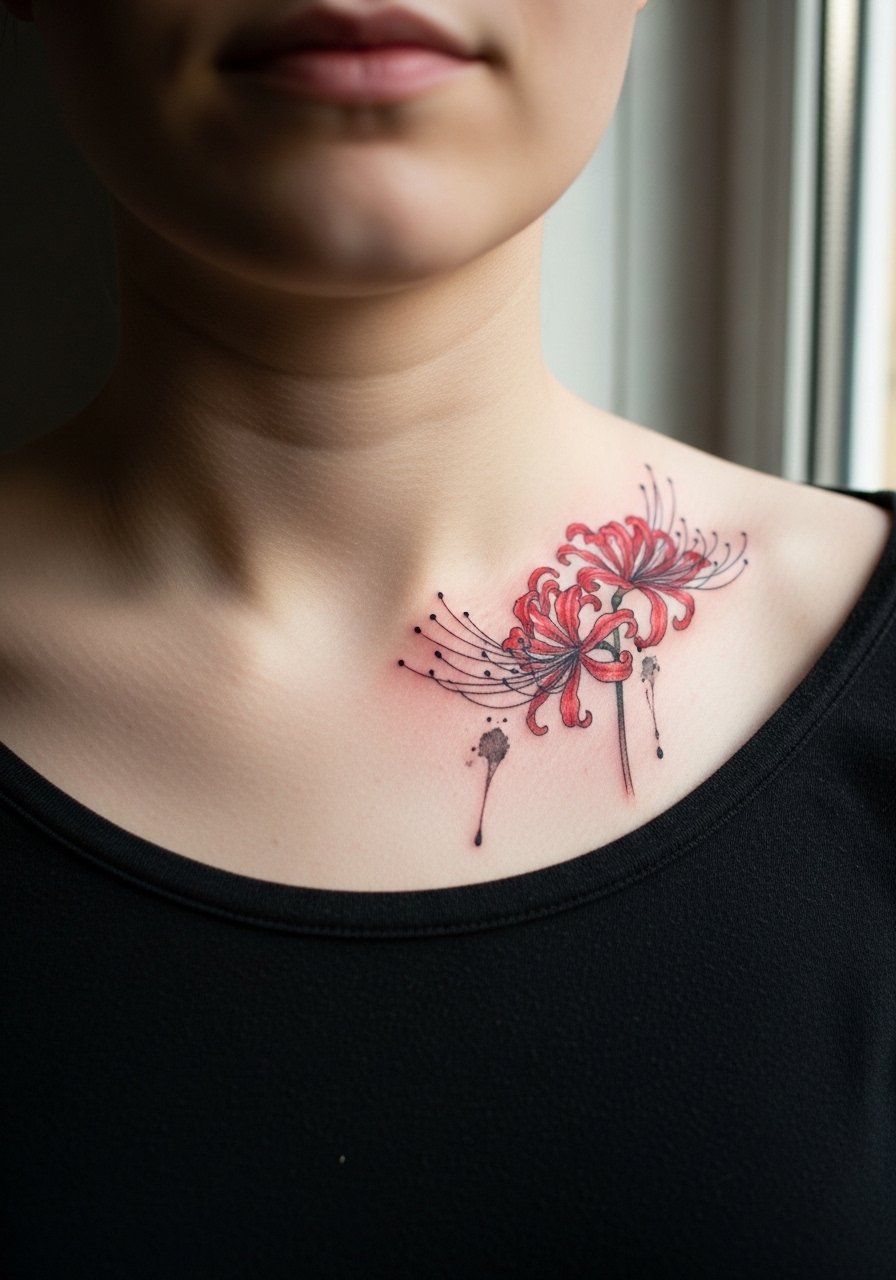
Collarbones show watercolor beautifully if you accept variable healing in the first year. The skin there moves with breathing and clothing friction, so keep the composition small and ask for slightly stronger black anchors to protect the red fades. Sessions are usually one to two, with moderate pain on the clavicle. To highlight this piece, pair it with a v neck silk blouse or drop earrings that echo the lily’s lines.
9. Traditional red lily with skull on calf
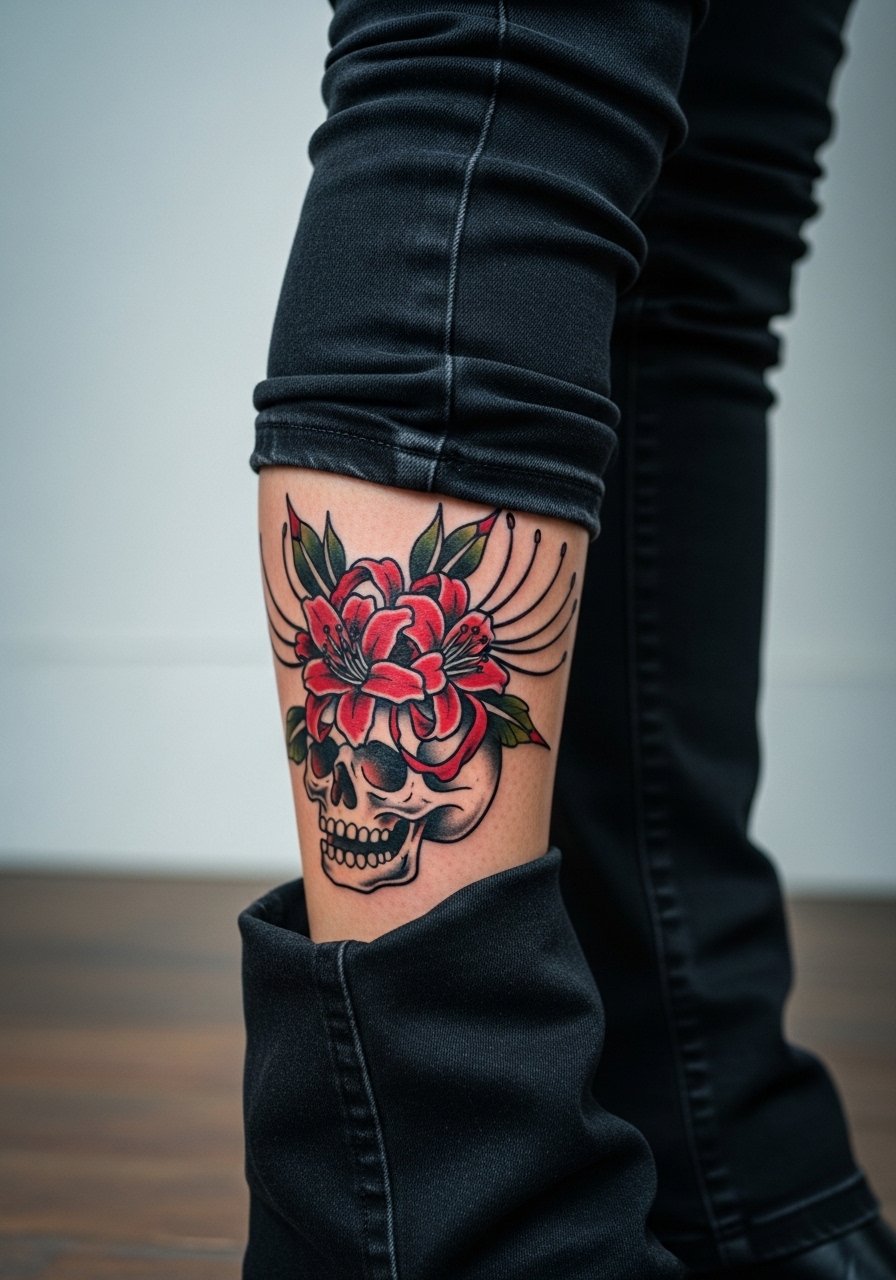
Calf placements are reliable for saturated traditional work. The thicker skin and lower friction keep red and black vibrant longer than ankle or wrist spots. Expect two sessions and moderate pain, especially when the needle approaches the shin. For seasonal display, roll bootcut jeans or slip on ankle boots. A pair of bootcut jeans women that can be cuffed gives a controlled reveal without rubbing the fresh ink.
10. Micro-realism stem on a finger
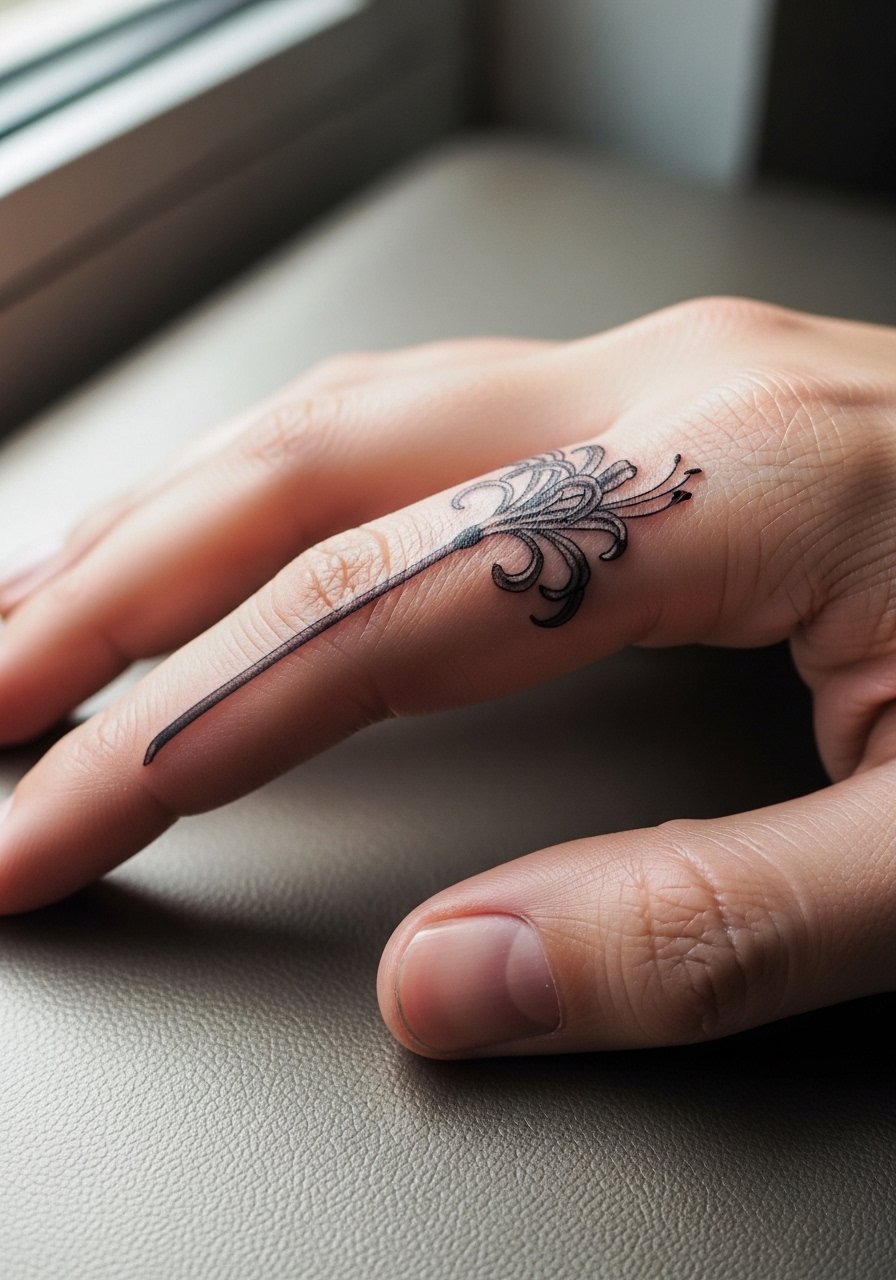
Finger placements are adorable but high-friction and high-fade. If you want a finger lily, plan for touch-ups as part of ownership and ask for bolder anchors rather than a fragile single-needle sketch. Pain is higher near the joints and sessions are brief. A frequent mistake is expecting the same longevity as forearm work. Consider a side-finger placement which sees slightly less wash wear than the pad or top of the finger.
11. Fine line sleeve starter with repeating blooms on inner forearm
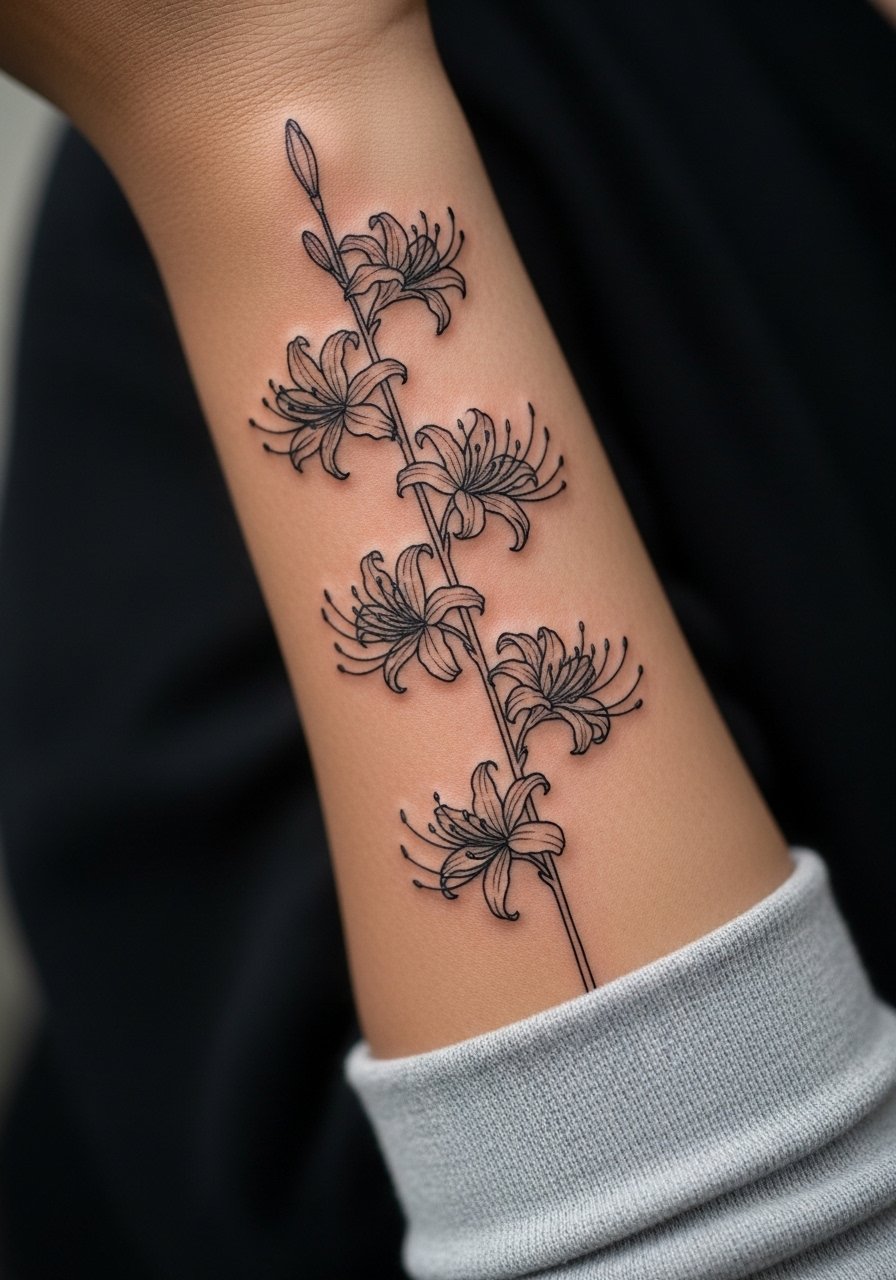
Sleeve starters require planning for negative space and flow. I advise clients to pick blooms that can repeat without crowding so future additions read clearly. Inner forearm is low-friction, which helps fine line hold longer, but single-needle pieces still need occasional touch-ups. Tell your artist which parts you might add later so stems and petals curve into future panels. For easy session prep, wear a loose tank top so the artist can access the inner arm fully.
12. Ornamental frame around the ribcage
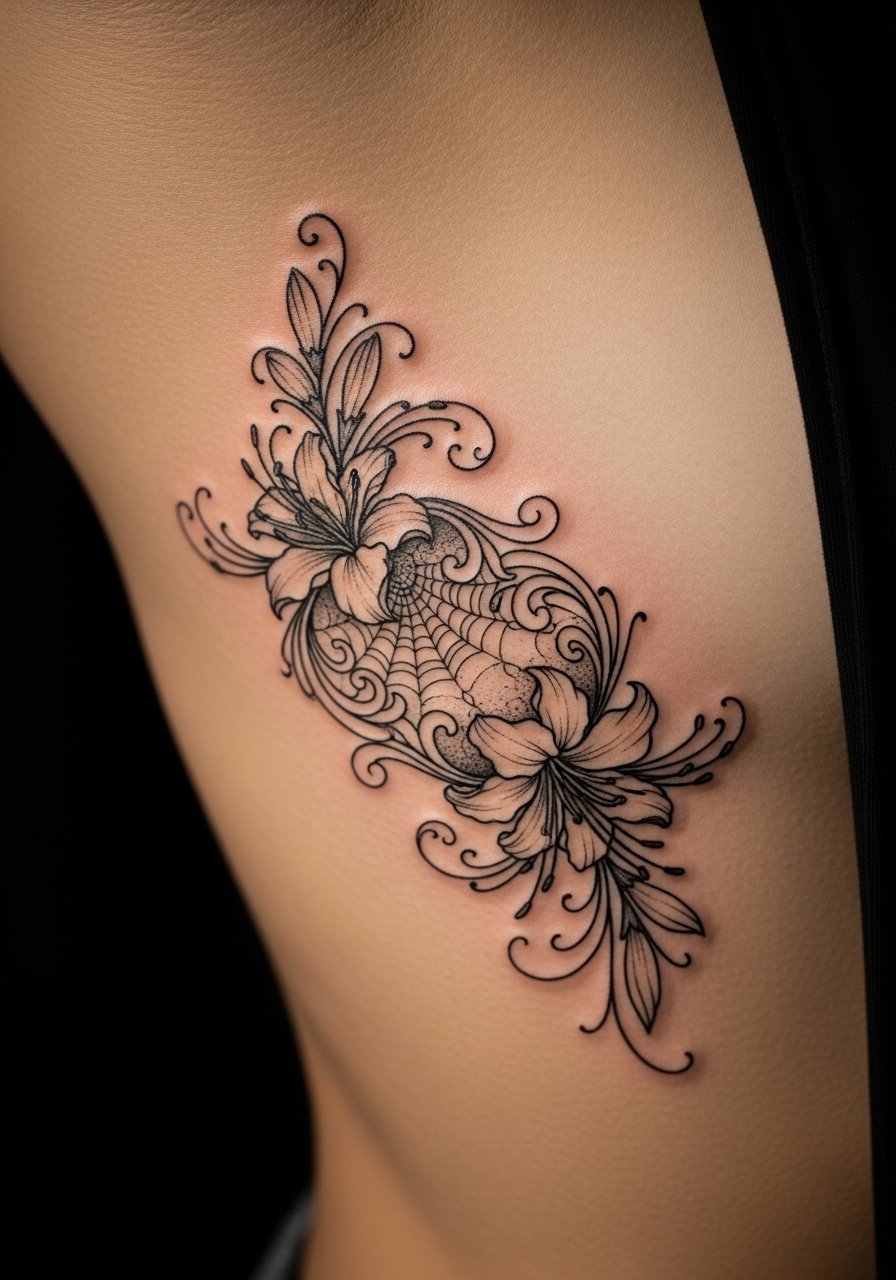
Ribcage work is known for higher pain and slower sitting times, but it offers dramatic placement for a frame that accents existing tattoos. Artists split on fine line here. One camp warns skin stretch makes lines blur within two years. The other camp says careful depth and spacing lets fine line settle. Name the debate during consultation and ask your artist which approach they favor. Expect two sessions for a full frame and plan for longer breaks.
13. Ignorant-style doodle lily on inner bicep

Ignorant style thrives on confident imperfection and playful line wobble. Inner bicep hides well when you need to, and it tolerates touch-ups reasonably. Sessions are comfortable for most people and the look ages into a more casual sketch over time. A common misstep is asking an artist unfamiliar with the style to replicate shaky lines, which instead often become messy-looking. If your job needs cover, this placement is easy to mask.
14. Fine line ankle wrap that mimics jewelry
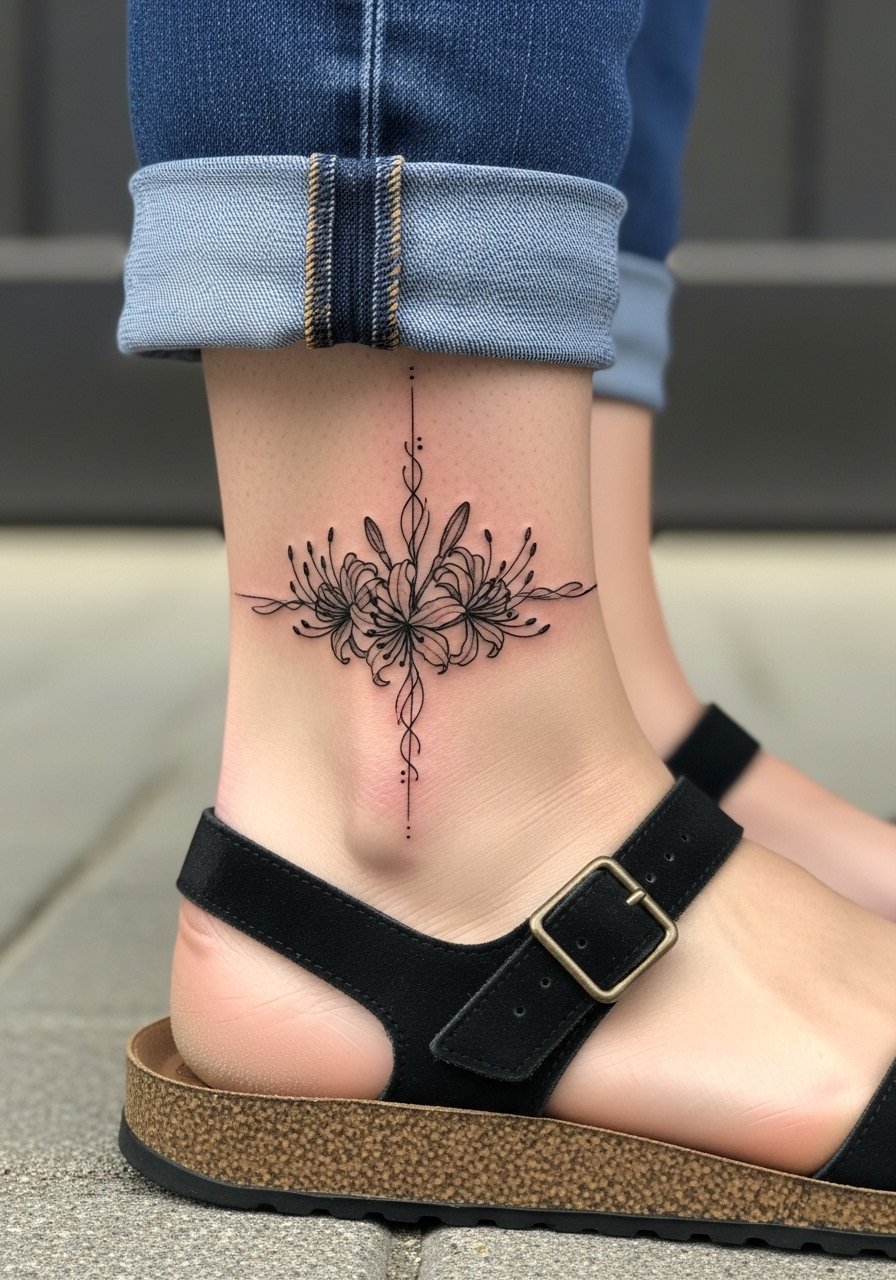
Designs that mimic jewelry are smart for people who want a discreet look that doubles as accessory. The ankle still has friction, so slightly bold outlines and careful spacing help. Sessions are quick but expect touch-ups at year two. For wearing, pair with cropped straight-leg jeans and a minimal sandal look. A cropped straight leg jeans silhouette lets the design show without daily rubbing.
15. Blackwork lily with mandala center on upper chest
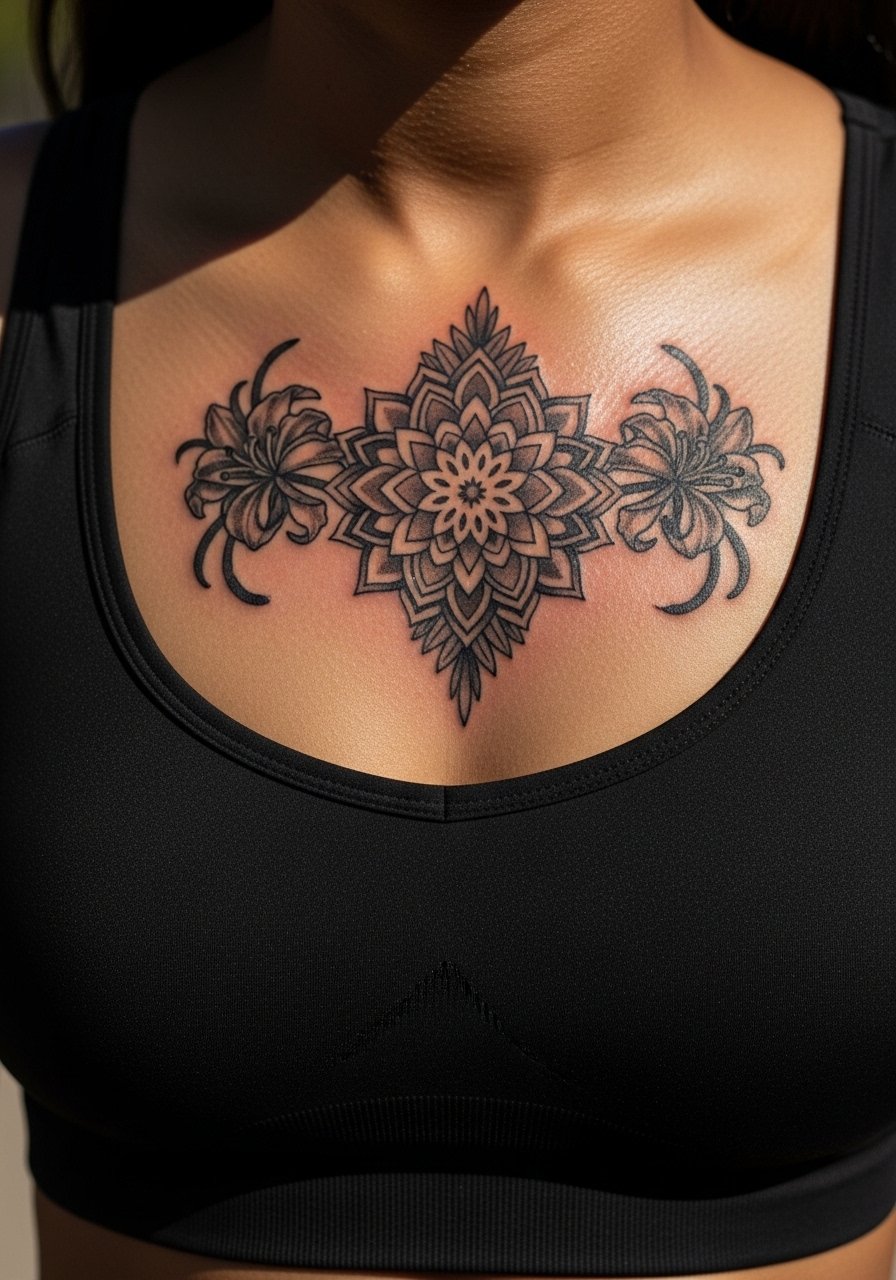
Upper chest pieces require a careful session plan because skin moves with breath. Heavy blackwork reads best here and avoids the small-fade problem that red watercolor faces at the collarbone. Sessions are moderate in pain and usually done in one or two sittings. This pattern nods to meditative geometry, so mention any cultural origins you want honored or modified. A fitted sports bra during the session keeps the area accessible while staying covered.
16. Negative-space knuckle lilies for ring effect
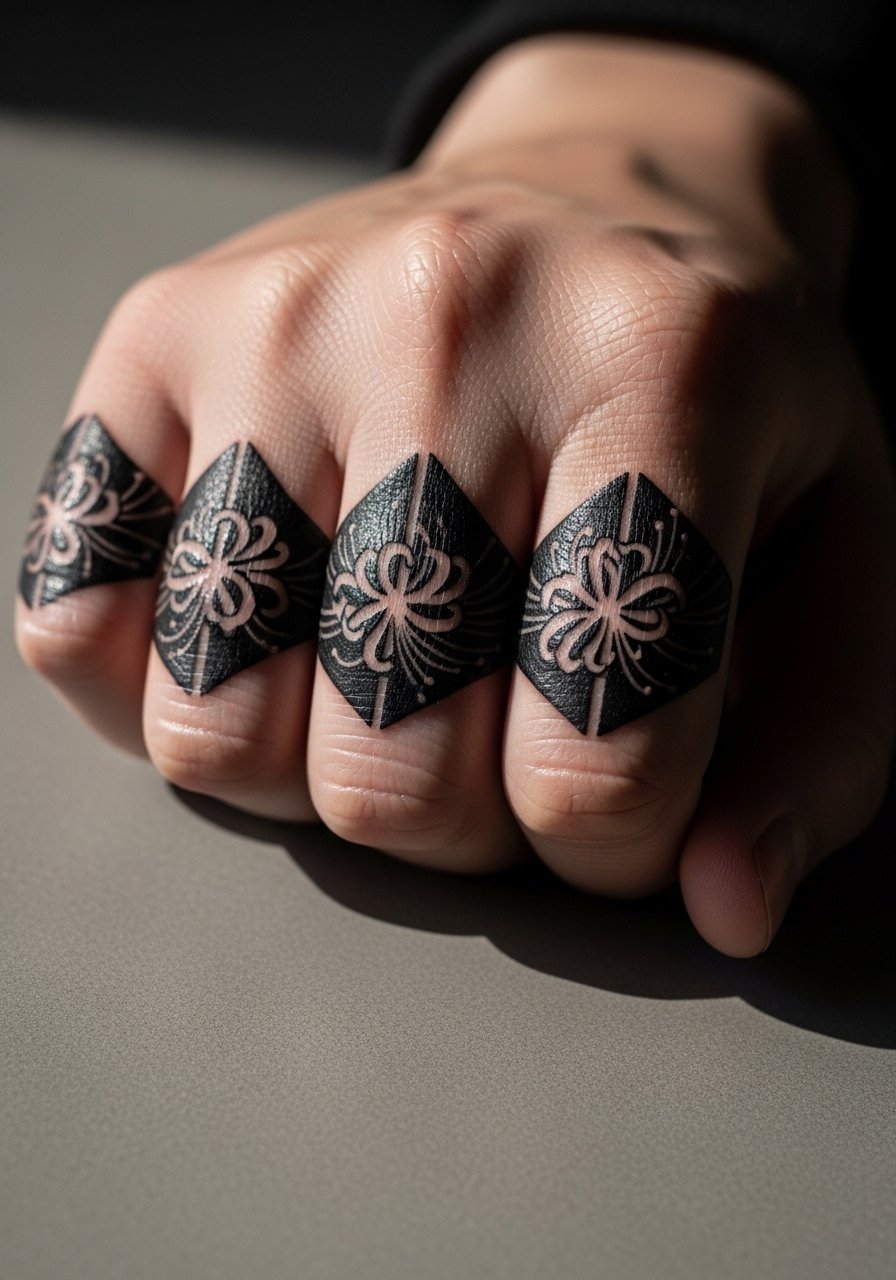
Negative-space knuckle work gives the illusion of rings without solid metal and heals surprisingly bold on darker skin when done right. Knuckles are high-fade zones, so designers often opt for negative space rather than tiny hairlines. Expect frequent touch-ups and higher sensitivity during the session. If your job requires clean hands, consider long-term visibility implications. This is one of the under-covered ideas that tends to age better than micro lines on fingers.
17. Higanbana script pairing with a bloom on the rib
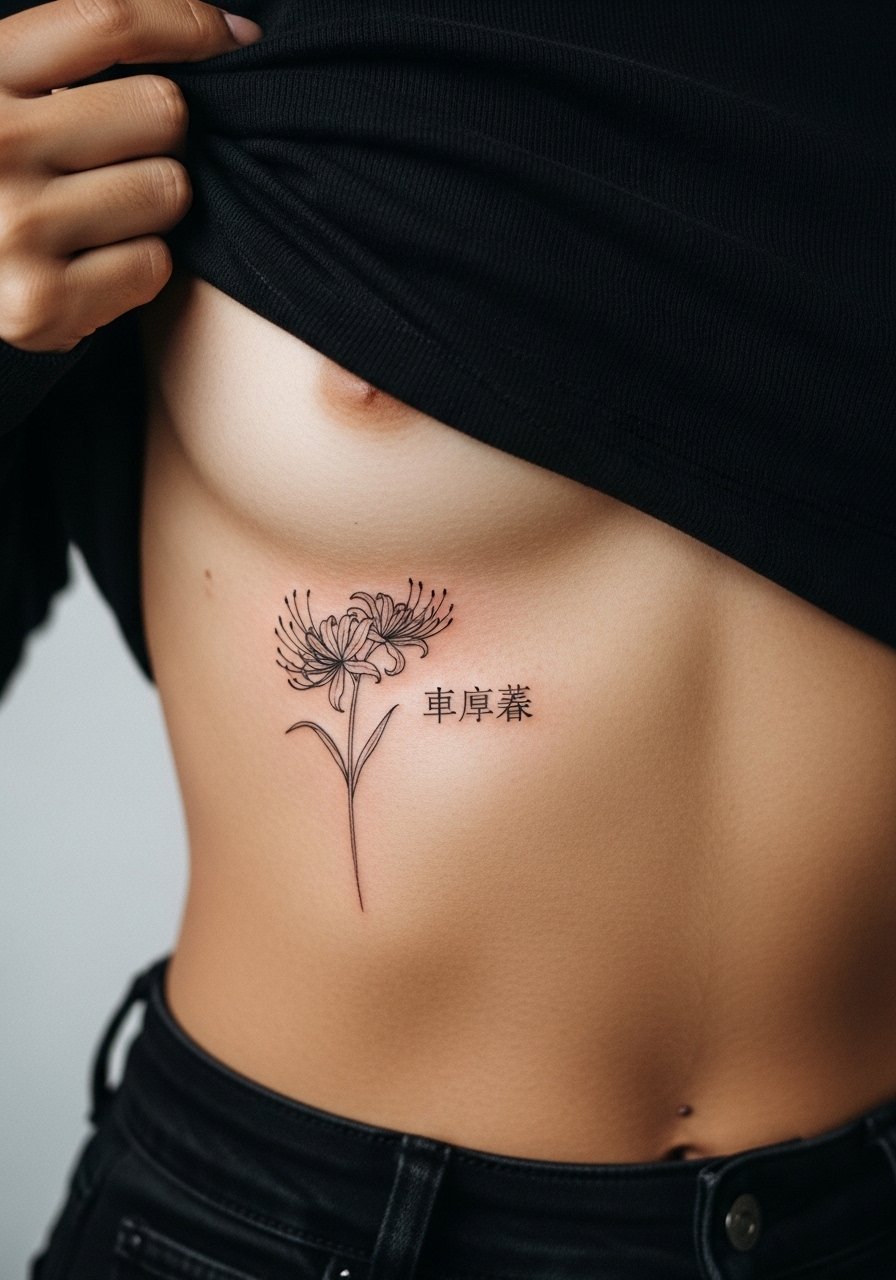
Pairing a lily with kanji or Japanese script needs sensitivity to cultural context. If you choose Higanbana characters, ask for a translator or a trusted reference and consider a slight stylistic variation rather than exact replicas of sacred scripts. Rib placement brings pain and requires longer session tolerance. Bring clear lettering references and request a 24-hour stencil test to confirm placement and scale.
18. UV-reactive party lily
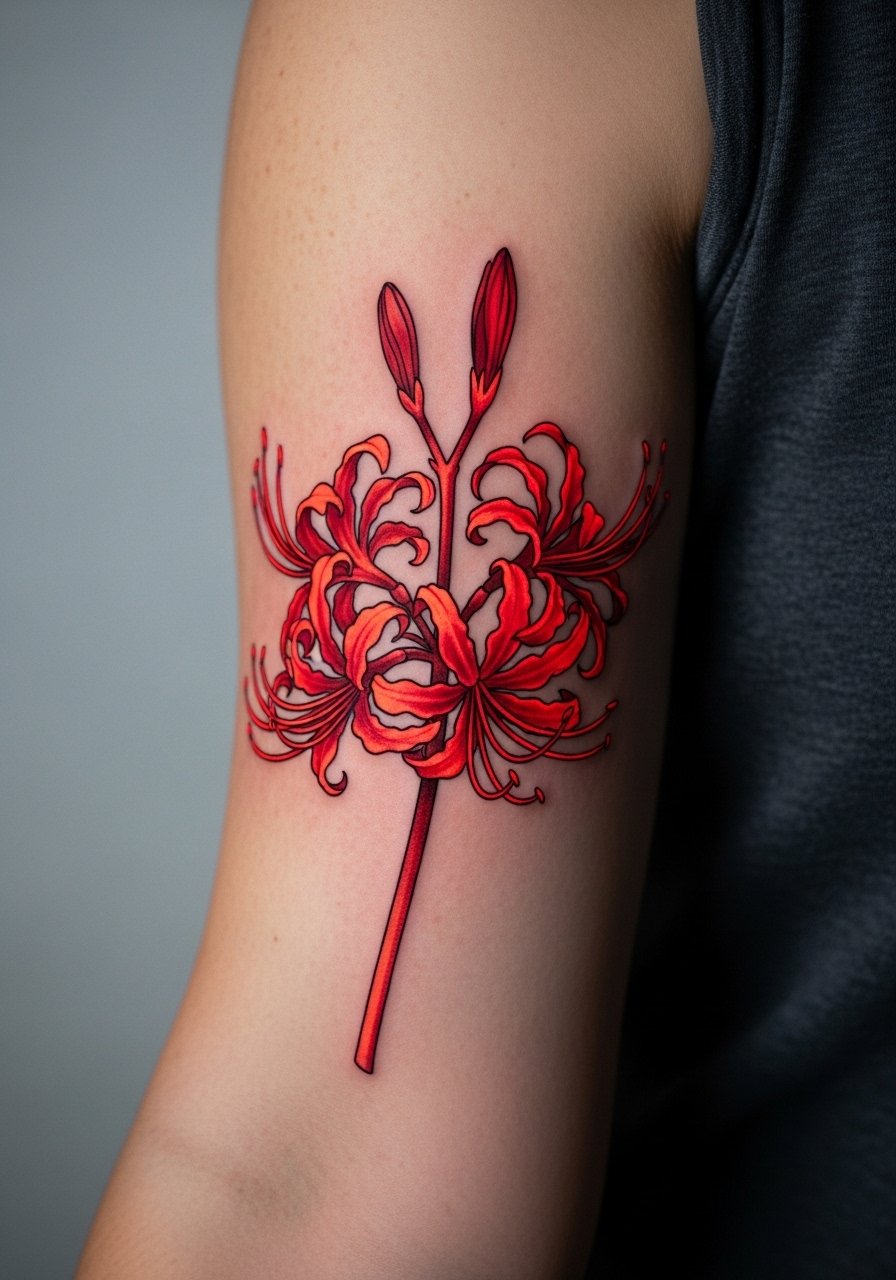
UV-reactive inks are niche and fun for nightlife, but they fade faster and are harder to maintain. If you want glow-under-blacklight lilies, ask your artist about long-term pigment stability and whether they will mix with your standard red. Sessions usually mirror color work in length and feel. Keep in mind not all studios offer UV-compatible inks, so use discovery pathways like #spiderlilytattoo on Instagram or Tattoodo to find guest artists.
19. Thigh curve lily for dancers
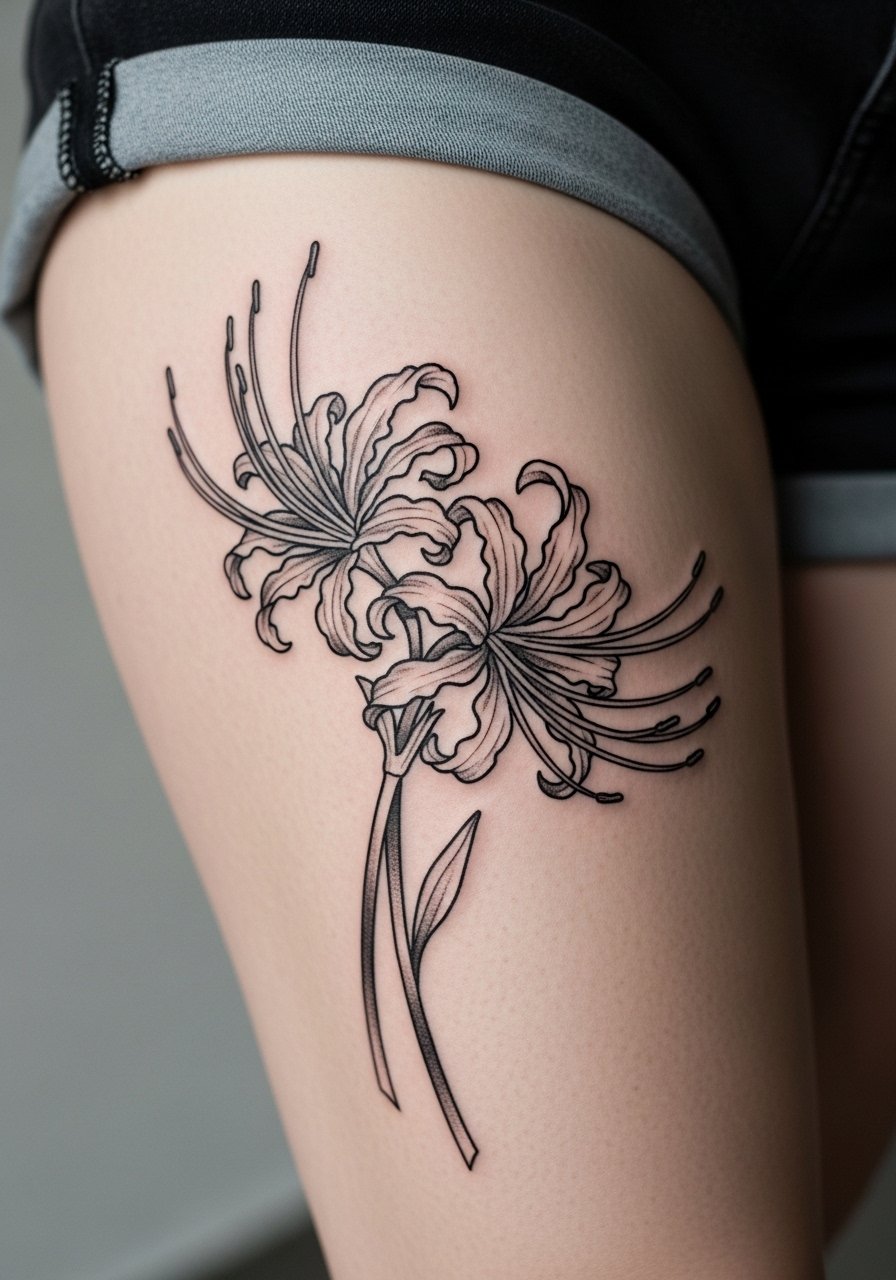
Designing for bodies that change means accounting for muscle and weight shifts. Thighs tolerate curves well, so artists can follow the leg’s contour to avoid odd stretching when muscle tone changes. This placement is a good choice if you expect fluctuation. For session prep, wear loose shorts so the leg can be positioned easily. Ask the artist how they adjust line flow for dancers who need both movement and image stability.
20. Ornamental rib-to-hip vine
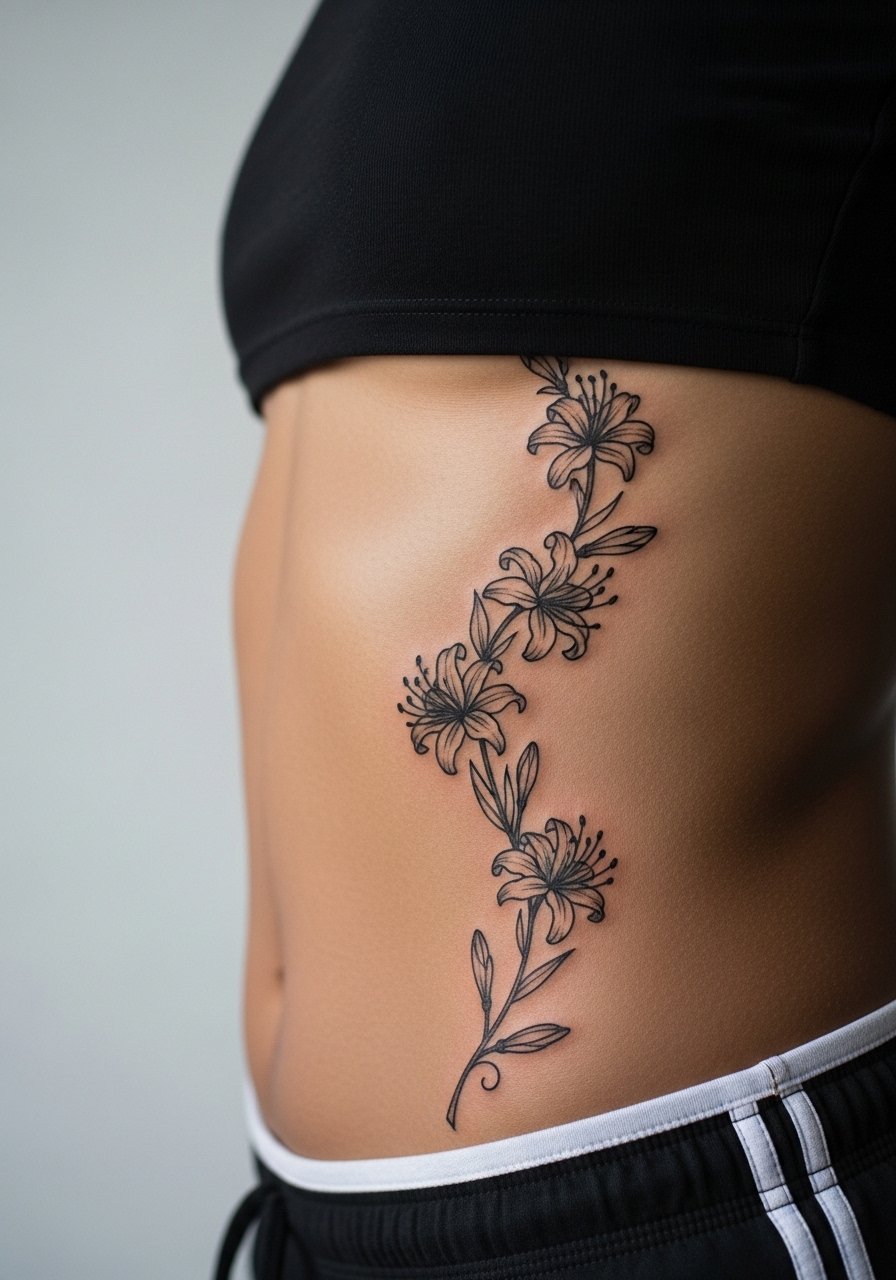
Long curves that travel the body need anchor points so the eye follows the flow. This piece benefits from a mix of black outline and negative space to prevent dense patches that could blur. Rib-to-hip pieces take multiple sessions and higher pain tolerance. One real mistake is packing too many tiny details; instead, request larger petal forms spaced for future edits. If you plan to have children or major weight changes, mention that in consultation.
21. Earlobe cluster as filler after gauges
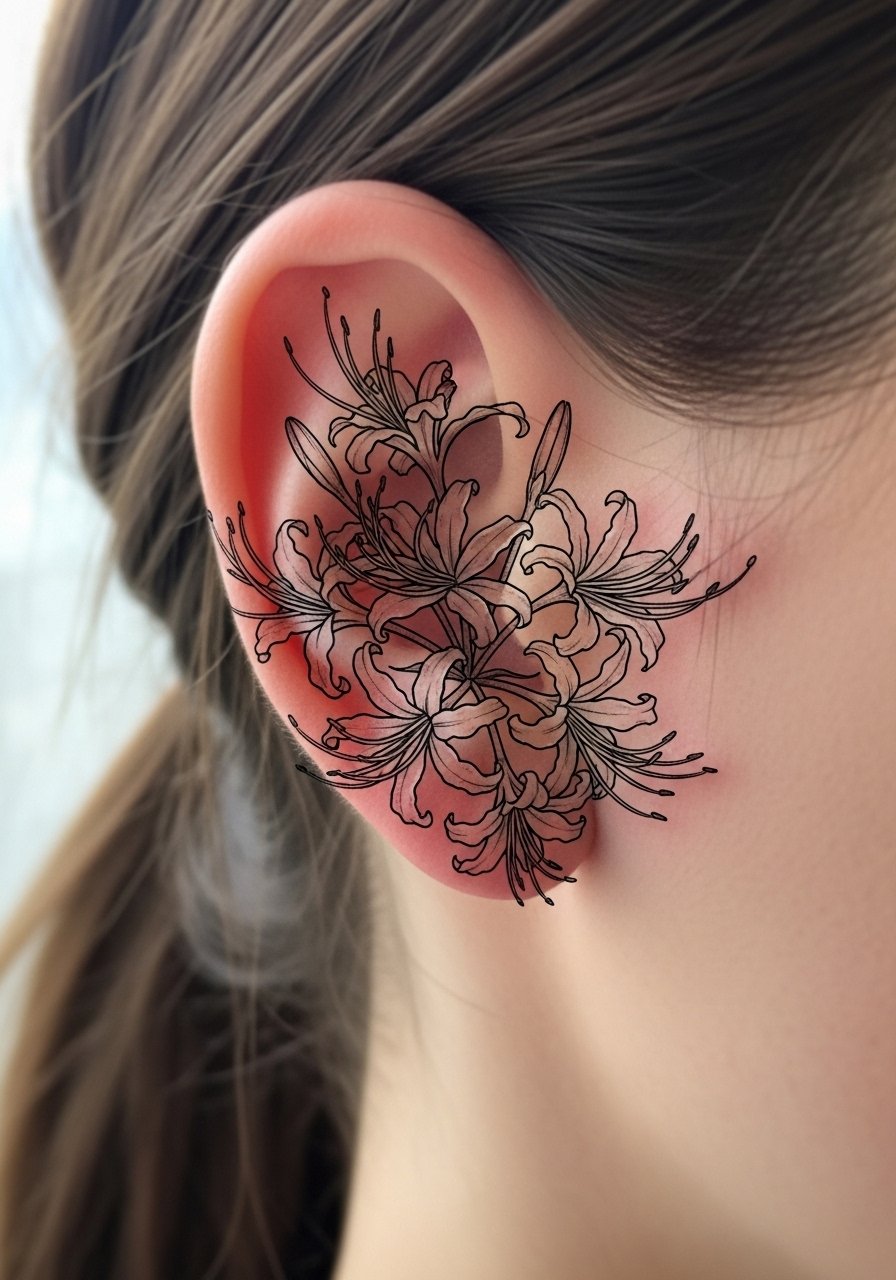
Using lilies to fill earlobes post-gauge retirement is a clever under-covered idea. The skin is thin and needs careful line depth to avoid blowout, so pick an artist experienced with small soft-tissue work. Sessions are short but delicate. A common mistake is over-detailing; opt for simplified petals that read after healing. This placement is intimate and usually easy to hide with hair or jewelry if needed.
22. Geometric blackwork thigh panel
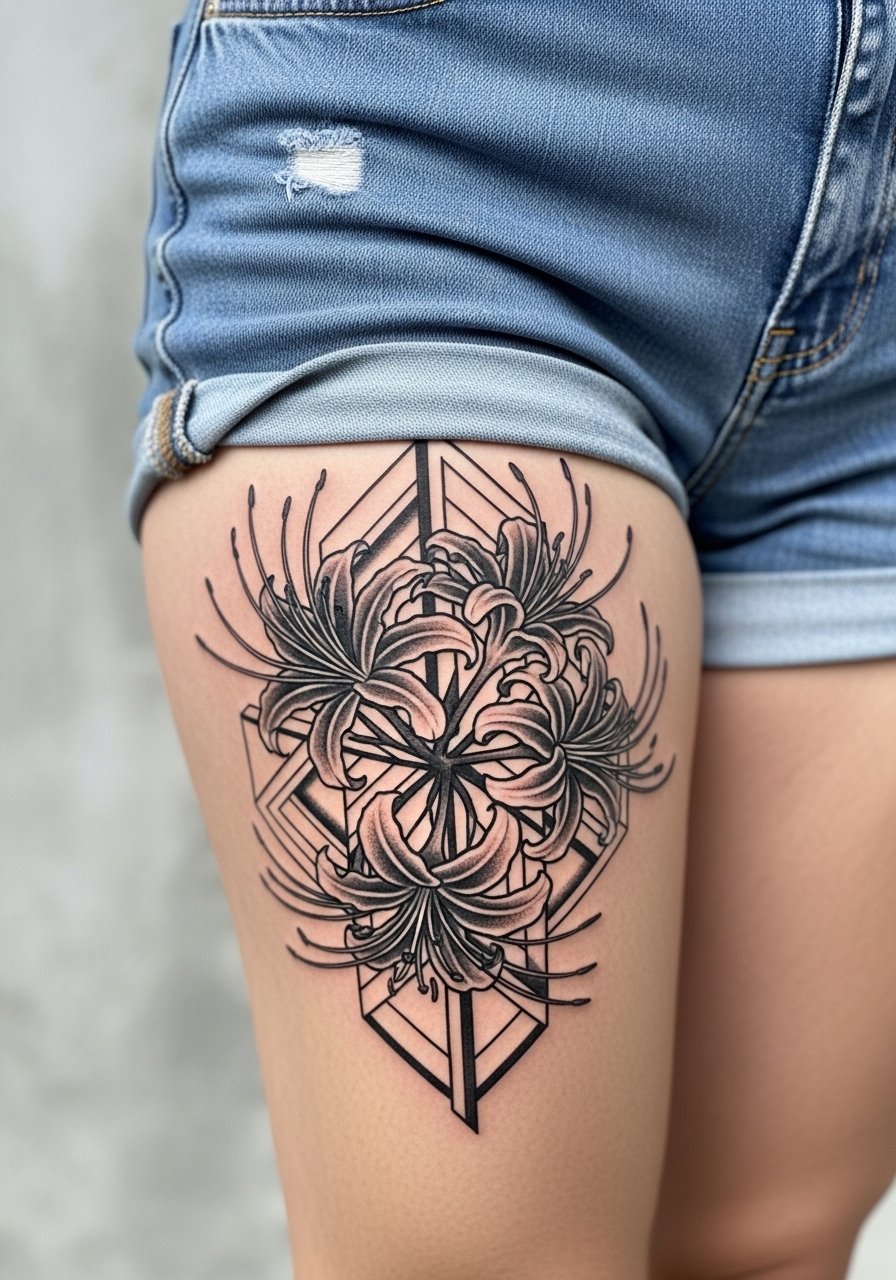
Thigh panels are stretch-resistant and allow large geometric elements that age predictably. The blackwork approach avoids red fading issues and provides strong contrast on many skin tones. Expect multiple sessions and a heavier machine rhythm for saturation. For styling, high-waist shorts and boots create an edgy silhouette that complements the geometry. Discuss how the piece will integrate with future leg work if you plan a large composition.
23. Collarbone single bloom with watercolor wash
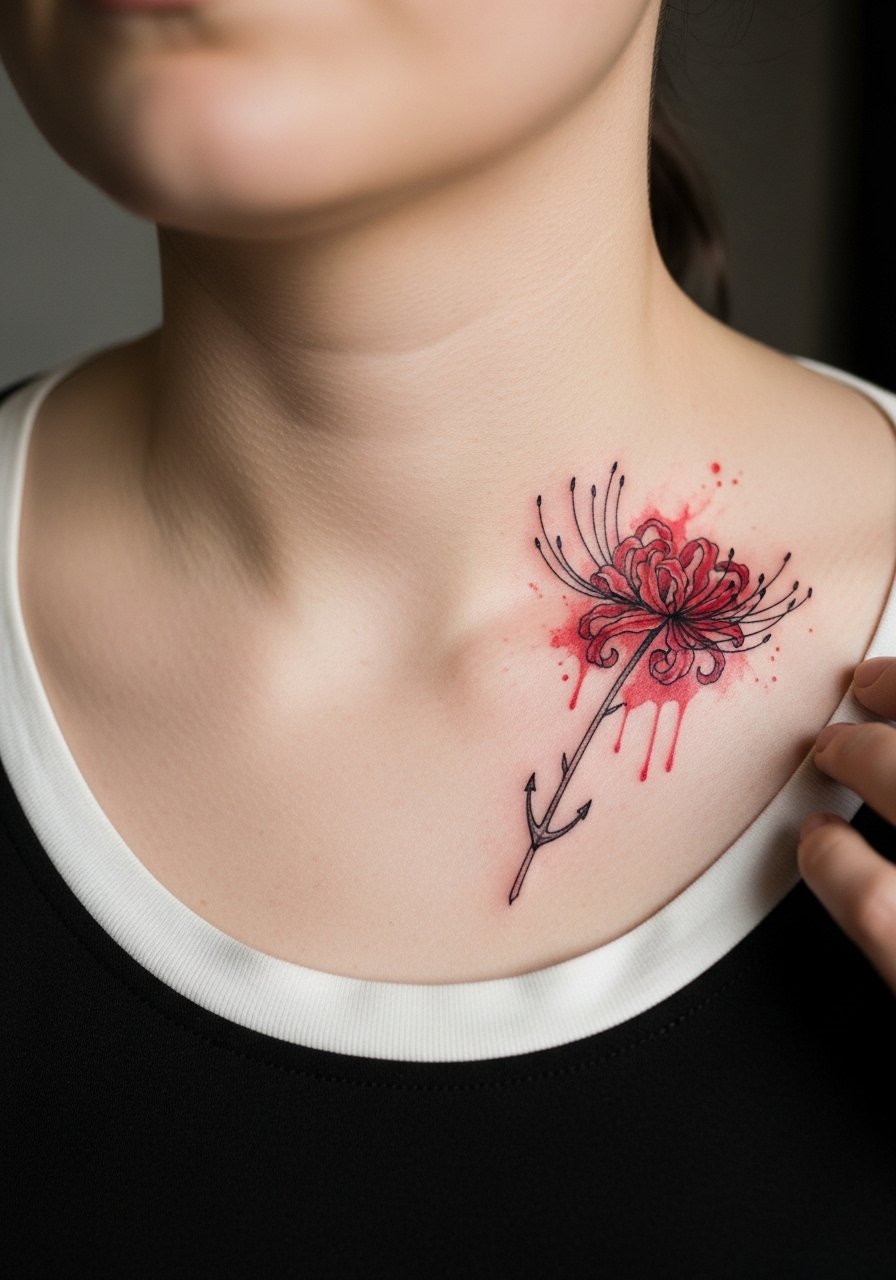
A single collarbone bloom can look painterly but needs stronger black anchors to hold the watercolor in place over time. The chest area faces friction from necklaces and straps, so protect it during healing. Sessions tend to be one to two sittings and the area is sensitive. For outfits, a v neck silk blouse or strapless top highlights the wash without rubbing the area.
24. Neo-trad calf wrap with koi pairing
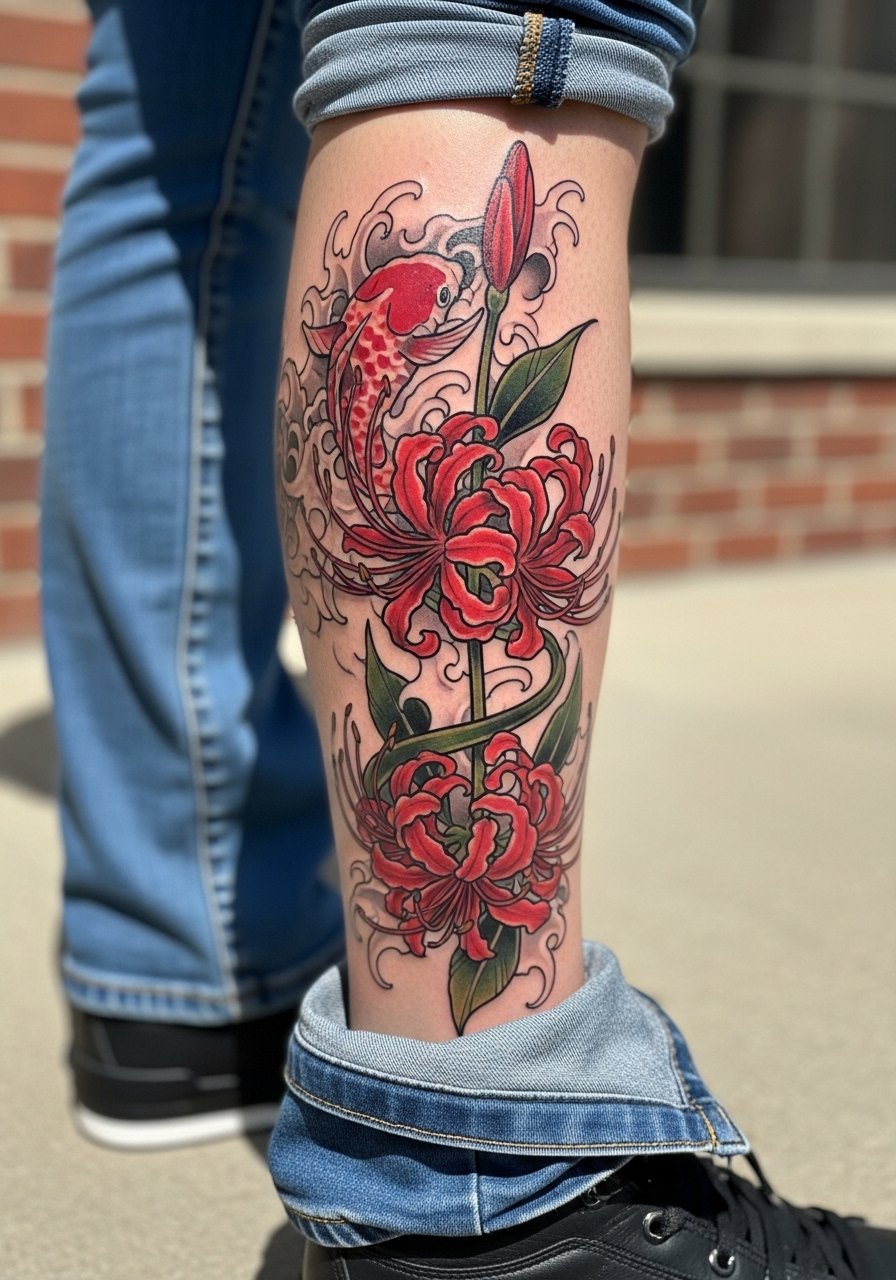
Combining lily with koi nods to Irezumi influences and gives a narrative element for those who want cultural layering. Be mindful of respectful adaptation and avoid direct replication of traditional motifs without discussion. Calf wraps handle saturation well and usually heal predictably. For seasonal reveals, cuffed jeans or shorts work best. Discuss placement flow if you plan a larger leg piece later.
25. Micro-realism behind the ear with script accent

Pairing micro blooms with tiny script is elegant but vulnerable to hair oils and conditioners. Keep the script minimal and test the stencil for legibility at the intended size. Sessions are short and healing is quick, but expect some fade from hair product exposure. If you want a visible hint without daily maintenance, choose a slightly larger scale.
26. Finger-side negative space band
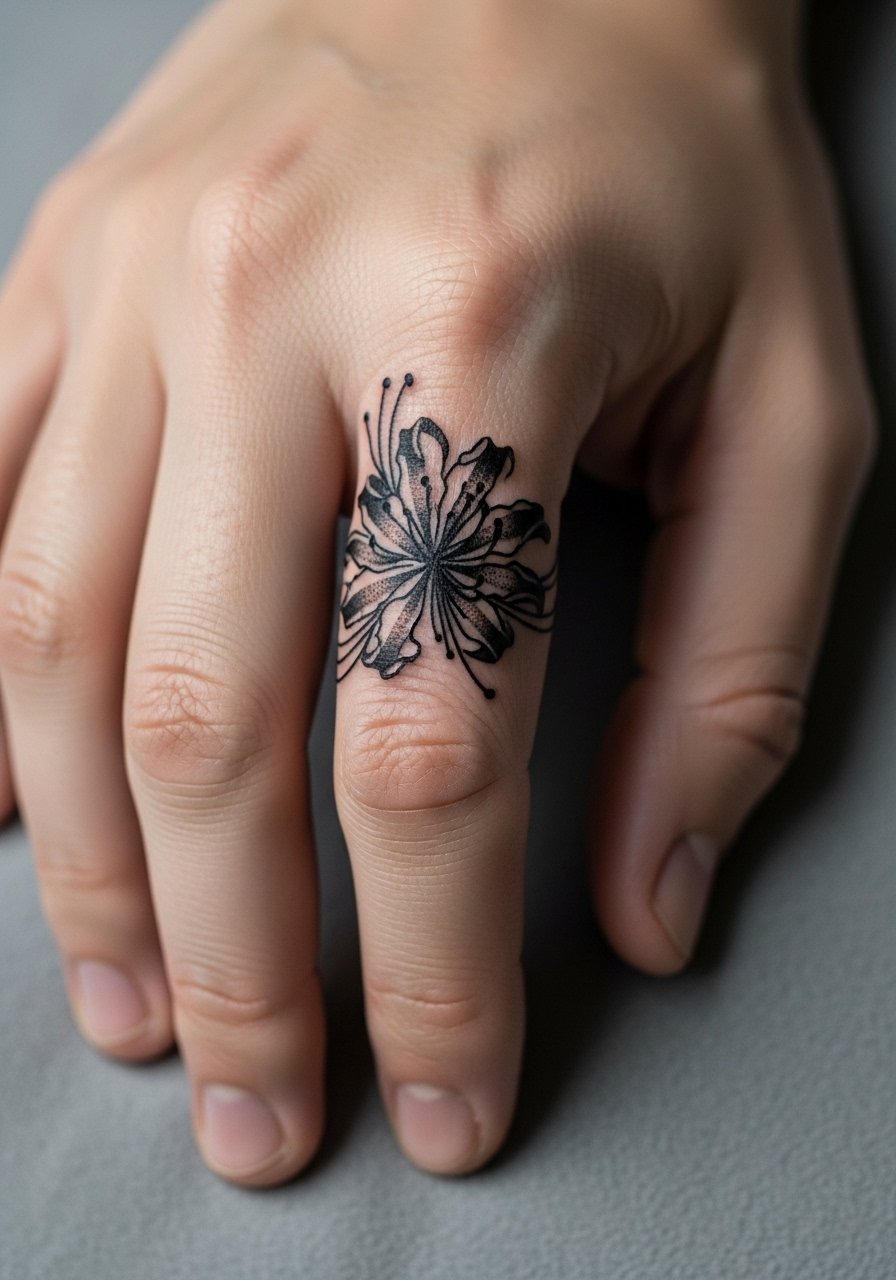
Finger-side bands trade longevity for impact. Negative space works well because solid black rings around it reduce perceived fading. Expect regular touch-ups and slightly higher sensitivity in the session. This is a smart alternative to knuckle pieces if you want ring-like symbolism that heals with bold edges rather than fragile lines.
27. Ornamental sternum sprig

Sternum work sits near the heart visually and demands precise placement. The area can be sensitive and benefits from strong outlines so small details do not vanish under motion. Sessions are moderate to high in pain and often require breaks. During consultation, discuss stencil placement and request a 24-hour preview so you can live with the scale and position before ink. A fitted sports bra makes session logistics easier and keeps exposure minimal.
Studio Day Picks
The wrist, ankle, and collarbone pieces above have different prep needs than chest or thigh work, so a few targeted items smooth the session and the first week.
-
Tea tree soap bar. Gentle antiseptic action is useful for pre-session cleansing and for keeping healing skin clean without heavy fragrances that irritate fine line areas.
-
InkSafe breathable balm. A lightweight post-peel option that breathes better on fine line work and avoids the clogged feel heavier balms can leave on collarbone watercolor.
-
Cetraben cream. A thicker, soothing cream some people find helpful during dry healing phases on rib and sternum pieces to reduce tightness without sticky residue.
-
Hada Labo lotion. A gentle hyaluronic boost for moisturising around healed color work, sometimes used sparingly to restore skin plumpness and support pigment appearance.
-
Hustle Butter original. Popular in humid climates as a thinner alternative to greasy ointments, useful for color retention in red-heavy shoulder and calf pieces when used after the initial peel.
Frequently Asked Questions
Q: Will a fine line spider lily on my wrist blur within a year?
A: It depends on your daily routine and the line weight you choose. Wrists face constant washing and bracelets, so I usually suggest sizing up 20 percent and asking for slightly stronger anchors. Plan on a touch-up at the two-year mark as realistic ownership.
Q: My red lilies turned orange before. How can I avoid that?
A: Red pigments can shift without sun protection and proper pigment choice. Ask your artist about color stability and commit to SPF 50 over the area for the first six weeks. Picking a slight black anchor near red areas also preserves visual contrast as the red ages.
Q: Which spider lily placement shows best on darker skin?
A: Bold blackwork and negative-space approaches tend to read best across darker tones. If you want more subtlety, request healed photos from artists showing similar tones so you can see real outcomes rather than filtered portfolio shots.
Q: Is Saniderm better than dry healing for color pieces like red lilies?
A: Artists split into two camps on this. One group says barrier films speed clean healing for color retention. The other worries about trapped fluid and prefers open, dry methods with light moisturiser. Ask the studio what they use and why, and pick the approach your artist has consistent success with.
Q: How do I find a guest artist who specializes in fine line spider lilies without long waitlists?
A: Use discovery paths like #spiderlilytattoo with location tags, filter Tattoodo for floral Japanese availability, and watch Instagram for guest spot announcements. Booking three to six months ahead is common for popular fineline specialists.