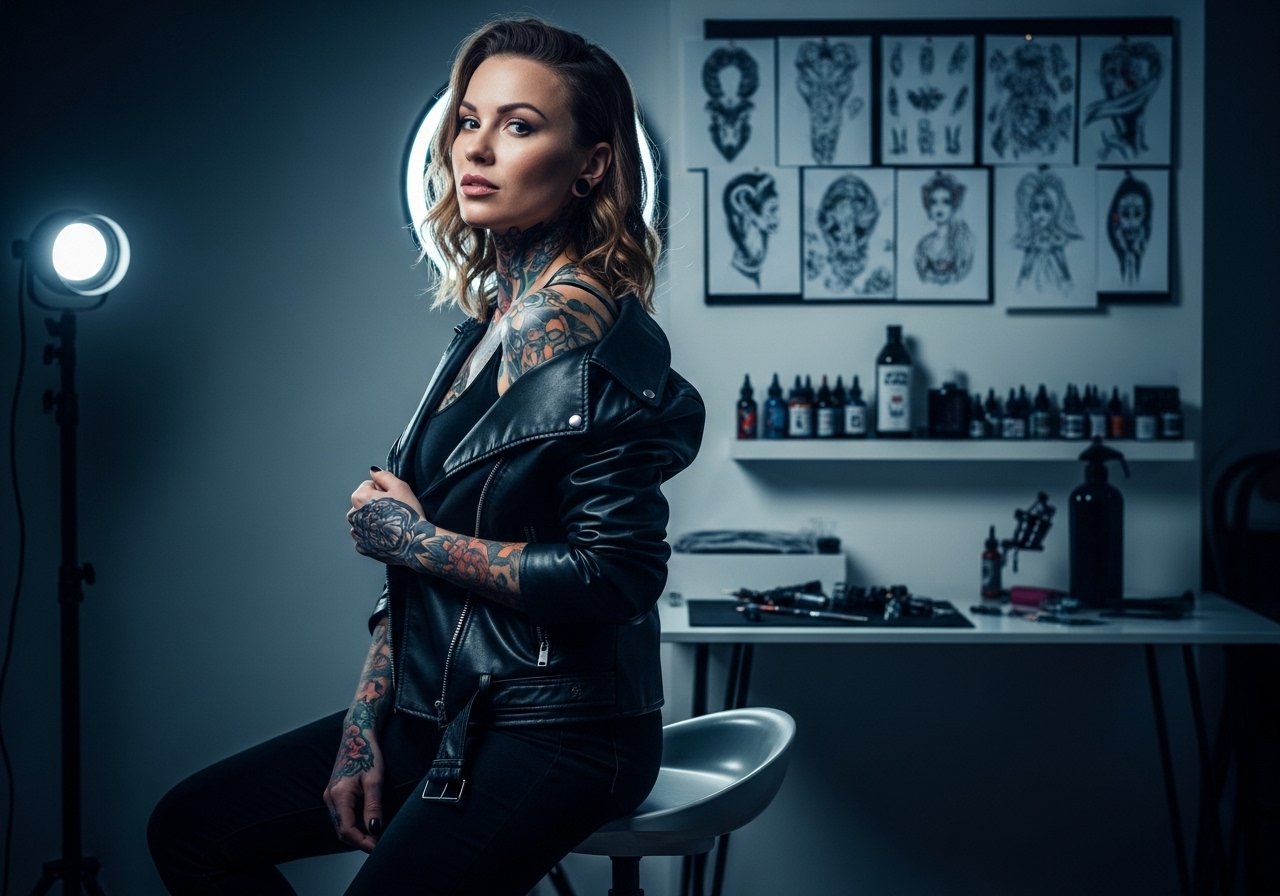
Fine line Shiva pieces are everywhere on saved boards, but the trend-versus-reality gap is real. Fine line third-eye motifs and tiny Trishuls look gorgeous fresh, yet many of those pieces blur fast on high-movement spots. Artists ghosting clients after deposits happens more than you want to hear, and color can wash out on darker skin if contrast is wrong. This list gives cute Shiva tattoo design ideas that balance trend, longevity, and how to style them day to day.
1. Minimalist Trishul Outline for the Wrist

I've seen tiny Trishuls last best when artists use a slightly bolder line rather than an ultra-fine single pass. Ask your artist for a clean outline with consistent lineweight and one pass of depth so the mark heals without a fuzzy edge. Fair warning, the wrist sees constant washing and bracelets rubbing, so expect touch-up at 6-12 months for the finest work. For the session wear, pull on a sleeveless tank or a short-sleeve that rolls easily. To show it off, a thin silver chain bracelet on the opposite wrist frames the Trishul without crowding it.
2. Fine Line Third Eye on the Inner Forearm
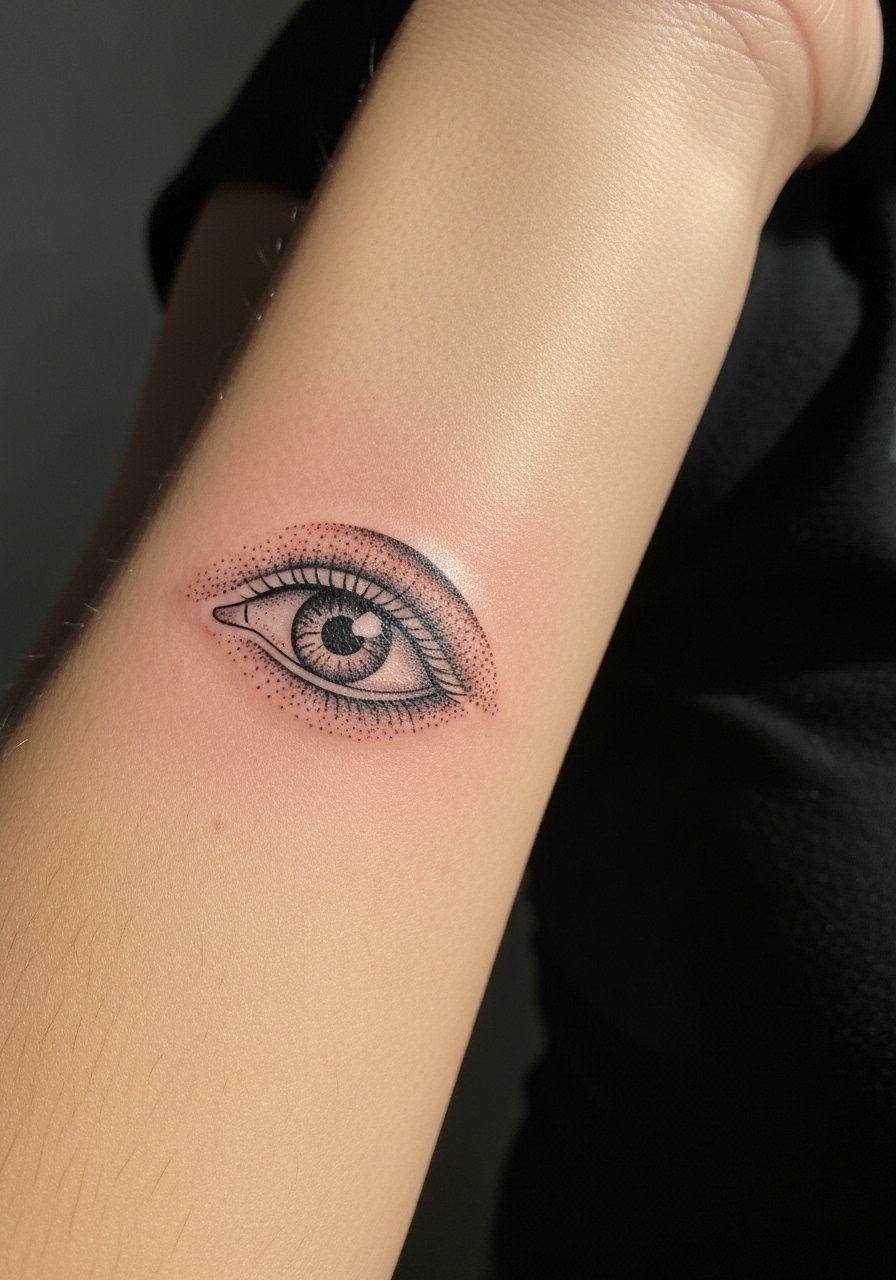
Most artists split on whether ultra-fine third eyes hold up on forearms. One camp says fine line ages gracefully with touch-ups, the other insists bold contour prevents smudging on active skin. When you consult, specify needle depth and ask for spacing around dense lines so the eye breathes as it heals. Expect healing at six weeks and a visible softening by year two on high-sun exposures. For session comfort wear a loose short-sleeve shirt so your arm can rest without pinching. Tell the artist you want the third eye to read clearly in two years rather than only at the fresh stage.
3. Dotwork Damru Mandala on the Shoulder

There is real value in choosing dotwork for the shoulder because stipple shading flexes with movement and hides minor stretch. Ask for clear spacing in the mandala rings and a slightly larger scale than you think you need. The shoulder takes sun if you wear tanks in summer, so plan for sunscreen after healing to protect the high-contrast blackwork. For the session wear a loose tank top you can pull aside, and for outings an off-shoulder blouse in dark tones frames the damru without competing. Dotwork usually holds well at two years if healed cleanly, and touch-ups are typically minor.
4. Neo-Traditional Nataraja on the Upper Arm
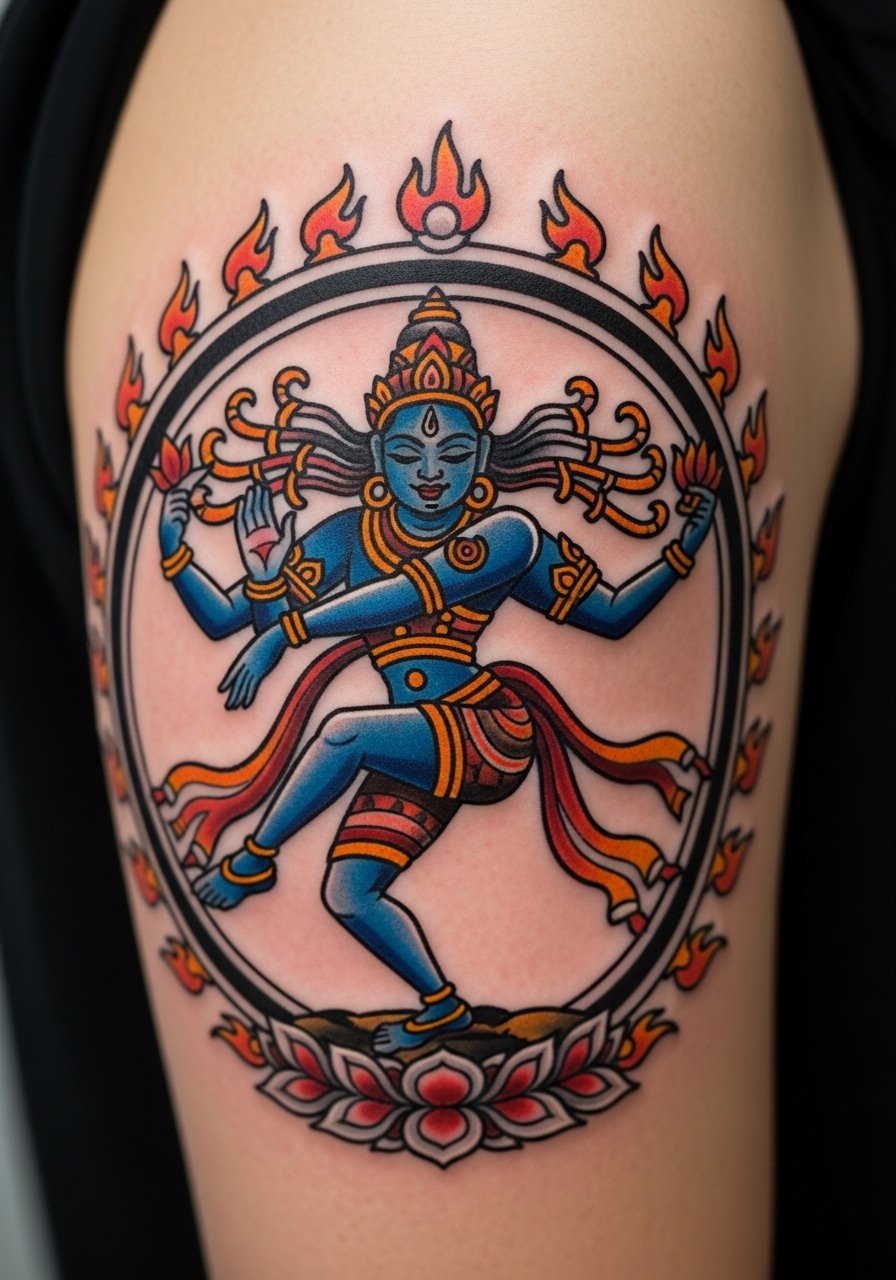
I've seen neo-traditional Nataraja pieces read dramatically from across a room because of bold outlines and careful saturation. Tell your artist you want preserved silhouette first, then color accents second. The upper arm is forgiving for saturation, so this is a great choice if you want a larger, dynamic pose without committing to a back piece. Pain is moderate and sessions often run 2-3 hours for a 5-6 inch piece. For showing it off pair the tattoo with a v neck linen tee that keeps the collarbone quiet and the arm visible.
5. Blackwork Mahakal Skull on the Calf
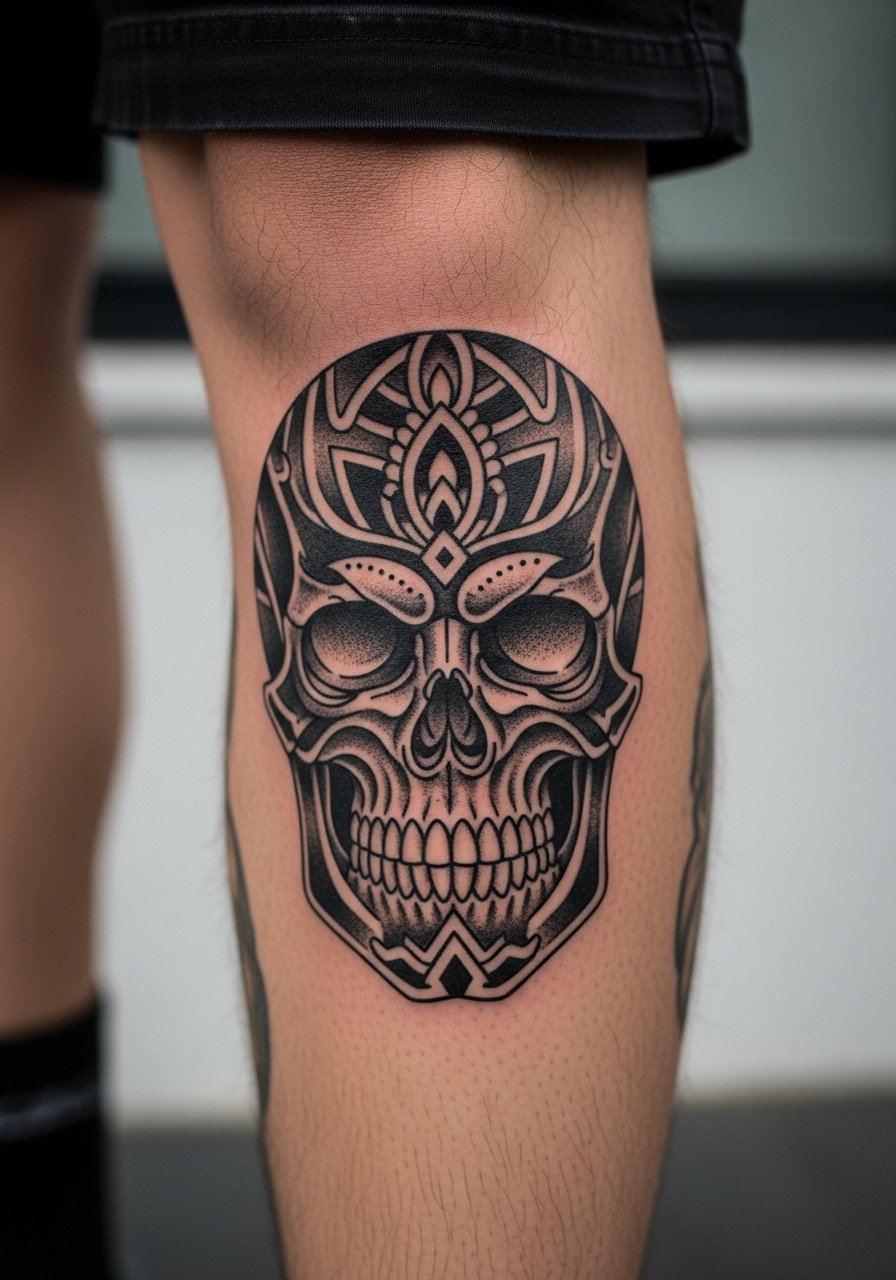
Visual impact lead works here because large blackwork survives years of gym wear and short-season exposure. Ask for a strong silhouette with planned negative-space highlights so the skull reads even from a distance. Calf pieces can handle heavy saturation, so color loss is less of a concern than blowout from shallow passes. Session time is usually two sessions for a 4-5 inch piece, and the pain is moderate. Style it with fitted joggers rolled to show off the work and consider athletic shorts for summer. Expect the black to stay bold if you avoid prolonged sun in the first year.
6. Watercolor Parvati-Shiva Pair on the Ribcage
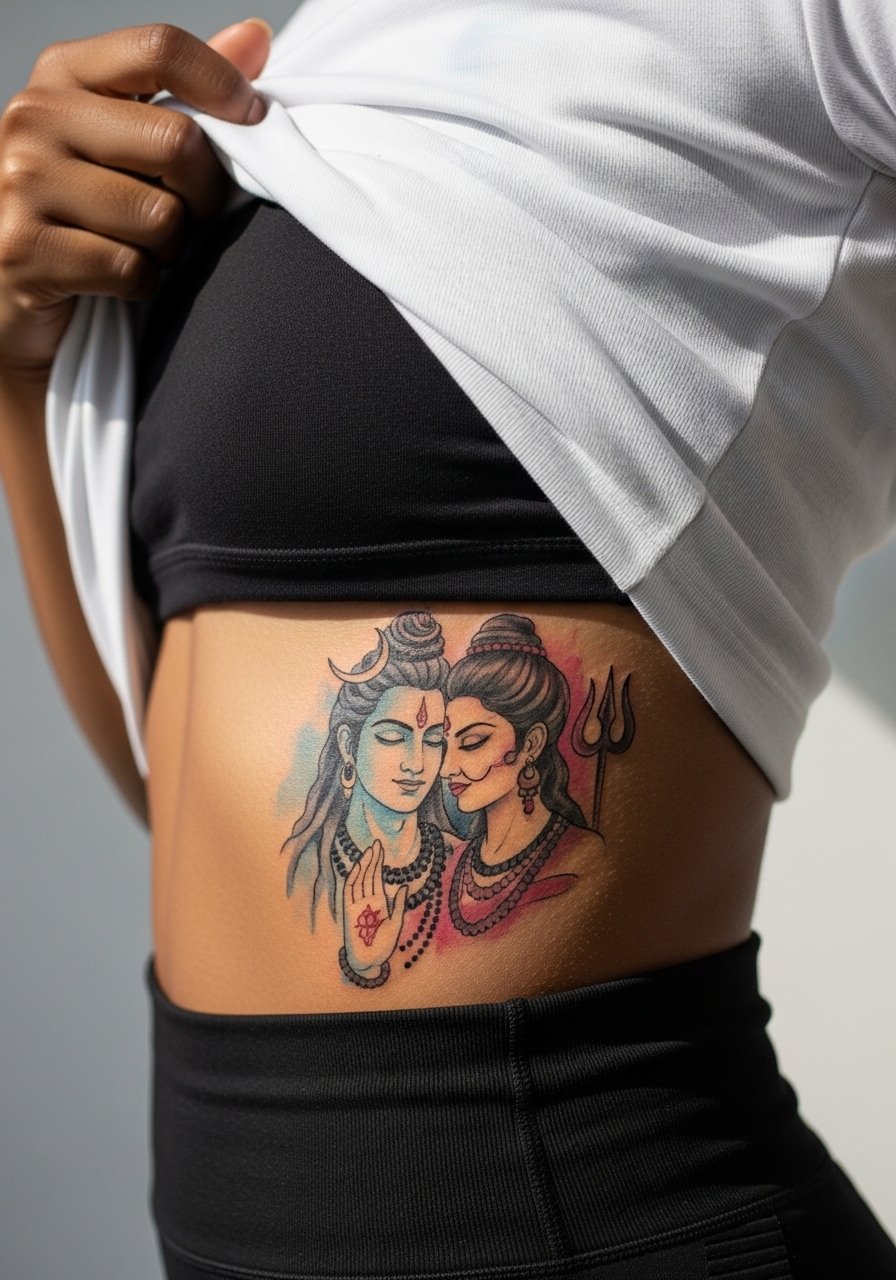
Fair warning, ribs rank high on the pain chart, and watercolor requires considerate placement because washes can fade faster on darker skin tones. If you want the pigments to remain visible, ask the artist to anchor the composition with high-contrast black outlines around key elements, then use transparent color fills. The Saniderm versus dry healing debate splits shops and clients. One group favors protective film to limit scabbing, the other prefers open-air breathability in humid climates. Ask your artist which camp they work with and why. Wear a sports bra or bandeau so only the rib area shows for the session.
Studio Day Picks
The wrist, forearm, ankle, shoulder, calf, and ribcage pieces above all ask for slightly different prep. These picks smooth the session and address common concerns from those first six ideas.
-
Haldi Chandan balm. A thinner anti-inflammatory balm that users say reduces clogged pores with colorful washes, helpful if you plan a watercolor ribcage piece.
-
Tea tree salve. Lightweight and breathable, it is handy for fine line forearm work where greasier ointments can sit on surface lines.
-
Coconut oil tattoo balm. Winter sessions on darker skin sometimes call for extra moisture without overly thick residue, which this paste can offer.
-
Neem aftercare salve. Useful in humid climates for its antimicrobial properties, good for ankle wraps and lower leg work that rubs against socks.
-
Aquaphor healing ointment. A thin layer in the first few days can help protect fine line wrist pieces from scab formation while you sleep.
7. Micro-Realism Ardhanarishvara Behind the Ear
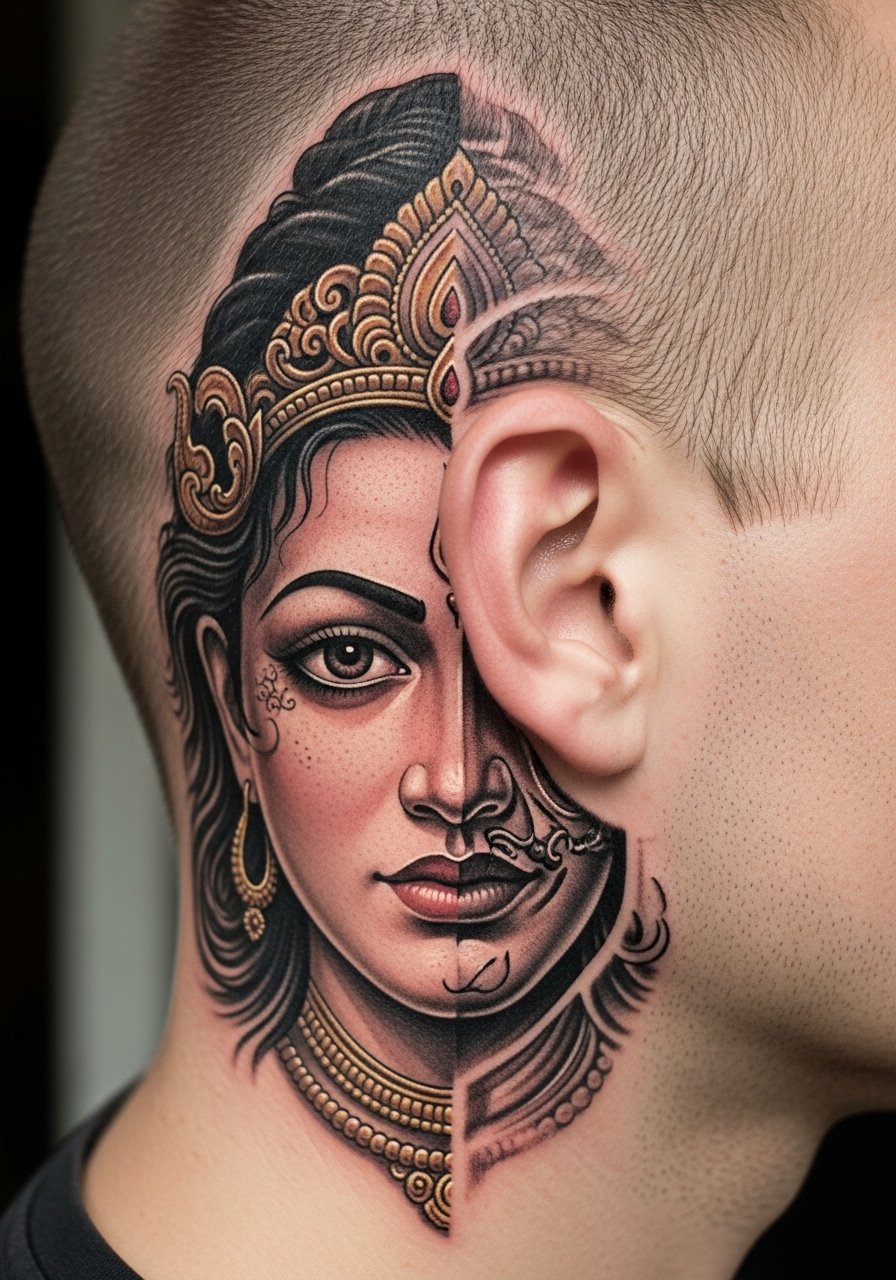
Consultation lead is important for micro-realism behind the ear because scale kills detail. Tell the artist you want a single-tone black and gray piece and show a photo of the exact size you expect behind the ear. The skin there is thin so the needle feels sharper and sessions are short, usually under an hour. Behind-the-ear tattoos need hair pinned up for the stencil, so wear your hair in a bun. Keep in mind these tiny faces age differently, and you may want a touch-up at the one-year mark if you rely on fine shading for expression.
8. Ornamental Snake Wrapping a Trishul on the Ankle
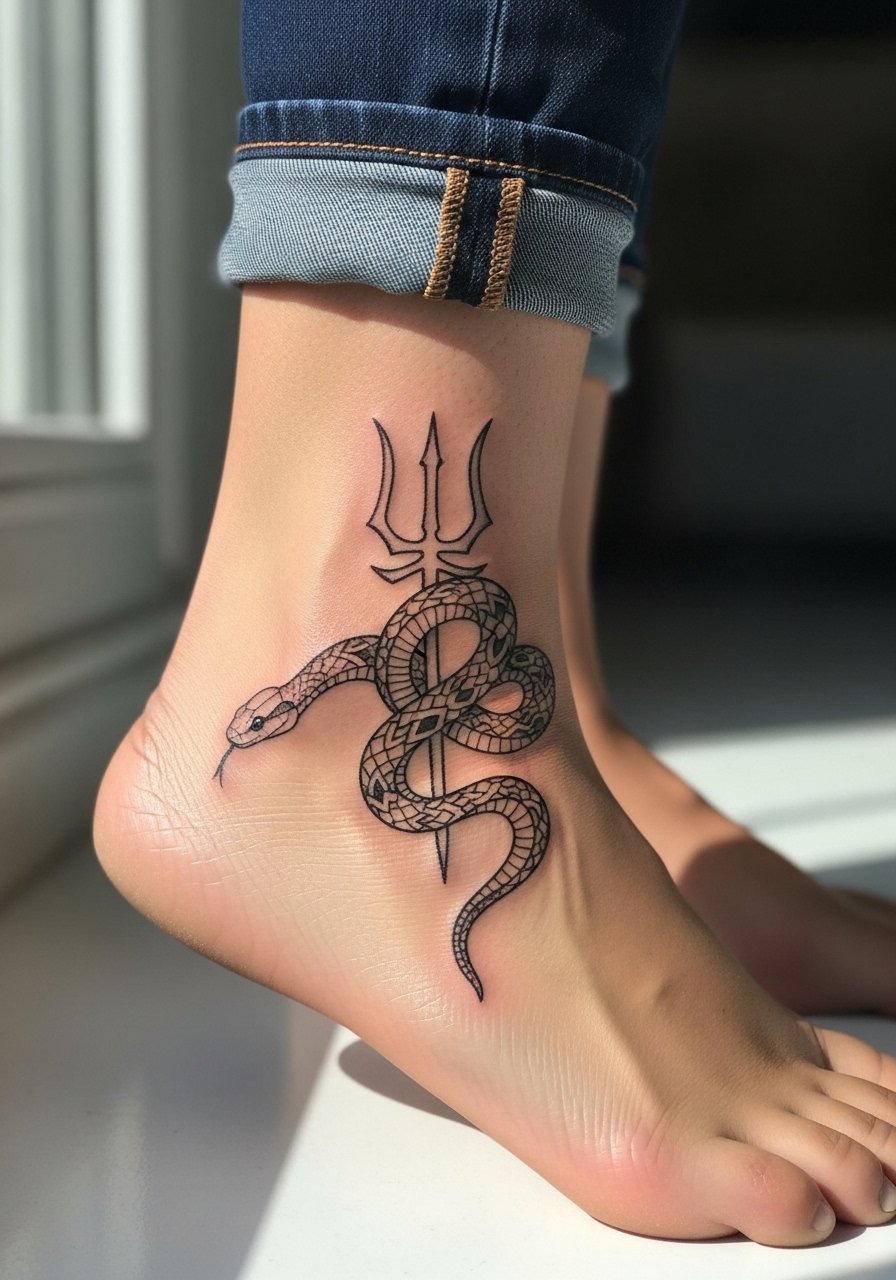
Mistake lead works here because ankle wraps look delicate fresh but they get constant friction from socks and shoes. Ask for slightly bolder lines where the snake crosses itself and plan negative space around the Trishul so the wrap reads even if minor fading occurs. The session is quick and pain is manageable while seated. For summer showing off pair the design with strappy flat sandals and layer a simple anklet set when you want the tattoo to peek through.
9. Ignorant-Style Cute Shiva Baby Face on the Inner Bicep
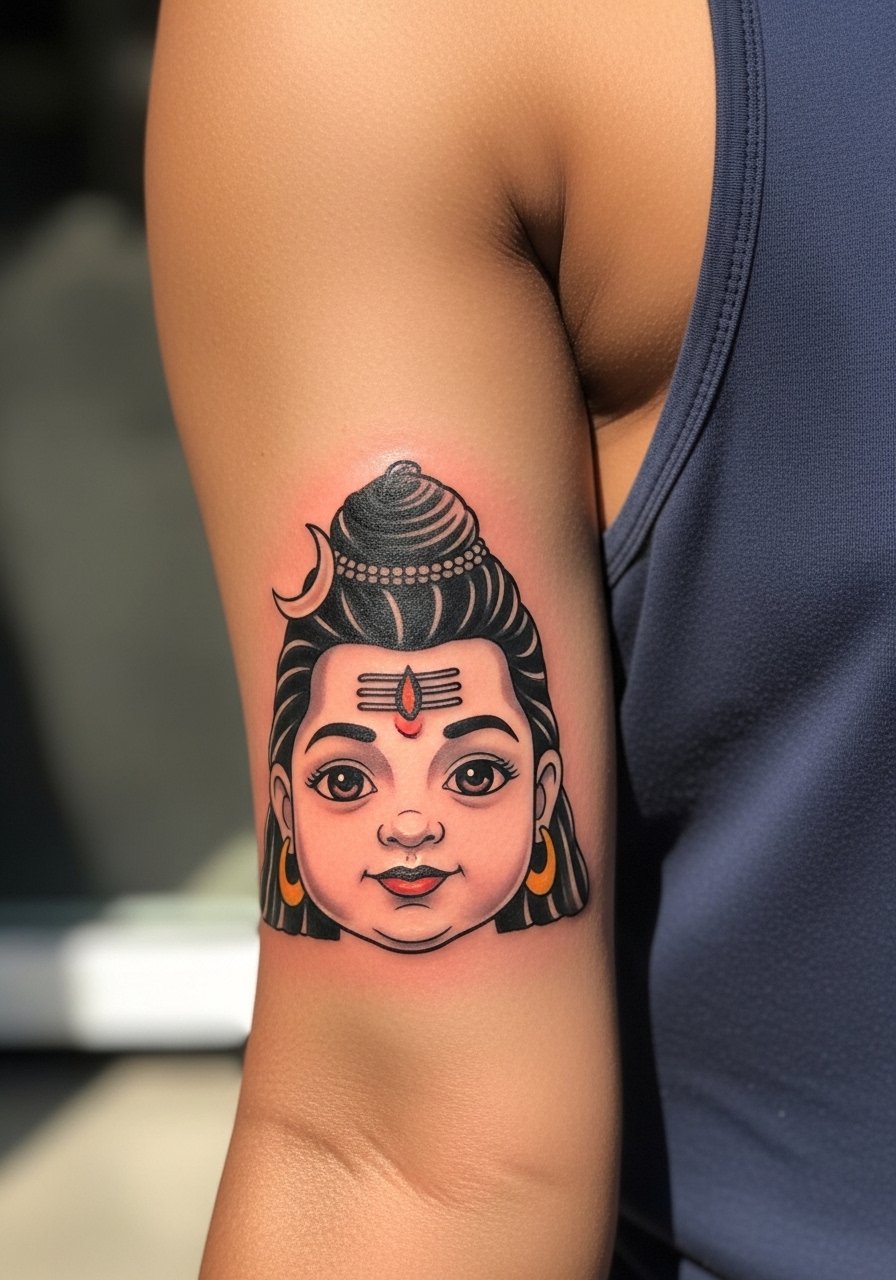
Styling lead fits because inner bicep pieces hide well and reveal with sleeve choices. This ignorant-style cute face reads bold with thick outlines, which also helps longevity on flesh that stretches. Tell the artist you want strong contour first and fill second so the face keeps its character over time. The inner bicep is sensitive when the arm is lifted, and sessions can be aching if multiple passes are needed, so plan breaks. For the session wear a tank top you can move easily so the artist has clear access.
10. Traditional Mahadev with Flowing Ganga on the Back
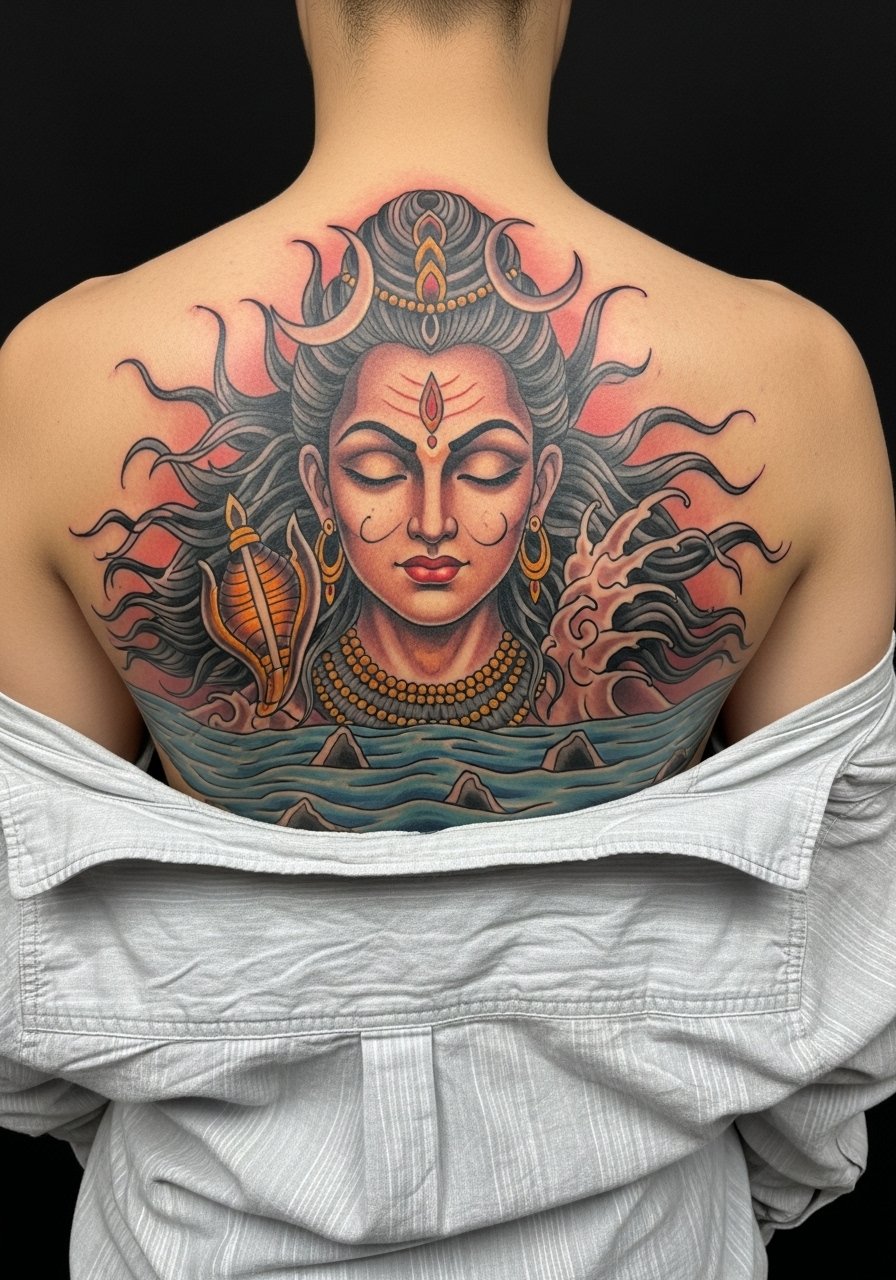
Visual impact lead explains why a back piece is classic for Mahadev motifs. Big compositions let hair and river elements breathe so the flow reads from a distance. Expect two to three sessions for a medium back piece and plan for shoulder mobility during healing. This is a good choice if you want a statement piece that can be hidden for work. For session wear choose a loose button-down you can tuck to one side so the artist can reach the upper back cleanly.
11. Fine Line Om Linga on the Wrist

Aging and healing lead works with an Om Linga because very small single-needle work needs planned spacing to avoid smudging. Tell your artist the exact scale you want and ask for slightly heavier anchor points at the base so it keeps shape after a year. The wrist earns constant washing and rubbing, so expect a light touch-up around the one-year mark. For the session wear a sleeveless tank so the artist can position your arm comfortably. A dainty bracelet on the other wrist keeps attention balanced.
12. Black and Gray Rudra Wrath Face on the Sternum

Pain warning lead is needed since sternum work is intense and sensitive for many. Black and gray realism here benefits from staged shading so highlights survive healing without turning patchy. Artists disagree on numbing creams near the chest. One camp finds numbing useful for long sessions, the other worries it affects ink settlement. Ask your artist where they stand and whether they will offer breaks. Wear a fitted sports bra to the session to reveal only the sternum and to keep modesty during touch-ups.
13. Trishul Finger Wrap Across the Side Fingers
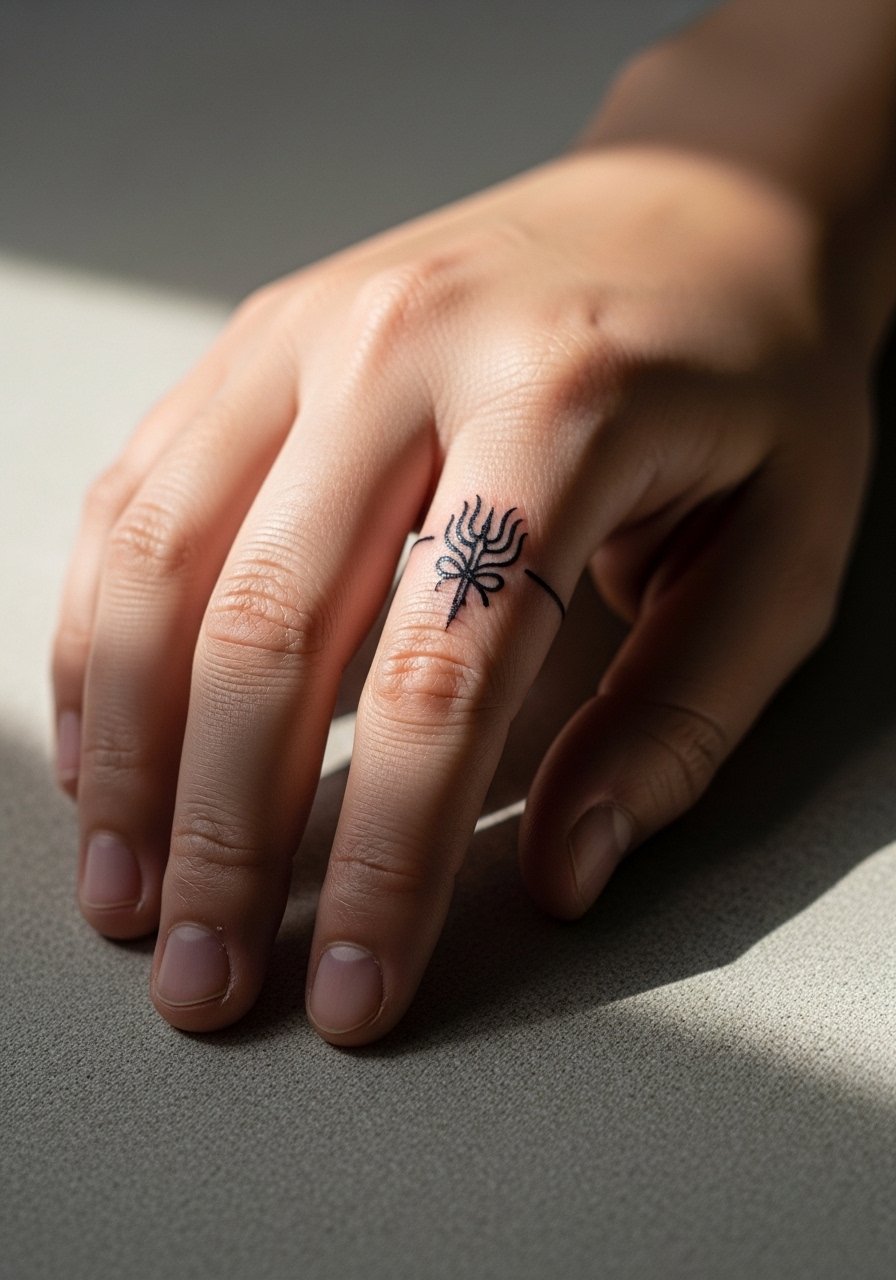
Mistake lead: finger lines that look great fresh often blur from daily use. If you want a finger Trishul, ask for simplified geometry and thicker outline at the start so the symbol remains legible. Fingers suffer from fast wear, so expect yearly touch-ups or a faded patina that suits your aesthetic. The session is short but stinging. Keep the area clean and avoid heavy hand creams for the first two weeks. Finger wraps can be charming for a season, and some people accept annual maintenance.
14. Cute Shiva with a Baby Elephant on the Thigh
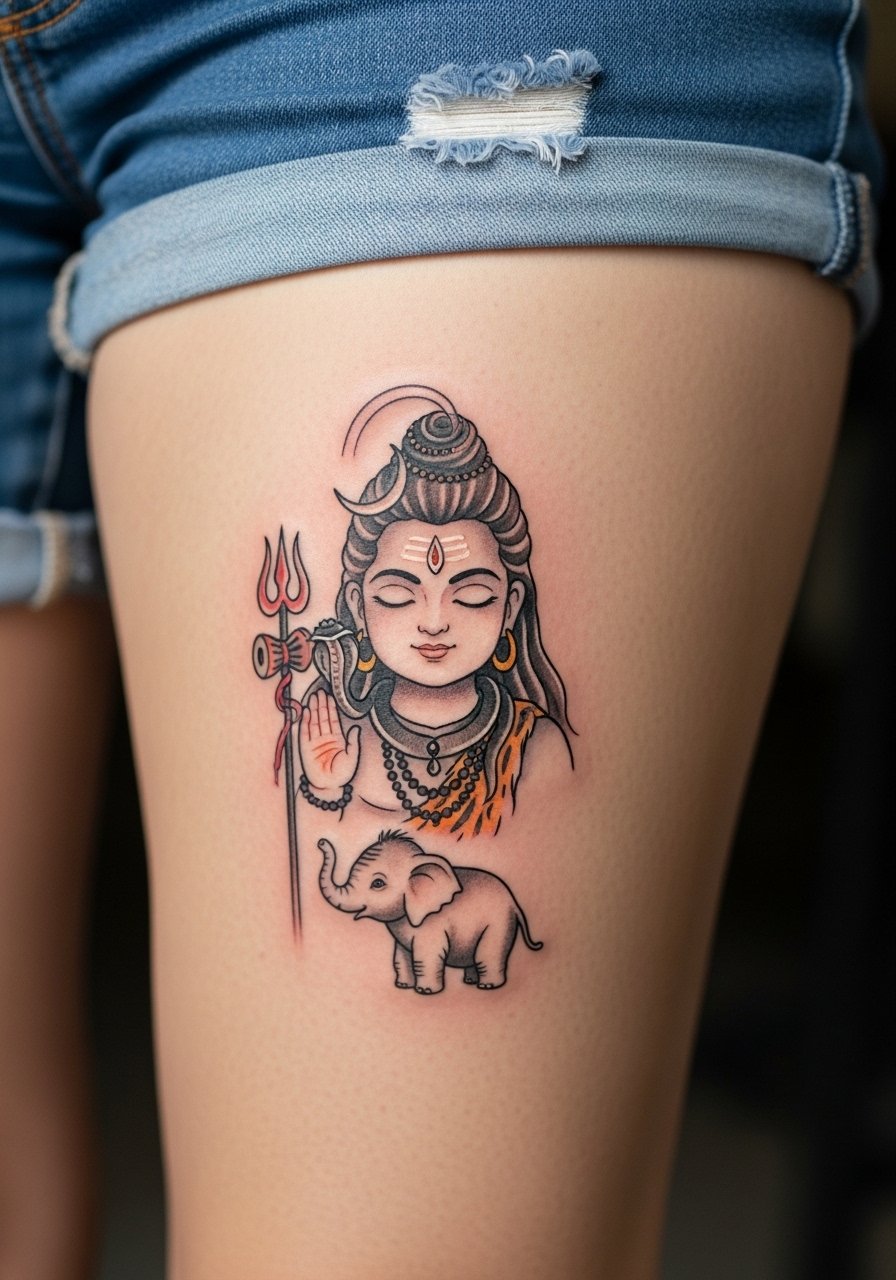
Visual impact lead works because thigh placements let you explore playful compositions at a comfortable size. For darker skin tones prioritize high-contrast linework with saturated darks around the characters so colors read well in photos. Sessions are easy to manage because the thigh is fleshy and forgiving, and pain is moderate. For showing off pair the piece with high waist denim shorts in summer. If you anticipate weight changes, choose a design with flowing negative space rather than rigid geometry to reduce warping.
15. Trishul Integrated into a Fingerprint on the Inner Wrist
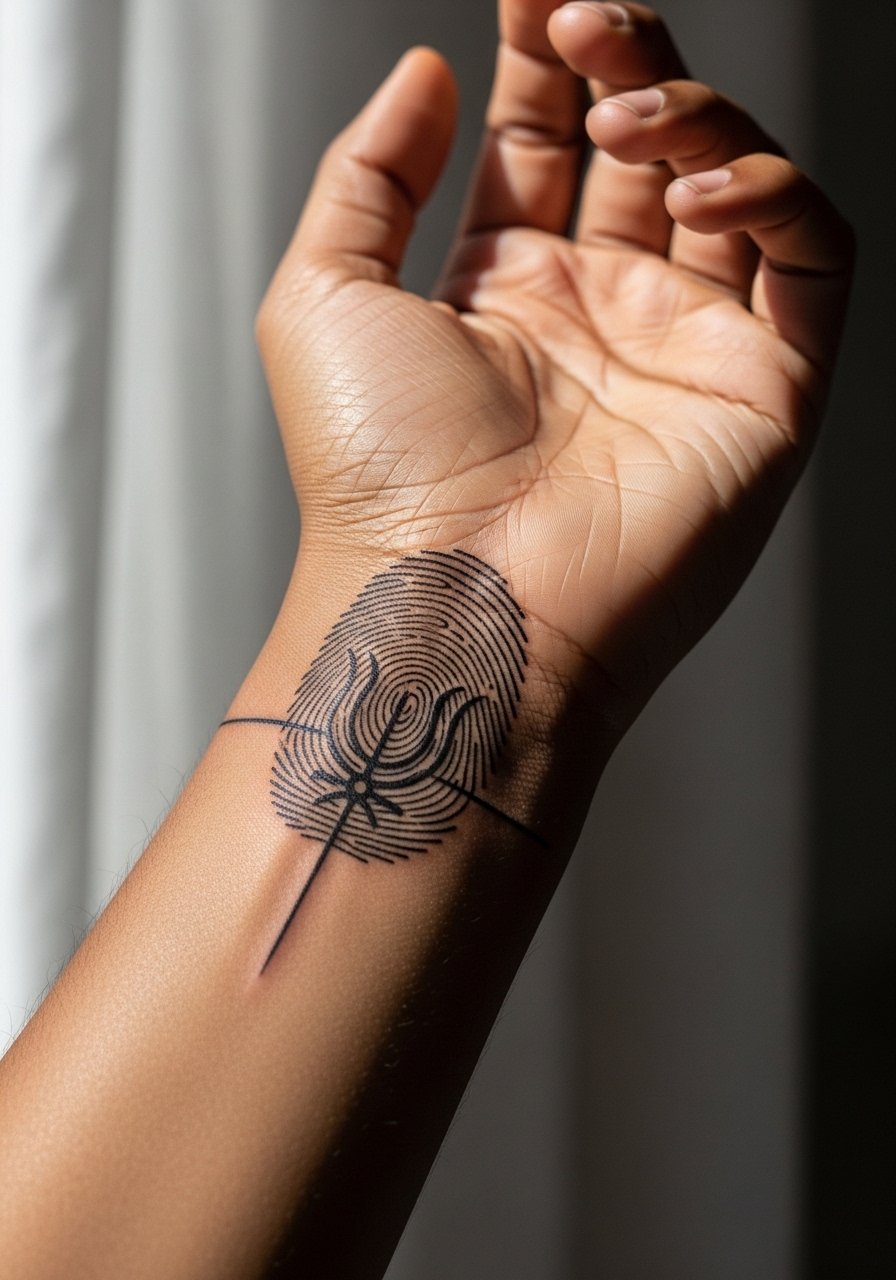
Consultation lead fits because a fingerprint integration needs precise stencil placement to align with your actual pattern. Bring a photo of your wrist and ask the artist to map the Trishul into the whorl so the piece feels like it sits on you, not on a stock template. Inner wrist movement means plan for slightly stronger outlines in the fingerprint's thicker ridges. For the session wear a loose short-sleeve shirt so your arm can rest flat. Touch-ups at six months are common for such micro-composites.
16. Negative Space Shiva to Camouflage Healed Stretch Marks on the Hip

Aging lead matters because stretch-mark camouflage uses negative space to work with body changes rather than against them. If you have healed marks, ask the artist to preview how the design overlays the texture in your photo. Negative space and stipple shading can mask contrast without filling every groove. For the session wear high-waisted jeans or shorts you can slide slightly down so only the hip zone is exposed. This option is a quiet way to reclaim the area without a dense block of ink that might highlight stretching later.
17. Micro-Realism Ardhanarishvara Half-Face on the Finger

Mistake lead is key because fingers do not hold micro shading well long-term. If you want micro-realism there, simplify the half-face into bold contrast areas and avoid tiny gradients that disappear. Tell your artist you prefer defined planes over delicate texture for longevity. Expect stingy sessions and the need for a touch-up in the first year. Finger micro-realism is a commitment to maintenance. Some people choose this for the secretive placement and accept annual work to keep the face readable.
18. Shiva Mandala Centerpiece on the Upper Back

Visual impact lead explains why the upper back is ideal for mandalas because size lets the geometry resolve correctly. Ask for spacing rules in the design so rings do not crowd each other and so the mandala holds up at five years. Sessions often run across multiple appointments for shading and to allow the client to rest. For the session wear a button-down you can pull aside. Consider planned sun protection while healing because shoulders take a lot of summer exposure.
19. Damru Bracelet Line Around the Collarbone
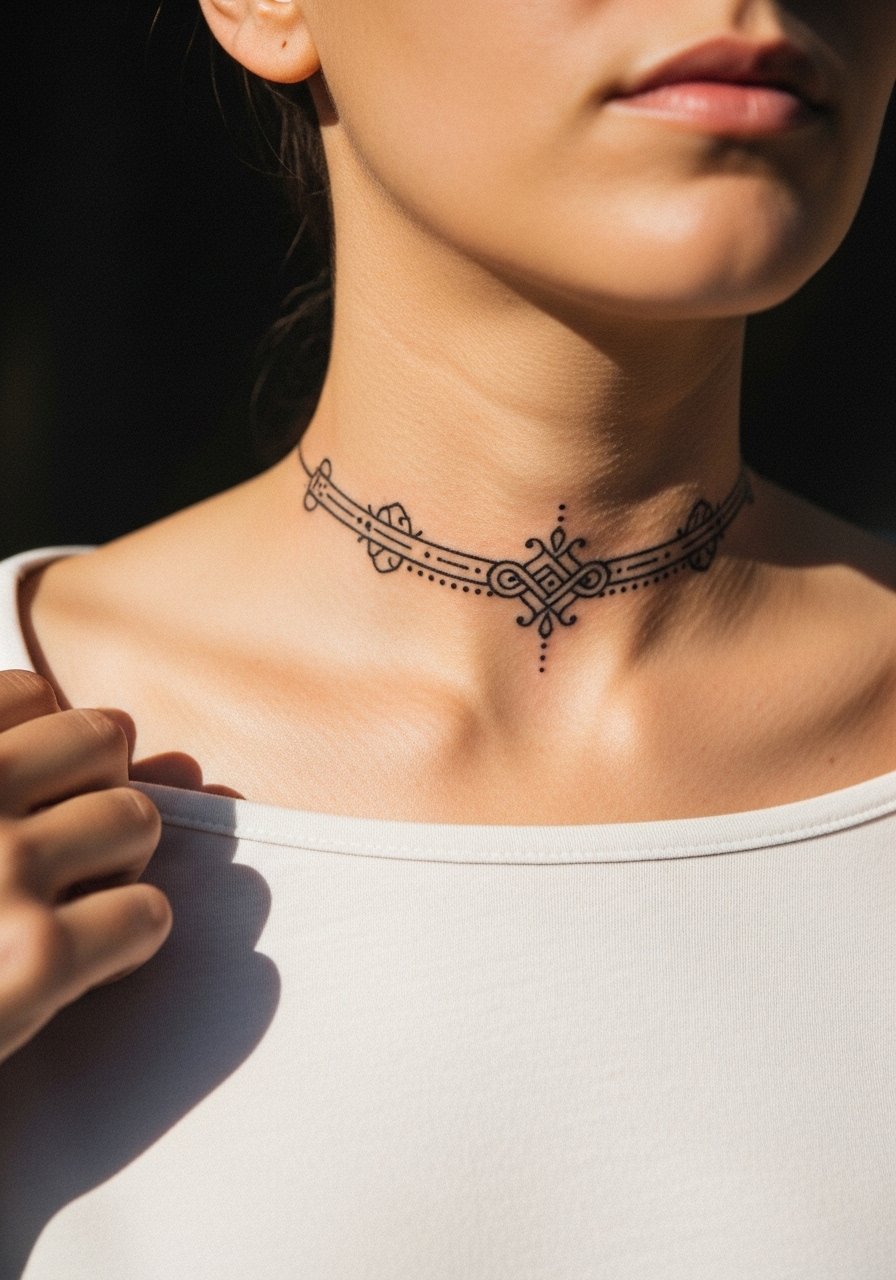
Styling lead is natural here because collarbone work pairs with outfits that reveal the upper chest. This placement reads best in earth tones and fits well with pendant necklaces that sit above the design. During the consult say you want the damru to follow the collarbone curve so it looks intentional with tops. For show-off pairing choose a v neck linen tee or a simple pendant necklace that sits above without competing. Healing is straightforward and touch-ups are rare if spacing is generous.
20. Watercolor Parvati-Shiva Pair on the Thigh
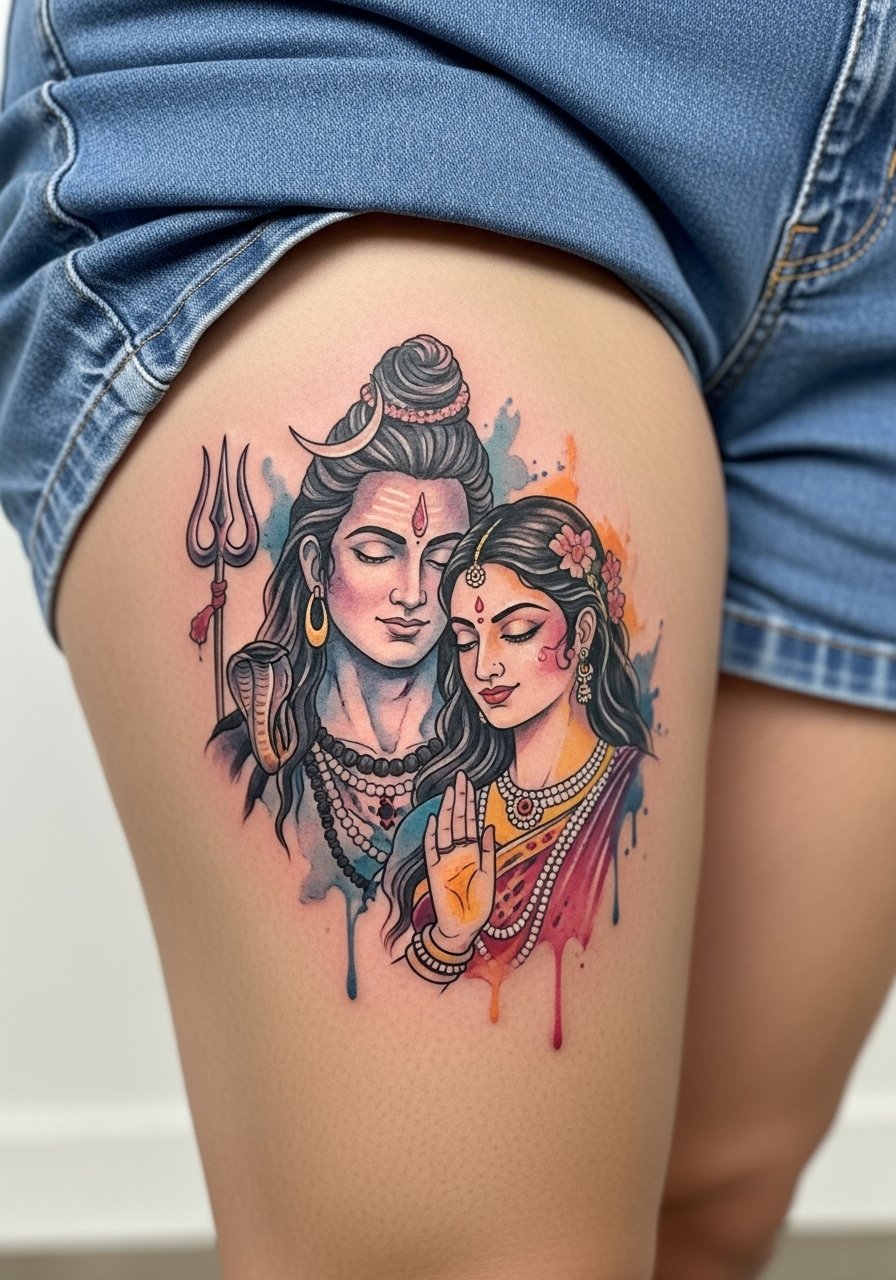
Aging lead applies because watercolor on thighs usually holds better than on hands or neck due to lower friction and sun exposure. Ask the artist for crisp black anchors around faces so the color reads against deeper skin tones. Thighs are forgiving for session length, and you can schedule multi-hour appointments comfortably. For showing off pick high-waisted shorts or skirts, and for the session wear loose shorts you can slide slightly to expose the area. Expect color settling over the first year and minimal touch-ups if healed cleanly.
21. Tiny Fine Line Third Eye tucked Behind the Ear
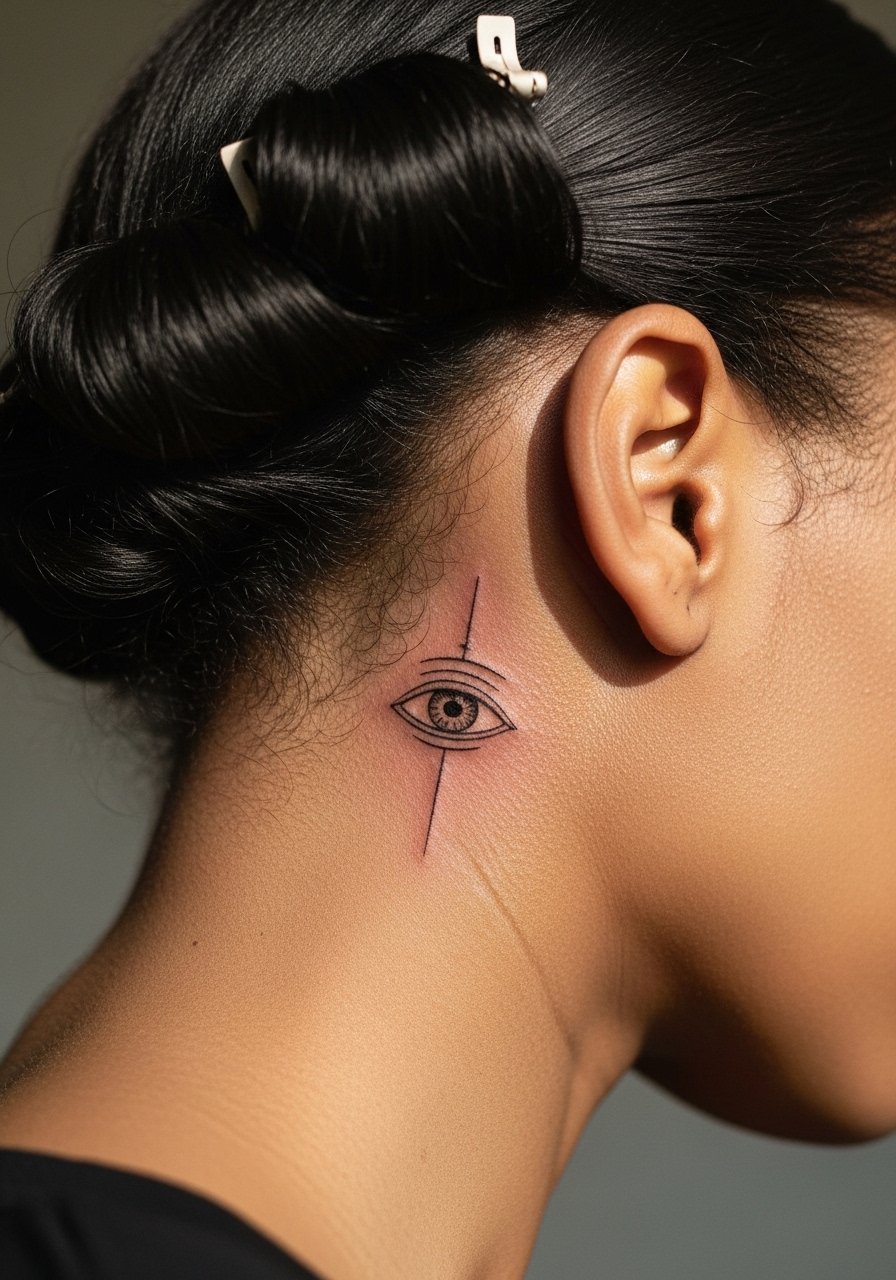
Consultation lead works because behind-the-ear micro symbols need exact placement to avoid being lost in hairlines. Describe the exact size and ask to preview stencil placement with hair pinned up. The area heals quickly and is easy to hide for work. Keep expectations modest for longevity because the skin there is thin and lines soften faster. For the session pin your hair up and wear a top with a wide neck so the artist can access the area without moving your shoulders too much.
Frequently Asked Questions
Q: My fine line Shiva on the ankle blurred after a year. Is that normal and what can I do?
A: Fine line tattoos on high-movement, low-skin areas like ankles can blur faster than bolder work. One option is a slightly heavier line at the start and a planned touch-up at six to twelve months. Also protect the area from constant rubbing with socks during the first two weeks and avoid direct sun while it heals.
Q: Should I avoid watercolor Shiva designs if I have medium or dark skin?
A: Not necessarily. Watercolor can look beautiful on darker tones with the right approach. Ask your artist to anchor faces and key elements with crisp black lines so the washes sit against contrast. Discuss pigments and test patches in the consult if you are worried about photo performance.
Q: Are there safe ways to find a reliable artist after a late cancellation?
A: Yes. Use platforms that show verified bookings and guest spots and follow hashtags like #FineLineShiva or #ShivaMandala to find artists doing similar work. Ask for written session confirmations and consider waiting lists at reputable studios so you do not rely solely on one booking.
Q: Does Saniderm or dry healing work better for detailed Shiva linework on the ribcage?
A: Artists and forums split into two camps. Some prefer protective film to limit scabbing and maintain crisp lines, while others say breathable, dry healing reduces trapped moisture in humid climates. Ask your artist which method they use and why, and follow their instructions for the specific environment where you live.
Q: What should I wear to the studio for a collarbone or shoulder Shiva piece?
A: Wear something that gives the artist easy access while keeping you comfortable like a loose button-down shirt or a tank. That makes positioning easier and helps the session move smoothly.
Q: How much maintenance will a finger Trishul need compared with a calf skull?
A: Fingers face much more daily wear so expect yearly to biannual touch-ups. Calf blackwork often ages with less frequent maintenance because of deeper saturation and lower friction. Plan your choice around how much upkeep you want.
Q: Is it disrespectful to get Shiva imagery if I am not from the culture?
A: People disagree, and the thoughtful route is to choose designs that reflect respect and learning. Talk with your artist about authentic elements versus stylized, playful takes, and be prepared to explain your reasons if others ask. Many clients opt for subtle personal symbols that nod to the iconography without direct replicas.