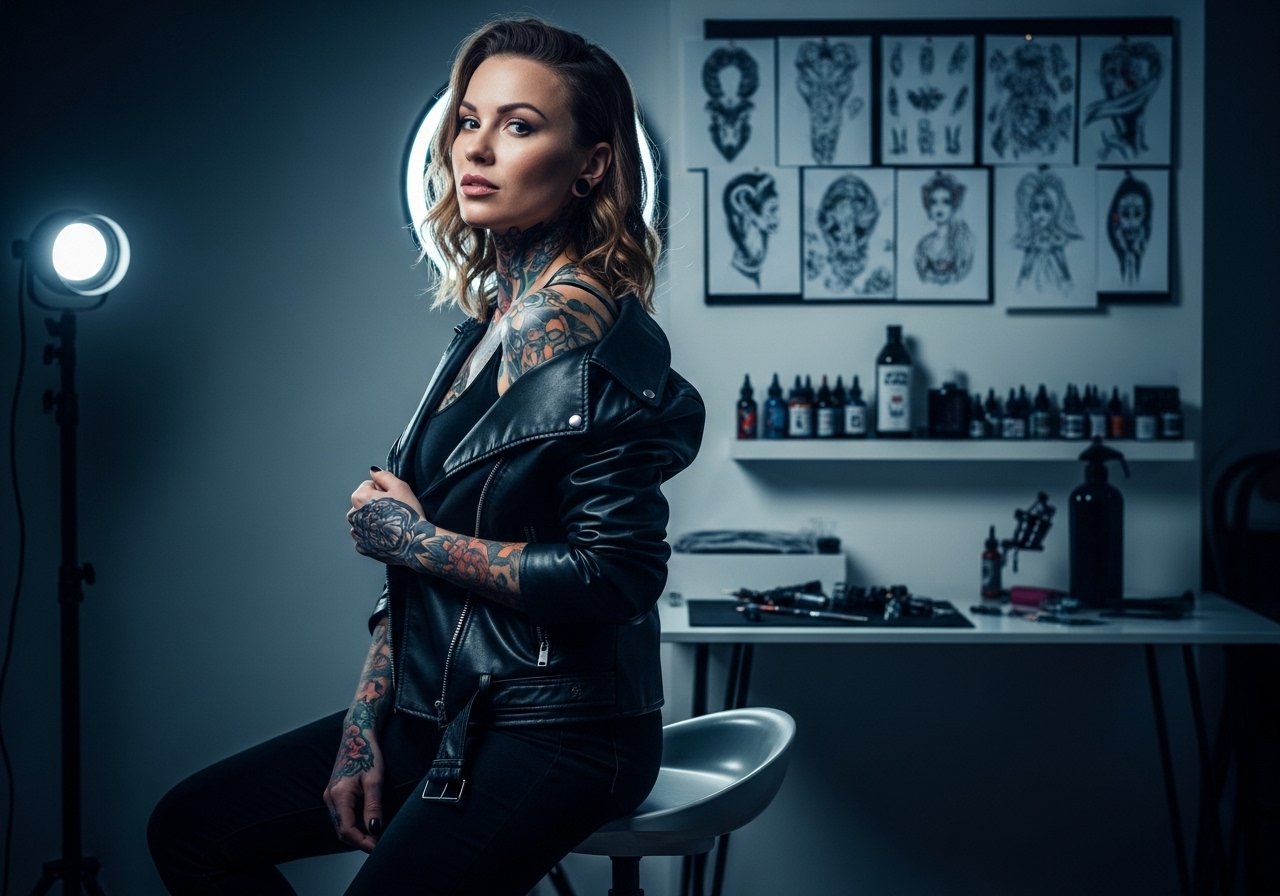
Fine line and saturated color trends clash in tattoo shops more often than people realize. Right now, colorful snake back tattoos are getting attention for their movement and shine, but what looks brilliant fresh can soften if the scale, saturation, and placement are not set up to last. After spending time in five shops across Brooklyn and chatting with artists at a couple of conventions, I learned which color approaches hold up on the back and which need planning. The first idea below shows a spine-running design that makes the body read taller and helps you pick the right scale.
1. Spiral Watercolor Snake Along the Spine
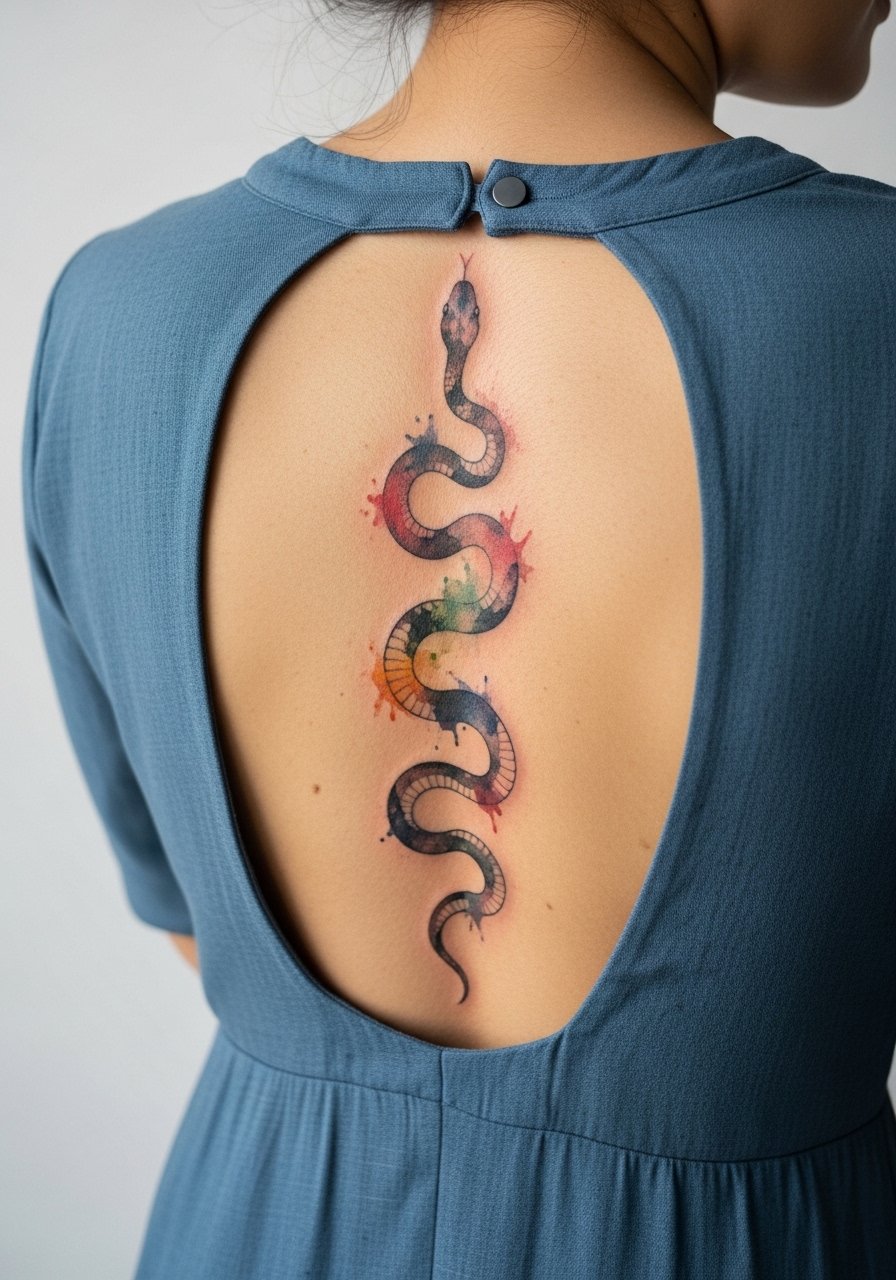
A watercolor approach along the spine reads like motion built into the body. Fair warning, watercolor techniques can fade faster on the long flat canvas of the spine if the pigments are too diffuse. One camp argues watercolor on the spine loses contrast within a few years. The other camp says deliberate saturation and slightly firmer linework makes it last. Tell your artist you want intentional color pools with slightly defined edges so the pigments have anchors. Session-wise, expect longer single sittings because the artist will layer color gradually. For showing it off, an open-back midi dress frames the spine without covering the design.
2. Bold Neo-Traditional Snake Over the Upper Back
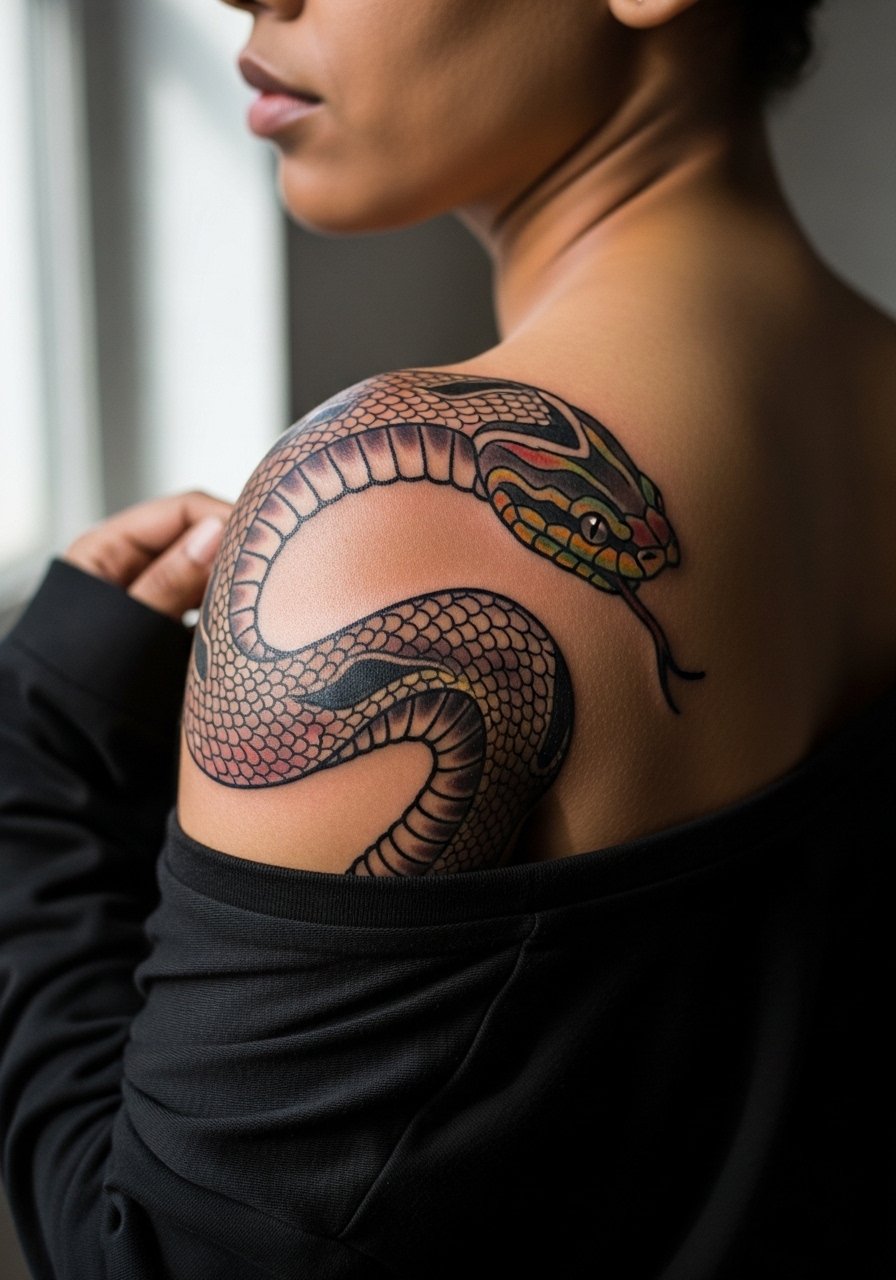
There is something about thick outlines with saturated fills that reads from across a room and keeps contrast as the years go by. For upper back placement, pain is lower than rib work, so you can book a longer session for saturation. Tell your artist you want strong saturation in the color fields and slightly heavier outer linework so the silhouette stays clear as the ink settles. A common mistake is asking for tiny detail across a wide curve. Scale up the pattern so the scales keep definition at year five. During the session wear a loose button-down shirt you can pull to the side for access without distracting the artist.
3. Rainbow Stacked Snakes Across the Shoulder Blades
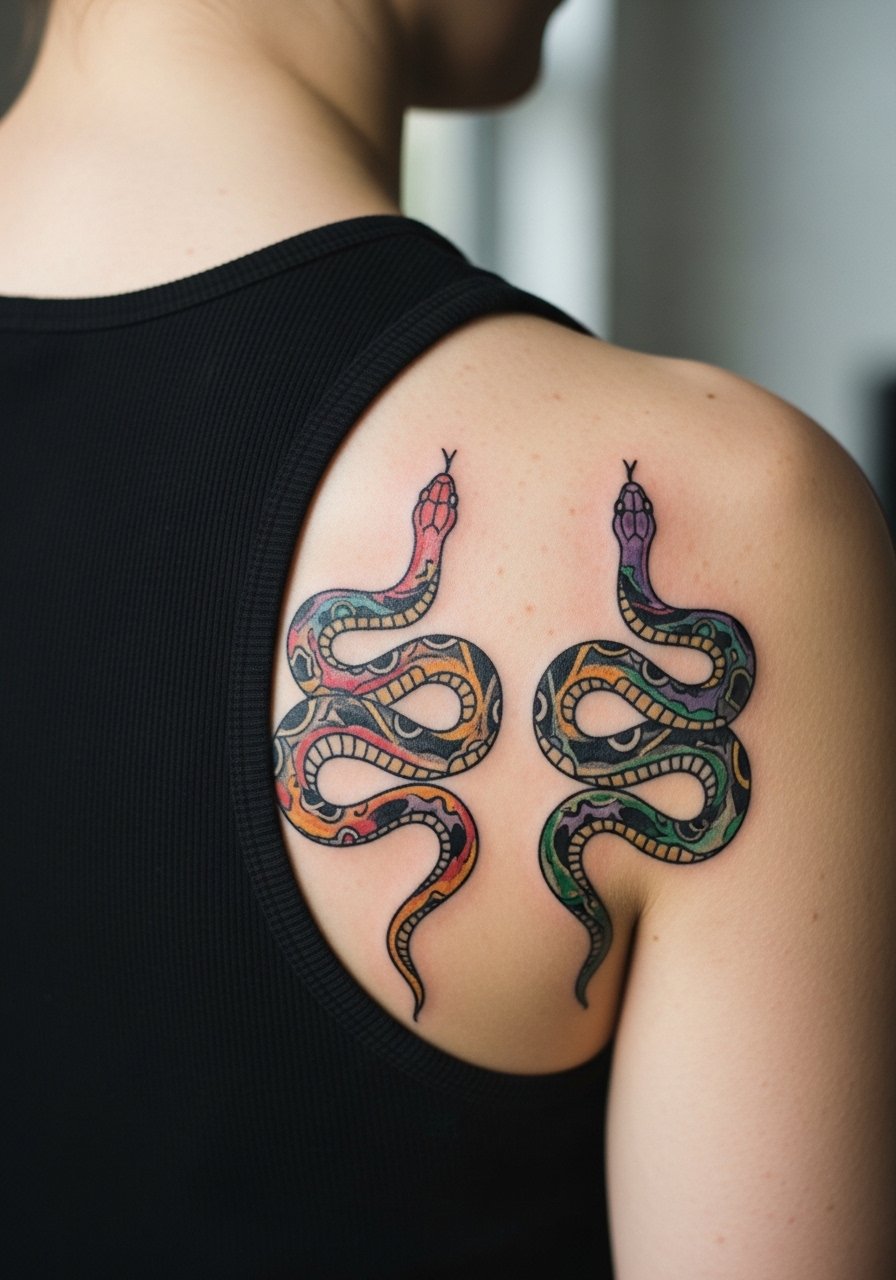
Stacked snakes make a graphic statement while using the shoulder blade contours to suggest motion. The shoulder blades are forgiving for color packing so you can push saturation more than on the lower back. A mistake I see often is asking for tiny scales that read as noise once healed. Ask your artist to simplify scale size and to map the pattern across the scapula so movement follows muscle. Session length is moderate to long depending on how many colors you want layered. Pair this with strappy tops for evenings and a halter top for casual show-off looks that keep the tattoo visible without overexposure.
4. Watercolor Spine Accent with Minimal Linework
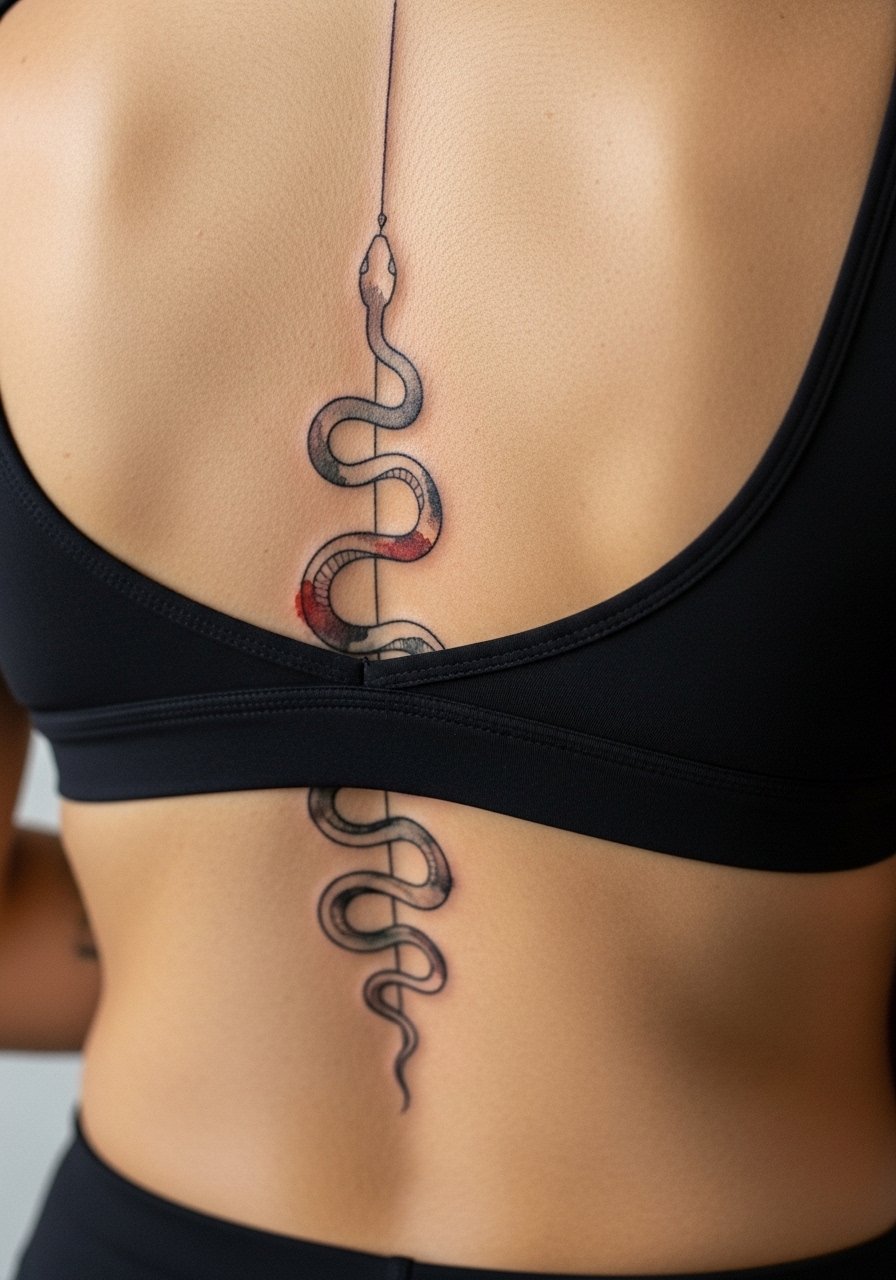
Watercolor on the spine is controversial among artists. One camp says the thin washes will lose contrast and blur into an indistinct patch within a few years. The opposing camp argues that careful layering, spot saturation near the linework, and planned negative space keep the image readable. If you like the softer look, insist on a few anchor colors next to the spinal line so the design keeps a backbone. Expect touch-ups sooner than for dense color blocks. For the session wear a sports bra or wide-band top so the artist can reach the area without full exposure.
5. Full-Back Coiling Snake with Botanical Fill
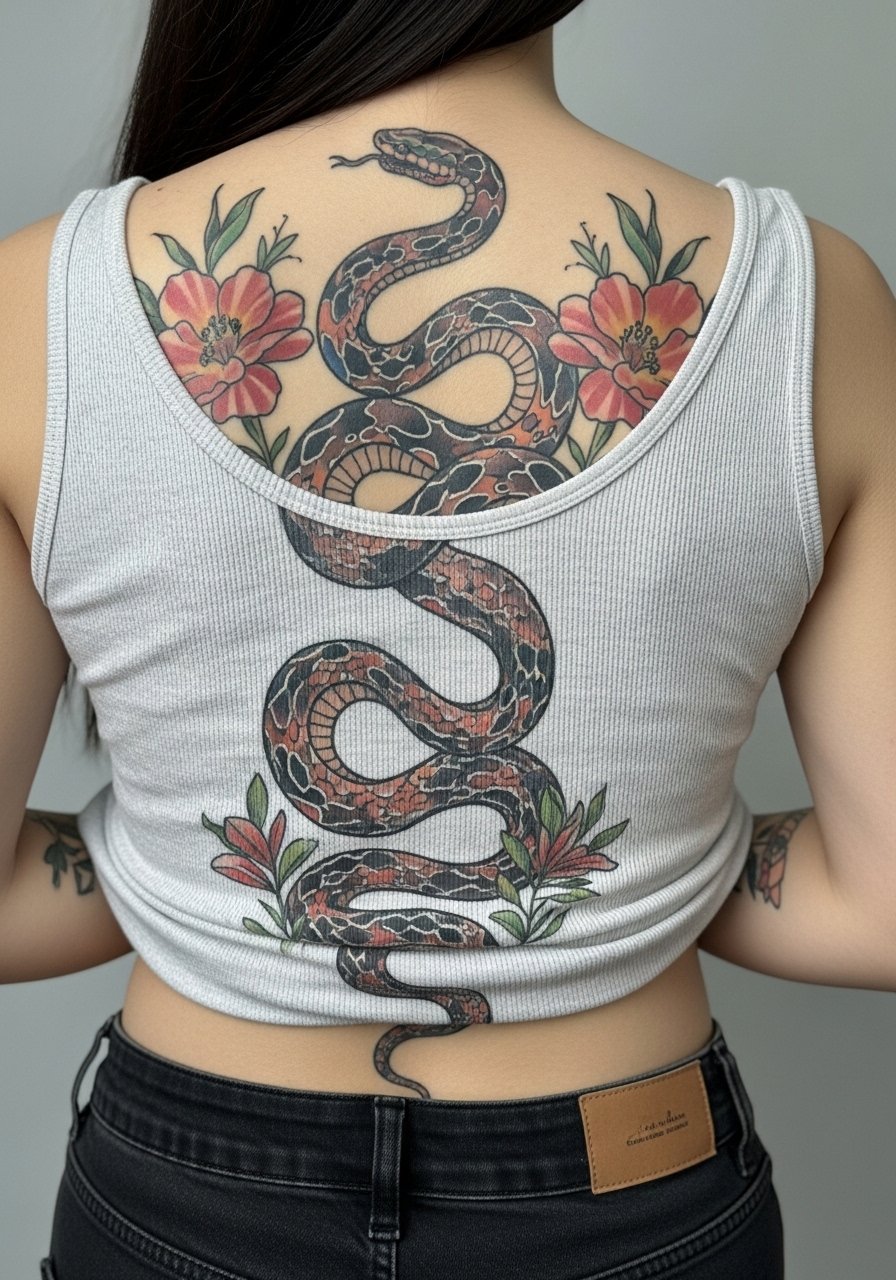
A full-back coiling snake with botanical fill takes planning and pacing. For this scale, expect multiple sessions and a higher tolerance for pain in the lower back near the spine. In consultation, bring references that show how you want negative space used between the snake and the plants. A common mistake is overcrowding the canvas with too many tiny florals. Let the artist know you want room so color fields age separately and avoid muddying. During chair time bring a loose button-front shirt to slip on afterward and consider alternating sessions so healing is manageable. Show-off pairing includes open-back gowns and a backless evening dress for formal wear.
6. Gradient Ombre Snake That Wraps the Lower Back
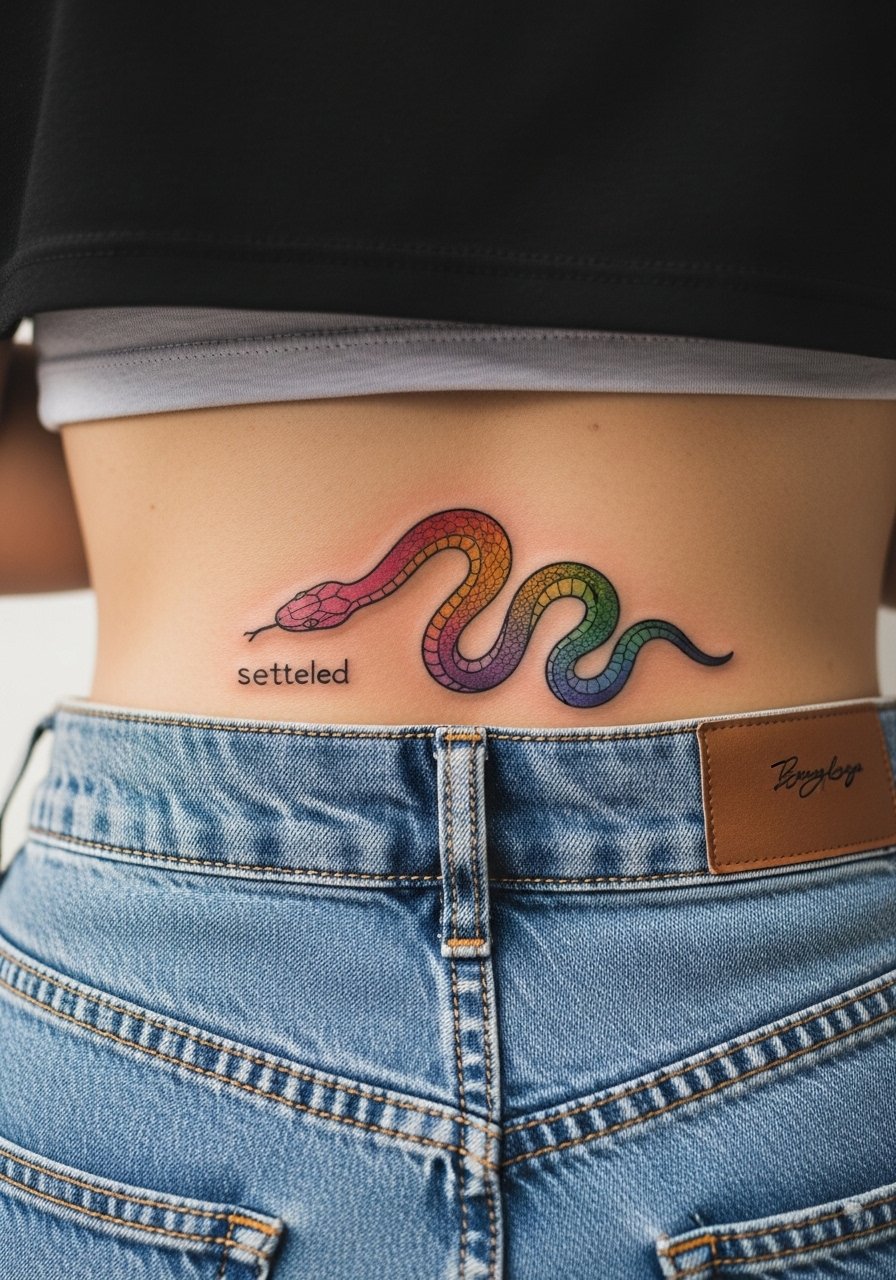
Lower back wraps are bright and tactile but not as visible day to day. Ombre color work across the snake needs consistent saturation so the gradient reads when healed. A frequent error is starting the gradient too thin where it meets clothing friction zones. Ask the artist to place higher on the back if you plan to wear low-rise pants often. Expect moderate pain and longer shading sessions. For the appointment, high-waisted pants or a cropped tee and jeans let you expose the lower back without discomfort after the session.
Studio Day Picks
The spine and upper-back designs above ask for different prep than lower-back pieces, so a few targeted items make the studio day smoother.
-
Stencil transfer paper kit. Lets you preview scale and placement on the skin so the spine and shoulder-blade snakes land where you expect.
-
Topical numbing cream. Applied correctly before longer upper-back sessions eases the sting without compromising linework.
-
Thin protective film roll. Useful for lower-back wraps that face friction from waistbands and dresses.
-
Fragrance-free gentle body wash. Cleanses healing back areas without irritating pigments or sensitive skin.
-
Aquaphor healing ointment. Thin layers during the initial days help seal fine color gradients without clogging the skin.
7. Single Scale Macro Pattern Down the Spine
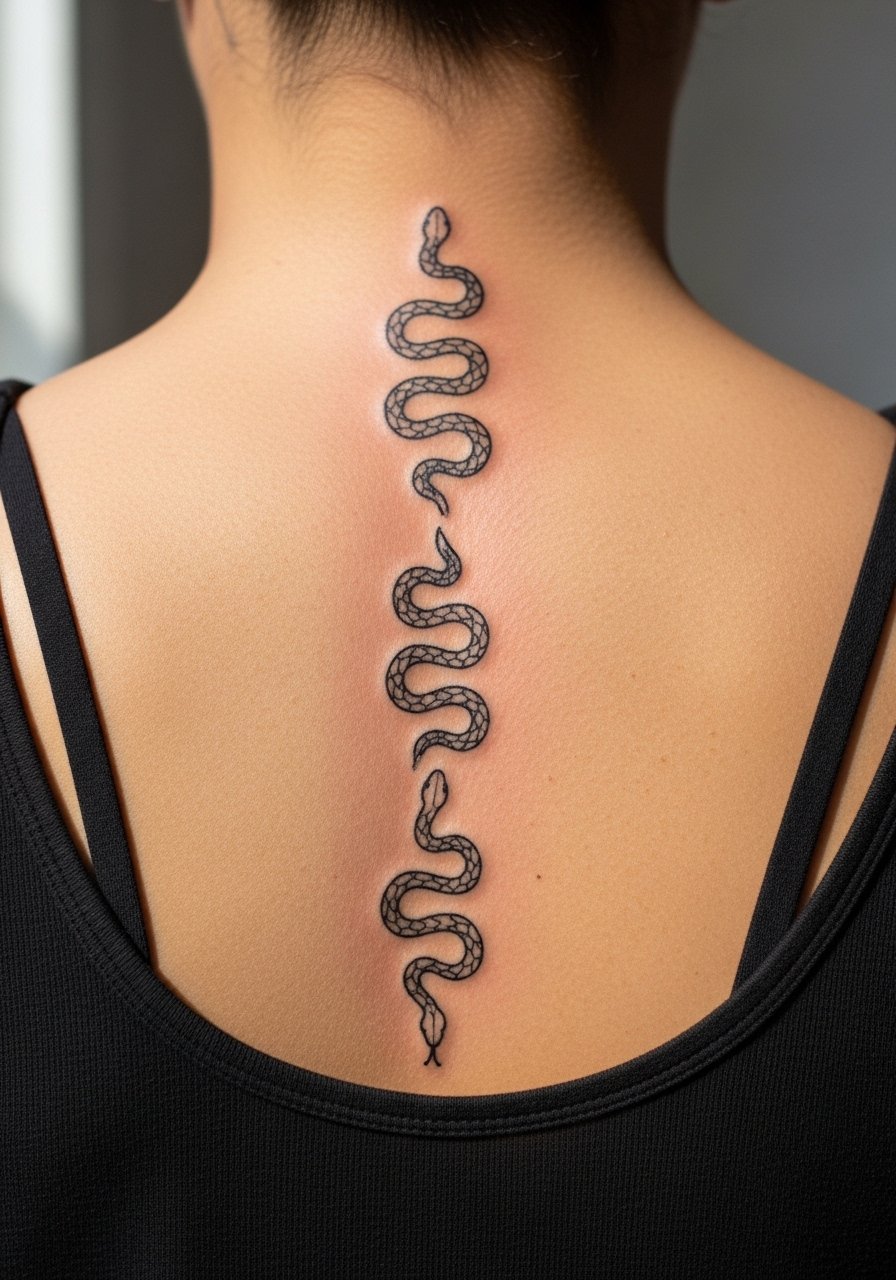
Making a repeating single-scale motif down the spine plays with rhythm and body lines. The spine will show subtle movement when you bend so the pattern should be scaled to move with the vertebrae. A common mistake is choosing scale detail that is too fine. Tell your artist to increase scale size and leave breathing room between rows so the pattern does not merge as it ages. Expect moderate pain in the spinal column area and book sessions in blocks rather than one marathon. For showing it off, a plunging-back tank keeps the motif visible without full exposure.
8. Kintsugi-Inspired Gold Vein Snake Across the Mid-Back

Using metallic tones and gold highlights creates the impression of repaired beauty. Metallic pigments can be more prone to fading so ask for anchor colors beside the gold so the overall shape remains readable. Session complexity goes up when artists layer metallics, so plan for touch-ups. This design favors mid-back curvature which softens the metallic shine with movement. One professional note is to discuss pigment choices carefully because some salons avoid certain metallic inks for their behavior under light. For showing it off, back-baring tops with a hint of fabric make the gold catch the eye without overwhelming the design.
9. Interlocking Snakes Framing the Scapula
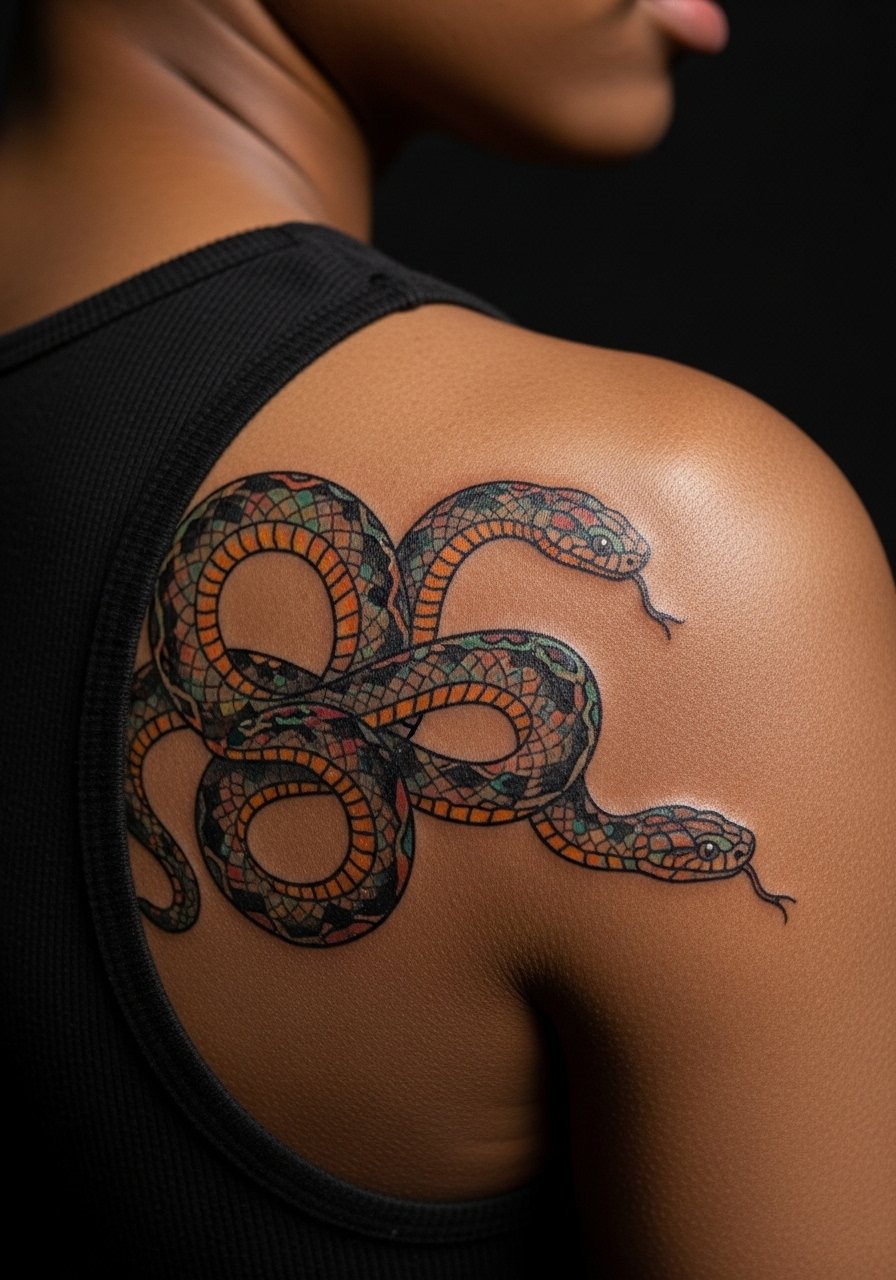
Interlocking snakes that follow the scapula edge give the design a sculptural quality. This placement is less prone to blowout than the softer lower back. The biggest mistake is running thin parallel lines too close to the bone, which can blur. Ask for varied line weights to let scales sit clearly at multiple distances. Sessions are moderate and often require the artist to shift angles to match muscle movement. For wardrobe, short-sleeve linen shirts rolled at the cuff or a loose linen button-down keep the shoulder area framed while letting the work breathe.
10. Fine-Line Snake Spine Accent with Dot Work Shading
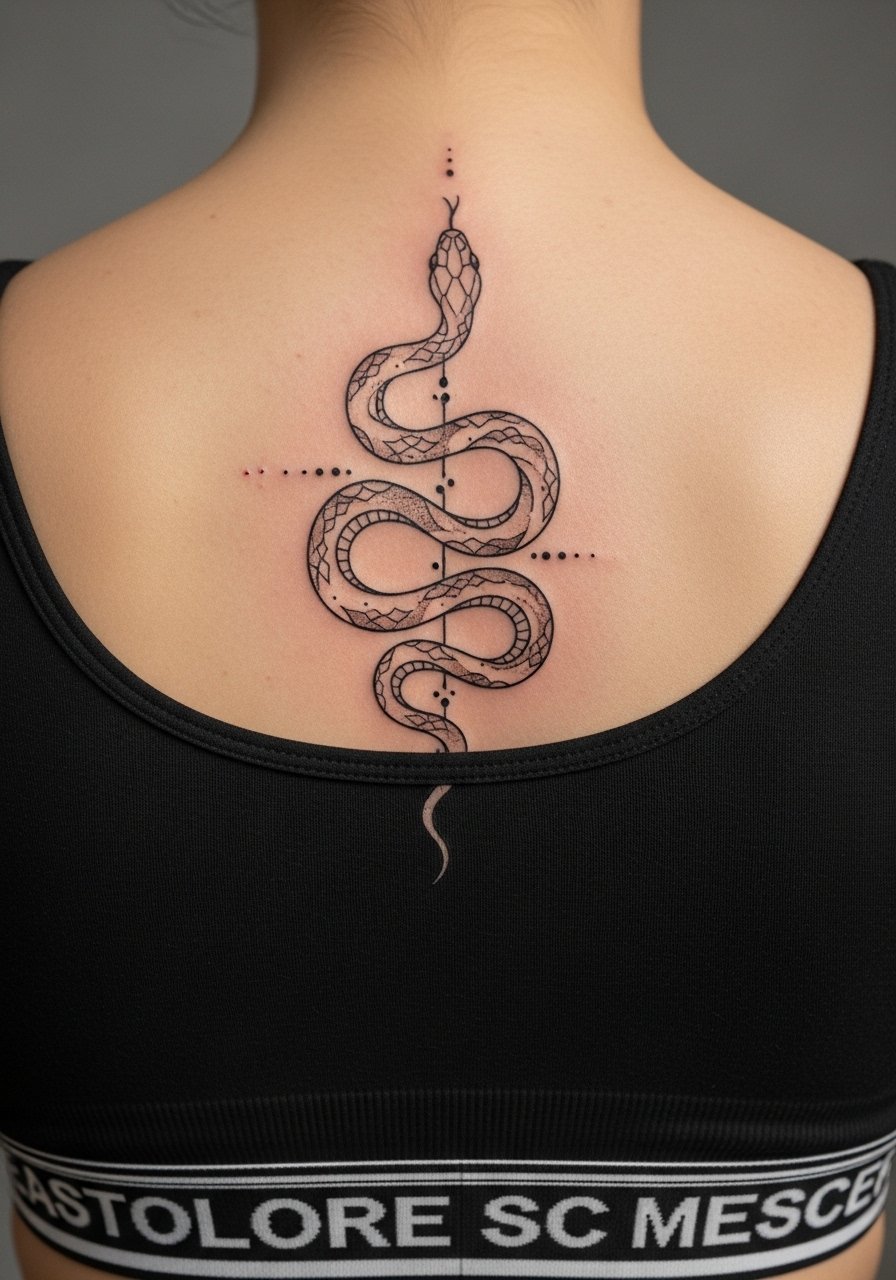
Fine-line work on the spine is beautiful but polarizing. One camp insists that fine line on spinal skin blurs and needs frequent touch-ups. The other camp says deliberate depth and spacing keeps fine line readable. If you prefer delicate linework, ask the artist to space dots and line elements so the negative space reads as part of the design. Expect lighter pain than rib work but longer shading time if lots of stippling is requested. Touch-ups are more likely by year three for very thin lines. Pair this with minimal back-exposing tops and consider a thin chain pendant that sits above the upper spine without crowding the work.
11. Color-Blocked Snake That Crosses the Shoulder and Upper Arm
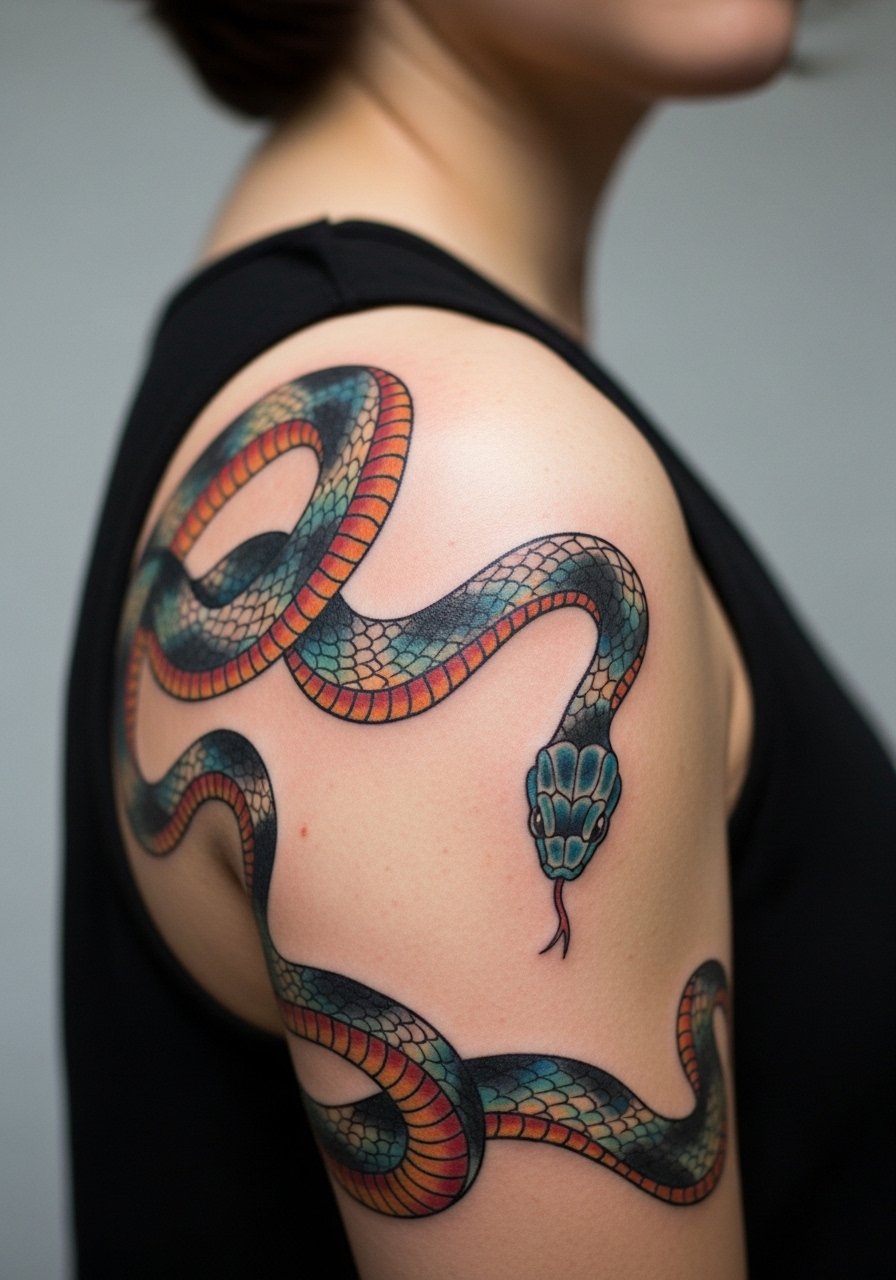
When a back snake extends over the shoulder onto the arm, you need consistent saturation to avoid a patchy look as the arm moves and gets more sun. The common mistake is mismatched color density between the arm and back portions. Make sure the artist maps color transitions and accounts for cuff friction from sleeves. Expect a longer session because the artist will treat two different canvases. For session-day comfort, wear a sleeveless top you can pull off without tugging over the head. The piece is great for showing off in short-sleeve shirts or dresses.
12. Minimalist Neon Snake Hidden in the Lower Back Curve
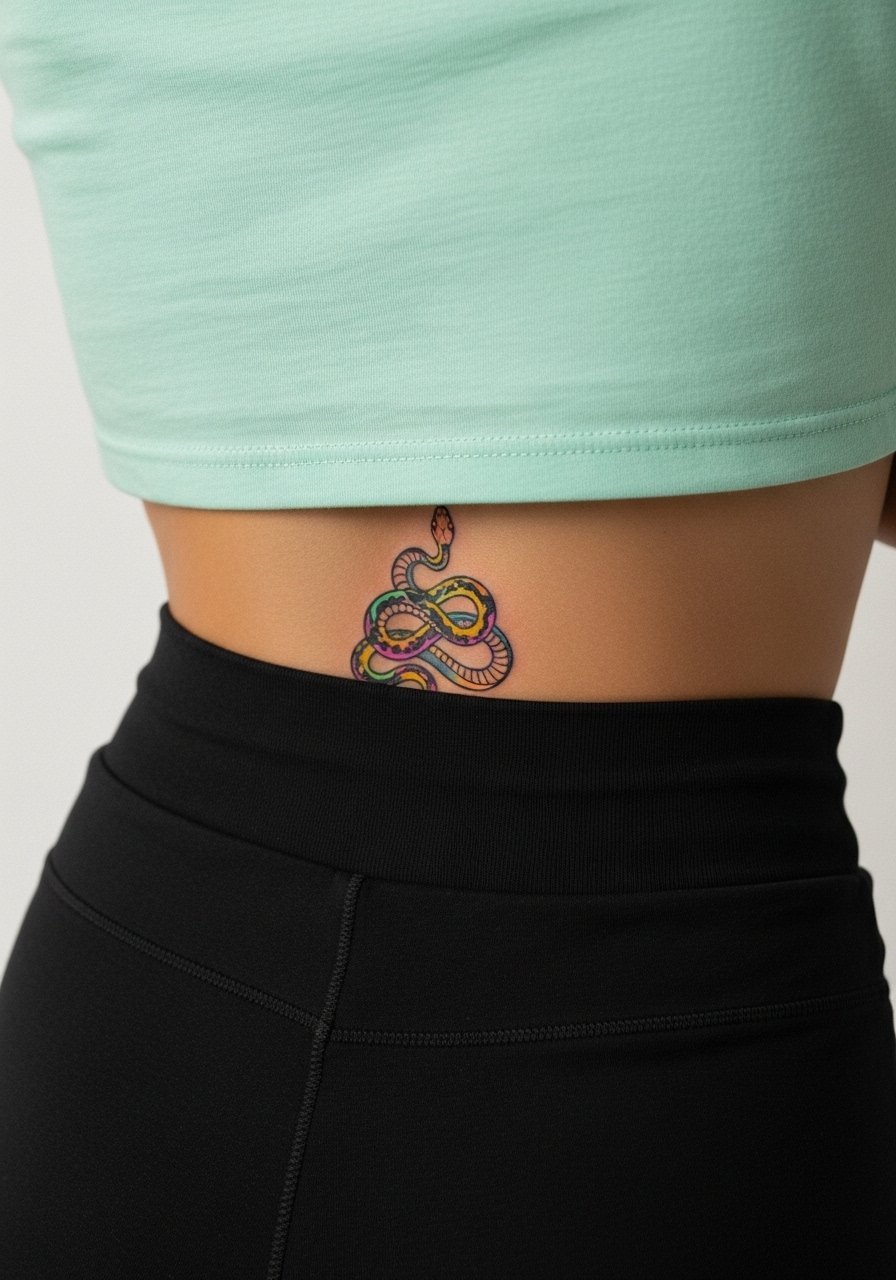
A minimalist neon-accent snake that sits in the lower back curve reads like a small secret visible in certain outfits. Neon pigments tend to fade faster especially where clothing rubs the area. The usual misstep is placing it too close to waistbands. Tell your artist you want the design slightly higher and set to avoid constant friction. Expect quick sessions for the minimalist scale but more frequent color checks later. For appointments, wear high-waisted bottoms so the area can be exposed without stretching the skin.
13. Traditional Stylized Snake with Bold Color Panels
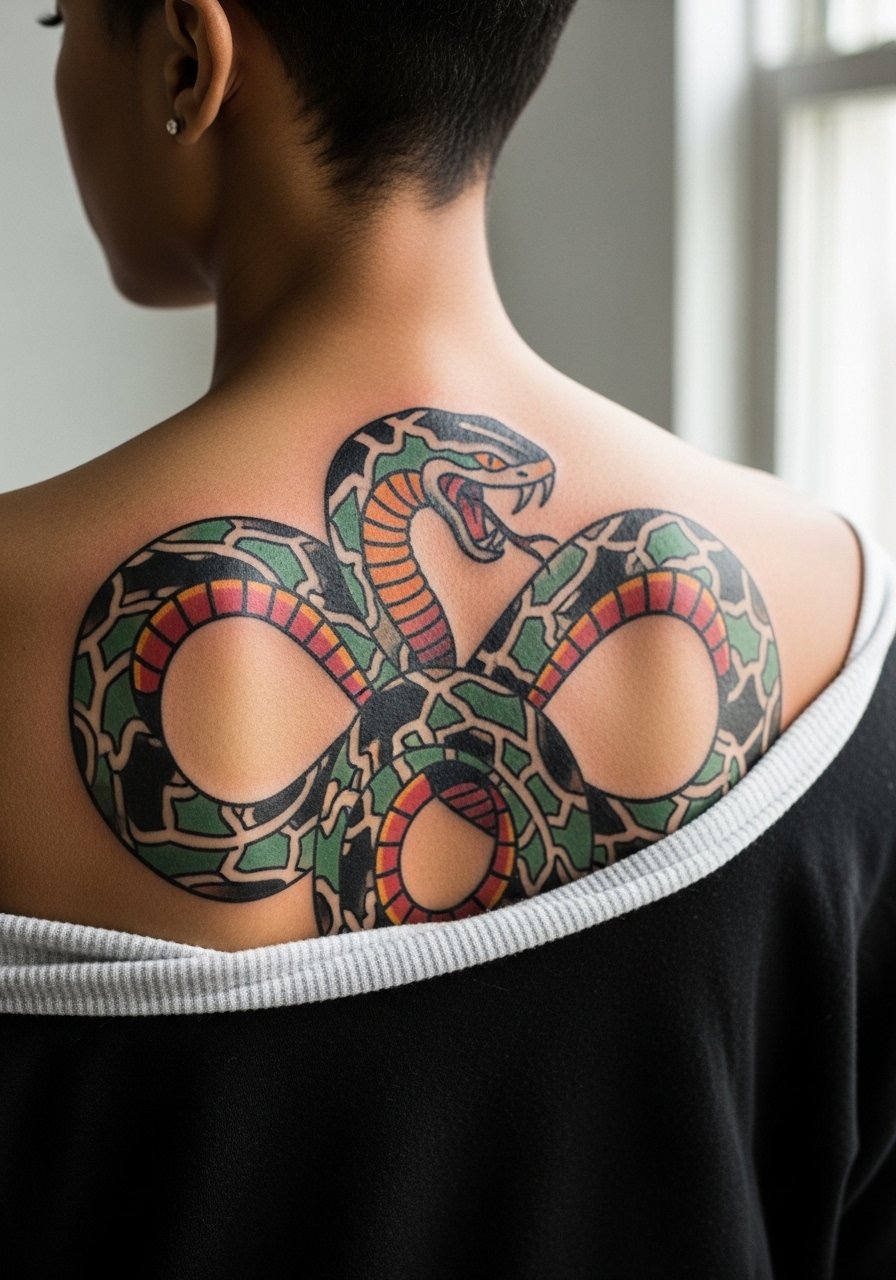
Traditional stylized snakes age predictably because the bold outlines protect color fields. If longevity is a priority, this is a reliable choice. The common error is asking for overly intricate internal detail that defeats the style's purpose. In consultation, specify that you want open color fields and a strong silhouette. Session time is long for full upper-back coverage but you can usually break it into two sittings. Pair this piece with simple open-back shirts and a loose button-down for casual framing that keeps attention on the design.
14. Micro-Realism Snake Eye Peeking from the Mid-Back
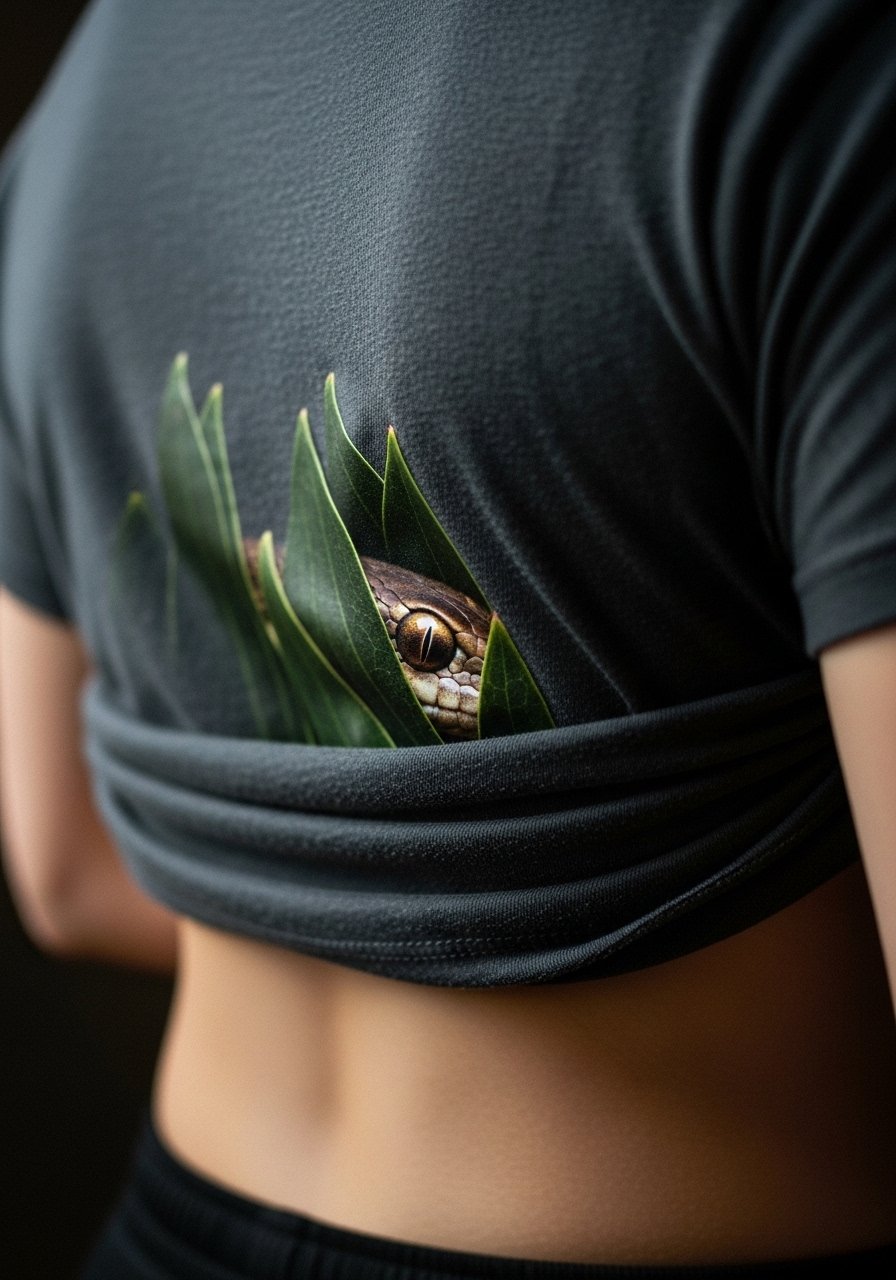
Micro-realism on the back creates an intimate focal point. The mid-back is stable for fine gradation but micro-detail can soften over time. The main mistake is concentrating tiny detail without a bold nearby anchor. Ask for a slightly bolder outline around the focal eye or a darker background that keeps the micro-reality legible. Sessions are slow, often layered, and may require touch-ups. This design works best when paired with partial back exposure like square-neck tops that reveal the motif without full exposure.
15. Script and Snake Hybrid Arcing Across the Upper Back
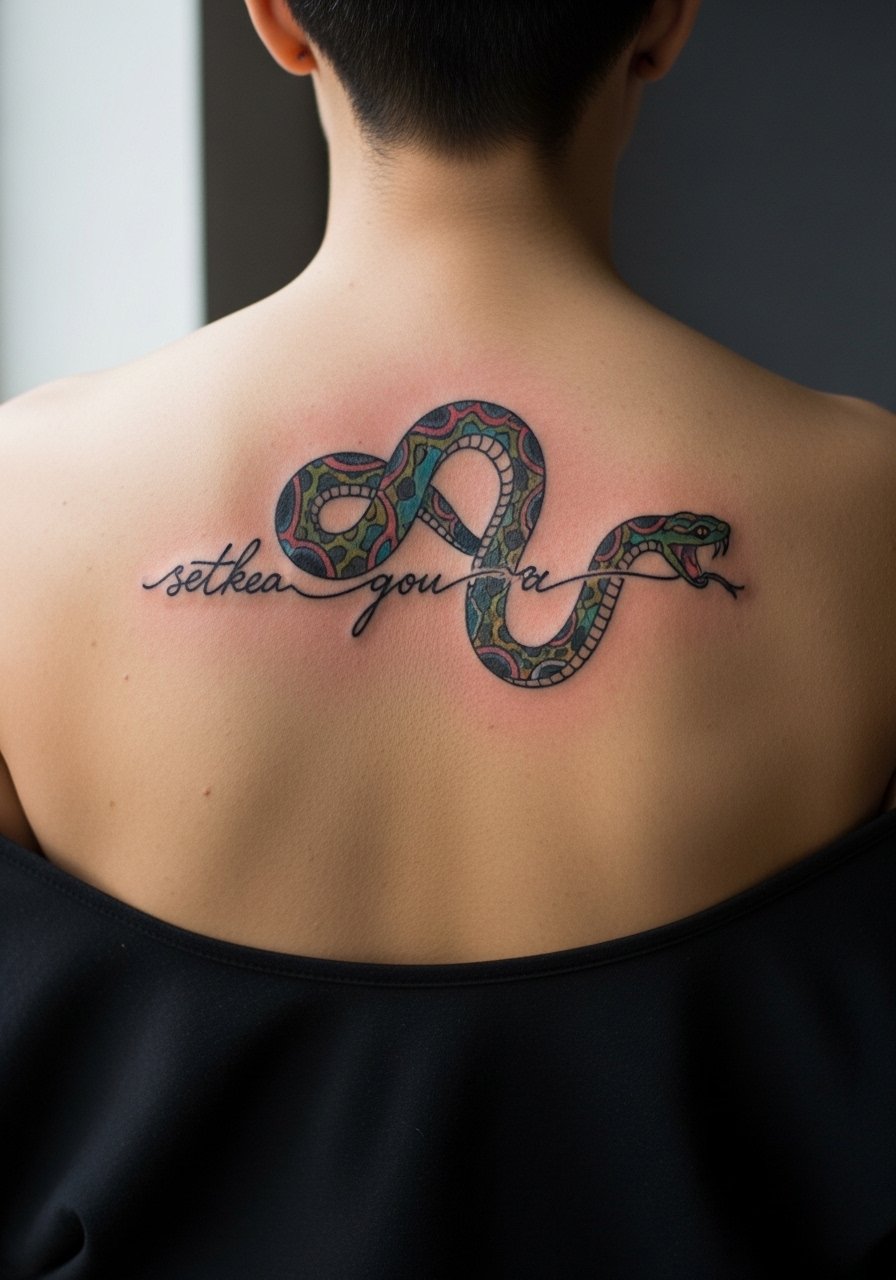
Combining script and snake on the upper back needs careful spacing so inked letters do not compete with scale textures. Text must be sized to hold up; tiny script often needs enlarging to remain legible after settling. Make clear to your artist the font weight and where the text will sit within the curve. Sessions are moderate and may split into lettering and color sessions. For show-off occasions wear a wide-neck top that reveals the arc without crowding the neckline.
16. Neo-Japanese Snake with Bold Color and Negative Space
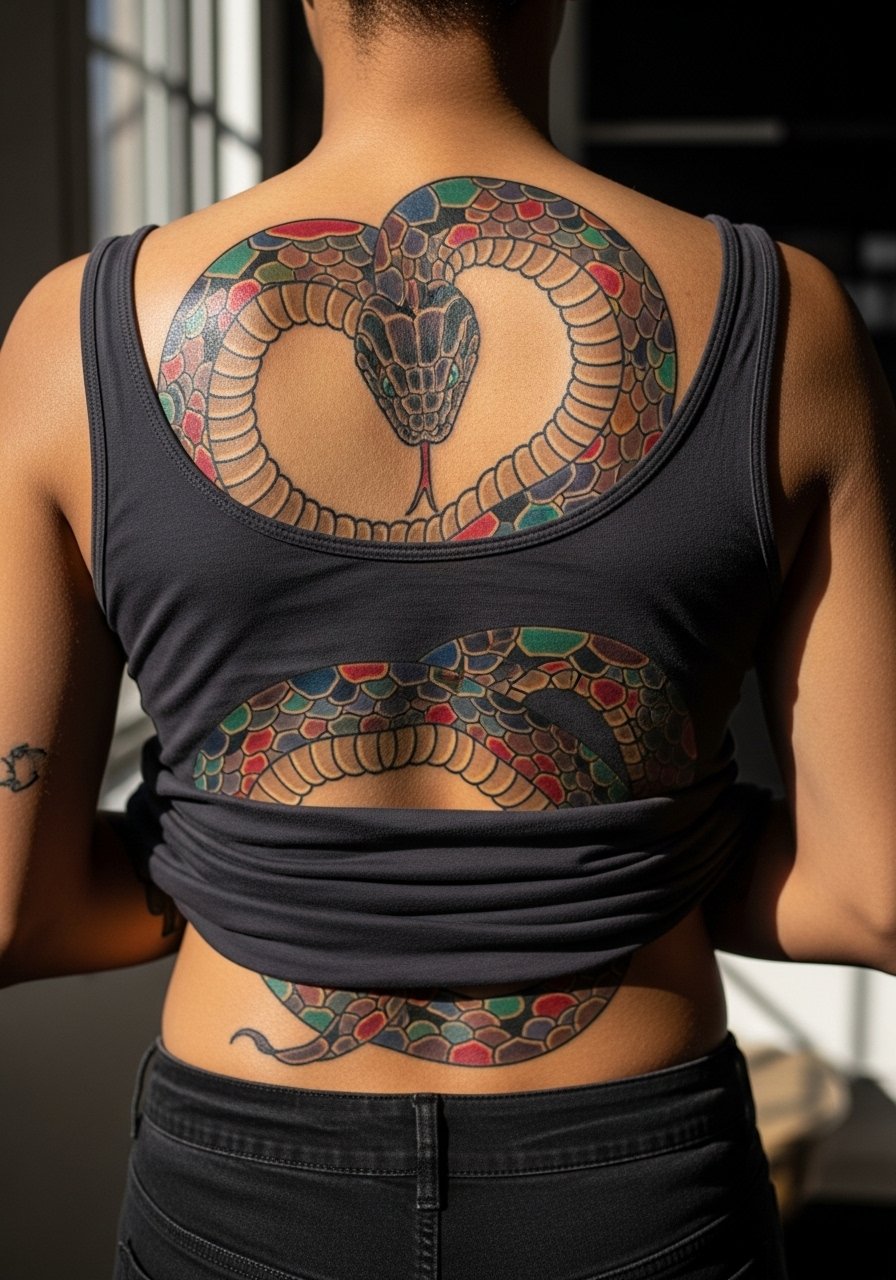
Neo-Japanese color work leans into large color fields and bold silhouettes. There is debate about whether heavy color blocks or delicate edges age better. Some prefer dense saturation that weathers well. Others favor negative space to prevent color merge. If you like the neo-Japanese feel, ask for clear negative space planning so color fields stay distinct. Sessions will be longer and you should plan for staged appointments. For wardrobe, loose tanks or a kimono-style robe keep the back accessible without tugging.
17. Split-Color Snake Mirrored on Each Side of the Spine
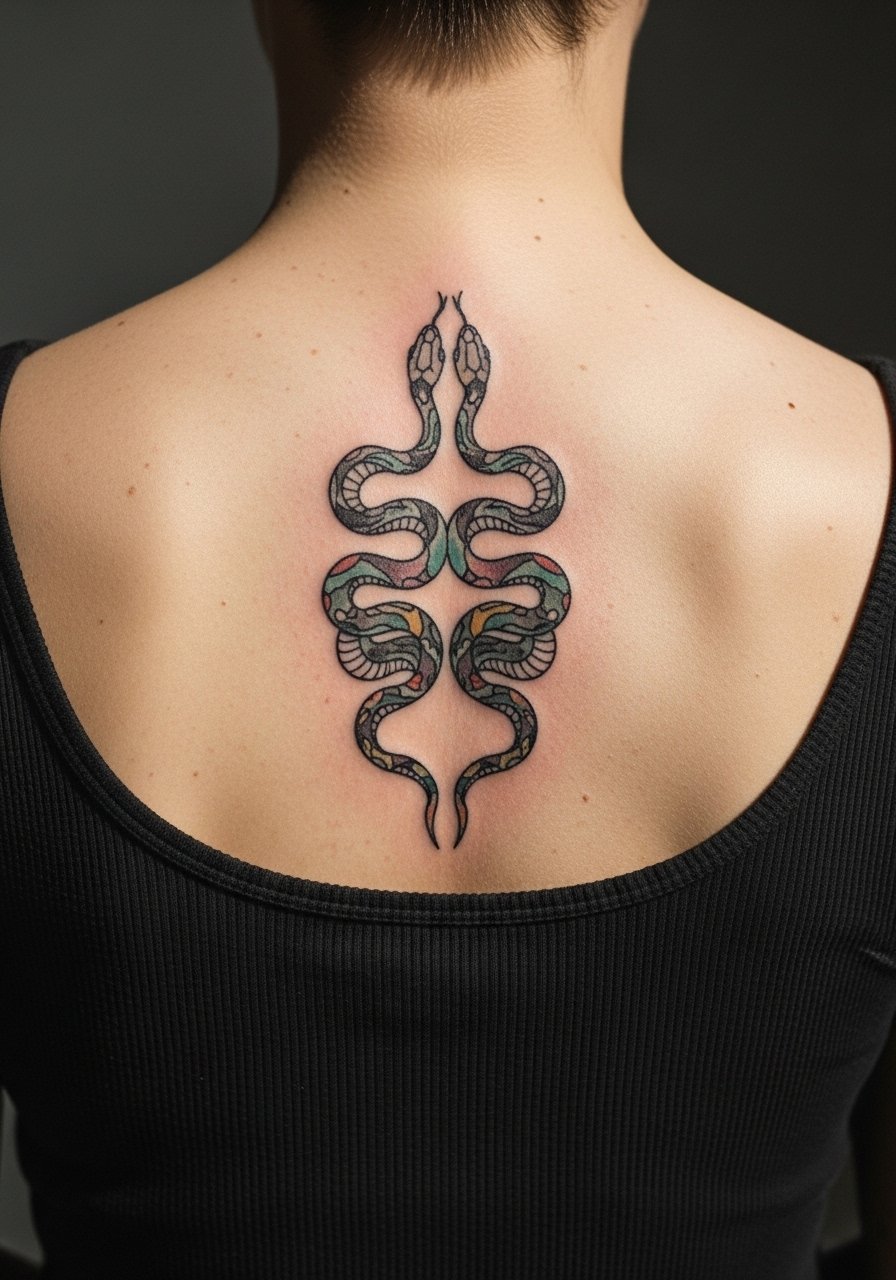
Mirrored split-color designs use symmetry to emphasize the body's center. The key is matching saturation on both sides so one side does not appear brighter after healing. The mistake is letting session timing differ between sides by too long. Ask to have both sides worked in the same appointment or within a short sequence so pigments behave consistently. Pain is moderate and sessions can be long. Show-off pairing includes open-back tops and dresses, and a low-back tank keeps the symmetry visible.
18. Stylized Snake with Tribal Motifs Across the Back
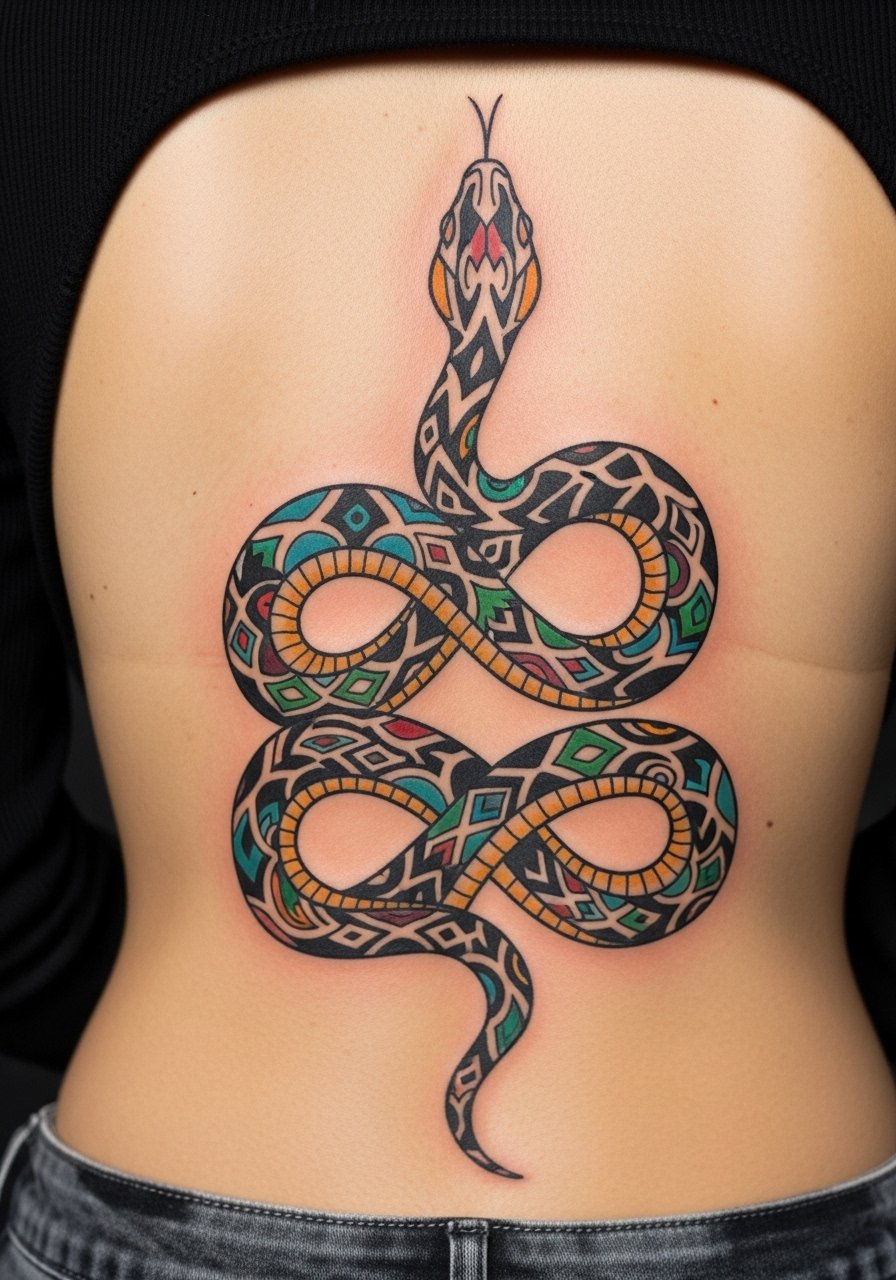
When borrowing motif styles with cultural origin, use respectful adaptation rather than direct copying. Some patterns have deep cultural meaning so one camp advises full permission and collaboration. The other camp suggests subtle influence and original reinterpretation. If you want tribal elements, mention to your artist you prefer an inspired approach that nods to origins rather than replicating sacred symbols. Session time varies with complexity and placement. For showing it off, pair with high-waisted skirts or a wrap skirt that keeps the area visible without overexposure.
19. Luminous Ink Snake with Soft Glow Panels
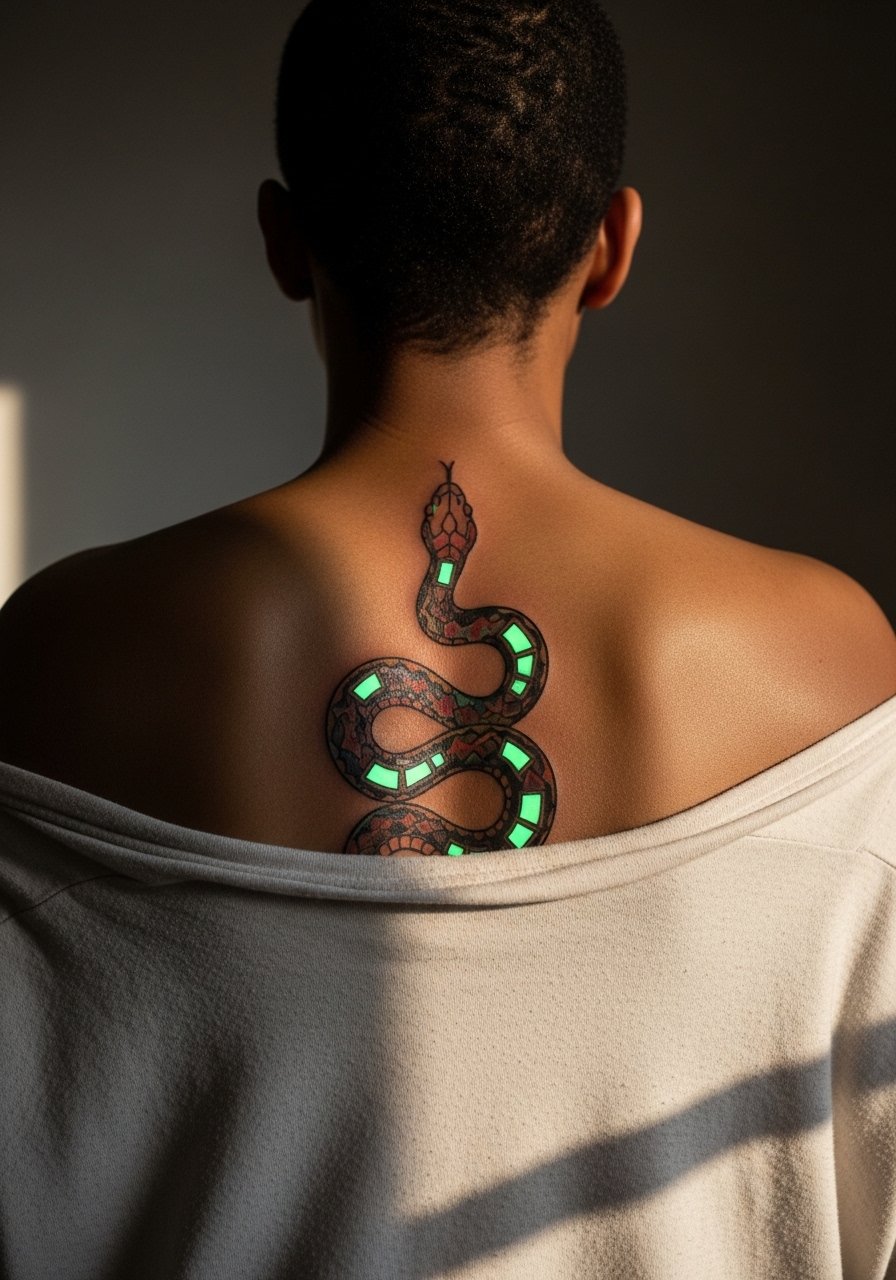
Luminous or "glow" techniques rely on contrast and placement to feel like they emit light. The trap is using too many light tones that wash out against the skin. Ask your artist to anchor glow panels with deep adjacent colors so the effect reads over time. Sessions require careful blending and often staged layers. This technique pairs well with evening wear that has open backs or low straps. Try a low-back evening top to let the luminous areas catch the light.
20. Geometric Snake Pattern Framing the Lower Scapula
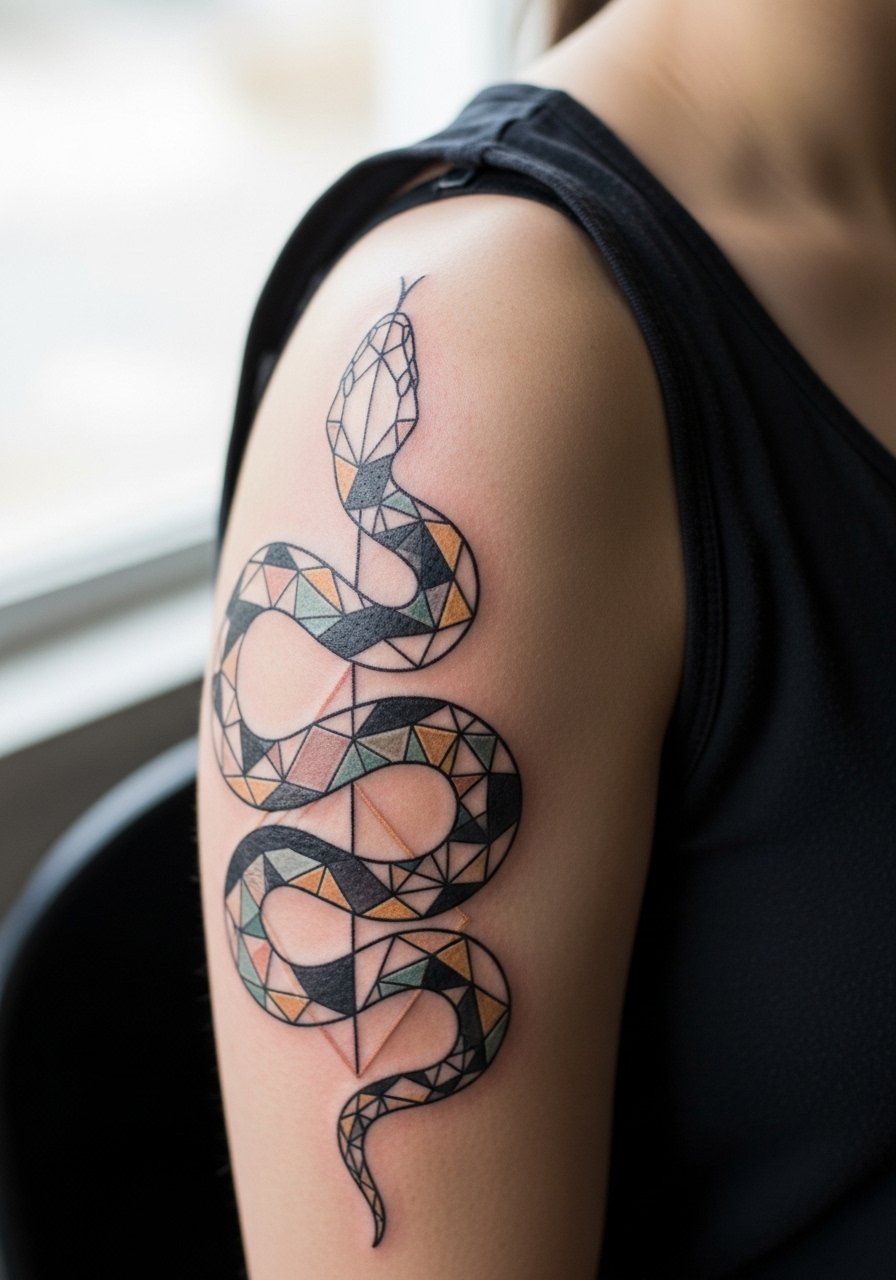
Geometric patterns demand spacing so intersections do not merge over time. The lower scapula is stable and keeps geometry crisp if the artist leaves intentional breathing room. Avoid requesting too many tiny intersecting lines. Tell your artist you want larger knot points and clear separation between geometric motifs. Sessions are precision work and often slower even if the area is smaller. For wardrobe, short-sleeve tees rolled at the sleeve or a tank top with adjustable straps frames the geometry nicely.
21. Tiny Hidden Snake Nestled at the Base of the Neck
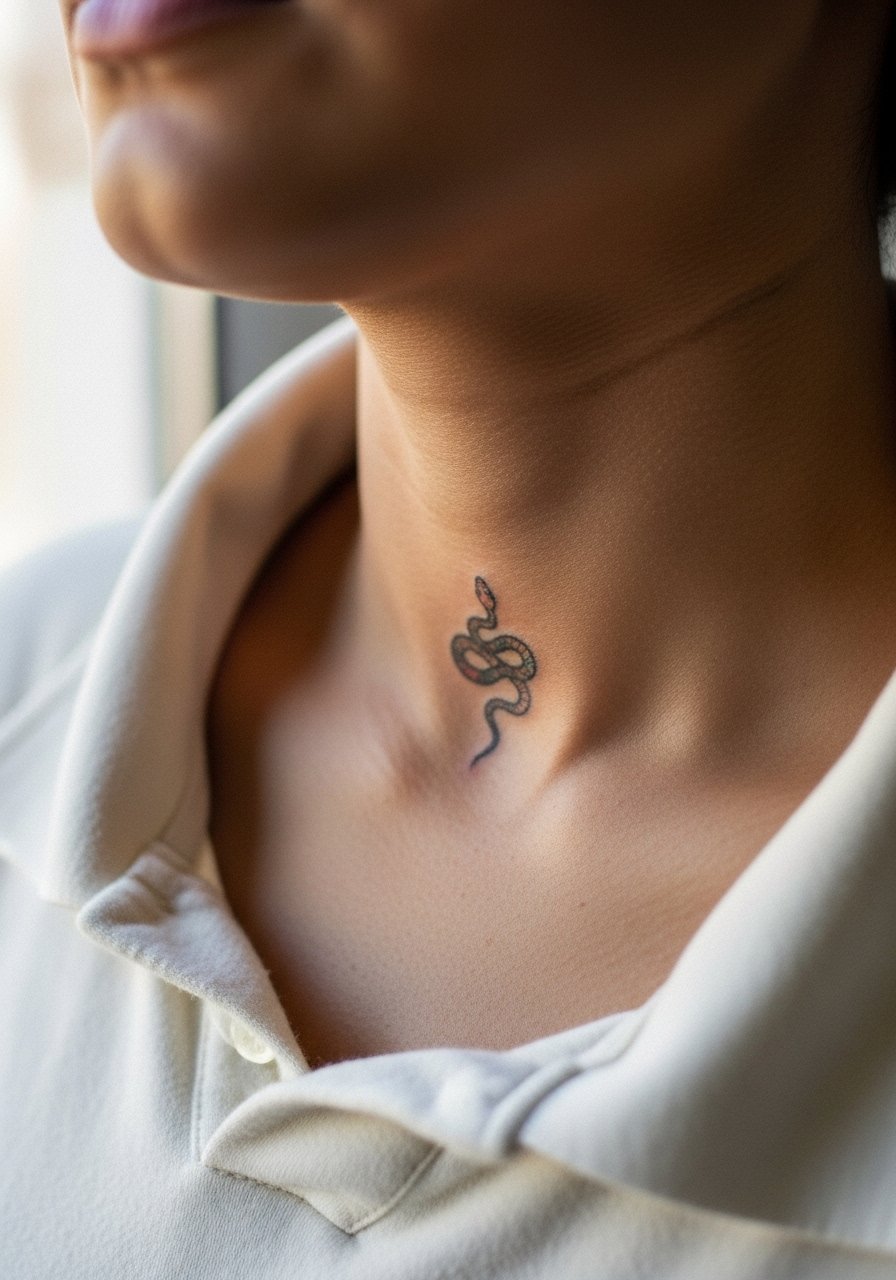
A tiny snake at the base of the neck reads intimate and is visible only in certain outfits. Neck placement requires an artist with experience because the skin there moves and the area receives sun exposure. The most common mistake is making the piece too fine so it blurs. Ask for slightly bolder anchors and plan for a touch-up window. For the session wear a wide-neck shirt that you can pull to one side so the artist can work without tugging. Hand tattoos and visible neck pieces still affect some workplaces, so consider your career context before booking.
Frequently Asked Questions
Q: How does back skin type affect color longevity for colorful snake tattoos?
A: Back skin varies in oiliness and thickness across zones which changes how pigment sits. From my experience, upper back and scapula areas hold color a bit better than the low back near the waist because of less constant friction. Discuss your skin tendencies with the artist during consult and ask about planned saturation and spacing so the colors age predictably.
Q: Will watercolor snake motifs need touch-ups more often than traditional saturated snakes?
A: It depends on pigment density and placement. Watercolor washes can look softer faster. If you want the watercolor aesthetic but less maintenance, ask for small anchor colors or slightly firmer outlines where the watercolor meets the body so you reduce touch-up frequency.
Q: What should I wear to a full-back coiling snake session to stay comfortable and make access easy?
A: Wear clothing that exposes the back without being put over your head, like a button-down you can pull aside or a loose tank that can be lowered at the waist. A loose button-down shirt or wide-neck top is practical and keeps your hair and chest covered while the artist works.
Q: Are there design choices that help prevent blowout on back placements?
A: Yes. Larger scale, slightly heavier outer linework where the design needs to hold, and deliberate negative space all help. Ask your artist to avoid overly fine parallel lines near bone or soft skin and to plan scale size for long-term clarity.
Q: How do I find an artist who understands colorful snake work without naming specific people?
A: Use discovery pathways like local shop directories, convention lineups, and targeted hashtags on social platforms. Look for portfolios showing healed photos, not just fresh images. Ask about healed photos from six months to two years and discuss touch-up policies before booking.