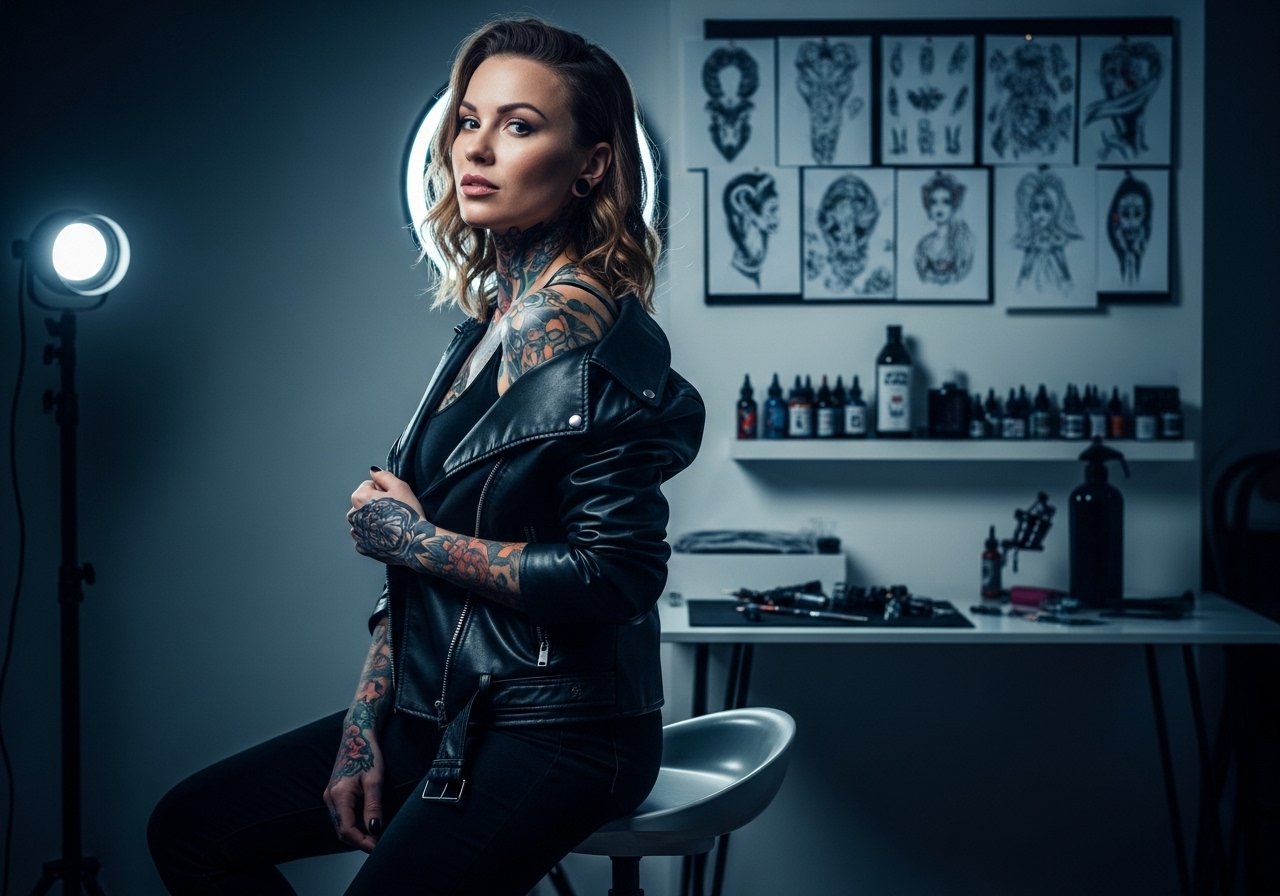
Fine line butterflies on wrists look effortless on photos and still need a plan in real life. Fine line is gorgeous fresh, but placement, spacing, and touch-up strategy decide whether the wings read crisp at year three or blur into soft gray. Below are 21 wrist-focused butterfly takes, practical notes on aging and touch-ups, what to ask at consult, and wardrobe tips to wear during the session or when you want the wings to show.
1. Micro Fine Line Butterfly on Inner Wrist
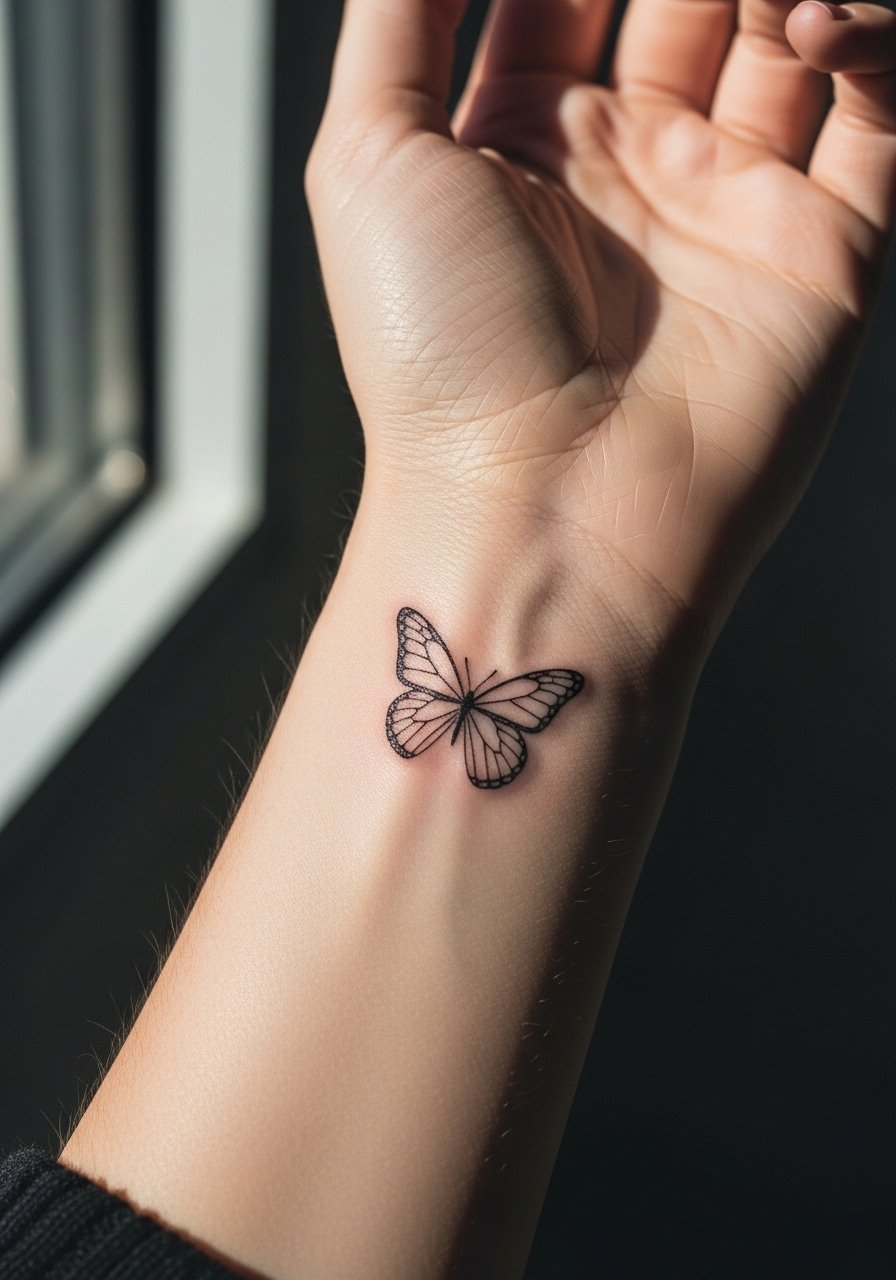
I recommend this when you want a discreet symbol that tucks under a cuff. Tell your artist you want single-needle linework with slightly more spacing between veins so the wings do not merge as the piece ages. Expect a 45 to 60 minute session and a low to moderate pain level because the inner wrist rides near veins. A common mistake is asking for ultra-thin lines without considering touch-ups. Plan a touch-up at 6 to 12 months if you want the original crispness back. For the session wear a pastel cotton tank so the artist has clean access and your sleeve can cover the area afterward.
2. Single Outline Butterfly at the Wrist Side
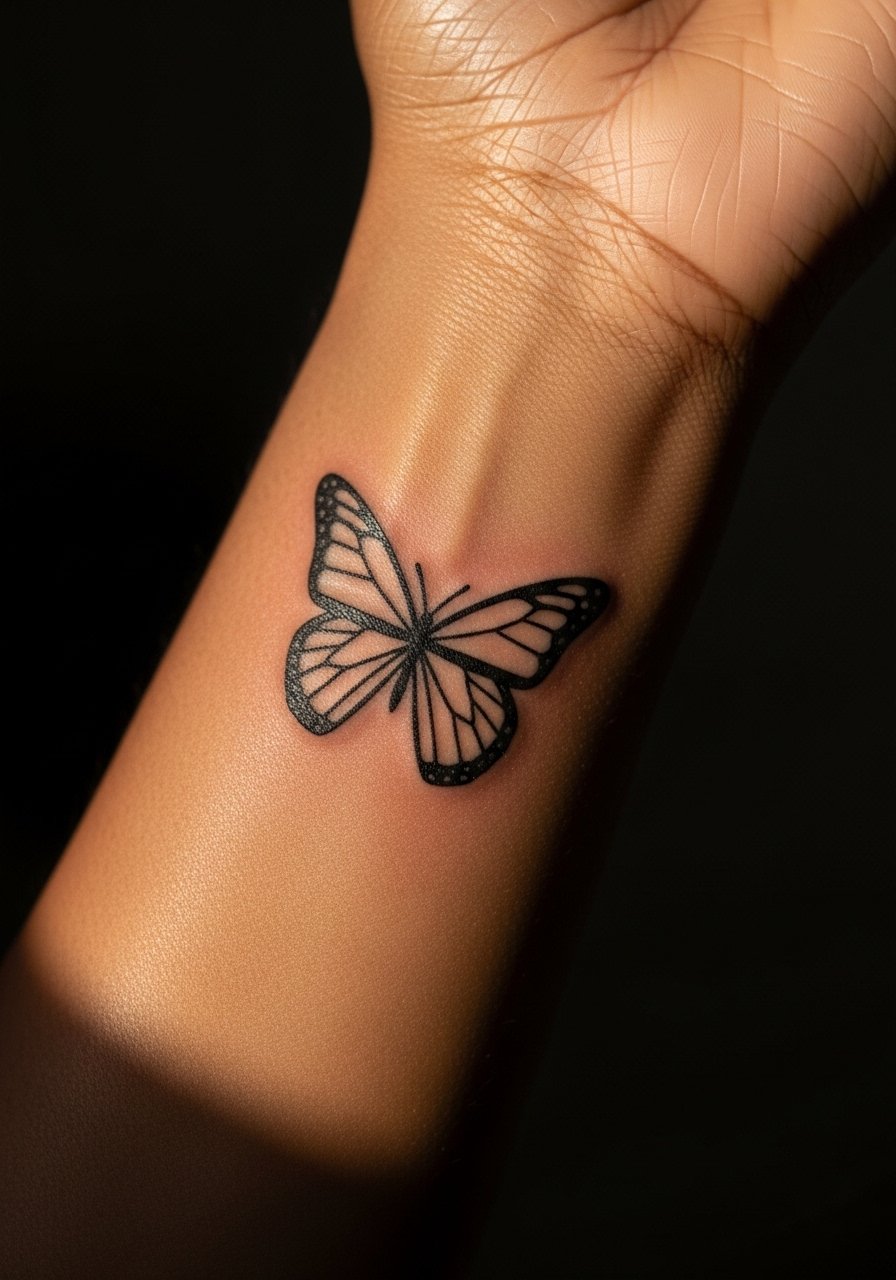
This pared-back outline keeps the silhouette readable without heavy saturation. Ask for a slightly thicker outline than you think you need, because wrists see a lot of hand washing and friction. The session feels quick, often under 40 minutes, and blowout risk is moderate if placed too close to creases. People sometimes request the outline so small that the wings lose definition after a year. Request clear spacing and a tiny bit of negative space around wing veins to protect readability. For showing it off pair the piece with a thin silver chain bracelet on the opposite wrist so the tattoo has breathing room.
3. Stacked Mini Butterflies, Lining the Wrist
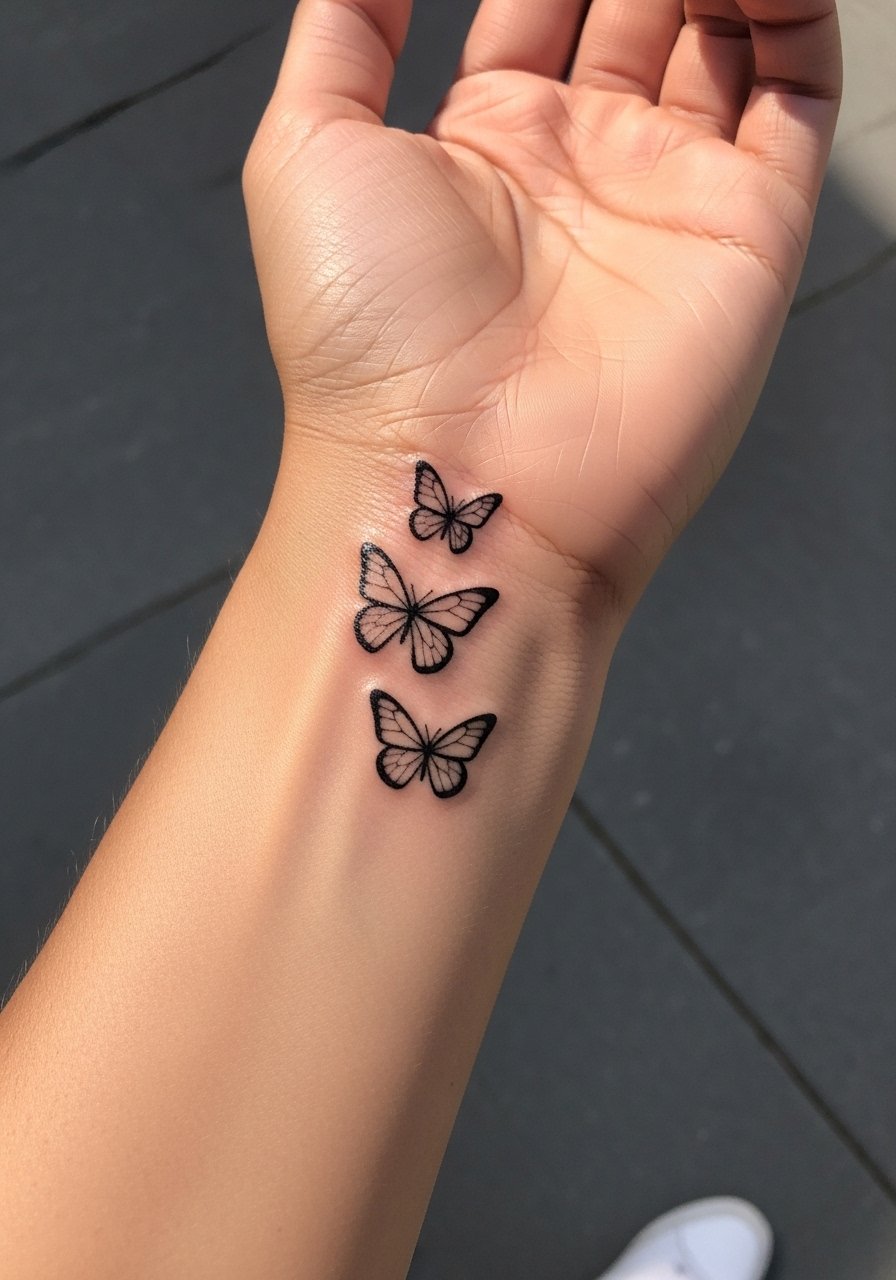
A stack of tiny butterflies reads like a collected story across the wrist. In consultation, bring layout photos so the artist can distribute spacing along tendons and avoid creases. The session usually runs 45 to 75 minutes depending on spacing, and healing at six months looks similar across the stack if line spacing was respected. Mistakes happen when artists try to pack too many motifs into a narrow band. Expect touch-ups for the smallest pieces at roughly one year. For the appointment wear a rolled cuff blouse women you can roll or pull up without tugging on the fresh ink.
4. Botanical Butterfly with Tiny Frangipani Accent
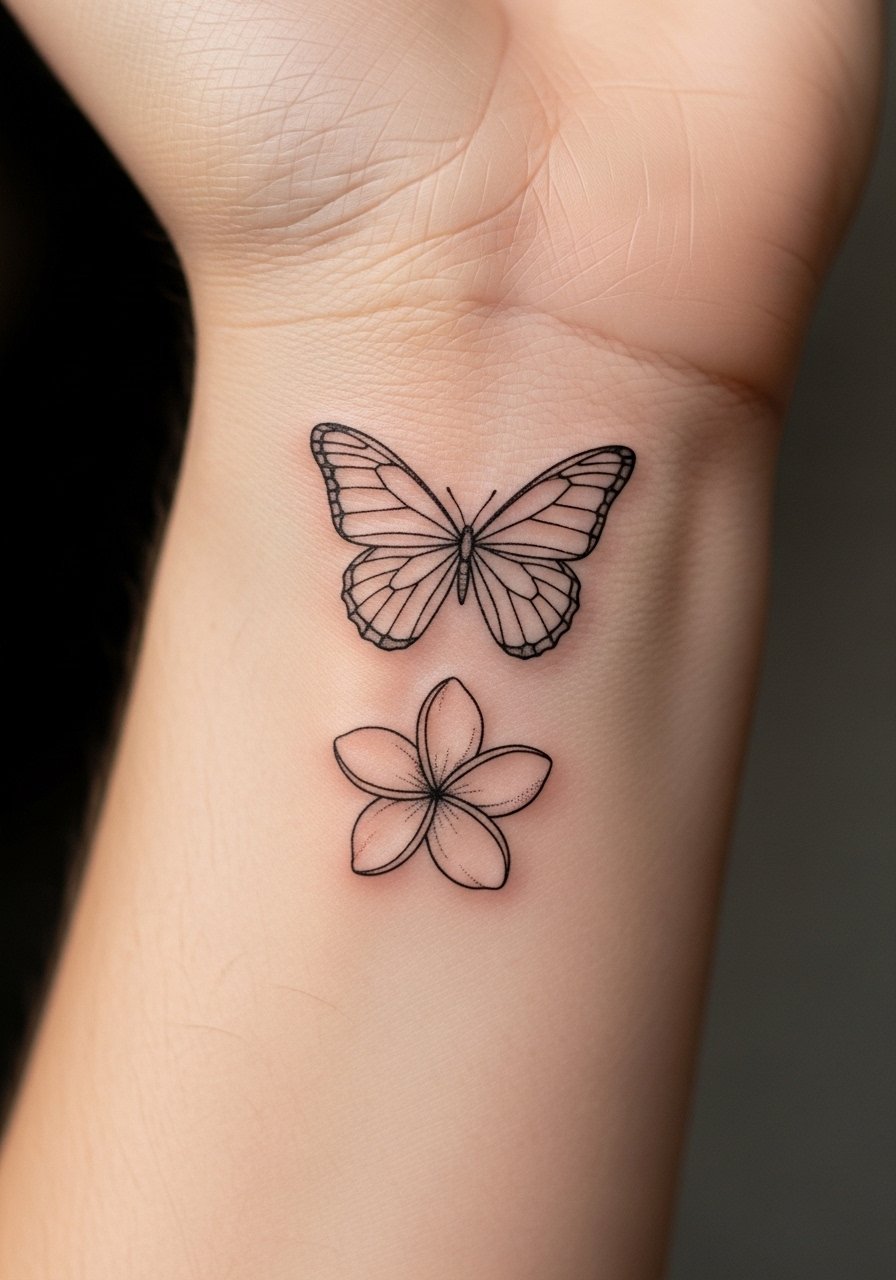
Pairing a butterfly with a tiny frangipani brings a travel-memento feel without overwhelming the wrist. Tell your artist you want color accents inside the blossom but keep the butterfly mostly black linework for longevity. The session is often an hour to 90 minutes if color is layered lightly. One pitfall is over-saturating the flower in a micro scale, which blurs faster than linework. Expect the color to soften by year two, with a touch-up recommended if you want fresh saturation. To show the pair, wear a rolled cuff blouse women or a pastel cotton tank depending on season.
5. Blue Morpho Accent on Wrist Edge
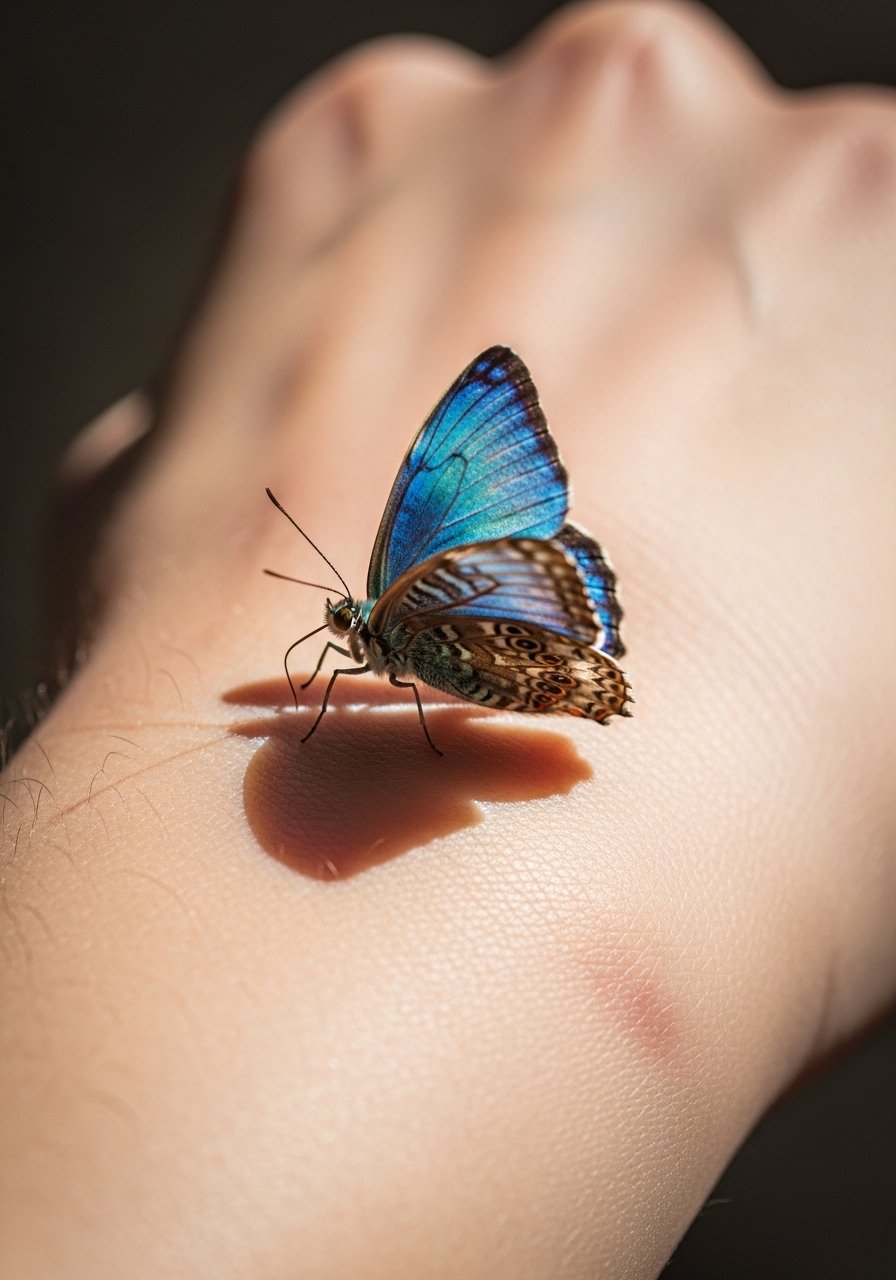
A blue morpho accent reads vivid against skin when placed toward the wrist edge. Ask for color packed in thin layers rather than heavy watercolor washes so the blue keeps its shape over time. The session feels like precise work, about an hour, and pain is moderate near the bone. A common error is asking for full watercolor blending at a micro scale, which often looks muddy after healing. Plan a one-year check to retouch pigment if you want saturation kept. For the session wear a pastel cotton tank that leaves the wrist free.
6. Stipple-Shaded Butterfly with Tiny Dots
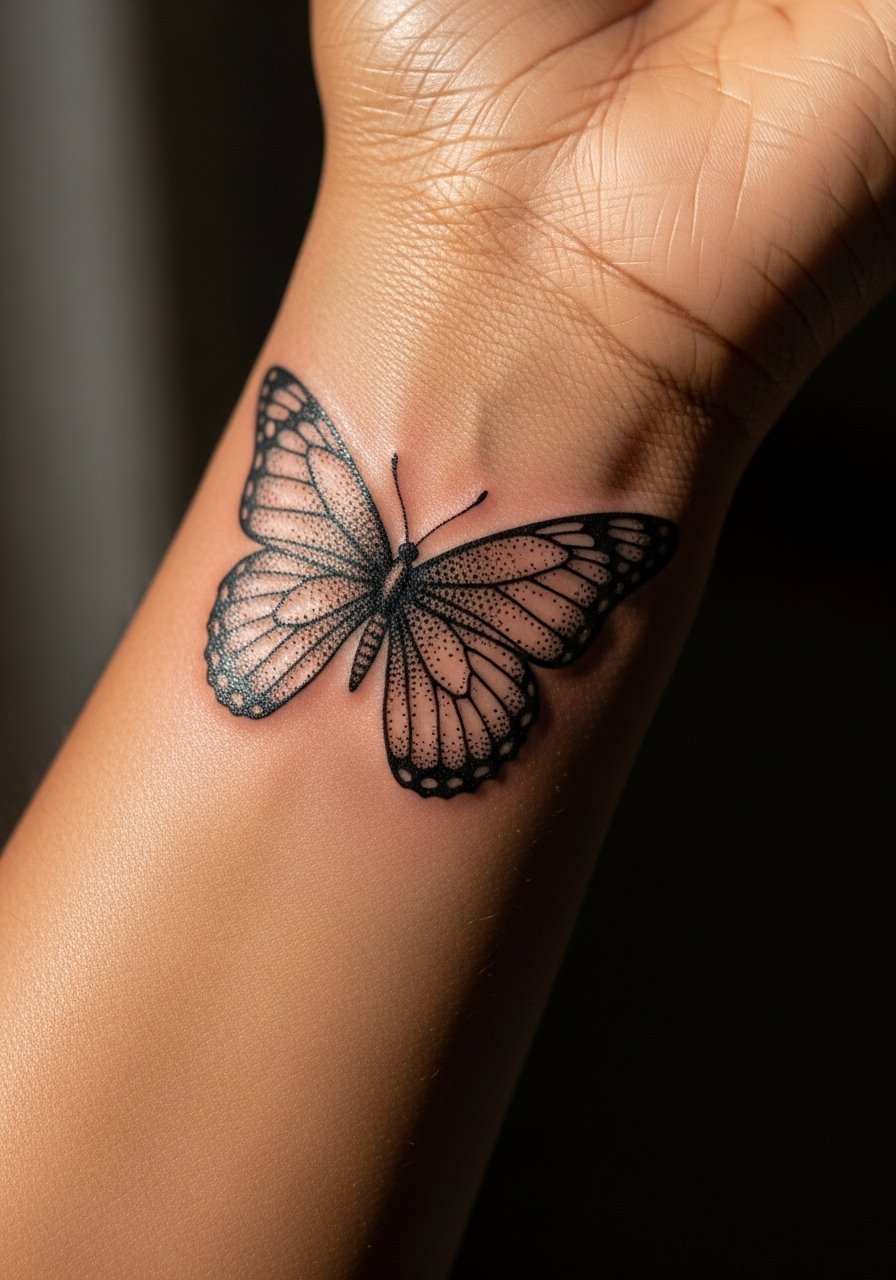
Stipple shading creates texture that ages into a soft gray rather than a flat blur. Tell the artist you want dot work density varied across the wing for a light-to-dark gradient. The session can take 60 to 90 minutes because stippling is point-by-point work. One mistake is requesting stipple at too small a scale so dots fill together. Expect that stipple will soften by year three but keeps a pleasing grain if spaced correctly. For the session pick a pastel cotton tank or a loose short-sleeve so the artist can position your forearm comfortably.
Pre-Session Essentials
The wrist work above includes micro line pieces and small color accents, so a few items smooth the appointment and the first week.
-
Stencil transfer paper kit. Lets you preview placement on skin before the needle touches, which matters when you want the butterfly tucked under a cuff.
-
Topical numbing cream. Applied before the session eases wrist bone sensitivity without changing how the artist works.
-
Thin protective film roll. Helps protect fine line work from friction during the first days of healing.
-
Fragrance free gentle body wash. Cleanses the area without irritating delicate lines that depend on proper healing.
-
Aquaphor healing ointment. Thin layers in the first three days lock moisture for fine line pieces while letting the skin breathe.
7. Minimalist Negative Space Butterfly
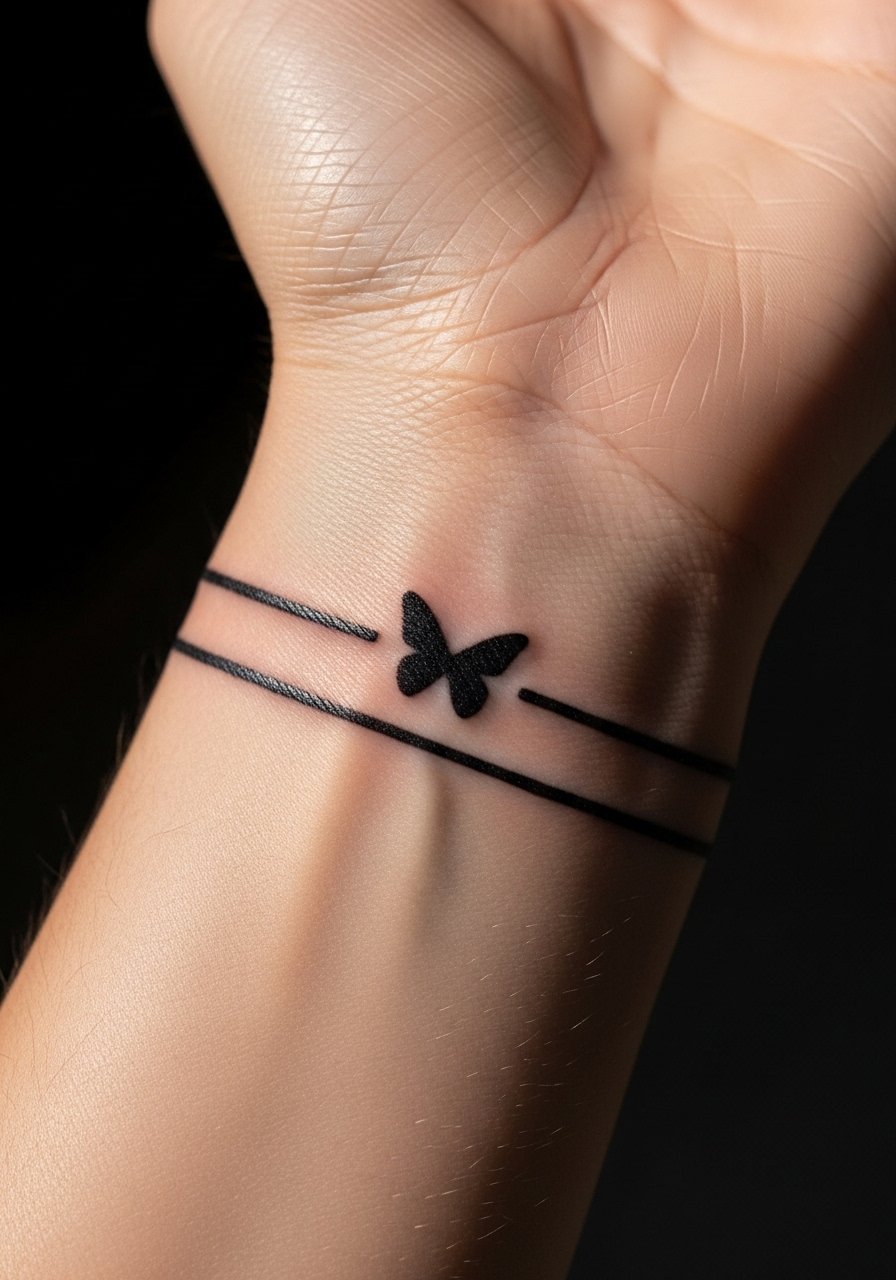
Negative space butterflies use surrounding ink to define wings, which can help maintain shape as skin ages. Say to your artist you want the surrounding band saturated but not overly thick so the negative shape remains distinct. Sessions often run 45 to 60 minutes. A typical error is compressing the negative space too narrowly which causes loss of silhouette with time. Expect the black band to hold better than thin internal lines. For showing off wear a rolled cuff blouse women with sleeves you can push up to frame the design.
8. Motion Trail Butterfly, Tiny Dot Path
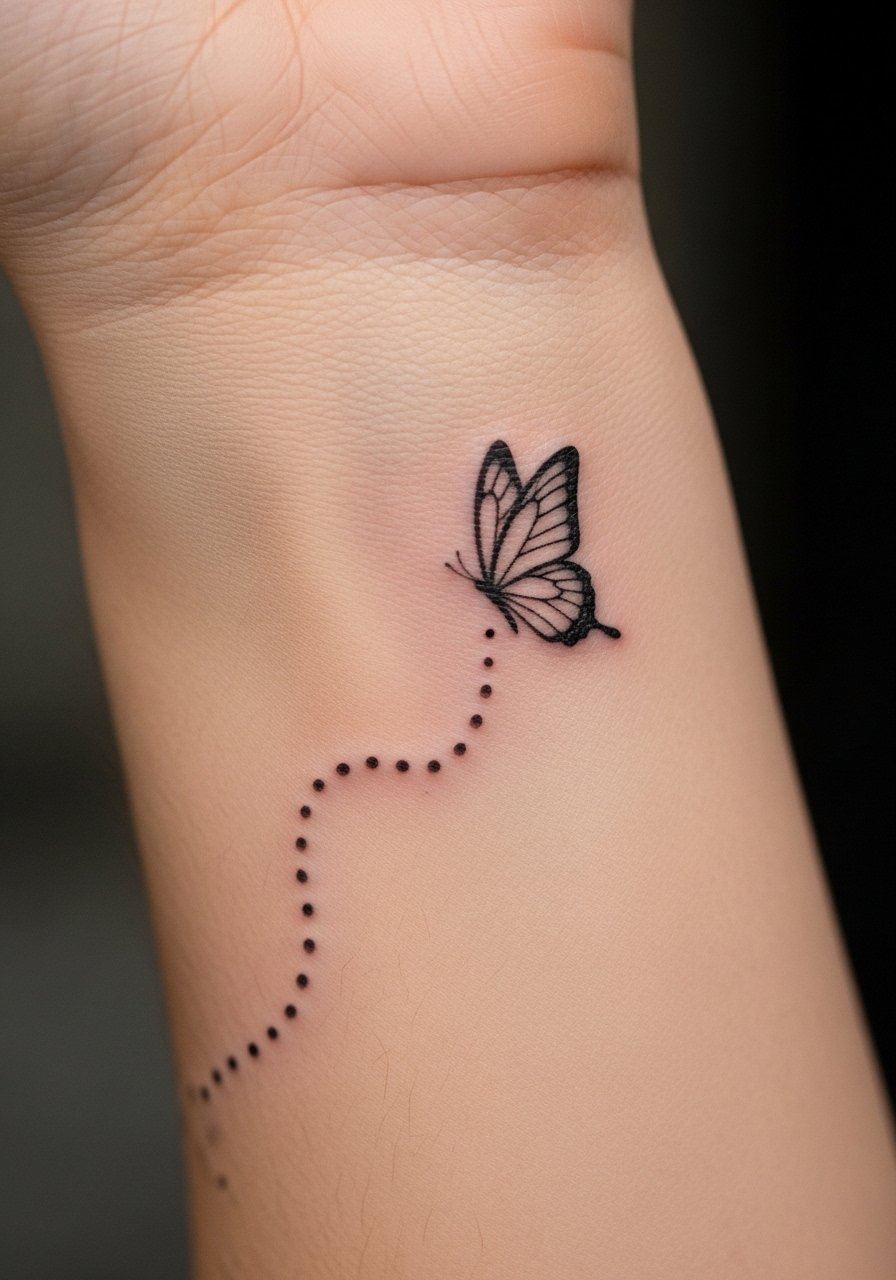
Motion trails imply movement and help the eye follow the wrist line. In consult ask for dot spacing to increase as the trail moves away from the mothership motif, which prevents visual crowding. The session is usually quick, 45 to 70 minutes depending on trail length. A mistake is adding too many dots close to the wrist crease which catches abrasion. Expect a softening of dot contrast by year two, with single-dot touch-ups possible. For session comfort wear a pastel cotton tank that allows the artist to position your arm without strain.
9. Tiny Color Splash Butterfly with Black Outline
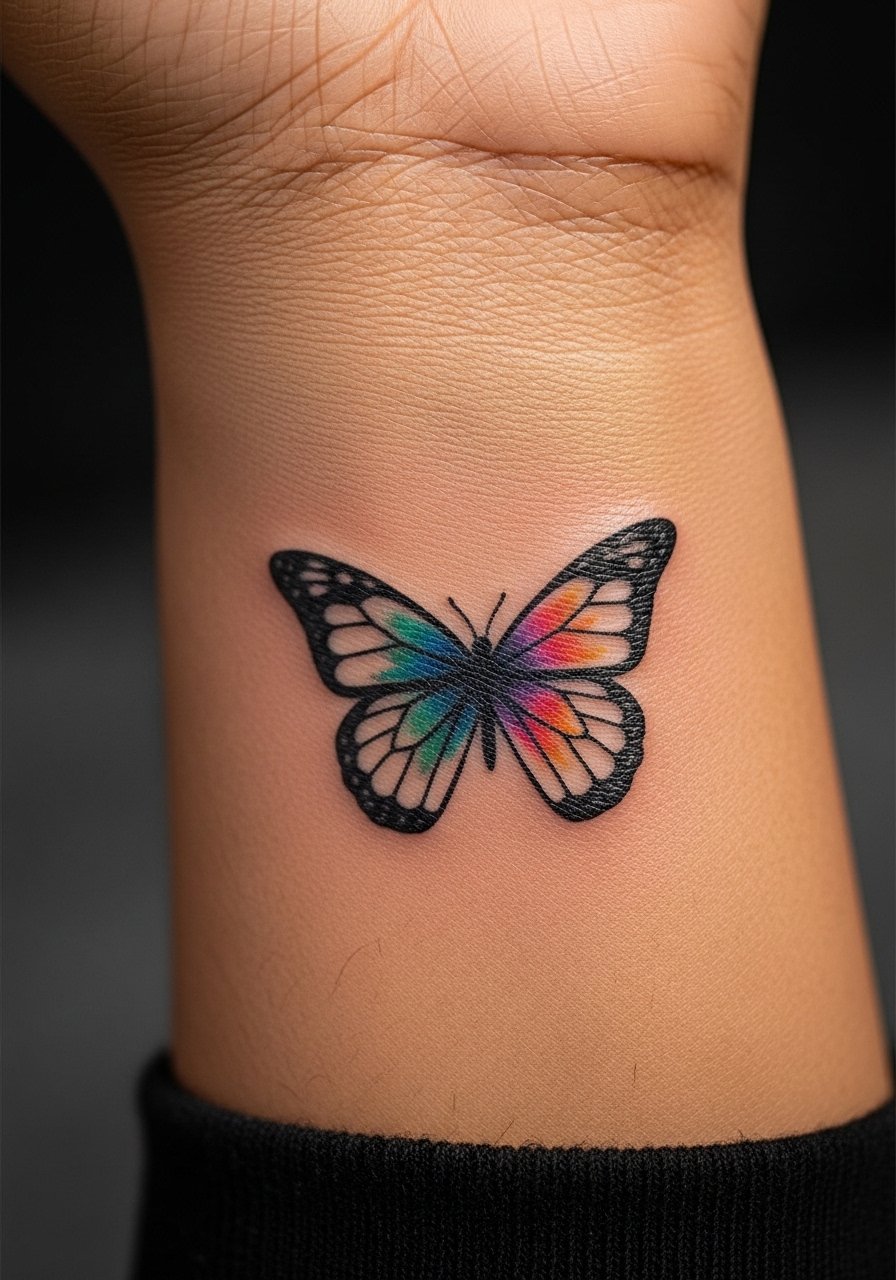
A single color splash inside a crisp outline gives a pop without compromising line longevity. Ask the artist to pack color in a compact area and avoid feathered watercolor fills at micro scale. Sessions run around an hour. The common mistake is asking for blended watercolor across the whole wing at this size, which tends to bleed. Expect color to soften and possibly require a touch-up in one to two years. For showing off the contrast consider a thin silver chain bracelet on the opposite wrist so the tattoo reads clearly.
10. Geometric Wing with Clean Linework
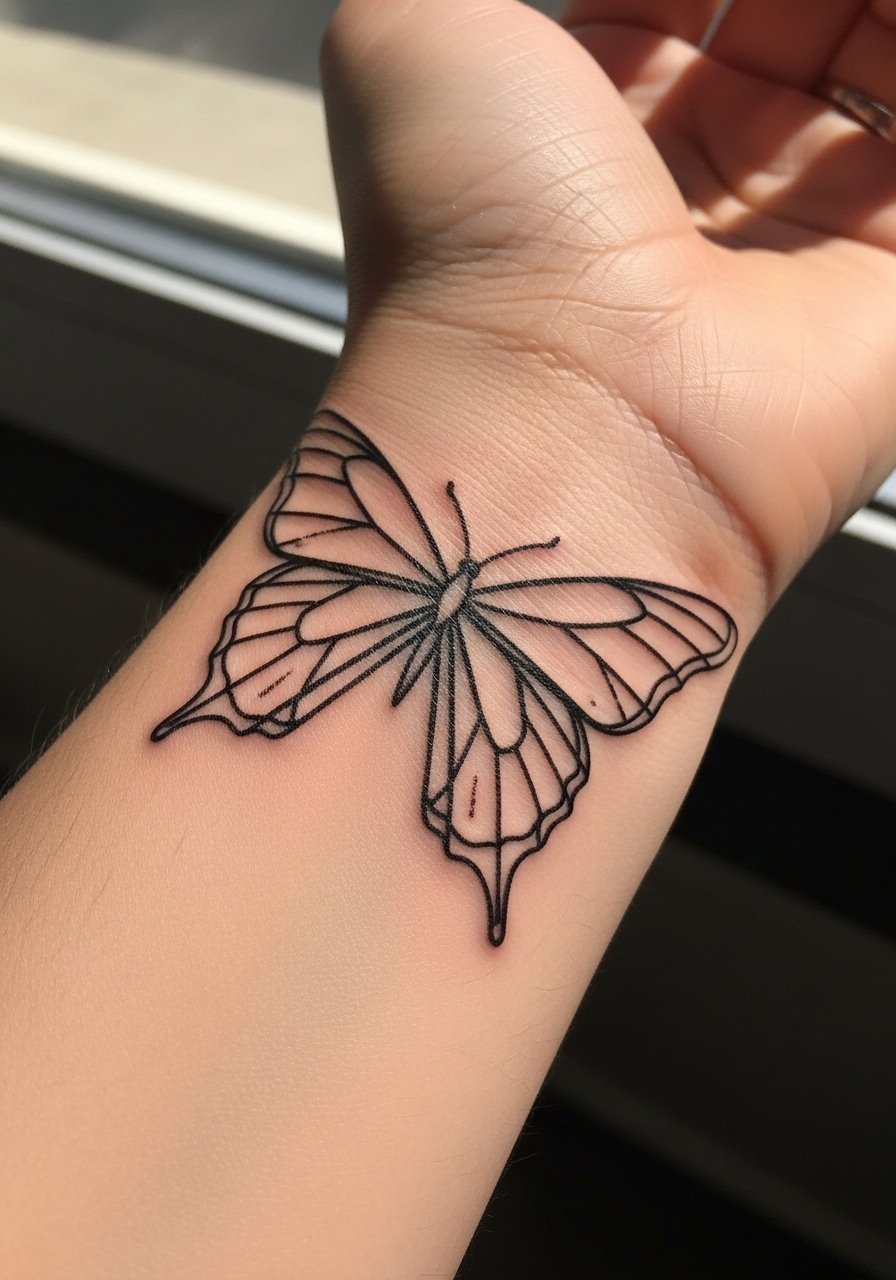
Geometric elements read boldly when lines have room to breathe. Tell your artist you want larger polygons inside the wing rather than a dense maze of tiny shapes. The session can take 60 to 90 minutes depending on how much geometry is included. A common problem is forcing too many angles into a small wing, which flattens detail during healing. Expect that larger geometric fills will hold better at year three than micro geometry. For the appointment wear a pastel cotton tank so the artist can access the wrist easily.
11. Black and Grey Wash Butterfly on Wrist Top
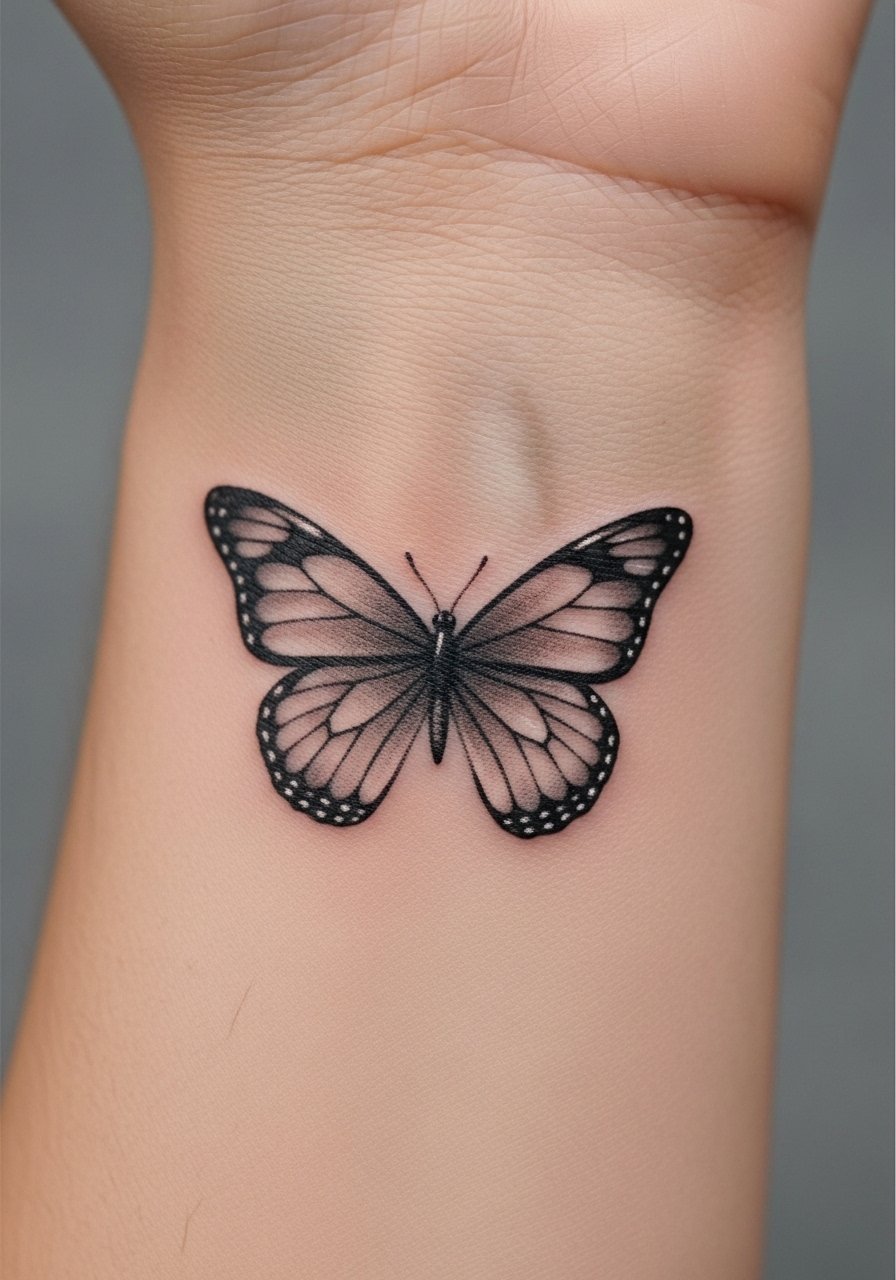
Black and grey wash adds depth that keeps reading even as lines soften. In consult ask for a light grey wash with crisp outer edge for definition. The session typically takes 60 to 90 minutes as shading needs layering. A frequent mistake is over-blending shades in a micro area which leads to a muddy look over time. Expect the wash to mellow but maintain form for longer than single-needle line alone. For showing off roll a sleeve or pick a rolled cuff blouse women that frames the wrist.
12. Tiny Ornamental Butterfly with Dotwork Lace
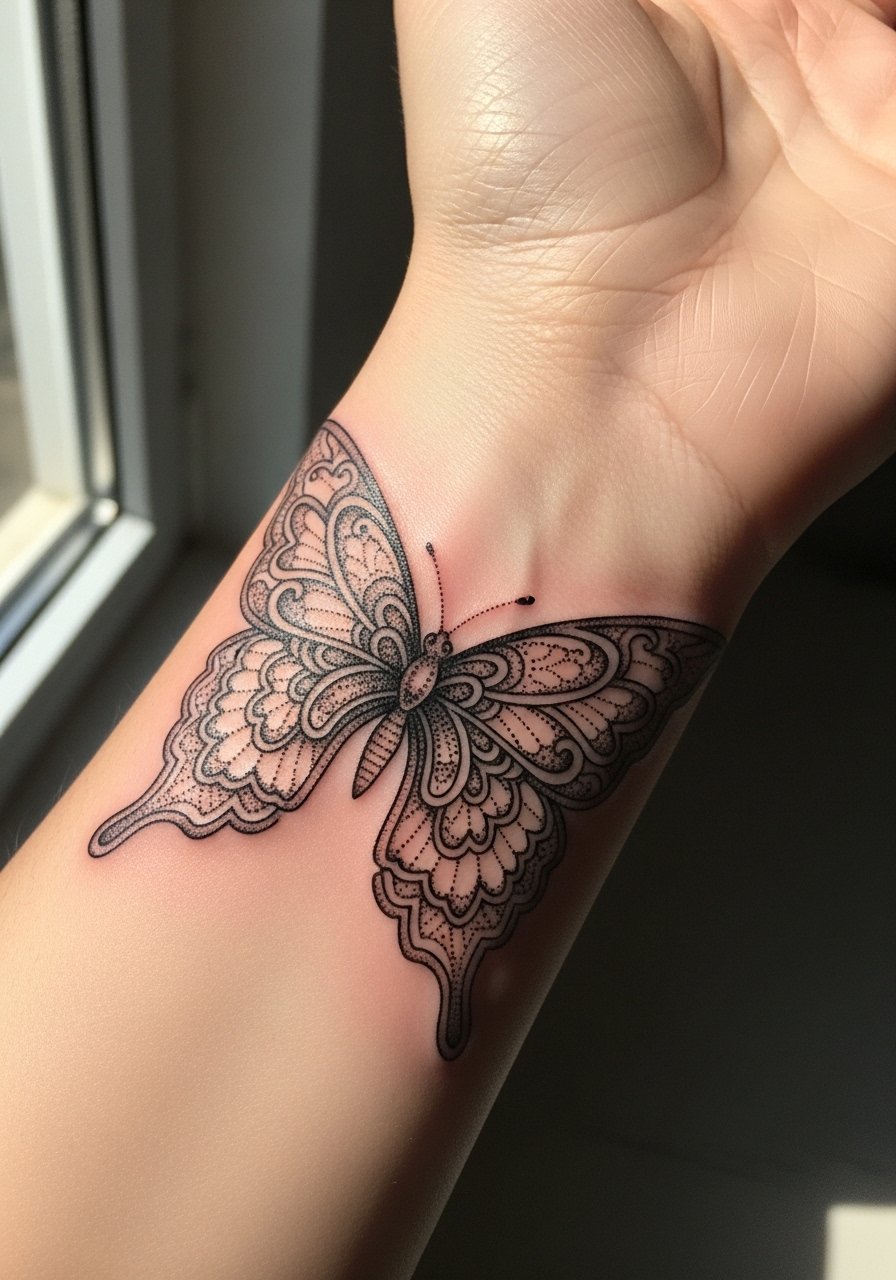
Ornamental dotwork gives a delicate, decorative frame without heavy pigment. Tell your artist you want the lace spacing looser near the edge so the dots do not clump. The session can run 75 to 110 minutes because of the detailed dotwork. A common error is compressing the lace into a small radius which then heals into a gray patch. Expect graceful softening by year three while the ornamental silhouette remains. For the session wear a pastel cotton tank so you can lift the sleeve without tugging.
13. Tiny Neo-Traditional Butterfly with Bold Wing Edge
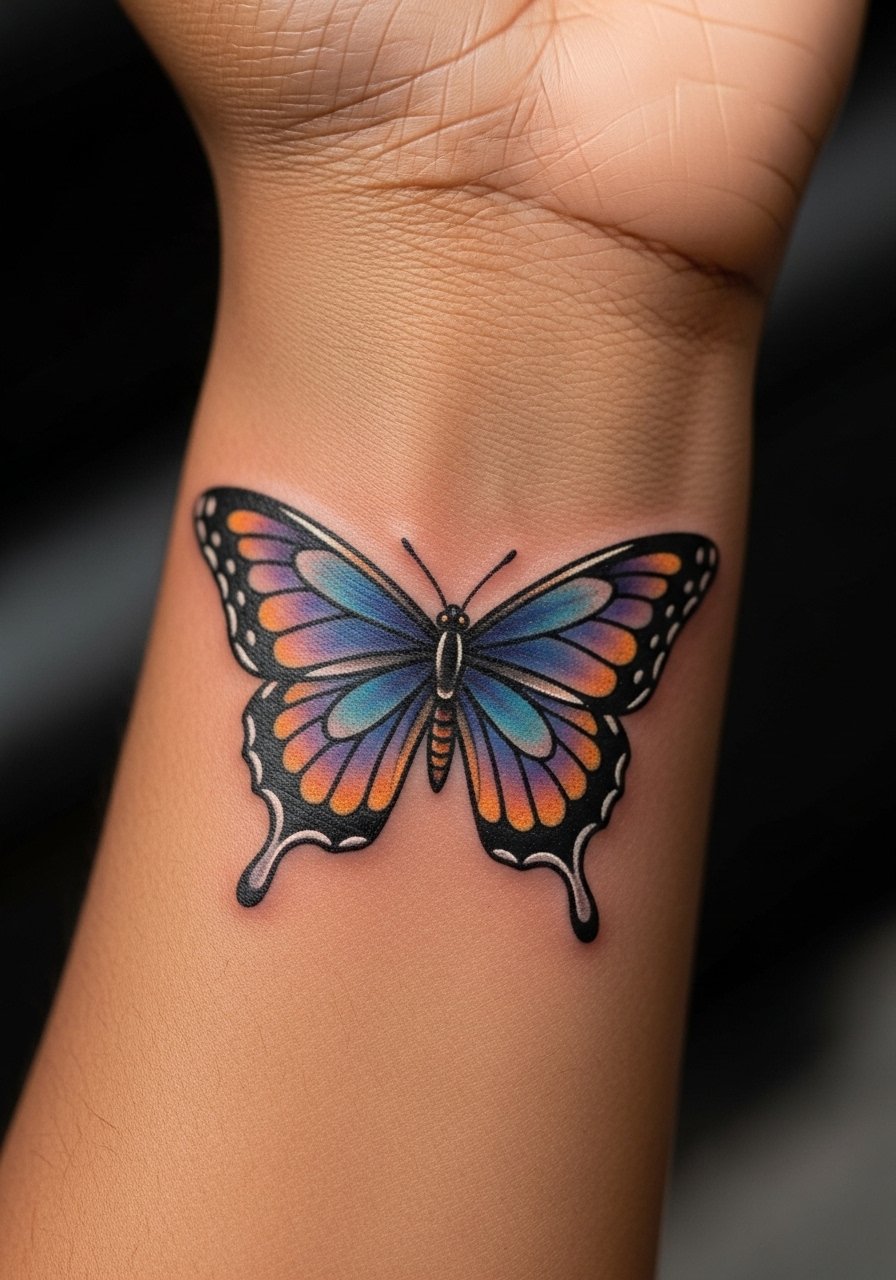
Neo-traditional in micro scale means stronger outer lines and restrained interior shading. Ask your artist for a slightly heavier outer line to protect the silhouette from hand-wash wear. The session takes about an hour and can feel brisk because the bold edge is efficient to lay down. The mistake is keeping line weight uniform throughout the wings. Plan a touch-up at year two if you want the original contrast maintained. To show it off without crowding use a thin silver chain bracelet on the opposite wrist.
14. Tiny Scripted Wing Tag, Name in Script Inside Wing
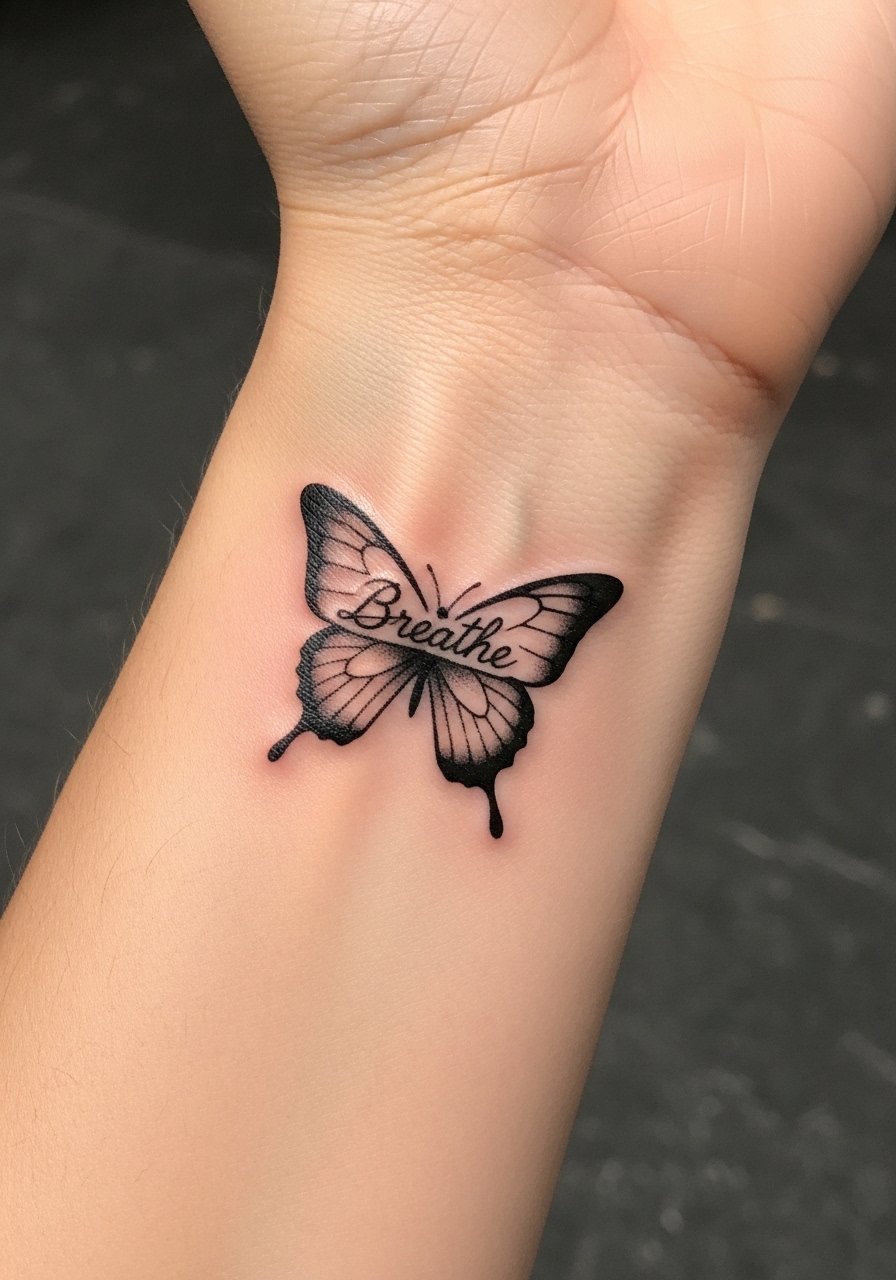
Text inside a wing creates a personal tag, but script must be exact and legible at micro scale. Give your artist the exact word and preferred script size and font reference in the consult. Sessions vary 45 to 75 minutes. The common mistake is using cursive too tight, which becomes unreadable after healing. Expect letters to mellow with time and to plan a touch-up if legibility matters. For the session wear a pastel cotton tank so the artist can position your wrist comfortably.
15. Tiny Cover-Up Butterfly for Old Wrist Marks
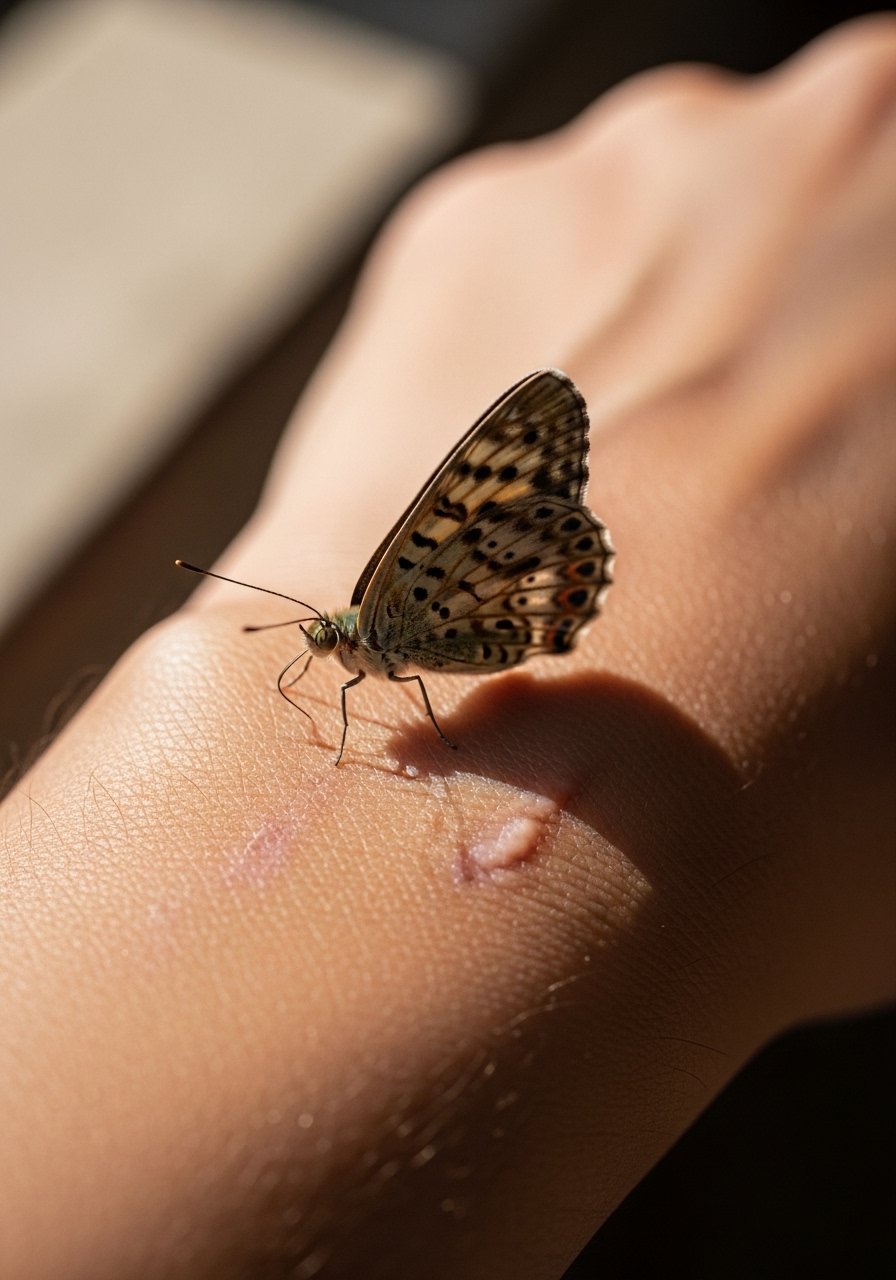
Butterflies are useful for small cover-ups because wings can disguise irregular pigment. During consult show the faded area and ask the artist to design wing veining that diverts attention from scar texture. Sessions depend on existing ink but often run 60 to 120 minutes. A common error is trying to cover dark pigment with only linework. Plan for layered shading if needed and expect a longer touch-up timeline. For session comfort wear a pastel cotton tank so the artist can access and work without constraint.
16. Tiny Geometric Dot Trail with Butterfly Accent
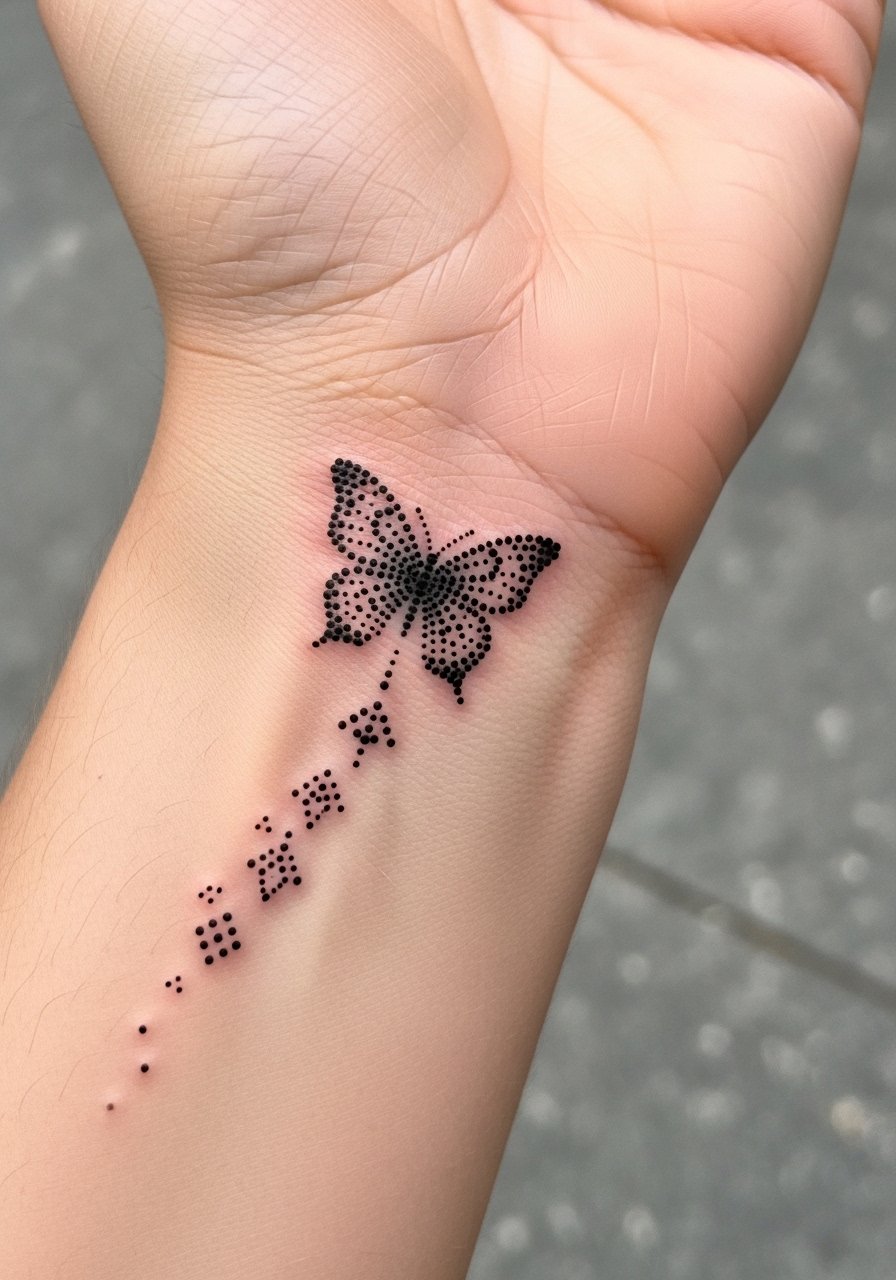
Combining geometry and dot trails adds a modern edge while keeping scale small. Tell your artist to space dot geometry to follow the natural wrist curve so the design moves with your hand. The session takes around an hour. Mistakes come from forcing straight lines across a curved area which stretches the geometry during movement. Expect the dots to soften but the trail to remain legible if spacing was generous. For the session wear a pastel cotton tank to allow for easy arm positioning.
17. Tiny Watercolor Accent with Black Outline
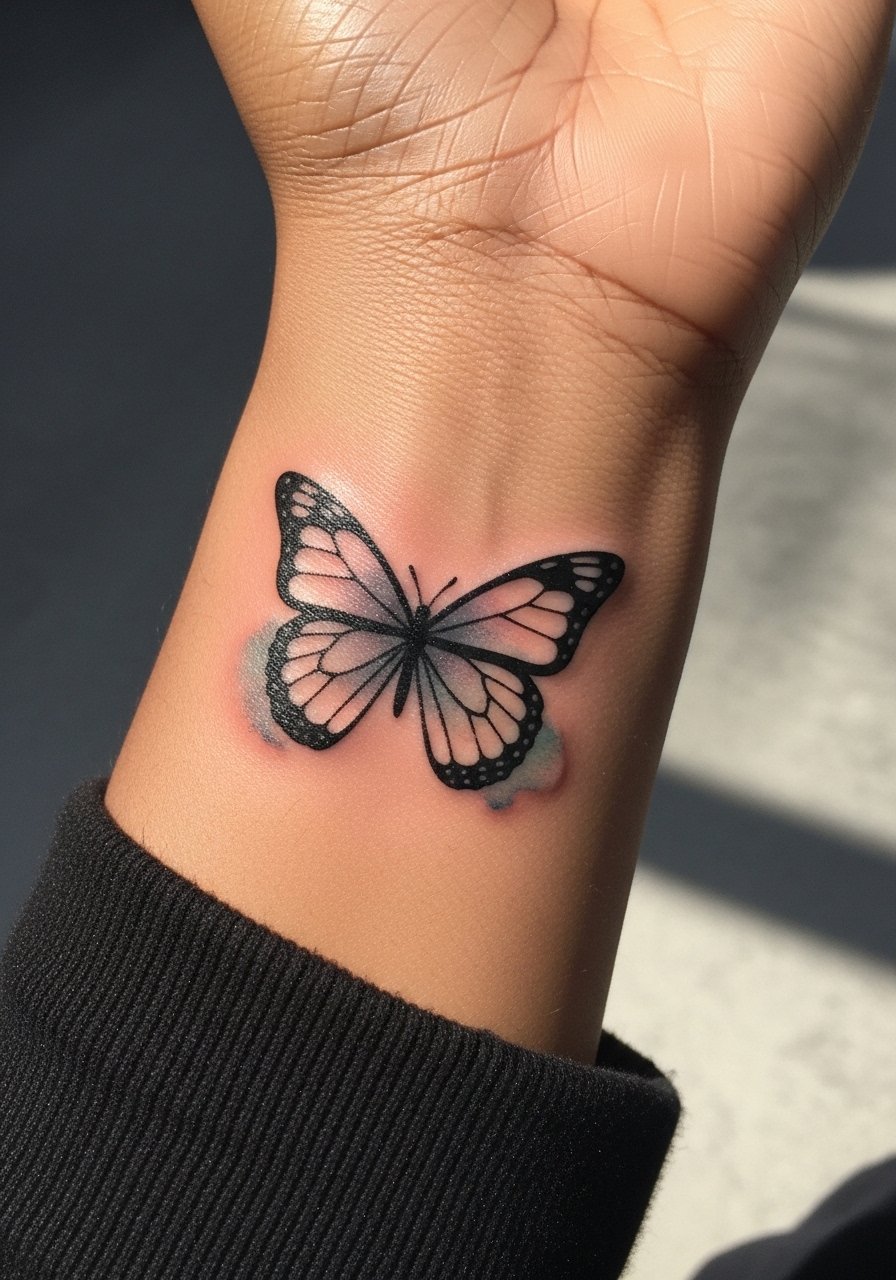
Watercolor accents can pop against a black outline but they demand restraint at micro scale. Ask for limited wash areas and for the artist to avoid feathered edges that spread under the skin. Sessions run 60 to 90 minutes due to color layering. The controversy around watercolor on wrists is real. One camp says watercolor looks gorgeous fresh but fades into muddy stains as it blurs. The other camp says careful packing and touch-ups preserve the effect. Ask your artist where they stand before booking. For the session pick a pastel cotton tank that leaves the wrist exposed without pressure.
18. Tiny Symmetrical Pair Mirrored Across Both Wrists
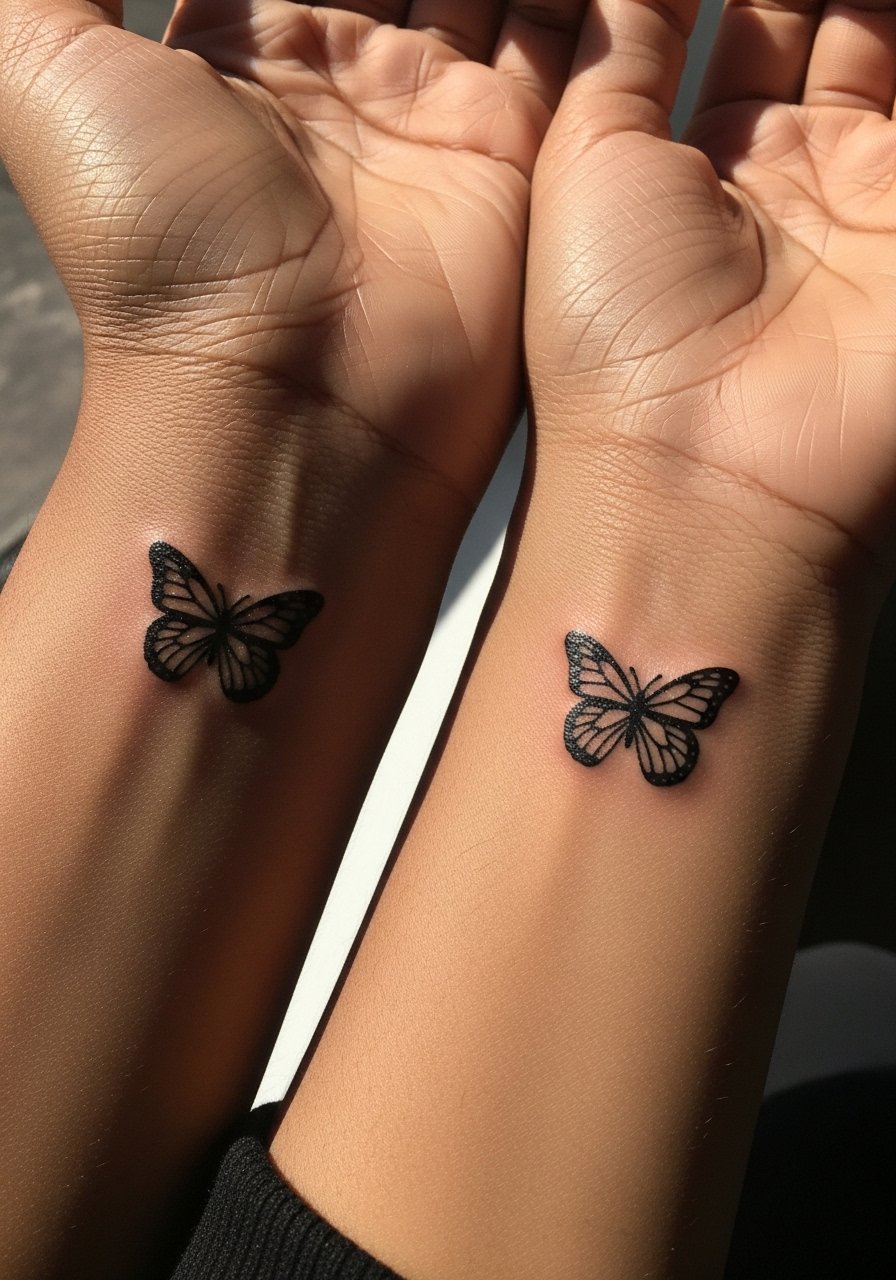
Mirrored pairs read like a set and work well for people who want balance. Tell your artist to map both stencils and compare placement while you hold your hands in natural positions so symmetry feels intentional. Expect two short sessions or one longer session depending on artist workflow. A mistake is placing each without checking how bracelets or watches will sit. Discuss wrist jewelry in advance and consider wearing a thin silver chain bracelet on one side to test spacing. Expect minimal blowout when linework is intentionally spaced.
19. Tiny Gothic Wing Outline with Heavy Tip
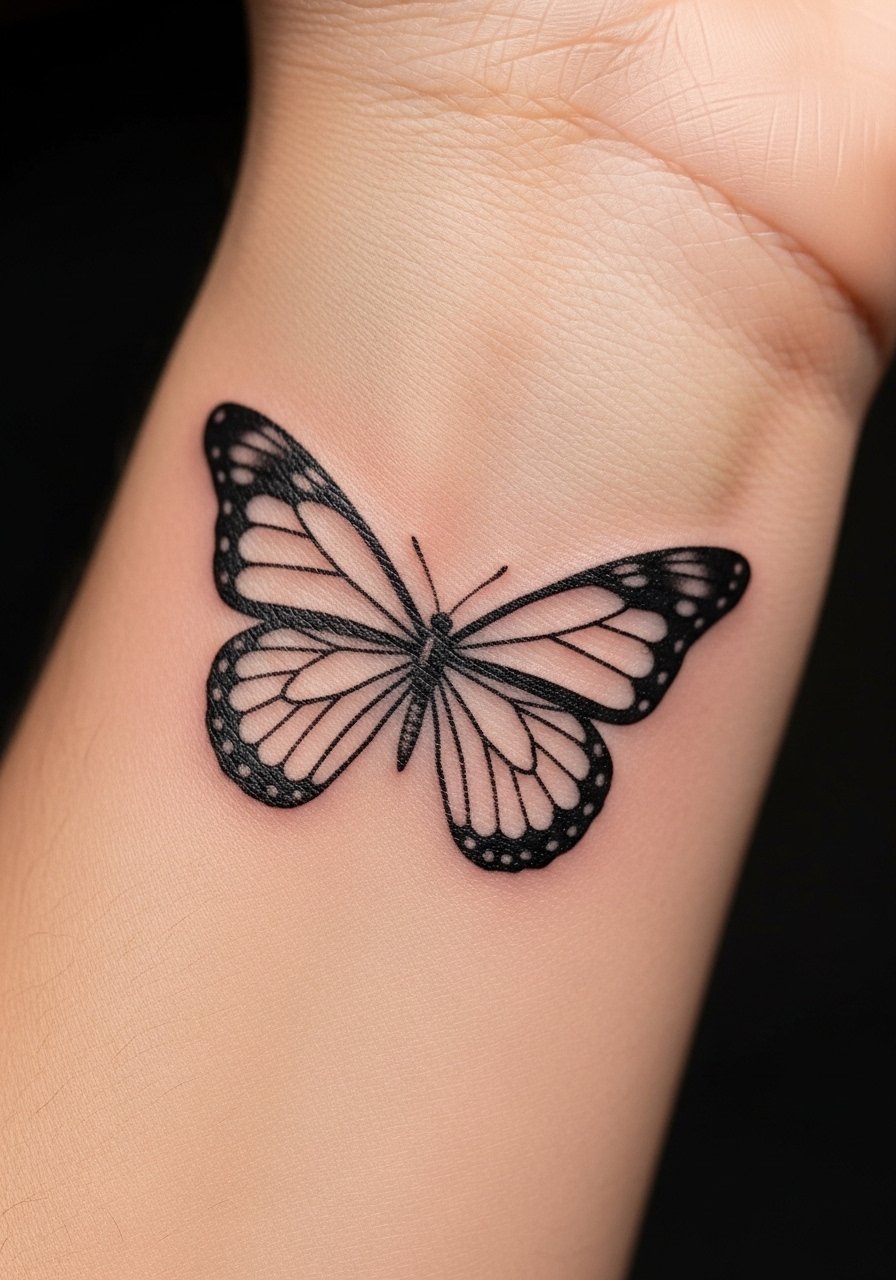
A gothic edge is achieved by grading line weight toward the wing tips so the silhouette remains bold while interior veins are fine. Tell your artist which areas you want strong and which should stay delicate. Session time is around 45 to 70 minutes. Mistakes include making the heavy tips too broad for this small size. Expect the heavy tips to age well and to require fewer touch-ups than micro veins. For showing it off choose a sleeve you can roll up, or pair it with a thin silver chain bracelet to keep focus on the wrist.
20. Tiny Folded Wing with Subtle Shadow
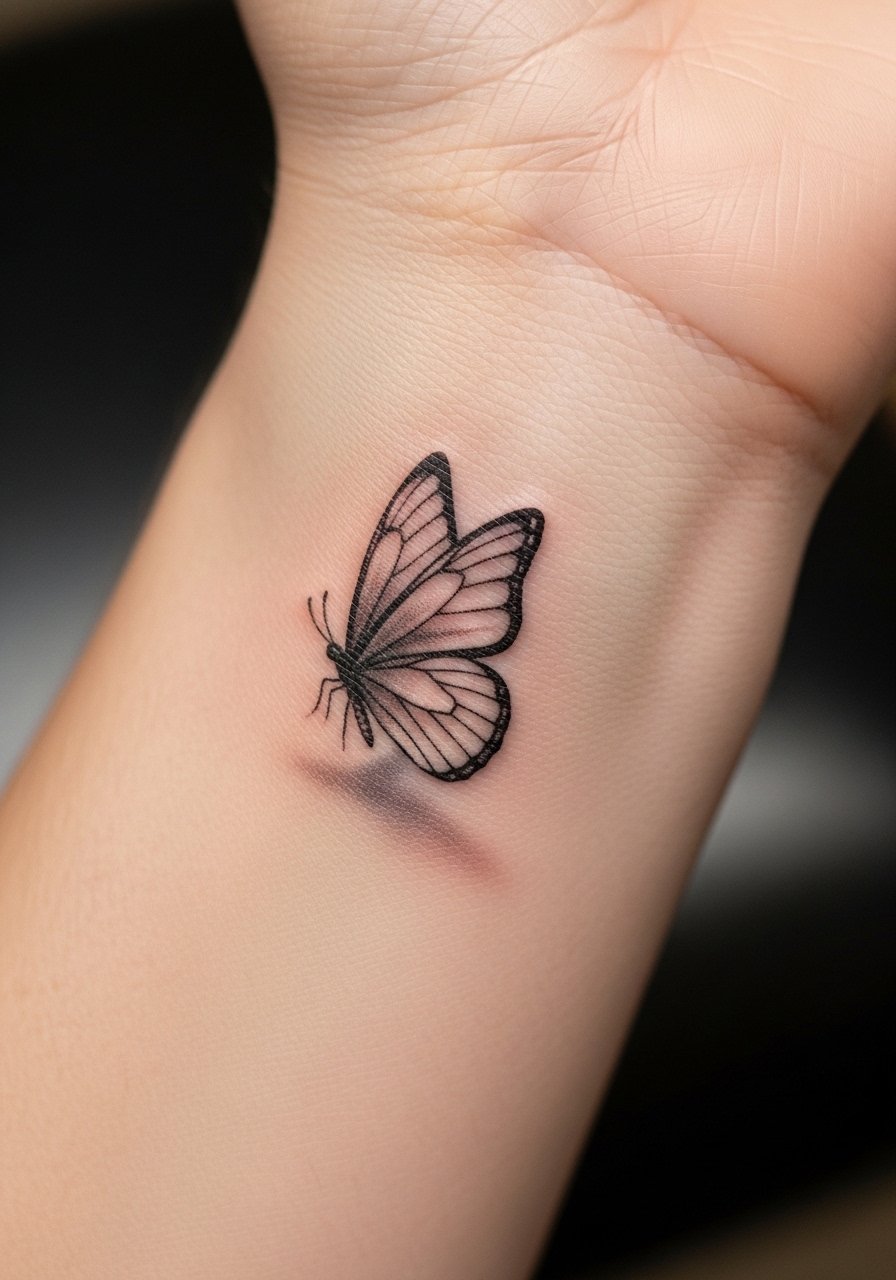
A folded-wing pose gives a lifelike quality without extra size. Ask for a thin shadow to ground the wing rather than a heavy grey fill which smudges in micro work. Sessions can be 60 minutes. A common error is overdoing the shadow so the design reads as a smudge. Expect graceful softening but maintainable form if the shadow is stippled. For the session wear a pastel cotton tank to allow the artist to position your wrist easily.
21. Tiny Flash-Style Butterfly That Ages Predictably
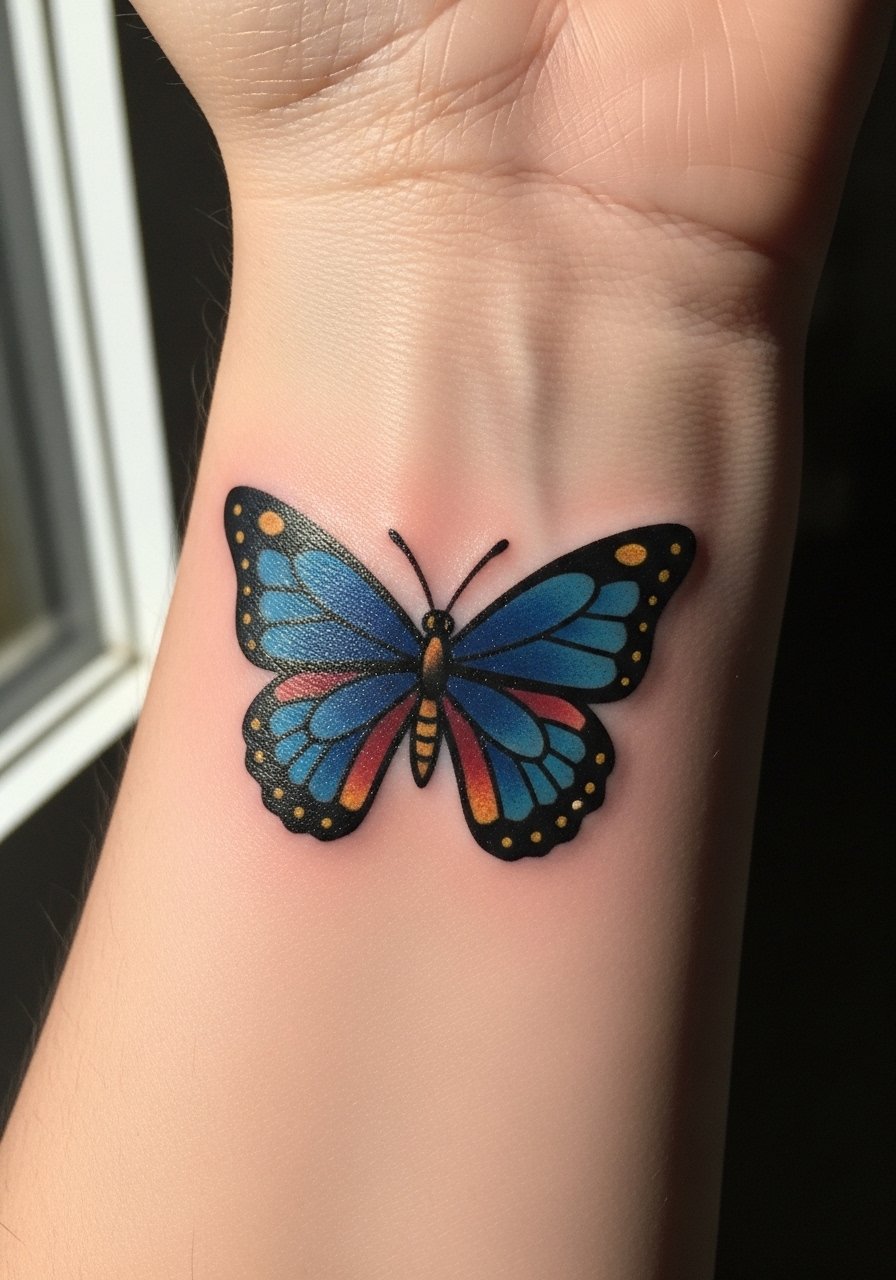
Flash-style pieces are built to read well over time because they favor clear silhouettes and stable linework. Tell the artist you want classic flash proportions with slightly more spacing around veins for long-term clarity. Session time is typically 30 to 60 minutes. A mistake is requesting too much micro detail in a flash motif, which undermines the benefit of the style. Expect a clean look at one year and a simple touch-up at three years if you want to refresh saturation. When showing it off pair the wrist with a thin silver chain bracelet so the flash still reads from across a room.
Frequently Asked Questions
Q: Will fine line wrist butterflies fade faster than bold traditional ones?
A: Yes, fine line tends to lose crispness earlier because the needle channels are shallower and wrists see frequent washing and friction. One camp of artists argues single-needle work with routine touch-ups keeps the look intact. The other camp prefers bolder saturation up front to minimize touch-ups. Decide which trade-off you prefer and ask your artist for examples of healed work in the style you want.
Q: How soon should I book a touch-up for micro wrist work?
A: Expect to check healed work at six to twelve months. Fine line pieces often need a small touch-up in that window while black and grey washes usually hold a bit longer. Touch-up timing depends on placement, your skin type, and how meticulous the initial packing was.
Q: Is Saniderm better than dry healing for tiny wrist butterflies?
A: Artists split on this. One group prefers Saniderm in humid or travel-heavy conditions to protect micro lines from maceration. The other group favors dry, breathable healing to reduce trapped moisture. I suggest asking about the artist's preferred protocol and choosing the method they use regularly so their aftercare aligns with their technique.
Q: What should I wear to the appointment for a wrist tattoo?
A: Wear clothes that give easy access without tugging. A pastel cotton tank or a loose short-sleeve you can roll up is ideal. Comfortable positioning reduces arm tension and keeps the session smoother.
Q: How do I find an artist who can do tiny butterfly linework without it blurring?
A: Look for portfolios tagged #microButterflyTattoo or #fineLineButterfly on social platforms and examine healed photos. Search "[city] fine line tattoo studio" on listings apps and ask to see healed close-ups. Trust your instincts if their healed gallery shows consistent line spacing and minimal blur.