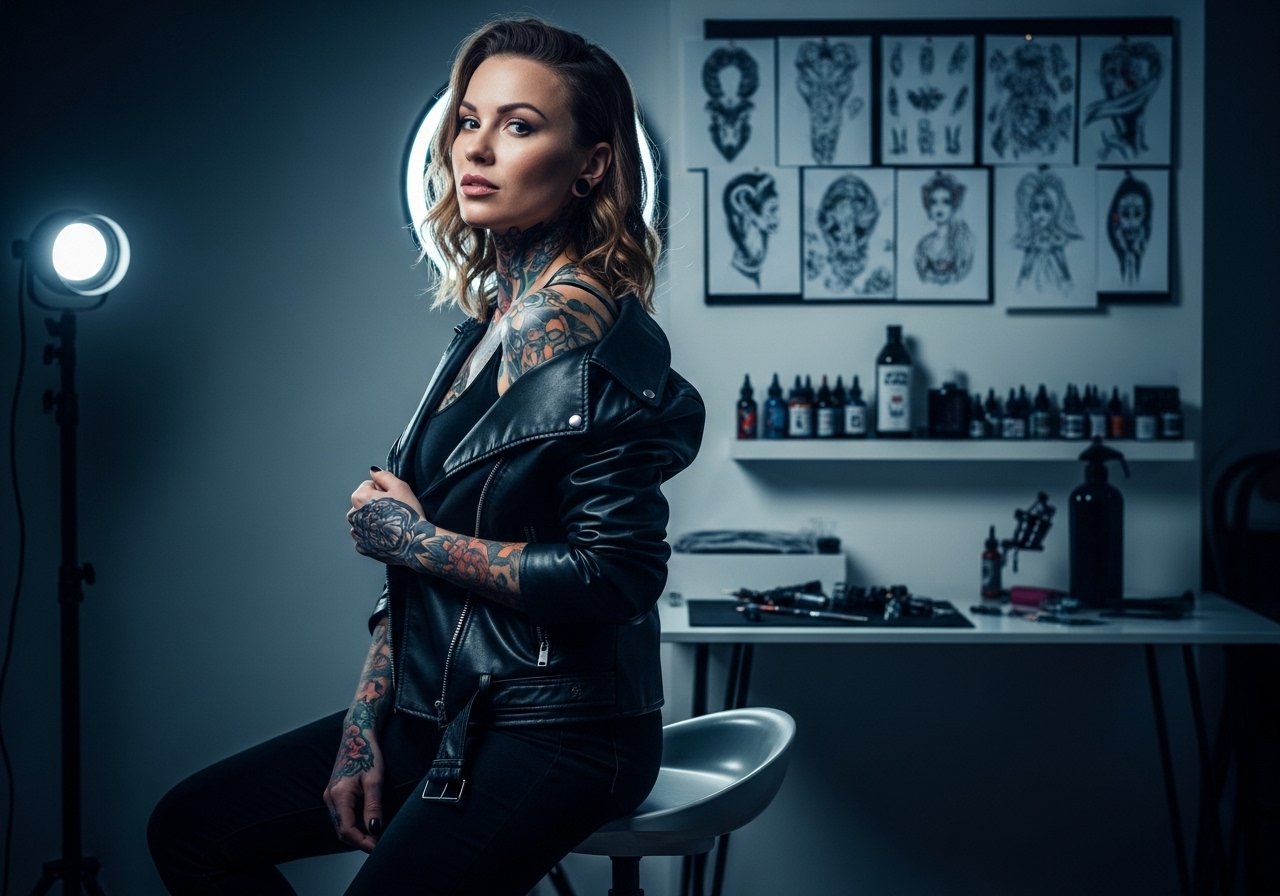
Fine line trends and high-contrast blackwork are both landing on the inner bicep more often than they used to, and that shows in shop portfolios. What holds after five years depends less on how intricate the reference is and more on spacing, needle depth, and placement choices. These 17 inside-bicep ideas focus on line weight, longevity, and what to tell your artist so the piece stays readable as your skin settles.
1. Micro-Realism Portrait on the Inner Bicep
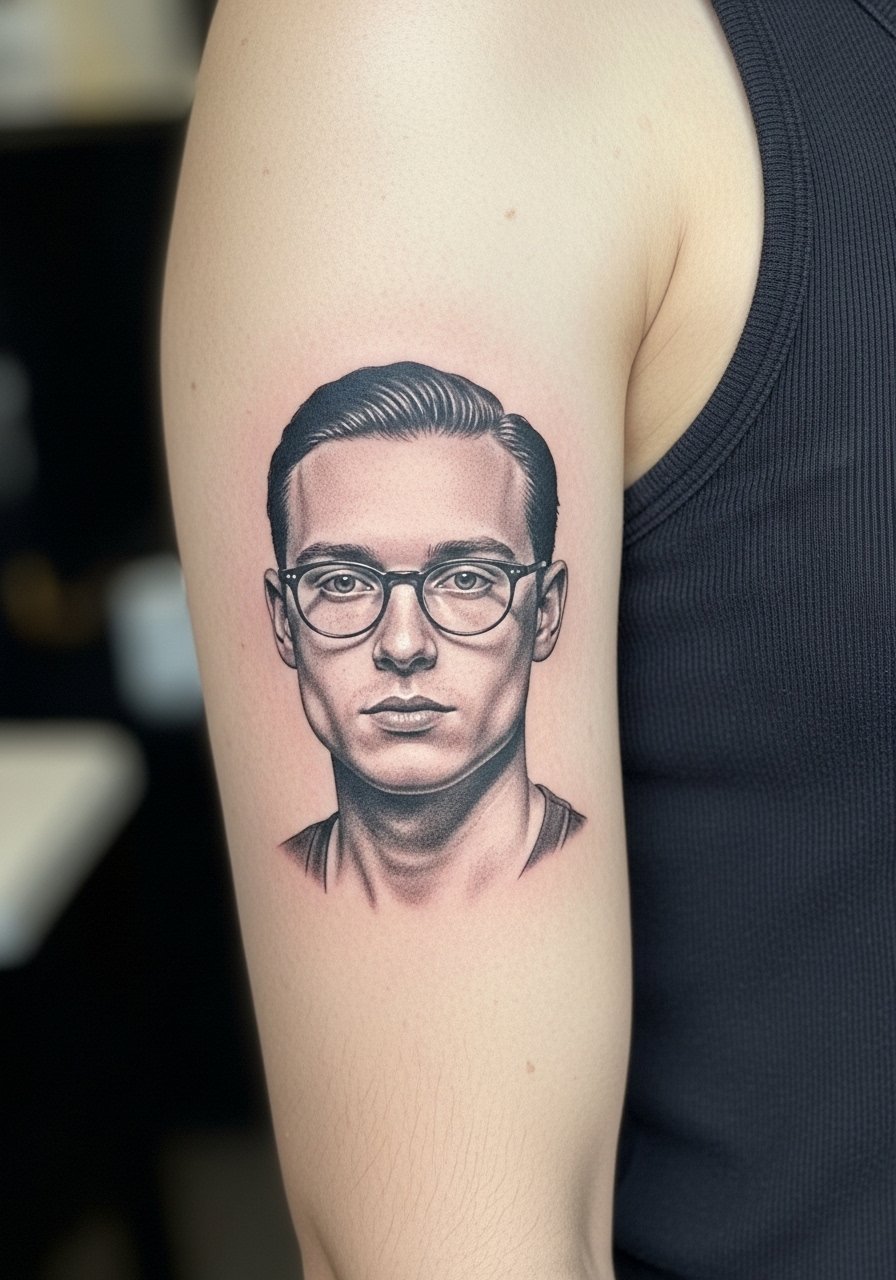
I recommend micro-realism here when you want a small, intimate portrait that reads up close. Tell your artist you want slightly bolder contrast between the darkest shadows and the midtones so the face keeps structure as it ages. Expect a focused session of two to three hours and some tenderness while the needle works the soft inner arm. Common mistakes are asking for extreme tiny detail without allowance for spacing. At six months the tiny dots will have softened slightly. By year three a subtle touch-up often restores the deepest shadows without changing the likeness.
2. Fine Line Script Band Wrapped Around the Bicep
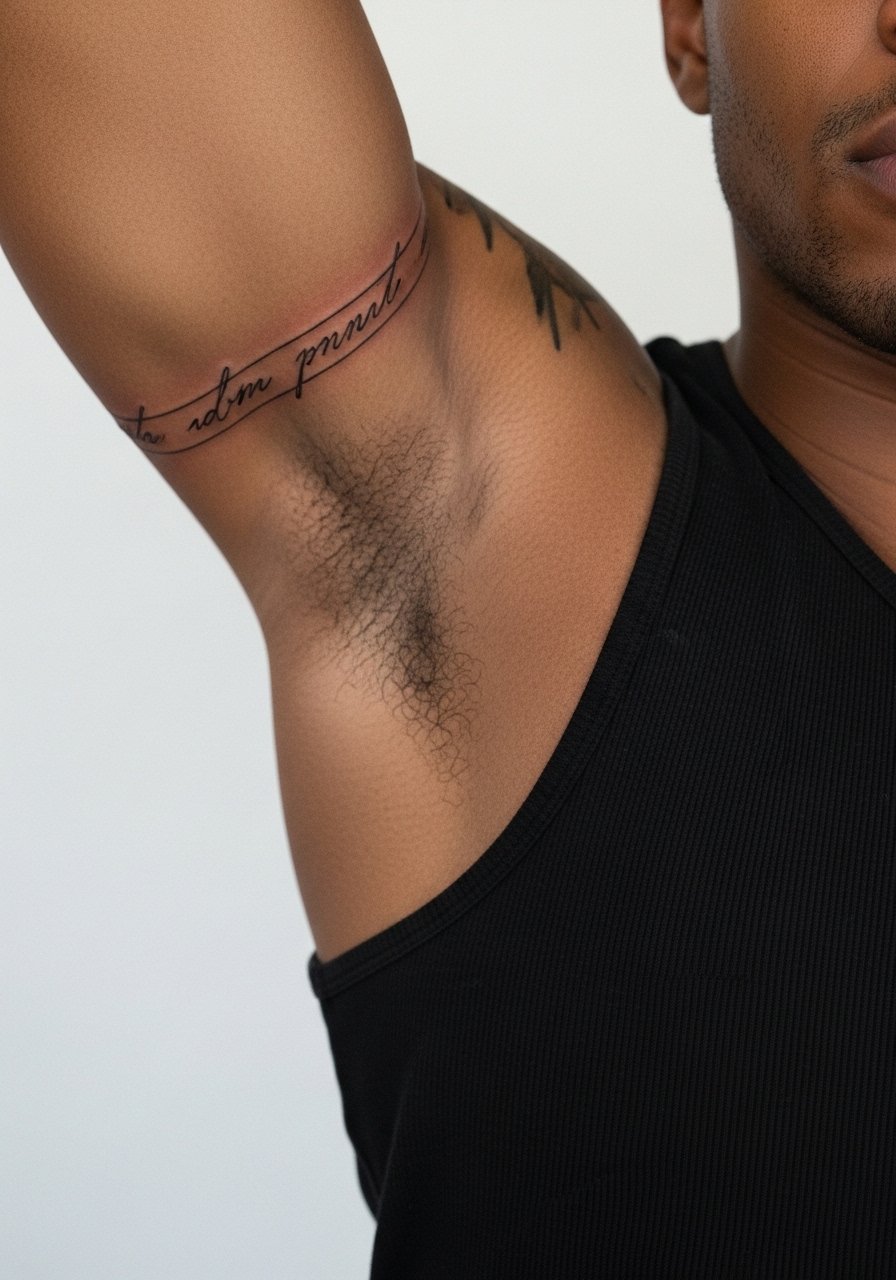
When you want a personal phrase, go thin but give letters breathing room. In consultation, specify exact letter height and ask for wider spacing between letters than the reference image. This placement is sensitive and tends to swell more during the session, so expect an hour to ninety minutes depending on length. A common error is requesting tiny cursive that merges after a year. For showing it off, pair the band with a loose tank top you can lift during the session and then roll sleeves to frame the script afterward. Touch-ups are normal at two to four years for fine script work.
3. Stipple-Shaded Botanical Cluster Inside the Arm
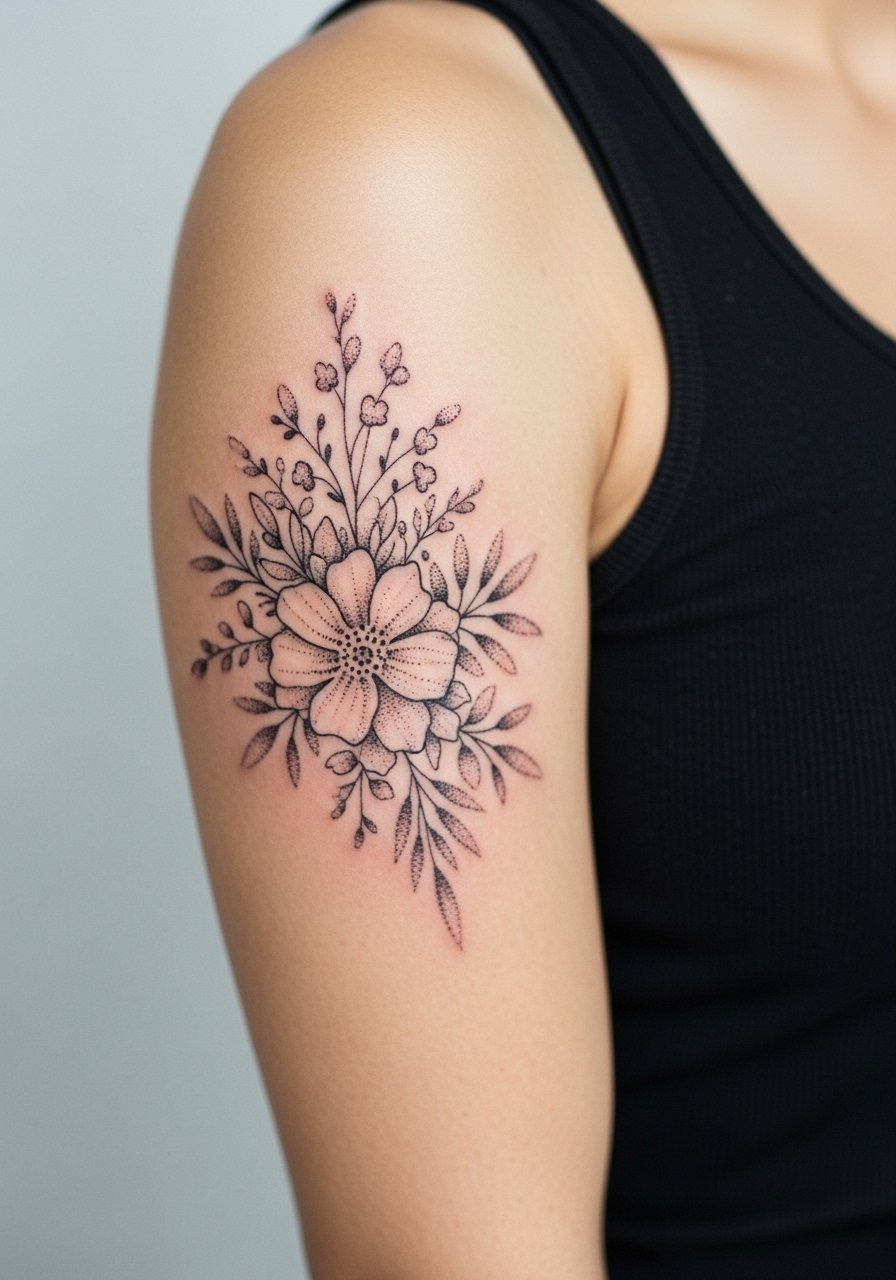
Dot work thrives on the inner bicep because the skin gives slightly and accepts stippling elegantly. Tell your artist you want varied dot density rather than dense black fills so the piece keeps texture as it heals. Sessions run longer for stipple because the hand moves slowly, so plan for two sessions if the cluster is large. A frequent mistake is asking for too many tiny dots in a small area which can compact into a muddy tone. For daytime wear, rolled sleeves or a short-sleeve linen shirt keeps the botanical visible without overwhelming your outfit.
4. Geometric Mandala Slice on the Inner Bicep
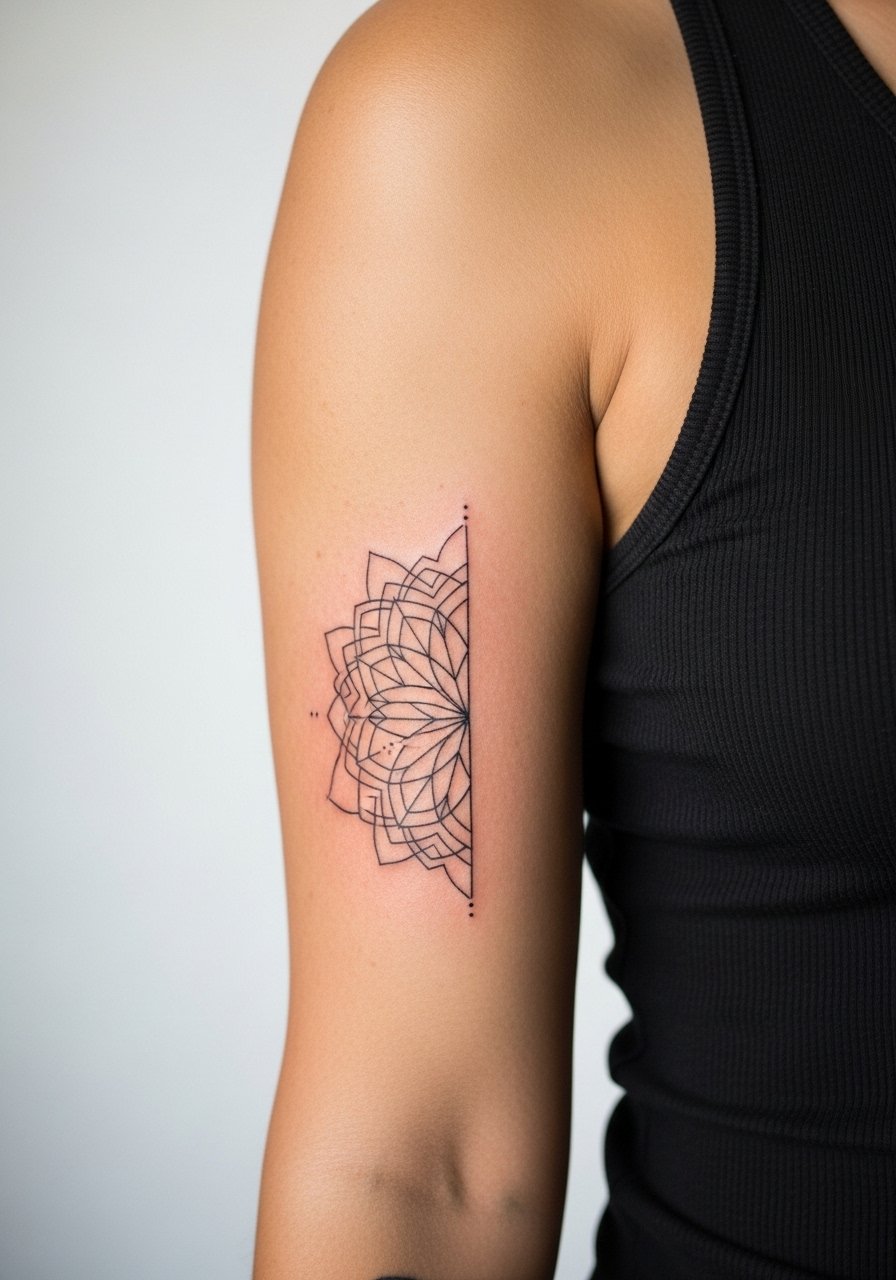
Geometric pieces split artists into two camps about this placement. One group says the curved soft skin of the inner bicep makes tight radial lines blur within a few years. The other group says that with proper spacing and slightly thicker line weight the geometry can stay readable. Ask your artist which approach they prefer and why before booking. The piece looks sharp fresh, then settles slowly as the skin stretches in daily movement. Avoid insisting on microscopic linework if you want the pattern to hold.
5. Bold Blackwork Symbol or Anchor
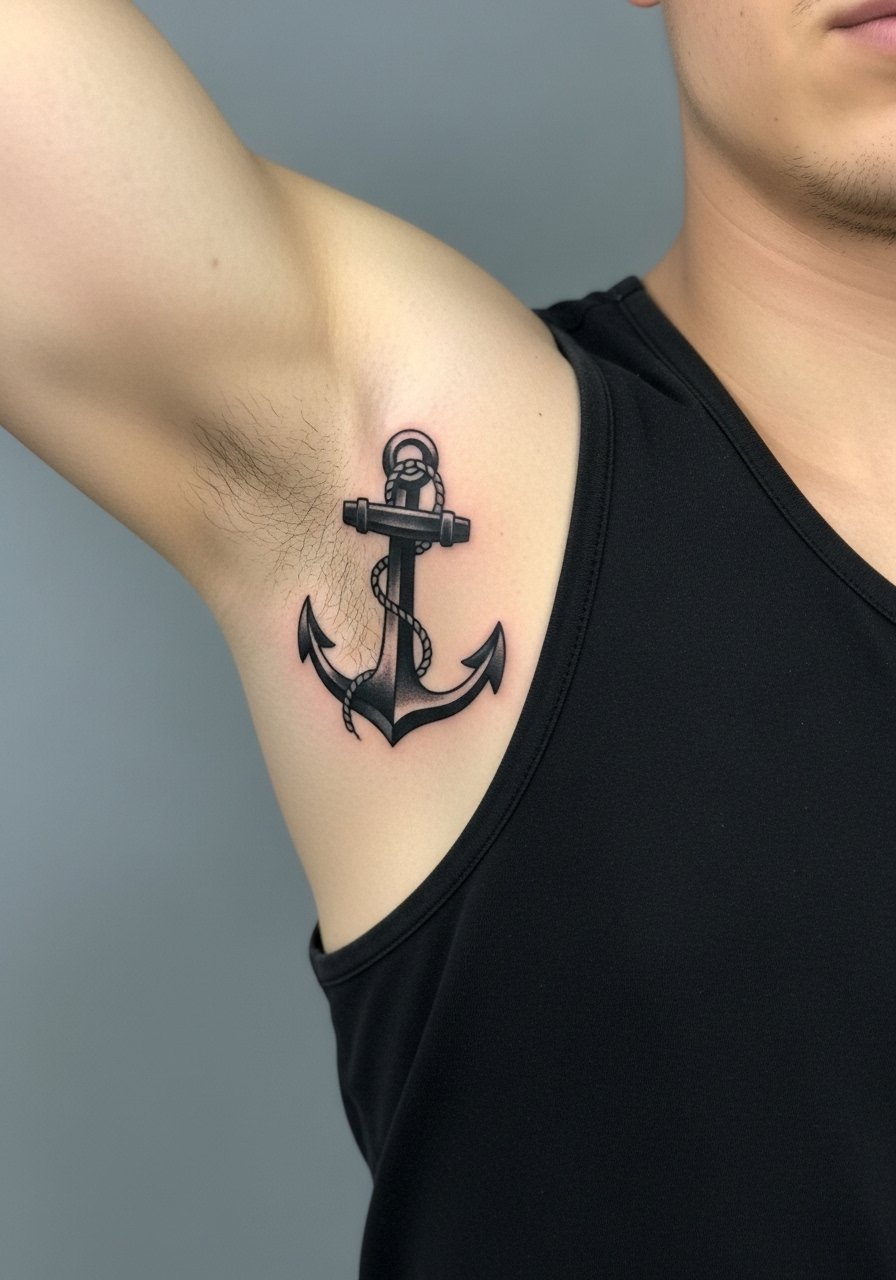
If you want a graphic statement that reads from a distance, solid blackwork is forgiving on the inner bicep. Tell the artist you prefer a matt black fill rather than layered shading so the silhouette stays strong. Pain is moderate because the area is soft, and sessions are relatively quick for single-symbol pieces. The usual mistake is too-small solid fills which can develop patchy healing. For casual wear that frames the bold shape, a rolled short-sleeve tee keeps the anchor visible when you want it to be.
6. Negative Space Lettering with Thin Outline
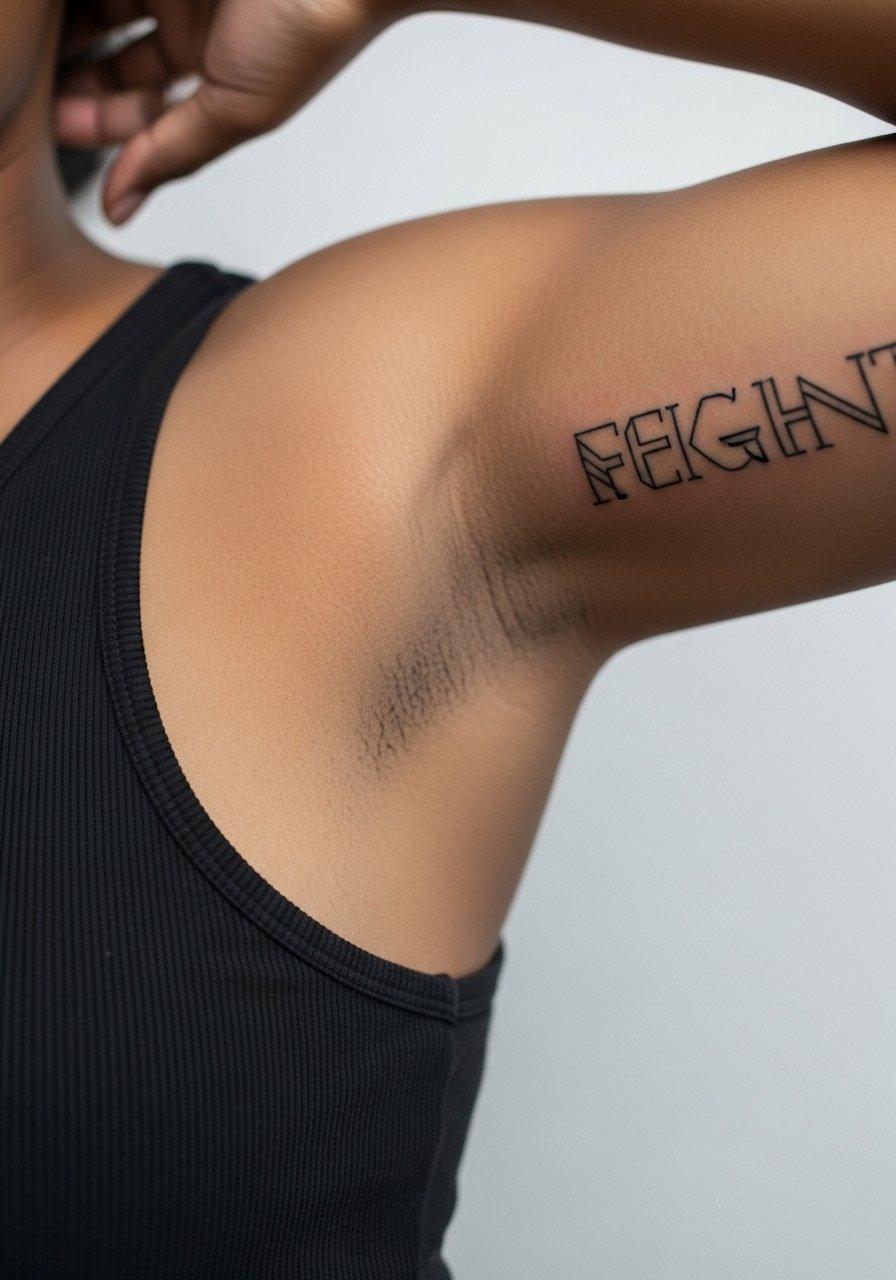
This style plays with skin tone as the fill. During consultation, bring stencil examples that show how much negative space you want and ask for slightly thicker outlines than the reference so the letters stay legible over time. Sessions are gentle but precise and often under two hours. A common issue is outlines drawn too fine which disappear into skin texture by year two. For the session, wear a loose button-down shirt you can slide aside so the artist has clean access without tugging fabric across the area.
Studio Day Picks
The compact, often detailed inner-bicep pieces above benefit from a few specific prep and healing items that make the session and first week easier.
-
Transfer stencil sheets. Helps you preview the exact placement and wrap of a band or script before the first pass, which matters for round arm shapes.
-
Low residue numbing cream. Useful for denser blackwork sections to reduce the sharp edge of pain and keep muscle tension lower during longer passes.
-
Thin protective film roll. Keeps the inner arm covered from friction under sleeves during the first days, especially for dot work and fine script.
-
Fragrance free gentle body wash. Cleans the area without stripping oils that help scab form correctly on detailed linework.
-
Aquaphor healing ointment. Thin layers during the earliest window keep delicate linework from drying and forming tight scabs that pull ink unevenly.
7. Dotwork Solar System Band
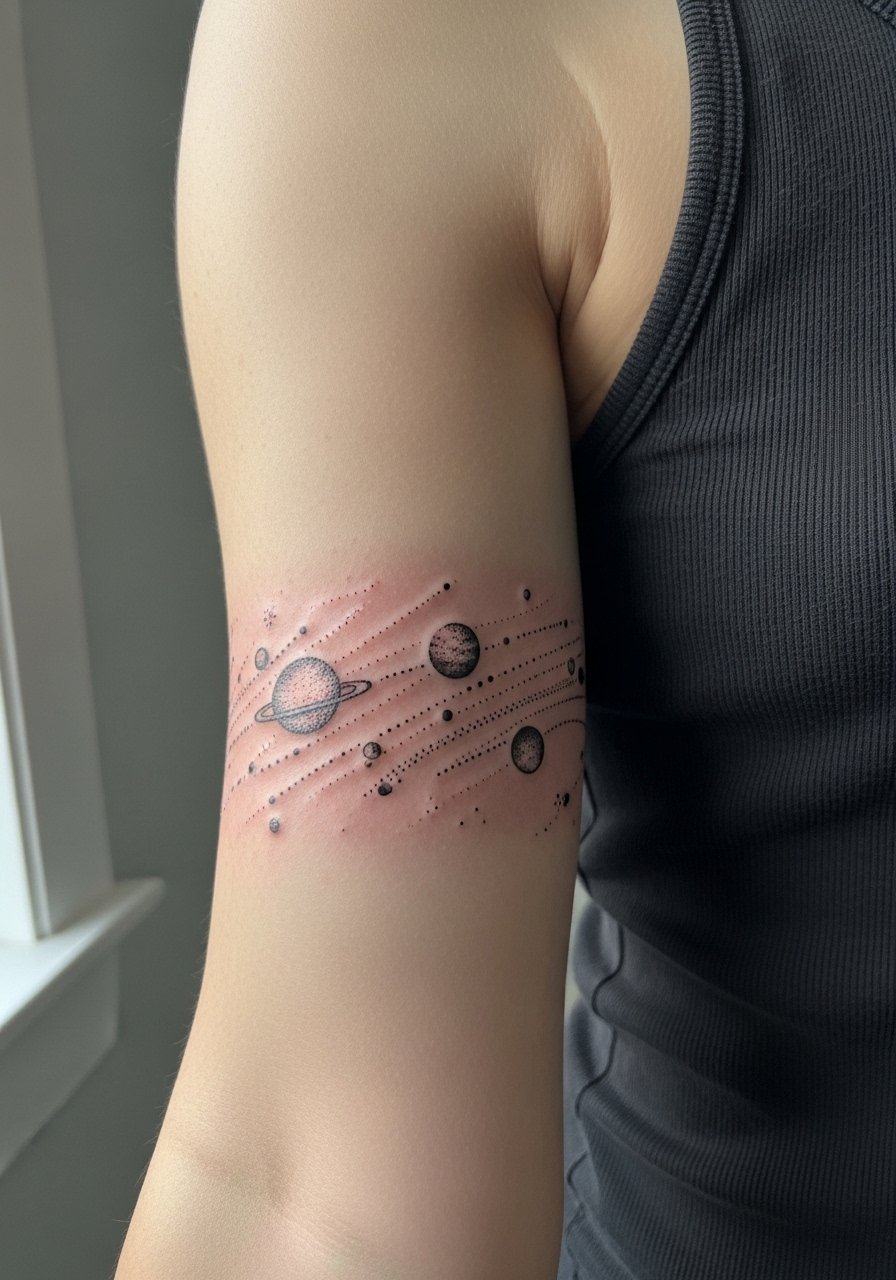
This is a playful way to curve a series of small elements around the arm. Ask for varied dot scales so planets keep separation instead of merging into a single gray wash. Sessions for a band like this are broken into shorter bursts to manage swelling. One mistake I see is asking for planets spaced tightly to mimic a photo reference. On skin, give extra breathing room. At six months the negative space between dots will still read, but expect a touch-up at two to three years if you want crisp separation restored.
8. Micro-Realism Animal Portrait with Soft Shading
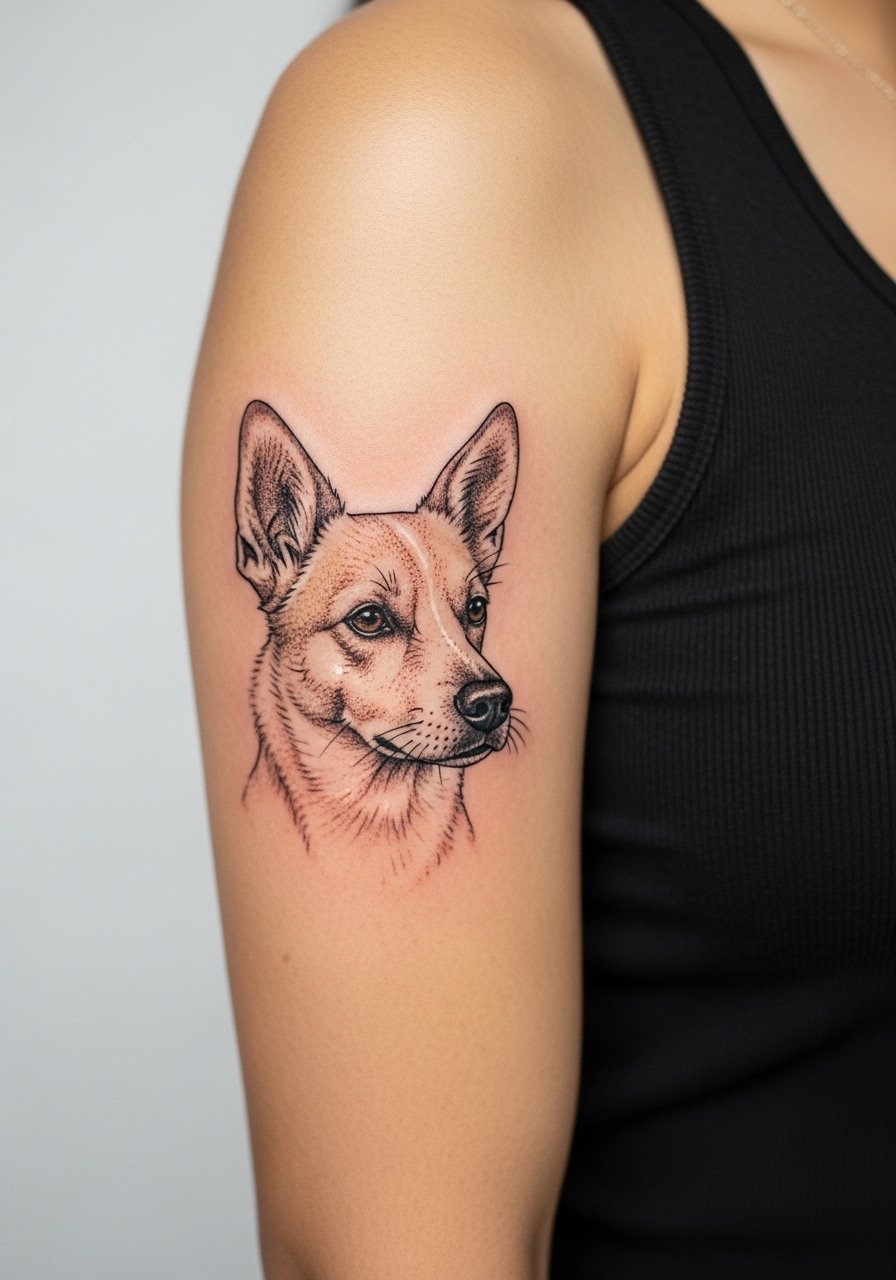
If you want a pet or animal likeness close to your heart, the inner bicep is intimate. Fair warning this area is tender so plan for anesthesia patches only if your artist approves. Tell the artist you want stronger midtones so fur texture keeps direction and does not flatten. The session feels more sensitive as the needle approaches the crease. For showing the piece, a fitted racerback tank or sleeveless top frames it without covering the tattoo.
9. Minimalist Wave Line that Follows the Arm Curve
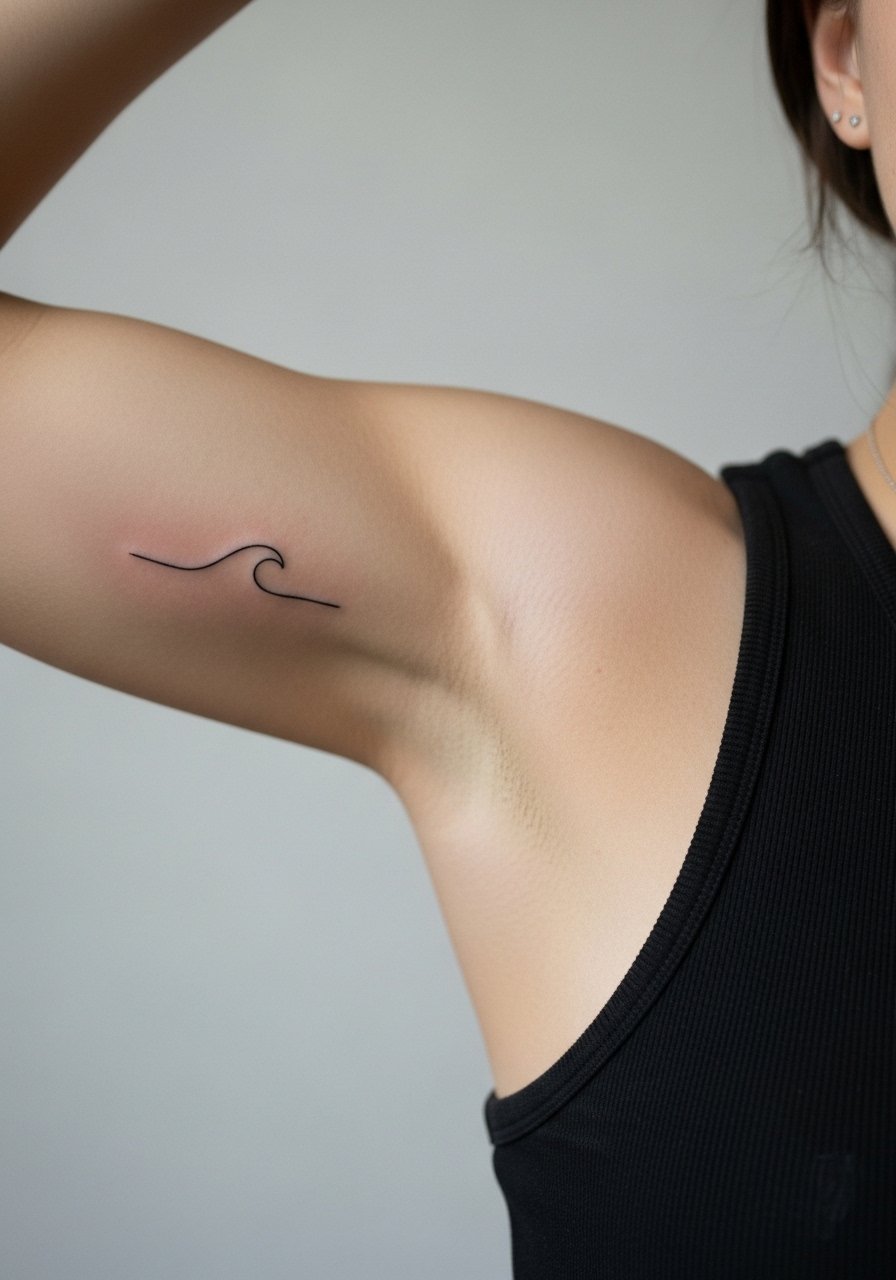
A continuous wave line reads elegantly on the curved inner bicep but needs consistent line weight and spacing from the start. The biggest mistake is making the line too thin and too long which magnifies the risk of uneven healing. Expect a quick session under an hour and minimal tenderness after. At two years you may notice slight softening in any very long runs, and a small touch-up restores the original crispness. This piece ages well when placed along natural muscle contours rather than crossing the crease.
10. Scripted Quote Framed Along the Inner Arm
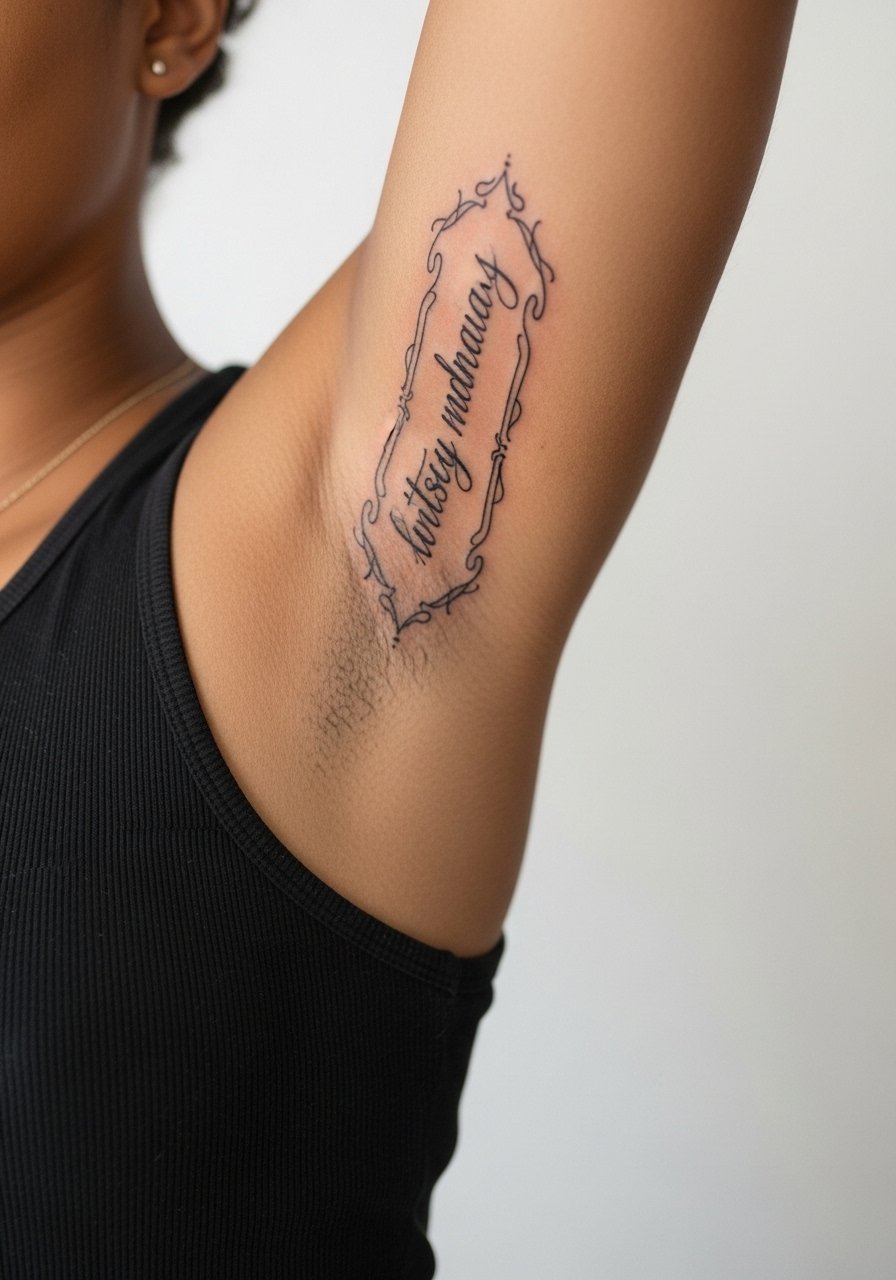
When a quote matters, pick a font that keeps spacing and letter weight consistent on curved skin. During consultation, show both the font and exact spacing you want and ask the artist to size letters for movement across the arm. Sessions vary by length and can run one to two hours. For the appointment, wear a loose drawstring linen pant so you can sit comfortably without fabric pulling across the arm. Script that is too ornate often loses its loops as the skin settles.
11. Gothic Black And Grey Skull Accent
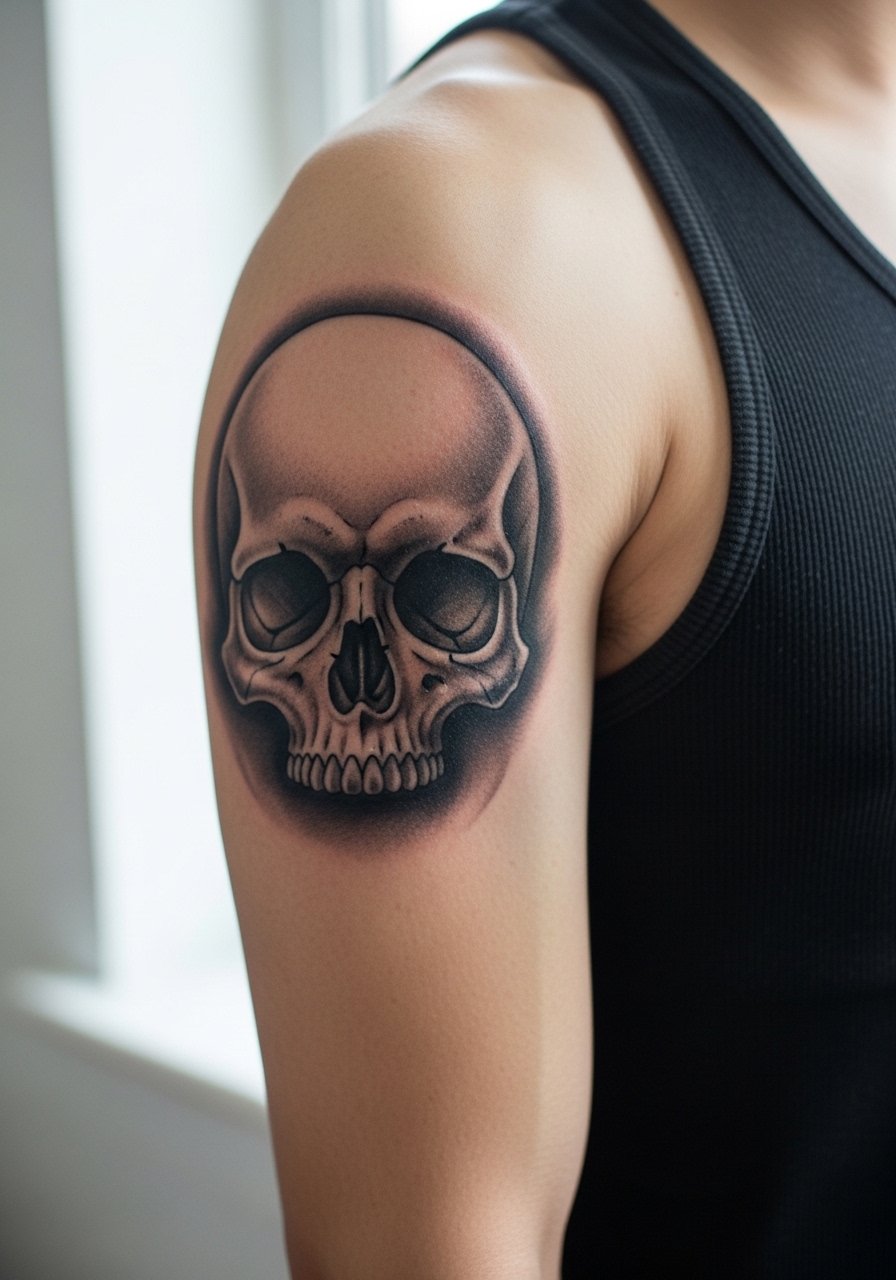
A small skull uses blacks and greys to create depth on the inner arm. Tell the artist you want a balance between full saturation in the darkest parts and soft grey transitions elsewhere. The session can be uncomfortable where the arm creases. One common error is insisting on extreme micro-contrast in a very small area which can compact. Plan for a touch-up at year three if you want to keep deep blacks fully saturated.
12. Whip Shaded Rose Cluster with Leaves
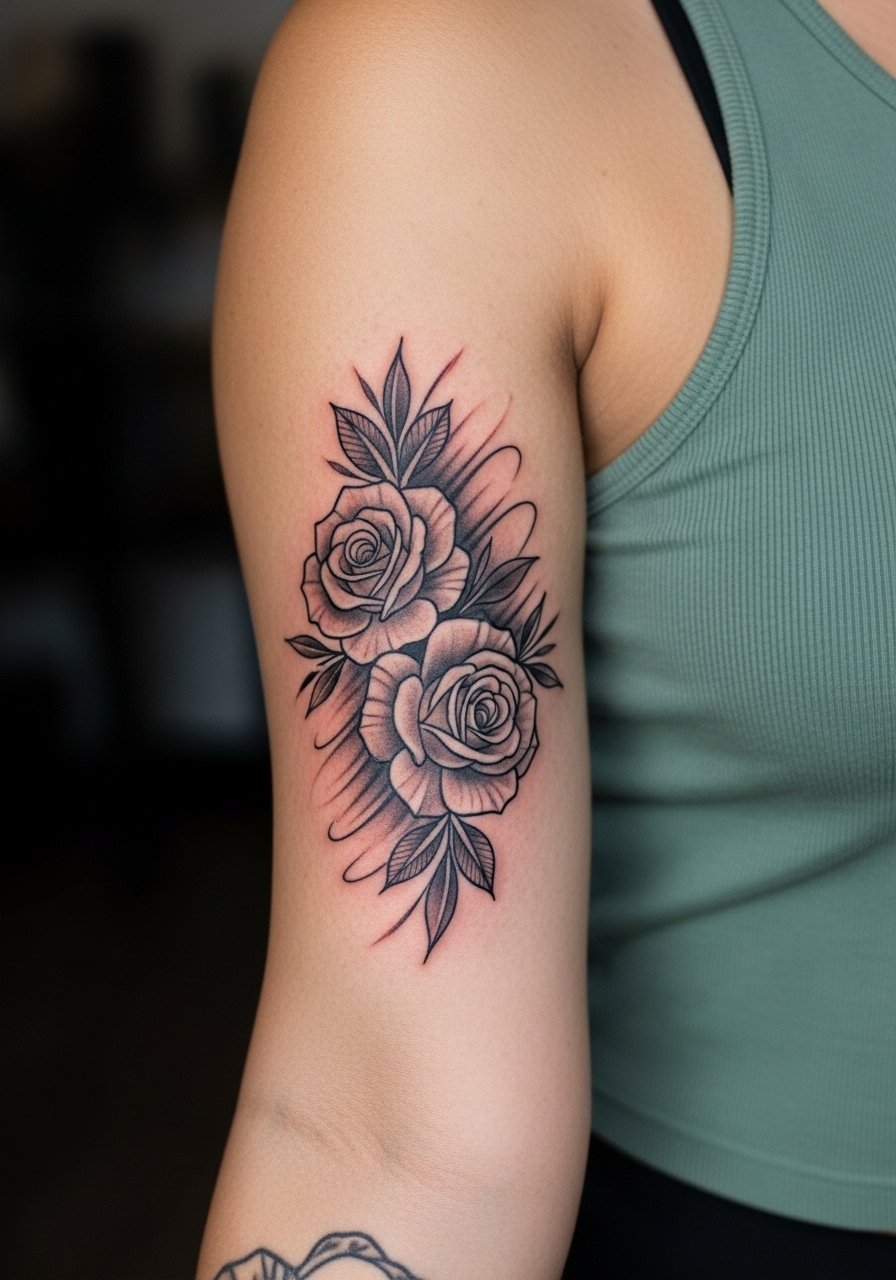
Whip shading reads beautifully on the inner bicep because the strokes flow with muscle direction. Ask for visible stroke rhythm during consultation so the shading keeps motion instead of becoming a smooth gray patch. Sessions can be medium length and feel patchy as the machine changes angle. For after-session comfort and to keep clothing from rubbing the new shading, pair the look with a lightweight loose button-down you can slide aside. The shading softens slightly by year two but often gains a pleasing patina.
13. Chain-Link Band With Dot Accents
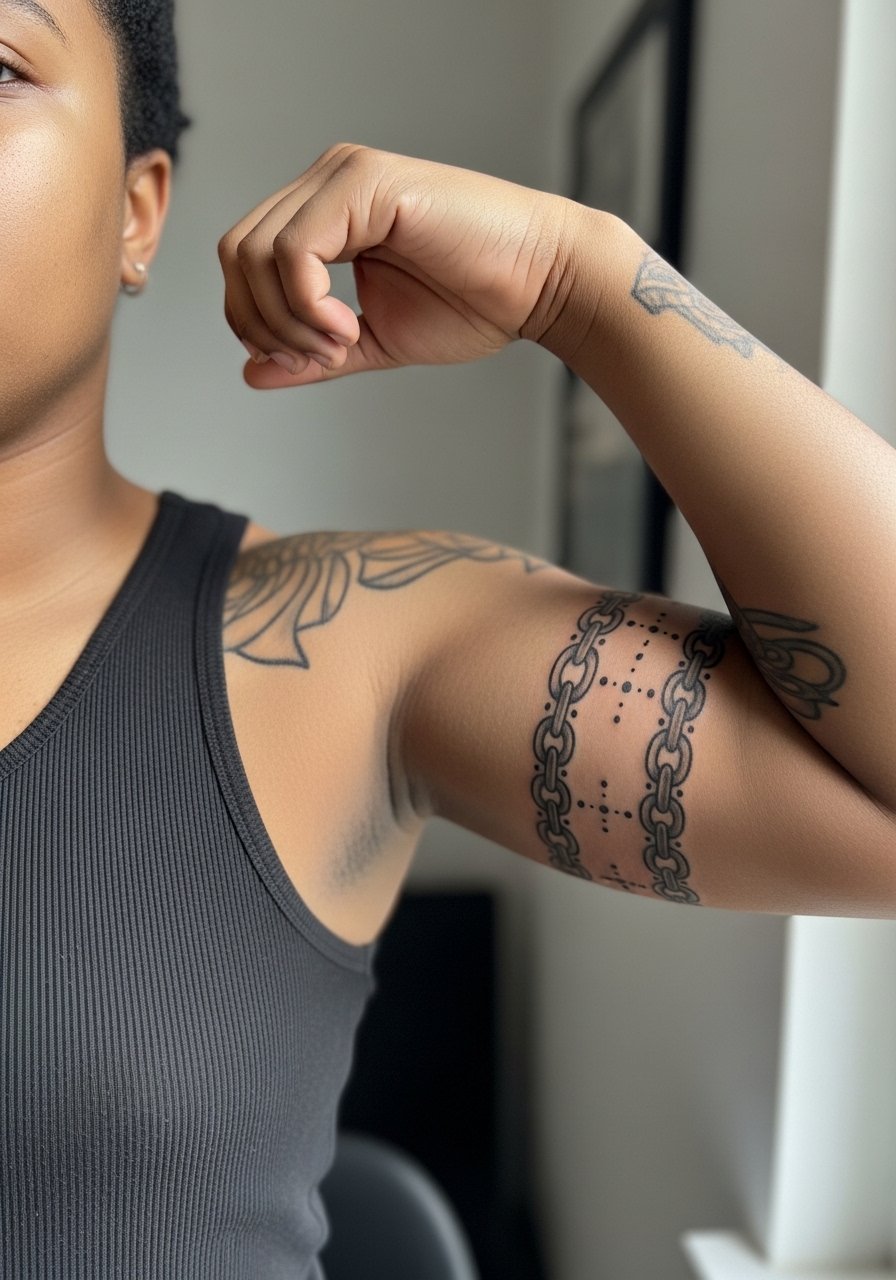
Chain bands demand consistent spacing to avoid visual slippage as the arm moves. The common mistake is making links too small which leads to early blurring. Discuss line weight and ask for a touch-up plan during booking. This piece is quick to tattoo but the edges can feather slightly after healing, so expect a possible minor retouch at two years to sharpen link edges. For the session, sit in a relaxed position with the arm supported so the stencil wraps properly without distortion.
14. Compass Rose With Tiny Map Fragment
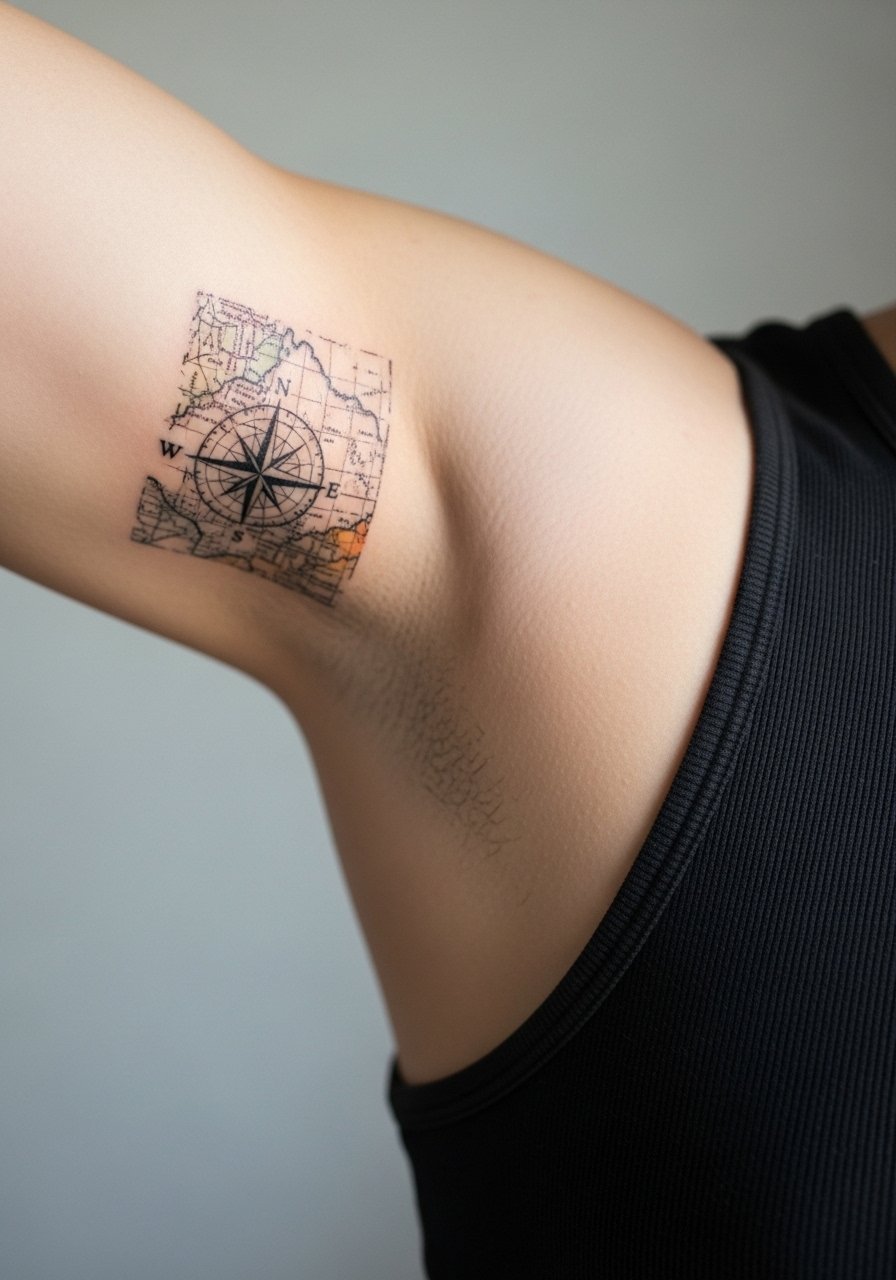
A navigational motif benefits from clear axes and slightly bolder compass points so orientation stays legible over time. Tell your artist which map detail you want emphasized and request simplified contour lines rather than dense topography. Sessions are moderately detailed and may take one to two hours. For showing it off, a sleeveless top or rolled shirt sleeve frames the compass well. A common error is requesting a dense map in a small area that becomes unreadable as the skin ages.
15. Baroque Filigree Frame Around a Tiny Image
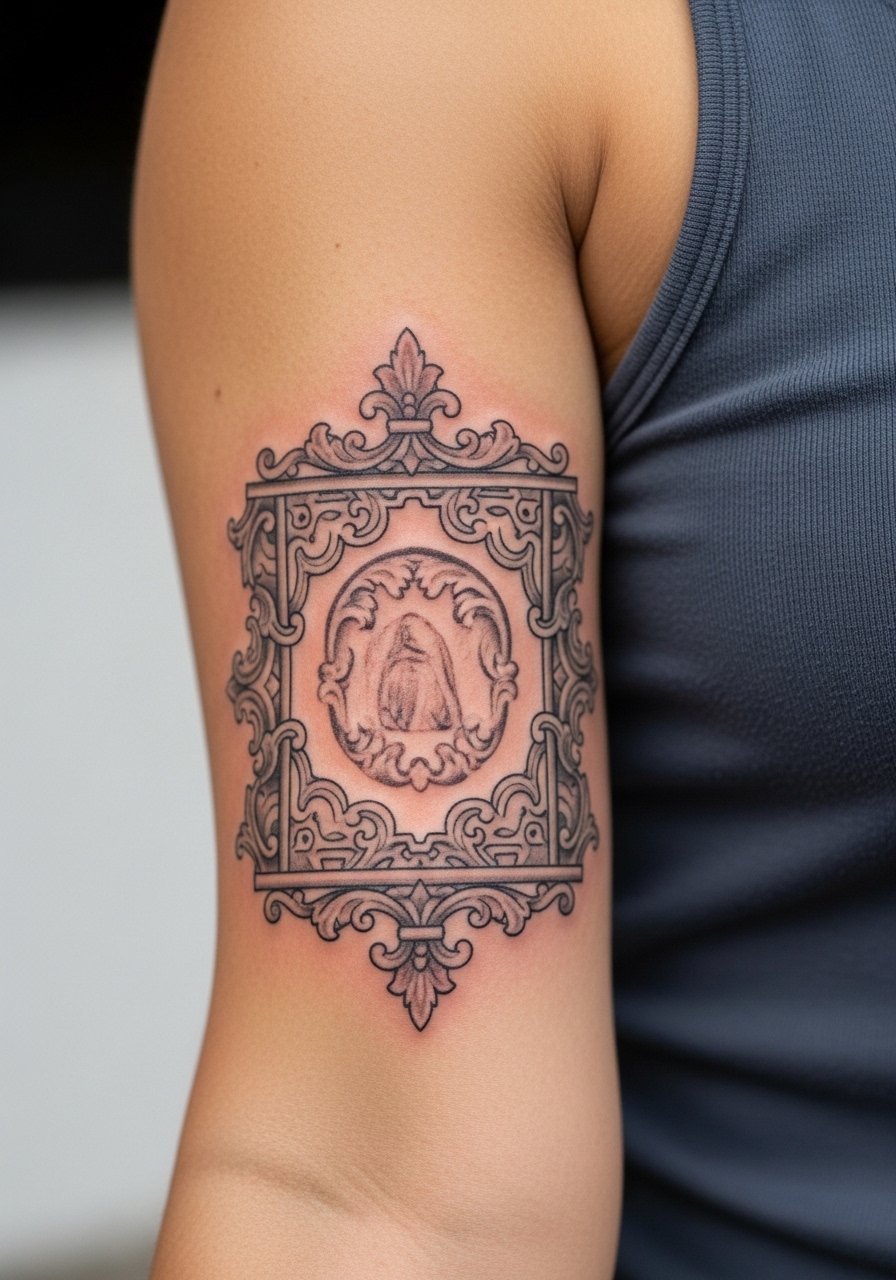
Decorative filigree needs intentional spacing between curls so the negative space survives stretching. Ask for simplified flourishes in the initial stencil so the piece keeps clarity after healing. Sessions can be time consuming because of fine repetitive lines. A common mistake is over-ornamenting the filigree which blends into gray over time. Expect a touch-up around year three to restore crispness if you prefer keeping every curl sharp.
16. Small Portrait Cameo in an Oval Frame
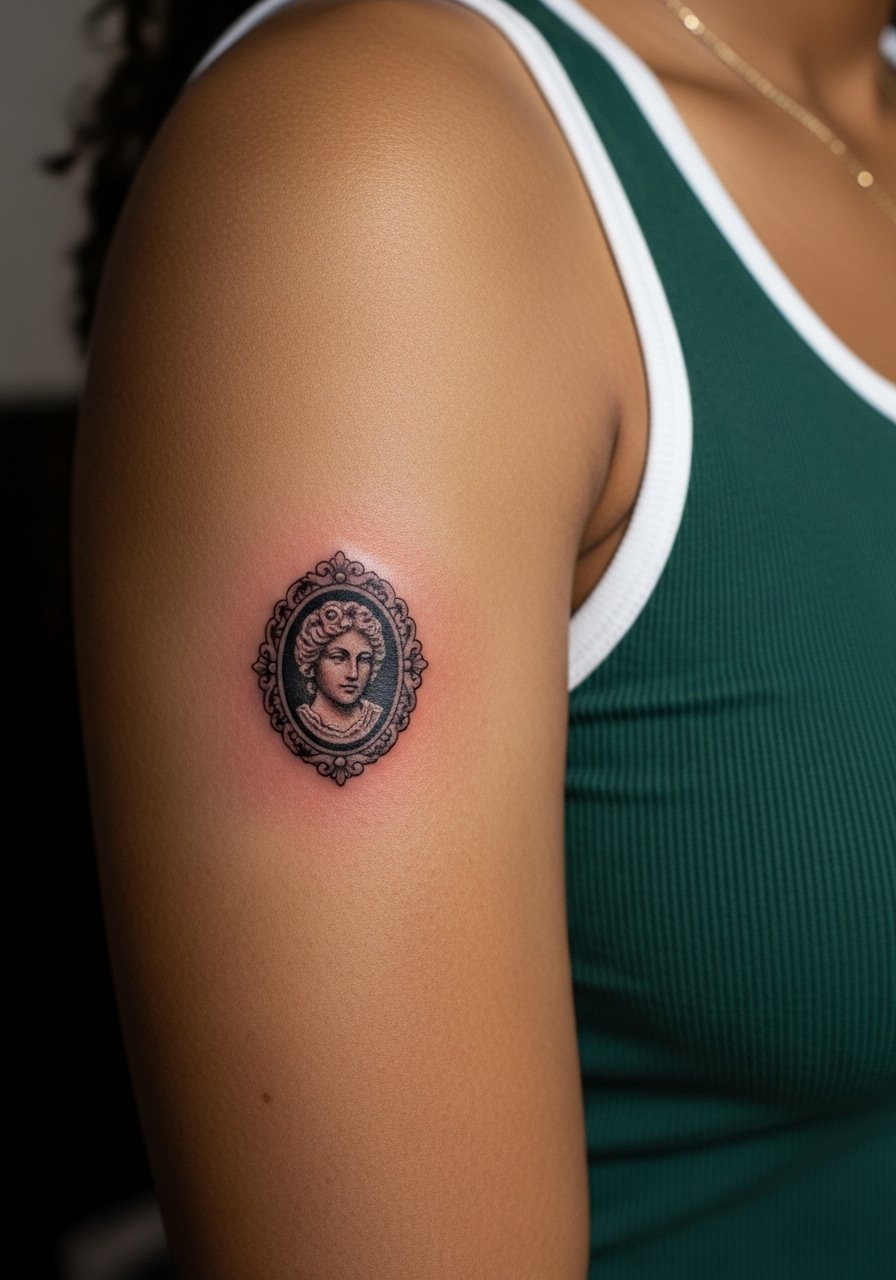
Portrait cameos demand planning so facial highlights and shadows keep separation. The inner bicep is tender but it allows a private placement that sits just beneath the sleeve line. During consultation, specify how much frame you want so the portrait does not feel crowded. Sessions are precise and can take multiple short sittings to protect detail. For the session, bring a comfortable chair option and a support pillow to keep the arm steady. Portraits often need a small touch-up at two to four years to maintain tiny highlights.
17. Cover-Up Friendly Dark Wash Panel for Future Work
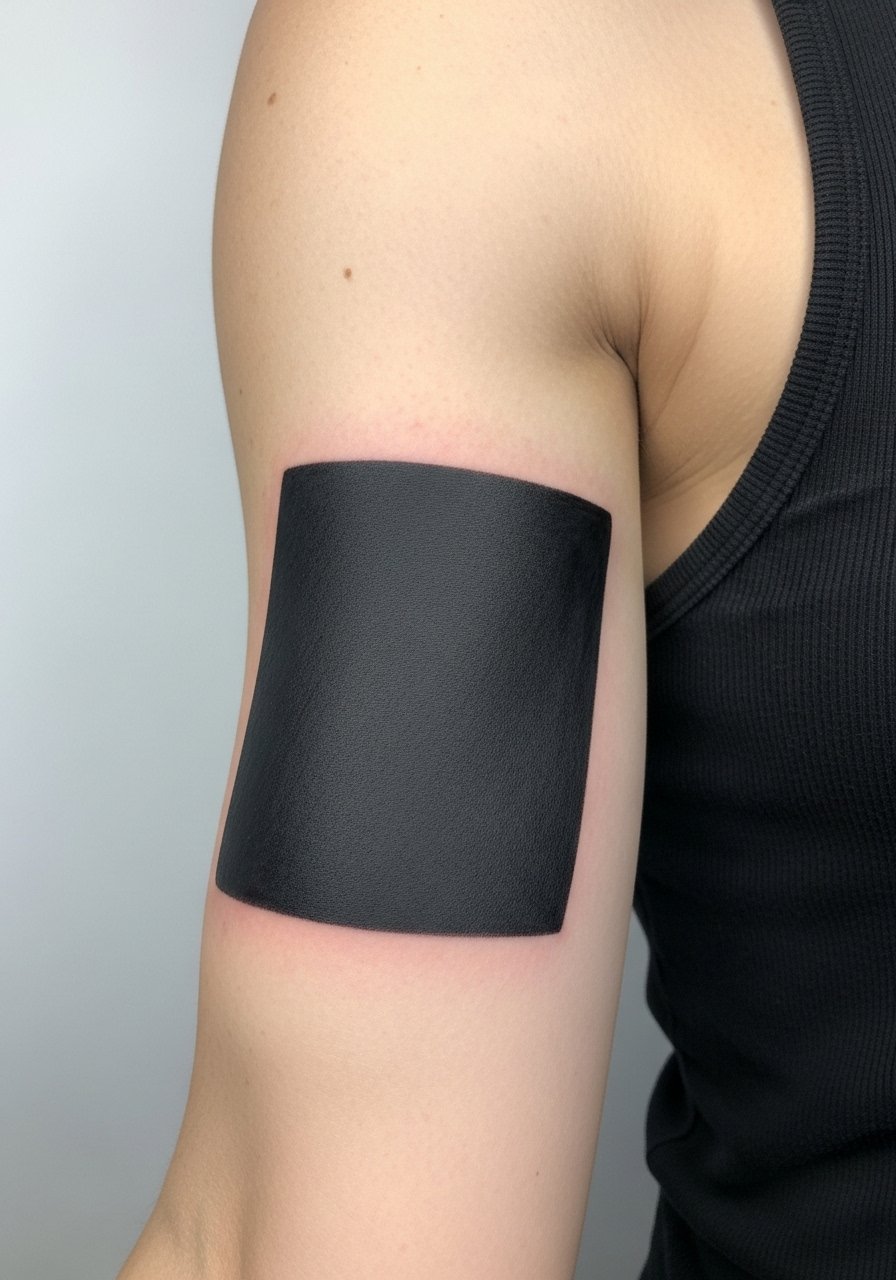
If you plan a future larger piece or need to hide old ink, a controlled dark wash panel gives an artist a predictable canvas. There is a debate about this approach. One camp prefers layering darker washes now to block old color aggressively. The other camp favors softer transitional shading that lets a new design integrate without a heavy black field. Ask the artist which school they follow and why before committing. Sessions can be intense due to saturation work, and a follow-up session is often planned once healing shows how the wash settled.
Frequently Asked Questions
Q: Will fine line pieces on the inner bicep blur faster than bold blackwork here?
A: In my experience fine line tends to soften sooner on curved, moving skin like the inner bicep. Bold blackwork usually preserves silhouette longer because saturation and contrast read better as the skin settles. If you want fine line, ask for slightly heavier initial line weight and plan a touch-up window at two to four years.
Q: How painful is an inner bicep session compared to the outer arm?
A: The inner bicep is typically more sensitive because the skin is softer and closer to nerves, so expect higher discomfort than the outer arm. Sessions can be shorter or broken up to manage pain and swelling. Numbing options can be discussed with your artist but check shop policies first.
Q: Can I wear regular shirts to the studio for an inner bicep appointment?
A: For easy access wear a loose tank top or a button-down you can slide off one shoulder. The goal is to allow the artist clear access without rubbing fabric across the fresh work. Tight sleeves and collars create awkward angles for long sessions.
Q: Do stipple and dot work need different aftercare on the inner bicep?
A: The care is broadly the same but dot work often forms very fine scabs that you should not pick. Keep the area clean, avoid friction from tight sleeves, and follow the artist's re-apply schedule. Expect softer transitions as the dots settle and plan for a touch-up if you want the original contrast restored.
Q: Is it harder to tattoo portraits on darker skin tones on the inner bicep?
A: Portraits can be successful across skin tones but they require contrast planning. Artists will often use deeper shadow blocks and careful highlight placement so facial planes read well. Talk openly about reference lighting and ask to see healed work on similar skin tones before booking.
Q: How should I decide between a bold blackfill cover-up and a softer integration plan?
A: It depends on the size and color of the old tattoo and your tolerance for future touch-ups. A heavy blackfill hides immediately but limits future color options. A softer integration can allow for more complex future work but may not hide strong colors as quickly. Discuss both approaches with an artist who shows similar healed examples.