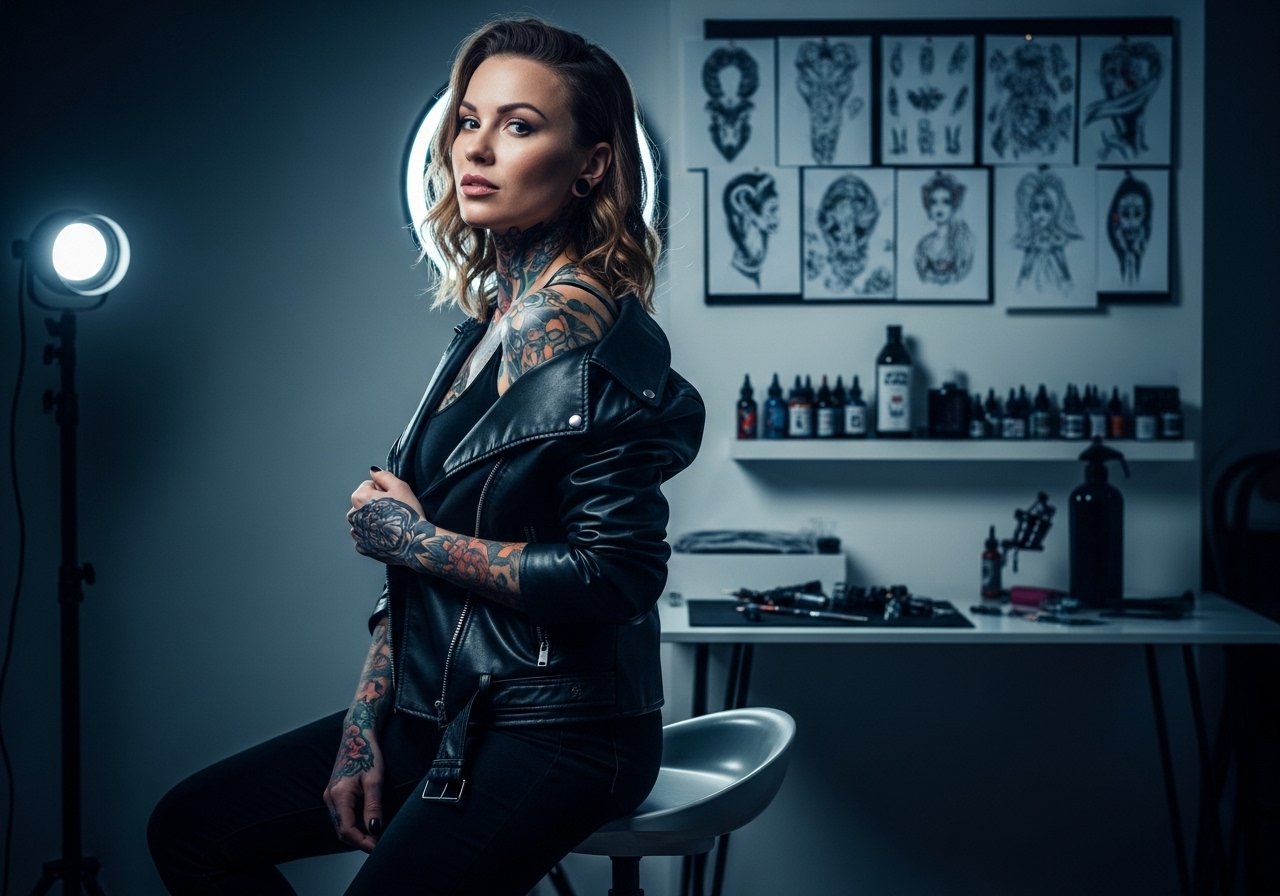
Fine line tattoos dominate Pinterest right now, but the pieces that get the most saves often blur on scar tissue, fade faster on medium brown skin, and leave people scrambling when guest artists cancel last minute. Scars read differently under studio light than on a phone screen, and wardrobe choices matter when you want a tattoo to look intentional, not masked. Below are 17 chest-focused designs and placement ideas that balance longevity, scar camouflage, and session-day practicalities.
1. Neo-Traditional Floral Chest Piece That Frames Scars
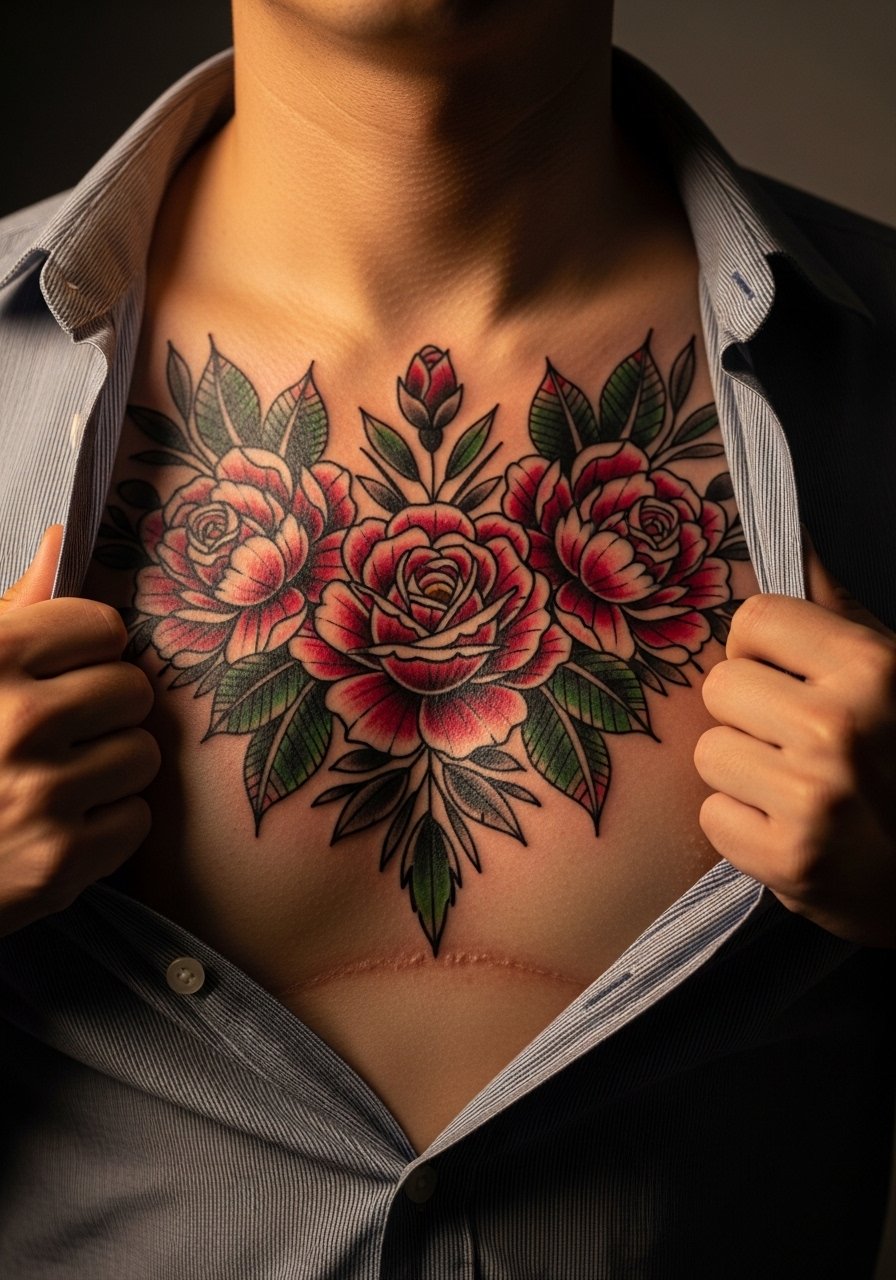
Start this piece with a central motif that sits just above the scar line and petals that drape to either side so the scars become part of the composition. Tell your artist you want bold outlines and saturated color with slightly wider petal edges to avoid fine-line loss on textured tissue. Common mistake is asking for too many tiny petals close to the scar. Expect a two to three session build where the first session locks in outlines and negative space, and follow-up adds saturation. For showing it off, wear an open front button down that can be pulled aside for photos without full exposure.
2. Blackwork Geometric Mandala Over the Sternum

This design uses symmetry to disguise uneven scar texture and to emphasize a flat-chest read. In consultation, ask for generous spacing between concentric lines and solid black saturation rather than hairline details. The biggest mistake is shrinking a mandala to fit a scar only, which causes early merging of lines. Pain is moderate on the sternum but manageable, and touch-ups at three to six months are common to maintain saturation. For outings pick a deep v tank top men or similar cut that frames the geometry without cutting across it.
3. Fine Line Botanical Vines Along Collarbone and Pec

This delicate option blends scars into organic curves that follow the collarbone. Fine line on scar tissue sparks a two-camp debate. One camp argues that fine line ages gracefully on stable skin. The other camp says scar tissue causes early blurring and rapid fade. My practical take is to request slightly heavier keylines and ask for spacing between leaf veins so the design has room to age. Common failure is asking for needle-fine stems directly over fresh scar grooves. Expect one to two sessions and plan a touch-up at six to twelve months. For showing it off, pair the piece with an off shoulder crop top that keeps attention on the collarbone curve.
4. Traditional American Eagle Spanning the Pecs
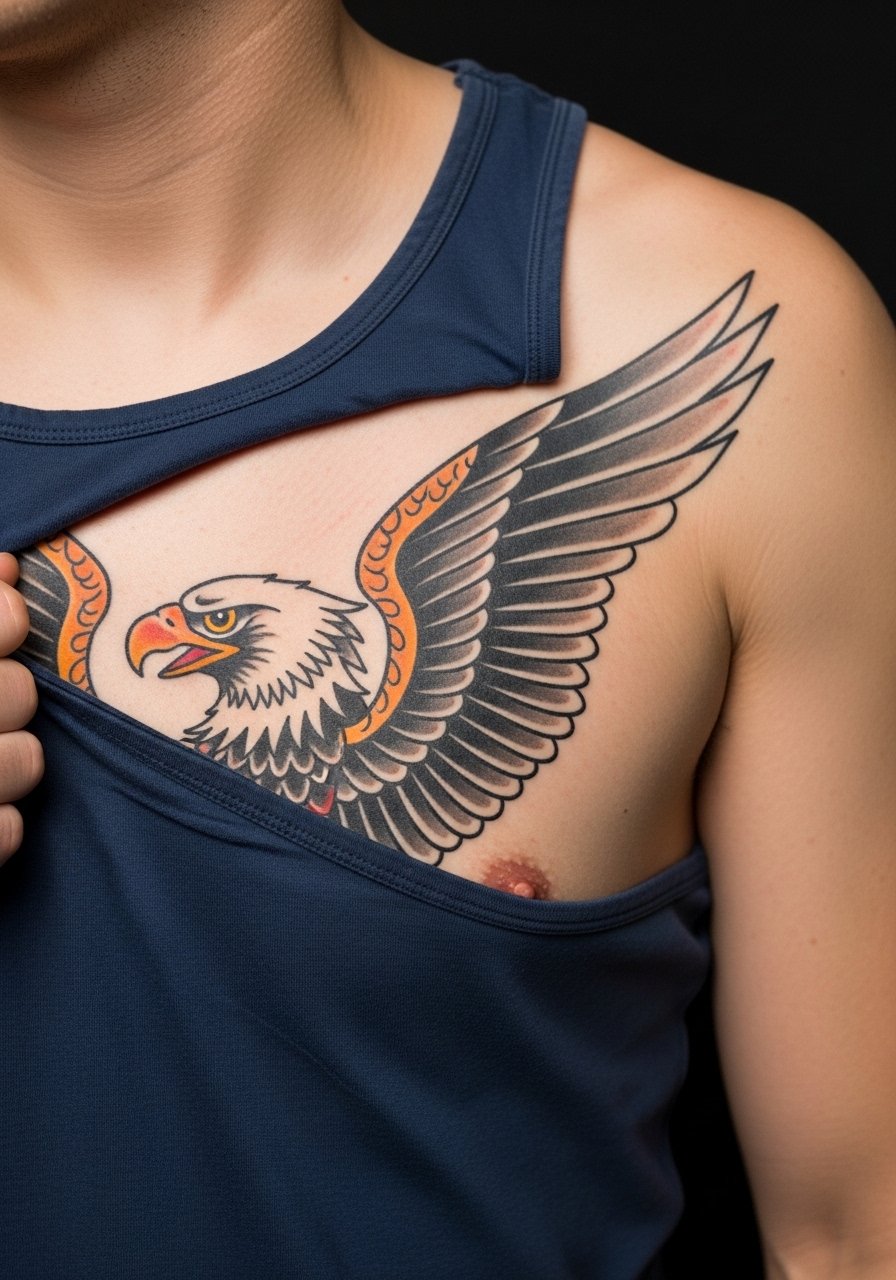
This is a high-impact way to reclaim the chest with bold linework and strong shading. Ask for thick barbed outlines and large fields of saturation so the piece reads clearly as it ages. The mistake people make is shrinking the eagle to fit a small scar area, which loses the style's visual language. Pain varies across the chest but most find pec work moderate. Expect three sessions for a full wingspan and a touch-up at about six months to refresh saturation. Pair with a sleeveless muscle tank to show off the wings without sleeves interrupting the design.
5. Ornamental Dotwork Sunburst Around Nipple Grafts
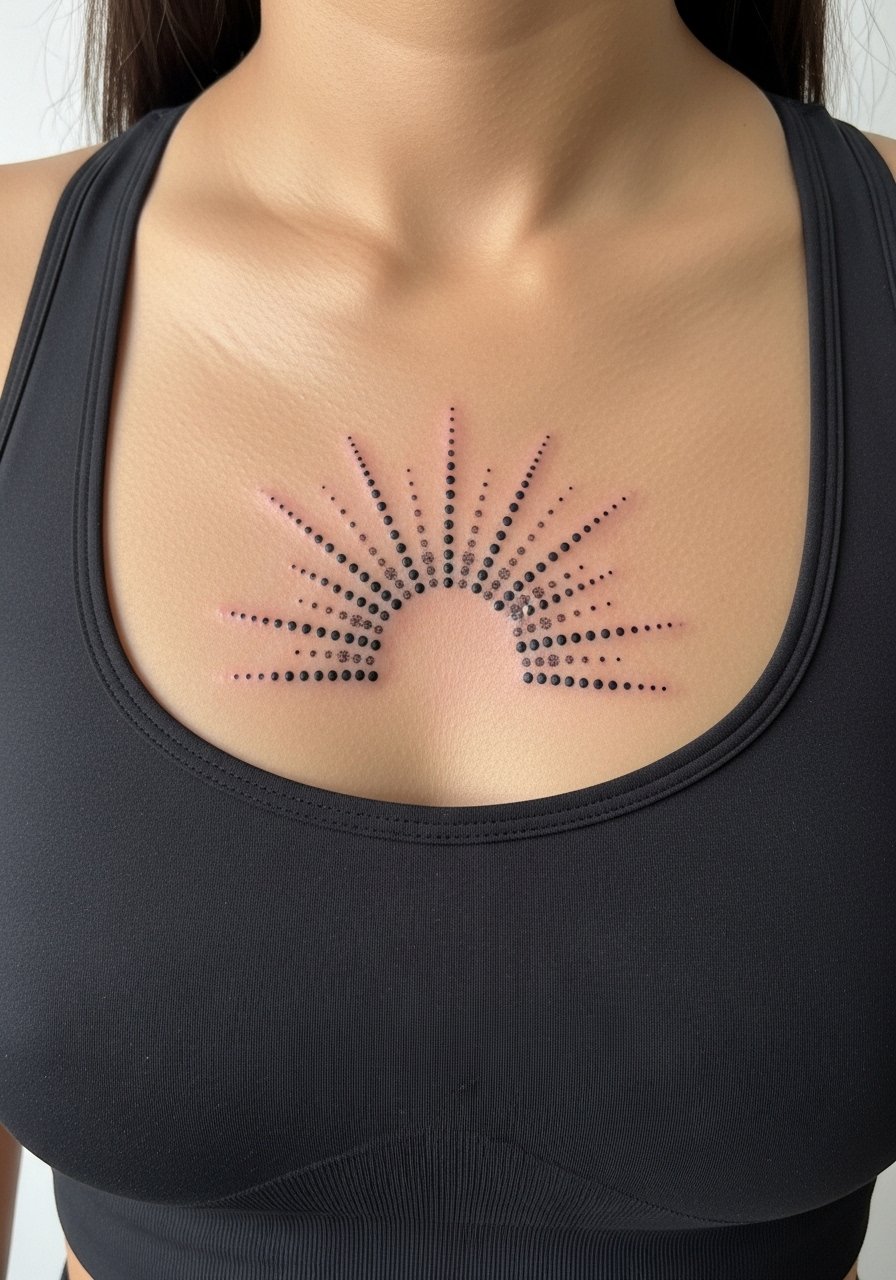
Dotwork carves away attention from linear scars through rhythmic stippling. Tell your artist you want the dot density lighter toward the edges to avoid heavy saturation near grafted tissue. A common error is packing dots too densely right over grafts, which can trap pigment in scar pockets. These pieces need careful alignment to graft placement and often two sessions. Sensitivity can be higher near grafts so request slower needle passes and scheduled pauses. For subtle daytime shows try a keyhole tank top that frames the burst without full exposure.
6. Micro-Realism Phoenix Rising from the Scar Line
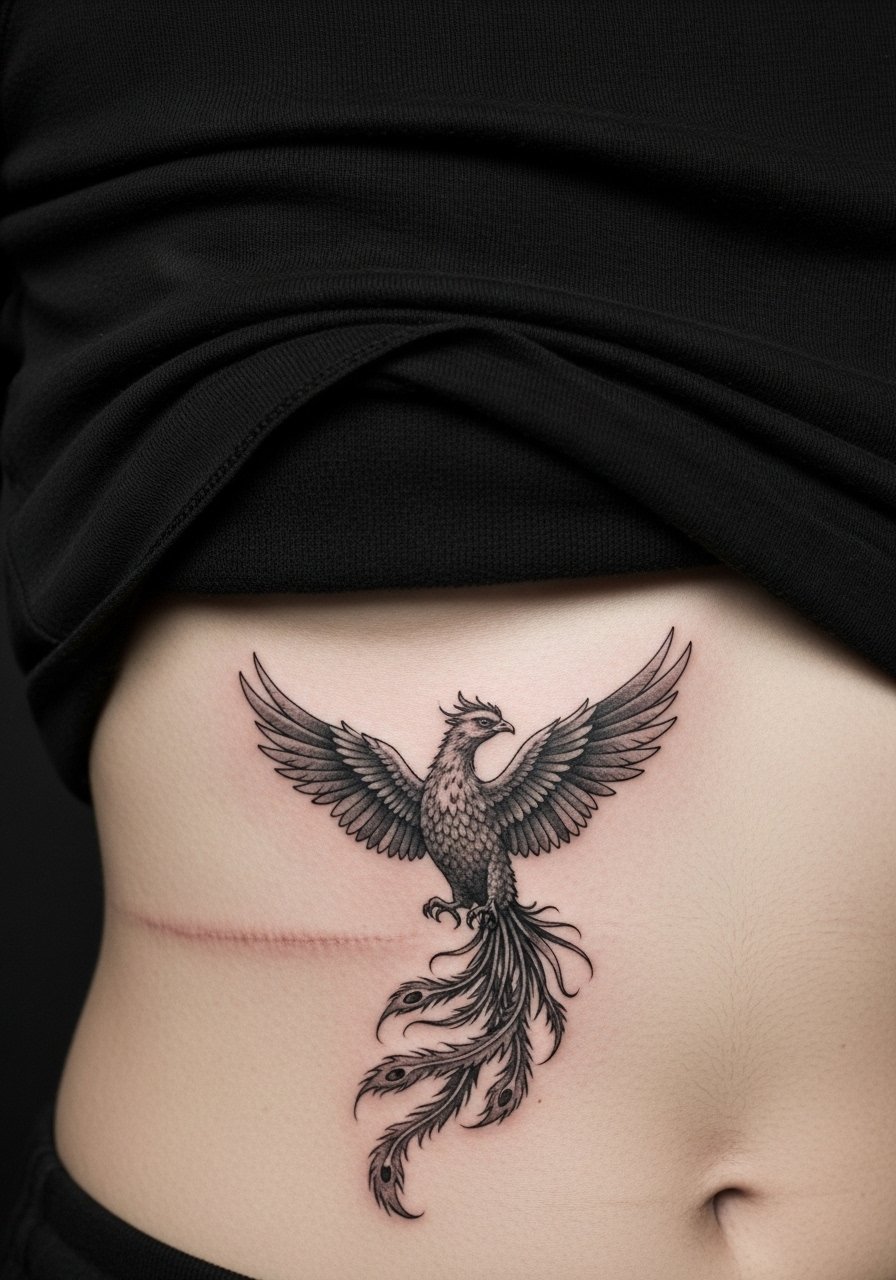
Micro-realism masks linear scars with layered feather detail and gray wash. Tell the artist you want contrast between the plumage and the scar, with slightly bolder edge strokes near the scar so small depth variations do not read as gaps. The drawback is session time and cost since this style often needs multiple layering sessions to maintain fine tonal transitions. Expect several sessions and a realistic touch-up schedule at year one. For daily wear, a fitted crewneck tee rolled low gives just enough reveal to highlight detail without competing patterns.
Studio Day Picks
The first six chest pieces ask for different prep than smaller arm work, so these five items smooth session day and the first week of healing.
- Australian Tea Tree Ink Fix. A lightweight anti-itch option recommended by forum users for scar tissue that does not leave a greasy residue during the first week after a session.
- Green Sheep Balm. Breathable balm that some artists prefer on sensitive grafted areas because it avoids heavy occlusion while still reducing dryness.
- Hada Labo Hydrating Lotion. Lightweight hydration that helps fine line work stay plump without clogging, useful for collarbone and thin-line pieces.
- Indie Nerd Tattoo Serum. Non-comedogenic serum some people use for itch control during chest healing when heavier ointments feel too occlusive.
- Second Skin protective film. Useful for chest sessions where friction from clothing is high and you want a protective barrier overnight without heavy greasing.
7. Ignorant Style Abstract Waves Over Top Scars
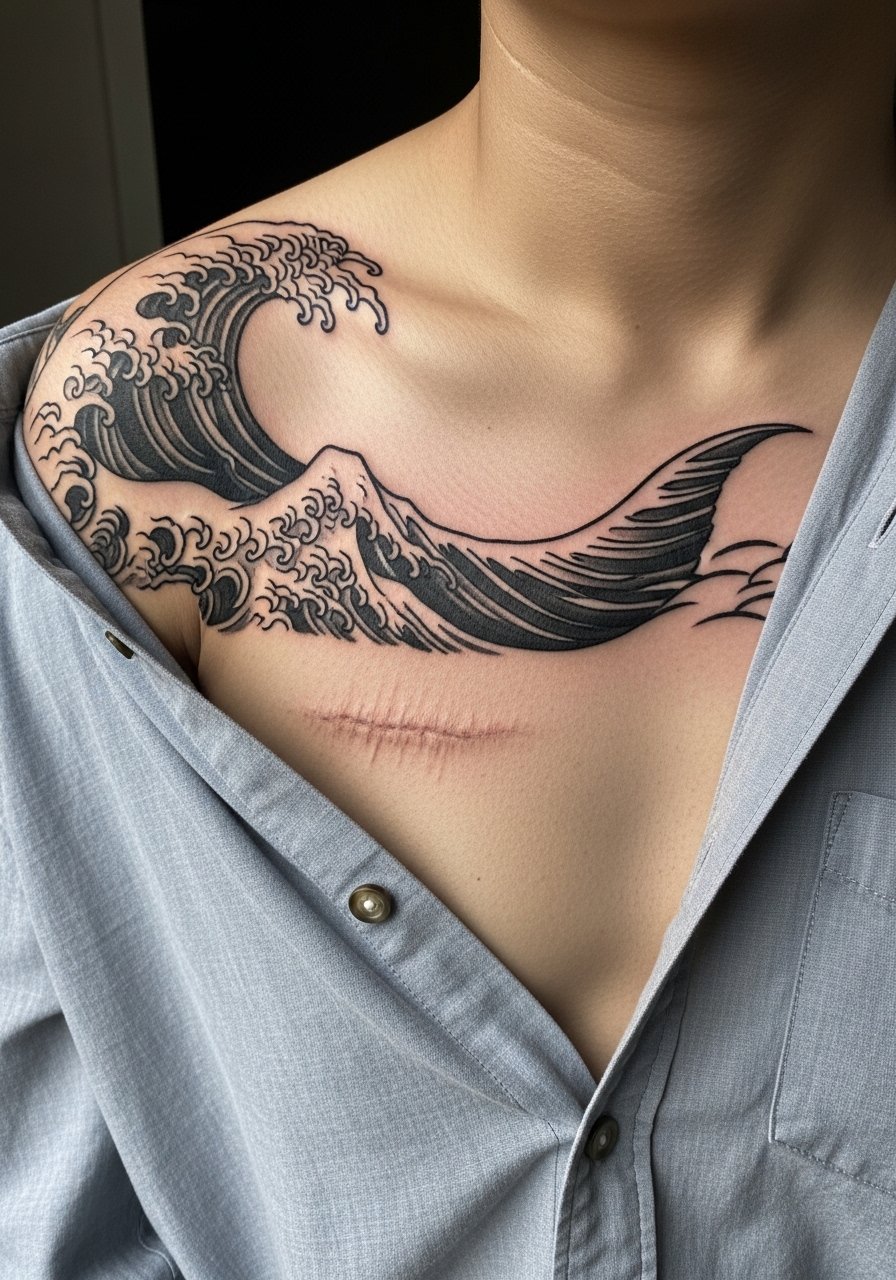
This playful, scribble-forward aesthetic uses bold marks to make scars look intentional and graphic. It works well for short sessions because the style is meant to age into an organic patina. Tell your artist you want confident, uneven stroke weight rather than tiny repeated strokes. A common mistake is coaching the artist to "neaten it up" which kills the point of the style. Expect one to two sessions and minimal touch-up for future texture. Session feel is quick and percussive, and many clients report lower sensitivity over old scar tissue.
8. Watercolor Galaxy Blending Into Pec Contours
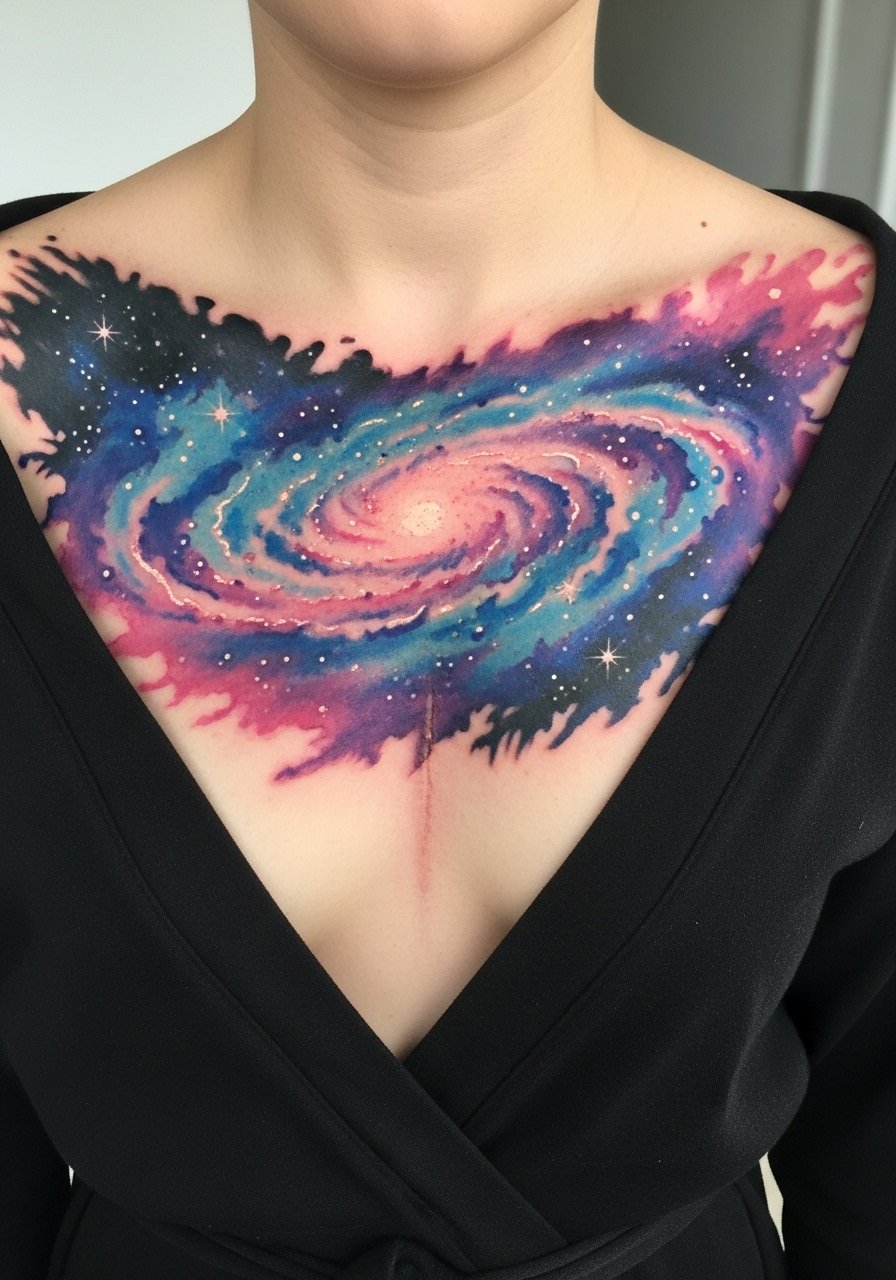
Watercolor creates dreamy transitions that can mask horizontal scars with soft edges. The trade-off is that color migration and fade happen faster on scar tissue, and fine watercolor gradients need careful saturation to avoid patchiness. A bad move is asking for ultra-fine feathering directly above scar grooves. Two to three sessions are common, and expect more frequent color touch-ups than blackwork. For session wear choose a loose cotton robe so an artist can access the chest without fabric dragging.
9. Minimalist Arrow Motifs Pointing From Scar Centers
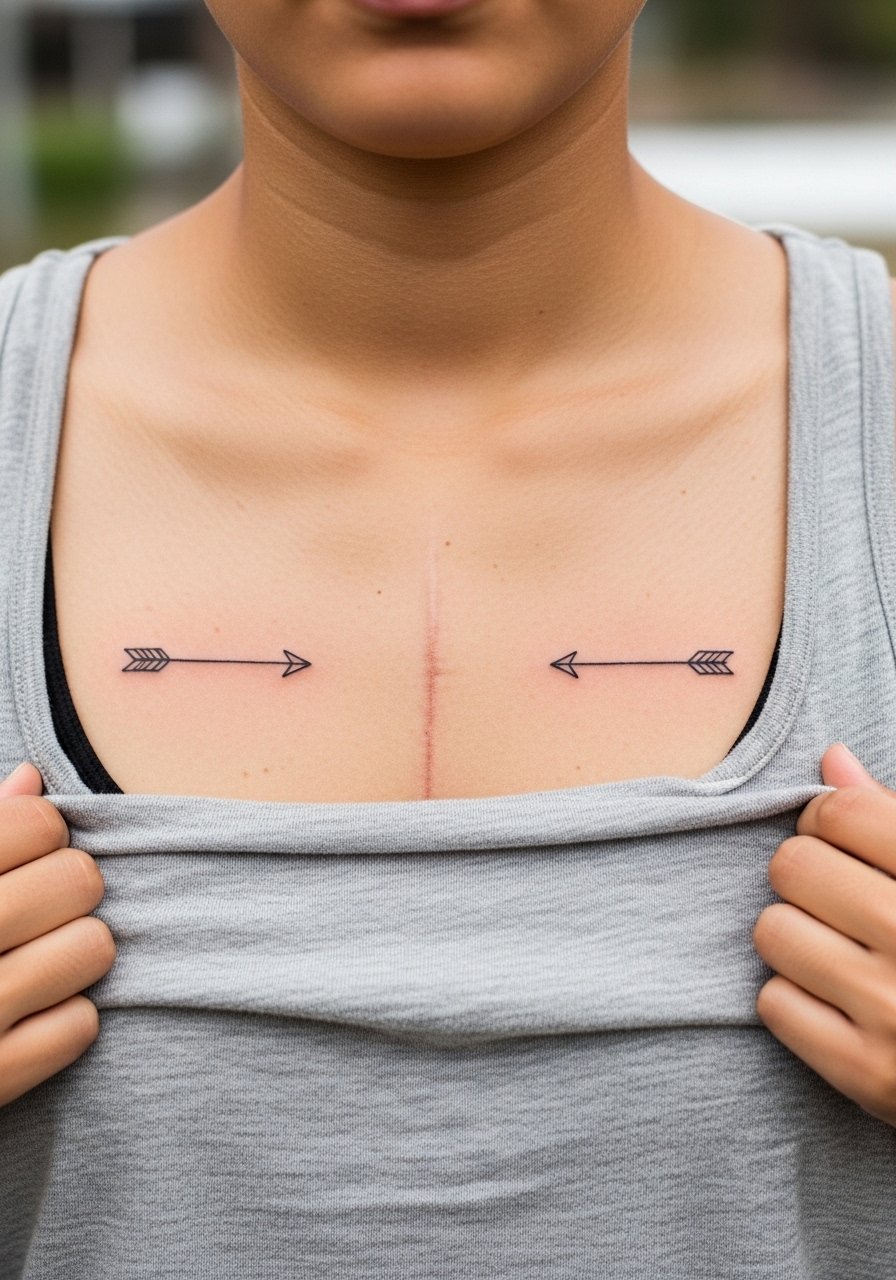
Small arrows are symbolic and low-commitment, and they read clean when placed with generous spacing. Because scar tissue can blur single-line work, request a slightly thicker one-point line weight so the motif retains clarity beyond year one. The common regret is making arrows too close together or too tiny. Expect a short session and possibly a touch-up at six months. For summer visibility try a sheer mesh tank that lets small motifs peek without full reveal.
10. Blackwork Tribal Knots That Texture Scars

Interlocking knots and solid fields build texture that reads confidently over scar tissue. There is cultural origin sensitivity with knot and tribal patterns. Consider adapting motifs rather than using direct copies of sacred designs. Ask the artist to plan negative space for breathability so saturation does not turn into a heavy block. The mistake is forcing too much detail into a tight zone, which invites early touch-ups. This placement benefits from sleeveless clothing at reveal time, so a sleeveless muscle tank makes sense when you want to show the flow.
11. Neo-Traditional Skull With Roses Over Nipple Area
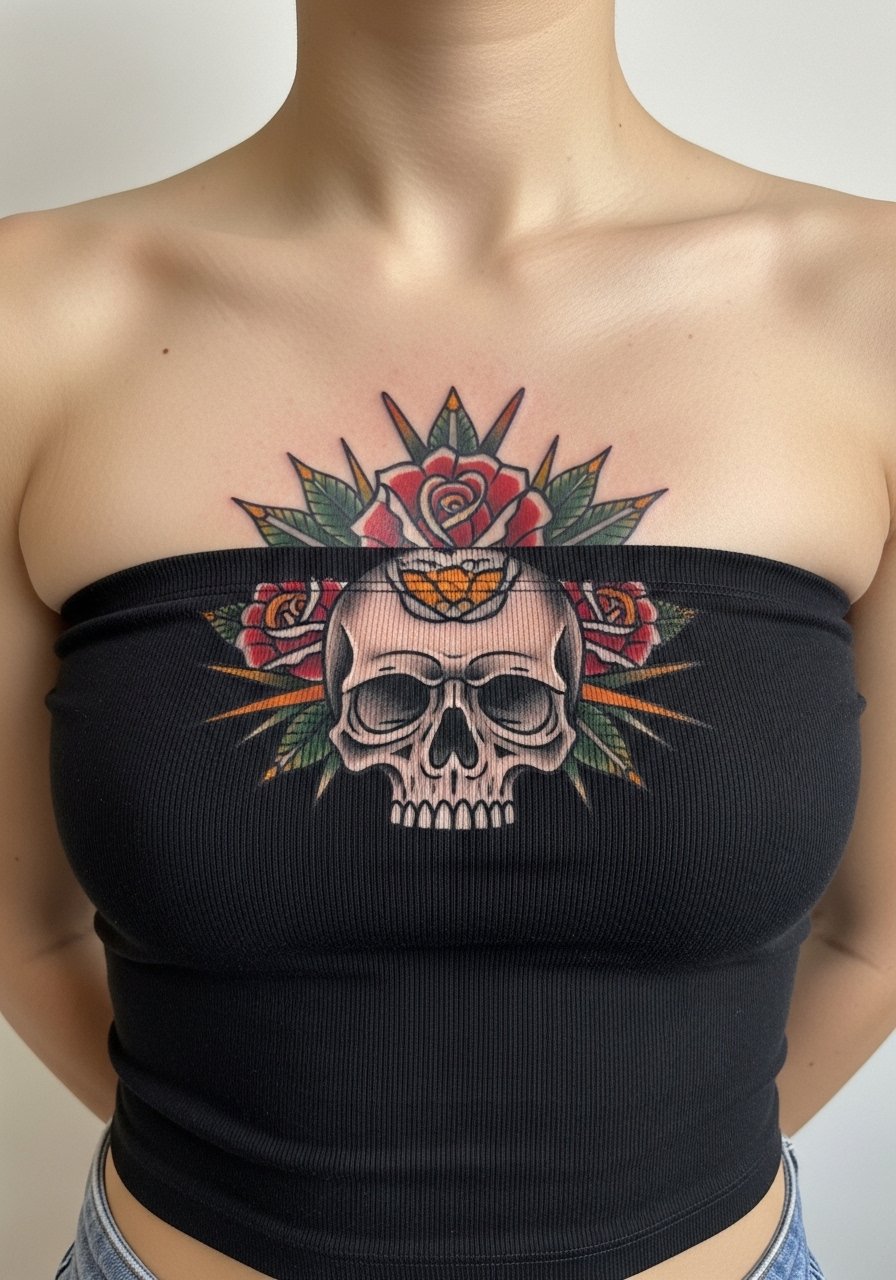
This one balances hard and soft elements to reframe the graft zone as deliberate composition. Be explicit with your artist about avoiding direct tattooing on fragile graft skin unless you have clearance from medical follow-up. A common misstep is picking tiny supporting petals that read as clutter once healed. Plan for a two to three session approach where the first session sets placement and the second deepens color. Sensitivity around grafts varies, so ask about pacing and rest breaks.
12. Fine Line Constellation Mapping Along Scar Paths
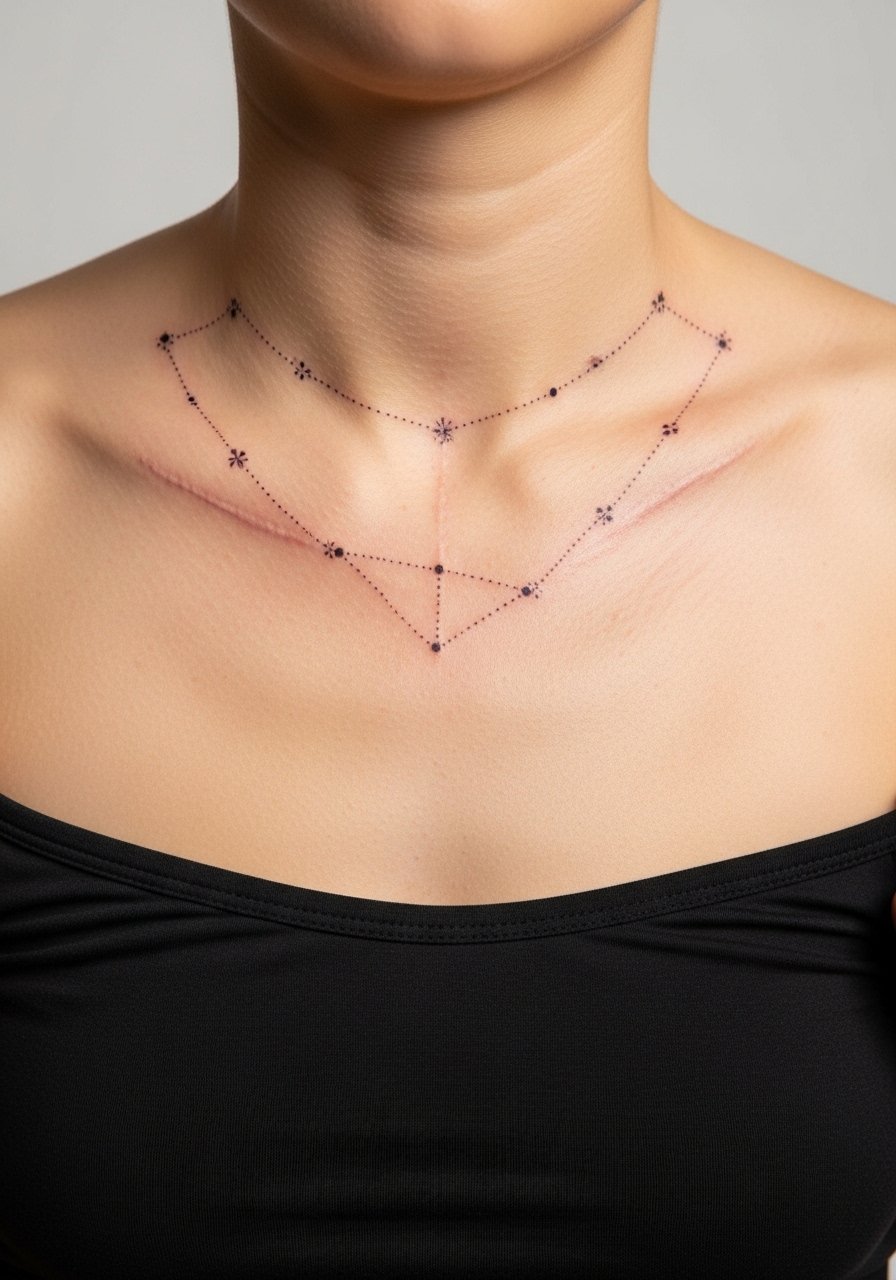
Constellation work tells a personal map across surgical lines. As with other fine line pieces there is an active debate. One group says fine line will blur quickly on scar tissue. The other group believes that with the right depth and spacing, it can hold longer than expected. For this motif ask for slightly larger star points and spaced lines so the composition survives a few years without major touch-ups. A single session can outline the map and a follow-up can replace any faded dots. For styling, an off shoulder crop top lifts collarbone exposure without cutting across the design.
13. Vertical Scar Alignment Using Spine Motifs
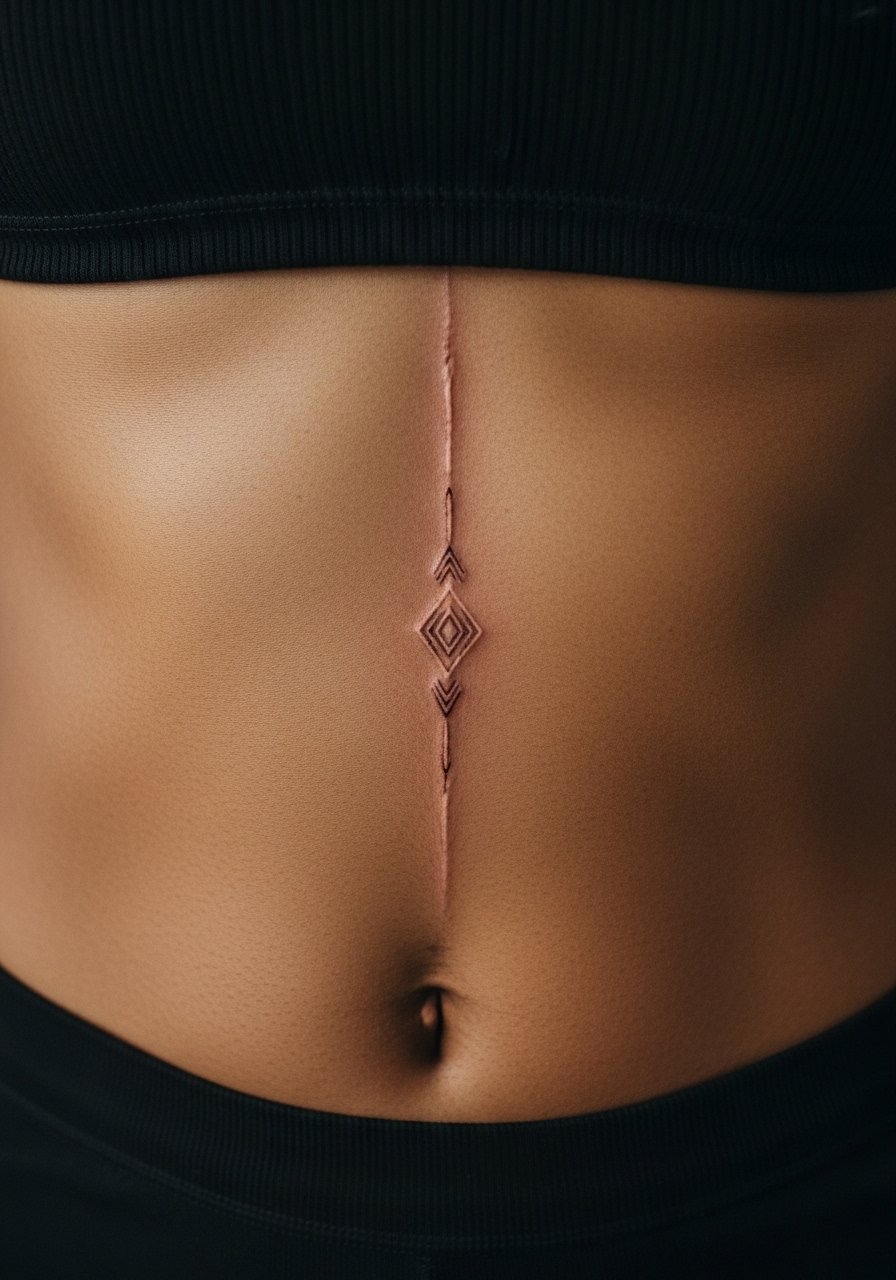
Vertical motifs that follow long scars can turn a linear mark into a deliberate axis. Tell your artist you want the motif to read at a glance from chest height rather than only up close. Mistakes include overcomplicating the vertical with tiny filler that competes with the main motif. This approach is low on color and high on silhouette, so aging is often forgiving if spacing is generous. Session time varies with length but expect at least two passes to ensure consistent linework across scar variations.
14. UV-Reactive Accents Hidden in Scar Lines

UV-reactive ink gives an everyday subtle look and a dramatic glow under blacklight. This is a niche choice and may require a specialist since not every studio stocks or uses UV pigments. Ask about longevity and visibility in daylight because some UV tones are virtually invisible until illuminated. A common mistake is stacking UV over thin fine-line details that will be invisible in normal light and then age unpredictably. If you choose this option, plan for periodic checks and expect the UV component to need refresh sooner than black pigment.
15. Layered Timelines: Outlines First, Color Later
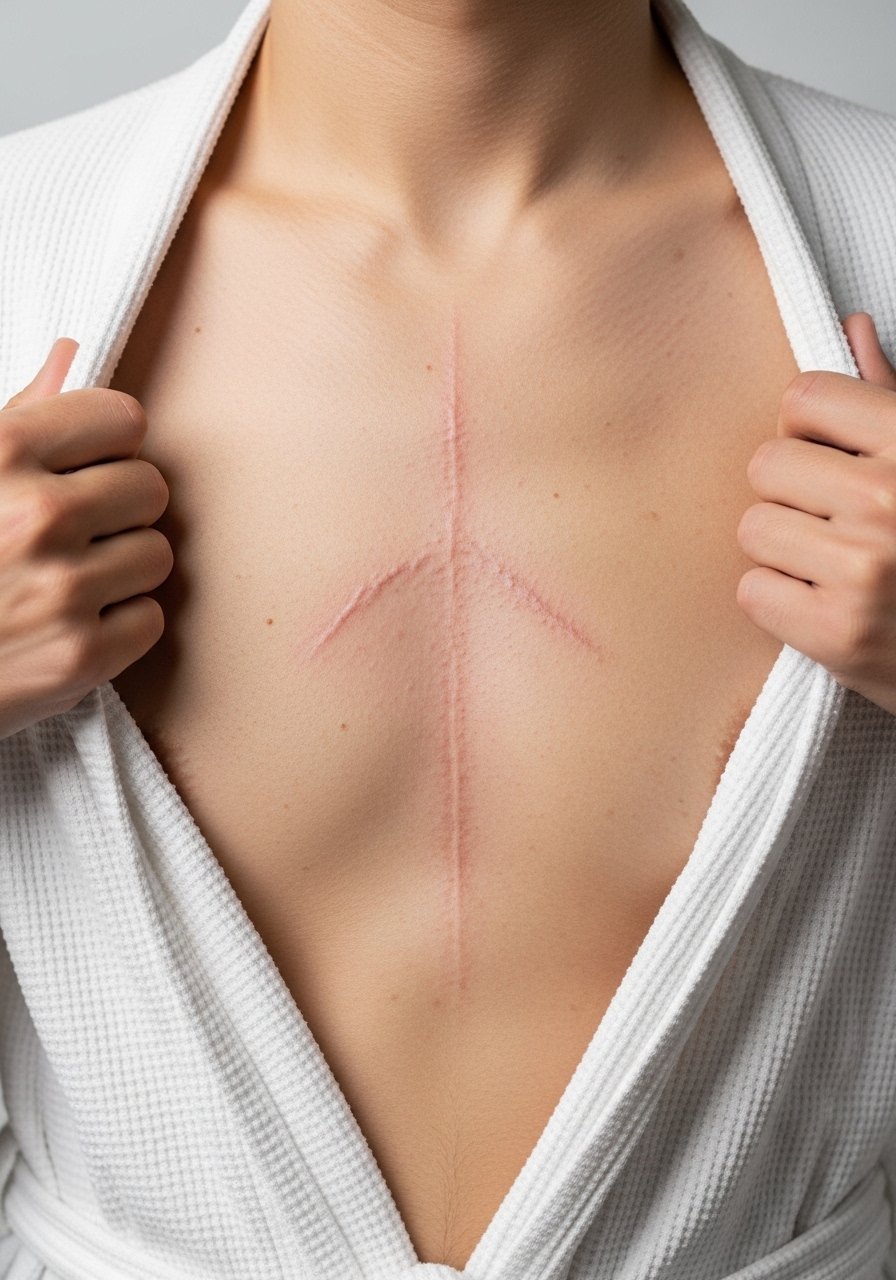
This approach staggers sessions so the artist can let scar tissue settle before committing to saturation. Tell your artist you want a deliberate outline session first with minimal shading, then a color pass after six to twelve months. The mistake is expecting one marathon session to do everything and assuming scar tissue will accept saturation immediately. Practically this reduces the feeling of overwhelm in the chair and gives you time to evaluate how the scar accepts ink. Touch-ups are built into the plan as part of the timeline.
16. Asymmetrical One-Sided Bold Design Embracing Variance
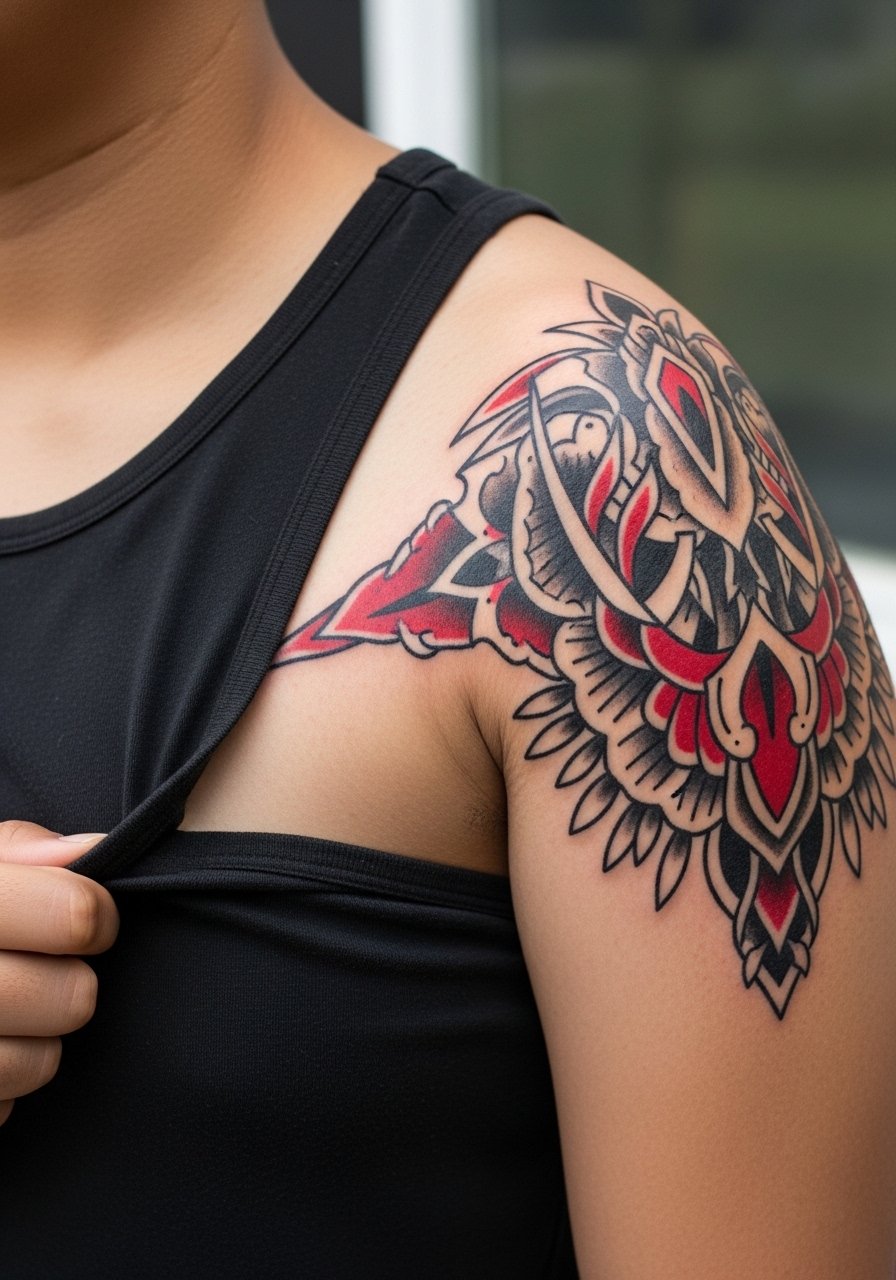
One-sided compositions accept that surgical results are rarely perfectly symmetrical. Embrace the imbalance by designing a strong focal piece on the fuller side and a lighter echo on the other. In consultation, ask for compositional balance rather than mirror symmetry. The error is forcing a symmetrical piece and then repeatedly touching up the weaker side. For reveal and daily wear, a sleeveless muscle tank frames asymmetrical work while keeping the opposite side discreet when you prefer it that way.
17. Asymptotic Minimal Script or Small Symbol Near Grafts
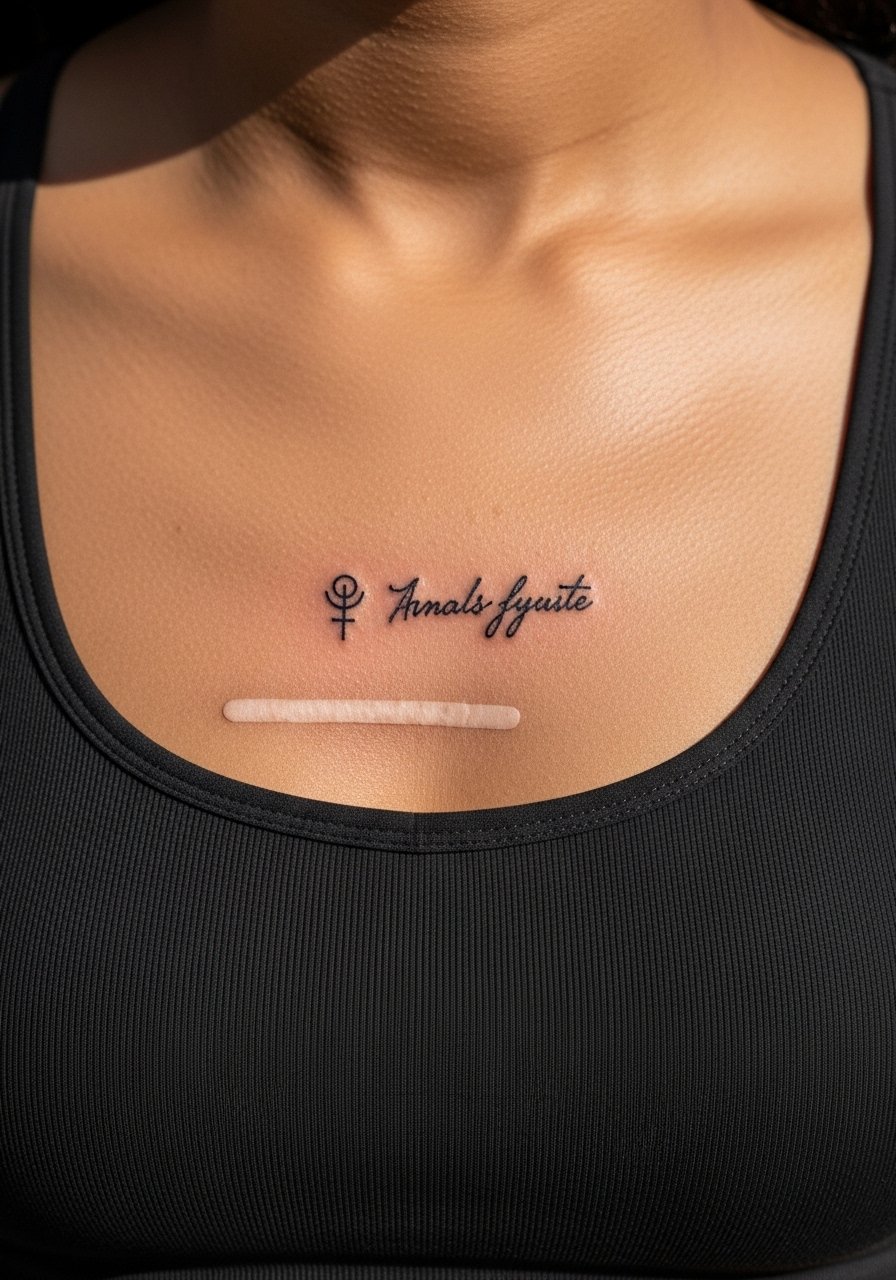
Tiny script or a minimal symbol can be a low-profile option for graft-adjacent skin. The key is spacing and choice of font weight. Avoid ultra-thin script right over graft tissue because the ink can spread and letters will blur. A common mistake is picking elaborate calligraphy that loses legibility on textured skin. Expect a short session and possibly a touch-up at the six-month mark if letters soften. If you want something subtle that still reads on social photos, pick slightly bolder type than you think you need.
Frequently Asked Questions
Q: Will fine line tattoos blur on scar tissue and on darker skin tones?
A: It depends on the scar maturity and the ink depth used. Fine line can blur faster on immature scars and can fade more quickly on darker skin tones when the lines are too hairline thin. A practical approach is to ask for slightly heavier keylines and planned touch-ups at six to twelve months. Many artists will show healed examples for similar skin tones during consultation.
Q: How should I handle an artist cancellation or a guest artist who flakes on a booked chest session?
A: Confirm deposits and ask about backup plans before you hand over money. Booking with a reliable local artist reduces travel-related cancellations. If a guest spot falls through, photograph your stencil and healed work so another artist can pick up consistent placement. It helps to have a short list of studios that accept shared portfolio notes for continuity.
Q: Which session-day clothing is best for sternum and nipple-area tattoos?
A: For sternum and nipple-adjacent work wear a front-zip or strapless sports bra you can easily remove. For showing the healed piece, consider a keyhole tank top or an open button shirt layered over a simple tee so the tattoo can peek through without full exposure.
Q: Should I use protective film or dry healing on chest tattoos given how much the area moves?
A: People split into two camps here. One camp prefers protective films for chest mobility because it reduces friction and accidental picking. The other camp says dry healing helps ink settle better on scar tissue. The safest path is to talk through both options with your artist and pick what they have the most experience with for scar work. Either way keep a plan for scheduled check-ins and a documented photo record for touch-up negotiations.
Q: Can UV ink be a practical option for hiding scars daily and showing glow at events?
A: UV accents can be a great hidden play if your studio uses pigments they trust and you accept the likelihood of earlier fade on the UV component. Make sure you test a small patch if possible and discuss how the UV will read in daylight. Expect the UV highlight to need refreshes more often than the base black pigment.