
Fine line fingerprint tattoos are everywhere on saved boards, but what you see in a feed and what lasts on skin are often different. Fingerprint-inspired work looks intimate and detailed when fresh, yet tiny loops and tight spirals are the first to blur or need touch-ups. Expect questions about pain, longevity, and visibility up front. Read on for 21 distinct ways to translate a thumbprint into something that still reads clean after a few years, starting with a tiny finger piece.
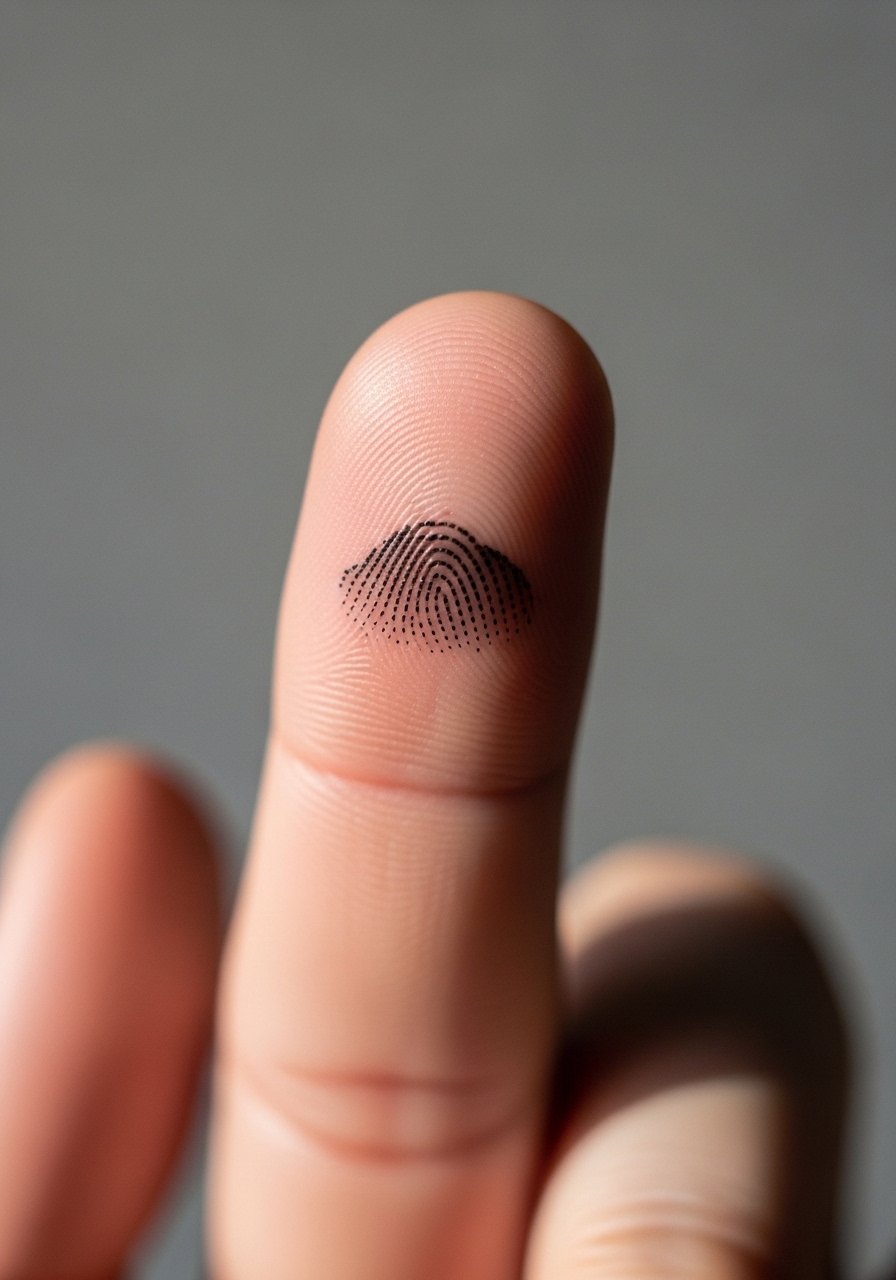
1. Micro Fingerprint Dot Work on the Side of the Index Finger
This tiny side-of-finger piece uses stipple shading to suggest the fingerprint instead of full continuous spirals. I recommend this when you want the feel of a fingerprint but need something that tolerates frequent washing and friction. Tell your artist to keep the dots slightly larger than standard micro dots so the design holds for two to five years. Common mistake is asking for every ridge to be copied, which crowds the skin and causes early blur. Expect a sharp look at six months, softer lines at two years, and a likely touch-up around year three if you want the original contrast back. Pair with a dainty stacking ring to frame the area without covering it.
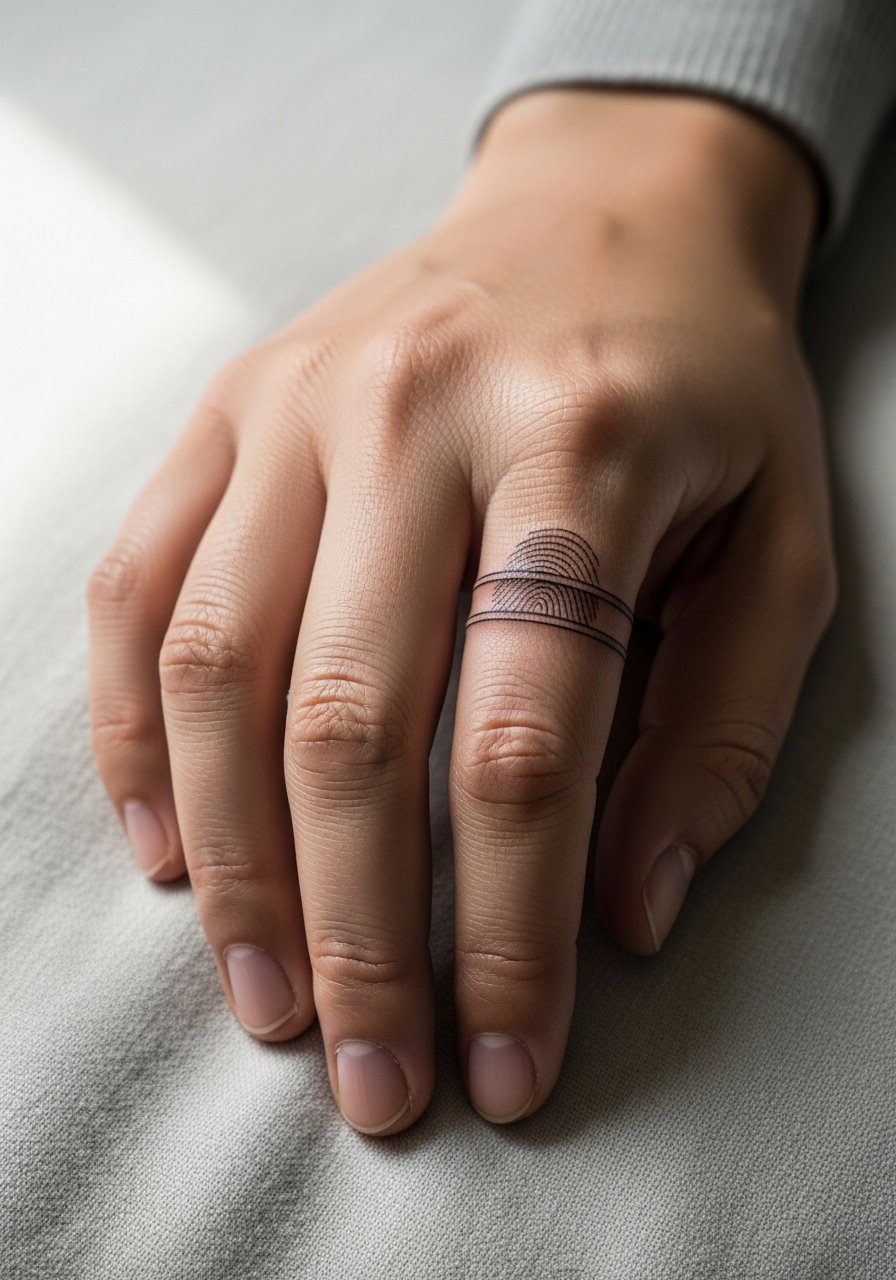
2. Negative-Space Fingerprint Band on the Ring Finger
This concept carves the fingerprint into skin using negative space inside a thin band. I suggest it for people who want a subtle, badge-like nod to identity. During consultation explain you want the ridges left as uninked skin within a fine outline, not filled black. The main aging risk is ink migration making the negative space look blotchy, so ask for slightly wider spacing between ridges. The session feels quick but precise, chair time usually under an hour. For showing it off, a slim signet ring style sits just above the band and complements the negative space without crowding the fingerprint.
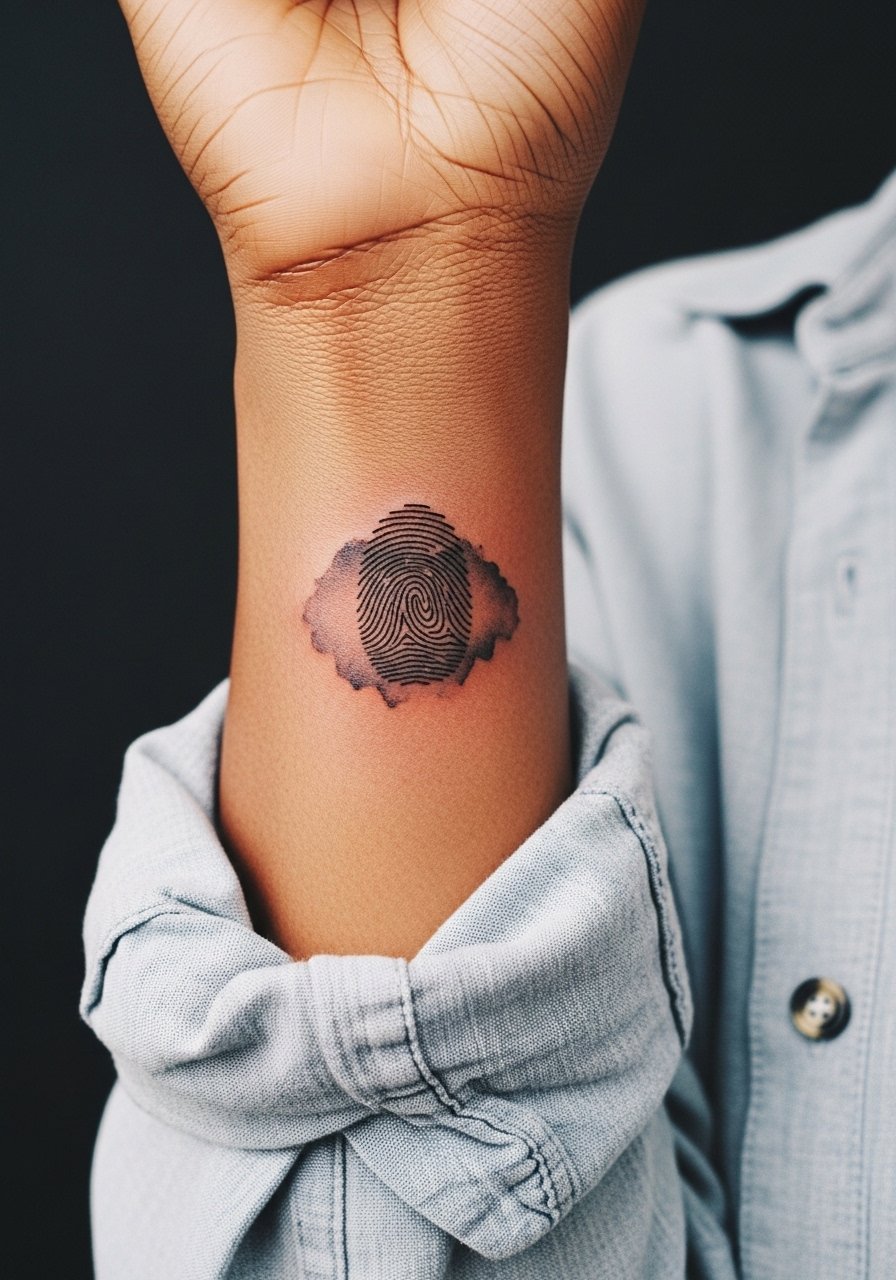
3. Watercolor Wash Behind a Fingerprint Core on the Inner Wrist
A small fingerprint core in thin linework anchored by a wash of watercolor behind it reads modern without overwhelming the wrist. I suggest this when you want color and softness but need the fingerprint to remain readable. Tell the artist to keep the watercolor outside the core and use gentle saturation so it fades gracefully. The controversy about watercolor longevity comes up here. One camp says watercolor fades into an indistinct wash within a year. The other camp argues careful placement and light saturation give it a soft patina for much longer. Expect the linework to stay legible at six months and to need a touch-up at year two if you want the original contrast restored. Pair with a minimalist watch or a thin bracelet to frame the wrist without obscuring the piece.
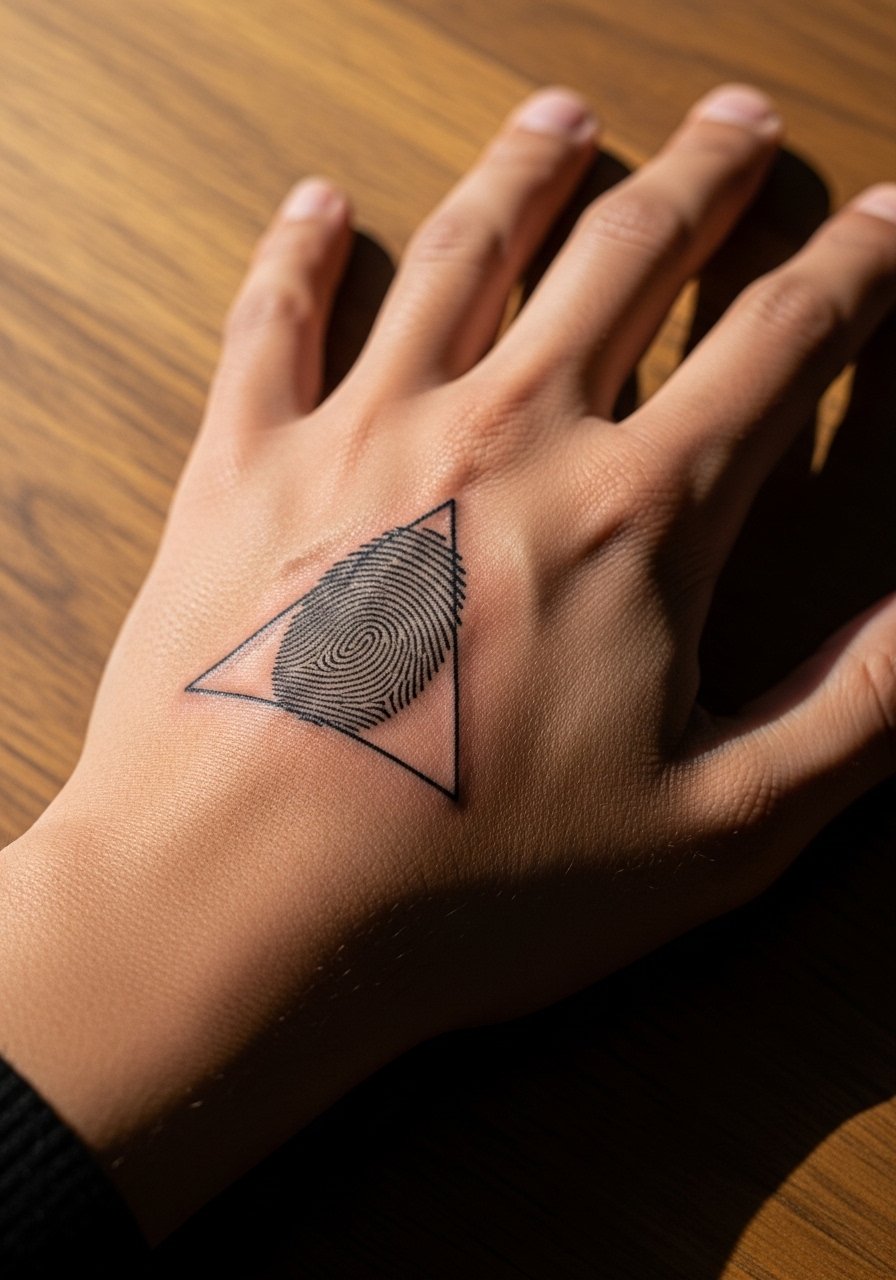
4. Geometric Overlay: Fingerprint Meets Triangle on the Back of the Hand
This design places an abstracted fingerprint inside a simple geometric frame on the back of the hand. It suits people who want an edge to a tiny personal mark. Fair warning, hand placements are higher blowout risk because skin there is thin and sees a lot of abrasion. During the consult, ask for slightly bolder outer lines and a light touch inside the spiral so the negative spaces do not push pigment sideways. The session can sting more than a forearm piece, but it is quick. Wear a linen shirt with rolled sleeves to show the hand without rubbing it constantly. Brief note on careers, hand tattoos can still matter in some workplaces, so consider that before committing.
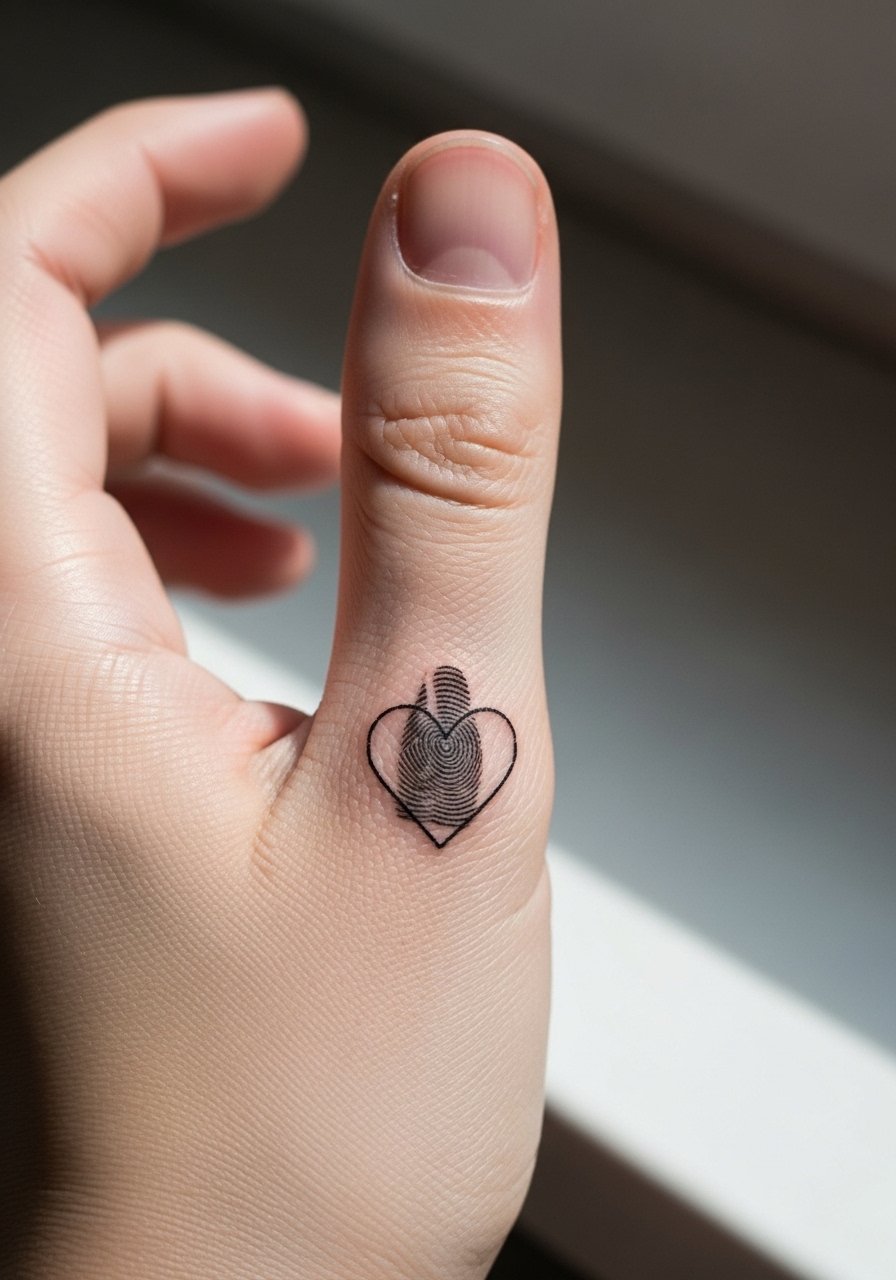
5. Thumbprint Heart on the Side of the Thumb with Micro Script
A thumbprint stylized into a tiny heart, with initials in micro script beside it, makes a discreet sentimental piece. Ask your artist to keep the script separate from the fingerprint ridges so neither element merges as it heals. Thumb skin moves a lot, so expect the lines to soften faster than on the forearm. The common mistake is packing initials too close to the ridges, which blurs after a year. For the session wear a short-sleeve tee you can pull slightly aside so the artist has clean access. If privacy matters, place it on the inner thumb pad rather than the nail-facing edge.
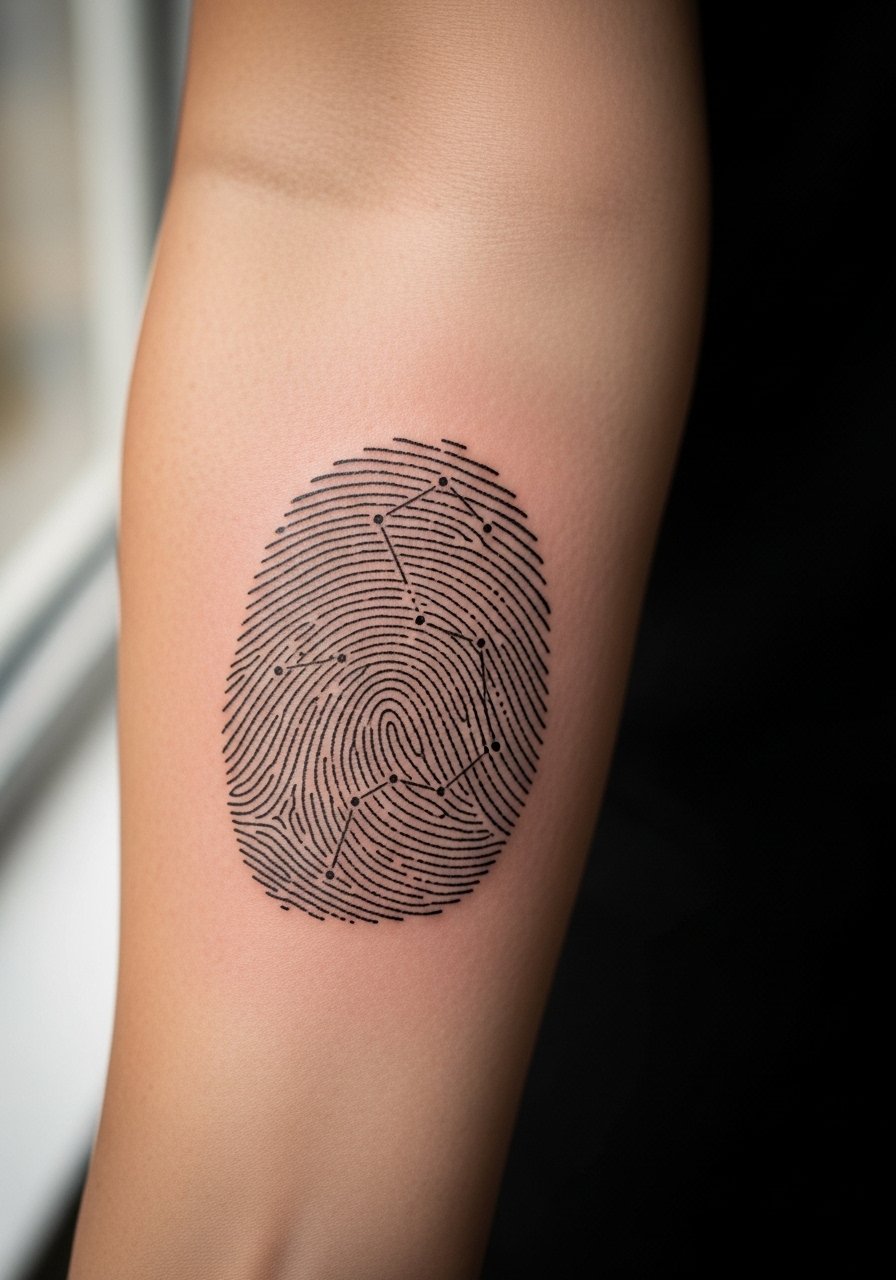
6. Layered Fingerprint with Constellation Dots on the Inner Forearm
This is a small to medium piece where a fingerprint motif sits over faint star-like dots that can be read as a constellation. I like this for forearm placements that will age more predictably than fingerwork. Tell the artist you want the fingerprint linework slightly heavier than the dots so the pattern remains the focal point. A common mistake is making the dots the same weight as the ridges, which flattens the design over time. At six months the contrast is crisp, at two years the dots soften into the background, and a light touch-up keeps the fingerprint distinct. Wear a rolled-up linen shirt to frame the forearm for casual show-off looks.
Studio Day Picks
Those small hand and forearm concepts above heal differently from larger torso work. A few targeted items smooth the session and the first week so the fine line detail has the best chance.
-
Stencil transfer paper kit. Lets you preview how the fingerprint sits on curved areas like thumbs and the forearm before the needle hits skin.
-
Topical numbing cream. Applied about 45 minutes before eases edge pain for fingers and the hand without compromising linework when used as directed.
-
Thin protective film roll. Ideal for finger and hand pieces that face friction from typing and frequent washing during the first three to five days.
-
Fragrance-free gentle body wash. Cleanses healing fine line areas without stripping the pigment or irritating sensitive skin near the fingerprint details.
-
Aquaphor healing ointment. A thin layer in the first days locks in moisture for delicate linework on fingers and wrists without suffocating the surface.
7. Abstract Fingerprint Band on the Collarbone with Negative Space
A fingerprint fragment sitting just above the collarbone uses negative space to read as a subtle emblem. This upper chest placement needs careful framing because the skin around the collarbone moves and stretches with posture. Ask for slightly heavier outer linework and a shallow inner touch to keep blowout risk low. The session is short but precise, and the area shows early contrast for a year before softening. For evenings or open-neck looks try an open-neck blouse to let the piece peek out without rubbing against straps. Note on sensitivity, collarbone skin can feel sharp because it sits over bone, so expect a more intense sensation than on a forearm.

8. Fingerprint Echo: Multiple Tiny Marks Along the Side of the Palm
Instead of one complete print, this idea scatters tiny fingerprint echoes along the palm edge. It reads like a set of moments rather than a single identity stamp. This placement suffers from early fading because the palm sees heavy wear. Most artists will advise lighter saturation or place it slightly higher toward the inner wrist. The common mistake is insisting on dense, dark ridges, which rarely last on palm skin. Expect a sharp look for six months and then progressive softening. When you discuss it, ask the artist about touch-up frequency and whether they recommend a protected placement closer to the wrist.

9. Half-Fingerprint Turned into a Mini Landscape on the Outer Forearm
Here a half-fingerprint spiral becomes terrain lines and a tiny horizon where hills nest into the ridges. I suggest this for forearm placements because the elongated canvas works with the fingerprint arcs. Tell your artist you want the lower ridge lines to hint at topography, not to compete with the ridge detail. A mistake is over-detailing the landscape element, which competes with the readable fingerprint. At two years a well-spaced design keeps its shape with minimal touch-up. For daytime looks, roll sleeves back and wear a casual cuffed tee so the forearm reads as intended without extra layering.

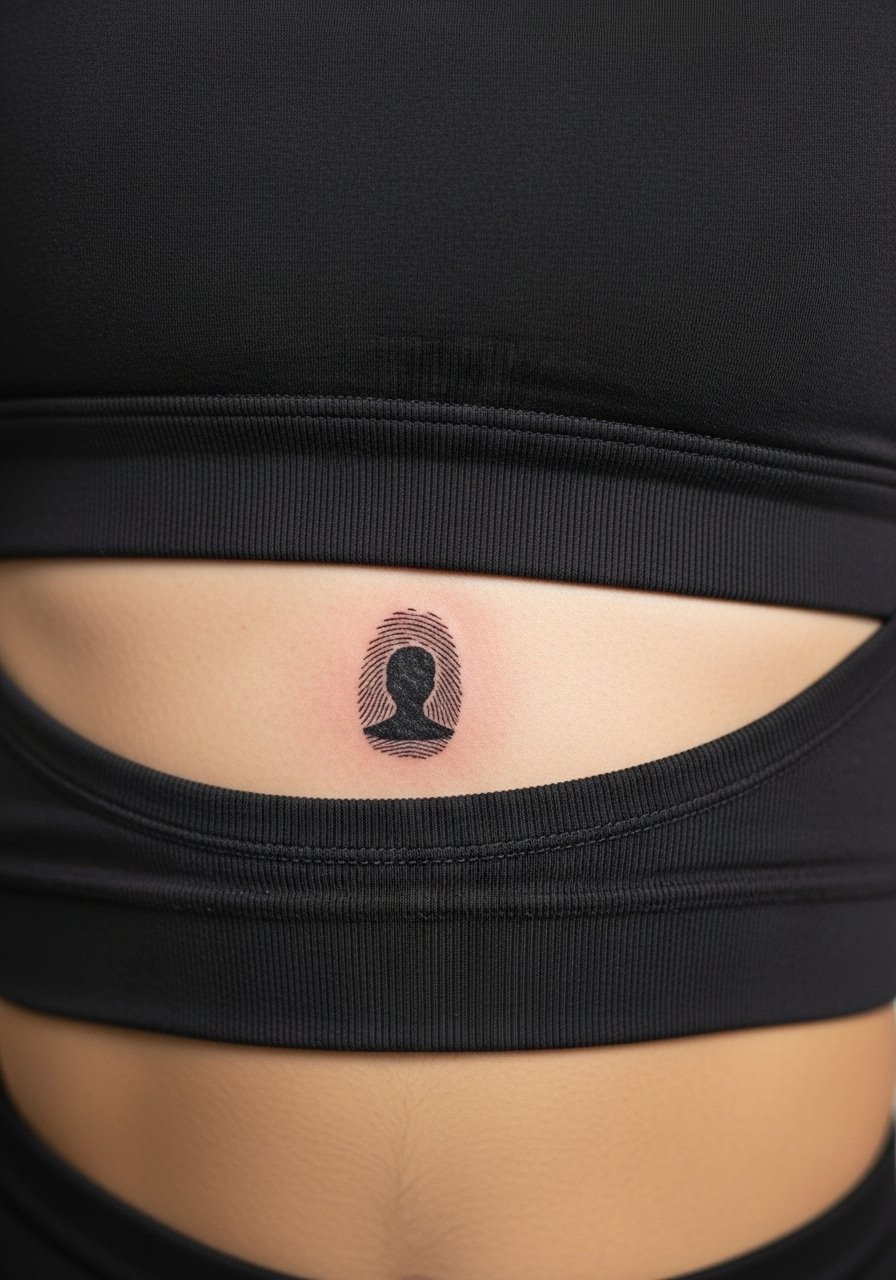
10. Micro-Realism Thumbprint with a Tiny Portrait Silhouette Inside on the Ribcage
Embedding a tiny silhouette inside a fingerprint on the ribcage makes a private piece that reads as abstract from a distance. The ribcage is a placement that divides artists into clear camps. One camp says the skin stretch and breathing there garble delicate lines within two to three years. The other camp counters that with careful spacing and shallow depth, fine detail can last longer. If you pick ribs, expect a higher pain level and plan for a slightly longer session. For the appointment wear a cropped top or sports bra so the artist has direct access to the area. Because ribs can be tender, expect the session to be memorable.
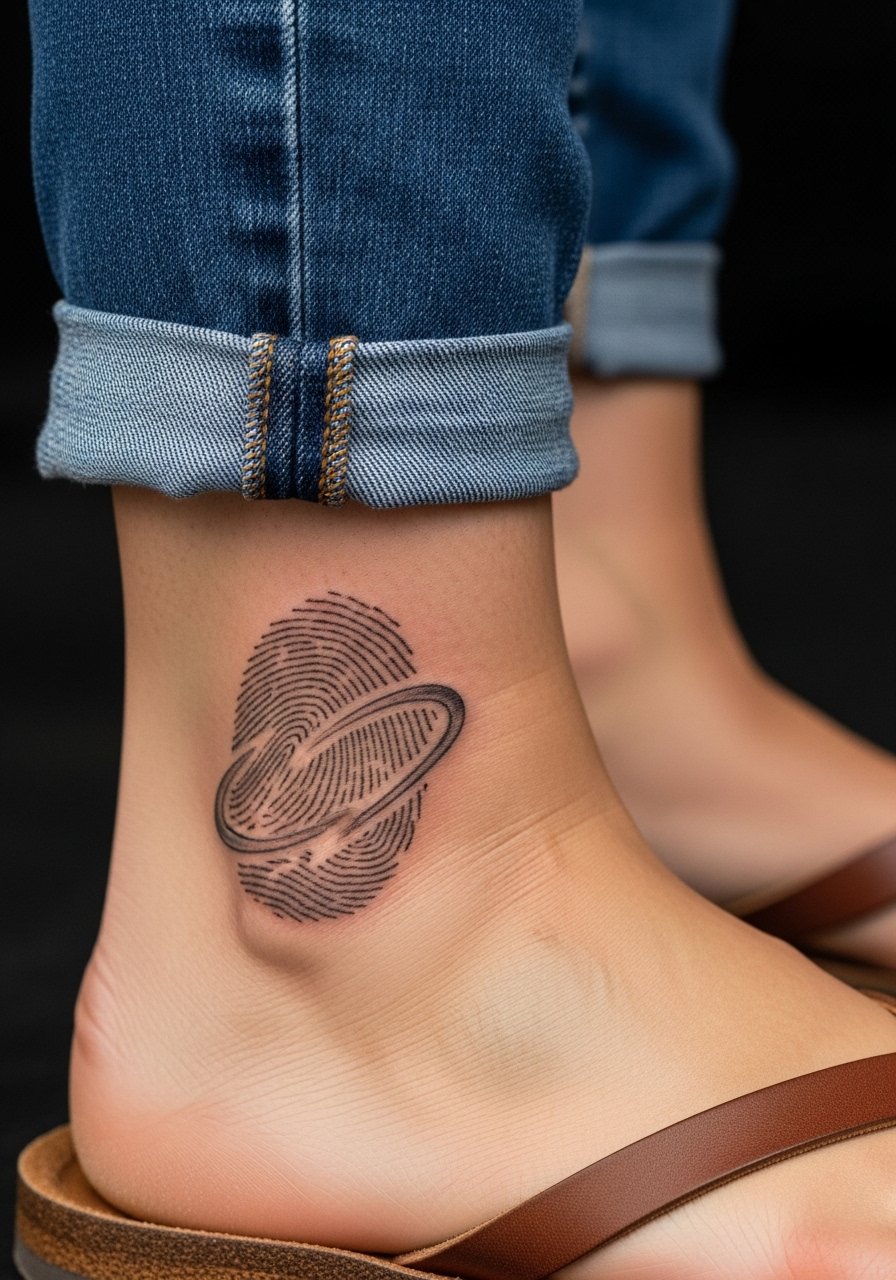
11. Fingerprint Linework Wrapped Around the Ankle
A narrow spiral pattern wrapping the ankle feels like a personal anklet. This placement is less exposed than hands, but friction from shoes and socks matters. Ask for linework that reads at small scale with slightly heavier anchor points so the wrap still reads after a year of wear. The biggest mistake is making the ridges too fine where socks rub, which accelerates fading. Expect a nice contrast at six months, moderate softening by year two, and a probable touch-up if you wear closed shoes frequently. For showing it off, wear sandals or rolled jeans to keep the ankle visible while avoiding constant abrasion.
12. Split-Fingerprint Mirror on the Inside of the Wrist
Two mirrored fingerprint halves face each other on the inner wrist like a small emblem. This design benefits from the predictable flat canvas of the inner wrist but still risks rubbing from watches and bracelets. Tell the artist to leave a clear margin between the halves so the space does not fill in as lines soften. A typical mistake is placing it too close to the watch line. Expect good legibility at six months and a softening that becomes noticeable by year three. During the session wear a loose button-down shirt so the artist can access the area without tugging.
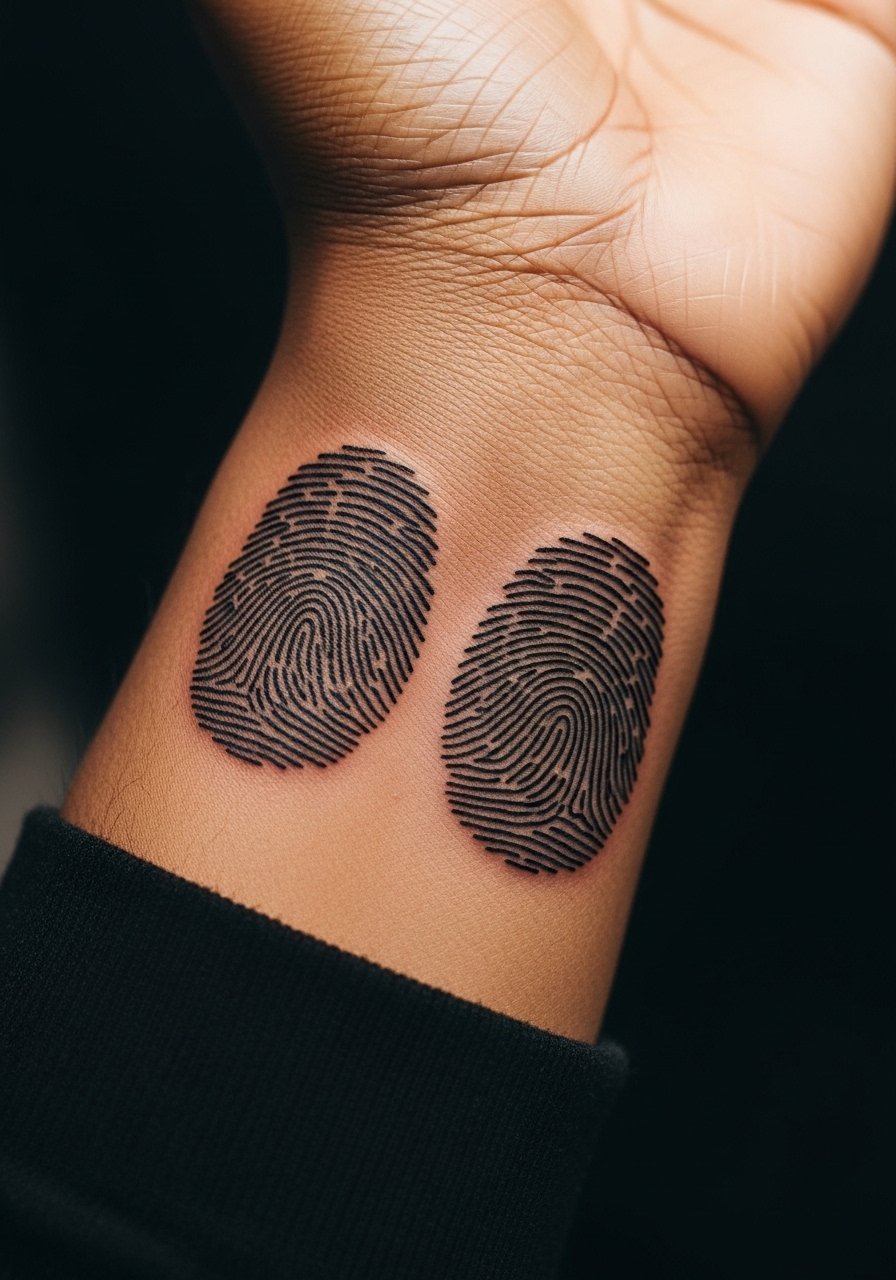
13. Contour-Fingerprint Sleeve Accent on the Outer Forearm
Instead of a full sleeve, use a repeated fingerprint contour as an accent running along the outer forearm. This works best when mixed with stipple shading and spaced ridges so the skin can age. The consultation should cover spacing and saturation across the strip so the pattern breathes. A common mistake is trying to make every ridge identical across forearm curves, which looks mechanical and ages poorly. For casual shows, roll sleeves and wear a linen blazer or short-sleeve tops that keep the accent visible without constant friction. At two to five years this kind of accent usually softens into a textured band that still reads as intended.
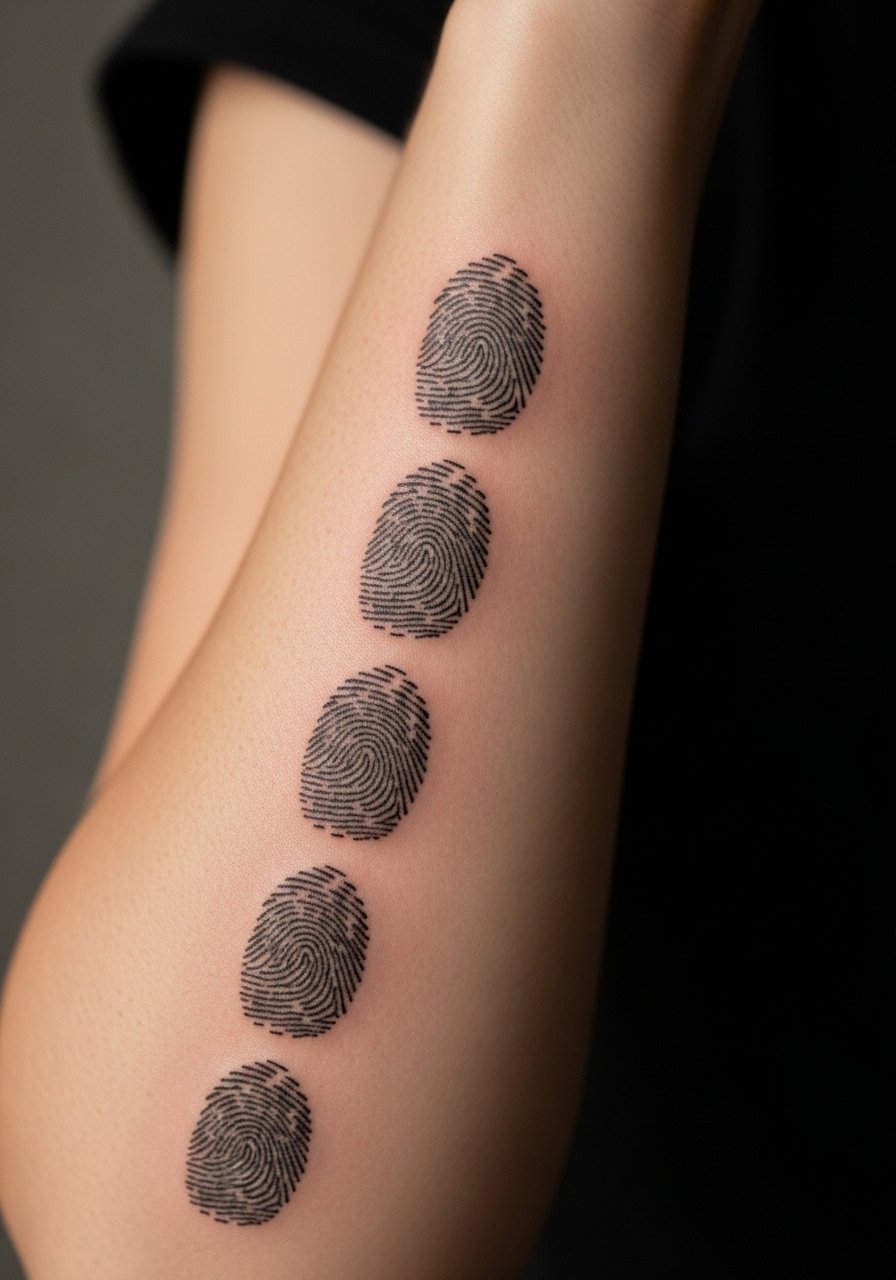
14. Fingerprint as Barcode on the Side of the Neck
An abstract barcode composed of fingerprint-style lines on the side of the neck reads modern and bold. Neck pieces require a frank conversation about career impact and visibility. The controversy around neck placements includes one camp that accepts the visibility trade-off and another that advises against visible ink for professional flexibility. If you choose the neck, ask the artist about needle depth because the skin there can shift pigment differently than the torso. During the session wear a wide-neck shirt with the collar pulled slightly to one side so only the neck area is exposed. Expect faster fading from sun exposure and plan for annual touch-ups if you want crisp lines.
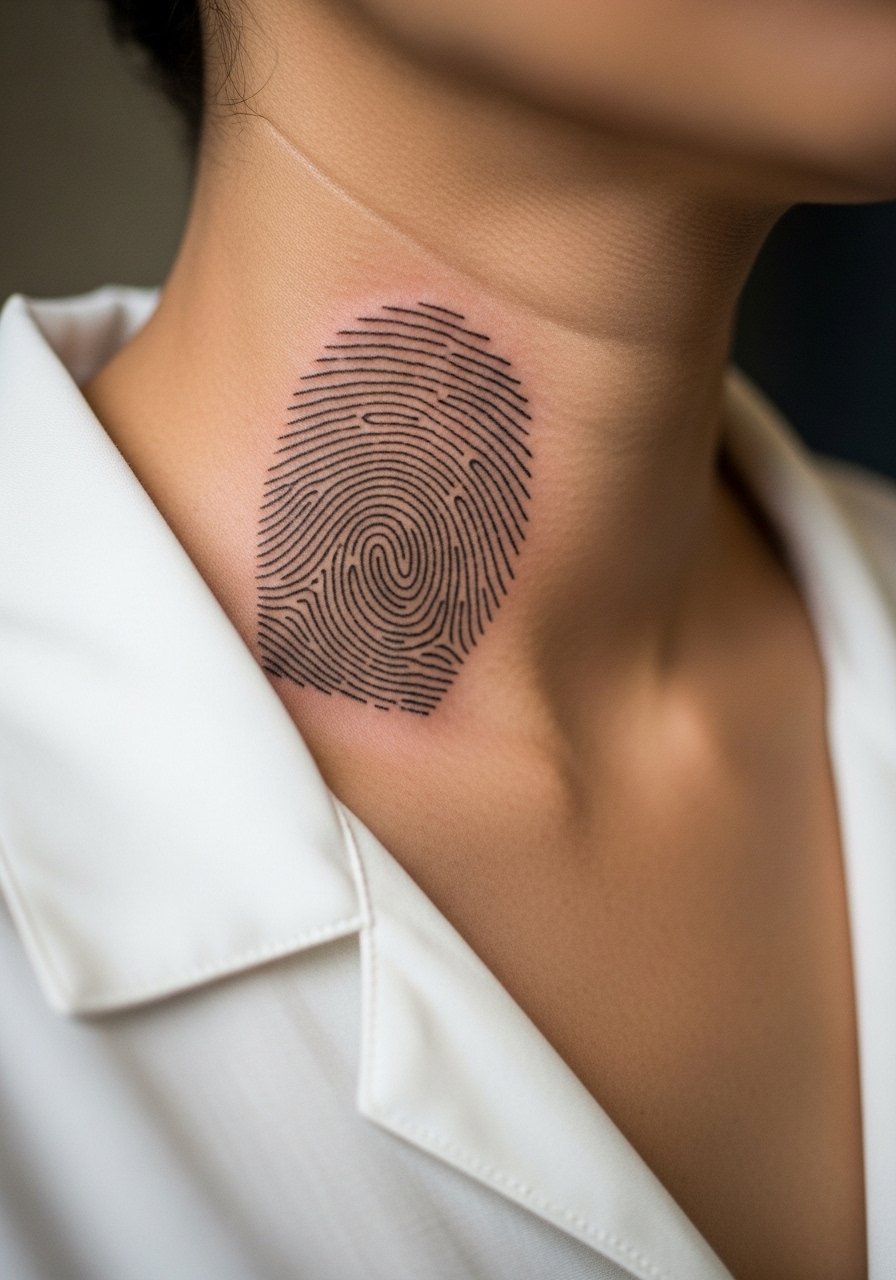
15. Floral-Fill Fingerprint on the Upper Thigh
This idea uses fingerprint ridges as an outline filled with tiny floral motifs that read abstract at a distance. The upper thigh is private and heals well when protected, making it ideal for more intricate fills. Tell the artist you want the florals to read loosely so they do not crowd the ridge spacing. Common mistake is over-detailing inside a small area, which reads as muddle after a few years. For the appointment wear high-waisted shorts or a wrap skirt you can shift easily so the artist has access without exposing more than needed. A protected placement plus minimal sun exposure means the piece keeps its detail longer than hands or neck.

16. Double-Exposure Print with a Small City Skyline on the Outer Bicep
An abstracted fingerprint layered over a tiny skyline silhouette creates a city-and-identity motif that fits the outer bicep nicely. The outer bicep gives flesh to the design so fine details survive longer than on the hand. During consult ask for the skyline to be slightly less saturated than the fingerprint lines so the layers remain distinct. A mistake is packing too much skyline detail in a very small space. The session is comfortable compared to ribs, and the area usually needs only occasional touch-ups. This placement pairs well with rolled short sleeves for casual visibility.

17. Minimalist Fingerprint Heart at the Sternum
A very small, centered fingerprint heart just above the sternum reads intimate and private. Sternum placements demand a fitted sports bra or bandeau during the session so the artist can work on a limited visible area. Tell the artist you want the piece shallow and slightly spaced so breathing movement does not blur the fine ridges early. The sternum can be tender, and sessions often feel intense for short bursts. This location ages predictably when kept out of extensive sun. For the appointment slip into a fitted sports bra that is easy to adjust so only the target area is exposed.

18. QR-Code Inspired Fingerprint with Coordinates on the Side of the Ribcage
This abstract idea mixes fingerprint patterns with coordinate numbers or a short code on the ribcage for a layered private meaning. Because the ribcage moves and expands when you breathe, spacing matters. Discuss with your artist whether to prioritize wide spacing or heavier anchor lines. A common mistake is making the code too fine, which then dissolves as the skin shifts. For the session wear a cropped top you can lift slightly so the artist has clean access without exposing the whole torso. Expect higher pain but a piece that remains legible with a touch-up at year two if needed.

19. Soundwave-Fingerprint Hybrid on the Calf
This takes a fingerprint waveform and stretches it into a soundwave-like sequence down the calf. It suits people who want an abstract, linear direction that reads from a distance. The calf gives room and tends to hold linework well. Tell the artist you want consistent line weight along the wave so the feel remains uniform while the fingerprint pattern shows through at close range. The main mistake is over-detailing at a tiny scale, which looks noisy as the skin ages. For everyday style, wear cropped pants or a mid-calf boot to let the piece peek out without rubbing from tight socks.

20. Matchbook-Size Fingerprint on the Inner Bicep with Subtle Stippling
A small matchbook-sized fingerprint on the inner bicep pairs tight linework with stipple shading to give a soft interior. The inner bicep can be sensitive and requires the arm to be raised during the session so the artist has access. Ask for stipple shading at low density to prevent early merging. People err by packing high saturation into this soft field, which creates heavy patches later. The session feels concentrated but short. For easy access wear a tank top with the arm raised slightly and expect a touch-up around year three depending on sun exposure.

21. Paired Matching Fingerprints for Couples on the Side of the Foot
Two matching tiny fingerprints on the side of the foot make a discreet pair for partners. Foot tattoos face friction from shoes and fast fading, so I recommend thicker anchor lines and placement nearer the outer edge of the foot rather than under the sole. Common mistake is expecting vibrant detail to last without planning touch-ups. The session is short but the area is sensitive. For showing them off, wear low-cut canvas sneakers or sandals that keep the side of the foot visible while reducing internal abrasion. If career visibility or long-term clarity is a concern, consider a placement with less wear.

Frequently Asked Questions
Q: How do abstract fingerprint tattoos hold up differently on fingers compared to the forearm?
A: Fingers face constant abrasion and washing so tight ridges and micro details fade faster there. Forearm skin is flatter and gets less daily friction, so similar designs maintain their linework and saturation longer. Expect more frequent touch-ups for finger pieces and plan spacing and slightly bolder anchor points with your artist.
Q: Should I worry about career impact for visible placements like hands, neck, or collarbone?
A: Yes, visibility still matters in some industries and with certain employers. Hands and neck are the most visible and carry the most risk in conservative workplaces. If you are unsure, consider a placement that can be covered by clothing or pick a private location like the upper thigh or inner bicep.
Q: If I want color with my fingerprint design, when is watercolor a bad idea?
A: Watercolor works when it sits behind strong black linework and is kept low in saturation. It is a bad fit on high-friction spots such as fingers and palms because pigments there disperse faster. When in doubt, ask for the color to be an accent outside the core fingerprint so the black line retains definition.
Q: How should I prepare wardrobe-wise for a ribcage or sternum session?
A: Wear a cropped top, sports bra, or a shirt you can lift slightly so the artist has direct access without exposing more than necessary. A cotton or breathable top makes it easier to adjust during the session and keeps the area comfortable as it heals. A fitted sports bra is especially useful for sternum work.
Q: Can I get matching fingerprint tattoos with someone else and expect them to age the same?
A: They likely will not age identically because placement, skin type, sun exposure, and daily wear differ. Matching designs can still read as a pair if you pick the same artist, spacing, and touch-up plan. Agree on a realistic maintenance timeline before you book.
Q: What are good discovery pathways to find an artist who works well with fine fingerprint linework?
A: Use local directories and hashtags that focus on fine line or micro-realism, check shop portfolios, and visit conventions to see healed work in person. I have found good leads by browsing regional tattoo collective pages and reading threads where people post healed photos from specific shops across cities.