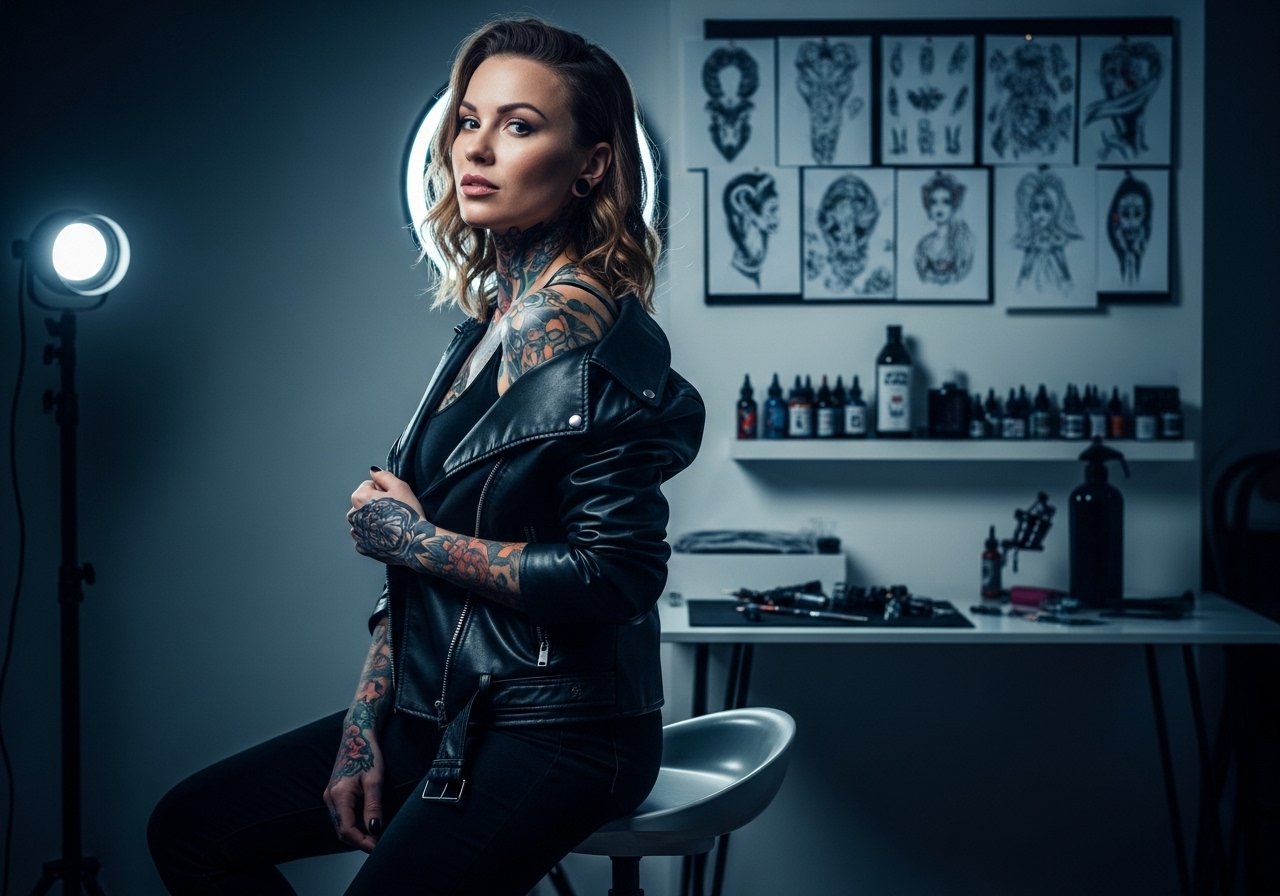
Fine line crowns are trending online, but the crowns that still read crisp after five years often start as designs that respected spacing and skin movement from the first stencil. Pick the elements that suit how you live, where you want to show the piece, and how often you want to touch it up. The first idea jumps straight into a tiny wrist crown that proves simple can last.
1. Minimal Line Crown on Inner Wrist
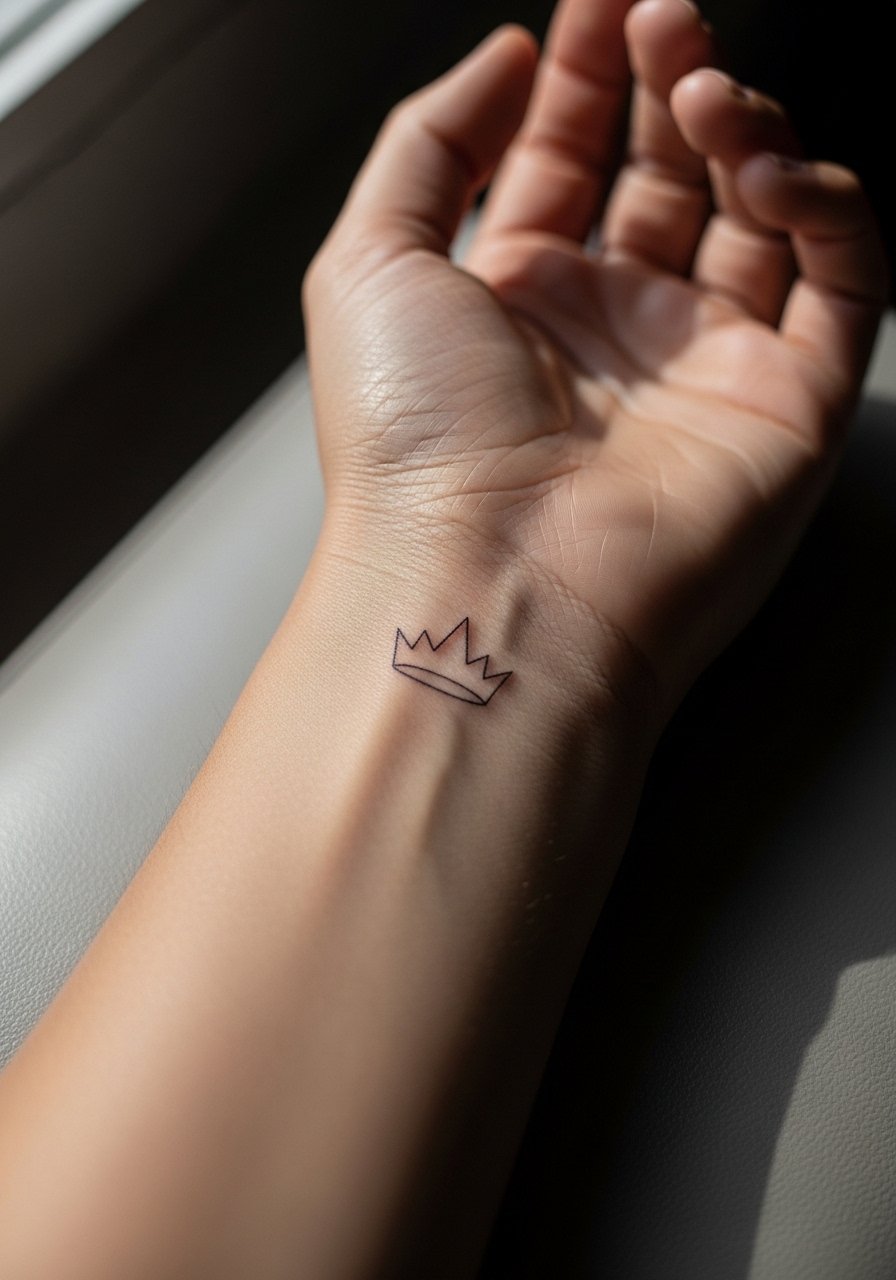
The inner wrist is the easiest way to show a tiny abstract crown without a long session. Expect light to moderate pain and a short appointment under an hour. Tell your artist you want extra spacing between the points and a bit more depth in the base so the piece does not smudge into a single darker line over time. A common mistake is asking for micro detail inside each point, which usually blurs within two to three years. For the session wear, bring a racerback tank you can roll the sleeve of, and plan for a touch-up at year three if you want the lines to remain crisp.
2. Geometric Crown with Negative Space on Forearm

A geometric crown with large negative-space areas reads clearer as it ages than a fully filled tiny crown. I recommend this for anyone who wears short sleeves often since the forearm holds linework well. In consultation ask for bolder outer anchors and clean negative spaces rather than tiny internal filigree. Mistakes happen when clients request overly dense interiors that merge after two years. The session feels steady and less painful than ribs, and a single two-hour block is typical. For showing it off, try a rolled-up linen shirt to frame the design.
3. Dotwork Crown at the Nape of the Neck

The nape is subtle and sits nicely under short hair. Pain is moderate and the session can be 1.5 to 3 hours depending on density. Dotwork or stipple shading holds well at the nape because the skin does not stretch as much as the torso. Tell your artist to keep the density light near the base to avoid a muddy patch after a few years. A mistake is packing too many dots into a small area. Pair this with a thin chain pendant that sits above the crown when you wear open collars to direct attention upward.
4. Micro-Realism Crown on the Side Rib

Fair warning, ribs are one of the more painful places to tattoo. The detail here looks incredible fresh but needs extra spacing to keep from bleeding into shaded areas later. Artists split into two camps on fine line on ribs. One group argues that the skin there stretches and blurs lines within two years. The other group says that with correct needle depth and spacing, fine line settles fine. Ask your artist where they stand, and book a slightly larger design than your initial impulse. Wear a cropped athletic top you can shift for access during the session.
5. Blackwork Crown on Upper Arm
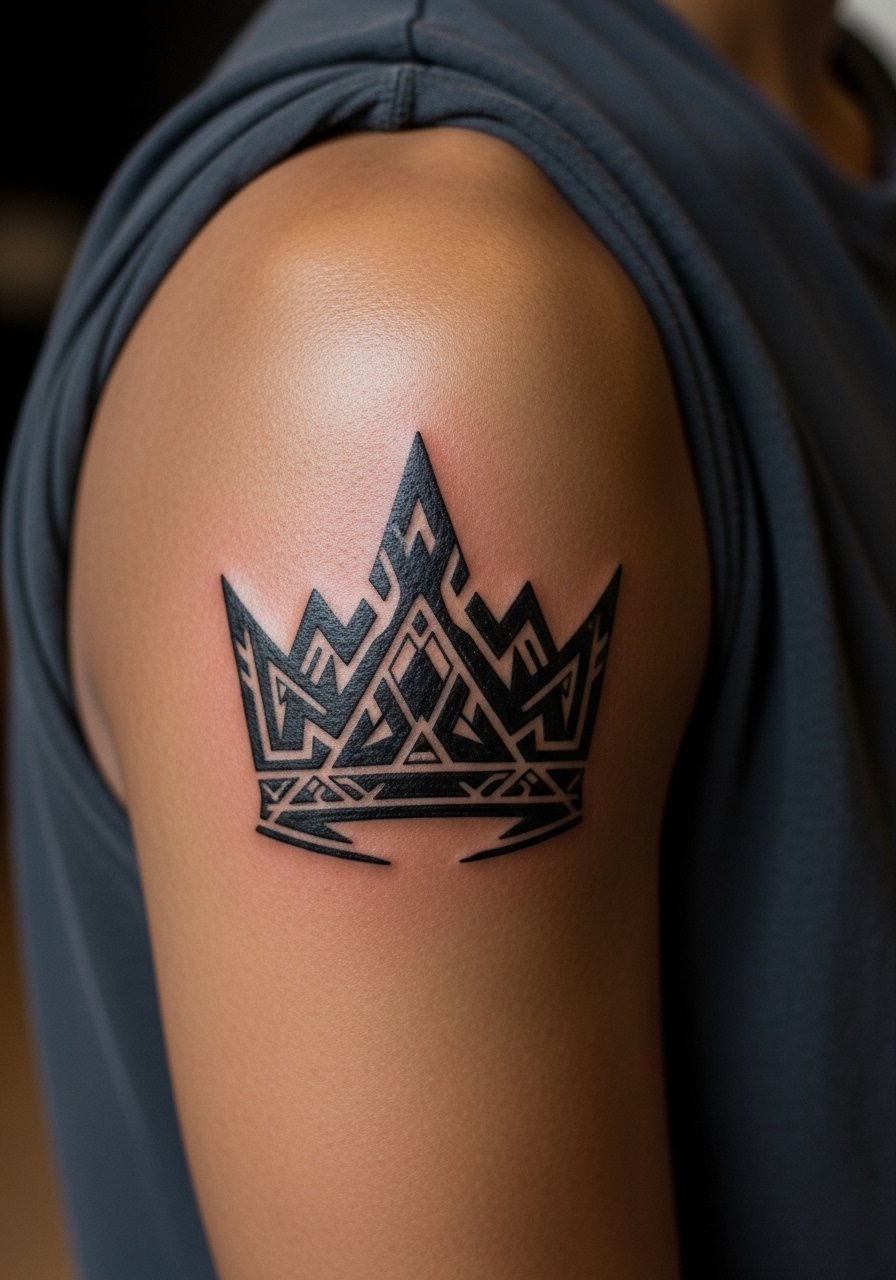
Bold blackwork crowns age more gracefully than ultra-fine crowns for people who do not want annual touch-ups. The upper arm is a forgiving canvas and pain is lower. In consultation say you want solid saturation at the outer edges and softer texture inside. A common mistake is making the black areas too small, which causes patchy fading. Expect a two- to three-hour session for medium-sized pieces. Show it off with a loose button-down shirt with the sleeve rolled up.
6. Watercolor Splash Crown on Shoulder Cap
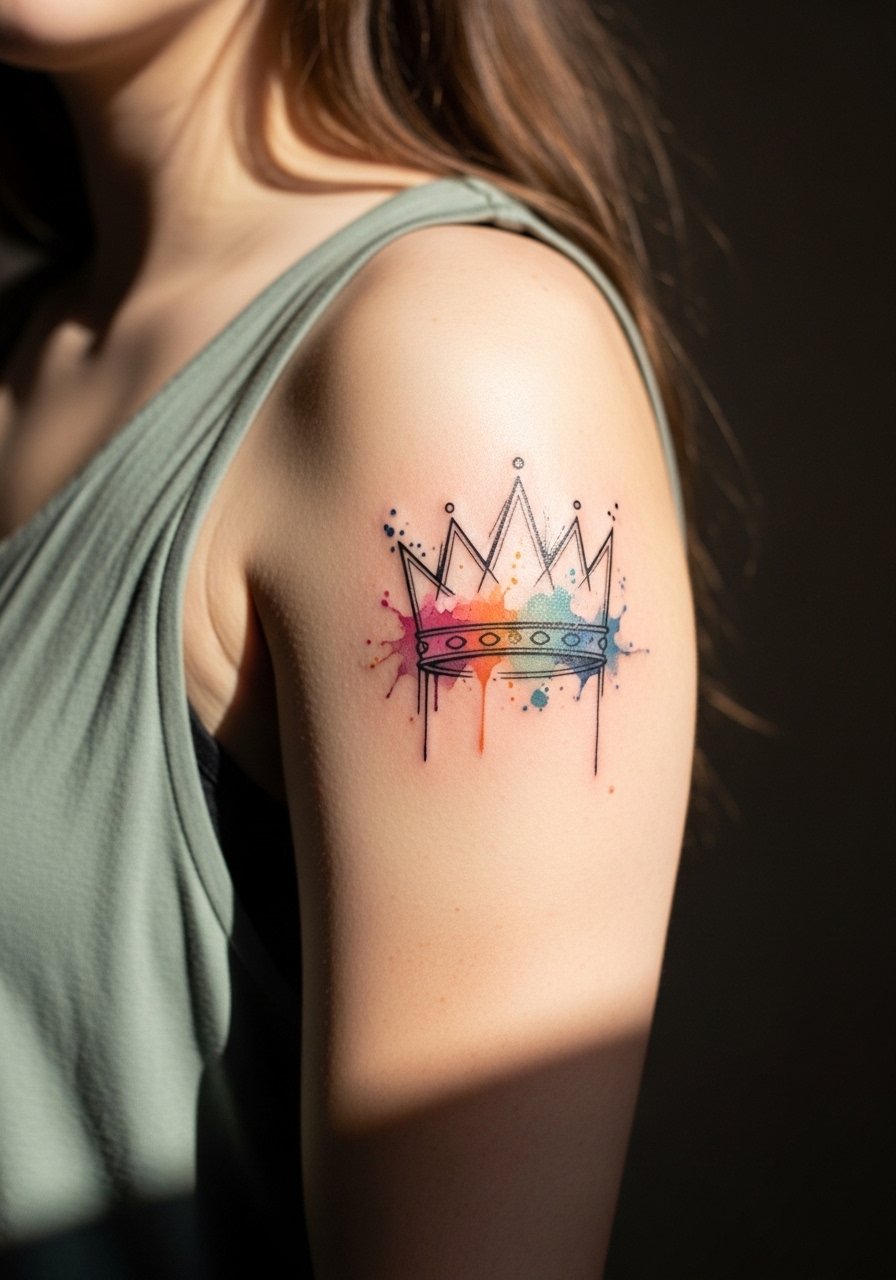
Watercolor crowns read like art on the shoulder and they need a different touch during consultation. Tell the artist you want the color applied with lighter saturation and clean line anchors, so the colors wash out gently over time rather than creating a fuzzy halo. The shoulder typically tolerates color well, but expect a longer session for blending. Mistakes are oversaturated splashes placed too close to detailed linework. For the session wear a loose tank top you can pull aside easily so the artist has clear access.
Studio Day Picks
The upper-arm, forearm, wrist, rib, and shoulder crowns above each need different prep, so a few targeted items make the studio visit and first week easier.
-
Stencil transfer paper kit. Lets you preview how the crown's negative space and points sit on curved skin before the needle goes down.
-
Topical numbing cream. Applied as the artist recommends it eases rib and shoulder sensitivity for longer sessions.
-
Thin protective film roll. Keeps wrist and finger crowns clean during the first days of heavy hand use.
-
Fragrance-free gentle body wash. Cleans healing areas without stripping ink on delicate fine-line work.
-
Aquaphor healing ointment. Thin application in the first week keeps fine line crowns from drying into tight flakes that pull at the linework.
7. Tiny Crown as a Ring Around a Finger
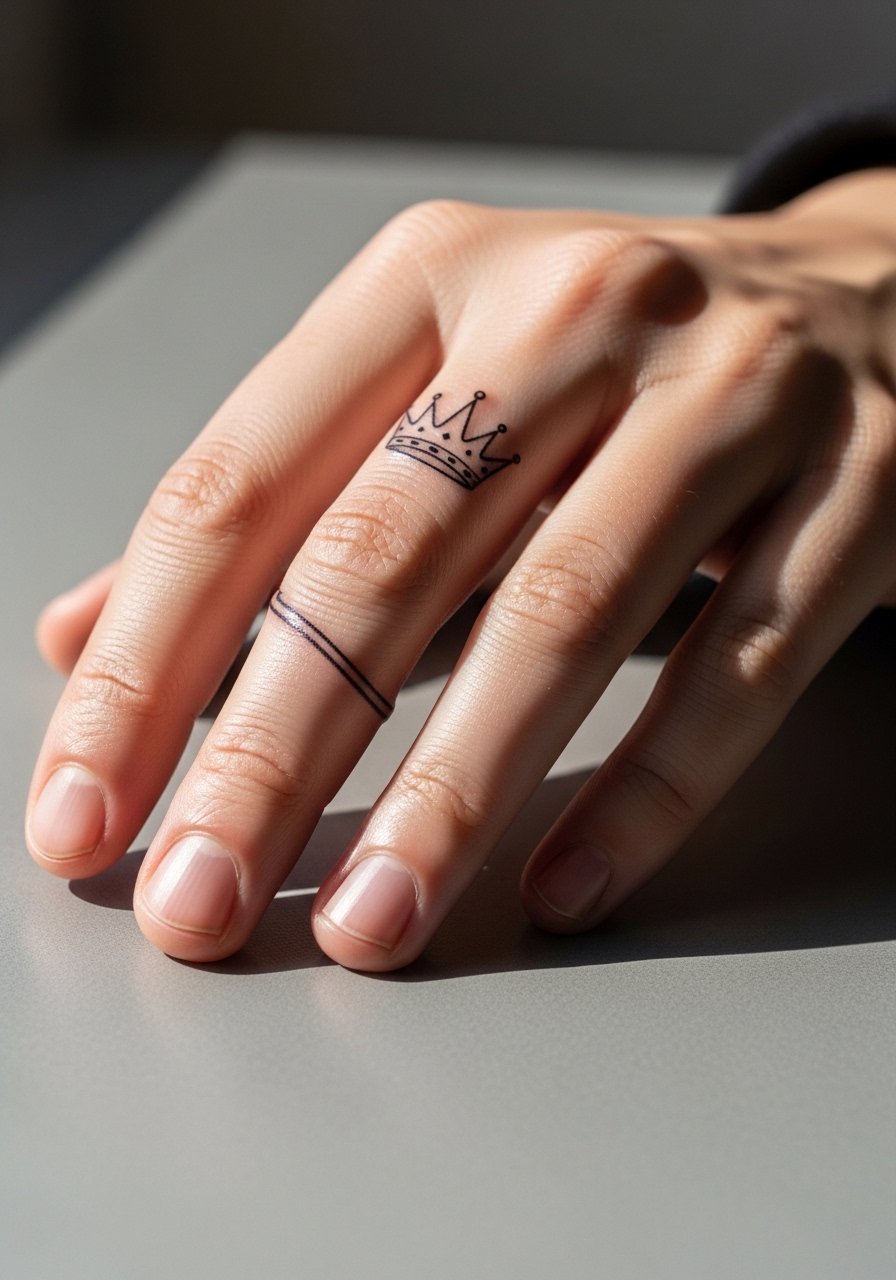
Finger crowns are charming and high-visibility. Pain is sharp and sessions are short but often multiple touch-ups are needed. The worst mistake is asking for ultra-fine interior detail. Instead ask for slightly thicker anchors and open spacing so the crown can tolerate daily washing and friction. Expect touch-ups earlier than most placements because of the constant use of hands. For showing it off, stacked minimalist dainty rings can complement the tiny crown without crowding the area.
8. Crown with Constellation Accents on Ankle

Ankle crowns are discreet and wear well with seasonal footwear. The skin near the ankle can be bouncy so ask the artist for slightly firmer linework. The session is quick and pain is moderate. A common aging issue is edge fading due to shoe friction. Wear jeans rolled up or sandals when you want the tattoo visible. Plan for a touch-up window at year two if you wear heavy footwear often.
9. Crown Halo Behind the Ear
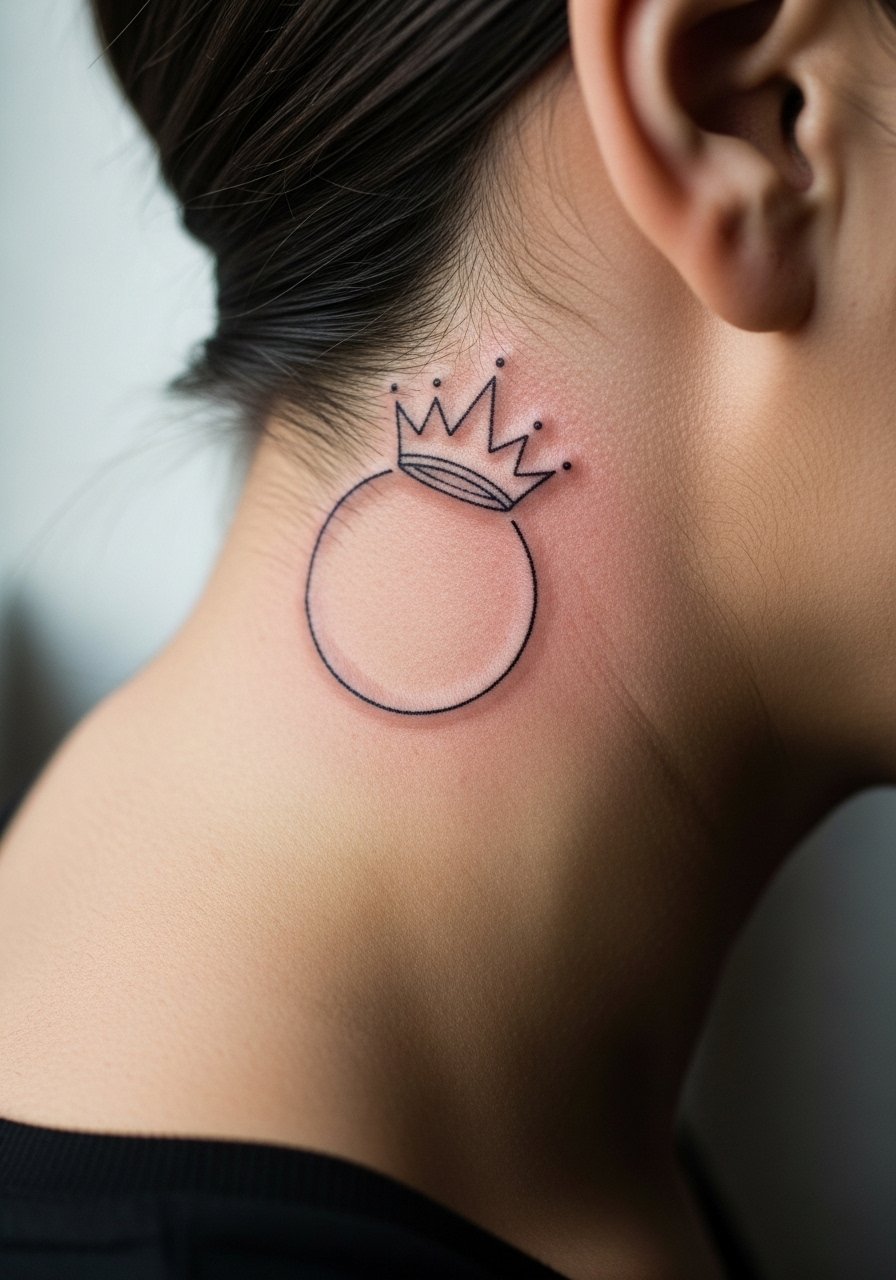
Behind-the-ear pieces are whisper-quiet statements. Pain is low but the area needs an artist used to small curved placements. Ask for slightly bolder outer points because too-fine work tends to vanish there. The controversy here is about visibility and longevity. One camp argues these should stay tiny to respect hairline movement. The other camp recommends modest scaling so lines age without disappearing. Discuss scale clearly in consultation. Hide or show the crown with your hair, and pair it with a small hoop earring to balance the area.
10. Crown Integrated into Collarbone Script

Collarbones are great for small crowned motifs that sit above a word. Pain ranges moderate to high depending on proximity to bone. For longevity keep the crown slightly above the script so each element has breathing room. The common mistake is stacking the crown and lettering too close, which merges after healing. For session comfort wear a wide-neck shirt that you can pull aside and bring a sweater for the drive home.
11. Abstract Crown Sleeve Accent on Outer Forearm

Using a crown as a recurring motif in a sleeve is a smart way to make an abstract idea feel purposeful. Forearm skin holds detail well but avoid cramping crowns too close together. In consultation ask for varied scales to prevent blending. The session may be several hours spread over multiple visits. A mistake is copying a single tiny crown repeatedly without scale changes. For outfits, rolled sleeves and a simple leather cuff bracelet frame the sleeve and complement the motifs.
12. Crown with Floral Surround on Hip

Hip crowns are sensual and can be hidden when needed. The area can be moderate to high pain depending on body composition, and sessions often need table adjustments for comfort. Tell your artist you prefer the crown slightly offset from the pelvis line so movement does not distort the petals. The frequent mistake is placing too much detail near the edges where fabric rubs, which causes patchy fading. For the session wear high-waisted denim you can lower slightly without removing trousers.
13. Dotwork Crown on the Sternum

Sternum placements are intimate and require an artist experienced with chest curvature. The session is often intense and longer than wrist pieces. Dotwork can hold well on the sternum if shading is scaled correctly. Artists split over very fine patterns here. One camp warns that dense patterns bruise and blur. The other camp favors lighter stippling and clear spacing. Ask for the lighter approach if you want longevity. For session comfort wear a fitted sports bra that you can unzip or slide down slightly for access.
14. Tiny Crown Behind the Finger Knuckle

Knuckle crowns are bold in a small package. Expect sharp pain and faster fading than other placements. The main mistake is making fine interior shading. Ask for strong outer anchors and accept that touch-ups will be part of life for knuckle pieces. Session time is short but you may need more than one visit. Pair it with a slim signet ring to keep the area stylish without hiding the art.
15. Asymmetrical Crown on the Calf
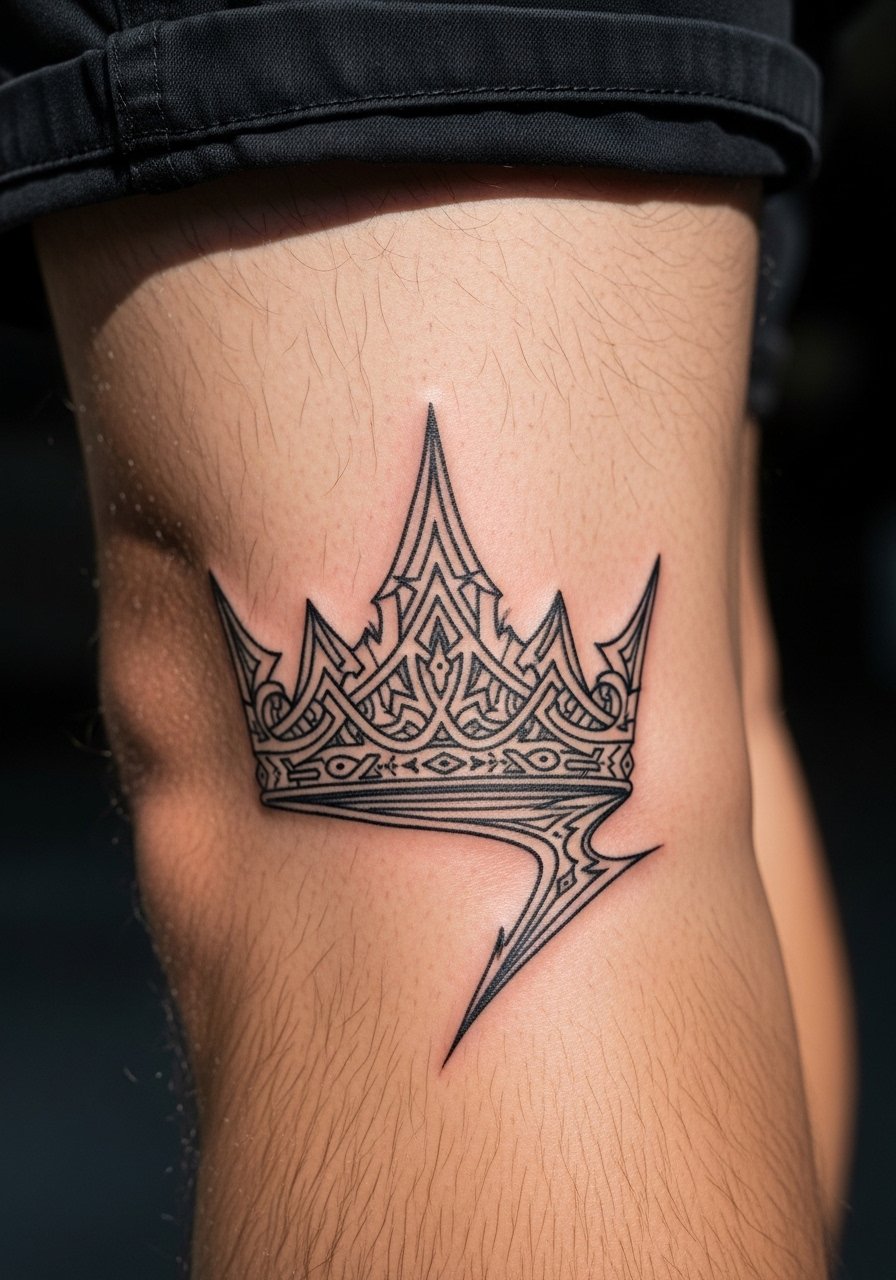
Calf placements are forgiving and often visible in warm months. The skin supports medium detail and pain is moderate. Tell your artist you want the crown to read vertically with one taller point and a simplified lower band so it holds from a distance. A frequent mistake is centering the crown too low where pants rub at the top. For showing it off pick a pair of mid-length shorts that do not sit on the design.
16. Crown and Chain Motif Across the Chest

A crown linked to a chain makes a graphic chest statement. Pain is moderate to high near the bone. Ask for chain links that breathe with skin motion so the chain does not tighten into a darker line. The mistake is making the chain too fine and continuous. The session can be lengthy if the chain stretches across the chest. Pair it with an open collar shirt when you want the piece visible without exposing too much skin.
17. Crown with Brushstroke Blackwork on Forearm

Brushstroke blackwork reads like calligraphy and ages well when the strokes are bold. The inner forearm is kind to saturation and shows detail. Tell the artist to anchor the brushstrokes with denser sections and avoid feathered micro texture that can blur. A mistake is trying to force delicate brush marks at small scale. Session time varies by saturation. Display this design with a rolled sleeve linen shirt for casual framing.
18. Crown as a Small Back-of-Hand Accent
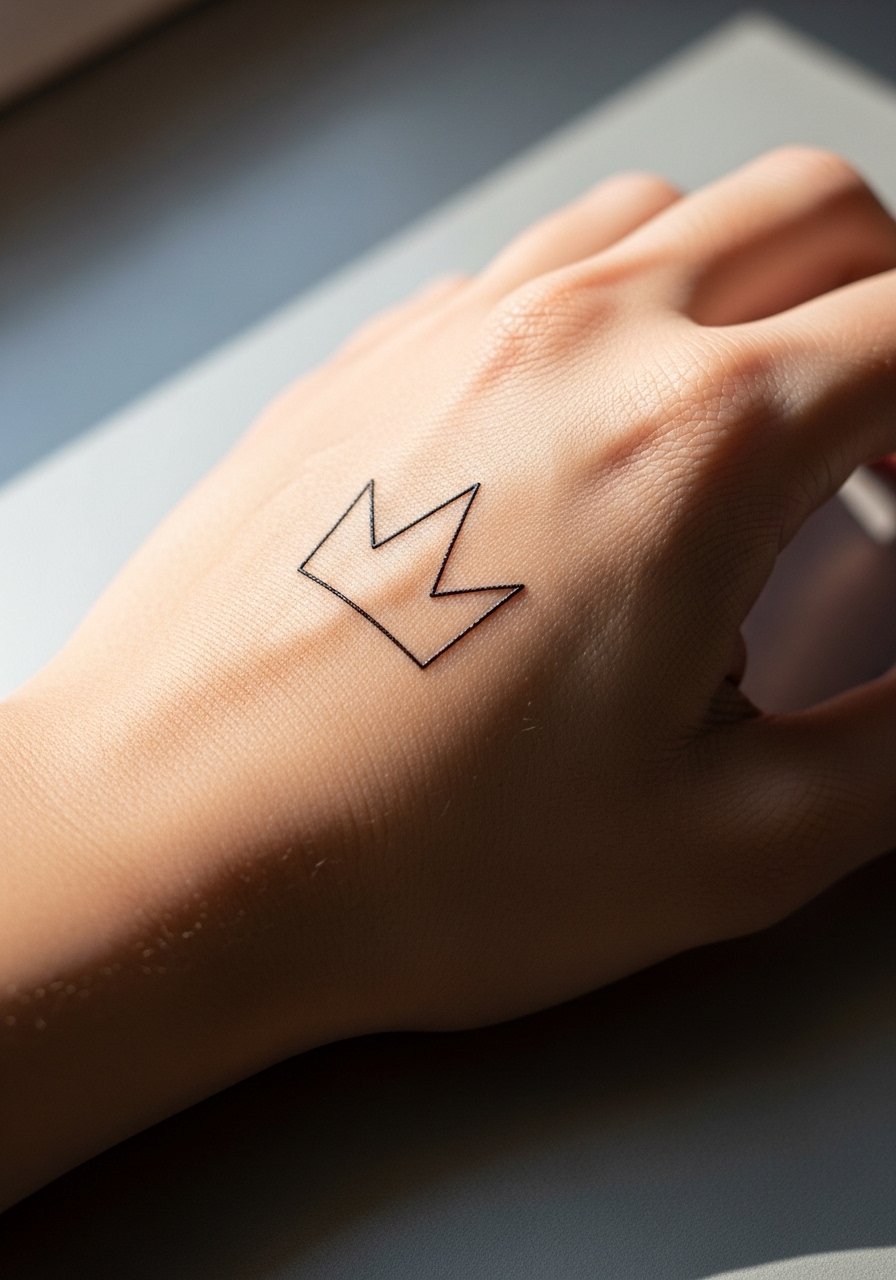
Hands age and see a lot of friction, so hand crowns need sturdier linework. Pain is high and touch-ups are common. Choose slightly thicker anchor lines and accept that color and detail will soften faster than on the arm. A common mistake is expecting long-term crisp micro detail. The session is quick but plan for touch-ups in the first one to two years. Accessorize with a minimal watch so the crown and wrist area read as a coordinated look when you roll sleeves.
19. Crown Mandala Hybrid on the Back
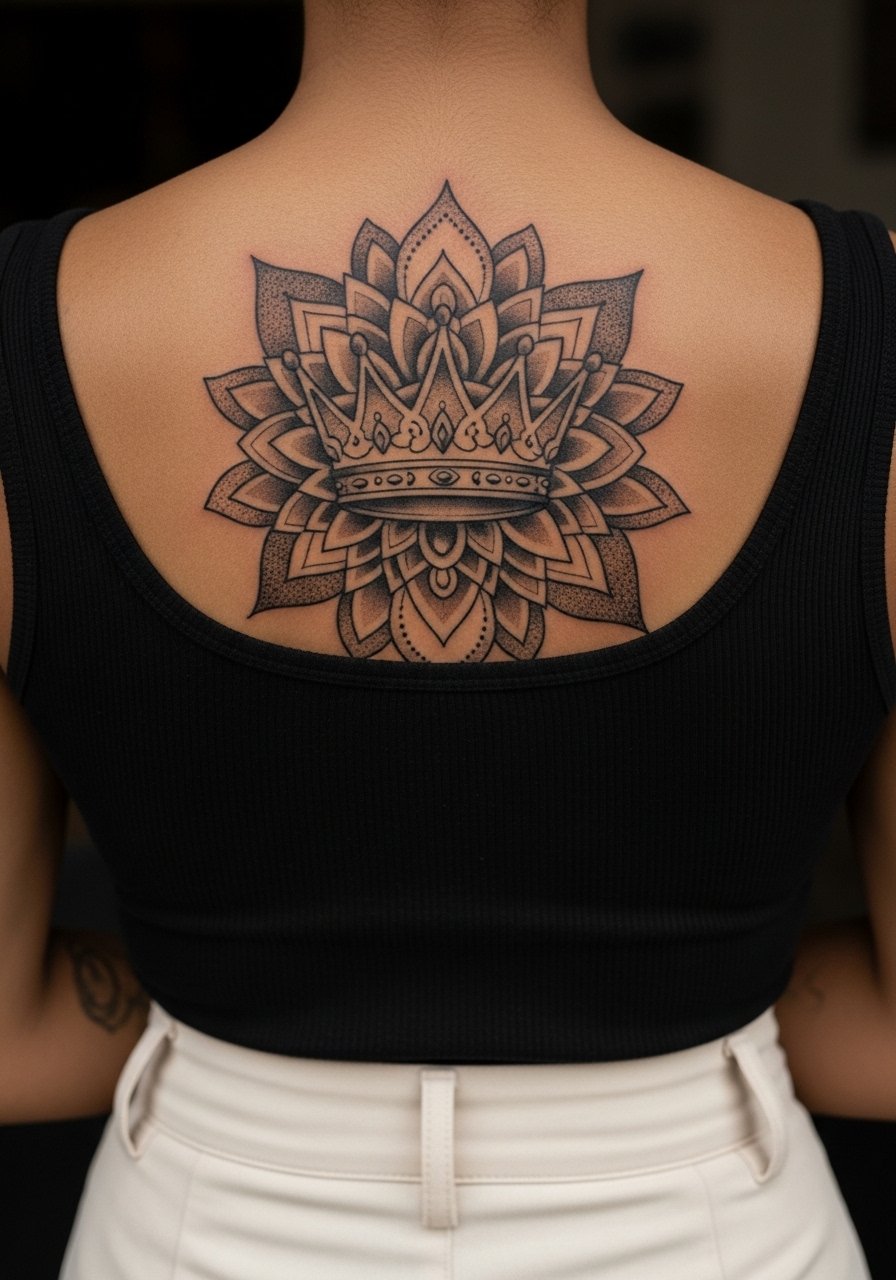
A crown-mandala hybrid plays with symmetry and works well across a flat back surface. Pain is moderate and sessions can be long. Tell the artist you want the mandala negative spaces balanced so the crown's points remain readable at a distance. The mistake is overloading the center with tiny detail that blurs over time. Show it with an open-back dress to highlight the shape on warmer days.
20. Crown with Wave Forms on the Thigh

Thigh crowns can be large and private or small and suggestive. The skin takes ink well so detail can be finer than on hands. Tell your artist you want the waves to follow muscle curves to avoid distortion when you sit. A common mistake is wrapping too tightly around the thigh where clothing rubs. For the session wear loose shorts that you can pull aside without pressure.
21. Tiny Crown on the Side of the Neck
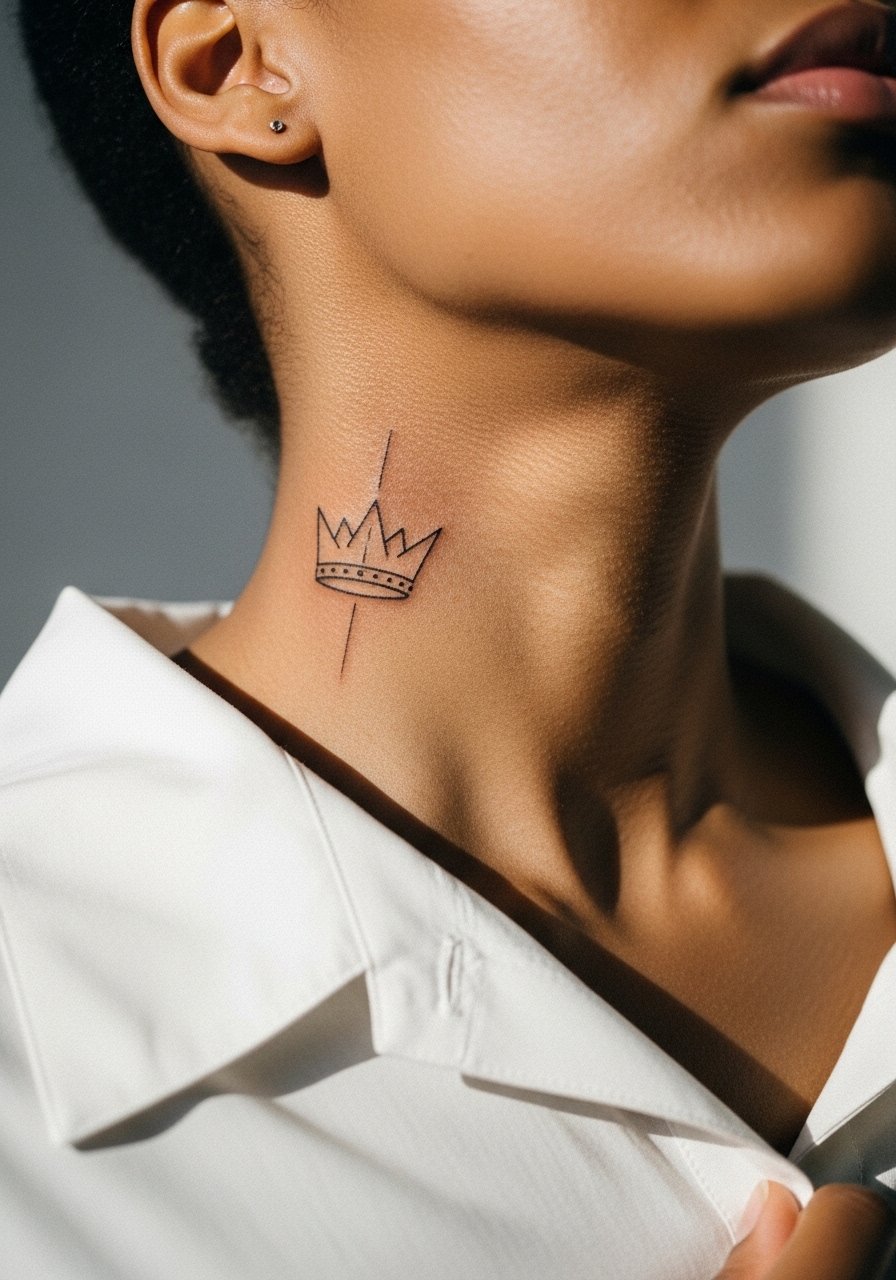
Side neck tattoos are visible and career-sensitive for some people, so consider placement carefully. Pain is moderate and healing needs sun avoidance. The usual mistake is choosing a crown that is too small for neck movement. Ask for a pair of slightly strengthened points to help the design stay legible. Pair it with a collarless jacket when you want to conceal or reveal the area.
22. Crown as a Small Spine Accent
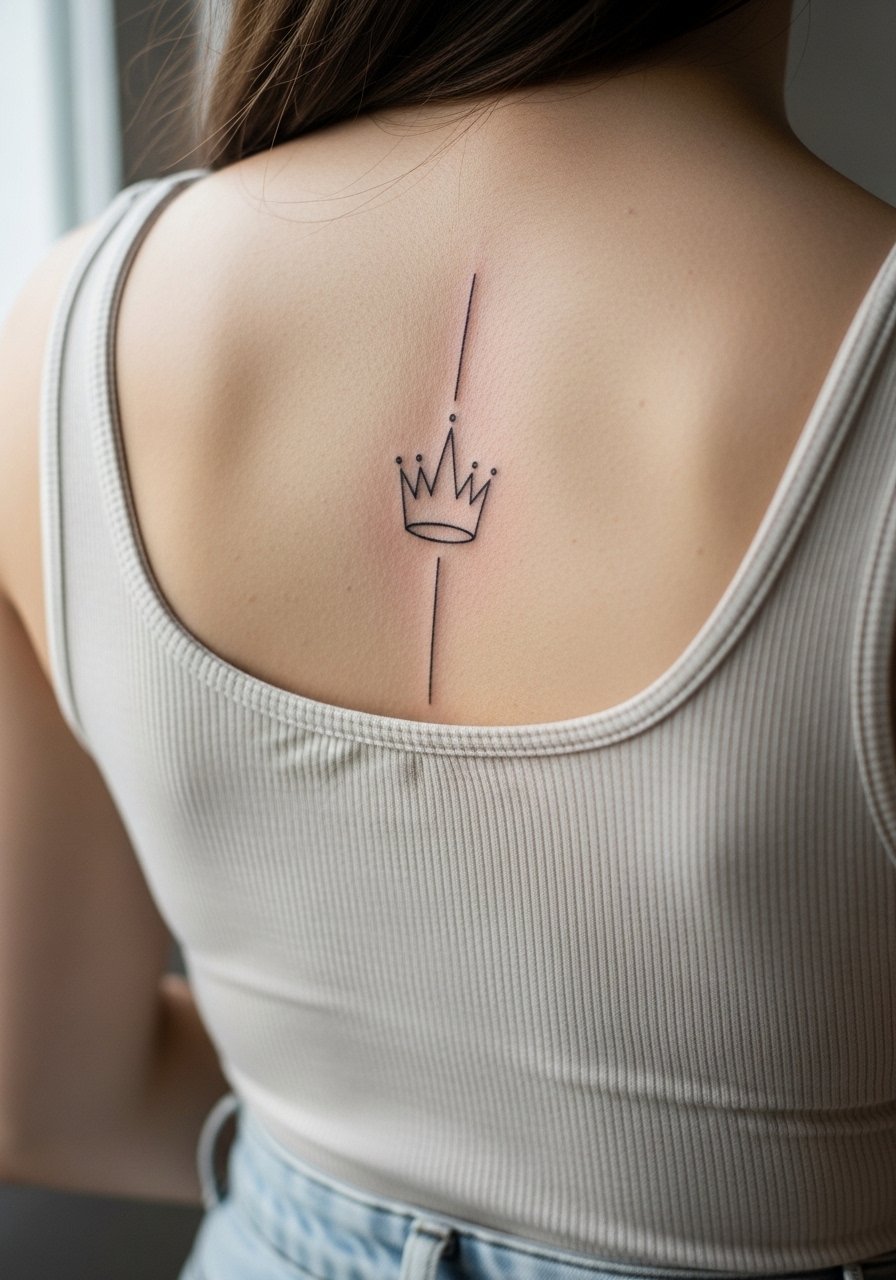
Spine work is dramatic but needs careful scale to work with vertebrae spacing. Pain can be high depending on proximity to bone. Tell the artist you want vertical breathing room so the crown does not get compressed visually when you bend. The mistake is boxing the crown too narrow, which shortens its life visually. Session time depends on length. Show it with a strappy back top for evenings out.
23. Crown with Thorn Band Around the Bicep
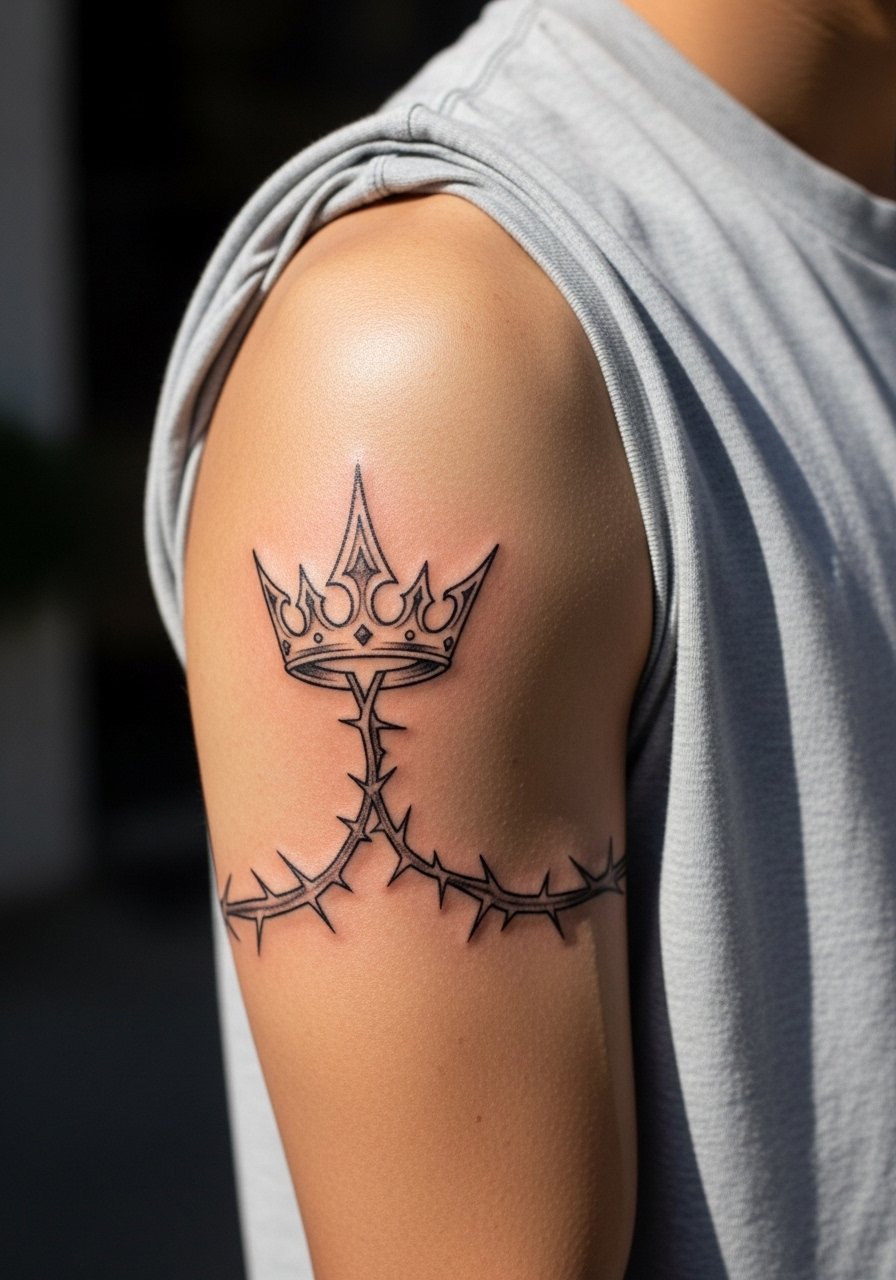
Bicep bands are classic and they age predictably. The skin here tolerates detail and the pain is manageable. Tell your artist to leave breathing space between thorns and crown points to avoid merging. A common mistake is wrapping too tightly where the muscle expansion compresses the band. For sessions wear a sleeveless shirt so the artist has full access.
24. Crown in Negative Space on the Sternum Side
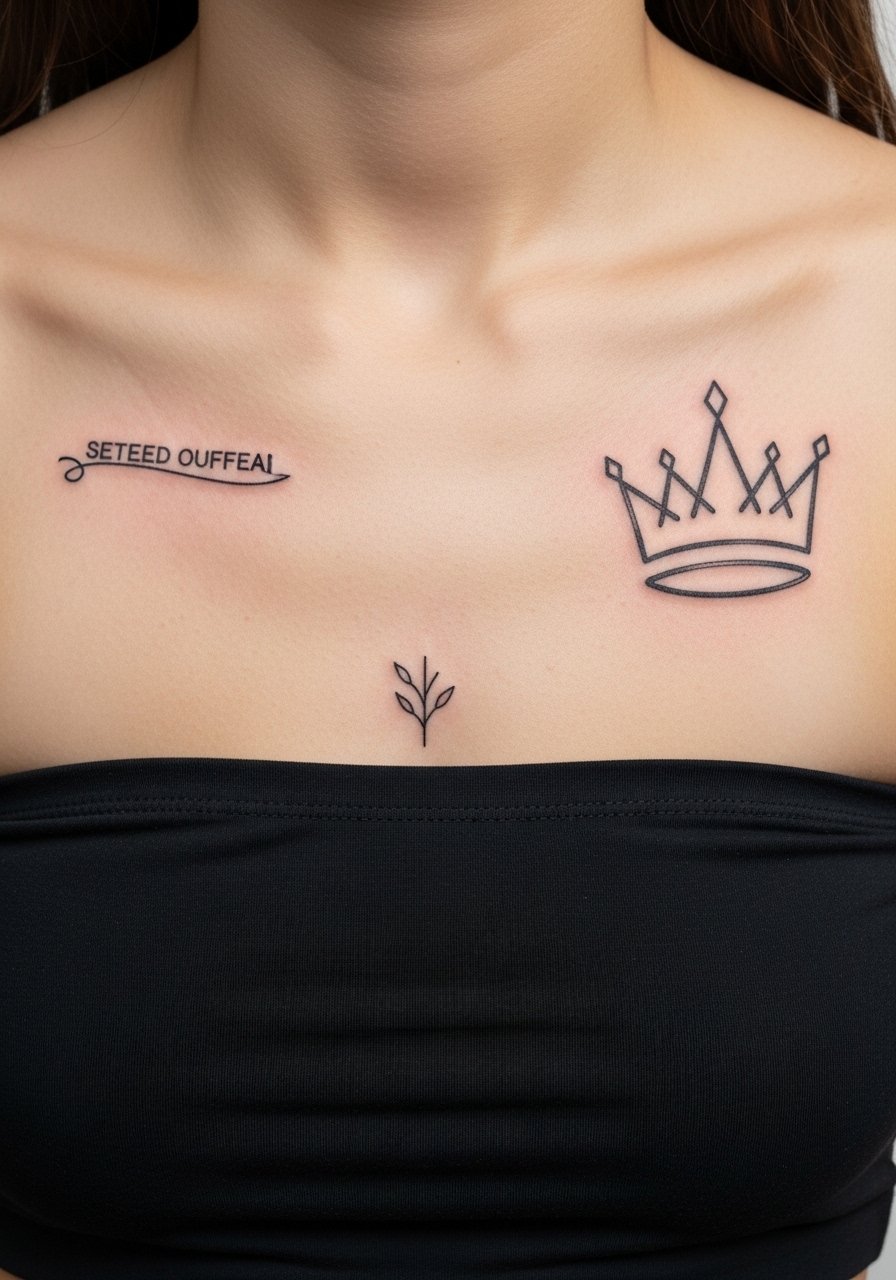
Negative-space crowns on the chest can look very modern. Sternum-adjacent placements demand careful spacing because shading can creep. The controversy is about how dense surrounding shading should be. One camp says heavy surrounding saturation helps the crown pop. The other camp warns heavy saturation can bleed and reduce contrast over time. Ask the artist which approach fits their touch. For access wear a bandeau top you can shift during the session.
25. Crown with Tiny Gem Dots Around the Collarbone

Gem-dot accents add a sparkle without color. Collarbone skin is thin so pain ranges from moderate to high. Ask the artist for slightly larger dots so they do not vanish into skin texture. A common mistake is requesting micro dots under the grain of the skin. The session is short. Show this design with a thin chain pendant necklace that sits just below the crown.
26. Crown as a Small Caliber on the Wrist Crease

Wrist crease placements face a trade-off between visibility and movement. The crease can break lines over time so request slightly bolder anchors and open spacing. The mistake is forcing micro features across the crease. Expect a short session and likely a touch-up at year two. For access and comfort wear a thin bracelet after healing that does not rub on the design.
27. Crown Encircled by Abstract Brush Dots on the Shoulder Blade
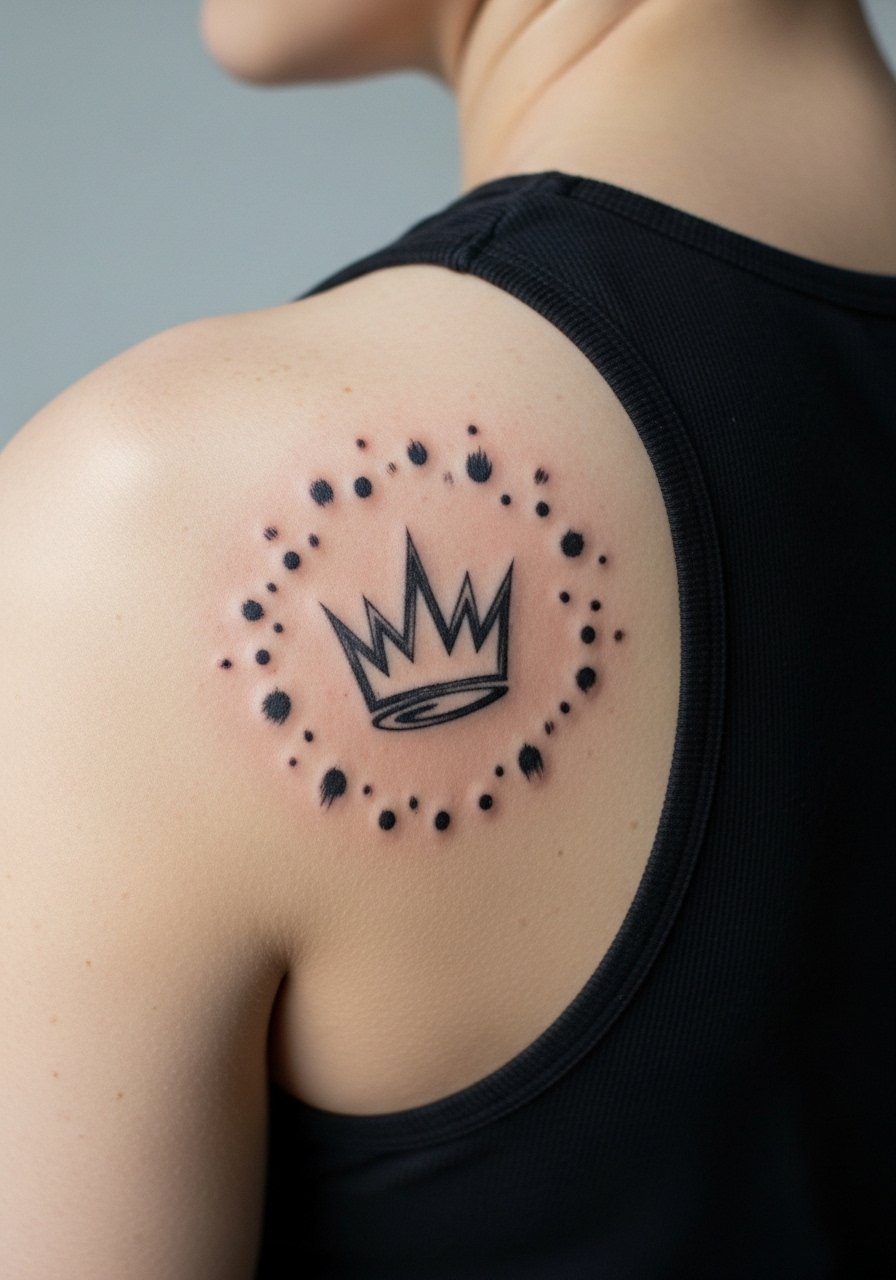
Shoulder blade placements carry well and let you scale a crown up without losing detail. The key is to keep the dots loose so they do not form a dense patch when healed. Tell your artist to stagger dot sizes and keep the crown outline strong. A common mistake is centering too close to the spine line where clothing pressure can cause irritation during healing. For show-off outfits wear a tank top with shifted strap.
Frequently Asked Questions
Q: How long will a fine line abstract crown last before it needs a touch-up on the wrist or finger?
A: Fine line crowns on high-motion areas like fingers and wrists usually need touch-ups sooner than larger work. From what I've seen, expect the first touch-up between one and three years depending on daily friction and sun exposure. Ask your artist for slightly larger anchors if you want to stretch that window.
Q: Is a watercolor crown a bad choice for the sternum or ribs?
A: Watercolor on ribs or sternum can look beautiful but it depends on how saturated the color is and how much dense shading sits next to fine lines. Many artists prefer lighter washes in those areas. If you want watercolor there, request very soft saturation and clear line anchors so the color fades gracefully.
Q: Should I worry about getting a crown on my hand for work reasons?
A: Hand tattoos still affect hiring in some industries, so consider your career path before committing. If discretion matters, choose a placement like the inner forearm or shoulder that can be covered easily with long sleeves or jewelry. A minimalist watch can help frame a wrist design when you need a slightly more formal look.
Q: What should I ask during consultation to avoid early blurring for a crown on the ribs?
A: Ask the artist about spacing and needle depth for the ribs and request a slightly larger scale than your smallest comfortable size. Also ask how their portfolio pieces in that placement look after a few years. The honest answer often is "it depends" on technique and skin type.
Q: Can negative-space crowns be combined with blackwork without losing the silhouette over time?
A: Yes, when executed with deliberate contrast. The trick is to keep the negative areas clean and the surrounding blackwork at a density that does not creep into the negative space as it heals. Ask for staged shading in the consult so the artist plans for long-term contrast.