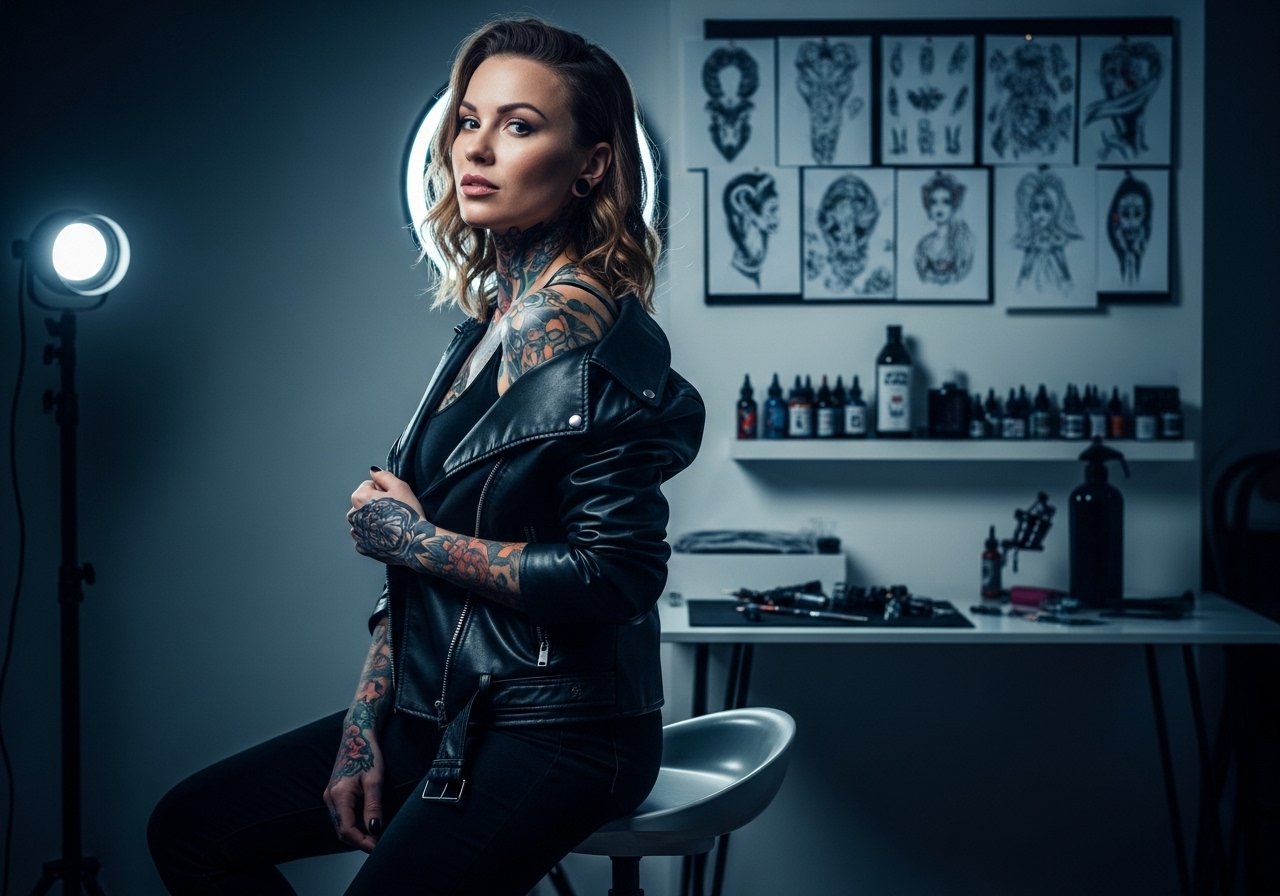
Bold black snake tattoos often age better than tiny photorealistic snakes, because bold linework and solid saturation resist spreading and sun damage. If you want a back piece that reads from across the room and still reads clearly five years from now, think about scale, flow with the spine, and where clothing will hide or show it. Below are 17 bold snake back tattoo drawings with notes on aging, consultation points, session wear, and how to show them off.
1. Full-Spine Coil, High-Contrast Blackwork
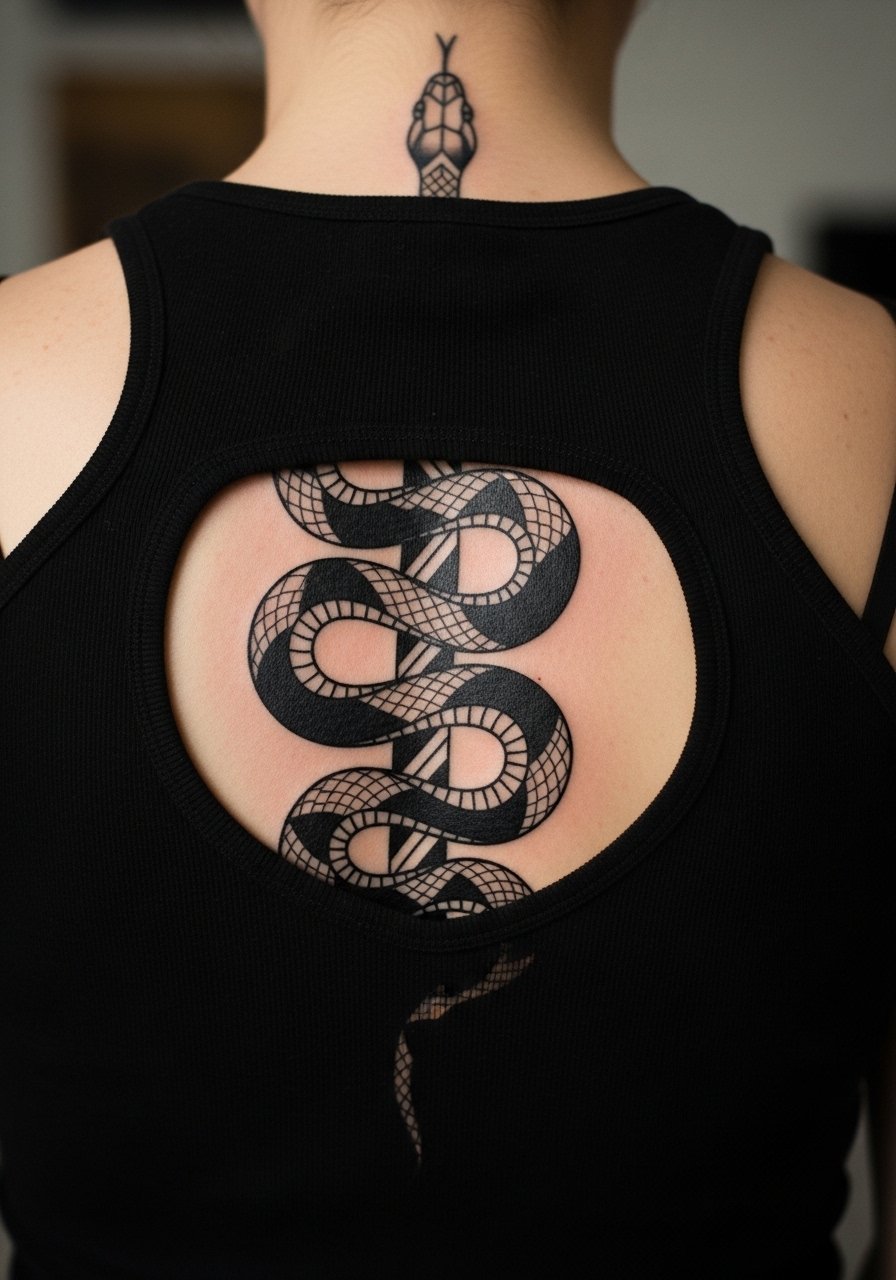
A single snake that follows the spine reads like a sculptural element on the body and keeps its impact as skin ages when done boldly. Tell your artist you want strong primary outlines and deep saturation in the scales so the piece keeps contrast as it settles. Fair warning: the spine is a higher pain area and sessions feel interrupted by sharp nerve tugs, expect breaks. Common mistakes include tiny scales and delicate linework that pull together over time. For touch-up planning expect a color refresh at year three for most people. During the consult, ask to see healed spine work in a similar skin tone and note how the snake flows with the vertebrae.
2. Scaled Wrap Across the Shoulder Blades
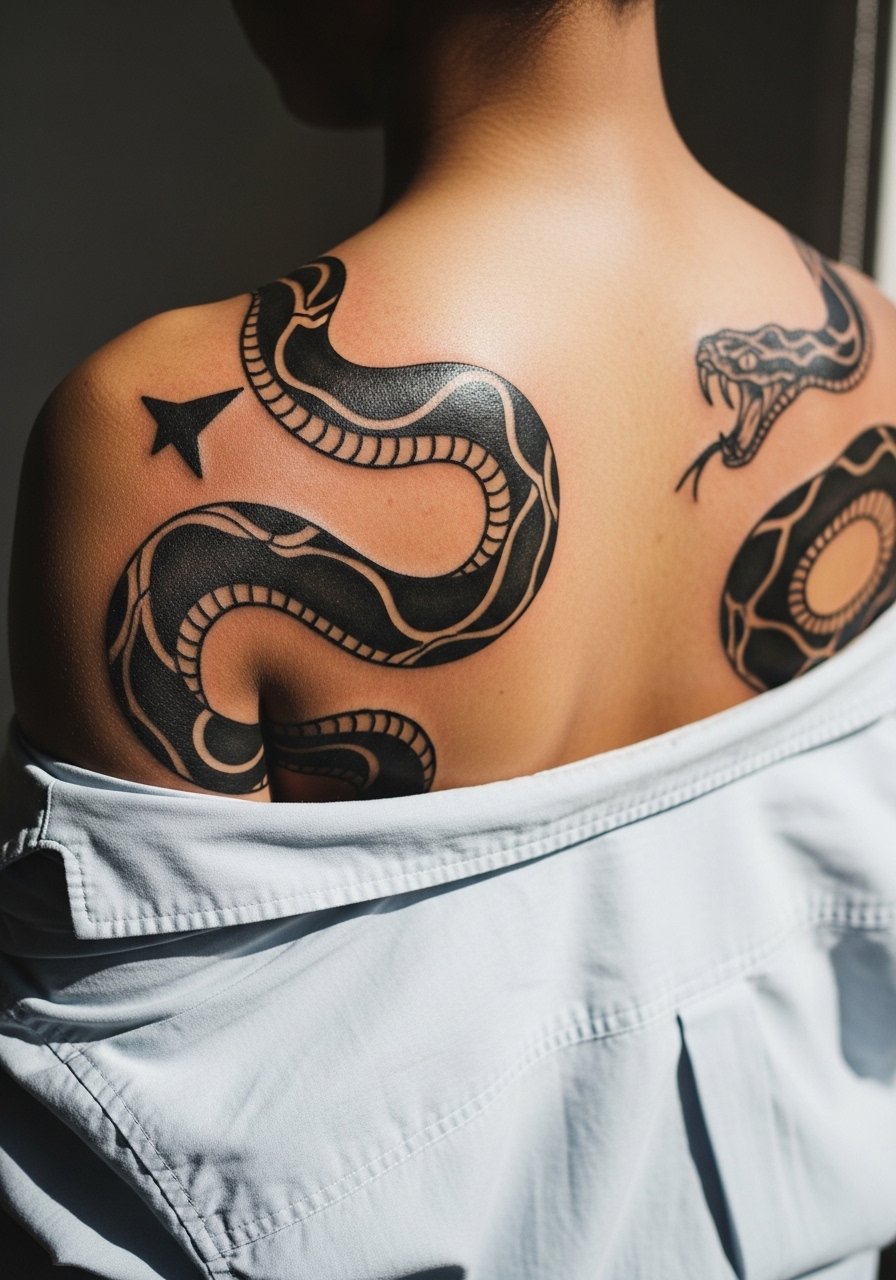
A wide wrap that sits across both shoulder blades looks dramatic in open-back tops and stays readable when the lines are weighty. Tell the artist you want negative space between scale rows so the design does not merge in two to five years. The session feels like steady machine work with occasional pressure points at the bone edges. Blowout risk increases if the artist crowds fine detail up near the shoulder joint. If you plan to show it off, open-back dresses highlight the sweep, and a loose button-down shirt pulled aside makes the area easy to access during the appointment.
3. Single Headed Serpent on Upper Back, Neo-Traditional
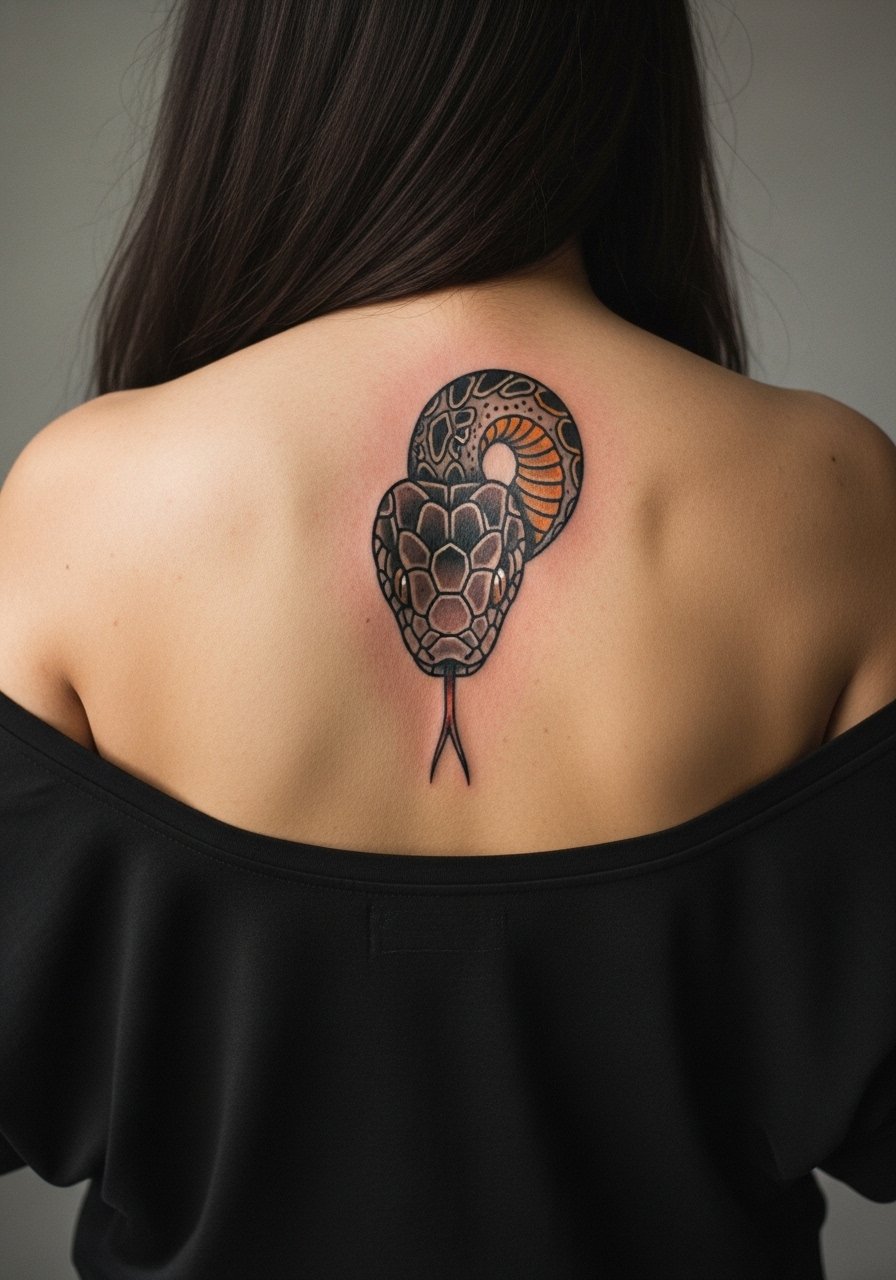
Neo-traditional snakes lend themselves to bold outlines and bright fills that age predictably. Ask your artist for thicker outer linework paired with stipple shading inside the scales so you keep texture without tiny hairline details. A common mistake is over-saturating small color areas which can muddy after a couple of years. Session time is moderate and often finished in one to two sittings depending on color. For showing the piece off, pair it with wide-neck tops or a thin chain pendant necklace that draws the eye upward toward the design.
4. Curving Snake Across the Lower Back, Bold Blackwork
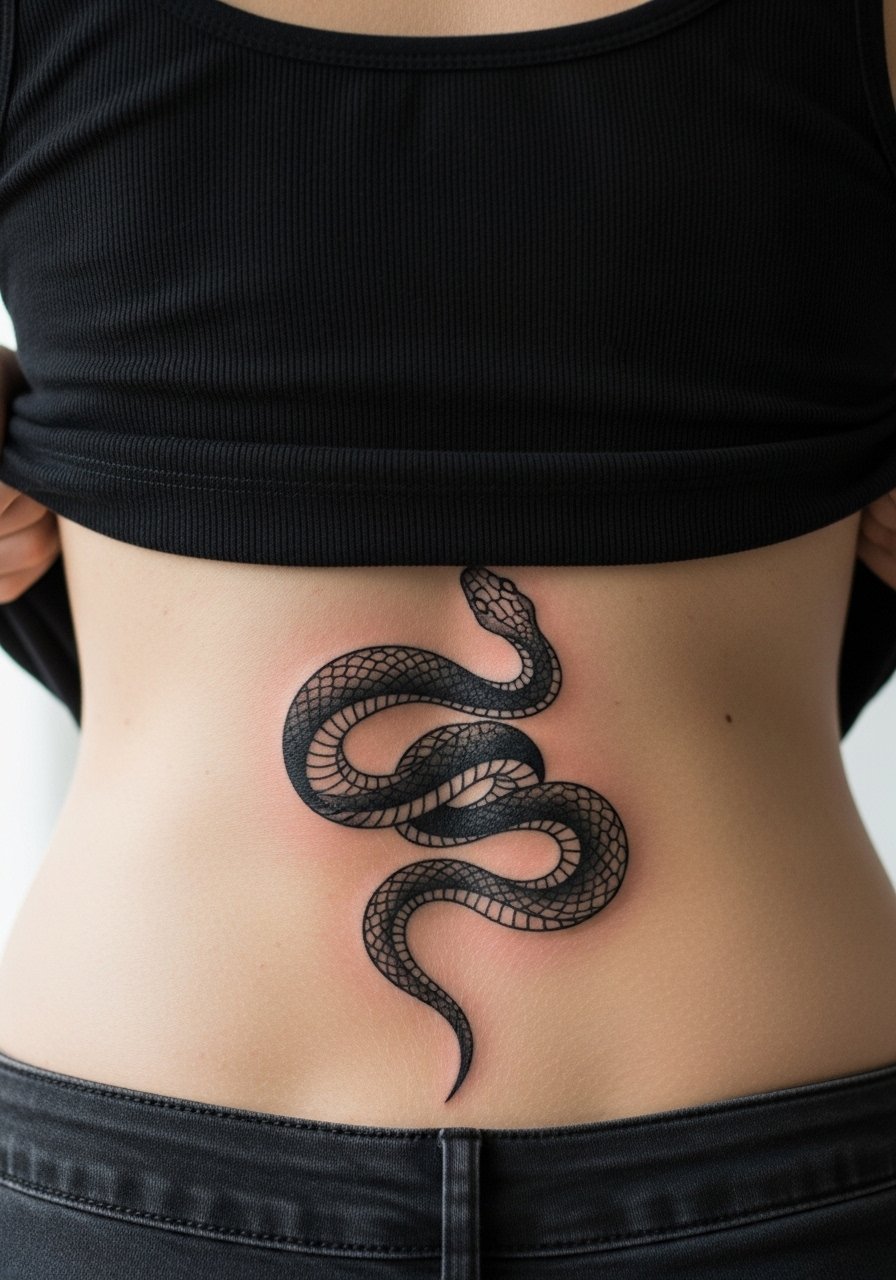
Lower back pieces take friction from waistbands and sit against clothing often, so thick outlines and solid fill prevent early fading. During consultation mention you want the snake placed to avoid direct contact with belt lines. The session can be uncomfortable over the sacrum and lower spine. A typical mistake is placing too much fine texture near the waistband where rubbing accelerates fading. For session day, bring a low-back tank top so you can expose the area without removing all clothing.
5. Scaled S-Curve Across One Scapula, Graphic Blackwork
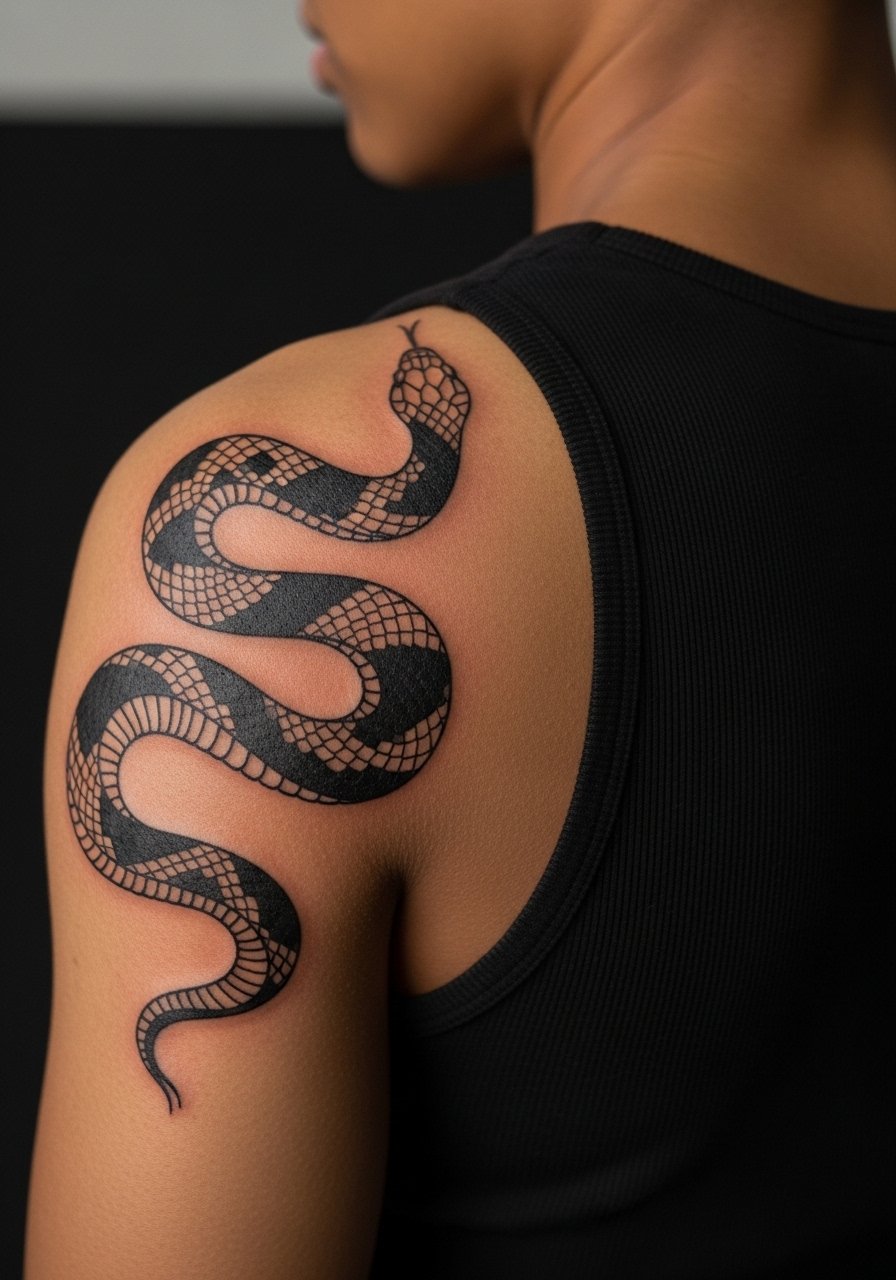
A single-shoulder scapula snake benefits from visual breathing room. Ask your artist for clear spacing between scale clusters so the pattern does not run together with movement. The session feels like a focused two-hour block with the shoulder blade causing intermittent stinging. One mistake is crowding the scapula with too many tiny scales. Expect a touch-up window at two to four years depending on sun exposure. This placement looks great with sleeveless tops and a loose tank top for both showing and for the appointment.
6. Vertical Ouroboros Over the Spine, Symbolic Blackwork
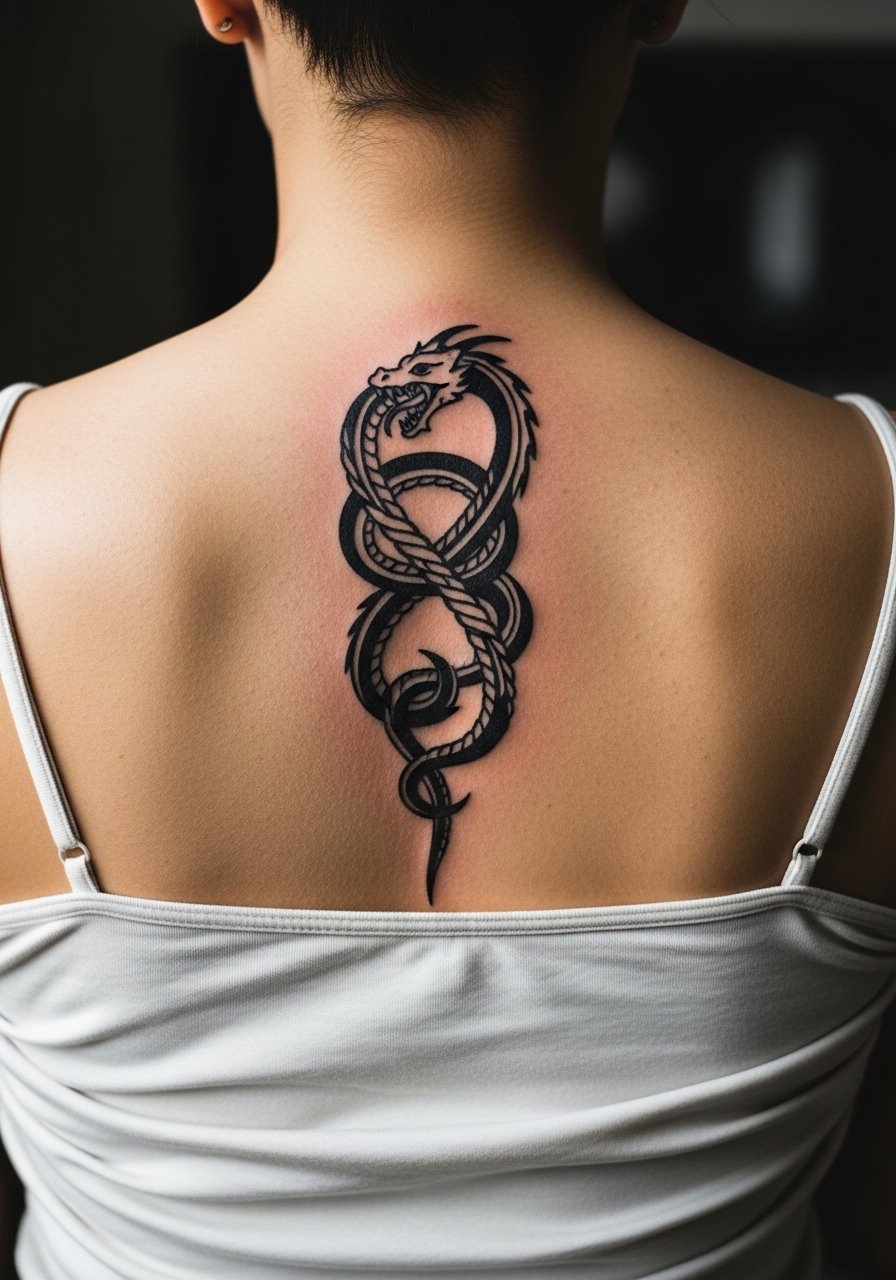
A vertical ouroboros reads like an emblem and ages well when scaled up. During consult ask for hearty outlines and limited fine interior detail so the symbol stays legible. The spine placement feels sharp during the needle work, with real pressure over bony points. Artists disagree about ultra-fine contours on the spine. One camp says small detail blurs quickly because of movement and thin skin. The other camp argues that proper needle depth and spacing preserve detail. Name both views and ask where your chosen artist stands. For showing it off, open-back camisoles make the circle clear.
Pre-Session Essentials
The shoulder, lower back, and spine pieces above require easy skin access and clothing that stays out of the way while you sit for several hours.
-
Stencil transfer paper kit. Lets you preview placement on the back so the flow with the spine and shoulder blades is correct before inking.
-
Topical numbing cream. Applied per directions before long sessions helps take the edge off spine and lower back sensitivity.
-
Thin protective film roll. Useful to cover small healed zones that might rub against waistbands in the first week.
-
Fragrance-free body wash. Cleans the area without irritation while the tattoo is establishing a scab and delicate crust.
-
Aquaphor healing ointment. Thin layers in the first days keep bold blackwork supple without clogging the surface.
7. Twin Snakes Mirroring Down the Spine
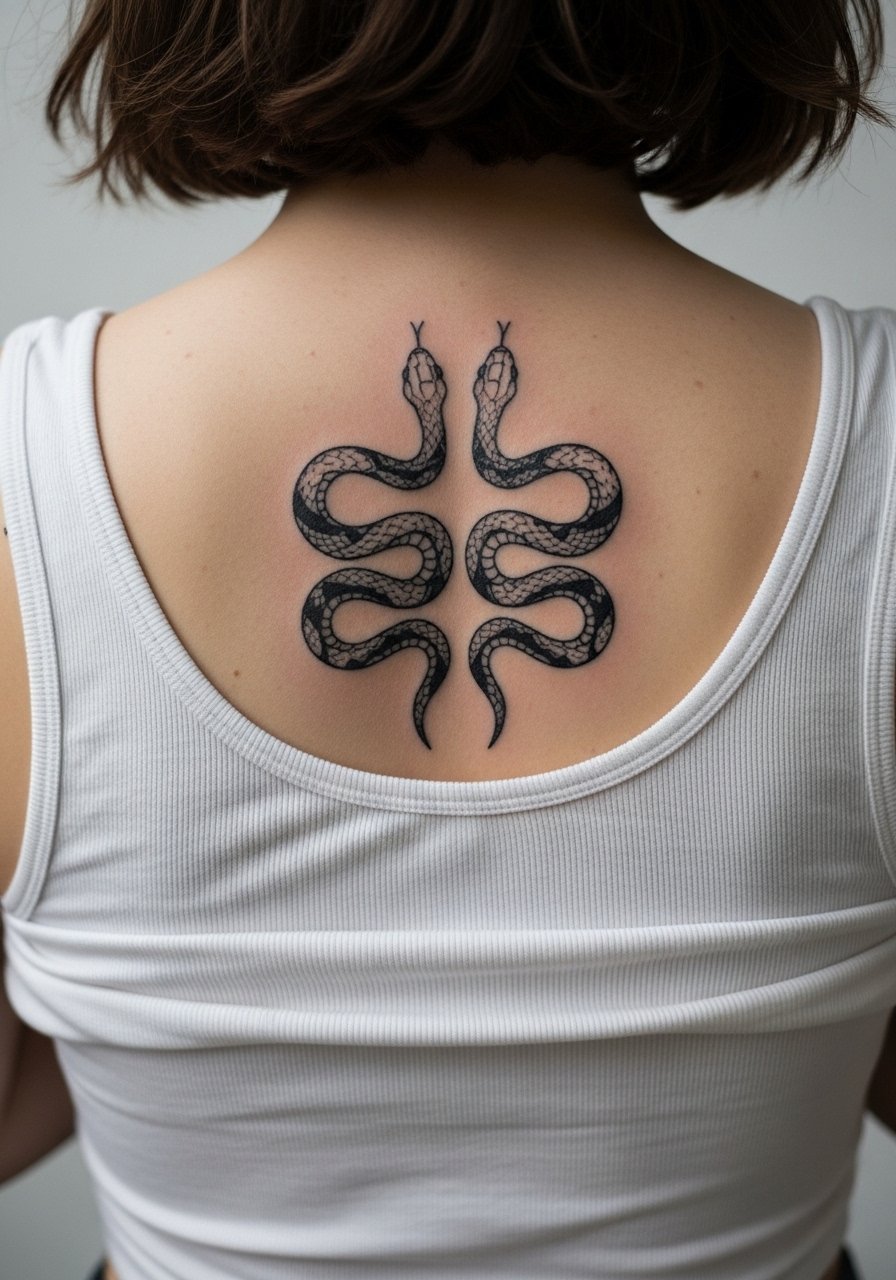
Twin snakes give a sense of symmetry and motion when they flank the vertebrae. Tell the artist you want equal negative spacing between the snakes so they do not visually merge over time. The session is similar to single-spine work but takes longer because both sides require matching line weight. The common error is asymmetry from stenciling that was not double-checked. Expect to discuss touch-up timing at your follow-up if one side settles differently. For showing the piece, open-back dresses or a open-back midi dress make symmetry the focus.
8. Wide Back Panel, Snake and Floral Fusion
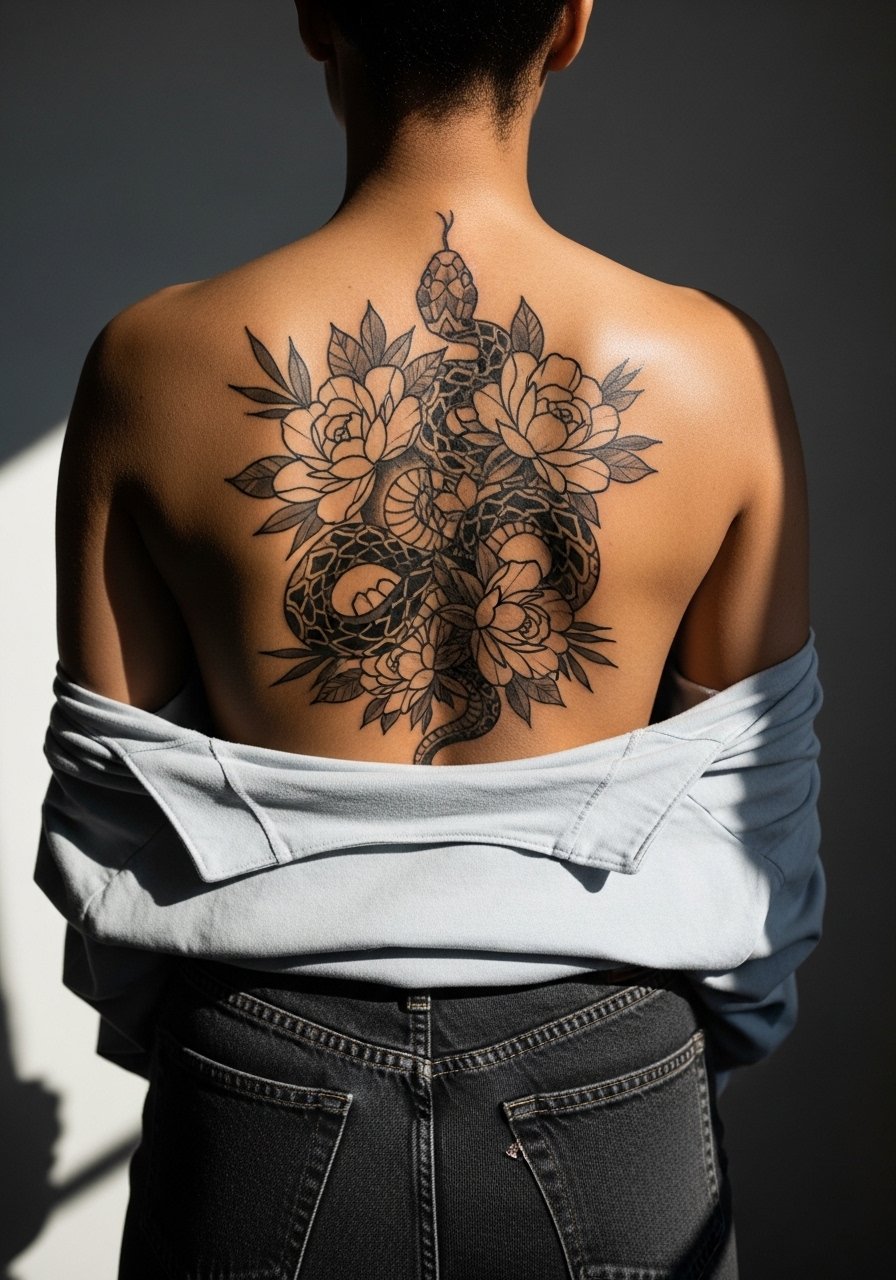
A fusion panel blends bold snake silhouette with larger floral elements that provide scale and protection for the tiny details. Ask for simplified petal blocks and strong outer lines so the florals do not age into mush. Sessions for a panel are longer and may require two sittings. A common mistake is treating the flowers like fine-detail filler instead of solid shapes, which invites early blurring. This style pairs well with strapless or wide-neck tops while the appointment is easier if you wear a loose button-down you can slip off without pulling over the head.
9. Bold Snake Spine Fragment, Minimal Negative Space
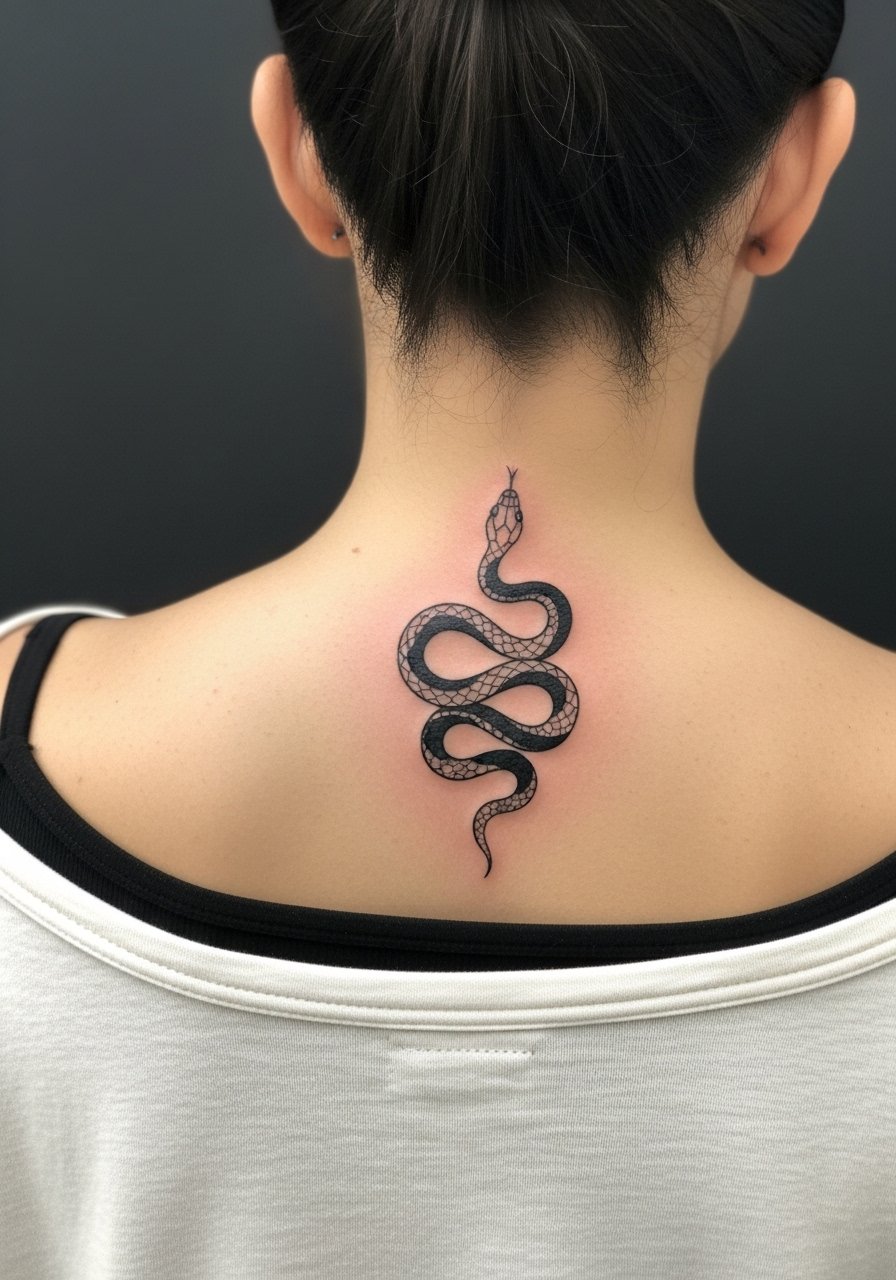
A compact fragment that sits high on the spine can act as a focal point while keeping session time short. The key is to ensure adequate negative space around the head and tail so the fragment keeps clarity. This area can be surprisingly sensitive and feels like a concentrated sting. Artists split on whether very tight compositions on the spine will hold detail. Name both camps and then ask for examples of healed fragments in similar placements. Avoid asking for ultra-fine scales here. For the session, pick a top that exposes the upper back without needing to be removed.
10. Scaled Snake Sliding Off the Shoulder Into Upper Back
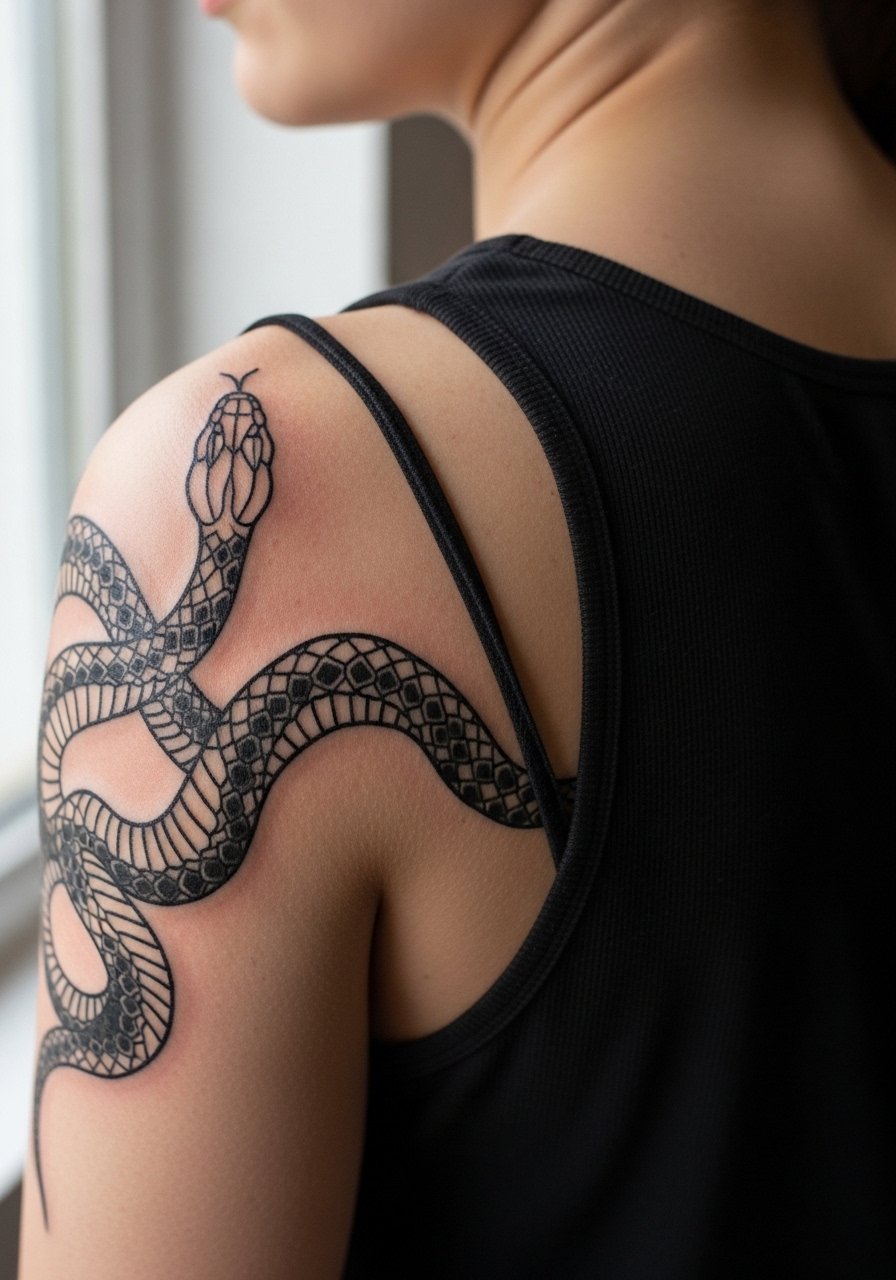
When a snake slides from shoulder to back the movement complements the deltoid curve and keeps the design visible in short sleeves. Request that the artist orient scale direction along muscle flow so the piece looks dynamic when you move. Sessions around the shoulder can be interrupted by the contour over the bone. A frequent mistake is making the head too small which reduces impact as it ages. This placement is ideal with rolled sleeve shirts and a racerback tank for showing off the sweep.
11. Bold Tribal-Inspired Snake Across the Mid-Back
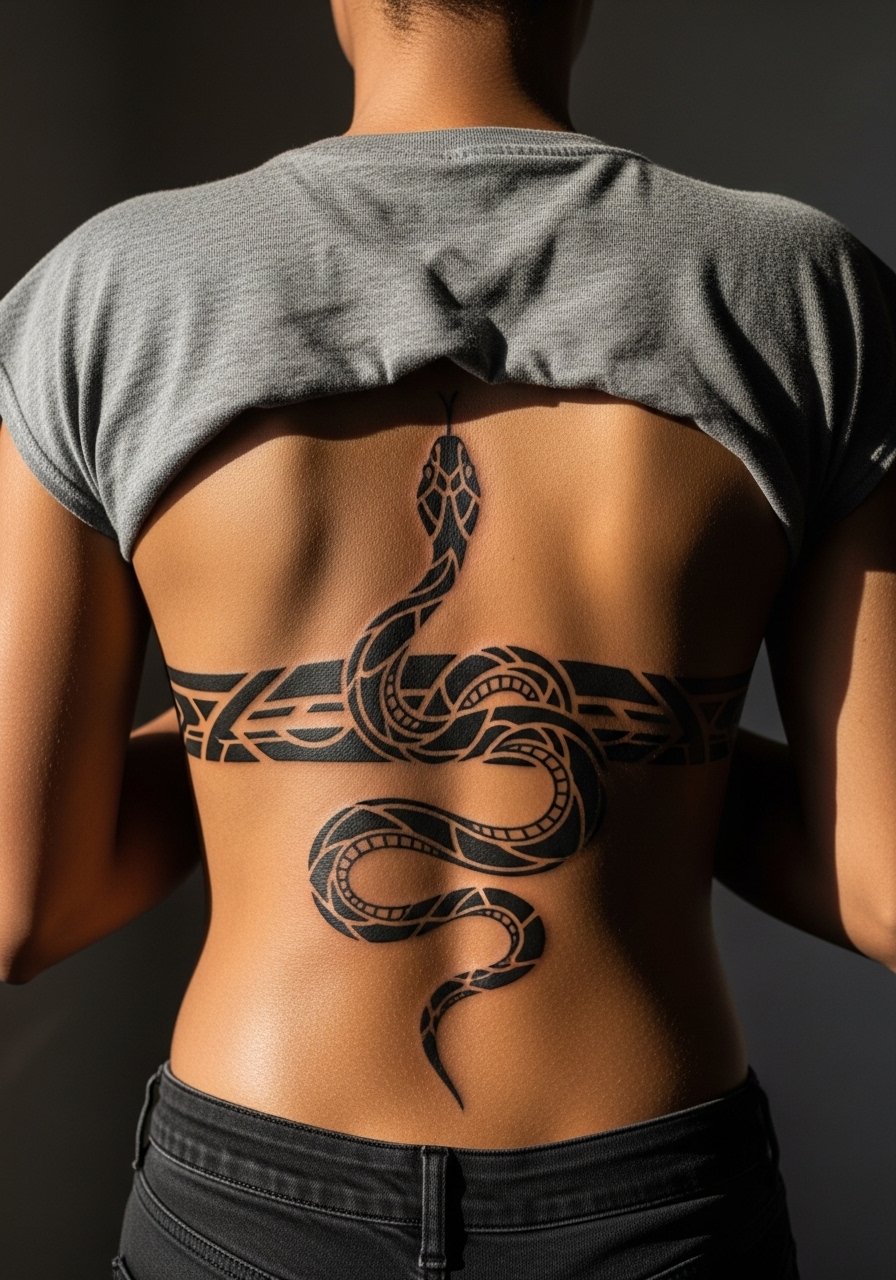
Tribal-influenced snakes rely on bold shapes and negative space, which makes them resilient to blurring. Mention cultural origins in the consult and opt for a respectful, stylized approach instead of direct replication of sacred patterns. The session is steady and often less painful because the lines are larger and machine pace is more forgiving. Common mistakes are borrowing specific tribal markers without context. When planning what to wear after, open-back tops or strapless options frame the central composition.
12. Coiling Snake on the Lower Scapular Curve
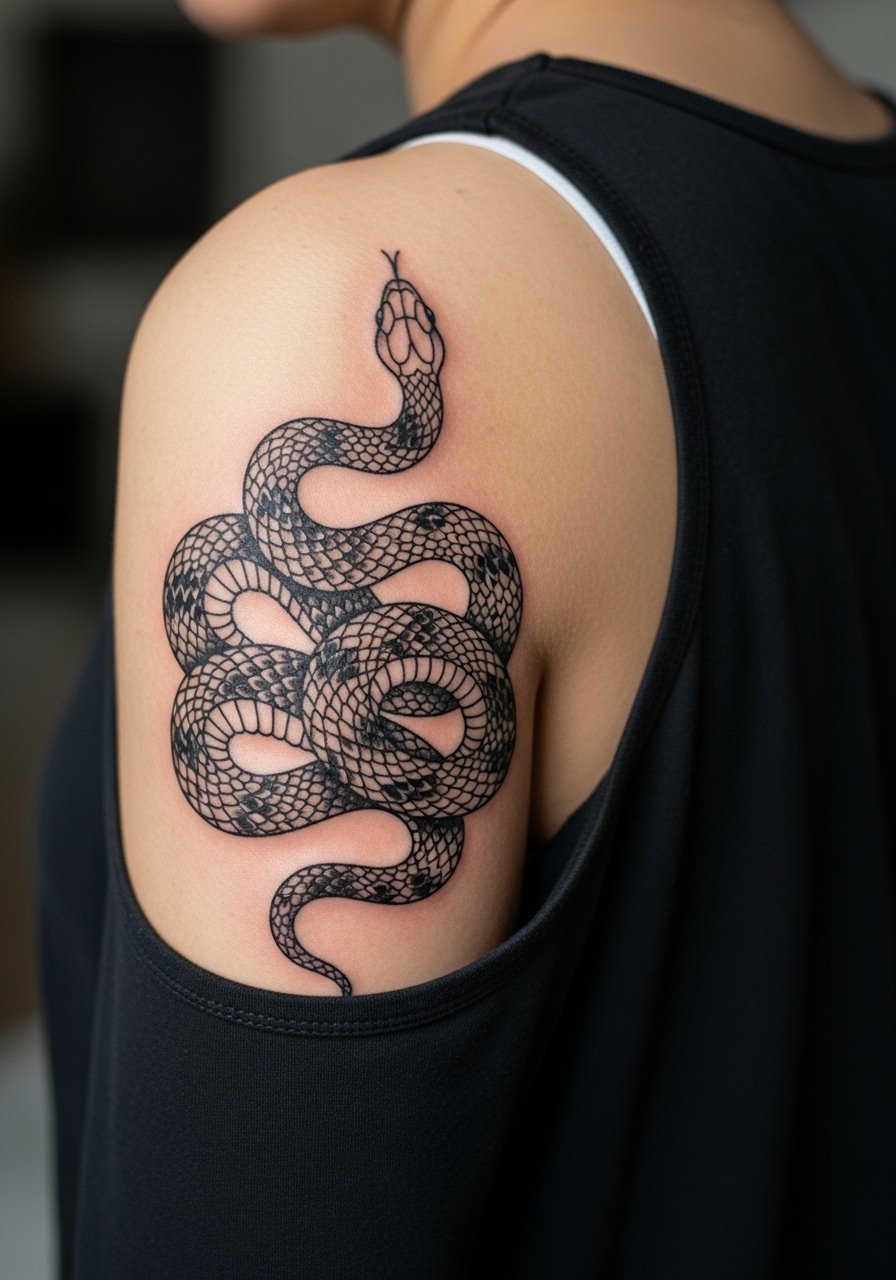
A lower scapular coil sits where movement and skin stretch are moderate, so spacing and scale matter. Ask your artist to build space between coils so the design breathes when you twist. The session feels like a focused two-hour stretch and can be sore when you rotate your arm afterward. A mistake is placing coils too tightly against shoulder motion zones. For session wear bring a loose drawstring linen pant to stay comfortable while sitting and stretching during breaks.
13. Bold Half-Back Snake Rising Toward the Neck
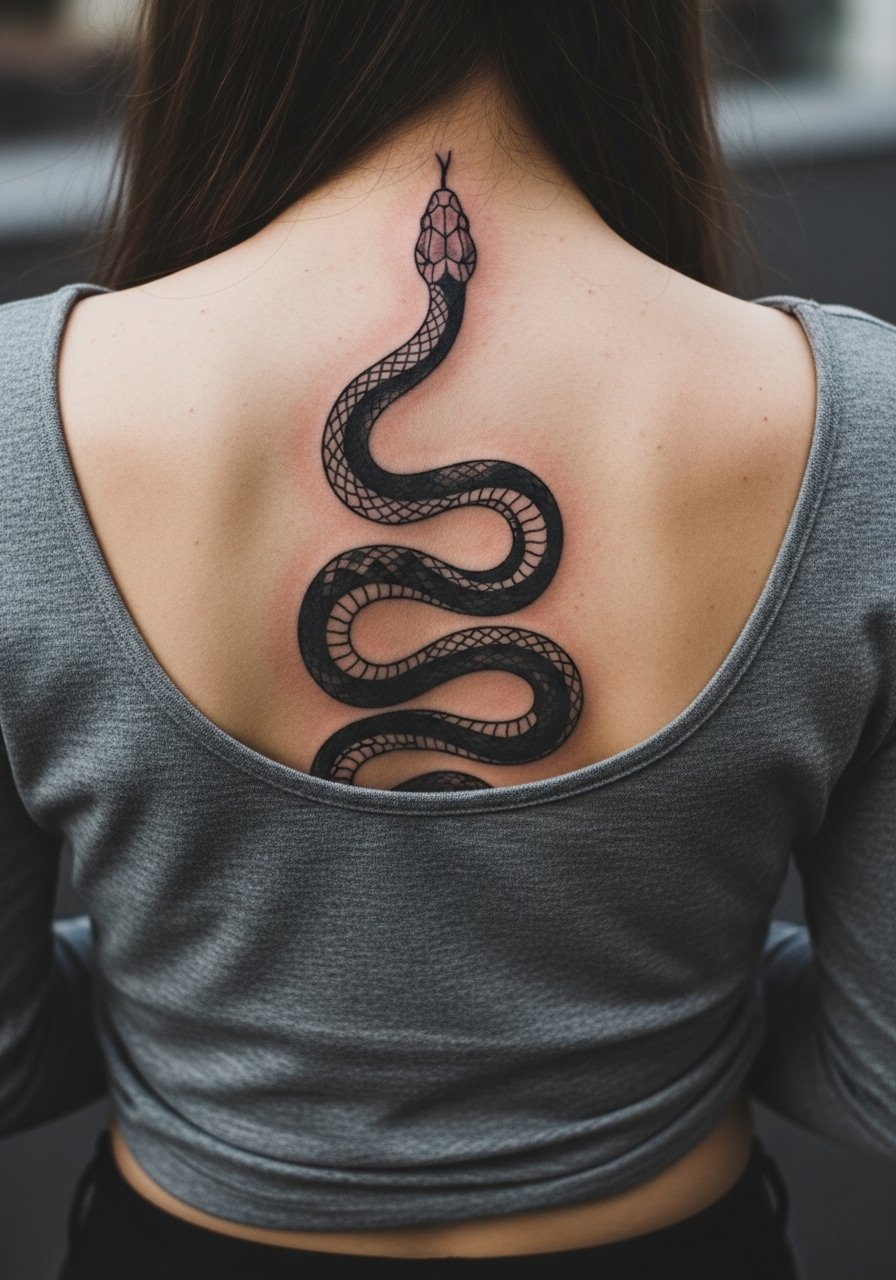
A rising snake that travels toward the neck makes a statement and still maintains longevity when the artist uses clear, thick outlines. Tell your artist you want the upper portions to remain bold enough that the head holds up as skin on the upper back ages. Sessions that cross multiple vertebrae can be longer and require repositioning. Mistakes include gradual thinning of outline toward the head that reduces contrast. This design works well with open-back garments and looks striking under a open-back midi dress for evening wear.
14. Simplified Geometric Snake Panel on the Midline
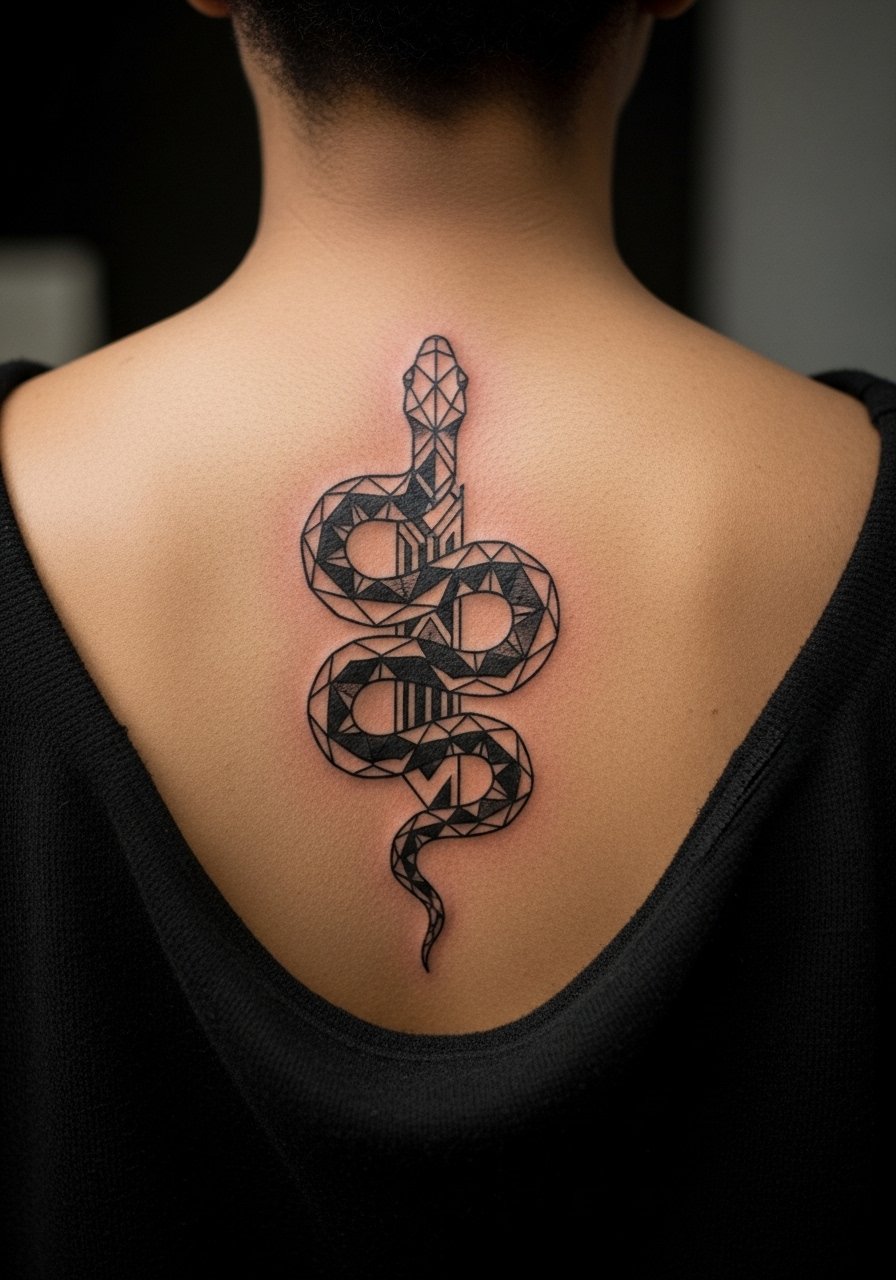
Geometric snakes benefit from larger shapes and heavier linework to prevent line merging. During the consult show examples of the exact line weight you want because scale dictates longevity. The session is methodical and often feels less jarring than thin-line work. A common pitfall is packing too many narrow geometric elements into a small panel. For showing off the clean geometry try high-neck crop tops that reveal the midline or a thin chain pendant necklace aligned with the design.
15. Bold Blackwork Snake with Negative-Space Scales
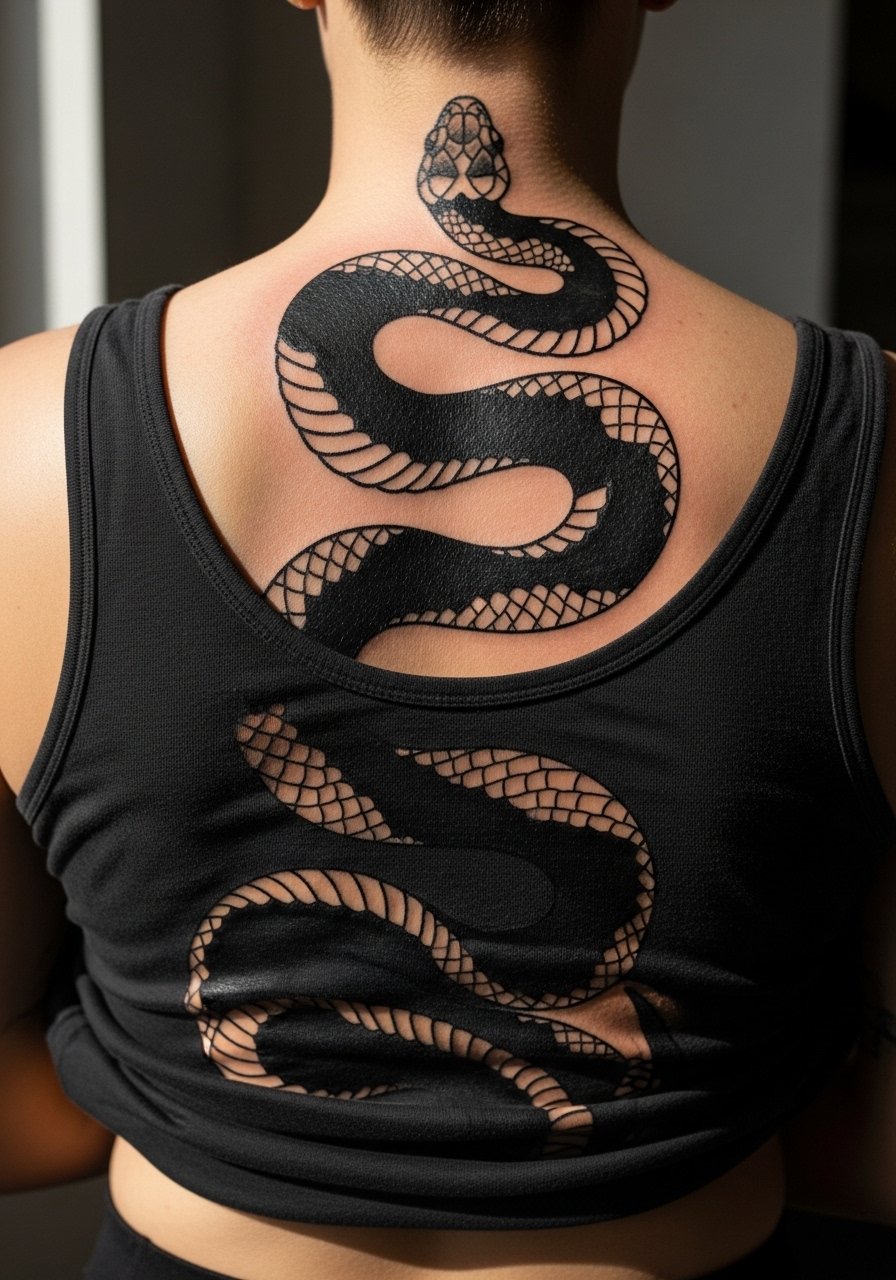
Negative-space scales break up solid black and give the illusion of texture without tiny detail that might blur. Tell your artist you want crisp edges between black fields and untouched skin so the negative shapes remain legible. The session can be lengthy because of large fill areas and requires hydration breaks. Mistakes include uneven negative space that looks like gaps after healing. For appointments wear something you can slide down to expose the entire back without pulling over the head.
16. Bold Snake Emerging from a Shoulder Blade, Asymmetric Flow
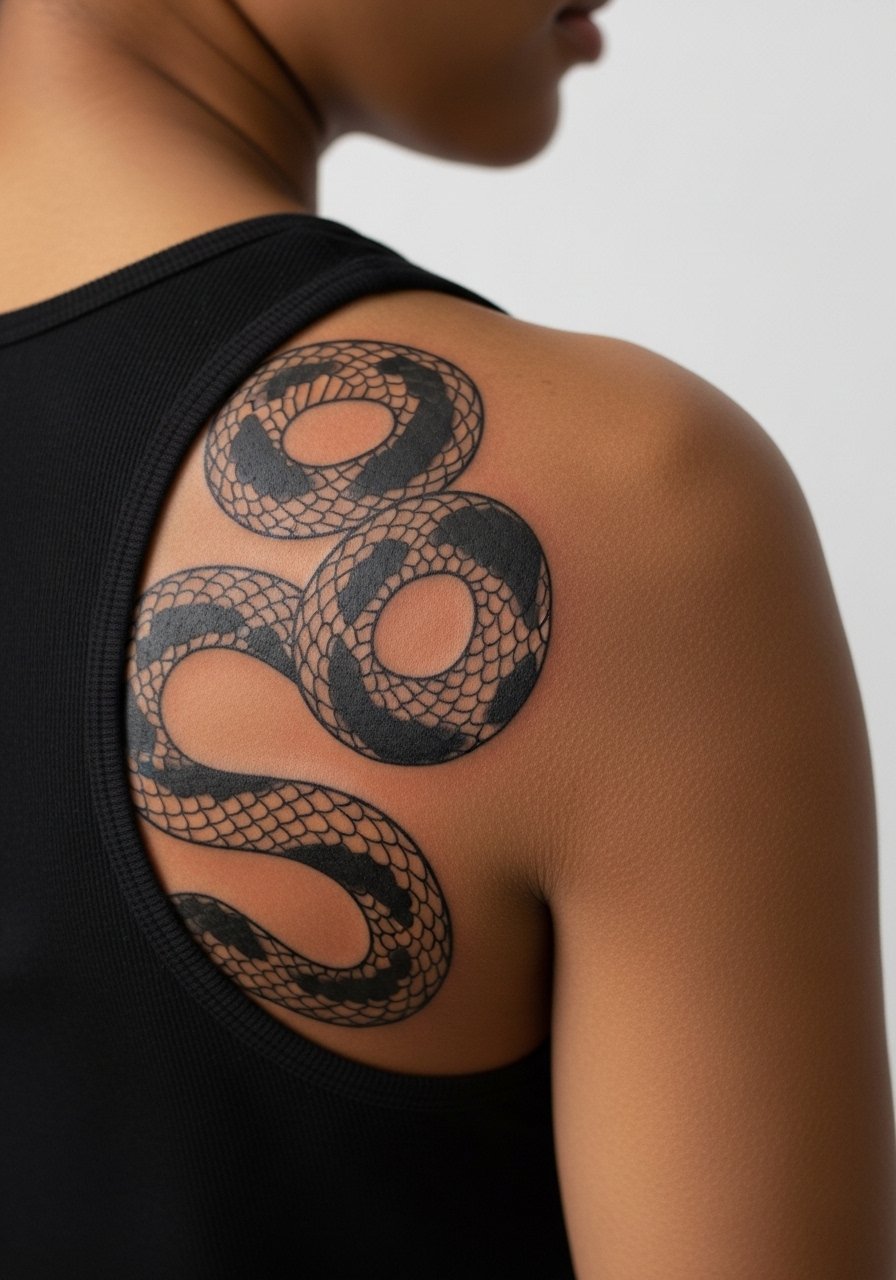
Asymmetric pieces emphasize movement and work well when lines contrast strongly against the skin. Ask the artist to orient the head or tail toward a natural muscle line to keep the illusion of motion. Session sensitivity is moderate with occasional stinging over the bone. A common error is ignoring how clothing straps will cover key parts of the composition. Pair this design with sleeveless shirts or a racerback tank to highlight the motion.
17. Bold Back Plate, Snake Entwined with Bold Script
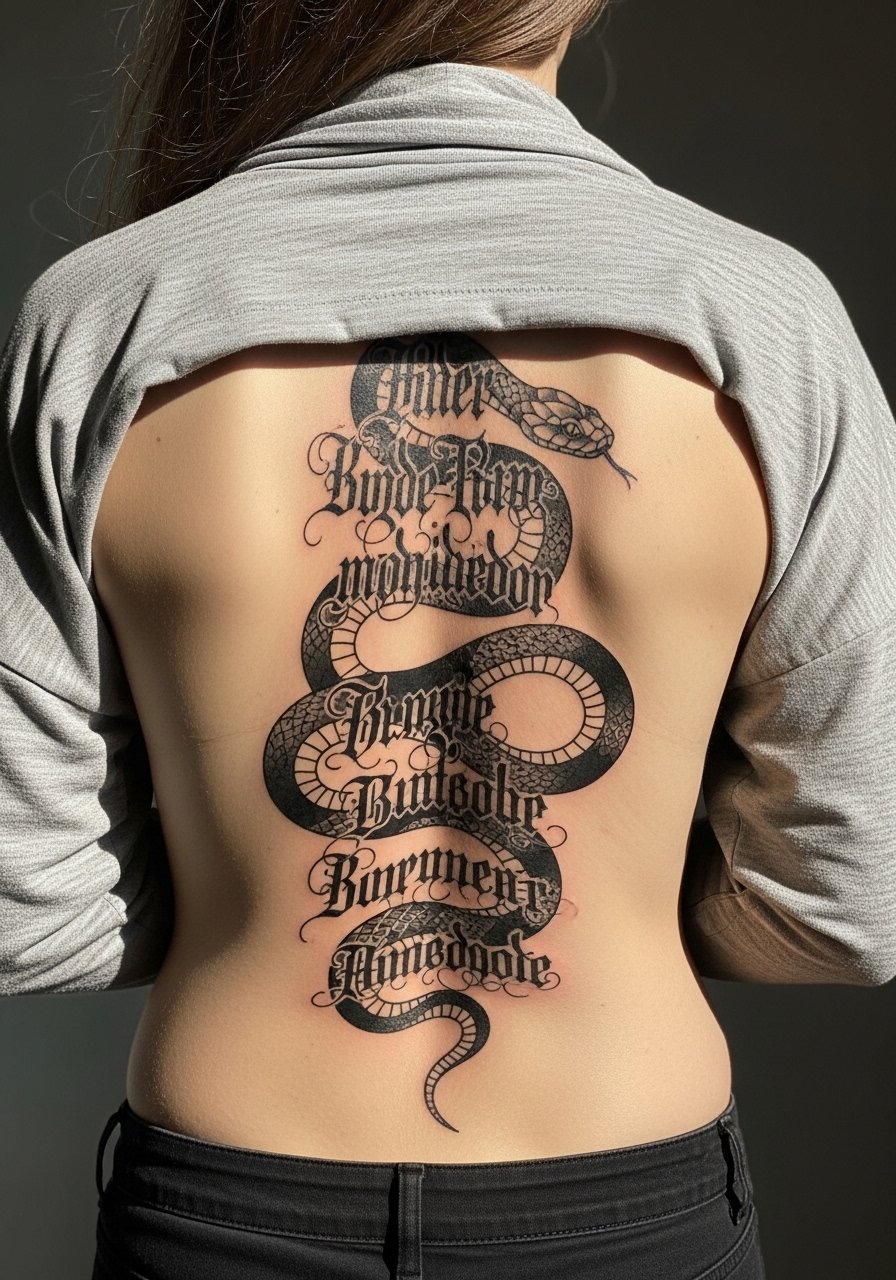
Combining bold snake imagery with heavy-script lettering creates a cohesive back plate that reads at a distance and on camera. When you request lettering, specify exact font weight and spacing so letters do not merge into surrounding blackwork. Sessions for plate work are long and often scheduled in two to three sittings. A mistake is placing small script inside dense black fields where legibility will fail. For showing the plate off choose wide-neck or strapless options in complementary neutral tones so the composition remains the focal point.
Frequently Asked Questions
Q: Will a bold snake on the spine blur faster than one on the scapula?
A: In my experience spine tattoos can show softening sooner because the skin is thinner and movement is concentrated. The scapula offers more flat surface area so bold lines tend to hold longer. Ask your artist about line weight and spacing for the spine before booking.
Q: How do bold blackwork snakes react to sun exposure over the years?
A: Bold blackwork resists sun damage better than fine detail because saturation creates contrast that stays visible. Still, regular sunscreen on exposed areas will slow fading and reduce the need for early touch-ups.
Q: Are lower back snake tattoos practical for people who wear belts often?
A: They can be if you plan placement carefully. Place the main body of the snake above the beltline and discuss friction zones with your artist. Bring a low-back tank top to the session to preview how clothing will sit against the design.
Q: I want geometric elements with my snake. Will those hold up on the back panel?
A: Geometric elements hold if scaled up and given negative space. Tiny intersecting shapes fight each other over time. Request simplified geometric blocks and strong outlines during your consult.
Q: How often should I expect touch-ups for a bold snake back piece?
A: From what I have seen, bold pieces typically need touch-ups around year three to five depending on sun exposure, friction, and your skin type. Plan a check-in at the one-year mark to see how saturation settled.
Q: Are there cultural concerns when using tribal or traditional motifs with snake imagery?
A: Yes. Some patterns have cultural significance and using them without context can feel disrespectful. Ask artists about stylized alternatives or subtle reinterpretations rather than direct replication.