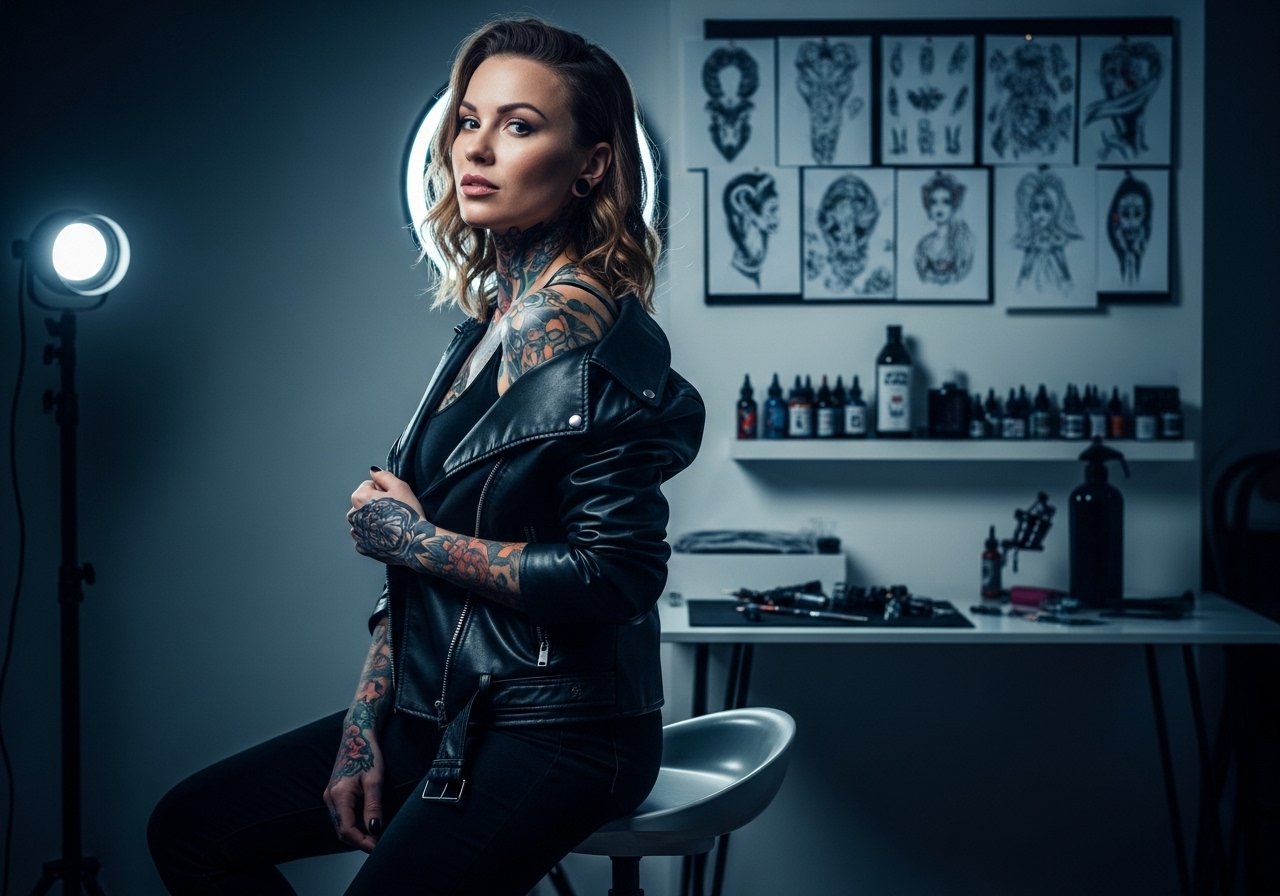
Fine line dragon aesthetics dominate feeds, but trend and longevity rarely match. Many people chase watercolor washes and micro-realism references without asking how a forearm or wrist will handle stretch, sweat, or gym gains. The smart move is picking a sketch that reads well fresh and still looks intentional after two to five years, and then telling your artist exactly which lines you want heavier or feathered. Below are 27 Asian dragon tattoo sketch ideas that balance trend and reality so your next reference sheet actually holds up.
1. Traditional Lóng Coiled Around Cloud on Outer Forearm
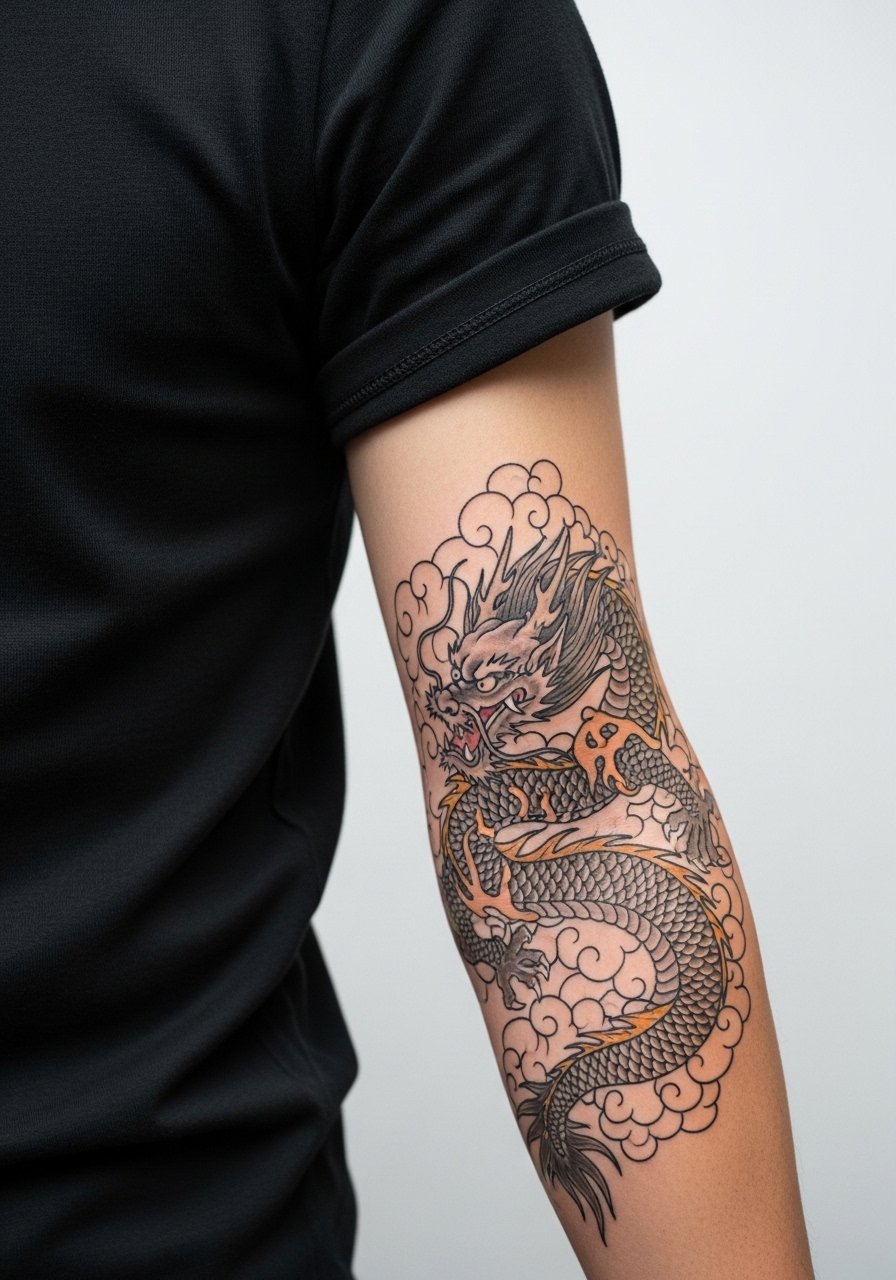
When you want a heritage look that still reads at arm distance, choose a coiling lóng with clear spacing between scales and cloud forms. I've seen forearm dragons lose scale definition after weight gain when the design followed muscle lines too closely. Tell your artist to anchor the head near the elbow crease and let the tail taper toward the wrist to avoid distortion from flexing. For the session wear a fitted black crewneck tee that you can roll without tugging the stencil. Expect moderate pain, two to four sessions for 6–8 inches, and touch-ups at year three depending on sun exposure.
2. Realistic Ryū Dragon Head with Scale Texture on Calf
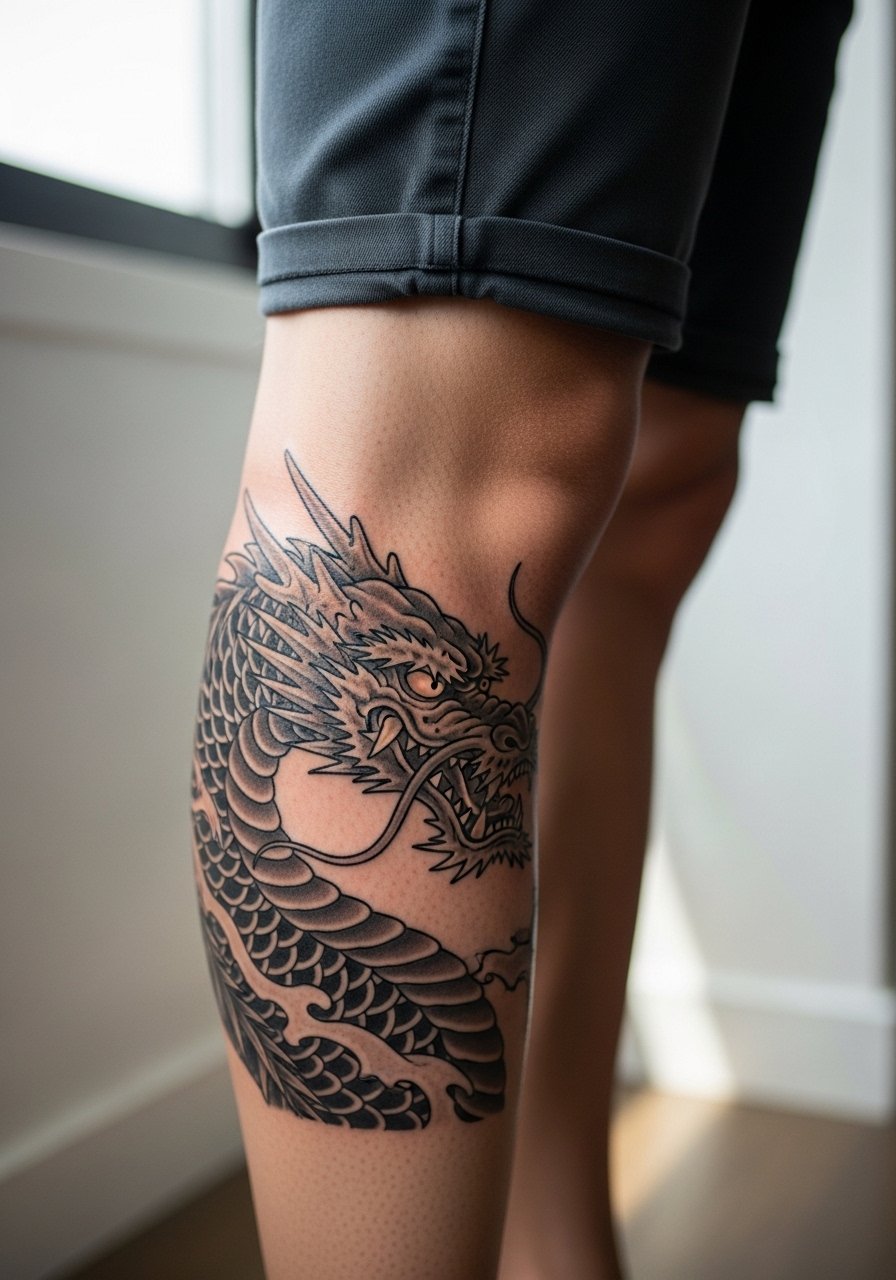
I've noticed calf placements absorb micro-realism detail better than skinny forearms because the skin stretches less when you move. Ask for varied scale sizes and stipple shading for depth rather than relying on tiny hairlines that merge. Sessions feel like firm buzzing along the muscle, expect longer sittings in the three to five session range. For summer showing-off, pair the piece with slim chino shorts to keep the silhouette clean. Darker tones hold the scale pattern longer, and plan for a touch-up at year two if you like crisp contrast.
3. Neo-Traditional Dragon with Florals on the Shoulder
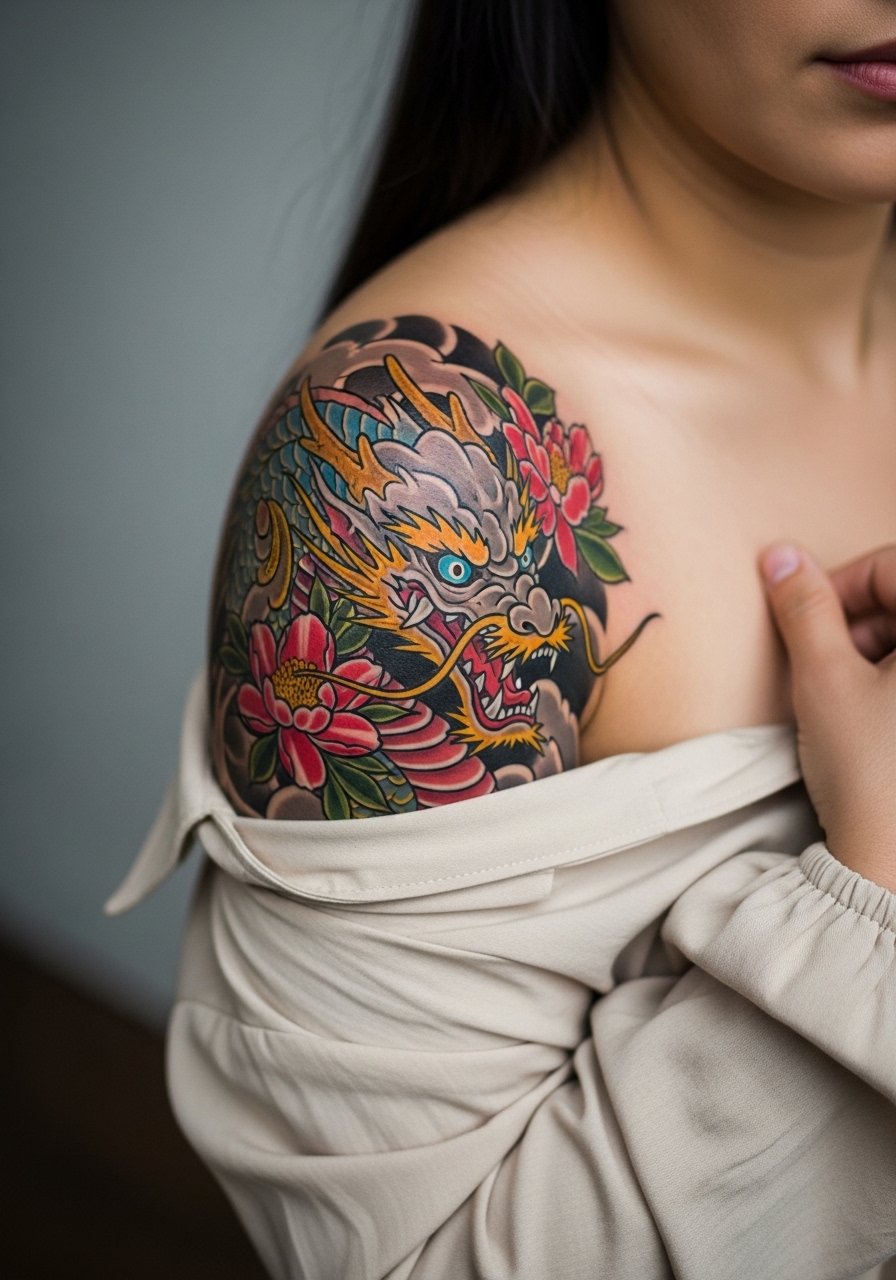
This shoulder placement is forgiving for color transitions and sits well under clothing during healing. When you bring references, point out where you want watercolor wash versus solid saturation so the artist knows which areas to pack. For session comfort wear an off shoulder blouse or a sleeveless top you can loosen. Expect two to three sessions for a 5–7 inch sketch. A common mistake is asking for too many tiny petals; scale them up so they age into shape rather than blur into the dragon's mane.
4. Blackwork Tribal Dragon Outline on Inner Bicep
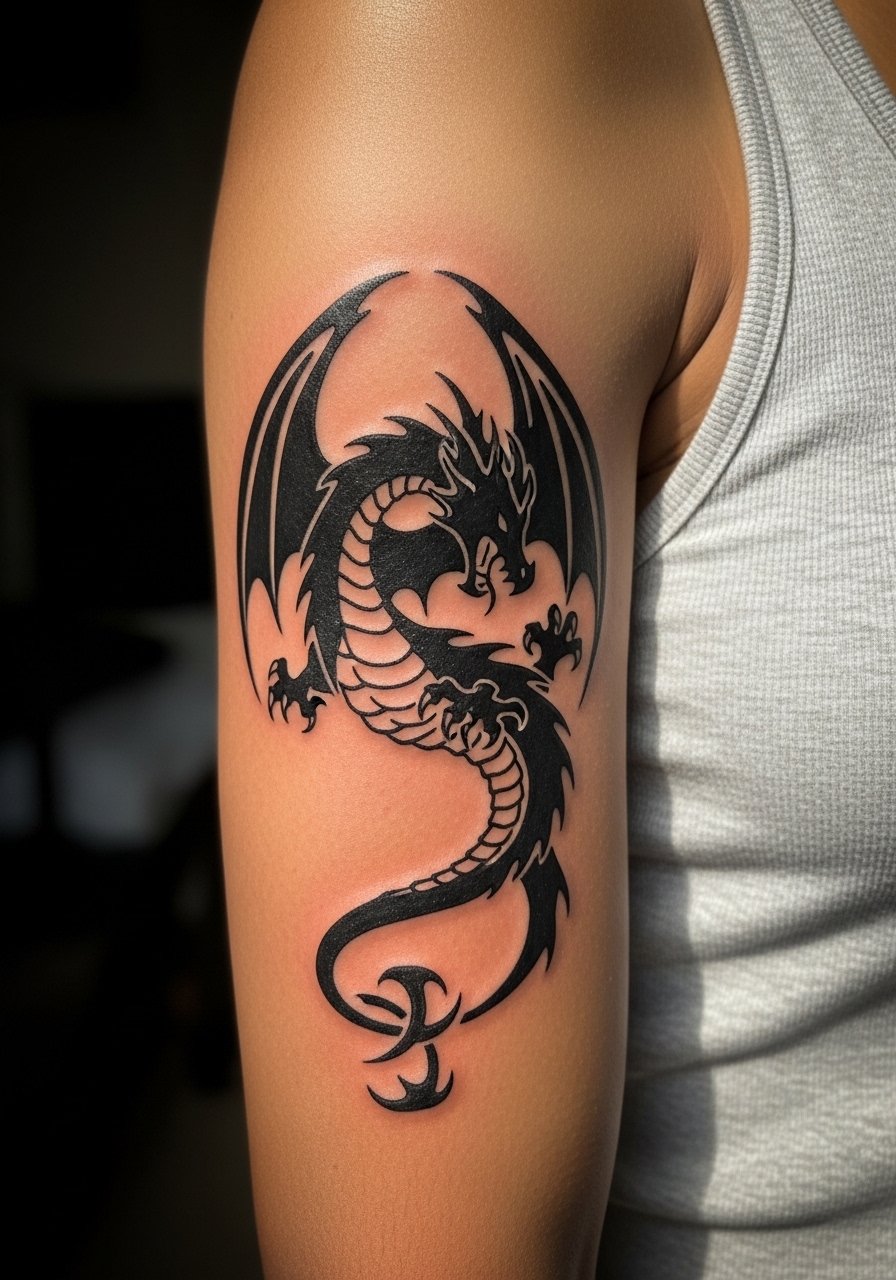
Fair warning: inner bicep skin can be softer, which means solid blackwork reads cleaner than sparse linework. I often tell people to go for confident, thick outlines rather than delicate single-needle chains for this spot. For the appointment wear a sleeveless tank top so the artist has clear access. Pain is moderate and sessions are short for 4–6 inches. Blowout risk is lower here than on the forearm, but ask your artist about needle depth to avoid feathering over time.
5. Watercolor Dragon in Flight on Outer Thigh
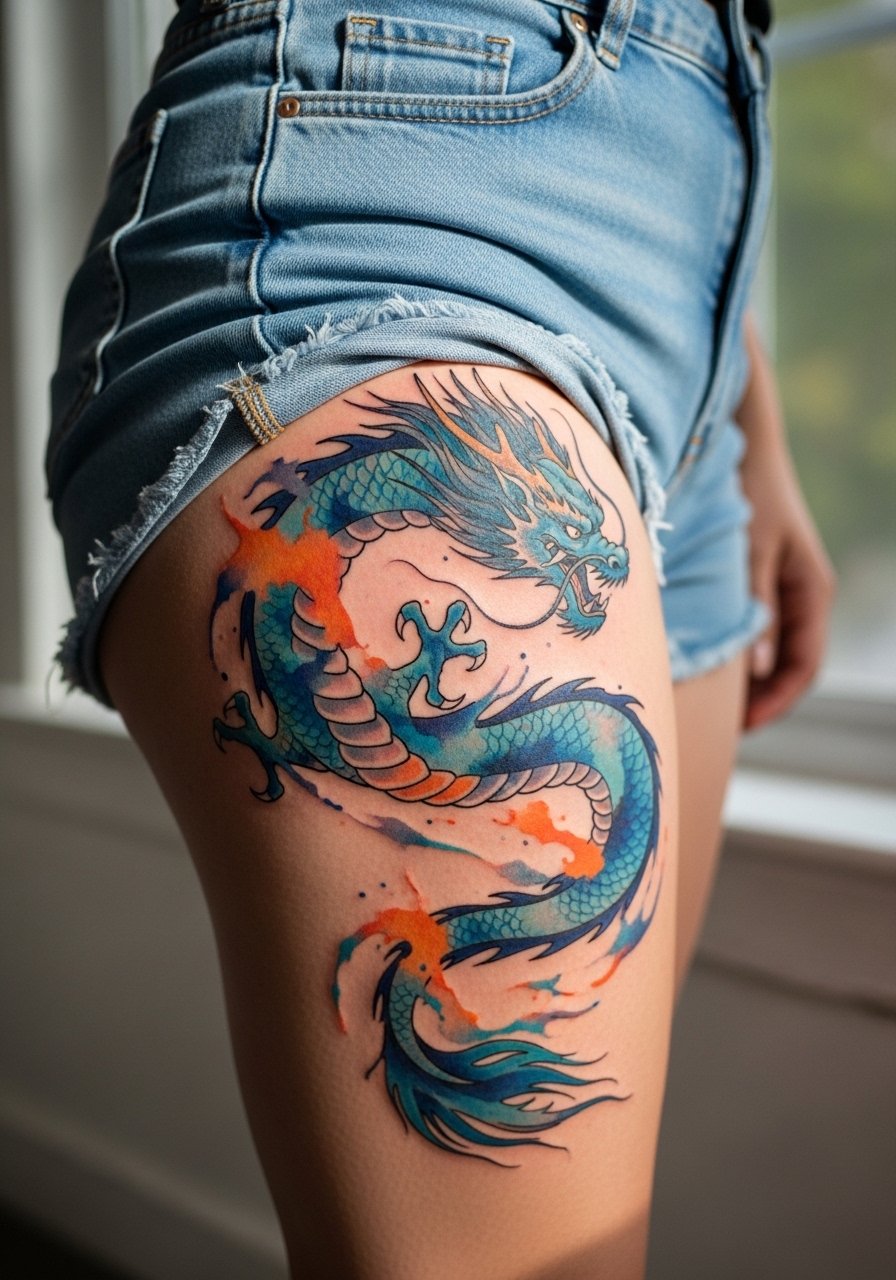
Thigh placements are the friendliest for color saturation and large washes. I've seen watercolor thighs heal beautifully when artists avoid heavy black outlines that compete with the wash. Tell your artist you want soft edges and ask about breathable wraps for post-session sweat. For the session wear high waisted denim shorts so the area is easy to access and you avoid seams rubbing the ink. Expect two sessions for an 8-inch flight piece and a dry-heal preference among some artists to protect the wash.
6. Irezumi Full Back Dragon Panel with Waves and Pearl Motifs
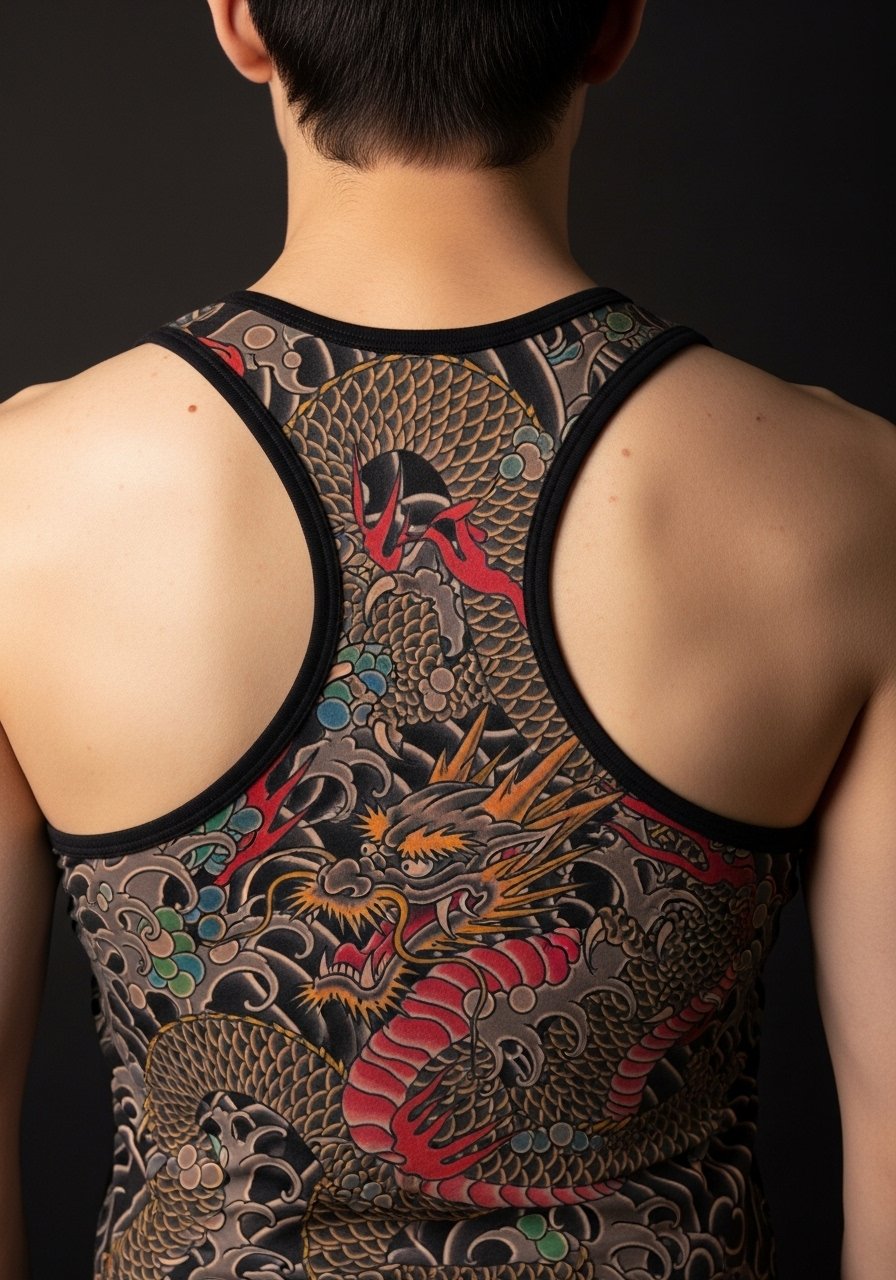
This is the marathon of dragon work. I know people who booked this for storytelling scale and logged 10 to 15 sessions for full panels. In consultations stress flow across the spine and shoulder blades so the waves and pearl motifs read from multiple angles. Wear a racerback tank to the chair so the artist can work without repeated repositioning. Pain varies by session location. Expect long sittings, and plan a long-term touch-up rhythm for saturation retention.
Pre-Session Essentials
The forearm, inner bicep, and thigh pieces above ask for different prep than chest work, so these five items smooth the session and the first week.
-
Ink-Eeze Cooling Spray. Spritz during long calf or back sessions to calm surface heat without leaving greasy residue that interferes with shading.
-
Australian Gold H2O Plus after-sun style body lotion. Lightweight moisture that absorbs quickly for summer thigh pieces where sweat can be an issue during healing.
-
Tea Tree Tattoo Aftercare Soap. Gentle cleansing for realism and micro-detail zones, helps keep fine shading clear during the first week.
-
Recovery Cream by Bright Tattoo. A lighter barrier for fine line areas that need moisture without heavy occlusion.
-
Hustle Butter Deluxe. Thinner than heavier ointments, useful for color saturation days on the shoulder and back where buildup can dull color.
7. Fine Line Minimalist Dragon Claw on the Wrist
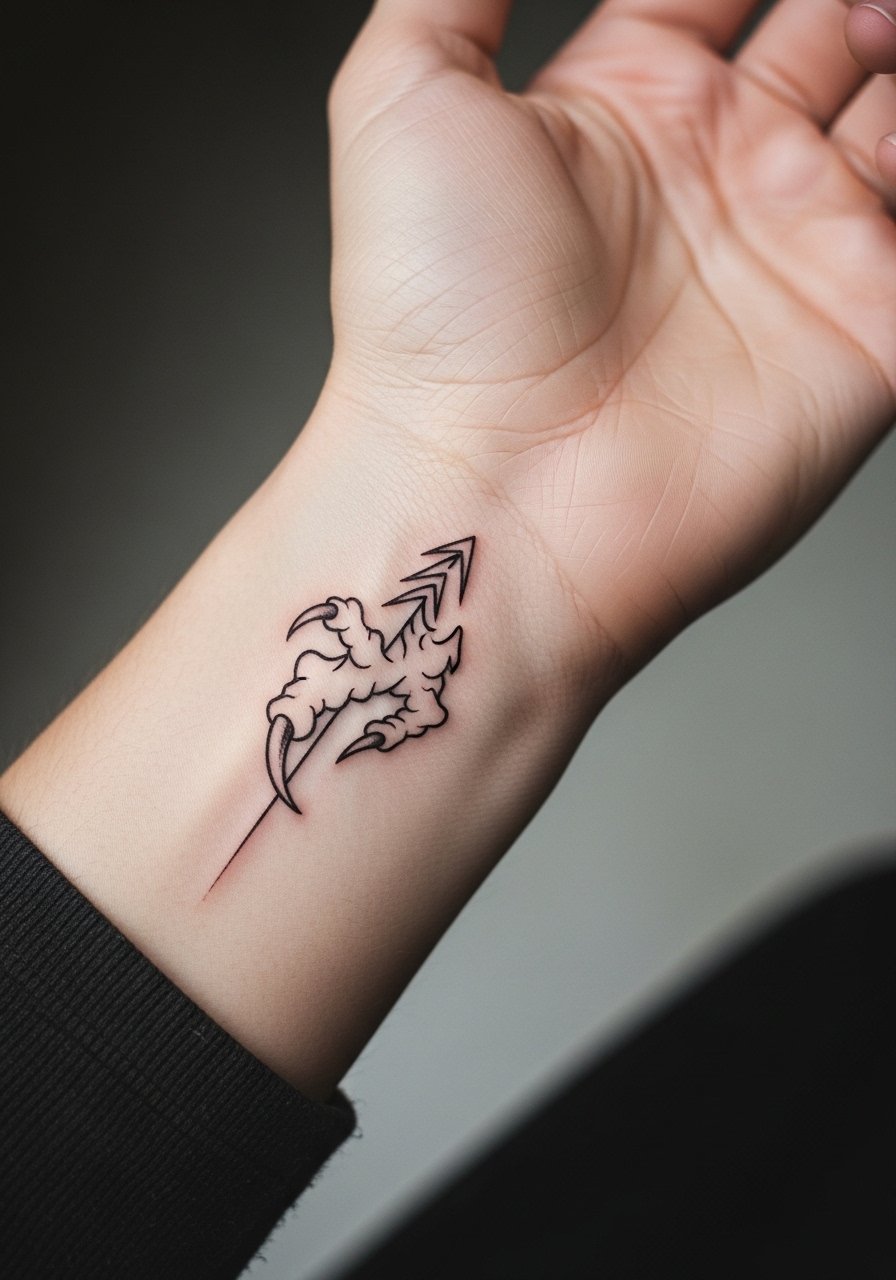
Fine line claws are great as a first test piece, but there is a debate within shops about longevity on the wrist. One camp says wrists and hands cause early blur so fine line is a temporary aesthetic that requires regular touch-ups. The opposing camp argues that precise depth and spacing can make single-needle work last on wrists. I recommend starting at two to three inches and asking your artist to mark the depth on the stencil. Wear a thin leather cuff bracelet on the opposite wrist to frame the tattoo when it heals. Expect touch-ups sooner than with thicker linework.
8. Ornamental Geometric Dragon Head on Collarbone
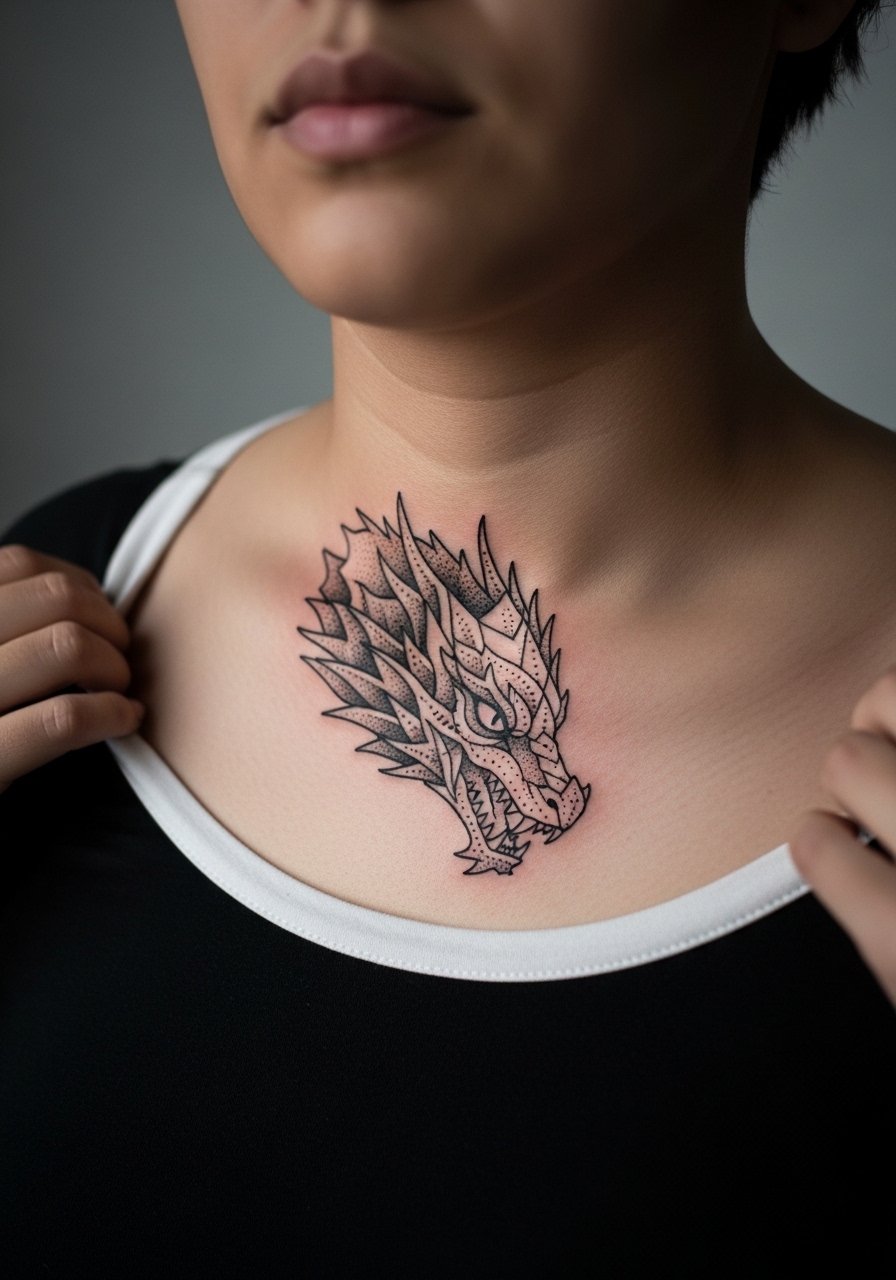
Collarbones handle dotwork well when the artist balances density and breathing space. Tell your artist to map the symmetry against your clavicle so the geometry sits centered. For show-off outfits, an open-back midi dress or a silk v neck tee complements the line and keeps attention on the head motif. Pain is variable near bone, and sessions are usually short two-session jobs for a five-inch piece. Avoid overly dense dot clusters that can merge in a few years.
9. Ignorant Style Sketchy Dragon Tail Wrap Around Ankle
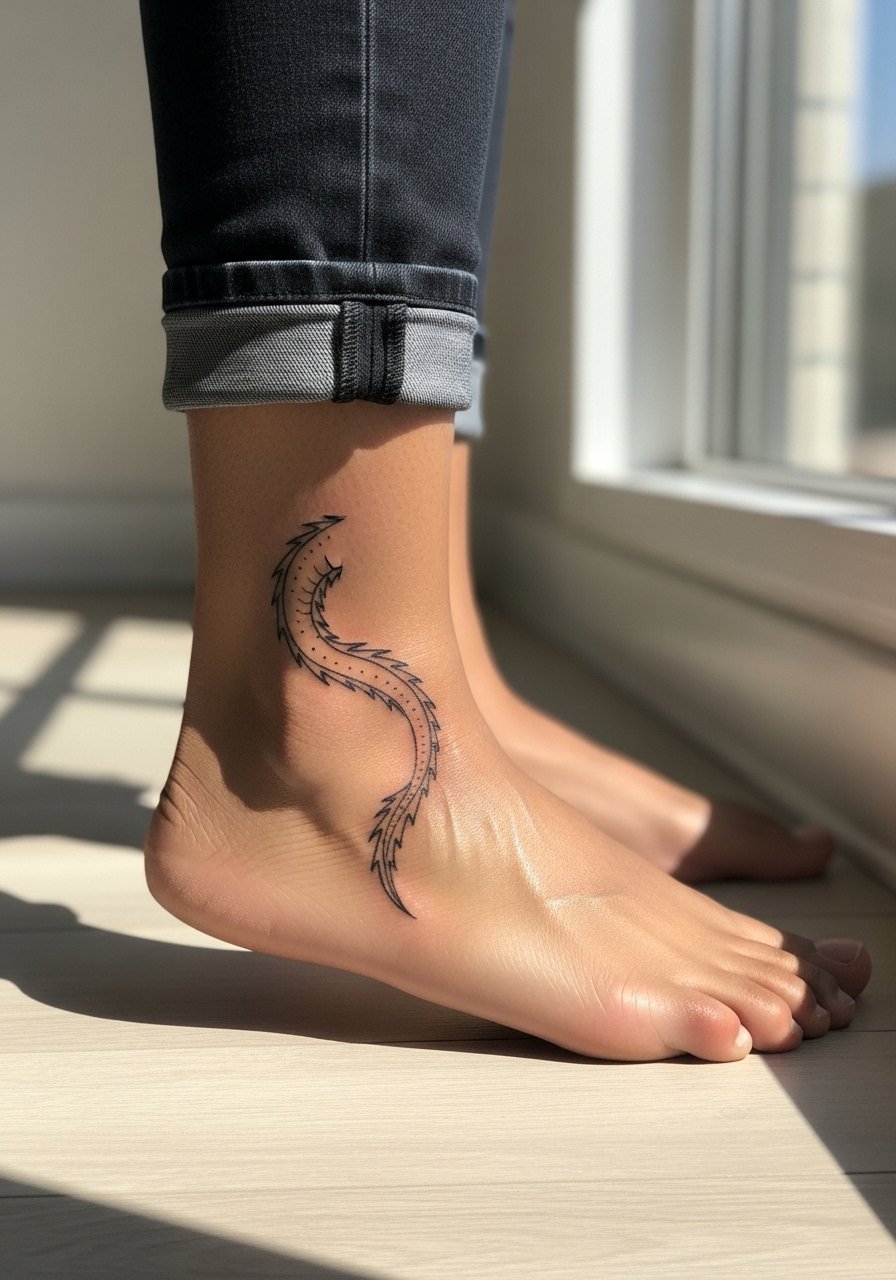
Ankle wraps work with bold single strokes that suggest movement without demanding perfect fill. The skin there is thin and prone to fading, so ask the artist to keep the outline confident rather than fragile. For the session and showing-off, roll your pants and accessorize with simple sandals or a thin anklet chain to balance the wrap visually. Expect one session for a 3–4 inch design and a likely touch-up at year one if you walk a lot or wear tight shoes.
10. Micro-Realism Dragon Eye Behind the Ear
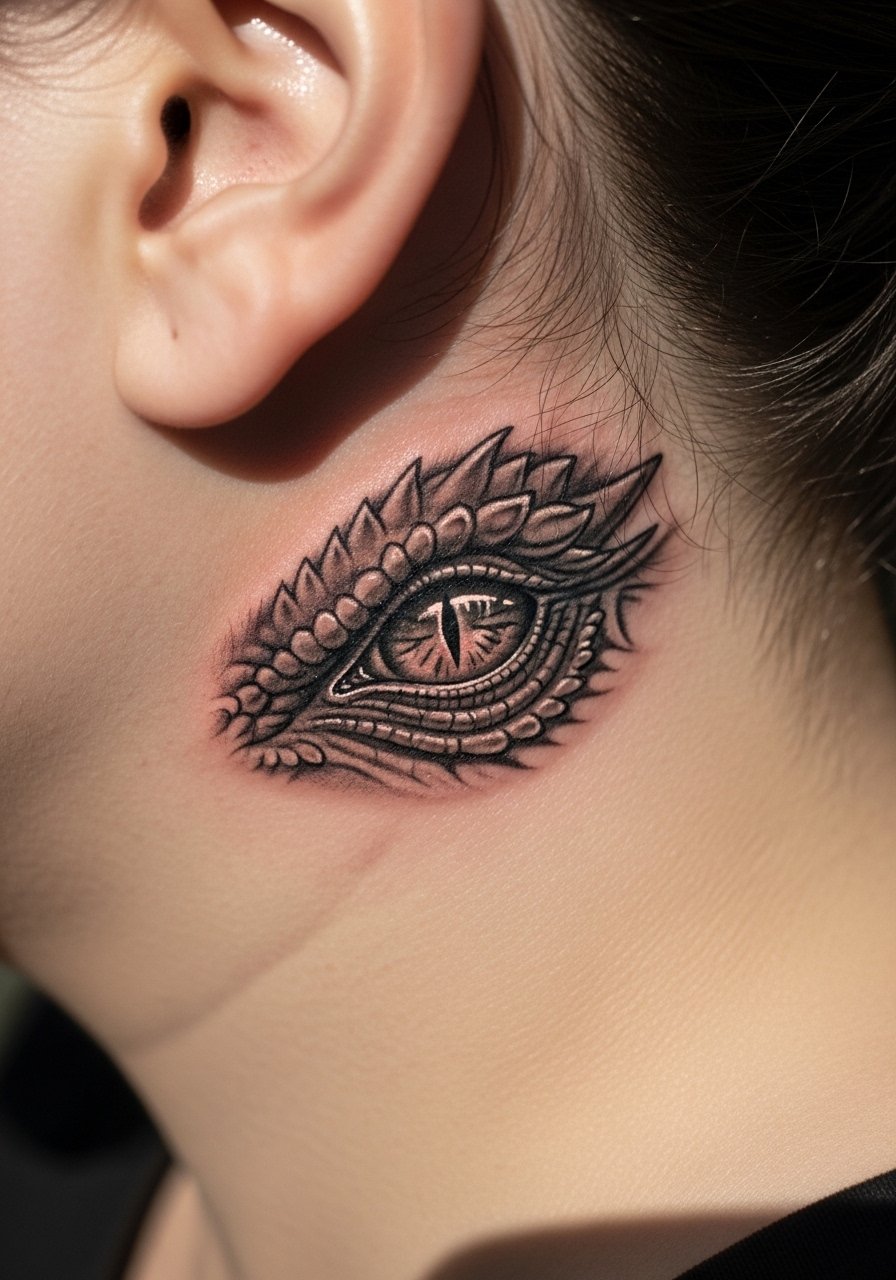
Behind-ear micro-realism reads as a secret charm and heals quickly when kept clean. Because of the cramped area, insist on a single focal element like the eye rather than a surrounding scene. For sensitive placement, the artist must use tiny outlines and concentrated shading. Note that touch-ups are common in tiny realism. This spot is hidden by hair and works well without special show-off clothing. Pain is low to moderate and sessions are brief. Ask about how the artist balances contrast so the eye does not look muddy after a few months.
11. Dragon Spine Tail Following Vertebrae Curve
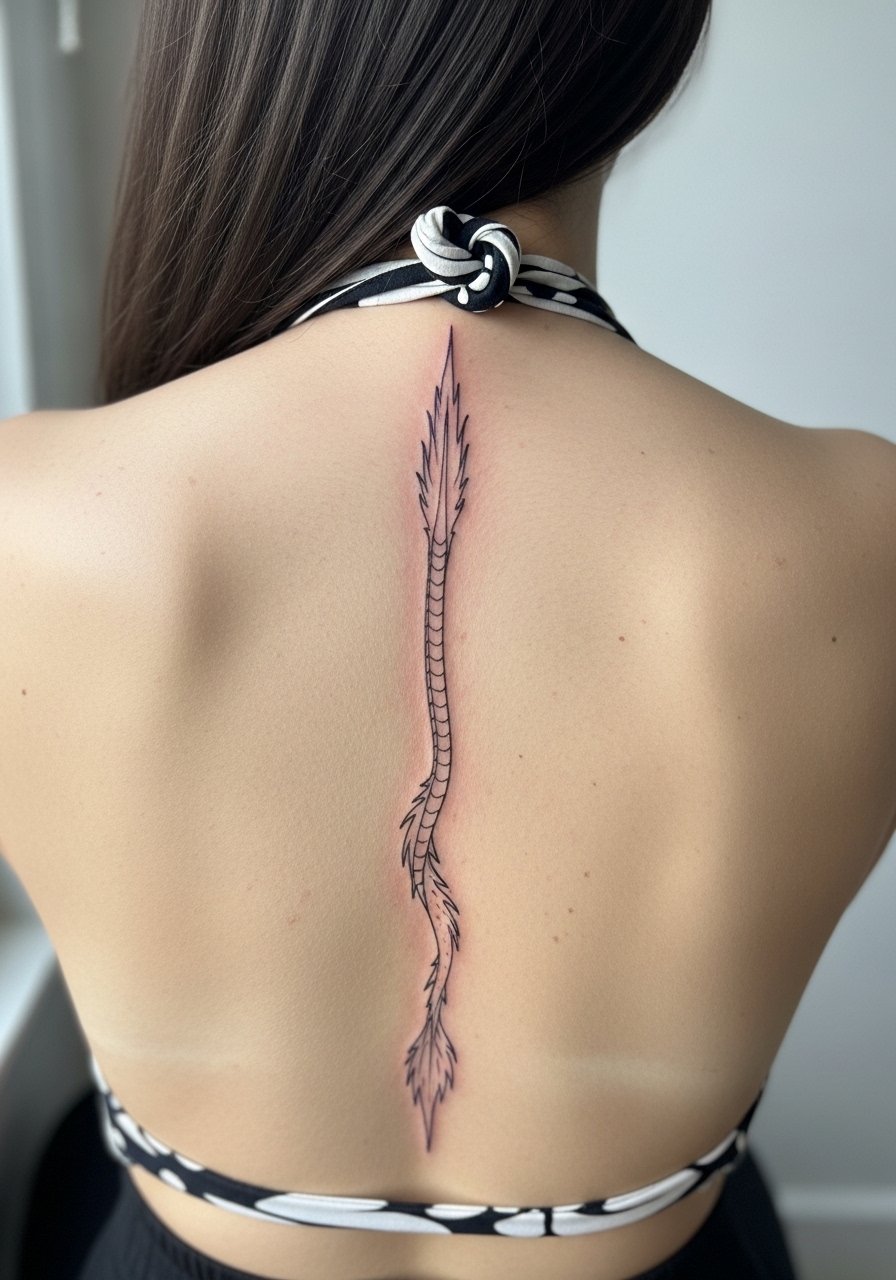
A tail that follows the spine uses the body’s natural line to create movement. I suggest telling your artist exactly which vertebrae you want the tail to pass so it avoids stretching zones near the waist. For evening show-offs choose a backless halter top that frames the vertical flow. Sessions can be surprisingly tender at the spine, expect longer breaks and precise needle control for smooth curves. This approach fares well over time if the spacing between scales allows for minor shifting.
12. Black and Gray Dragon Head on Lower Calf Wrap
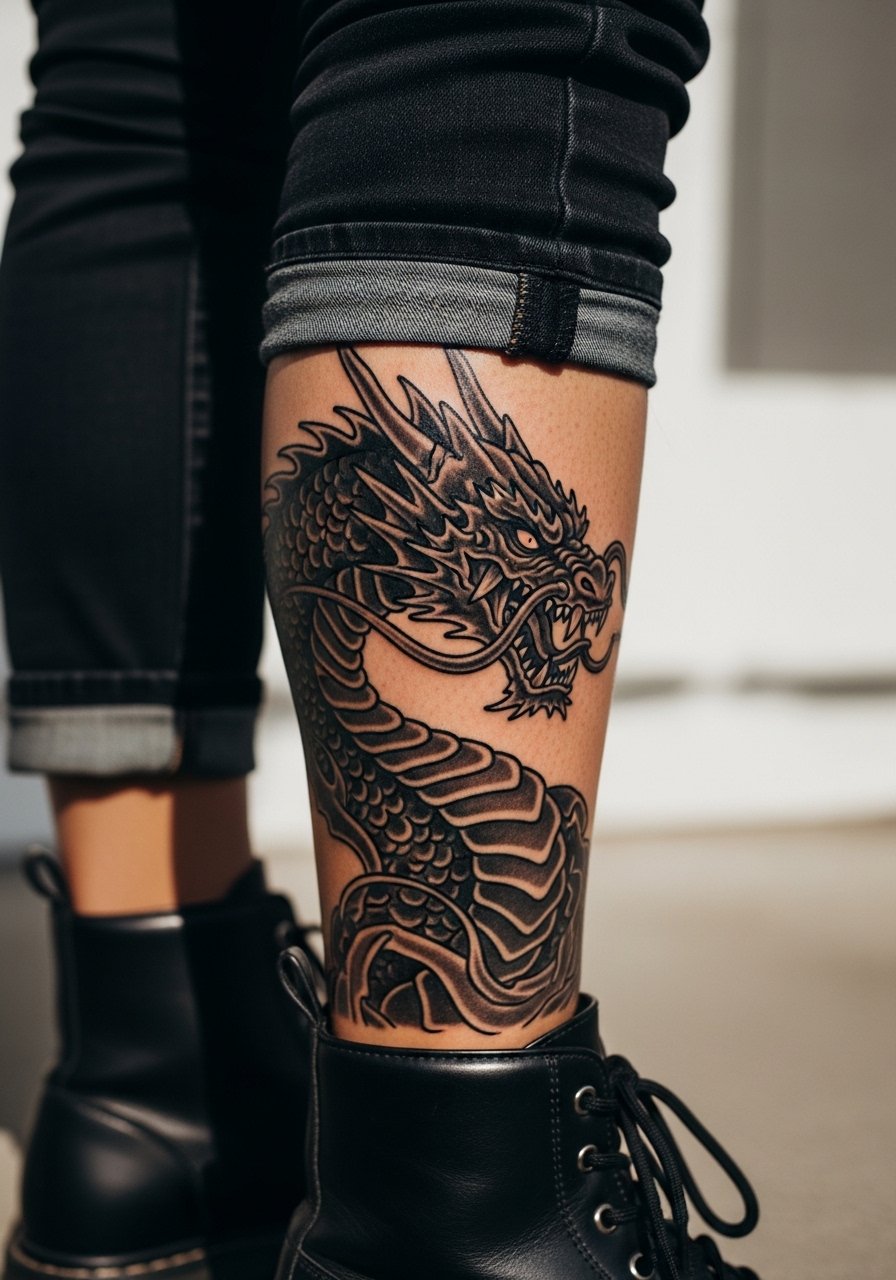
Lower calf wraps hide movement better than inner calf pieces because muscle contraction is predictable there. Request gradual saturation transitions and stipple shading for scale texture rather than tiny hairlines that can blend. For winter styling, leather Chelsea boots and rolled chinos pair well, so consider leather chelsea boots for framed looks. Sessions feel firm with occasional sharp spots near bone. Plan on two to three sessions for a 10-inch wrap and a touch-up after seasonal sun exposure.
13. Sleeve Fragment: Dragon Head Peeking from Existing Work
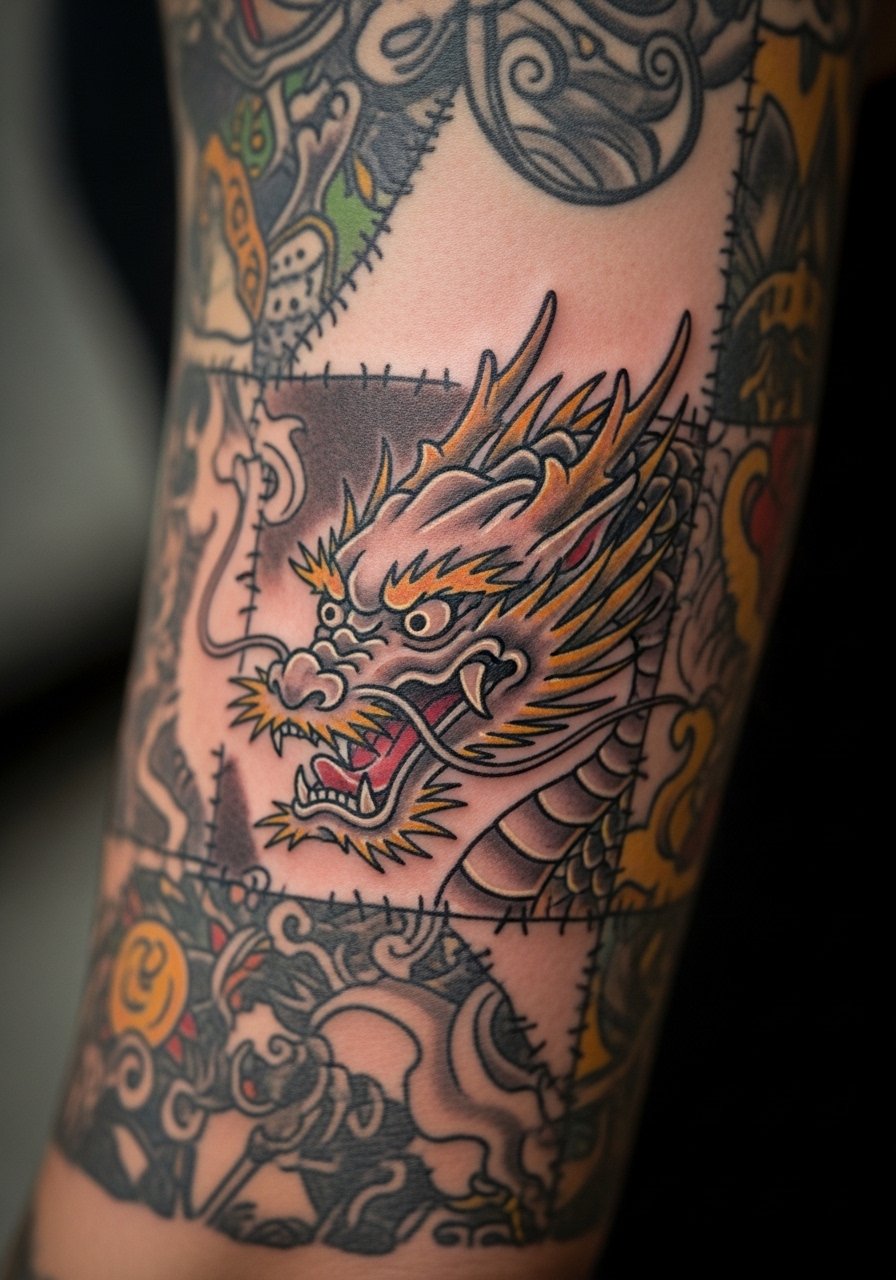
Patchwork sleeves that add a dragon element need clear visual priorities. When you bring reference show where the dragon should read first and which older pieces can be softened to let the head pop. During the consult ask about ink layering and spacing so older saturation does not fight new color. Wear a loose button-down shirt you can pull aside for long arm sessions. Expect multiple short sessions and a touch-up plan to harmonize old and new saturation.
14. Finger Segment Scales That Follow Joint Flex
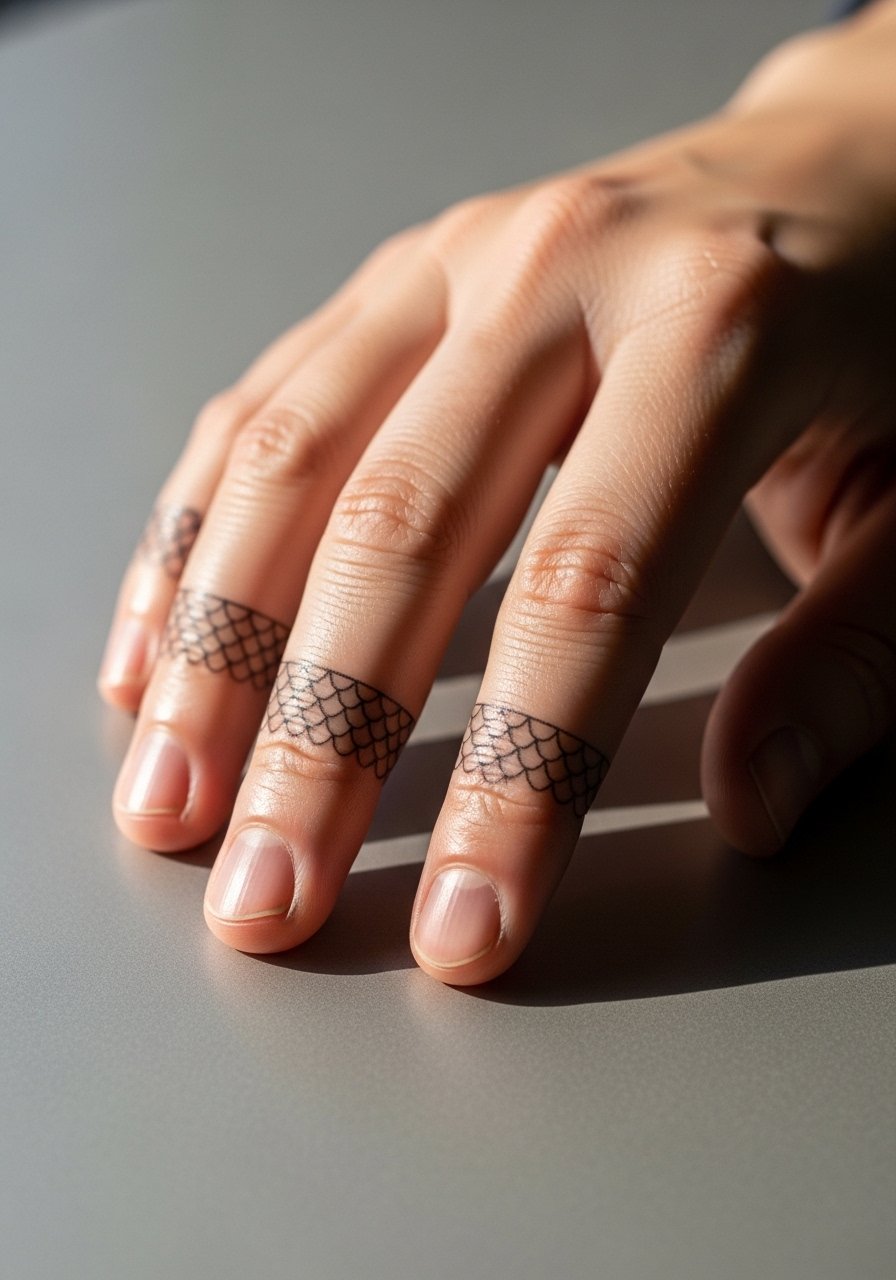
Finger placements need a design that respects joint movement. Segmented scales that stop short of the knuckle survive better than continuous lines across folds. Tell your artist you want each segment slightly spaced to avoid ink migration. Sessions are brief but expect more frequent touch-ups because fingers take a beating. For daily wear consider no rings on that finger during the first six weeks. Pain is sharp but quick. This is a commitment to maintenance rather than a once-and-done piece.
15. Ornate Dragon Collarbone Crest with Dotwork
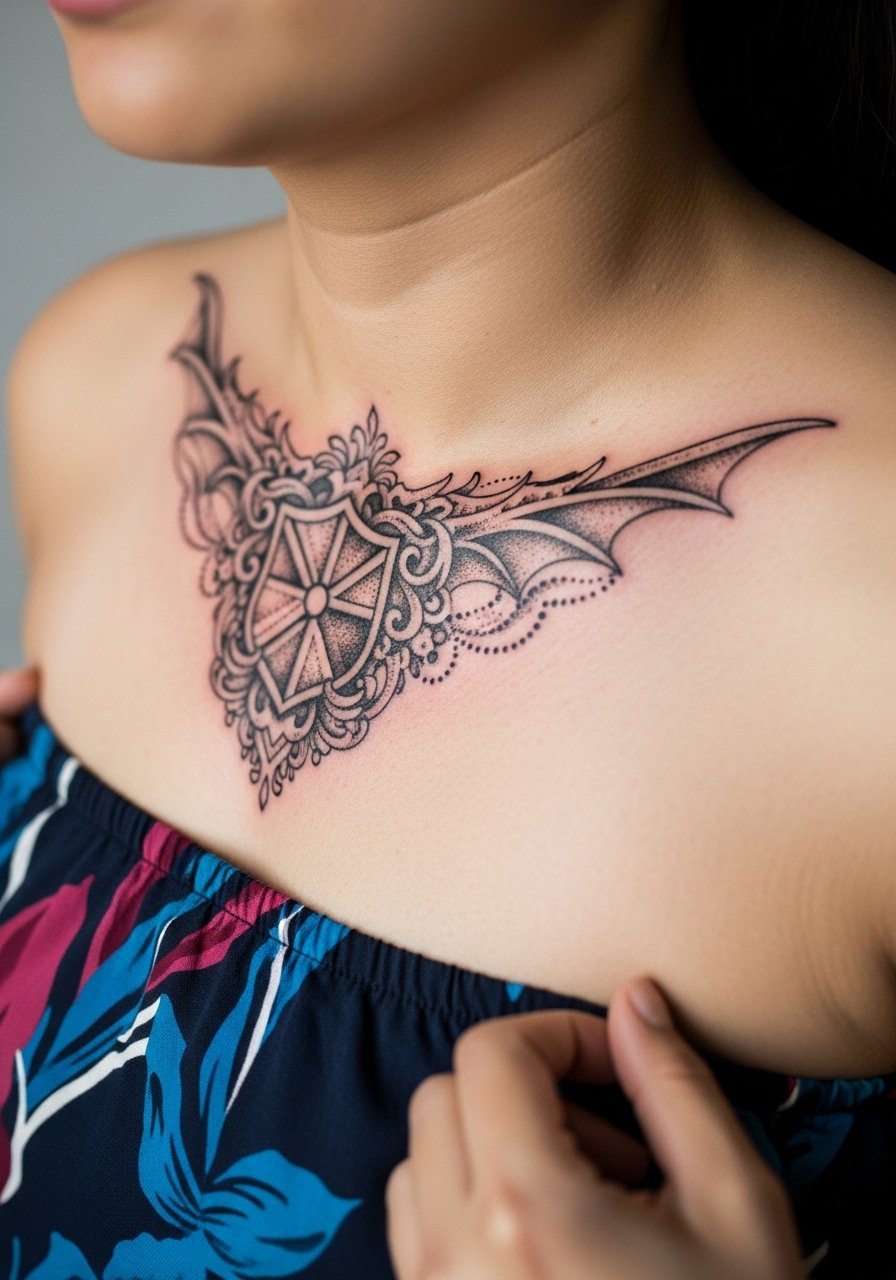
Collarbone dotwork needs breathing room to avoid densely packed stipples merging. Ask for negative space around the crest so the dotwork can age without filling in. For styling, a strapless midi dress or a thin chain pendant keeps attention on the crest without pattern clutter. Sessions are usually short and demand high precision near bone. Expect a touch-up at the one- to two-year mark if you want the dots crisp.
16. Small Realistic Dragon Eye on the Nape
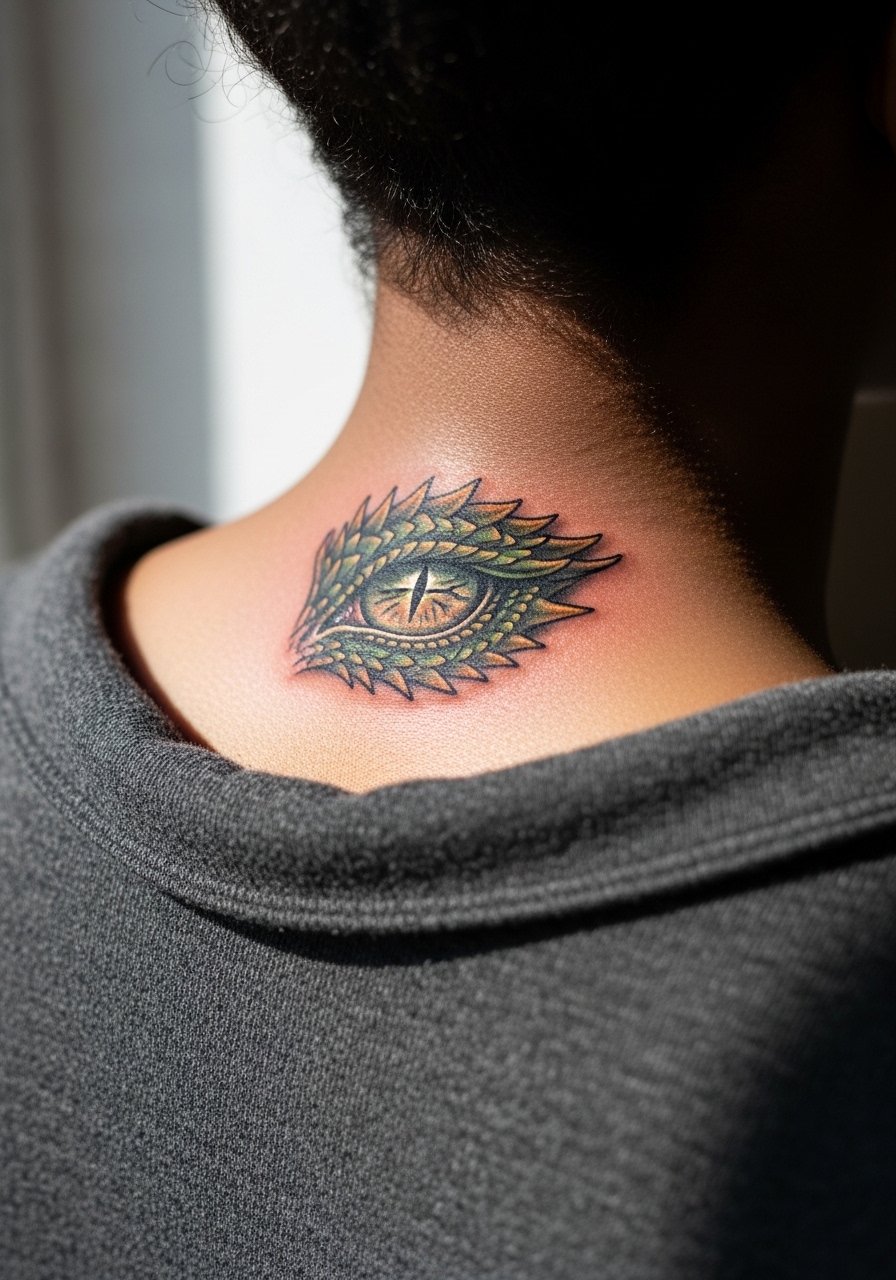
Nape placements sit between visible and private, which makes them useful for subtle micro-realism. Because the area is flat, tiny shading holds well when the artist avoids over-blending. During the consult ask how contrast will be preserved under hair and clothing friction. Wear a wide-neck shirt you can shift for the session. Pain is low to moderate. Expect one session for a 1.5-inch eye and a likely refresh at year two to keep the pupil crisp.
17. Dragon Tail Spine Wrap That Uses Rib Curvature
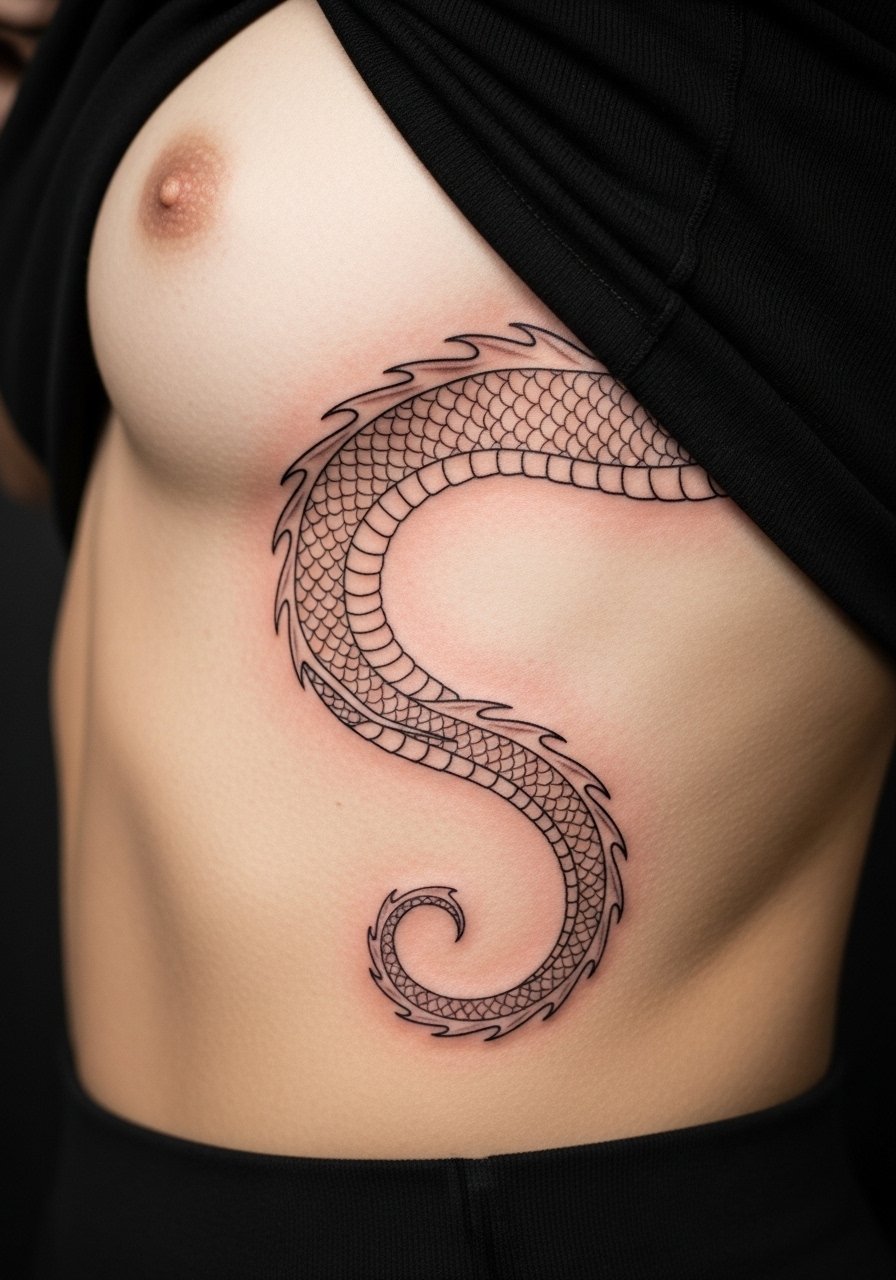
Rib placements are a classic pain test. Artists are split on fine line on ribs when it comes to longevity and technique. One camp warns that skin stretch risks blurring lines within two years. The other camp says careful depth and spacing lets fine work settle fine. If you choose ribs, ask for slightly more spacing and expect a higher pain threshold for the session. For modest covering during healing wear a cropped athletic top that exposes only the target area. Plan on a conservative touch-up window.
18. Minimalist Dragon Claw Behind the Knee
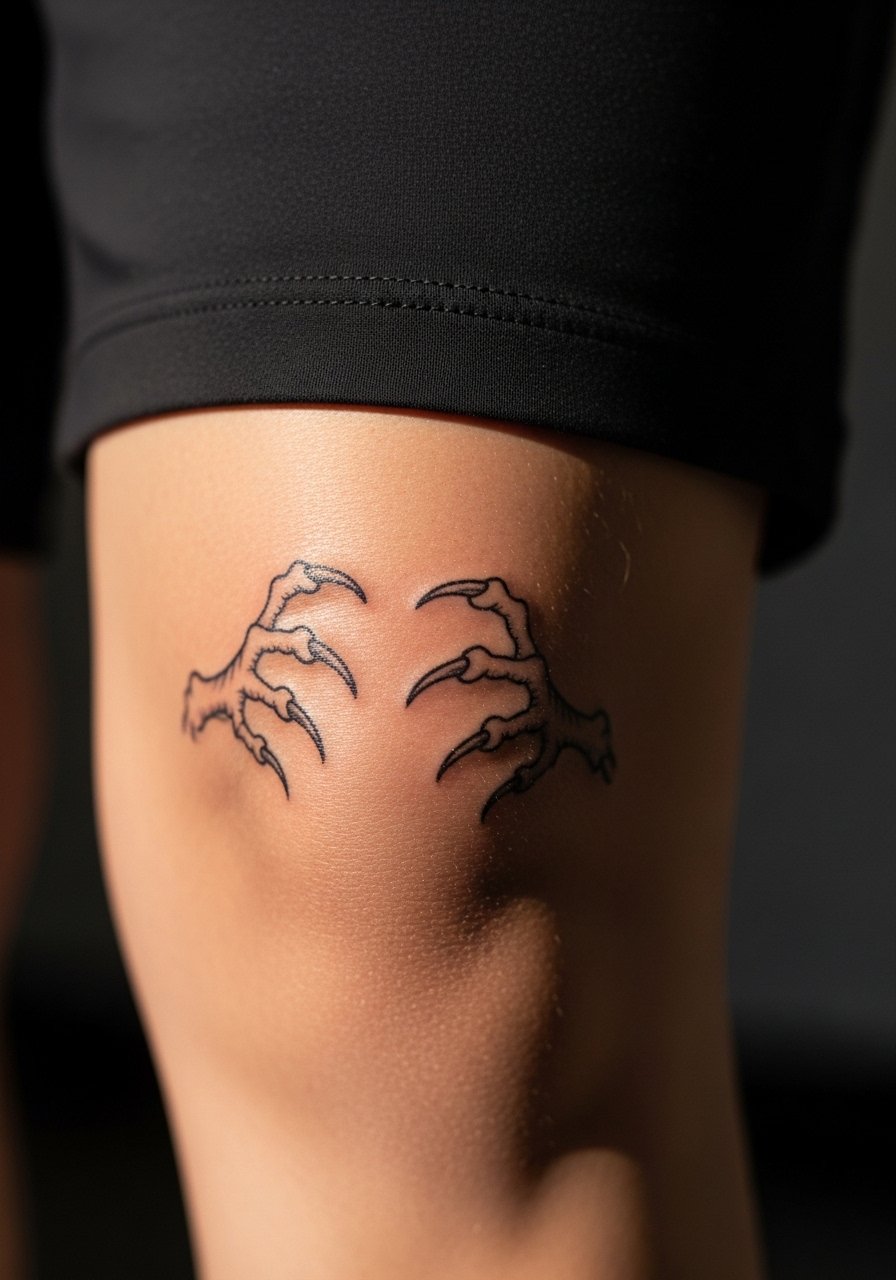
Behind-knee placements are subject to constant bending which can blur super-fine lines. If you want minimalism here, keep elements slightly larger and avoid dense cross-hatching. For session comfort wear athletic shorts that can be pulled up without pulling at the skin. Pain spikes when sitting with the leg bent for long periods, so expect frequent breaks. Touch-ups are likely after heavy activity seasons like summer.
19. Irezumi-Influenced Shoulder Blade Dragon with Wave Panels
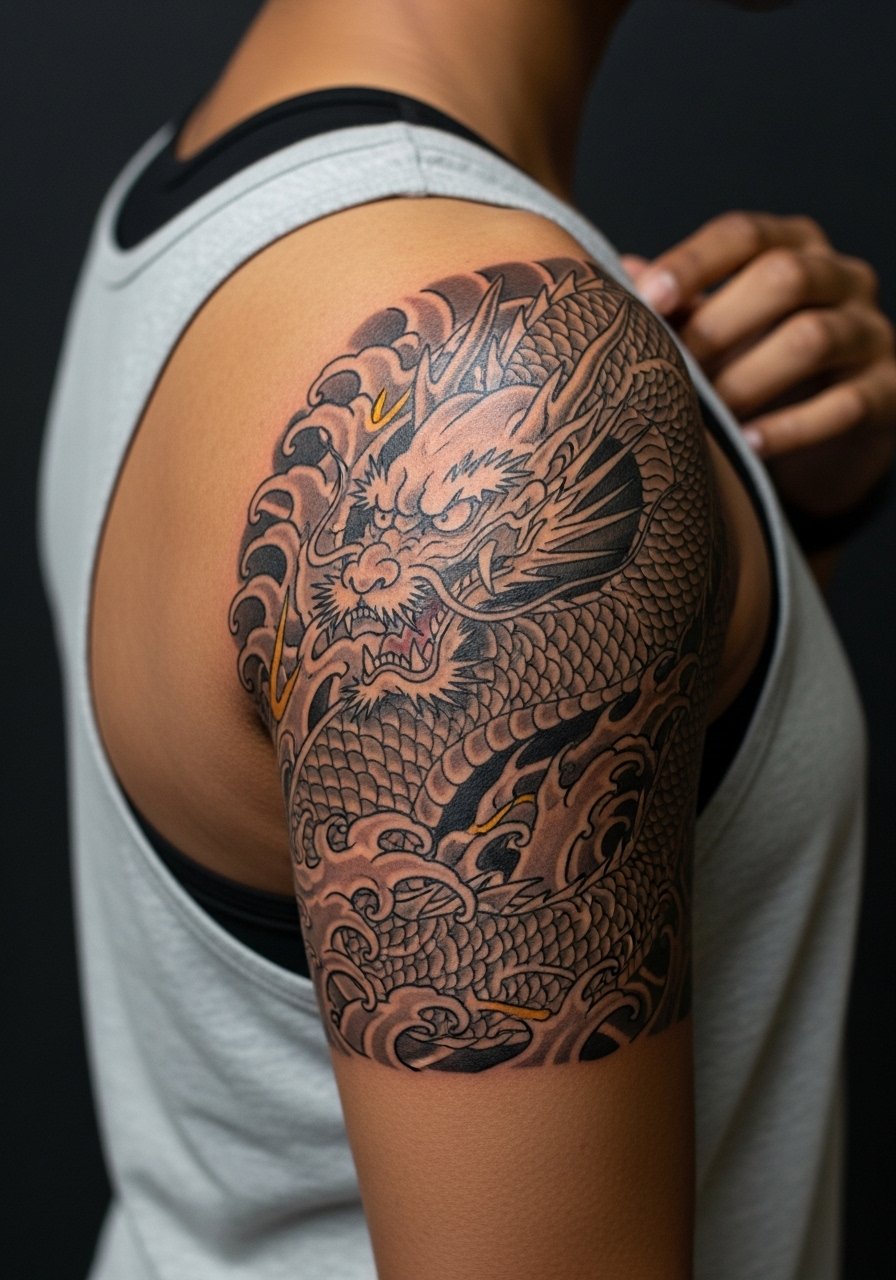
Shoulder blade panels accept larger compositions and dramatic wave motifs that frame the dragon. During consults I tell clients to map how the wave flow meets the arm so extensions can be added later. For the chair wear a racerback tank you can adjust. Sessions are medium length, and the area tolerates strong saturation well. Expect multi-session work for a cohesive panel and periodic touch-ups to maintain contrast.
20. Geometric Dragon Mask on the Chest Near Sternum
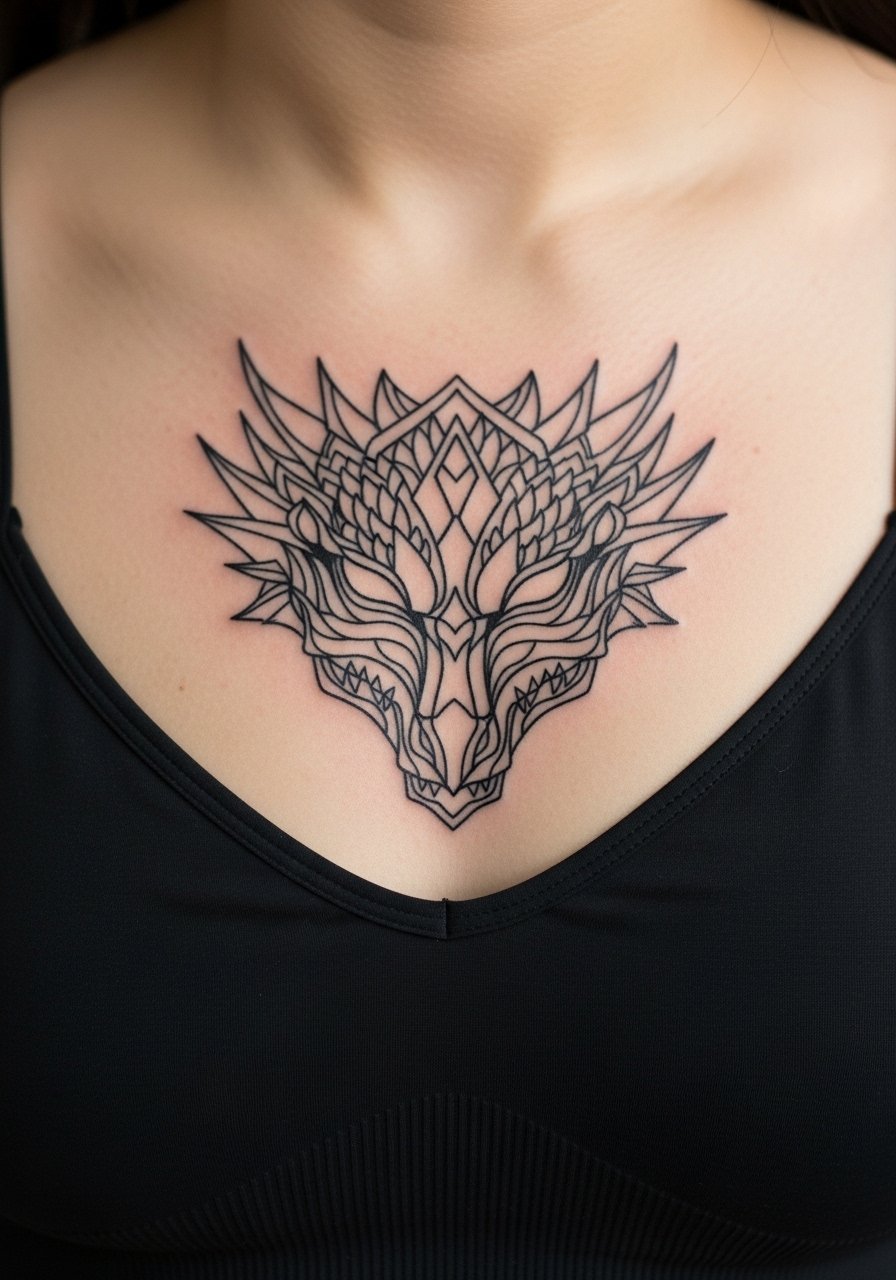
Chest symmetry matters for geometric work. Ask the artist to place the stencil while standing and lying down so the mask reads balanced in both positions. For session comfort wear a fitted sports bra that lets the artist access the sternum area without full exposure. Pain tends to be higher near the bone. Plan one or two sessions for a five-inch piece and a touch-up if lines migrate after months of movement.
21. Stylized Dragon Tail Wrapping the Rib to Hip Line
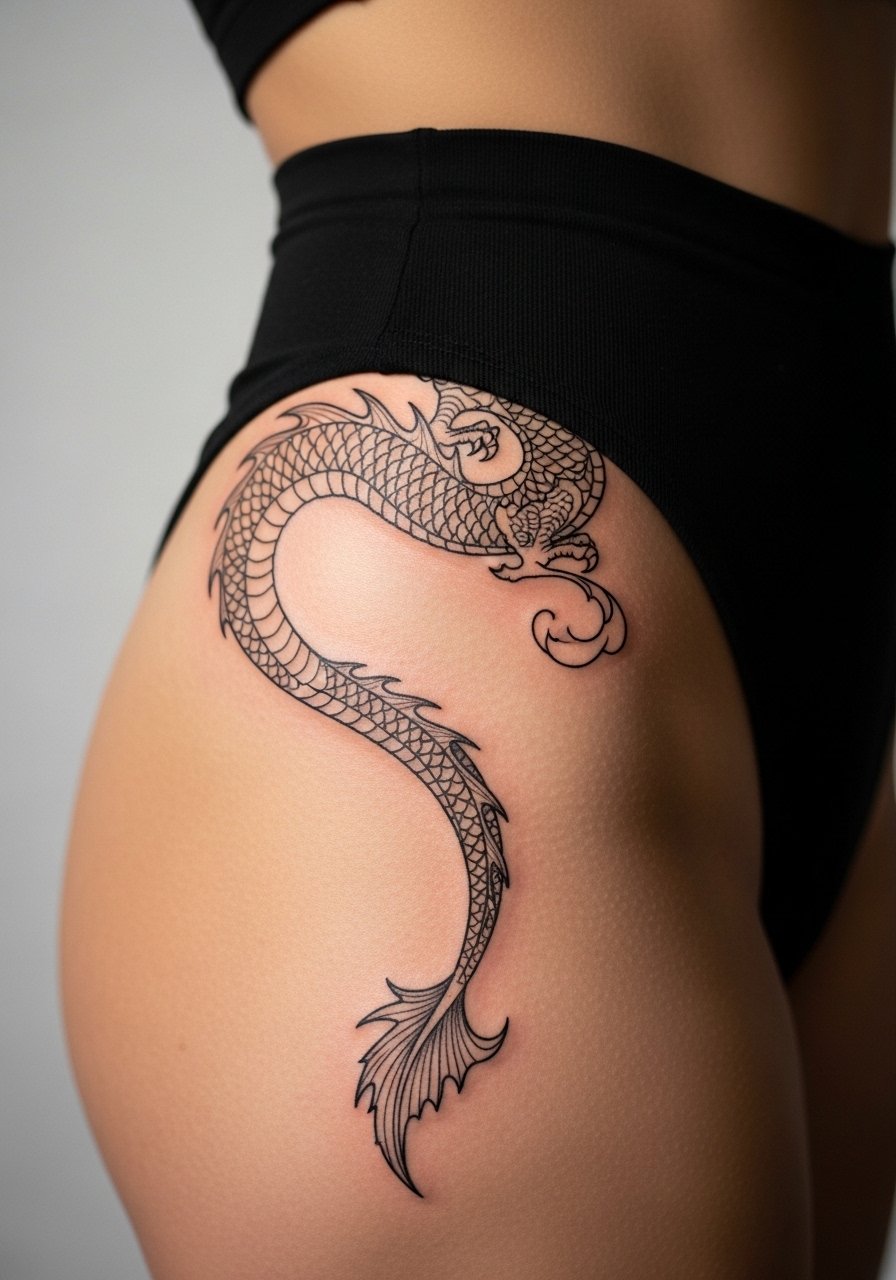
Hip-to-rib wraps let the tail follow body curves for organic motion. Make sure the artist accounts for clothing seams that may rub during healing. For the session choose high-waisted denim shorts so the area is accessible without pressure. Sessions are moderately painful around the hip bone and more tender over the ribs. Expect spacing between scales to allow for minor shifting with weight changes.
22. Small Blackwork Dragon on Upper Thigh That Survives Gym Sweat
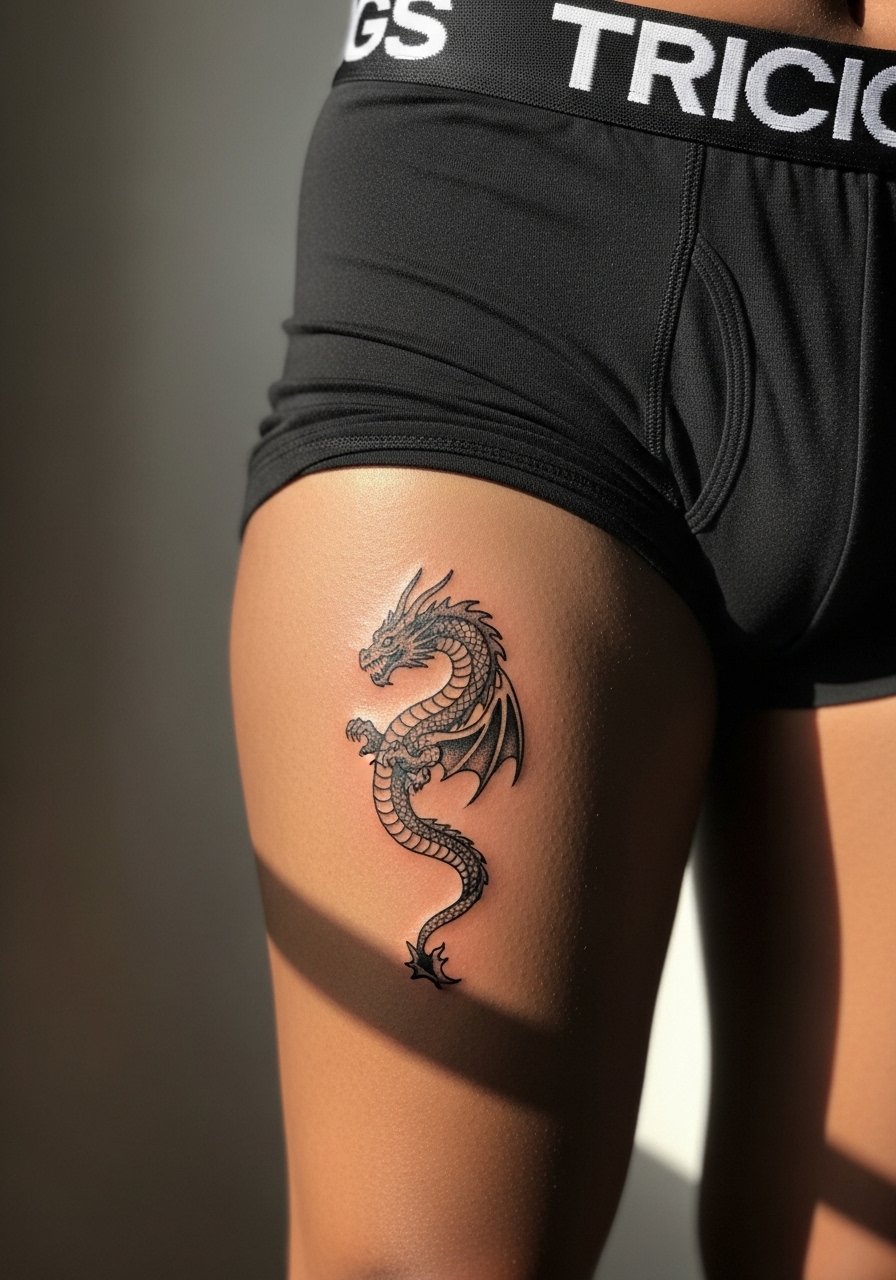
Upper thigh is a practical choice for active people because it avoids constant sun and repetitive flexing. For gym-goers tell your artist you need saturation that tolerates friction and sweat. A blackwork approach with solid fills tends to last longer under these conditions. For sessions wear athletic boxer briefs and avoid tight seams during the first two weeks. Expect one to two sessions for a compact 3–5 inch sketch and minimal early fading if you keep the area dry post-session.
23. Dragon Head Accent Near the Collar of a Sleeve
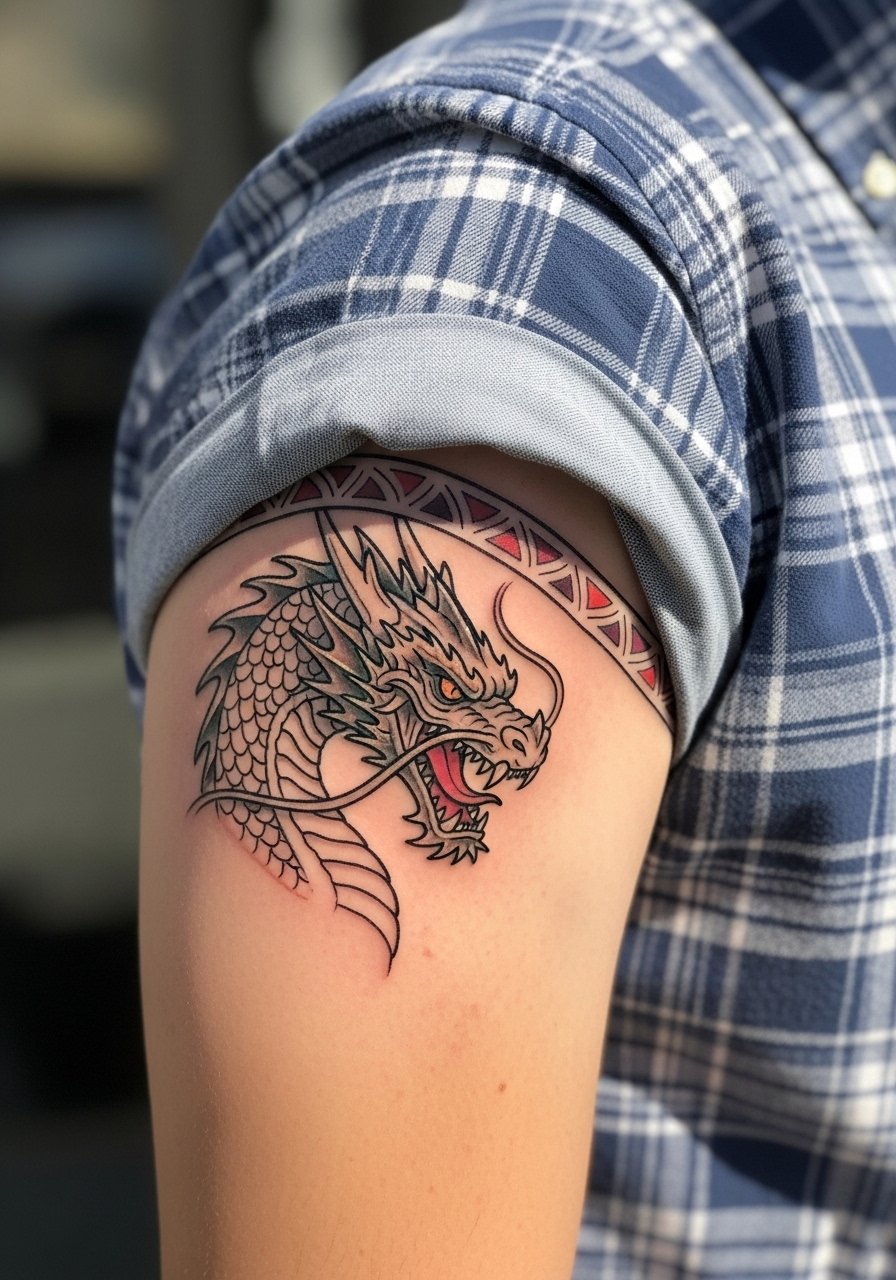
Upper sleeve accents read well when they peek from clothing. During consults show exactly which shirt collars you plan to wear most so the dragon head sits where you want it to be seen. For the appointment wear a short sleeve button-down you can roll. Sessions are typically brief for 3–4 inch accents and touch-ups are rare if linework is confident and spacing is generous.
24. Stipple-Shaded Dragon Flank Panel That Ages Slowly
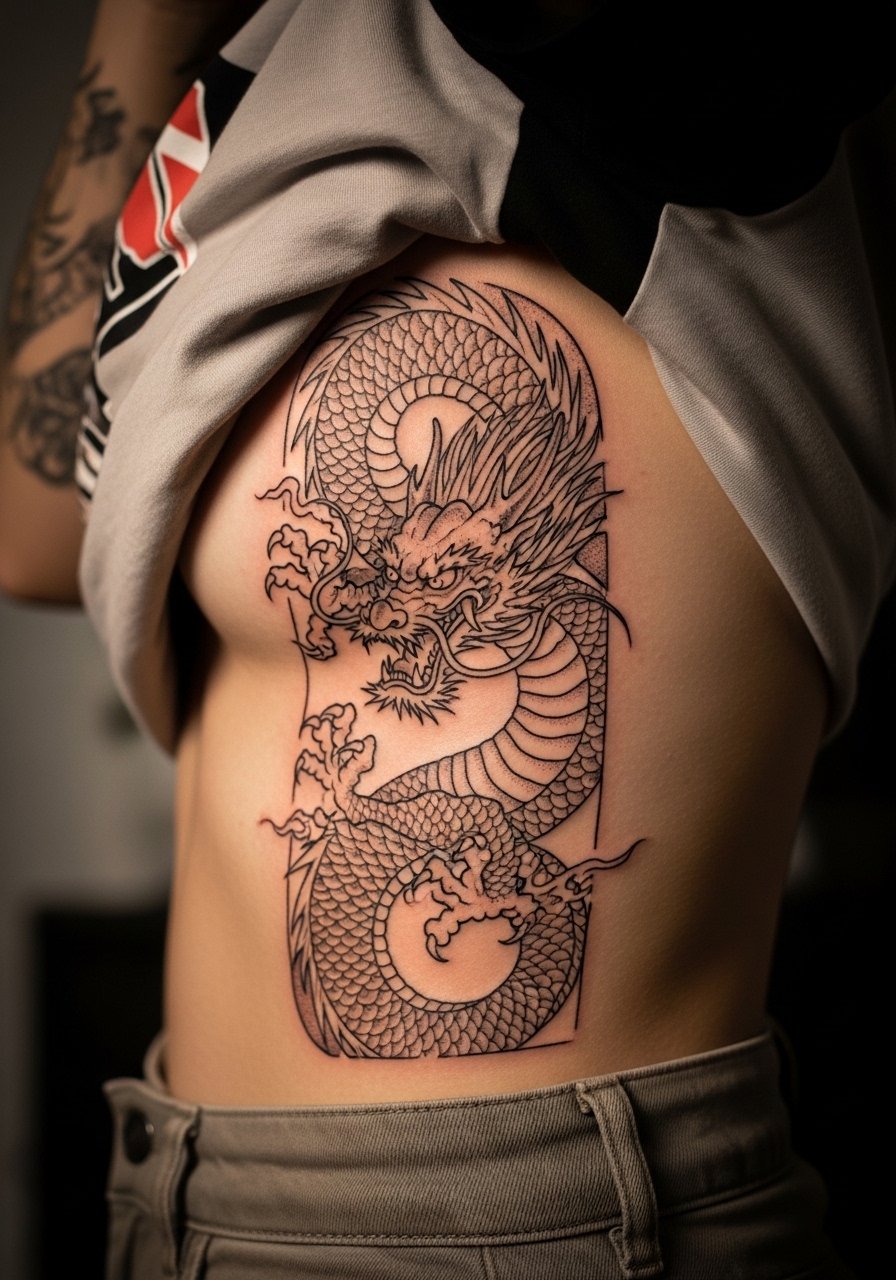
Dotwork on the flank benefits from ample skin real estate, which lets stippling hold without overcrowding. Ask your artist for a gradation map so dots fade out before they meet solid fills. For session wear a cropped tee and high-waisted pants so only a narrow strip is exposed. Sessions can be long if the panel is large, but the area tolerates dense work and ages into a textured look rather than a muddy block.
25. Subtle Dragon Neck Tattoo Along the Side Neck
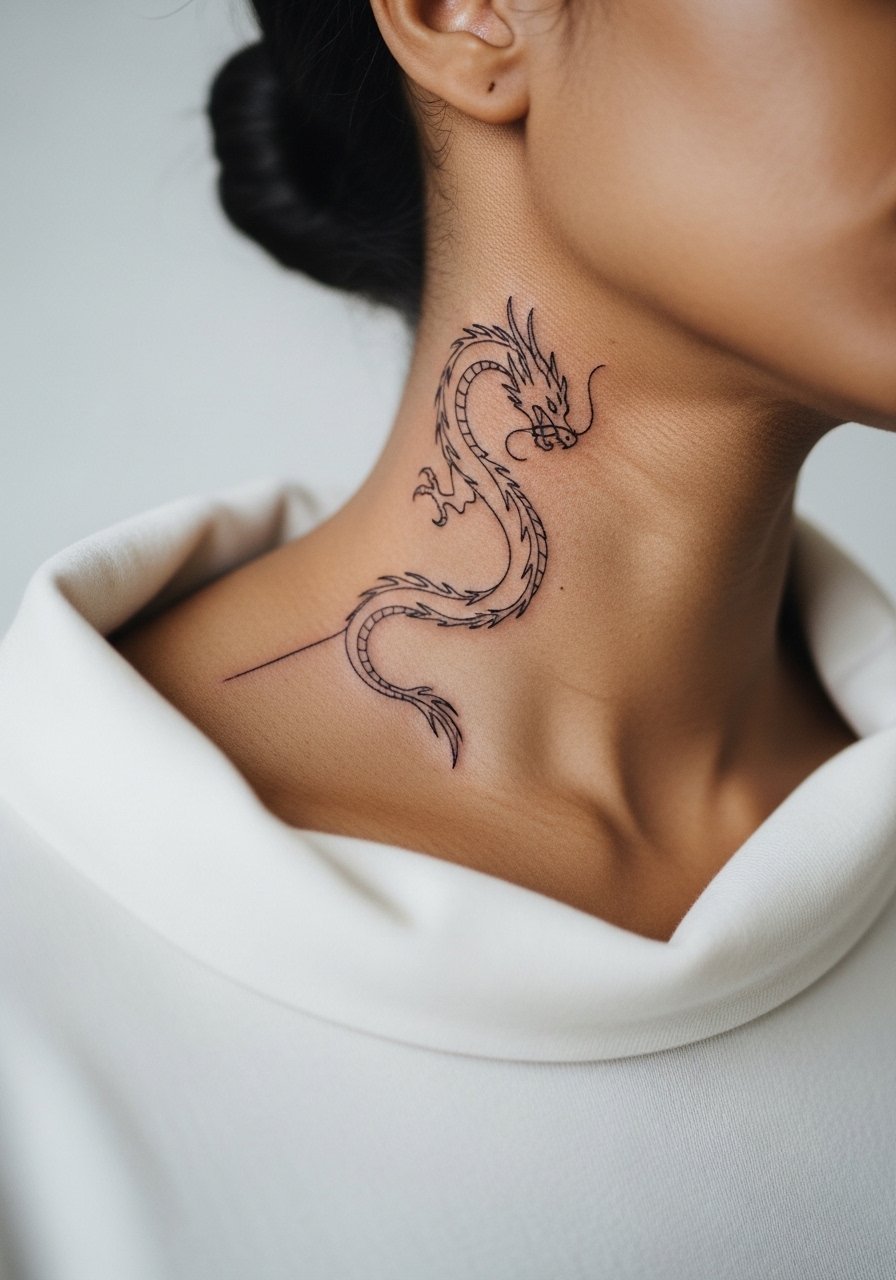
Neck tattoos are visible and demand attention to career considerations. Keep the motif compact and ask your artist for conservative line weight so it looks intentional and not overworked. For the session wear a wide-neck shirt you can shift easily. Pain is moderate and healing requires avoiding tight collars. Expect touch-ups at the year mark if you want the lines razor-sharp.
26. Dragon Chest Panel Framing the Sternum with Floral Insets
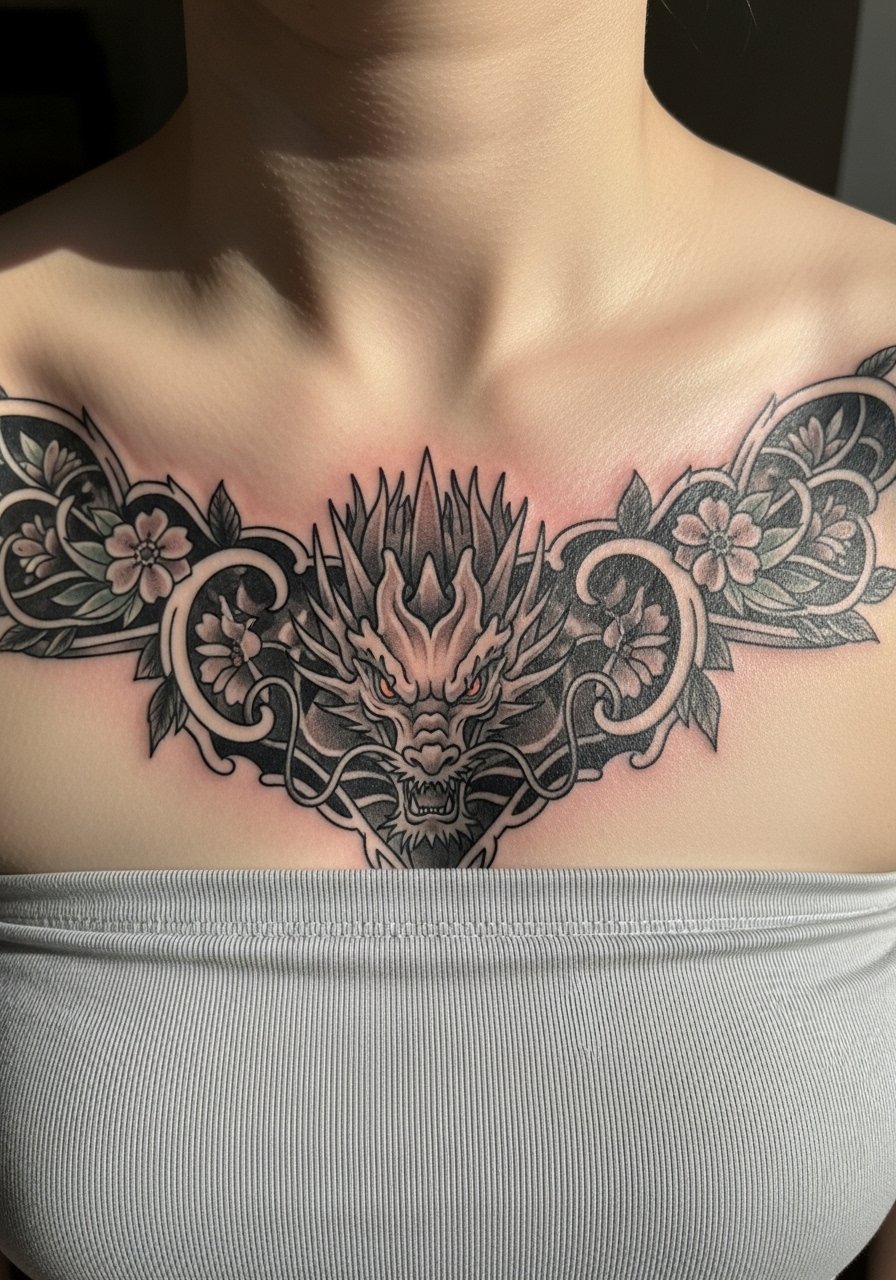
Chest panels sit close to motion zones like arms and breathing. I recommend asking for bold anchor lines near the sternum with lighter floral insets outward so the main shape holds. For the session wear a bandeau top to allow access without full exposure. Pain peaks near bone, and sessions should be spaced to allow healing between heavy saturation passes. Expect maintenance touch-ups to keep the central anchor crisp.
27. Sketch-Style Dragon as a Temporary Stencil Trial on the Inner Wrist
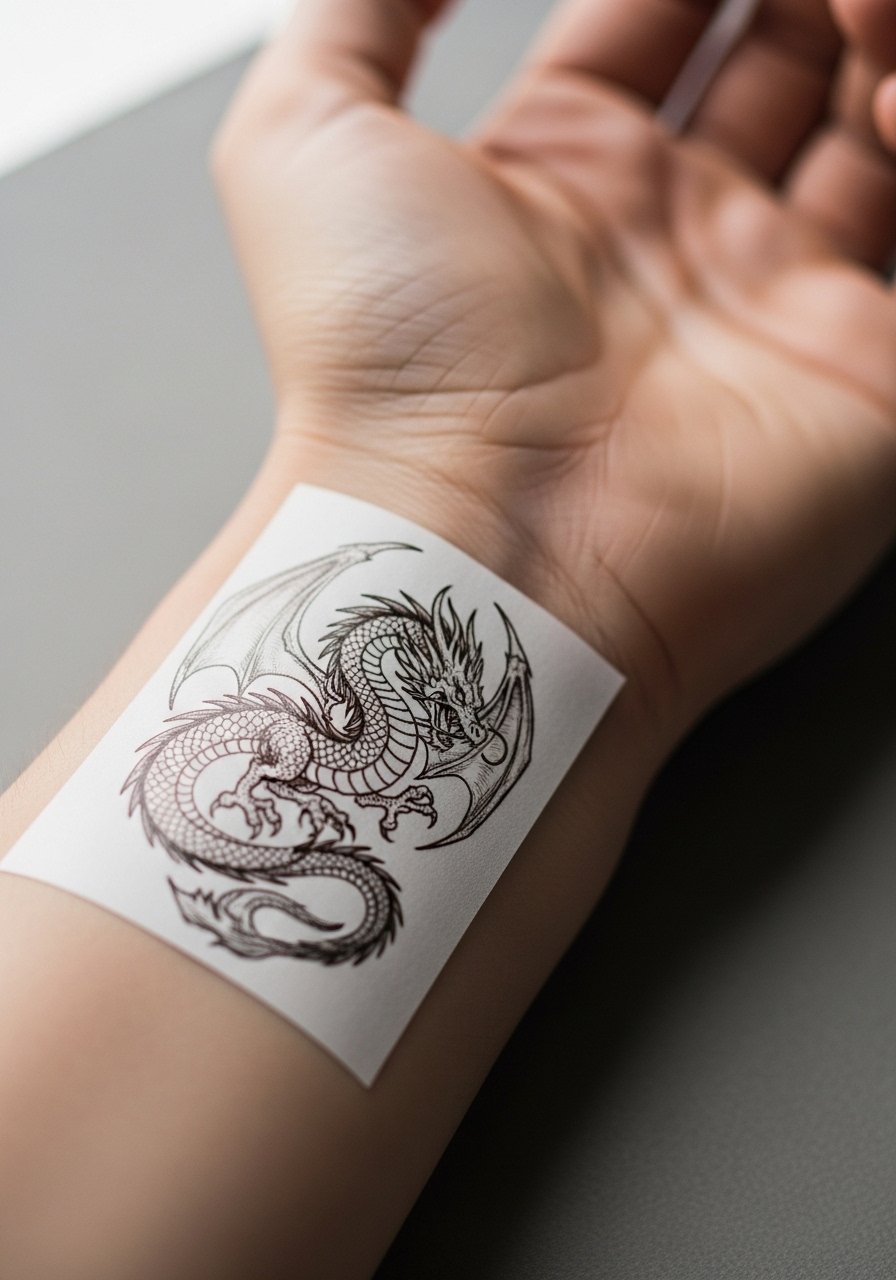
If you are testing commitment, a sketch-style temporary stencil is a useful preview that shows how scale, movement, and size read on skin. Ask your artist to apply a stencil version and wear it for a week to see how clothing and activity interact with the placement. For the trial wear a minimalist leather bracelet on the opposite wrist to see how accessories affect visibility. This avoids rushed decisions in the chair and reduces the chance of regrets from a size or flow mismatch.
Frequently Asked Questions
Q: Will a fine line wrist dragon need touch-ups more often than a forearm blackwork piece?
A: Yes, fine line on wrists usually needs touch-ups sooner than bold blackwork on the forearm. Wrist skin moves and gets washed a lot, which causes delicate lines to soften. If you want longevity, ask your artist to slightly reinforce key contours and plan for a refresh around year one to three depending on activity.
Q: How should I choose between Saniderm and dry healing for a watercolor thigh dragon?
A: Artists split on this. One group prefers Saniderm for speed and reduced mess, especially in high-sweat summers. The other group favors dry healing to preserve delicate edges in watercolor pieces. For a thigh watercolor consider your sweat profile and talk to an artist who has finished watercolor heals recently. If humidity is a concern, lean toward light breathable coverings and frequent air time after the first 24 hours.
Q: Can I wear regular jeans to a calf session for a realistic ryū dragon head?
A: It is better to wear slim chino shorts or loose pants you can roll up without tugging the area. Tight jeans can press on fresh ink and cause unnecessary friction during the session and early healing.
Q: Are there career risks with collarbone or neck dragon placements?
A: Collarbone placements are easy to conceal under shirts and often pose minimal professional impact. Neck tattoos are more visible and can affect first impressions in some fields. Consider how often you want the piece visible and choose placement accordingly.
Q: How does weight change affect a forearm dragon that coils toward the wrist?
A: Weight and muscle gains can alter the way scales align, especially on forearms. If you anticipate body changes pick a layout that runs along muscle valleys rather than wrapping tightly around flexing areas. Discuss long-term mobility and stretch with your artist during the consultation.
Q: What should I ask about when booking a guest-spot artist for an irezumi back panel?
A: Confirm dates and cancellation policy in writing, check their portfolio for completed panels similar in flow and scale, and ask for a session timeline. Guest spots get rescheduled, so book travel plans with buffer days and verify deposit terms before you commit.