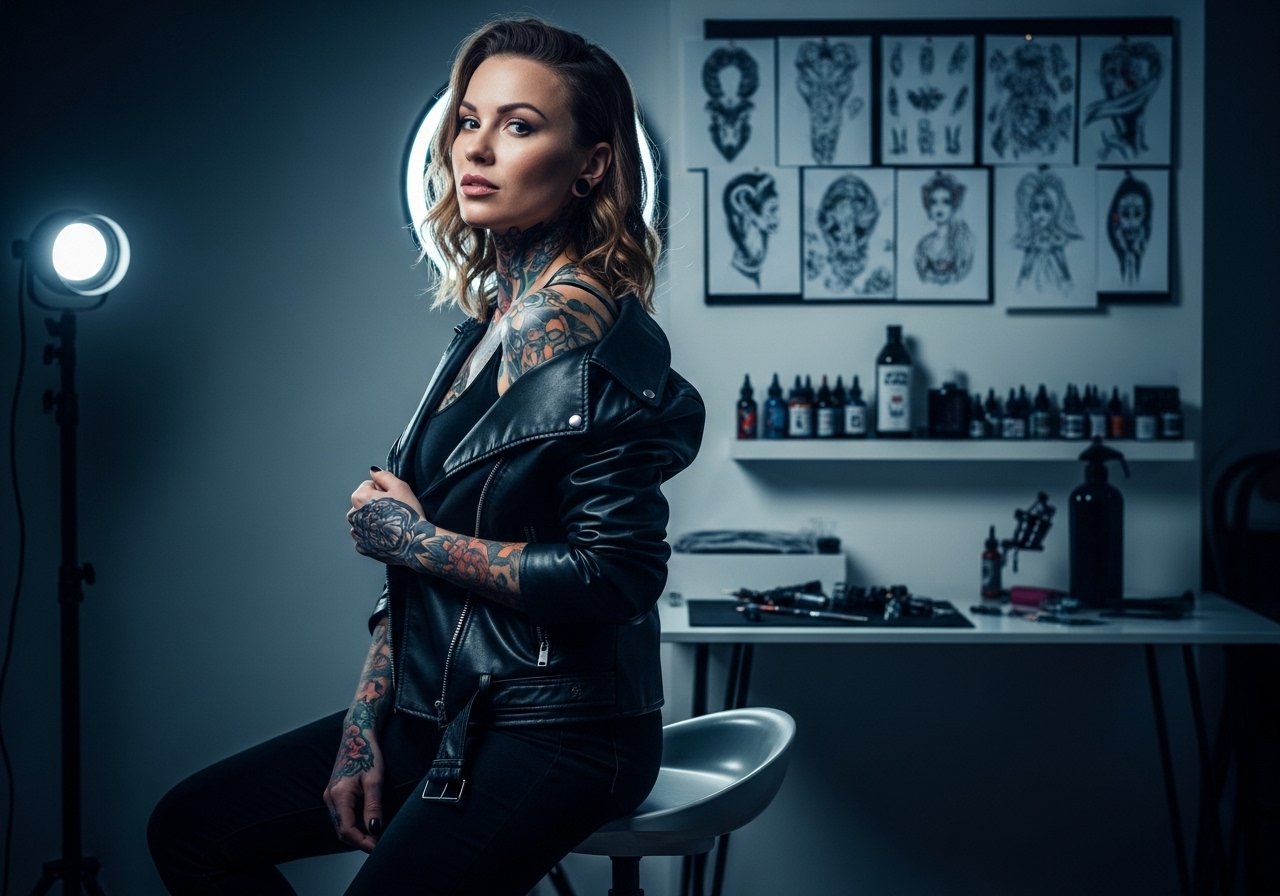
The sugar skull that keeps showing up in saved boards is often less about mourning and more about the little jokes people tuck into a forehead or the marigold that matches a favorite sweater. I tend to steer folks toward placements and line weights that age, not just photograph, and I warn them when a tiny detail will blur after a couple of years. Read on for 17 ways to make Day of the Dead motifs work for you.
1. Sugar Skull with Marigold Flowers on the Outer Forearm

I have seen this one hold up well when artists use bold linework around the skull and softer stipple shading inside floral areas. If you want the marigolds to keep their orange pop at year two ask for dense color saturation but not tiny petals. Common mistake is asking for too much micro detail in a small forearm piece, which can blur into muddied shading. Pain is low to moderate and a single 90 to 120 minute session usually covers a medium sized version. For showing it off, roll sleeves or wear a black henley shirt so the color reads against a neutral background.
2. Full Catrina Portrait with Elaborate Hat, Upper Arm or Back
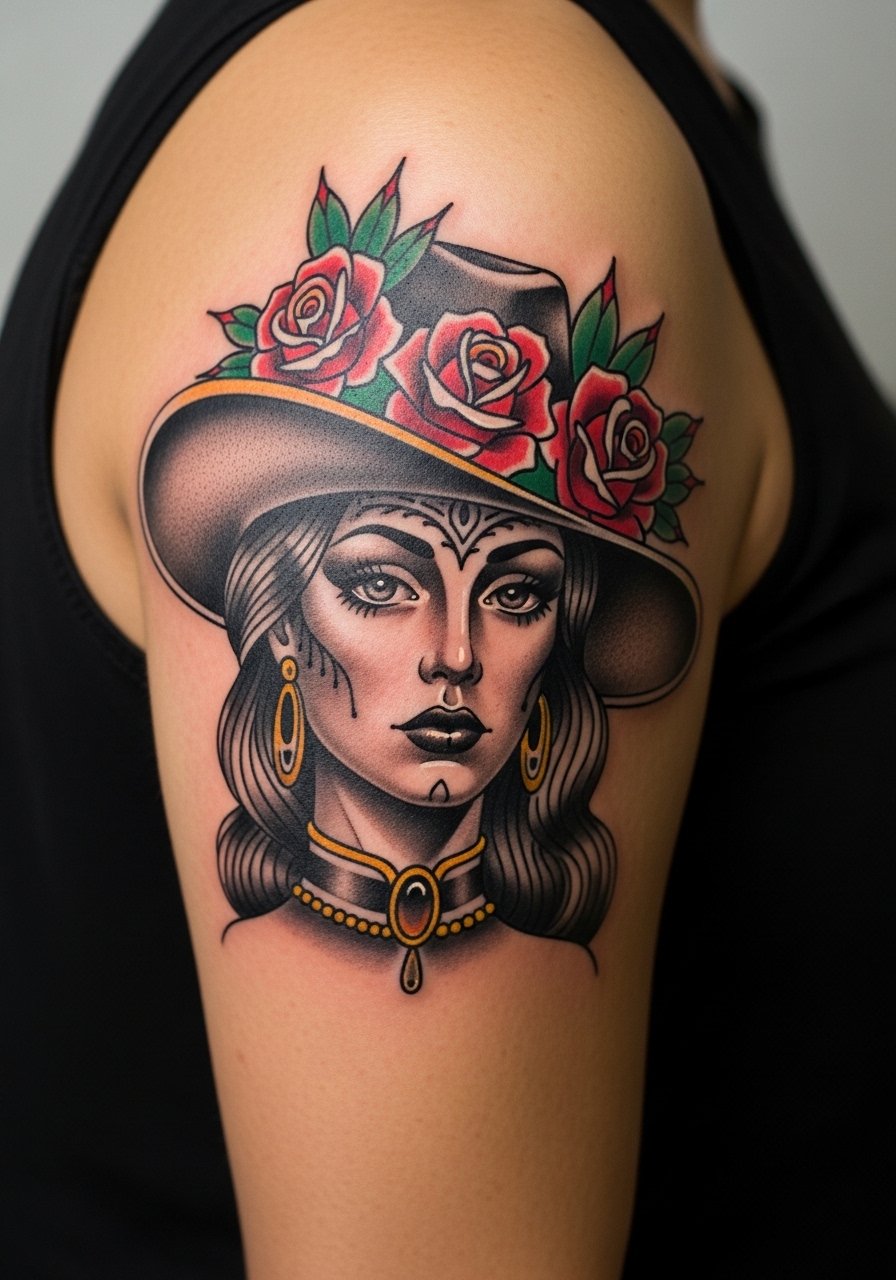
Artists split on Catrina work when it comes to cultural sensitivity and scope. One camp treats Catrina as a widely appreciated icon that can be interpreted respectfully by anyone. The other camp argues that large Catrina portraits should be approached by people connected to the tradition or who collaborate with Mexican studios. Be explicit about source material in consultation and expect a multi-session commitment for a large upper arm or back piece. A common aging issue is letting tiny decorative lines dominate the face, which can soften into blur after a few years. Ask for stronger contour lines around the facial features to preserve expression.
3. Marigold Altar Scene on the Collarbone
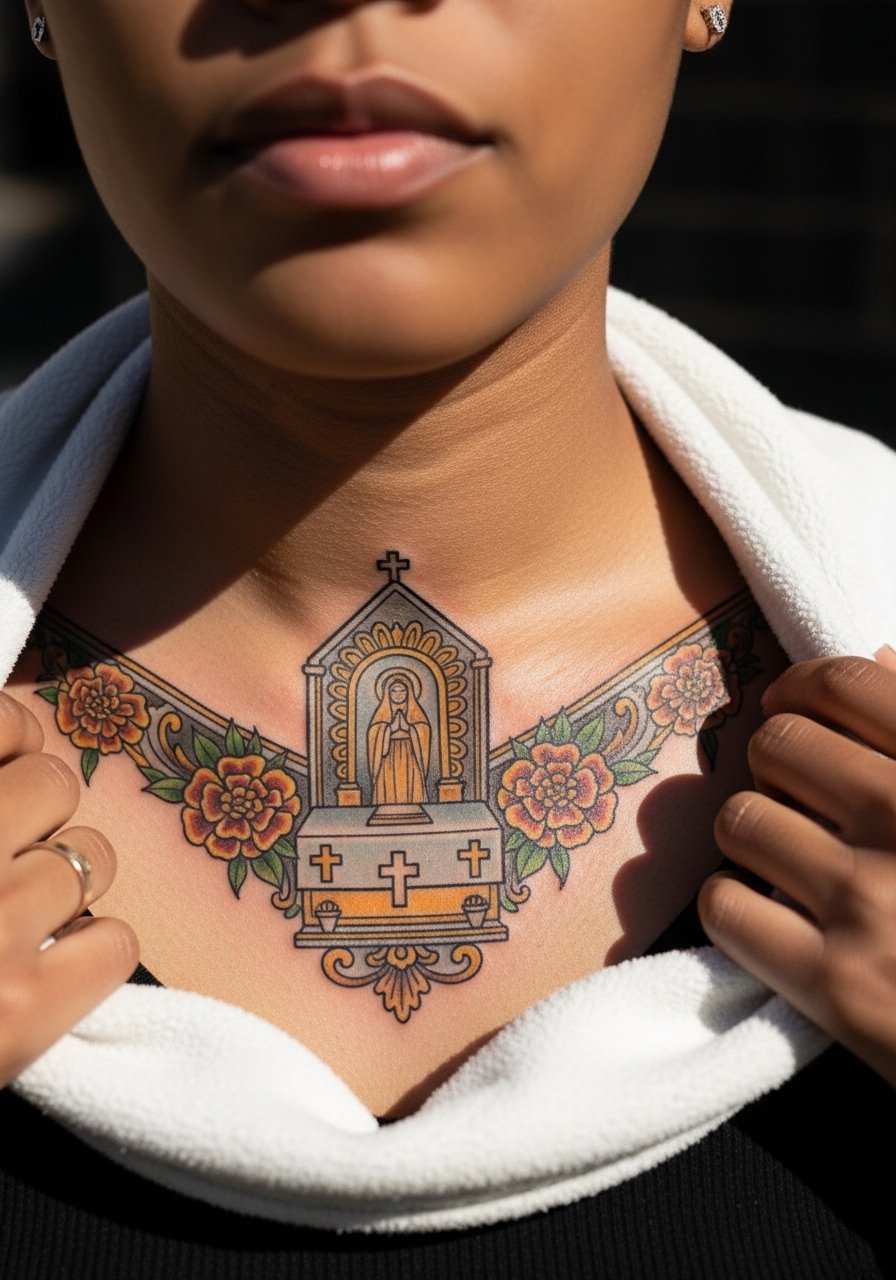
Fair warning, the collarbone area is unforgiving for thin script or tiny petals. I recommend a compact altar cluster with three or four marigolds and one candle rather than a long horizontal scene. Tell your artist you want negative space between elements so the piece breathes as it heals. Pain is moderate and a single session of 60 minutes often does the trick for small-medium sizes. For showing it off try an off shoulder sweater or a wide-neck top the artist can pull slightly aside during the session.
4. Calavera with Cross and Candles on the Chest
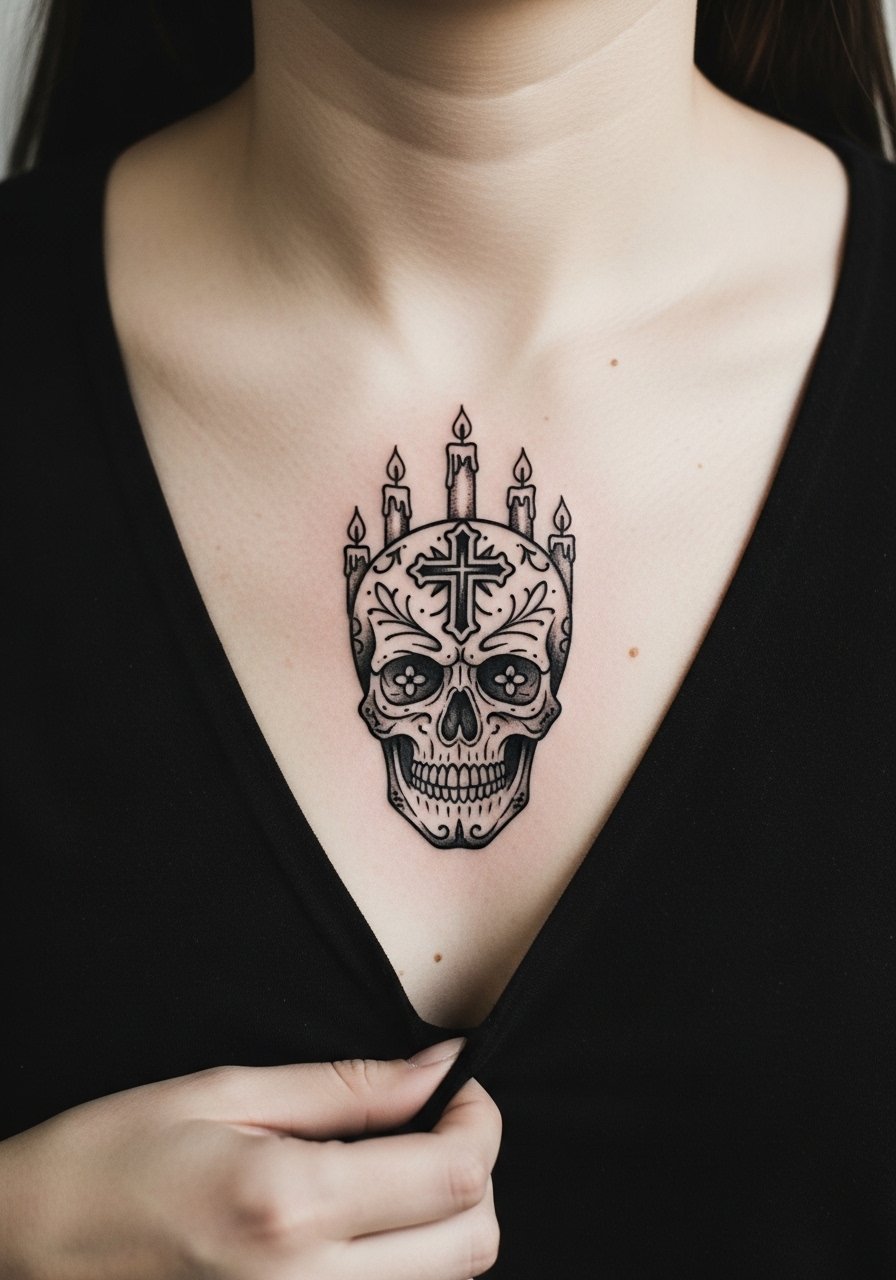
Chest pieces read bold because of the flat canvas and strong saturation. The rib-adjacent area is a higher pain zone so expect a slower session and the possibility of splitting the work across multiple sittings. A typical mistake is crowding candles and cross details directly over the sternum, which can distort when the skin moves. Ask your artist to place the cross slightly off-center for better visual balance. Also plan clothing that can open in front, like a deep v neck shirt, so you are comfortable while the artist works.
5. Forehead Name Sugar Skull Personalization on the Calf

This playful market-style personalization reads as everyday humor rather than formal memorial for many people. The calf is an excellent canvas for a five-inch skull with forehead text because it lets the artist space the letters for longevity. Avoid requesting very thin script for the forehead line. Instead ask for slightly bolder lettering that can be softened later if you want a delicate look. Calf pain is moderate and sessions are comfortable sitting or lying down. To show it off, roll up pants or wear high waisted denim shorts in warm months.
6. Catrina in Flowing Dress with Flower Details on the Thigh
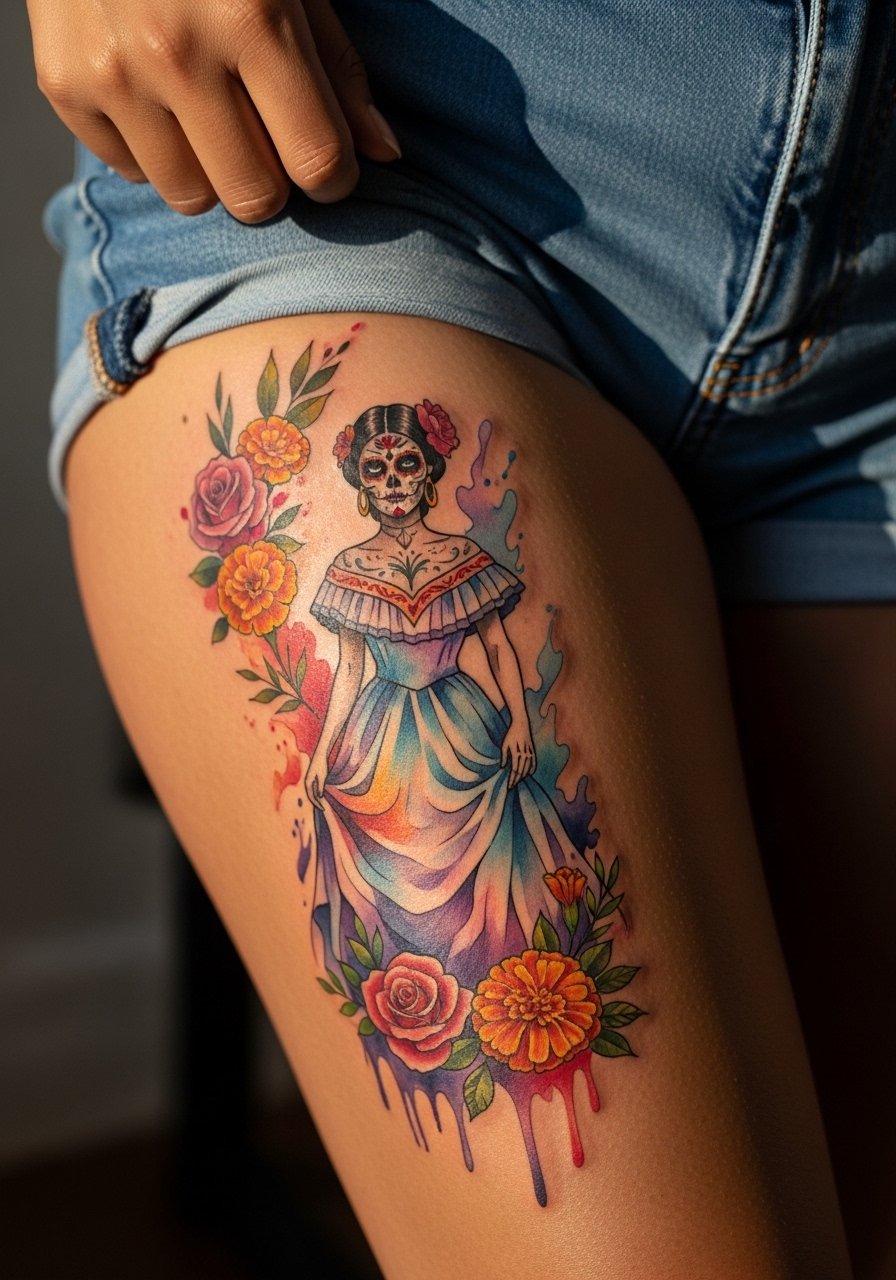
Thigh pieces let artists use color gradients and large negative space with confidence. Expect two to three sessions for a detailed Catrina dress with layered florals. The biggest mistake is mapping a large figure onto a part of the thigh that will stretch significantly with weight change. If body changes are a concern, ask for a composition that centers on a stable area of the outer thigh. For the appointment wear loose joggers or a loose jogger pants so the artist can work without fabric pressure.
Studio Day Picks
The chest, thigh, and forearm pieces above each ask for slightly different prep and protection, so these five items smooth the session and first week.
-
Stencil transfer paper kit. Lets you preview exact placement on curved areas like the calf and outer forearm before the needle touches skin.
-
Topical numbing cream. Useful for the rib-adjacent chest and inner thigh zones when sensitivity could shorten a session.
-
Thin protective film roll. Keeps wrist and ankle pieces cleaner during the first week of frequent washing and movement.
-
Fragrance-free body wash. Gentle cleansing for delicate fine line areas without irritating newly tattooed skin.
-
Aquaphor healing ointment. Thin layers in the earliest days keep linework from crusting while you sleep.
7. Skeleton with Revolvers and Patterned Backdrop on Outer Forearm

This is the edgier, almost outlaw take on Day of the Dead iconography. Blackwork holds up longer than delicate color in high-friction zones, so choosing solid fills over tiny hatch shading is a longevity move. The common error is asking for intricate tiny filigree in a narrow forearm band, which can merge into a gray patch after healing. Outer forearm sessions are moderate in pain and usually done in two shorter blocks rather than one marathon. Pair the piece with a leather cuff bracelet when going out, but avoid tight cuffs during the first week.
8. Personalized Calavera Market Skull at the Ankle

Ankle tattoos are prone to rubbing from shoes and socks, which accelerates fading. I tell people to keep small ankle calaveras simple and avoid tiny script or thin teeth lines. The advantage of a market-style skull is that playful elements age into a lived-in look rather than looking like a faded attempt at realism. Session time is short for small ankle pieces but protect the area with low-friction socks while healing. For style, rolled slim jeans or ankle boot black in cooler months let the piece peek out without constant abrasion.
9. Marigold and Rosary Fine Line Wrap on the Inner Wrist
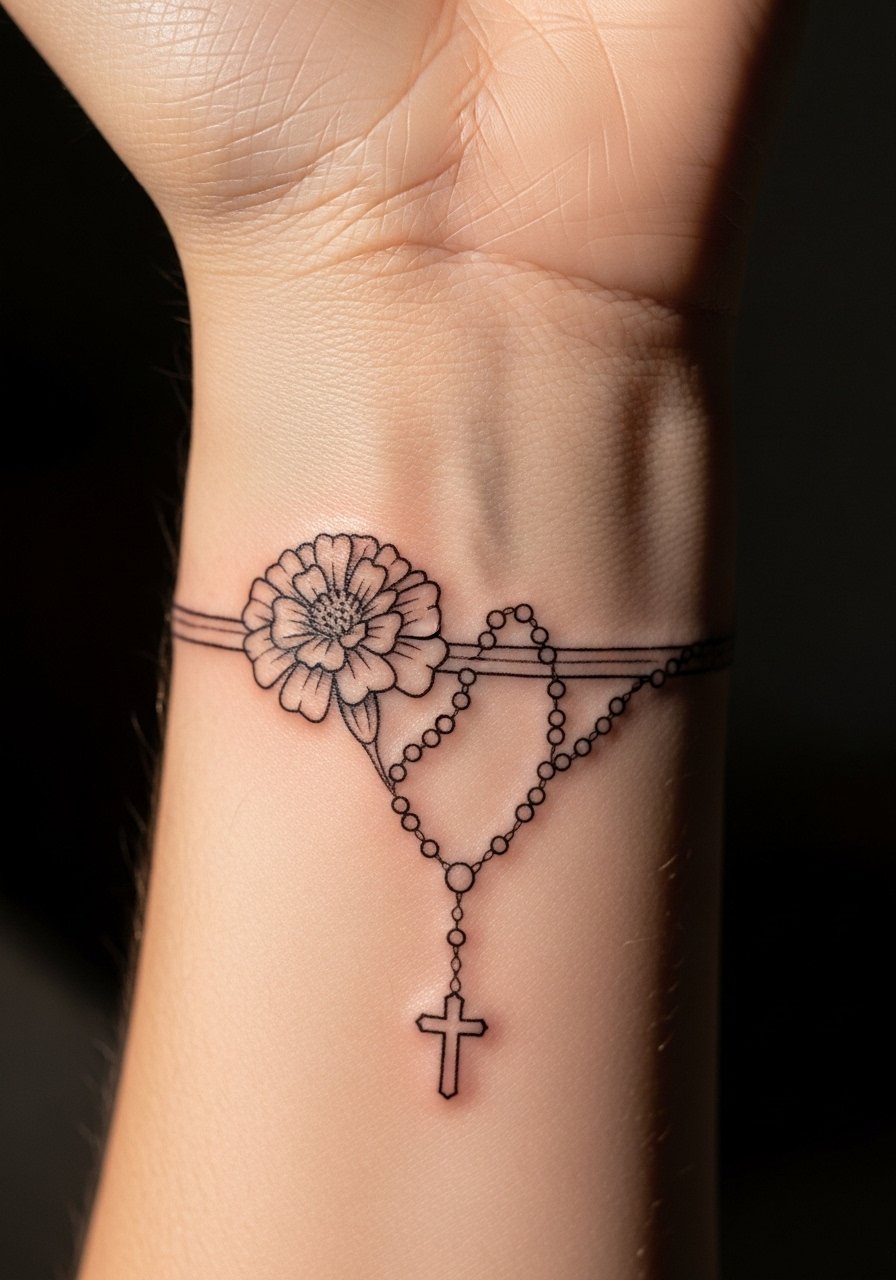
Wrist placements are high visibility and high use, which affects how fine line holds up. Expect touch-ups earlier than you would on a thigh. Tell your artist you want slightly more depth to the rosary beads and a bit of negative space between petals to prevent the marigold from blending. A single session of an hour usually covers a small wrist wrap. For showing it off, wear a thin silver bangle set on the opposite wrist so attention reads intentional and not crowded.
10. Full Catrina Back Piece with Altars

A full back Catrina is a major commitment. In my conversations at conventions the usual advice is to plan four to five sessions and consider how the piece will flow with the natural curve of the spine. A frequent mistake is trying to cram too many tiny altar details into a single session. Let the artist map a staged plan so saturation and contrast are built over time. For the session wear a loose tank top you can pull aside without fully undressing.
11. Sugar Skull with Floral Crown on the Shoulder
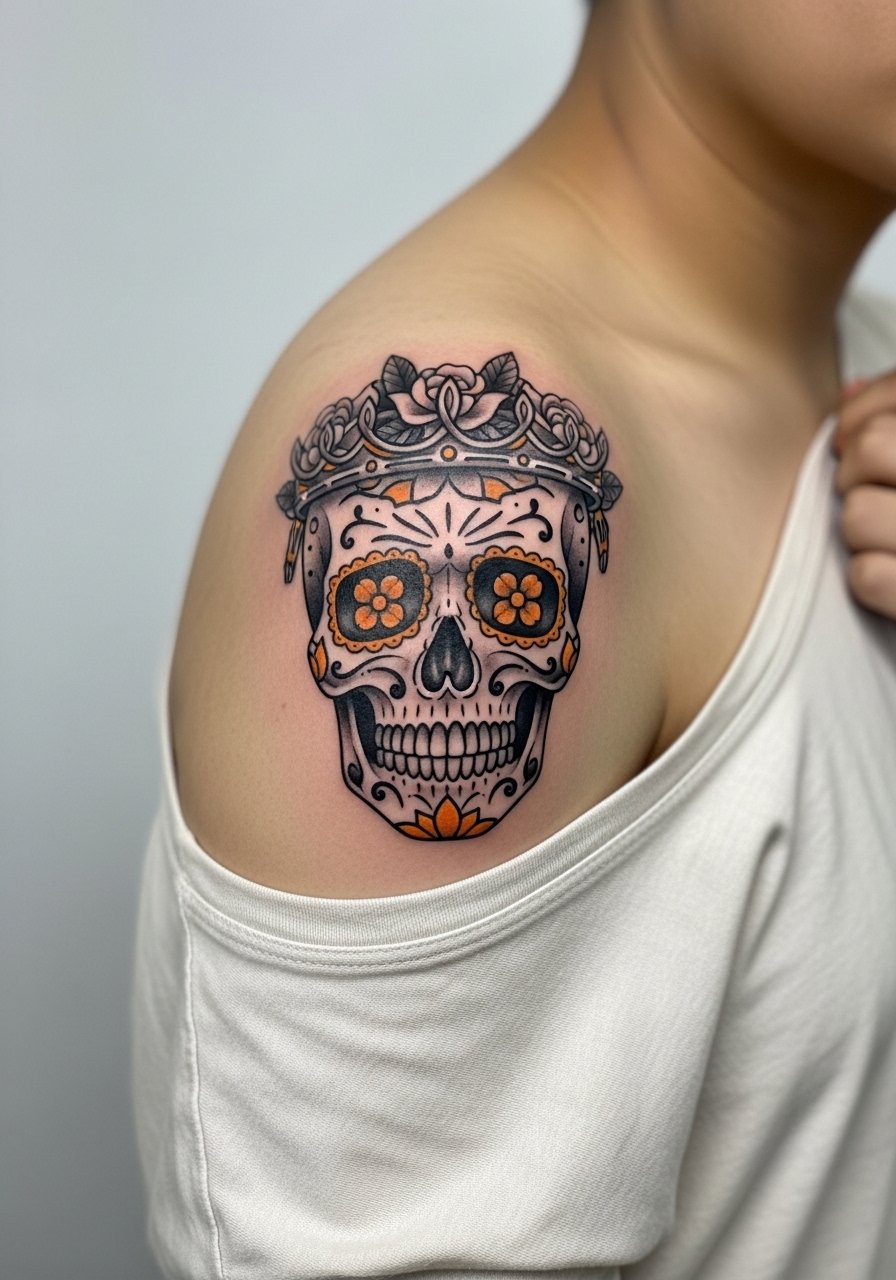
Shoulder work sits well with a medium sized skull and crown because the rounded surface supports symmetry. The most common mistake is placing delicate, tightly spaced petals at the edge where shirts can rub. If you plan to show the piece often pick strapless or off-shoulder tops. For session convenience wear a loose crew neck tee you can slide off one shoulder for the artist.
12. Day of the Dead Skeleton Dancer on the Upper Thigh
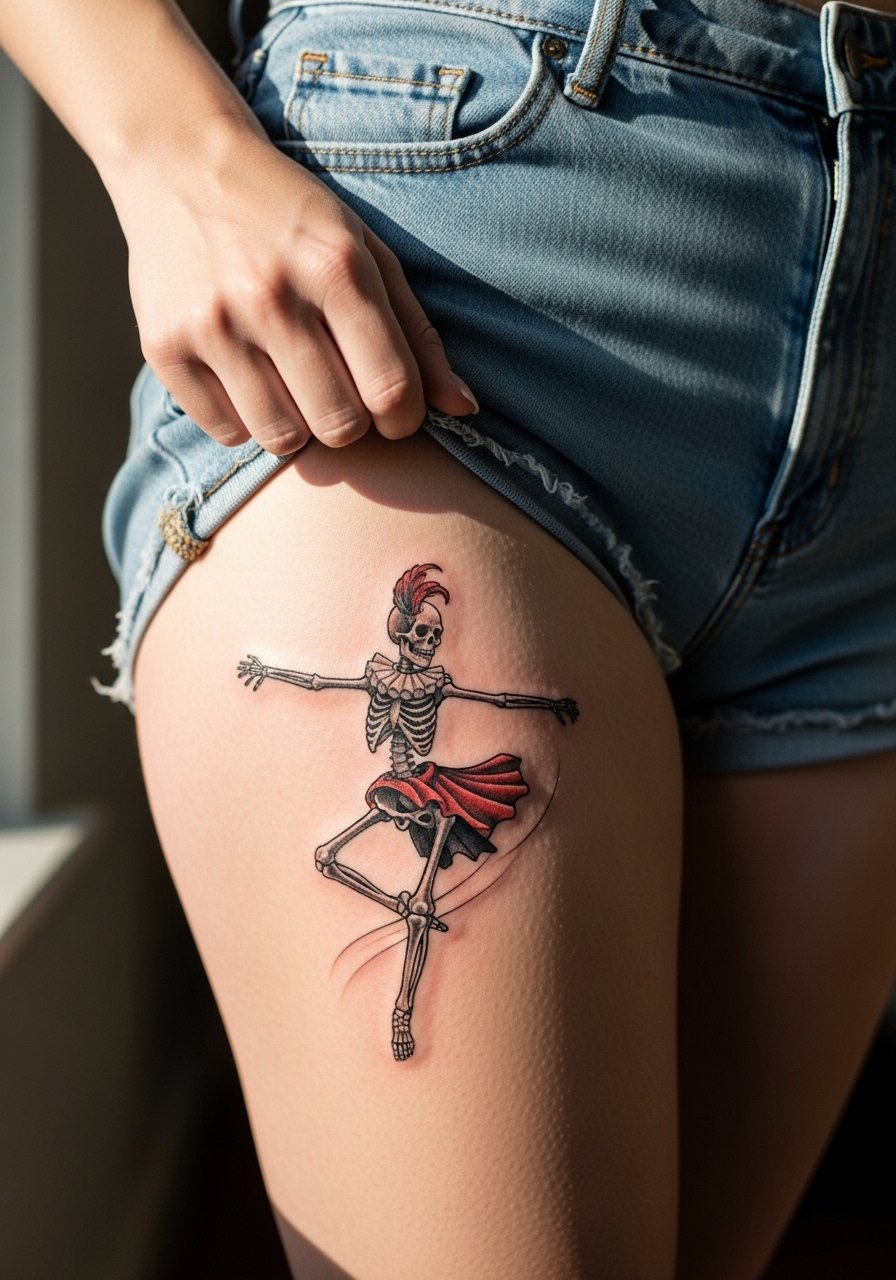
The thigh is a forgiving spot for dynamic figures and movement. Expect two sessions for a dancer with flowing clothing and background pattern. One practical error I see is centering the figure too close to the inner thigh where movement can stretch the image. Place the dancer toward the outer upper thigh for more stability. Thigh pain is moderate and most people handle longer sessions there. Consider thigh-high socks for colder days to frame the piece.
13. Sugar Skull Mandala Fusion at the Collarbone and Upper Chest
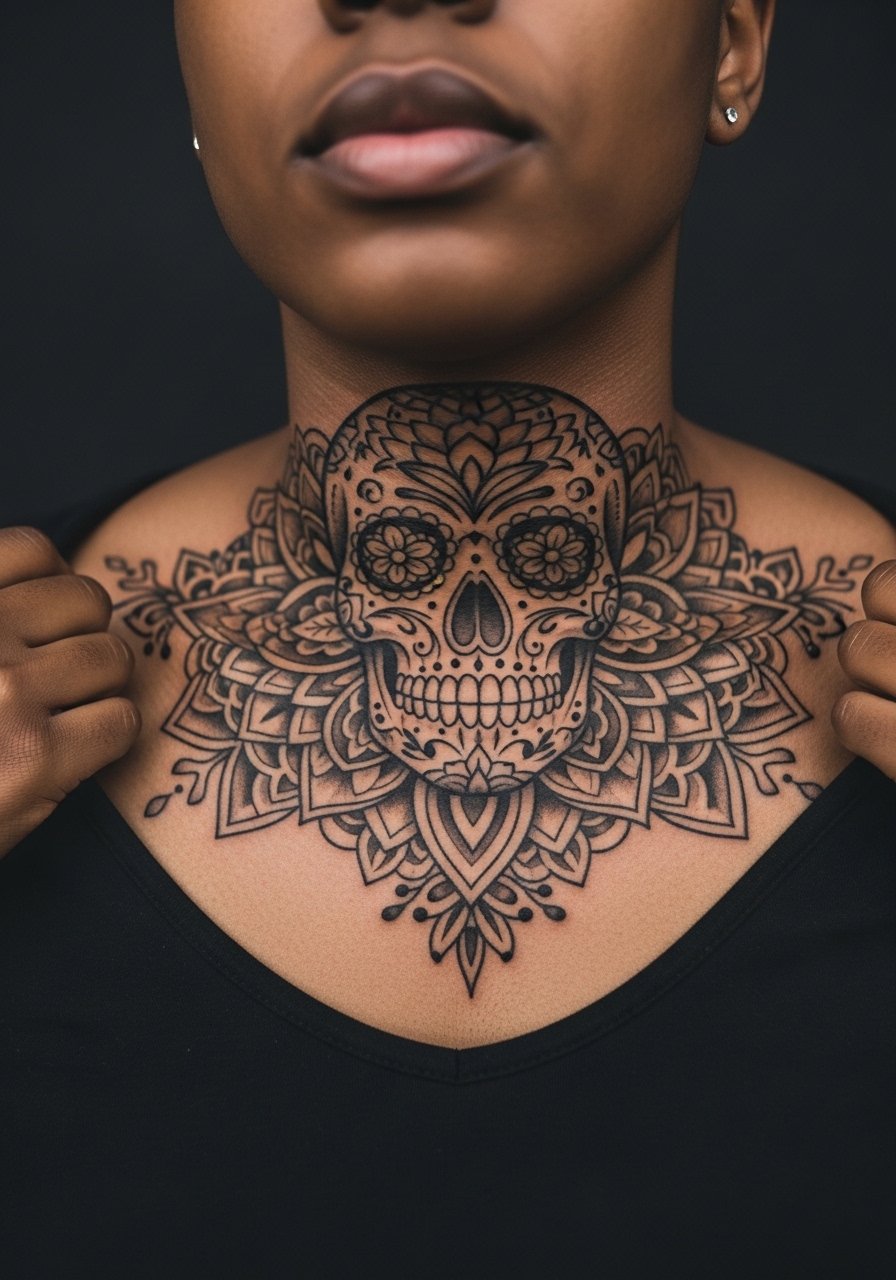
Mandala geometry needs breathing room, and the collarbone area is unforgiving for overly dense patterns. If you want a mandala fused with a skull, ask for larger gaps between spokes and a stronger outer ring so the pattern reads at arm's length and in photos. Expect moderate pain and a one to one and a half hour session for medium sizes. For the session wear a wide-neck shirt that can be adjusted to leave only the area exposed.
14. Half-Face Catrina on the Upper Arm
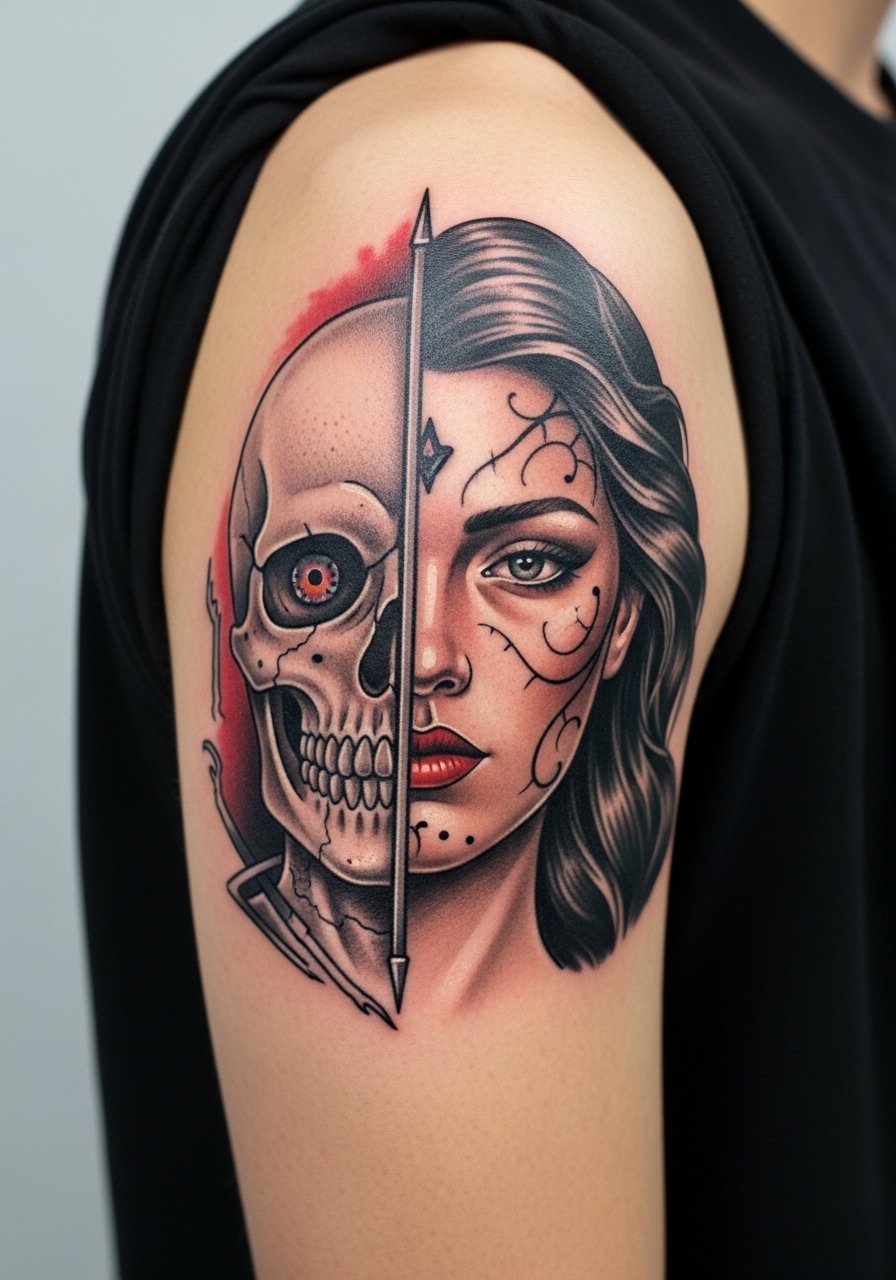
Splitting a portrait across living and skull halves works well on the upper arm because you can play contrast without portrait distortion. A mistake beginners make is shrinking the face too small for the expected detail. For a half-face you want at least a four to six inch vertical height so linework keeps character. Pain is moderate and a single extended session or two shorter ones will be needed. Ask your artist for reference angles that match the arm's curvature.
15. Mariachi Skeleton Band Scene as a Sleeve Accent

Sleeve continuity is the main design challenge here. I advise mapping negative space early so the band figures do not run into each other after healing. A common mistake is treating sleeve elements as isolated tattoos rather than as pieces that need intentional breathing room. Expect two to four sessions depending on saturation. For daily wear pair the sleeve with rolled-up short-sleeve button shirts or a loose button down shirt when you want the art on display.
16. Tiny Sugar Skull Finger or Ring Tattoo
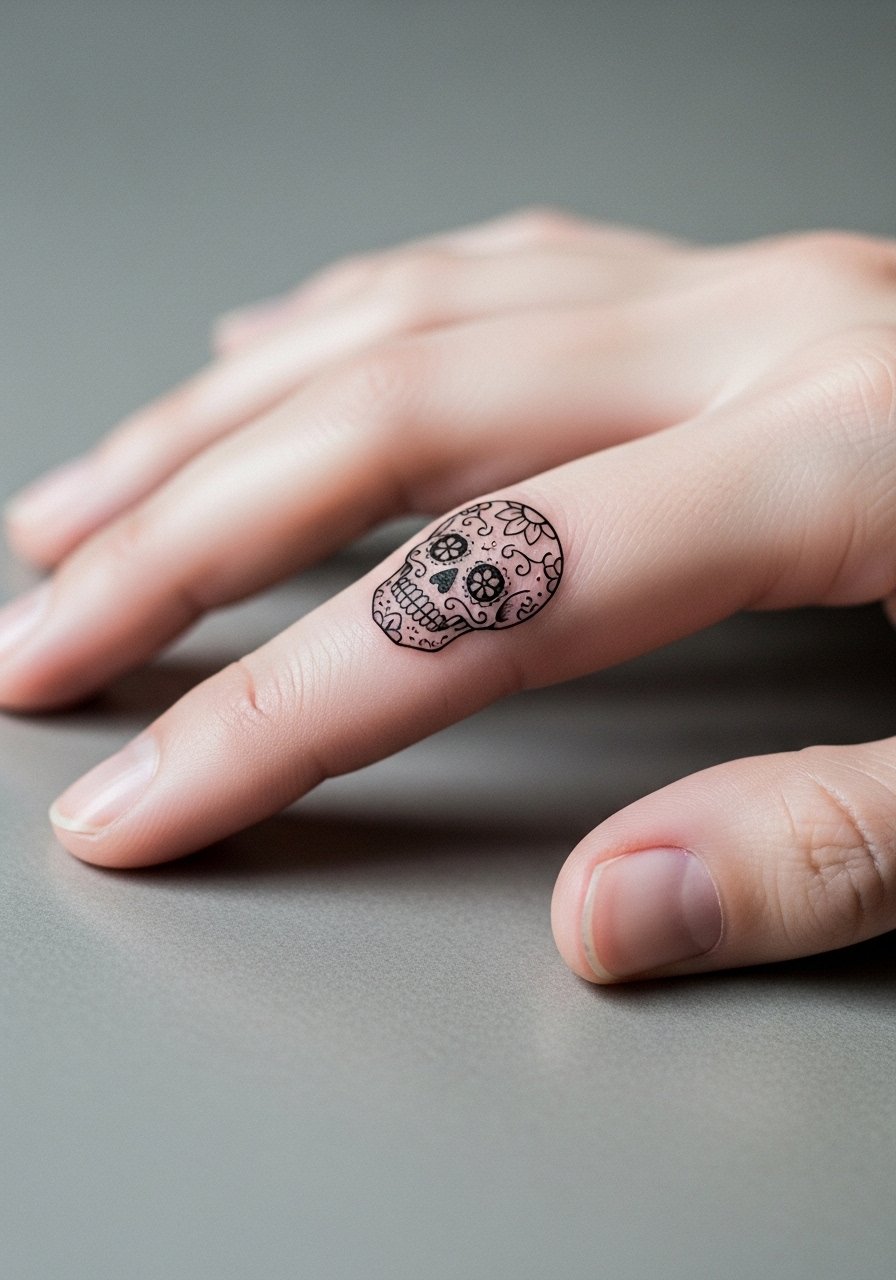
Finger tattoos are convenient but they fade and blur faster than most placements because of skin renewal and constant washing. If you want a tiny skull on a finger choose bold simplified shapes and avoid thin hairlines. The trade-off is frequent touch-ups and possible slight darkening along edges over time. Session time is short but expect to revisit the artist at year one or two. For showing small finger work pair with minimal rings rather than chunky bands that rub the surface.
17. Memorial Script with Marigold Accents on the Ribcage

Ribcage pieces are higher pain and higher risk for line blur if placed too small. If you want a name embedded in marigolds keep the script slightly bolder than your first instinct and let the flowers frame the text rather than overlap it. A common mistake is expecting delicate hairline script to stay crisp in a mobile area. Plan for a two session process and expect to need a touch-up window at year three to maintain contrast. Because this is a sensitive placement discuss the session pacing with your artist so you can pause as needed.
Frequently Asked Questions
Q: How long before a forearm sugar skull needs a touch-up?
A: In my experience a forearm neo-traditional sugar skull with solid outlines and good saturation will often look great for two to five years before a noticeable touch-up is needed. Fine details and tiny script can require attention sooner. Plan on a touch-up consultation around year two if the colors have softened.
Q: Is a Catrina back piece worth the time and expense for first-timers?
A: It depends on your tolerance for long sessions and your willingness to commit to a multi-visit plan. A full back Catrina is a sizeable investment in both budget and time, but it also lets an artist develop contrast and saturation across sessions so the piece ages better. If you are unsure start with a smaller upper arm Catrina to test how the style settles on your skin.
Q: Will a ribcage memorial script blur faster than a collarbone script?
A: Yes. The ribcage moves with breathing and tends to be a higher friction area against clothing, so very fine script there blurs sooner than the collarbone. If you must have script on the ribs, ask for a slightly bolder hand and space the letters apart so touch-ups are easier later.
Q: Are there cultural concerns I should ask about before booking a large Catrina or altar piece?
A: Yes. Some people consider large cultural imagery best handled by artists who understand the iconography and context. Others welcome broader interpretation. I suggest asking the artist about their experience with Day of the Dead motifs and whether they can show respectful references. That conversation helps you know which side the artist aligns with before you book.
Q: What should I wear to a session for a back or shoulder Day of the Dead tattoo?
A: Wear easy layers you can slide off without exposing more skin than necessary. A loose tank top or a button-up you can undo in front works well for back and shoulder sessions so you stay comfortable and modest while the artist works.