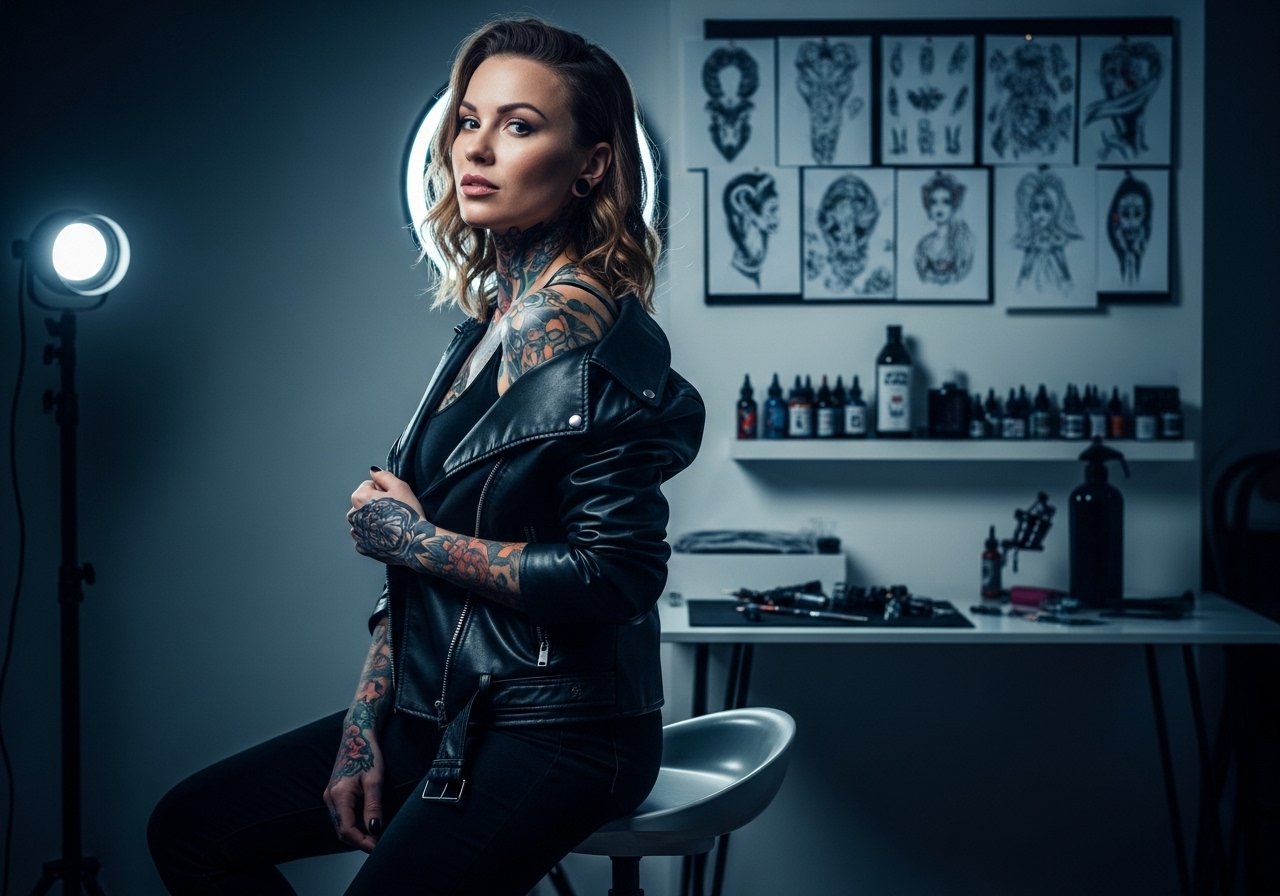
Fine line tattoos are all over feeds right now, and the gap between what looks great on a phone screen and what holds up on scar tissue is wider than most newcomers expect. Scars that sit like ruler-straight lines under tanks, artists who cancel after a consult, and the way dark skin can soften fine detail are real concerns. Read these practical ideas and what to ask your artist so the piece you pick actually ages the way you want.
1. Abstract floral border over a horizontal chest scar
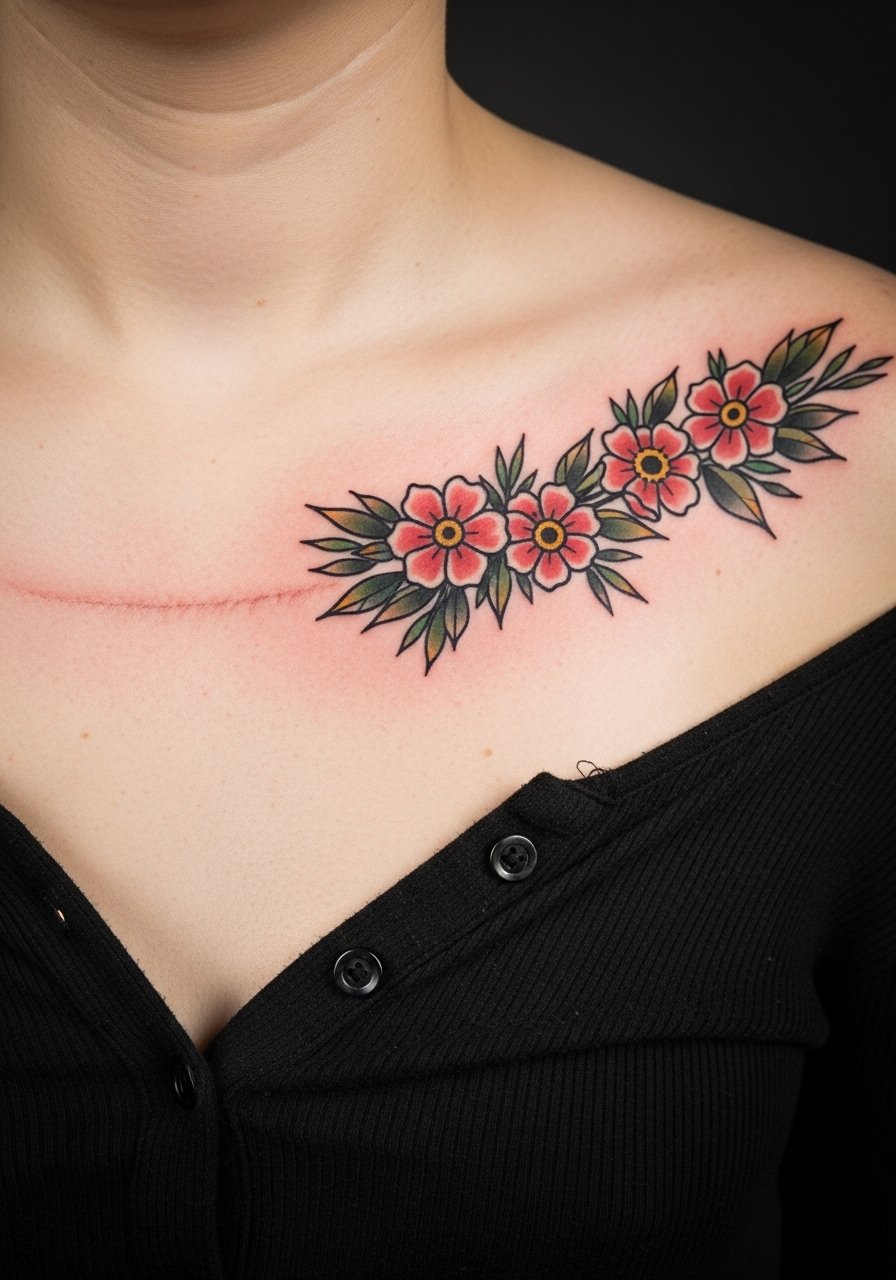
I recommend this when the scar reads like a straight line under tops and you want organic curves to break that eye path. Tell your artist to let petals and leaves follow the scar edge instead of covering it outright. Common mistakes include crowding too many tiny petals into the scar line, which blurs after a year. Expect moderate pain on the upper chest and plan for a single longer session or two shorter ones. For the appointment, wear a loose button-down shirt you can pull aside without taking anything off. Ask about touch-ups at 6 to 12 months if the scar tissue flattens or gaps appear.
2. Geometric mandala centering a vertical sternum scar

This design turns a linear sternum scar into a symmetrical focal point that reads balanced under crewnecks. In consultation, specify diameter and density so the inner geometry does not get too tight. A common aging error is making the mandala too small, which invites line merging over time. Pain is higher on the sternum, and sessions often split into two because the artist needs rest and you need breath breaks. For showing it off, a rolled-collar crewneck or an open-front cardigan keeps the symmetry visible without exposing much skin. If you have keloid history, mention it up front and ask about skin testing first.
3. Realistic phoenix rising from a pectoral scar line
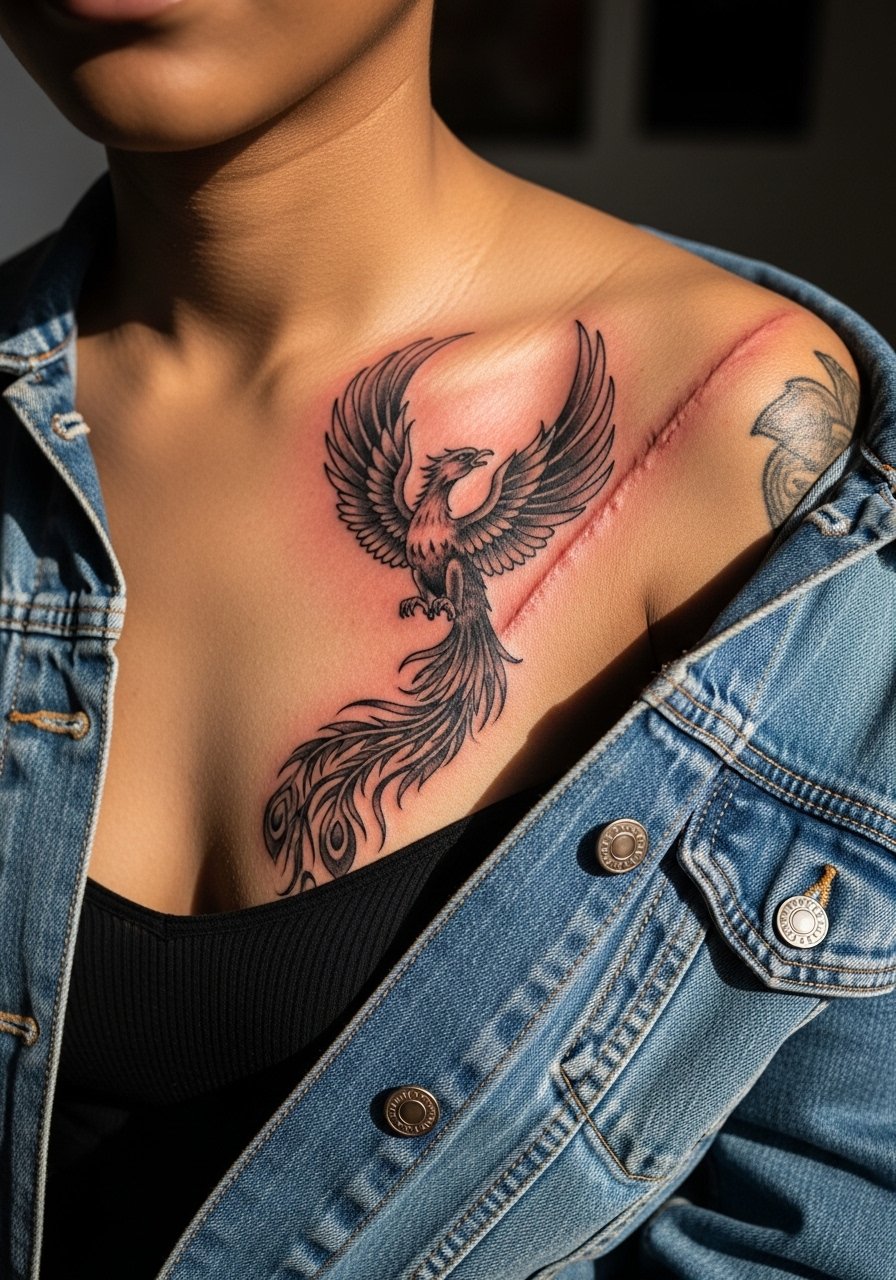
This motif fits when symbolism matters and you want a flowing composition that moves into the shoulder. Tell the artist to anchor the bird so its tail feathers track the scar rather than trying to mask it. The session will be longer and more intense, expect multiple sittings for color saturation. A common mistake is shrinking the phoenix to fit the scar; larger scale keeps feather detail from merging. For evenings out try a deep V tank top layered under an open denim jacket to frame the wings. Budget time for a touch-up after the pigment settles at six to twelve months.
4. Fine line wave pattern along an underboob scar
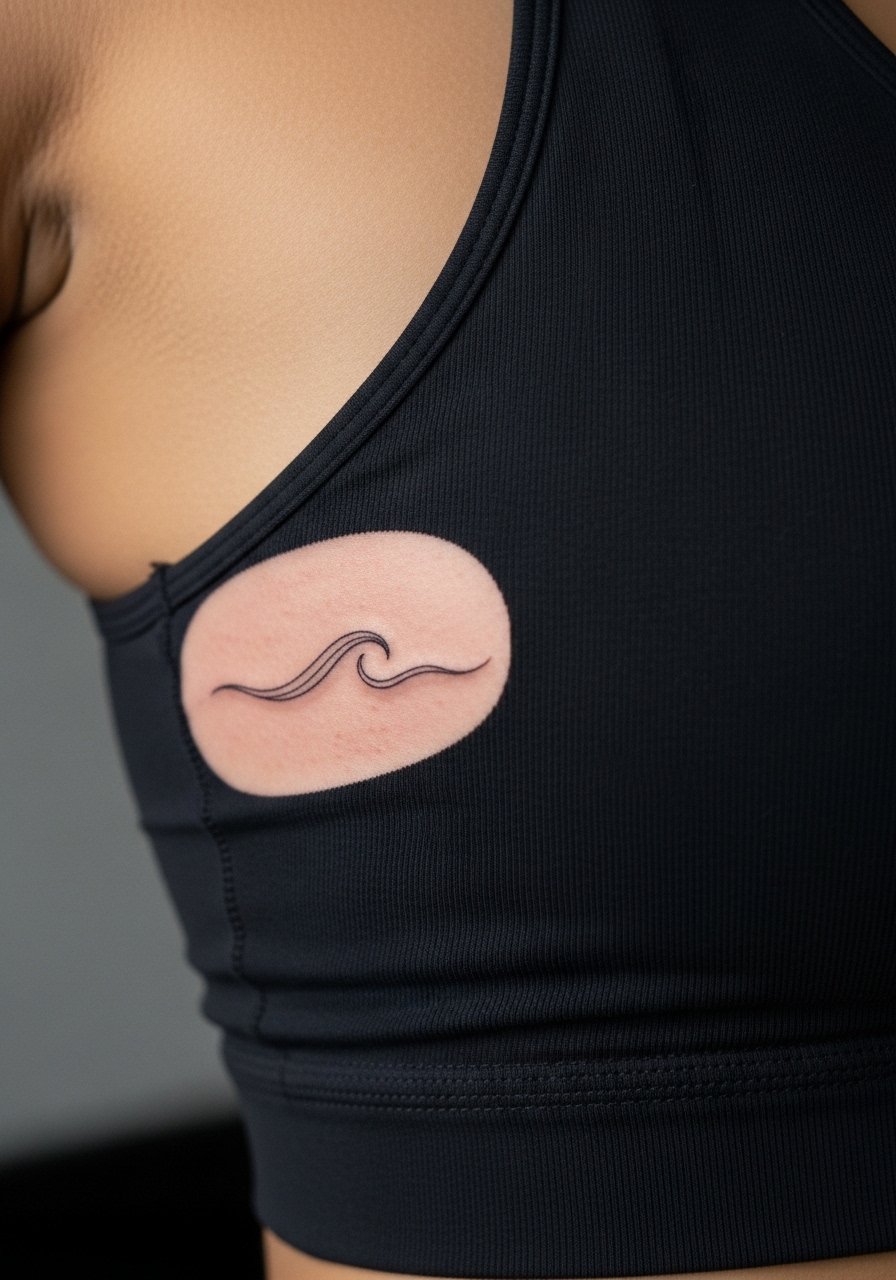
Fine line here gives subtle motion that softens the rigid scar edge while keeping a low profile. Artists split over whether fine line holds on scar tissue. One camp says fine line matures elegantly when the needle depth and spacing are precise. The other camp says scars need thicker, more saturated lines to avoid fading and blowout. Ask the artist which camp they work in and request portfolio examples of healed scar work. Expect low to moderate pain and a short session. For showing it off, cropped hoodies and neutral sports bras work well, so bring a sports bra olive for the appointment.
5. Traditional anchor motifs framing bilateral chest scars
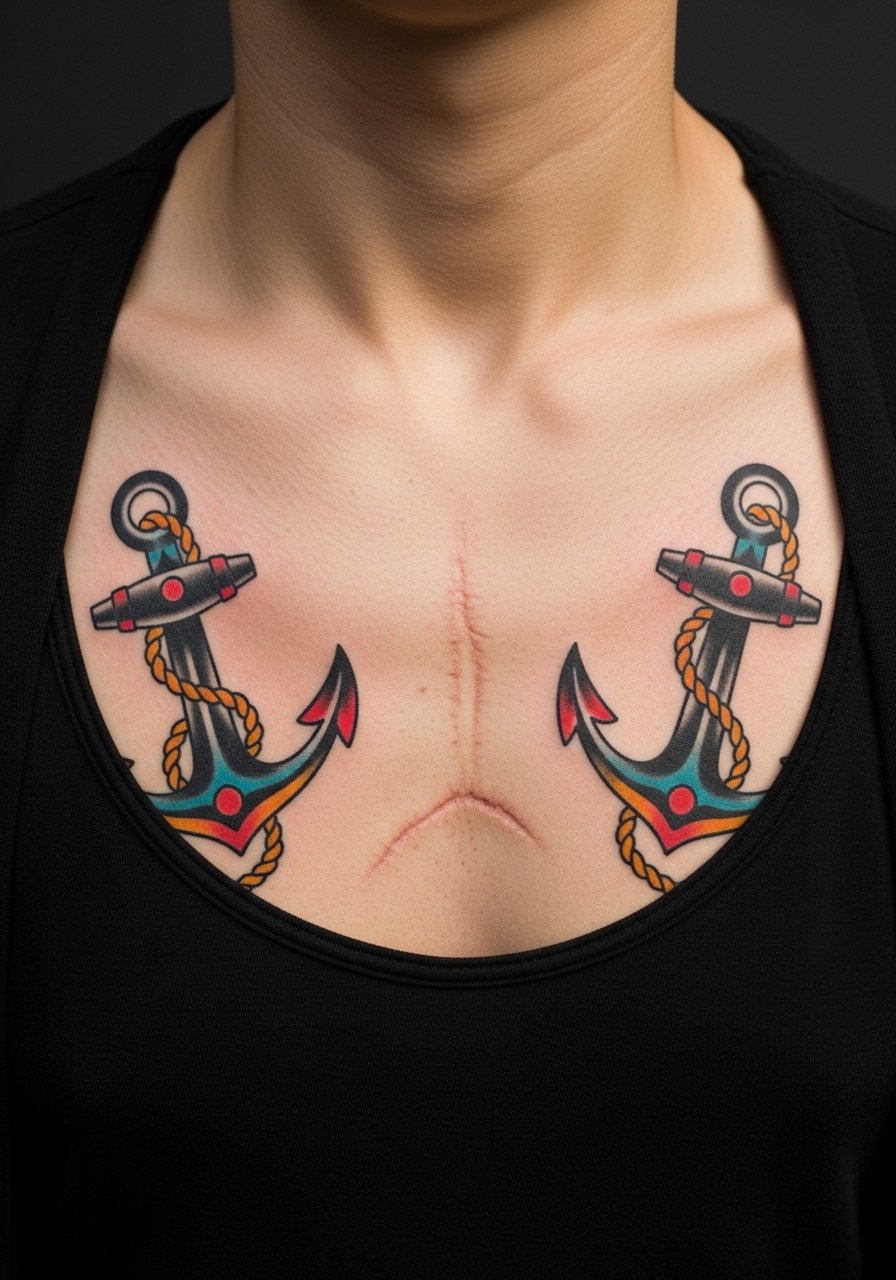
Anchors deliver saturated lines and color that bookend scars and direct the eye away from surgical geometry. Tell your artist you want thick outlines and solid fill so the piece reads clean on darker or healing skin. A frequent error is under-sizing the anchors, which makes the scar still noticeable. Pain on the pectoral region is moderate, and sessions typically finish in two sittings if you want full color. For casual wear, sleeveless muscle tanks in solid hues frame the anchors nicely. Ask about touch-up timing if skin has stretched since surgery.
6. Ornamental vine tendrils weaving through a midline scar

This elongating design helps the torso read as a continuous canvas rather than a single scar line. During consults, point out where you want tendrils to thin so they do not crowd stretch-prone zones. A common mistake is extending vines too close to stretch points, which can distort with weight change. Pain varies along the midline, higher over bone. Plan for two to three sessions for a long tendril run. If you travel for this work, search guest spots through convention listings or targeted app filters rather than assuming local studios have scar experience.
Studio Day Picks
The chest and sternum pieces above need different prep than forearm work, so a few targeted items make the session and the first week easier.
- Tegaderm thin film. Breathable protective film users prefer over heavier second-skins when chest sweat is a concern during the first days of healing.
- Tea tree balm for tattoos. Lightweight balm that folks report calms scar-prone areas without leaving a greasy layer that traps sweat.
- Hada Labo lotion. A non-greasy, hydrating option for dry winter air that helps avoid cracking on chest scars after the initial heal.
- Scar serum alternative to Bio-Oil. Used for pre-tattoo flattening routines when an artist and dermatologist recommend gentle prep months ahead.
- Fragrance free CeraVe healing ointment. A thinner ointment option many people switch to after heavy balms, helpful for the chest area where clogging can cause milia.
7. Blackwork tribal sunburst over a keyhole scar
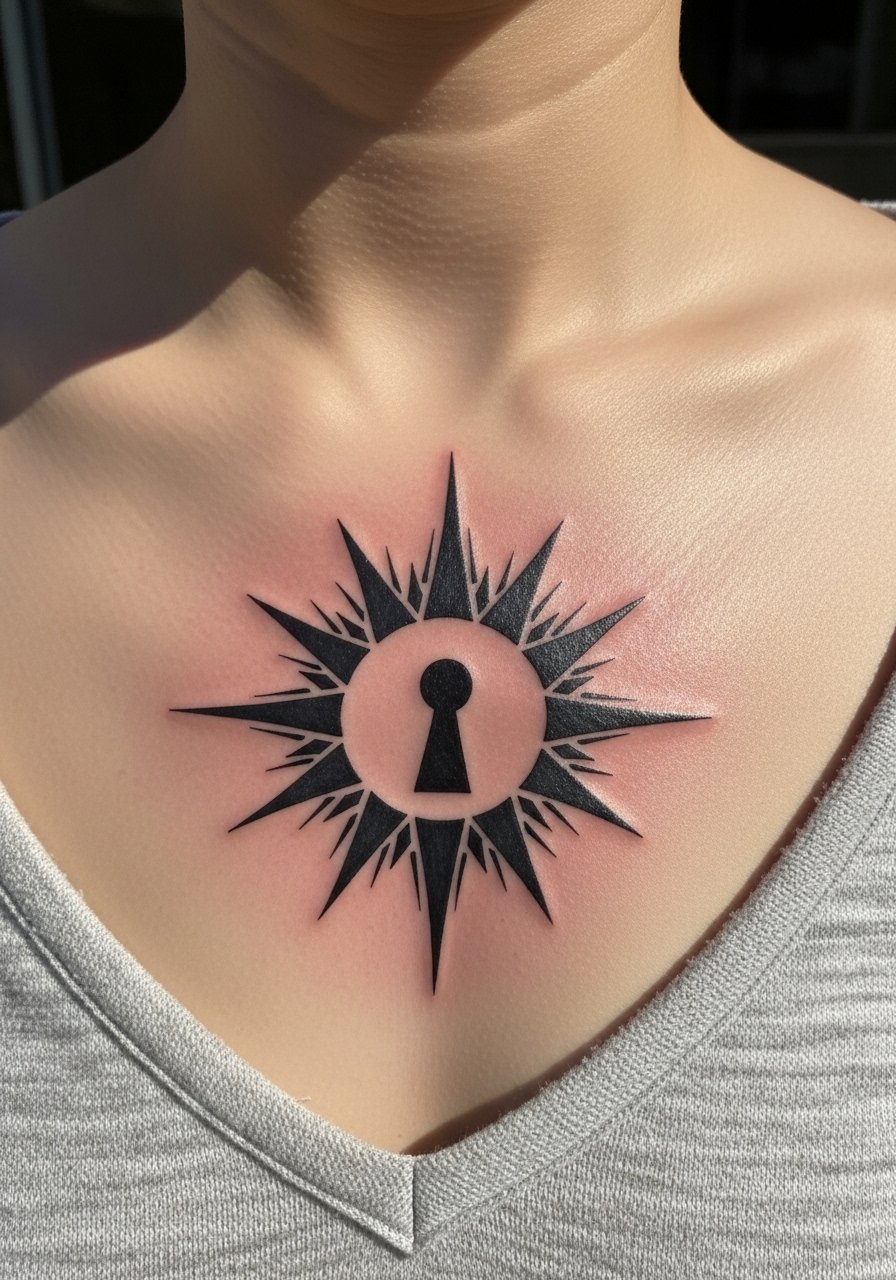
Solid blackwork is great when you need coverage that still reads graphic at a distance. Tell the artist you want radial spacing that turns the keyhole into a negative space rather than covering it wholly. A mistake is packing too many thin rays into a small radius, which merges after a year. Pain is moderate at the center chest. For daily style, rolled short-sleeve henleys in cream or neutral tones frame the sunburst without competing. If you have darker skin, ask the artist how they plan saturation so the black reads dense after healing.
8. Minimalist arrow duo pointing away from scar ends
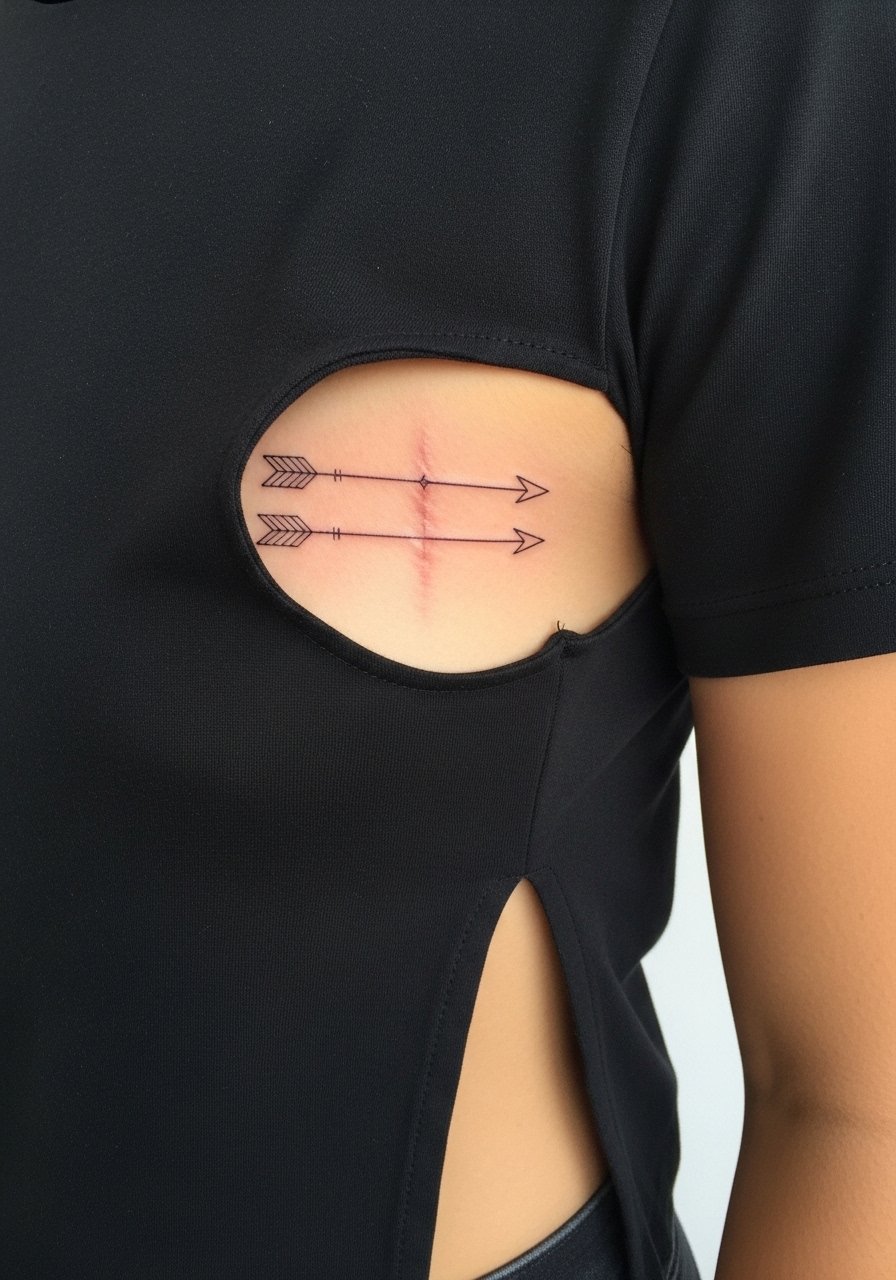
This is a low-commitment option for first-time scar tattoos that redirects the eye away from a straight incision. In the consult, indicate exact angle so both arrows frame the scar ends symmetrically. Common mistakes include going too small and using fragile line weight. Expect short sessions and low pain. Pair the finished piece with side slit tees or high-waisted jeans for casual visibility. Keep in mind that if you have dark or keloid-prone skin, thicker lines can keep the silhouette clearer over time.
9. Neo-traditional butterfly wings spanning chest scars

Butterfly wings let you celebrate change with color and form that uses the scars as a central spine. During consultation, show the artist reference for wing span and ask them to map the veins so they do not fall into scar texture. A frequent error is over-detailing the wings too small, which ages into a muddy area on scar tissue. This piece can take multiple longer sessions for saturation. For evenings out choose a deep V tank top or layered jacket that frames the wings without bunching at the sternum.
10. Ignorant style cloud clusters obscuring scar lines
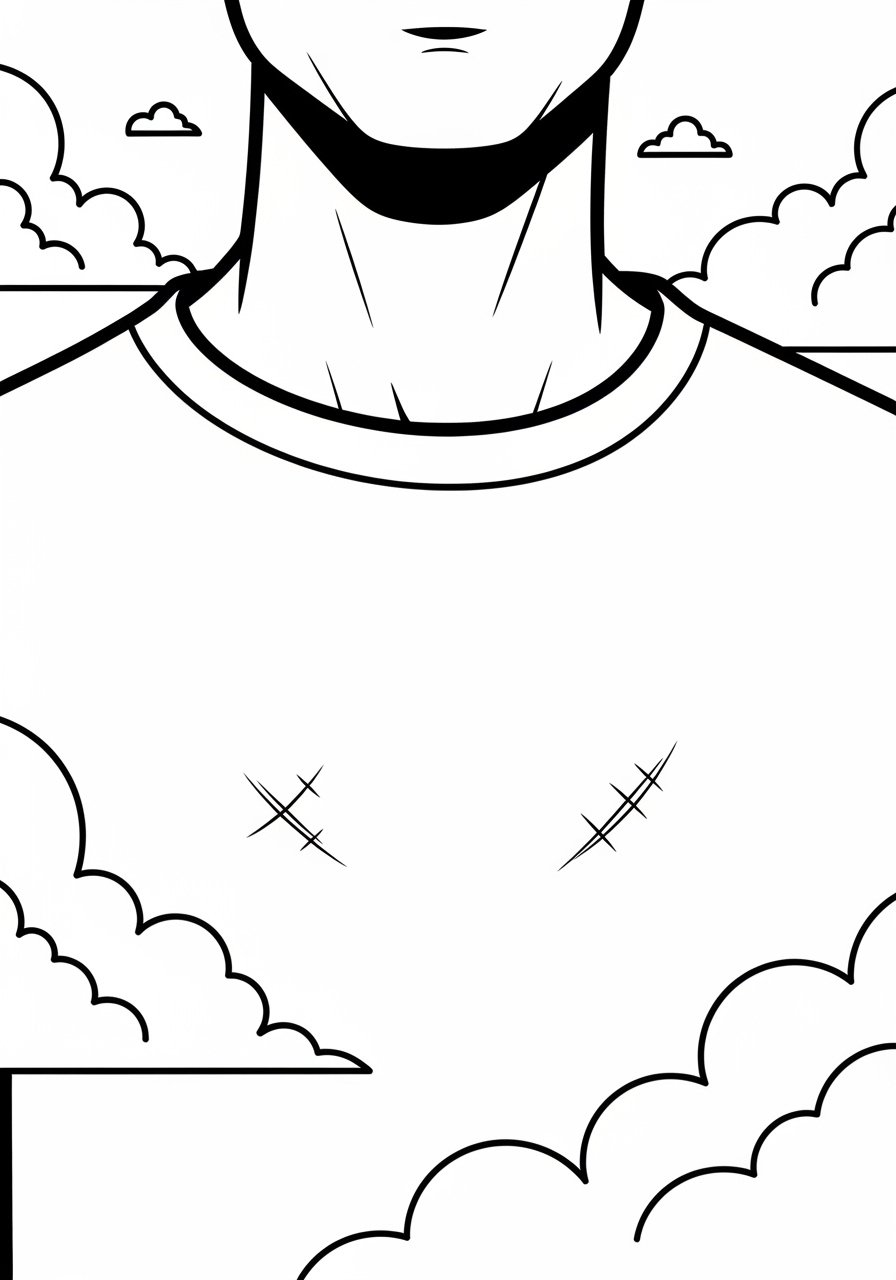
If you want humor and an imperfect, hand-drawn feel, ignorant clouds can hide linear scars without pretending they are not there. Tell the artist you want bold outlines with limited fill so the negative space reads intentionally loose. The common mistake is making the clouds too tiny and detailed, which defeats the simplistic charm and ages poorly. Pain is low on the lower chest compared to the sternum. This style is forgiving with size, so scaling up by 20 percent helps accommodate future skin changes.
11. Vertical sternum floral extension into a full torso piece
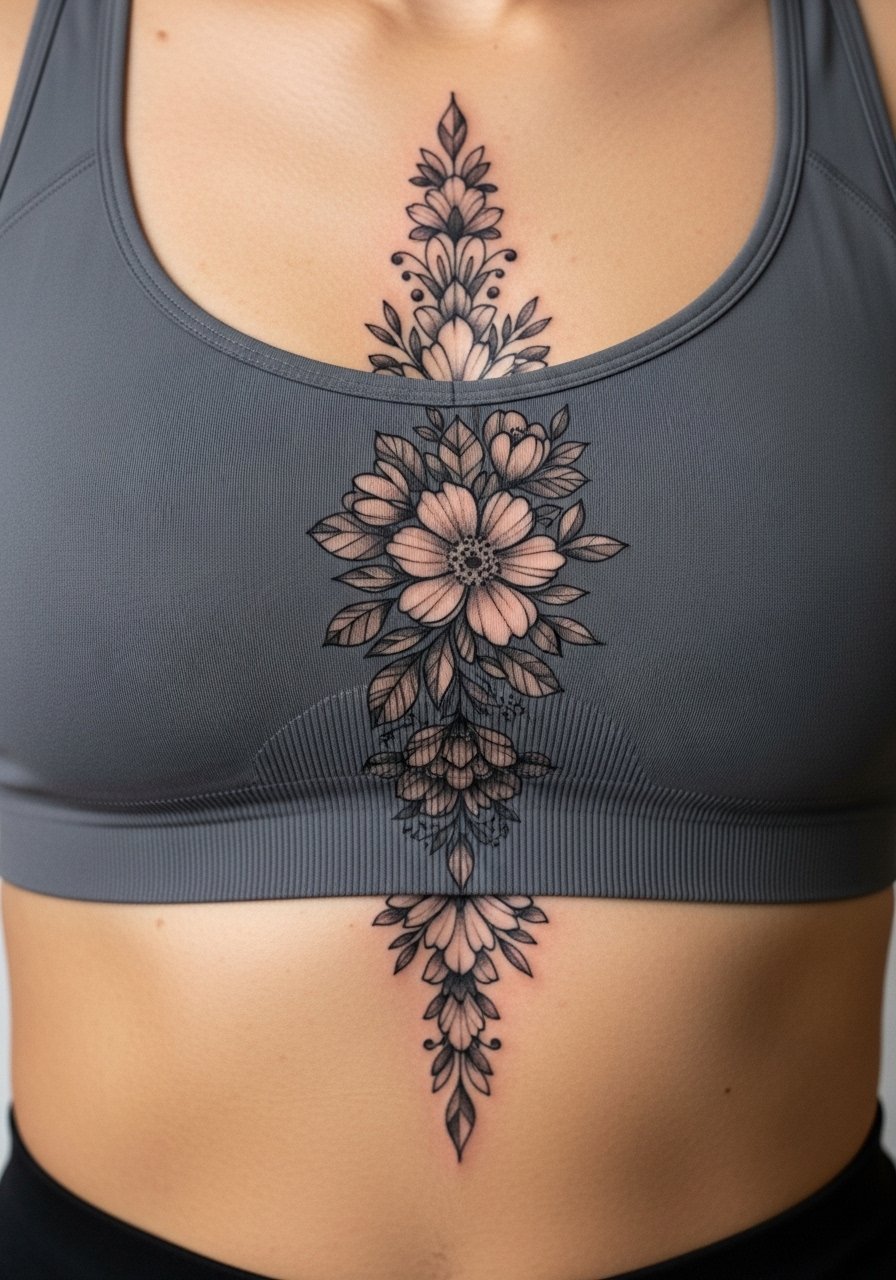
This is one of the under-covered approaches that extends a vertical scar into a cohesive torso flow. In a consult, lay out where you want the vertical axis to end so the piece reads intentional and not like a patch. Artists debate Saniderm versus dry healing for chest work. One camp favors protective film for cleaner early weeks. The other camp warns about trapping sweat and prefers careful dry care. Ask your studio which protocol they use and why before you book. Sessions can be split over multiple days because the area is large and movement can fatigue both artist and client.
12. Keloid-specific prep and gentle scar flattening
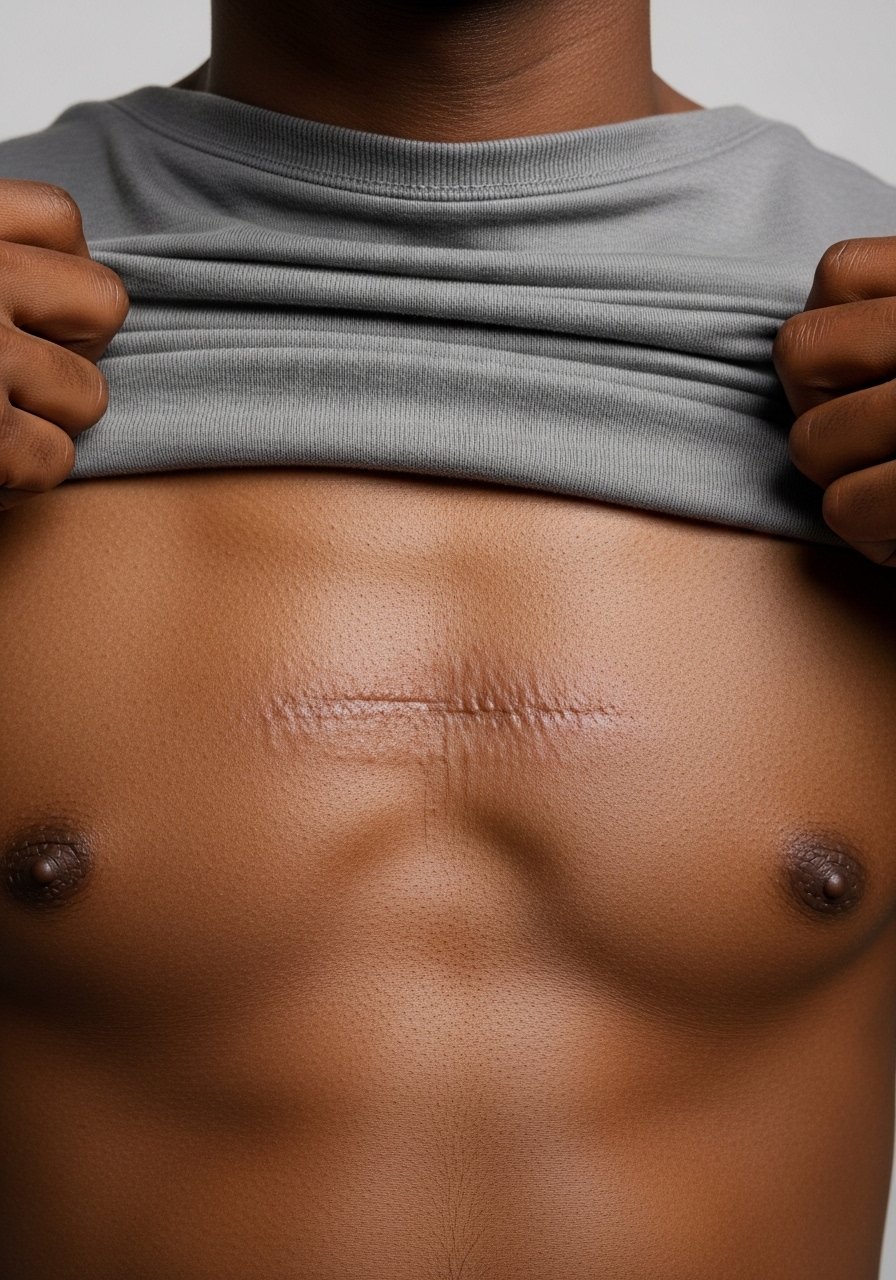
If you are keloid-prone, plan this as a medical-adjacent route rather than a simple consult. A dermatologist can assess scar type and sometimes recommend steroid injections months before tattooing to flatten raised tissue. Tell the artist you have pursued medical prep so they can plan needle depth and session pacing. A real error is skipping medical advice and blaming the artist if the ink does not hold. For the session wear a loose button-down shirt that gives the artist clear access while minimizing pressure on sensitive skin.
13. Asymmetrical ignorant doodles to celebrate non-binary aesthetics
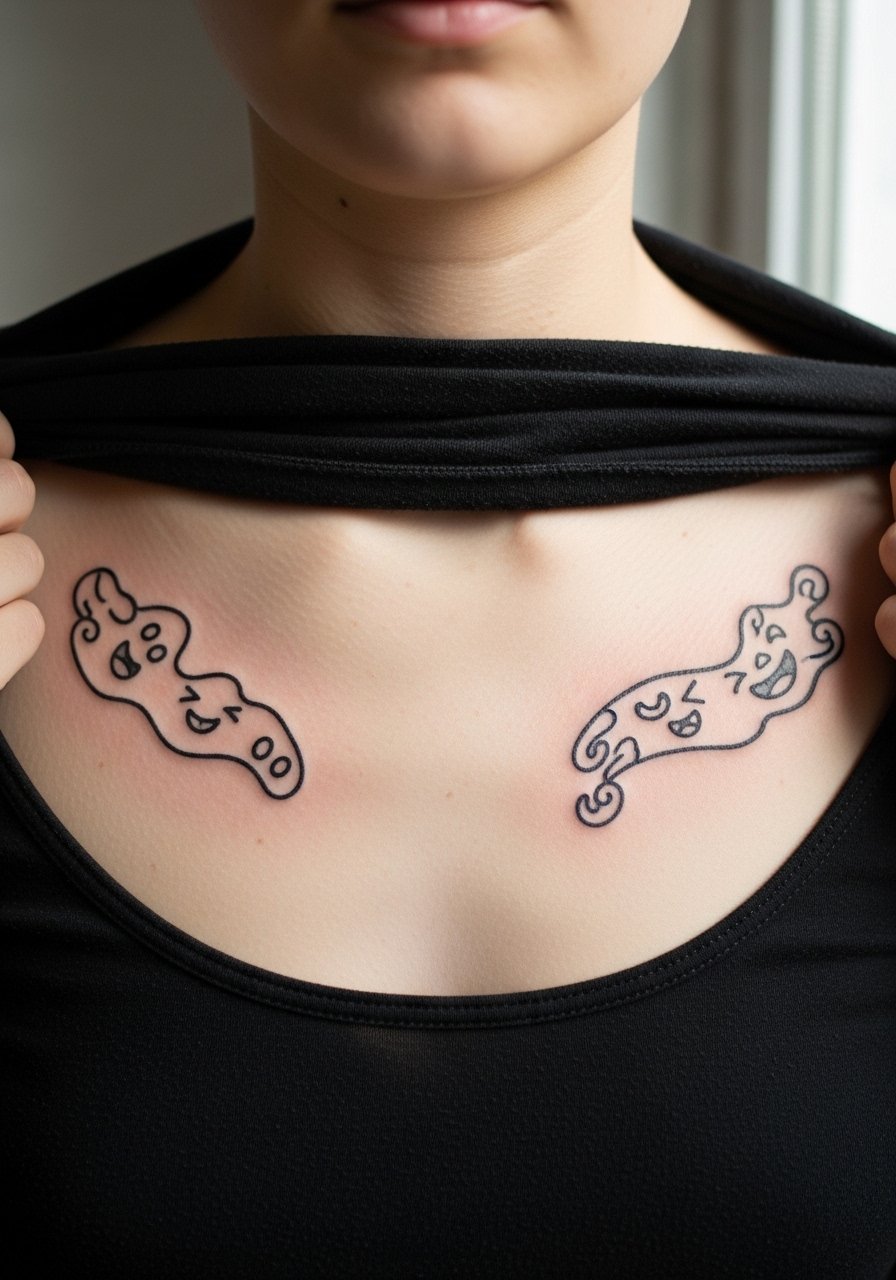
Asymmetry can read intentional when it celebrates an imperfect or non-binary aesthetic. Bring sketches that show scale and relative spacing so the artist can place designs that balance your torso. A common mistake is mirroring uneven doodles blindly, which removes the deliberate feel. Pain and session length depend on piece count. This route is forgiving because each element can be its own small walk-in or appointment, which also helps with budget and touch-up planning.
14. Guest-spot hunting via conventions and niche directories

If local studios ghost scar consults, look to guest artists who travel to conventions or post availability on niche directories. Use targeted searches like city guest spots or filter tags on platforms that list "scar work" and "gender affirming." A mistake is booking a guest without checking healed scar photos from previous clients. When you find a candidate, ask for healed photos and references. This pathway also often means more flexible pricing, but plan travel and accommodation costs into the timeline.
15. Dark skin experiments using UV-reactive accents
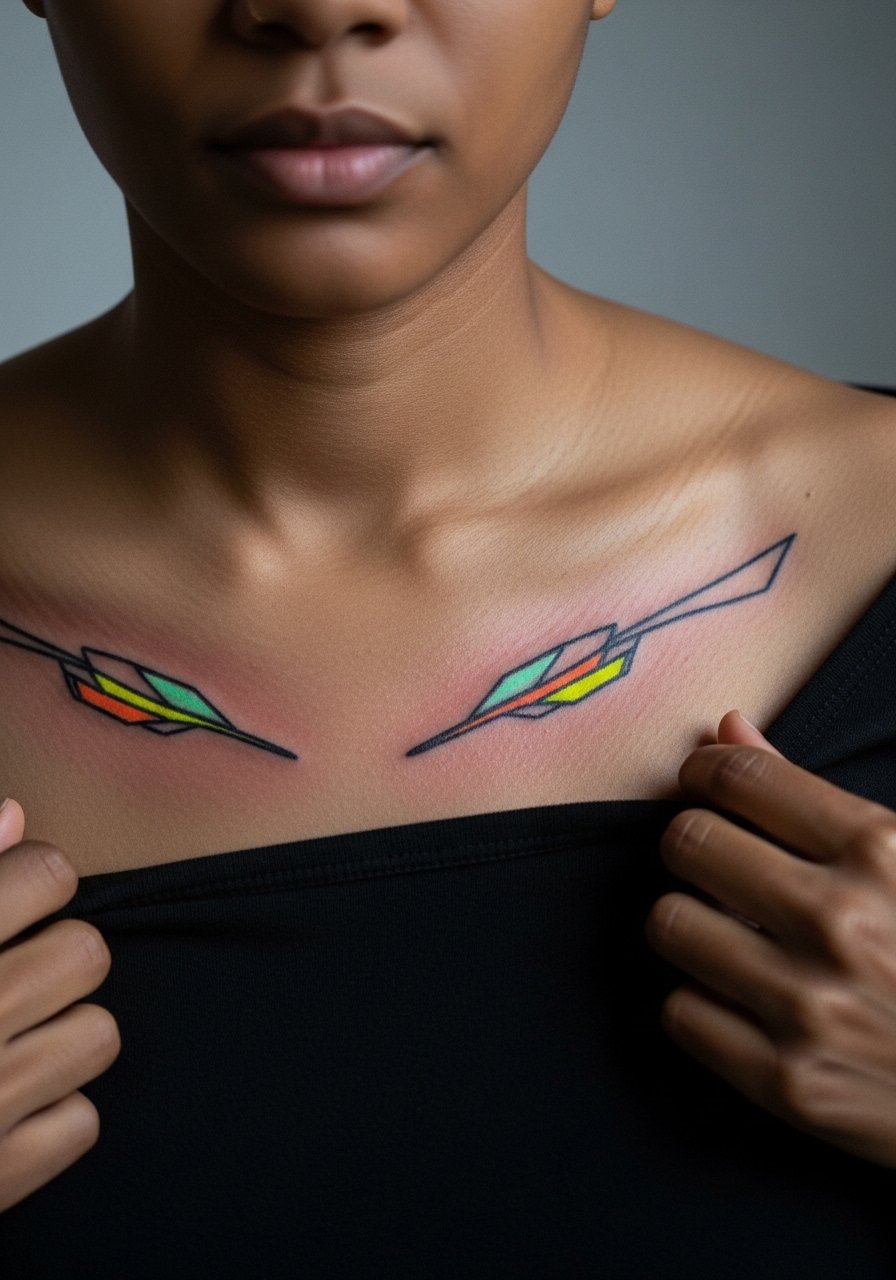
On darker skin tones, UV-reactive inks used as accents can add a glow that reads differently in daylight and black light. This is experimental and not every studio offers it. Tell your artist you want the UV accents tested on a small area first so you can see long-term reactions. A common gap is assuming regular color rules translate directly to UV inks. Expect the artist to discuss pigment stability and visibility on darker melanin. Plan for careful staging of the accents so the main piece remains legible without club lighting.
16. Rib-to-pectoral connector chains and ornamental links
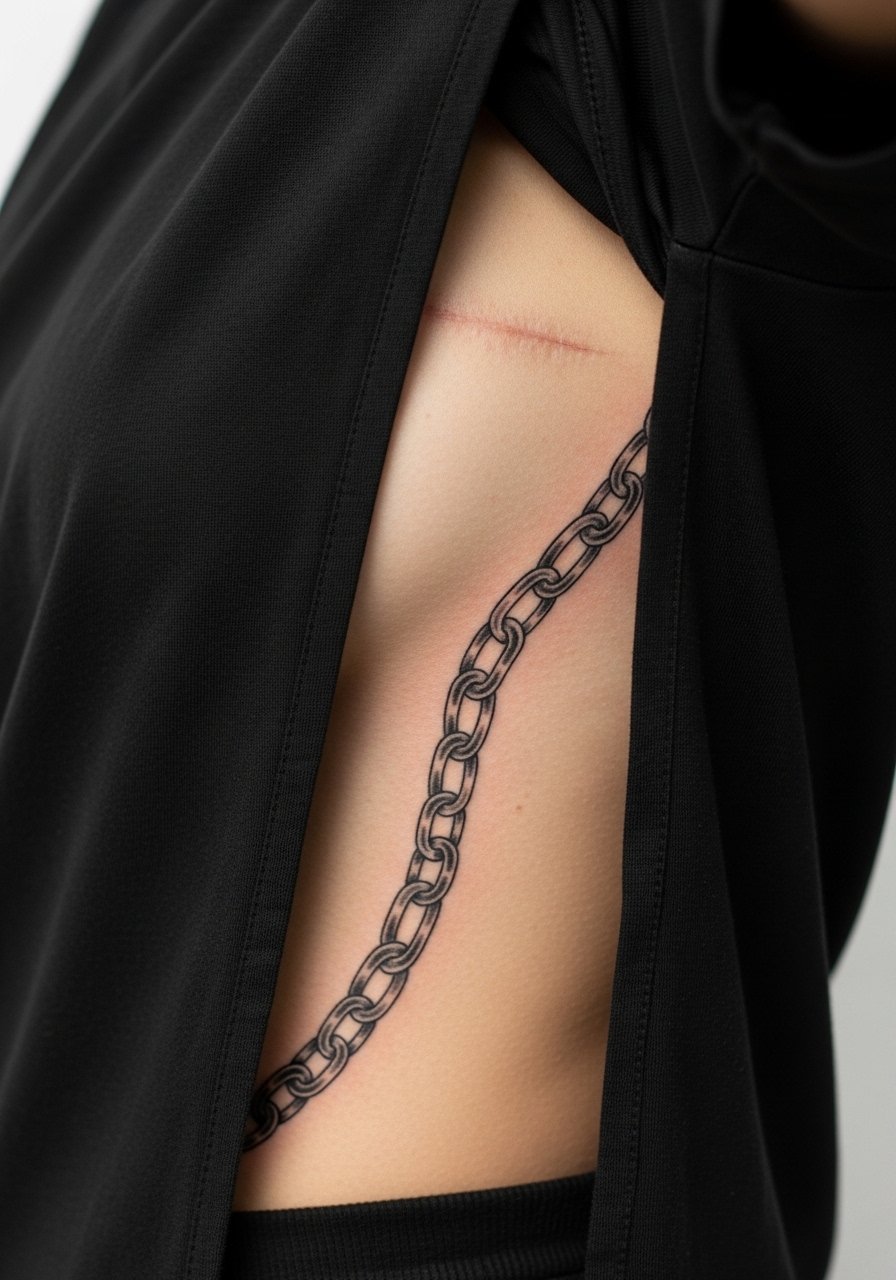
Chains and connectors visually tie chest scars into side pieces while keeping designs geometric. For consults, map how the chain moves with breath and posture so links do not distort at rest. The rib area is high on common pain charts, so expect a tougher session and possibly breaks. Size the links with a 10 to 20 percent buffer to allow for future body changes. For showing off, side-slit tees and high-waisted bottoms frame the connector without bunching, so wear a high waist jeans or similar for the appointment.
17. Small scar filler micro tattoos and dot clusters

Small fillers are ideal when you want minimal sessions and subtle blending. Ask the artist for spacing guidelines so the dots do not merge as the ink settles. A mistake is requesting ultra-fine single-needle dots on mature scars without a show of healed portfolio examples. Plan for a quick session and a likely touch-up at six to twelve months. Expect low pain and quick healing, but factor in the possibility of touch-ups if the scar texture rejects tiny deposits.
Frequently Asked Questions
Q: How long after top surgery should I wait before getting a scar tattoo?
A: Wait at least twelve months for scars to fully mature and soften, and longer if your surgeon or dermatologist advises it. Scars continue changing for months, and waiting reduces the risk of ink rejection, blowout, or needing large touch-ups.
Q: Will fine line tattoos on scars fade faster on darker skin?
A: Fine line can soften faster on scar tissue regardless of skin tone, but on darker skin the contrast can read differently in photos and low light. Ask artists for healed examples on similar skin tones and consider slightly thicker linework if your goal is long-term clarity.
Q: What should I wear to a chest or sternum session to make access easy?
A: Wear clothing that gives clean access without needing full undress, like a wide-neck shirt you can pull aside or a front-open cardigan. That keeps you comfortable and lets the artist work unhindered.
Q: How do I find an artist who will actually do scar work and not cancel?
A: Use discovery pathways like relevant hashtags, app filters for "scar work," and convention guest lists. Ask studios for healed scar portfolios and confirm experience by email before booking. If someone cancels, look for guest spots listed on convention pages or directory apps.
Q: If I am keloid-prone, is tattooing still possible?
A: It can be, but proceed with medical guidance. Dermatology input, potential steroid prep, and a conservative artist who has healed keloid examples are important. Never skip an assessment if your history suggests raised scarring risk.