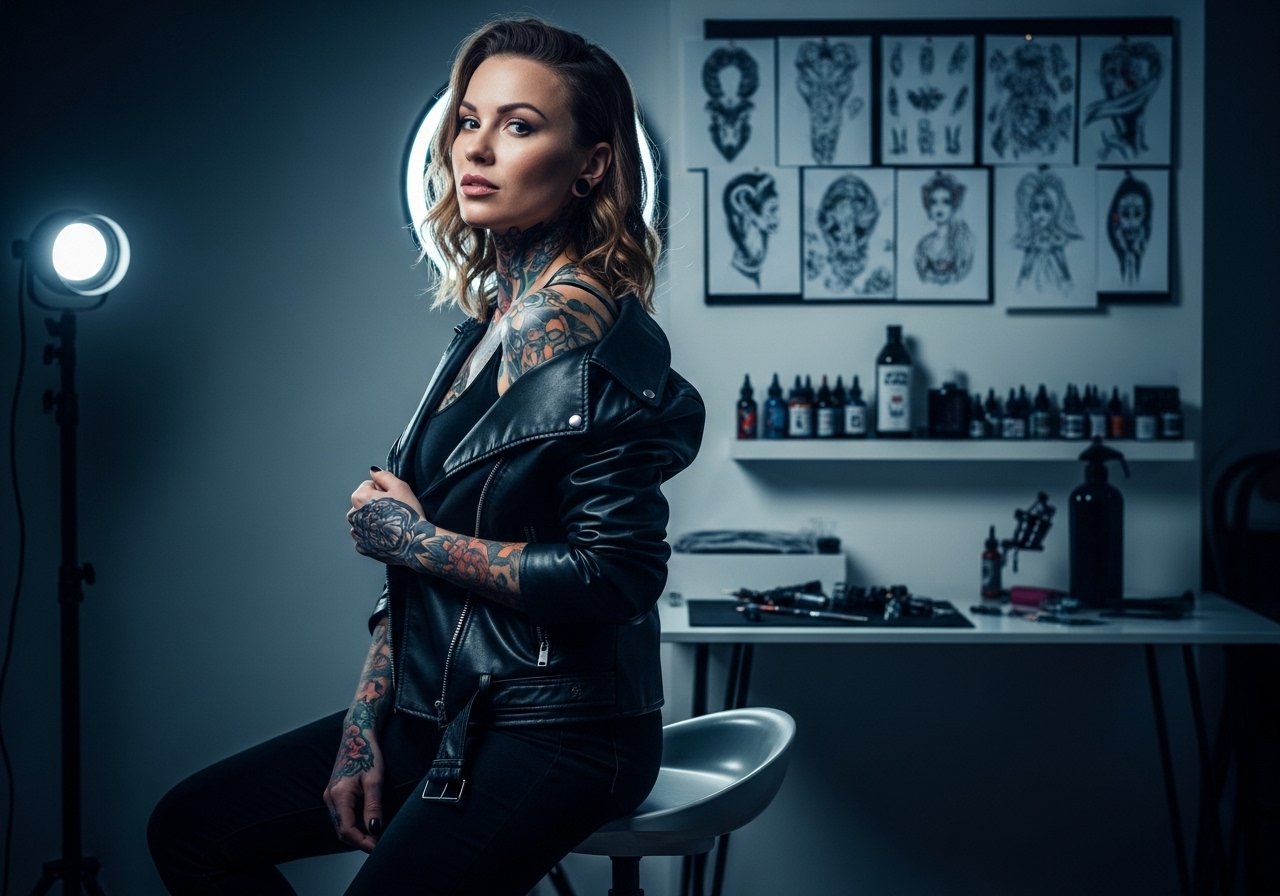
Fine line trends look effortless online, but thigh work behaves differently in real life. The curve of the rectus femoris stretches and compresses with every step. Some designs that look airy on a screen will blur if they fight the muscle, and some bolder ideas age into clean silhouettes. Below are 21 flowy thigh designs that use the thigh shape to your advantage, with what to ask for at the consult and what to wear to the session.
1. Flowy Floral Cascade on Outer Thigh
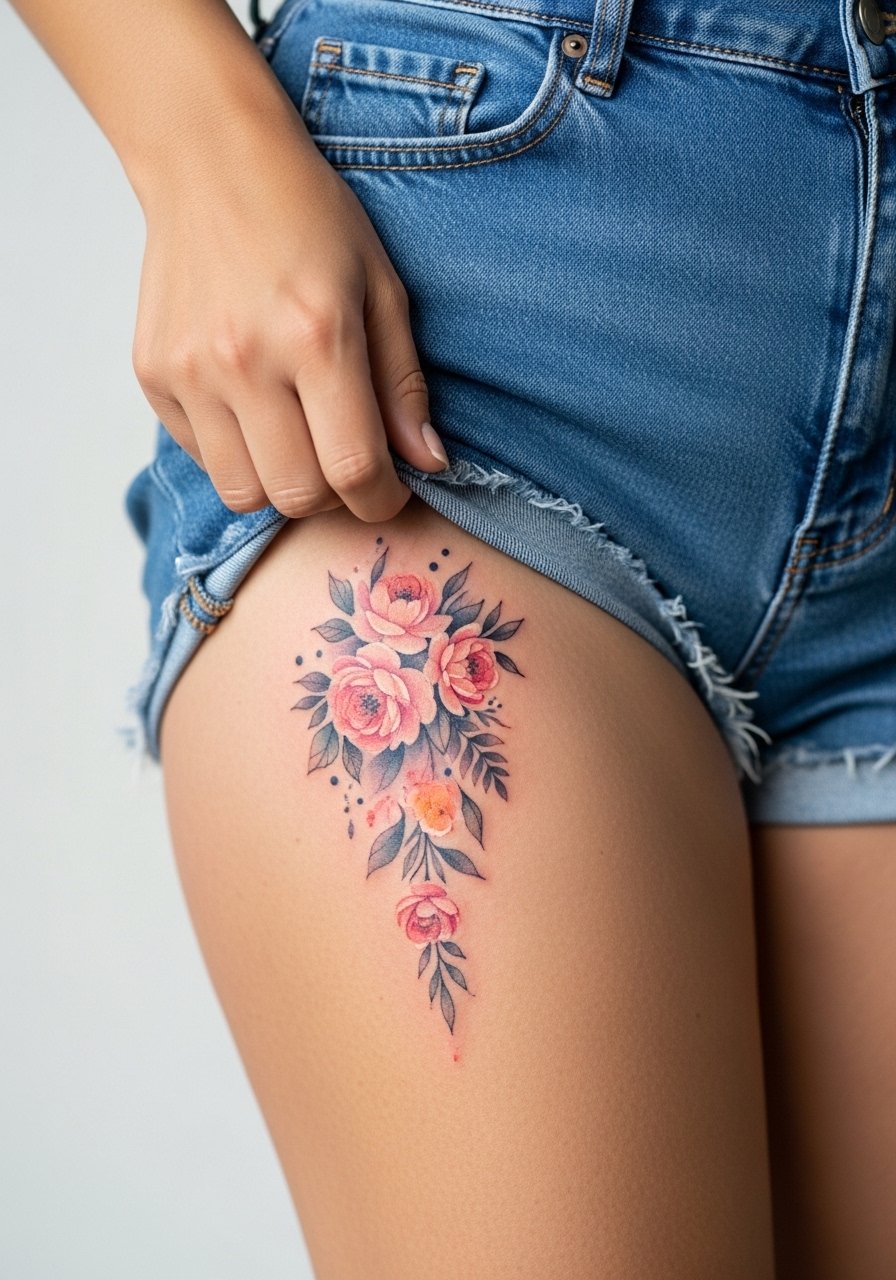
Start with the outer thigh if you want a vertical, slimming cascade that moves with your quad. Tell your artist to follow the rectus femoris curve and keep the heaviest saturation along the muscle belly so color sits in the least mobile area. Pain is usually low to moderate, often a three to four out of ten, and sessions run one to two hours depending on size. A common mistake is packing watercolor washes too densely near the crease, where friction fades color faster. For showing this off, try high waisted linen shorts that sit above the top of the cascade so the tattoo reads as a continuous vertical line.
2. Vertical Script with Ornamental Vines
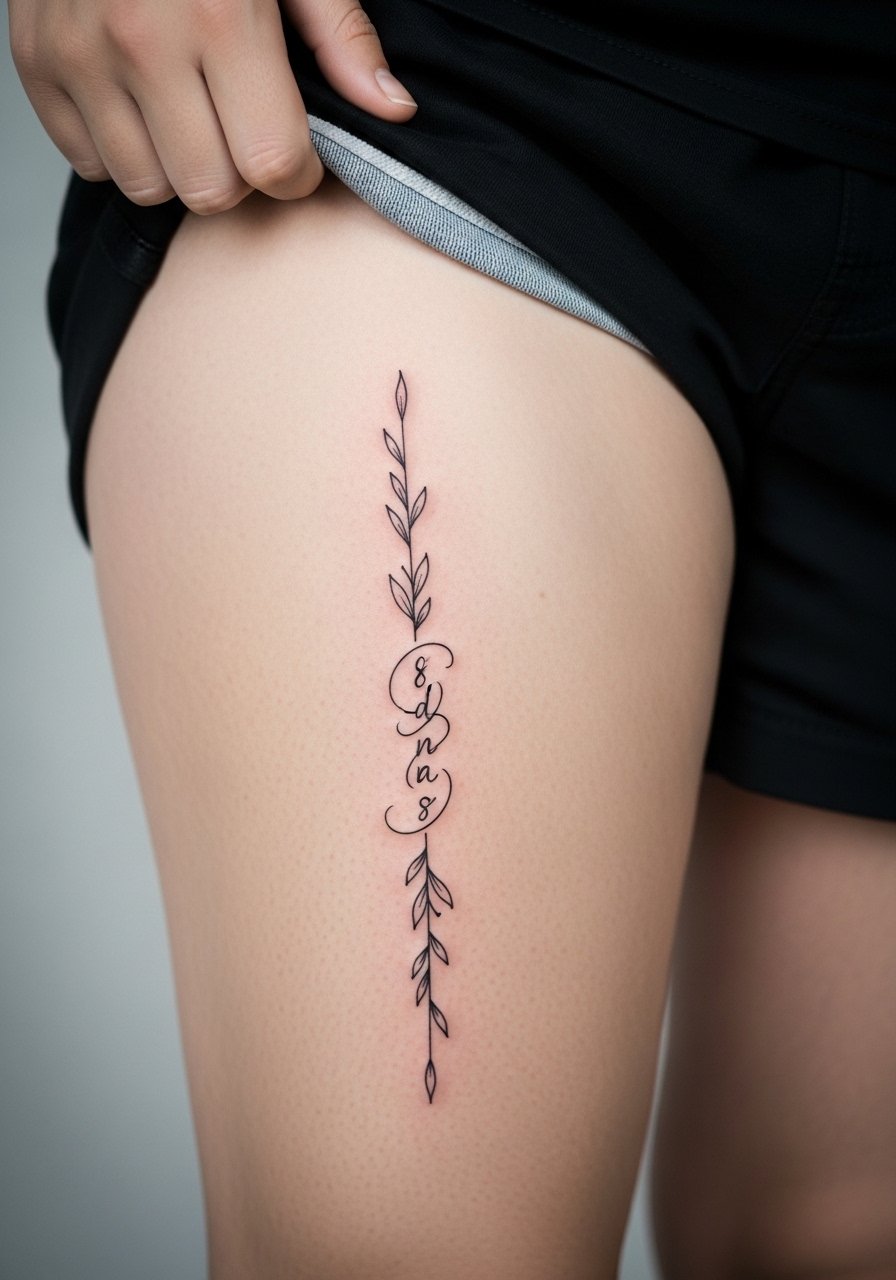
Fine line script that flows into vines works well on the inner thigh if you want something discreet but deliberate. Be explicit in consultation about line weight, request slightly stronger linework than you expect so it holds against friction. Artists argue over fine line on thighs. One camp warns that fine line fades faster because of rubbing and sun exposure. The other camp says proper depth and spacing will make fine line last. Expect a touch-up at year two to three depending on lifestyle. Wear a side slit maxi skirt for reveals, and bring loose shorts for the appointment to let the artist access the area easily.
3. Phoenix Rising on Front Thigh
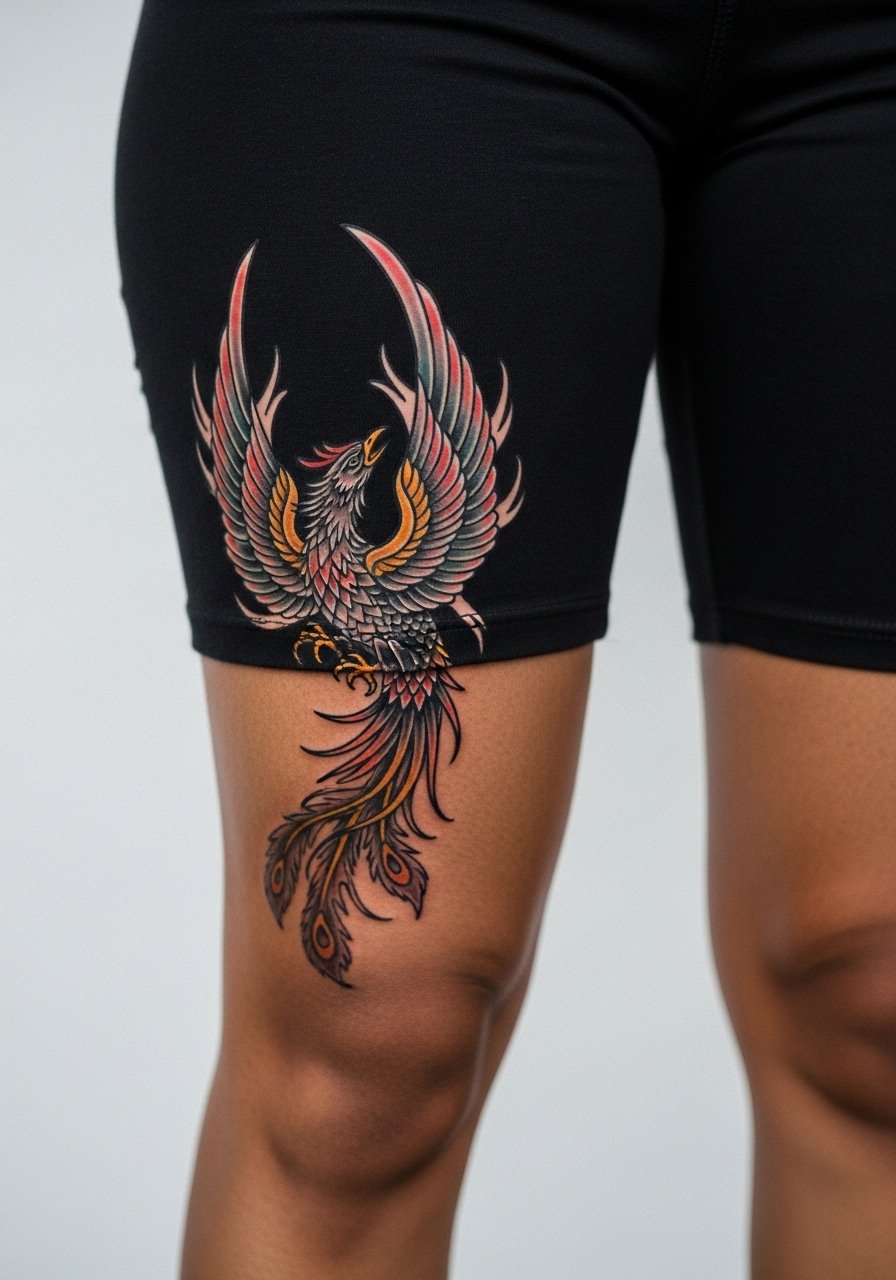
A front thigh phoenix uses sweeping curves that mirror the leg when standing. Ask for bold outlines with selective color saturations so the bird reads from a distance and the colored accents age more gracefully. Sessions are two or more hours and may span two sittings for large pieces. There is a color versus black and gray debate here. One side prefers vivid color for the symbolism and pop. The other argues black and gray holds up better on sun-exposed areas. If you want color, plan for sun protection and follow-up touch-ups. For outfits, pair the design with bike shorts women or a mini skirt so the phoenix can be shown without awkward cropping.
4. Dreamcatcher with Flowing Feathers on Upper Thigh
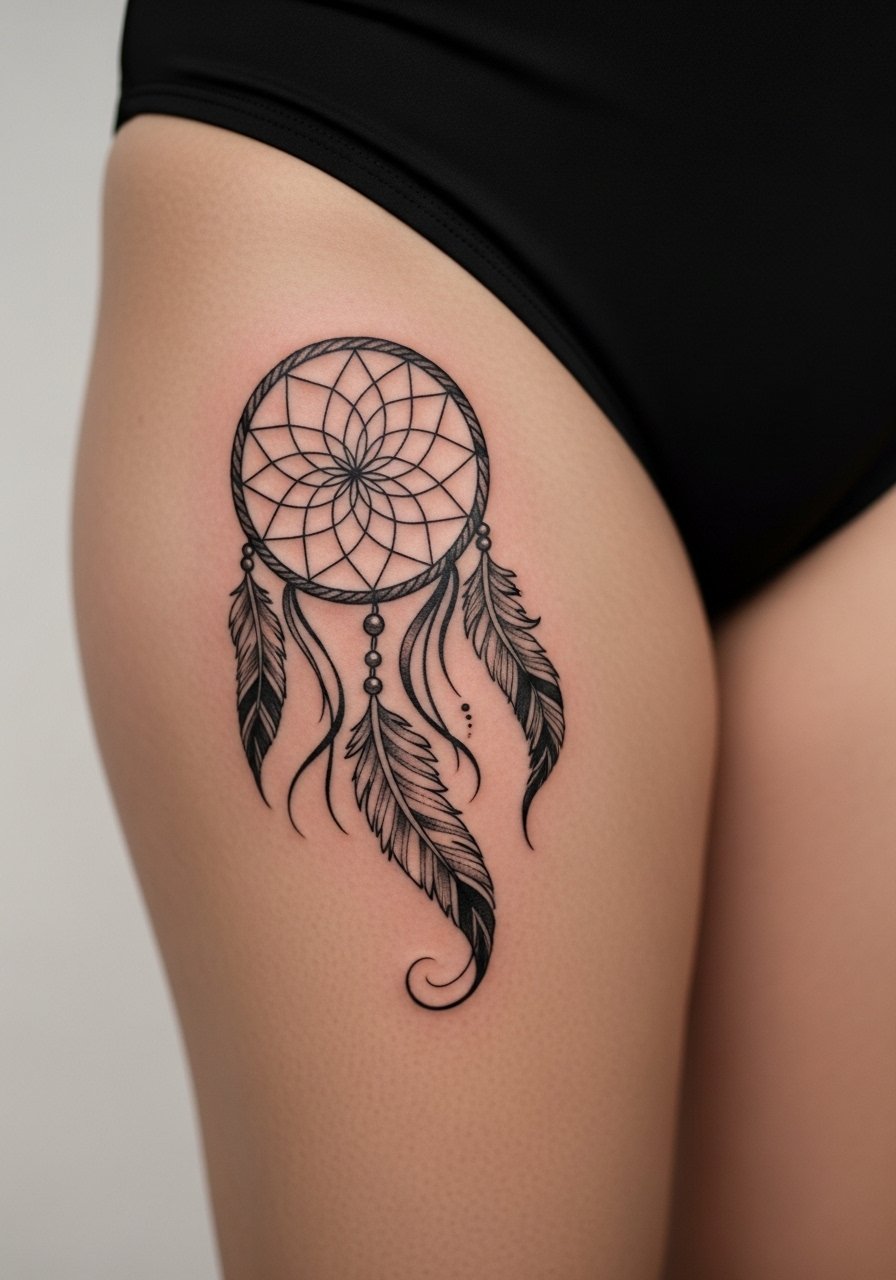
Dreamcatchers use negative space and feather trails that suit the upper thigh wraparound look. During the consult, ask for feather stems to follow the thigh circumference so motion creates small reveals as you walk. Pain on the upper outer thigh is moderate and usually tolerable in longer sittings. Avoid asking for ultra-thin feather quills close to high-friction areas. Those thin quills are the versions that blur first. Show-off pairing works with a high cut bikini bottom or a skirt with a side slit.
5. Colored Flower Mandala on Inner Thigh
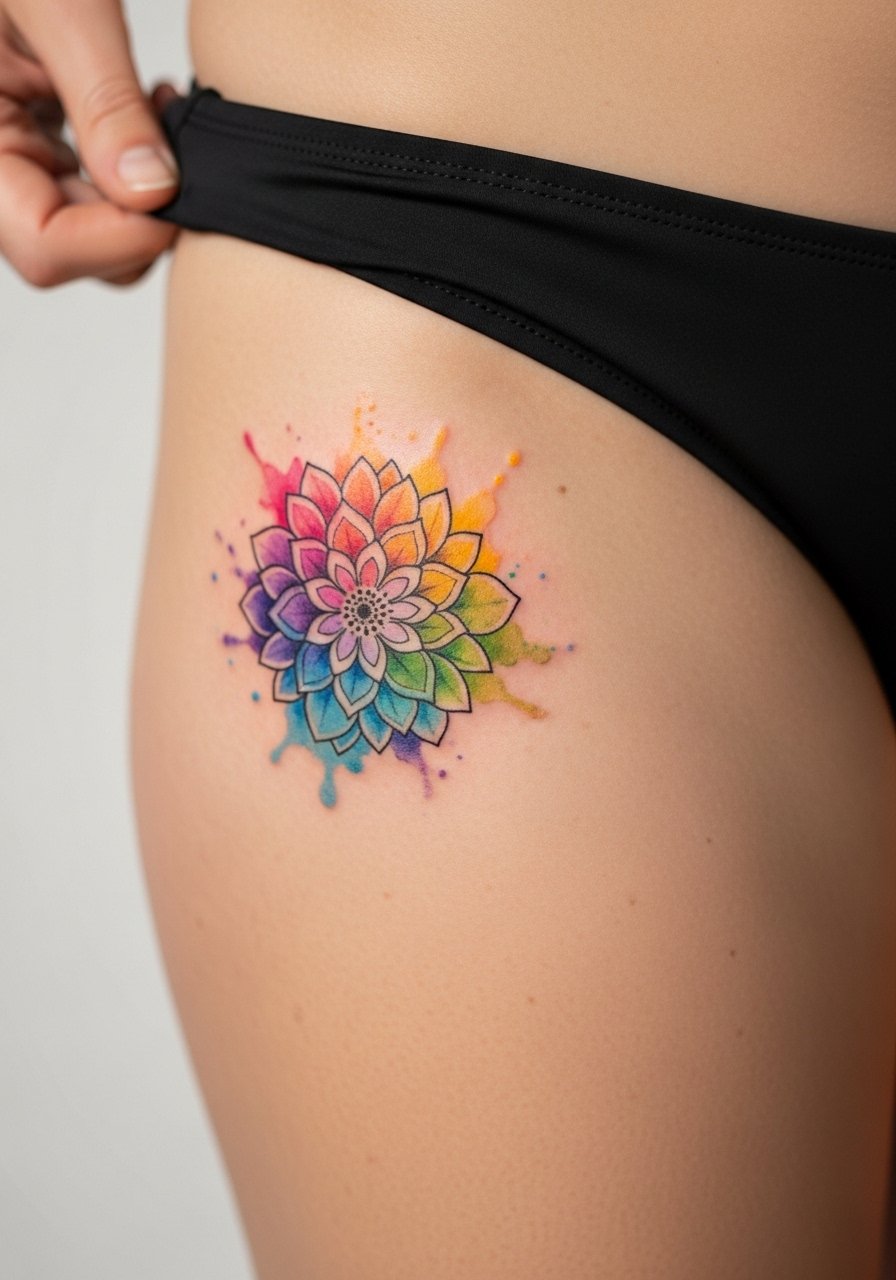
Inner thigh mandalas make for a private, decorative statement. Because the area sees more friction, tell the artist to keep color blocks slightly larger so there is room for natural softening. Expect inner thigh pain to be higher than outer thigh for some people. Sessions are often shorter to manage comfort. A common mistake is placing too much tiny dot work near the fold. That tight work can muddle over time. For summer reveals, wear a high cut bikini bottoms or a side-slit maxi for a controlled peek.
6. Biomech Flow on Outer Thigh
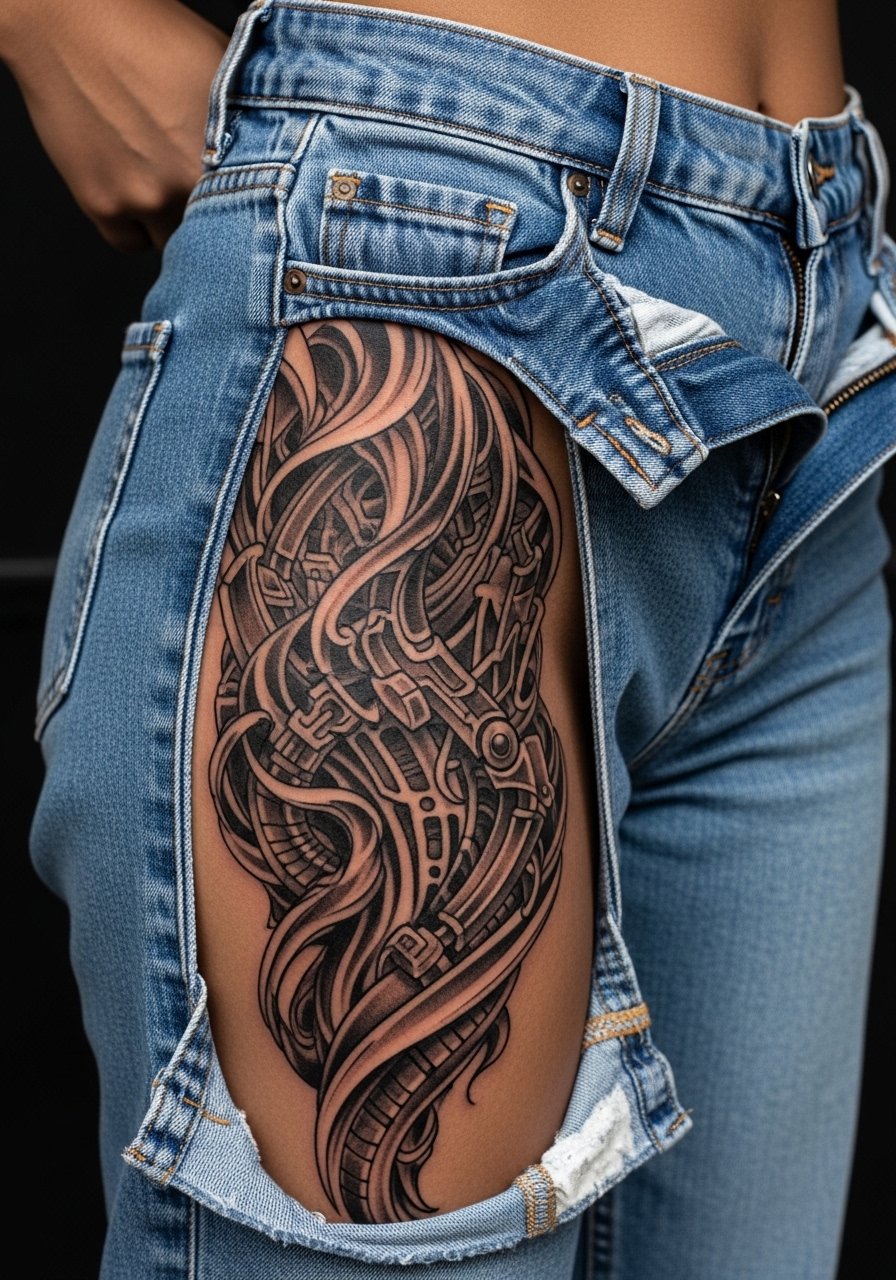
Biomech on the outer thigh plays with depth and muscle contour to create a three-dimensional illusion. Tell your artist to map the design over the quad so the "mechanical" parts tuck into natural valleys and ride the muscle peaks. These sessions are long and may need three or more sittings for saturation and shading. Avoid very tight clothing during healing, because pressure can flatten the shading unevenly. For show-off looks, a thigh high slit dress or rolled jeans will let the depth read in motion.
Studio Day Picks
The six thigh pieces above vary from private mandalas to bold biomech, and a few small items make studio day and the first week easier.
-
Stencil transfer paper kit. Helps you preview placement on the thigh before the needle hits skin, especially useful for long vertical cascades and wraparounds.
-
Topical tattoo numbing cream. Applies before a session to soften the discomfort on inner thigh work and long front-thigh sittings.
-
Thin protective film roll. Keeps friction and clothing contact from rubbing fresh outer thigh pieces during the first day.
-
Fragrance free gentle body wash. A gentle cleanser for showering the healing thigh area without stripping pigment or irritating the skin.
-
Aquaphor healing ointment. Thin layers in the first 48 hours help protect linework and color while the surface seals.
7. Cascading Botanicals Wraparound Thigh
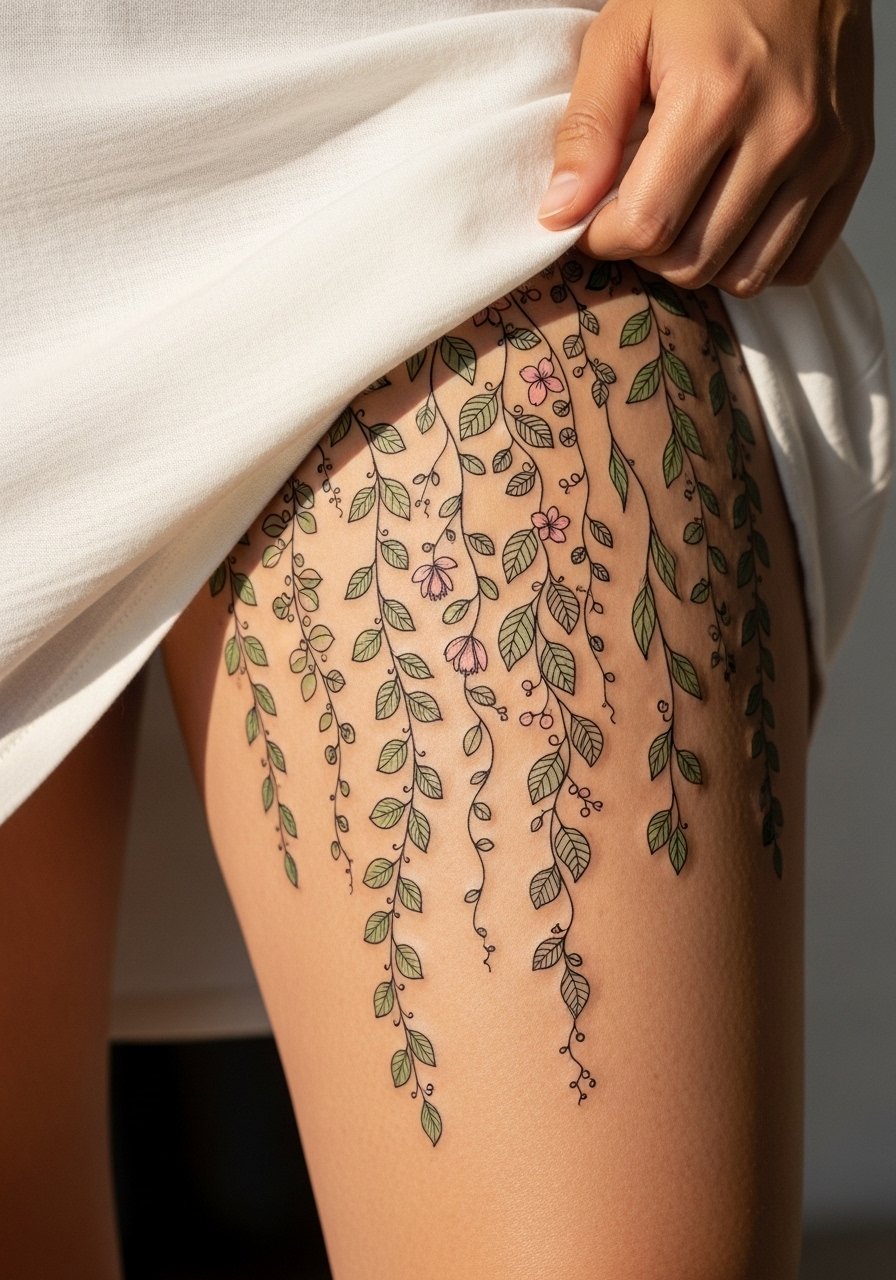
A full wrap that mirrors leg rotation creates a subtle reveal as you move. Ask the artist for negative space breaks where the wrap meets the hamstring so the pattern does not merge visually when the leg flexes. Sessions typically take two sittings to maintain crisp linework around the circumference. A mistake is trying to compress too many tiny elements into a narrow band. Give each botanical room and the piece will breathe over years. For showing it off, a sheer swimsuit or cropped leggings in pastels complements watercolor washes.
8. Portrait with Flowy Outline on Front Thigh
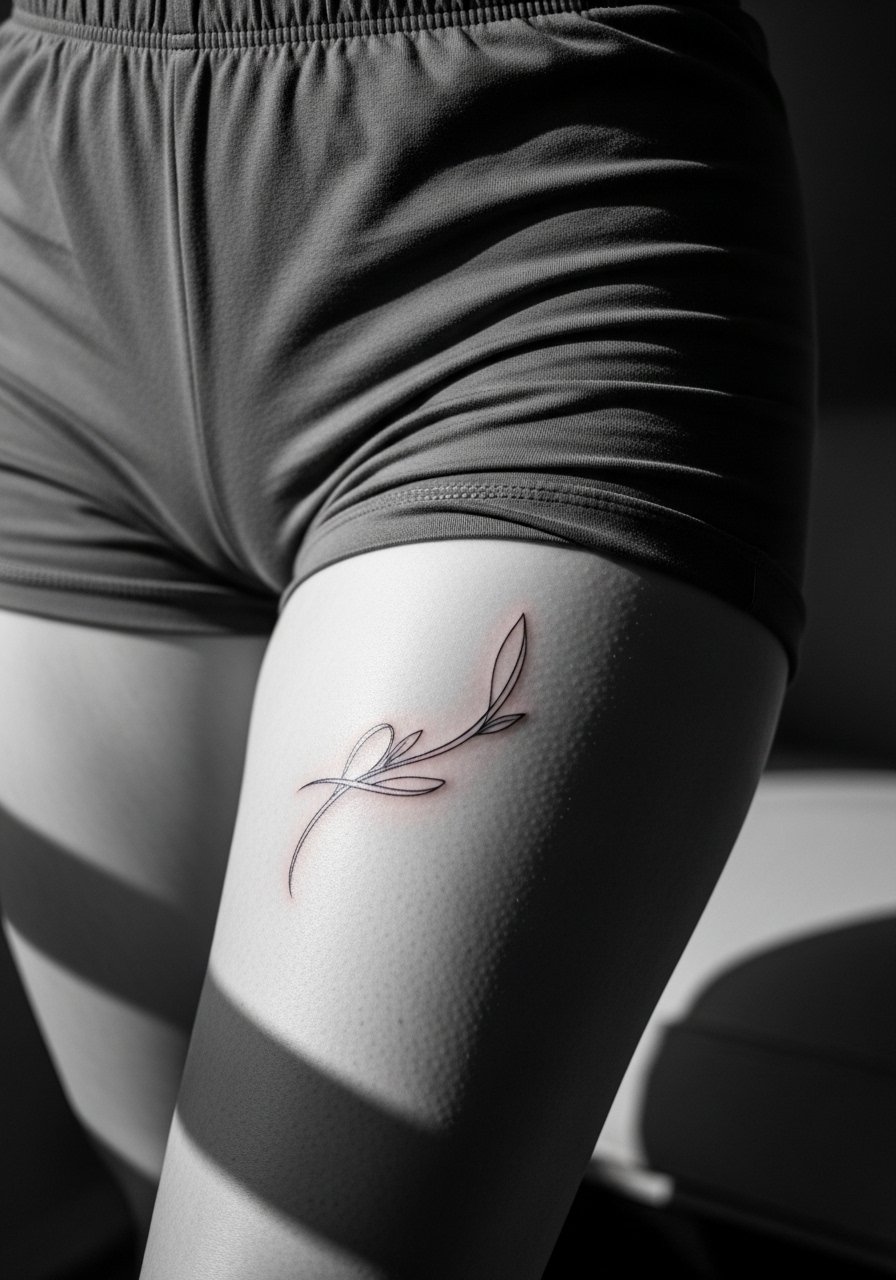
Portraits demand planning for scale on the wide front thigh canvas. Tell your artist which facial features are essential and ask that decorative flow lines frame the portrait instead of crowding it. Portrait sessions are long and often require multiple appointments for accurate shading. The common error is making the face too small to retain detail after healing. Expect touch-up timelines to be longer because fine tonal adjustments refine as the skin settles. Pair this kind of piece with mini skirt black looks for nights out when you want a dramatic reveal.
9. Japanese Traditional Wave Flow on Side Thigh
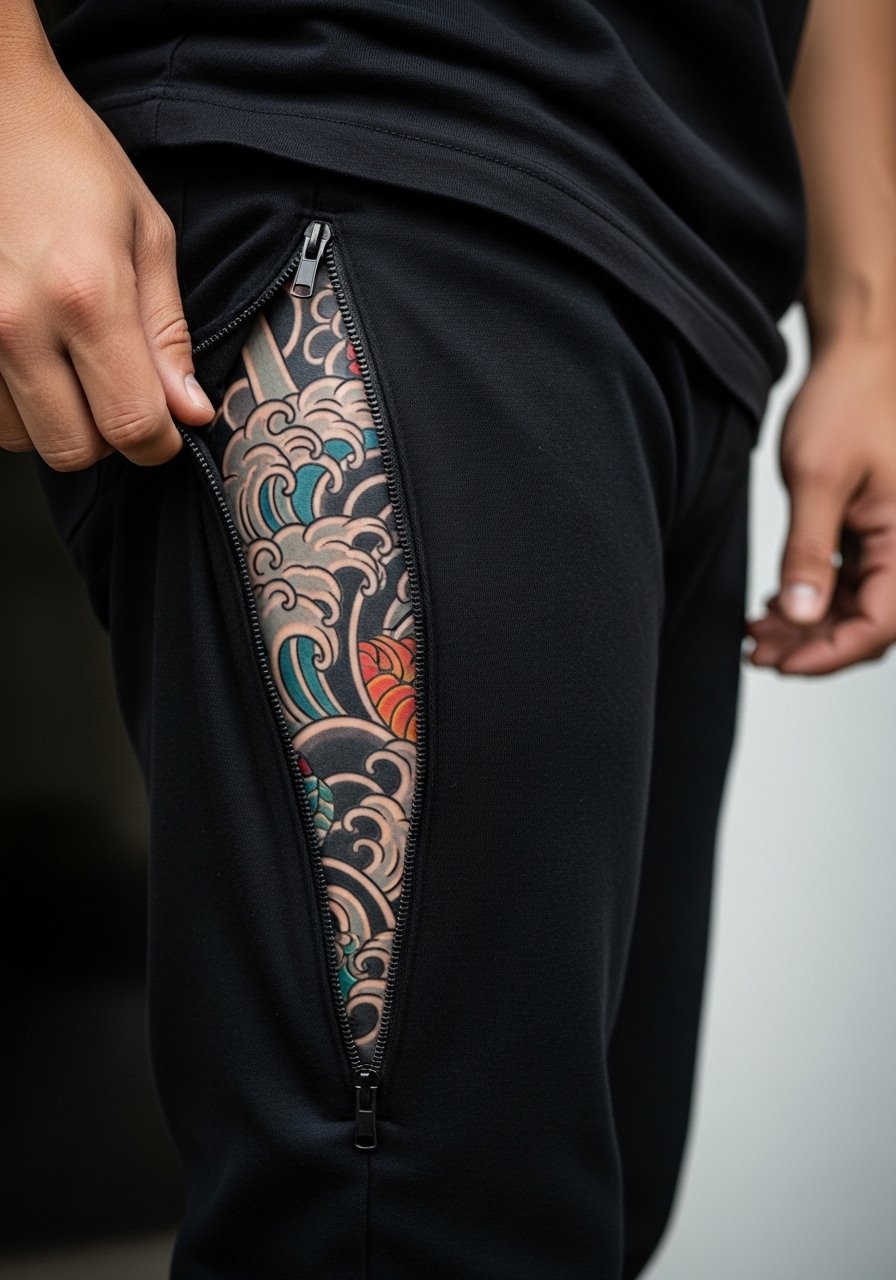
Traditional wave compositions look excellent along the hamstring curve because the swell and trough of the design match muscle lines. Specify that waves should complement the natural hamstring arc instead of fighting it. These pieces need color layering and usually two to three sessions. A frequent mistake is over-detailing small wave textures that later blur into the background. For everyday wear, rolled cargo pants or an asymmetrical skirt work with the bold colors, try rolled cargo pants when you want a casual reveal.
10. Geometric Flow Patterns on Upper Thigh
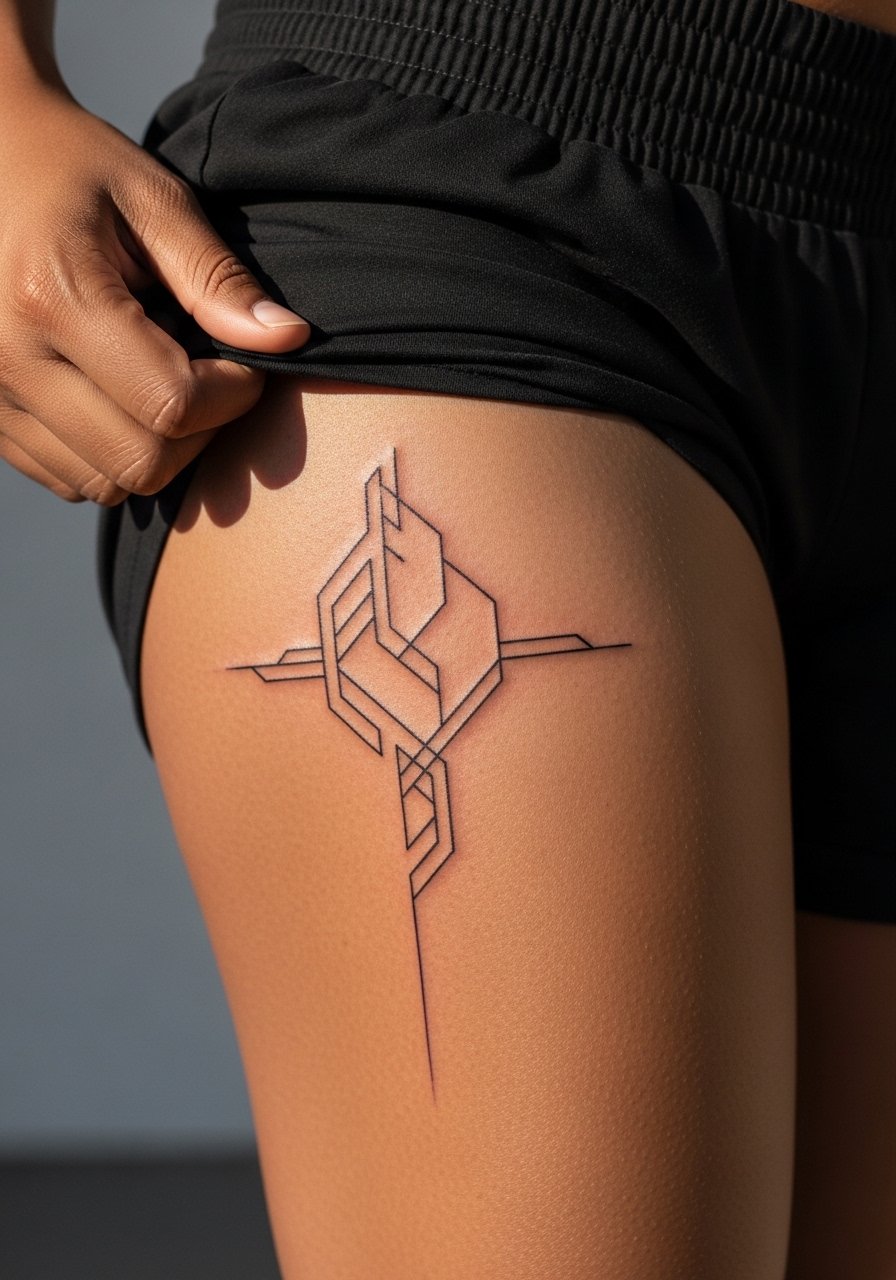
Geometric patterns rely on spacing, so larger geometry breathes better on thighs than tiny tessellations. Tell your artist to scale shapes to fit the muscle belly and to leave small gaps so dot work and stipple shading age predictably. Pain is usually low on the upper thigh and sessions are usually single appointment if kept moderate in size. The biggest mistake is going too small, which forces lines to merge over time. For comfort during the session, wear elastic waist pants you can pull down without tight seams cutting the thigh.
11. Vertical Dagger Descent on Outer Thigh
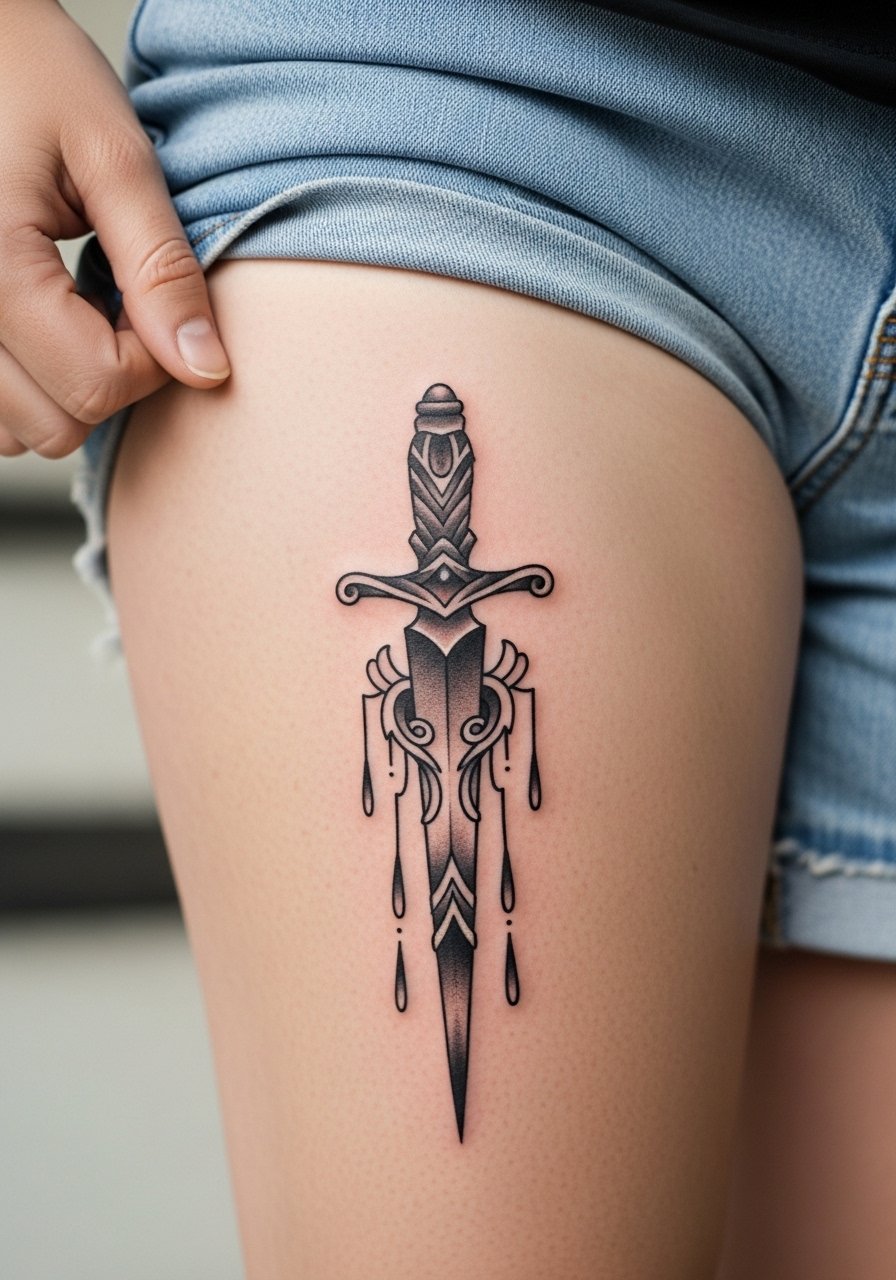
A dagger that descends with trailing ribbons or leaves uses the thigh as a long canvas for narrative, masculine or unisex. Tell the artist to keep the dagger centered on the quad so muscle movement does not twist the main axis. Sessions usually run one to two hours, and touch-ups might be needed sooner if the trailing elements sit in high-friction zones. A common error is pushing too many fine trailing threads close to seams. For outfit pairing choose sturdy shorts or stretchy short shorts when you want the full length visible without distortion.
12. Ornamental Tribal Wrap on Thigh
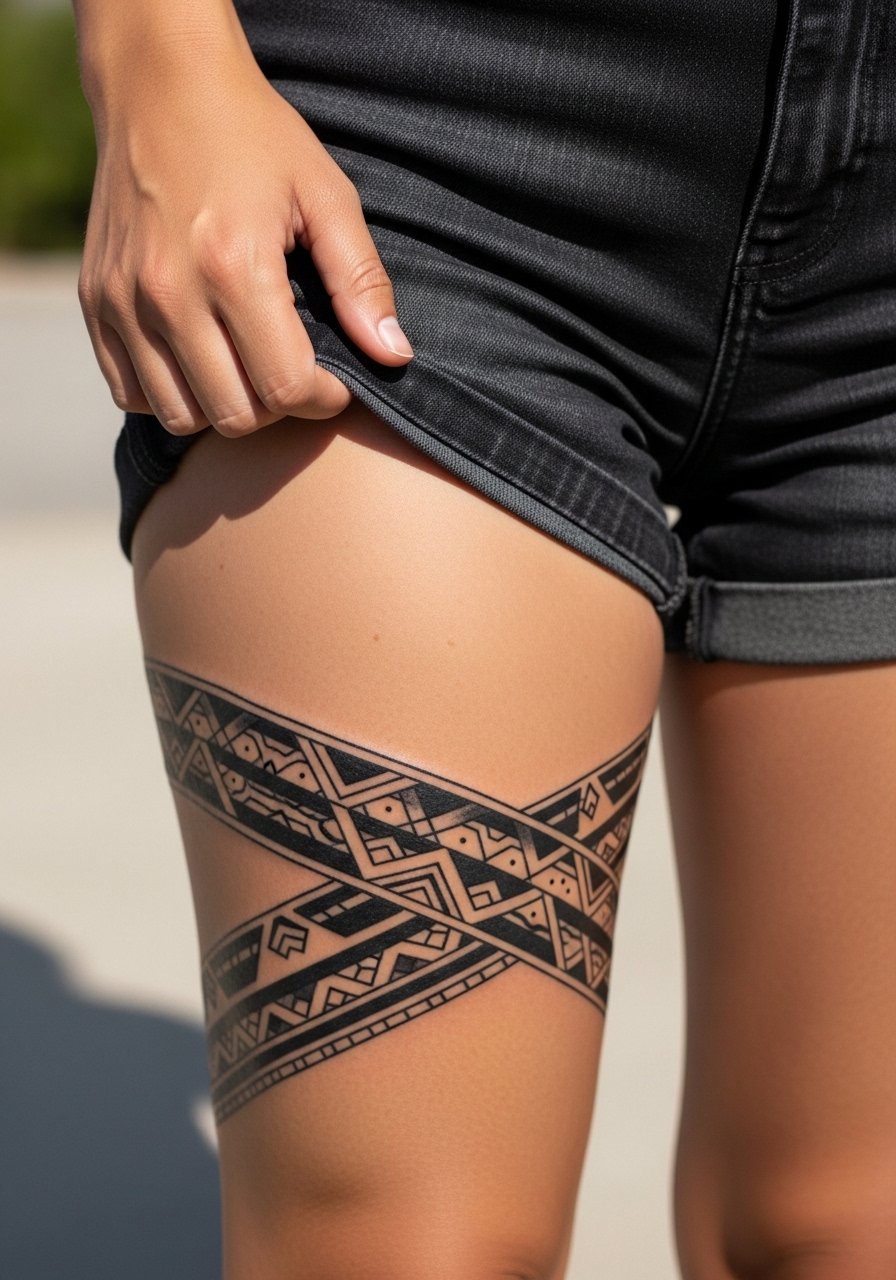
Tribal wraps use bold blackwork to create contrast that ages reliably on the thigh. Request consistent line weight and discuss blowout risk because heavy black lines near the crease can spread. These pieces often heal cleanly with one to two sessions. The debate over bold versus fine is relevant here. One group prefers heavy black lines for longevity. The other group favors more ornamentation and thinner contrasts that can soften faster. Mention this in the consult so the artist can recommend depth and spacing. Pair with a wrap dress olive or shorts for a confident reveal.
13. Rectus Femoris Alignment for Slimming Effect
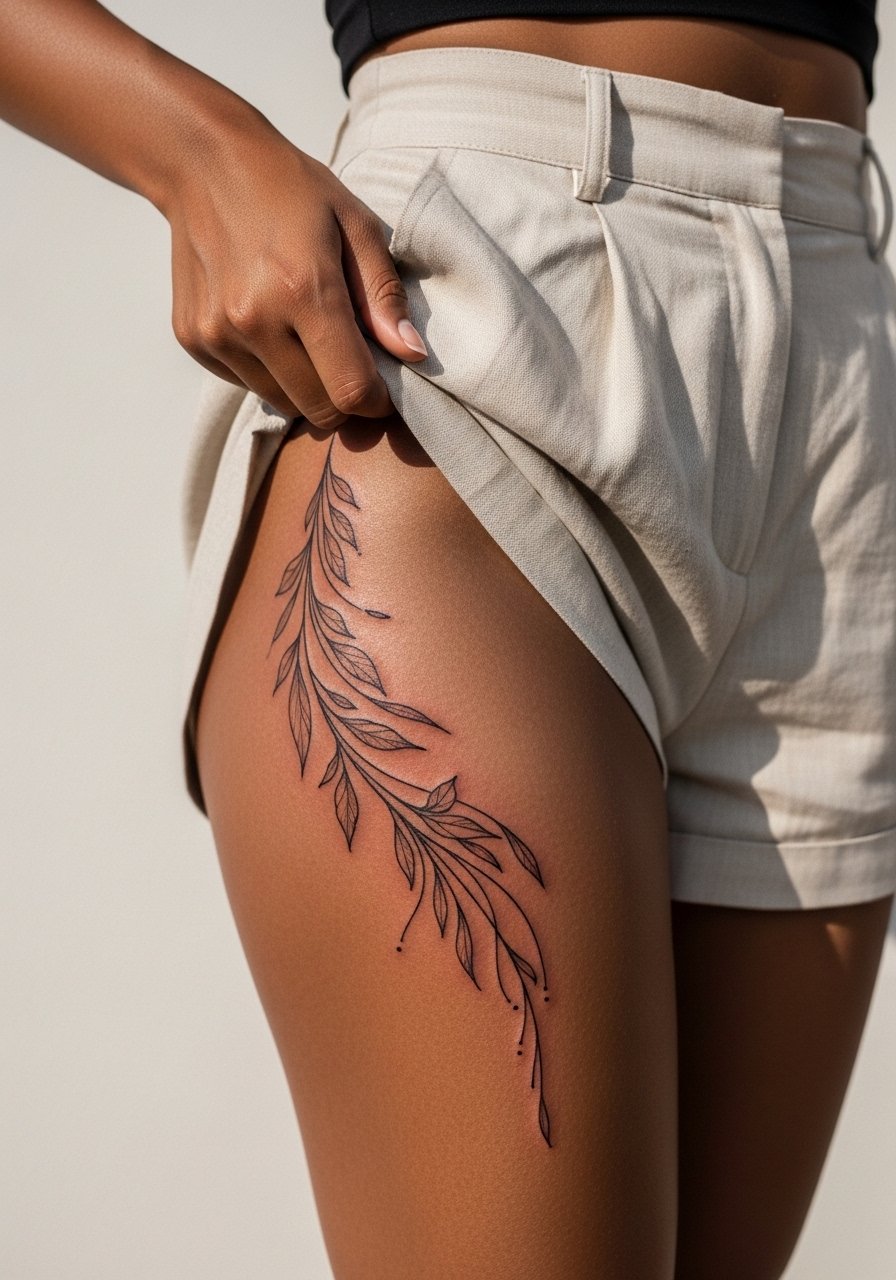
Designs that intentionally trace the rectus femoris can create an optical slimming effect. Tell the artist you want major strokes to follow the central muscle and to avoid thick horizontal elements that cut across the visual line. Pain is mild on this section and session time depends on complexity. A common mistake is centering a large motif too low on the thigh where the muscle shape reads differently when seated. For showing and for studio comfort, use high waisted linen shorts so the tattoo aligns with the waistband in photos.
14. Hip-to-Thigh Seamless Flow
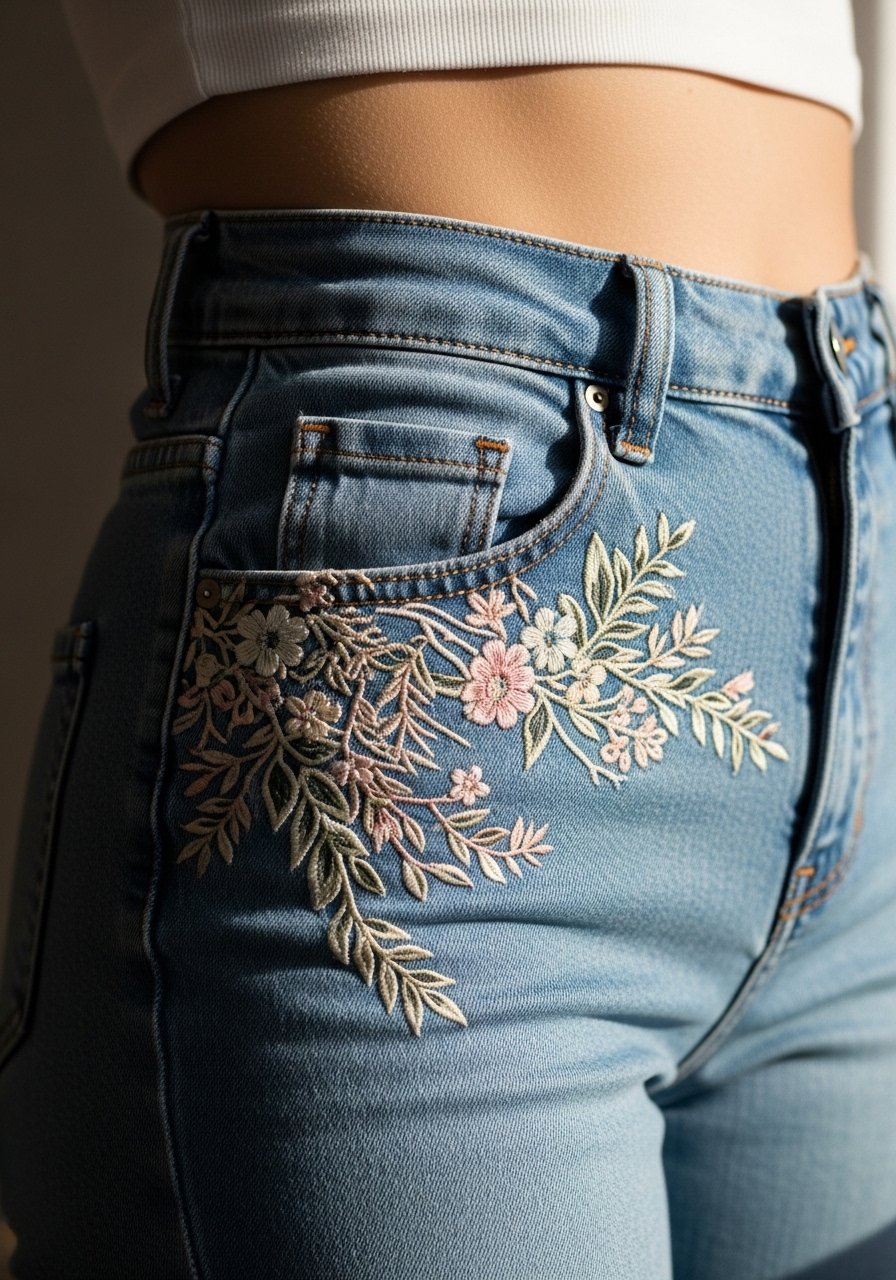
If you want a piece that reads as part of both hip and thigh, plan for a seamless transition at the hip crease. Ask the artist to map the hip placement in a standing and seated position so lines do not disappear when you sit. Sessions are more involved because of the extended canvas and may need two sittings. A design error is stopping the flow abruptly at the waistband. For summer looks try a sheer swimsuit or low-rise bottoms that let the composition breathe.
15. Thigh Botanicals Scaled to Muscle Belly
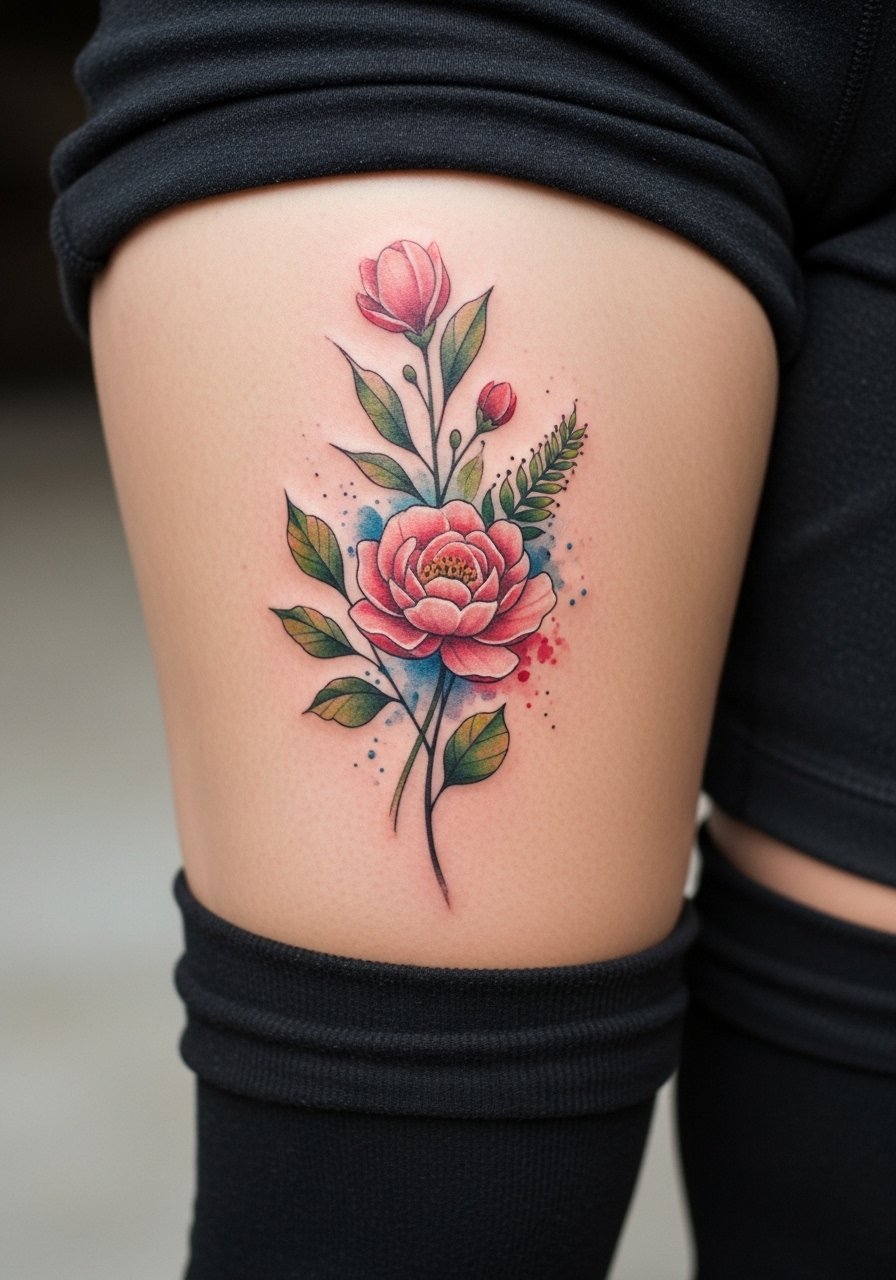
Scale is everything with botanicals on thighs. Request that larger blooms sit on the muscle apex and smaller sprigs fall toward the seam. This approach keeps the piece legible as skin shifts. Pain is tolerable and sessions can be split to maintain color clarity. A common mistake is scattering tiny petals without a clear focal point. For wardrobe choices pair this with cropped leggings pastel or sheer overlays to coordinate with color gradients.
16. Wraparound Tribal for Light-Catching Motion
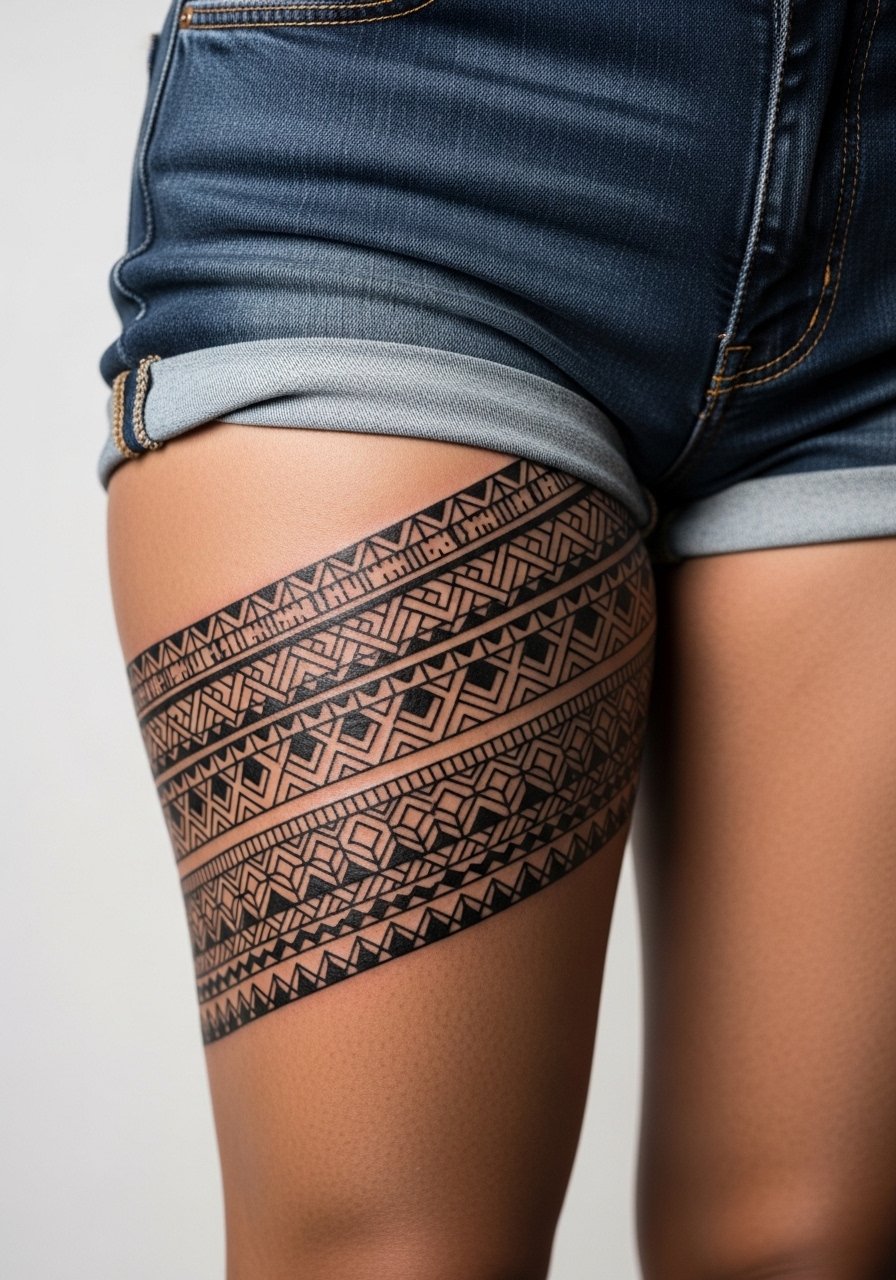
This variant uses blackwork gaps that catch the eye as you move. Ask the artist to alternate heavy and light bands to create rhythm and to avoid placing heavy solid blacks at fold lines. Sessions are usually compact but require careful stencil placement. A typical error is mirroring a flat pattern without regard for thigh curvature, which flattens the intended motion. For nights out a thigh high slit dress highlights the wrap without overexposing the area.
17. Delicate Vine Along the Quad
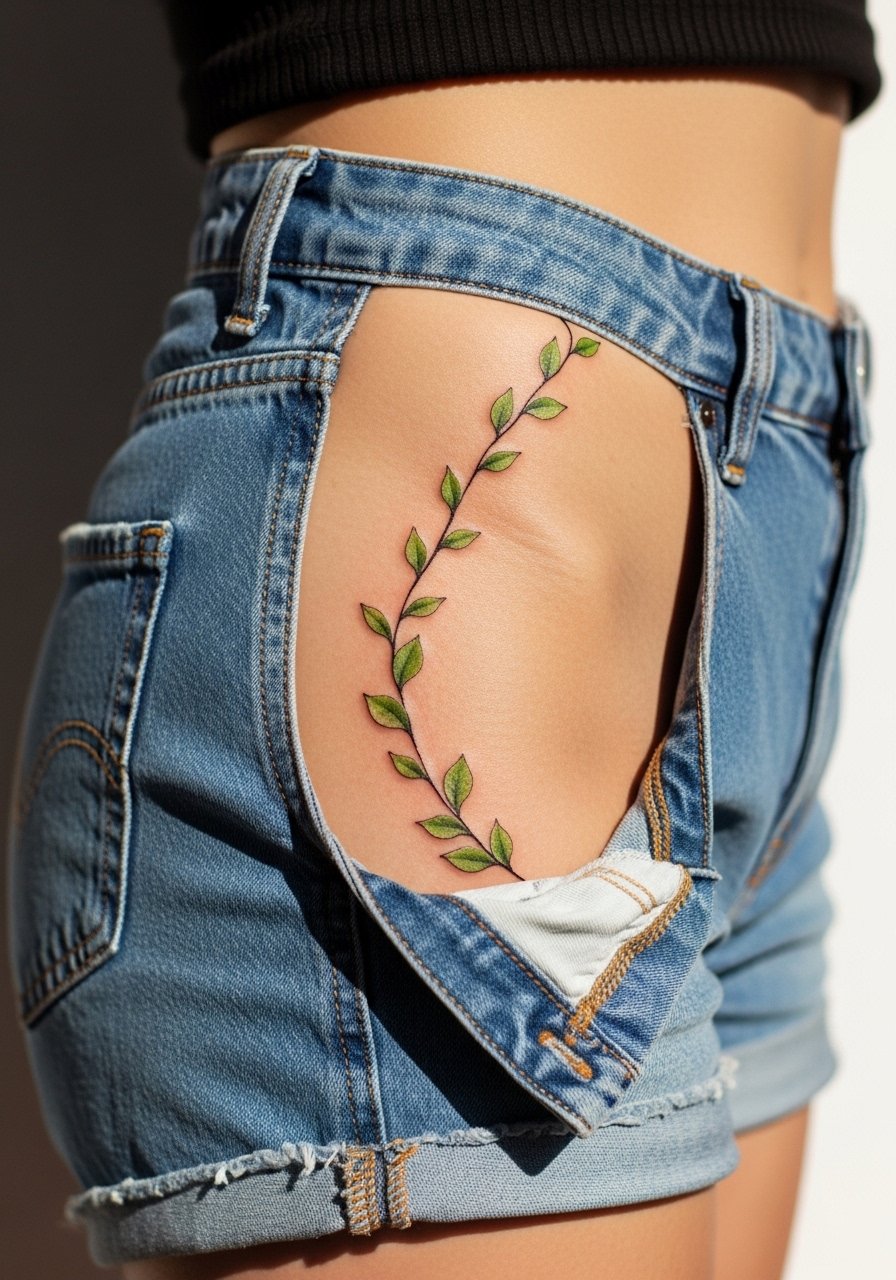
A single vine that climbs the quad reads elegant and minimal without taking over the entire thigh. Tell the artist to keep spacing between leaves to prevent merging as the piece heals. Expect low to moderate pain and short session times. The mistake to avoid is requesting hairline leaves that are too thin for high-friction zones. For easy session wear and show-off looks, consider high waisted linen shorts.
18. Flowing Script Band Around Thigh
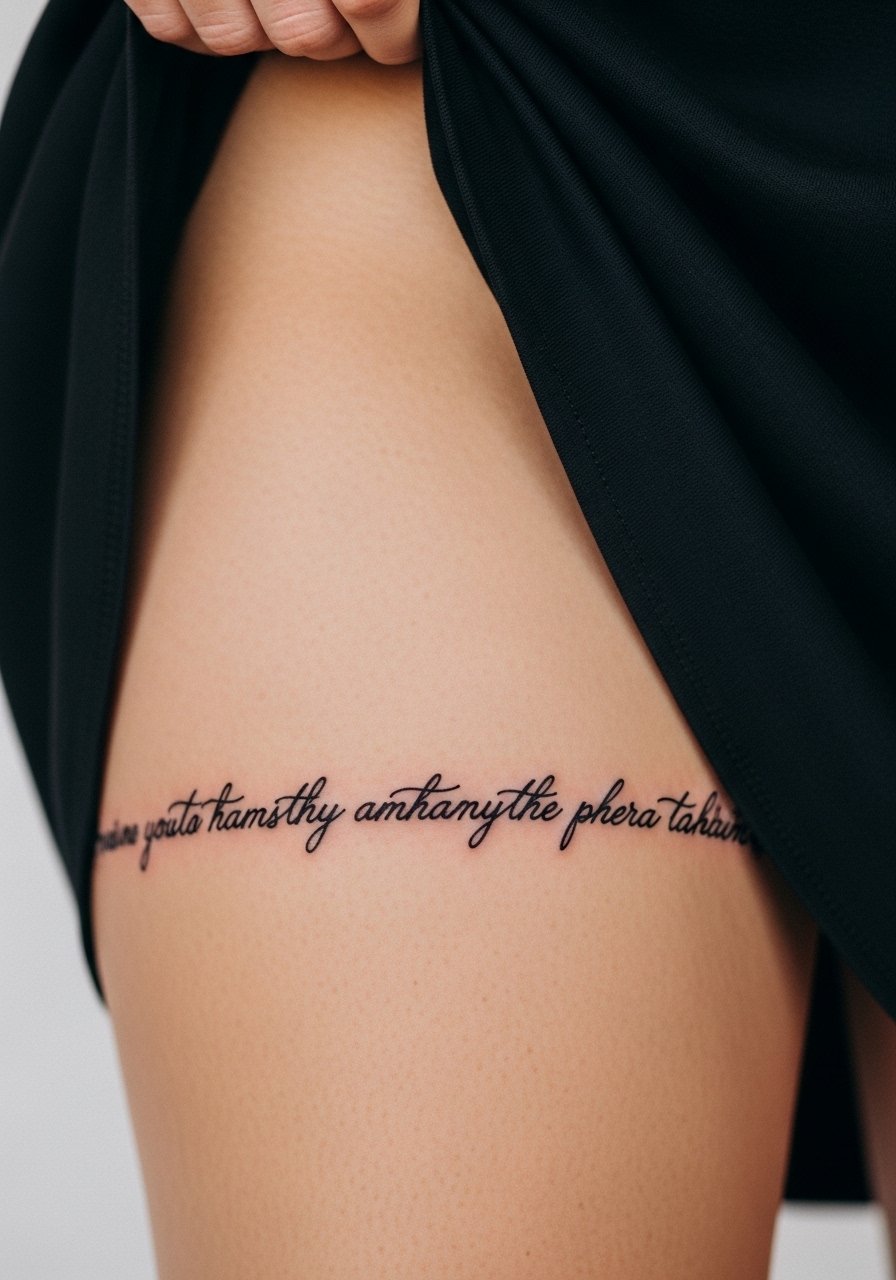
A continuous script band can be poetic and subtle. Ask for slightly bolder strokes than you might want initially so the lettering holds up through friction. Inner-band placements may feel more sensitive so plan short sittings. A frequent error is choosing overly ornate lettering that blurs into an unreadable texture. For showing the band in motion, a side slit maxi skirt frames the wrap without cutting off the line.
19. Minimalist Dot Work Trail
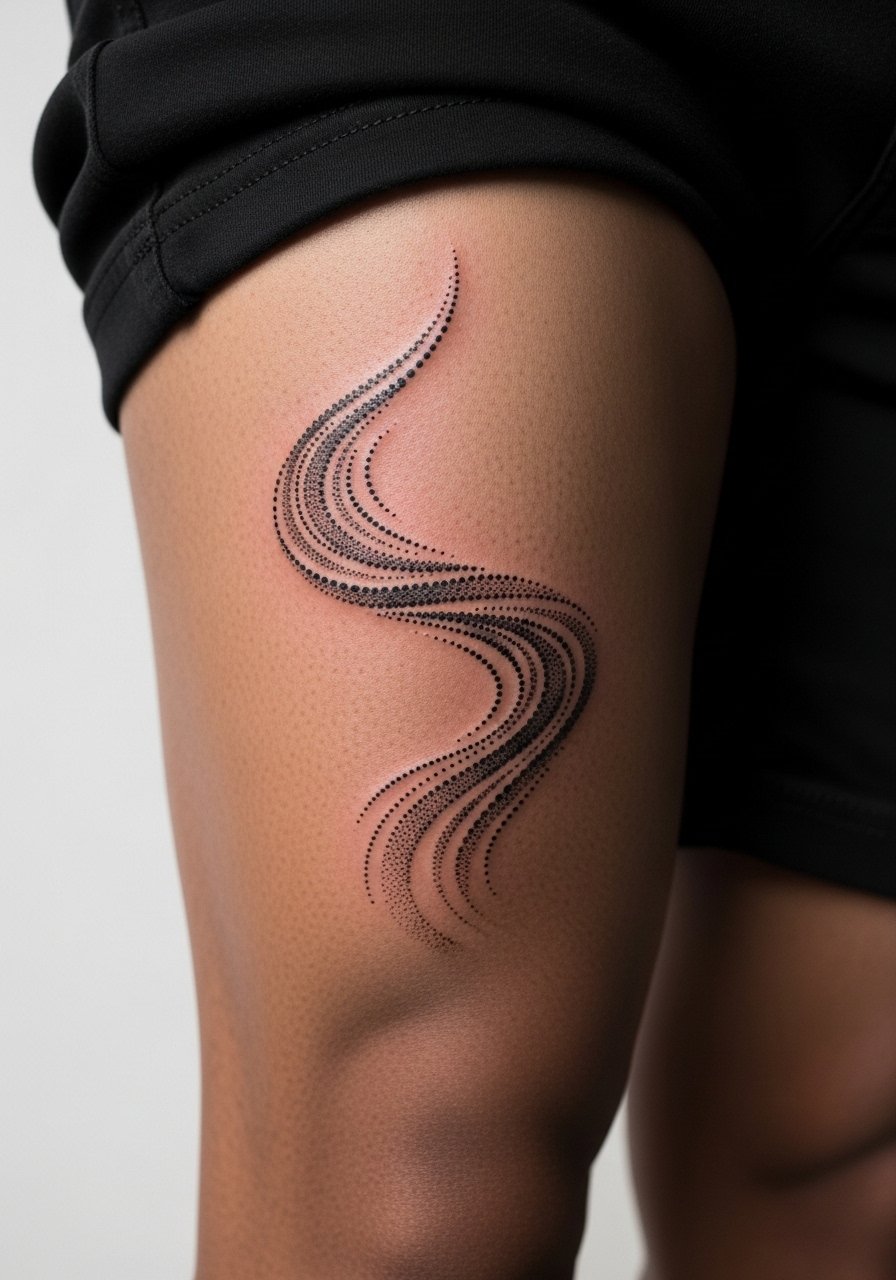
Dot work that graduates from dense to airy uses negative space to carry the flow. Tell the artist the maximum dot density you want so stipple areas do not merge into a gray block over time. Sessions are pace-sensitive because dot work takes time and steady hands. A common mistake is over-concentrating dots near seams. For ease during the appointment bring lightweight shorts you can adjust without compressing the area.
20. Watercolor Gradient Wrap Around Thigh
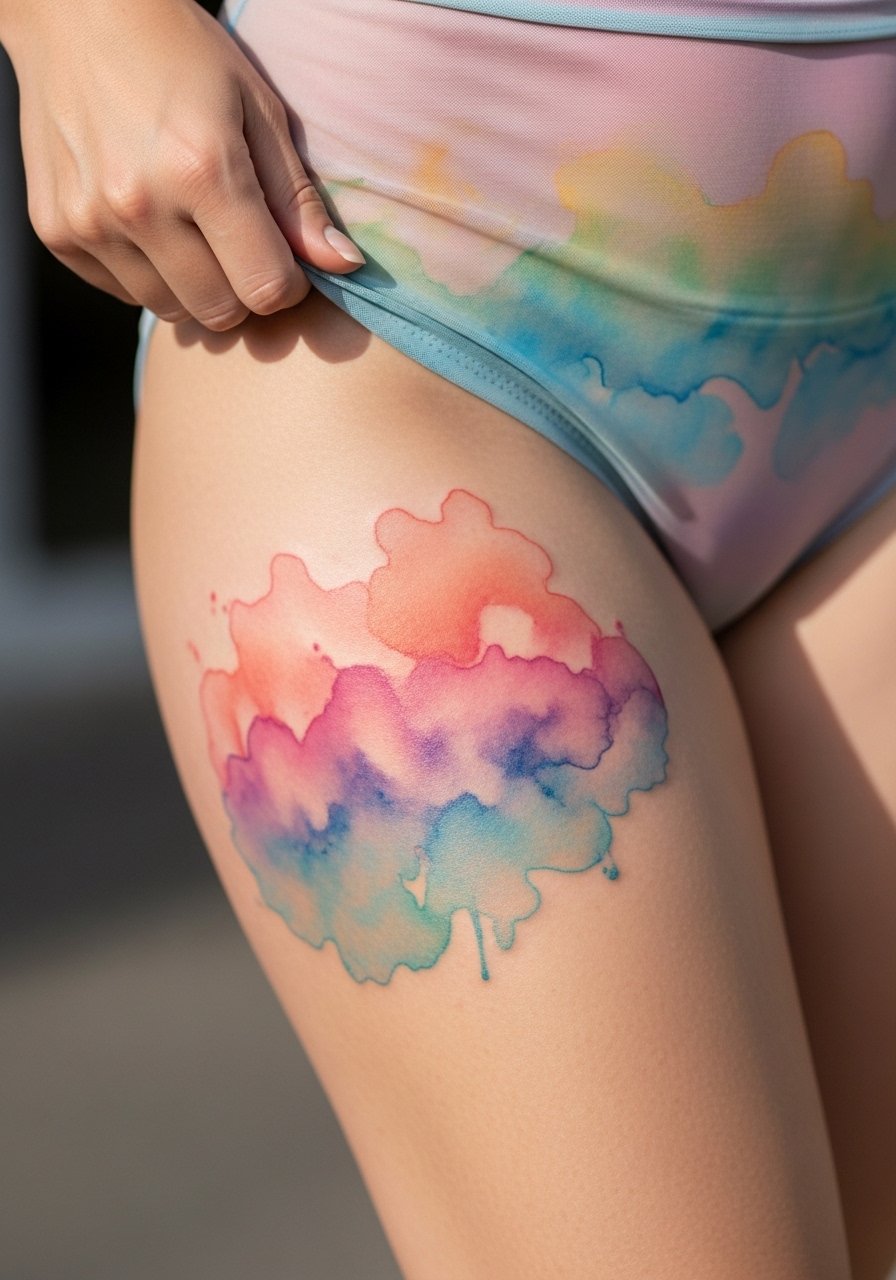
Watercolor wraps look like fabric draped across skin when done with soft gradients and defined negative space. Specify that edges should have subtle outlines in strategic spots so the wash has anchors and does not drift into a bruise-like fade. These pieces usually require two sessions for settling. The common problem is too many soft edges without anchor points. For festival and swim looks choose a sheer swimsuit or cropped bottoms that let the full gradient show.
21. Large Phoenix Hip-to-Knee Seam
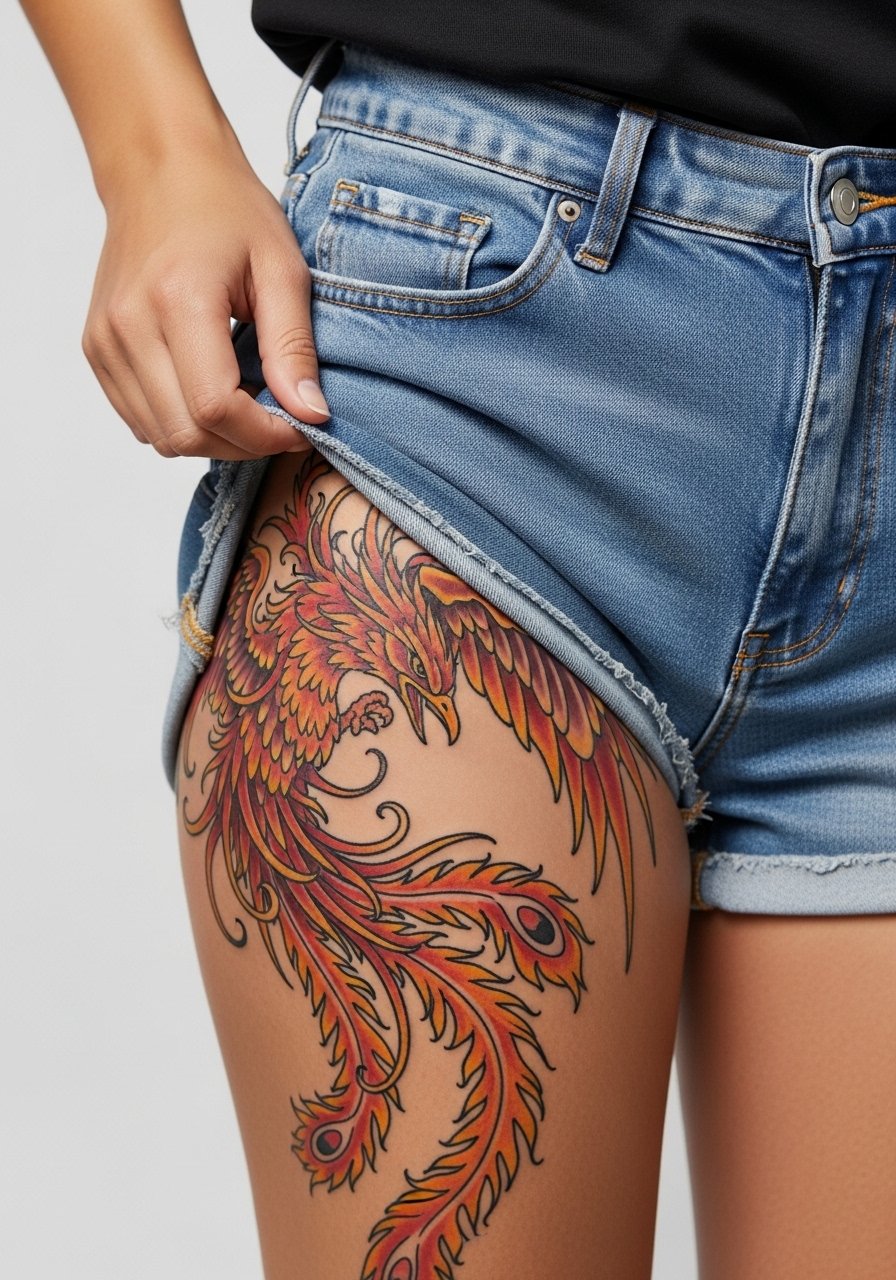
A statement phoenix spanning hip to knee needs composition planning so the bird reads whether you are sitting or standing. Ask the artist to map the wings and tail to move with the hip crease and the quad respectively. This is a heavy commitment, usually involving multiple long sessions. A mistake is starting the tail too low near the kneecap where movement distorts long-term proportions. For showing and comfort on session days, wear roll up pants or shorts with a soft waistband.
Frequently Asked Questions
Q: Will a fine line flowy thigh tattoo need touch-ups sooner than bold blackwork?
A: It depends on placement and lifestyle. Fine line naturally softens faster in high-friction zones like the inner thigh. Bold blackwork usually holds up longer. If you love fine line, ask for slightly stronger initial line weight and budget for touch-ups around year two or three.
Q: How should I dress on the day of a hip-to-thigh session to make access easy and avoid rubbing after?
A: Wear loose or elastic waist bottoms you can pull down slightly without belts digging into the area. For hip or upper thigh work a side zip pants or a skirt that lifts easily helps the artist keep a clean stencil while avoiding excess fabric pressure during healing.
Q: Does watercolor on the thigh always fade faster than black and gray?
A: Watercolor tends to show fading sooner, especially on outer thigh areas that get sun exposure. That is not always the case. Proper saturation, sun protection, and occasional touch-ups keep color lively. Discuss maintenance with your artist before booking.
Q: How do weight fluctuations affect flowy thigh designs?
A: Designs that follow muscle contours and use vertical flow age more predictably through weight shifts. Large, centrally placed motifs on the muscle belly shift less than designs concentrated at the seam or crease. Talk with your artist about future body changes during the consultation.
Q: Are there discovery paths for finding an artist who specializes in flowy thigh work?
A: Look for style-specific hashtags, location tags, and tattoo directories. Search phrases like "flowy thigh tattoo [city]" and check tattoo-specific portfolio platforms. Reddit threads and convention appearances are useful ways to vet portfolios and see healed work.