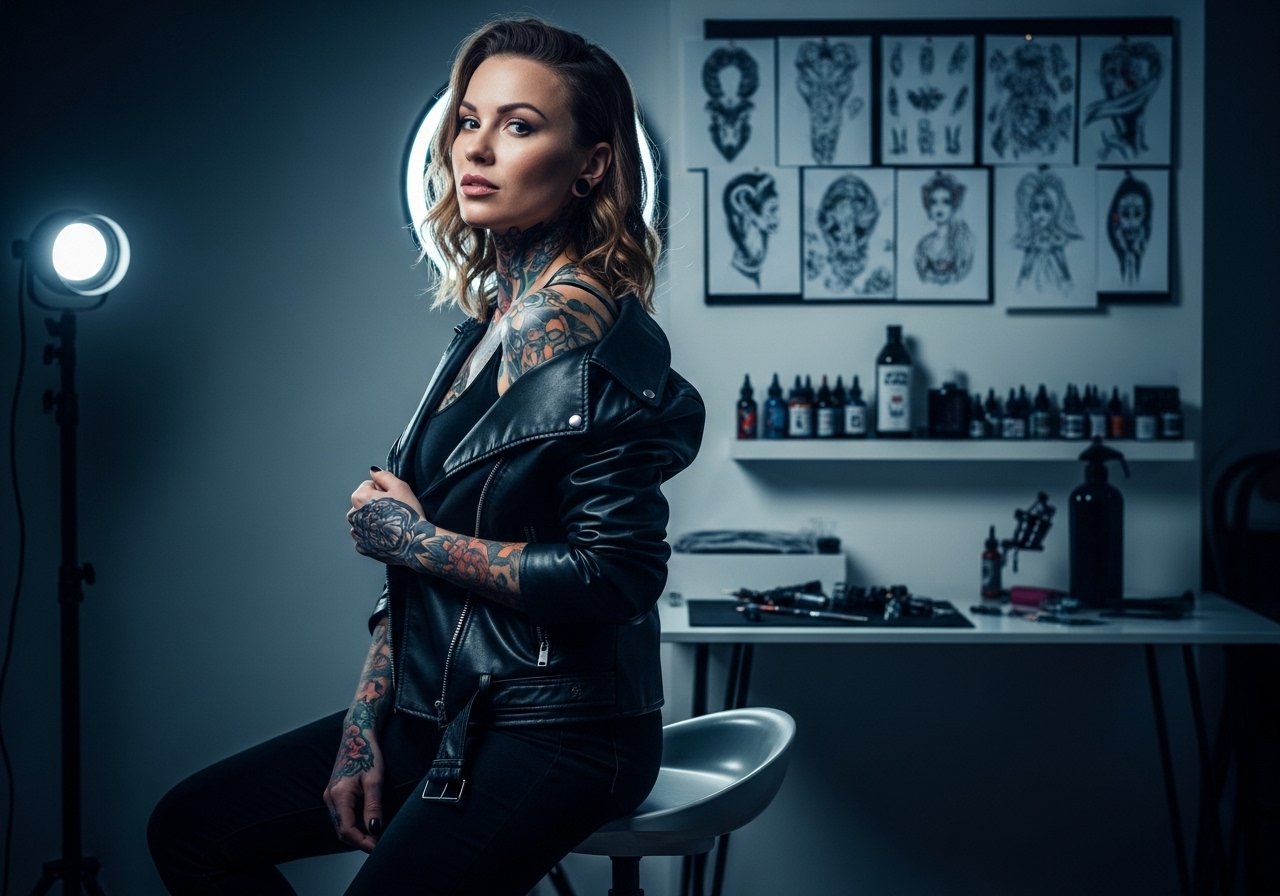
Fine line Roman numeral dates flooded feeds last year, and everyone's saving the crisp tiny scripts. The problem is simple. When those same pieces hit high-movement skin they tend to soften into unreadable lines after a couple of years. I want to show 27 realistic takes that balance what looks great fresh with what actually holds up, plus wardrobe tips for showing off the pieces and what to wear to the session so you do not waste time in the chair.
1. Roman Numeral Date on Inner Forearm
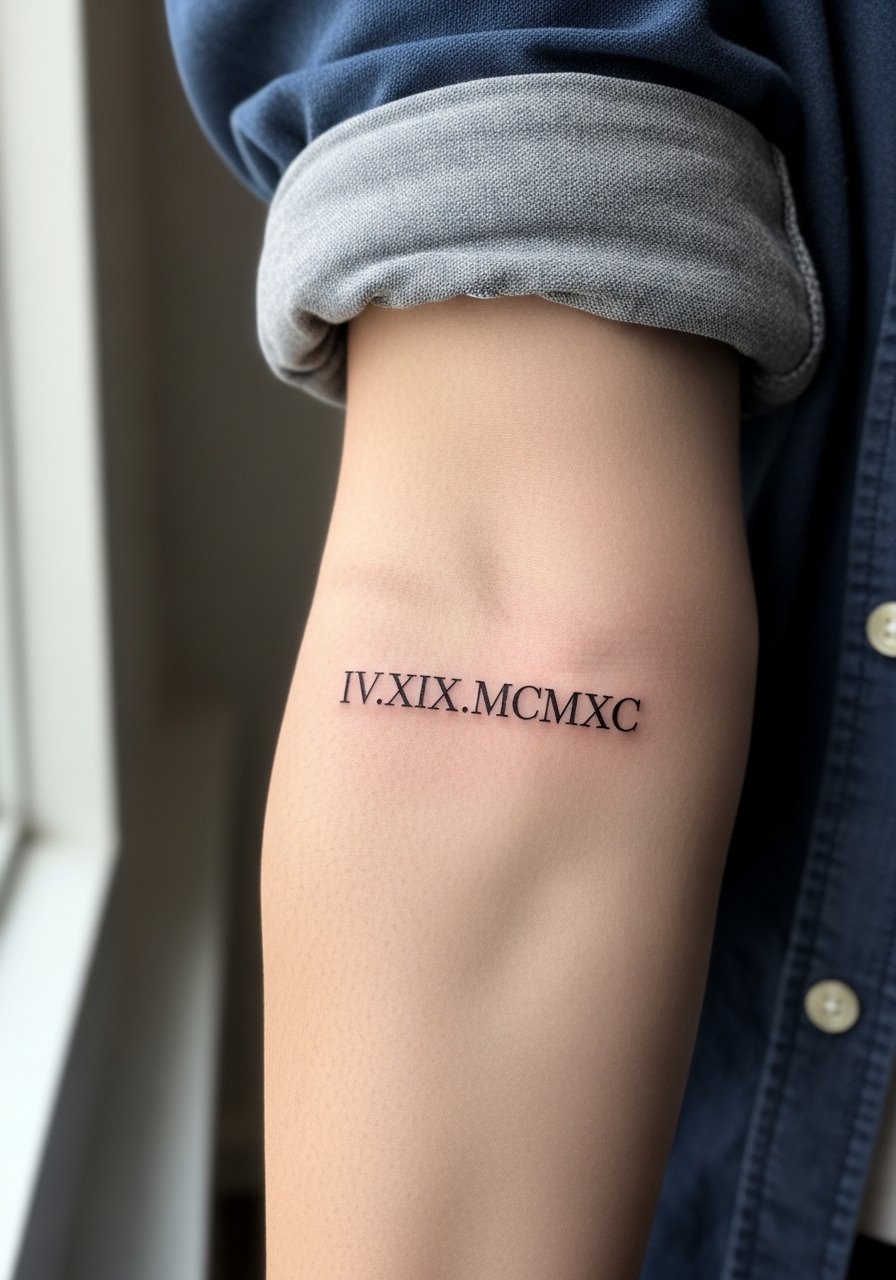
I have seen inner forearm dates keep their edge the longest when the numerals are 2 to 3 inches tall with a bit of serif to the numbers. Tell your artist you want block serif numerals, not cursive, and ask for slightly thicker caps on vertical strokes so they do not blur. A common mistake is asking for ultra-fine single-needle script because it looks delicate on an iPhone, then realizing hand washing and sun exposure make it fuzzy by year two. Expect a 90-minute single session for a 3-inch piece and plan for a touch-up at year two if you spend lots of time outside. For showing it off, roll up a rolled sleeve button down in navy or gray so the forearm reads like a deliberate design choice.
2. Bold Roman Numeral Armband on Bicep

Fair warning, the bicep takes ink differently when you are lifting regularly. I recommend a 3 to 4 inch band with thick linework so the numerals remain legible when the muscle changes shape. During consultation ask about wrap alignment so the spacing does not compress when you flex. A session can run one to two hours depending on wrap complexity. The design ages well if the lines have generous spacing and solid saturation. Show it off with a fitted black tank top or sleeveless henley to keep attention on the armband.
3. Mini Roman Numeral on Inner Wrist
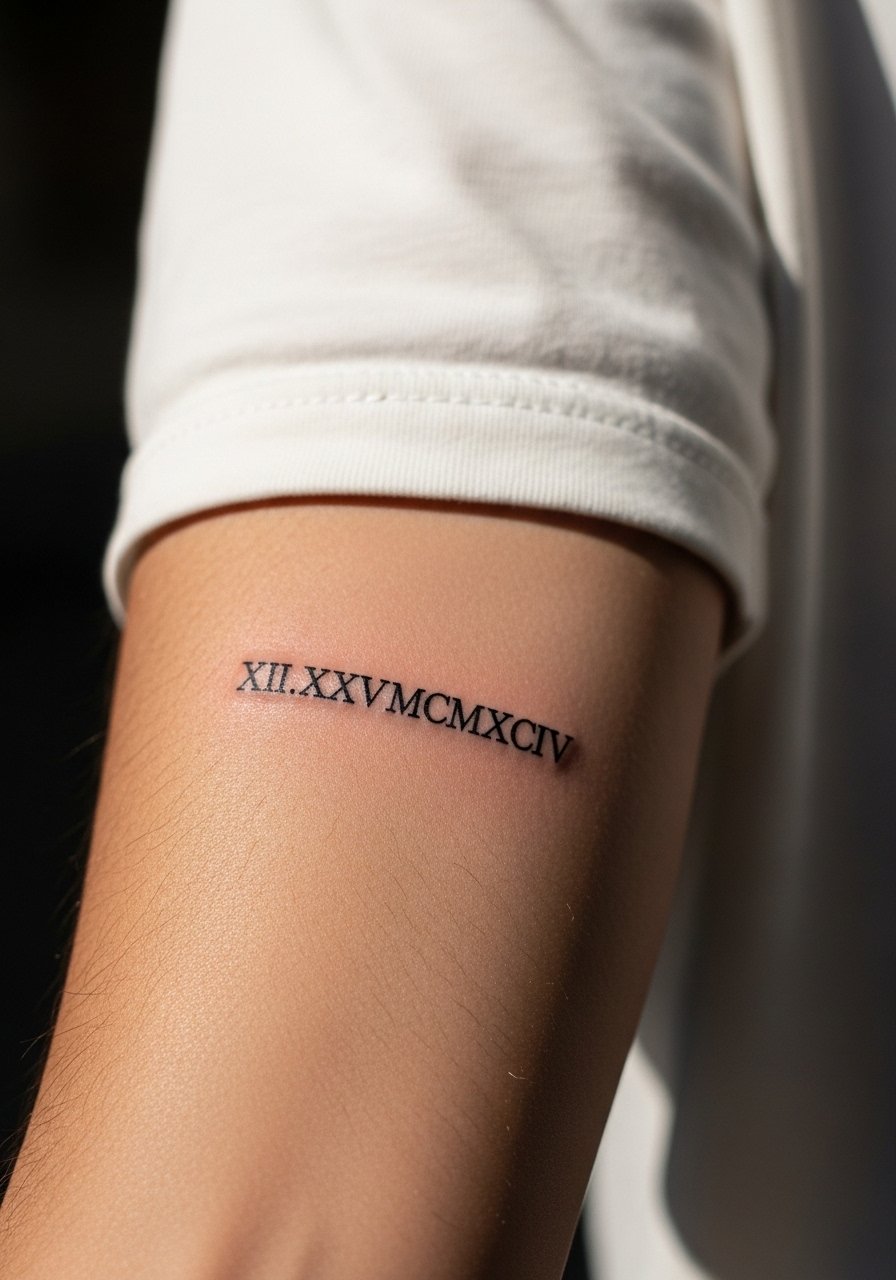
The wrist is a classic spot for small wedding or anniversary numerals but it is high-movement and high-wash. Ask for a 1 to 1.5 inch height with block numerals and slightly heavier line weight than you think you need. A common version that ages poorly uses a single-needle ultra-fine script and becomes patchy after frequent washing. Expect a single short session and plan touch-ups every one to two years on active hands. Pair the piece with a slim watch or a minimalist leather watch on the opposite wrist when you want to frame the tattoo.
4. Roman Numeral with Clock on Chest

Most artists recommend the chest for larger narrative pieces. For a clock motif, go 4 to 6 inches across so the numerals keep legibility inside the dial. Tell the artist you want clear separation between the hour markers and the face shading. The chest heals differently from arms and holds saturation well, but avoid tiny numerals inside busy filigree if you want longevity. Sessions often run two sessions for clean shading and crisp numerals. For visibility, open a linen open collar shirt so the collarbone and upper chest sit framed against fabric.
5. Stacked Roman Numerals on the Ribcage
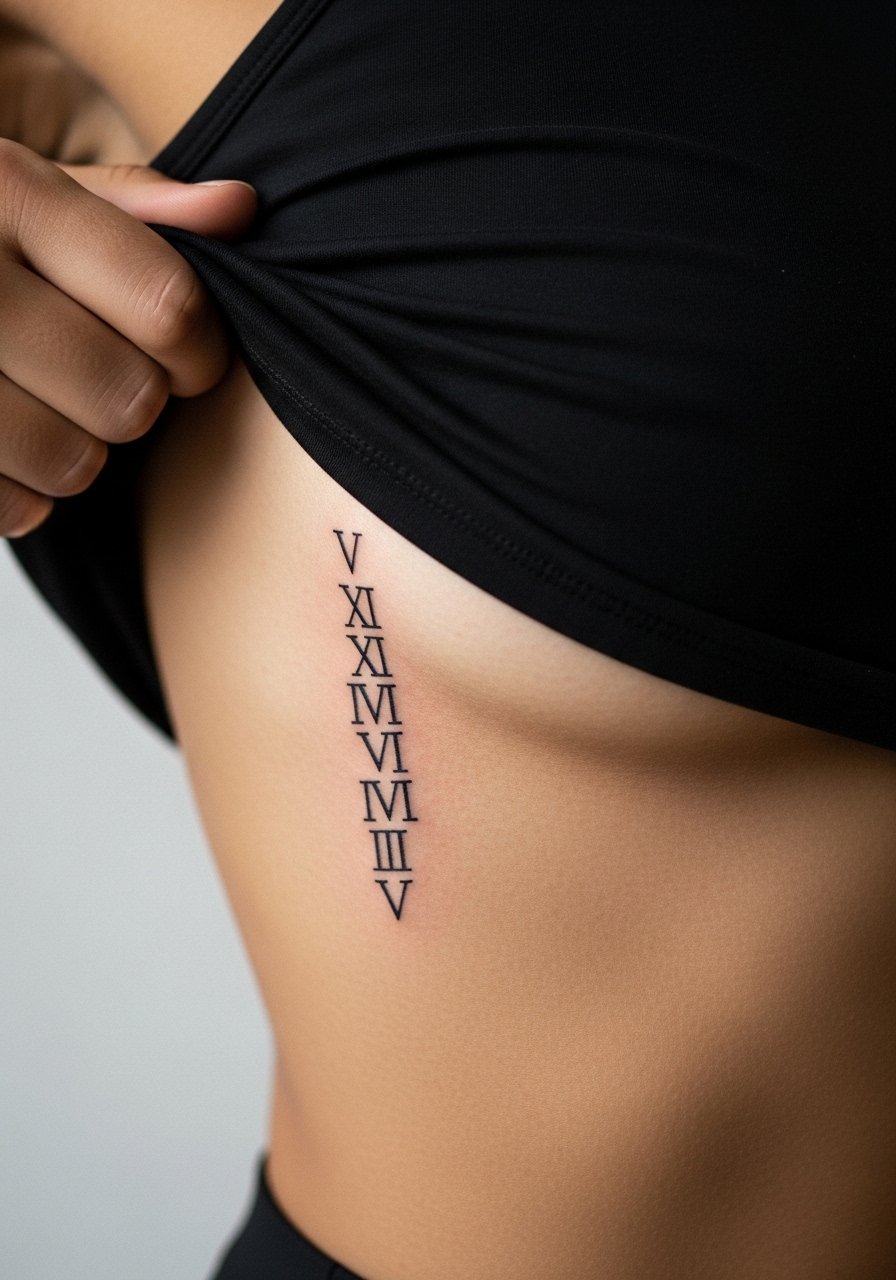
Fair warning, the ribcage rates higher on pain scales. Expect a 6 to 8 out of 10 sensation and plan for single-session vertical stacks of 3 to 5 inches. Artists split on scaling fine line here. One camp argues that fine line blurs with skin stretch. The other camp says with firm needle depth and spacing fine line can last if placed correctly. Name both camps during consultation and ask where your artist stands. The biggest mistake is packing numbers too close together. For showing it off at the gym, grab a side slit tank top so the rib art peeks out without constant exposure.
6. Roman Numeral Knuckle Wrap

Knuckle numerals need confident linework and bold uppercase shapes that read during gestures. The hand heals in a high-friction zone and will likely need touch-ups more often than arm tattoos. Ask for solid black fills and avoid thin serif flourishes that wear away with skin movement. Expect a short session but a harder healing window because hands are washed constantly. Pair knuckle work visually with understated rings rather than bulky bracelets so the numerals stay central. For the session wear, keep the wrist free and avoid tight cuffs.
Before You Book
The wrist, knuckle, and rib pieces above heal with different demands than upper-arm work, so a small kit makes the session and first week easier.
-
Stencil transfer paper kit. Lets you preview placement directly on skin, which helps with forearm and collarbone alignment before the needle touches skin.
-
Topical numbing cream. Useful for rib and inner thigh sessions to take the edge off without changing linework when used as recommended.
-
Thin protective film roll. Keeps finger and wrist tattoos shielded from friction during the first days of healing.
-
Fragrance free gentle body wash. Cleans the area during showers without irritating fine line pieces on wrists or ankles.
-
Aquaphor healing ointment. Thin layers during the initial healing period help maintain moisture for delicate linework without clogging pores.
7. Eye Motif with Roman Numeral on the Neck
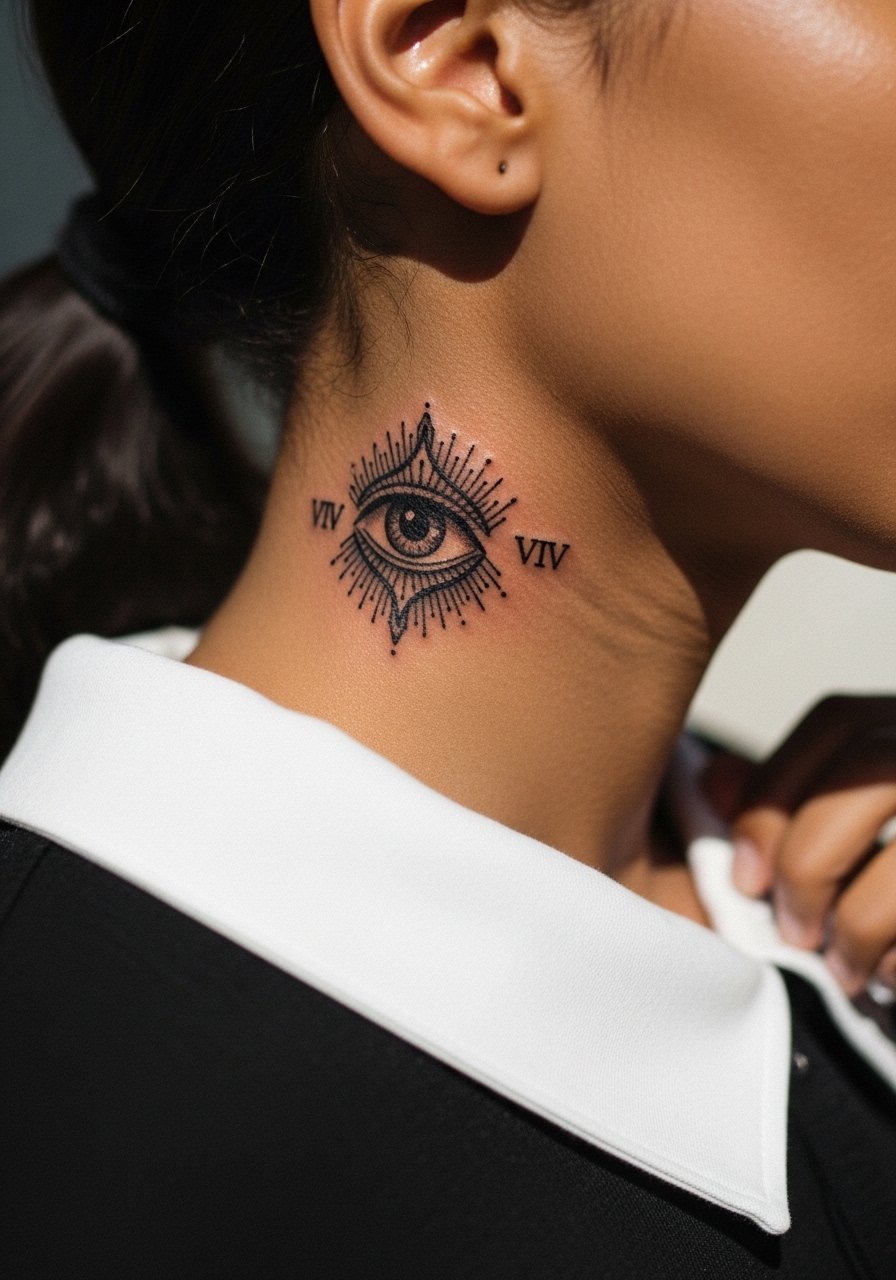
This side-neck placement reads strong with a 2 to 3 inch eye motif and a single-line numeral placed just below. Neck skin is thin and exposed often, so expect a 1 to 2 session approach and plan for touch-ups. In consultation, specify you want the numerals in block style and ask the artist about depth to avoid blowout. The controversy over neck placement is less about visibility and more about long-term aging because of sun and friction from collars. For showing it off casually, use a low crewneck tee with the collar pulled slightly; it frames the piece without exposing too much.
8. Forearm Roman Numeral Sleeve Starter
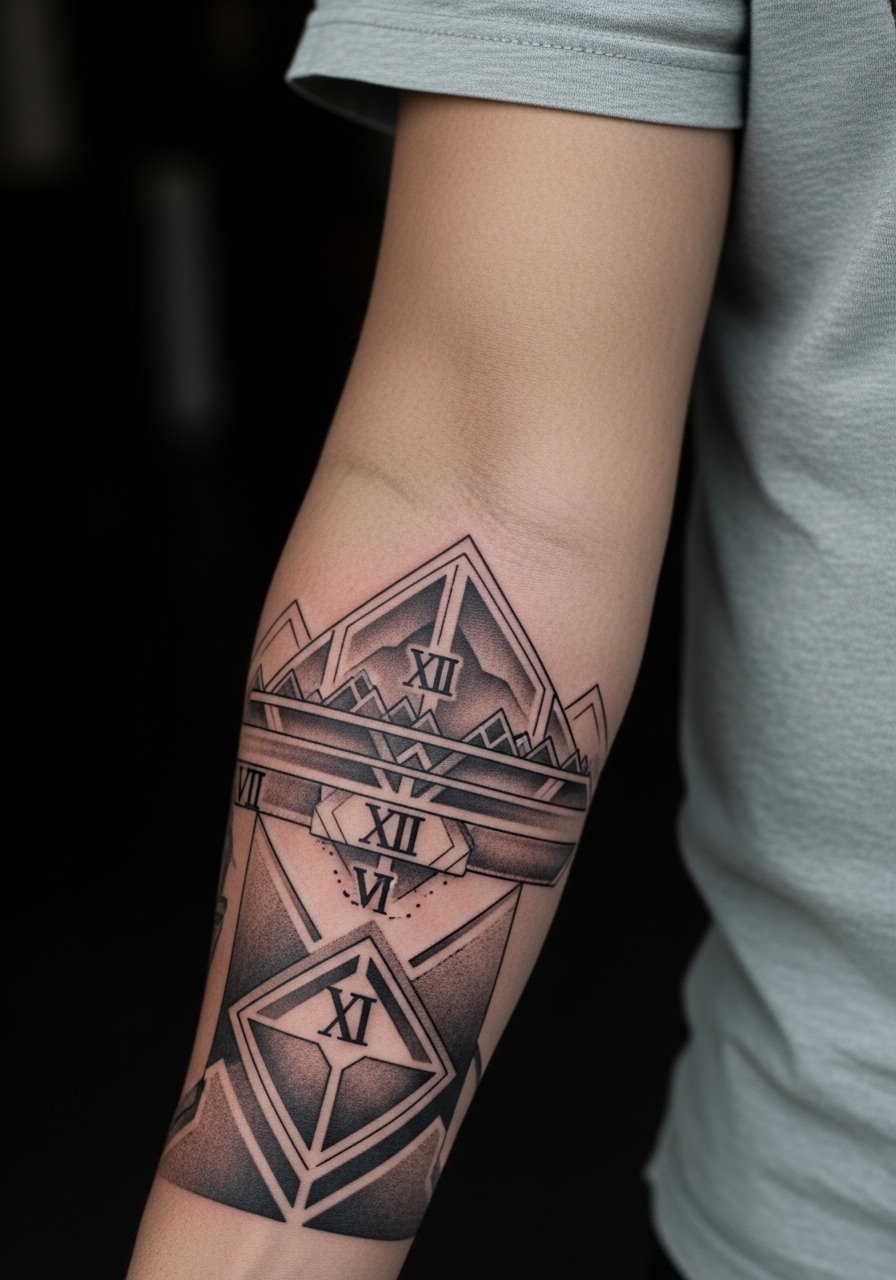
If you plan a timeline sleeve, the forearm makes a strong starter canvas. I recommend spacing numerals across 6 to 8 inches with negative space left for future pieces. Tell your artist you want modular pieces that can connect later and show reference for the scale. Most sleeve starters run multiple sessions and are built with heavier linework where you want longevity. A common mistake is crowding tiny numerals into dense shading. For session day wear, bring a loose short-sleeve tee so the artist can work the full forearm without fabric rubbing.
9. Ankle Roman Numeral Band

Ankle bands are low-visibility and sit well under socks in winter. For longevity, ask for a 2-inch wrap with clean spacing and slightly thicker lines than a micro script. The ankle sees friction from shoes and socks, so expect patchiness if lines are too thin. Sessions are short and healing benefits from wearing low-cut shoes for a week. For summer show-off looks, cuff chinos or wear boat shoes so the ankle appears intentionally revealed.
10. Collarbone Roman Numeral Arch
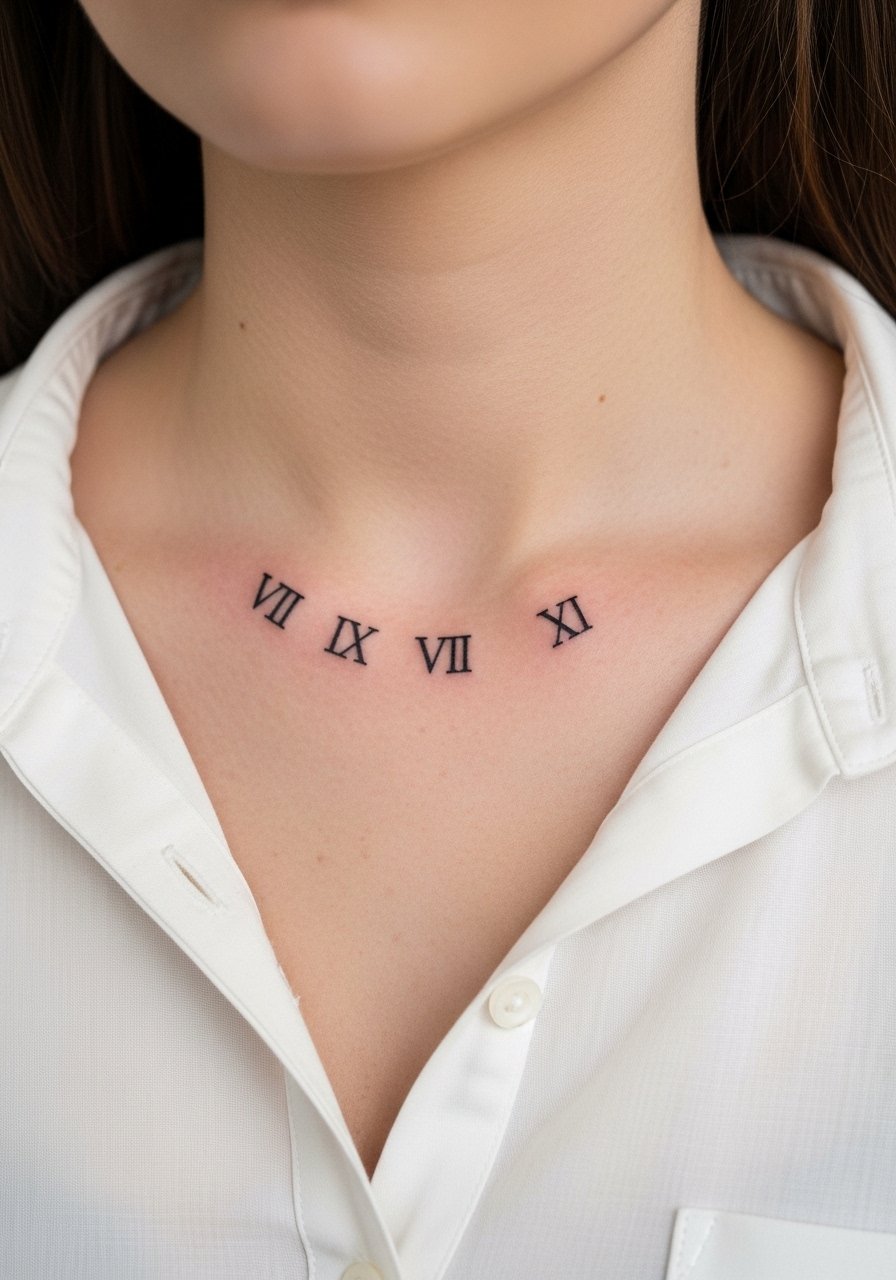
The collarbone contour helps an arch read like a deliberate design. Ask for a curved baseline that follows the bone and numerals spaced for breathability across a 3 to 4 inch span. Avoid tiny flourished numerals that get lost in clavicle motion. Healing is straightforward but direct sun on the chest will soften contrast over time. For casual visibility, try an open collar polo or a deep V tee to keep the piece framed.
11. Thigh Roman Numeral with Arrow
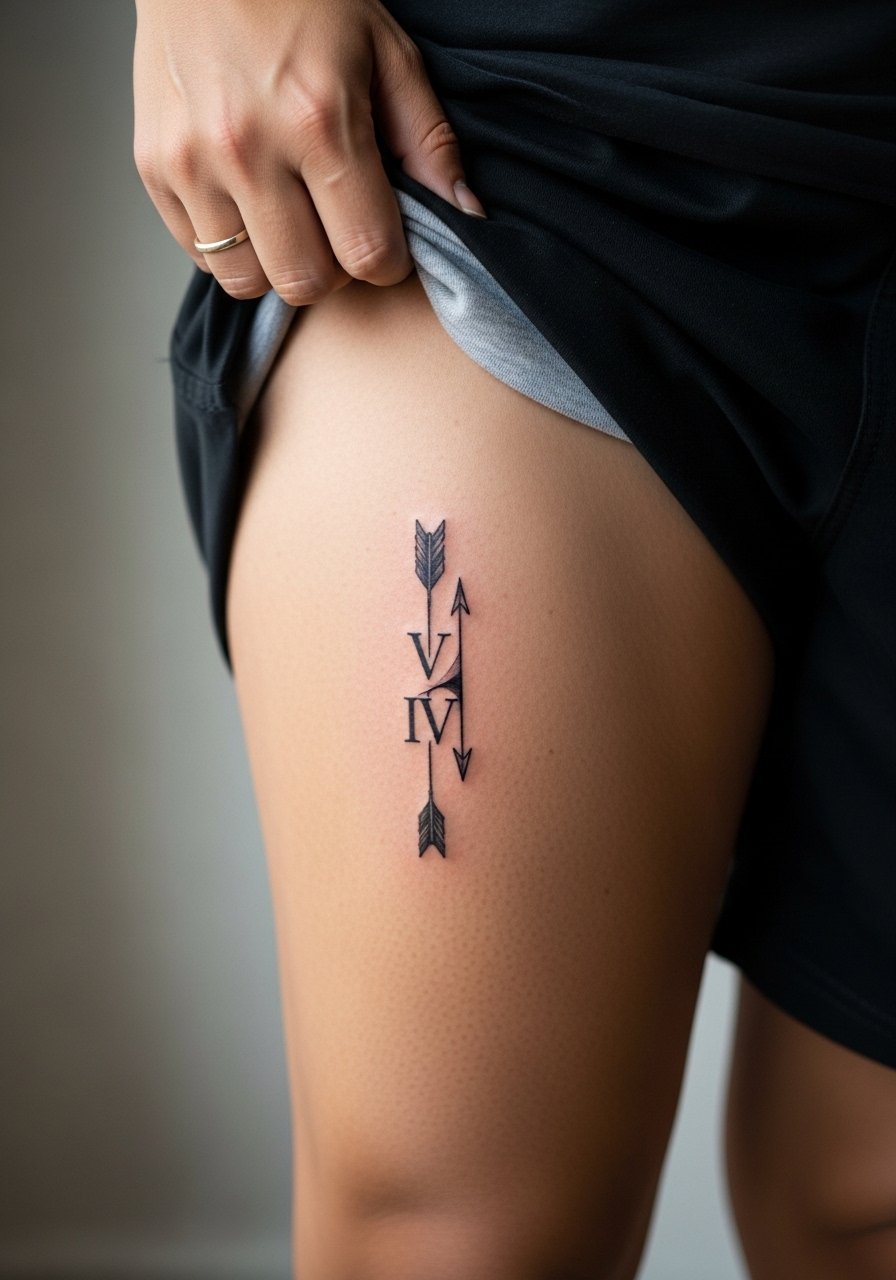
The inner thigh tolerates larger pieces and hides well. For a numeral plus arrow, keep the vertical length around 4 inches and ask for the arrow to be clean and not cross the numerals. Pain is moderate and sessions usually run one to two hours. The common mistake is placing it too close to groin movement which increases irritation while healing. Wear loose shorts to the session and avoid friction in the first two weeks.
12. Back Spine Roman Numeral Column
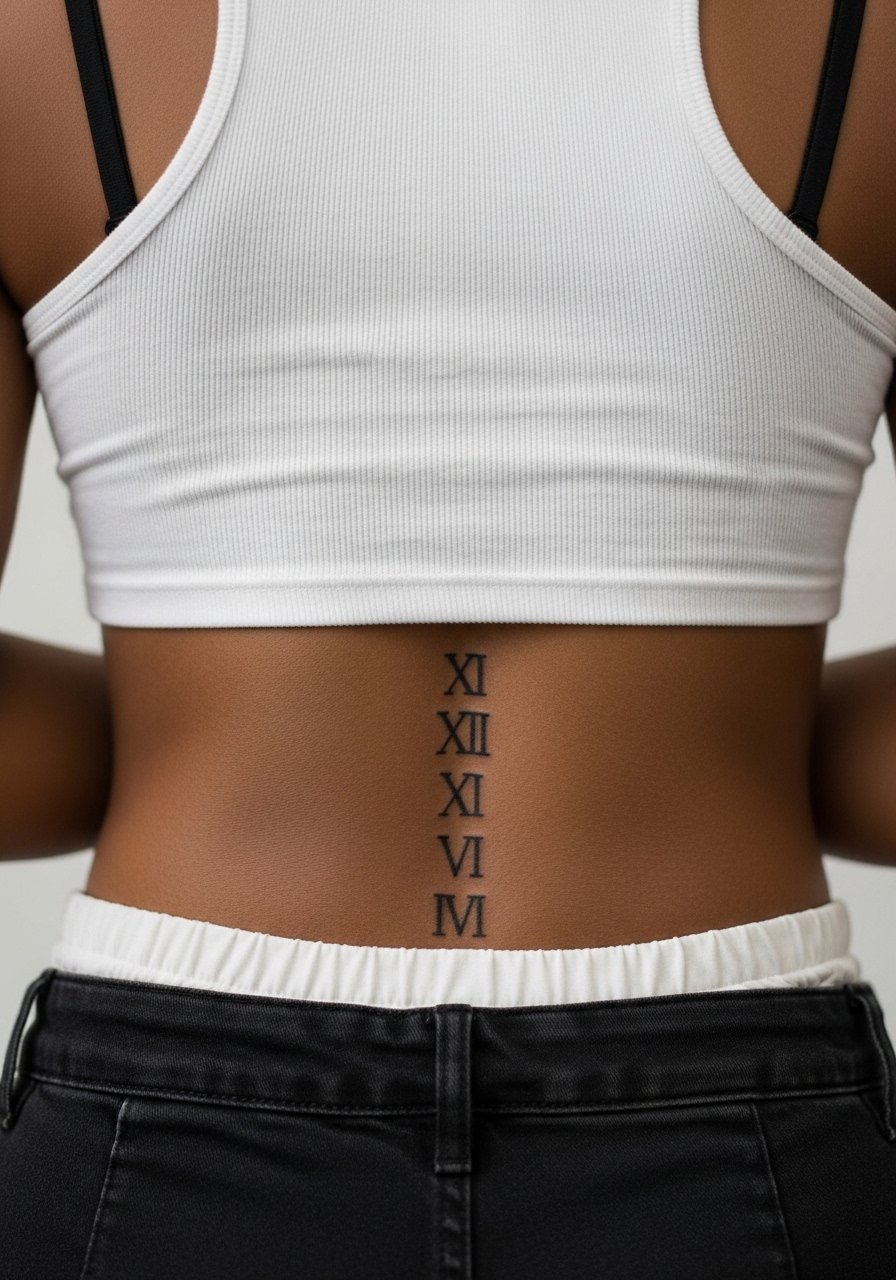
Spine columns read striking when stacked evenly along the vertebrae. I recommend at least 6 to 8 inches of vertical space and thicker strokes so the numbers remain distinct when you bend. The lower back heals well but may require a longer session because of the vertical layout. A real mistake is making the numerals too small and trying to compress many dates into a narrow column. For show-off moments, a tank top or low-back shirt lets the column be visible without exposing more skin than necessary.
13. Finger Mini Roman Numeral
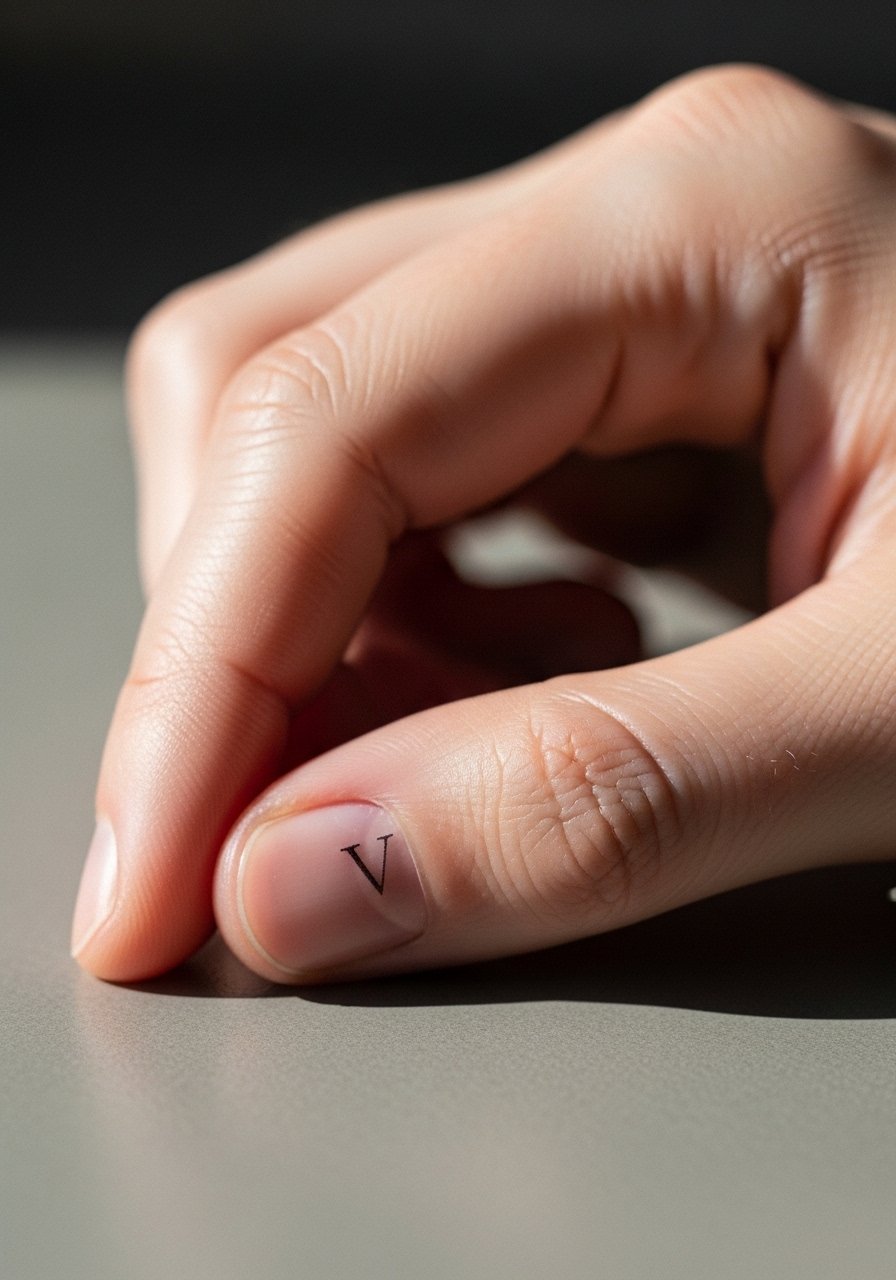
Finger placements are the most high-maintenance. They are small, about 0.5 inch tall, and sit in a zone that sheds and stretches. If you want finger numerals, request bolder caps and minimal detail so the mark reads after frequent washing. Expect touch-ups sooner than other spots, often within one to two years. The session itself is quick but healing is fussy, so keep the area dry and avoid heavy use for several days. Rings can pair nicely but avoid tight bands directly over fresh work.
14. Sternum Roman Numeral Accent

The sternum takes ink in a sensitive spot with thin skin over bone. Keep numerals compact and centered along the sternum line in a 2 to 3 inch band. Pain is higher and sessions may require breaks. Artists sometimes debate fine line here because constant movement from breathing can soften edges. Ask the artist how they approach needle depth on the chest bone. For session wear, a fitted sports bra or bandeau that can be easily adjusted makes access simple.
15. Shoulder Cap Single Numeral
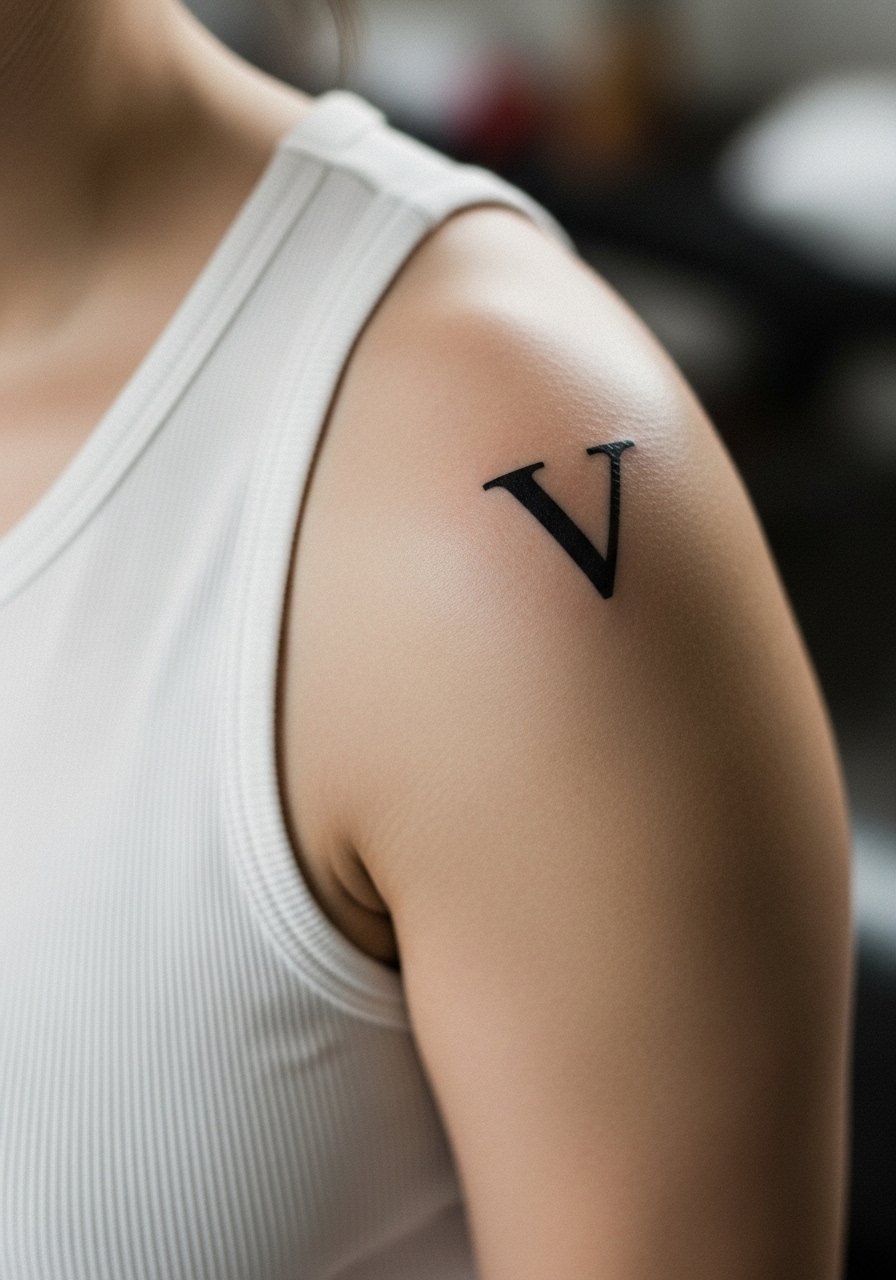
Shoulder numerals read well with medium line weight and simple composition. The shoulder has thicker skin and accepts saturation without as much risk of blowout. Tell the artist you want the numeral isolated on the cap with clean negative space around it. Sessions are short and healing is fast. For showing it off, pair the piece with a sleeveless henley so the shoulder line is visible without being loud.
16. Roman Numeral Pocket-Size Near Collar
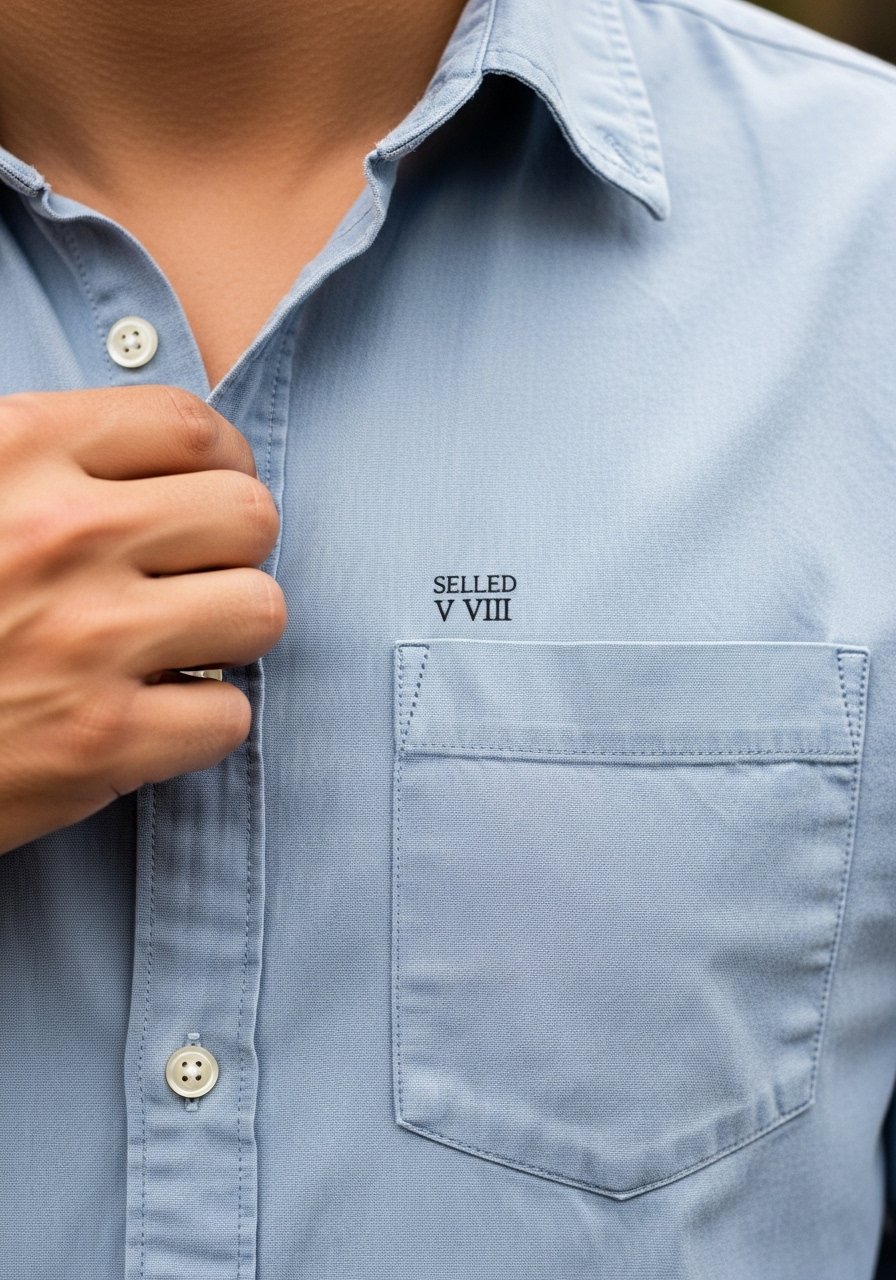
A pocket-adjacent numeral reads like a private mark that peeks out when shirts are unbuttoned. Keep it around 1.5 inches wide and insist on block numerals so the tiny size stays legible. The typical mistake is choosing ornate type that looks cramped. Sessions are quick and healing is straightforward. For session readiness, wear a button-front shirt so you can open only the necessary panel without removing layers.
17. Roman Numeral with Subtle Dot Work Halo
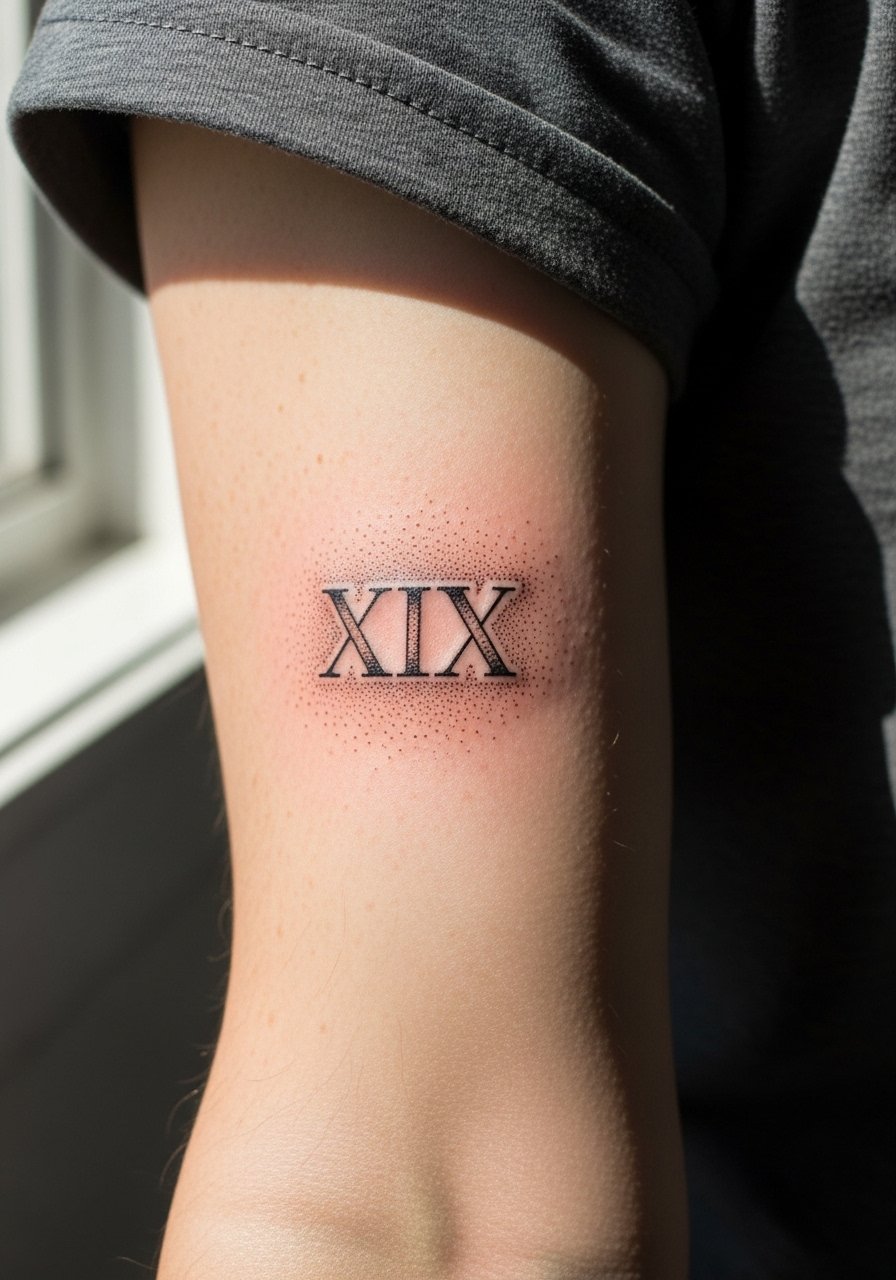
Combining numerals with stipple shading gives a soft contrast without filling the numerals themselves. Ask the artist for stipple that sits behind and does not touch number strokes. The shading can help older numerals look intentional when they soften over time. A common mistake is overworking the halo so it eats into the linework; request clear negative margins. This piece takes a single extended session and pairs well with rolled sleeves for a casual reveal.
18. Roman Numeral Ankle Drop
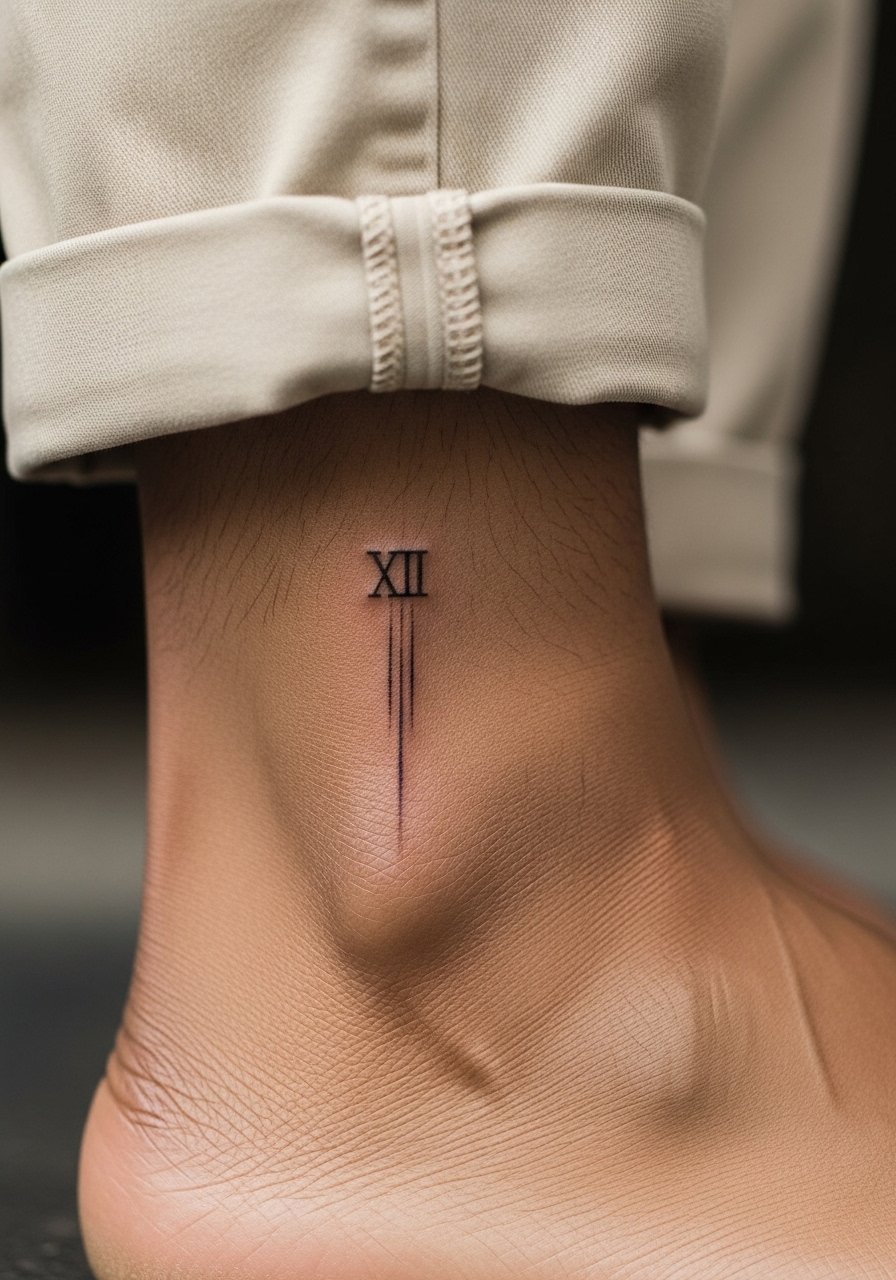
An ankle drop is more vertical than a band and looks elegant when the numerals are 1.5 to 2 inches in total length. Shoes and socks create friction, so ask for slightly heavier line weight if you plan daily wear. The session is quick but be ready for minor patchy wear in the first year. Cuff your pants or wear cuffed chino pants to show the drop without constant abrasion.
19. Roman Numeral Over a Cover-Up Accent
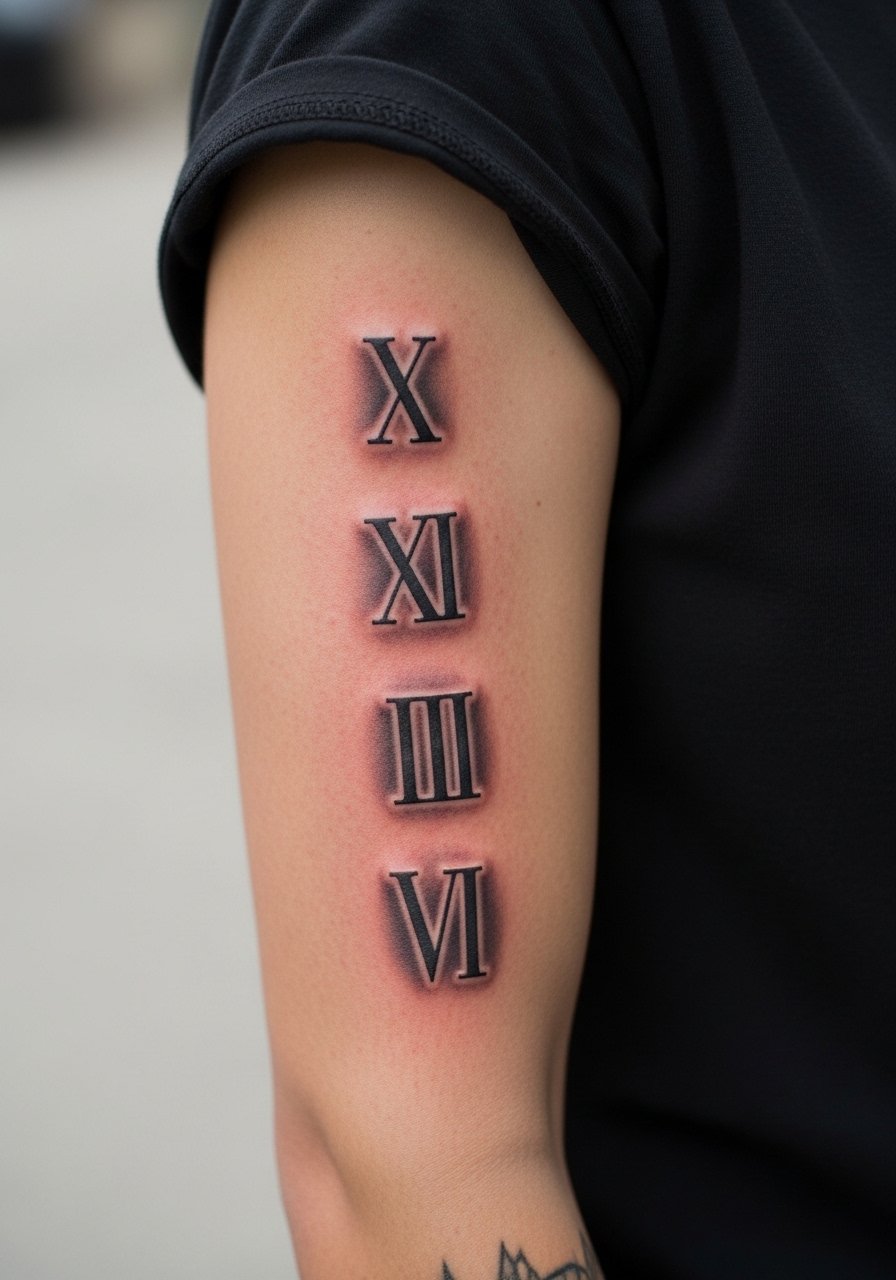
If you are updating old ink, numerals can be a clean option to mask faded lines while giving a fresh narrative. During consult bring clear photos of the old piece and ask how much saturation is needed to blend the old pigment. The mistake is assuming tiny numerals will cover heavy color; often you need slightly larger numerals and blocking. Sessions vary depending on the existing tattoo. For the appointment, wear a loose short-sleeve shirt for access.
20. Roman Numeral with Minimalist Geometric Frame
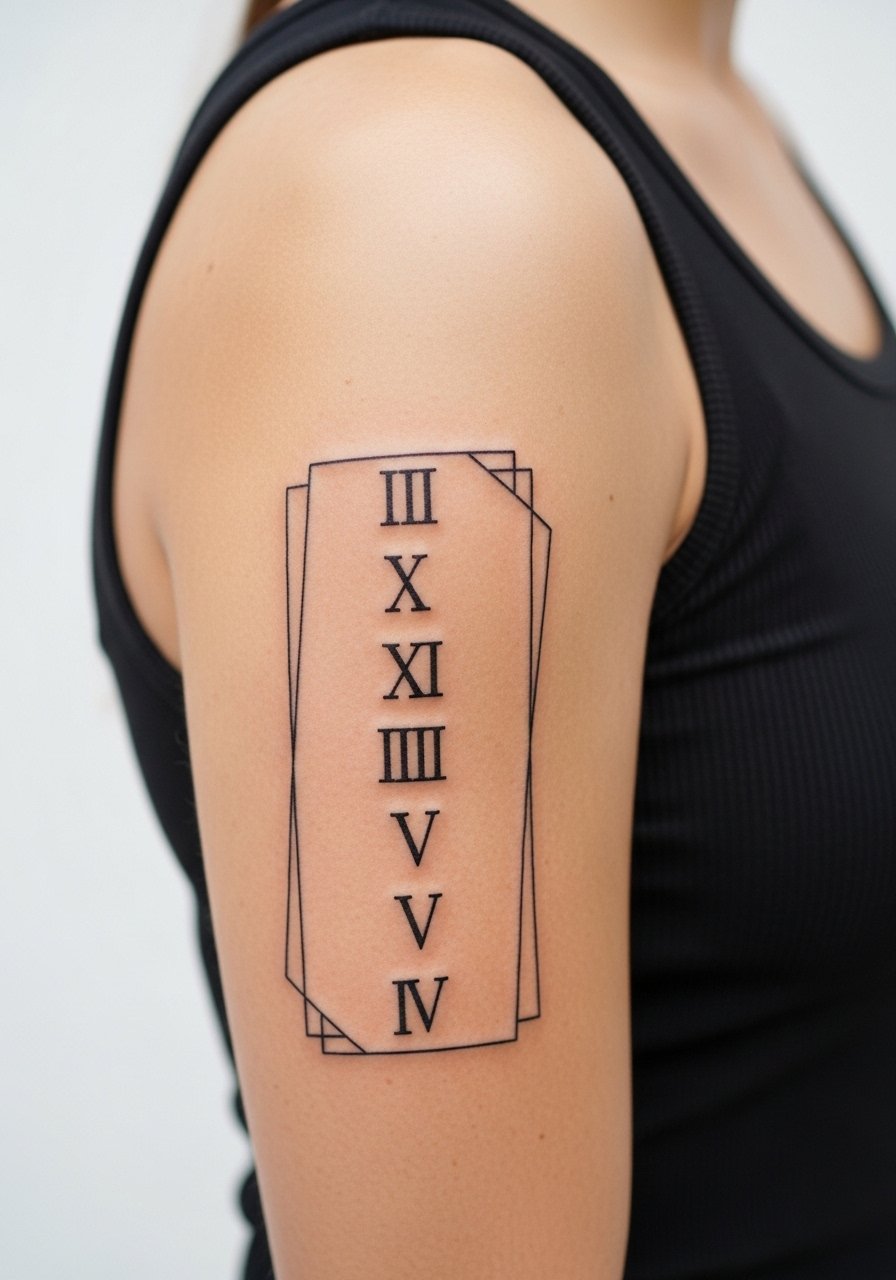
A thin geometric frame gives structure and keeps attention on the numerals. Tell the artist you want the frame lines clean and the numerals set with breathing room inside. The risk is making the frame too tight which will cause the numbers to look crowded as the ink settles. This takes a single focused session and pairs well with a fitted black tank top to highlight the framed composition.
21. Roman Numeral Chest Pocket Replica

A pocket-replica numeral is a subtle nod that reads as a detail rather than a focal piece. Keep sizing small, around 1.5 inches, and ask for clear block numerals without decorative serifs. The common error is trying to squeeze ornamental script into that space. Sessions are brief. For showing off, a button-front shirt left slightly open frames the piece like a deliberate sartorial detail.
22. Roman Numeral On the Back of the Neck
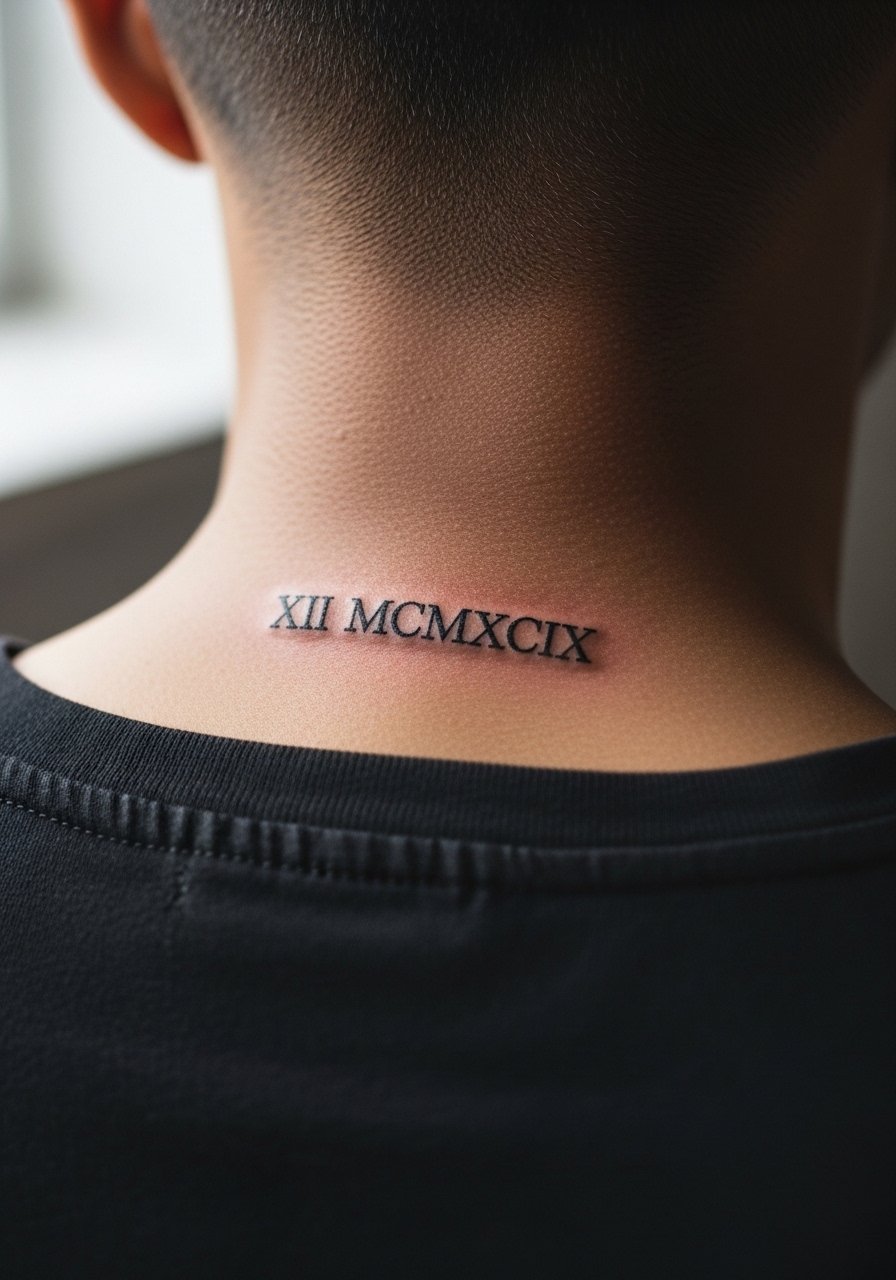
The nape is exposed to sun and hair friction. Keep numerals compact and bold enough to survive repeated exposure. Ask your artist how they handle ink depth on the thin skin there to avoid blowout. Expect a short session and consider that neckline changes with hair length. For casual visibility, a side neck hoodie or wide-neck tee pulled slightly works well.
23. Roman Numeral Wrist Cuff with Negative Space
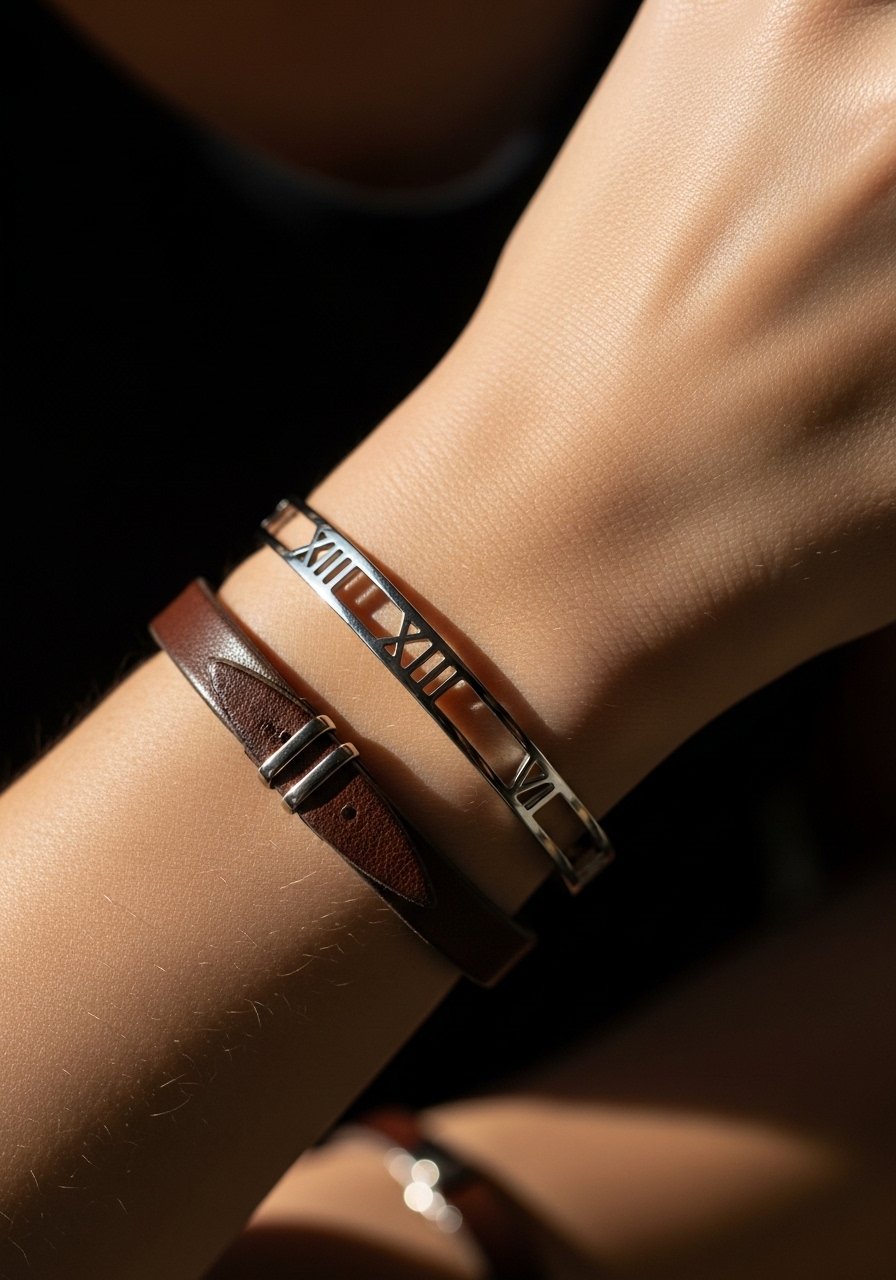
A cuff that uses negative space keeps the numerals readable while avoiding a heavy black band. Ask your artist to map the gaps so numbers do not run into each other when the wrist flexes. The main mistake is making the gaps too narrow which causes the cuff to blur. Healing is similar to wrist linework and touch-ups might be needed at year two. Pair with a slim leather bracelet on the opposite wrist for balance.
24. Roman Numeral Over Ribcage with Floral Accent
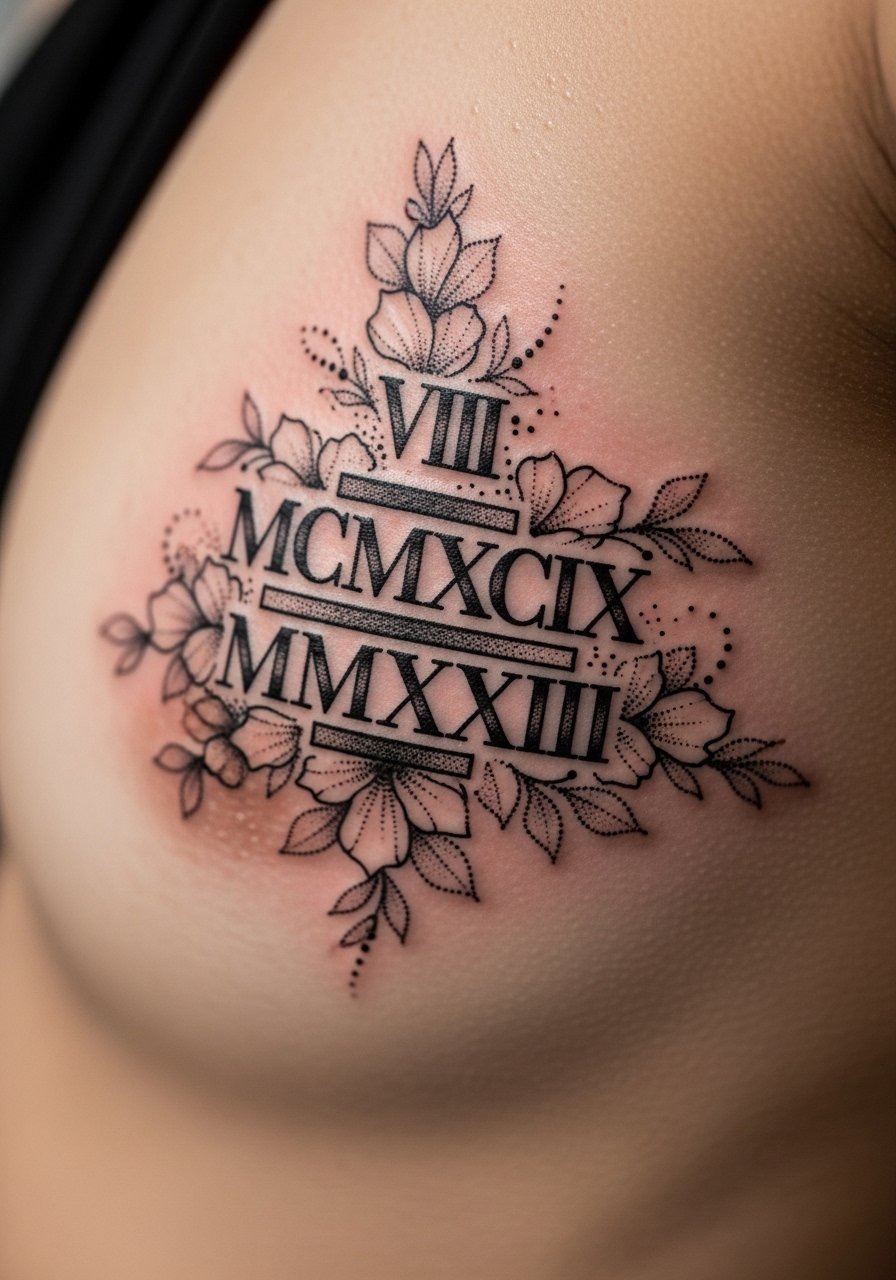
Combining stacked numerals with a tiny floral accent softens the memorial feel and gives the piece a frame. The ribs are sensitive and breathing affects the session, so plan breaks. Artists disagree about fine line here. One group says the stretch blurs lines. Another says careful depth and spacing work fine. Ask where your artist stands before booking. Keep numerals spaced and the floral as breathing room. Session time is often single extended appointment. For after-session comfort, wear loose tanks and side-slit tops.
25. Roman Numeral Chest Bar Under Collar
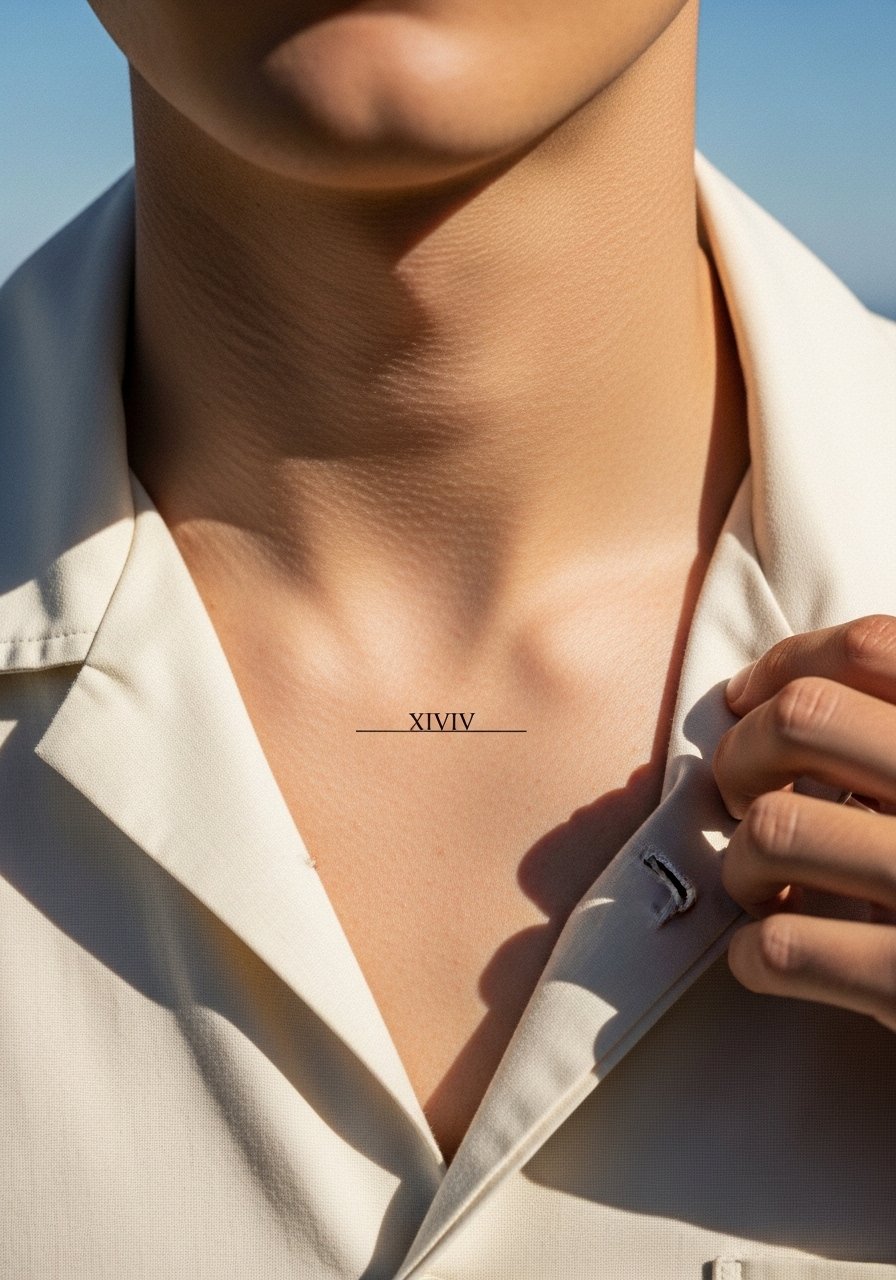
A slim chest bar sits just under the collar and reads subtly. Keep the bar length moderate, around 3 inches, and specify block numerals. The problem is putting tiny numerals in a high-movement area; avoid micro script. This sits well with open-collar shirts and is an easy single-session piece. Use a button front camp shirt to reveal without overexposing.
26. Roman Numeral Wrist Chain Integration

Integrating numerals into a chain motif gives a jewelry-like aesthetic that reads purposefully. Ask your artist to keep the chain links open enough so the numerals sit cleanly within links. The risk is over-detailing the chain in tiny scales which will blur. Sessions are short if confined to a single wrist and healing is similar to other wrist work. When showing it off, choose a cuffless look and let the chain speak for itself.
27. Roman Numeral Collarbone to Shoulder Sweep

A sweeping placement across the collar into the shoulder uses body flow to dramatize a date or set of numbers. Keep the numerals large enough to read along the curve and avoid ornate type that fights motion. Sessions are single to one and a half hours depending on length. A common mistake is crowding numerals in the curve which looks cramped when you move. For wardrobe, a wide-neck shirt pulled to one side frames the sweep cleanly.
Frequently Asked Questions
Q: Do fine line Roman numerals really fade faster than block numerals on hands and wrists?
A: From what I have seen, fine single-needle work on hands and wrists tends to soften sooner because those areas are washed and flexed constantly. Block numerals with slightly heavier stroke survive better. If you want delicate lines, plan on touch-ups at year one to three depending on exposure.
Q: How do I avoid conversion errors when picking a date in Roman numerals?
A: Double-check with two separate converters online and ask the artist to write the numerals on stencil paper for your approval. Say the full date out loud during consultation so the artist can confirm the correct numeral order before the stencil goes on.
Q: Will an armband rub or distort if I gain muscle on the bicep?
A: It depends on how much volume you add. A properly spaced 3 to 4 inch band with room between character elements accommodates moderate muscle changes. If you expect major size shifts, tell the artist so they can plan spacing and line thickness accordingly.
Q: What should I wear to a ribcage or sternum appointment for comfort and access?
A: A fitted sports bra or a wide-neck shirt you can lift easily keeps the area accessible and comfortable during longer sessions. Loose tanks work for rib pieces if you can lift the side without stretching fabric across the needle path.
Q: Are neck and hand placements risky for professional settings?
A: They are more visible and may still influence perception in some workplaces. Think about your career path and whether you want constant visibility or a piece that can be partially concealed with collars or sleeves. Searching local directories and convention listings can help you find an artist who specializes in discreet placements.
Q: How often should I plan touch-ups for small wrist or finger numerals?
A: Expect to book a touch-up within one to two years for fingers and wrists, and every two to three years for wrist cuffs if you are outdoors a lot. The actual timeline depends on your skin, sun exposure, and how often the area is washed or abraded.
Q: Can I combine Roman numerals with other motifs without losing readability?
A: Yes, if you preserve negative space around the numerals and pick complementary techniques like stipple shading or a thin geometric frame. Communicate the hierarchy to your artist so numerals remain the focal point.