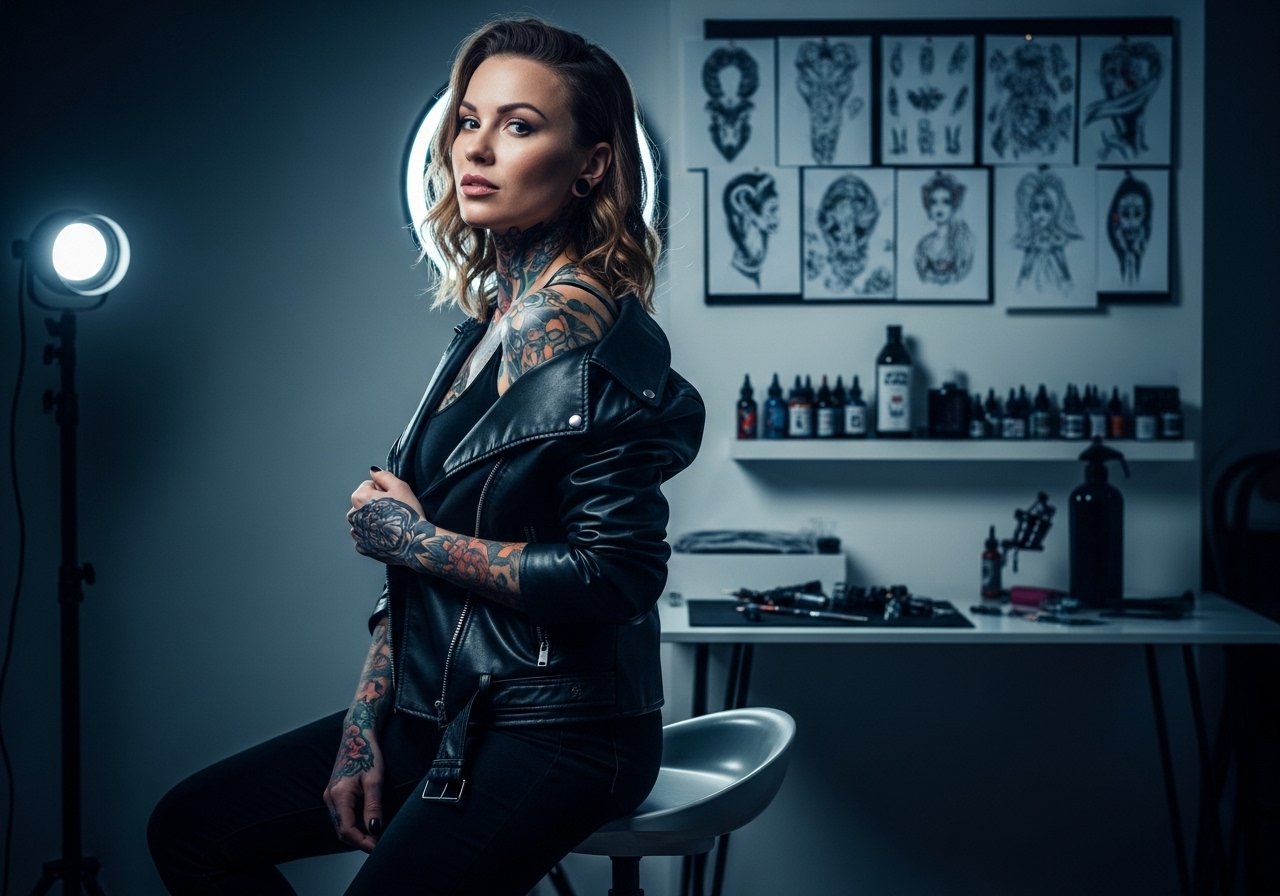
Fine line trends are everywhere, but the tattoos that still read clean three years later are not always the ones that got the most saves. Fine line pieces can fade into smudges, watercolor can sit differently on melanin-rich skin, and guest spots sometimes mean last-minute cancellations. This collection of yin yang tattoo inspiration walks those trade-offs, shows which styles age better where, and gives exact wardrobe tips for sessions and showing off the work.
1. Minimalist Yin Yang Circle on the Wrist
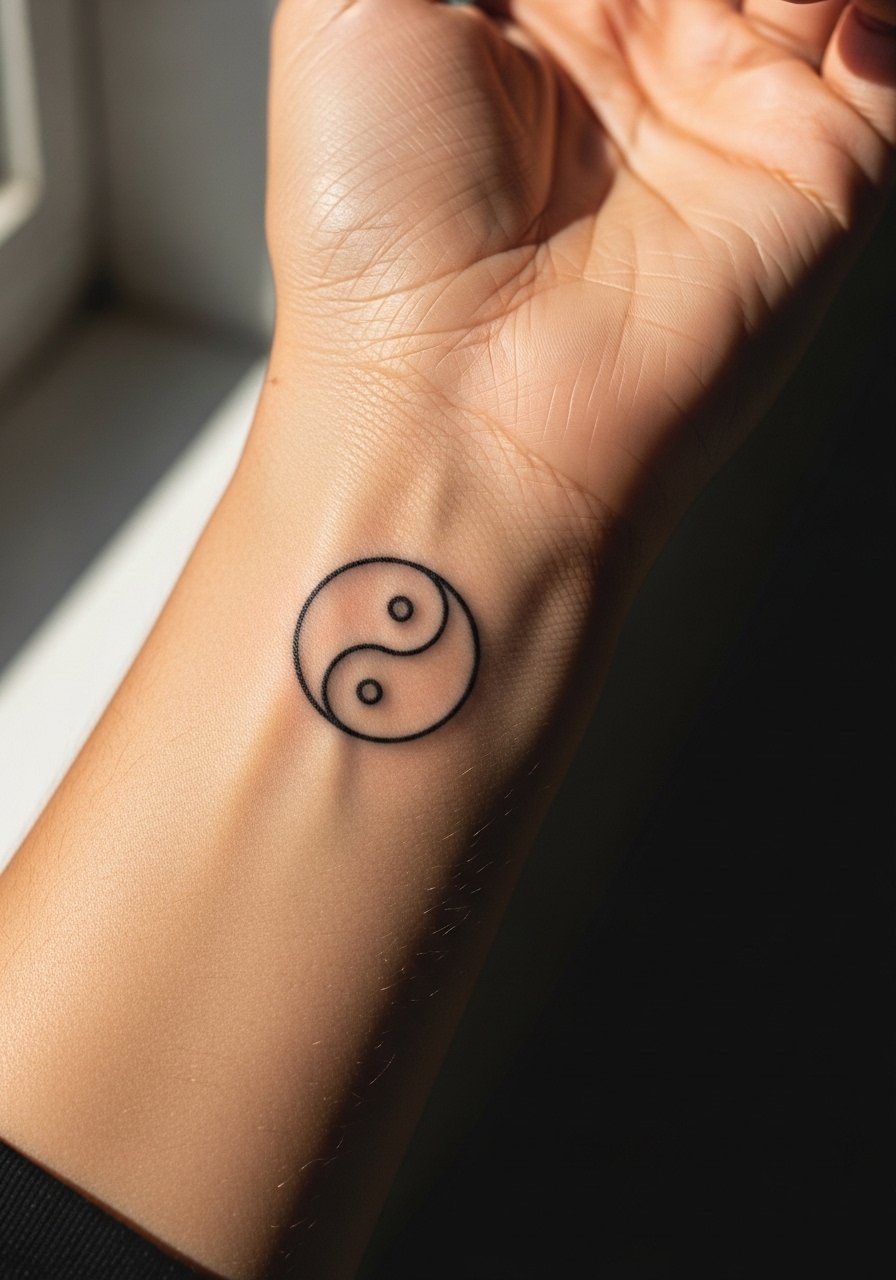
The wrist is the classic first-timer placement for small yin yang tattoo ideas. Expect low pain and a quick single session when the mark is 1 to 2 inches. Tell your artist you want slightly thicker linework than a single-needle flash if you plan to keep the contrast past year one. The common mistake is going too tiny with ultra-fine lines, which often blur into a gray smudge by year two. For showing it off, stack a thin silver chain bracelet or a minimalist cuff bracelet. For the session, wear a sleeveless tank or roll your sleeve so the artist has easy access.
2. Fine Line Yin Yang with Lotus on Inner Forearm
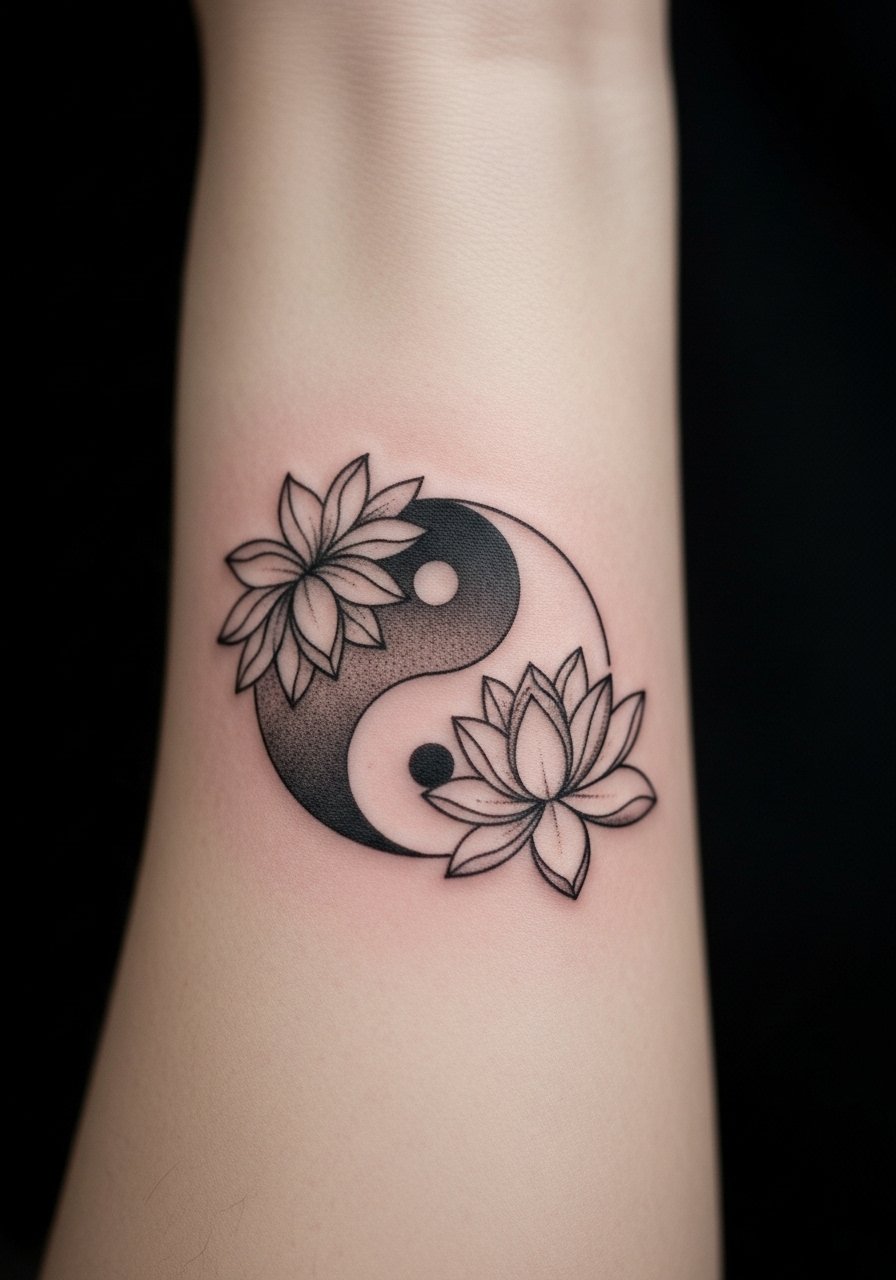
This one reads delicate and architectural up close, but fine line aging splits opinion. One camp says fine line holds elegant, subtle detail. The other camp points out that thin lines on moving forearm skin can feather and need touch-ups around year two to three. My practical take is to request slightly increased line weight in dense areas and ask about touch-up timing in the consultation. Mention "3-inch scale, lotus petals with stipple shading" to get the exact look. Pair the piece with a linen roll sleeve shirt when you want a soft frame, and wear a loose button-up for the session.
3. Watercolor Yin Yang Waves on Shoulder Blade
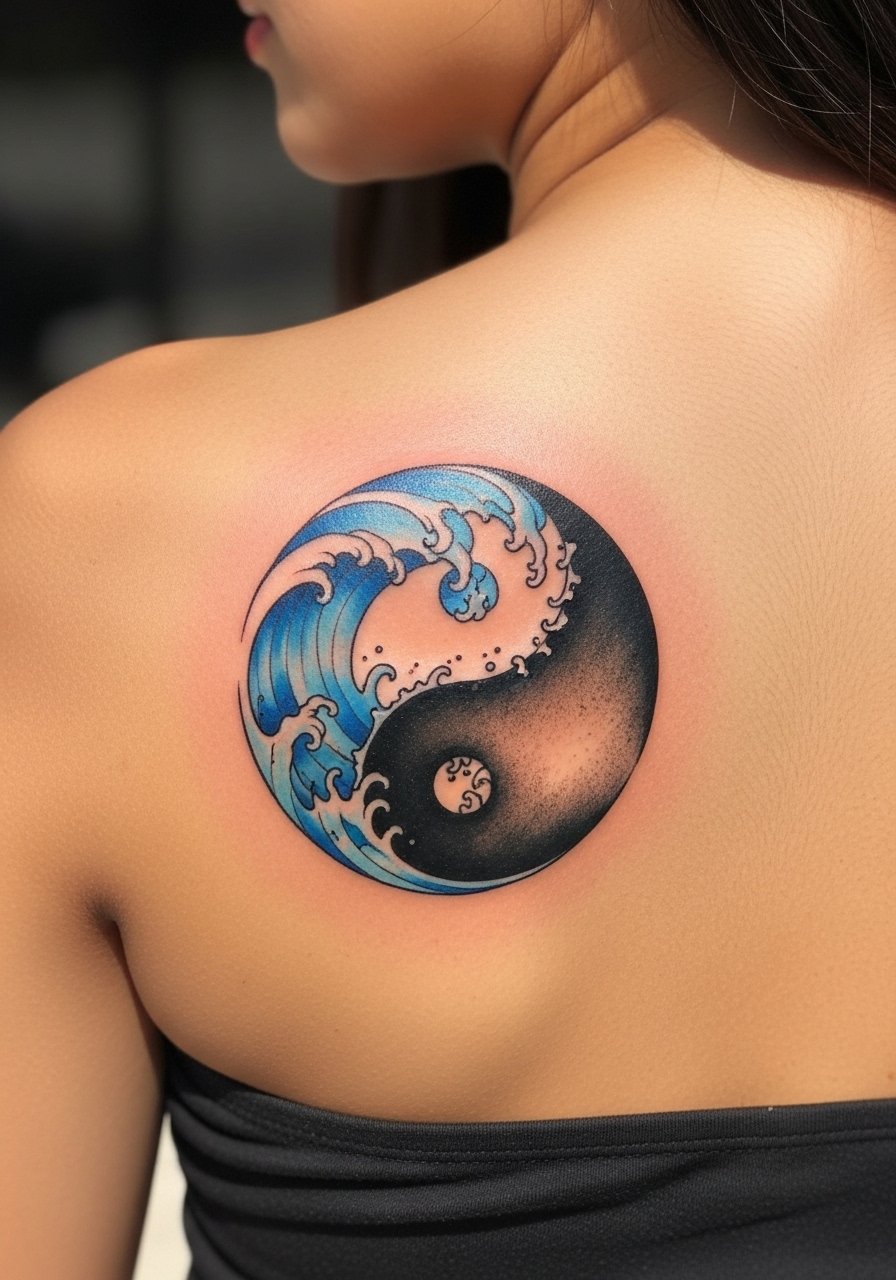
Watercolor gives motion to the yin yang, but it demands placement that sees less friction and sun. Shoulder blade is forgiving because it moves less and you can hide it under clothing while it heals. The mistake is packing watercolor too close to dense black. Ask for black outlines or subtle dot work to anchor the color so it does not read like a bruise as it fades. For session comfort, bring a strapless top or loose vest. Show it off with an off shoulder blouse in soft pastels.
4. Blackwork Geometric Yin Yang Mandala on Upper Arm
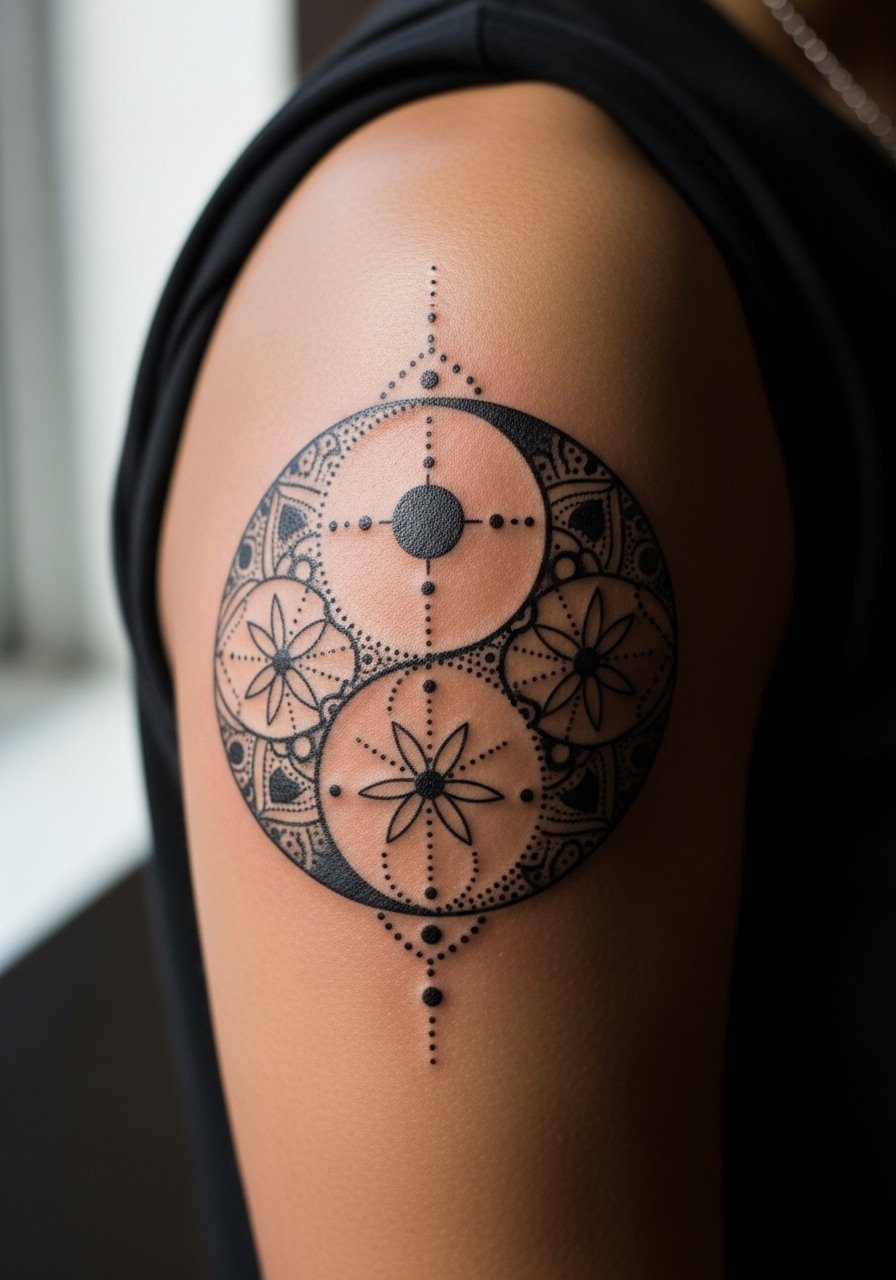
For people looking for longevity, blackwork mandala variations are a strong option. The dense dot work and solid fills age into a graphic presence rather than fading into a smudge. Avoid compressing too many fine circles into a small space. Tell your artist you want breathing room between mandala elements so the geometry stays legible at three and five years. This design ties to meditative patterns, so mention you prefer stylized motifs rather than direct religious icons. Pair it with cropped sleeves and cropped straight leg jeans when you want the upper arm visible.
5. Neo-Traditional Yin Yang Koi Fusion on Calf
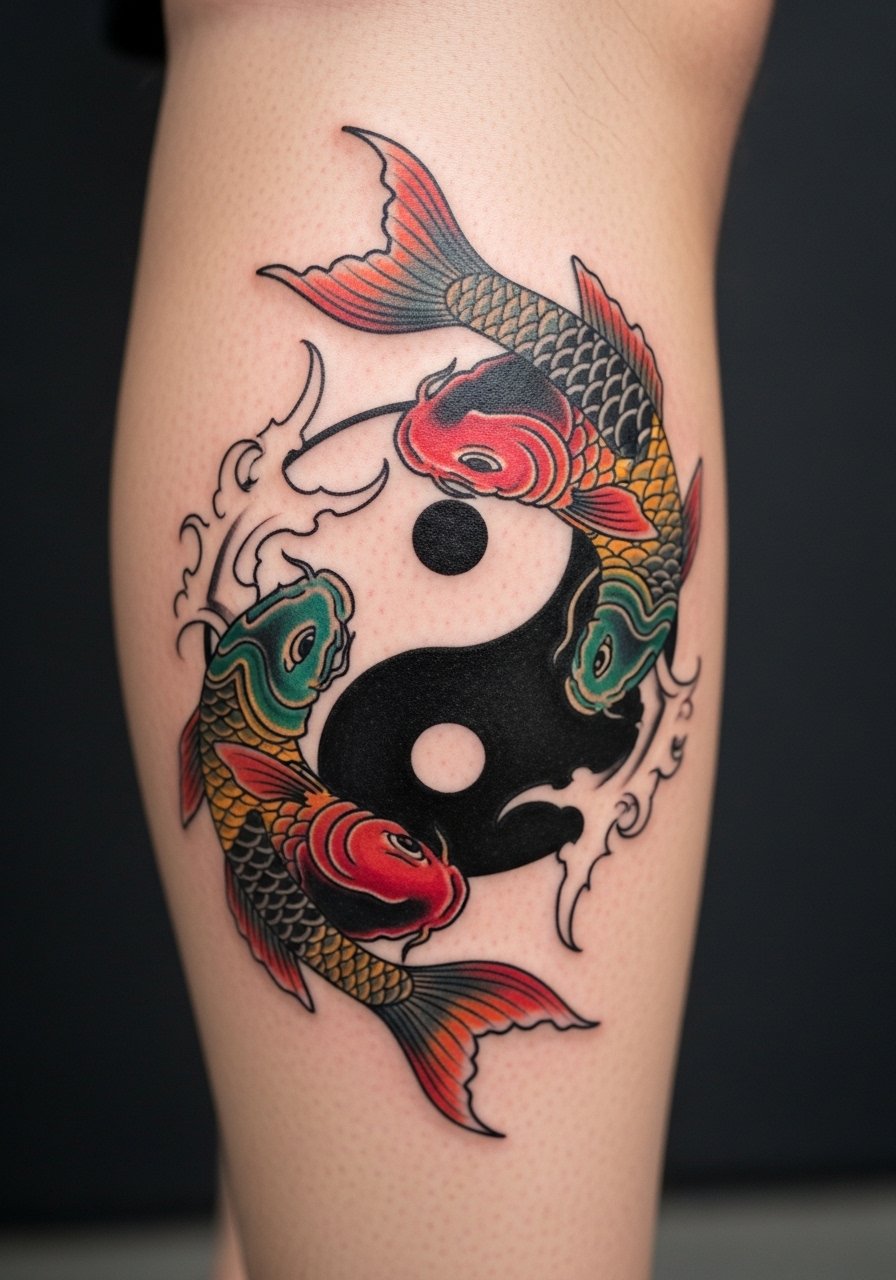
This is a storytelling piece that plays well at larger scale. Expect multi-session work for saturation and shading. The typical error is shrinking a koi fusion down to wrist size where detail collapses. For a calf piece, ask for bold outlines and color accents to keep the illustration readable from a distance. The session can feel like medium pain; bring compression socks if you stand afterward. For after-session outfit choices, cropped pants or shorts with leather ankle boots make the silhouette pop.
6. Micro-Realism Yin Yang Faces on Collarbone
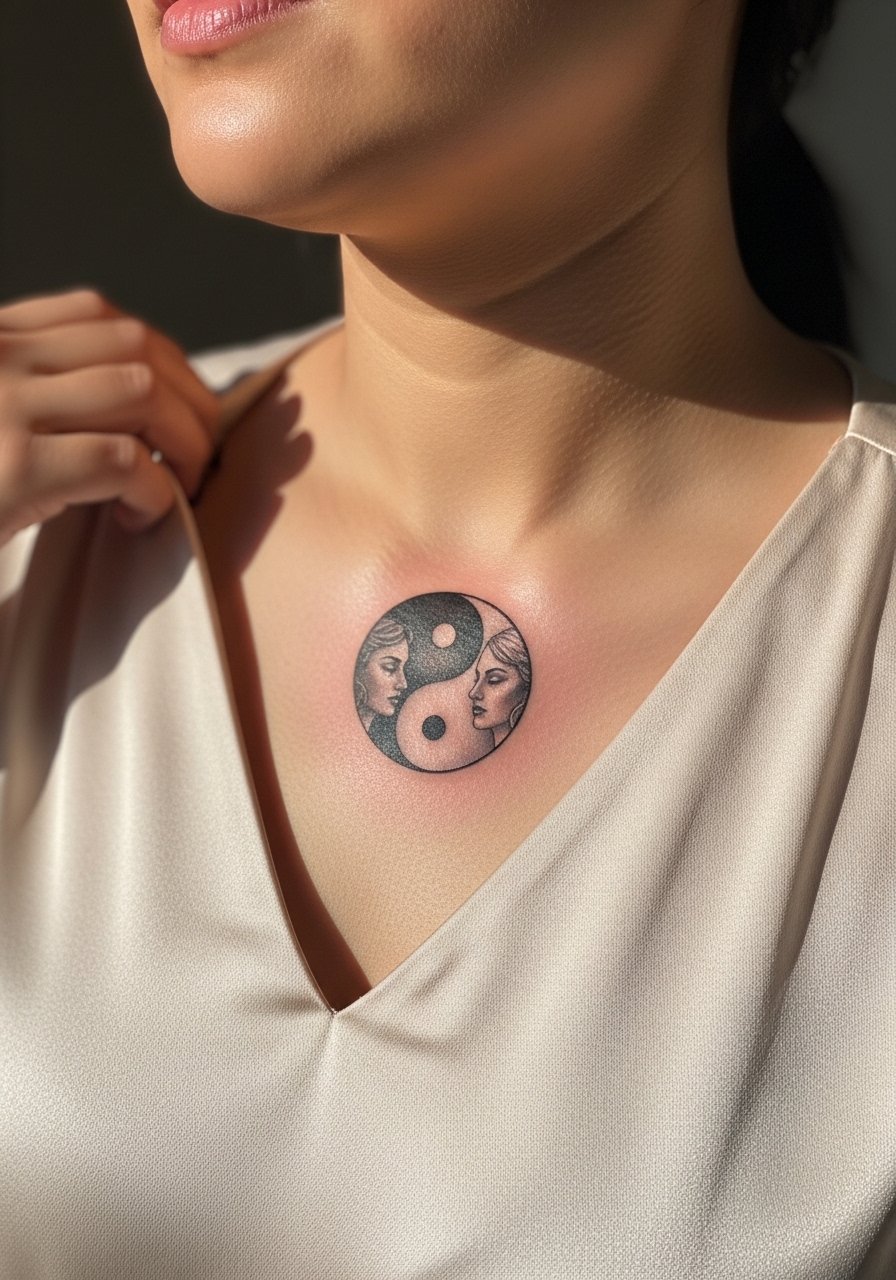
Micro-realism inside a small yin yang is striking but demands a confident artist and tight placement planning. Collarbone hits a sensitive spot and can feel stinging for the duration of the session. A common mistake is aiming for too much facial detail in under 2 inches. Ask for slightly larger scale if you want recognizable portrait features. Expect a touch-up at year two. For showing the piece, a v neck silk blouse or low scoop tank frames the area without competing.
Studio Day Picks
The wrist, inner forearm, and collarbone pieces above need different prep than the calf and shoulder work, and a few practical items smooth the session and first week.
-
Stencil transfer paper kit. Lets you and the artist preview exact placement against the wrist and collarbone before the needle goes down.
-
Topical numbing cream. Useful for sensitive collarbone sessions or dense calf shading when you prefer reduced discomfort.
-
Thin protective film roll. Keeps wrist and ankle tattoos clean during the first week of constant friction and handwashing.
-
Fragrance free gentle body wash. Gentle cleansers reduce irritation around fine line work while you shower.
-
Aquaphor healing ointment. Thin layer application during the earliest days helps protect fine line areas like wrists and inner forearms without suffocating the skin.
7. Ornamental Yin Yang with Dots and Lines on Back of Neck
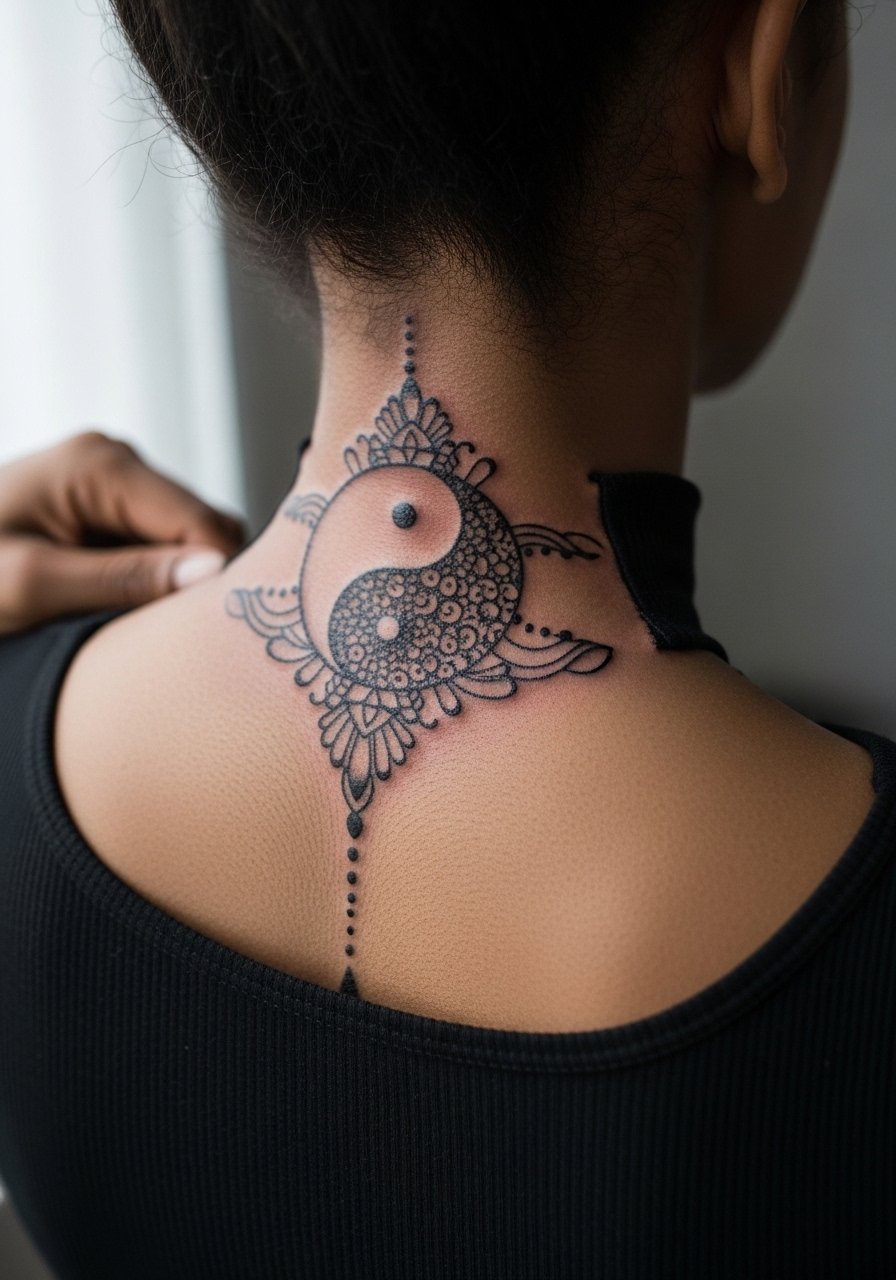
The back of neck is a space that reads like a private emblem unless you wear your hair up. Dot work and stipple shading suit this canvas because the pattern can breathe without relying on color. The mistake people make is asking for tight dot fields that merge on the nape where skin moves with neck turns. Ask for slightly looser stipple spacing and a 4-inch scale so the ornamentation holds. This placement pairs with open-back dresses or high-neck crops to reveal the motif selectively. A brief note on origin: ornamental mandala patterns draw from Buddhist and South Asian visuals, so many people choose stylized versions rather than direct replicas.
8. Traditional American Yin Yang with Waves on Outer Forearm
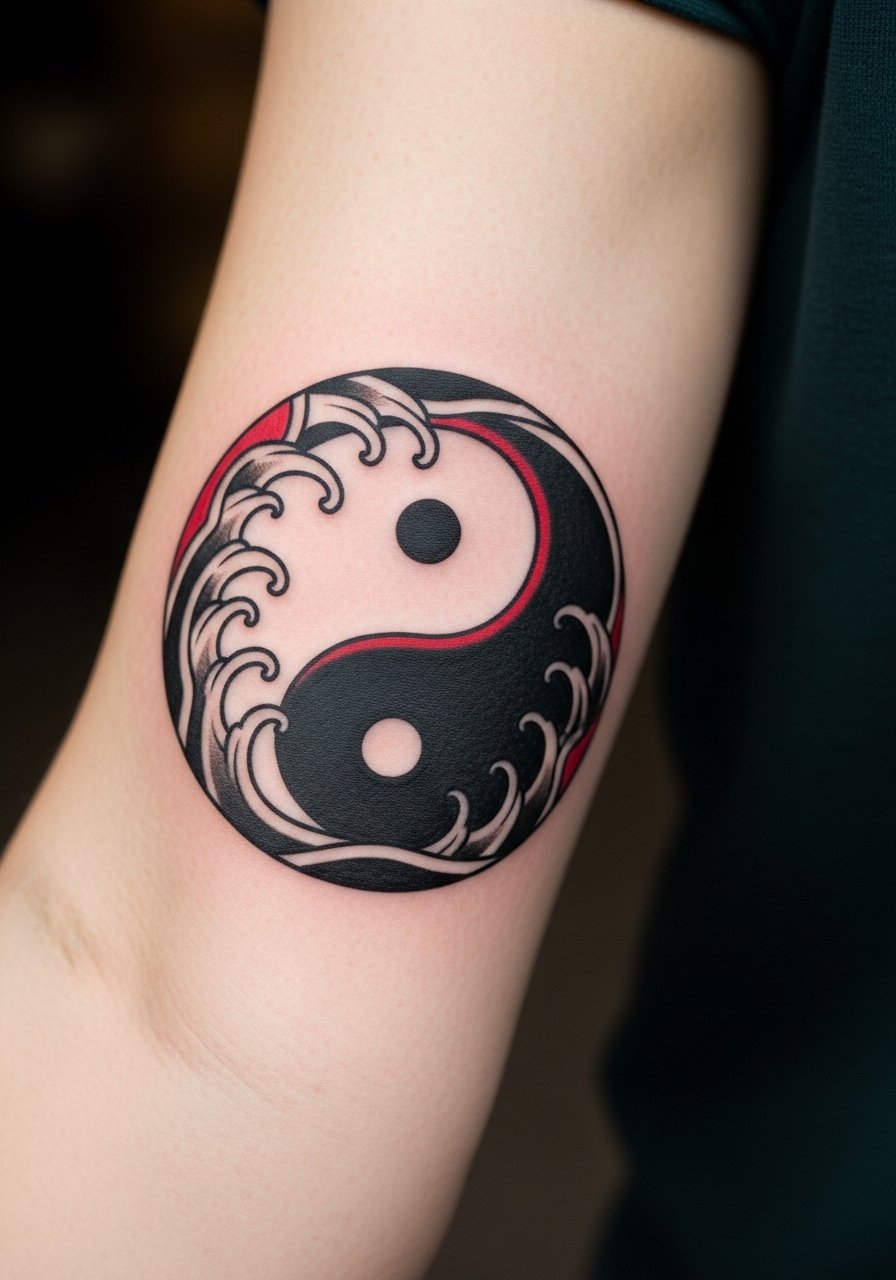
Bold traditional work ages predictably because of heavy outlines and saturation. For forearm pieces that see sun, ask for strong black saturation and a small color accent rather than watercolor fills. A common mistake is expecting subtle watercolor longevity in this placement without frequent sun protection. The session is comfortable and quick for a 3 to 5-inch piece. Pair this with rolled sleeves or a short-sleeve button shirt to keep attention on the silhouette.
9. Ignorant Style Chunky Yin Yang on Ankle

Chunky, imperfect lines are the point with ignorant style. The ankle is a high-friction zone that can dull crisp edges if the ink sits too shallow. Tell your artist you want intentionally uneven strokes with slightly heavier saturation so the character survives shoe rub and socks. The session is quick but plan for mild discomfort when the needle crosses bone. Wear capri pants or shorts to the appointment and show off the result with strappy flat sandals.
10. Fine Line Yin Yang Sleeve Element on Inner Arm
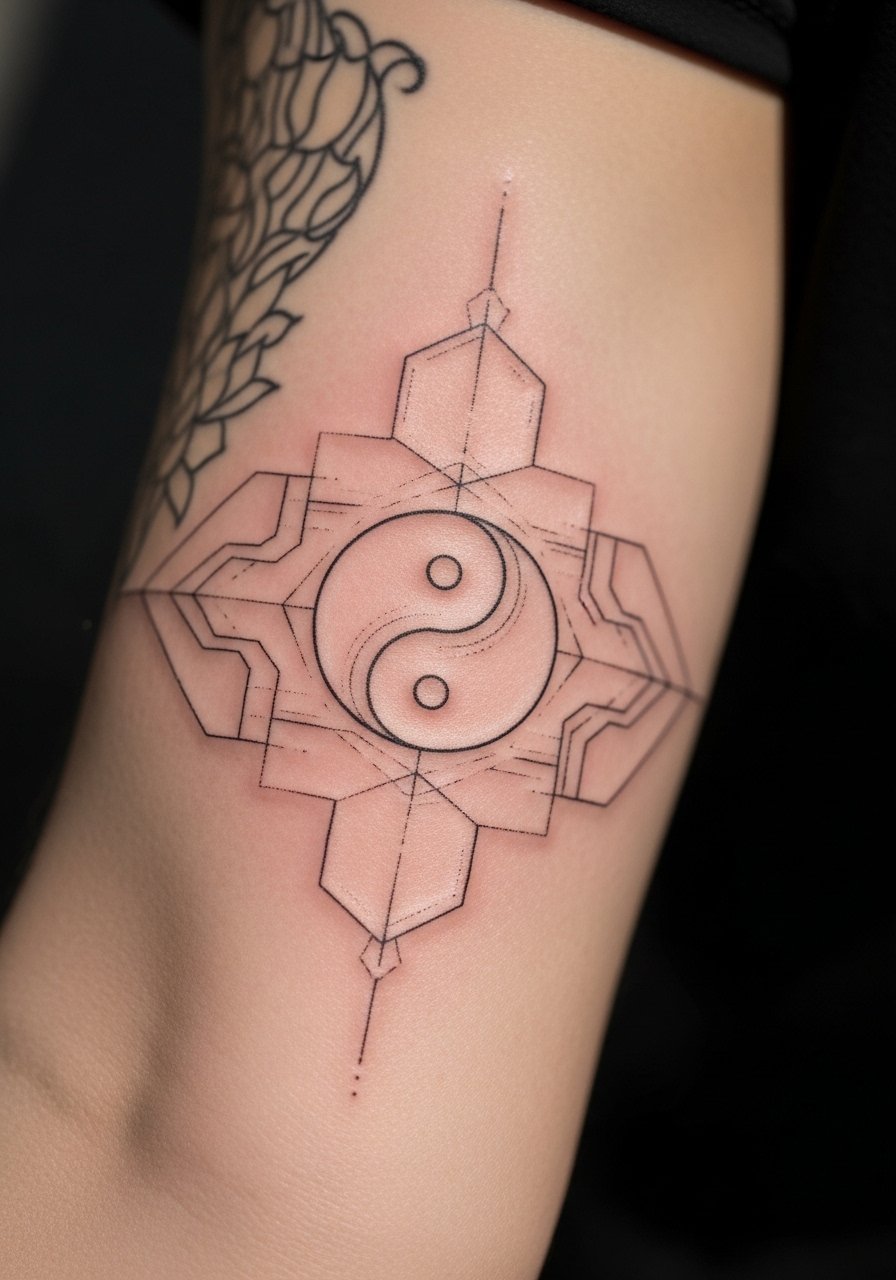
If you plan a sleeve, build the yin yang as a modular element that can expand without crowding. The big mistake is forcing ultra-tight fine line clusters too close to heavier pieces, which causes blending as the sleeve ages. Tell your artist you want a modular motif with negative space channels for future additions. Expect multiple sessions over months and an increased chance of touch-ups on the fine lines at year three. For showing off in summer, roll up a sage green button up or a linen shirt.
11. Kinetic Water Illusion Yin Yang via Negative Space on Ribcage

This under-covered idea uses negative space to create motion inside the symbol. Ribcage is sensitive and stretches with breathing, which introduces debate among artists about fine line on ribs. One camp warns of blurring within two years. The other says proper depth and spacing settle fine. Ask where your artist stands and for touch-up plans. Session pain is higher, but scale and negative space make the illusion readable even as it ages. Wear a fitted sports bra to the appointment for easy access.
12. Finger Knuckle Interactive Yin Yang Reveal
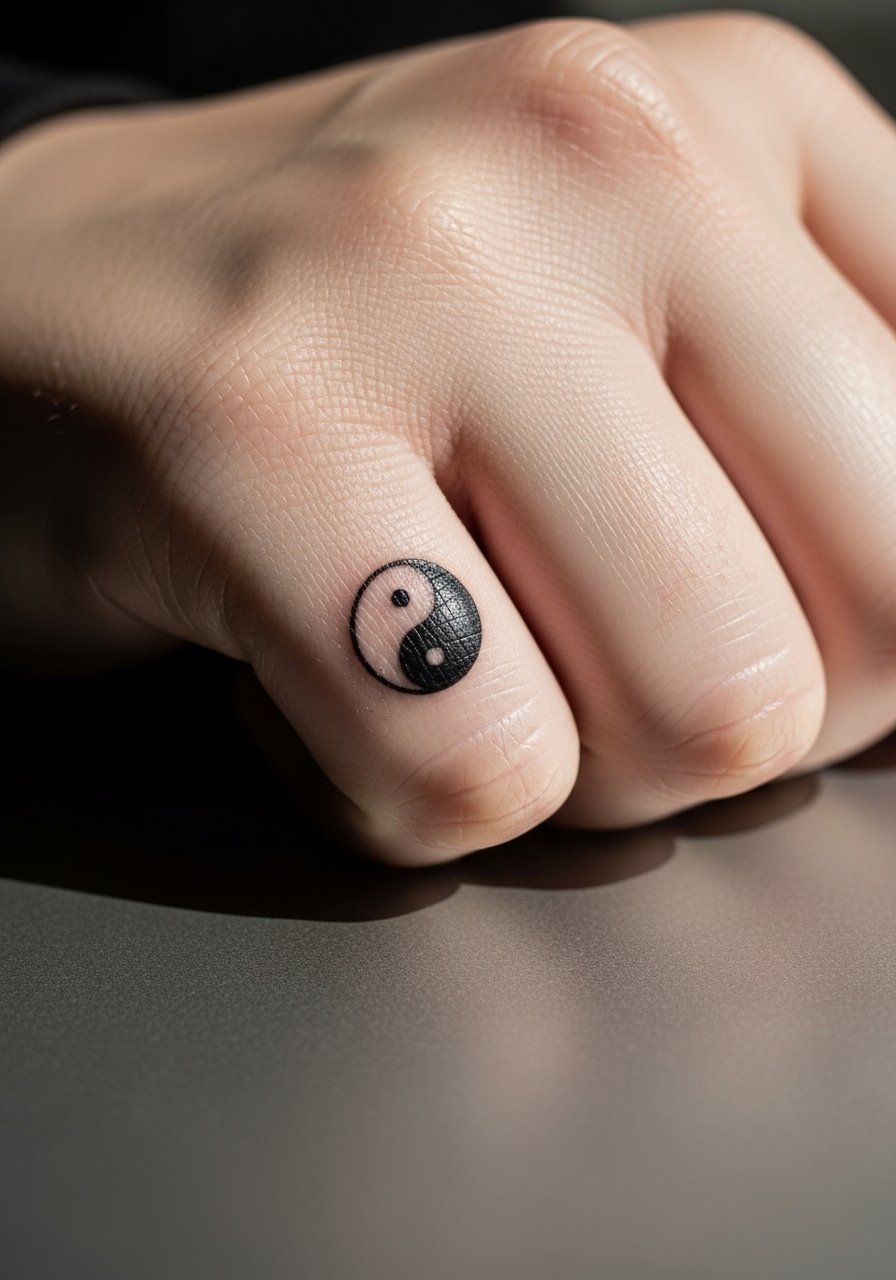
A knuckle or side-of-finger placement creates a playful reveal when you make a fist. Expect accelerated fading and touch-ups because these areas are exposed to constant washing and friction. The common mistake is asking for shaded detail on a 1-inch knuckle surface. Keep it boldly black and simple. Wear minimal rings until the piece fully settles. For session wear, bring capri leggings or shorts so you can move freely without pressure.
13. Hybrid Yin Yang-Koi on Upper Thigh

Thigh pieces let you tell a larger story with koi curves wrapping the yin yang at a comfortable size. The thigh handles saturated color and large scales well. The mistake is moving this composition onto a smaller canvas like the ankle where detail gets lost. Ask for 6-inch plus scale and strong black outlines. Session comfort is good but plan for longer sittings for color saturation. Pair the reveal with high-waisted denim or shorts.
14. High-Contrast Blackwork for Dark Skin
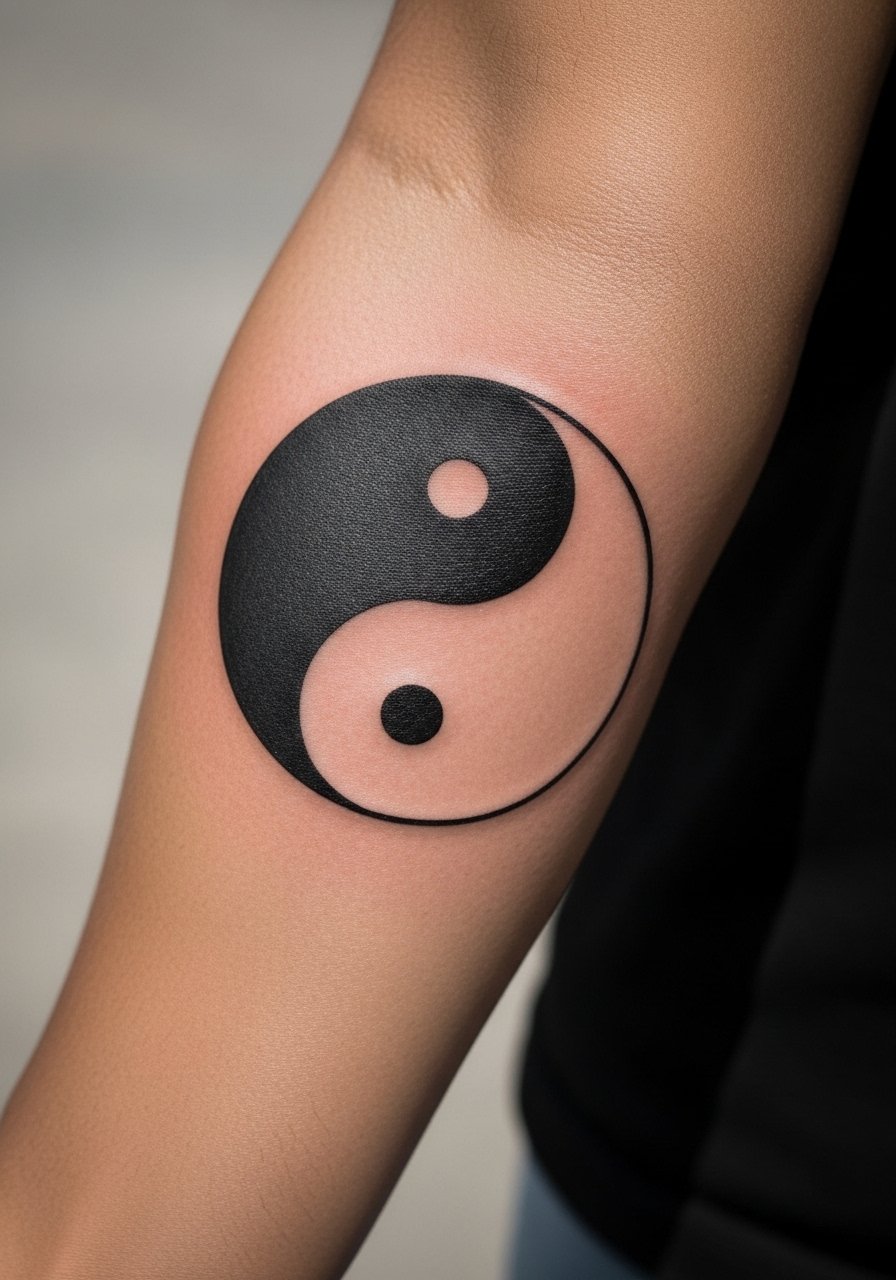
There is a gap in galleries showing healed work on melanin-rich skin. For darker tones, prioritize solid blackwork and bold shapes rather than subtle gray washes. The error is copying a pale-skin reference and expecting the same read. Tell your artist you want saturation and crisp negative space for contrast. Blackwork holds up very well and minimizes the need for touch-ups. For showing off, rolled-up sleeves and a slim gold bangle emphasize the silhouette. Wear a loose button-down to the session for full arm access.
15. Yin Yang with Moon Phases on Sternum
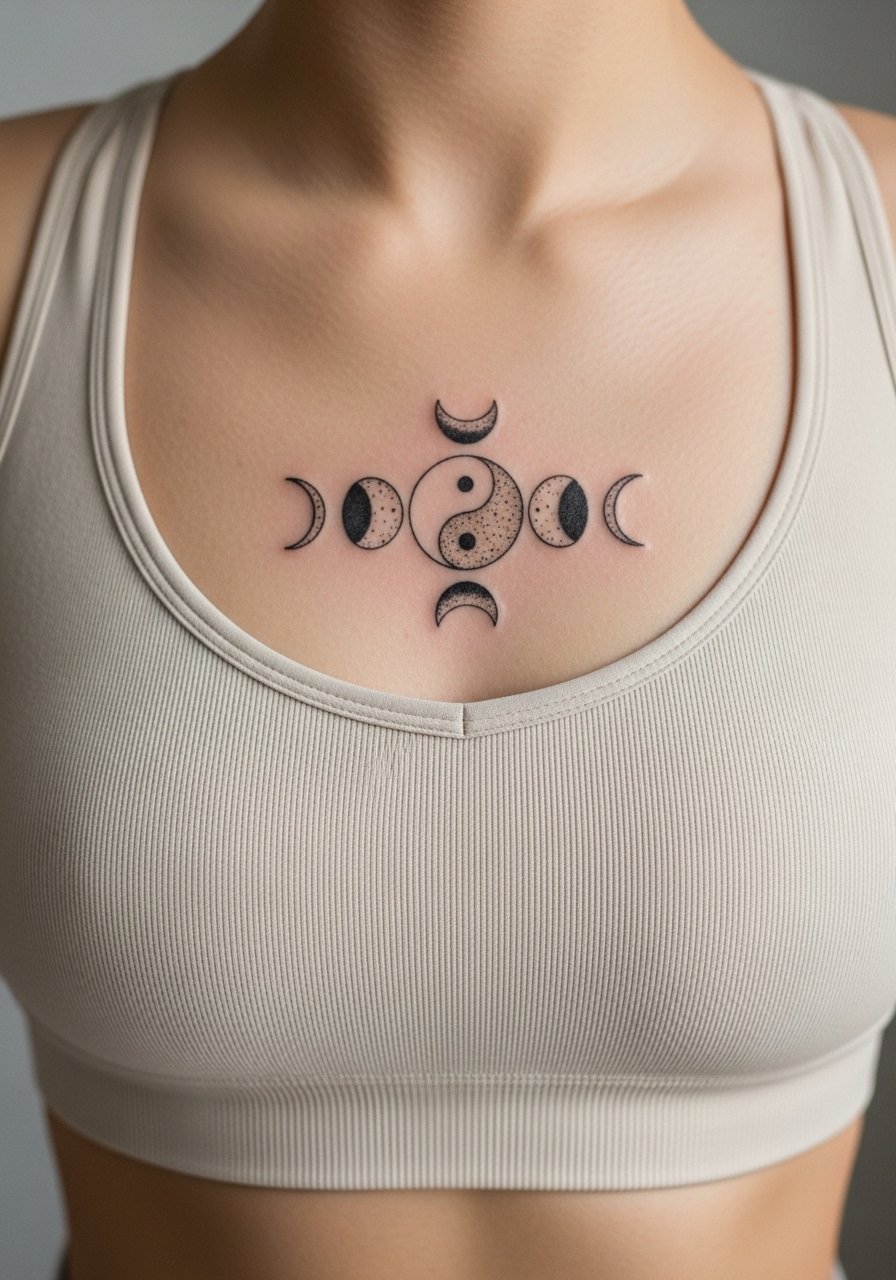
Sternum placements look striking with celestial additions but demand care with pain and visibility. The sternum is sensitive and often requires breaks. The common mistake is underestimating the session length for symmetrical moon phases. Ask for a clear centerline and slight bolding of outlines so the moons remain distinct as the area heals. Wear a strapless or fitted sports bra for session access. Consider open-neck pieces when showing off.
16. Geometric Yin Yang Cube on Upper Back
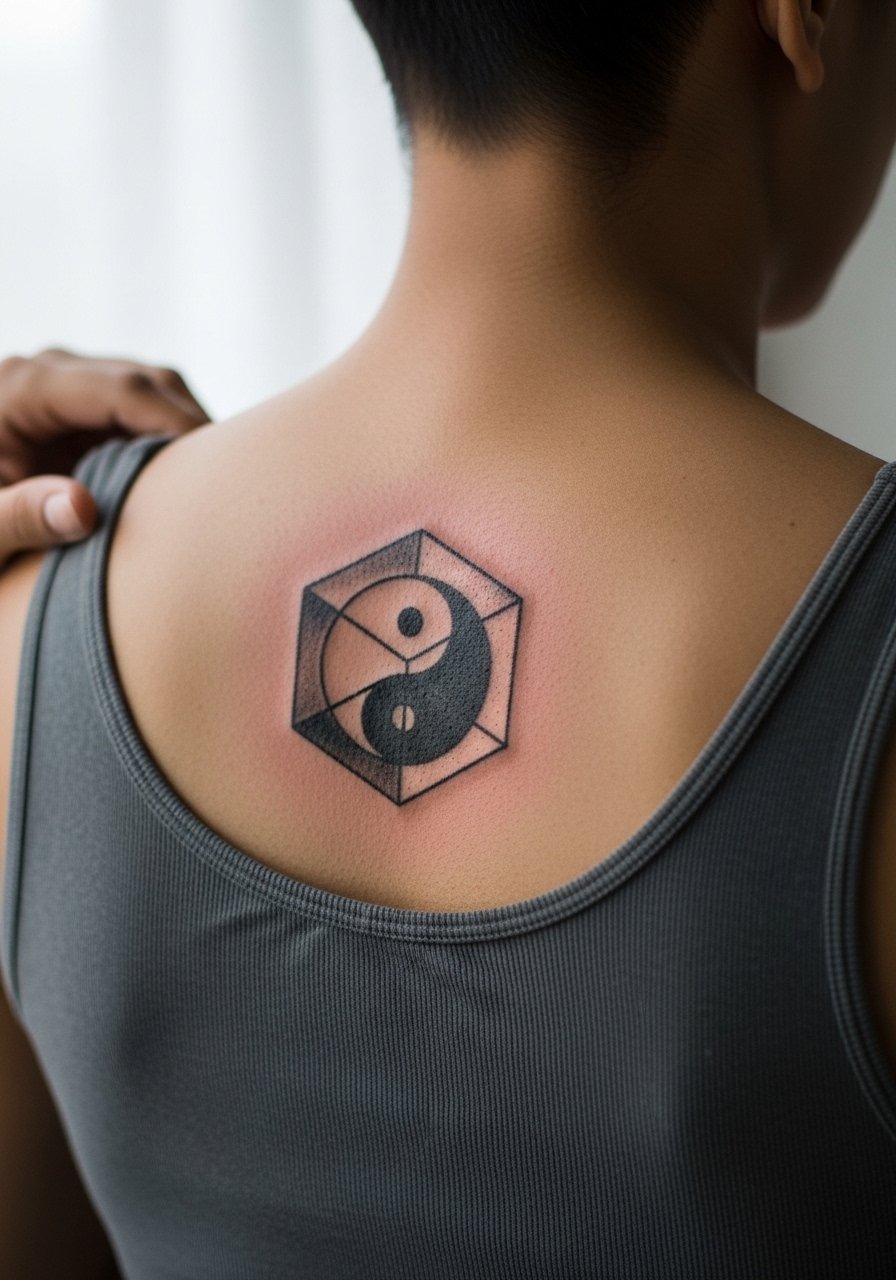
Geometric manipulation makes a standard symbol feel architectural. Upper back gives room for scale and reduces sun exposure during daily life. The mistake is forcing tiny angles into a small circle, which loses crispness as lines blur. Ask for simplified planes and negative space to keep the cube readable at long range. For session wear, a loose tank top you can remove or pull down is ideal. Pair with an open-back top when you want to show off the form.
17. Yin Yang with Sun and Moon Faces on Shoulder Cap

Combining faces gives narrative to the symbol while staying legible at medium sizes. Shoulder cap is forgiving and shows well in summer. The common mistake is requesting micro-expression detail which disappears after healing. Ask for stylized facial features and moderate shading. Session is shorter than full arm work. For show-off outfits, an off shoulder blouse or racerback tank frames the piece.
18. Compass Yin Yang for Travelers on Sternum Side
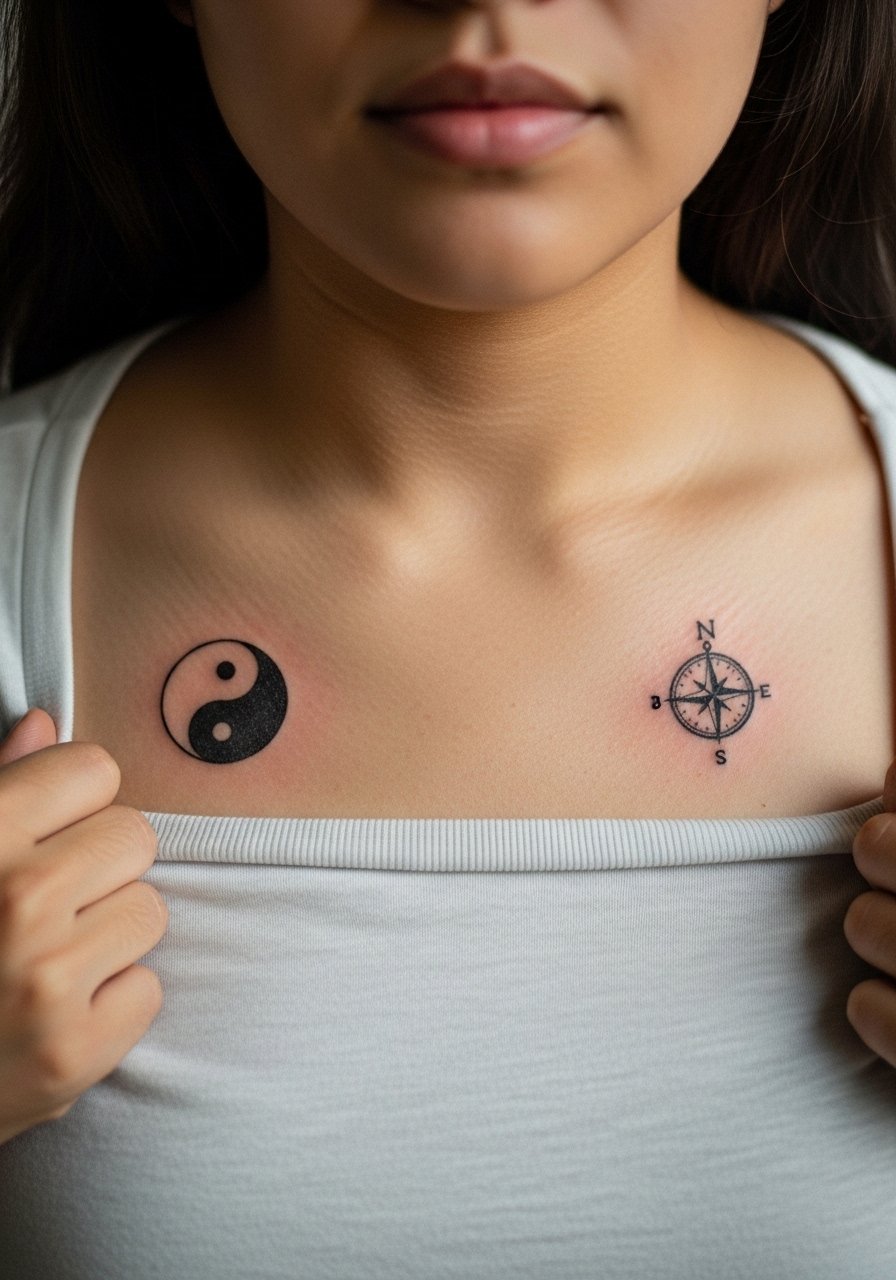
This design mixes directional symbolism with duality. Placing it just off-center across the sternum reduces the chance of distortion from breathing. The mistake is centering it directly on the sternum where symmetry is harder during healing. Ask for a slight offset and bold cardinal points so the compass reads clearly after one year. Bring a fitted sports bra for session access.
19. Birthdate Numeral Yin Yang on Inner Wrist
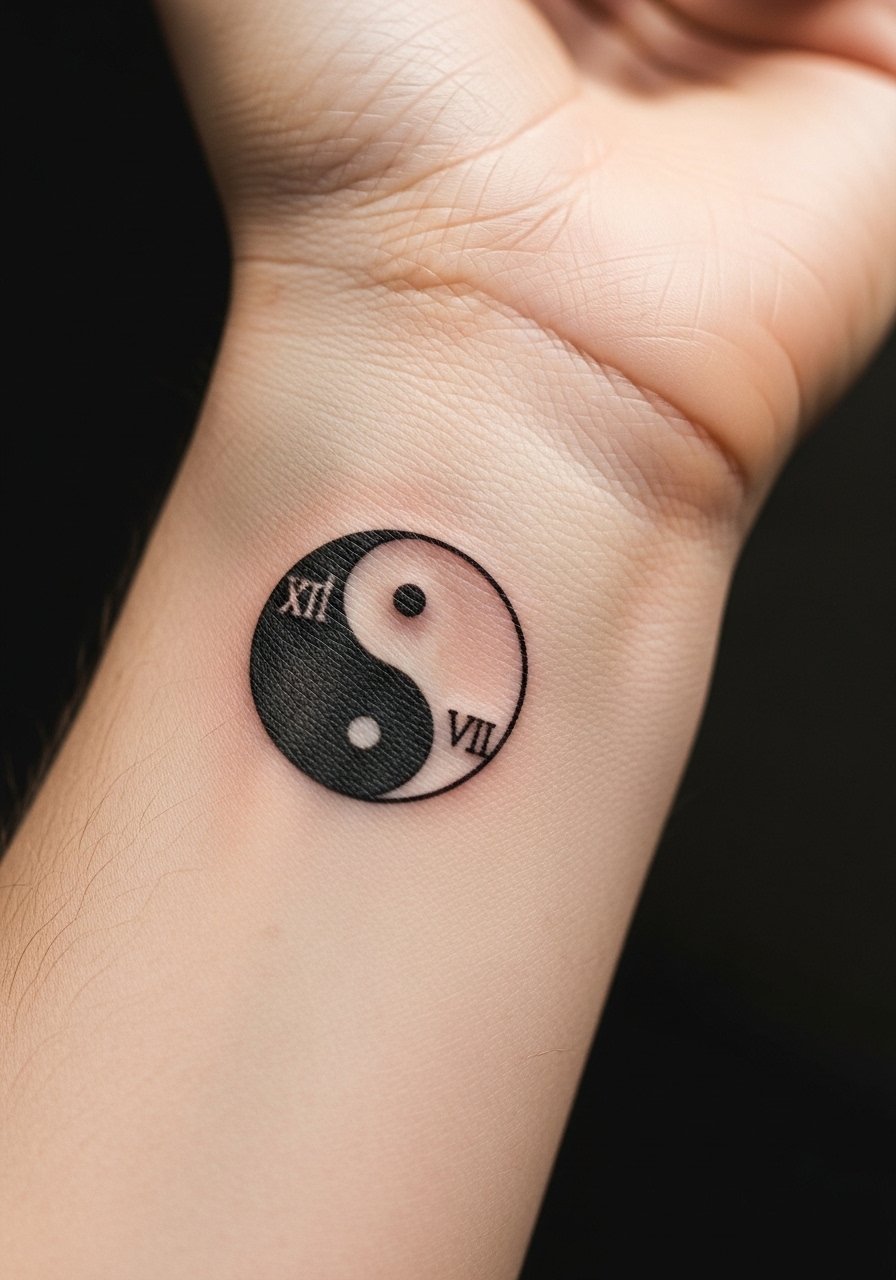
Integrating numerals personalizes the symbol but demands legible type. Small lettering on wrists fades faster because of constant washing. Ask for slightly larger numerals in a clean monospace to avoid blotchiness later. The mistake is expecting micro-script to remain sharp on the inner wrist. Wear a loose tank for the session and keep bracelet stacking light while healing.
20. Constellation Yin Yang Ankle Tattoo
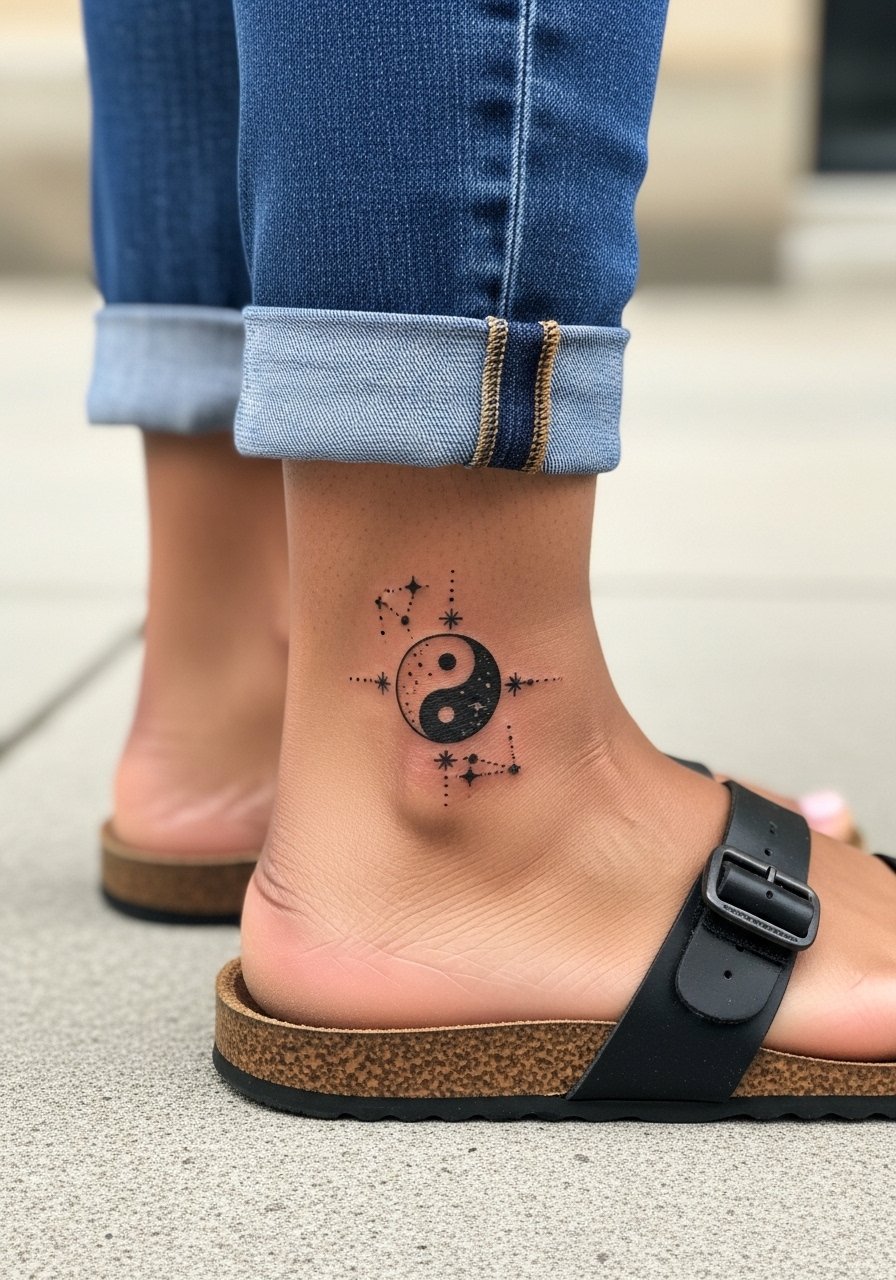
Constellation dot work pairs naturally with yin yang curves in a small ankle piece. Expect touch-ups sooner than forearm placements because of shoe friction. Tell your artist you want dots slightly larger than micro-points to survive frequent washing. For showing off, dainty ankle chain or sandals keep attention on the area.
21. Behind-the-Ear Micro Yin Yang
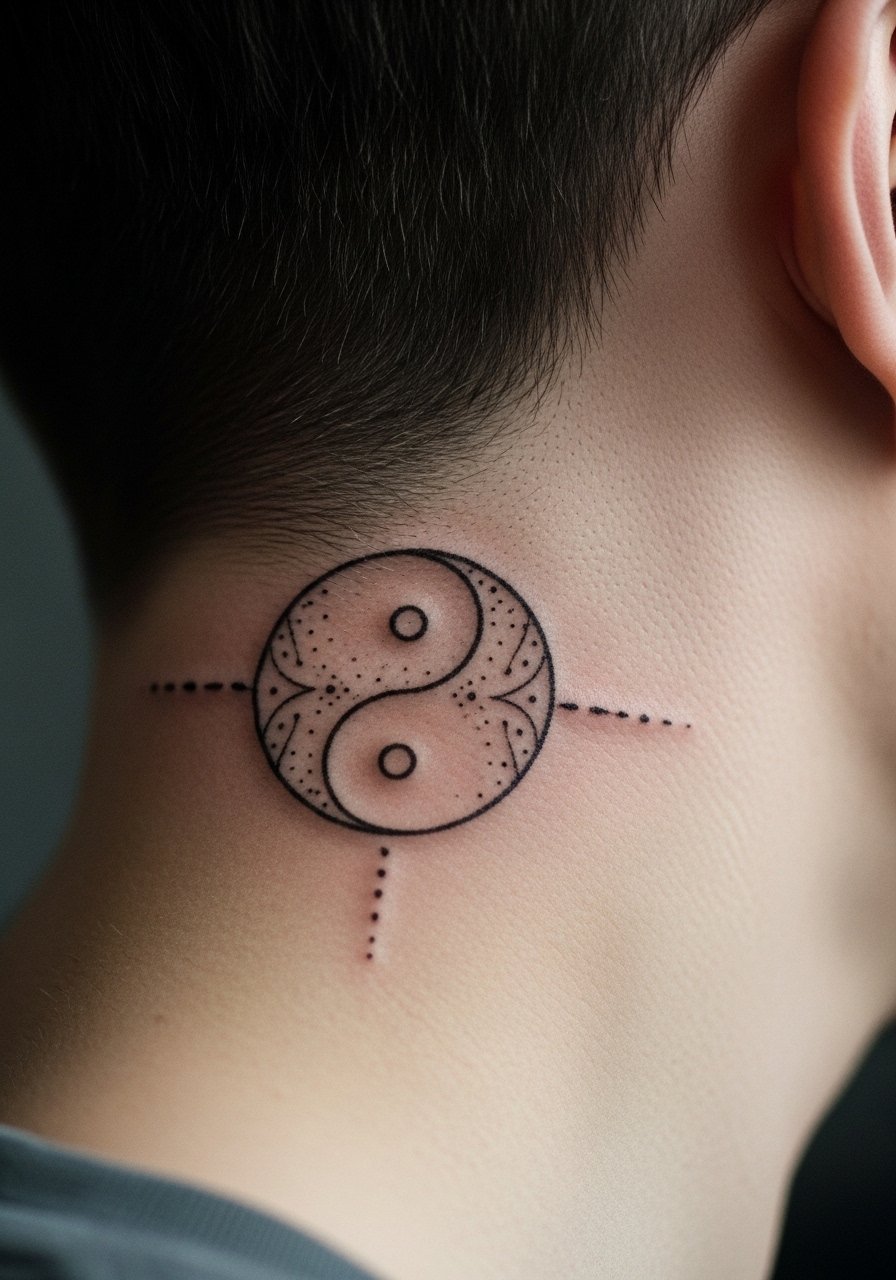
Tiny work behind the ear is intimate and hidden unless you put hair up. The placement rule is to frame it as skin below the hairline so it does not look like ear adornment. Be aware of quick blurring because of the small canvas and movement. Ask for a tiny, confident line and plan on a touch-up at year two if you want long-term crispness. Hair pulled up during the session helps visibility.
22. Ornamental Thigh Panel with Negative Space Yin Yang
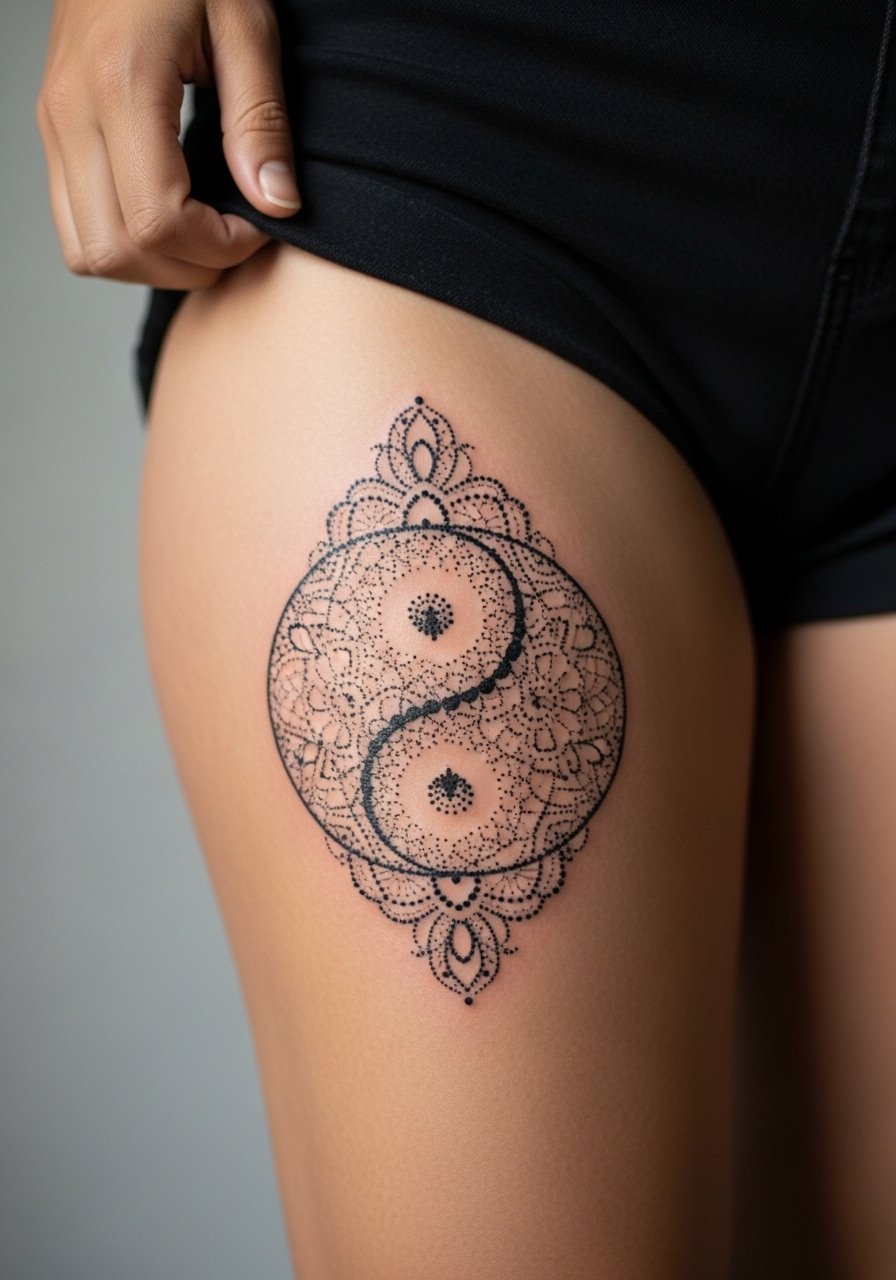
Upper thigh panels let ornate patterns breathe. Use negative space to avoid overly dense shading that merges on curved flesh. The mistake is packing too many tiny motifs together at small scale. Ask for open channels and a 6-inch-plus composition for longevity. Sessions are comfortable for most people. Show it off in summer with high-cut shorts.
23. Thumb Pad Micro Yin Yang
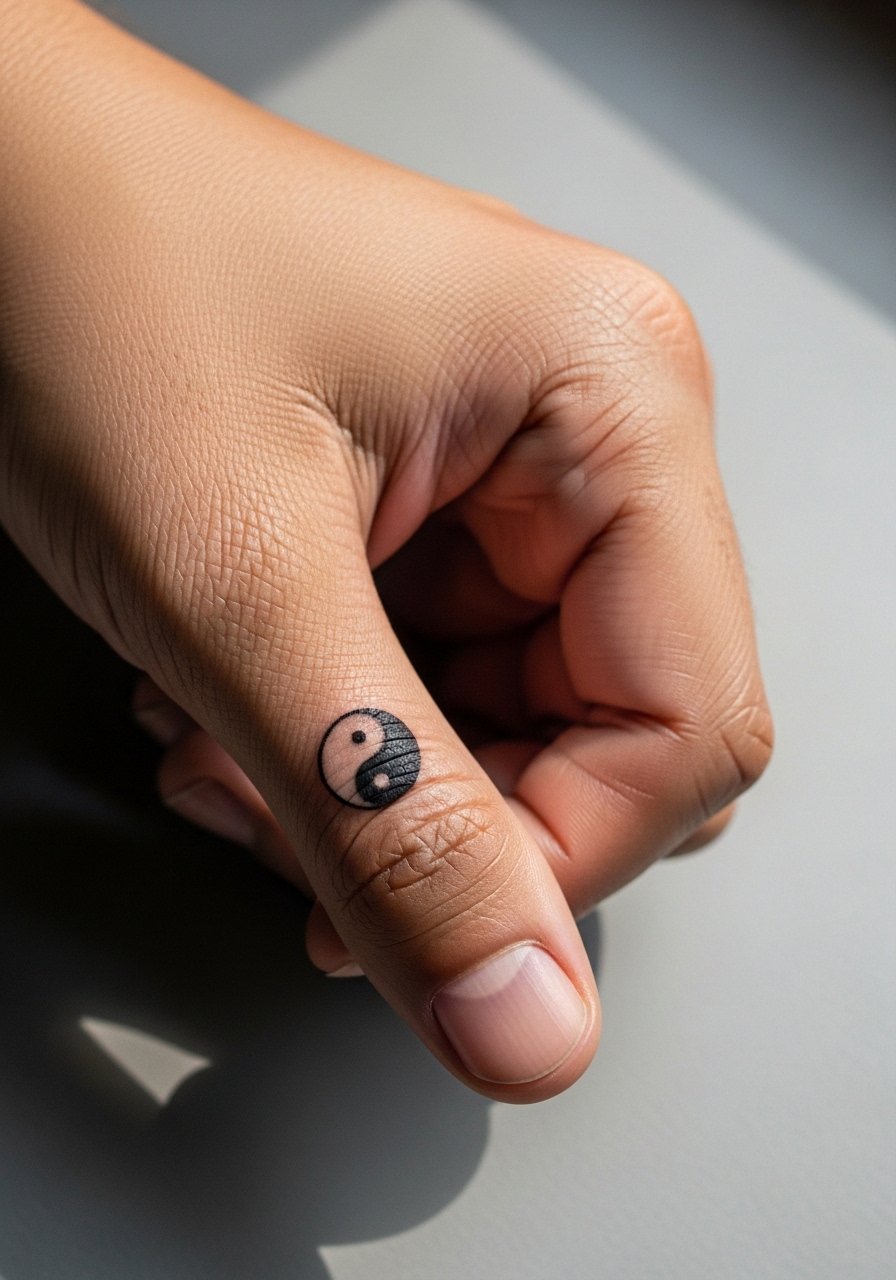
Thumb pad tattoos are very exposed to soap, sun, and use, which makes them a high-maintenance canvas. Expect faster fading and frequent touch-ups. The common mistake is choosing shading instead of bold black fill for this area. Keep the design as solid contrast. For the appointment, expect short session time but bring patience for future maintenance.
24. Yin Yang Script Ribbon on Collarbone Side
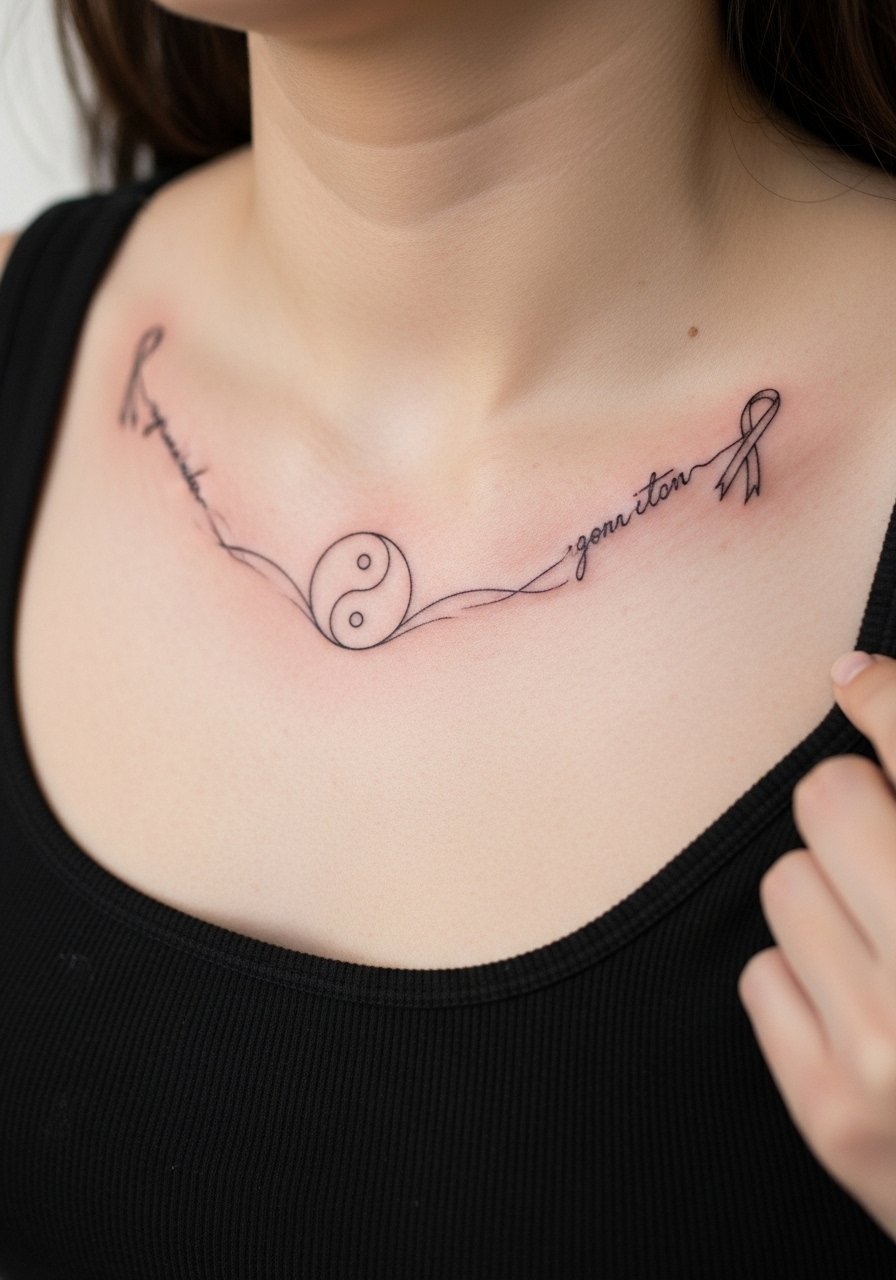
Pairing script with the symbol needs readable lettering. Collarbone is a sensitive area so short sessions or breaks are typical. Ask for monospace or simple serif fonts sized at least 10 point equivalent in tattoo scale to avoid the letters filling in. The common error is tiny cursive that blurs into a line. For showing off, a low scoop tank keeps the collarbone visible.
25. Hybrid Koi-Thigh Panel for Perseverance
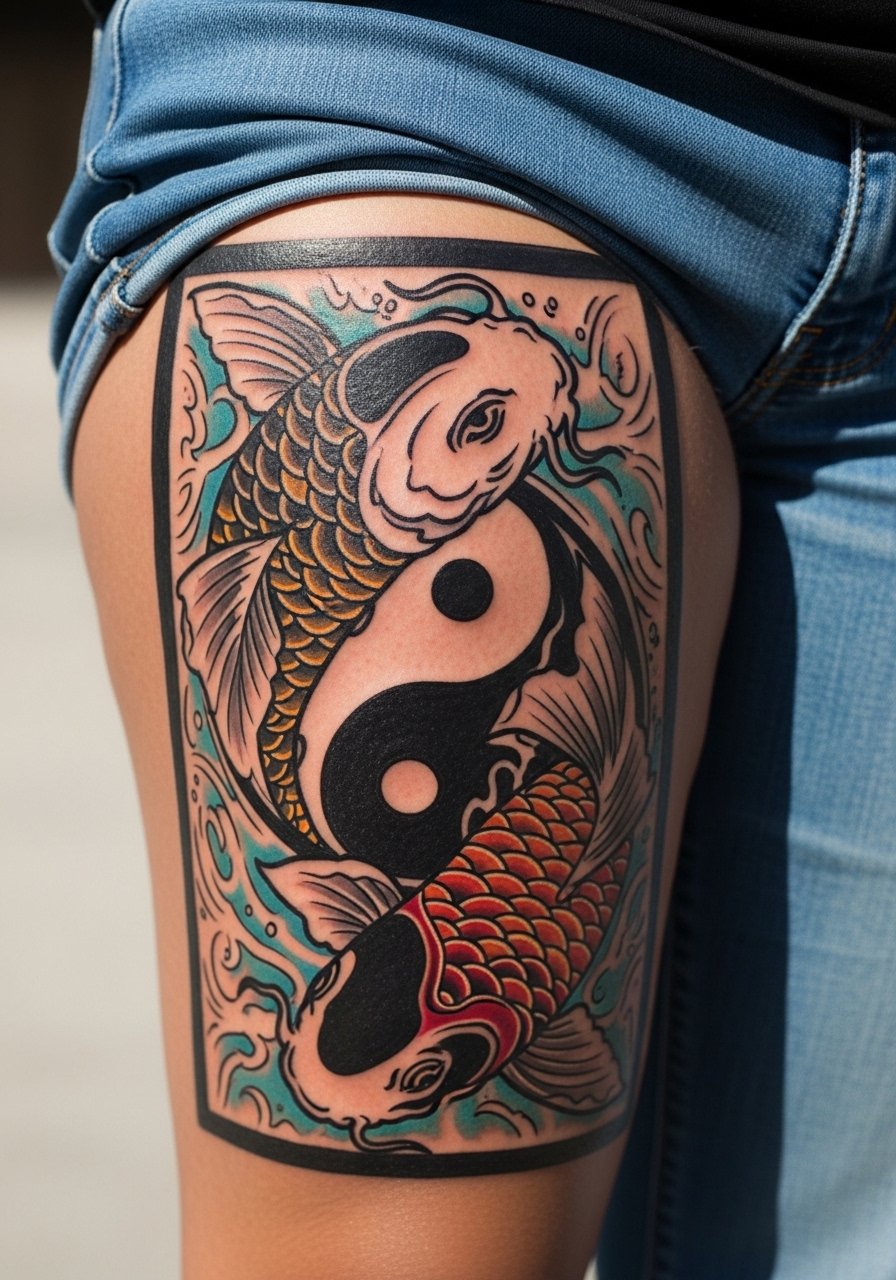
Thighs accept scale and complex narrative work well. If perseverance is the story, koi curves around the symbol make the composition readable at six inches or larger. The mistake is shrinking a narrative thigh concept into a small ankle design where the tale collapses. Plan for multiple sessions and ask for contrast anchors at the darkest points to retain depth.
26. Tiny Toe Yin Yang Accent

Toe tattoos are playful but high-fade. The skin there sloughs quickly and shoes rub constantly. Keep the mark very simple and bold. The session is short but expect a touch-up in months. For footwear, pick sandals during early healing days to reduce pressure.
27. Nape Hairline Yin Yang Drop
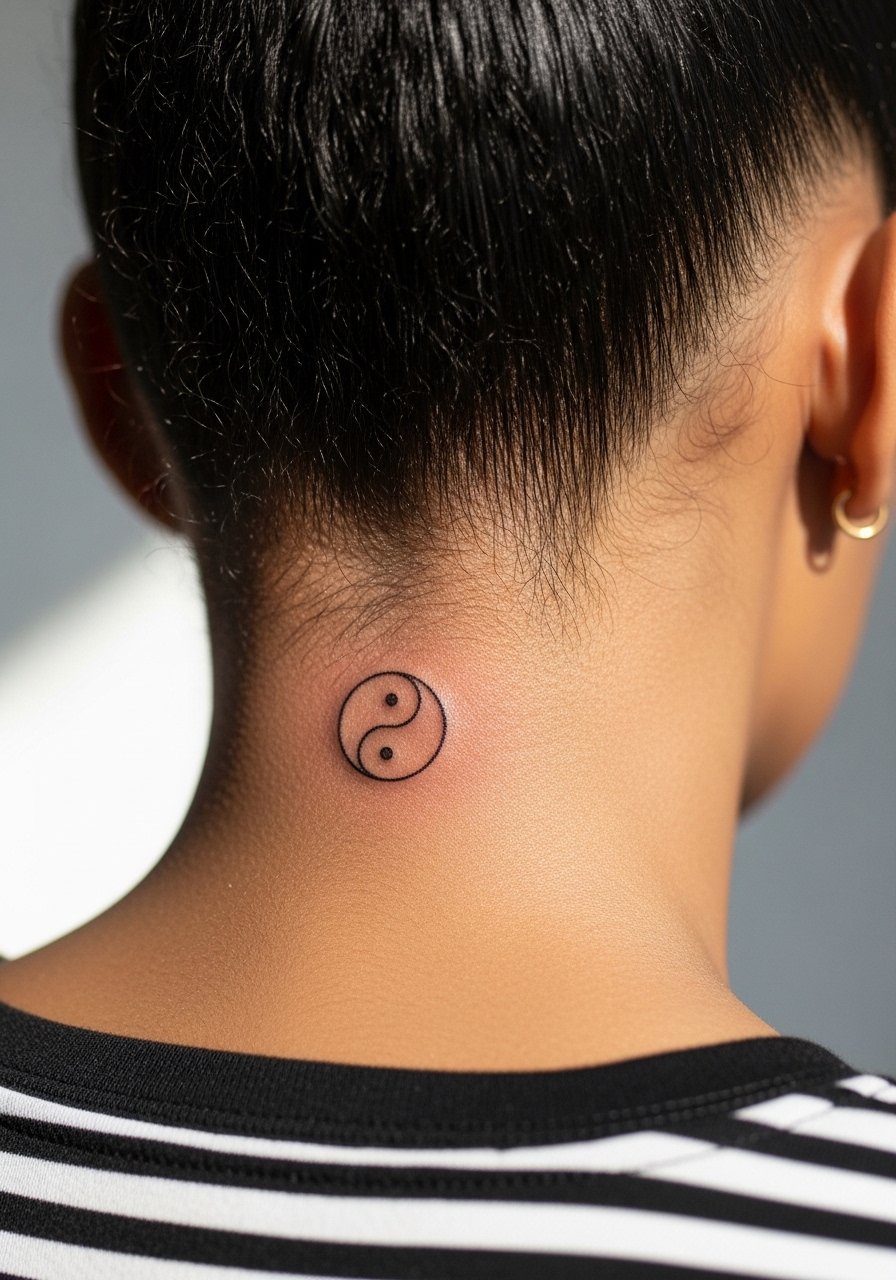
Placement at the nape reads like a secret emblem when hair is down and a deliberate reveal when hair is up. Keep linework slightly bolder than micro to avoid merging into scalp texture. The mistake is expecting micro-detail to survive at the hairline where skin and hair interact. Wear a wide-neck shirt or loose tee to the session so the artist can access the area cleanly.
Frequently Asked Questions
Q: Do fine line yin yang tattoos really fade faster than bold ones, and what can I do about it?
A: Yes, fine line work tends to lose crispness sooner because the ink sits in narrower channels and spreads with skin movement. Tell your artist you want slightly heavier line weight in key areas, plan touch-ups around year two to three, and protect the area from sun. If you want maximum longevity, choose blackwork or bolder outlines instead.
Q: Which styles hold up better on darker skin tones for yin yang tattoo inspiration?
A: High-contrast blackwork and bold geometric pieces generally read best on melanin-rich skin. Avoid pale watercolors as primary elements. Ask for saturated black fills and clear negative space during the consultation so the design remains legible over time.
Q: How should I plan for sessions if I book a guest spot or pop-up for a custom yin yang?
A: Guest spots can be great for unique work but they come with scheduling risks. Book through a platform that enforces cancellation policies, confirm the time 48 hours prior, and keep a flexible travel plan. If your deposit is nonrefundable, ask about rescheduling windows before you pay.
Q: Is Saniderm better than dry healing for fine line yin yang tattoos?
A: Artists are split. One camp favors Saniderm for faster, less messy first days. The other camp prefers dry healing to encourage natural scab formation. It depends on your skin and the artist's aftercare approach. Ask which method the shop uses and why, then follow their recommended timeline.
Q: Will a wrist yin yang stretch or distort if I gain weight later?
A: Small wrist placements can change with significant weight or muscle shifts, though the effect is usually mild. If you expect body changes, choose areas with more compressible tissue like the thigh, or design around scalable elements that can be expanded into a larger composition later.
Q: How do I find artists who specialize in these yin yang styles without naming people?
A: Search hashtags like #YinYangTattoo and #FineLineYinYang on Instagram, use Tattoodo and Booksy filters for style-specific portfolios, and check r/tattoos threads for local recommendations. For guest spots, search "[city] yin yang tattoo guest spots" on TikTok or Google to find pop-ups and booking links.