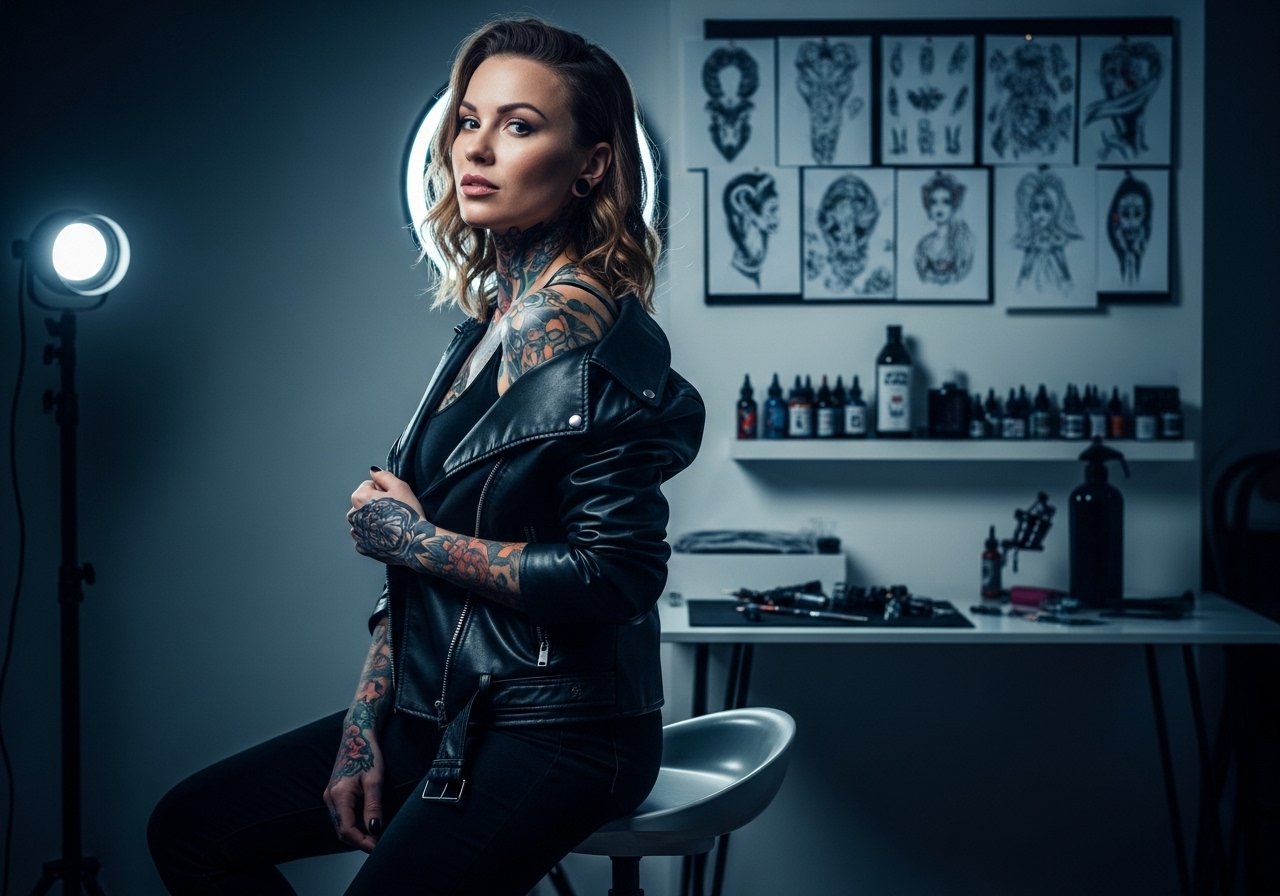
Fine line phoenix designs are everywhere on feeds, but what actually holds up on the ribs is another story. Ribs hurt more than most placements, tattoos on the side will change with weight shifts, and some people still get ghosted for certain skin tones. Read on for 17 rib-specific phoenix approaches that account for pain, stretch, and visibility, plus what to say in consultation so your piece looks intentional for years.
1. Neo-Traditional Phoenix With Bold Flames on Side Ribs
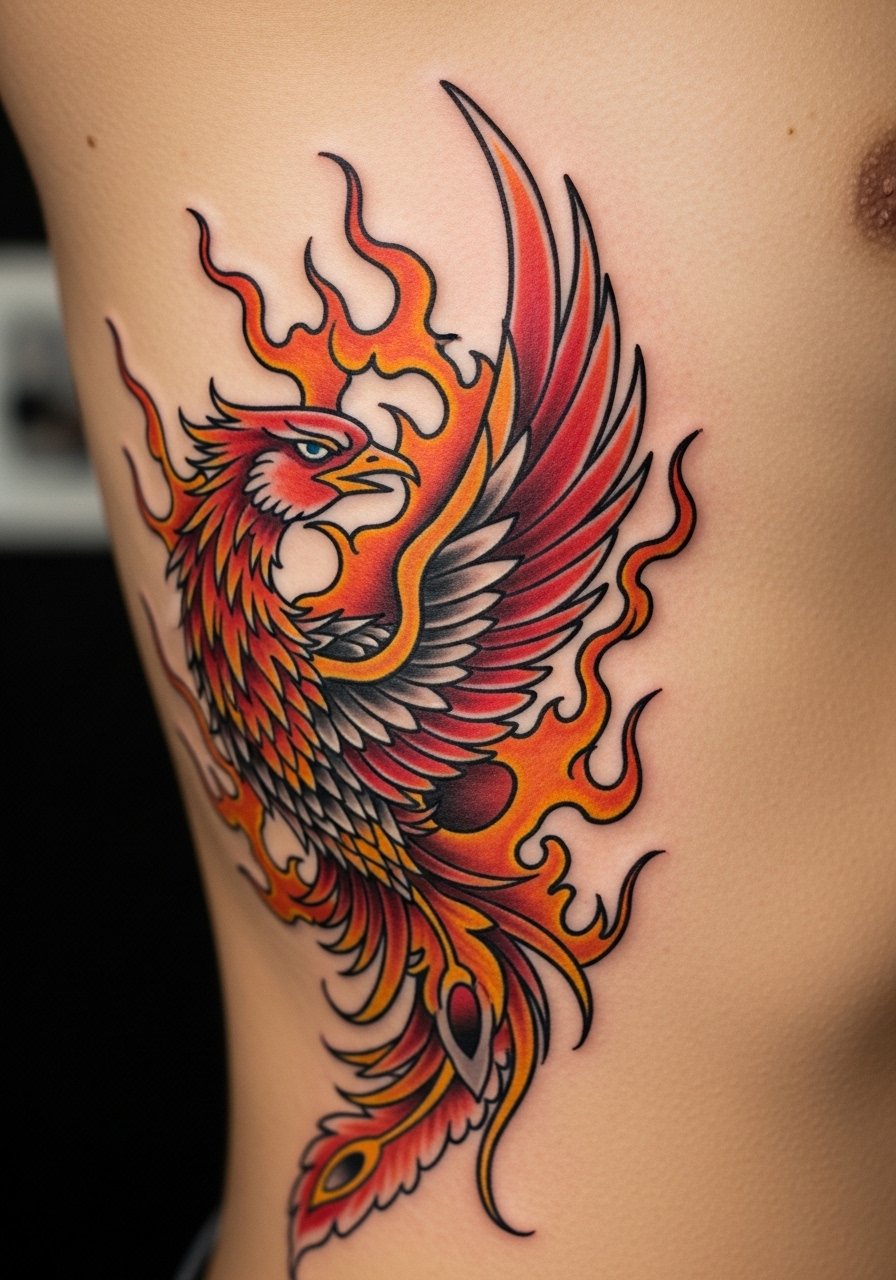
Pain warning, the ribcage ranks high on pain charts, but the payoff here is visual impact and aging grace. I recommend this for someone who wants color that reads from a distance without losing form as the piece heals. Tell your artist you want thick black outlines, strong saturation, and feathers that follow the rib curve so the bird does not bulk when you lose weight. Common mistakes are packing too much tiny shading into the feather tips. Expect two to four sessions and a touch-up at the six-week check. For session wear, bring a loose tank top you can lift easily without tugging the area.
2. Minimalist Phoenix Silhouette on Lower Ribs
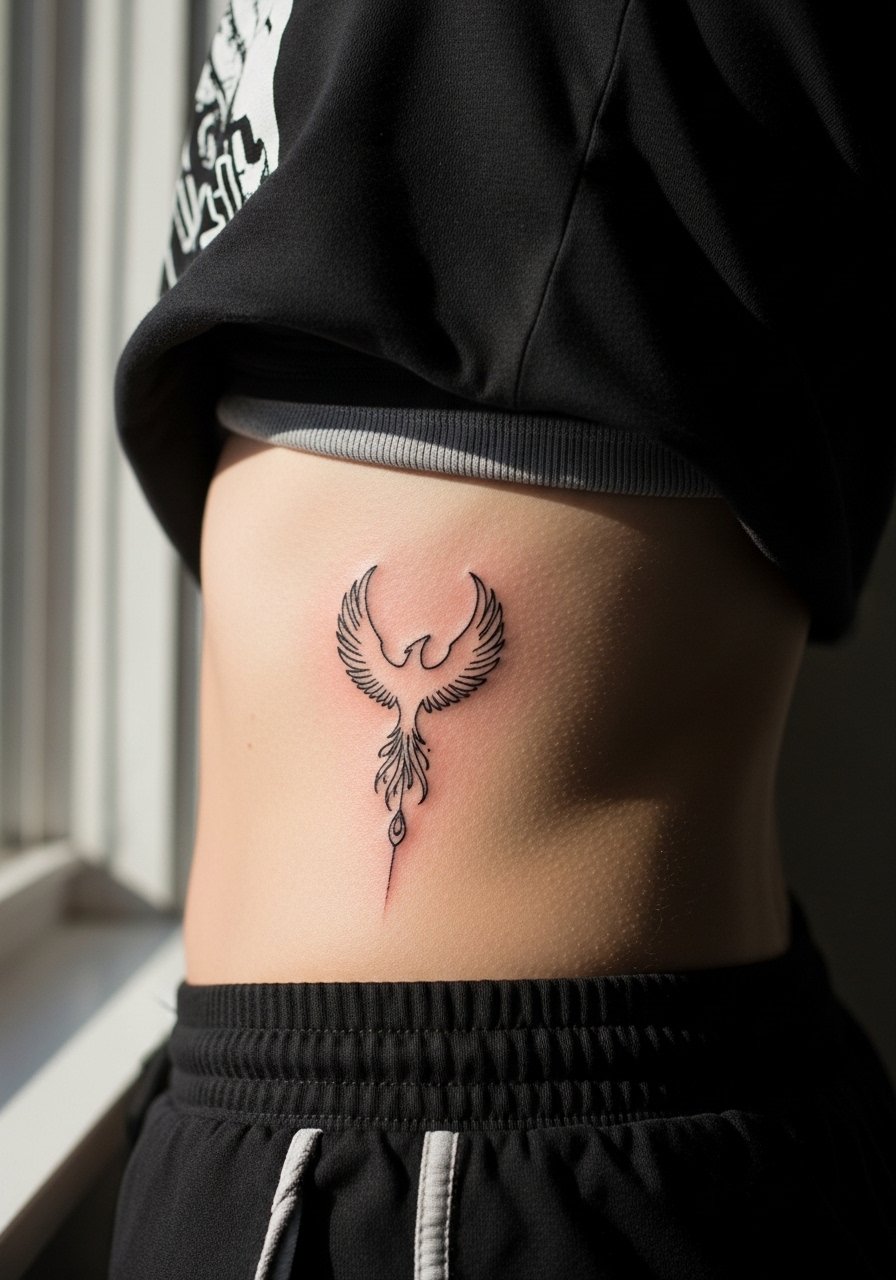
Personal observation says this is the go-to for first rib tattoos because the session is quick and the piece can be tucked under clothes. Ask for slightly thicker single-needle work than a typical fine-line wrist piece to reduce early fade. The main aging issue is stretch after weight change, so have the artist elongate the silhouette to follow the curve of the hip. Session time is typically 30 to 90 minutes. A mistake I see a lot is insisting on ultra-tiny details that blur into a smudge at year two. For showing it off, pair this with a crop hoodie that frames the lower rib without constant friction.
3. Blackwork Phoenix With Geometric Flames Upper Ribs

Visual impact lead. Blackwork holds up exceptionally well on the ribs because heavy saturation resists fading and photo washout on darker skin tones. Tell your artist you want solid fills and crisp negative-space geometry that breathes. Blowout risk is lower when the artist stretches skin taut for lining, so insist on a test stencil placement. Sessions run longer than fine line, often several three-hour blocks. One camp argues blackwork is the longevity winner, while another prefers color for contrast. Both have merit. For evenings out, a strapless bralette or off-shoulder top will let this style read without competing fabric.
4. Watercolor Phoenix Feathers Cascading Over Ribs to Hip
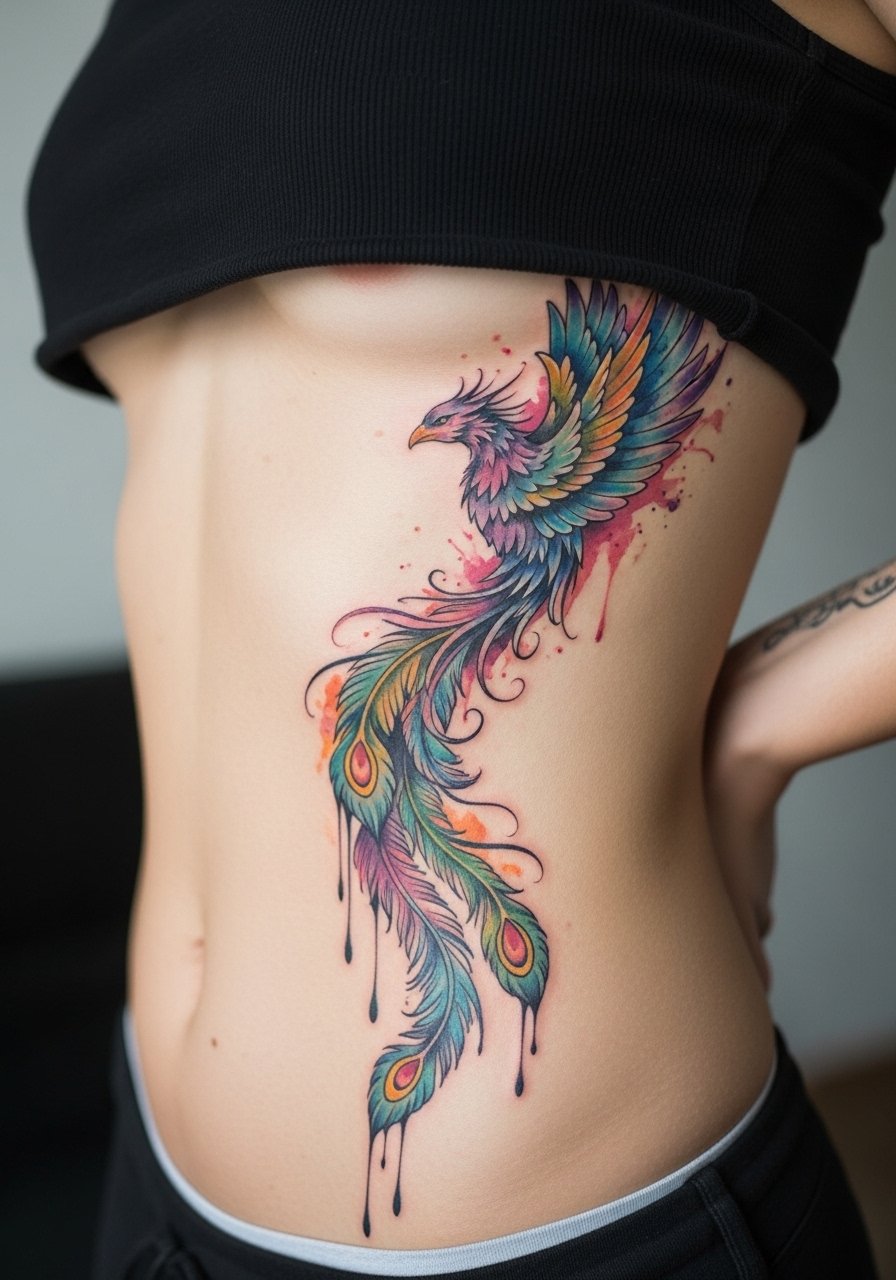
Aging and healing lead. Watercolor looks painterly fresh and is dramatic when it follows the rib-to-hip sweep. The downside is bleed and color migration if the washes are too diluted or placed too close to heavy movement zones. Ask for denser pigment anchors near linework to hold color longer. Sessions typically take two visits. The most common mistake is mapping watercolor across a fold line so the pigment pools. For showing it off at the beach, pair with high cut bikini bottoms that echo the feather flow.
5. Neo-Traditional Phoenix Head Focused Mid-Rib
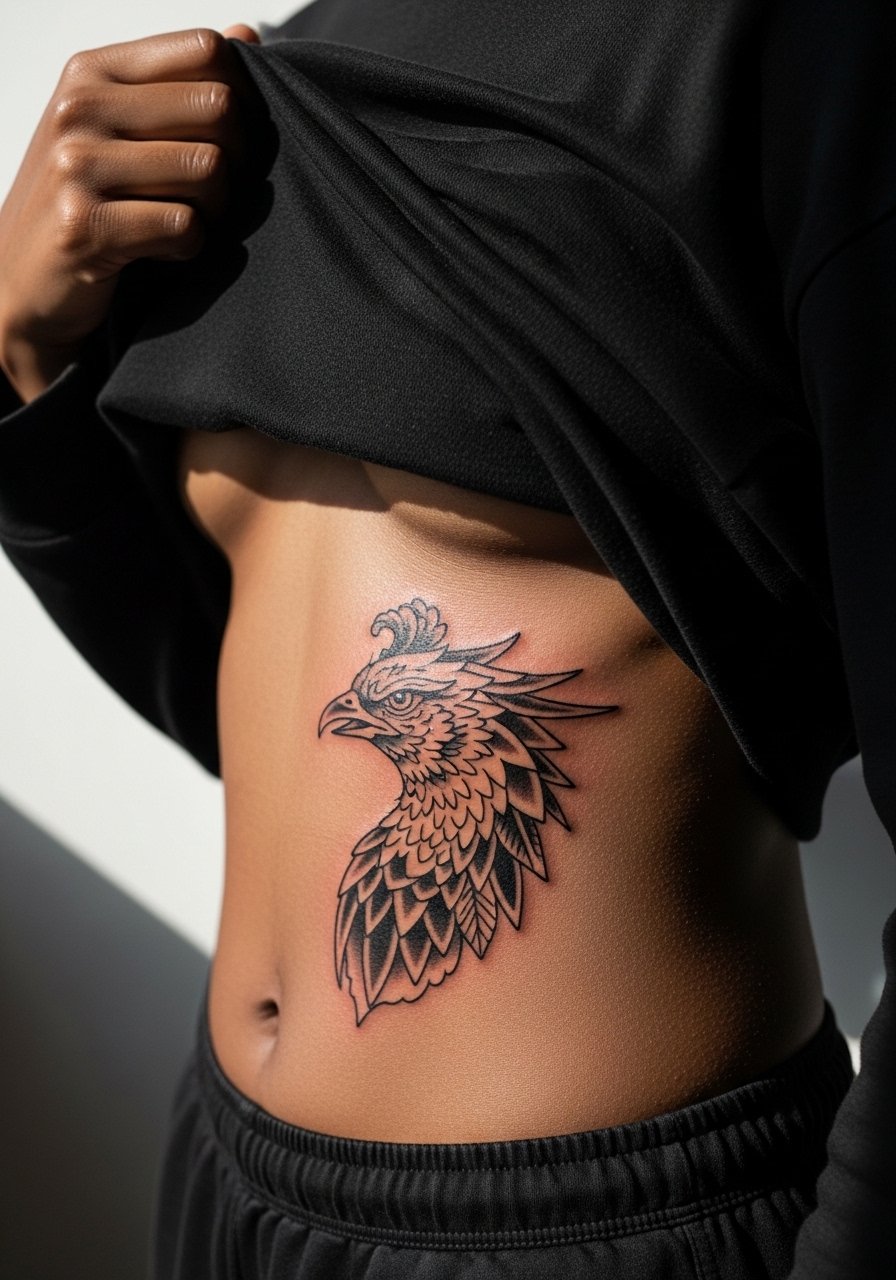
Mistake lead. A strong single-head composition reads like a badge on the side and gives a bold focal point without covering the whole panel. Tell the artist you want heavy contour lines, layered shading, and a confident focal eye so the piece keeps structure as it ages. Expect the session to be two to three hours depending on color saturation. A common error is compressing too many tiny facial details into a small square, which softens quickly. For appointment comfort, wear a loose button-down shirt you can pull to the side.
6. Micro-Realism Phoenix Wing on Inner Ribs
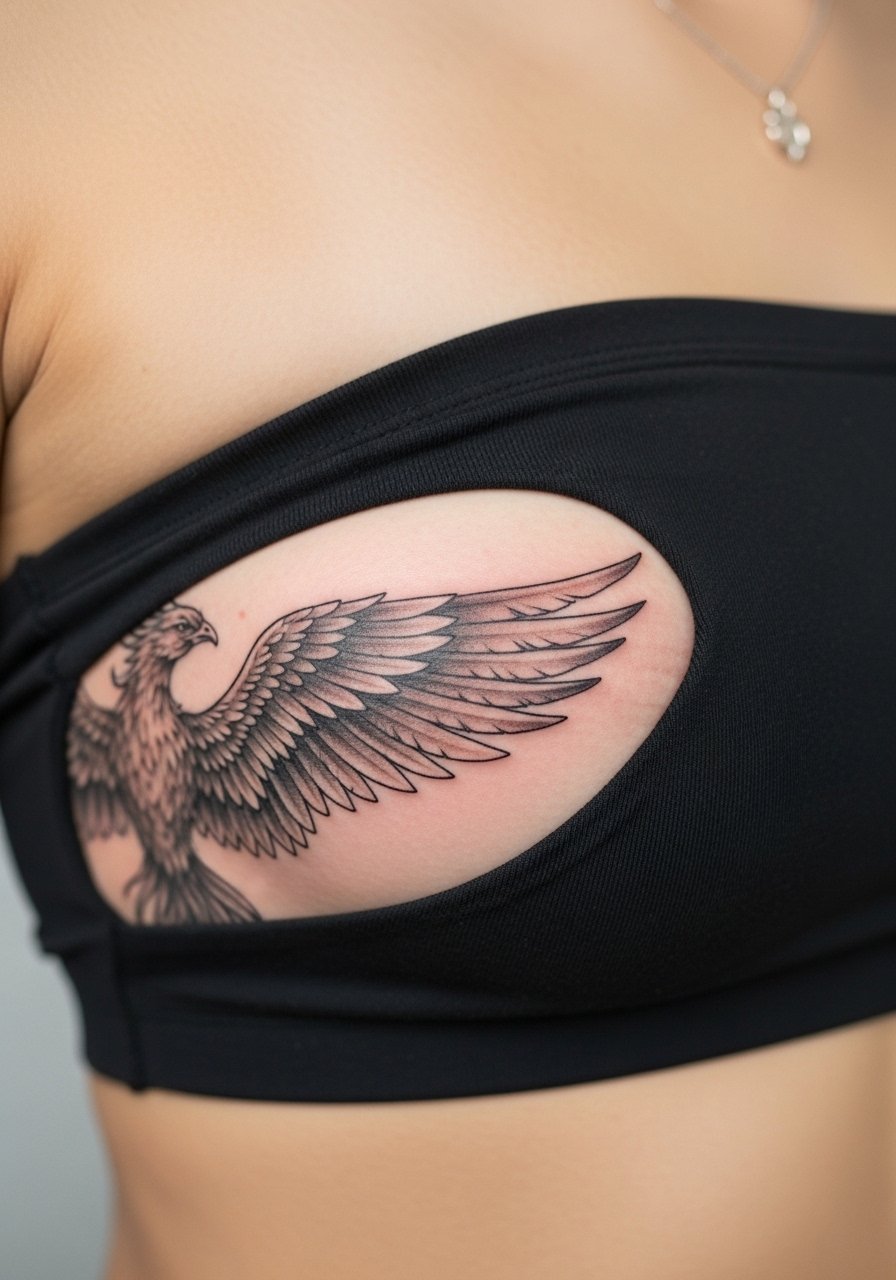
Consultation lead. Micro-realism demands time and a steady hand, so prepare for multiple sessions and referral to a realism specialist. Tell the artist you want feather textures in staggered scales and ask to see healed photos on similar skin tones. The inner rib is a tighter canvas, and breathing makes lining tricky, so the artist should stretch skin and have you exhale during key passes. Touch-ups at year one are normal. For the session, bring a strapless bra adhesive or wear a bandeau so nothing presses on the area afterward.
Studio Day Picks
The neo-traditional, micro-realism, and watercolor ribs above all benefit from a little prep and the right gentle aftercare during the healing window.
-
Rabbit Revive Balm. A thinner balm formula that users praise for avoiding greasy rub on ribs while keeping pigment moisturized during active movement.
-
Green Sheep Natural Balm. A petroleum-free option that feels lighter under fabric and reduces the chance of clogged pores in high-friction areas.
-
Hada Labo Hydrating Lotion. Lightweight hydration for the later healing stages when thick ointments feel heavy on the ribs.
-
Indie Butter Breathable Balm. Recommended by guest-spot veterans for its balance of moisture and breathability under clothing.
-
Hustle Butter Deluxe. Popular as a thin alternative to petroleum ointment for the first days, especially where bra or waistband rub is likely.
7. Ornamental Phoenix Mandala Wrapped Around Ribs
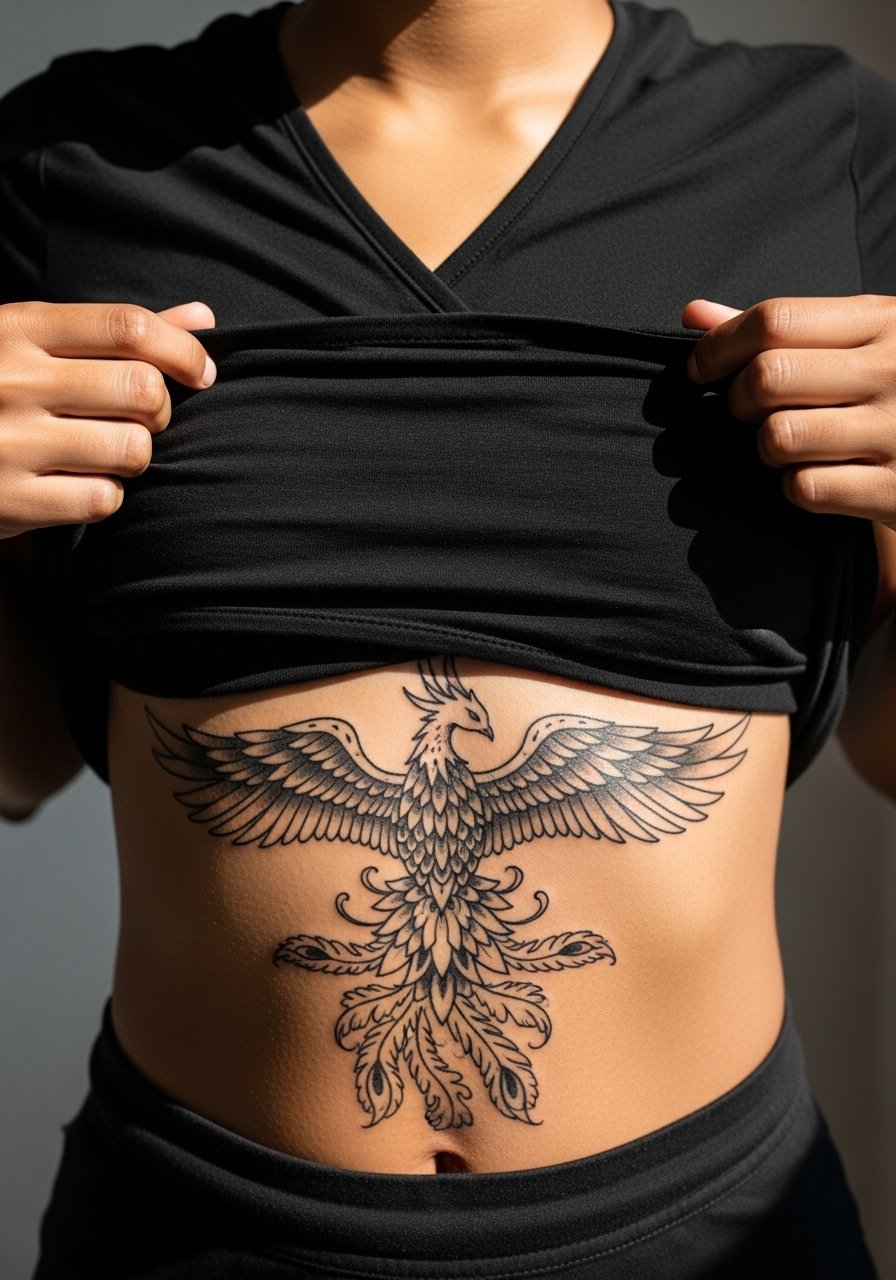
Styling lead. This ornamental approach reads like jewelry for the torso and benefits from symmetry that follows the rib arc. When consulting, request consistent negative spaces between mandala rings so density does not merge over time. Healed at six months these look crisp if the line spacing was generous from the start. Watch for the mistake of over-detailing inside tiny circles which blur into a dark mass. For show-off outfits, a wrap crop top in gold tones frames the mandala without competing.
8. Traditional American Phoenix Full-Rib Panel
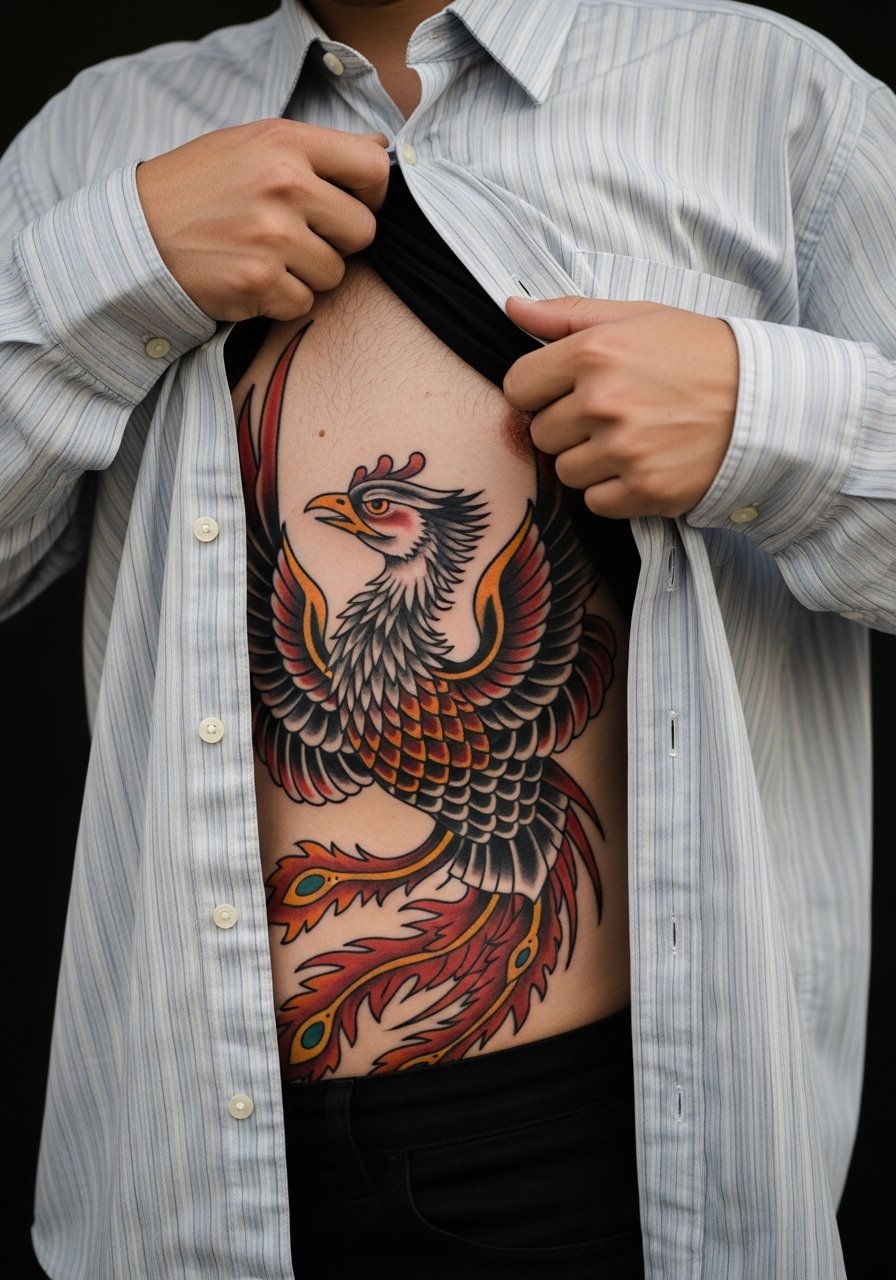
Visual impact lead. Classic saturation and thick outlines age well on ribs when proportioned correctly. This is a commitment that usually requires several long sessions. Tell your artist you want room between major elements so the design can breathe as it settles. A frequent error is packing the entire side with tiny motifs that obliterate negative space in a few years. Expect touch-ups at year one if you live in sunny climates. For session comfort, choose an oversized button tee that can be opened for the artist and does not rub afterward.
9. Ignorant-Style Outline Phoenix on Lower Ribs

Mistake lead. Ignorant-style pieces are fast, bold, and affordable, which makes them attractive for rib placements that you may want to hide. The key is to accept rough lines as part of the aesthetic. A common error is asking for ultra-sketched lines but expecting tight realism. Session time is short, often under an hour. On darker skin tones, thicker, looser lines read better in photos than single-needle work. For the session wear a sports bra that you can move without shifting the waistband.
10. Fine Line Phoenix With Script Accent on Upper Ribs
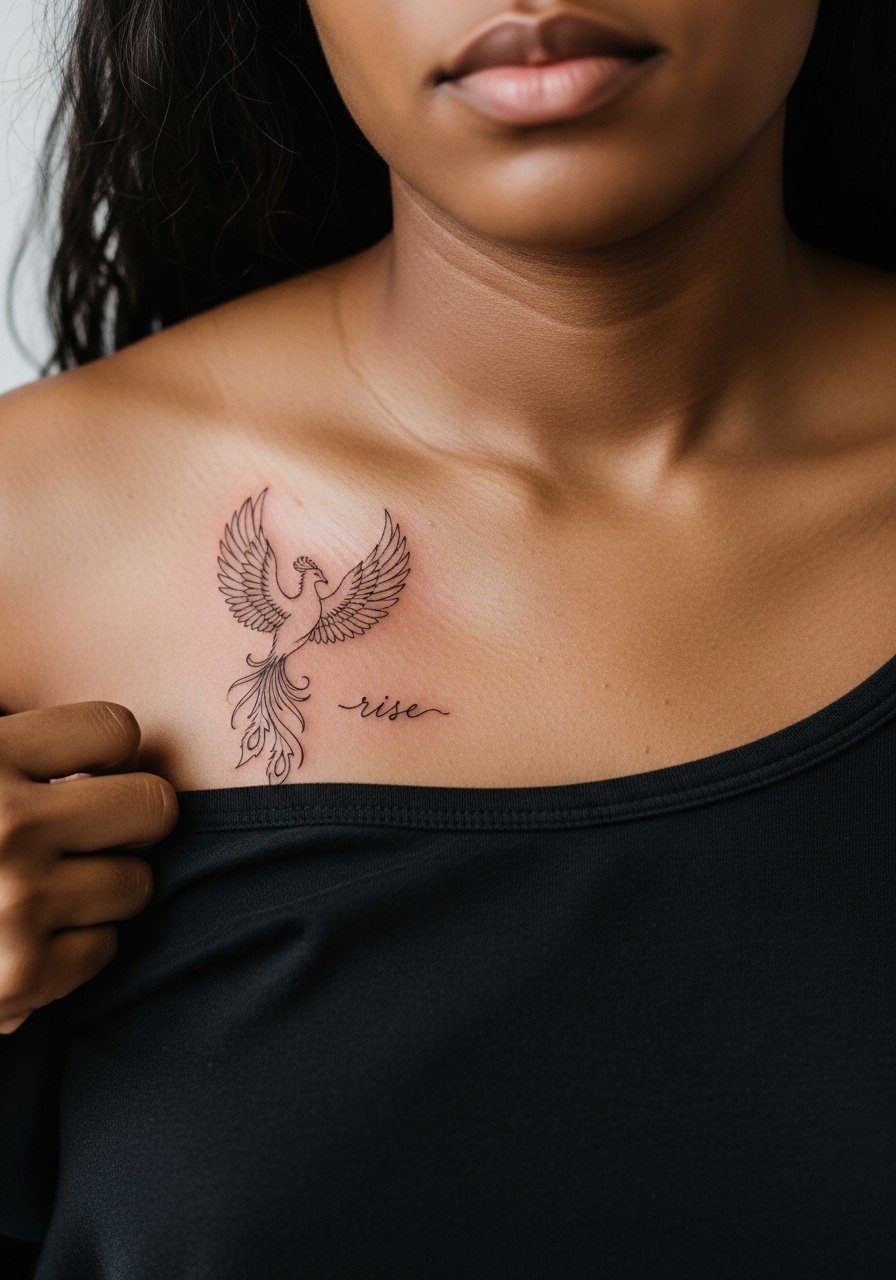
Aging lead. Fine line with micro-script looks delicate and modern but is the design that splits opinion for ribs. One camp argues fine line blurs fast in mobile areas. The other camp says careful spacing and needle depth solve that. If you go fine line, ask the artist to slightly increase the line weight and space script lettering apart. Expect a touch-up sooner than with heavier work. The session stings more when the artist doubles over delicate strokes, so breathing control matters. For showing subtle script, a thin chain pendant necklace can sit above the collarbone without competing.
11. Black-and-Gray Realism Phoenix Sweeping the Ribs
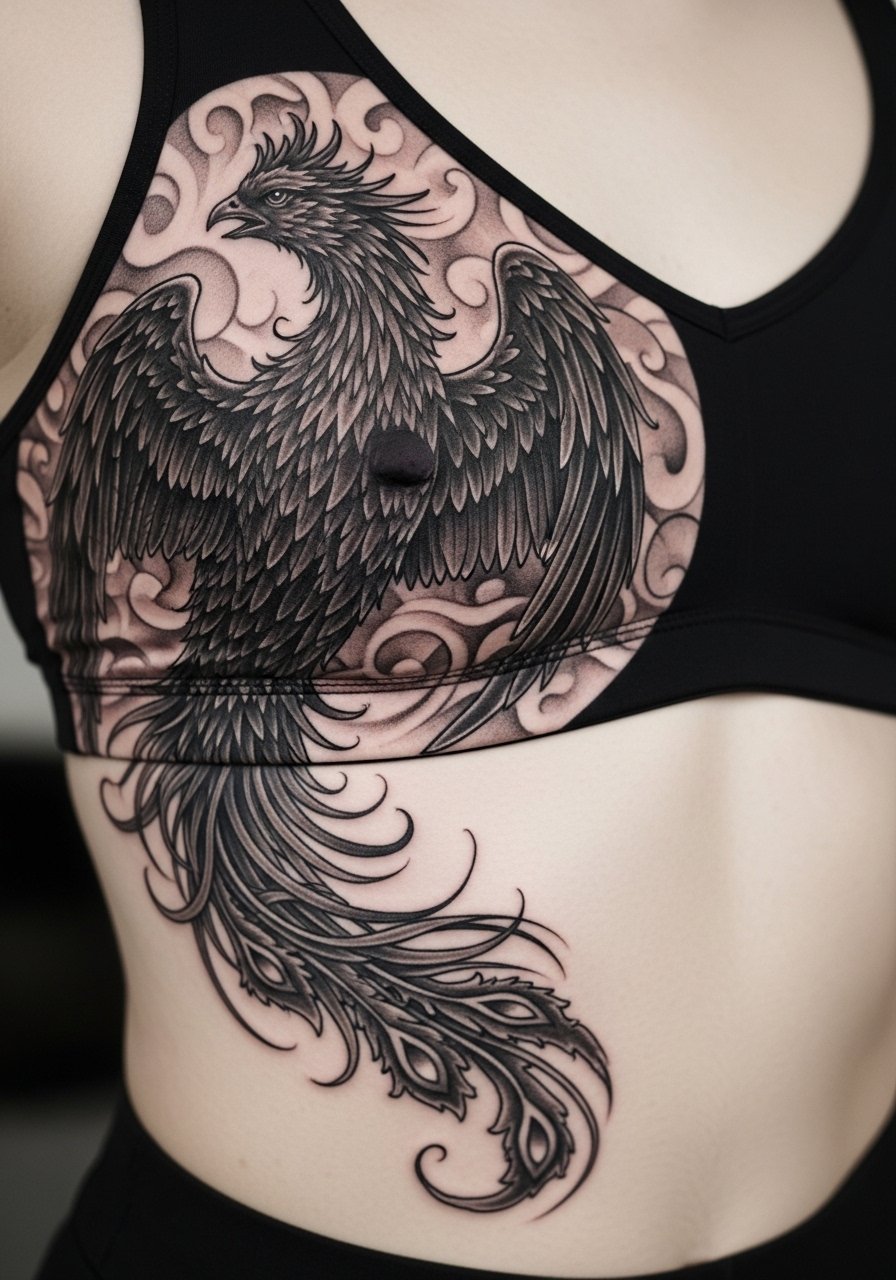
Visual impact lead. Black-and-gray realism can age gracefully because contrast and gradient survive longer than small line detail. Tell your artist you want a clear focal wing and softer feather tails to avoid overcrowding. The inner rib breathing makes layering gradients harder, so expect staged sessions spaced several weeks apart. Blowout risk is present if lining is placed too deep on thin skin. For session day pick a wireless bralette to avoid pressure and metal chafing afterward.
12. Patchwork Phoenix Elements Flowing Toward the Back
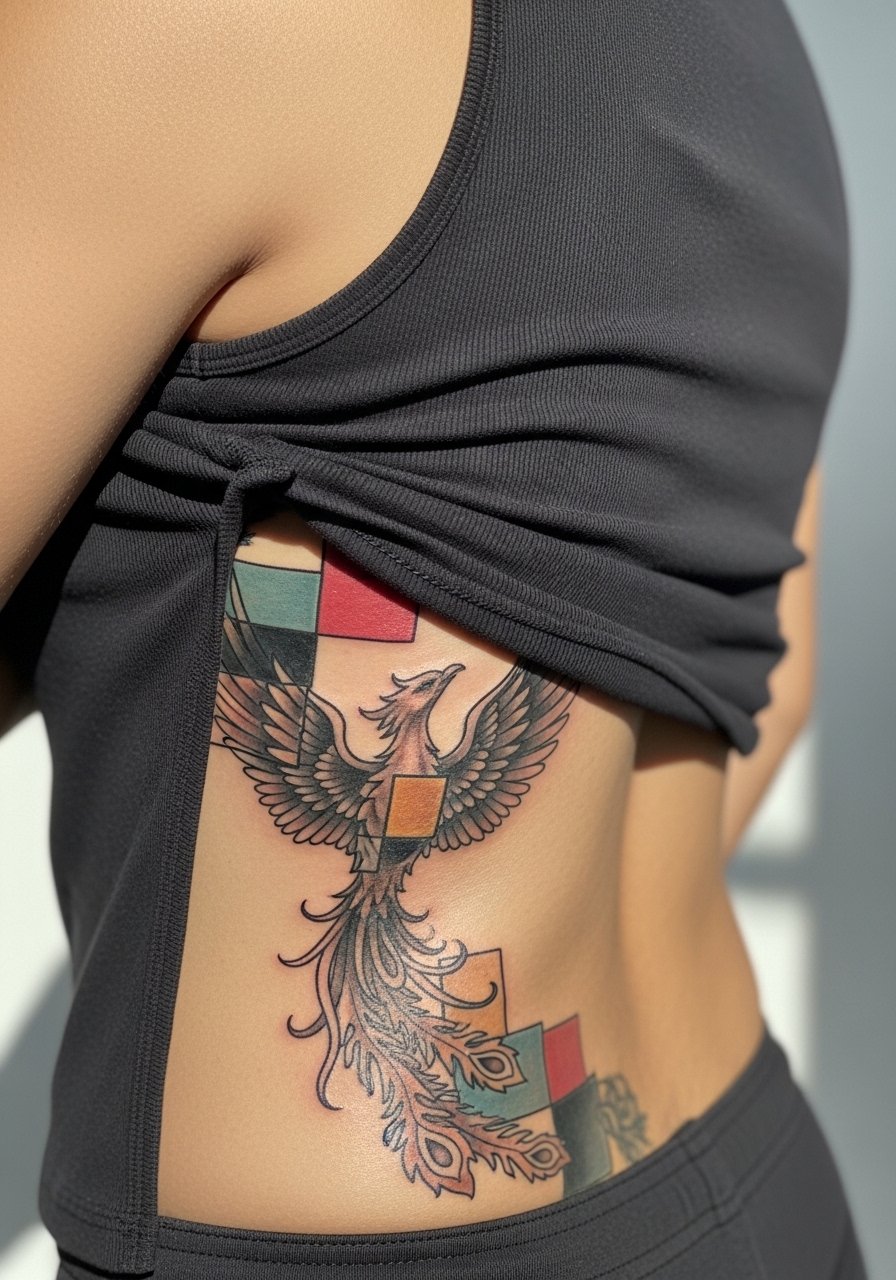
Consultation lead. Patchwork pieces are modular and great if you want to build over years. Discuss which elements will be blackwork and which will carry color so adjoining panels do not clash when healed. The downside is inconsistency if multiple artists interpret the phoenix differently. A good tactic is to set anchor pieces with heavy contrast first and add smaller pieces later. Expect many sessions and a maintenance plan. For session logistics, bring a loose tank top that the artist can tug aside without stretching your midriff.
13. Dotwork Phoenix Flames Along the Rib Panel
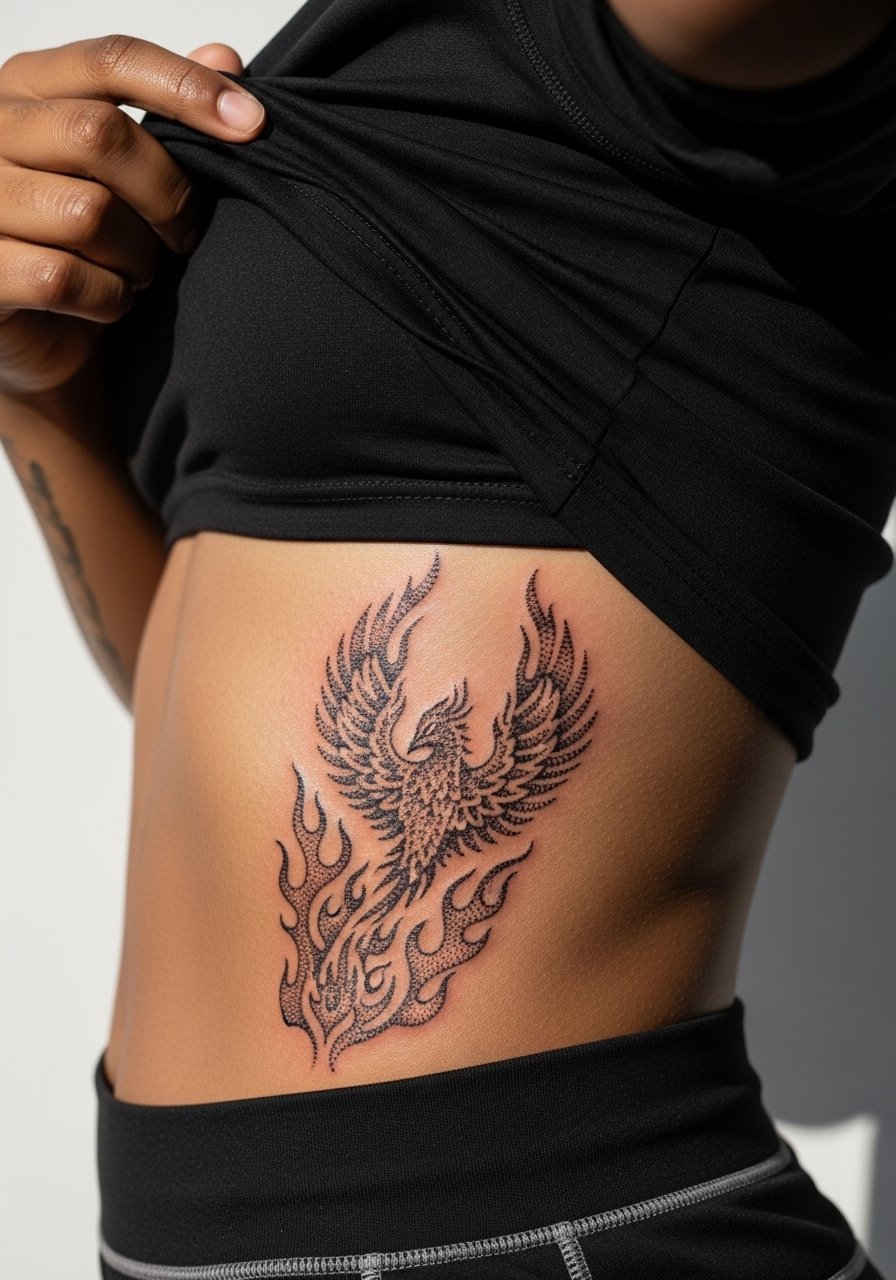
Aging lead. Dotwork produces hypnotic texture and can hold detail well because it uses spacing to create tone. Ask for varied dot density and larger negative zones so the pattern does not compress over time. The session is steady but slow, and you will feel repetitive machine passes along the ribs. The common mistake is building too much density in a small area which will merge after healing. For dressing up, a wrap crop top in muted tones complements stippled texture without stealing focus.
14. Breath-Following Phoenix That Avoids Warp With Movement
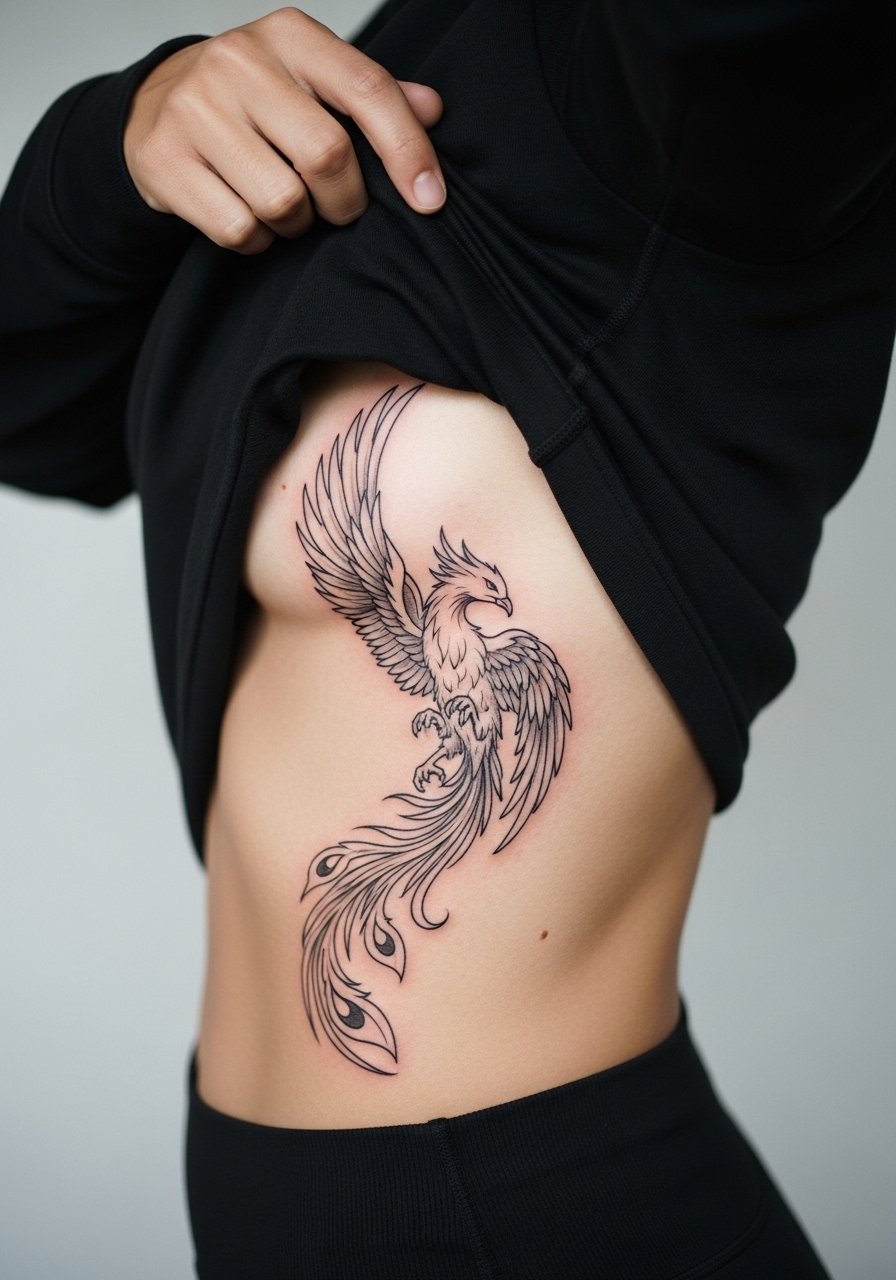
Aging/healing lead. This approach is under-covered but effective. The idea is to map the design along stretch lines so the bird keeps its proportion as you inhale or change weight. Tell the artist you want mockups in both inhaled and exhaled positions. The mistake is using a rigid vertical layout that becomes distorted with breathing. Expect the artist to sketch directly on skin and to make micro-adjustments before lining. Touch-ups at one to two years are common if you plan to lose or gain significant weight.
15. Plus-Size Friendly Phoenix Below the Love Handle
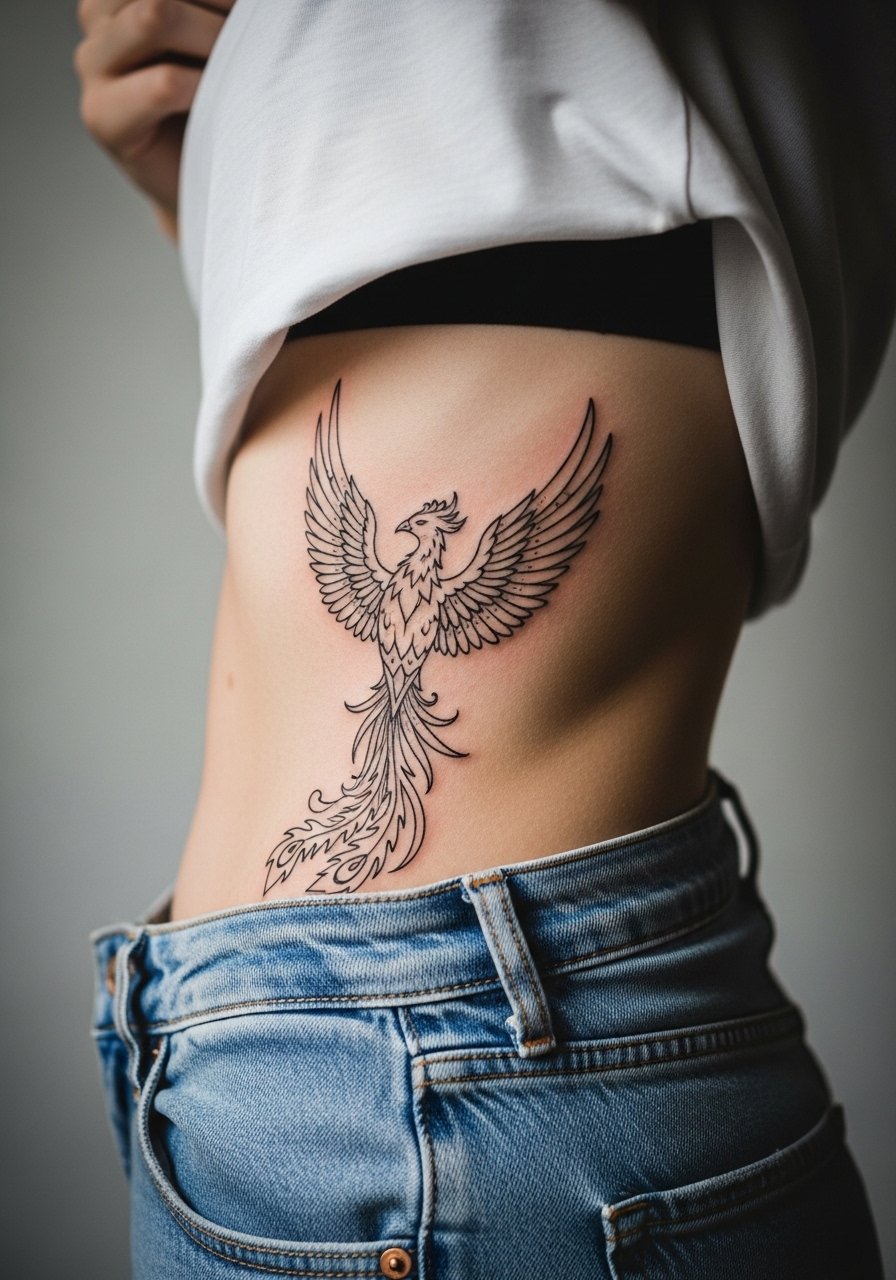
Personal observation lead. On plus-size bodies, placing the phoenix slightly lower and wrapped to the hip gives more stable skin and less distortion over time. Ask for elongated feather flows and avoid tight circular motifs that the body may compress. The session will feel similar but plan for clothing that avoids tight waistbands afterward. A frequent oversight is copying a template sized for thinner torsos. For sessions, wear high waisted mom jeans you can lower briefly without pressure after the appointment.
16. Hybrid Phoenix With a Relic Hidden in the Flames

Mistake lead. Incorporating a small relic like a name or a handwriting fragment inside negative-space flames is a nuanced way to personalize without overt text. Ask the artist to map the relic so it does not sit on a fold line and to demonstrate healed mockups. One mistake is burying text inside dense color, which makes it illegible after healing. This design often needs a careful touch-up timeline and clear communication on size prior to lining. Consider that some artists avoid direct replicas of certain cultural script, so discuss respectful treatment during the consult.
17. Fade-Simulated Phoenix Mockups and Touch-Up Plan on Ribs
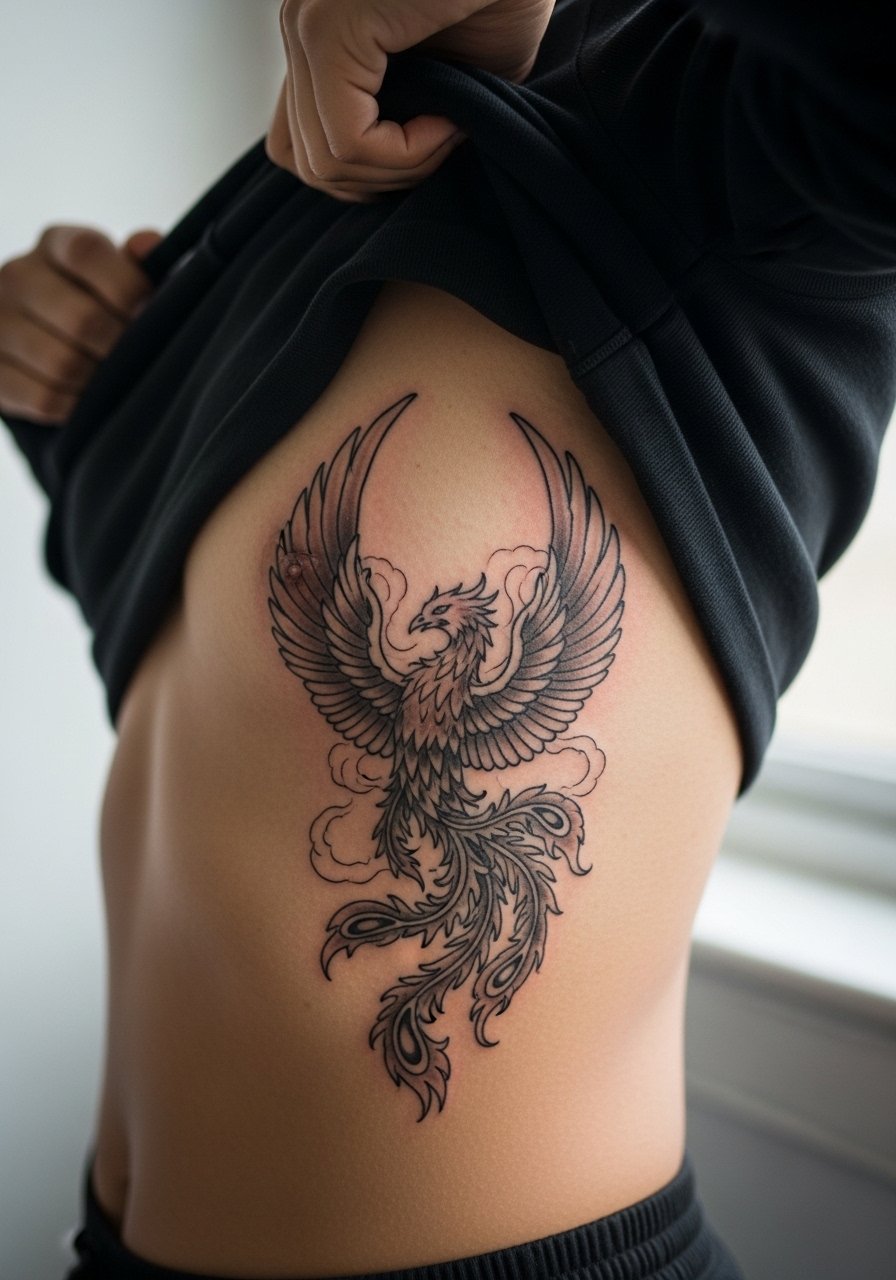
Consultation lead. Before committing, ask any artist to simulate how the design will look after two years and after weight change. Not every studio offers this, but it prevents surprises. The common mistake is assuming a fresh photo equals final healed appearance. Build a touch-up plan into the booking, for example a six-week free fix and paid yearly refreshes for mobile ribs. If you are deciding between fine line and blackwork, discuss longevity and your willingness to book touch-ups. Having a visual fade simulation makes that decision concrete.
Frequently Asked Questions
Q: How much does a phoenix tattoo on the ribs usually cost?
A: Expect a wide range depending on size and style, roughly in the low hundreds for a small minimalist piece up to mid-thousands for full color or realism panels. Costs vary by artist, session length, and geographic market. Ask about hourly rates versus flat fees during consultation so you can budget for session blocks and touch-ups.
Q: Do rib phoenix tattoos hurt more than other placements and how should I prepare?
A: Ribs are commonly reported as one of the more painful spots due to thin tissue over bone. Eat a full meal beforehand, stay hydrated, and wear loose clothing that the artist can lift without stretching the area. Breathing technique helps during lining. Consider numbing options if you are particularly anxious but ask your artist first because some prefer untreated skin.
Q: Will a fine line phoenix blur faster than bold blackwork on the ribs?
A: There is a real split. Fine line can look gorgeous fresh but often needs touch-ups sooner on mobile skin. Thick blackwork tends to hold shape longer. The decision comes down to your tolerance for annual maintenance and how visible you want the piece to be in photos. Ask the artist to show healed examples on similar placements and skin tones.
Q: What should I wear to a rib session and what should I expect the week after?
A: Wear clothing that gives the artist easy access such as a loose tank top, a cropped tee, or a button-up you can open. After the session, avoid tight waistbands and underwire that can rub the area. Expect soreness when laughing or coughing during the first few days and plan sleep positions to avoid pressure on the side.
Q: My skin tone has made artists cancel before. How do I find someone who will do rib work well on darker skin?
A: Book artists who show healed photos on similar skin tones and use discovery pathways like the phoenix ribs hashtags, Tattoodo filters, and Booksy for guest spots. Ask directly for healed examples during the consult. Many artists are happy to confirm they have experience with varied skin tones if you request that explicitly.
Q: How often do rib phoenix tattoos need touch-ups?
A: Expect a six-week check-up for small fixes, and then plan for touch-ups every one to three years depending on style, placement, sun exposure, and body changes. Fine line often needs more frequent refreshes than heavy blackwork. Build touch-ups into your care plan so the piece stays intentional.