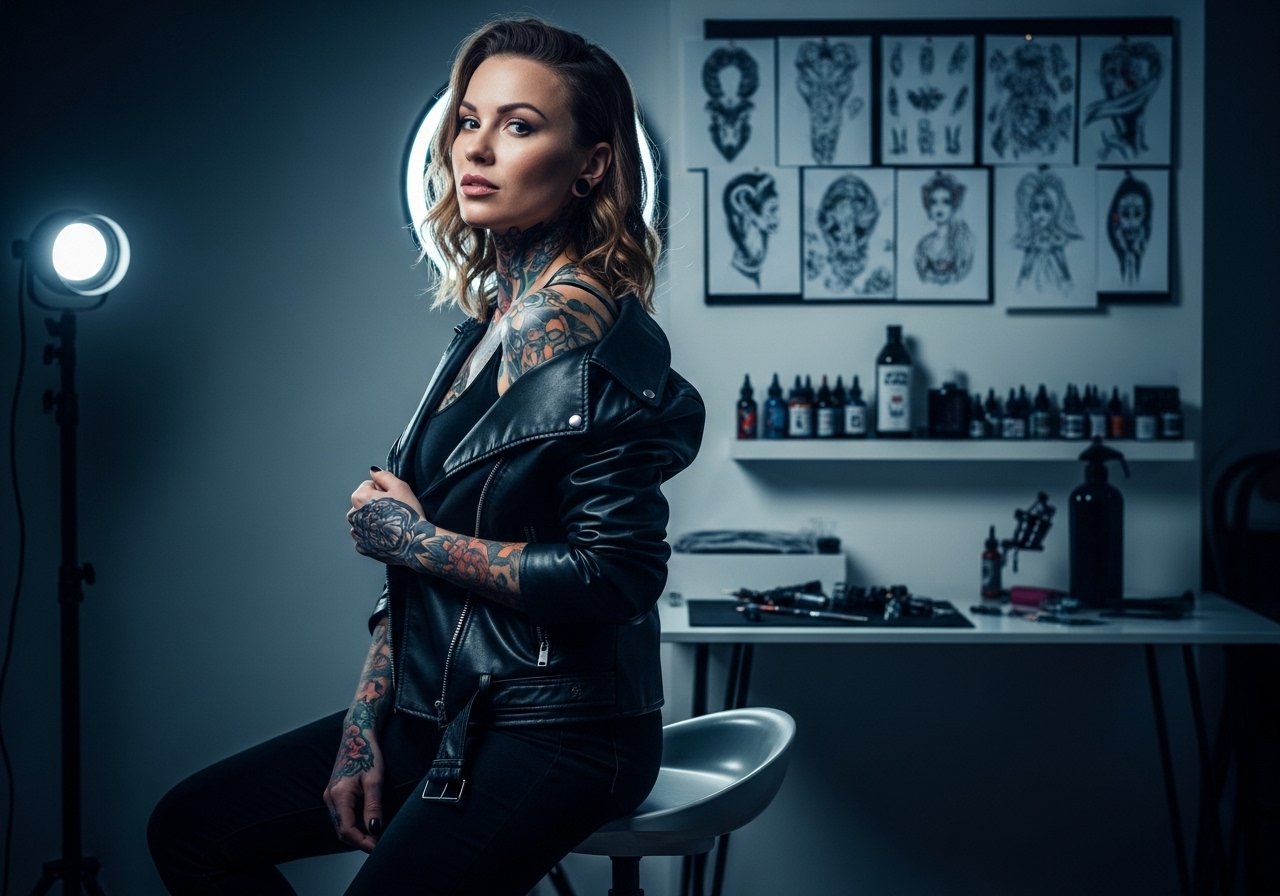
The stencil sits on skin and suddenly the decision feels real. You can see how a four-inch Betty Boop will read on a forearm, or how a tiny one behind the ear will hide in hair. Pick placement with aging and everyday wear in mind, and bring specific costume references so your artist knows whether you want bold cartoon saturation or a soft, minimalist outline. Start here for 17 Betty Boop ideas that balance nostalgia, longevity, and how you actually wear them.
1. Classic Betty Boop Pin-Up Portrait on the Forearm

I recommend this when you want a readable character piece that ages clearly. Ask for bold outlines and medium saturation instead of micro-hairline contours so the big eyes and dress retain shape after a few years. Forearm placement is visible and low risk for stretch, but expect the most sun exposure there. For the session wear a loose short-sleeve button-up you can roll so the artist has full access. A common mistake is requesting tiny facial detail on a two-inch forearm piece. Scale up to four inches for expressions to hold, and plan a touch-up at year two if color softens.
2. Betty Boop with Fairy Wings on the Shoulder
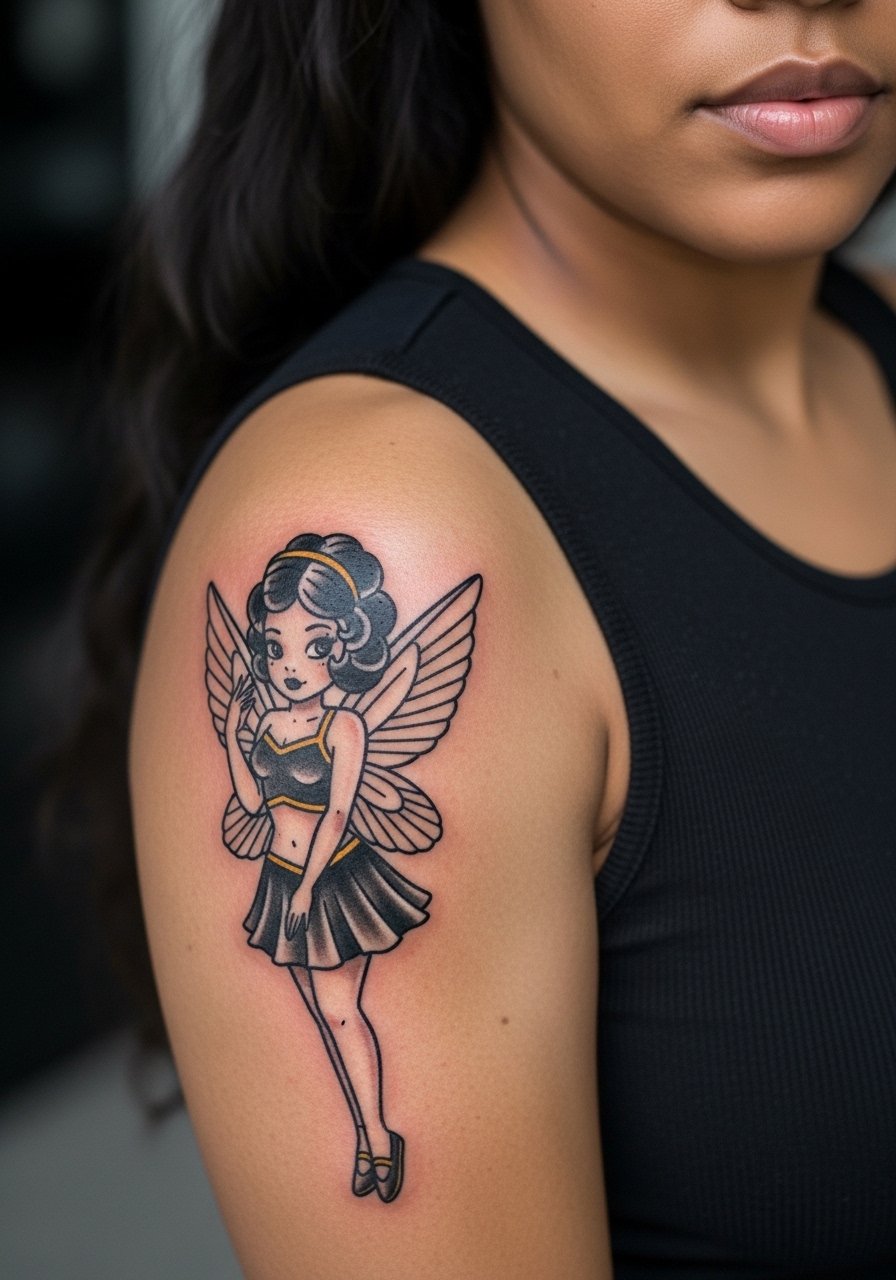
Shoulder pieces sit in a sweet spot for showing and for longevity. I suggest neo-traditional linework with solid black outlines and soft color fills for the wings so the design reads from a distance and keeps detail up close. During consultation say you want color washes, not splatter-style watercolor, so the artist uses controlled saturation. For showing it off, try an off shoulder crop top that frames the shoulder without covering the wings. The session is moderate pain and usually finishes in a single two- to three-hour pass for a five-inch piece.
3. Gangster Betty Holding a Tommy Gun on the Outer Bicep
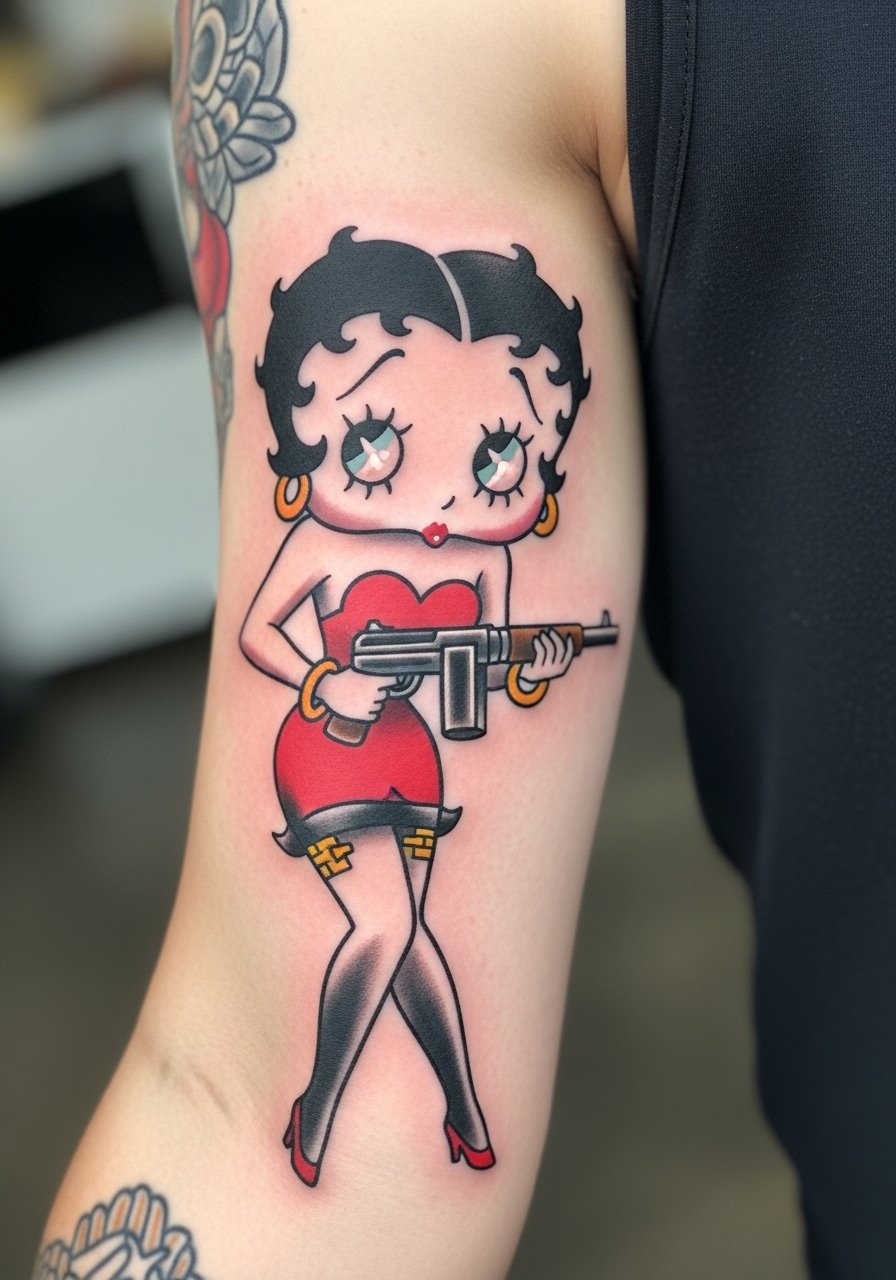
This version plays with empowerment through attitude and weighty linework. The outer bicep tolerates dense black and holds saturation well, so request bold contour and minimal fine shading in the face so it does not blur. Expect two sessions for a six-inch composition if you want solid black fills and red pops. Pair it with rolled-up sleeves and high waisted denim shorts for a retro edge when you show it off. A mistake to avoid is insisting on very narrow linework for the gun and dress details, because heavy use areas need room to breathe.
4. Minimalist Betty Outline Face on the Wrist
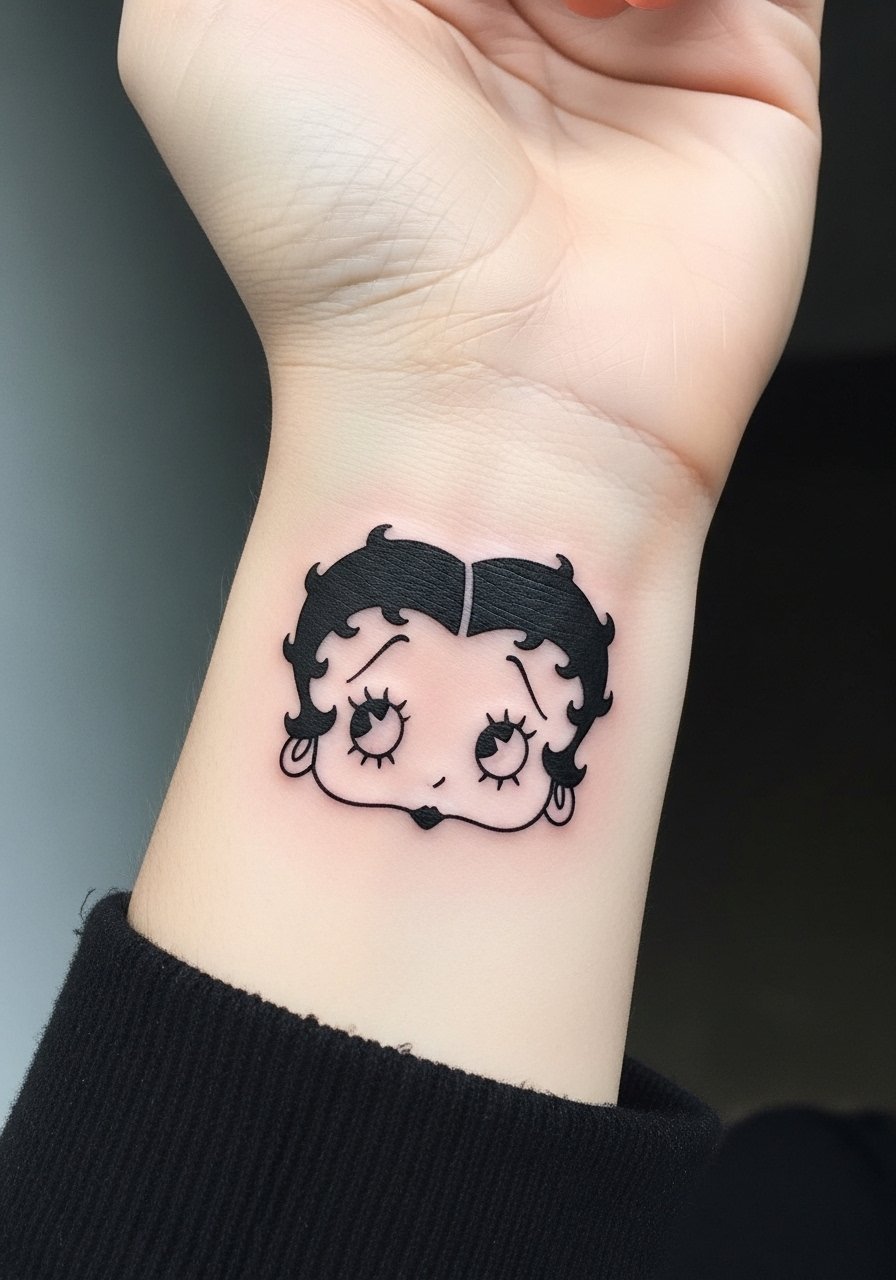
Wrist pieces are delicate and demand respect for scale. The fine line camp says thin outlines feel elegant and minimal. The bold camp argues character work needs heavier outlines to age. Both camps have merit. If you want a subtle nod, keep the design at 3 inches or larger and ask the artist for a slightly reinforced outer line so the face does not blur with wrist movement. Wear a thin gold bangle on the opposite wrist when you show it off, and remove jewelry during the session. Pain is low to moderate, but the skin moves and flexes, so touch-up at year two is common for fine line wrist work.
5. Betty in Retro Microphone Pose on the Inner Thigh
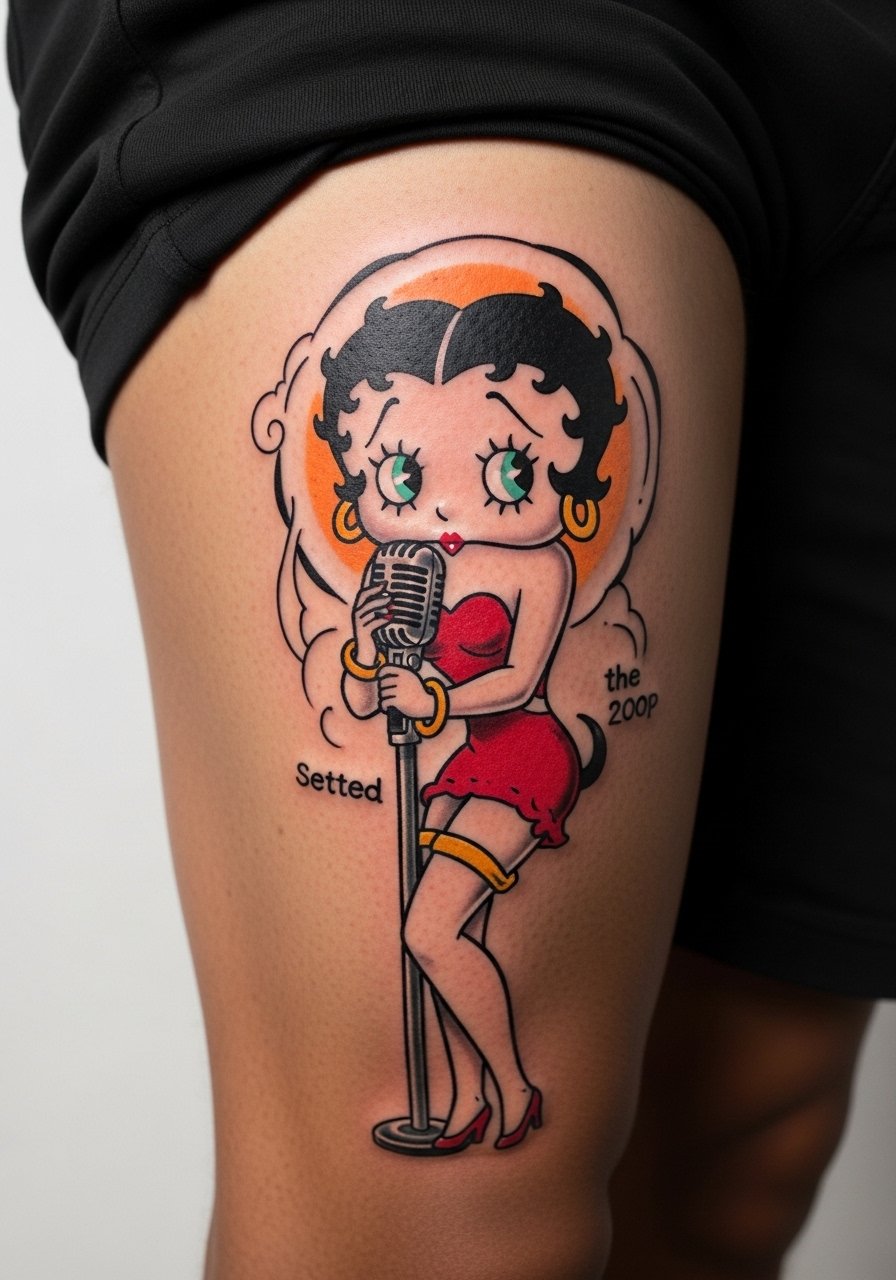
Inner thigh placement yields a private, expressive canvas for a five- to seven-inch illustrative piece. The skin is forgiving for color saturation and keeps shading soft, but the area swells and moves with weight changes, so ask your artist to avoid hyper-fine detail across joints. For the session wear loose shorts or a skirt you can shift, like high waisted denim shorts that are easy to lift without discomfort. Expect moderate pain and a comfortable single session for a strong, colorful portrait. The main mistake is compressing a five-inch pose into a tiny space where facial details will not heal clearly.
6. Betty Boop with Hearts and Bows on the Upper Arm
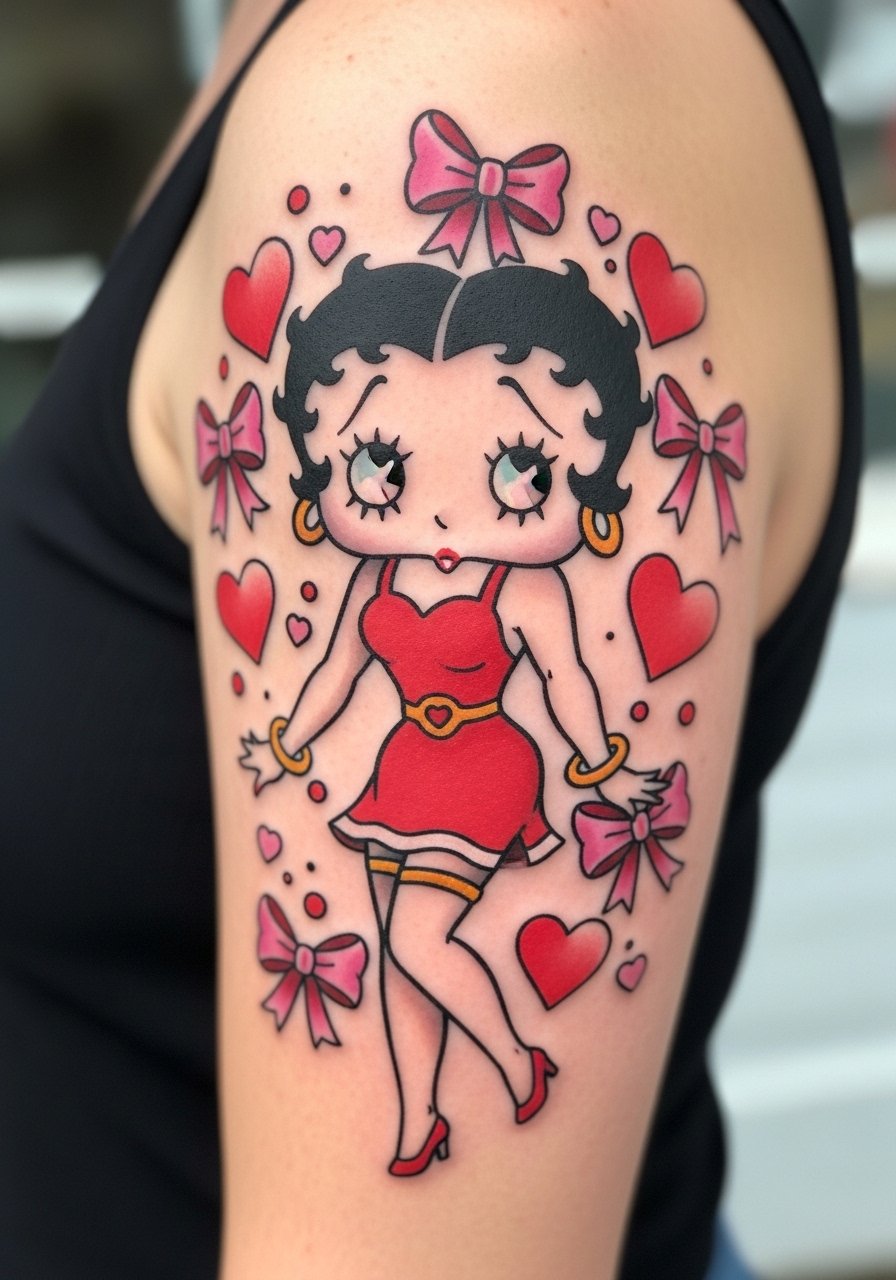
Upper arm placements age well because they avoid constant friction and sun. This color-packed take needs saturated pinks and reds with solid outlines so the bows and hearts keep definition. Tell your artist you want touch-up-friendly color placement near the skin crease avoided. For showing it off, pair with a rolled cuff vintage tee or a sleeve you can hitch to reveal the piece. Sessions are usually one solid appointment for a four-inch design and healing is straightforward unless you sleep on that side for long stretches.
Studio Day Picks
The shoulder, inner thigh, and upper arm pieces above ask for different session prep than wrist and finger work, so a few targeted items make the appointment easier.
-
Stencil transfer paper kit. Lets you preview how the portrait and microphone pose map to the skin before the needle touches the area, which is helpful for proportional tattoos above.
-
Topical numbing cream. Applied as directed before inner thigh or upper arm sessions they take the edge off sensitivity during longer color passes.
-
Thin protective film roll. Useful for the wrist and forearm pieces that experience more daily friction, it shields fresh ink during the initial healing window.
-
Fragrance-free gentle body wash. A neutral cleanser helps rinse off sweat without stripping color, which matters for the saturated hearts and bows design.
-
Aquaphor healing ointment. A thin layer can lock moisture in the first few days for fine line portraits and keeps the skin supple around bold black fills.
7. Blackwork Betty Silhouette on the Shoulder Blade

Blackwork reads clean for years because heavy saturation resists fading. Artists split on this approach though. One camp prefers color and illustrative detail for character pieces, saying color preserves personality. The other camp prefers black silhouettes for longevity and modern edge. If you want a dramatic look that ages well, ask for dense, even fills and crisp negative space around her bow. Shoulder blade work stays covered often so UV loss is lower. For showing it off try a sleeveless linen tank that keeps focus on the silhouette without busy patterns.
8. Winking Betty with Lashes on the Collarbone
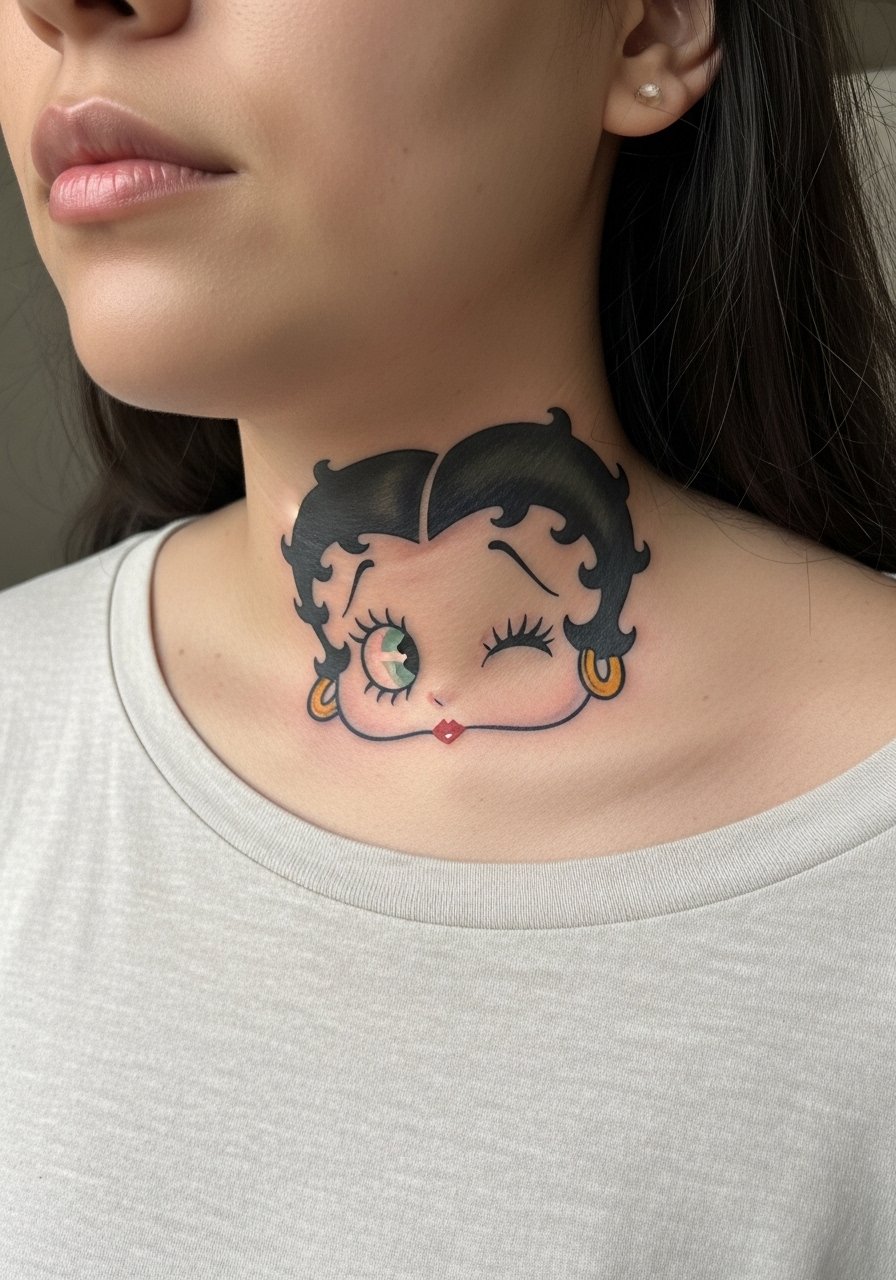
Collarbone pieces are flirtatious and visible with low-cut tops, but they need careful line weight. Ask for slightly bolder lines around the eye and lash area so the wink remains legible after a few years of movement. Pain on the collarbone is higher than the arm because the bone is close, and sessions often feel tingly as the needle crosses the area. A strapless tube top makes the session smooth, and a velvet choker pairs well to frame the piece. Avoid asking for tiny eyelash filigree under three inches, because those strokes tend to soften into blur.
9. Full-Body Flapper Betty in a Flapper Dress on the Thigh

Thigh canvases invite drama and scale. For an eight-inch full figure, neo-traditional saturation and controlled shading keep her dress lively without losing detail. Thigh skin stretches with weight fluctuation so request flow lines in the dress that can accommodate mild changes. The session is longer and may split into multiple appointments for color layering. For showing off the piece, high-waisted shorts or an A-line skirt read well with thigh placement. Avoid compressing complex facial detail into a tiny space at the knee line, because curvature there can distort the portrait.
10. Micro Betty Head with Bow Behind the Ear

Behind-the-ear tattoos are tiny and intimate. Keep the design minimal and specify you want a slightly thickened outer contour so the bow and eyes remain readable once hair grows back. The area hides well but can be tricky for detail, and touch-ups are common because of friction from collars and hair. During the session say you prefer the bow simplified rather than filled with micro-shading. This spot hurts less than the jawline but still feels sensitive. Ask the artist to show healed photos on similar skin tones before committing.
11. Betty Boop and Pudgy Dog Pair on the Ankle
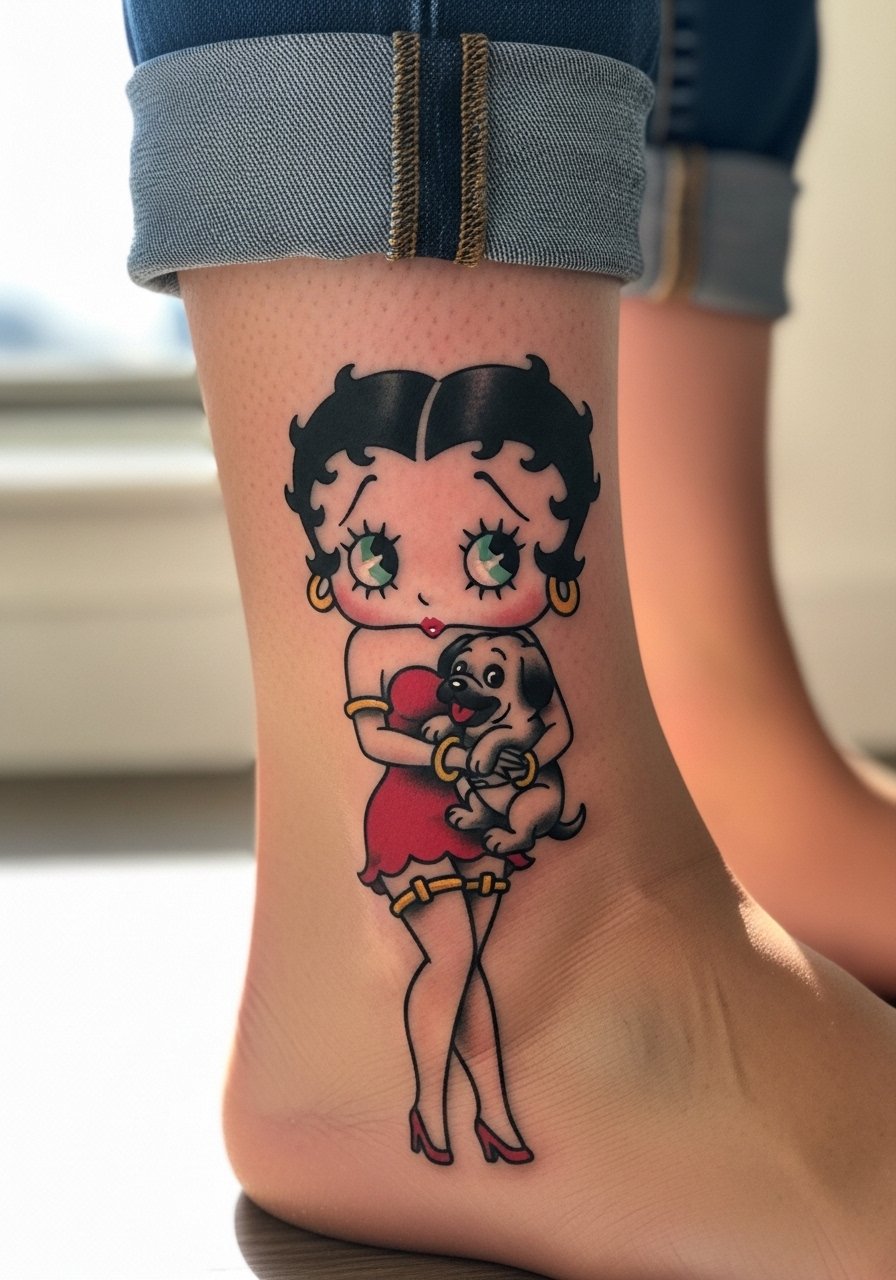
Ankle placements experience a lot of rubbing from socks and shoes. The fix is to place color and linework on the outer ankle and avoid the inner crease where friction is worst. Request slightly bolder outlines for the dog and her bow so small shapes do not wash out. For showing it off choose ankle strap heels or cropped jeans that stop just above the tattoo. The session time is short for a five-inch design, but healing can be fiddly with footwear, so plan footwear that keeps pressure off the area.
12. Ornamental Betty Frame on the Spine
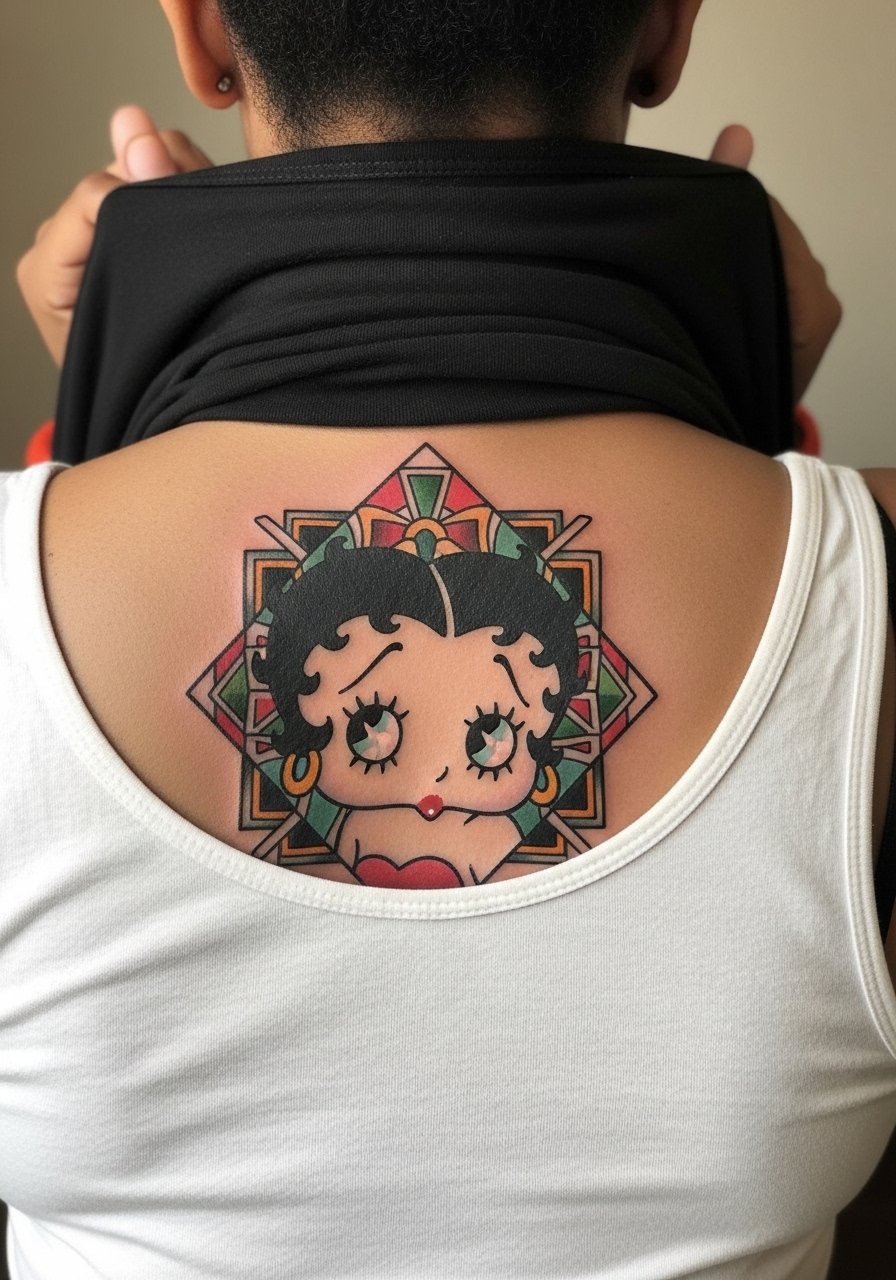
Spine work provides vertical flow and pairs well with ornamental frames. The sternum and spine both raise pain levels and ask for focused breaks during sessions. Tell your artist you want the frame spaced to avoid dense line clustering over vertebrae so the piece heals without muddling. For showing it off an open-back dress highlights the geometry without stretching the tattoo. A common mistake is requesting tight filigree right over the spine where motion and curvature cause detail to merge. Plan multiple short sessions rather than one marathon pass.
13. Watercolor Betty Splash on the Upper Arm
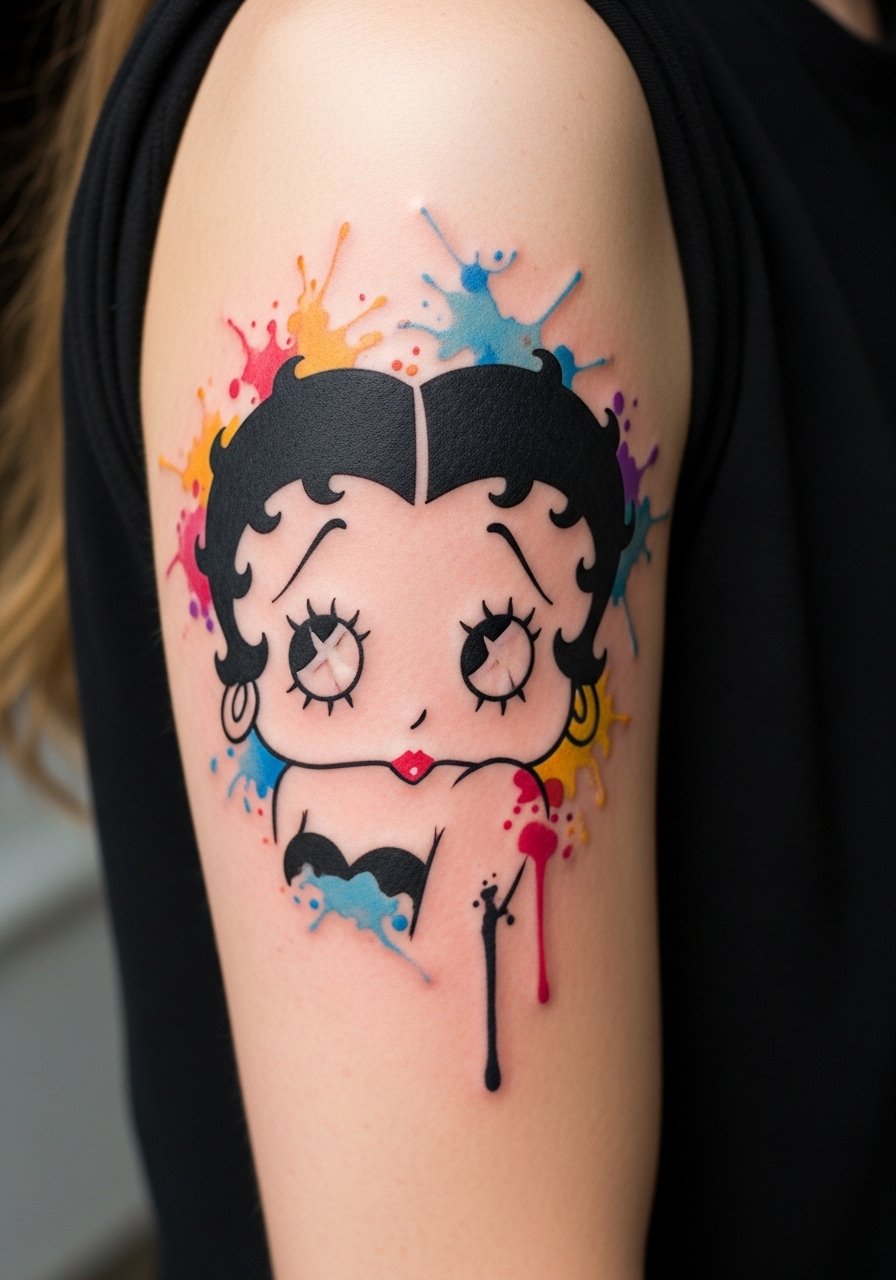
Watercolor approaches look airy but require disciplined color placement to avoid muddy healing. Artists debate whether watercolor holds on sun-exposed arms, and that debate matters here. If you want the painterly look, ask for saturated color zones framed by black linework to anchor the washes. For the session wear a sleeveless linen tank so the artist can reach the upper arm easily. Expect two to three shorter passes for layered color and a touch-up at year two for any faded washes.
14. Small Betty with Bow on the Finger
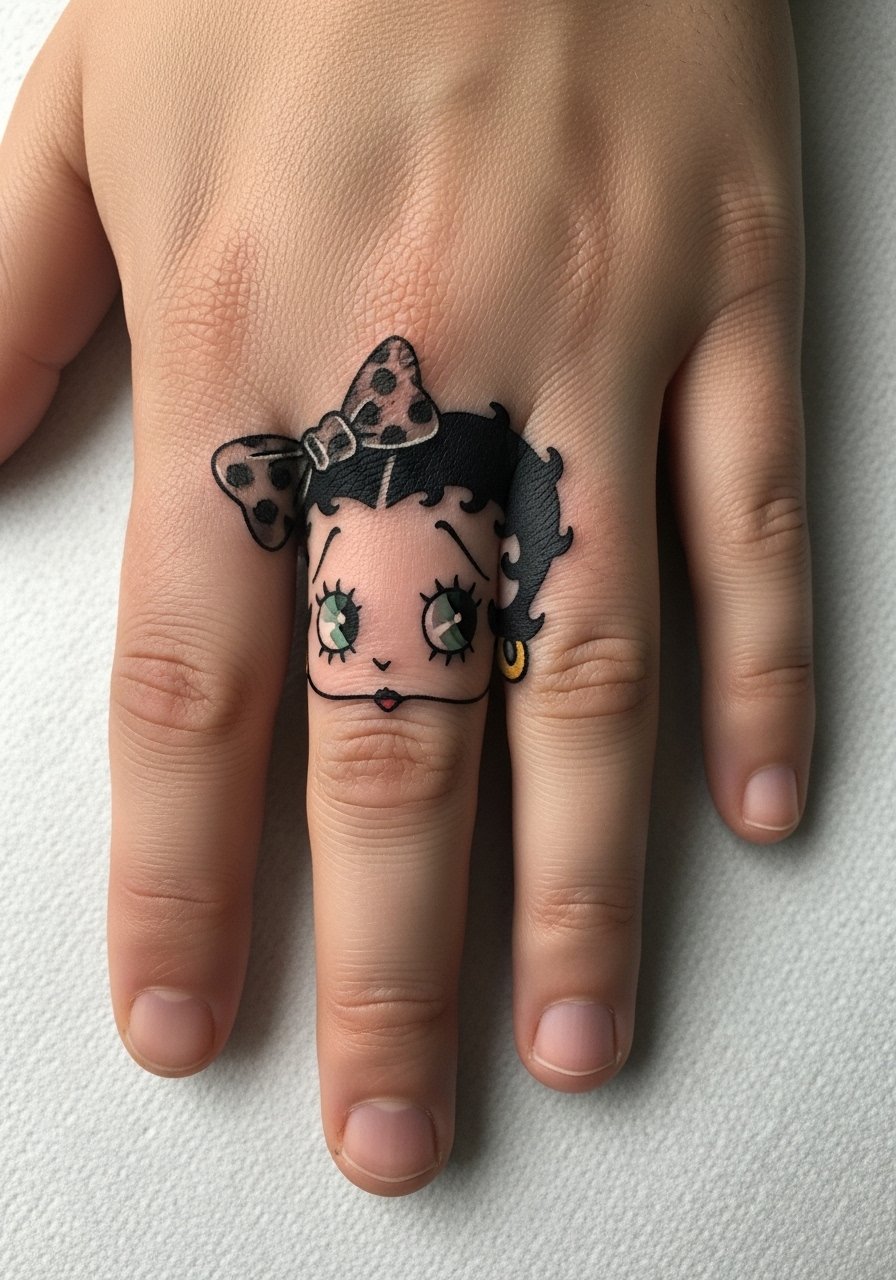
Finger tattoos age faster than most spots because of constant washing and friction. If you want a finger Betty, simplify the bow and face and prepare for yearly touch-ups, especially if you work with your hands. Ask for slightly larger negative space around the main features so the lines do not bleed together. The session is sharp but short. A poor choice is squeezing dense facial lines into a one-centimeter band. For subtlety with less maintenance, opt for the outer finger rather than the pad or knuckle.
15. Betty Boop with Ornamental Frame on the Sternum

Sternum work is intimate and can be high on the pain scale, but it creates striking symmetry under low-cut tops. The key is spacing in the frame so dense motifs do not merge during healing. Ask for a slight boldening on outer frame lines and airy dot work inside to keep contrast without over-inking. For the session wear a strapless tube top or sports bra you can adjust, like a strapless tube top that keeps the area accessible. Expect multiple short sessions for larger ornamental compositions and plan for careful sleep positions while healing.
16. Ornate Betty with Script on the Ribcage
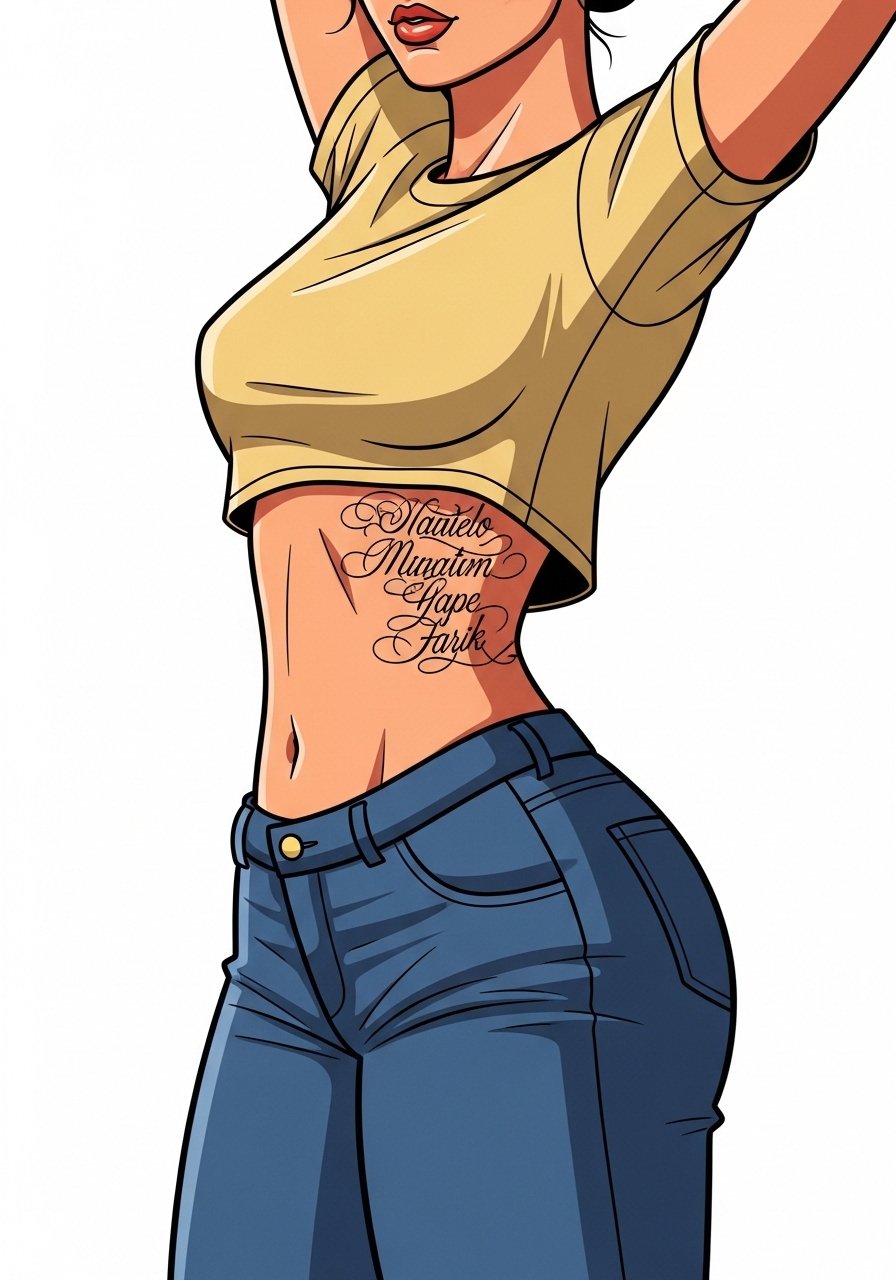
Ribcage tattoos look stunning but demand contour-aware layout. Artists disagree on fine line there. One group warns that ribs stretch and blur fine detail within two years. The other group says with proper needle depth and spacing, fine line holds. Ask your artist where they stand and request increased spacing between facial lines and script. Pain is higher in this area so plan for a calm session and wear a top that can be shifted easily. Keep in mind the fold patterns when you laugh or bend so the piece sits naturally.
17. Betty Boop as a Cover-Up on the Thigh or Back

Using Betty as a cover-up can work well because her dress and fold lines offer large color blocks to mask older ink. The trick is to match color saturation and use darker fills where the old tattoo is strongest. During consult bring a photo of the existing piece and ask for a mockup showing how the dress will overlap problem areas. Thigh placement gives you space for bold coverage and multiple sessions. Avoid trying to hide a bright, saturated old tattoo under a tiny Betty, because that will not conceal fully and will require extra sessions.
Frequently Asked Questions
Q: Will a fine line Betty face blur faster than a bold-lined portrait on the forearm?
A: Fine line pieces generally need more space and careful placement to avoid merging over time. On the forearm a slightly reinforced outer line helps maintain facial features, and many people plan a touch-up around year two or three depending on sun exposure and care.
Q: Is watercolor Betty more likely to fade if placed on the upper arm versus the thigh?
A: Watercolor washes face more UV and friction on the upper arm, so the thigh usually preserves that soft color longer. If you want watercolor on the arm, ask for anchor lines or small color blocks to keep washes readable and expect a possible color refresh in a couple of years.
Q: How should I dress for a collarbone or sternum session?
A: Wear tops that give easy access without being fully removed, such as a wide-neck shirt for collarbone work or a fitted sports bra for sternum pieces. A velvet choker necklace can frame healed collarbone tattoos but remove jewelry during the appointment.
Q: Are there discovery channels to find artists who handle Betty Boop styles well?
A: Look through hashtags like #BettyBoopTattoo and #NeoTraditionalBetty on social platforms, scan Pinterest boards for portfolios, use Tattoodo filters to find cartoon or neo-traditional specialists, and check r/tattoos for shared healed photos to see how similar pieces age.
Q: If I want a tiny Betty behind the ear, what should I ask for in consultation?
A: Ask the artist to simplify the bow and to slightly thicken the outer contour so lines hold. Request healed examples on similar placement and skin tone if possible, and plan for lighter touch-ups since hair and collars can affect longevity.