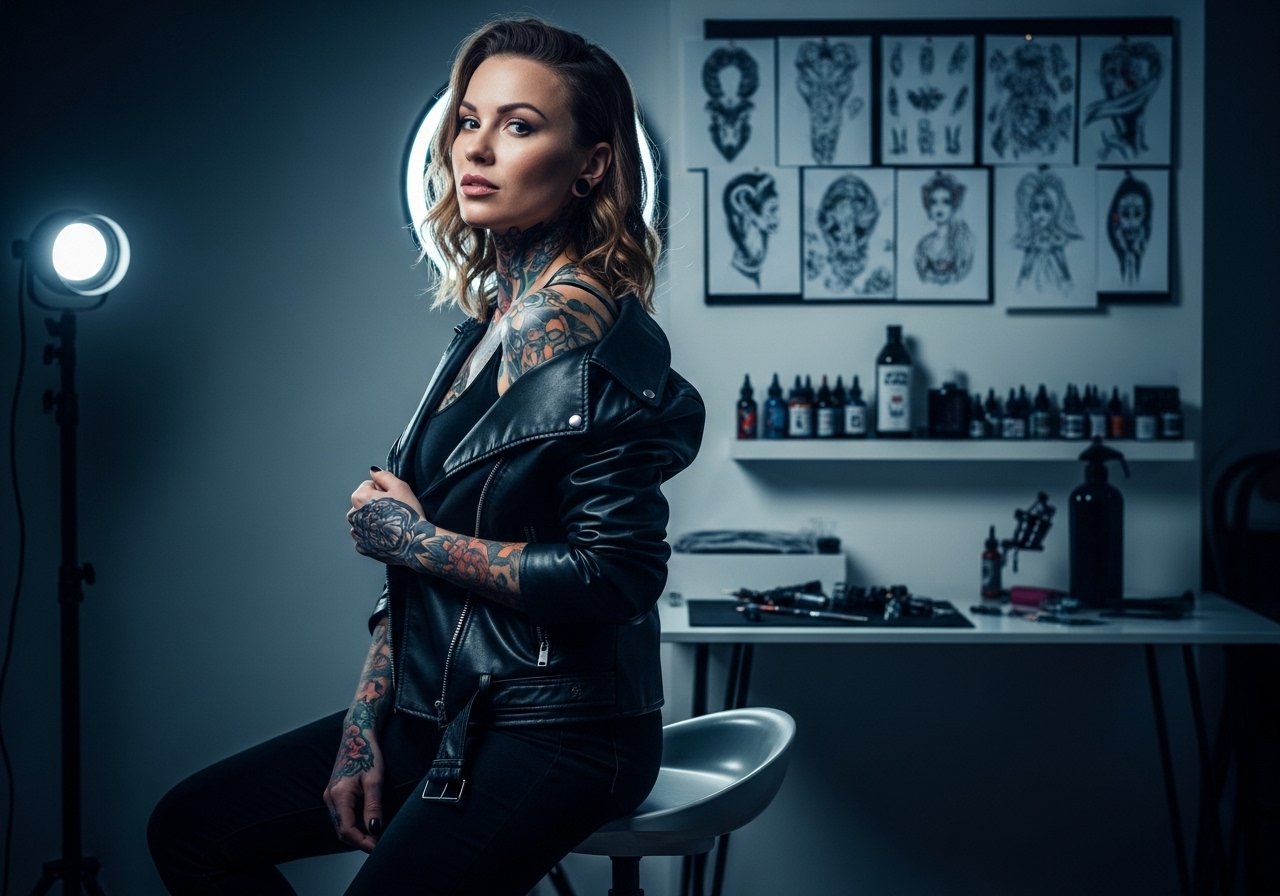
Fine line and geometric lucky cat tattoos look clean in photos, but what holds up years later depends on placement, spacing, and how you prepare for the session. Expect tradeoffs: some spots hurt more, some styles need touch-ups sooner, and small details can blur if you go too tiny. Read the first idea for a forearm option that balances detail and longevity, then move through variations arranged by placement and show-off styling.
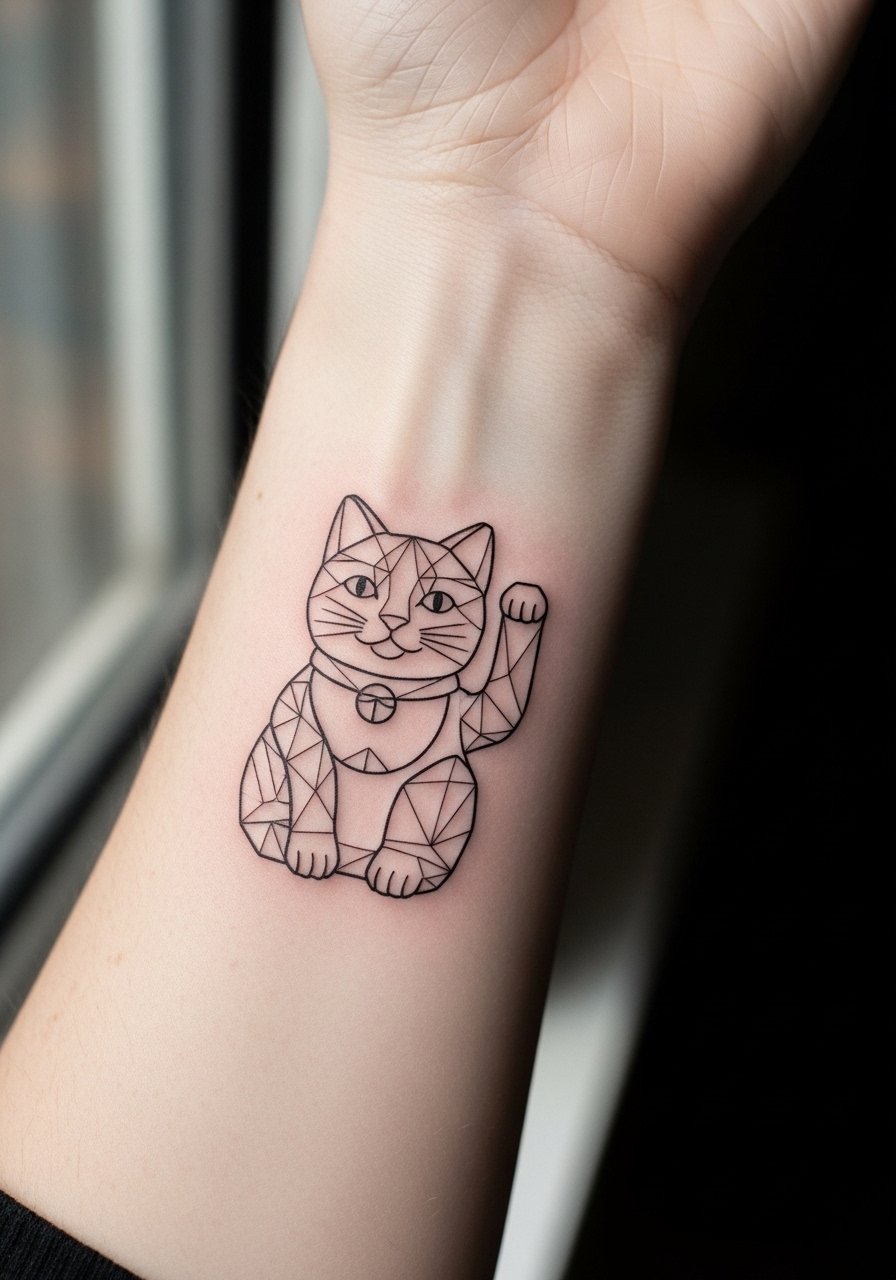
1. Fine Line Lucky Cat on the Inner Forearm
I've seen this placement last best when the design keeps breathing room between shapes. Choose slightly heavier linework than the photo reference so the tiny geometric facets do not merge over time. Tell your artist you want distinct negative-space triangles inside the paw and a bit more spacing around the whisker lines. Pain is moderate. Expect a single one-hour session for a small piece and a possible touch-up around year three. For showing it off, roll up a linen short-sleeve shirt to keep the forearm visible without rubbing the fresh ink.
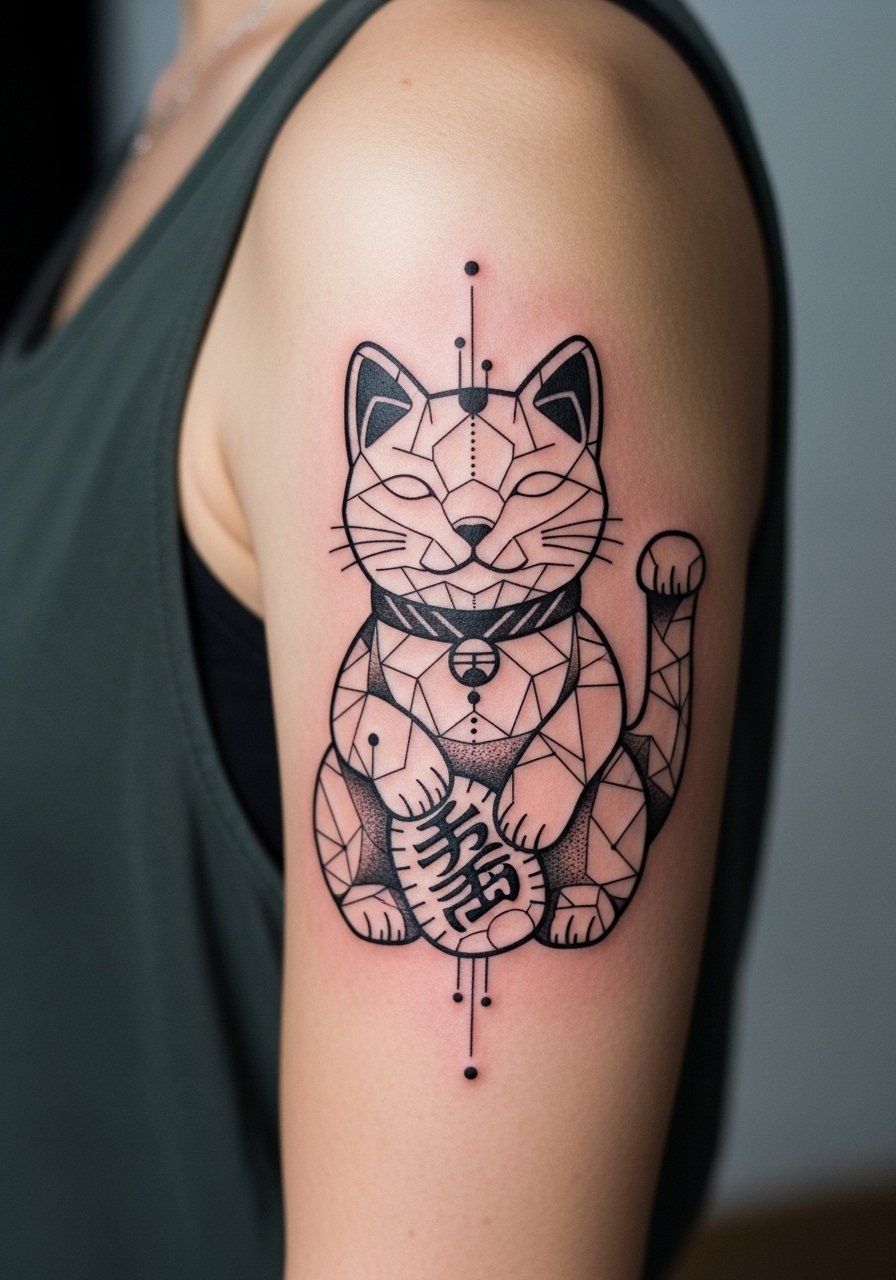
2. Bold Blackwork Lucky Cat on the Outer Bicep
Visual impact is immediate with saturated black shapes that simplify the cat into strong polygons. The outer bicep tolerates saturation and holds contrast well over years. Expect a firmer sensation than the forearm but a shorter session if the design is large flat fills rather than lots of tiny lines. A common mistake is packing in micro detail with heavy fills next to thin lines, which creates uneven aging. For session comfort, wear a loose tank top so the artist can access the bicep and you stay cool during longer fills.
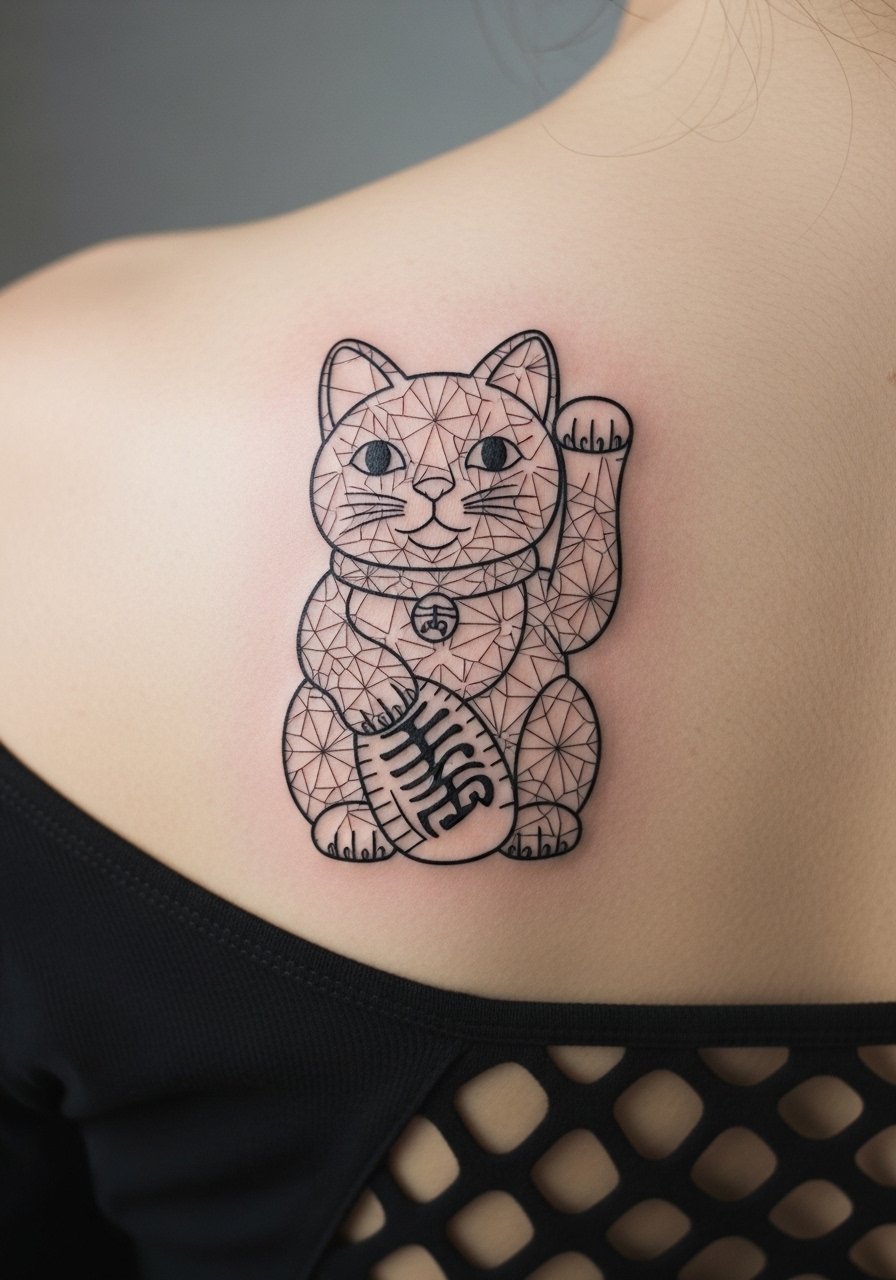
3. Negative-Space Mandala Cat on the Shoulder Blade
There is something about negative-space geometry that reads like jewelry when placed on the shoulder blade, especially under a strap. When consulting, ask for a balance between linework and blank areas so the pattern does not become a single dark patch as it heals. The shoulder blade moves but it is lower on the blowout risk scale, so the lines tend to stay crisp longer. For evenings out, pair this piece with an open-back top to show just the top edge of the mandala without exposing a large area.
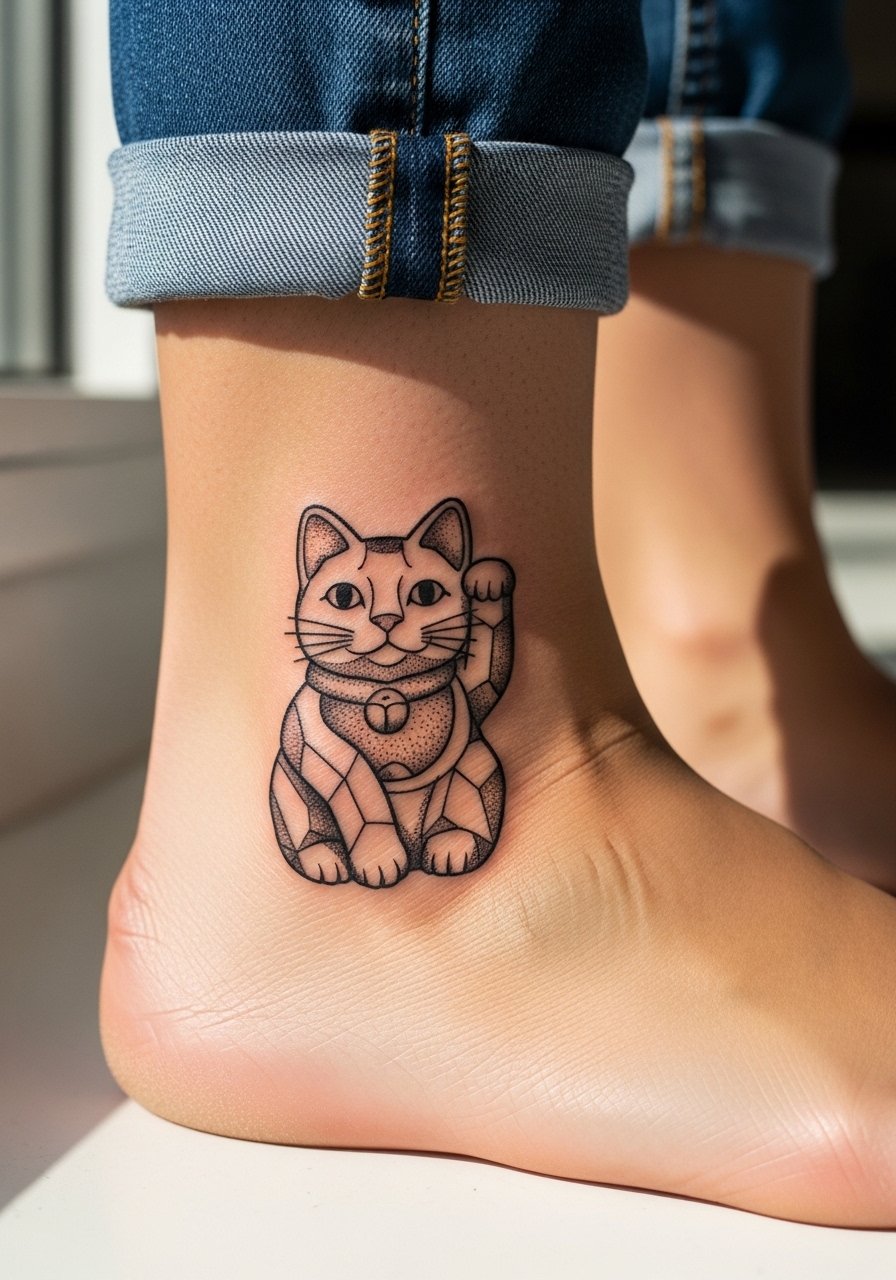
4. Stipple Shaded Lucky Cat on the Ankle
A stipple approach keeps geometric shading airy and reduces the chance of dense black patches on a small area like the ankle. The ankle is a high-friction zone and can pick at scabs when you wear closed shoes, so plan footwear accordingly. The session usually runs under an hour for a compact design, with touch-ups common at year two if you live in a sweaty climate. For showing this off with sandals, wear a pair of minimalist leather sandals that expose the ankle without rubbing the fresh ink.
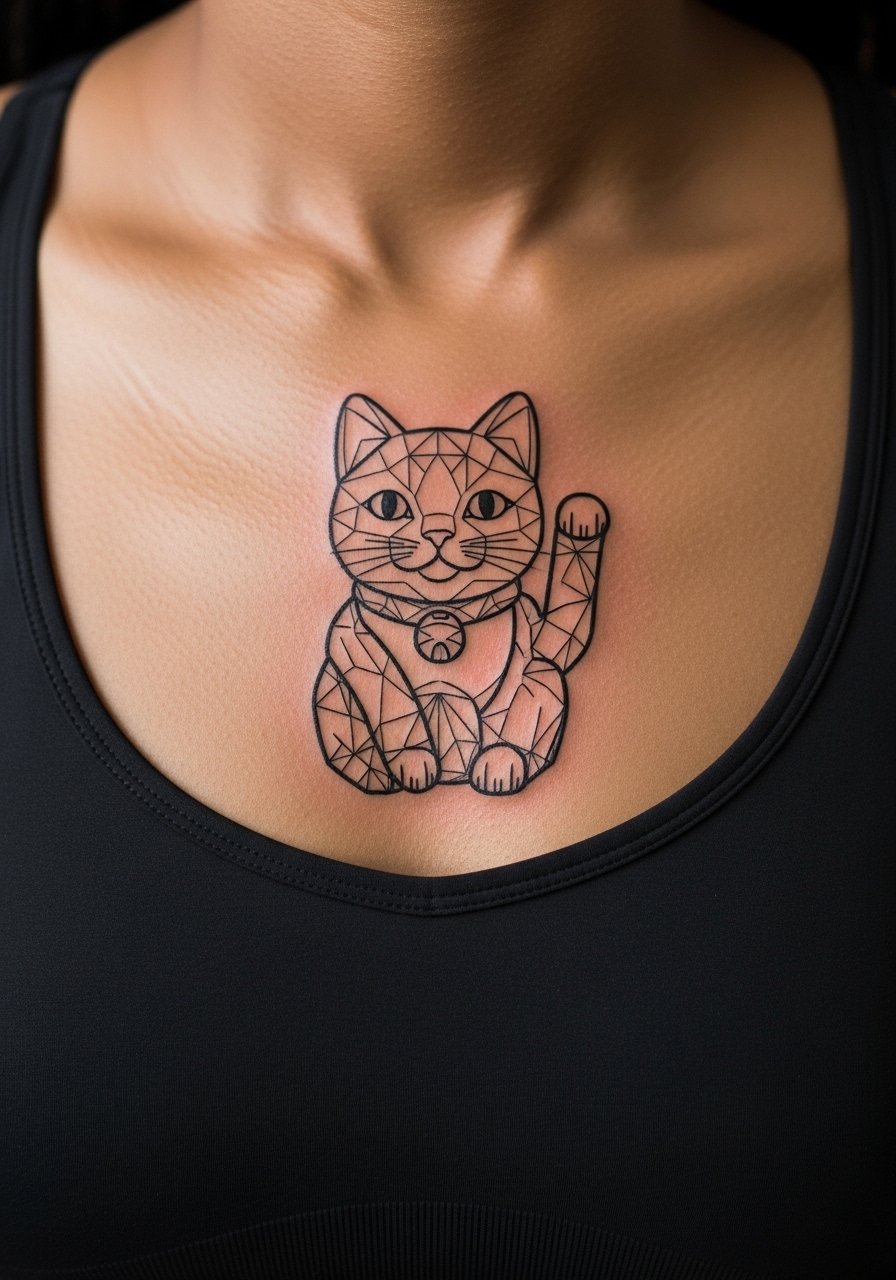
5. Sternum Geometric Lucky Cat with Watercolor Wash
Sternum placements split artists into two camps. One camp says dense geometric detail on the sternum blurs quickly because the skin stretches and moves. The other camp argues that with deliberate spacing and slightly thicker outlines the piece settles fine. If you pick this spot, wear a fitted sports bra to the appointment and ask the artist to map negative space along the sternum line. Sessions feel more intimate and can be uncomfortable during breathing. For post-session photos, a bandeau or fitted sports bra keeps the area modest while still letting the design show.
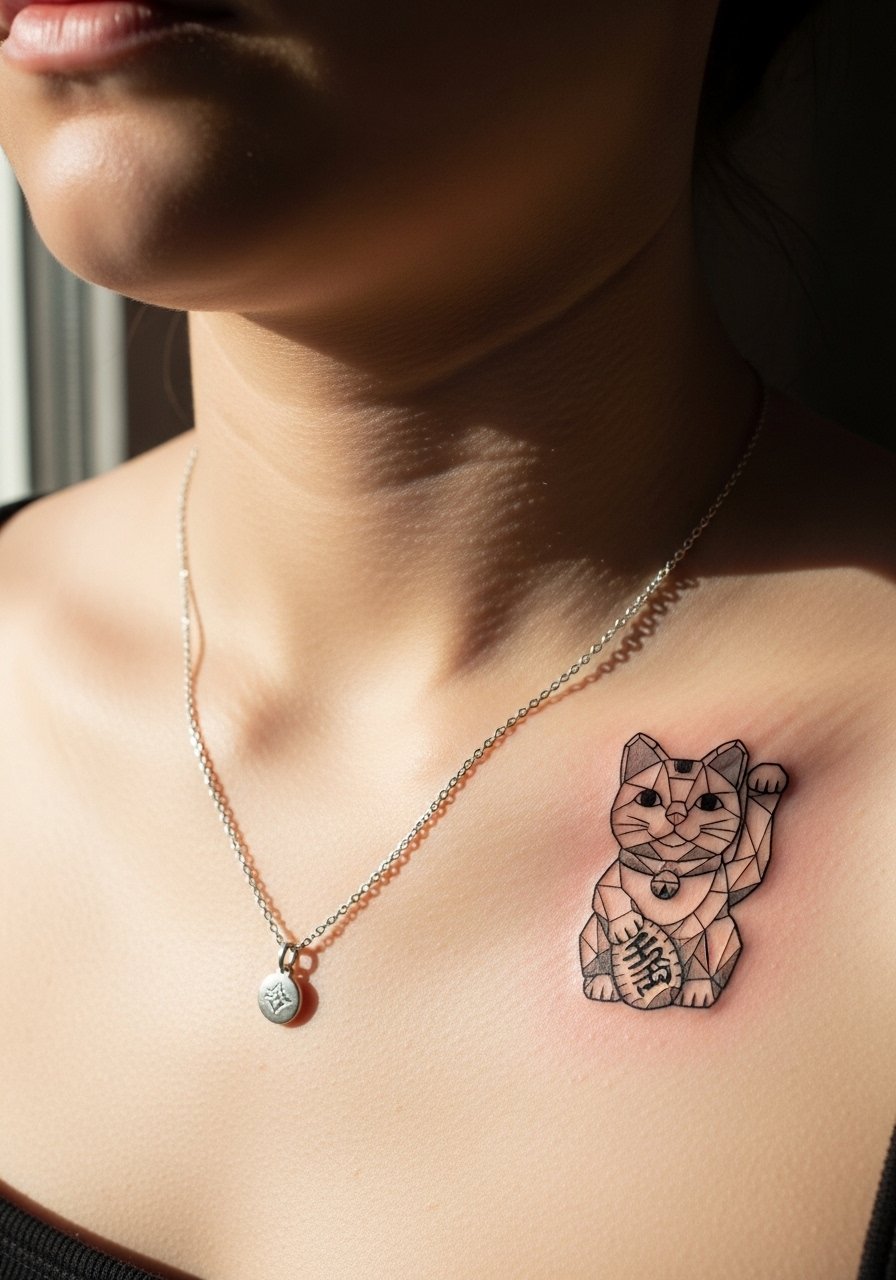
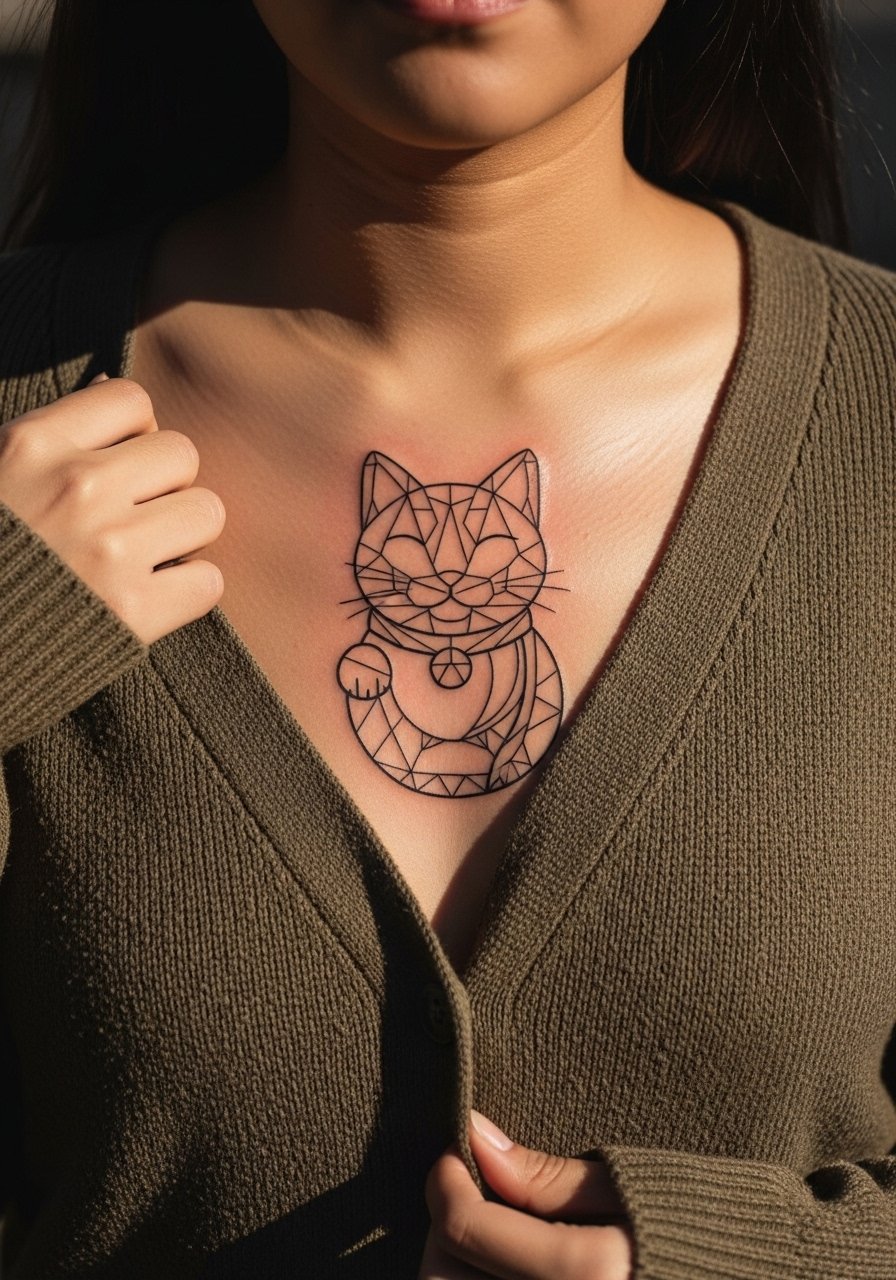
6. Collarbone Low-Poly Lucky Cat Accent
A low-poly geometric cat perched near the collarbone reads like a charm when paired with necklaces. Expect the collarbone to be sensitive because the needle crosses shallow bone, but the area holds thin lines reasonably well if you keep scales and facets slightly larger. A common error is placing the design too close to the neck where the skin creases. For styling, layer a thin chain pendant necklace that sits just above the cat so the two elements do not compete.
Studio Day Picks
The chest, collarbone, and sternum pieces above need different prep from the ankle and forearm work, so a compact kit makes session day smoother.
-
Stencil transfer paper kit. Lets you preview placement and line weight on skin before the needle starts, which is crucial for collarbone and sternum pieces.
-
Topical numbing cream. Applied per instructions before shoulder and sternum sessions it eases initial sensitivity without changing how the ink sits.
-
Thin protective film roll. Useful for ankle and finger tattoos where friction from clothing or shoes threatens fresh linework.
-
Fragrance-free gentle body wash. Cleans healing skin without stripping delicate linework on light forearm pieces.
-
Aquaphor healing ointment. Thin layers in the first days lock in moisture for fine line work without clogging the channels that hold pigment.
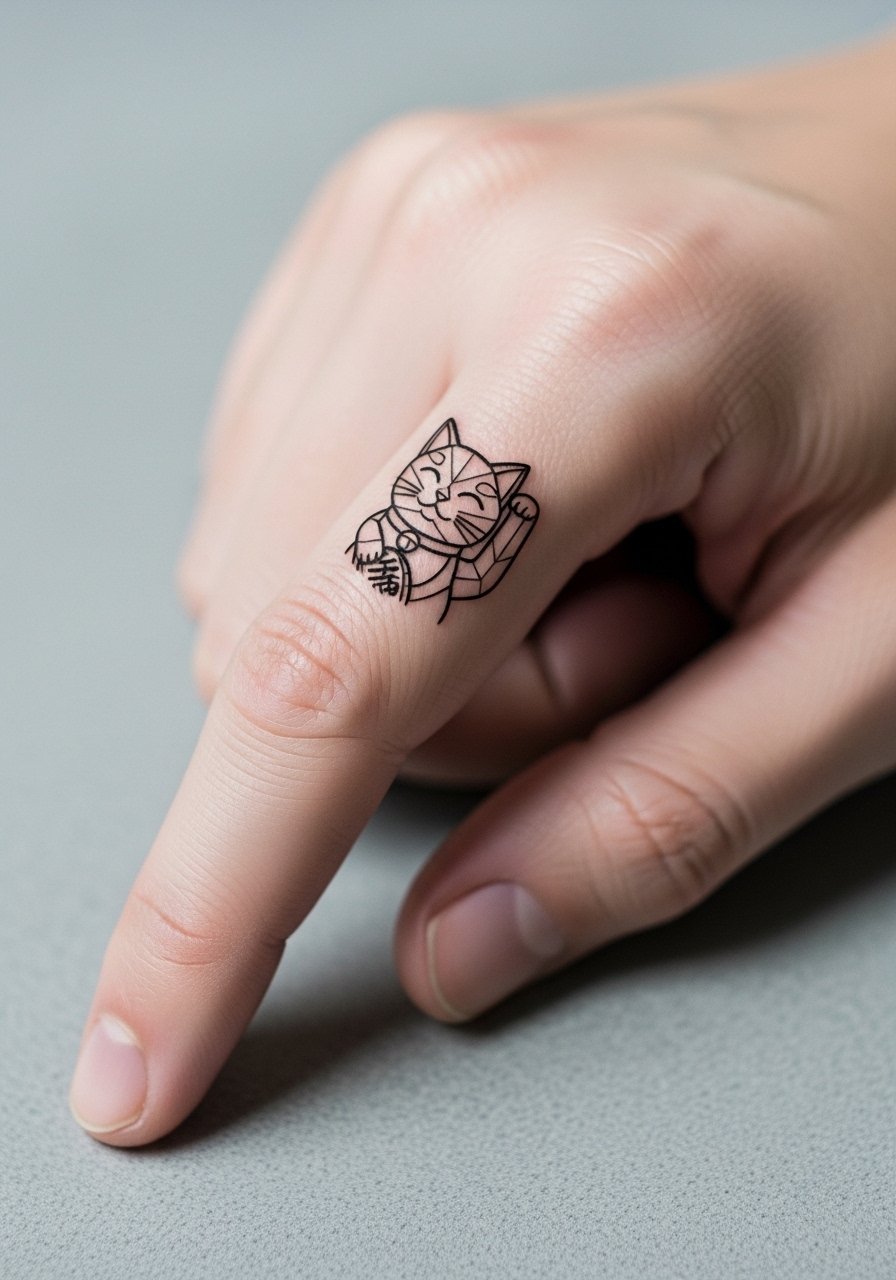
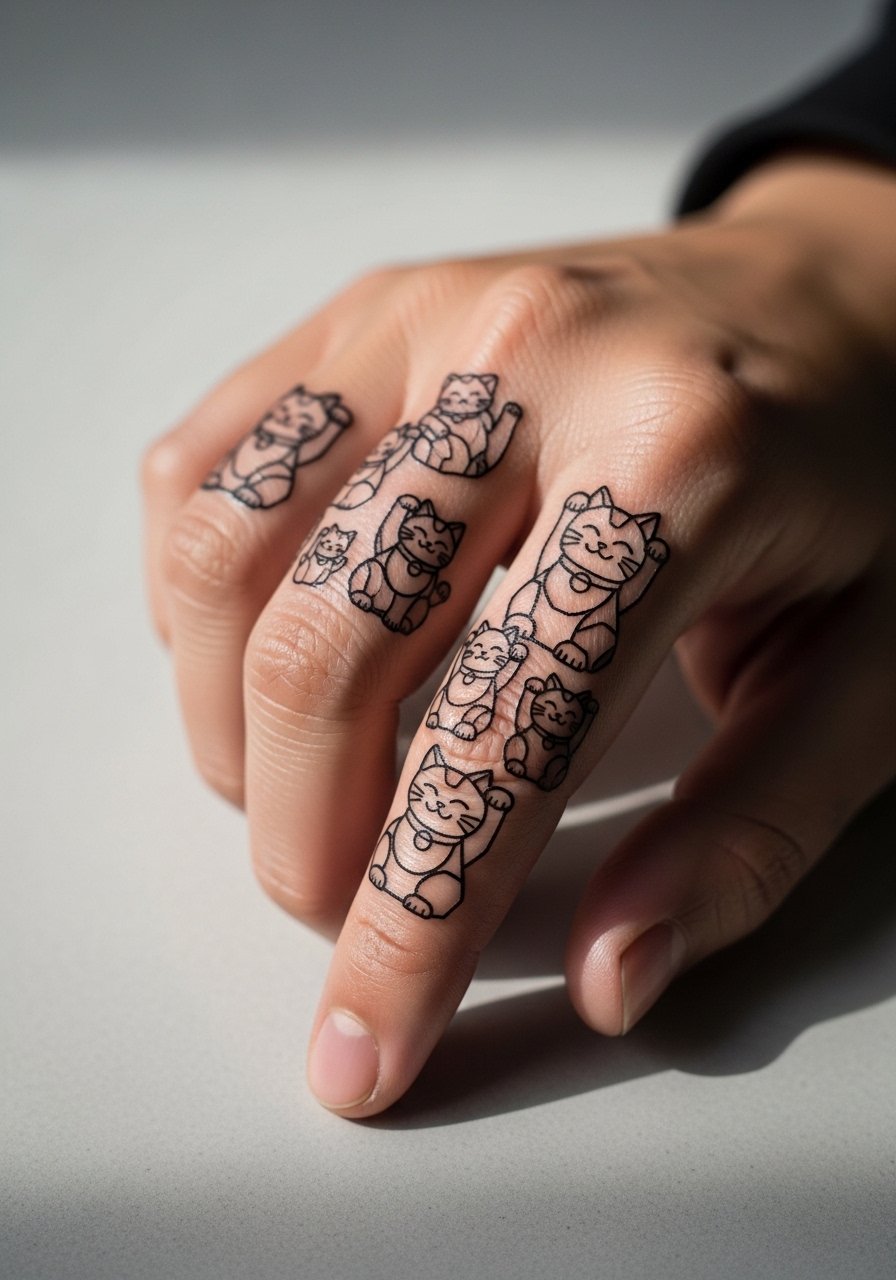
7. Tiny Geometric Lucky Cat on the Side of a Finger
Finger tattoos age unpredictably because of constant washing and friction. The geometric style works if you accept the need for touch-ups and keep shapes bold enough to survive abrasion. Ask for the design to sit on the thicker part of the finger pad rather than the joint. Sessions are quick but may sting suddenly when the needle crosses creases. For showing off while minimizing rubbing, consider a minimalist ring set that complements the finger art without covering it.
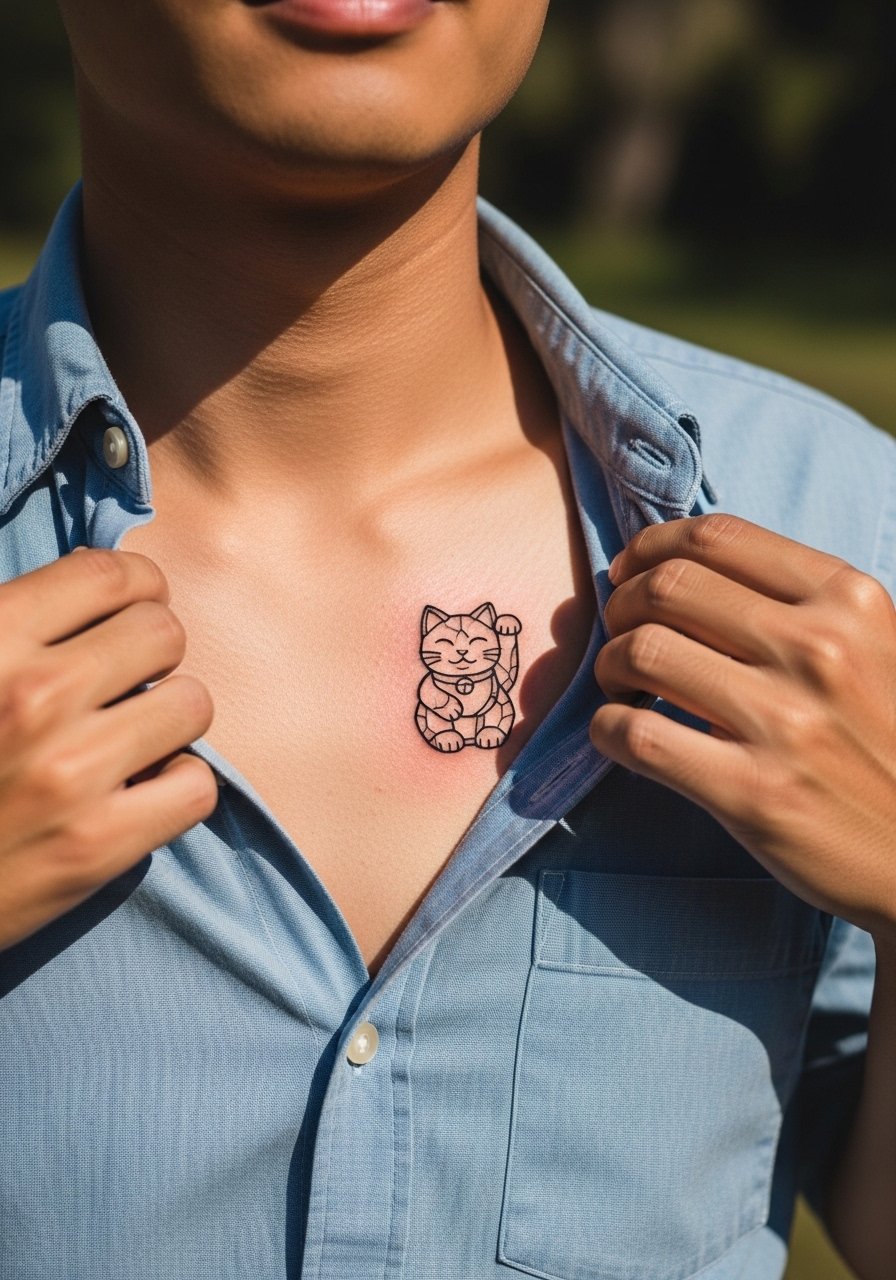
8. Geometric Lucky Cat as a Chest Pocket Accent
This small pocket-style cat sits on the upper chest near the shirt pocket line and reads like a badge. The chest can be sensitive and needs mapping so the design follows muscle lines instead of distorting across the pectoral. The session is short but breathing control helps when the needle sits close to the sternum. This placement pairs well with a button-down shirt worn open enough to show the top edge while staying modest.
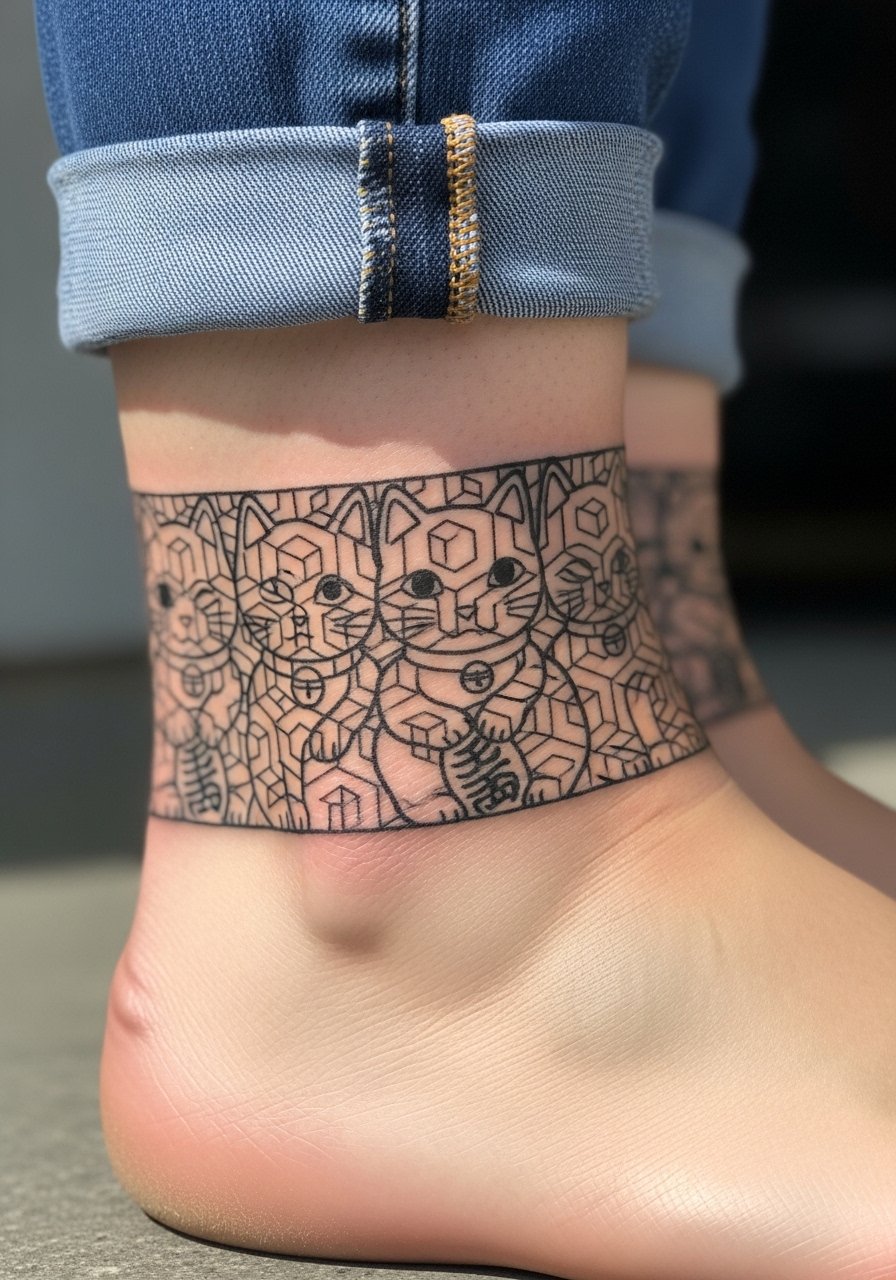
9. Geometric Lucky Cat Ankle Band
Wrap the cat motif into a repeating band around the ankle for a jewelry-like effect. Bands tolerate repeated motion but avoid excessively thin connections that may blur when the skin flexes. Mention to your artist that you want tiny gaps between repeating facets to preserve shape over time. The session is modular and may be split into two shorter sittings. Pair with rolled-up pant legs and a cotton ankle sock or slip-on shoe to protect the area in the first week.
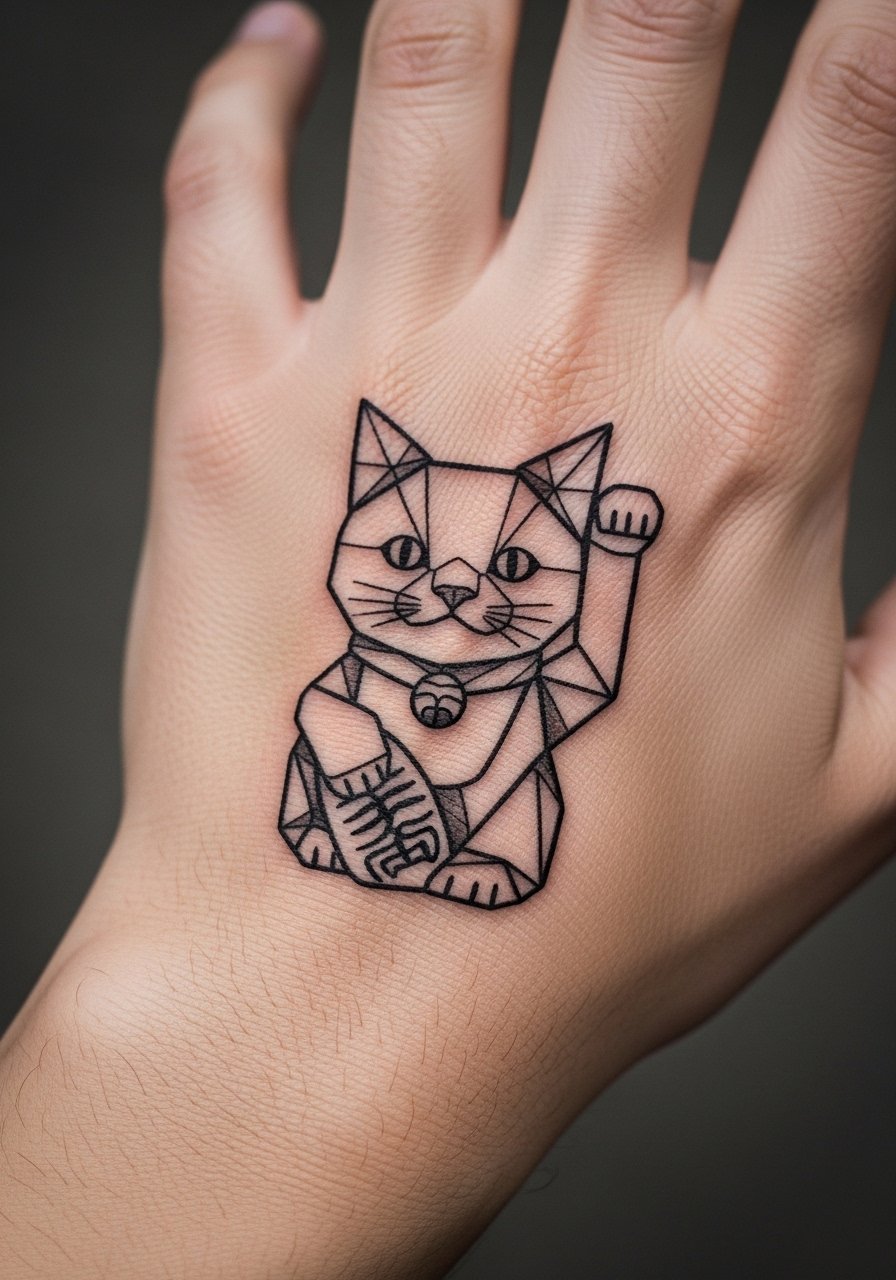
10. Origami Lucky Cat on the Hand Back
Hand tattoos remain controversial with employers and certain industries. One camp warns that hand pieces still affect hiring in many fields. The other camp points out that creative professionals often keep expressive hands. If you choose the back of the hand, keep the shapes bold and avoid fine webbing between fingers. Healing feels rough because hands move constantly and scabbing can snag. For session wear, bring a thin cotton glove to protect the other hand when traveling home to minimize contact with surfaces.
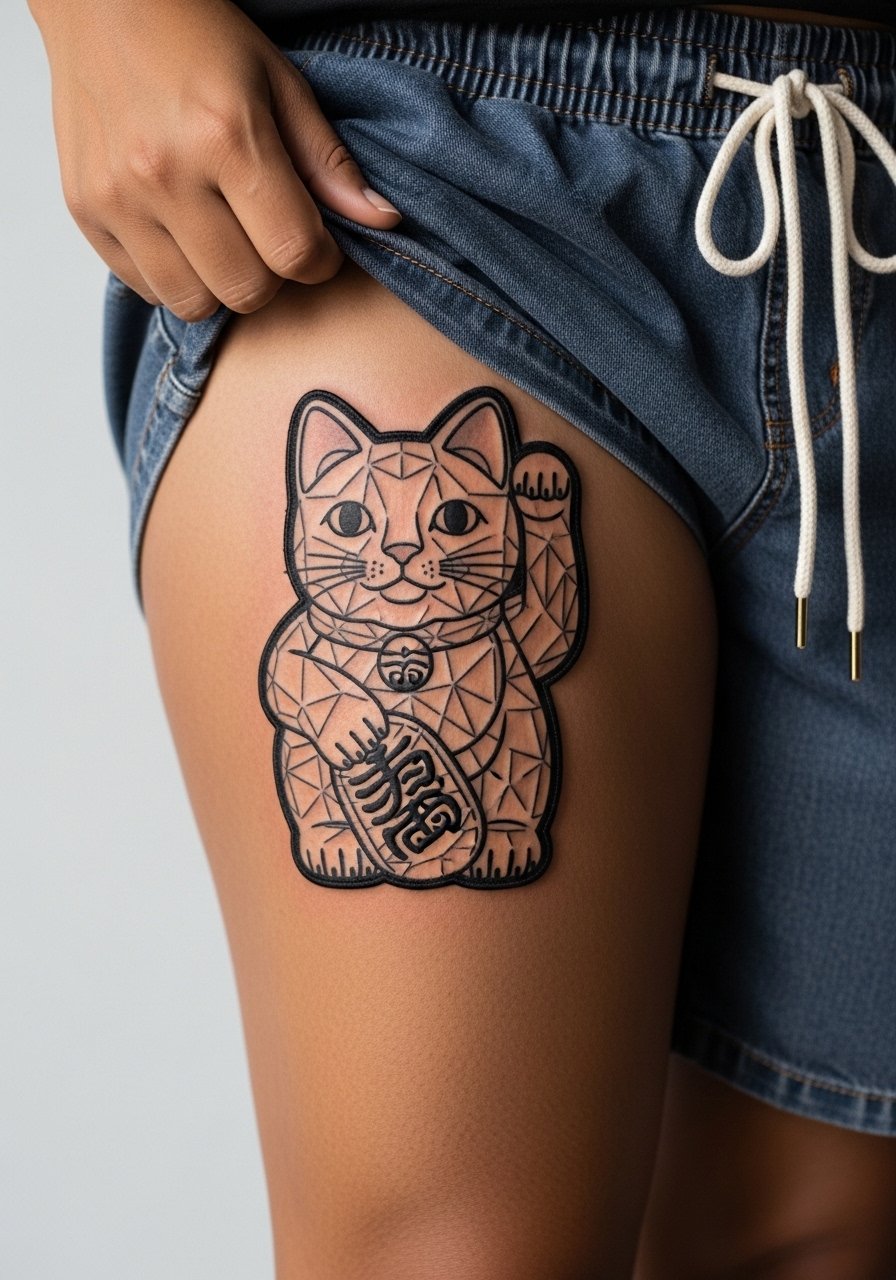
11. Geometric Lucky Cat Thigh Patch
Upper thigh pieces are forgiving on detail and hold contrast well because the skin is thicker. Pain varies but is often manageable. This placement suits larger, more intricate geometry that would be too dense elsewhere. Request a mockup to ensure the design flows with muscle curves. For the appointment, wear loose drawstring shorts so the artist can expose just the upper thigh without fabric tension.
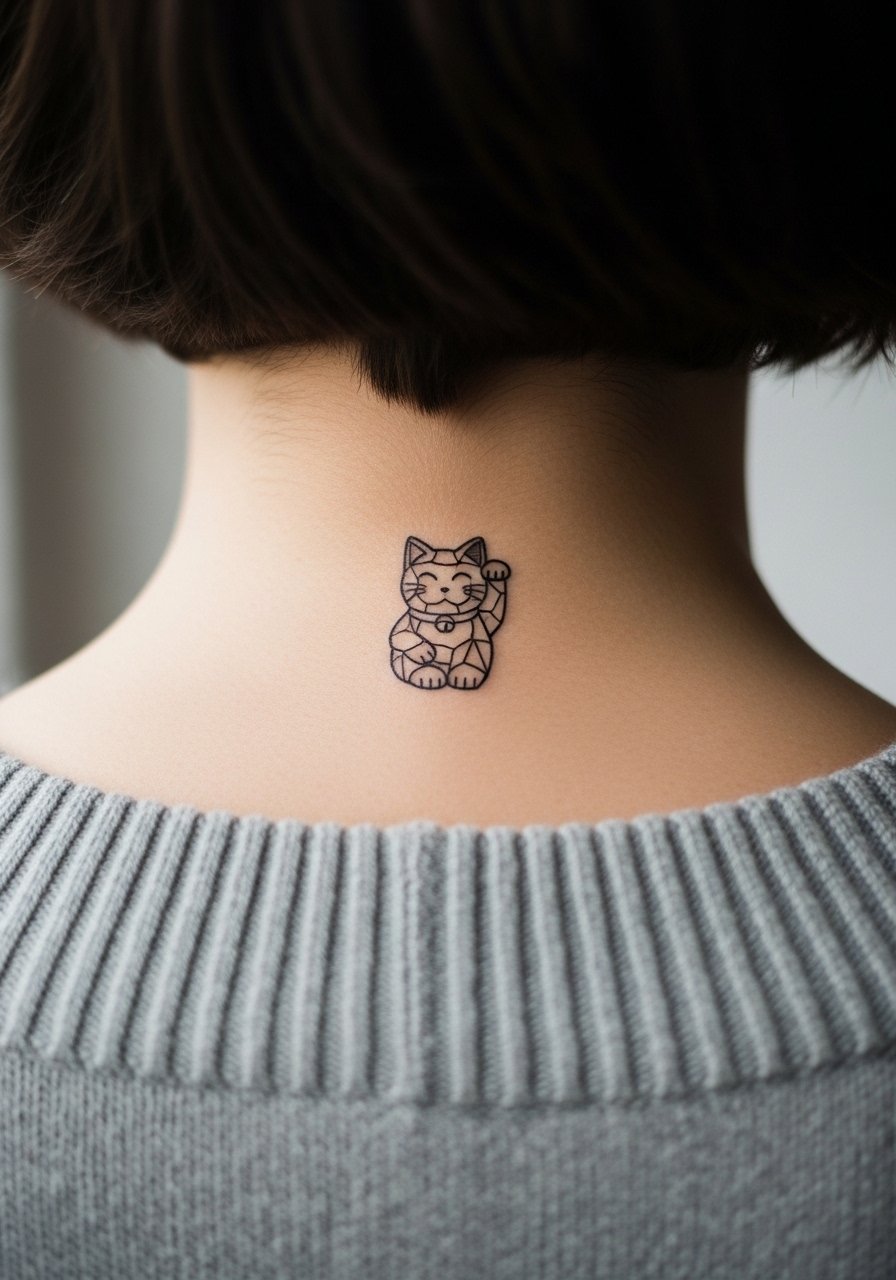
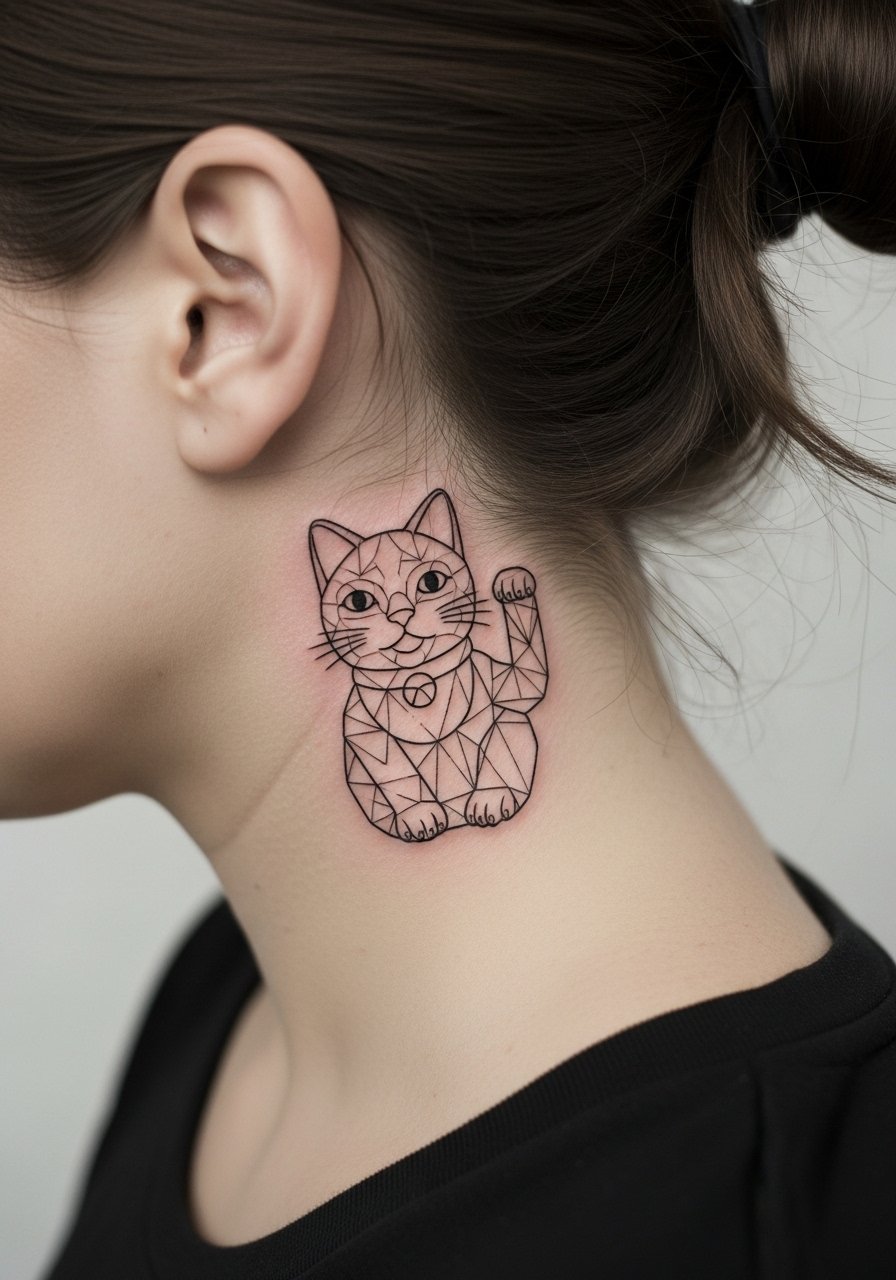
12. Tiny Lucky Cat on the Nape of the Neck
The nape holds small designs well and is discreet under hair for work weeks. Explain to your artist where your hairline sits so the cat does not sit on areas that rub against collars. The sensation is short but surprisingly sharp. For showing it off when you want, pull your hair into a high bun and pair with a wide-neck sweater that frames the lower hairline.
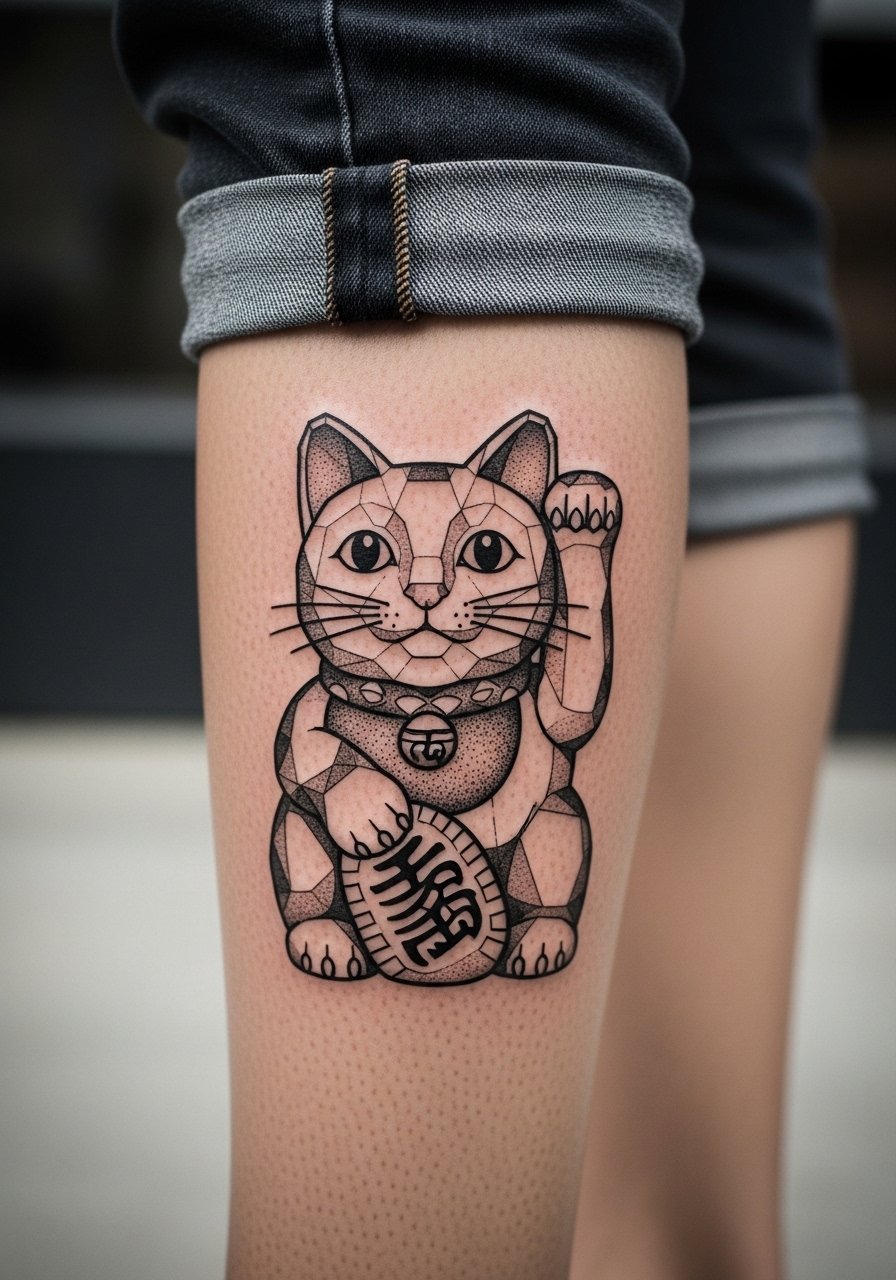
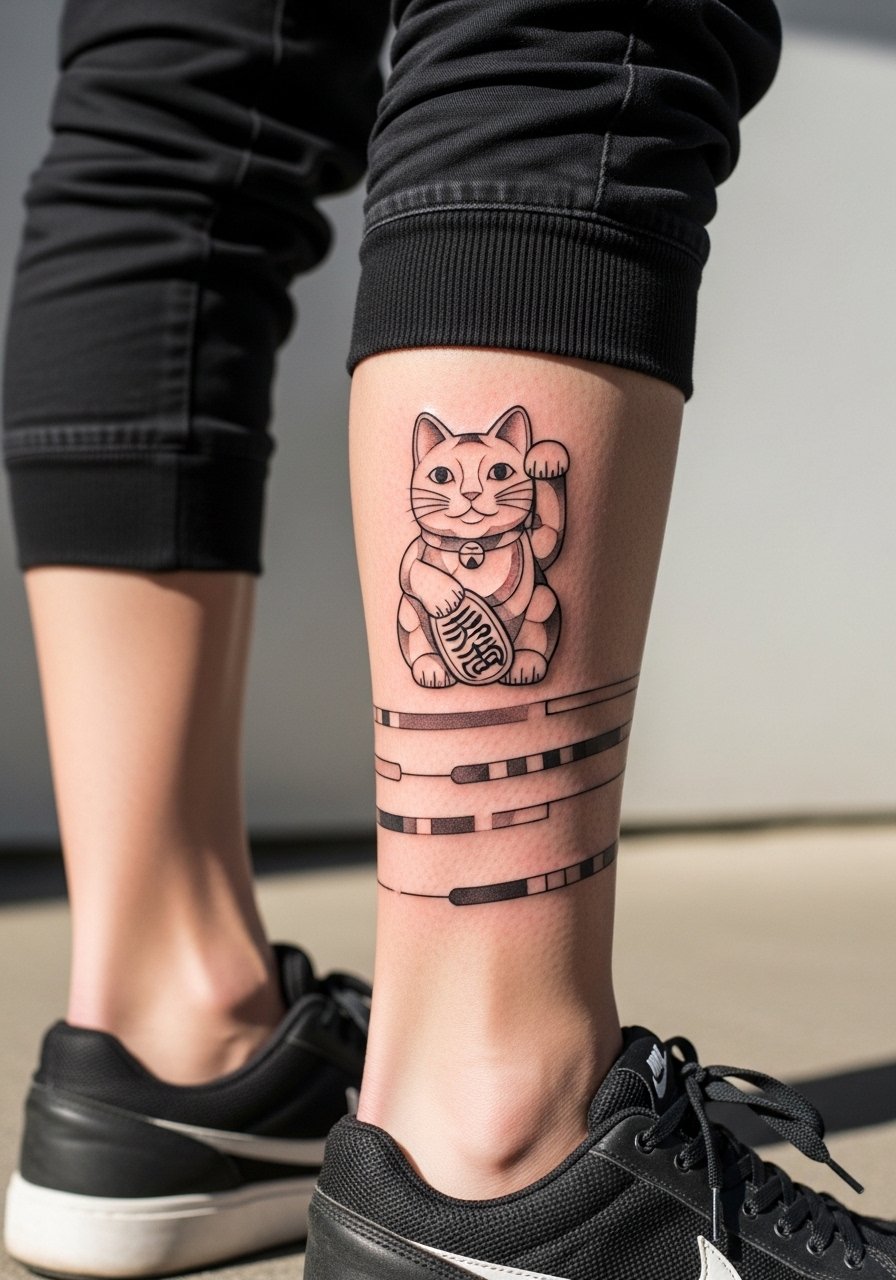
13. Geometric Lucky Cat Calf Portrait
The calf is a stable canvas for vertical designs with room for shading or stipple work. Expect less touch-up frequency than hands or fingers. For a portrait-style cat with geometric facets, ask for gradual stipple transitions in shaded areas to avoid heavy black patches that age awkwardly. Sessions are comfortable for most people. Style with a pair of cropped trousers so the design shows without constant rubbing from socks.
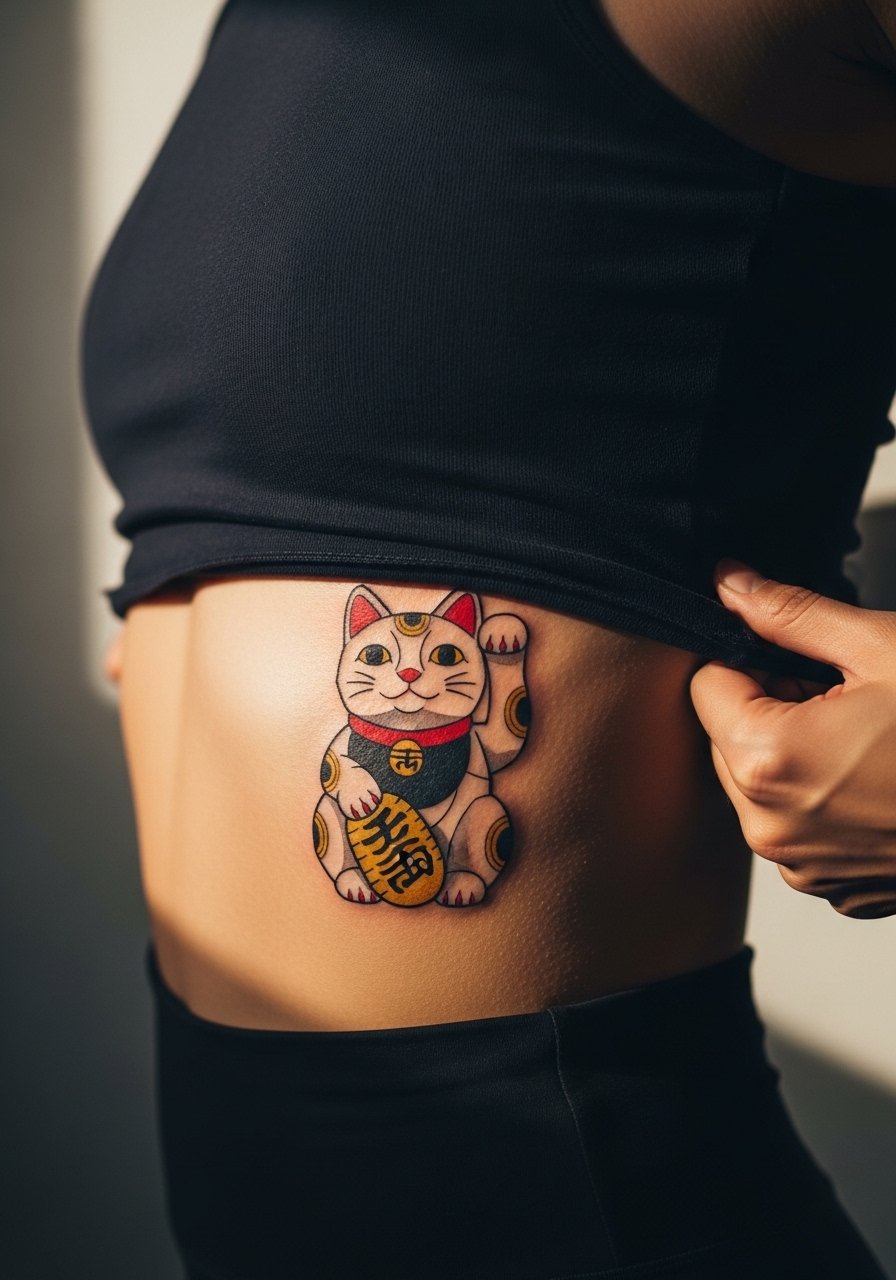
14. Geometric Lucky Cat Rib Panel
Ribs present a clear controversy for fine line geometry. One camp says the thin skin and breathing make tiny detail blur fast. The other camp believes proper spacing and slightly heavier line weight can preserve the geometry. If you pick ribs, plan for multiple short sessions and accept a higher chance of touch-ups. Pain is high. For the appointment, wear a cropped athletic top you can lift just enough to expose the rib panel without pulling at fabric.
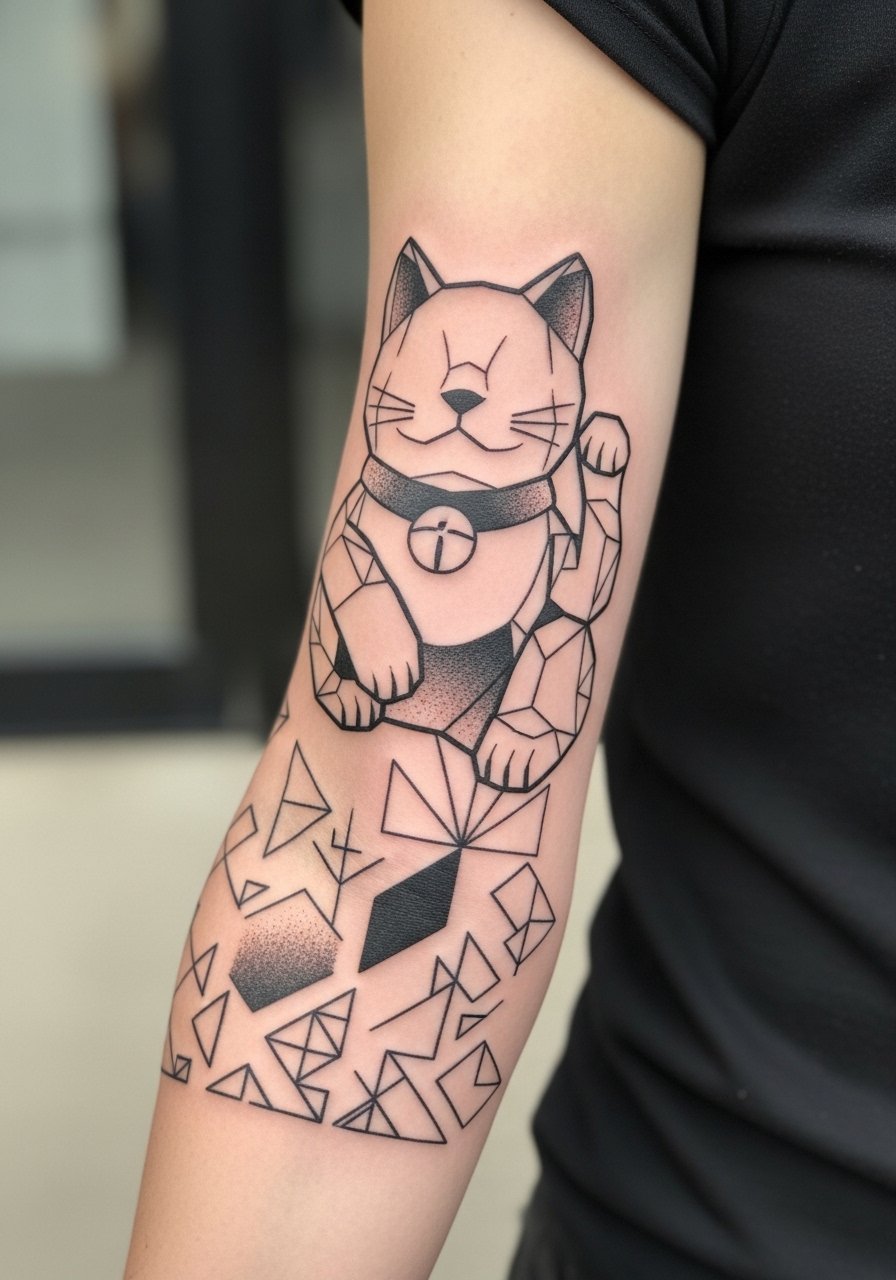
15. Geometric Lucky Cat Sleeve Accent Piece
Add the cat as a repeat motif along an arm sleeve, alternating negative space and filled polygons for rhythm. When integrated into a sleeve, maintain larger landmark shapes to anchor smaller facets that may soften with time. Sessions are split across multiple visits and feel long by the middle of the second hour. For everyday framing, keep sleeves rolled a little and wear a lightweight linen shirt that makes it easy to show the forearm without obstruction.
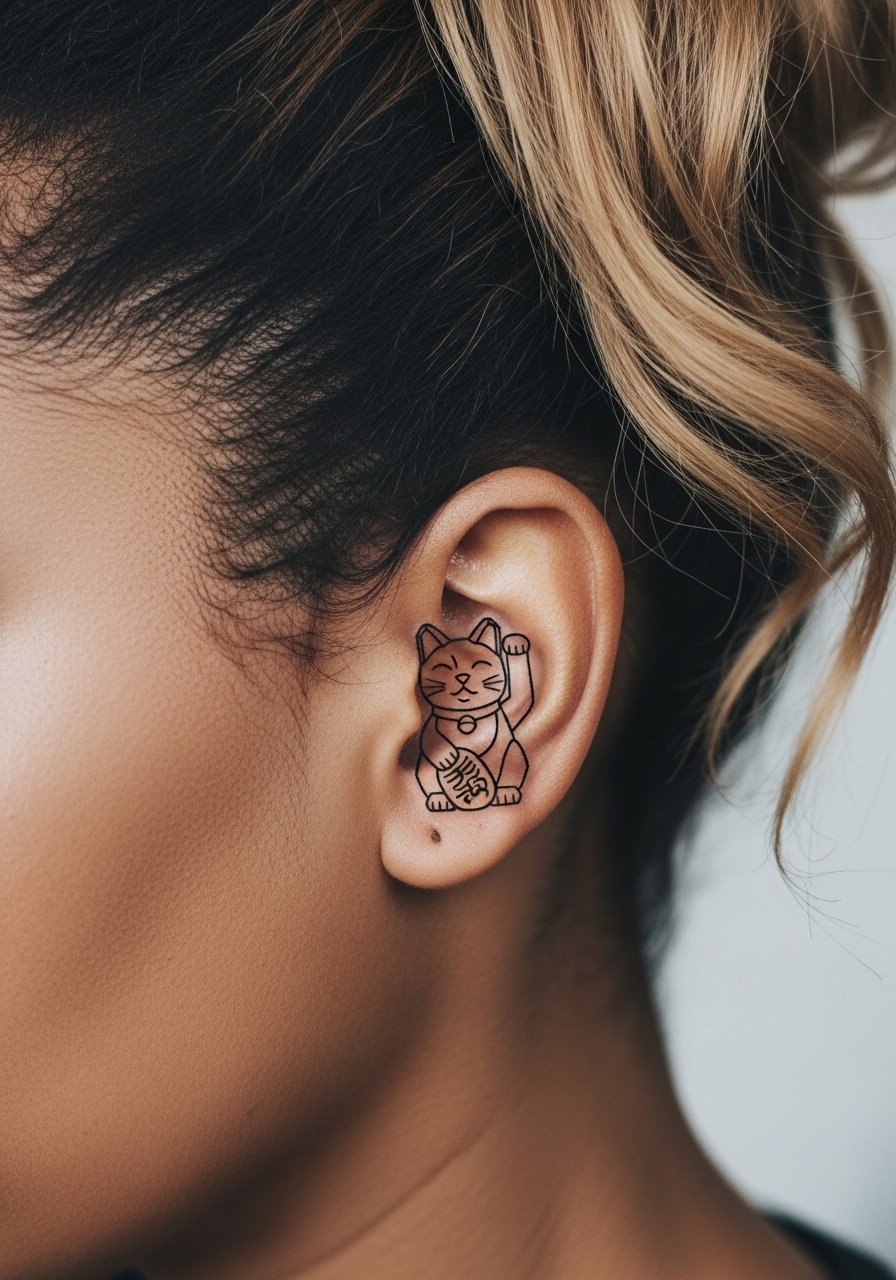
16. Tiny Behind-the-Ear Lucky Cat Accent
Place this small symbol on the skin behind the ear below the hairline so it remains discreet. The area is sensitive to placement mistakes so describe ear and hairline variations in consultation. For images and healing, keep hair loosely tied so the tattoo gets air without being rubbed. This spot pairs well with a thin chain choker that sits just above and does not touch the skin behind the ear.
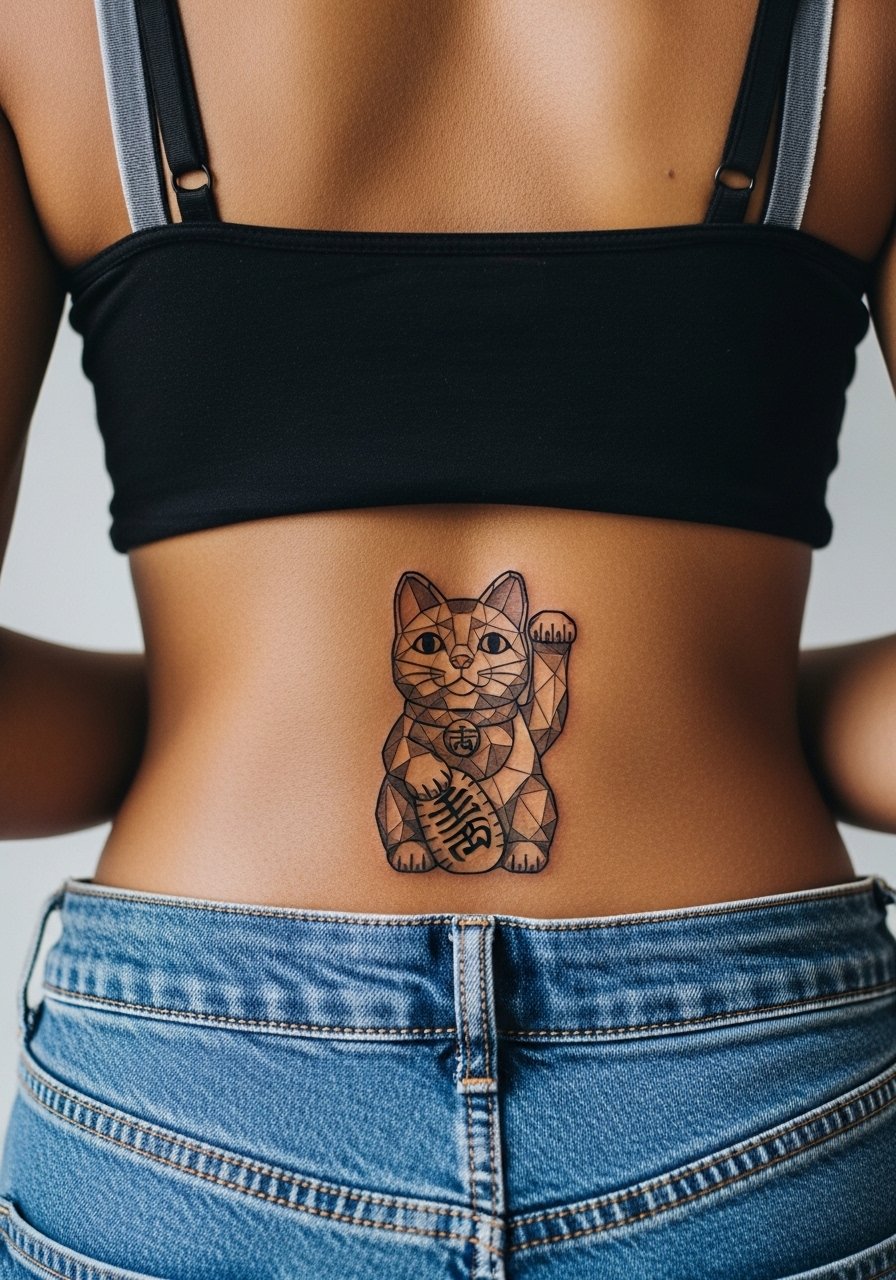
17. Low-Poly Lucky Cat on the Lower Back
The lower back allows a horizontal composition and ages reasonably well if the design is not right on the lumbar crease. Keep polygons roomy and avoid too many micro lines. Sessions are moderate in discomfort and the area is easy to protect during recovery with high-waisted clothing. For clean post-session dressing, choose high-waisted jeans or a high-waisted skirt to avoid fabric riding over the fresh ink.
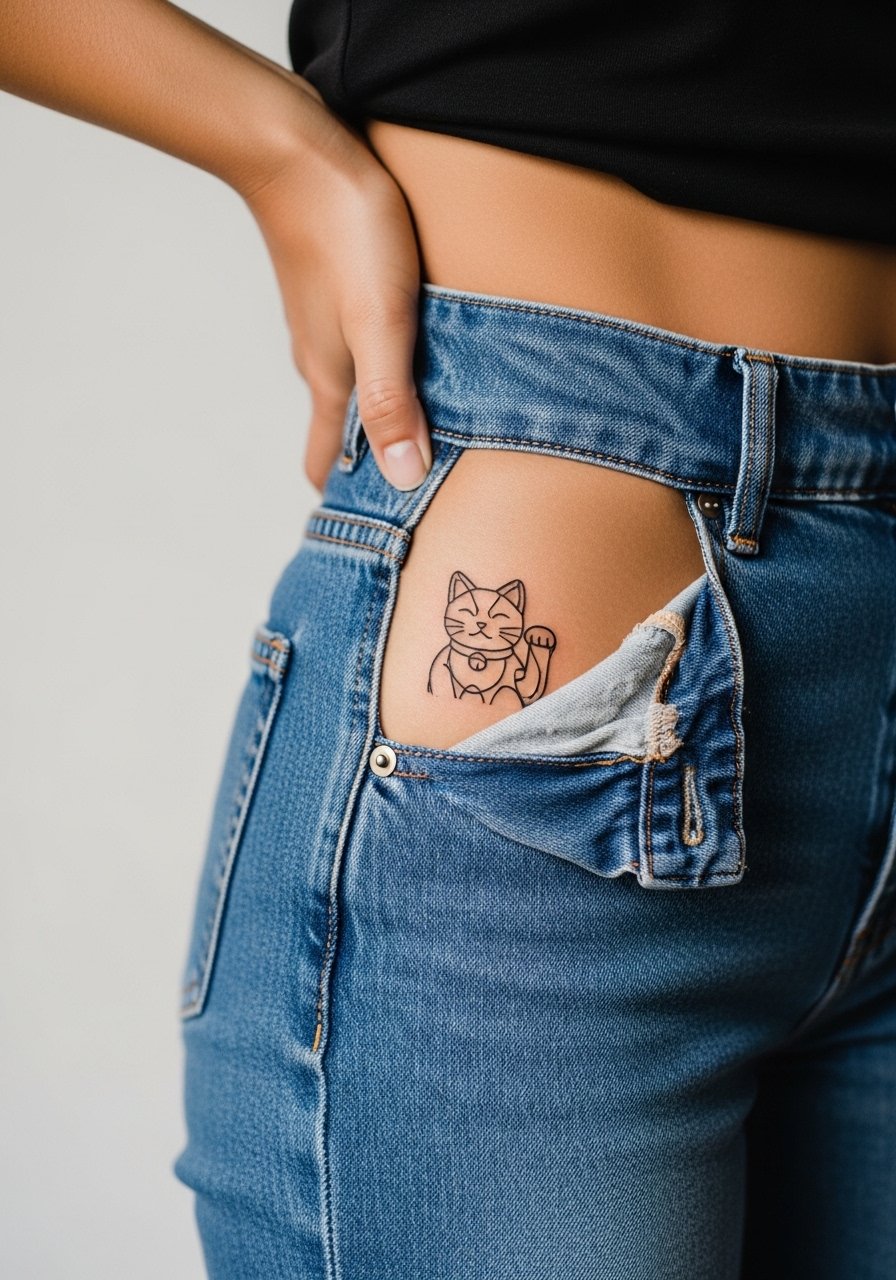
18. Geometric Lucky Cat Hip Accent
A compact hip piece can be revealed selectively and is a forgiving area for detail. Make sure the outline sits clear of pant bands that will rub during recovery. The session is comfortable with strategic breaks. For after the appointment, wear high-cut shorts or jeans that sit below the ink line to keep pressure off in the first week.
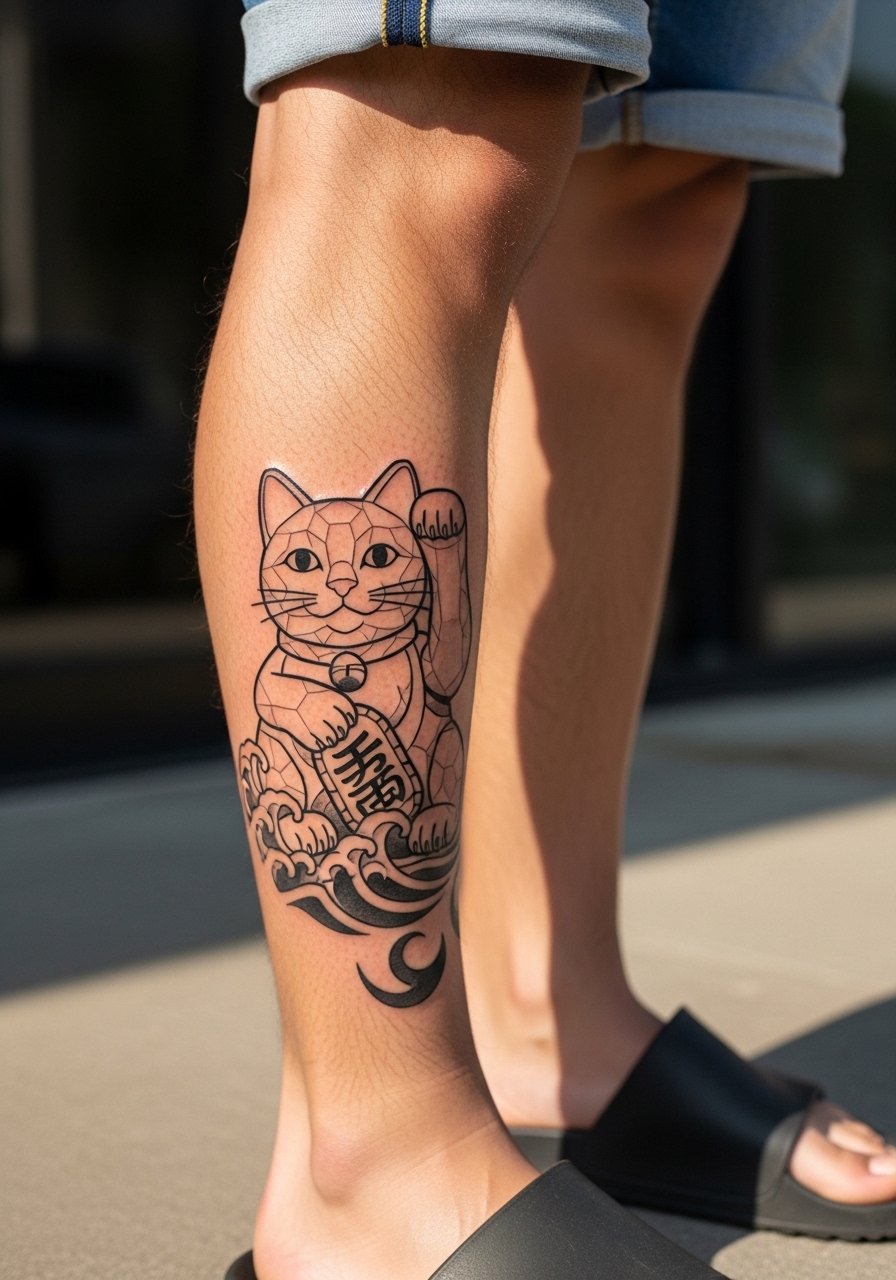
19. Geometric Lucky Cat with Wave Base on the Shin
Combining geometric cat facets with stylized wave forms gives a graphic contrast that adapts well to lower leg curvature. Shin placements can feel sharp during the session because of the thin tissue over bone. Ask for an option with slightly more spacing in the waves so the negative edges do not disappear after healing. Walk home in a pair of slide sandals to avoid boot rub.
20. Micro Geometric Lucky Cat Behind the Ear-Lobe Line
This micro placement is great for someone who wants a tiny symbol with low visibility. Specify exact location relative to the earlobe so the artist places it under the hairline and not on the ear itself. The session is brief. For subtle reveal, style hair in a half-up manner and pair with a small hoop earring that frames the area.
21. Geometric Lucky Cat Chest Crest Near the Sternum
A larger crest that sits just off-center over the sternum reads dramatic under low-cut tops. The sternum area needs mapping to avoid chest folds cutting through the design. Sessions are intense for some clients and often split. For modest show-off options after healing, wear an open-front cardigan that reveals the upper crest without overexposing the torso.
22. Geometric Lucky Cat Calf Wrap with Negative Space
A wrap design around the calf can alternate dense polygons with clear bands to keep the pattern readable over time. Calf skin holds pigment well and blowout risk is low if the artist avoids overly shallow passes. Sessions feel steady and tolerate longer stretches. For everyday wear, choose cropped joggers and a pair of casual sneakers to frame the calf.
23. Geometric Lucky Cat Finger Cluster
Cluster tiny geometric cats across two fingers for a constellation feel. Fingers demand bold, simplified facets and you should accept a higher touch-up likelihood. Ask for slightly thicker perimeter lines and larger interior shapes. The session includes intense moments where the needle hits bone near the knuckle. Show the cluster with stacked dainty rings that avoid covering the tattoos.
24. Geometric Lucky Cat Back Shoulder Cap
A shoulder cap version lets you play with symmetry and curvature that sits above the shoulder blade and wraps slightly toward the chest. The area tolerates medium detail and often requires one solid session. Discuss range of motion with your artist so the pattern does not collapse when you raise your arm. For evening outfits, an off-shoulder blouse frames the cap elegantly without excessive exposure.
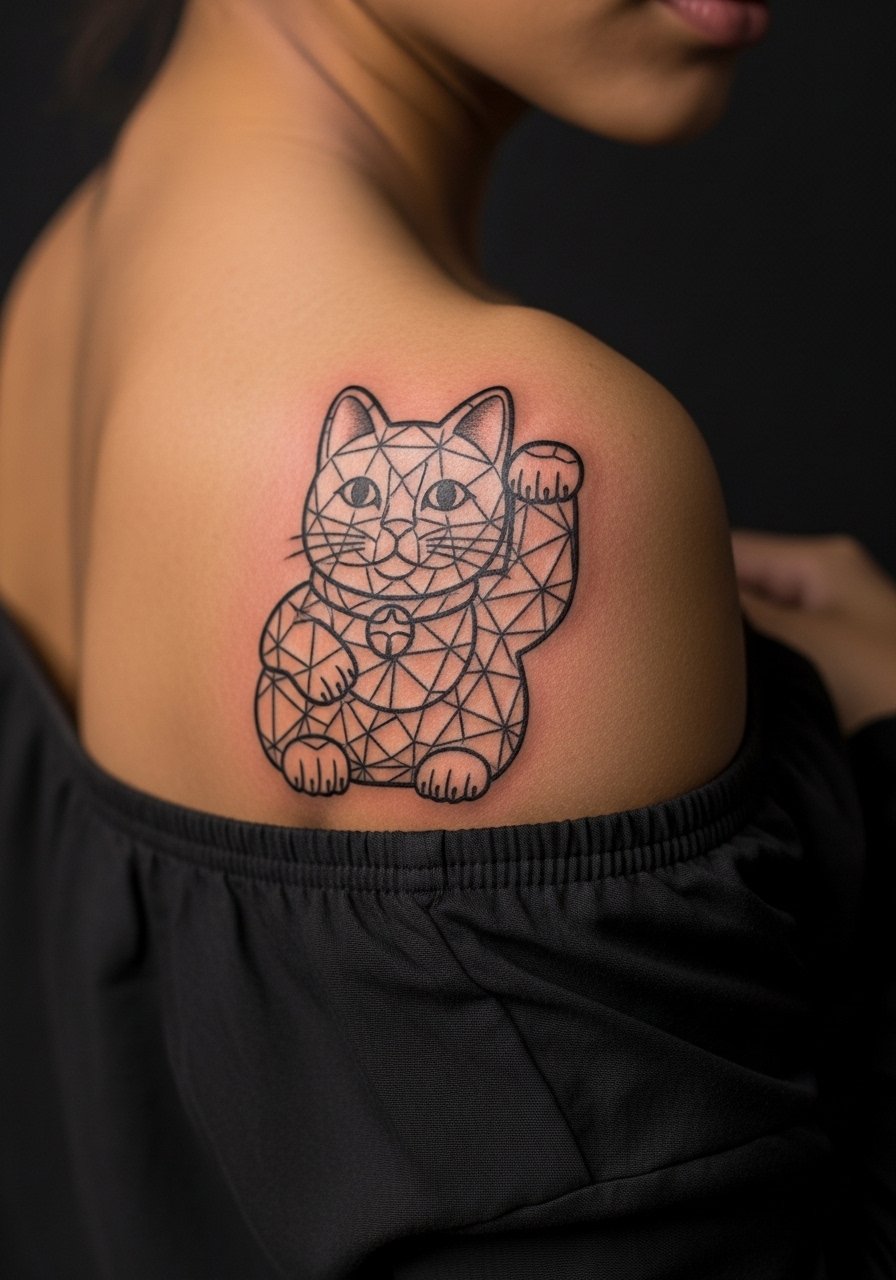
25. Geometric Lucky Cat with Scripted Coordinates
Mix geometric facets with small roman numerals or coordinates placed beneath the cat to mark a meaningful location. When including text, specify the exact wording during the consultation so the artist uses the right scale. Text over tiny shapes can blur, so keep letters slightly larger and uncomplicated. This piece looks smart paired with a thin chain pendant that sits above the script.
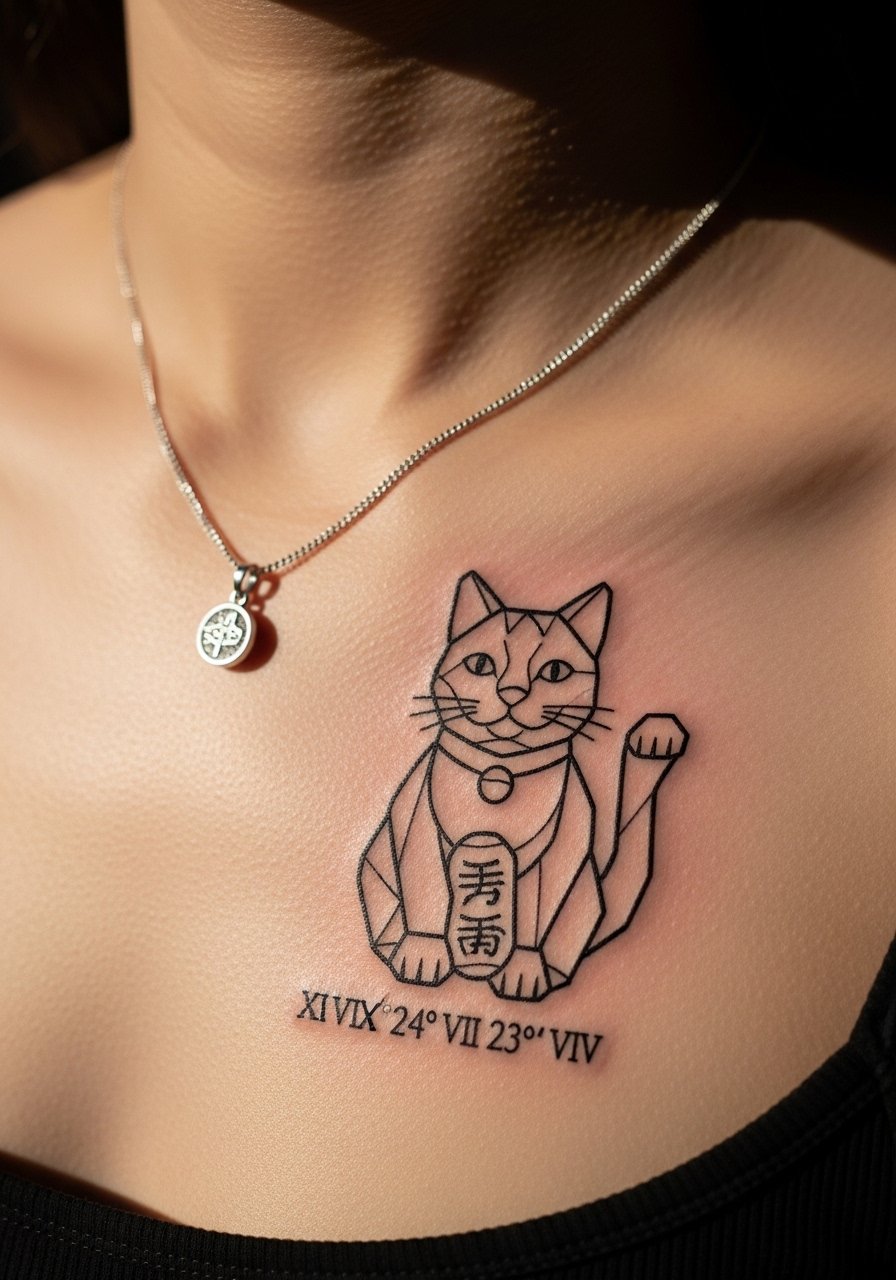
26. Mechanical Geometric Lucky Cat on the Forearm
Blend mechanical angular elements with geometric facets to create a techy lucky cat that works across the forearm. Forearms handle detail well but avoid micro etching too close together. Tell the artist you want segmented panels with breathing space between them so the lines do not merge over time. Sessions are pleasant for most clients and allow easy breaks. Show the piece with rolled sleeves and a minimalist leather watch that frames the wrist without competing.
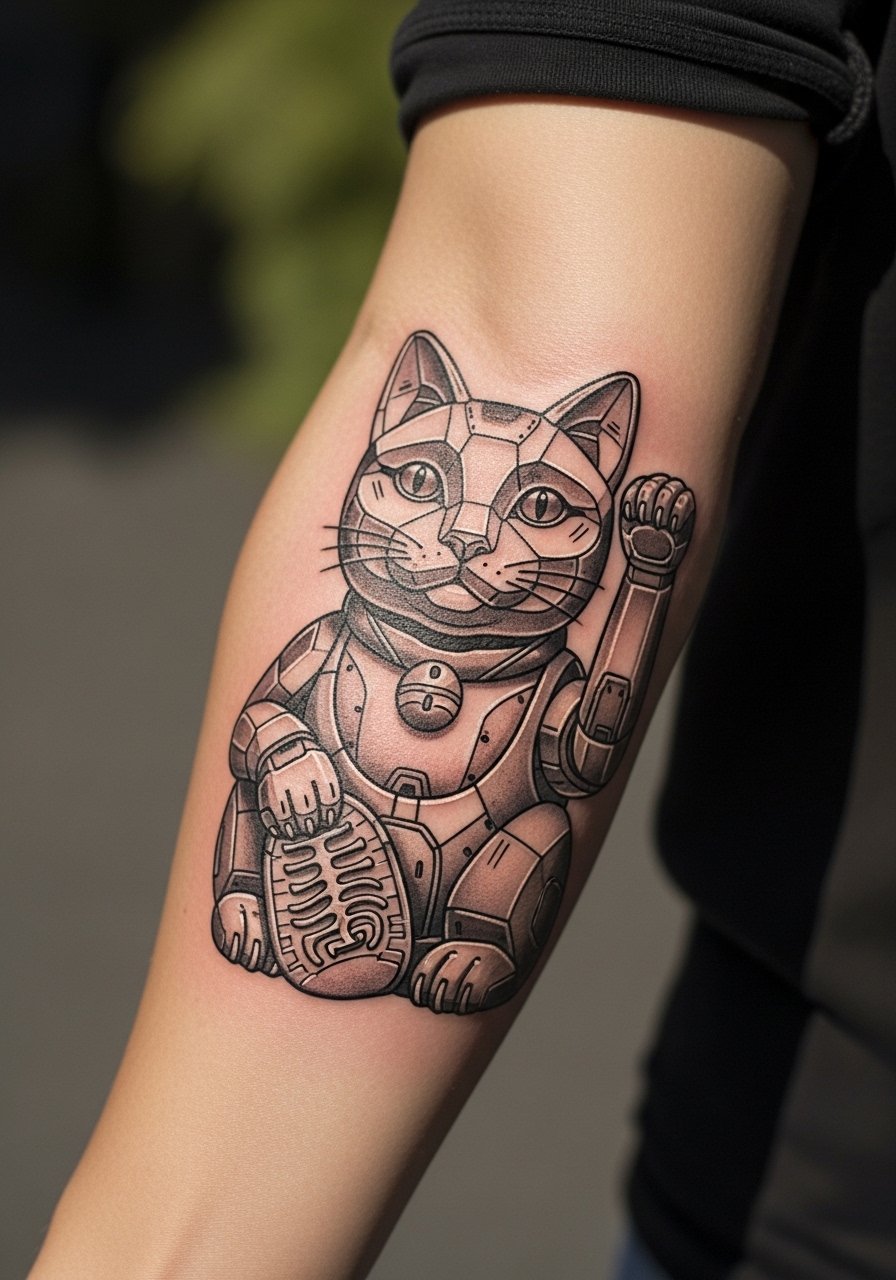
27. Large Geometric Lucky Cat Back Panel
Use the full back for a large, architectural geometric cat that plays with symmetry and negative space. The back is one of the most age-friendly canvases because it moves less and tolerates saturation and layering. Expect multiple long sessions and strategic planning for how pieces tie into shoulders and lower back. For recovery and future reveal, a button-down shirt you can wear open gives controlled exposure while healing.
Frequently Asked Questions
Q: How small can a geometric lucky cat be before the details risk blurring?
A: As a rule of thumb, avoid pieces under two inches if you want internal facets and fine negative-space detail to last. Smaller pieces work if you accept simplified geometry and slightly thicker outlines. Talk to your artist about scaling line weight as size decreases so the design survives everyday wear and washing.
Q: Which placements for geometric lucky cats need touch-ups sooner?
A: Fingers, hands, and ribs typically need touch-ups earlier because of constant movement and skin characteristics. Forearms, calves, and the back tend to keep detail longer. Your lifestyle matters too. If you type a lot or wear tight shoes, expect those spots to need attention sooner.
Q: Is there a styling rule for showing off a collarbone or sternum geometric cat without overexposing?
A: Yes. Use wide-neck or open-front tops that reveal the top edge of the design while keeping the area covered when needed. A wide-neck shirt or an open button-down works well and minimizes fabric friction during the first week.
Q: Should I worry about cultural sensitivity when using mandala-like geometry with a lucky cat?
A: It can matter. Mandala patterns draw from Buddhist visual language, so many people choose to adapt motifs rather than copy sacred versions directly. If you want a traditional element, discuss respectful adaptation with your artist and consider slight alterations that acknowledge the origin.
Q: How should I dress for an appointment for a sternum or ribcage geometric cat?
A: Wear a fitted sports bra or a cropped top that lifts easily so the artist can access the area without you removing more clothing than necessary. Loose bottoms and a shirt you can pull aside help keep the session comfortable and the skin stable.
Q: Can fine line geometry be combined with blackwork to improve longevity?
A: Combining slightly heavier blackwork outlines with interior fine line facets is a practical compromise. The bolder outer lines hold the shape as the interior softens, which preserves the silhouette and reduces the need for frequent touch-ups.